|
|
by Miles H. Hodges – The Covenant Nation
America recently celebrated a big
250. What was sad about this event was
that it seemed to not hit the mark in terms of the enthusiasm expected to
accompany this holiday. There are a
number of reasons for that. But I would
like to look at a couple of those – pointing to the fact that we really don’t
understand the timing, process or spirit by which America was originally birthed
and then developed ... and why therefore this 250-year-old event was so
important. First off, I
do not refer to that war of the 1770s and early 1780s as America’s
“Revolutionary War.” “Revolution”
implies the birth of something new socially.
Instead, I refer to that grand event as our “War of Independence.” True, there was something very “revolutionary” about the events of those days ... in that this was indeed a massive rebellion against a presiding King – and that somehow these American rebels had the idea that they were going to succeed in this venture ... something that human history has long revealed was just not going to happen. The likelihood instead was that these brave souls would be defeated by the king’s quite large and very professional army ... and they would soon all be executed. 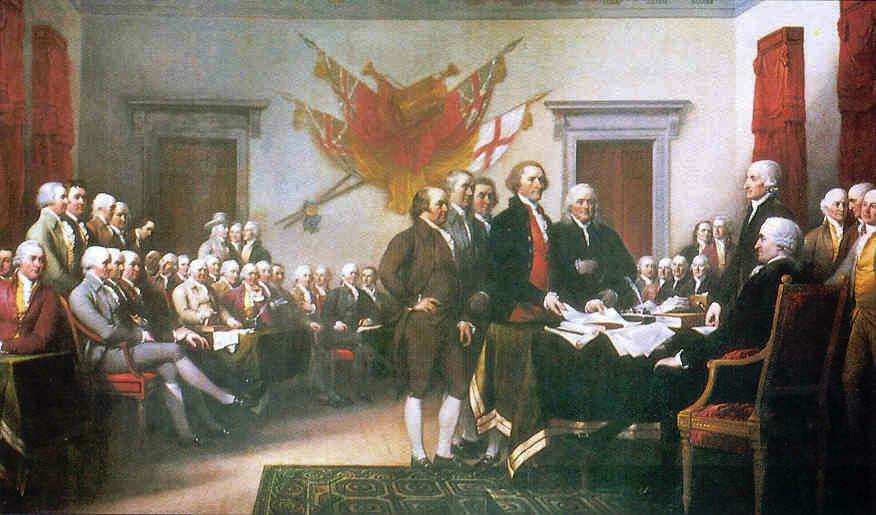
But again,
these rebels (“Whigs” as they were sometimes termed) were not intending to
birth a new society ... but merely protect the sovereignty, the independence,
of their colonies ... some of them (those of Virginia and New England) which
had been largely self-governing for 150 years at that point. They were not “birthing” the American
experience. They were simply determined
– like all brave souls – that they were not going to let a far off (all the way
across the Atlantic) king take away any of their self-government so that he
could enjoy mastery over them. They were
not going to lose what they already were ... and had been for 150 years. Yes, they were
aware of the debates going on back in England’s Parliament as to the dangers to
royal sovereignty posed by this independent spirit that undergirded these
overseas colonies. That was a real
problem for royal sovereignty ... especially if the British subjects back in
Britain were to find themselves influenced by the American model. This was particularly problematic for
Britain’s young King George III, as this growing spirit of the people’s right
to self-rule was beginning to have just such an impact in Britain Britain had
actually undergone such an experience during the mid-1600s under Cromwell – and
that had not worked out well. And a lot
of Englishmen (“Tories” as they were termed) were very much opposed to such
“popular” rule ever rising again. They
were certain that Britain was in much better hands under George’s royal
authority. But even in Parliament there
was growing support for popular rule ... and these politicians (also “Whigs”)
seemed sympathetic to America’s self-government – although that did not necessarily
mean to them to necessitate colonial “independence.” But when in 1768
George sent his troops to Boston to suppress the especially strong spirit of
self-rule in that town, he awakened a strong spirit of resistance − and
eventually (1775) a willingness of Americans to fight ... fight until George
backed his troops out of America and recognized America’s long-established
right to self-rule. And they were
well-aware of the costs involved in gaining that goal. And yes, success in such a venture would
indeed amount to true independence. But there was
another factor involved in this decision of the colonials. Especially in New England and the Middle
Colonies, there was a very strong sense that their colonies had been founded on
some kind of a “deal” with God himself ... that their founders had been
particularly chosen to be a “covenant people” (like the Israelites of old) and
thus under his sovereign protection in
carrying out that covenant: a covenant to
be a “Light to the Nations,” a people called by God to show the rest of the
world how he intended for man to live. And
their American descendants respected deeply that covenant, that spiritual
legacy (a “Great Awakening” in the 1740s had rekindled deeply that same
spirit). Thus there was a very special
spirit supporting this “rebellion” ... one that was not going to go away just
because of the personal ambitions of a far-off monarch. Unfortunately, 250 years later, we have lost
sight of what this “rebellion” was all about, why it was so important to us
Americans ... and to the larger world.
The sprit that founded and directed those early Americans is just not
there anymore. We have lost sight of
that higher purpose that once directed our American ancestors. And we need it back ... badly. Miles Hodges is a writer, historian and political analyst who explores the question of why societies behave
as they do ... especially in this matter of their rise and fall. |