Feudal America.
At the time of the founding of English America (the beginning of the
1600s) most of European society was governed by a handful of
individuals – individuals usually born to that position and thus a
position not easily open to even the most ambitious social climbers
from the lower classes. Kings, emperors, princes, dukes, barons,
and even bishops – drawn from society's "first families" – lorded it
over the rest of society. This ruling class "owned" everything:
the land, the fields, the rivers, the forests – and virtually
everything located there.
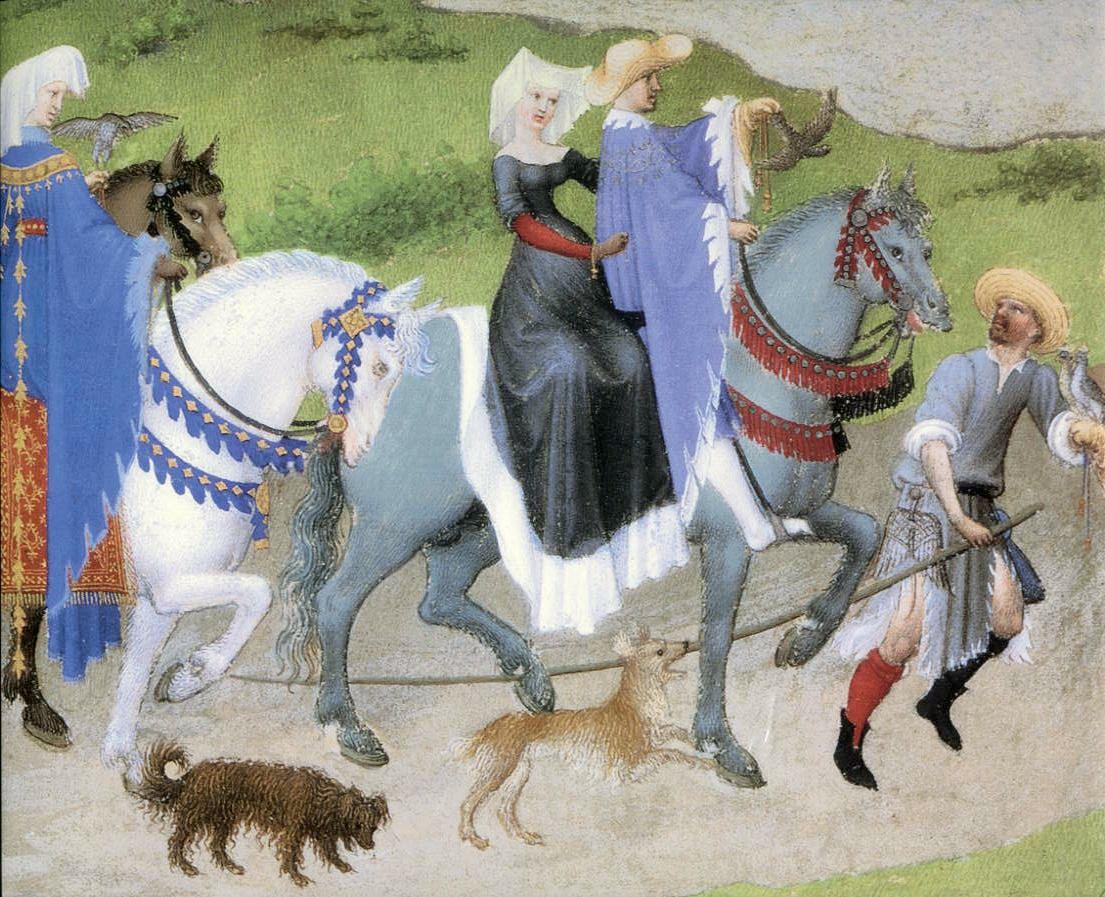
This hierarchical or "feudal" social setup was morally justified a
number of different ways, though usually by explaining that the very
powers of Heaven (God himself) had demanded this exact arrangement.
Thus the rest of the population outside the ranks of this ruling
elite was forced to stay "in its place" – under the threat of
everything from imprisonment or execution, to even the ultimate threat,
Eternal Hell, awaiting those who failed to live according to the
supposedly God-ordained and long-established rules of such a society –
rules dating as far back as 800 years, when Charlemagne put this social
order in place.
When at the beginning of the 1500s the Spanish were to
"discover" America and then move to bring the New World of America
under the Spanish social order, quite naturally this same feudal social
order was established there to secure Spanish territorial claims in
America. Spanish America belonged to the Spanish King, whose
lands in America (as in Spain itself) were governed politically through
the agencies of royally-appointed governors, who in turn were supported
by a handful of wealthy first families dominating life locally from
their manorial estates or haciendas. And the very hierarchical
Spanish (Catholic) Christian Church, governed from Spain by bishops and
archbishops, was placed alongside this political structure in order to
confirm the moral foundations of this quite typical feudal social
order.
When the English, a century later, finally got into the act in
establishing the colony of Virginia, a social model was put in place
there similar to the one in Spanish America. The English who dared to
take up life in America (those who survived the high death rate in
doing so) were motivated the same way as the young Spanish
conquistadores (conquerors) had been. They came to America hoping
to gain social status as gentry and thus membership in the ranks of
society's ruling elite – through ownership of quite readily-available
American property (simply grabbed from the local Indian population).
The more property owned by an individual or family, the higher
the social status or social rank.
Some of the earlier arrivals to Virginia went on to achieve
quite high social status – such as the Byrd family, which came to own
180,000 acres in Virginia ... and a quite fancy manor or plantation
home to house the family. Thus a Virginia aristocracy, functioning much
like the feudal aristocracy back home in England, came into being.

For those who came later to Virginia, they did so as indentured
workers, to work the land of this Virginia aristocracy for the number
of years of their indenture (typically seven years) until they were
given a small amount of land and some tools to start out life on their
own. But very quickly the truly valuable land was grabbed up by
the earliest arrivals, and those who came later found little
opportunity to duplicate this rise in status through expanded land
ownership. Thus a society of poor Whites began to grow up within
this Virginia feudal order.
Ultimately, when a revolt against this unfair distribution of
the wealth and social privilege of Virginia occurred, the Virginia
aristocracy found it safer to switch from the program of indenture to
the institution of African slavery in order to protect and sustain this
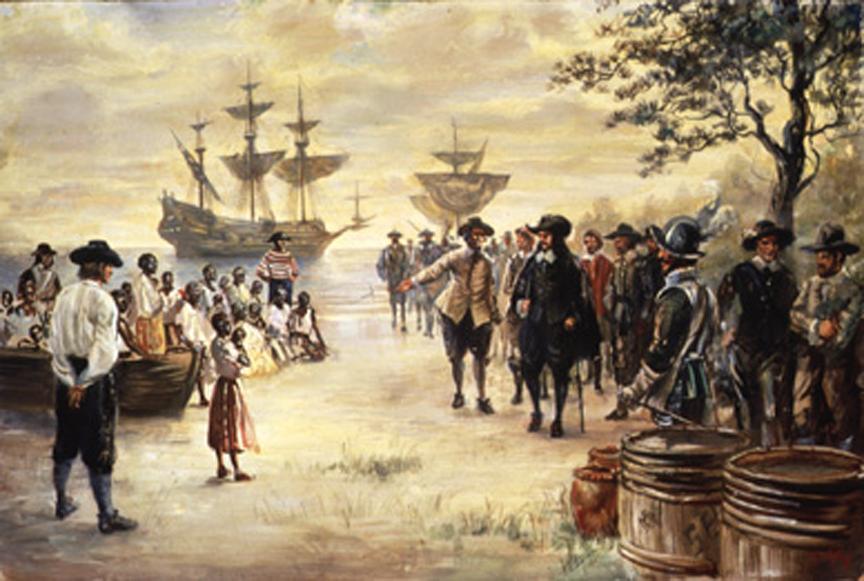
feudal system. The Africans, brought to enslavement through
defeat in tribal wars back in Africa, were carried off to America,
where as a broken-spirited people, they proved to be more compliant to
the harsh disciplines of the Virginia feudal order.
Puritan America.
But the English who came a generation later to the lands north of
Virginia, to "New England," came under a very different set of social
circumstances, shaped by a very different set of social ideals and
social norms. They were religious idealists, inspired by their
strong Christian belief that they should live as a people as close as
possible to the standards of the first century Christian community, as
clearly outlined in character in the Christian New Testament.
They came to America not just for their own benefit, but with the
belief that by striving to live "Biblically," they would serve God well
by living as a social example (as Israel of old was supposed to have
done, but failed to do so) giving "Light to the Nations," showing the
way for others around the world to achieve the same glorious life that
a fatherly God himself had wanted for all his human creation. In
America, they would establish a "City on a Hill," there for all the
world to see how to live successfully God's way (which had little in
common with the feudal way practiced widely not only in Europe but
through much of the rest of the world as well).
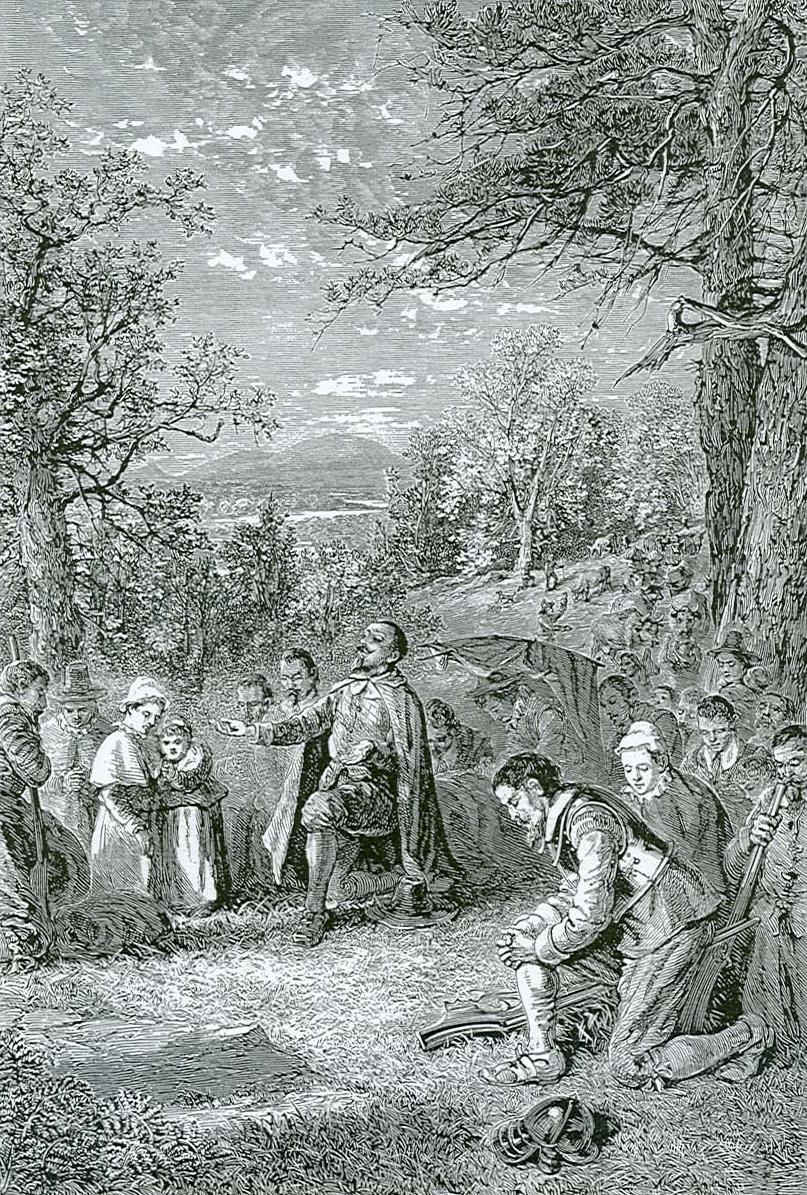 Hooker and Puritan families setting up a community in Connecticut - 1636
Thus what Puritan America offered the world was the living example of a
society where all the people could live comfortably, proudly even –
working together and sharing as equals, enjoying the blessings of
social life on this basis of social equality. Equality, not
hierarchy, was what God wanted for his people – at least that is how
the Biblical narrative reaching from the ancient Hebrews down to the
formation of the first century Christian church explained things.
According to these Puritans, Christian society was intended to
be a community built on a deep sense of interpersonal connections
shared equally among the community members themselves. God was
not looking for a well-planned organization – a society organized and
directed by a privileged group of "enlightened" individuals who had
authorized themselves to do the thinking for and managing of the very
dependent multitude of the others making up the society.
The Puritan understanding of Godly society of course required
the people themselves to take up the responsibilities of
self-government, a social mindset cultivated from a child's very early
age onward through the careful mentoring on the part of an older
generation of parents, teachers and pastors, individuals who themselves
had been carefully raised to adulthood through this same process of
socially (that is, morally) disciplined development.
In this, the family was of paramount importance – because the
family was the key source of the earliest and most enduring of a
person's social instruction, social instruction that would shape and
guide profoundly the social-moral character of each new rising
generation.
True, even in its sense of basic equality, Puritan New England
certainly had its leaders, those who exercised certain supervisory
powers over the life of Puritan society. But these men did not
constitute a social group set apart from and above the rest. They were
members of the same social order as the rest of the members of society
– and elected on a regular and recurring basis out of that same social
order to represent those people in the councils of social
policy-making. They did not dictate that policy to those same
people but consulted with them regularly on the basis of town meetings.
This was in fact democracy, the self-rule of the common
members of society, guided in that self-rule by the moral instructions
of the Christian religion. It was indeed true "Christian
democracy" that got America up and running – at least in New England
and the Middle Colonies.
Deadly conflict between the two social types.
Consequently, two very different societies were set out from the very early years of the English colonization of America.
And ultimately, in the mid-1800s, these two societies would
fall into the deadliest war America has ever fought, a brutal war to
see which path America was to move down in order to go forward into its
future. It was a reckoning that the participants themselves
understood that God had called them to. The "City on the Hill,"
as Founding Father Winthrop called this new society, needed to shine
forth in glory, not in cruel social blemish arising from the shameful
institution of African slavery.
Ultimately a lot of American boys went to their deaths over
this issue (something often overlooked in today's recitation about the
anti-Black racism that supposedly accompanies naturally the matter of
being a White American) ... some 600,000+ young men killed and another
million wounded in this battle for the soul of America – more than
those killed and wounded in America's other battles from the War of
Independence in the 1770s and 1780s to the Korean War in the 1950s.
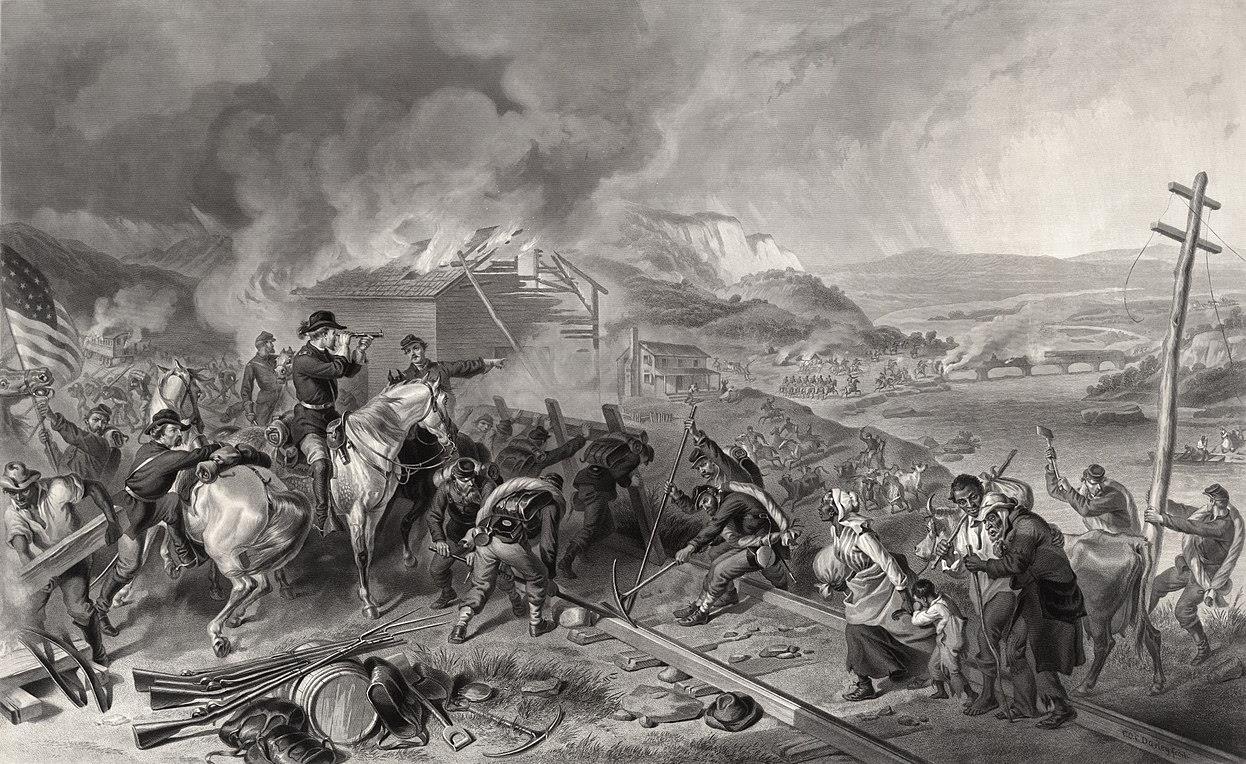
And so it was also that Lincoln reminded America in his Second
Inaugural Address (1865) that God's judgment weighed heavily on
America. It was critical for America to get things right with
God.
 Miles
H. Hodges
Miles
H. Hodges

 The two Americas
 The key differences between these two types can be summed up as Mysticism v. Materialism
  The two societies during colonial times