We cannot emphasize enough the fact that those who had the
greatest influence on society, on history itself, were not
bureaucratic fonctionnaires,[1] but
instead dynamic individuals of great charismatic character, able
to inspire others – many others – to follow them step by step as
they led ... even if the path they were taking the people down was
highly dangerous. And the word charismatic is key here.
Charisma is an old Greek word χάρισμα (khárisma)
implying a special anointing, a heavenly or divine grace placed
upon a person, such as makes that person unusually gifted as a
leader. That divine grace as a gifting comes not from
another person or social institution or material or physical
property. It has long been understood as coming from above, above
as in Heaven, the gods, or God himself (but possibly also Satan as
well, if care is not taken in measuring or judging by ancient
spiritual standards the voice of such a non-worldly or
supernatural source).
The Chinese, for instance, have understood for thousands of years this
phenomenon in the form of what they called since ancient times the Tianming
(Mandate of Heaven). Chinese Emperors gained the necessary
respect and support from the Chinese nation in being able to
demonstrate the many ways that Heaven had smiled on their rule.
Visible social success indicated clearly the approval and support
of Heaven. But the downside of that same idea was that when
floods, famines, diseases or enemy raiders attacked Chinese society,
that same respect and support among the people would melt away.
To the people this was a clear sign that the Tian
(Heaven) had obviously withdrawn that special favor that Chinese
society depended on so greatly. And this change in political
climate would be the signal to Chinese warlords to put forth their
candidacy as the new Emperor. And a violent round of civil war
(often lasting centuries) would result, until it was clear that Heaven
had once again made its choice: a victor, a Tianzi (Son of Heaven) would finally emerge to take charge of China.
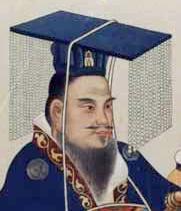
Liu
Heng (Wu) ruled as Chinese emperor during the amazingly lengthy period
of 141 to 87 BC. In that period the Chinese examination system
for government officers was put in place, he had imperial universities
built where Confucianism could be carefully studied, he
consolidated Han Chinese imperial power at home, and he extended
Chinese influence abroad all the way west to the Mediterranean by way
of his great Silk Road … and he prospered China greatly.
But other examples abound. Alexander the Great believed that he was
actually the son of a God (or at least that's how he presented himself
to the society that supported him) and went to the Siwa Oasis in the
middle of the Libyan Desert to have the Amonite priests there attest to
this fact.
Likewise, David was anointed at a very early age by Samuel as
God's chosen leader of Israel, and David was willing to wait through
very troubled times, even passing up opportunities to launch his own
career, as he waited for God (and only God) to bring his kingship into
being.
So also the Roman imperial candidate Constantine was vitally
aware of God's appointment of him as future Emperor, moving against a
much larger enemy candidate under the sign God had given him to conquer
with: the Chi-Rho sign of Jesus the Christ.
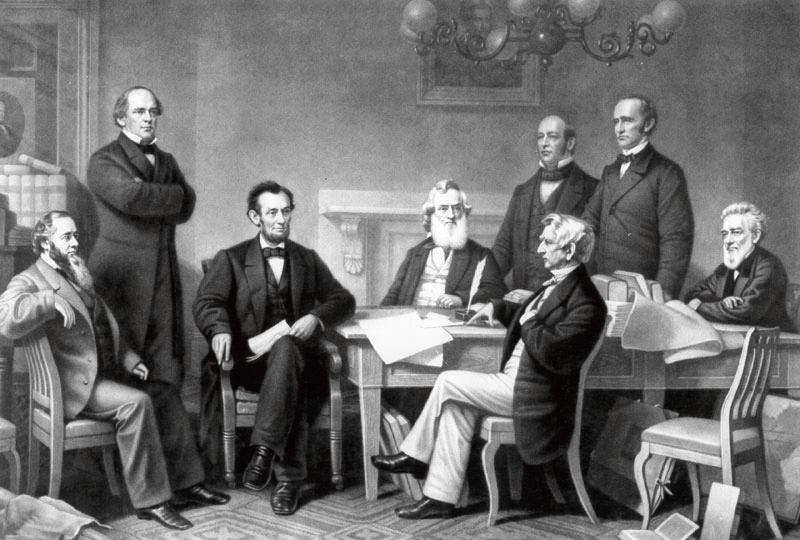
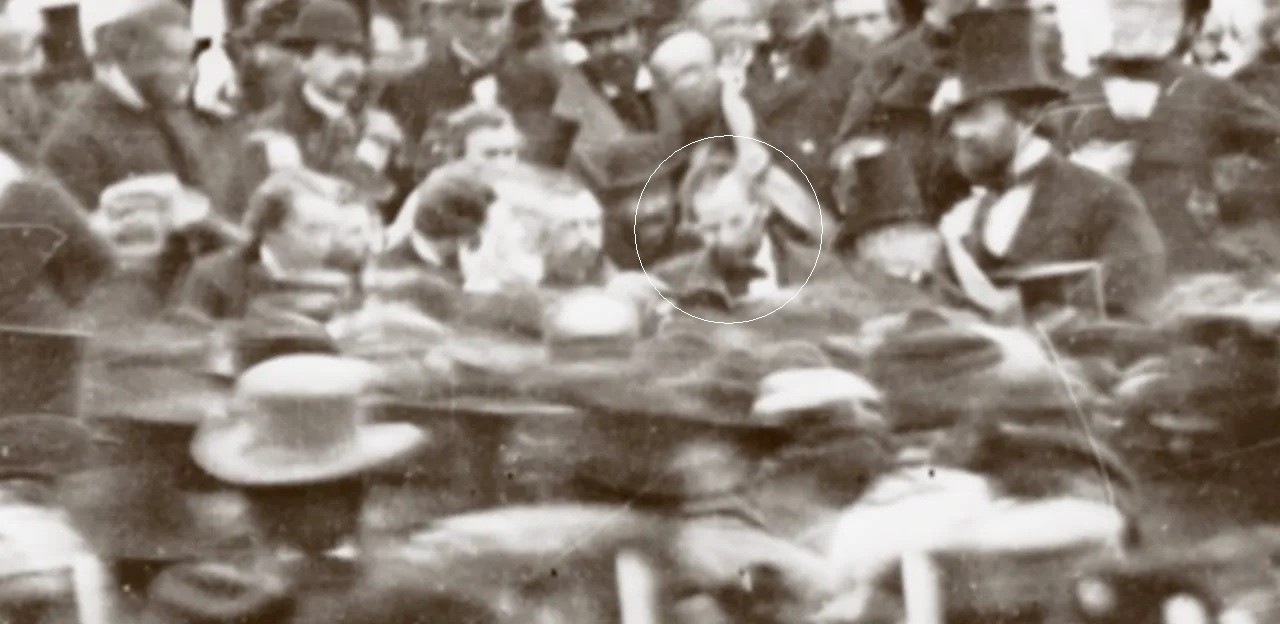
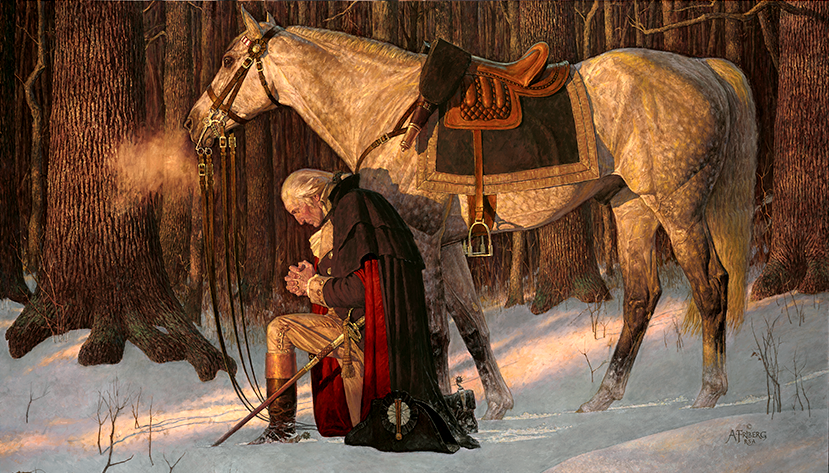
And closer to home, we know that both Washington and Lincoln
were men of immense Christian faith, drawing on that faith to keep them
moving forward during very dark times, when others would have quit.
Of course there have been rulers who have operated apart from
just such a sense of divine appointment. But lacking such higher
"legitimacy" they are driven to rule by force, often by sheer terror
inflicted on a subject people – as paranoia and fear of losing their
position (never really quite "legitimate" in the eyes of the people)
drives them forward. Certainly Stalin and Mao fit this description.
And the manner and ultimately durability of the societies that
they ruled over attest to the problems that soon enough develop for a
society when it lacks a "higher" hand supporting it.
To be sure, such a "higher hand" is historically defined in
different ways, with different versions of Heaven, different versions
of God. Or are they all that different? What we humans can
understand about the Realm of God can come only through human
interpretation, and thus is going to come to us through different
cultural versions. But they all point to the same higher source
of power, one existing above all human capability itself.
Christianity itself is built entirely on that understanding,
not just through the life, death and Resurrection of Jesus but through
the empowerment of the Holy Spirit (and in the case of the Apostle
Paul, a post-resurrection encounter with Jesus himself), God's very
hand in getting Jesus's early followers up and running as a powerful
people.
One thing also is clear about these key historical examples:
Heaven's call on them to the task of leadership was always quite real
to the leaders themselves.
Others, such as intellectuals, who operate only from their
self-conceived world of pure reason (thus needing no God beyond their
own personal intelligence), will mock those who put forward the claim
of divine calling. Why not? No such calling ever came to
them – and never will come to them, as long as they put huge material
boundaries around their personal sense of reality.
As the opening chapters of the Bible put things, such scoffers
have chosen to do what Adam and Eve did in cutting themselves off from
God and his counsel (and provision). They have eaten from the
Tree of the Knowledge of Good and Evil – so as to be themselves like
God ... as the Deceiver himself beguiled them into believing would be
the grand result of this act of disobedience to God.
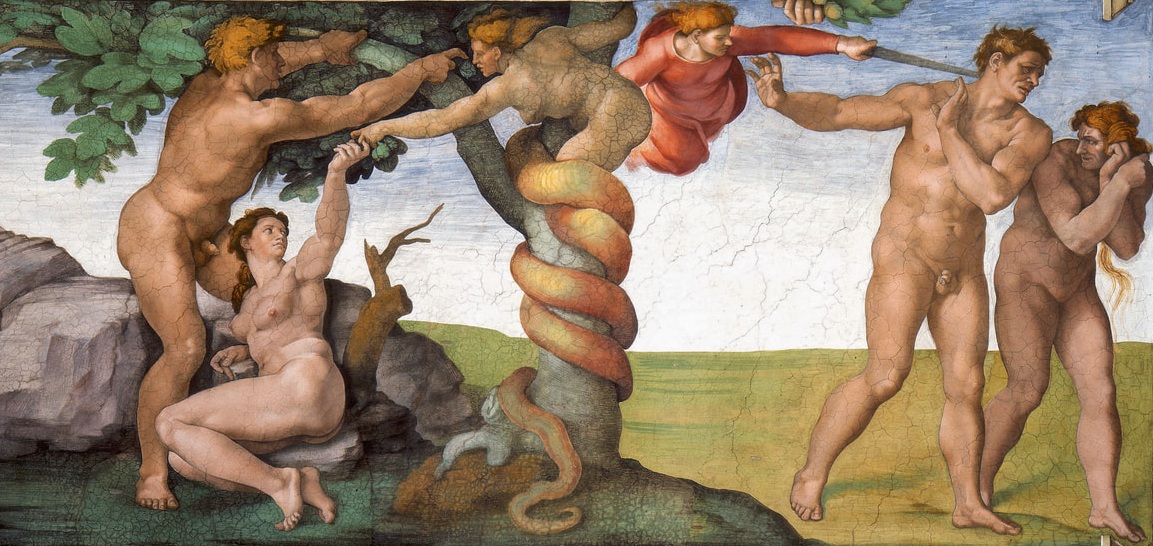
The
renaissance artist Michelangelo's portrayal of that very temptation of
Adam and Eve ... and their expulsion from the Garden of Eden because of
their having fallen victim to that temptation
Such
individuals can scoff all they want. But they will never find the
social significance that they so greatly crave in trying to be so
reasonable.
Why is this connection with the higher power of Heaven or God
thus so important to social leadership? Leaders are not your average
person. Your average person naturally wants to fit in, be an
integral part of society. There is absolutely nothing wrong with
those instincts. A strong society depends on exactly that very
instinct being found widely among its people.
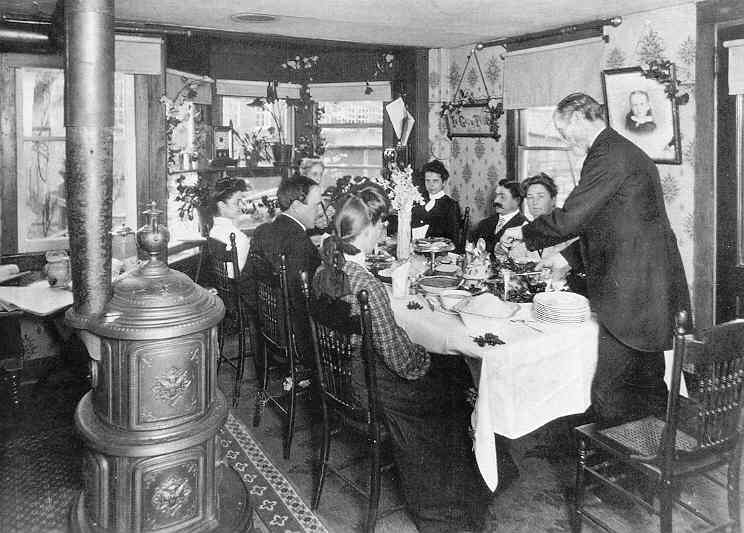
But leaders (at whatever level of society, all the way from
the White House, to moms and dads at the family dinner tables) – in any
circumstance in which they assume the responsibilities of leadership –
must answer to a different voice than that of the immediately approving
world around them. Presidents and parents push ahead because they
see in their respective world of great moral (and loving/caring)
responsibility, whether to the many or the few under their care,
something higher or more noble, something not yet attained, something
that not even the society they are dealing with can yet see or
understand. And by answering to that higher vision, that higher
calling placed on their hearts, they do not pull back from a social
responsibility simply because the society they are supervising (from
little children to jealous rivals) does not see things their way –
although it does become an accompanying responsibility to help those in
their care to see and understand exactly what the leaders require of
them.
Thus it is that true leaders (and not just those occupying
high political office) are designed to draw others forward to a higher
task, even when the society itself is afraid or confused ... especially
when it is afraid or confused. Leaders must lead the people to a higher
call, a call that those under their care do not yet see or understand,
yet one that is vital to the survival and growth of that society.
Leaders must lead.
[1]French for those who govern from their chairs behind desks in governmental office buildings.

 God's Hand in Human History
 Lincoln
  God's call on very ordinary individuals
  The Humanist challenge