It is important to bring back God's covenant with America, for America
to get back to serving as "The Light of the World," giving hope to the
little people of the world that their God of Heaven, the Creator and
Judge of all that has and will happen on earth, wants to show them the
path to greater glory, both for themselves, their families and the
societies that surround them. America was supposed to exemplify that
divine covenant – not force some version of a well-engineered program
(engineered by clever human design) on the other tribes and nations of
the world.
Looking back in history it is easy to see how America has
performed much more effectively in simply acting to inspire and assist
other nations – to the extent that these nations themselves have called
for such assistance. Truman, taking his cues from his own deep
Christian understanding of life and its dynamics was very circumspect
in this regard and played the situation in post-war Western Europe
masterfully (aid to Greece and Turkey, the Marshall Plan, relief to
blockaded Berlin, and the creation of NATO). Kennedy's Peace Corps was
set up along these same lines.
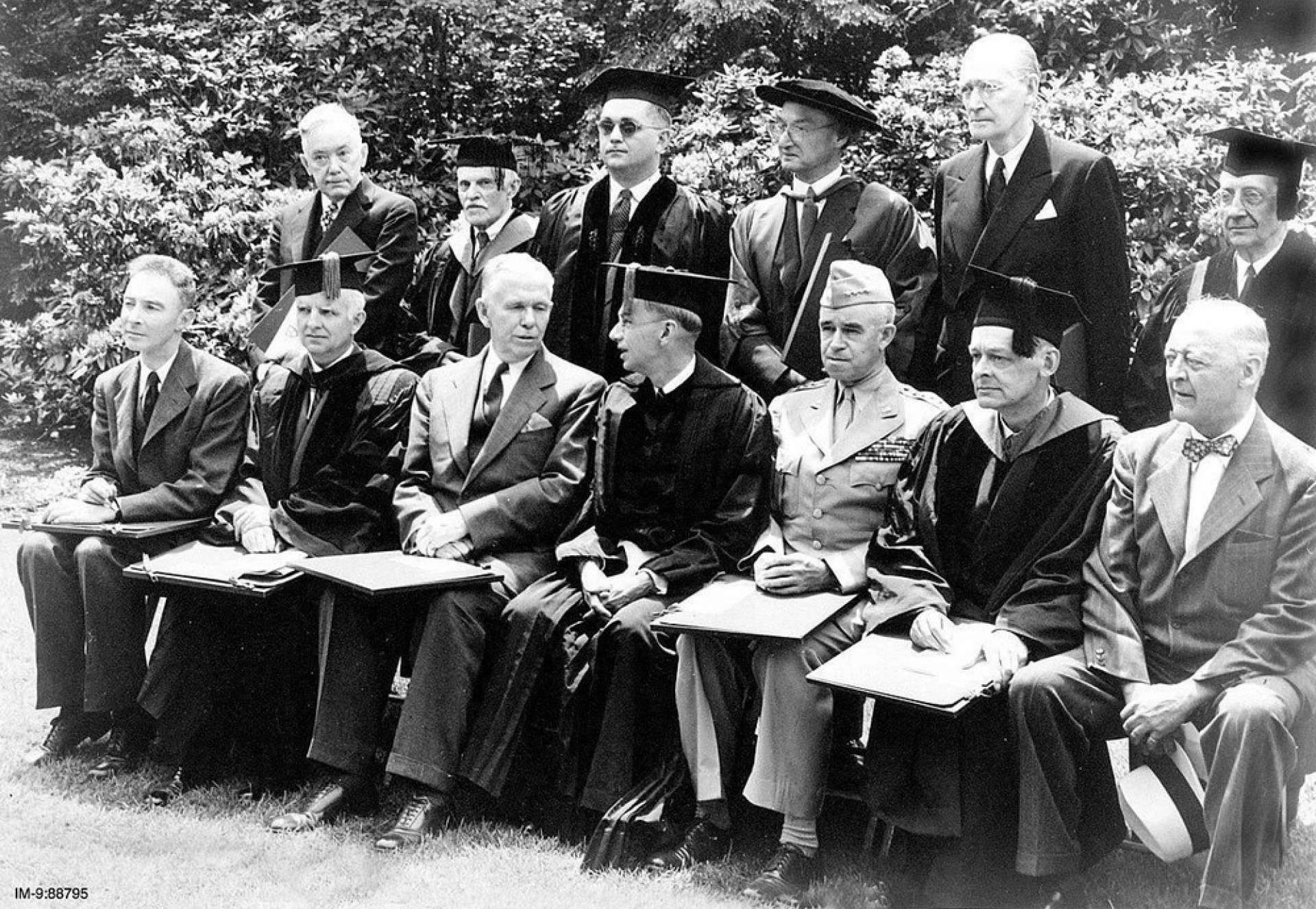
Marshall at Harvard announcing a supportive rather than combative approach to foreign affairs - June 1947
And yes, this means even assuming a political toughness at
times, if it is done in cooperation with others seeking such assistance
– such as was the case of Truman's decision to come to the aid of the
South Koreans in warding off the aggression of the North Koreans. Bush
Sr's action against Saddam in Kuwait was built on extensive
international support – and most importantly the support of the
Kuwaitis themselves – as were Clinton's actions in Yugoslavia against
the ethnic cleansing going on there. In each case the goal was not to
remake the societies along supposedly improved social lines, but simply
to support the peace and prosperity of societies experiencing deep
social trauma. Clinton had no desire to remake Serbia, only to back it
out of its attacks on its neighboring societies.
Even here, caution and restraint – rather than moral crusading
inspired by some plan to perform a makeover of some other society – has
characterized America's finest moments. And when bringing peace and
prosperity clearly seemed to be beyond America's powers to bring to a
specific situation, wise American presidents stayed out of the chaos.
Such was Clinton's decision not to save Rwanda from its self-inflicted
genocide. This included Reagan's decision to pull out of Lebanon and
Clinton's similar decision in Somalia when it became apparent that
American involvement was not inspiring local support. And it included
Bush, Sr.'s decision not to go charging into an Iraqi quagmire in an
effort to take out Iraq's leader, Saddam Hussein. There were situations
that properly called for American action; there were situations where
no such calling was there for America. Wise American leaders knew the
difference.
Disasters in trying to "free up" the world. Tragically, such
wisdom has not always directed America's relations with the larger
world. At the end of the 1800s America chose to involve itself in a
rebellion of the Cubans against their Spanish lords, and not only took
the sides of the rebels in Cuba but also spread that sense of
involvement to the Spanish Philippines, where having helped bring down
300 years of Spanish rule there, Americans decided to put themselves in
charge of further Philippine development. This then turned the
Filipinos against the newly occupying American authorities. In short,
America acted no more Liberal than the Spanish in the way they
conducted themselves in the life of the Philippine nation.
Then there was soon after that Wilson's decision in 1917 that
American boys should go off to Europe to kill German boys, to bring
glorious democracy to the world by participating in "the war to end all
wars." Only meaningless and deeply tragic death and destruction
resulted for everyone involved in this senseless nationalist conflict.
Then there was Kennedy's decision to take down the
heavy-handed regime of Diem in Vietnam in 1963, which threw the
southern half of the country into political confusion. This was quickly
followed up by Johnson's decision to send a few American soldiers to
Vietnam to restore that country's broken sense of order – lest the
Communist North Vietnam should take advantage of this American-caused
situation in the southern half of the country. When that did not
suffice to restore a pro-Western social order in South Vietnam, Johnson
sent a few more troops, then a few more, until by the last year of his
presidency in 1968, he had over a half-million American troops in
Vietnam trying to make things go the way he thought they should.
The very exhausting Vietnam venture became a huge disaster for
everyone involved, particularly when a Democratic Congress then in the
early 1970s decided to undercut a Republican Nixon White House, which
was wisely withdrawing American troops from this mess – while at the
same time offering a small amount of, yet very vital, financial support
to our South Vietnamese allies. Congress simply cut off all further
support of the Vietnamese – even mere financial support – allowing the
North Vietnamese to be easily able to fill the political vacuum our
abrupt departure had created. This in turn left thousands of
pro-American Vietnamese to be slaughtered by Soviet Russian-supported
North Vietnamese troops who filled that vacuum. And the chaos caused by
the collapsing political status quo did not end there, but spilled over
even more horribly to the killing fields of neighboring Cambodia.
And Congress never understood, or at least never took
responsibility for, the tragedy that mere political ambition at home
brought on those dear people abroad.
And equally tragic, entry into the 21st century saw America
apparently having learned nothing from the grand tragedy of Vietnam.
The horribly failed Vietnam example did not stop Bush Jr. from
attempting to "free up" Iraq the way Kennedy had once freed up South
Vietnam. Thus Bush decided to "liberate" Iraq in bringing down Saddam
Hussein's government in that country. Unsurprisingly – and most
tragically, – Bush's massive military effort (Shock and Awe) did not
lead to a Humanist's democratic utopia for that country but instead,
horrible infighting.

So
is "Shock and Awe" - such as we unleashed over over Baghdad in 2003 -
how America is supposed to liberate a people and bring them to
democratic freedom?
And Bush's similar effort to undercut Afghanistan's Pashto
tribesmen in their support of the Taliban did nothing but throw
Afghanistan into ever-deeper chaos and violence.
And how exactly was our effort to undercut Syria's President
Assad such a "humanitarian" venture? He was simply trying to hold a
multi-ethnic country together in the face of Syria's fall into social
disintegration. And the same held true for Gaddafi in Libya.
How would we have felt if France or Britain (or both) had
decided that it was the "humanitarian" thing to do to undercut Lincoln
in the same way we undercut Assad and Gaddafi, because Lincoln's effort
to keep the Union together in one piece through military means was in
violation of every precept that all Humanists find themselves living
and dying for? Thank God (literally) that the leaders of France and
Britain did not decide to "go Humanist" on us in the 1860s.
What is truly amazing is how it seems always the case that
"going Humanist" (undercutting social authority) ends up with the
necessity of having to "go Darwinian" (restoring order by the use of
domineering means)!
Where is the wisdom in all this? What does it take to hold a
multi-ethnic, multi-sectarian, multi-class society (as all societies at
some point tend to be) in a state of peace ... where the streets are
safe, homes are secure, and the people able to enjoy the simple
prosperity that makes for human happiness?
Christianity has always had a powerful answer to that
question: let God direct, inspire, provide ... through similar actions
that we sons and daughters of his do on his behalf. He has made very
clear in the Bible's instructions as to how life itself is to be
understood and addressed. The Bible is like a science textbook on
social dynamics. We need to pay attention to what God himself has shown
us there, as countless generations before us have done, most wisely.
And God, as always, will prove very faithful in his generous
support of those who choose to live the Biblical way, at the same time
in providing them with the means to be so generous and supportive of
others.
Indeed, America was originally set up for just that purpose,
namely, to illustrate as the City on a Hill, a Light to the Nations,
how God wants all of us humans to live. And America has clearly
succeeded marvelously when it went at things in this manner.
So why then are Humanism and Darwinism so set on bringing down
the Christian worldview and the Christian constitutional foundations
that have served both America itself and the surrounding world so well?
Somehow Humanism still feels the strong need to prove itself,
against Christianity. And Darwinism is totally scornful of
Christianity.
| DEFENDING WESTERN / CHRISTIAN CIVILIZATION |
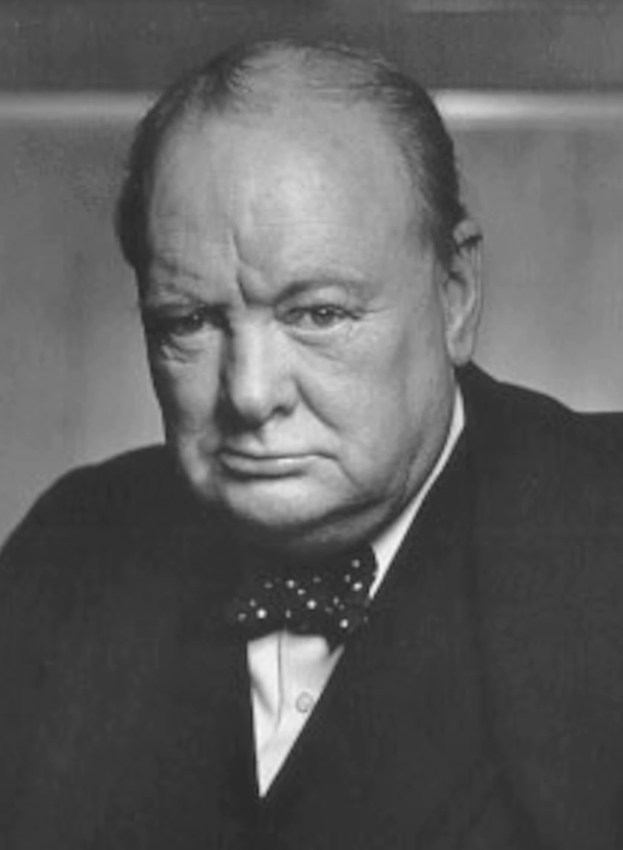 The
English political leader, but also the author of volumes of Western
history, Winston Churchill, referred to Western Civilization as
"Christian Civilization." And rightly so. The Christian worldview
officially shaped the European (and later, American) Western world
since the early 300s, over 1700 years ago (but beginning its influence
well before even then). Christianity was central to the understanding
of what society was all about, what its purpose was, and how life was
to be moved forward to higher things. Until 50 years ago this same
Christian understanding about life was also the mainstay of the
American idea, giving the country three and a half centuries of
national vision and social purpose during its development from a
European backwater to its position at the head of the Christian world
as its primary defender. Christianity was a central element in
America's rise to its status as the world's sole Superpower.
The
English political leader, but also the author of volumes of Western
history, Winston Churchill, referred to Western Civilization as
"Christian Civilization." And rightly so. The Christian worldview
officially shaped the European (and later, American) Western world
since the early 300s, over 1700 years ago (but beginning its influence
well before even then). Christianity was central to the understanding
of what society was all about, what its purpose was, and how life was
to be moved forward to higher things. Until 50 years ago this same
Christian understanding about life was also the mainstay of the
American idea, giving the country three and a half centuries of
national vision and social purpose during its development from a
European backwater to its position at the head of the Christian world
as its primary defender. Christianity was a central element in
America's rise to its status as the world's sole Superpower.
Meanwhile, as a slow but gathering process occurring over the
last half-century, all of that cultural-spiritual dynamic has been
pushed aside step by step by federal judicial decree, in the effort to
replace the Christian legacy with Secular Humanism. The results of that
substitution both at home and abroad have been dramatically much less
than excellent.
The 2019 Pew Report. On October 17, 2019, the Pew Research Center
released a 26-page report which clearly demonstrated how badly that
Christian character of America had declined – in just the last ten
years alone. The Center had just completed a statistical analysis
comparing changes occurring in America's Christian profile between the
years 2009 and 2019, a time-period coinciding with the presidencies of
Obama and Trump. The report was appropriately entitled "In U.S.,
Decline of Christianity Continues at Rapid Pace: An update on America's
changing religious landscape."[1] The title speaks for itself.
The study found that in 2019, only 65% of Americans still described
themselves as Christians, down 12 percent over the previous ten years.
At the same time, those that claimed no religious affiliation (from
atheists to simply "nothing in particular") rose to 26% of the
population, up from 17% in 2009 (page 3).
The age of the Americans being surveyed was even more skewed
against Christianity. Of the oldest group, the Silents, the decline in
Christian affiliation was only 2 percent; for the Boomers it was 6%;
and Gen-X 8 percent. But the percentage drop among the Millennials
(born in the 1981-1996 period) was a huge 16 percent (page 7). This
left 84% of the older Silents still standing in 2019 as Christians –
whereas only 49% of the Millennials still identified themselves as
Christians (page 8). That is a terrible indicator as to where America
is headed into the future morally and spiritually as a nation.
Not surprisingly also, political party affiliation made a big
difference. For those that identified themselves politically as
Republican, or leaned in that direction, the ten-year decline was 7
percent. But the Democrats marked a 17 percent decline in Christian
identity (page 7). As a consequence, in 2019, 79 percent of the
Republicans still identified themselves as Christians, whereas the
figure stood at 55% for the Democrats (page 19). That is a very
significant political difference, pointing further to the likely moral
and spiritual direction in which the country is headed, depending upon
which of the two political parties is in power in Washington.
Christianity and society. Christianity at its heart (as set forth
by Jesus himself) was about Godly empowerment of the individual, in the
face of life's many and often quite difficult challenges. Christianity
supported human life with the understanding that with simple faith in
God alone, these challenges could be met and conquered by even the
least socially significant of individuals – because God himself offered
his powerful support to those who simply trusted him as their Heavenly
Father. God was not interested in a person's social status, as
societies tend to do.
Christianity also demonstrated clearly (during the worst of
times of Roman persecution) that individual strengthening through
Divine empowerment also worked awesomely well in producing the right
structuring for social as well as personal life. In fact, it was the
witness of the Christians in their immense personal and social strength
that impressed a morally decadent Rome to begin to look to Christianity
as the solution to the decay that infected Roman life in every
imaginable social area possible.
Admittedly, Christianity has been used as a civic formula for
autocracy. But that was never its original nature. And from time to
time reforms have swept the Christian world in order to bring the
people back to the original character of the Christian faith. The
Protestant Reformation of the 1500s and 1600s, during which English
Puritanism was founded, was just such an early example – and a critical
social foundation for New England and all it stood for. Also, the Great
Awakenings were key to keeping Christianity on course in the face of
the natural instinct of man to want to displace Divine guidance and
support with personal autonomy: the ever-present temptation to want to
play God himself.
The Decline of the Christian West. For the past 70 years, since
the end of World War Two, Europe has looked to America to play the
leading role in defending Western civilization – allowing Europeans to
look after their own material development in the meantime. As they lost
their leading position in world events, so also they lost interest in
the moral-spiritual order that once had made Europe itself the center
of global affairs. They were content to live to some kind of grand
material, but not grand spiritual, purpose. This moral-spiritual
decline, as philosophers ranging from Aristotle to Toynbee have
observed, was an indication of Europe's overall political-social
decline as well.
America's own self-imposed spiritual decline. But America too now
finds itself headed down the same moral-spiritual road as Europe.
Worse, many American leaders themselves have called on Americans to
take a strong stand against the supposed tyranny of Middle America.


These post-modern crusaders feel the need to attack a traditional
America still possessing the strong and well-tested and well-proven
social standards that for generations America has faithfully lived by.
They treat not only such social tradition but even patriotism itself as
some kind of disease. Instead, these "progressive" crusaders even
consider those who stand publicly against the symbols of American
patriotism as the nation's true heroes.
But what do they actually stand for? We know what they stand
against. They have made it quite clear that their highest call is to
"shame" America, for being whatever it has, over the centuries, become.
But a society cannot survive simply on the basis of its people being
against its very existence. Where is the unifying idea that will pull
America together, and Western civilization with it? Who today is
offering strong moral guidance to our great Western or Christian
civilization?

LGBTQ characters mimicking Jesus Christ's Last Supper - Paris Olympics - July 2024
In all of this, America seems to be asleep at the wheel, its
leading political voices in Washington more intent in playing the game
of crippling each other, as if Washington politics were merely a TV
game show for wannabe celebrities. True moral leadership all around the
political table seems to be in short supply.
The critical need for another "Great Awakening. "We have arrived
at the same point in which if our civilization is to be saved from its
own self-inflicted folly, we are going to need another Divine
intervention. Or else the days of American global leadership, as well
as the modern Western or Christian Civilization's
social-moral-spiritual leadership in the world's development, are over.
China can hardly wait for this to happen!
[1]https://www.pewforum.org/2019/10/17/in-u-s-decline-of-christianity
-continues-at-rapid-pace/
| A CALL TO RENEW THE COVENANT WITH GOD EXTENDED TO US THROUGH JESUS CHRIST |
So
... at this point it is of critical importance that America finds its
way back to the original Covenant with God, similar to the one
presented by Moses as the Hebrews were about to enter the Promised
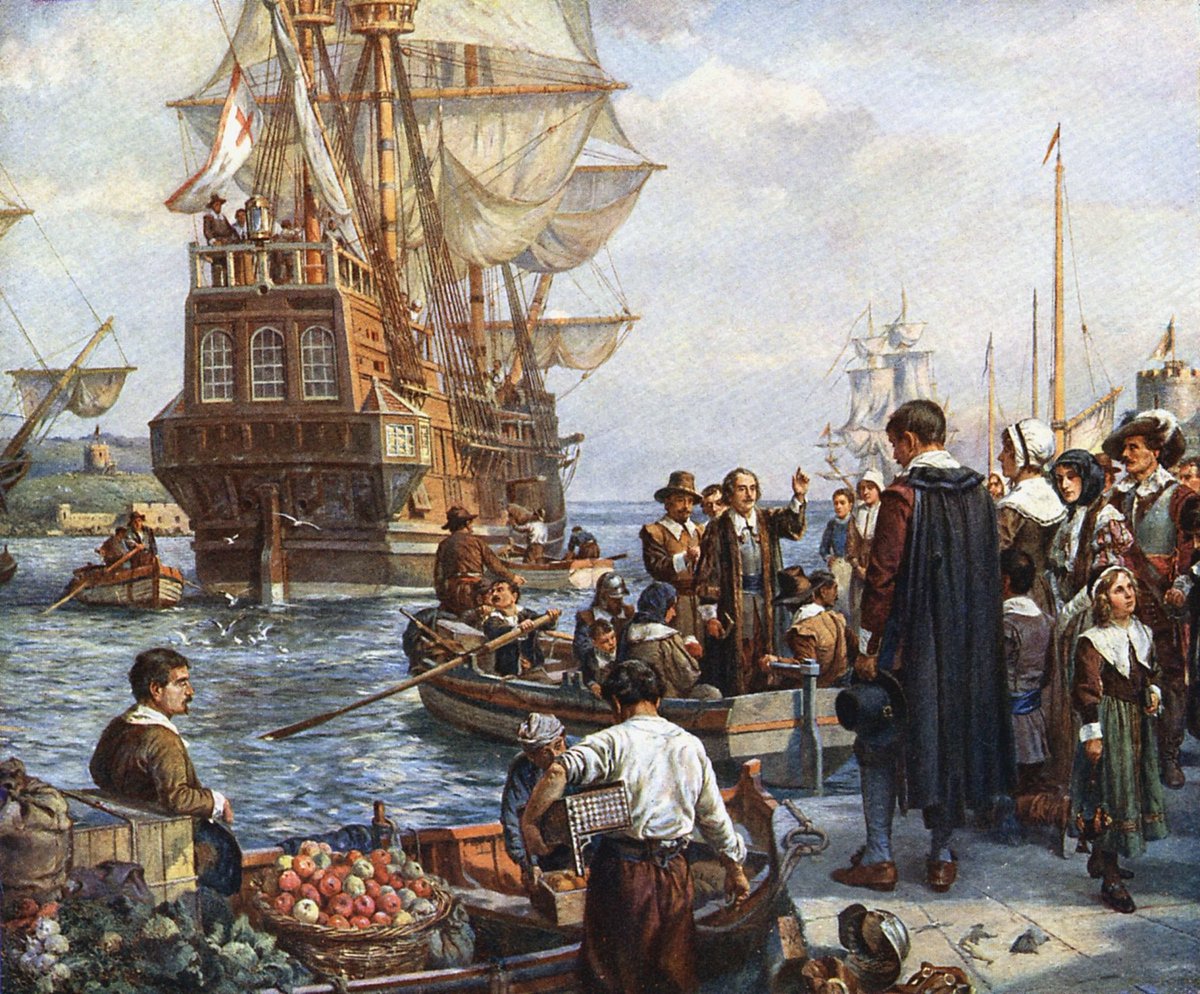
Land, and exactly the same one that Winthrop referred to in delivering
his famous sermon, "City on a Hill," as the Puritans were about to
depart in their ships in order to begin their great Christian
experiment in America:
.
. . Thus stands the cause between God and us. We are entered into
covenant with Him for this work. We have taken out a commission.
. . . if we shall neglect the observation of these articles,
[and] embrace this present world and prosecute our carnal intentions,
seeking great things for ourselves and our posterity, the Lord will
surely break out in wrath against us, and be revenged of such a people,
and make us know the price of the breach of such a covenant.
. . . Now the only way to avoid this shipwreck [of God's
wrath], and to provide for our posterity, is to follow the counsel of
Micah, to do justly, to love mercy, to walk humbly with our God. For
this end, we must be knit together, in this work, as one man. We must
entertain each other in brotherly affection. We must be willing to
abridge ourselves of our superfluities, for the supply of others'
necessities. We must delight in each other; make others' conditions our
own; rejoice together, mourn together, labor and suffer together,
always having before our eyes our commission and community in the work,
as members of the same body.
. . . Beloved, there is now set before us life and death,
good and evil, in that we are commanded this day to love the Lord our
God, and to love one another, to walk in his ways and to keep his
Commandments and his ordinance and his laws, and the articles of our
Covenant with Him, that we may live and be multiplied, and that the
Lord our God may bless us in the land whither we go to possess it.
But if our hearts shall turn away, so that we will not obey,
but shall be seduced, and worship other Gods, our pleasure and profits,
and serve them; it is propounded unto us this day, we shall surely
perish out of the good land whither we pass over this vast sea to
possess it.
Therefore let us choose life, that we and our seed may live,
by obeying His voice and cleaving to Him, for He is our life and our
prosperity.
Maranatha ("may our Lord come").
We are way beyond the possibility of human self-help. As a
fully-confused and wandering Fourth-Generation people, our help at this
point can come only from the intervention of God. And so we pray that
God might come and free us from our self-inflicted folly.
But we might also add: "However, dear Lord, please do not make
it hurt too much." The Great Depression of the 1930s cured us of our
1920s silliness. The toughness required of human life during the
Depression got America smart real fast, and prepared the country for
the enormous task of fighting both the German and the Japanese Empires
at the same time. Thankfully God had intervened in order to toughen up
America, or a still-silly America would have failed horribly to meet
successfully the challenge of a war placed before it in 1941.
But today we have over a half-century of silliness to get
over, not just ten years, as was the case following the Roaring
Twenties. Thus it might take much more "toughening up" of our character
than even another ten-year Great Depression to get us back to being a
First-Generation people, a people once again able to take on the huge
challenges that await us. We are saddled with an enormous national debt
and a Secular-Socialist moral-spiritual dependency we have fallen under
at home, and we face the amazing inability to focus on, or even
understand, much less answer, the monumental challenges to America
rising abroad.
But we are hoping that God will honor the Covenant that our
ancestors once signed onto, for themselves and for the future
generations to come after them. That is our fondest hope. It is, in
fact, our only hope.
Maranatha!
 Miles
H. Hodges
Miles
H. Hodges

 Inspiring the world ... rather than trying to fix it
 Defending Western / Christian civilization
  A call to renew the Covenant with God extended to us through Jesus Christ