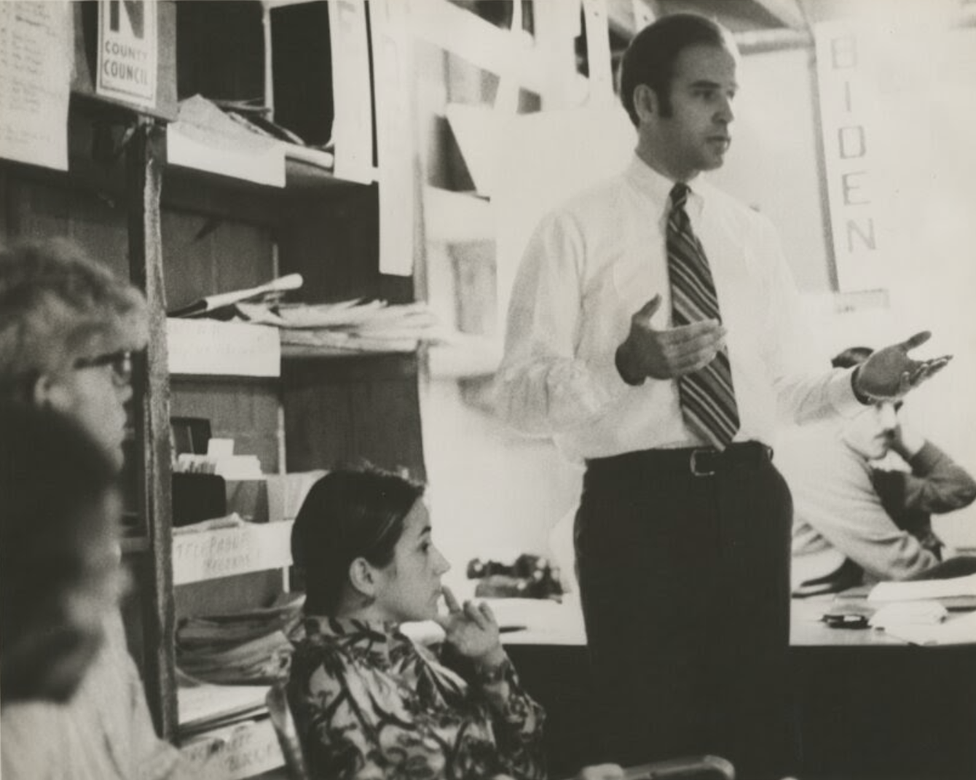
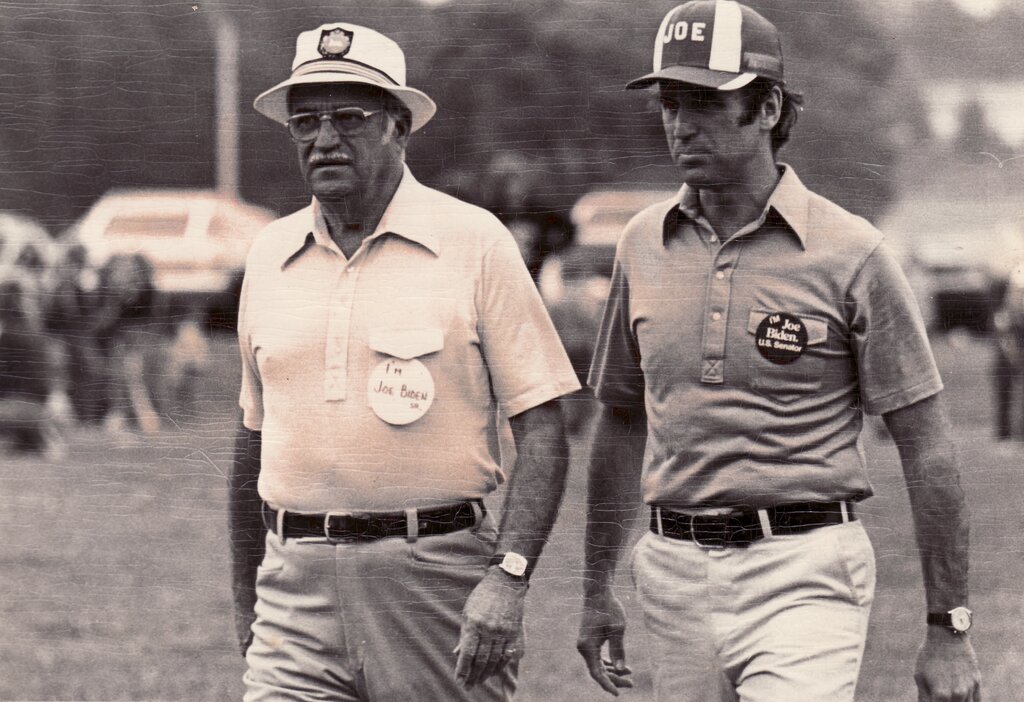
Most amazingly, at only age 29, he decided to run for the U.S.
Senate against the veteran Republican Caleb Boggs. Actually, Boggs had wanted to step down from
the position, and ran again only upon the urging of his fellow
Republicans. But Biden was the ambitious
one, he and his family working hard to bring him to public notice, and by
election time the next November Biden managed to pull ahead of Boggs.
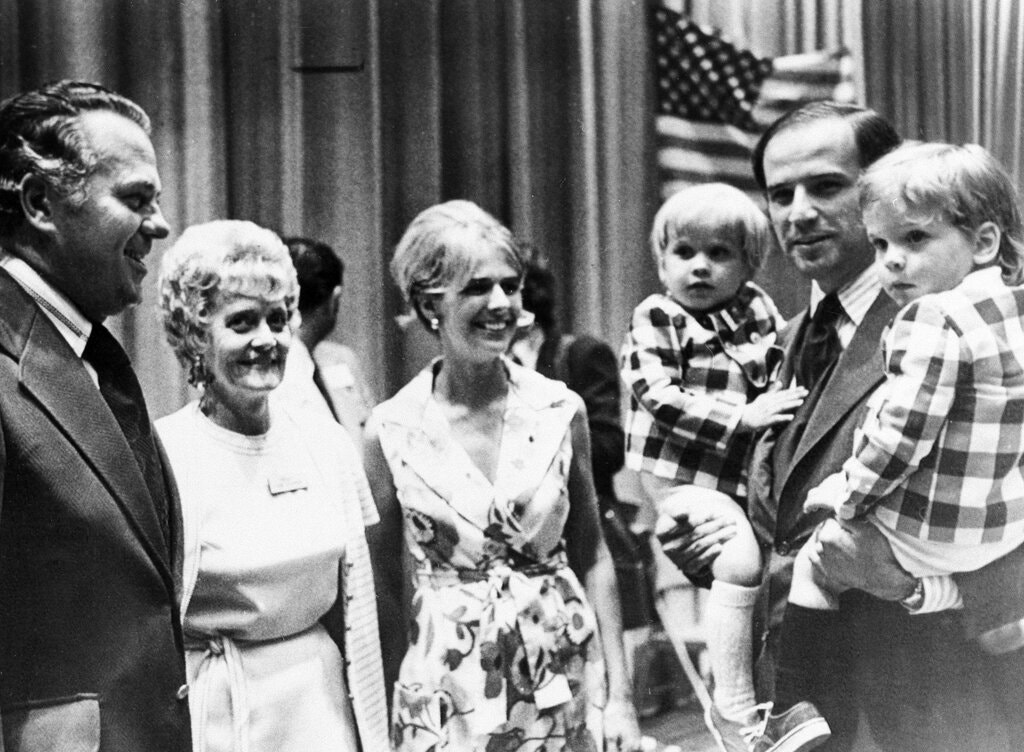
Biden with his wife Neilia and sons Hunter and Beau
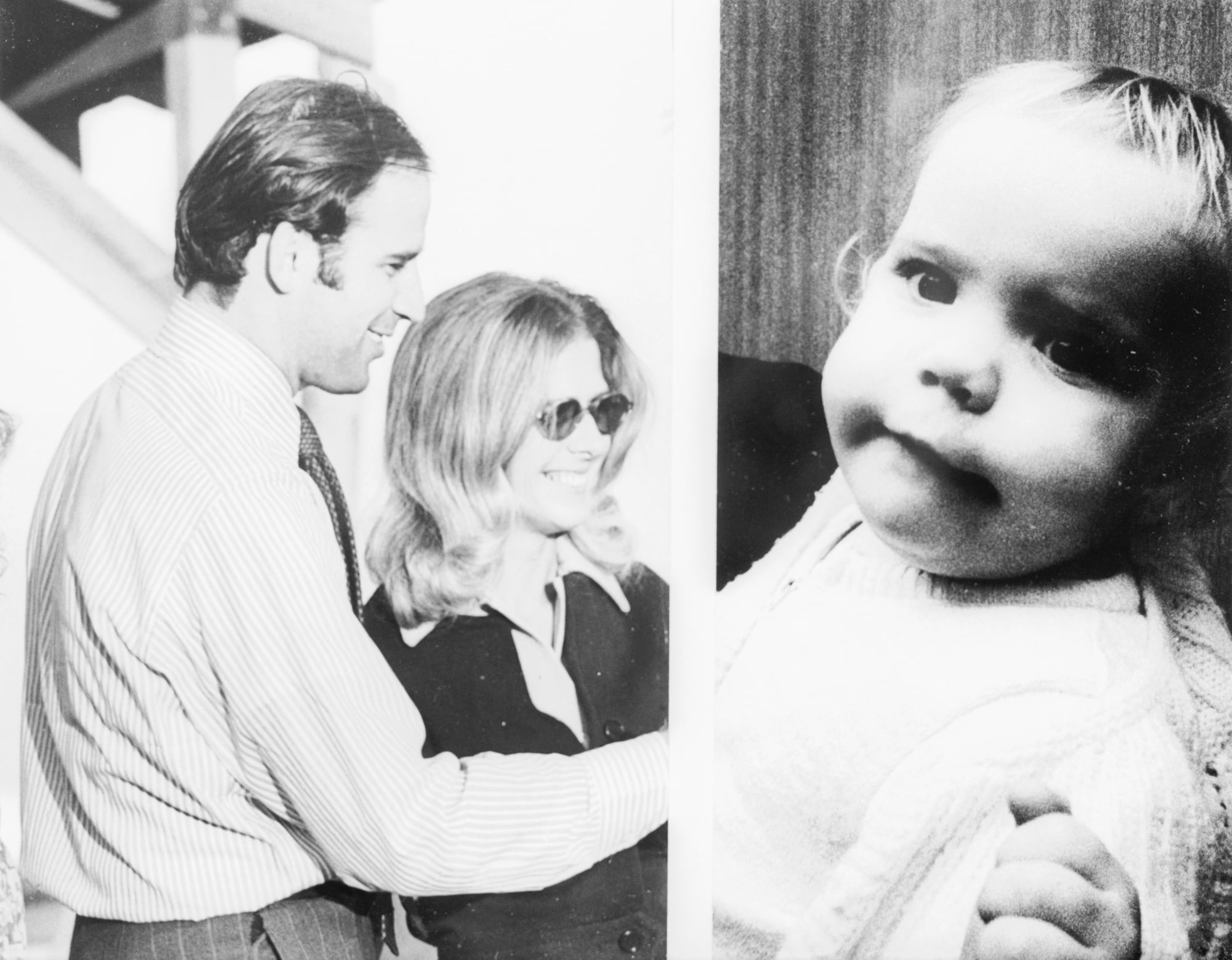
Joe and Neilia Biden and daughter Naomi
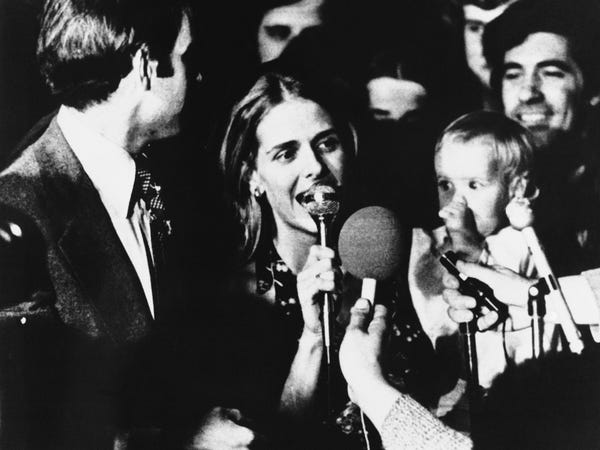 Neilia speaking on election night (with daughter Naomi on
the right) – November 1972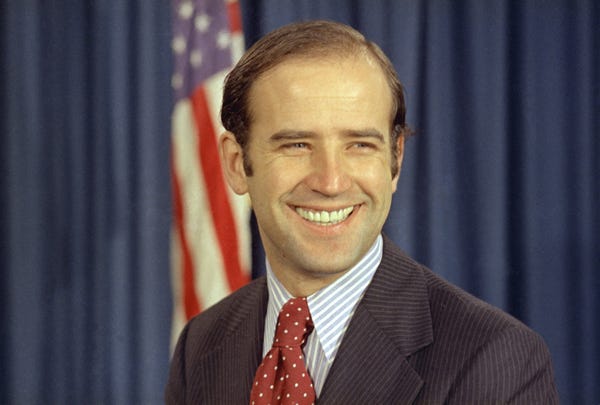 Biden ... upon announcement of his 1972 victory in the race
as U.S. Senator (from Delaware)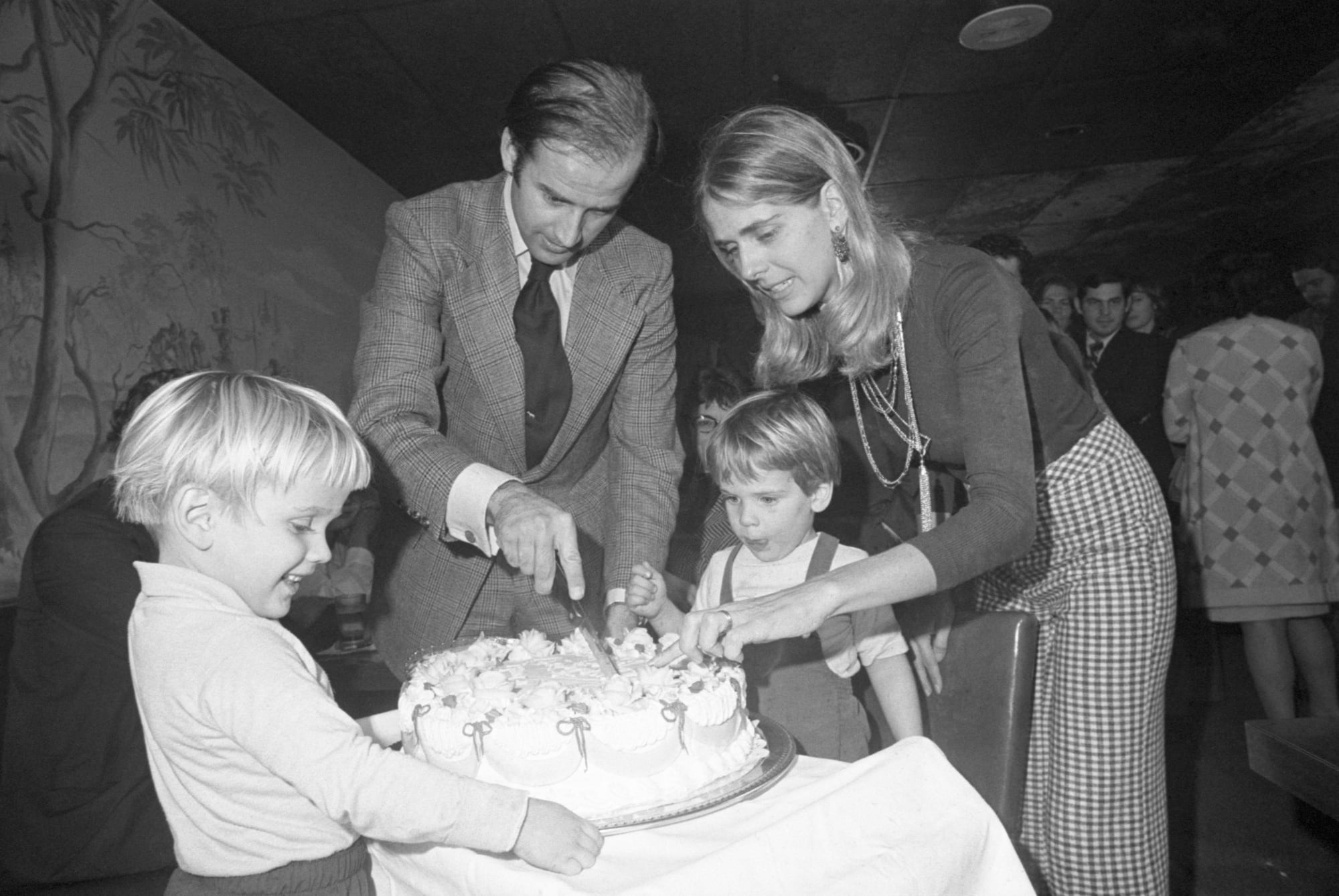
Biden and his first wife, Neilia, celebrating Joe's 30th birthday
with their sons Hunter and Beau – November 20, 1972
And
then, before that month was out, deep tragedy hit Biden and his family, when
his wife and daughter were killed in an auto accident, and his two boys Beau
(age 3) and Hunter (age 2) hurt badly.
Beau and Hunter survived but had to be hospitalized
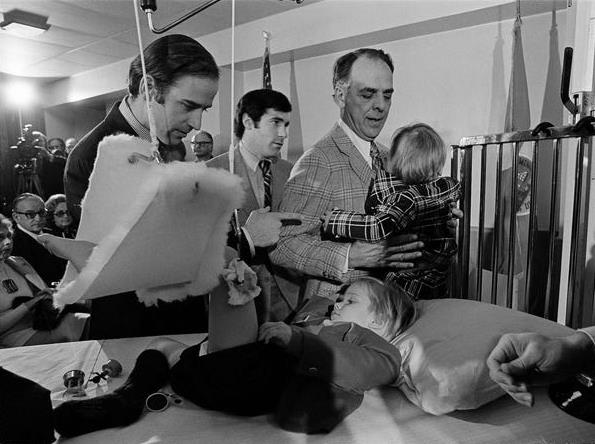
Biden was shattered ... and considered not taking up his new
office as U.S. senator. He confessed later that he even felt
suicidal ... and was very angry at God.
It
is easy to understand the anger Biden was feeling against God, and his numbness
when he thought of his approaching responsibilities as U.S. Senator. He thought about simply quitting ... even
life itself.
But
Senate leader Mike Mansfield worked hard to get Biden not to quit but instead
to take up his calling as U.S. Senator.
And so he did. But as it was,
Biden would be sworn into office, not in Washington but at the hospital bedside
of his son Beau.
But ultimately he was sworn into office
... at the bedside of his son Beau at the Wilmington hospital
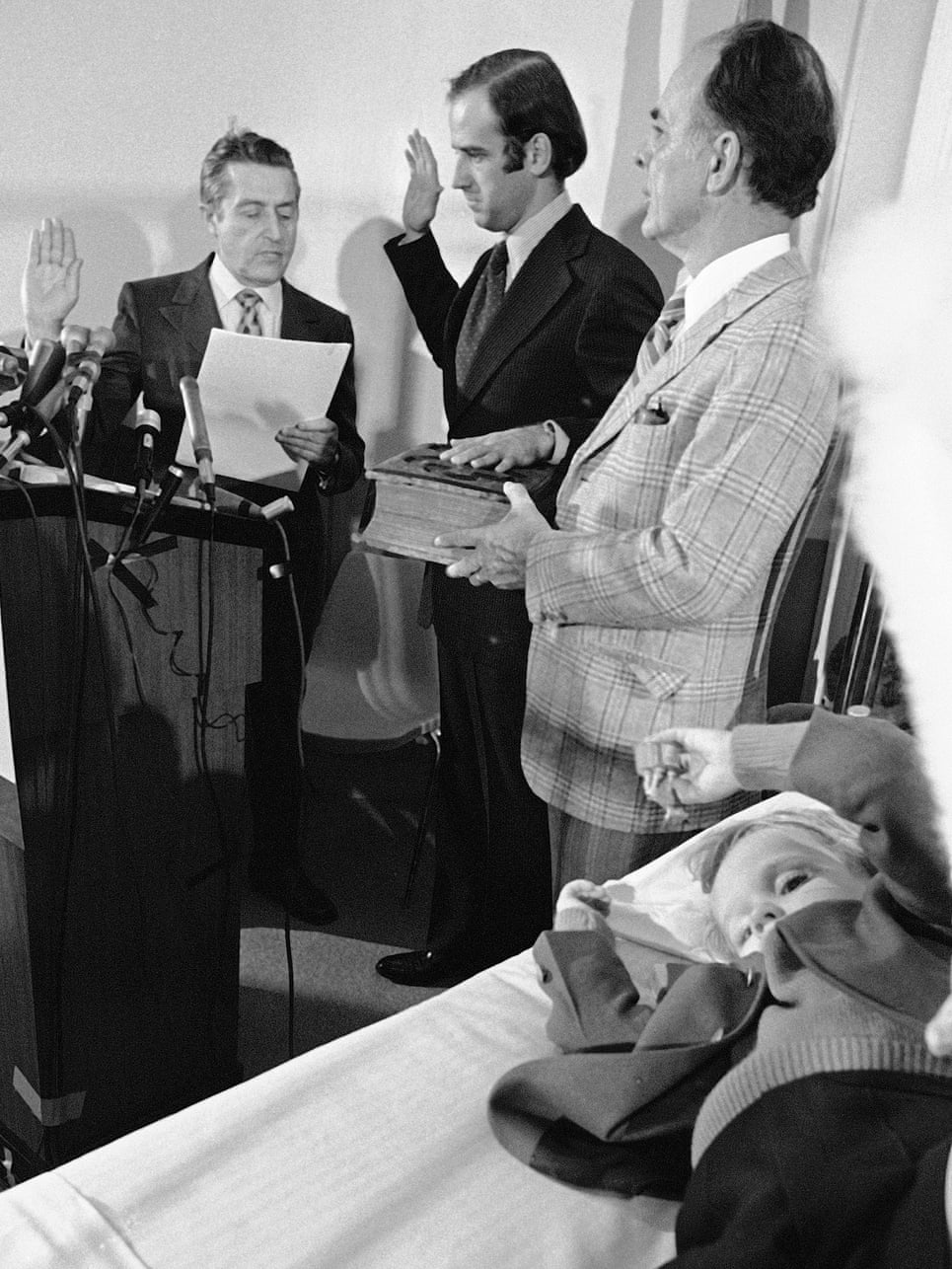
January 1973 Biden is sworn in as U.S. Senator (son Beau in
the foreground)
(Biden would meet three
years later in 1975 and marry in 1977 his second wife, Jill Jacobs).
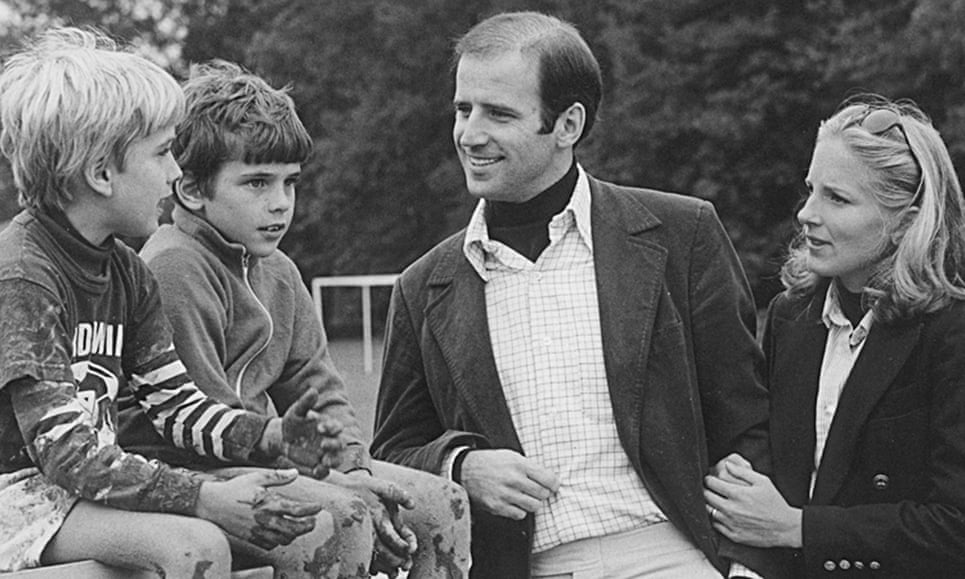
Joe with his sons Beau (left) and Hunter and his wife Jill Jacobs.
He met Jill on a blind date arranged by his brother in 1975.
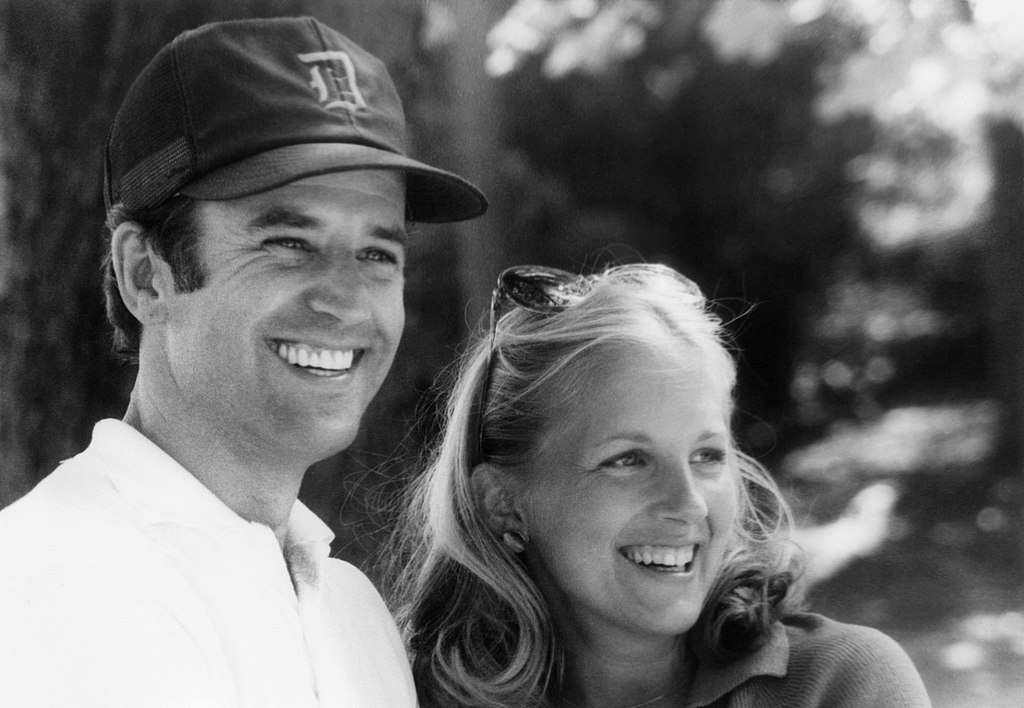
Joe and Jill in their early years together – 1975
In
the Senate his career path was fairly typical, as were also his Democratic
Party loyalties, especially during the latter part of the 1970s when he came to
work closely with the Carter Administration.
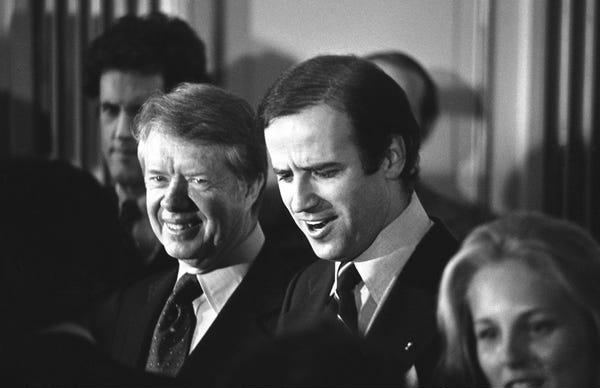
Senator Biden and President Carter in 1978
(Biden had been the first Senator to support Carter in his
1976 decision to run for the presidency)
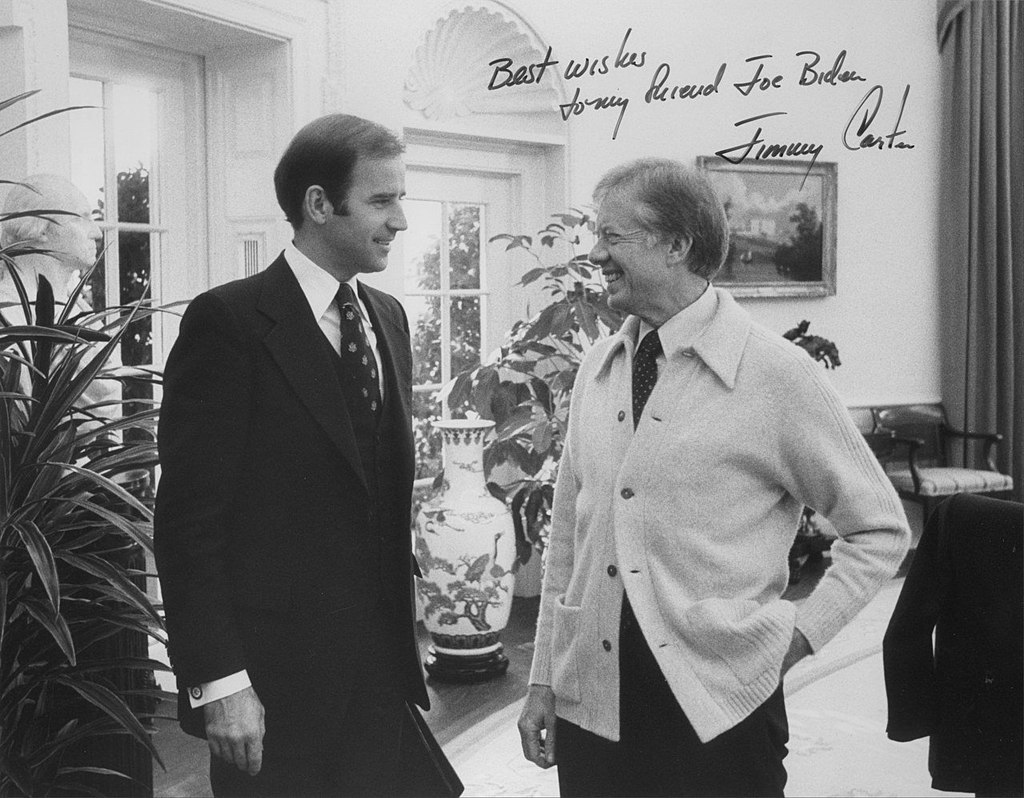
They would remain close
Joe and Jill were very much Catholic in religion
which Joe often made very clear
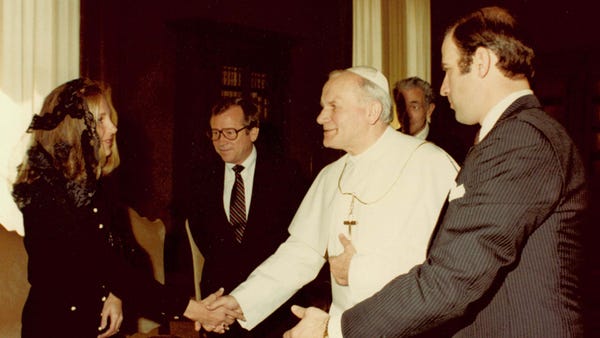
Jill and Joe meet Pope John Paul II at the Vatican – April 1980
During the 1980s he achieved the position as the ranking minority member
of the Senate Judiciary Committee, in time to "Bork" Reagan's Supreme
Court appointment (Bork was too conservative for Biden's taste), and then in
1991, as that committee's actual chair, he was one of the opposing votes to the
Supreme Court appointment of Clarence Thomas.
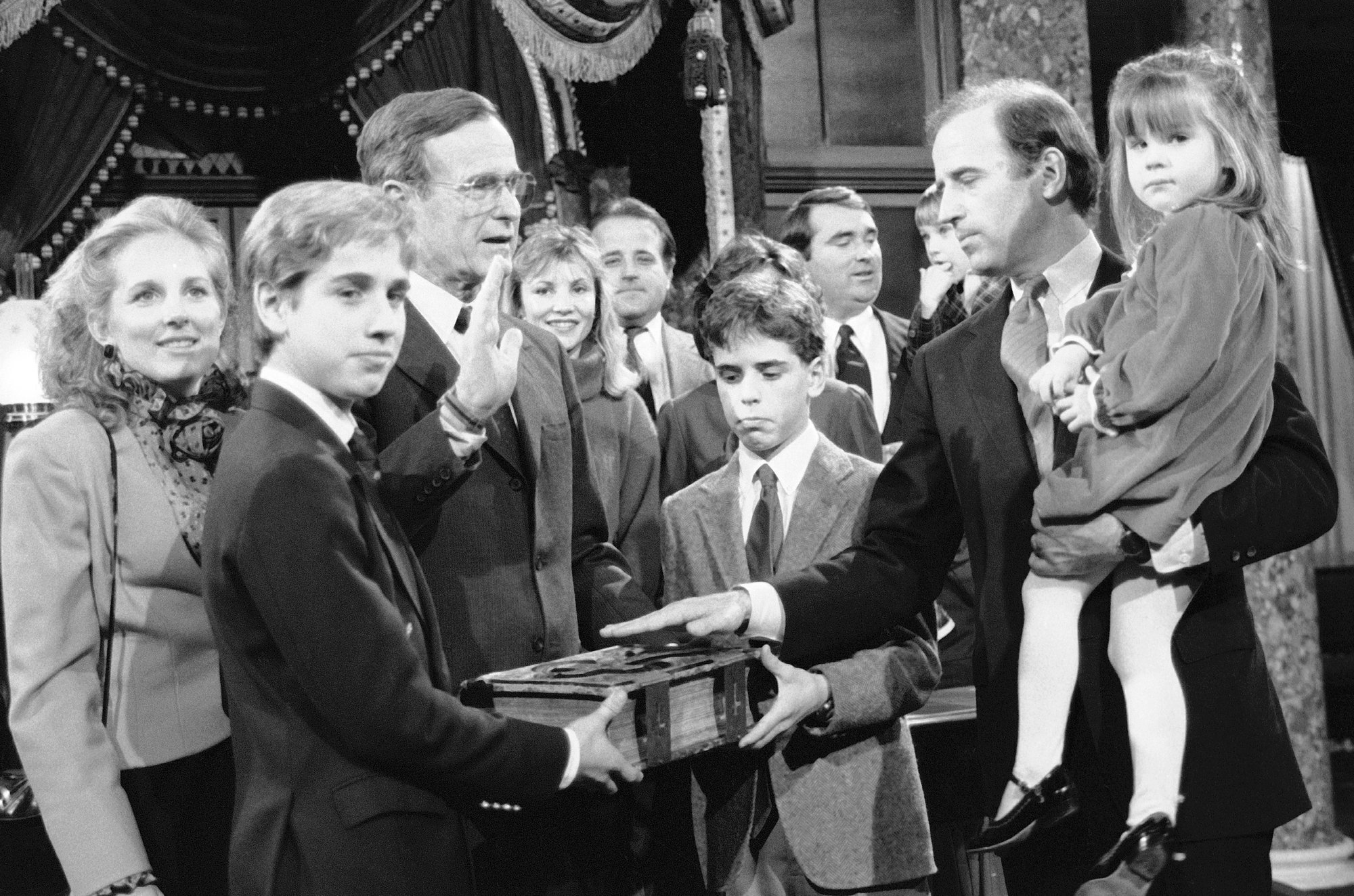
Vice President Bush leads Biden in a swearing-in ceremony – 1985
In 1987, President Reagan nominated Judge Robert Bork for the
position as U.S. Supreme Court Justice
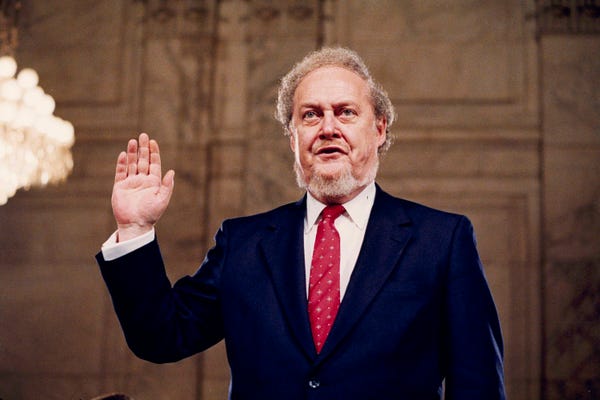
The appointment went to the Senate for confirmation – September 1987
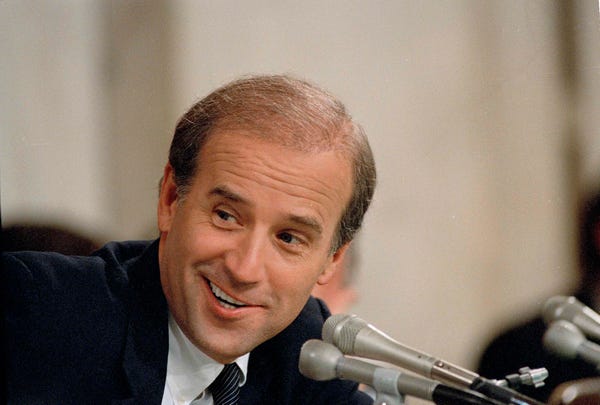
... and the preliminary hearing was assigned to the Senate
Judiciary Committee, which Biden chaired (chairman 1987-1995).
There Bork was opposed strongly by Biden ... who was chiefly
responsible for Bork's final failure to be appointed as U.S.
Supreme Court justice
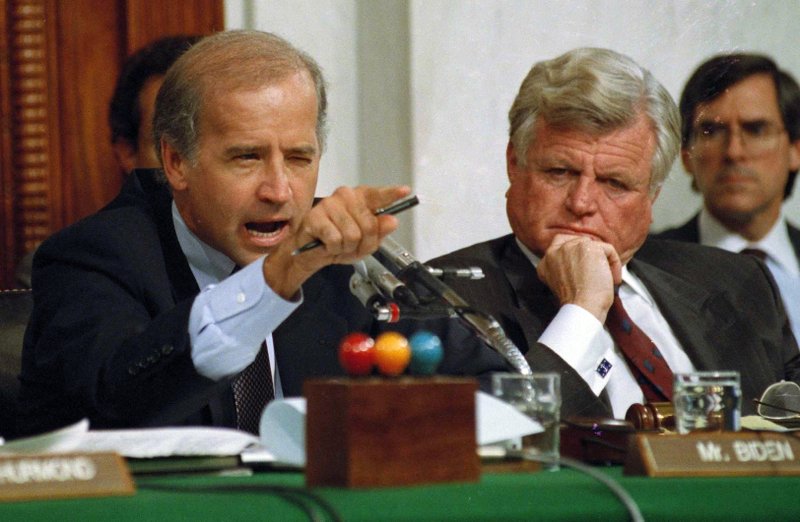 Biden pointing angrily at Justice Clarence Thomas during
the hearing for his nomination to the Supreme Court (1991).
He later claimed that he did not do enough to protect Anita HIll
from the demeaning inquiry of the other male members of his
Judiciary Committee (though in fact that was their job ... to
scrutinize Hill's accusations of Thomas's "inappropriate
behavior" ... especially when other women who had worked
with Thomas told a very different story than Hill's.) Ironically,
sitting next to him is Ted Kennedy ... hardly the bastion of
moral purity.
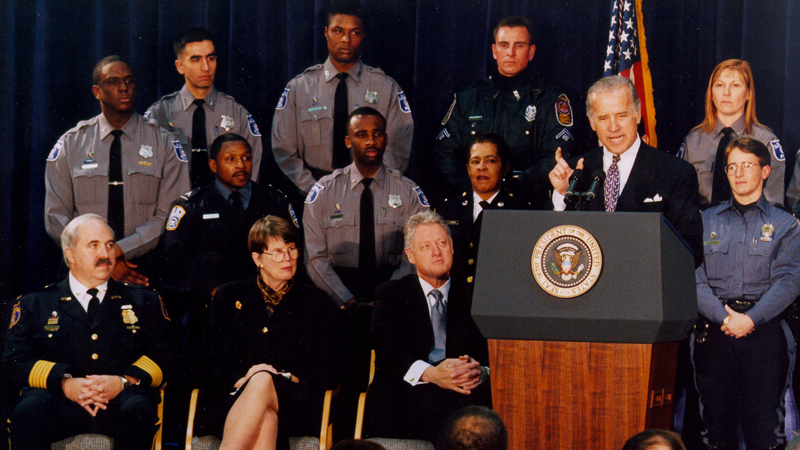
Biden would sponsor a major legislative piece in the form of
a new crime bill – 1994
But
he was also active on the Senate Foreign Relations Committee, opposing Bush,
Sr.'s decision to intervene in Kuwait against Saddam Hussein. But he was much more supportive of Clinton's
decision to get involved in Yugoslavia, in fact, now as ranking minority member
of the committee, he advocated a strong stand in Bosnia even before Clinton
himself had decided to do so. He would
also be a strong supporter of American intervention in Kosovo.
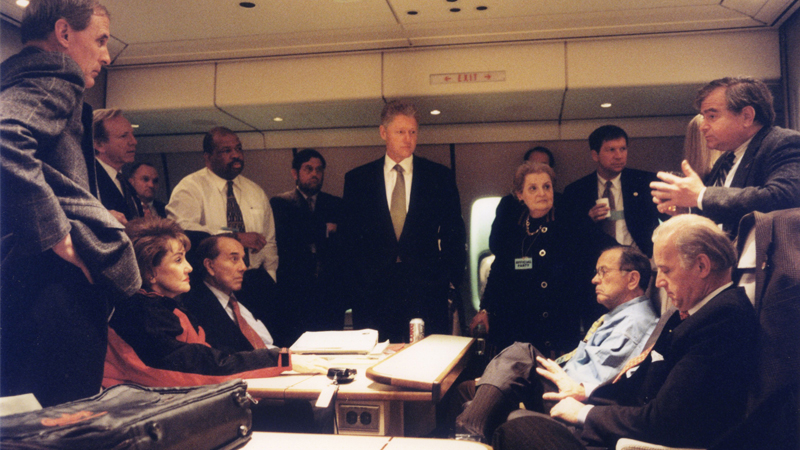
Here he is flying with Clinton and his staff to Yugoslavia in 1997
to take on the ethnic cleansing crisis engulfing that
highly divided society
Then in the years of the Bush, Jr. Administration,
Biden served as the Committee's actual chairman, at least during the years
2001-2003 and 2007-2009. Initially he
was a strong supporter of Bush's intervention in Afghanistan and Iraq, then
backed away from that position, offering the proposal that Iraq be simply
federated into three different ethnic regions (Arab Sunni, Arab Shi'ite, and
Kurdish Sunni). But he could gather no
serious support for the proposal.
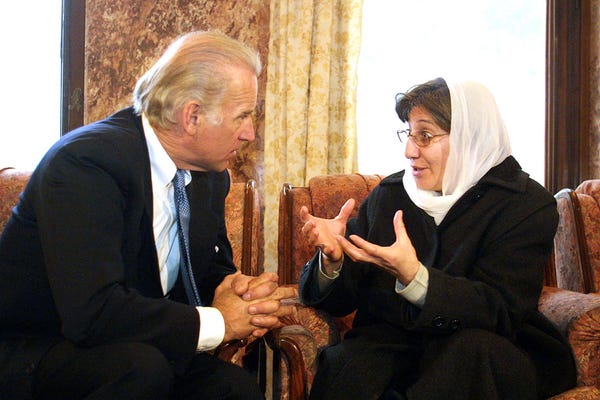
Here he is in Afghanistan, meeting with Afghan women's rights
leader Sima Samar – January 2002
Then
in 2007, he found himself strongly opposed to the "troop surge" in
Iraq, which to his surprise (and the surprise of many) actually quieted things
down in Iraq.
Then in 2007, something he had long had his eye on, namely the
U.S. presidency, seemed to be a possible goal to be pursued.
Actually
he had undertaken just such an effort back in 1987, and had the effort backfire
badly when reports came out that he had plagiarized a law school paper and had
exaggerated greatly his standing at graduation, the negative publicity being
the probable cause of a serious life-threatening brain aneurysms and a
pulmonary embolism, which had him hospitalized in February and then again in
May. He dropped out of the race, and was
even away from the Senate for seven months.
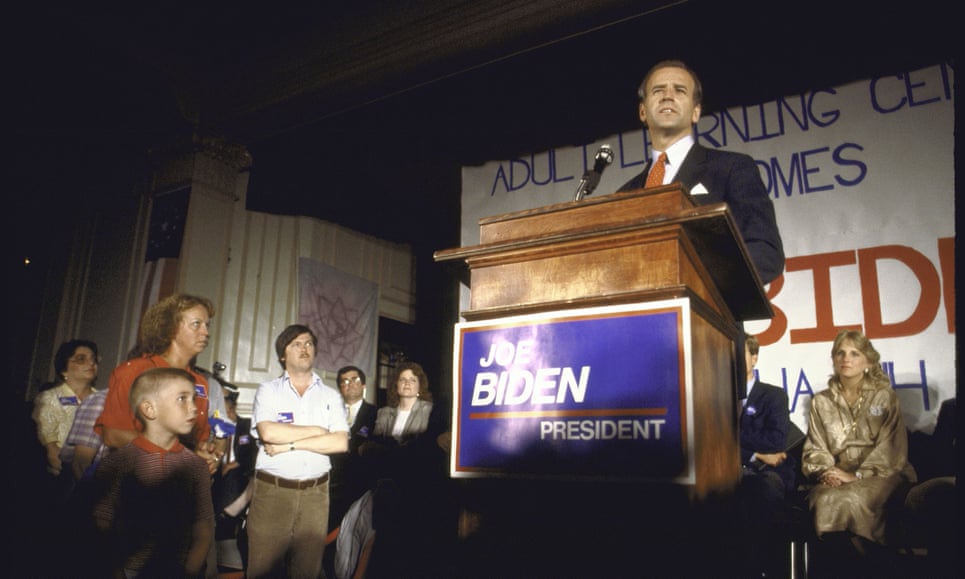
Biden announcing his decision to run for the U.S. presidency
at the end of Reagan's term in office – June 1987
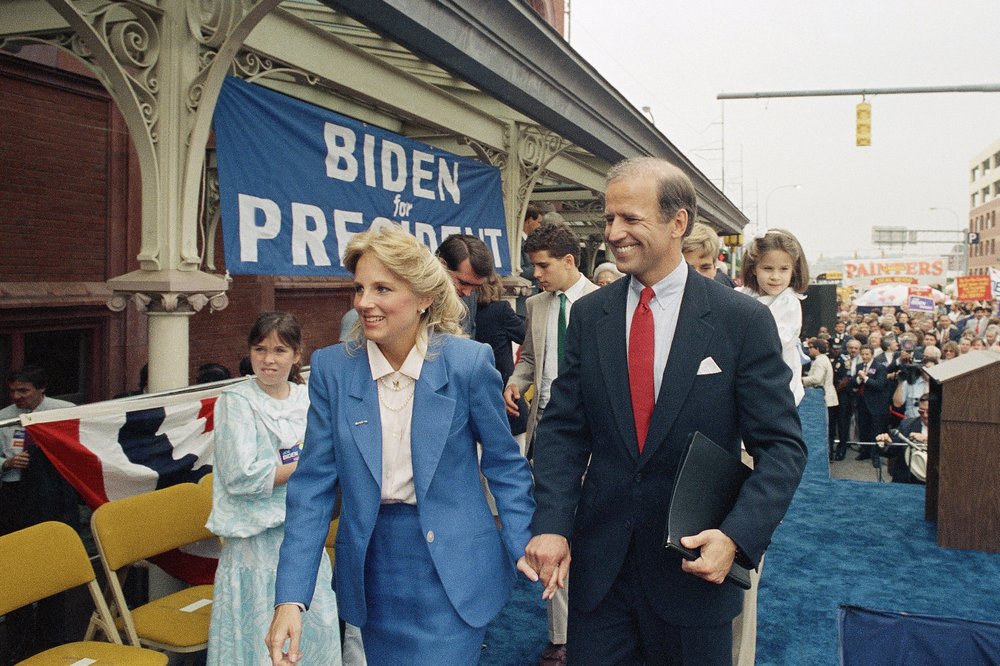
Joe and Jill begin their campaign
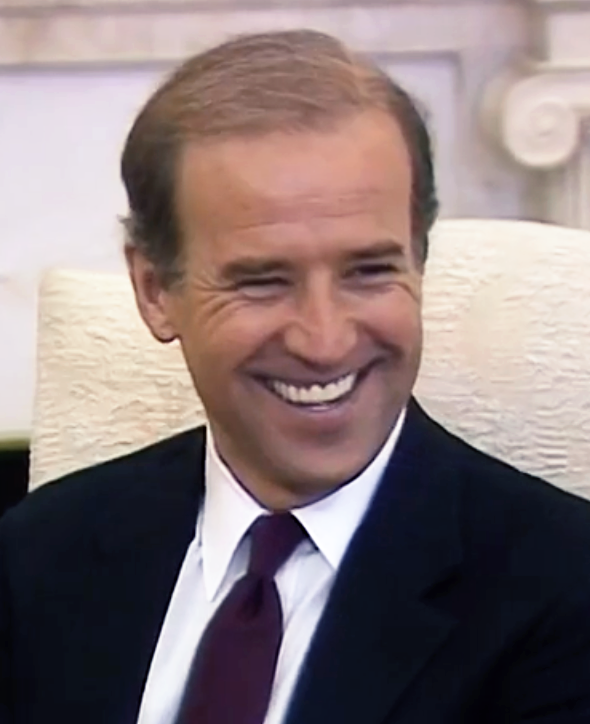
But he would drop out of the race when reports emerged
that he had plagiarized a paper back in law school
Then in 1988 he was also discovered to have possibly two
deadly aneurysms in his brain ... 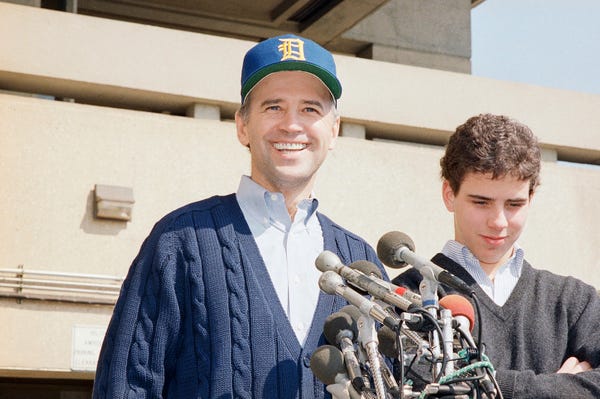 and had to undergo two critical surgeries. Here he is with
son Beau after the first operation. He would return to his
Senate work seven months later.
And now he tried again in 2007 as the Bush, Jr.
presidency was coming to a close. But he
found himself up against strong Democratic Party contenders, Hillary Clinton
and Barack Obama.
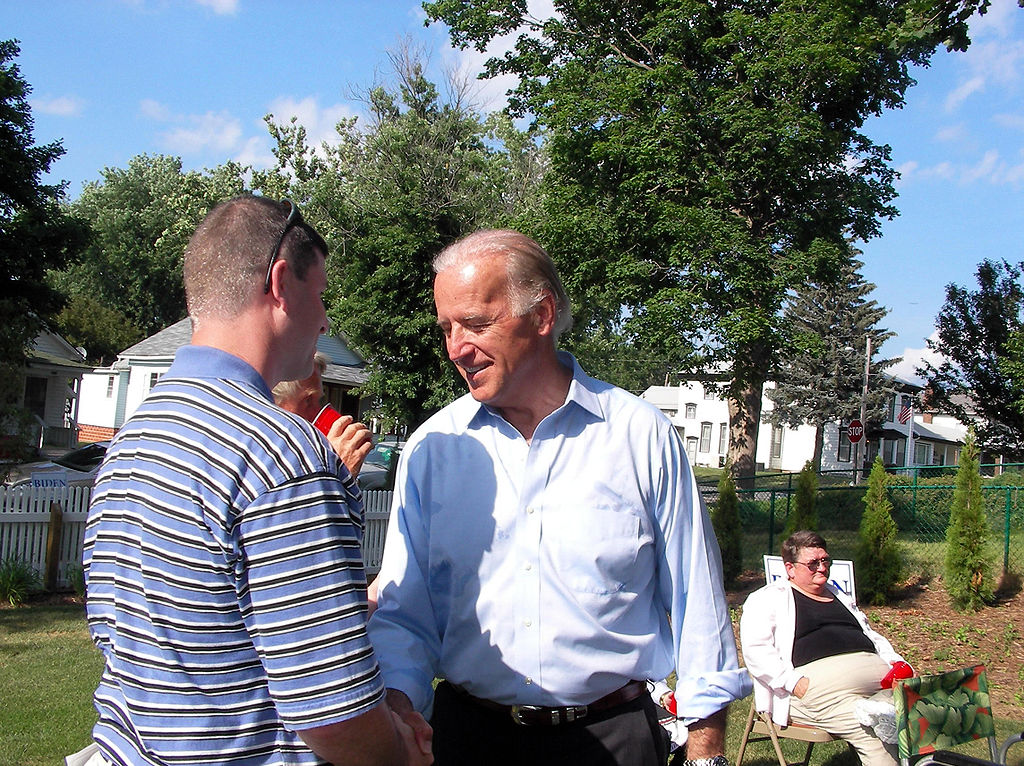
Biden decides to run again for U.S. President – 2007-2008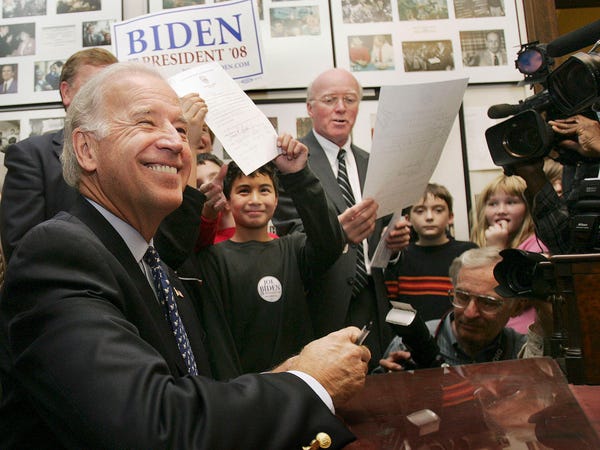 Here he beams after signing candidacy papers in time for the
all-important New Hampshire primary 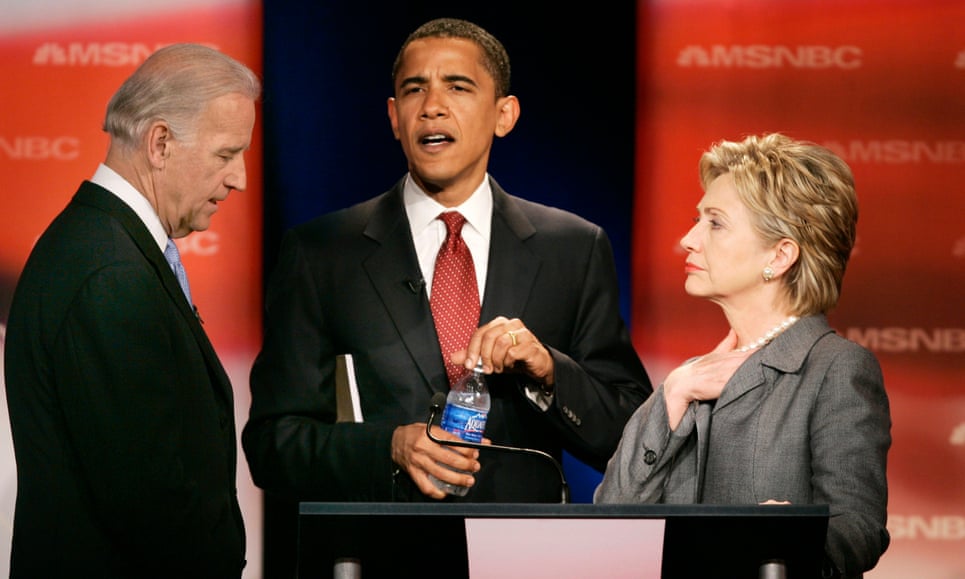
Biden, Obama and Clinton prior to the start of a Democratic
presidential primary debate – 2007
And he campaigned hard for the presidential jobThus it was that he
dropped out of the race early on when the Iowa primary brought him only one
percent of the vote!
| VICE PRESIDENT (2009-2017) |
But Obama needed someone to "balance" his ticket, and
asked Biden to join him as his running mate.
And so Biden was elected Vice President in 2008 and re-elected as such
four years later.
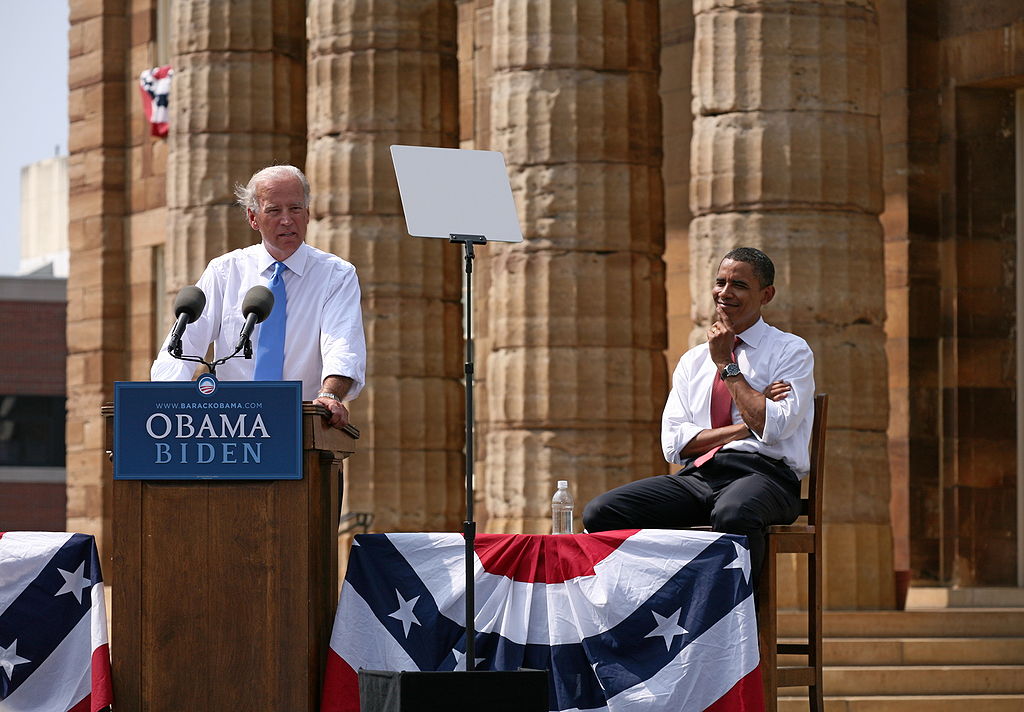
Biden and Obama campaigning together – 2008
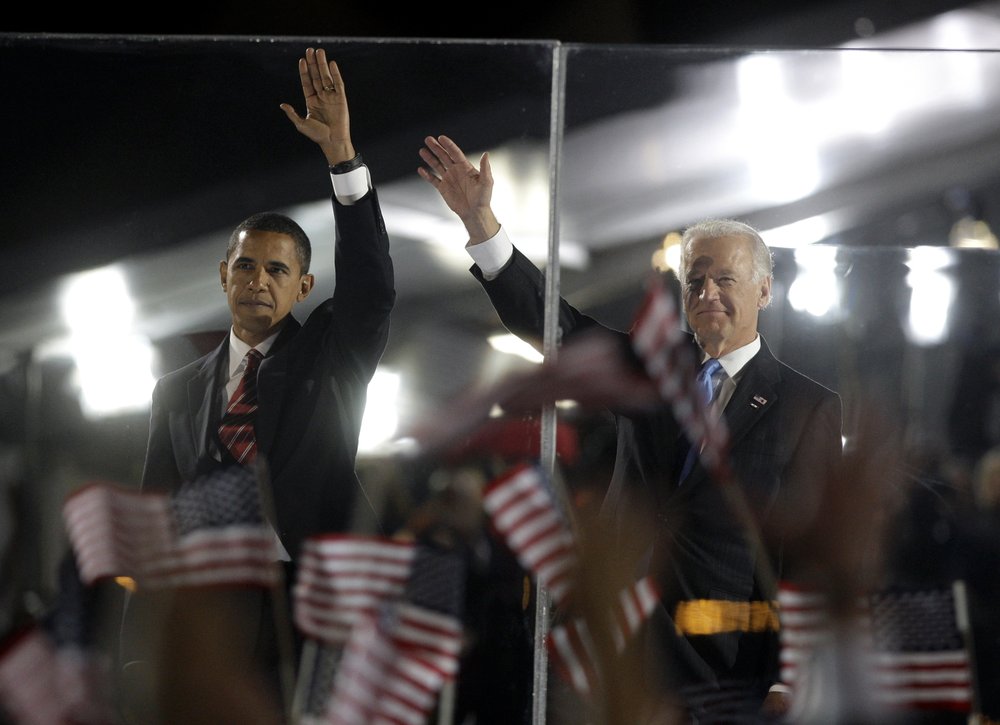
November 4, 2008 Obama and Biden celebrating together at
their election night party
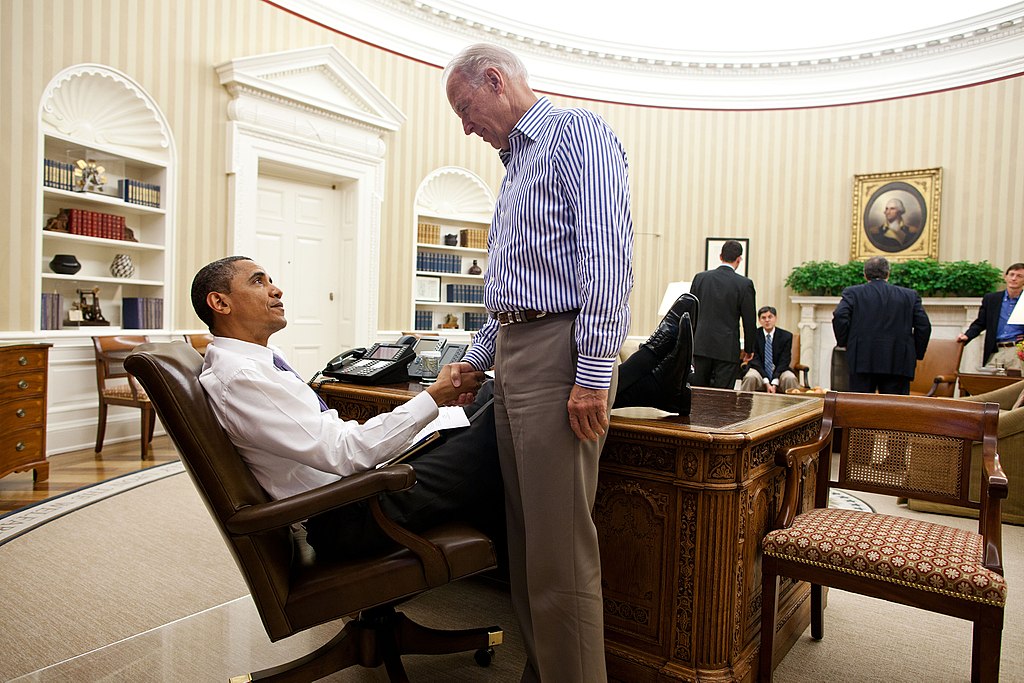
Biden and Obama would work together closely. Here Obama
is congratulating Biden for his work helping get a debt-ceiling
bill passed in Congress – 2011.
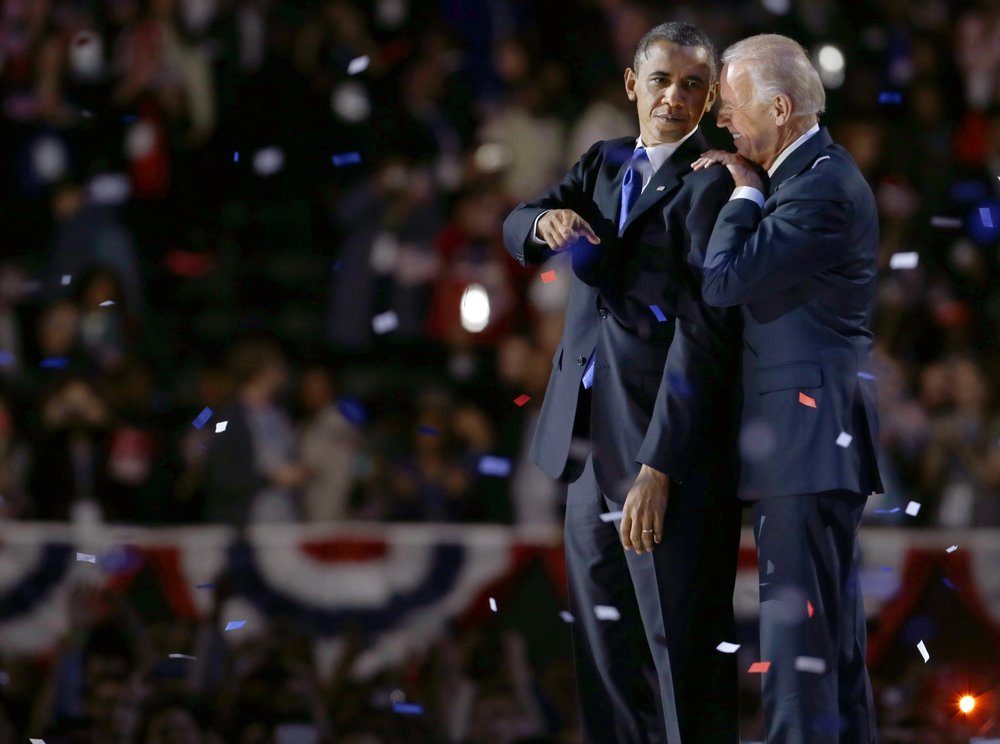
November
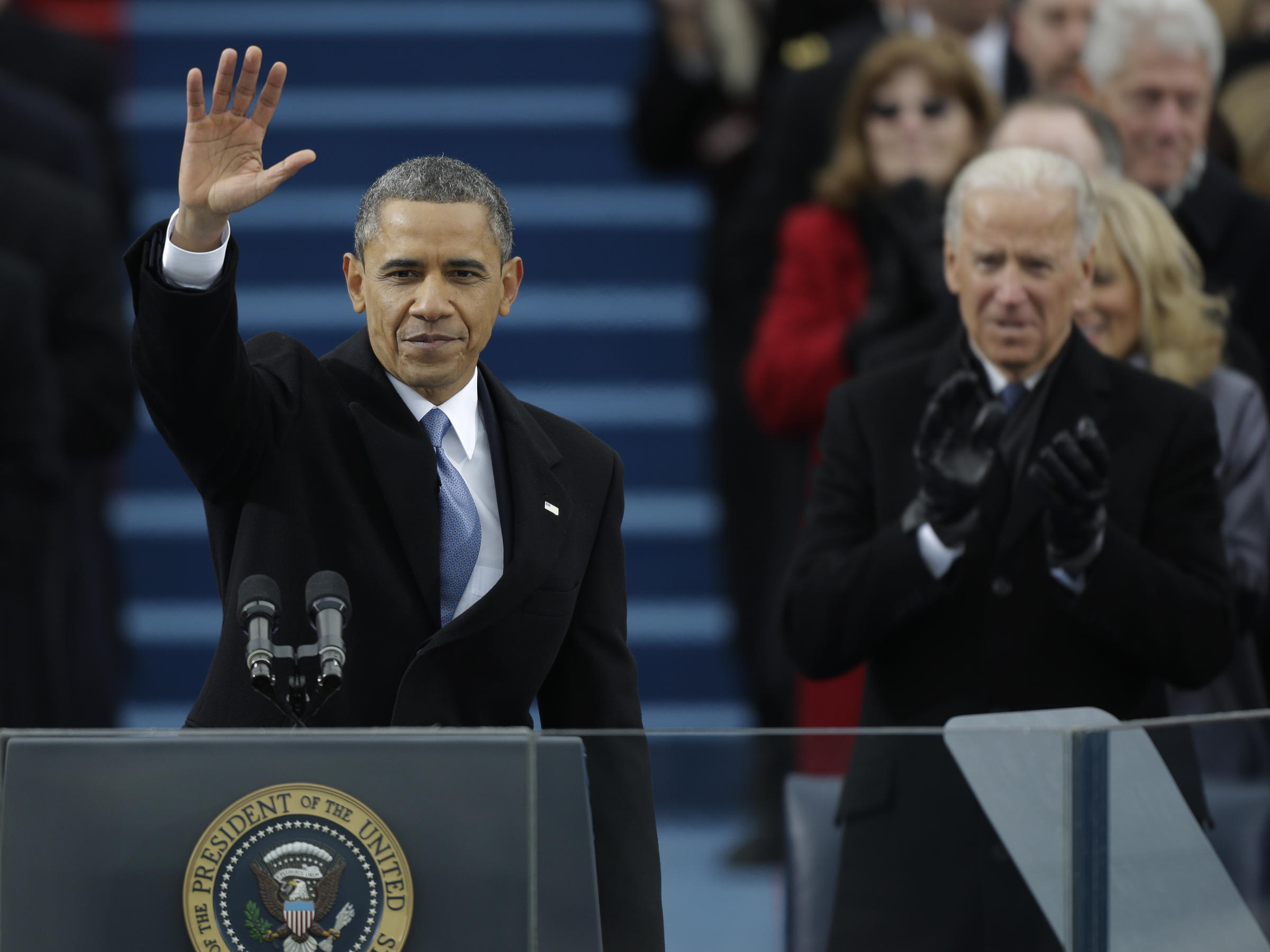
7, 2012 – Another election night party, with Obama
and Biden
understanding that they had defeated Republican
candidate Mitt Romney
(and his running mate Paul Ryan)
However
during his second term, Biden found himself to be less strategic to the Obama
Administration.
But
even more hurtful to Biden was the loss to cancer in 2015 of his 46-year-old
son Beau. Beau had conducted himself most admirably in the field of law,
military service and presently as Delaware's Attorney General, earlier turning
down the idea of running for the US Senate – because he did not want such a
gain simply because of his family "legacy." The death of Beau came as a huge, crushing
blow to everyone.
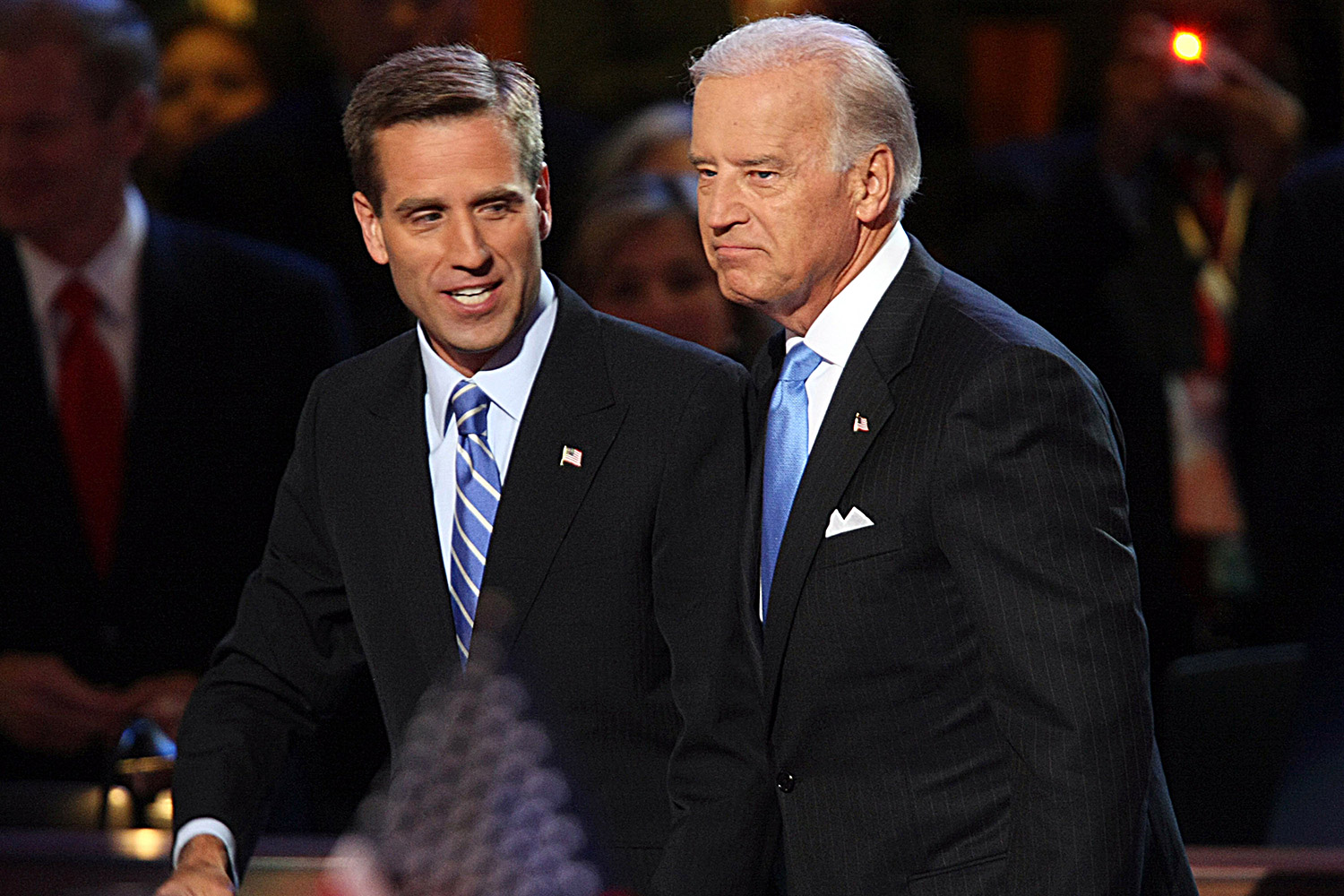
Joe and his son Beau at the 2008 Democratic Party national
convention ... when his son Beau died of brain cancer (46 years
old) – May 30, 2015

Beau's casket being carried into church in Wilmington – June 2015
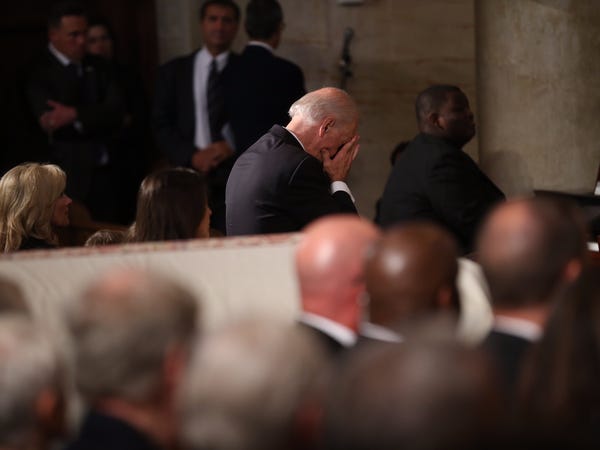
Biden at his son's funeral
And it was a reason
that Biden announced that he would not be running for public office in 2016. He would throw his support to Hillary.
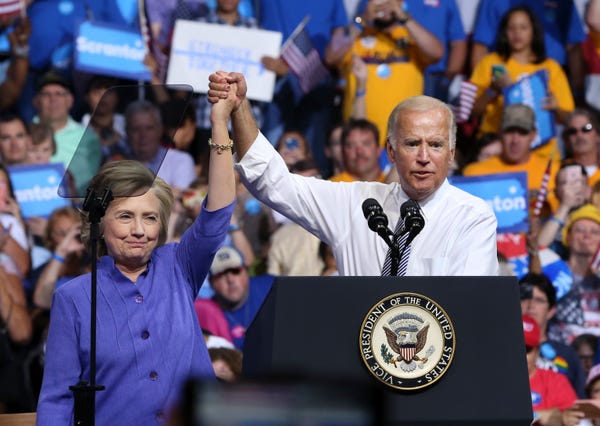
Instead, he campaigned for Hillary Clinton
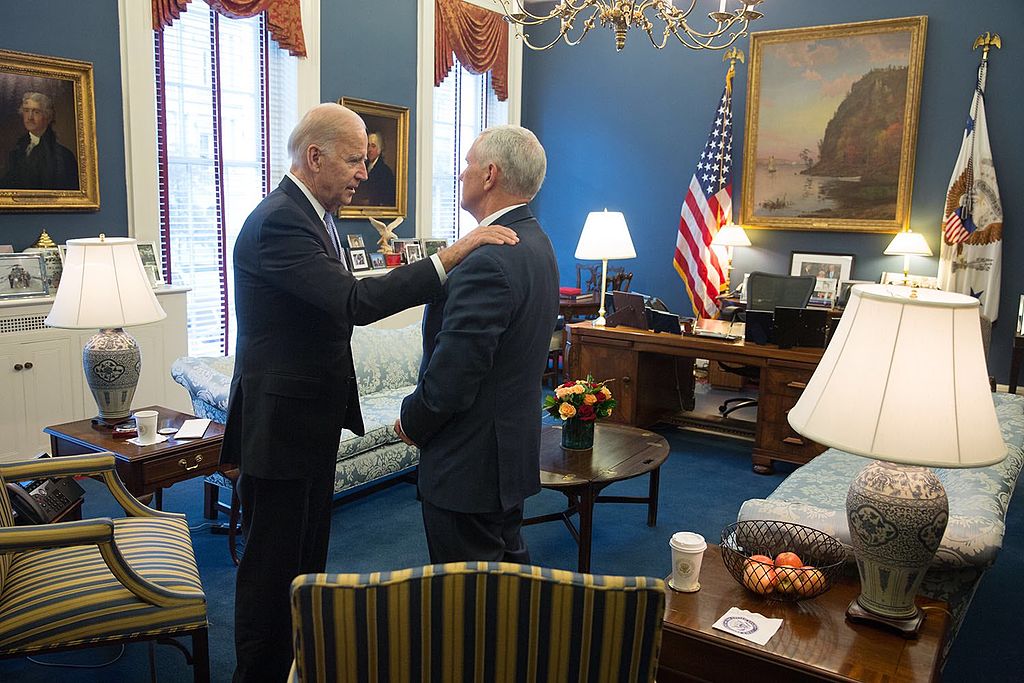
Biden meeting with Mike Pence, soon to be his replacement
as Vice President
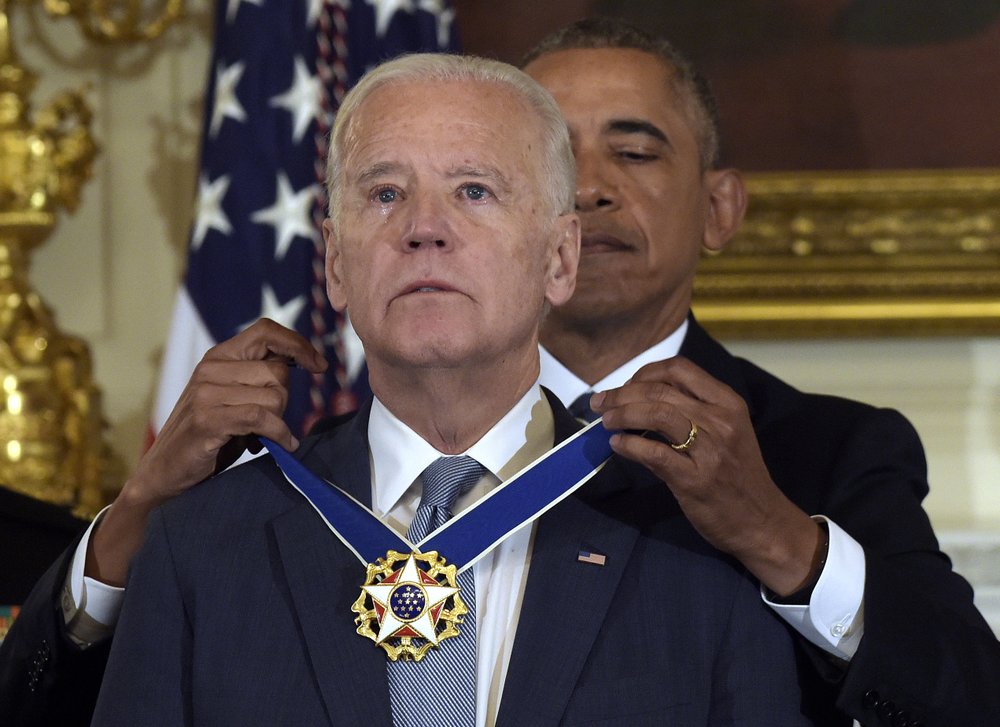
Biden tears up as Obama, in one of his last acts as outgoing
president, awards Biden with the Presidential Medal of Freedom
(January 2017)
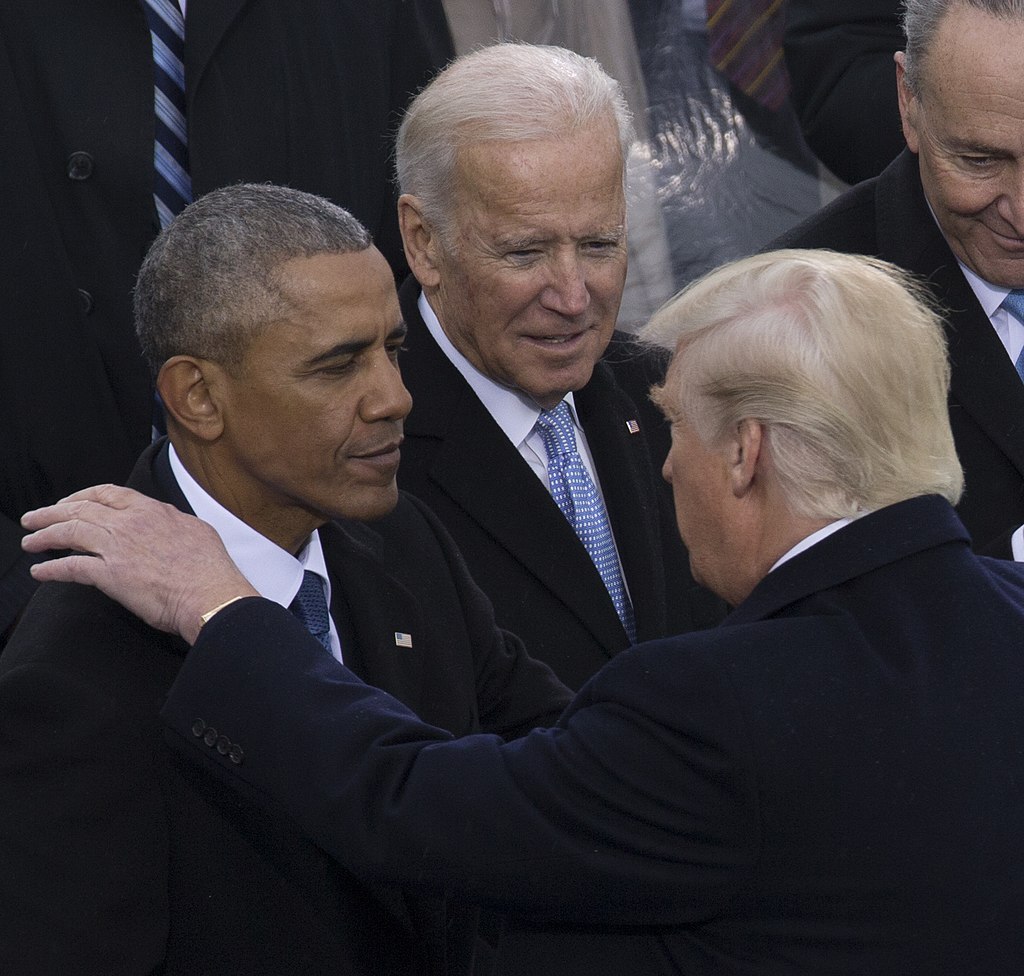
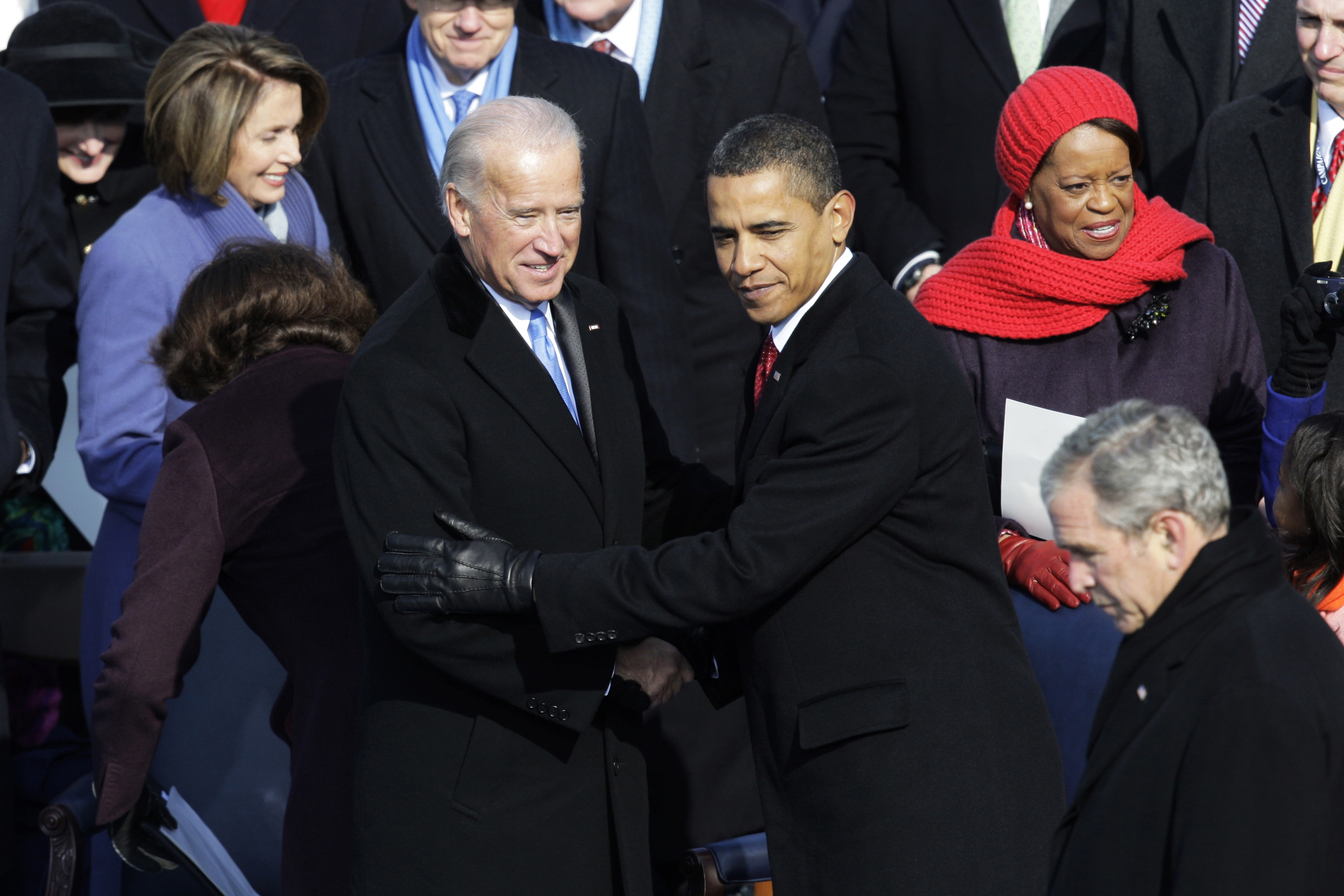
Obama and Biden greeting Trump at his inauguration – January 20,
2017 (Trump would not return the favor four years later at Biden's
inauguration)
Then family troubles hit when the news came out in March of
2017 that his son Hunter was having an affair with his
deceased brother's wife Hallie.
The
news came out after Hunter's wife Kathleen filed for
divorce ...
(separated since October of 2015) ... citing a huge
list of bad
behavior on Hunter's part as her reason for the
divorce.
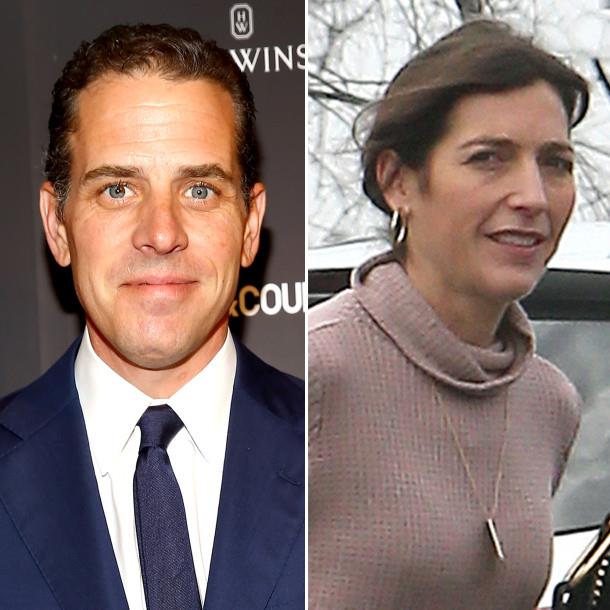
Hunter
did not deny the relationship with Hallie. Instead, he
asked his
dad to bless the relationship ... which Biden did:
"We
are all lucky that Hunter and Hallie found each other as
they were
putting their lives together again after such
sadness. They have mine and Jill's full and complete support
and we are happy for them.
Time, March 3, 2017 / Time, April 30, 2019
But two years later (during Biden's run again for president)
the two would separate.
| THE 2020 PRESIDENTIAL CAMPAIGN |
The next couple of years Biden busied himself teaching (University
of Pennsylvania), writing a memoir (Promise Me, Dad), and doing a lot of
public speaking, not only keeping himself visible before the public eye but
making him quite rich from speaker's fees and a writing contract.
However,
as the 2020 election season came around, he was ready to announce his candidacy
(April 2019), even though if elected he would take office at the age of 78 – an
unheard-of age to be taking on such a responsibility. And he would be running against the very
aggressive Trump, who had the reputation of knocking down anything that got in
his way.
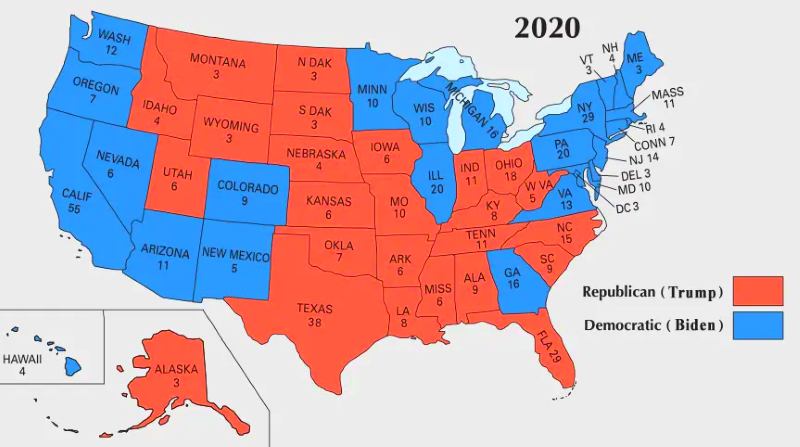
But run Biden did, finally securing the Democratic
Party presidential candidacy, and then going on to win the election.
In April of 2019 Biden launched his third run for the presidency
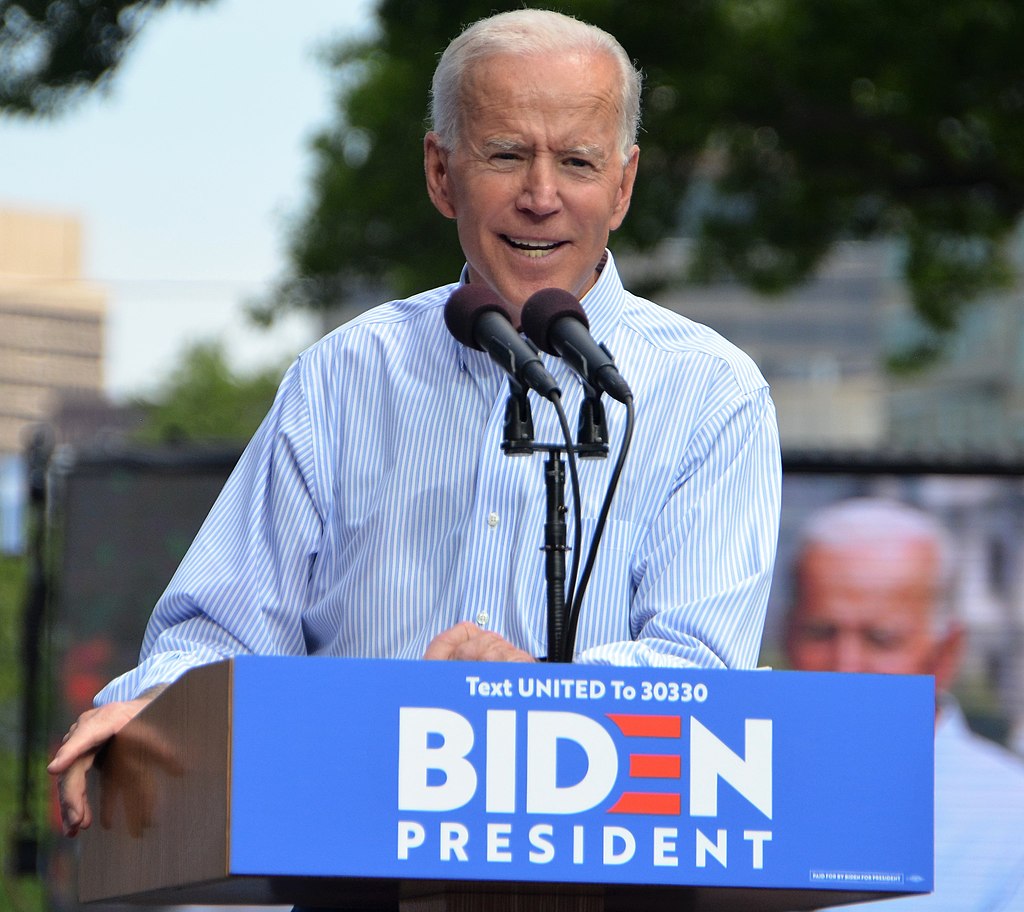
Biden announcing his third run for the U.S. Presidency –
May 18, 2019
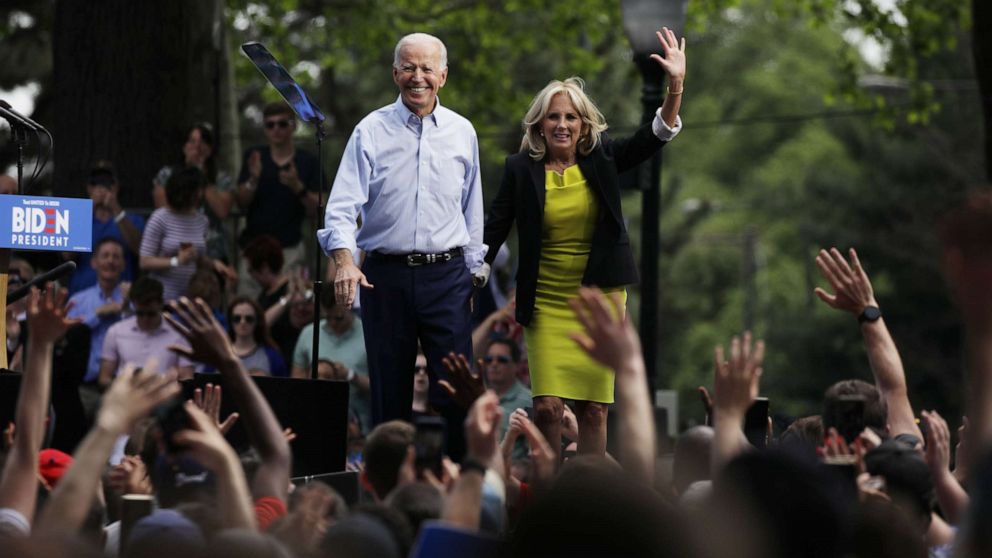
Joe and Jill Biden kicking off their campaign together
in Philadelphia
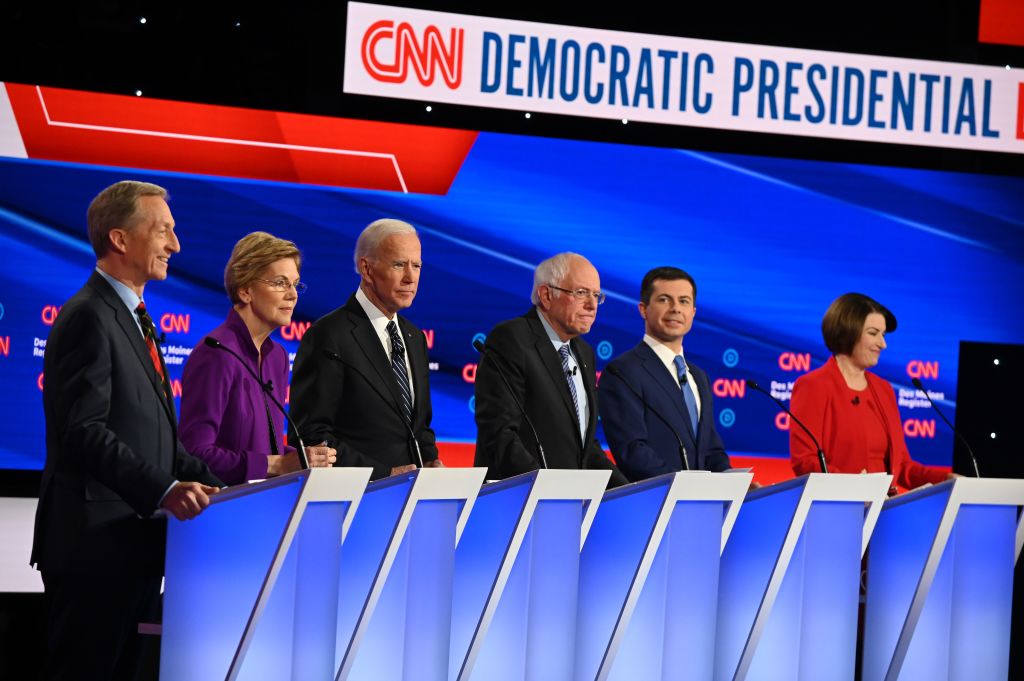
Biden at one of a huge series of Democratic Party debates –
January 14, 2020
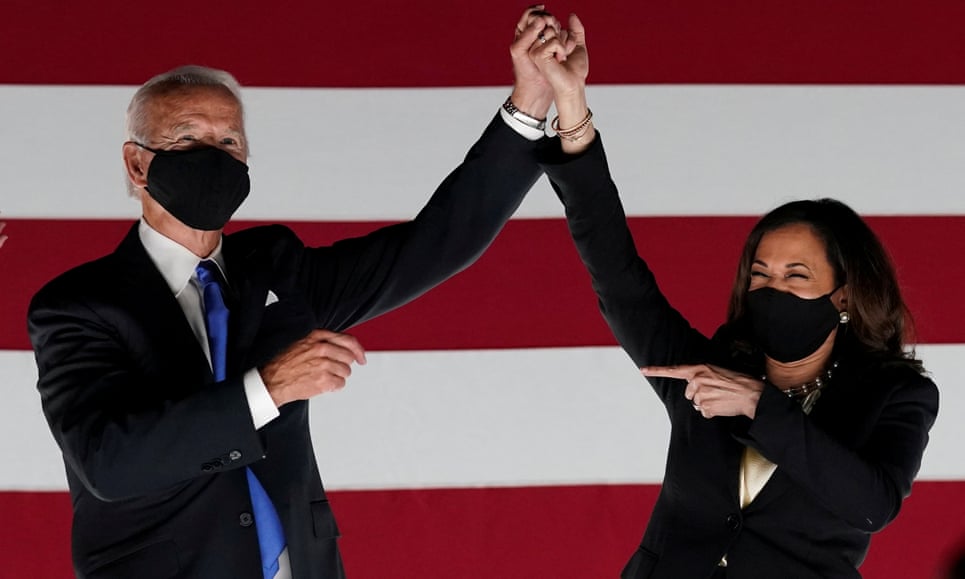
Biden announces Kamala Harris – as the required "woman of
color" – to be his vice-presidential running mate – March 2020
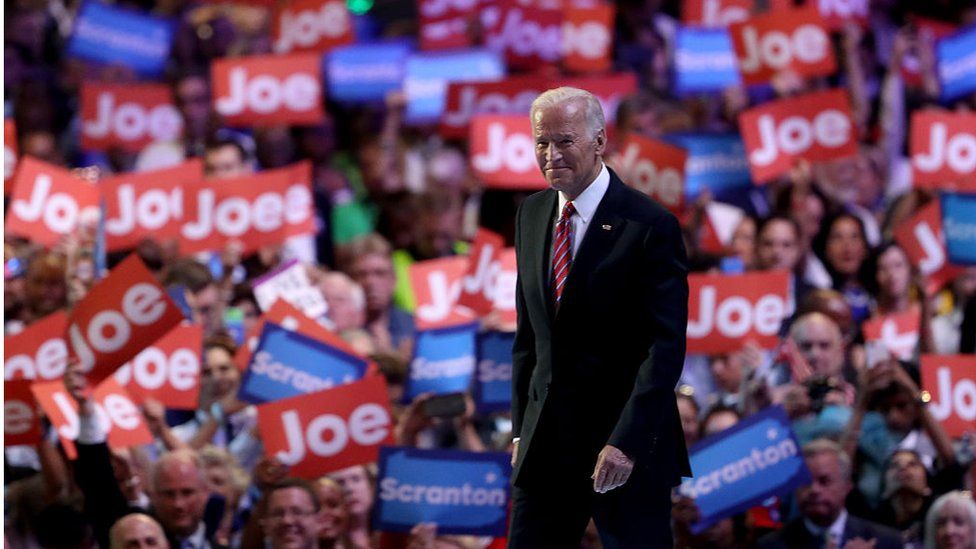
Biden getting his official nomination at the Democratic Party
national convention (August 17-20) in Milwaukee ...
participants greatly reduced in number because of Corona-
virus restrictions (but notice: no masks!)
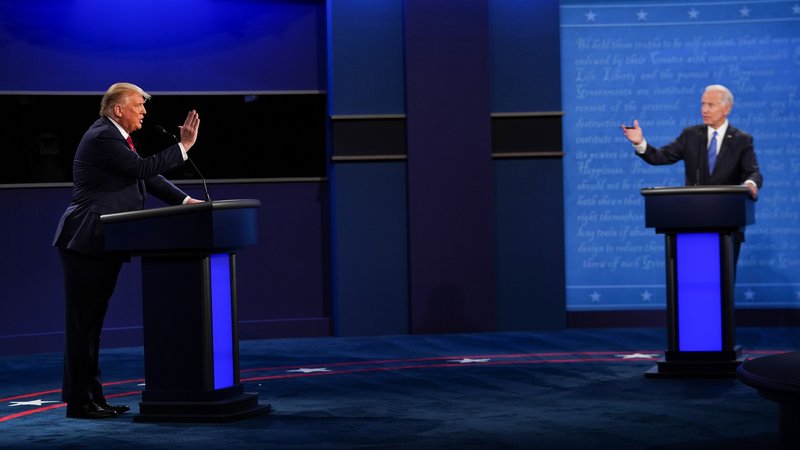
Trump and Obama at their 2nd (and much less crazy)
presidential debate – October 22, 2020
But at this point 40 million Americans had already voted by mail
... and the ratings did not really change anyway ... despite this
being a much more civil debate
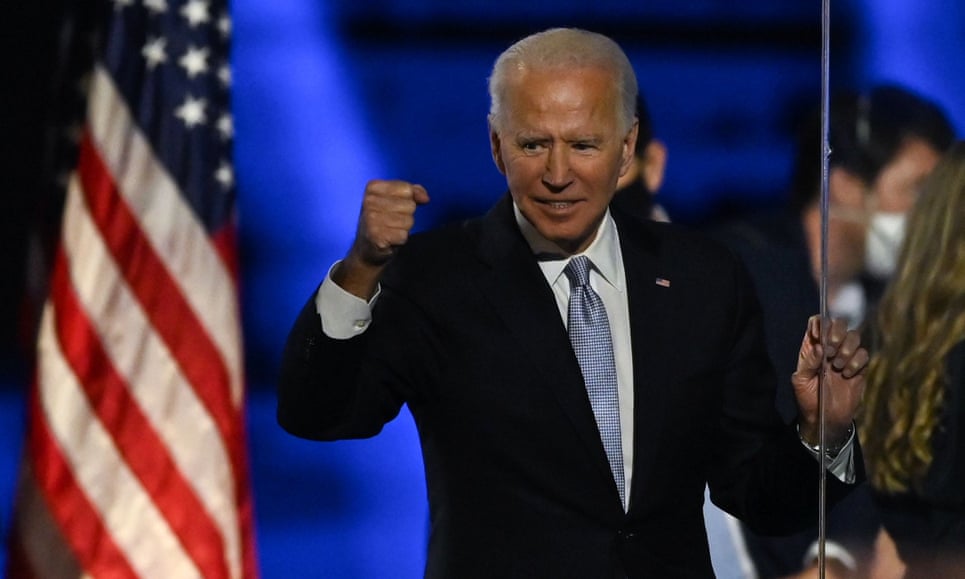
Biden speaking before a Wilmington gathering upon the
announcement of his electoral victory – November 2020

Go on to the next section:
 Miles
H. Hodges
Miles
H. Hodges

 Biden's Inauguration Day: Unity?
 Biden's Washington universe
  Born into Middle America
  U.S. Senator (1972-2009)
  Presidential runs
  Vice President (2009-2017)
  The 2020 presidential campaign