<


6. AMERICA COMES OF AGE
AMERICA DEVELOPS AS AN INDUSTRIAL POWER


CONTENTS

America's Industrial Revolution

Cornelius Vanderbilt

Andrew Carnegie

John Pierpont (J.P.) Morgan

John D. Rockefeller

Thomas Alva Edison

The automobile and airplane industry

Henry Ford


The textual material on this webpage is drawn directly from my work
        America's Story – A Spiritual Journey © 2021, pages 159-167.

AMERICA'S INDUSTRIAL REVOLUTION

Meanwhile back East, a new social dynamic had been rising within the fast-growing American cities:  modern industrialism.  This was due in no small part to the Civil War and its lasting effect on the American economy.  The war's demand for steel, and the iron ore and coal to make it, and the railroads and barges to ship it, and the financial institutions to fund its initial outlay, and the laborers to work the whole system – had made a deep impact on what was formerly a largely agrarian society.

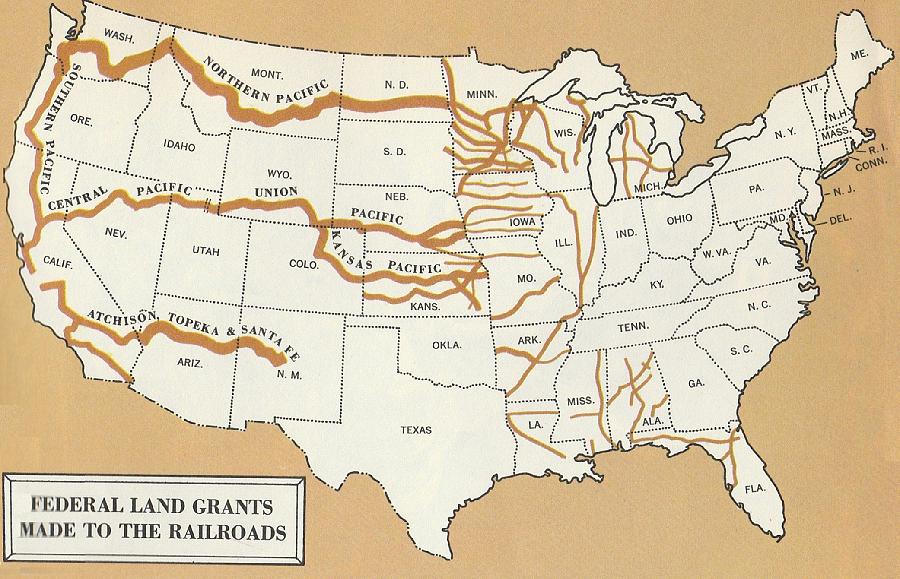
Although the U.S. government had played a huge role in getting the American railroad industry empowered through its liberal land-grants to railroad companies, non-governmental or private financial operations played a huge role in amassing the funds to streamline the railroad industry and its construction of thousands of miles of rail.  And in turn, these rail lines crisscrossing the nation east and west greatly facilitated the movement of raw materials headed east and finished goods headed west, adding greatly to a fast-expanding national economy. And it carried a restless American population to new ventures, helping to keep the American dream very much alive.
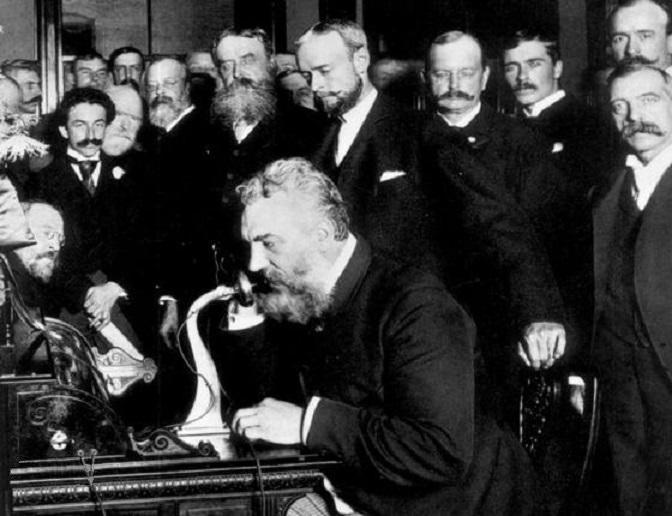
And America demonstrated a very inventive genius in the role it played in creating and developing the telegraph and the telephone, helping to keep all this economic dynamic under careful human management.  And this helped to connect the nation socially as well, as Americans acquired phone service to keep them in touch with the larger world.  By 1893, when Alexander Graham Bell's patent ended, there were 260 thousand American homes with phone service.  And then smaller, local companies jumped into the phone business, so that even poorer Americans could now have the luxury of owning a phone.
And apart from the early railroad ventures during and immediately after the war, the government or state played only a minimal role in the development of this new industrial society – especially as the war and its needs receded from view and the system seemed to run simply under its own dynamics rather than on the basis of popular social political demands.

Nor was God invited to play a role in the development of this new society.  Rather, America's Grand Destiny now seemed to be driven forward largely by a small number of individuals who were particularly ambitious and fearless.  These highly talented entrepreneurs – "Captains of Industry" they were termed, unless you tended to see them as "Industrial Robber Barons"! – were the driving force behind much of this huge economic expansion.

Indeed, this was a time in which the spirit of 
Darwinism soared high ...  for the basic theme of this rising social order was quite Darwinian: progress through survival of the fittest.  To the strong belonged the spoils of their conquests.  But for those who fell to the wayside in this struggle for survival there would be no tears wept.  But the risk of this competitive struggle seemed worth it – at least to some who anticipated striking it rich in this new game of potentially limitless opportunity – if you were willing to play it hard and fast.

In this unfolding economic game played by these industrial/financial giants, fortunes could be made rather quickly – and they could also be lost just as quickly.   And these fortunes could become quite awesome – often exceeding the levels of wealth of the European nobility.  Indeed, according to a survey done in 1896,[1] of a total of 12½ million American families in 1890, 125,000 very wealthy families, or 1 percent of the total number of families in America, possessed over 50 percent of America's total family wealth.

And so it was – at least for some Americans – very much a "Gilded Age" (Age of Gold)!


[1]Charles B. Spahr, An Essay on the Present Distribution of Wealth in the United States, New York: T.Y. Crowell & Co.,1896, p. 69.
CORNELIUS VANDERBILT

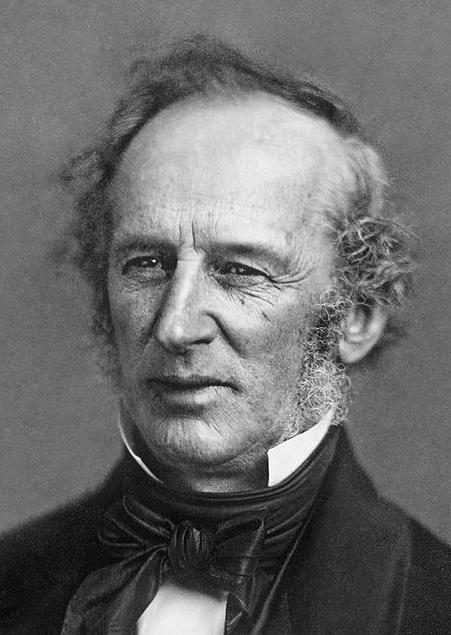
Early among these "Captains of Industry" was the New Yorker, Cornelius "Commodore" Vanderbilt. As a very competitive individual, he climbed his way out of poverty in the 1810s by operating a ferry boat (thus his nickname "Commodore") between Staten Island and Manhattan, taking on ferrying monopolies in developing that business, until he had secured his own monopolies in the trade (late 1830s).  He then branched out from there to own railroads that connected with his ferry lines, in 1847 even taking over a major line running between New York and Boston.  Then two years later, with the California gold-rush madness hitting America, he moved into the shipping business on the high seas, attempting even the purchase of land to build a canal across Nicaragua.  Instead he was able to build land and water connections between his Atlantic fleet and his Pacific fleet, the latter which took passengers onward to California.

Soon (the 1850s) this energetic entrepreneur took to manufacturing the new steam engines, which he then put to use in his trans-Atlantic shipping business.  Then with the onset of the Civil War, he joined in by employing his flagship, the Vanderbilt, to hunt down Confederate raiders.  After the war he and his son Billy bought up various railroad companies, and united them as the future New York Central Line, and went on to build a huge railroad terminal in Manhattan on 42nd Street, the forerunner of the enormous Grand Central Station.
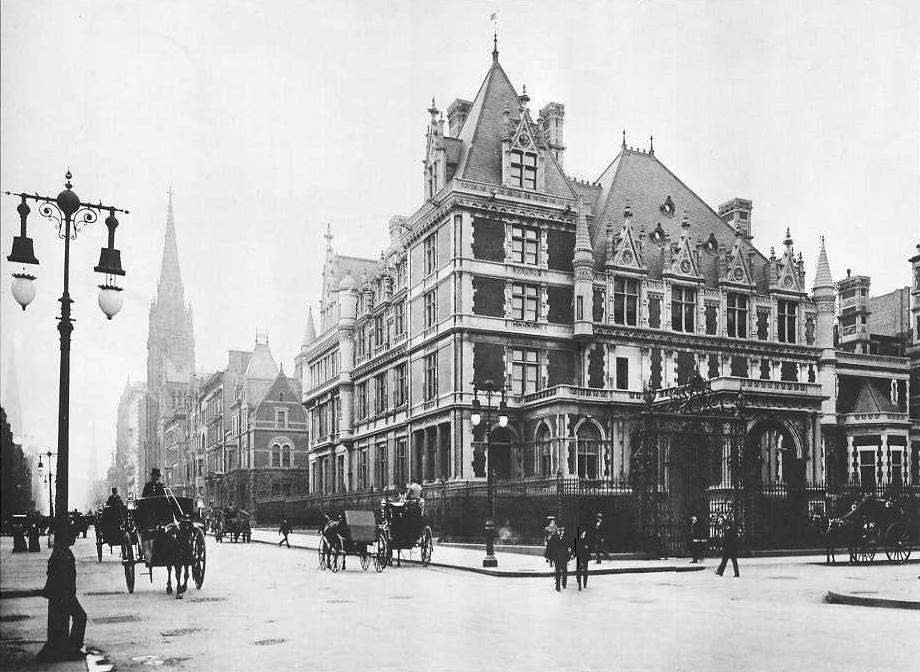
And so it was that Vanderbilt became the richest monopolist of his days, failing only once against the very corrupt team of Gould and Fisk, who used politically-backed deception to bring one of his enterprises to ruin.  Nonetheless he bounced back and at his death was able to leave his heirs a sum of $100 million,[2] including $1 million (at that time the largest donation ever) for the startup of a university that still bears his name today!


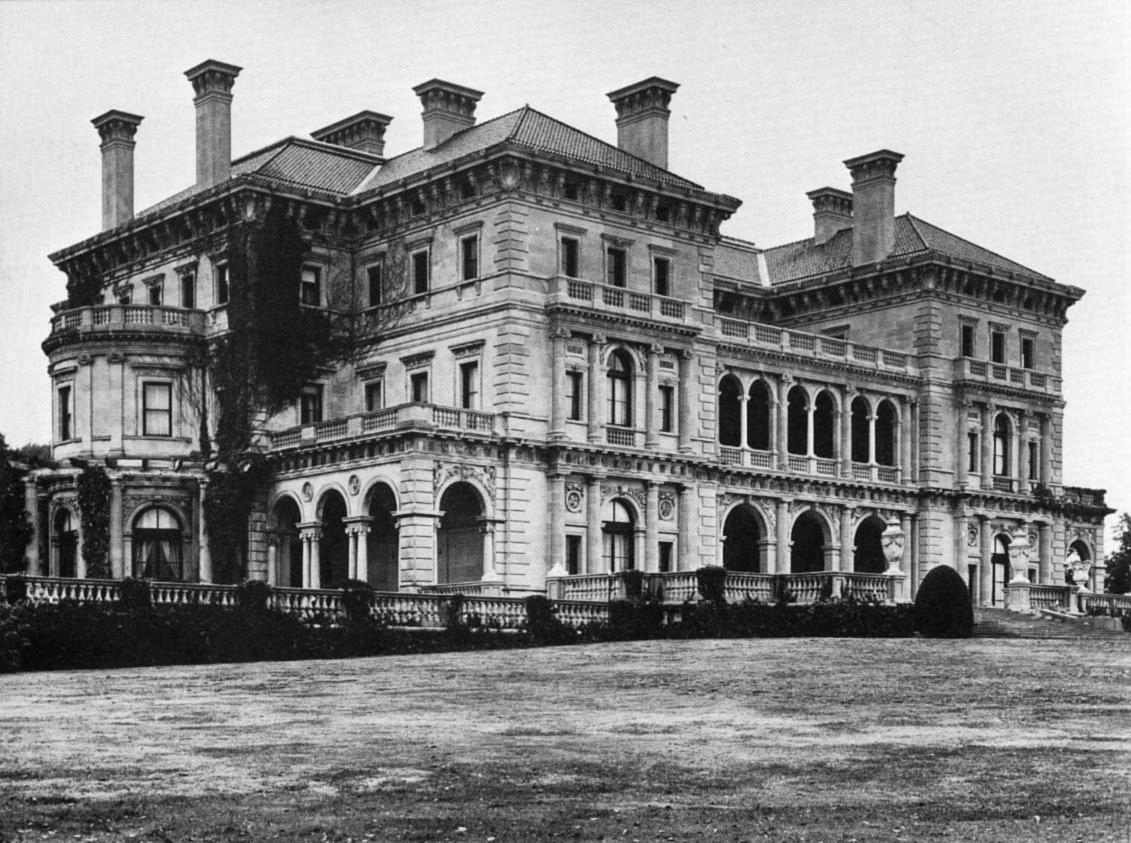
[2]This would make him the second richest man in American history, ranking only behind Rockefeller.  The $100 million would be approximately equivalent to $150 billion in today’s dollars. Interestingly, he lived modestly.  All the lavish Vanderbilt estates that were built across the American East were actually commissioned later by his descendants.

ANDREW CARNEGIE

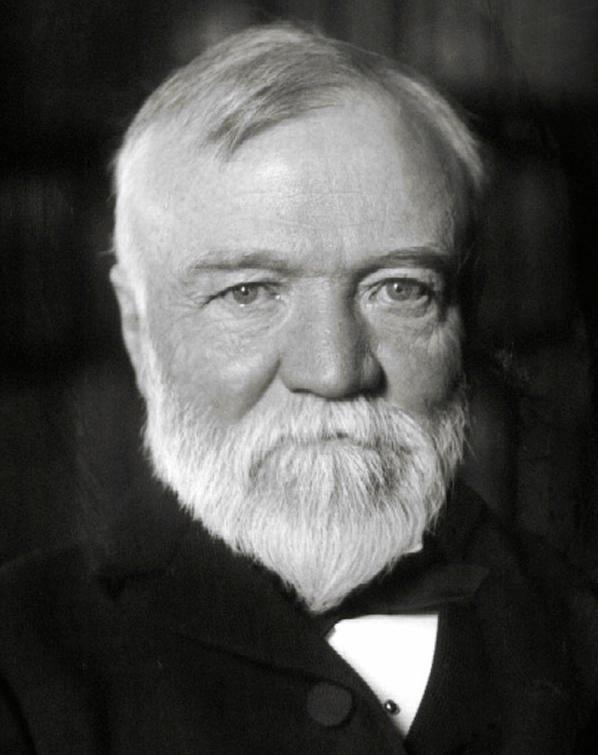
nother such individual was the Scottish immigrant Andrew Carnegie (came to America in 1848 at age thirteen), who worked his way from an office clerk to the owner of America's largest steel operation in Western Pennsylvania (Pittsburgh).  As a young office clerk he impressed his bosses at the Pennsylvania Railroad Company, in everything from how he easily read Morse Code messages to his ideas how the company could operate more efficiently by bringing together under a single corporate structure various operations – from the securing of raw materials, to the manufacture of the machinery needed for the business, to the shipping of the end product.

Eventually he moved on to put these ideas to work under his own initiative, as he got personally involved in Pittsburgh's iron industry.  Little by little his own business expanded, as he took on engineers to develop the steel industry, and as he branched out into subsidiary operations, such as building the iron bridges needed by the rapidly expanding railroad industry.  He even went into the coke/coal energy business, buying up operations needed to feed his own iron and steel plants.  By the end of the 1800s, he was producing steel at the rate of 6,000 tons per day.

But ultimately he had to confront the problem that the industrial revolution itself had produced, the low wages of the workers – supposedly necessary in order to maintain the profits required for business expansion. Labor union activity was running very high at the time, and a quite bloody confrontation developed between Carnegie's corporate supervisor, Henry Clay Frick (Carnegie was away in Europe at the time) and the strikers at the huge Homestead Plant.  It was soon after this that Carnegie decided simply to retire, and sold his business, the largest corporate transaction ever, for $480 million ($13 billion in today's dollars) to the New York City financier John Pierpont (J.P.) Morgan.  Then Carnegie would give most of that wealth away to various charities and social endeavors, and spend the rest of his life traveling.


JOHN PIERPONT (J.P.) MORGAN

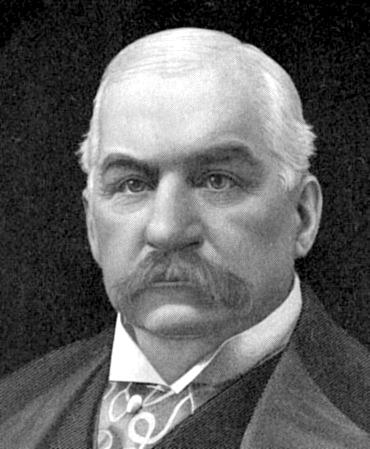
Not an industrial manufacturer nor born in poverty (actually quite the opposite), J.P. Morgan was a money man, providing the necessary financial support that the industrial world would need in order to do business, and that even the U.S. government would need from time to time in order to stay afloat financially.  He proved very skillful in buying up financially troubled companies, reorganizing them to a point of profitability in their operations, and then selling them, at a nice profit for himself.  But he also would play a huge role in bankrolling the U.S. government – on more than one occasion – when the government found itself in deep trouble, as was the case in the Panic of 1893 which nearly emptied the U.S. gold reserves.  Only an operation (which at first President Cleveland balked at) that he undertook brought the U.S. back from disaster.  In this he joined with the Rothchild bankers of Paris to sell the government 3.5 million ounces of gold in exchange for thirty-year bonds.

He also, in 1907, stepped in to rescue the American economy again when Wall Street suffered a huge collapse, nearly pulling the U.S. banking industry down with it.  Here too, he put together a number of New York banks willing to invest a massive amount in Wall Street in order to revive the stock market.  And soon he moved (with President Roosevelt's permission) to take over a major industrial conglomerate that had failed, in order to head off another economic panic in America.

But a rising concern about the role such monopolies were playing in the American economy would lead Congress to take countering action, setting up in 1913 the Federal Reserve, to do the government's own intervention into the functioning of the national economy when it appeared to be heading into a crisis.  In a sense, Morgan himself had shown the U.S. government the proper procedure by which to intervene when necessary, contributing greatly to the stability of the U.S. economy, which throughout the 1800s had experienced one speculative crisis after another.


JOHN D. ROCKEFELLER

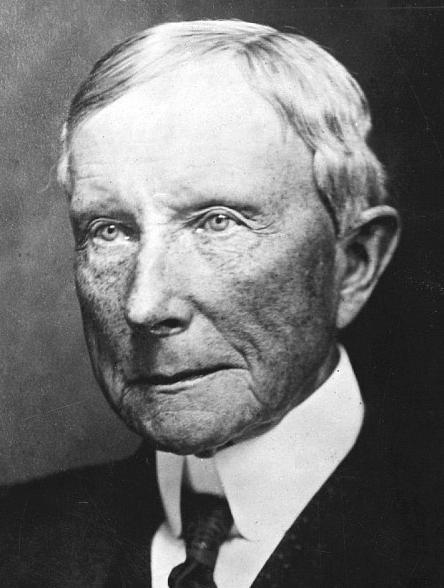
Another industrial captain was John D. Rockefeller, who also rose out of tough family circumstances, to go on to be America's richest individual.  During the Civil War he and his brother started up a business selling produce to the army ... before switching in 1863 in Ohio to join a group manufacturing kerosene from crude oil (home lighting at the time was switching rapidly from whale oil to kerosene).  By 1865 the brothers were able to buy out their partners, placing them on a highly profitable monopolistic path.  In 1870 he established the Standard Oil Company, and from there went on to buy up one competing oil business after another – until by the end of the 1870s he held a virtual monopoly (at least 90%) in the oil trade, mostly located in Pennsylvania at the time.

Then he took on the Pennsylvania Railroad Company, to force down shipping rates (although he was even then moving to the use of pipelines), soon finding himself involved in a number of Pennsylvania lawsuits (which would soon become a regular feature of his business) opposing his monopolistic practices.  But this hardly slowed him down, instead in 1882 setting up the Standard Oil Trust, a huge financial operation aimed at buying up the various state oil companies.  But this not only produced a new outcry against his monopolistic policies, it set the example for other ambitious individuals to also go the "trust" route of setting up large holding companies able to swoop in and buy up smaller companies – in most any economic field.  Then he moved into international oil operations, then into the field of natural gas, and finally in the refinement of gasoline (previously considered just a wasteful byproduct of kerosene production), just as the world of automobiles (around the year 1900), with their new internal combustion engines, was opening up.

However, by that time, reformers were also very active everywhere calling for laws to be put in place that would correct the growing injustices produced by this change of America from its agricultural lifestyle to the newly growing industrial society and culture.  Thus it was that 
Rockefeller found himself under constant attack from U.S. President Theodore ("Teddy") Roosevelt, wielding the 1890 Sherman Antitrust Act (originally designed to break up workers' unions) wherever he could, and Ida Tarbell, publishing a lengthy exposé on Standard Oil's underhanded business practices – and finally in 1911 with the U.S. Supreme Court handing down the decision that as a monopoly violating the Sherman Act, Standard Oil had to be broken up  – into 34 separate companies (eventually becoming Conoco, Amoco, Chevron, Exxon, Mobil, Sohio, Pennzoil, etc.).[3]

It is hard to appreciate today the idea that Rockefeller never saw what he was doing as evil, but simply something that had to be done in order to move industrial progress forward.  And in a very evident sense, he did just that, even if it seemed to change the rules of America's traditional economic game (building a national economy on the basis of a small number of family-run enterprises).  He always saw himself as an authentic Christian, teaching Bible at the church he attended, and helping to turn a small Baptist College into the University of Chicago.  And he would set up all kinds of charitable operations, helping to create the Central Philippine University in 1905, then founding an outstanding medical research center in New York City, and finally in 1913, establishing the Rockefeller Foundation to support medical research and training – which in 1918 expanded its operations into social research as well.


[3]YetRockefeller remained a significant stockholder in these various companies.  And the oil business continued to be personally very profitable for Rockefeller, eventually making Rockefeller the richest man in the world at the time (and by comparison, even still today!)


THOMAS ALVA EDISON

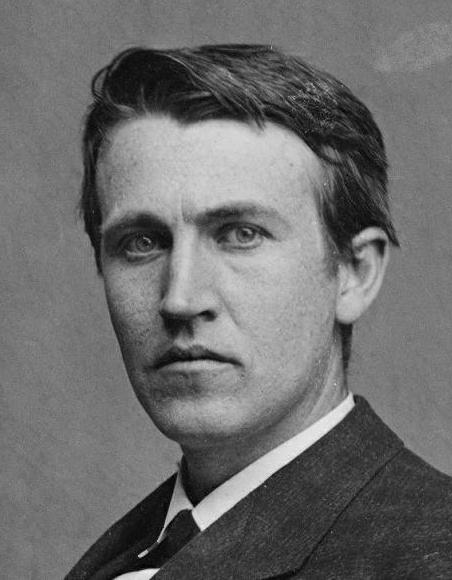
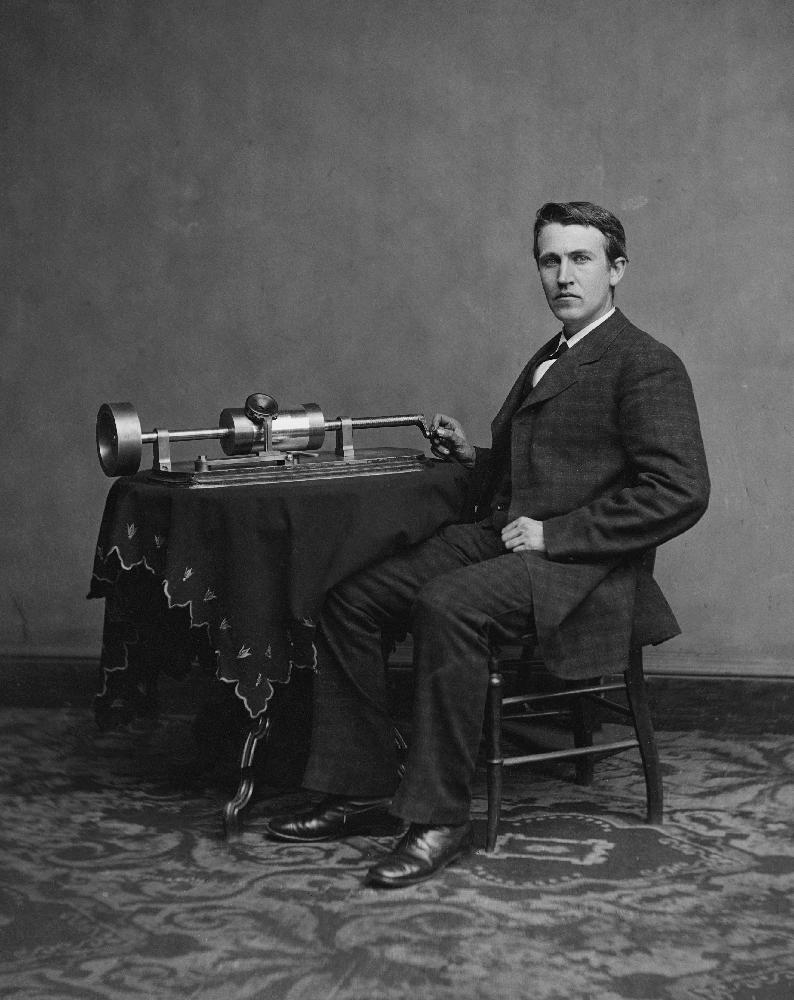
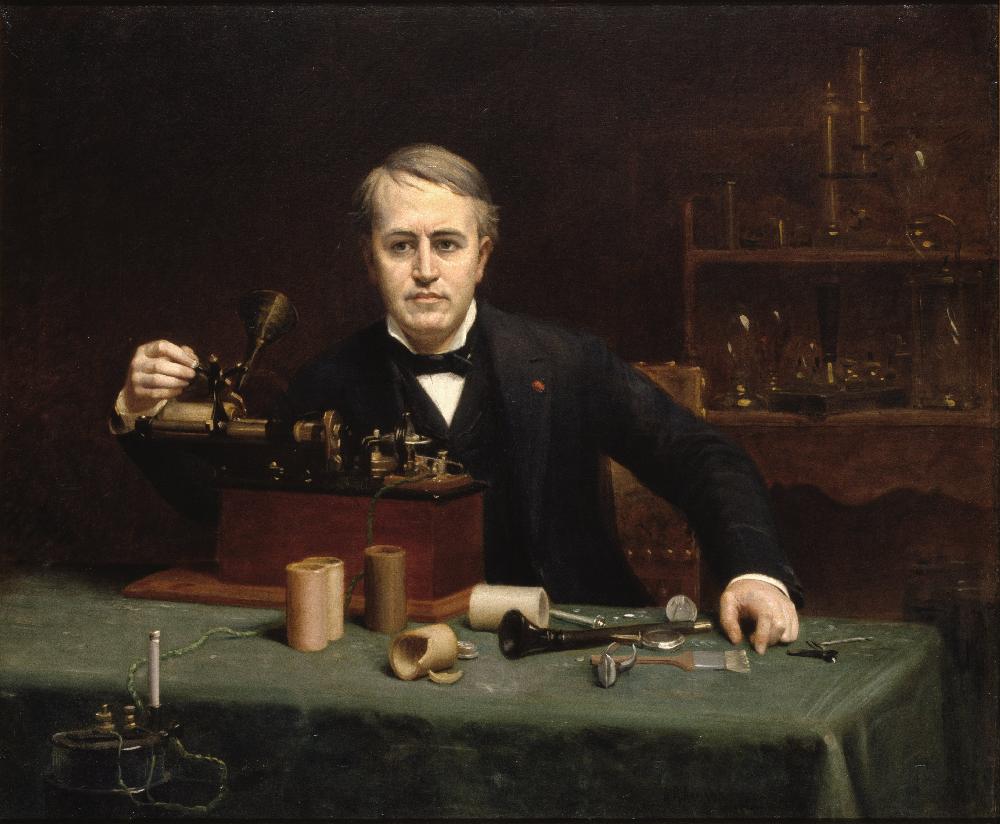
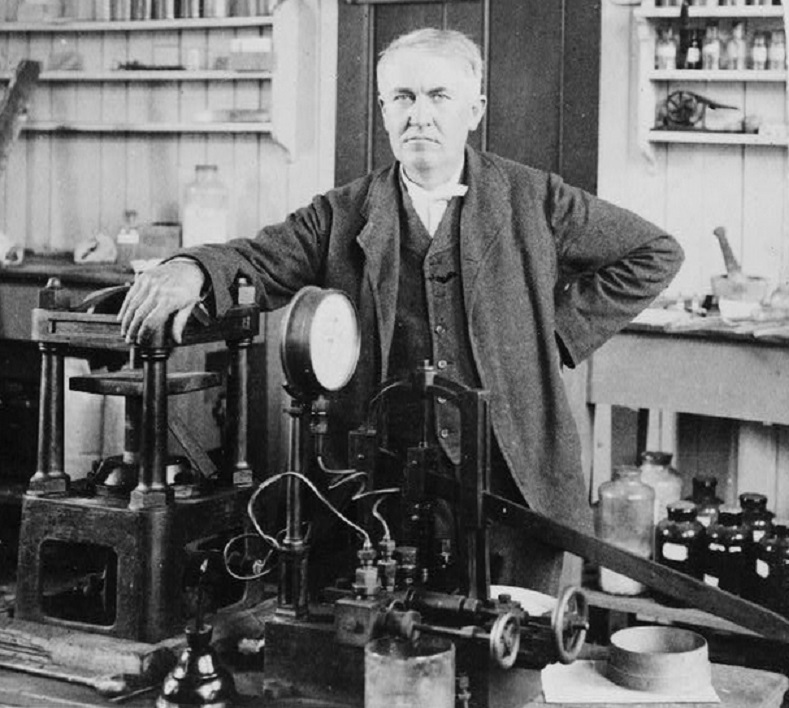
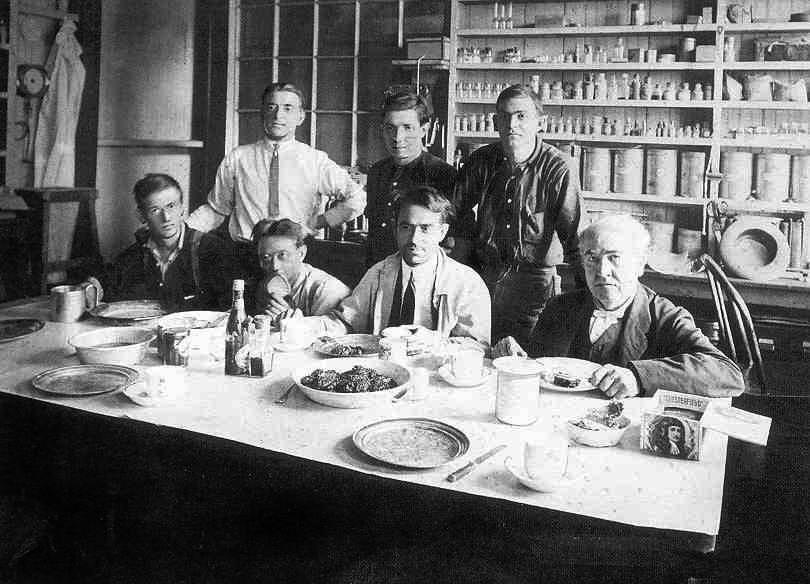
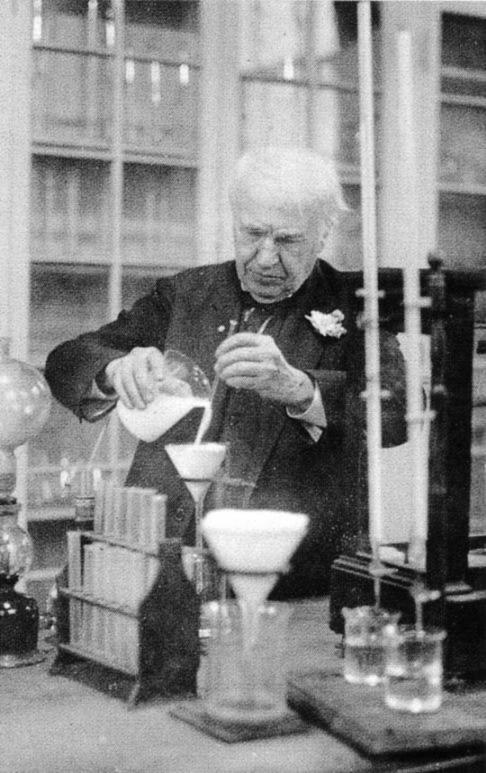
Although Edison would not become one of these financial giants dominating the American economy, he would be one of the American geniuses that drove the American economy forward, to ever- unfolding progress.  He started out humbly as a telegraph, then newswire, operator for the Associated Press, at the same time undertaking various experiments in electricity.  His inventive spirit led him to go his own way, to relocate to a friend's home in New Jersey – and there develop the stock ticker – and then patent (age 22) the electronic vote counter.  His experimenting finally led in 1877 (now age 30) to develop a phonograph made from a tin-foil-wrapped cylinder, so amazing that he was invited to Washington to demonstrate its operation to President Hayes.

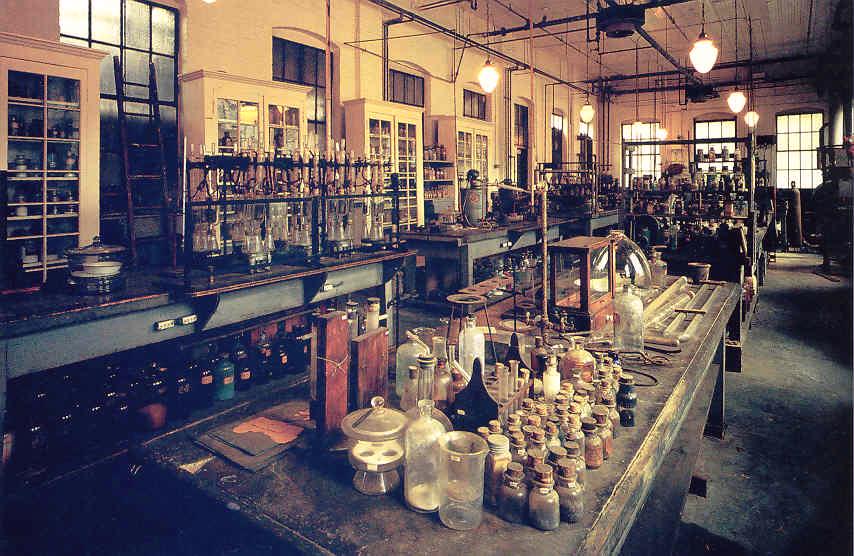
And with this he was now a very big-time inventor, developing his own research center (eventually two city-blocks in size), and ultimately perhaps his most significant invention, the light bulb ... coming up in 1879 with a successful carbon-filament bulb (lasting 12 hours) – but through more experimentation,[4] and discovering the use of a bamboo filament, in 1880 produced a bulb that would last 1,200 hours.

At the same time he ventured into the business world in 1878, to market his lights, setting up (with 
Vanderbilt's and J.P. Morgan's support) the Edison Electric Light Company, soon expanding that (now the Edison Illuminating Company) as New York City's electric utility company – and in so doing, the 110-volt electric system now standard in all of America (a 220-volt system is used in Europe).

The only truly dark cloud in this picture came in his company's competition with George Westinghouse over the matter of using direct current (DC: 
Edison) or alternating current (AC: Westinghouse).  Edison not only lost this battle, but was forced by his investors (including J.P. Morgan) out of his company in 1890, which was then reconstituted as an AC company, General Electric – which went on to control three-quarters of the electrical business.

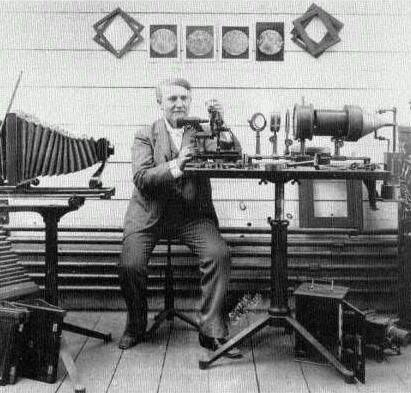
Edison continued his work nonetheless, interested in visual items, everything from the kinetoscope (peep-hole viewer) in 1891 to a movie projector able to cast a film image on a screen in front of a full audience (1896), going on to add a machine able to synchronize sound with the film.  This became for him a very prosperous development, as his movie studio went on to produce almost 1,200 short films.  And he ventured into other fields as well, the rubber industry, mining, and the x-ray (which he discovered to be very dangerous).  He would remain a ball of energy himself, all the way up to his death in 1931.


[4]He once commented about his tireless pursuit of new inventions: "I have not failed, I’ve just found 10,000 ways that won't work"!


THE AUTOMOBILE AND AIRPLANE INDUSTRY

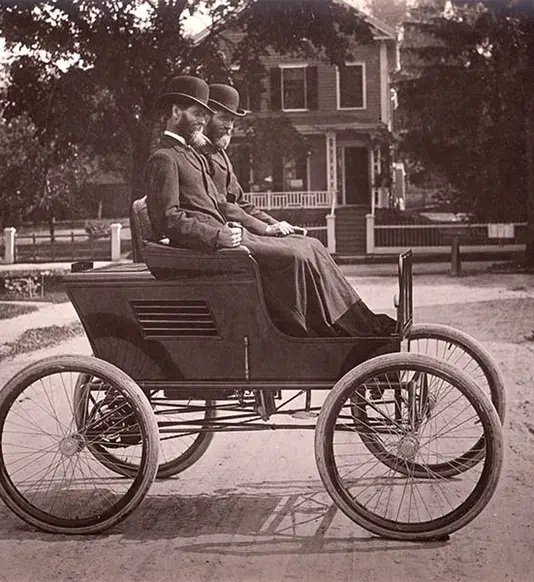
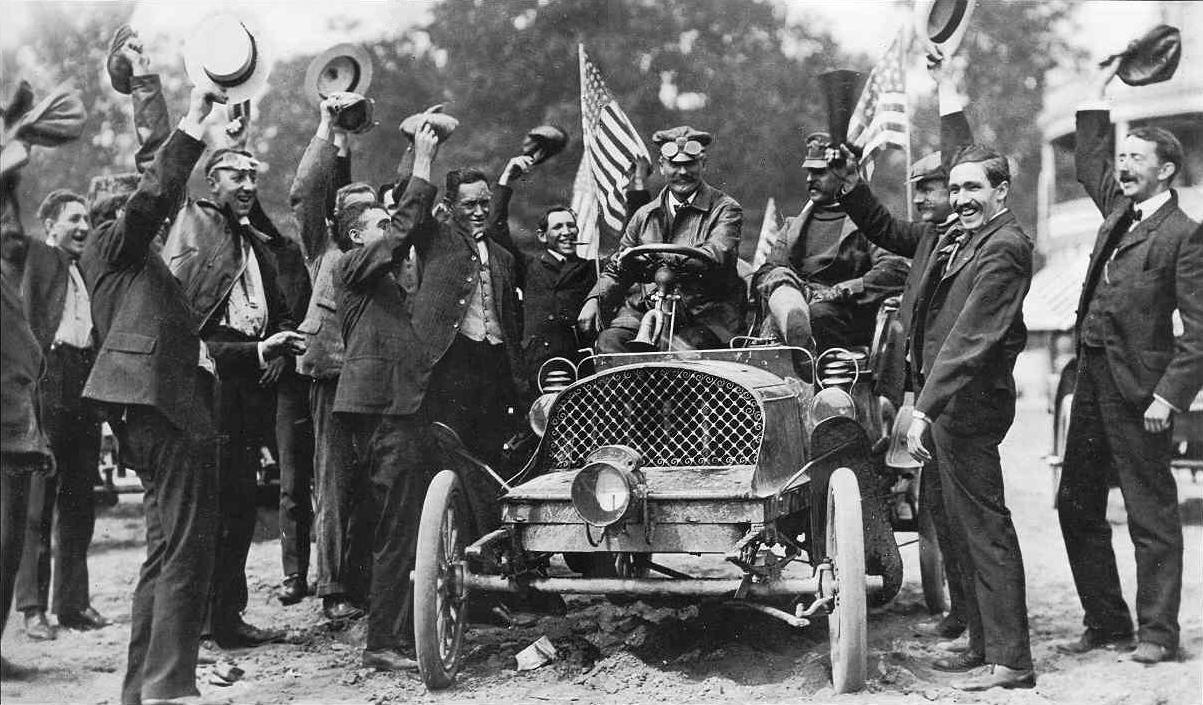
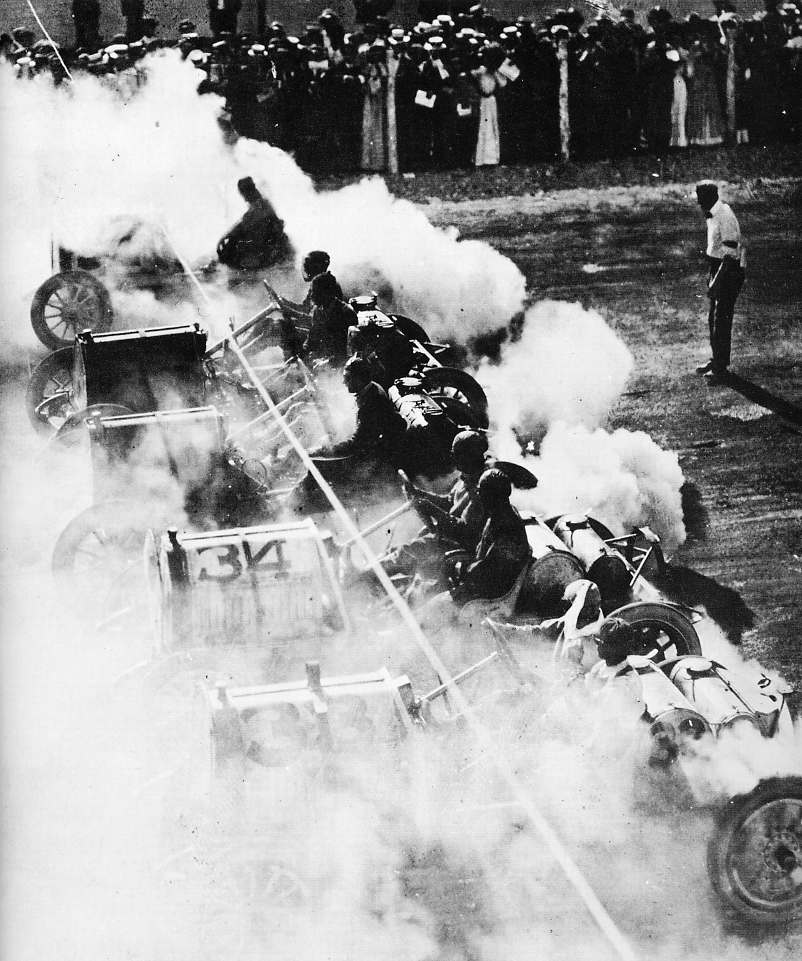
This same spirit of American inventiveness was pushing small-shop experiments in the world of transportation.  The horseless carriage or automobile was an item of particular interest, with the idea of steam (at that time driving trains and ships) being employed to drive these personal means of transport.  Thus as early as 1878, steam-engine-driven carriages were used in the 200-mile (33 hour) race in Wisconsin between two such vehicles. This same idea was developed by the Stanley twins (Francis and Freelan) who produced over 200 such cars in 1898-1899, making them the leaders in the industry.  They went on (1902) to produce the Stanley Steamer – which in 1906 was able to reach 127 miles per hour over a one-mile course at Daytona Beach. This made their automobile quite popular (in 1917 their annual production rate peaked at 500 cars).  But by this time the gasoline-powered internal-combustion engine (ICE) was taking over the market, and in 1924 the Stanley brothers were forced to close their business.

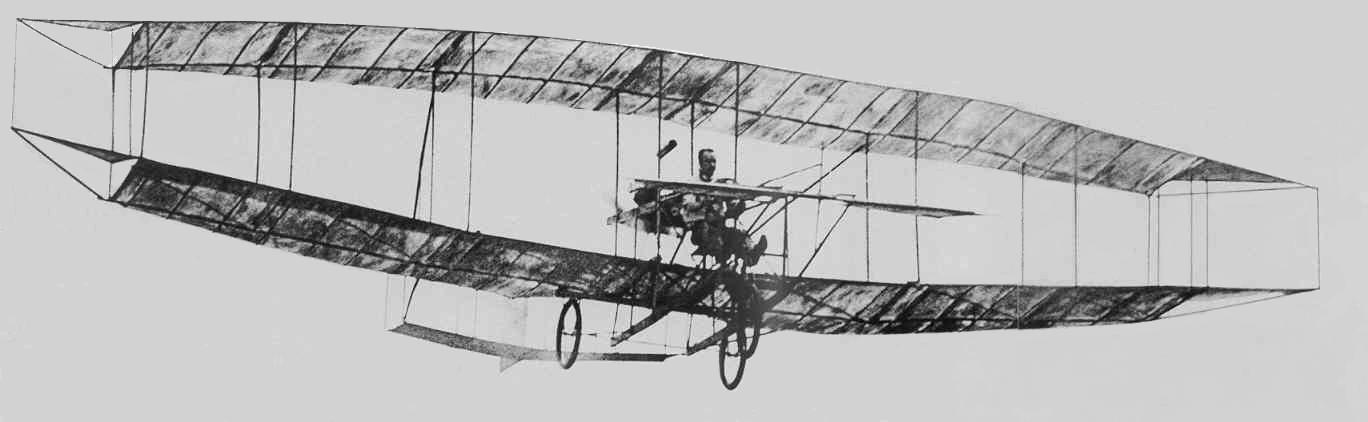
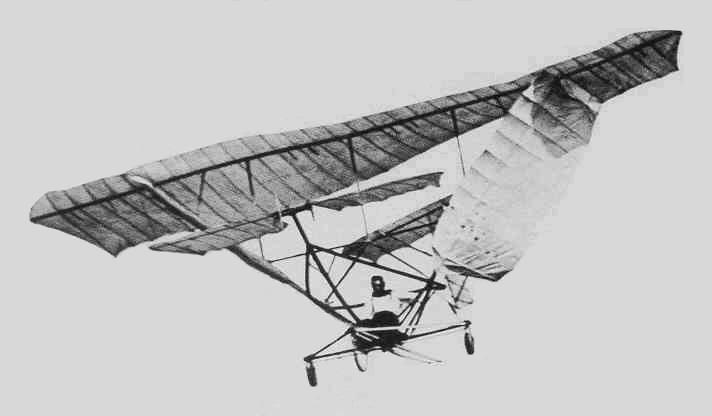
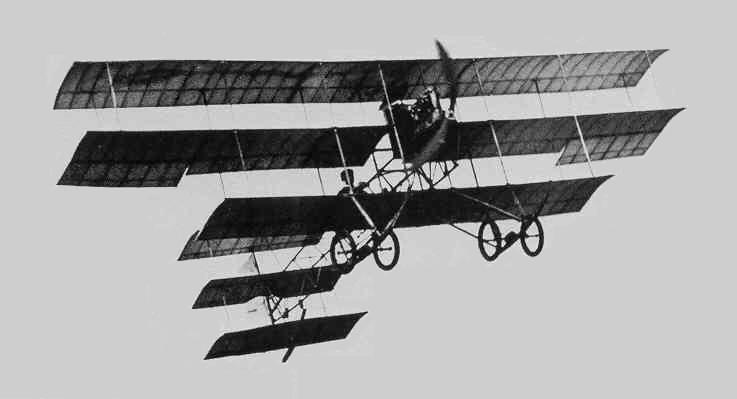
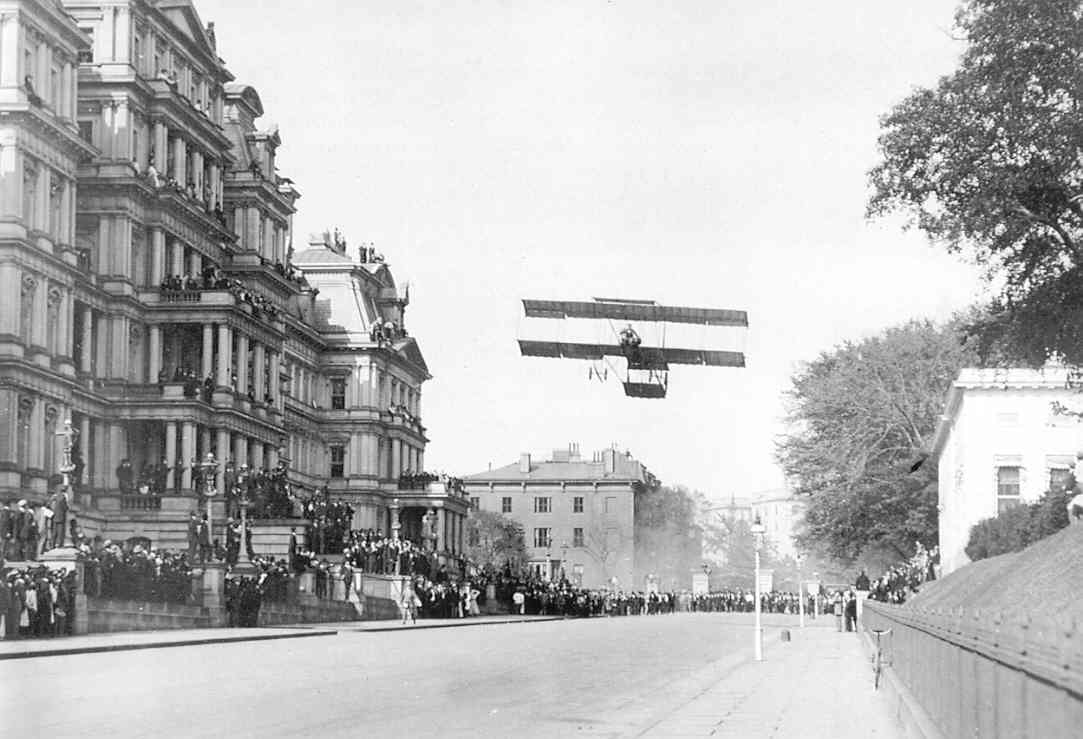
It might be easily supposed that the airplane would have been a later development, getting people moving in the air being much trickier than getting them moving along the ground.  But in fact the first heavier-than-air flying machines employing the ICE were under development at the same time as the ICE-driven automobile, both heavily dependent on this new technology (a steam engine would never have worked in the air!).

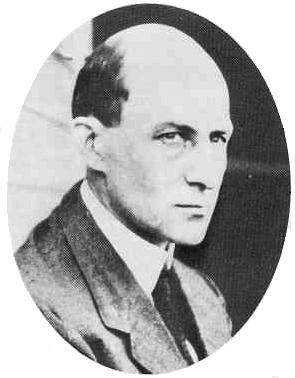
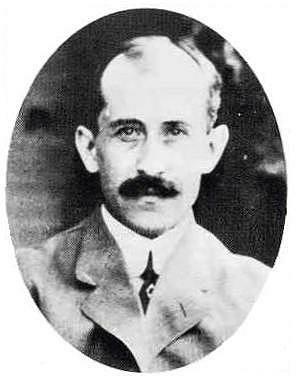
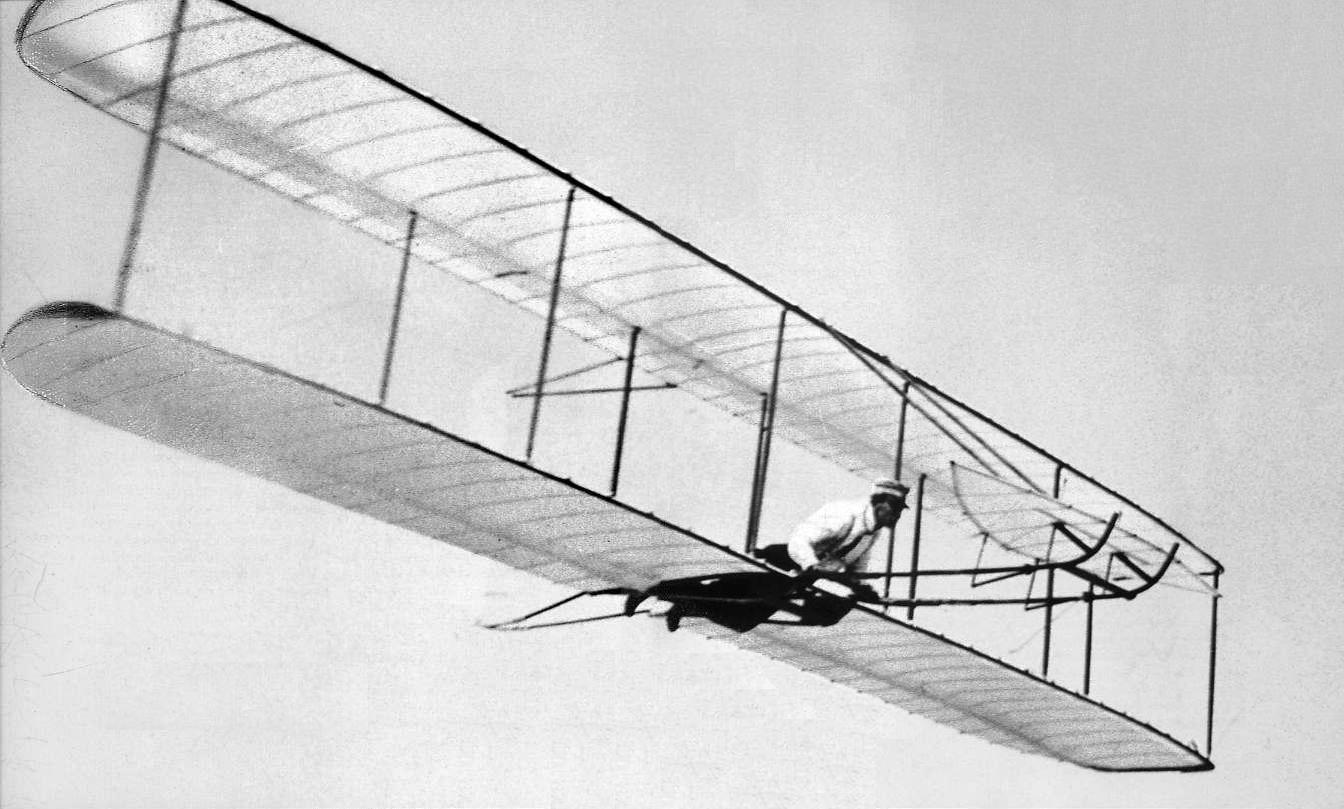
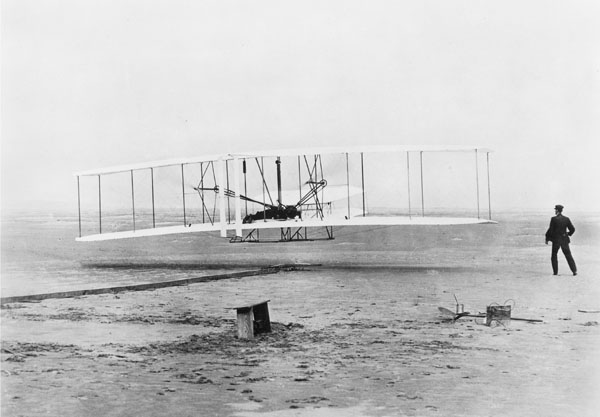
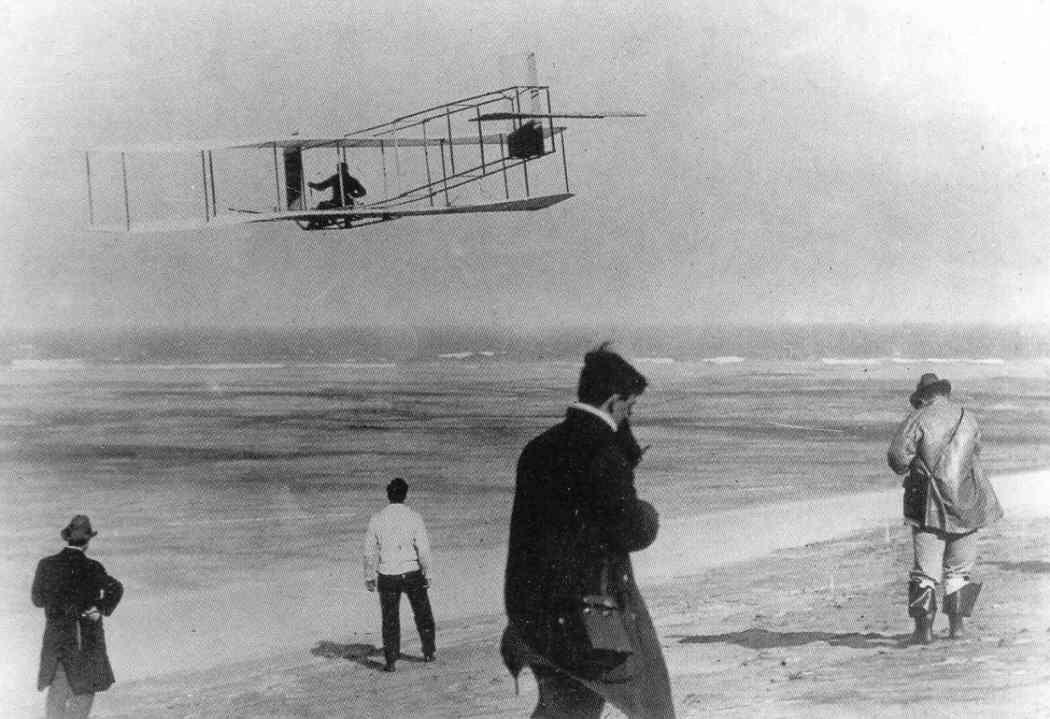
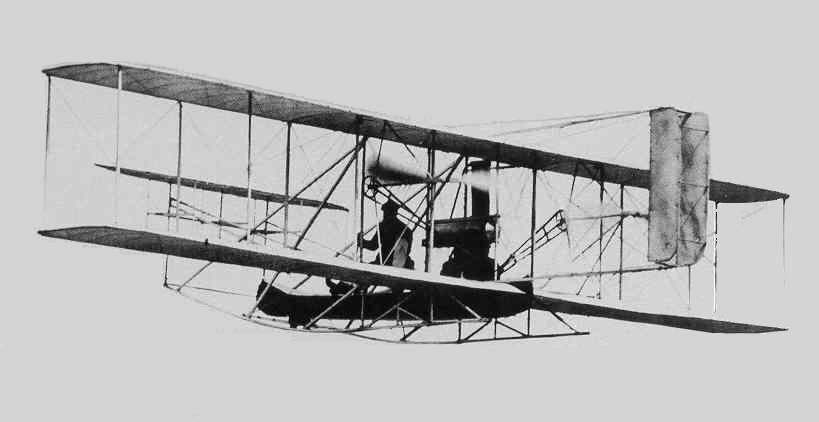
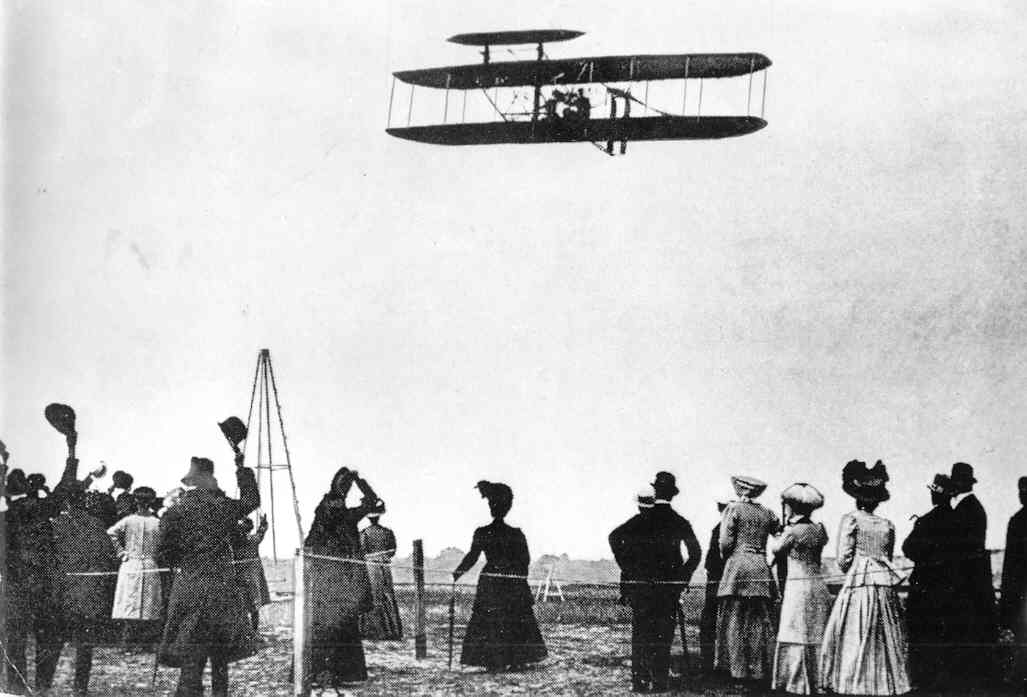
We know that the Wright brothers (Orville and Wilbur) were the first (December 17, 1903) to actually achieve the flight of this new type of airplane (having previously tested over 200 models in a wind-tunnel they created), flying their plane a distance of 852 feet in 59 seconds of flight, just ahead of other inventors about to do the same thing.  They would go on to refine and strengthen their airplane, in 1905 flying it 24 miles in just over 39 minutes.  And in 1908 the Wright brothers traveled to France to demonstrate the possibilities of the airplane, and encourage its development in Europe.  Indeed, the very next year a Frenchman was the first to fly his airplane over the English Channel (and collect a £1,000 reward!)  Thus the age of human flight had arrived.


HENRY FORD

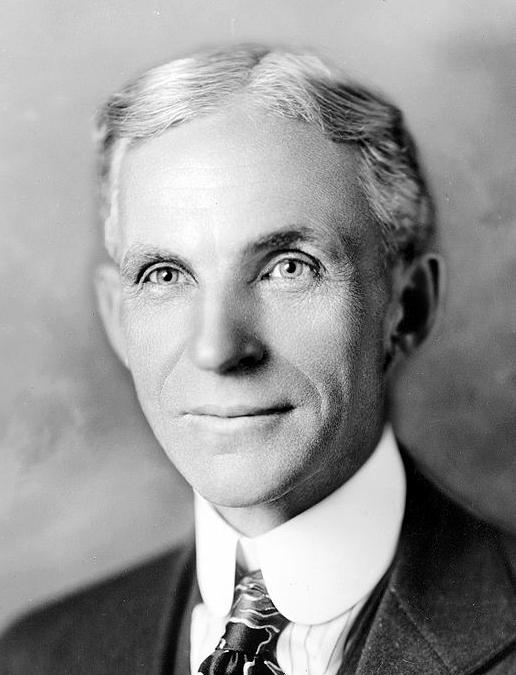
It's important to introduce Henry Ford at this point, because not only did he promote the automobile industry greatly, he actually at this point in time (the early 1900s) streamlined business operations so outstandingly that it created a sense of industrial efficiency that would touch the entire American industrial world, and, for that matter, the European world as well.
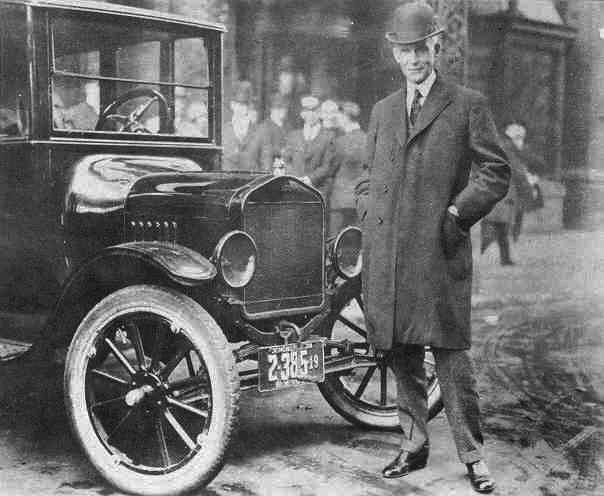
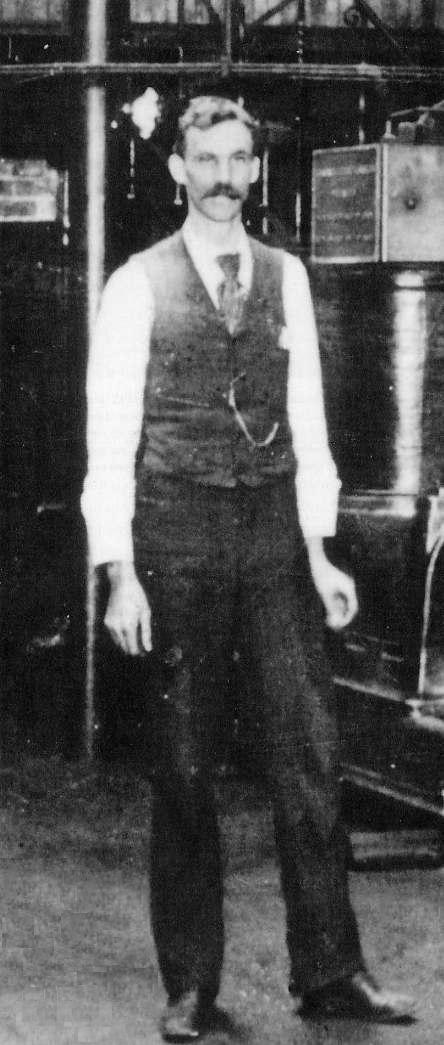
This farm-boy from Michigan took an interest in the family's steam-driven machinery, which led him to become a servicing mechanic for Westinghouse.  But he moved on in 1891 to work for the 
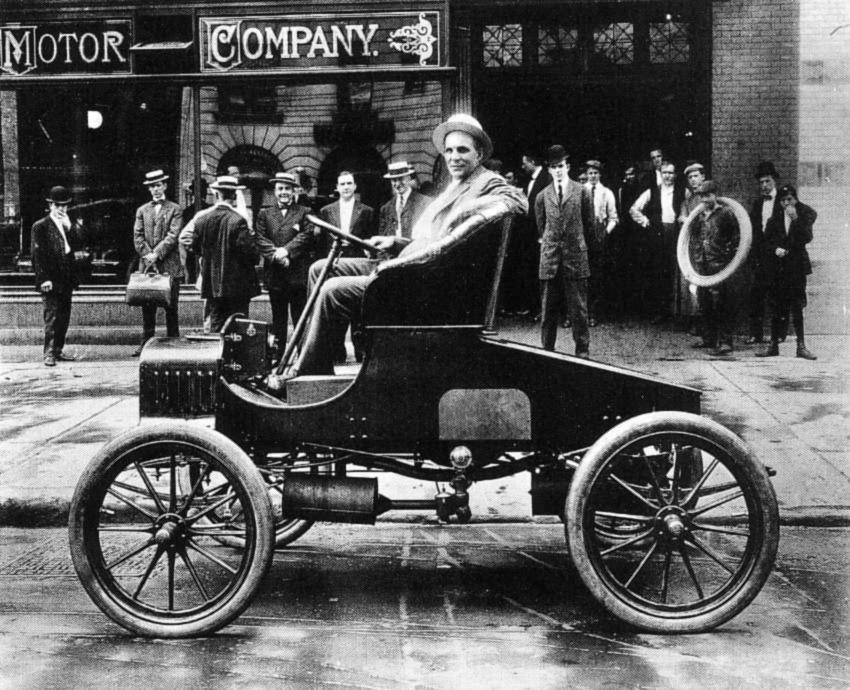
Edison Illuminating Company, becoming a chief engineer by 1893.  But he was doing some experimentation of his own on the side, fascinated by the possibilities of the ICE, resulting in his building in 1896 an ICE-driven four-wheeled cycle.  Encouraged by Edison (the two would remain close friends, eventually even neighbors, from that point on), he developed his model.  And, with some financial backing, in 1899 he formed the Detroit Automobile Company, but which shut down two years later when it did not succeed.  But one not to be discouraged easily, he built a stronger model, raced it successfully, and was able to set up a new company in 1901, the Henry Ford Company.  But even here he moved on (sold his company, which became the Cadillac Automobile Company), built yet a new model with an even stronger engine (80 horsepower!), had the famous Barney Oldfield race it successfully, and in 1903 was able to open a new business, the Ford Motor Company.
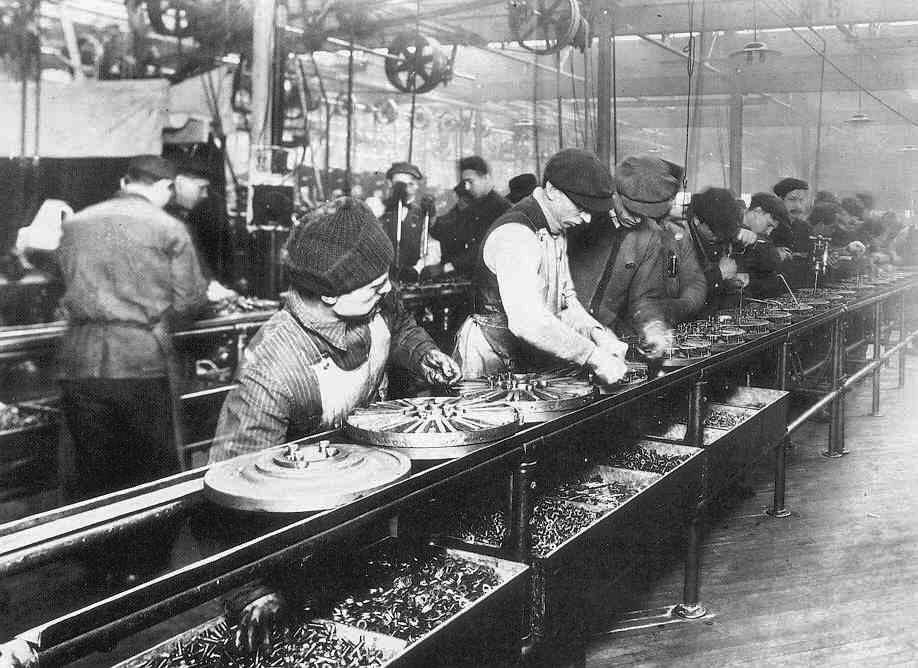

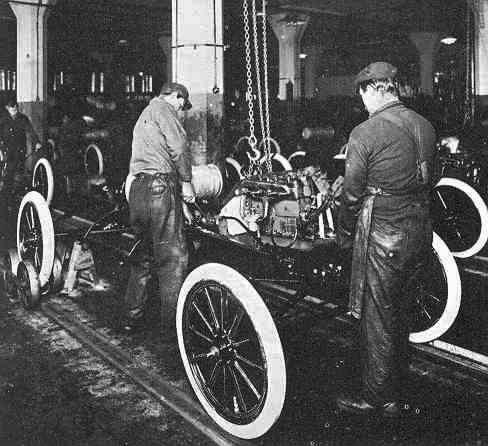
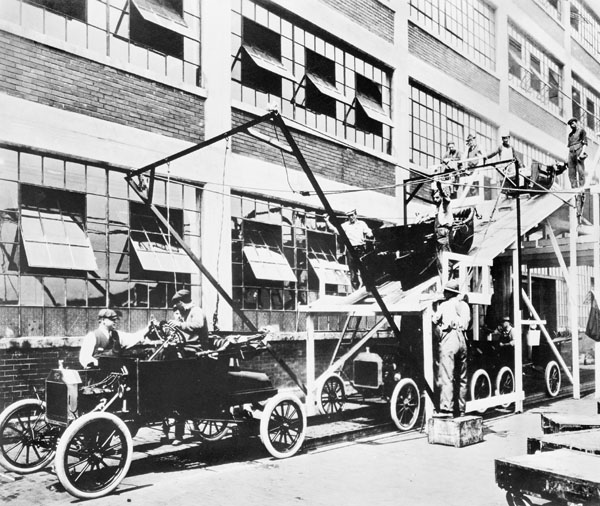
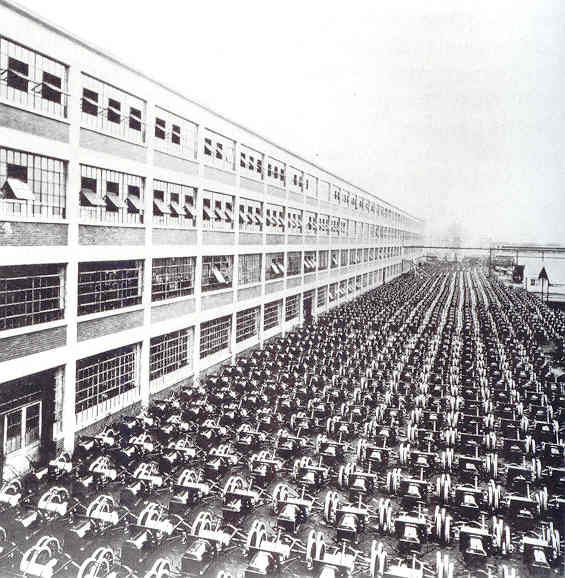
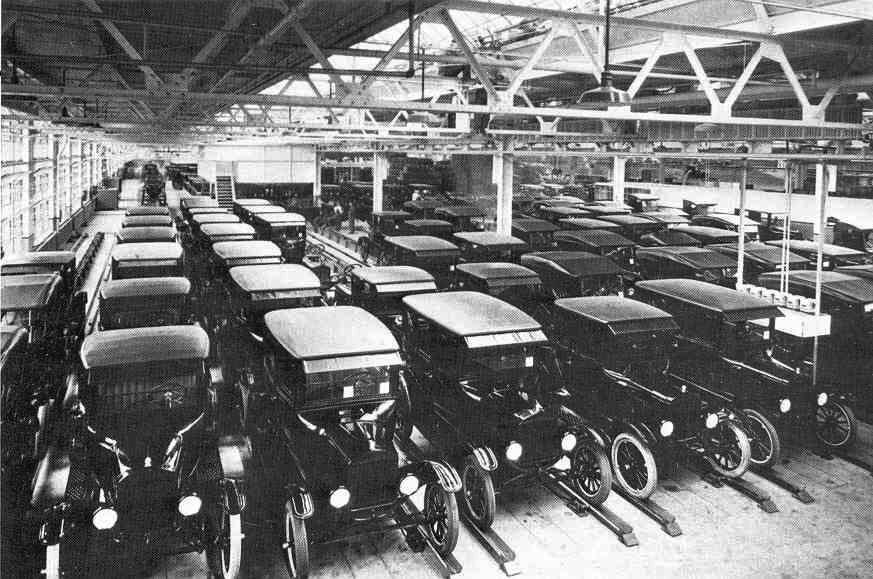
Up to this point, these automobiles were handcrafted, and very expensive for purchasers.  And here is where Ford's business genius changed the world of production.  His goal was to produce a simple but effective automobile cheaply, one that was affordable by the huge market of Middle-Class Americans.  Thus in 1908 he introduced the Model-T Ford, $825 in its initial offering that year, but constantly reduced in price annually, as Ford discovered new efficiencies – not only in production but also in distribution (a system of Ford dealerships located widely).  Then when in 1913 he revolutionized production using the moving assembly line – and in 1914 paid his workers the unheard-of $5 per day wage (greatly motivating his work force, who themselves could now afford his cars) – he was able to double the production rate ... and sell over 250,000 of his cars (now priced at only $440)! Thanks to Ford, ownership of an automobile was becoming a regular feature of American Middle-Class life.


Go on to the next section:  National Politics during the Late 1800s


  Miles H. Hodges