<


8. WORLD WAR TWO ... AND STARTUP OF THE COLD WAR

WORLD WAR TWO (1937-1945)


CONTENTS

Deep political problems in Europe

Asia also increasingly problematic

The war begins in China  (1937)

The breakdown of Western diplomacy

World War Two breaks out in Europe  (1939)

America is dragged in  (1941)

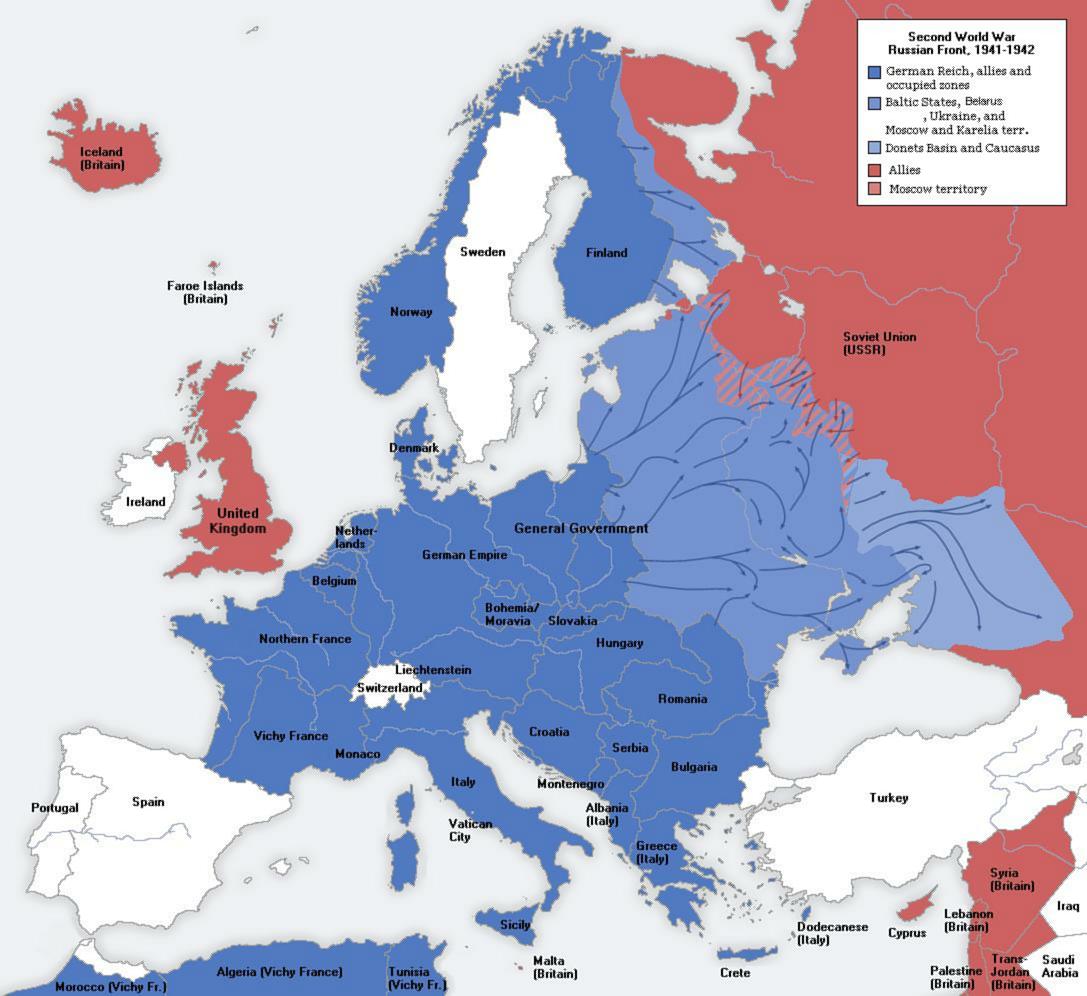
The lines of battle themselves

From Roosevelt to Truman

Victory!


The textual material on this webpage is drawn directly from my work
        America's Story – A Spiritual Journey © 2021, pages 238-259.

DEEP POLITICAL PROBLEMS IN EUROPE

The steps toward yet another war.   In a very tragic way, the "everlasting peace" that Wilson – and his League of Nations after him – attempted to put in place was turning out to be merely a temporary time of truce among the national contenders who had just come out of the Great War – plus some new entrants into the grand contention.  The war had resolved nothing with respect to the political forces unleashed by the nationalist urge that had begun to develop in the latter part of the 1800s.  Consequently, there would sadly be yet another go at this battle for national glory.

Italy.
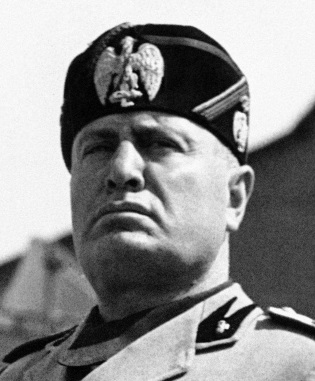
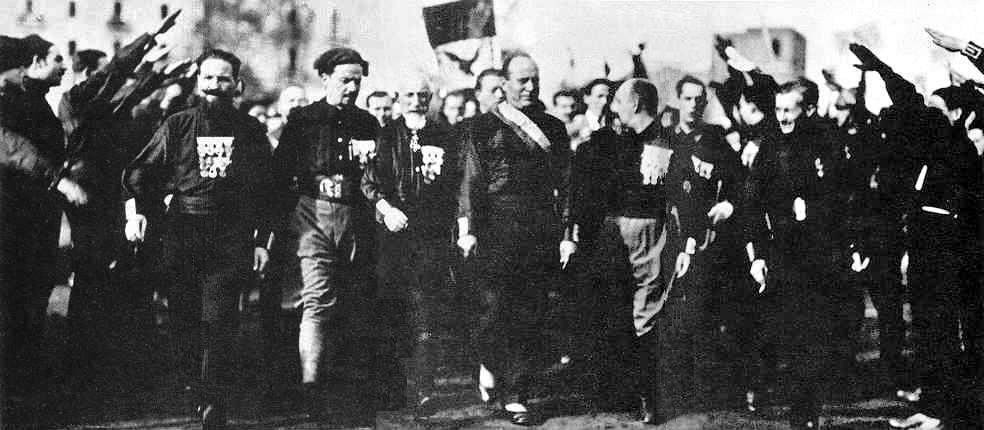
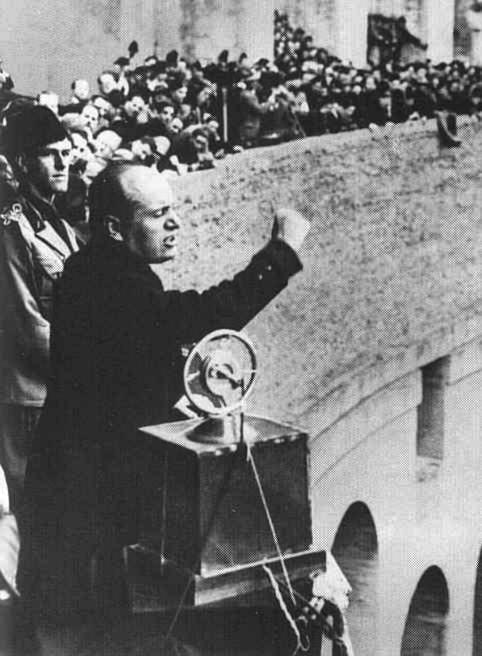
  Italy's political leaders had disgraced themselves during the war, leading Italy not to glory but to well-publicized humiliation in the contest with the Austro-Hungarian Empire.  Admittedly Italy came out on the "winning" side of the war – thanks to its alliance with England and France – but its meager rewards as "victor" did not compensate for what was widely perceived in Italy as incompetence in high places.  Thus it was very easy for the highly ambitious newspaper editor Benito Mussolini to ride to national power in 1922 with merely the smallest of political support – as there really was little willpower among the disgraced political leaders to block him.

Mussolini was persistent in his political theatrics, helped by his small band of bully boys, in promoting his idea of a powerful Italian unity or "Fascism" as he termed it, a Fascism that would bring Italy to new glory.  He constantly reminded the Italians that they were descendants of the Romans, who had built the greatest of powers – and he kept pushing the idea that Italy was destined to find its way back to such greatness.  The Italians quietly nodded their heads in his direction – and then went about their other business.  But that did not seem to discourage 
Mussolini and his dream of national greatness.

Germany.
  Germany after the war was a total mess – thanks to the "victors" America, Britain and France having stripped the country of its real leadership – in insisting on dealing only with the representatives of a newly "democratic" Germany.  Thus possessing a very weak hand in the defense of German interests in the peace negotiations which followed up the November 1918 Armistice, the French were able (among other humiliations delivered to the Germans at the peace talks) to impose on Germany massive "reparations" payments to France, ones that Germany could not begin to afford.  This consequently undercut deeply the German affection for their new Weimar Republic – which anyway had from its outset the smell of being merely part of a foreign conspiracy to keep Germany permanently disabled.  However eventually (1925) the Germans were able to elevate war hero General Paul von Hindenburg to the Presidency of the Republic – finally giving the Republic some degree of respectability in German eyes.

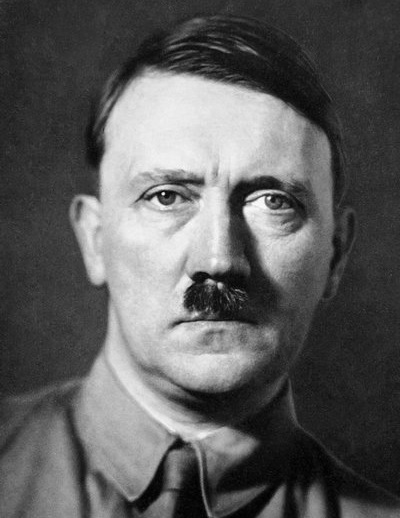
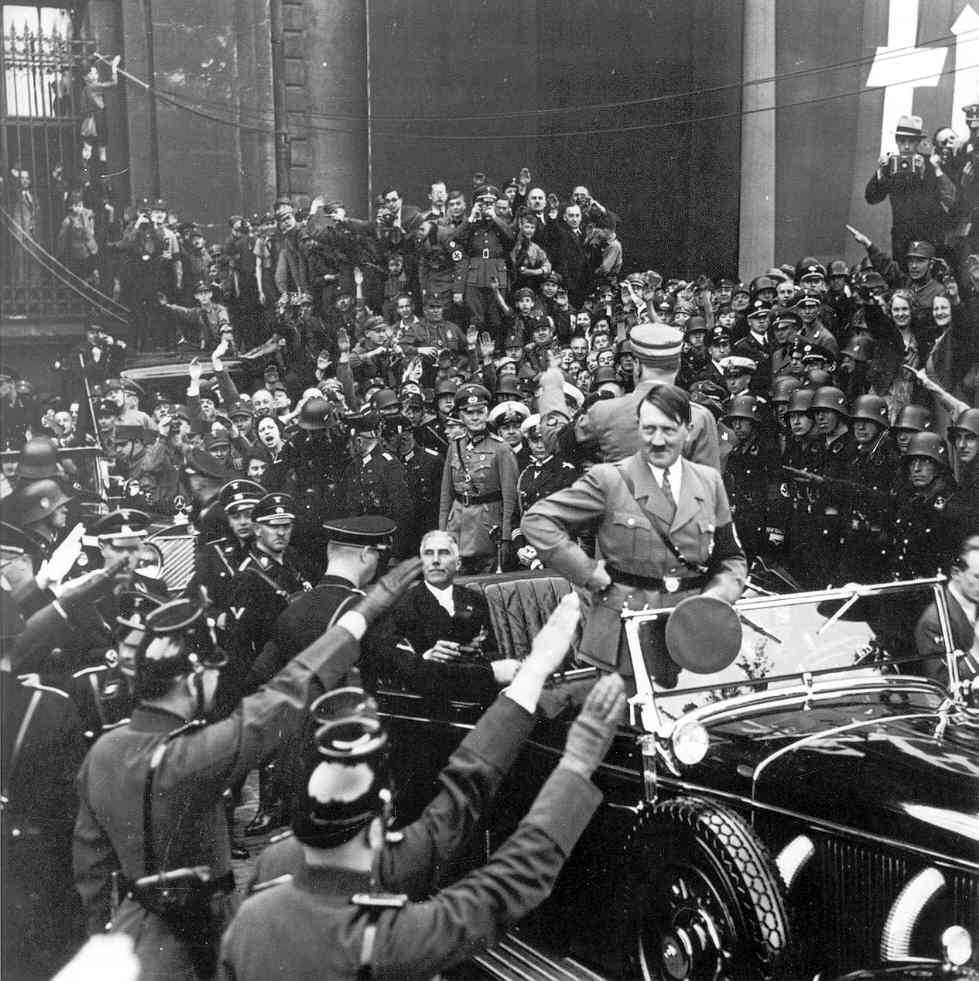
But another individual of extreme personal ambition, Adolf Hitler, had been slowly constructing his own German version of 
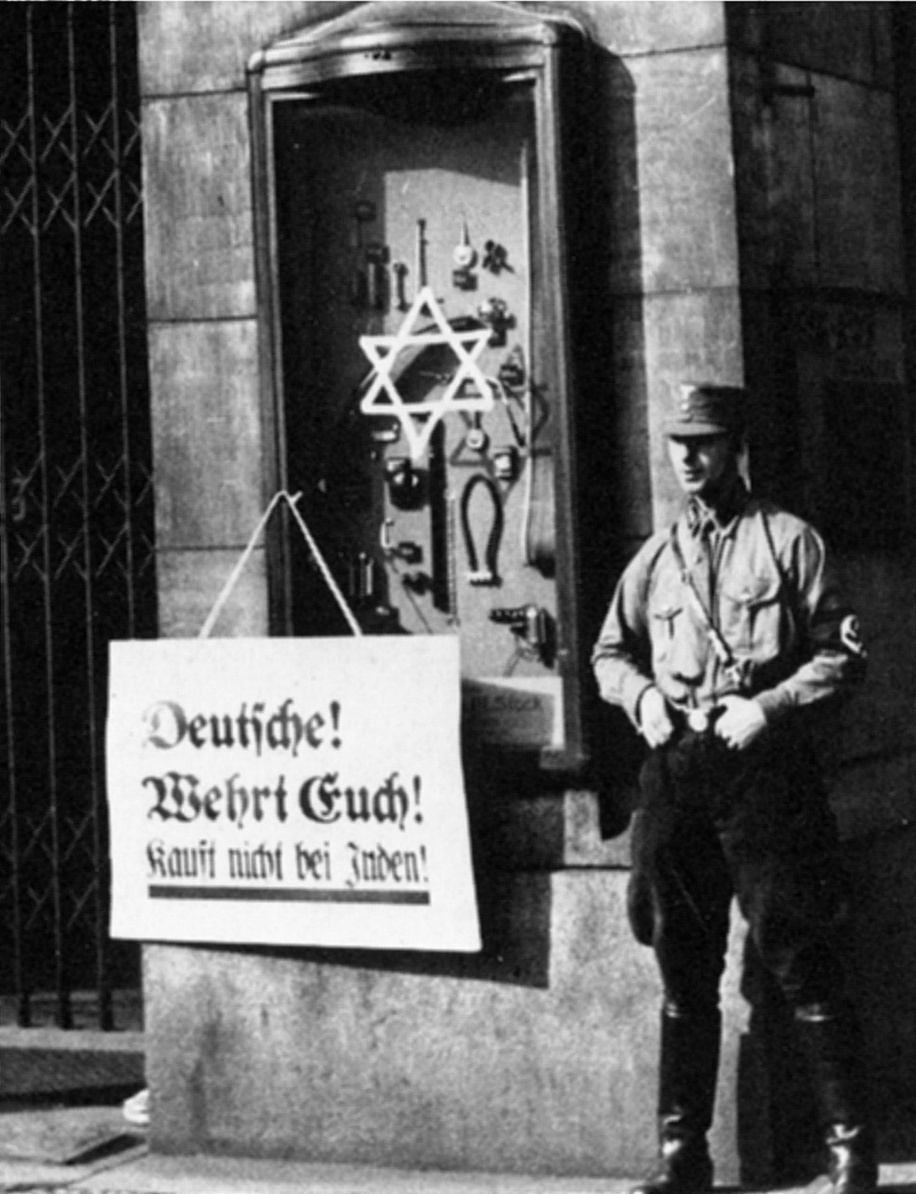
Mussolini's Fascism.  Since the early 1920s he had been busy putting together his own group of bully-boys in order to overthrow the "illegitimate" Weimar Republic.  He intended to revisit the whole war thing – and do it right this time.  He not only pointed to the "stab in the back" (Dolchstoss) by those German peace delegates who had accepted the French and English (and American) treachery and had agreed to the humiliating Versailles settlement – but also the hated Jews who he claimed had sold out Germany in their quest to sully the racial purity of the German race.  Tragically, such political garbage sold well to a German population highly frustrated by the chaos that had come to the nation since the end of the war – a chaos deepened with the onset of the global Depression.

True, the Jews seemed to be a part of the problem, in the sense that they had been escaping intense religious persecution in Eastern Europe (especially Russia) in huge numbers, and seeking refuge in Germany – a very natural goal since the Jewish language used in Eastern Europe was an ancient German dialect (Yiddish from the German word Jüdish).  And since the Jews had been prevented from investing their wealth in landholding by the governments of East Europe, their wealth was in valuable items such as gold and silver, which proved to be a very moveable source of wealth when they decided to flee their persecution in Eastern Europe.  And with that mobile wealth, they were able to set up their own businesses in Germany – or buy up failed German businesses (particularly during these economic hard-times), giving the appearance that it was all a huge Jewish
 conspiracy to take control of the German economy.  At least that's how Hitler played things.  And it seemed to make sense to confused and angry "Christian" Germans, people whose political anxieties the rising demagogue Hitler would exploit to the fullest.

By 1933, the German 
Weimar Republic was deeply divided among various political parties ... and Germany's veteran politicians knew how badly they needed the vote of Hitler's numerous Nazi members of the Reichstag – in order to achieve a voting majority required to form and maintain a government. To woo Hitler into cooperation, they even offered him the position as German Chancellor, believing Hitler to be a simple fool that they could easily control.  Thus they convinced President Hindenburg to bring Hitler to power that year.

Hitler promised the Germans that if they followed him he would remove the disgrace of the 1919 
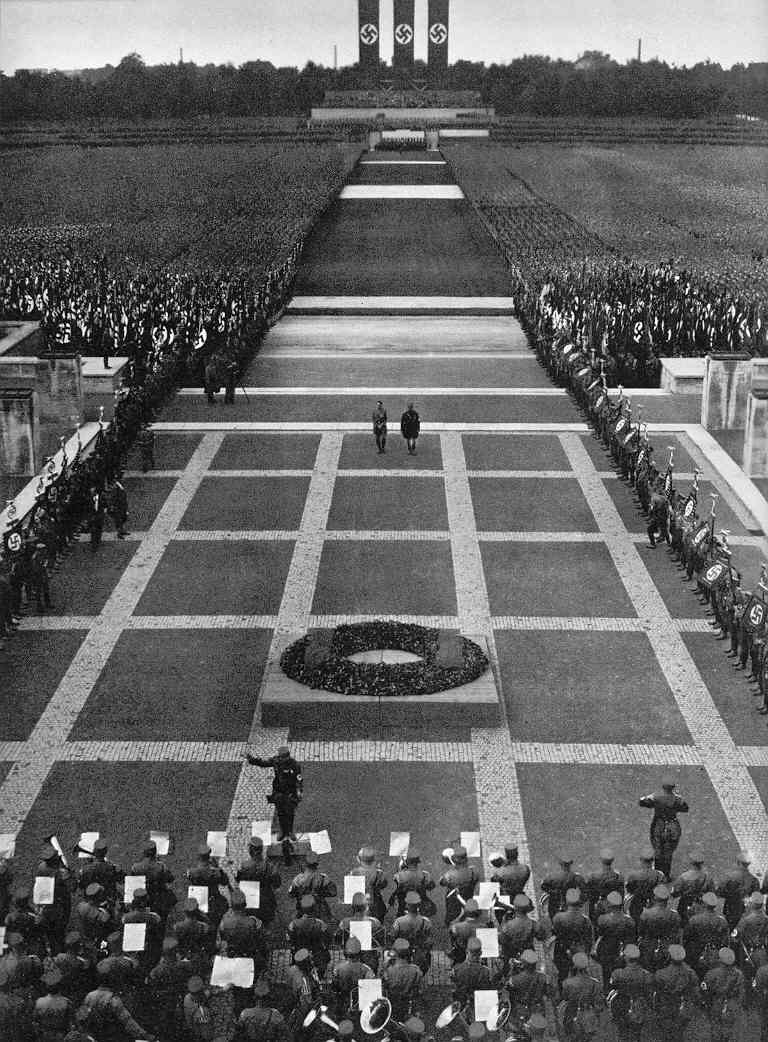
Versailles Peace and lead Germany to victory.  In fact he promised them that he would build for them a German Reich (Empire) – one that would last a thousand years.  This clearly meant war – massive war.  But the Germans seemed very much more dedicated than the Italians in following the theatrical little man with the funny mustache – right into bloody war if need be.  They were quite certain that under his total command of Germany, the nation would finally find its place in the sun.

There were exceptions of course to this grand affection for Hitler, especially among the old German aristocracy – in particular among the officer ranks of the German army.  But 
Hitler's Nazi bully-boys, his State police (the Gestapo) and Hitler's private army, the massive Schutzstaffel (SS), were designed to keep these non-compliant Germans silent.

Soviet Russia.
  By the end of the 1920s the Russian civil war had finally come to an end.  But Lenin had died in 1924 and the leadership question among the top ranks of the Communist Party now directing Russian life had only recently been somewhat resolved in the rise of the mysterious Joseph Stalin and the expulsion from the party of Lenin's close associate Trotsky.

But Stalin was no Communist – in any sense of Marx's (or even Lenin's) idea of what that meant.  He was simply another one of those extremely ambitious individuals who used the political chaos that surrounded him to work his way to power – eliminating anyone and everyone who got in his way.  He was nothing more than a classic dictator, determined to put his name in history by dragging Soviet Russia out of its traditional agrarian (and Christian) ways – right into the rising world of modern industrialism – and consequently military power.  He too was going to right the wrongs of Russian performance in the Great War.  And nothing was going to stand in his way – not personal opponents, not cultural conservatism – nothing, absolutely nothing.  Thus the death camps of Siberia were soon filled with multitudes of people that he suspected of getting in his way.

Tragically Americans in the early 1930s simply read the label on the Stalinist bottle, the one that read "Communist," and not the ingredients inside.  Intellectual leftists excused what little they heard of his abuse of Russian opposition and held up his Communism – or at least some modified or Socialist version of it – as an ideal that America should take a serious look at.  After all, Capitalism had clearly failed.  What 
Stalin was doing in Russia to industrialize Russia at a time when American factories sat idle seemed to speak for itself.

On the other hand, the word "Communist" scared multitudes of Americans to a point of hysteria.  To these Americans, all this talk of Russian Communism seemed to pose an immediate and direct threat to everything that America supposedly stood for.  Tragically, the fact was thus missed entirely that what Stalin was doing at that time in Russia had little to do with American political instincts (of any variety) – or even Communism itself.  This misunderstanding would eventually come to haunt America.

Britain and France.
  The "victory" Britain and France had achieved finally after four years of horrible slaughter on the Western front rang very hollow for the ordinary people of England and France who had given so much of themselves in this recent tragedy.  They were not quite as cynical as the Italians about the political legacy of the war.  But they were not far behind them in their attitudes.  Thus the political leaders of those two countries, individuals who were brave enough to offer their services to their countries, understood that they were treading on thin ice when it came to such issues as national destiny.  Indeed, they were well aware that what was expected of them was to keep their countries away from all points of imperial or even just national contention – at all costs.  Thus they disbanded their military and signed on to grand treaties that promised that they would never ever resort to war again as part of their participation in the new world of global peace.

Of course the rise to the East of Hitler and Stalin made them very uncomfortable – especially the French who realized that Hitler intended to take some form of revenge on their nation.  But also, with a huge Communist Party flourishing in their own country, Stalin's program in Soviet Russia stirred great fear in France that Stalin intended to use the Communist connection to undo traditionalist Christian France the way he was clearly undoing traditionalist Christian Russia.  So with two – but potentially mutually hostile – forces in the East rising to threaten the peace of France, France itself was uncertain – even deeply divided – as to how to respond to these dangers.  Some on the Right saw Communism as the greater danger and advocated active cooperation with Hitler (actually hoping thereby to turn Hitler's ambitions eastward towards Russia).  The political Left was vastly more frightened by Hitler, and advocated an alliance with Stalin's Soviet Russia – something along the lines of the alliance that France had with Russia during the Great War – except that they anticipated that under 
Stalin, Soviet Russia would be much stronger, able to keep Germany in check.


ASIA ALSO INCREASINGLY PROBLEMATIC

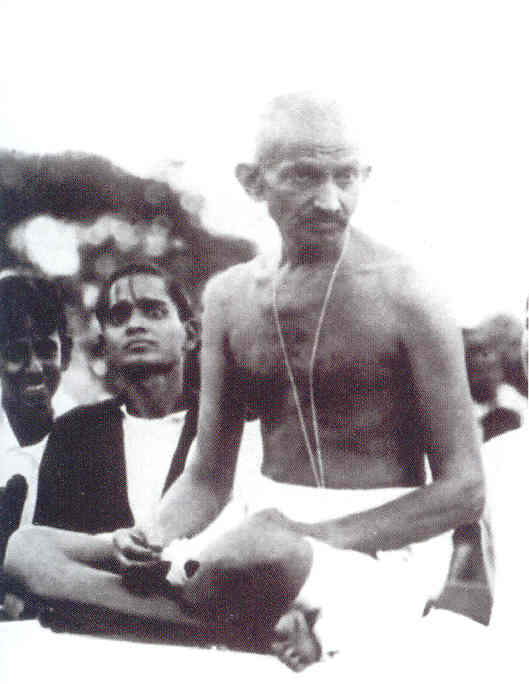
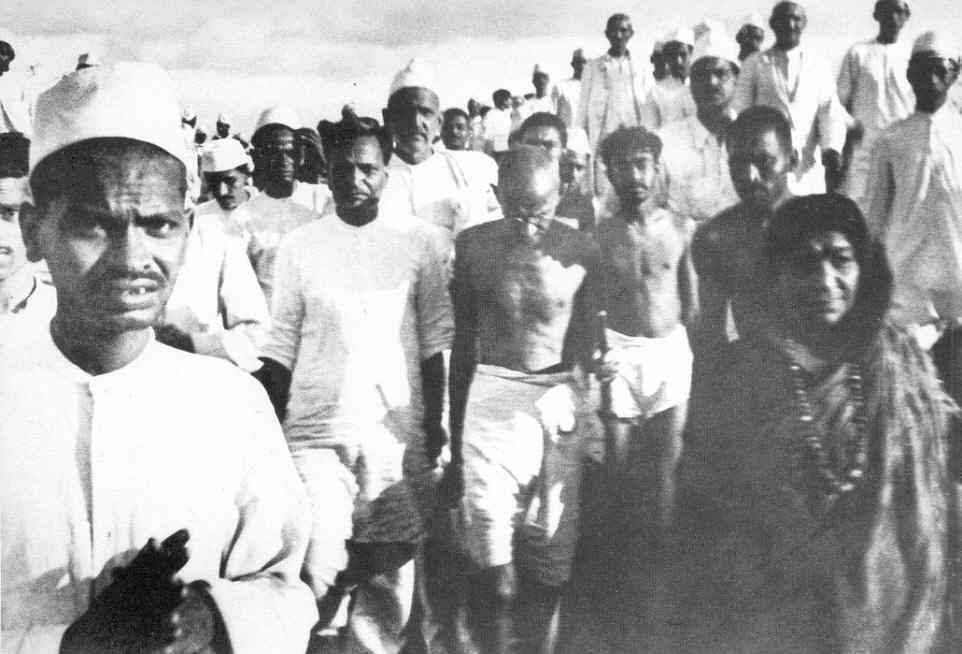
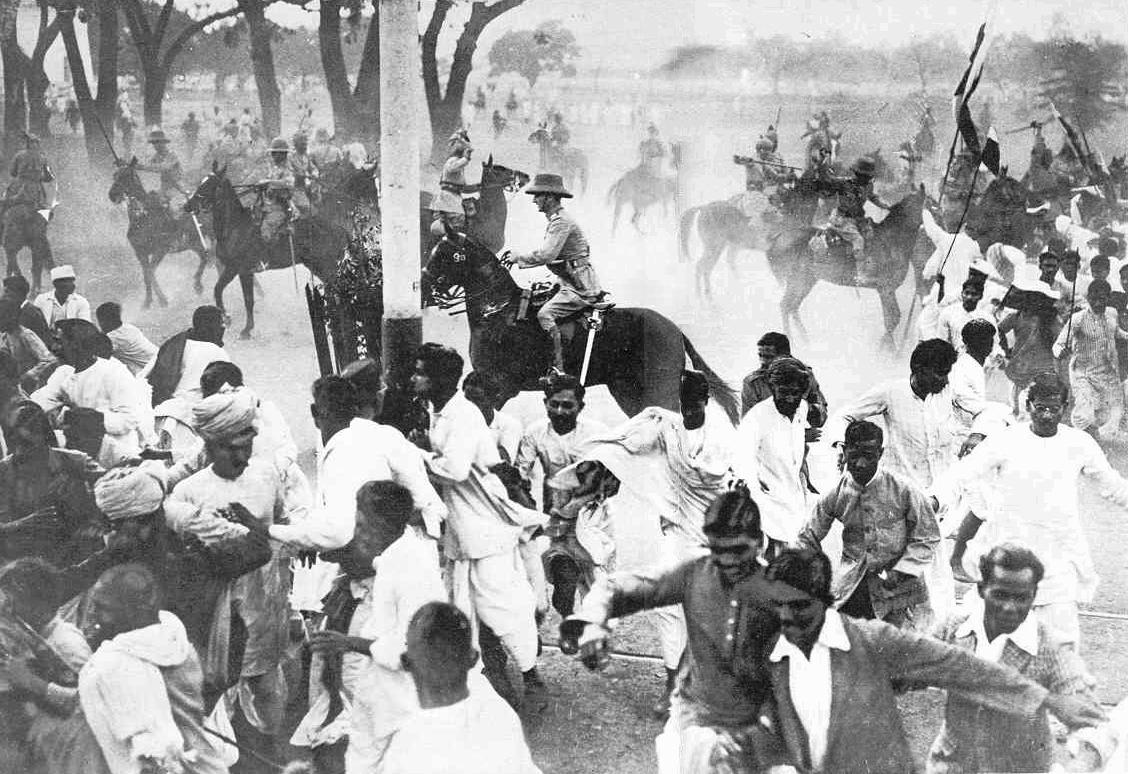
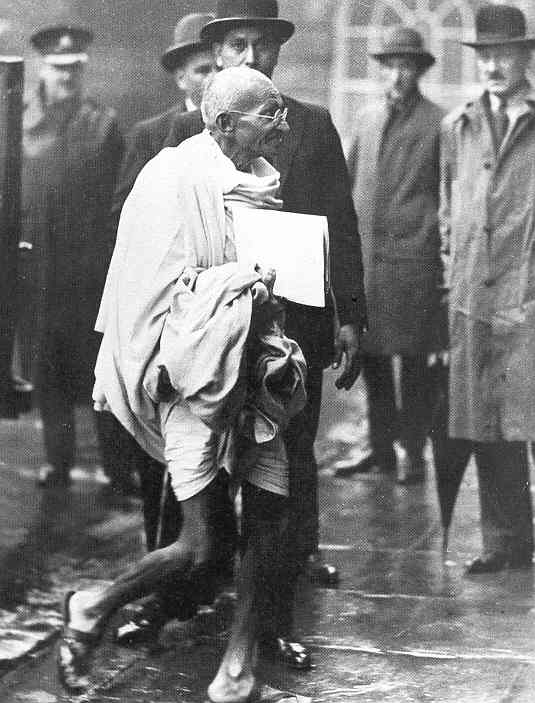
Gandhi's India.  Britain – not so immediately threatened by Hitler – had its own problems.  Its great Empire was falling apart.  Part of this was due to its undercutting of its own national power due to the post-war mood England found itself in.  Part of it was due to the antics of another man of ambition – just as theatrical as Mussolini and Hitler and just as driven by the quest for national power as those two men, at a time when Britain itself was deep into its anti-nationalist mood.

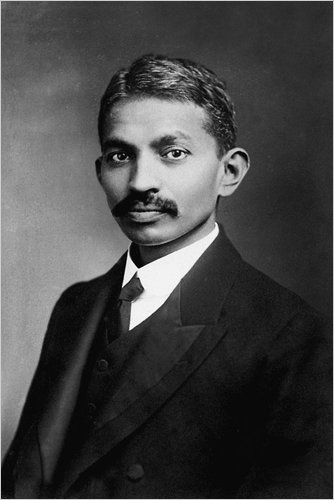
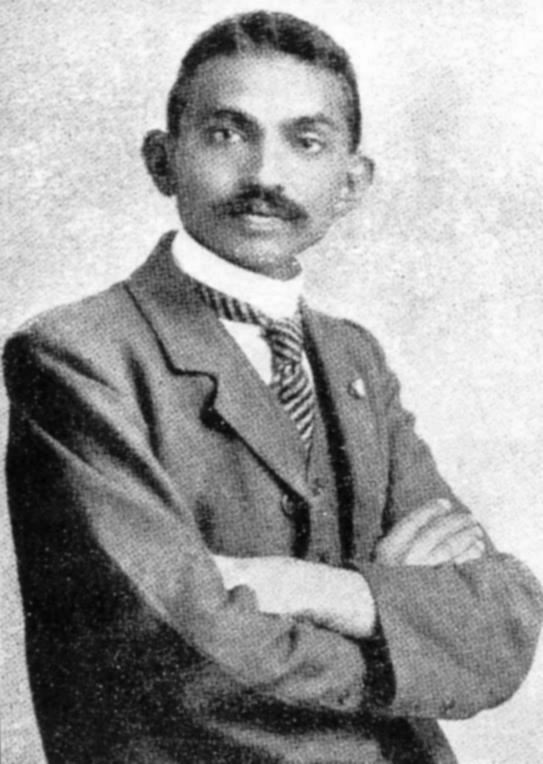
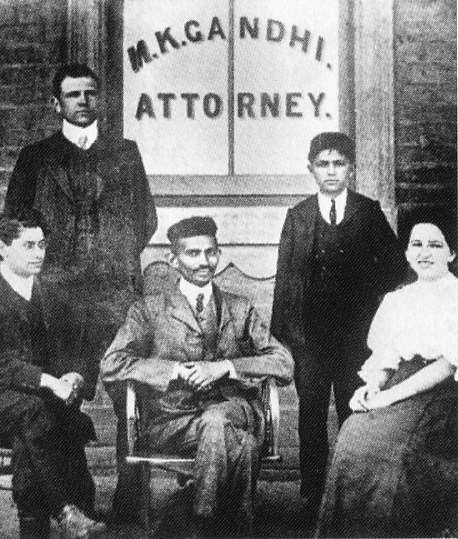
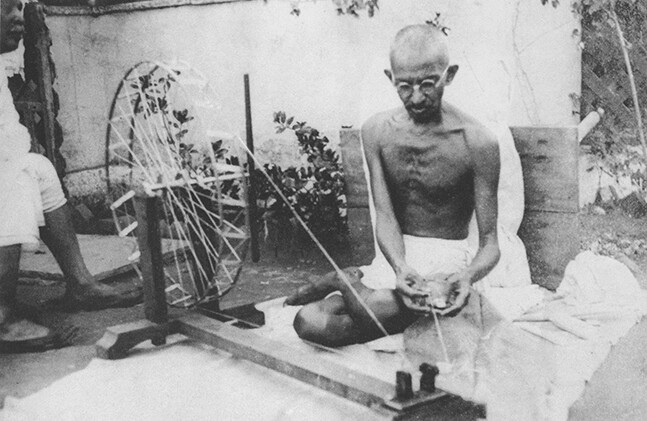
The Indian Mohandas Gandhi had started out his political career as a young man who did all the things necessary to rise to a personal greatness within the British Imperial scheme of things. He studied law in London at the prestigious Inner Temple – but found that no matter how hard he tried, his brown Indian skin stood in the way of his acceptance into the elite political company he believed he deserved.  He ended up establishing a law practice in British South Africa in 1893, representing the huge Indian community there in their similar quest for improved status within the British Empire.  A little over twenty years later (1915 – in the midst of the Great War) he transferred his activities to India itself, got rid of his English attire and took on the appearance of an Indian holy man – and proceeded to call his fellow Indians to do everything possible to end their cooperation with the British occupiers of their nation.  His goal was to get the British to "quit India" – to simply go away.

But he was not only opposed to British governance of his country.  He was opposed to everything that had come to India via the English presence – including English industrial culture.  He now despised everything English – and had some idea that India could return itself to a pre-British Hindu culture of rural simplicity – not realizing that in doing so half of the greatly expanded Indian population would have died from trying to survive amidst his romantic but primitive economy.

Western civilization in trouble. 
Anyway – by the 1930s the British Empire was collapsing, the French were politically in disarray, and whatever dignity by which the West once impressed the East was fast disappearing.  Indeed, Western civilization – with all its logic and cultured ways – was appearing to be something of a joke – not just to Fascist and Nazi Europe but also to an increasingly ambitious Asia.

Japan.
   Japan was about the only victor in the Great War that truly came out of the war as such – but was nonetheless divided as to how to move forward into the post-war world.  Many Japanese were impressed by the "win" of the "democracies" and strongly supported the idea that Japan should move more decisively in that direction.  But there were others, especially among the younger members of the Japanese military, who were more impressed by the mocking of such democracy heard coming from the European Fascists.  Anyway, a version of Japanese Fascism was easily developed from their own Shinto tradition – one that glorified the military hero.  Also, Japanese society was not suffering from the victor's remorse that so crippled the French and English.  The Japanese had no reason to be wary of going deeply military.  And little by little, by the mid-1930s, they could see Japanese glory awaiting them as they planned to expand their own political influence – even dominance – in Asia.

China.
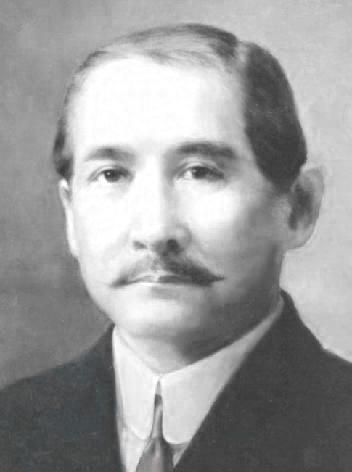
  A confused and deeply divided China would be Japan's first victim in its post-war rise to power.  Here too, the Chinese were by no means united in their response to the huge cultural impact the Western presence had on their country.  Many Chinese, especially those living in the fast-growing commercial cities that lined the Eastern shores of China, were quite at home in taking up Western ways – even the idea that China should become a democratic republic.  This is exactly what officially transpired after the war – when Dr. Sun Yat-sen and his Nationalists were able to establish a Chinese Republic on the Western model.

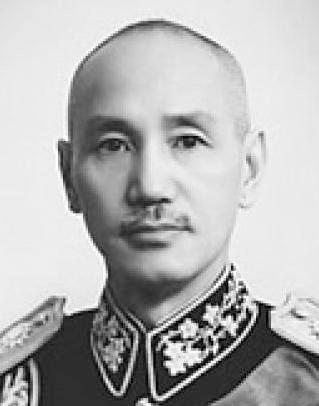
But Dr. Sun died early on (1925) and China found itself struggling since that time to piece itself back together again.  In theory Dr. Sun's place was taken by the young military leader, 
Chiang Kai-shek.  But he was having enormous difficulty not only bringing under control the warlords, who typically appear whenever Chinese central power weakens, but also the Chinese Communists.  But they too were divided:  those who sought a Communist China similar in character to Stalin's Communist Russia, and those who chose to follow the young and highly ambitious Mao Zedong, who wanted to see China restored to some kind of romantic rural communalism (Mao detested urban culture).  It was all very confusing to the Chinese as these various groups took each other on – very violently in fact.


THE WAR BEGINS IN CHINA

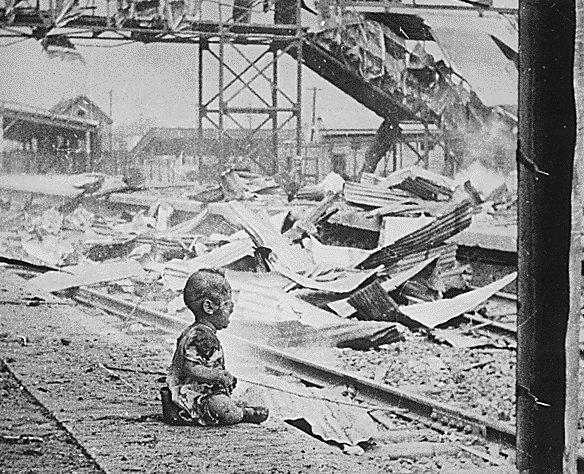
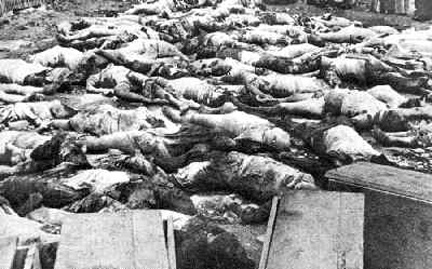
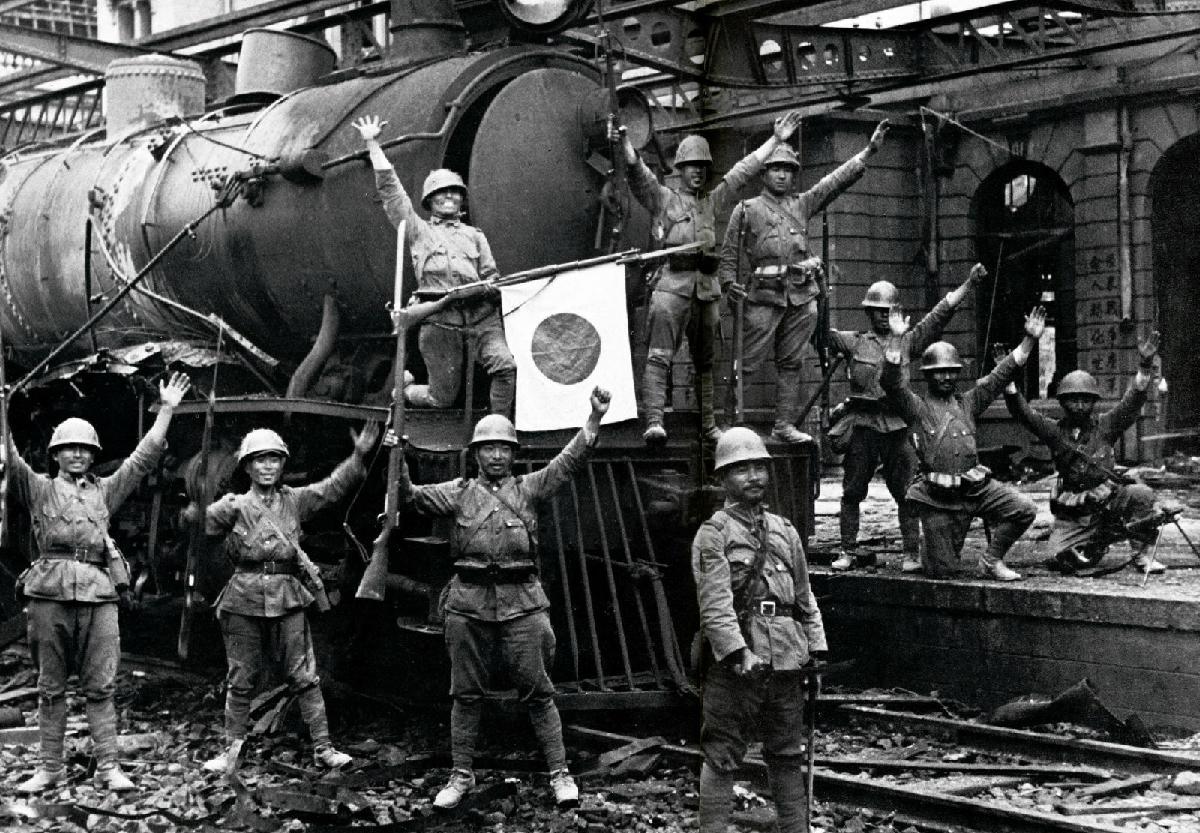
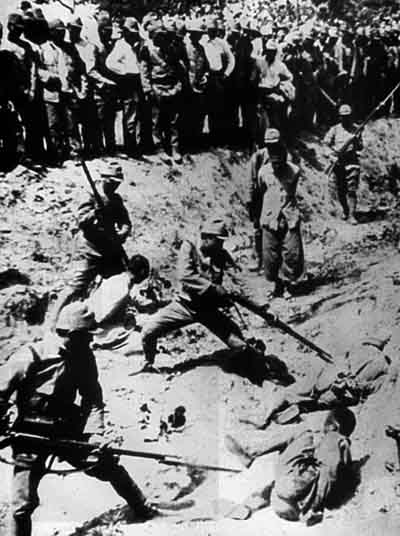
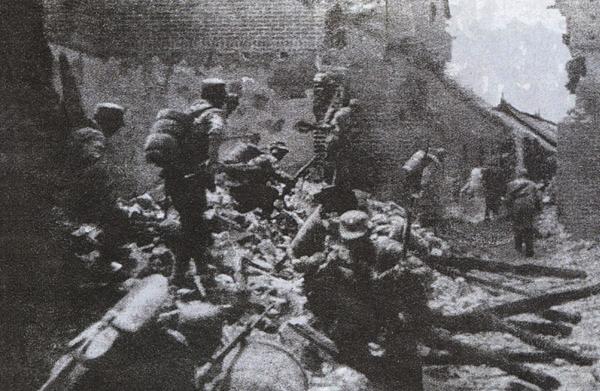
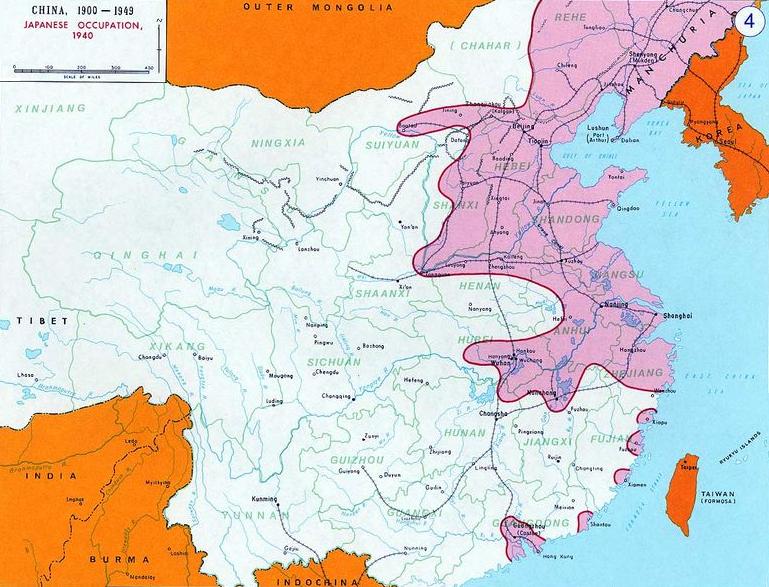
This allowed the Japanese in 1937 to suddenly invade a greatly weakened China, starting from their position in the northern Chinese province of Manchuria – which had been placed under Japanese supervision as part of Japan's reward for their role in the Great War.  China was completely unprepared to offer a strong unified resistance to these haughty Japanese invaders, and it cost the Chinese dearly.  Tragically for the Chinese, the Japanese were savage in the way they treated the Chinese as they rolled over their towns and cities – rounding up surrendered civilians and simply slaughtering them at the pleasure of the Japanese.  Equally tragically for everyone involved, all of this seemed to validate in Japanese eyes their own greatness as a warrior race.

Americans, who had something of a paternal interest in China and its development, were shocked when the stories began to appear in the American media[1] about what was going on in China.  Americans were furious – although there was little that America could realistically do to help China at that point.  After returning from the Great War in Europe in 1918/1919 America pretty much, like France and England, had disbanded its military – presuming that this would inspire peace around the world.  Thus America could offer no practical relief to the Chinese, at least in the form of military assistance.

But China's Republic under Chiang refused to surrender.  Thus the Japanese now found themselves involved in an ongoing struggle with their neighbor.  They had captured most of the coastal cities – but were finding it impossible to bring the rest of China, notably the rural interior, to defeat.  Thus the war dragged on there.


[1]Americans were informed of such developments not only by newspapers and pictorial magazines but also by the brief but dramatic movie clips of current events that were shown in the theaters between the main features.


THE BREAKDOWN OF WESTERN DIPLOMACY

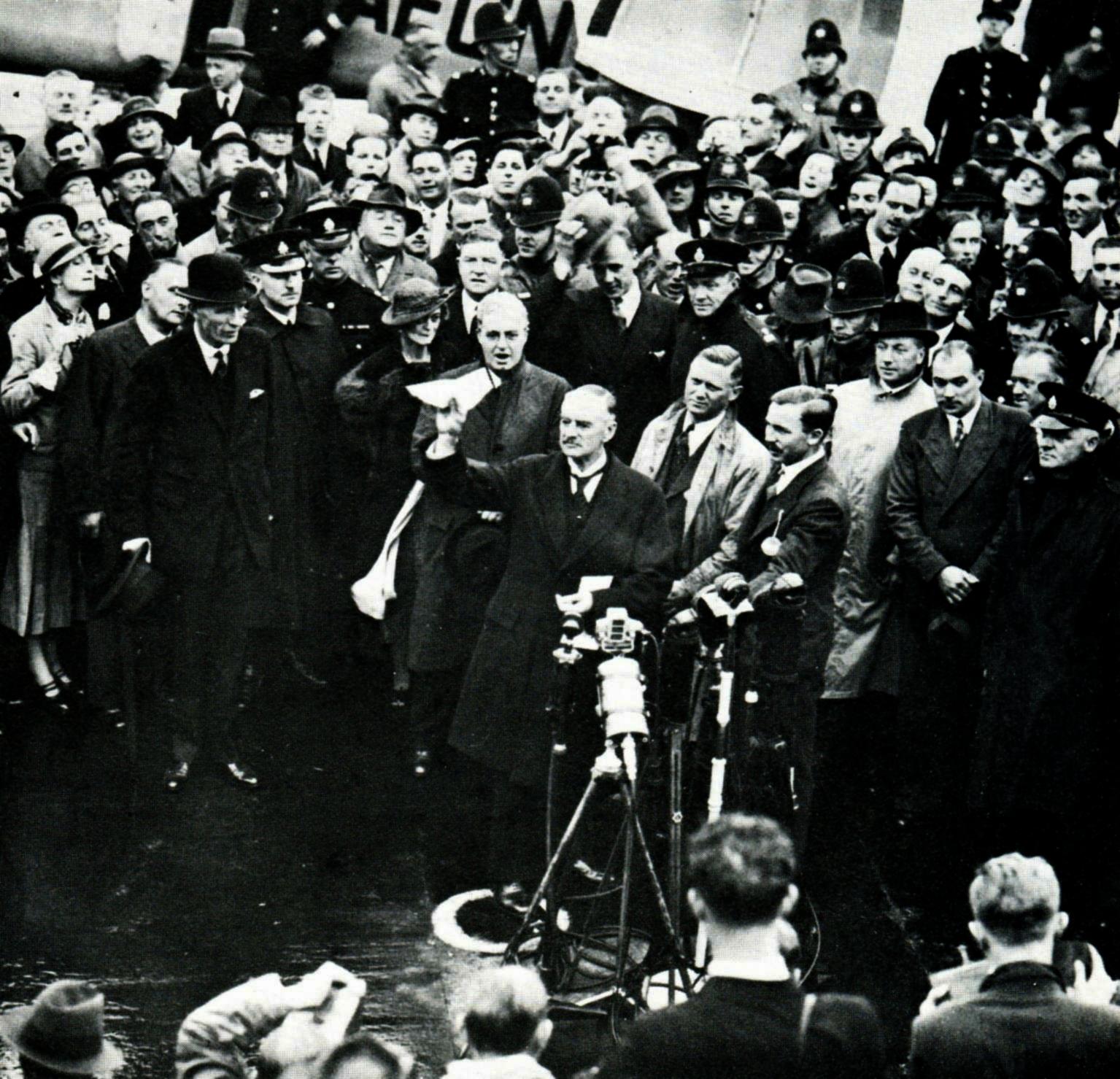
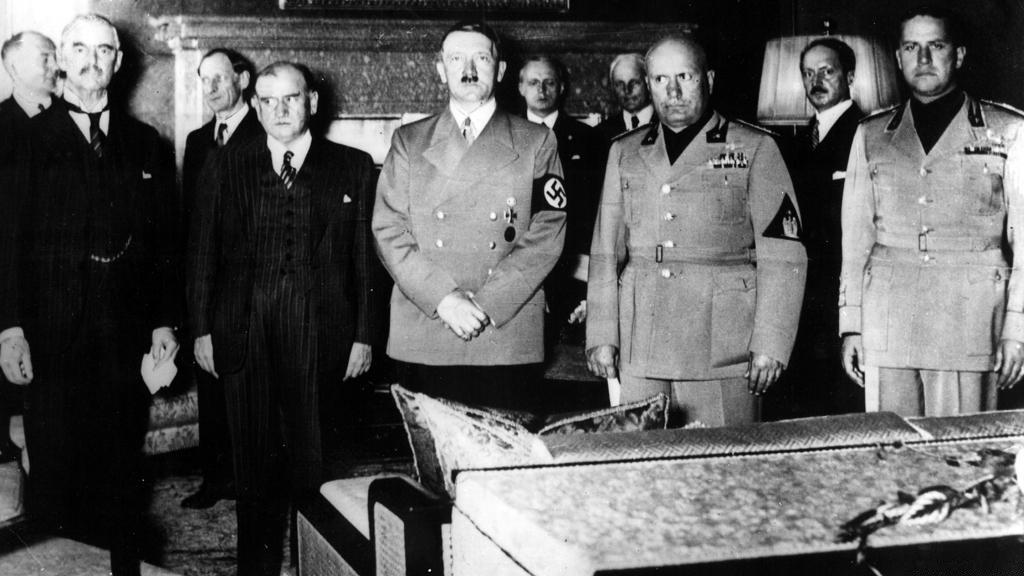
Chamberlain tries to preserve the peace through "appeasement."   While France found itself in a state of major political confusion, Britain had come under the resolute leadership of Neville Chamberlain – who was certain that he knew how to handle Hitler, and keep Britain out of war.  He simply looked the other way when Hitler grabbed Germany's neighbor Austria in 1938, thus expanding Hitler's Nazi Reich in doing so.  Chamberlain justified Hitler's action as actually a natural thing for all German-speaking people to want to be united as a nation.  This then raised the question of the status of the German-speaking Sudetenland located in the newly created Czechoslovakia, the mountainous borderland where the Czech nation had dug in its main defenses.  This included 40 well-armed Czech military divisions and all sorts of military emplacements, aimed against a newly created Poland – but also against a possible German expansion as well.  Hitler complained about some supposed "mistreatment" of the Sudeten Germans by the Czechs (untrue) and pressed Chamberlain to allow Hitler to bring the region into his expanding German nation, leaving the Czechs defenseless.  He promised Chamberlain that if he were granted this territory, this would satisfy Germany's quest for national expansion.  Chamberlain, who was not choosing to listen to Hitler's other promises (to his own people), bought the argument.  And without Czechoslovakia's consent, at a famous meeting in Munich with Hitler in September (1938), Chamberlain agreed not to block Hitler's seizure of the Sudeten borderlands, and leaned on the Czechs to agree to this "peace-preserving" adjustment.  Back in England he proclaimed all this to be a great diplomatic victory, pronouncing loudly how in signing this agreement he had saved the world from war.

Then in early 1939, just as 
Chamberlain was being proposed as the recipient of the famous Nobel Peace Prize, Hitler decided simply to take the rest of the Czech lands by moving his army on into a defenseless Czechoslovakia, actually with some cooperation from the Slovakians who resented the more Western ways of their Czech partners.

At this point an embarrassed Chamberlain issued a threat of war if Hitler were to pull another stunt like that, presumably in the direction of Poland where Germans lived intermixed with the Poles.  Hitler however thought the threat to be empty, given his estimation of Chamberlain personally – plus the fact that England had no practical way to come to Poland's aid without having first to get past Germany to do so.

Hitler and 
Stalin form an alliance.  But Stalin was seeing things the same way.  He had previously been counting on England and France to help keep Hitler off his back.  But to the ever-paranoid Stalin, it appeared that England and France were purposely attempting to direct Hitler's ambitions away from themselves and instead eastwards in the direction of Russia (which probably was indeed the case) – so he decided to reverse the strategy and signed a "pact with the devil" Hitler – promising peace between Germany and Russia.   As part of that agreement, they decided that they both would invade Poland and carve the country up between the two of them – giving both countries a bit of Polish buffer territory between them, allowing them then to go about their business elsewhere.  As Stalin well understood, that meant sending Hitler off on his quest now westward (towards France) to restore to Germany the borderlands awarded to France at the end of the Great War.  He knew of course that this would mean war with France – and probably England.  But he was expecting such a war to once again grind down into an endless gridlock among England, France and Germany – taking all pressure away from Russia.

But as far as Hitler was concerned, he was not only going to get much of Poland out of the deal, he knew that in the confused state that France found itself in, he could do this time what Germany had been unable to do in 1914 – strike quickly with a highly mobile (trucks and tanks protected by covering aircraft) German army conducting Blitzkrieg (Lightning War) through Belgium and northern France and grab Paris before the French could get themselves organized.


WORLD WAR TWO BREAKS OUT IN EUROPE (1939)

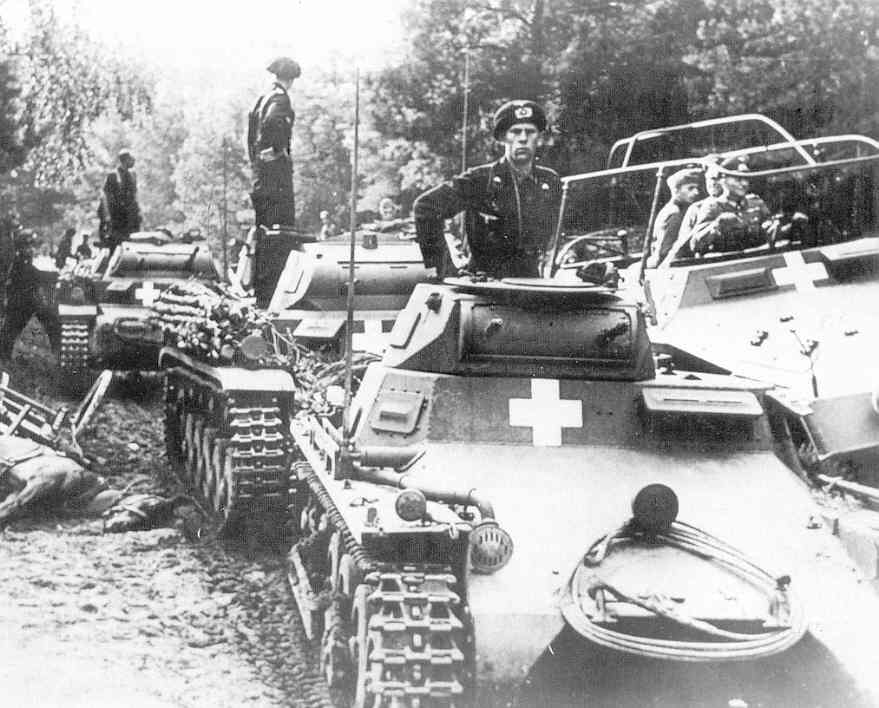
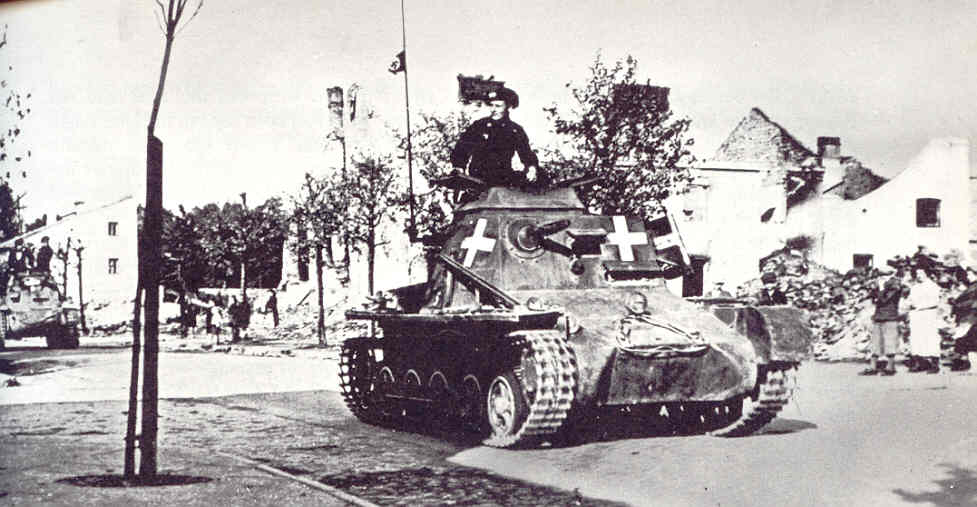
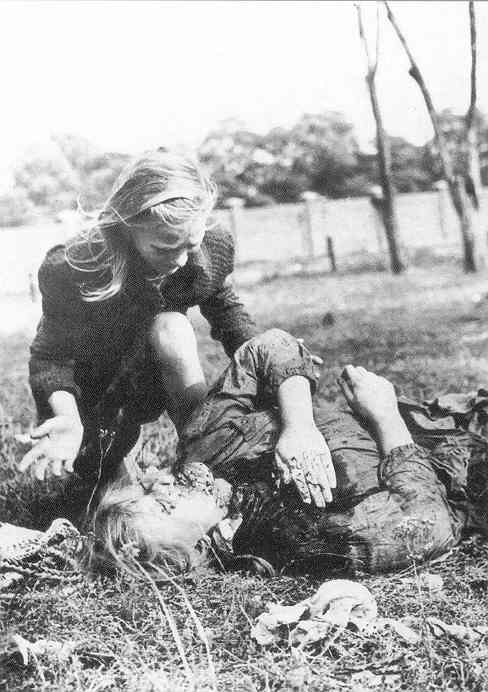
And thus on September 1st, 1939 – only a week after Germany and Russia signed their new "friendship" pact – Hitler's armies invaded Poland.  This immediately drew a declaration of war from Chamberlain, who then – along with France – actually did nothing while Germany swallowed up the Western half of Poland within mere weeks.  However, no similar declaration of war was issued against Russia when – several weeks after Germany had invaded Poland – Russia then invaded from the East and grabbed the other or Eastern half of Poland.  It was all too much for a totally unprepared Britain and France.  Poor Poland quickly went down to defeat.  However, many Polish soldiers and airmen were able to escape to England – to eventually join with the British in taking on Germany.

The 1939-1940 "Phony War" or 
Sitzkrieg.  Despite their declarations of war, the French and British failed to take any action against Germany – foregoing an opportunity to hit Germany from behind while it was absorbed in swallowing up its half of Poland.  About the only serious action in those days came with Winston Churchill's appointment as head of the British navy – and his orders to his fleets to engage wherever possible against the German navy on the high seas.  Otherwise nothing was done on the ground.  Some in Germany already began to ridicule the "war" with England and France by playing on Hitler's doctrine of Blitzkrieg, terming the war in the West a Sitzkrieg (sitting war).  Others had their own term of contempt for such inaction, calling it a "Phony War."

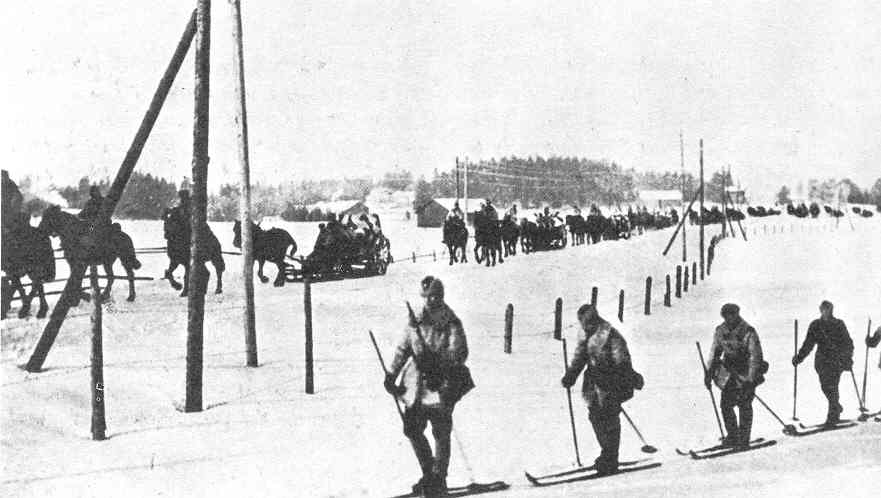
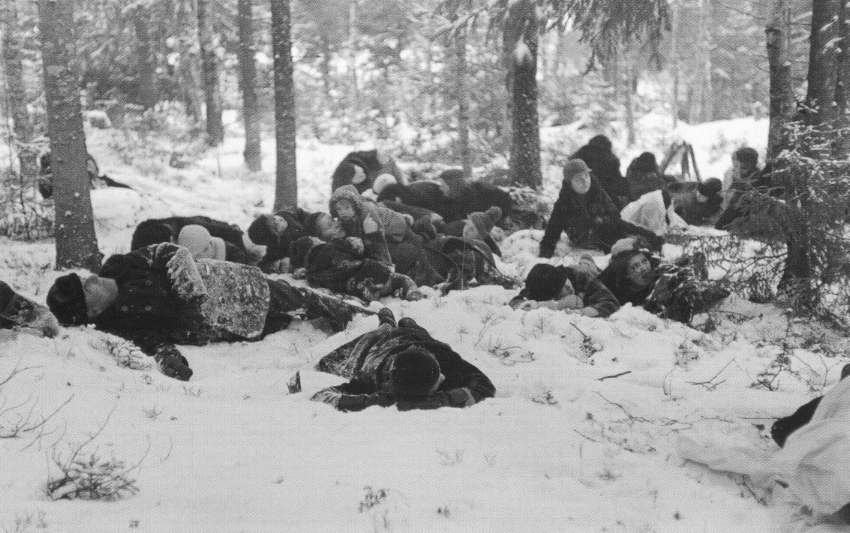
Meanwhile, after Russia secured its position in Poland, it turned on little Finland – except that the Finns fought back strongly.  But the following spring Finland had to give up the fight.  The world condemned 
Stalin's Russia verbally for its aggression – but otherwise did nothing.

Hitler crushes France – and the Battle of Britain begins.  Then in May of 1940, after having suddenly and without warning overrun Denmark in April (in one day!) and capturing parts of coastal Norway, 
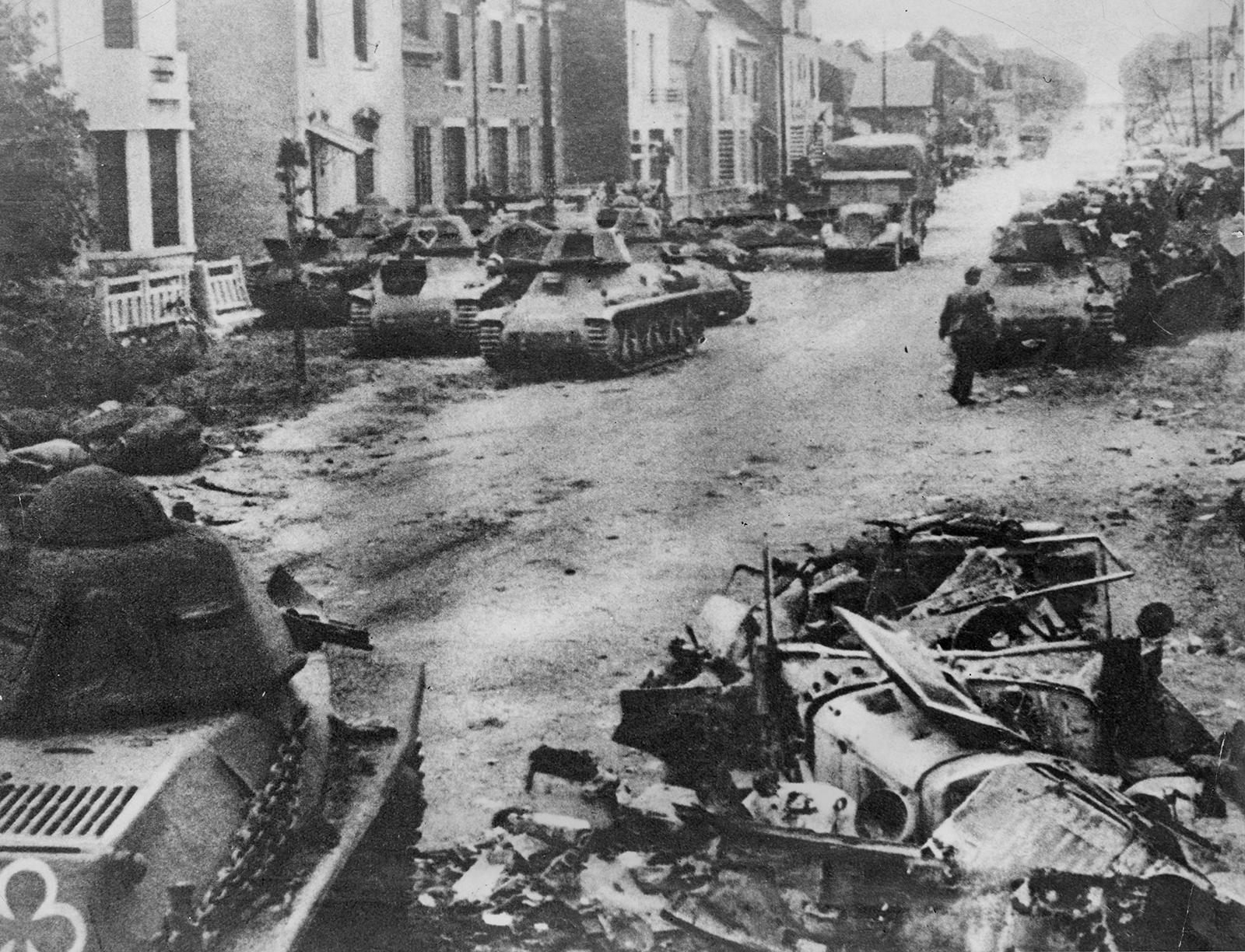
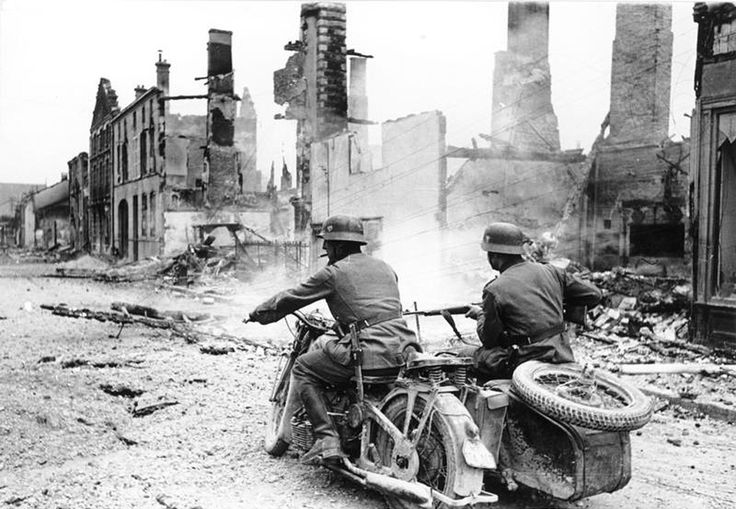
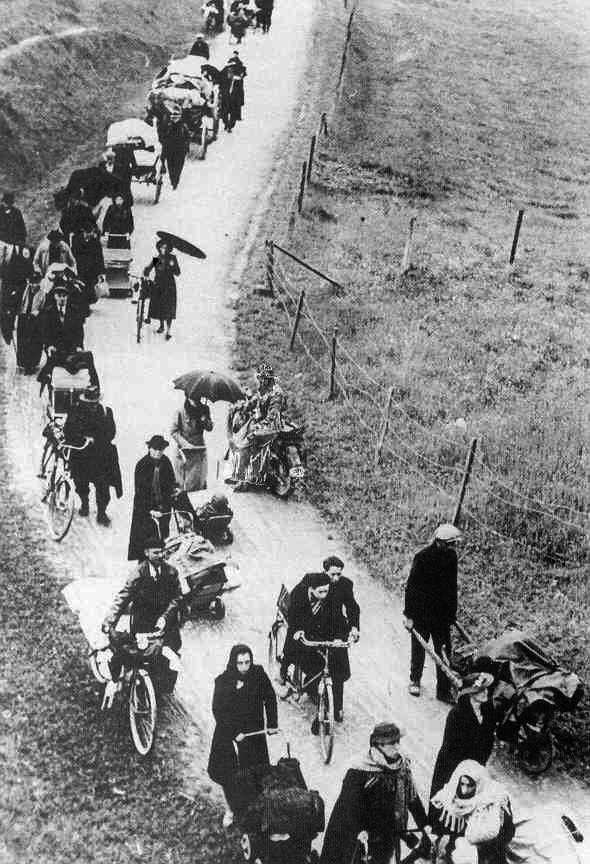
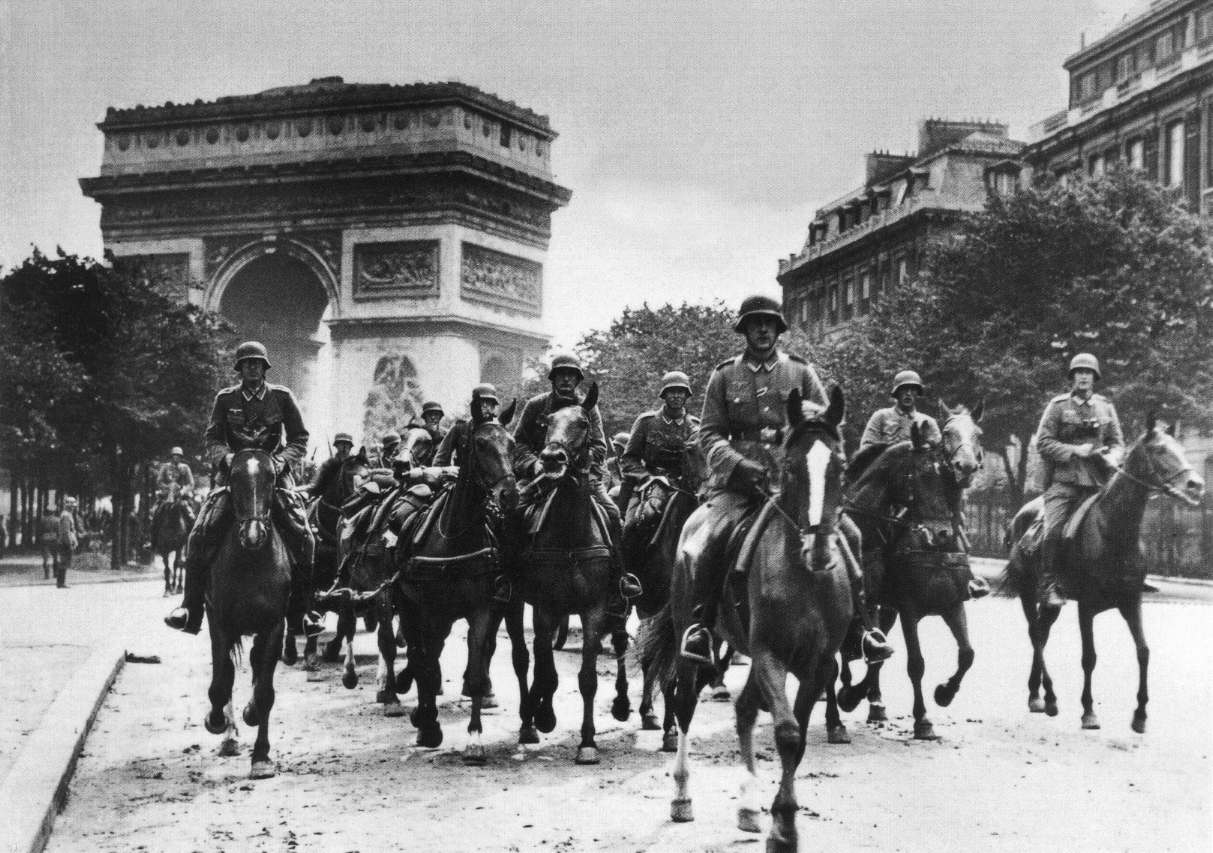
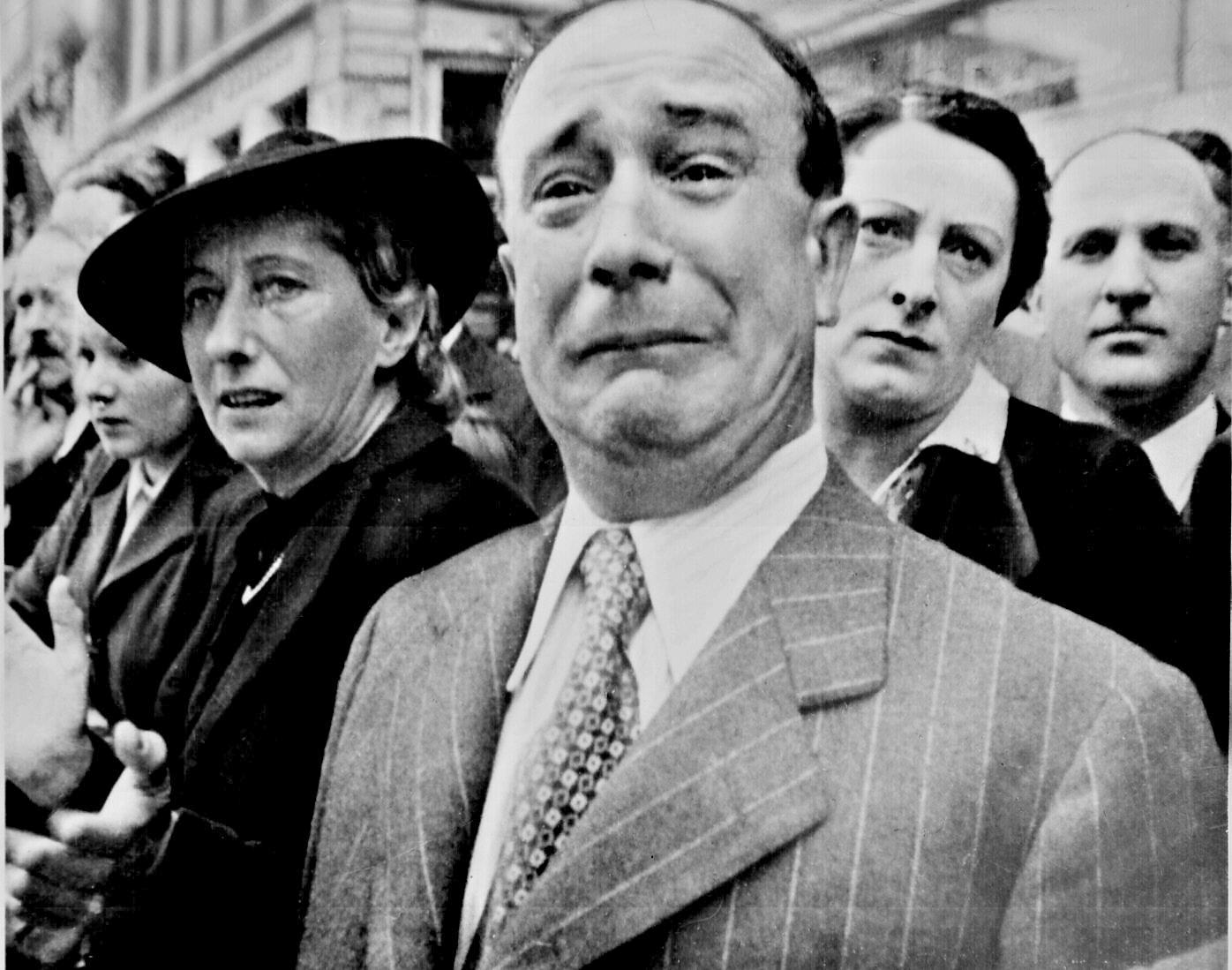
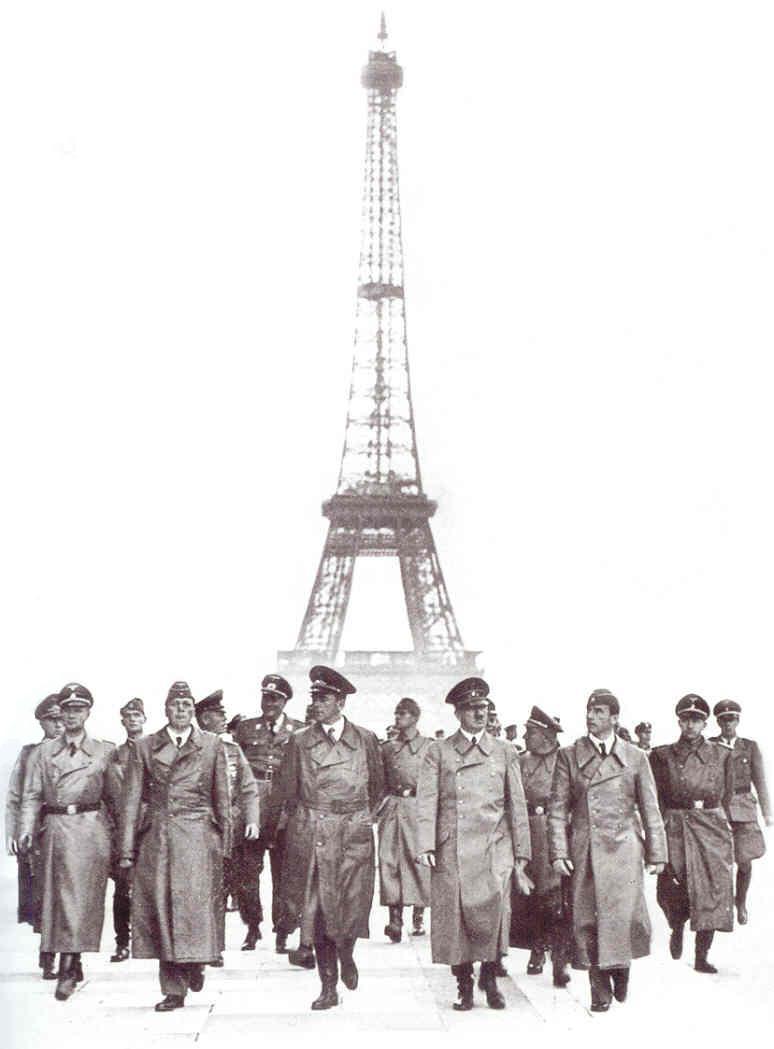
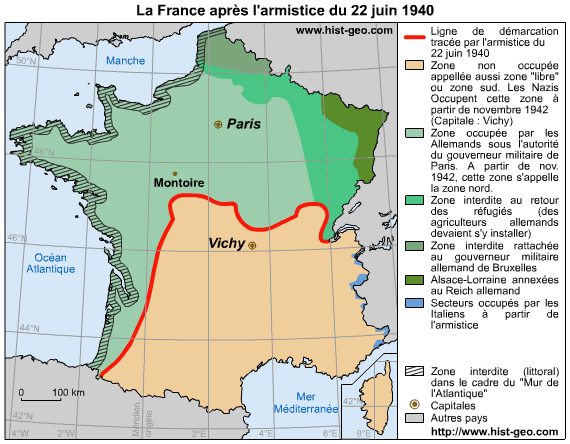
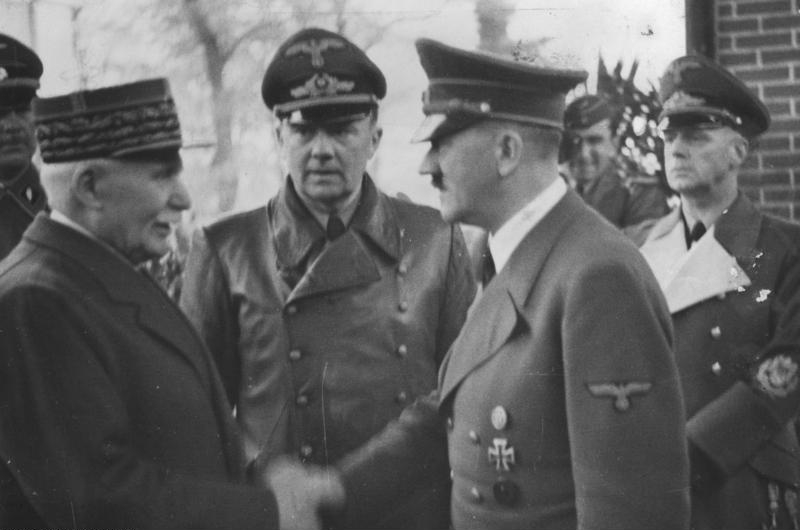
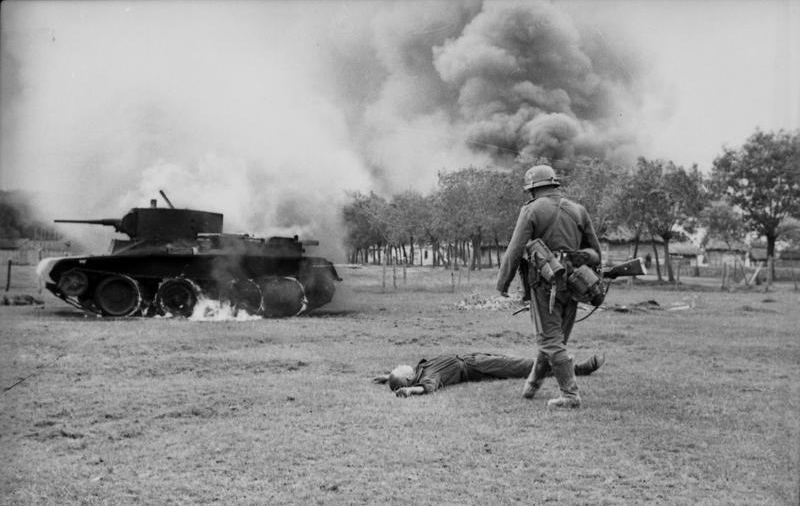
Hitler sent his forces crashing through Belgium and into Northern France – splitting the French line in half east and west – and grabbing Paris (June 1940) before the stunned French could get themselves organized against Hitler's armies.  In only one month's action France found itself having to surrender – and accept German occupation of Paris and the northern half of the country.

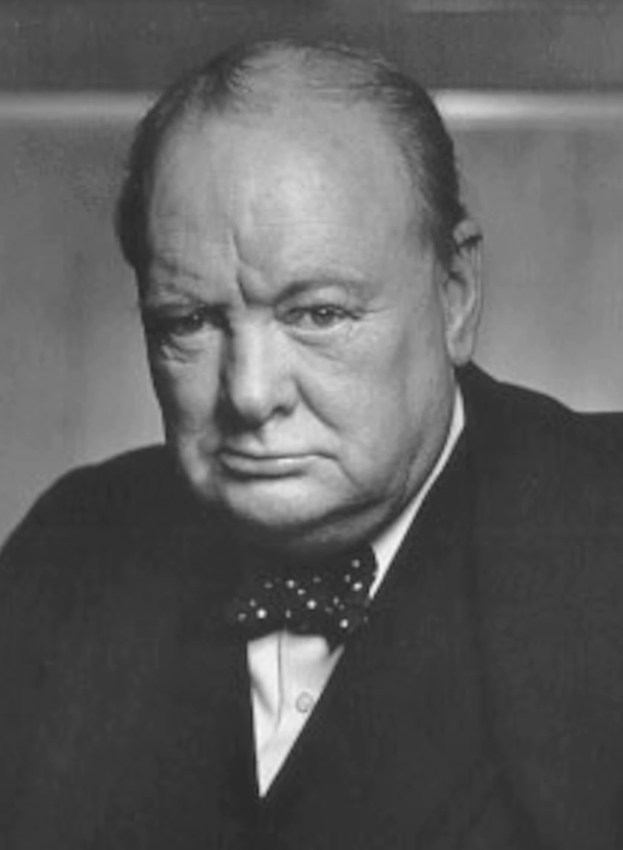
At this point English King George VI replaced the confused Chamberlain with the determined Winston Churchill – who announced to Hitler and the world that England would never quit – until they themselves had achieved victory in this conflict.  And the world knew he meant it.  But it would be tough going because England stood alone in opposition to Germany.  Not even Ireland, only recently granted the right to exit the British Empire, was willing to come to the aid of England.


AMERICA IS DRAGGED IN (1941)

American neutrality during the early years of the war.  Nor for that matter were the Americans going to do so either.   American isolationists made it very clear that America was never again going to get involved in Europe's feuds.  The country had foolishly been seduced into coming to the aid of the "democracies" Britain and France in 1917 – and would never be so foolish as to repeat such a stupid mistake again.  Never!

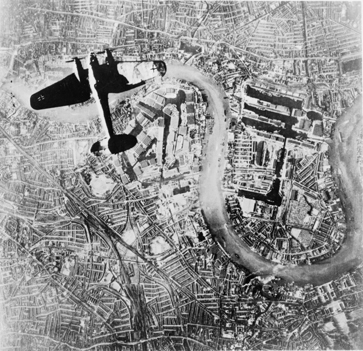
Yet as in the Great War (now beginning to be termed the First World War – as a Second World War was presently clearly underway), American sympathies were swinging to the British – especially as German bombs were falling constantly over the English cities and countryside.  Yet Congress's Neutrality Acts were reconfirmed in 1939 and again in 1940, asserting America's neutrality in this war in Europe.

Lend-Lease.  But 
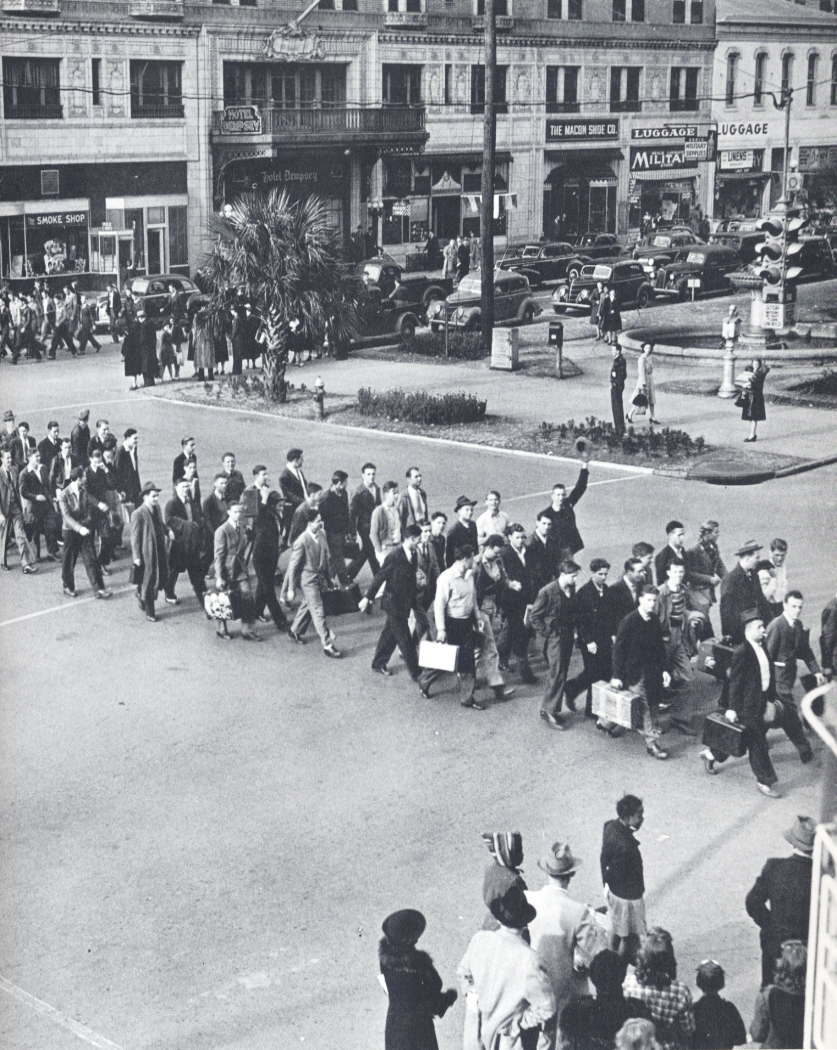
Roosevelt was trying to help where he could – among other things getting America ready in case the nation was going to have to go to war, instituting in 1940 America's first peacetime draft and increasing dramatically the military budget.  Then in March of 1941 he was able to get Congress to pass his Lend-Lease Bill, permitting the sale of war goods to Britain (and also China and soon also Russia) – also then authorizing the exchange of old American destroyers for British land overseas to build American bases on.  Then with the first sinking of an American merchant vessel (carrying war goods to England in October of 1941) merchant vessels began to be armed.

The 
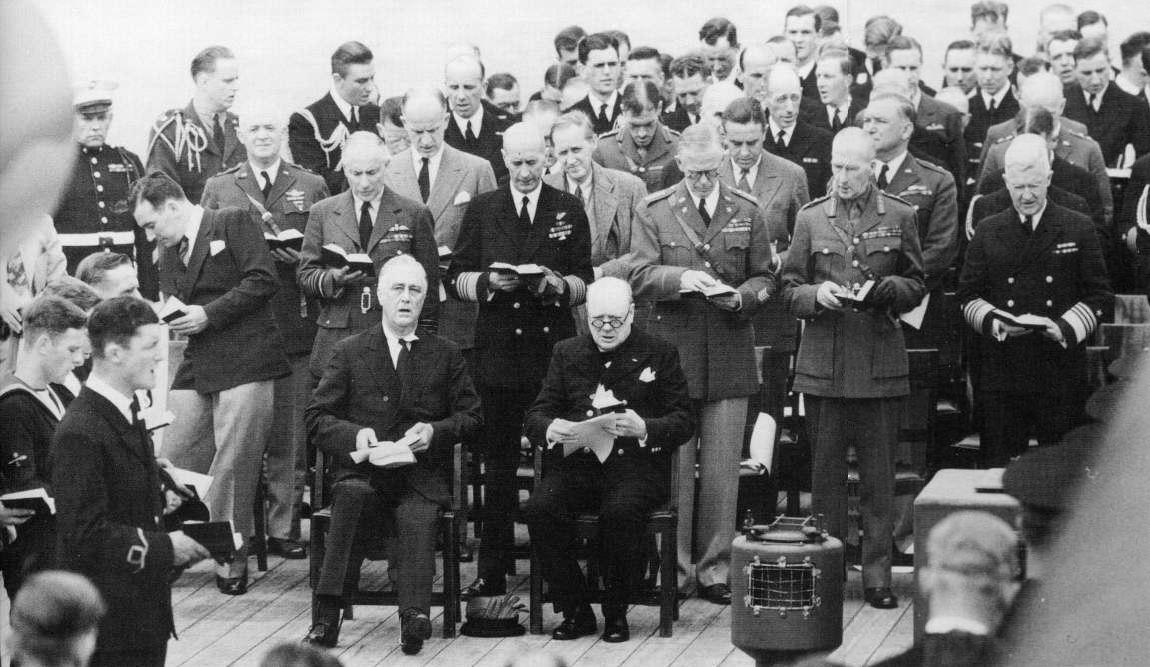
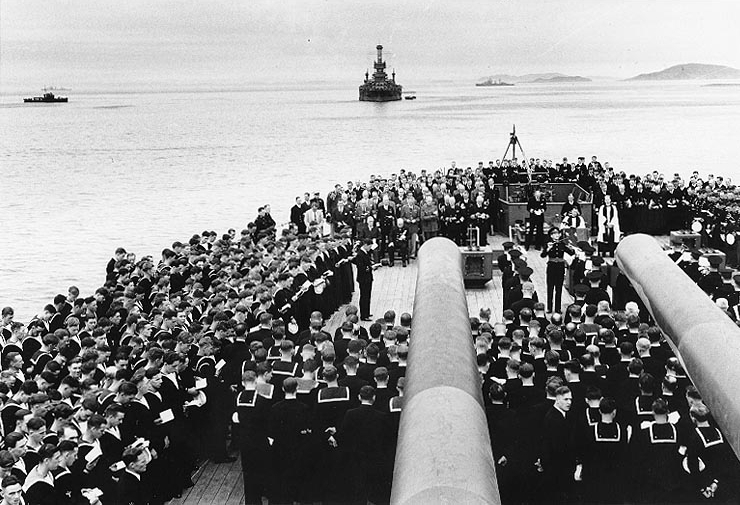
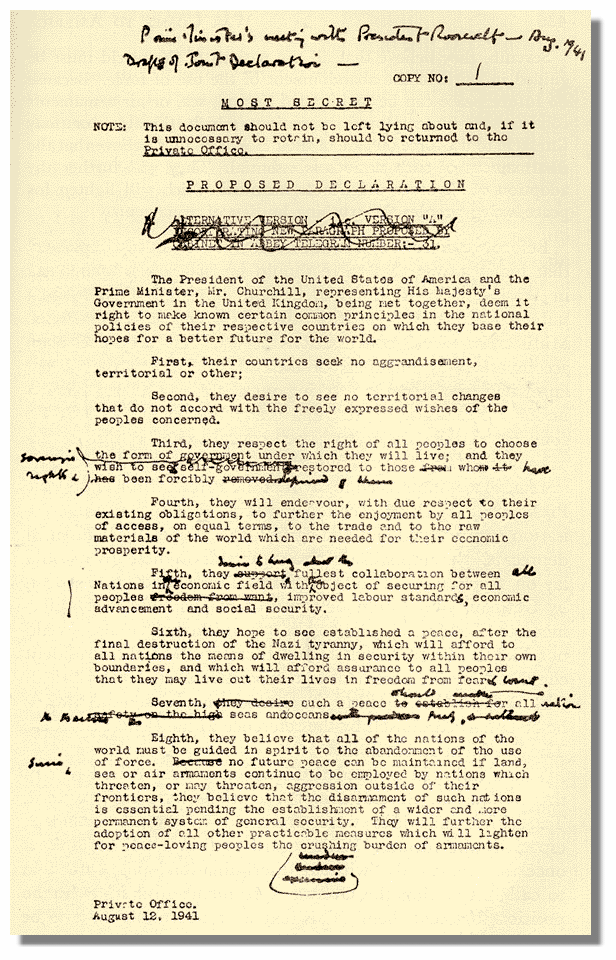
Atlantic Charter.  At the same time (August 1941) a conference was quietly held aboard a ship anchored off the Canadian shores in which Roosevelt and Churchill agreed to war goals (The Atlantic Charter) – should America be drawn into the war.  This was an increasing certainty at this point – as that very summer Hitler had decided foolishly to attack Russia, and the two former "allies," Germany and Russia, were now at war with each other.  Indeed, the whole world seemed to be slowly drawn into this war.

Action in Asia.  With France's fall to Germany in 1940, the Japanese saw the opportunity to take advantage of French weakness to extend Japanese power to French Indochina – from which they could then advance against China from the south.  But that finally (mid-1941) determined America to take action – at least to the extent of cutting off the sale of all military goods, scrap iron and oil to natural-resource-poor Japan (America was the world's leading oil exporter at the time.)

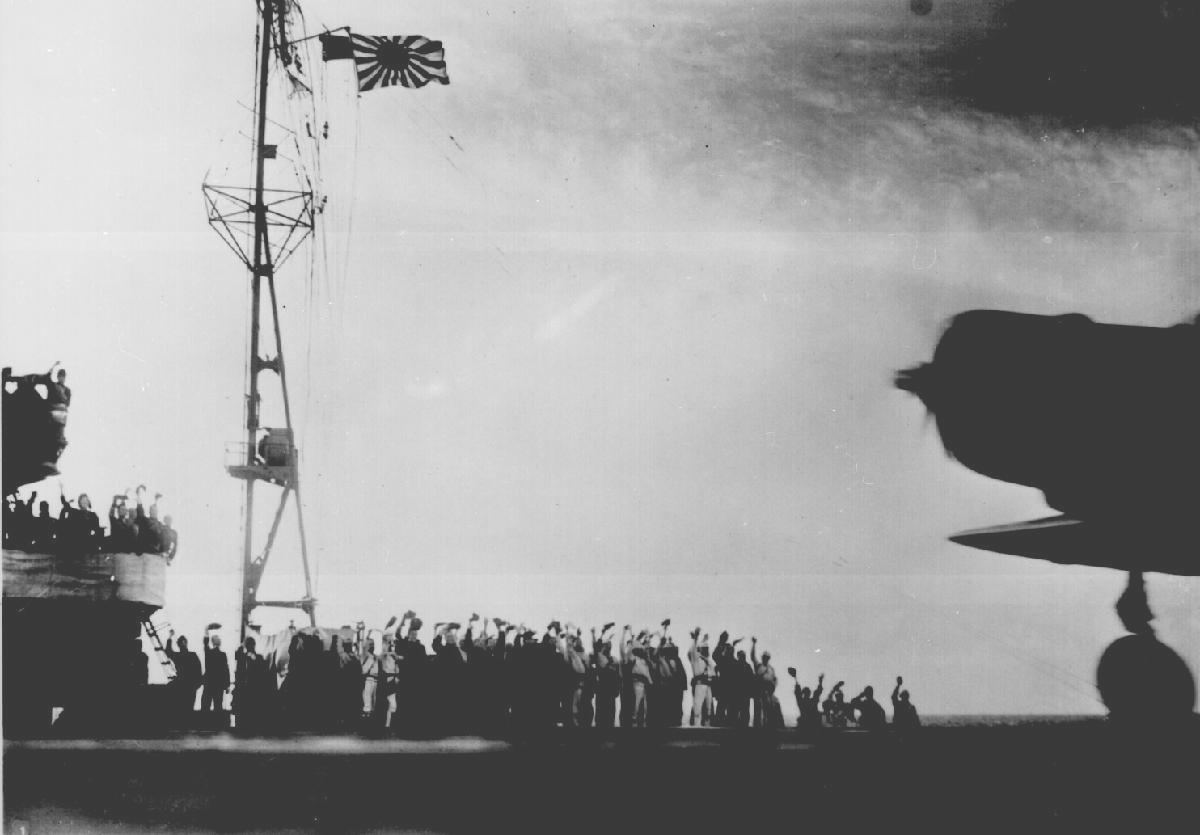
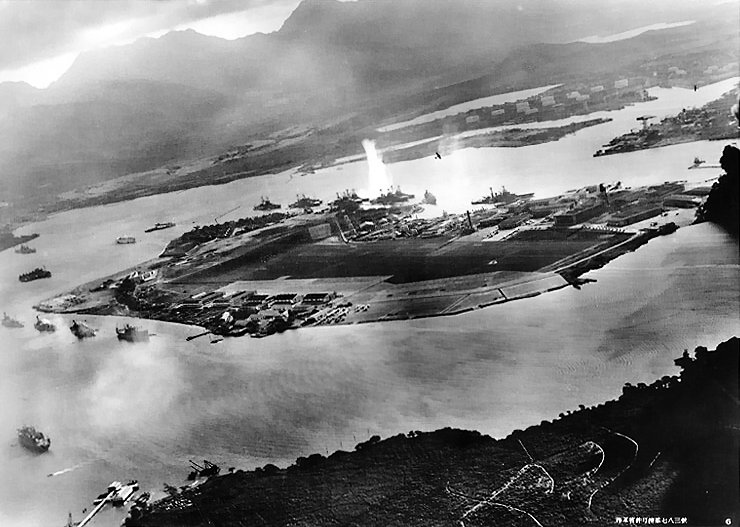
This so infuriated the Japanese military leaders running the country – suffering from the illusions of Japanese greatness, and the supposedly natural weakness of all democracies, including democratic America – that they decided to deliver a huge crippling blow to the American naval fleet anchored at Hawaii.  The intended goal was to force America to have to come to Japan begging for whatever terms the Japanese at that point would be willing to offer the humiliated Americans.

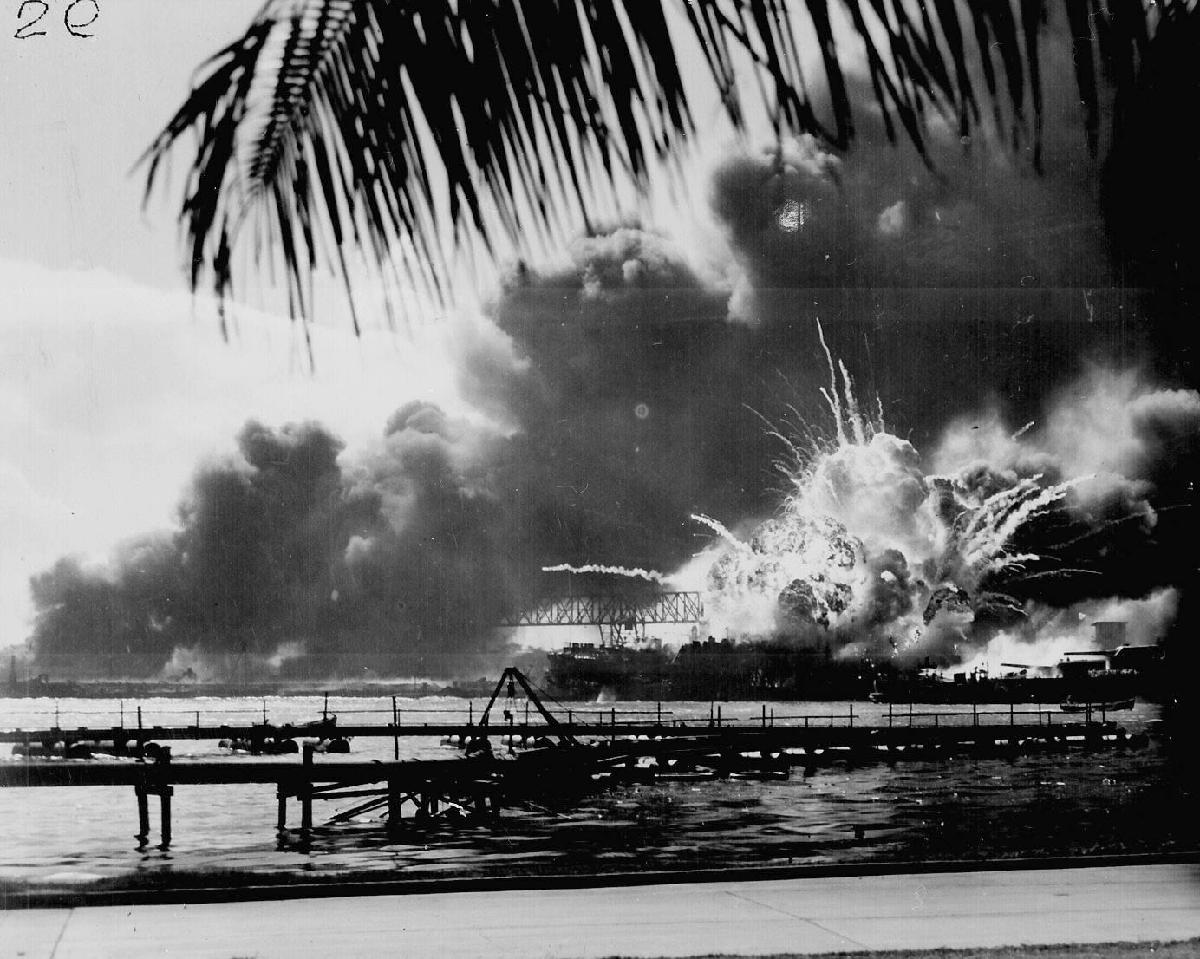
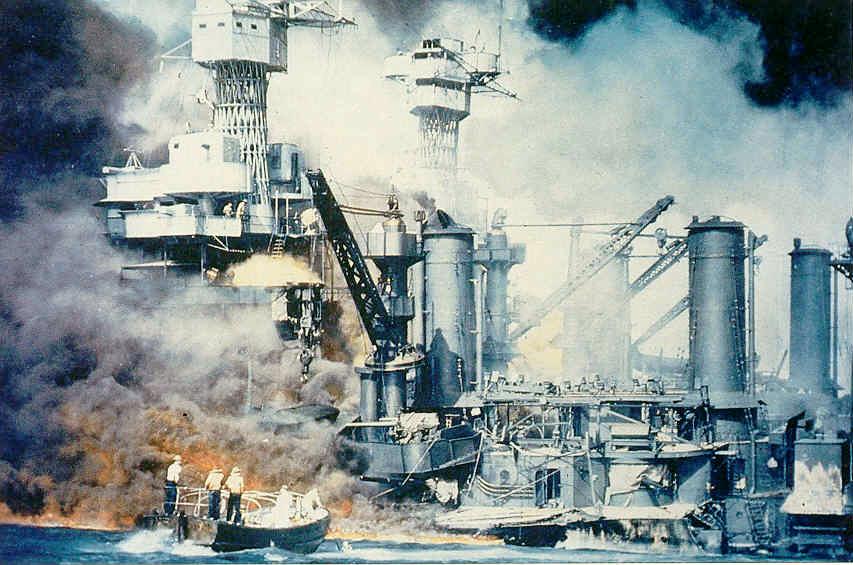
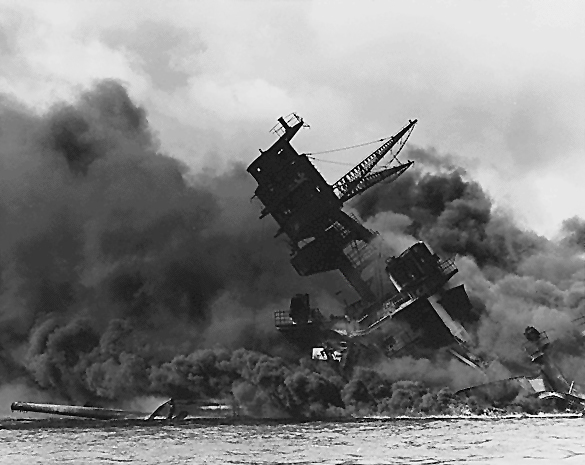
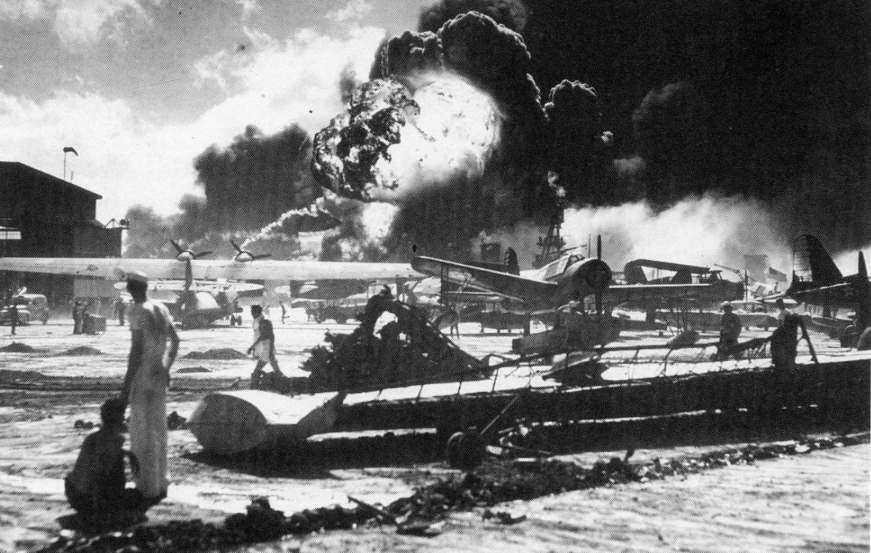
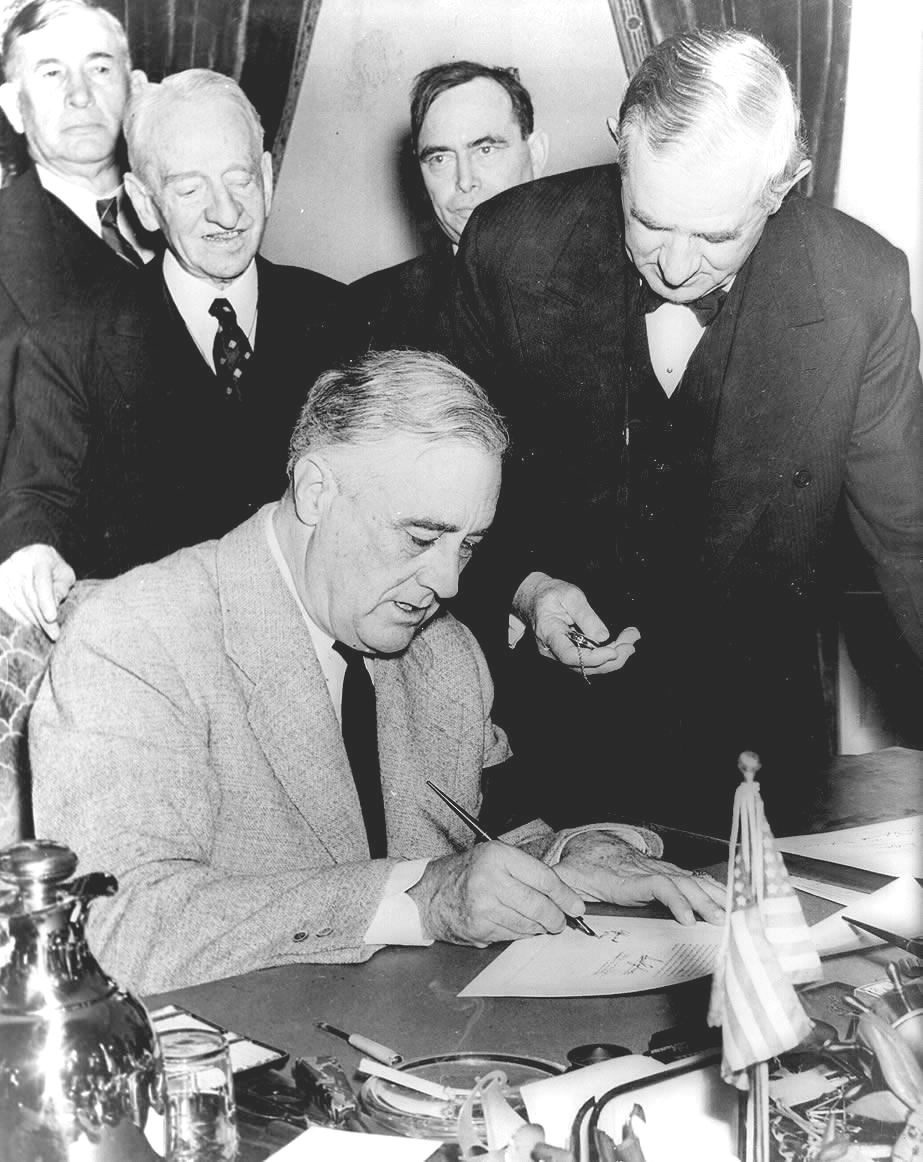
Pearl Harbor.  And so on December 7th (1941), as planned, they struck the American Pacific fleet anchored at Hawaii, launching a simultaneous attack against the British in Malaya, Singapore, Hong Kong – and ultimately Thailand (the path to an assault on British Burma and India).  They also bombed the Dutch airfields in Indonesia, planning to grab the oil fields located there.

And thus it was that America was finally at war – at least in Asia.

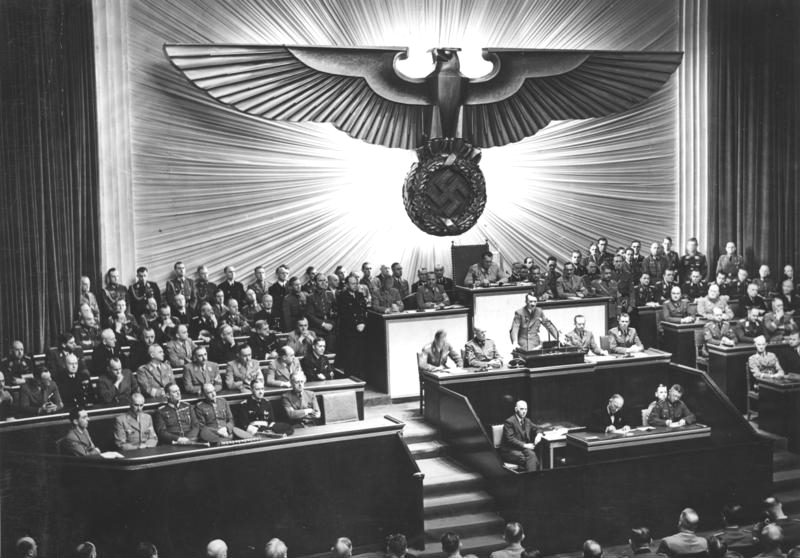
Hitler declares war on America.  Then a few days later, 
Hitler (who was already getting bogged down in Russia) decided that there still was glory awaiting Germany in taking on America – and declared war against America.  Mussolini's Italy followed suit soon thereafter.  So now America was at war – on two fronts, Asia and Europe.

The American lion awakens.
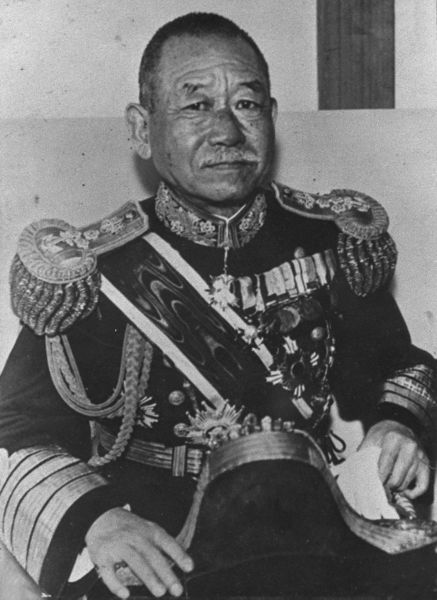
 But it was just as Japanese General Isoroku Yamamoto, who had studied two years at Harvard, had explained to his fellow officers:  Japan's plan stood the danger of awakening a sleeping lion.  And so it was.  America had been delivered from the social silliness of the 1920s by the hardships of the 1930s – and the early 1940s saw the coming together of a nation of men and women willing to work extremely hard to win this war – in the process, producing what would rightly be called "the Greatest Generation."

It was not some quest to save the world for democracy – or bring the world to some grand utopian peace.  It was simply to defeat those who had decided foolishly to go to war against America.  America was not in the mood to be defeated – and willing to do whatever was necessary to win this contest.

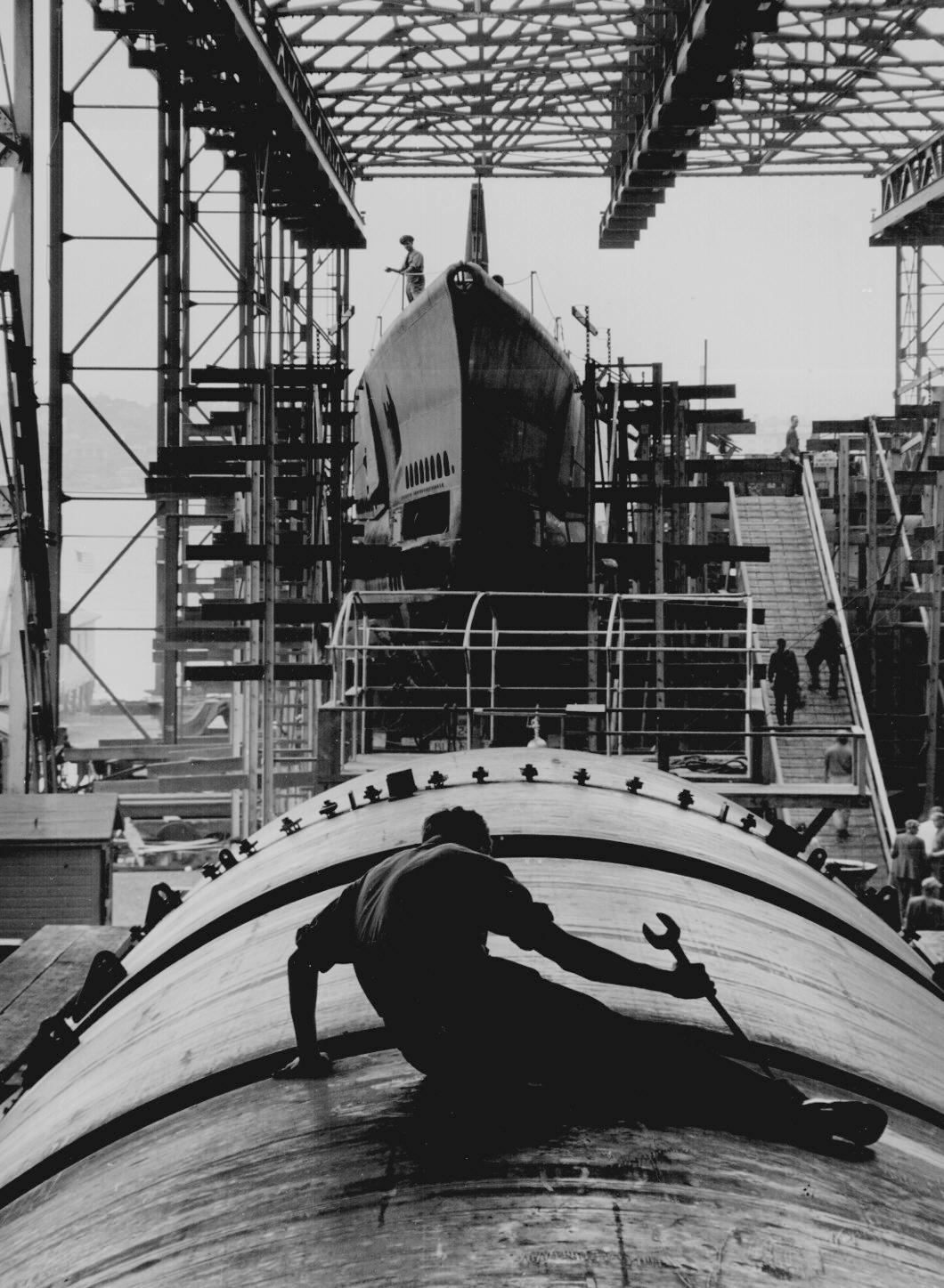
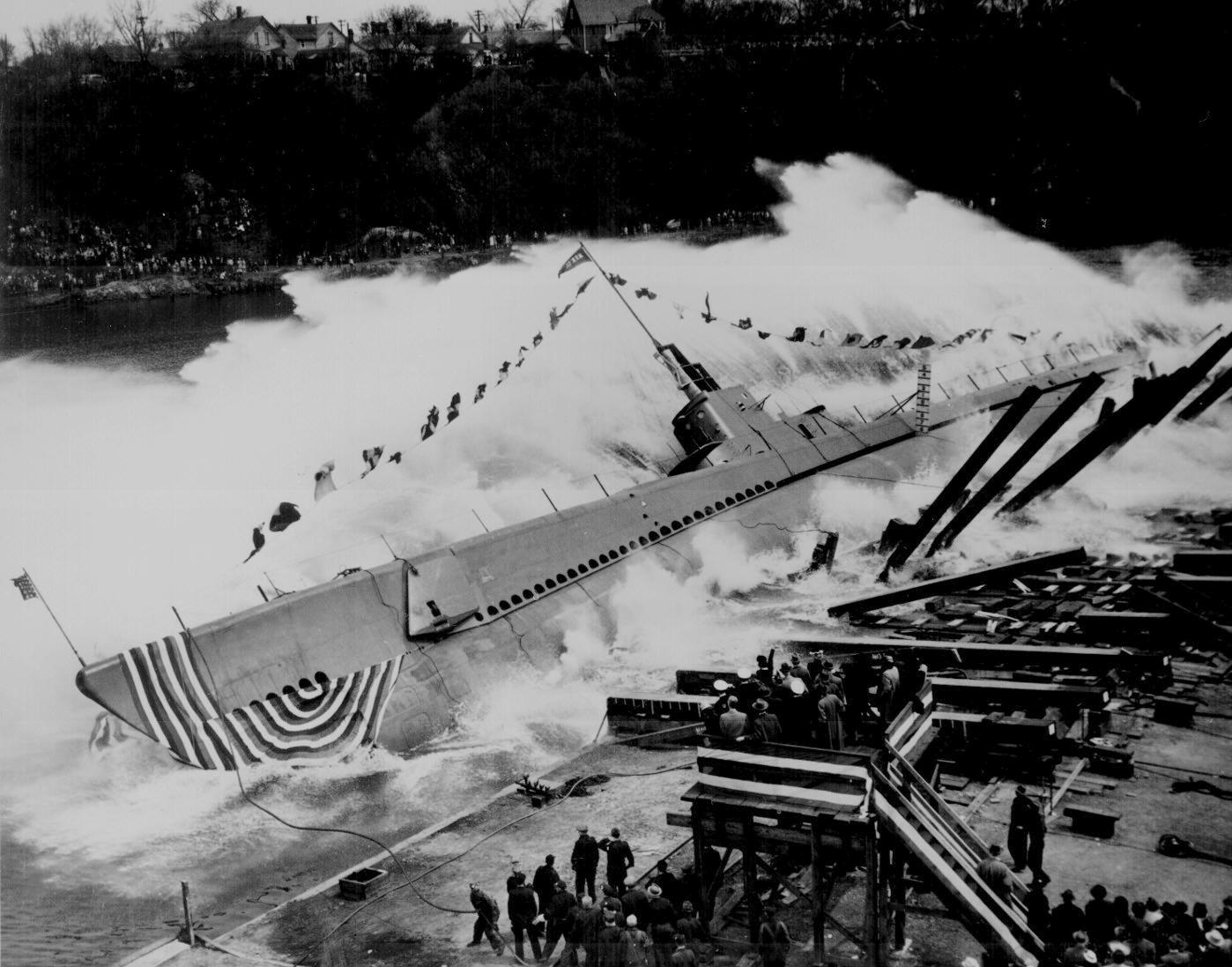
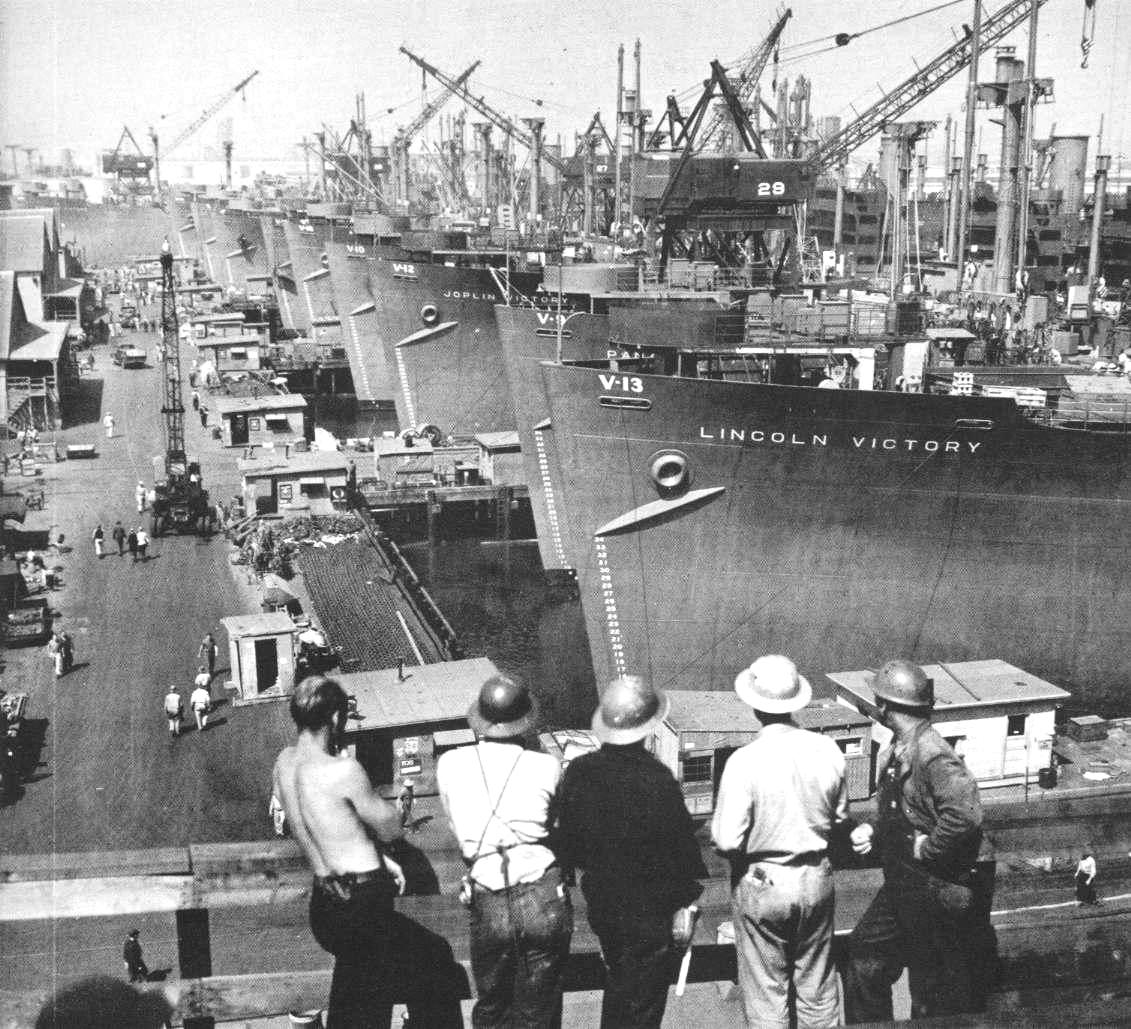
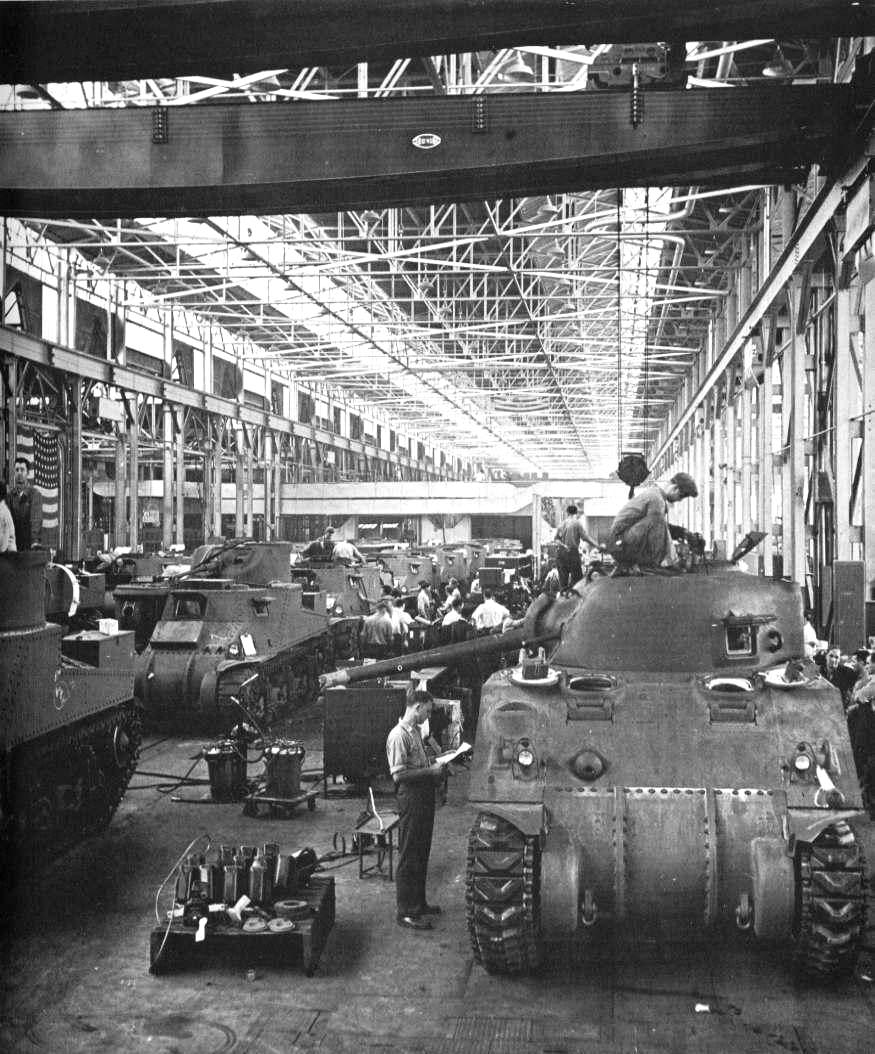
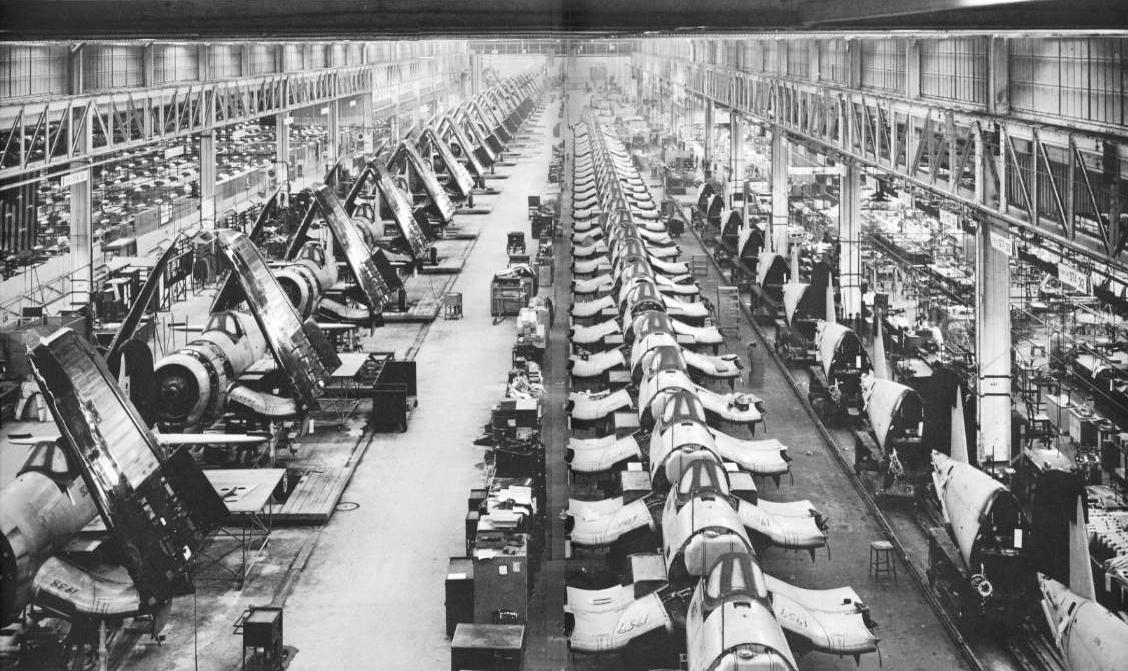
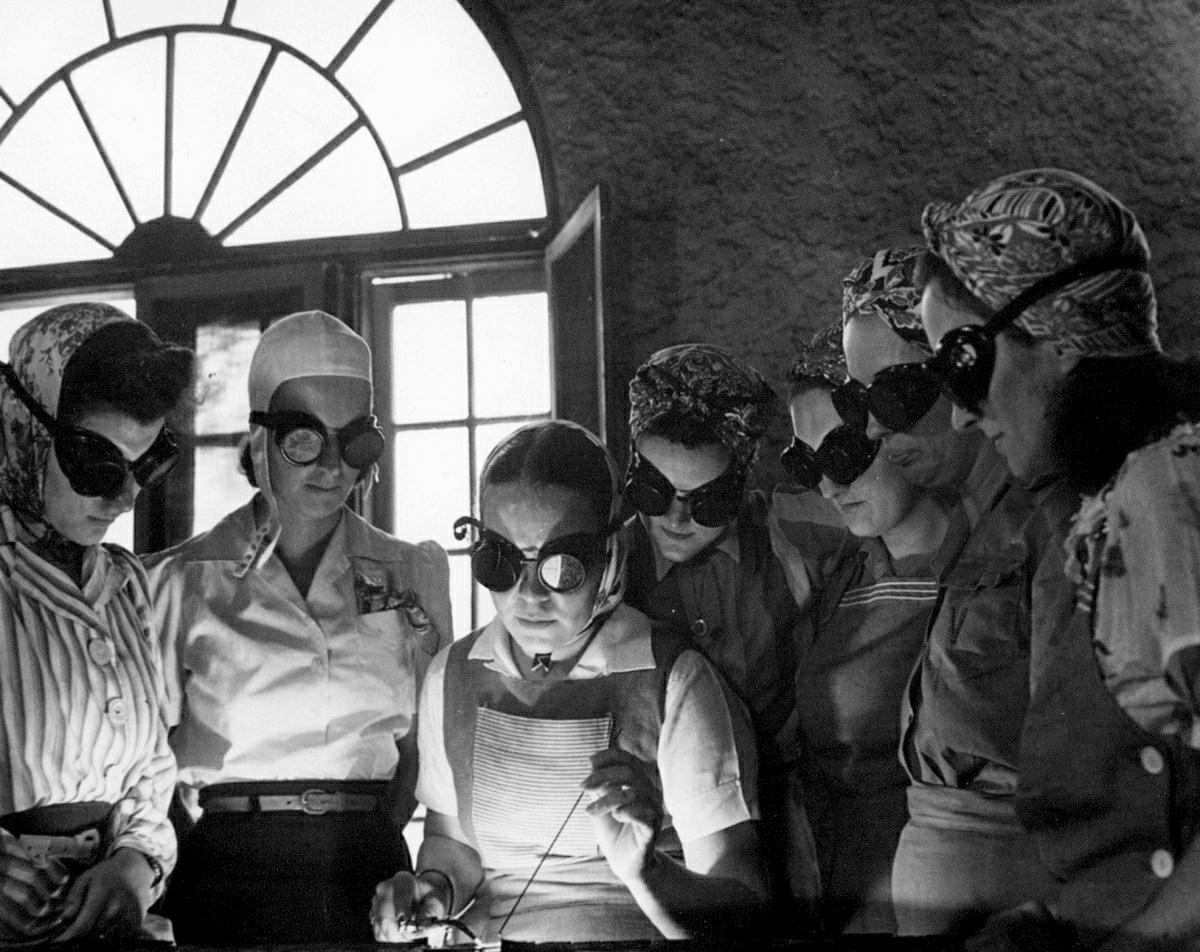
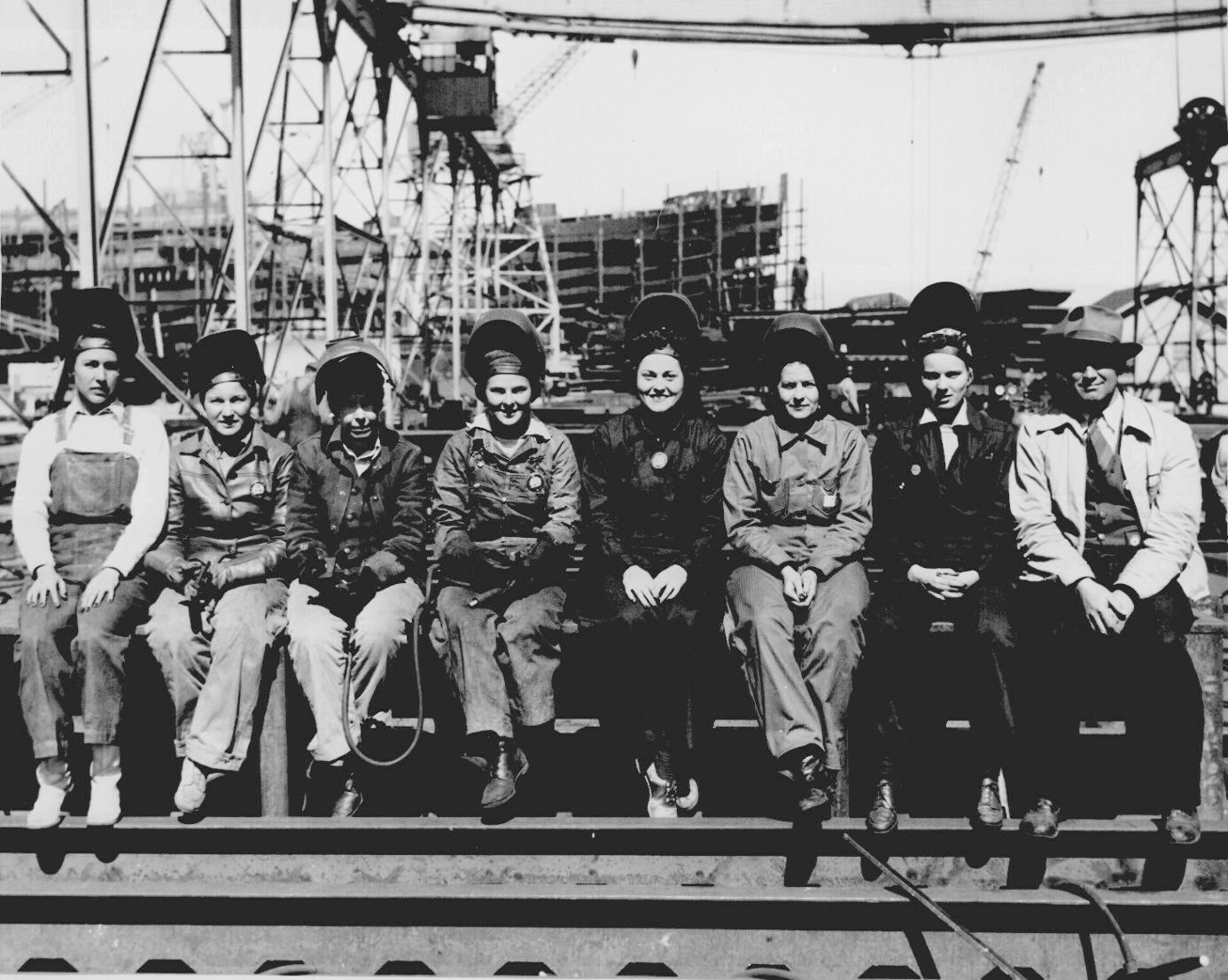
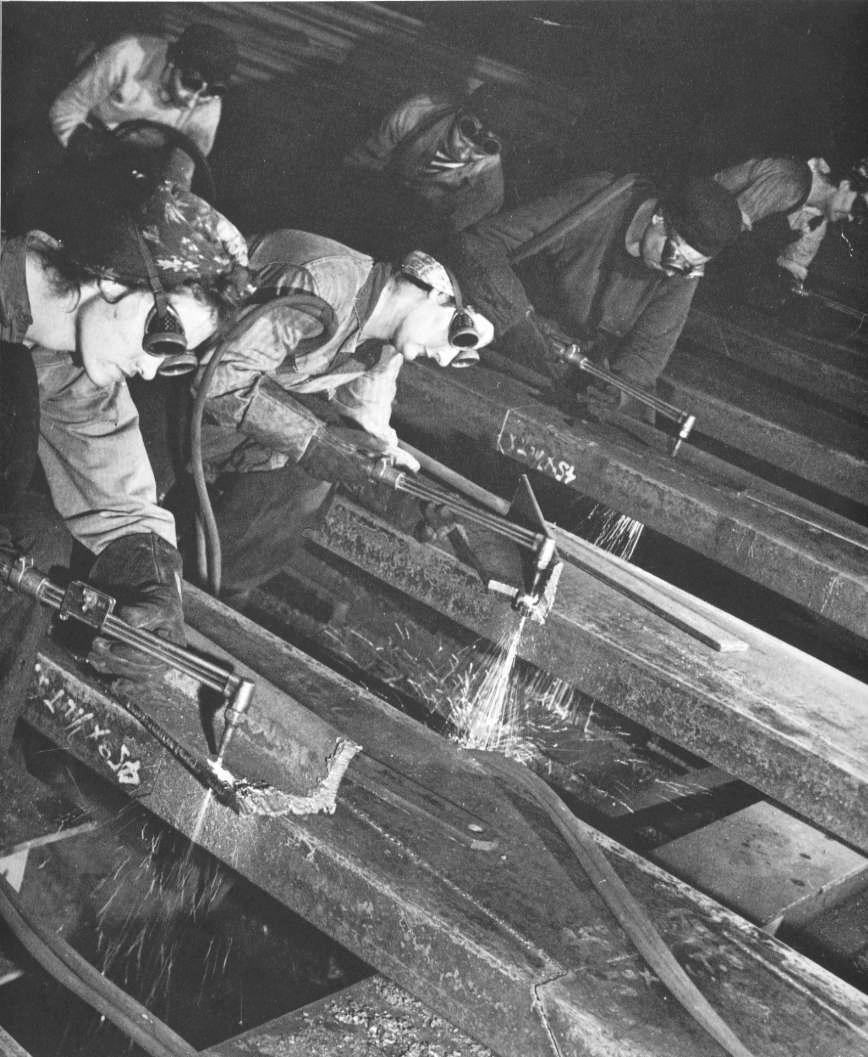
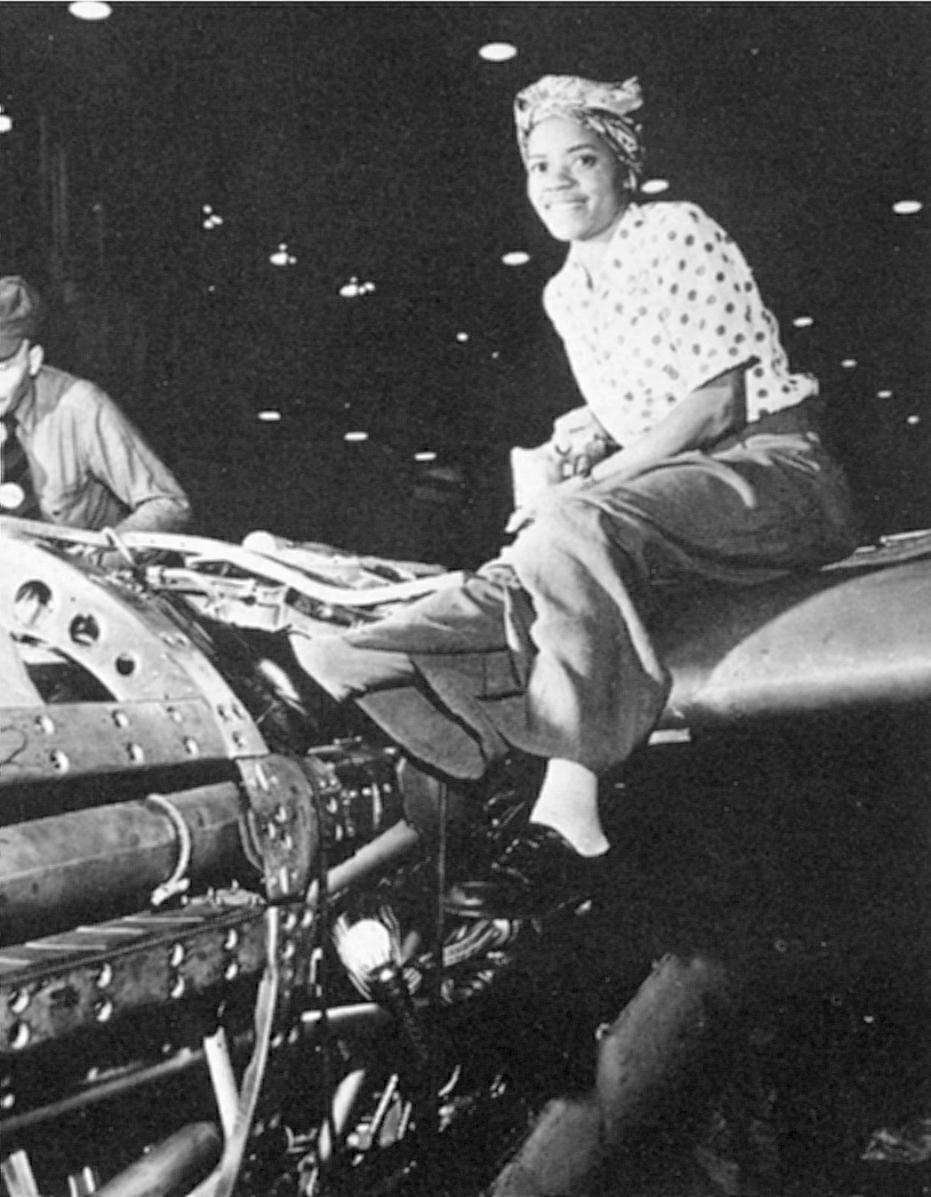
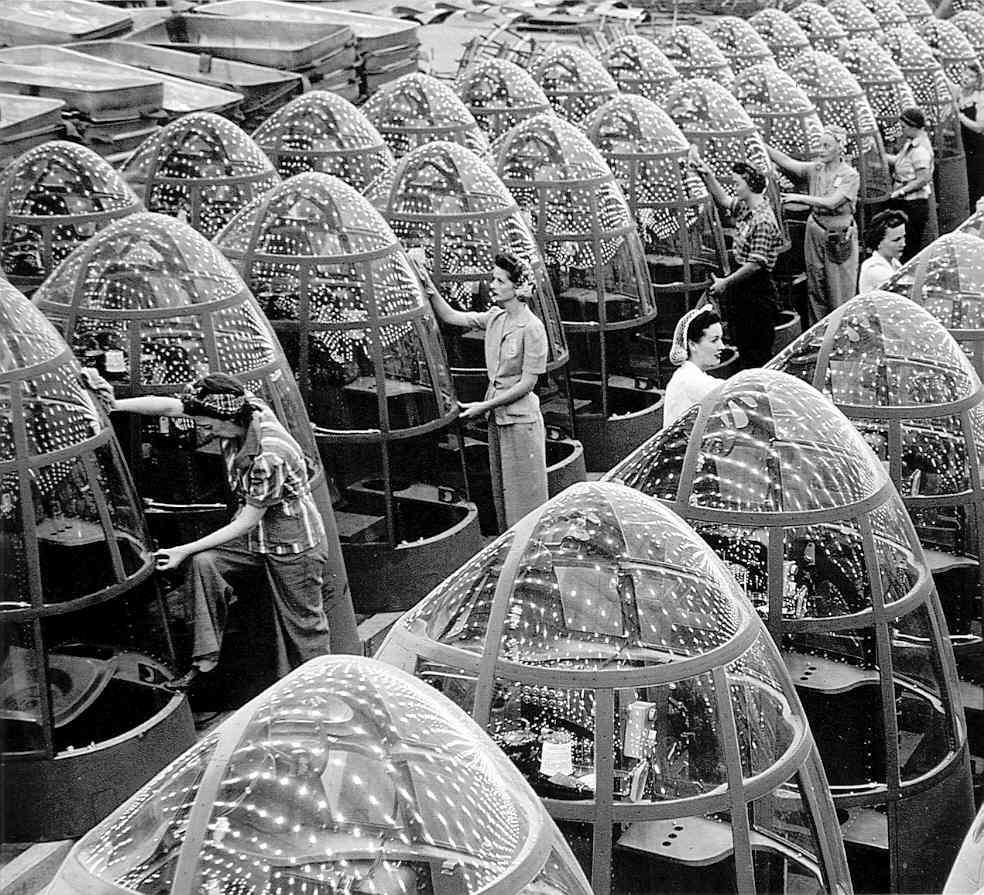
Amazingly quickly, idle American industry came alive with war orders – finally bringing the country out of the Great Depression.  Not only was there no more unemployment, the sending of masses of young men off to military training created a huge worker shortage – which soon was met by bringing enormous numbers of young women into the factories to take the men's places.  The lion was fully awake!


THE LINES OF BATTLE THEMSELVES

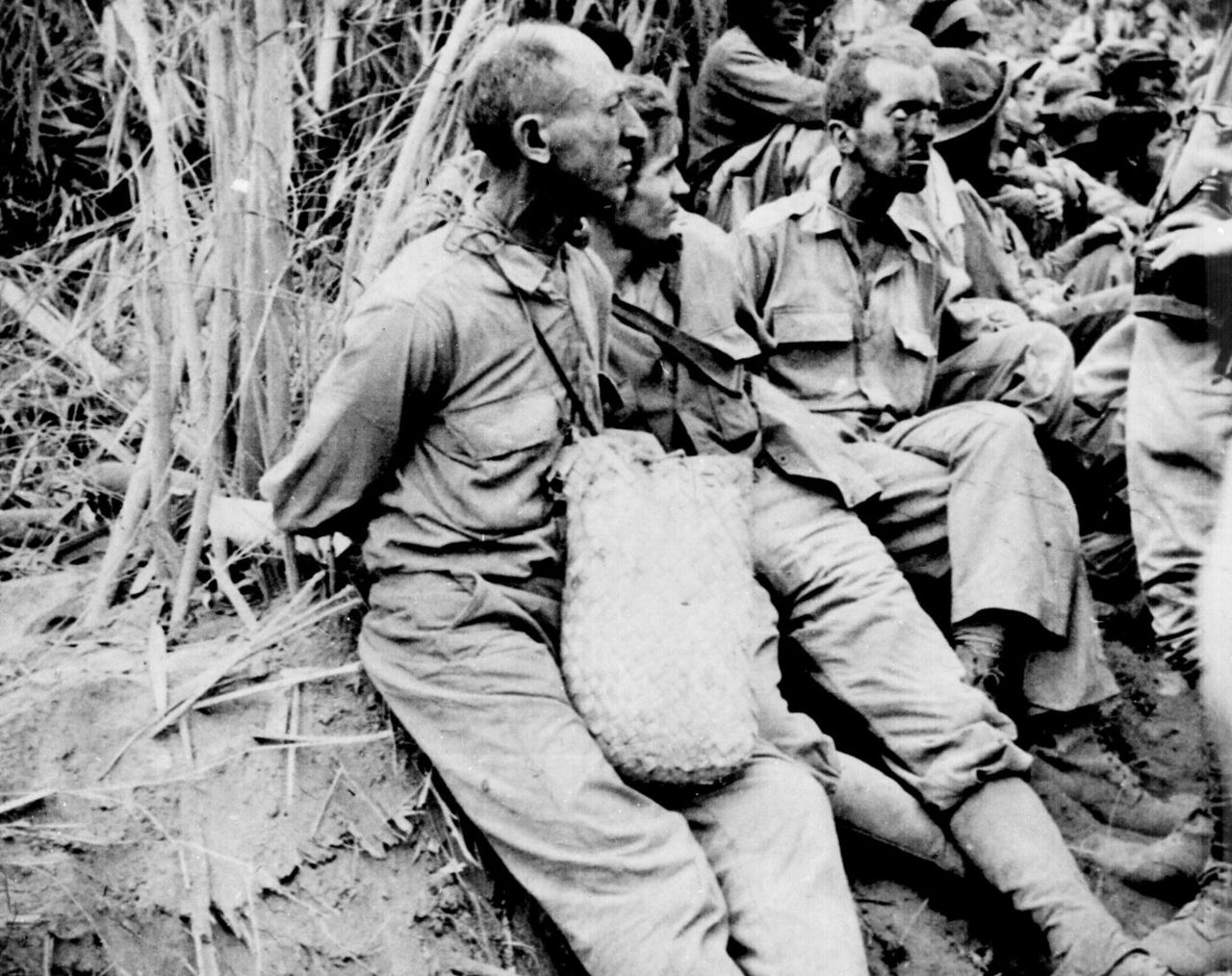
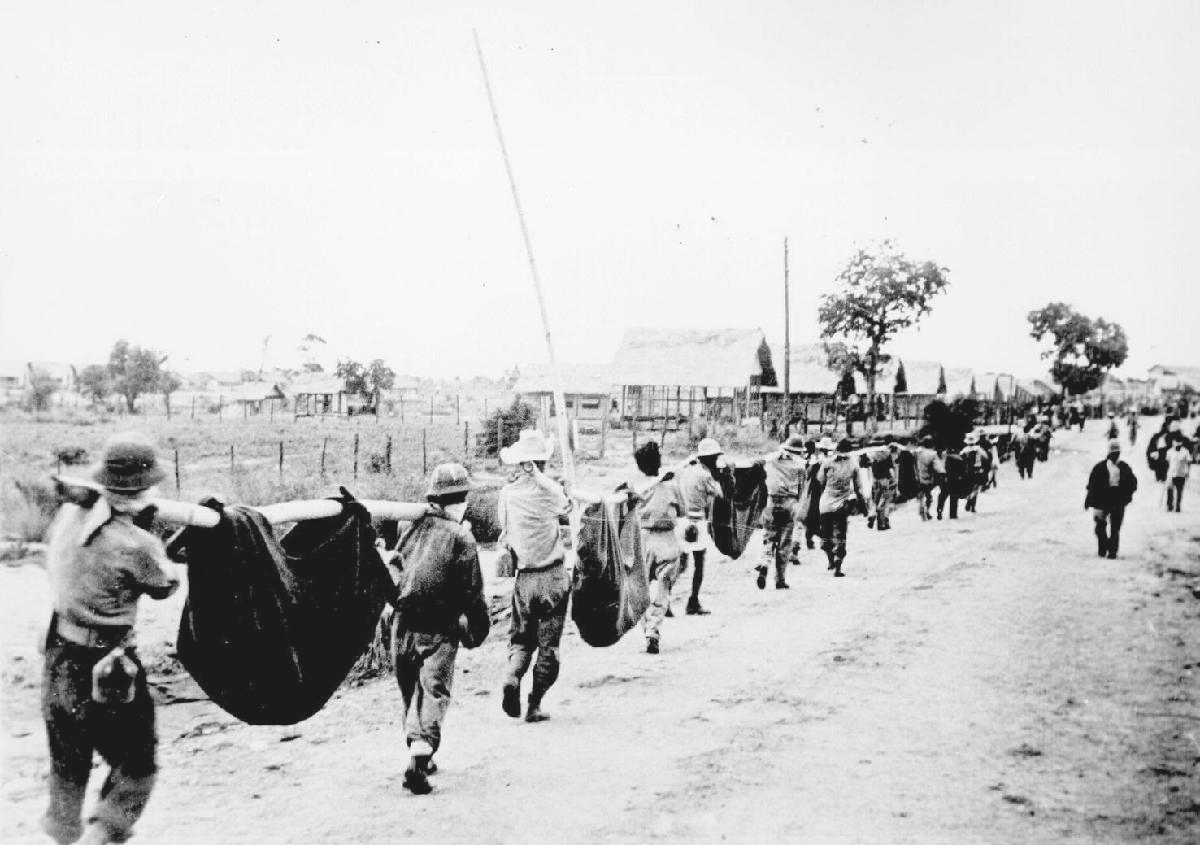
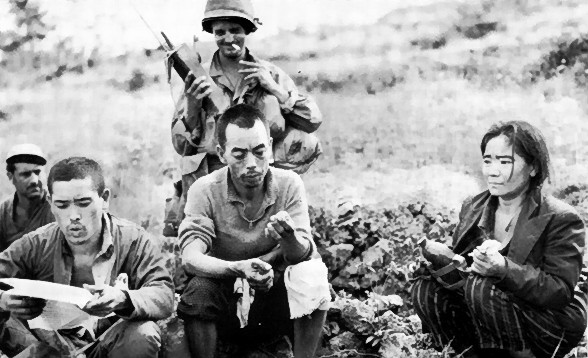
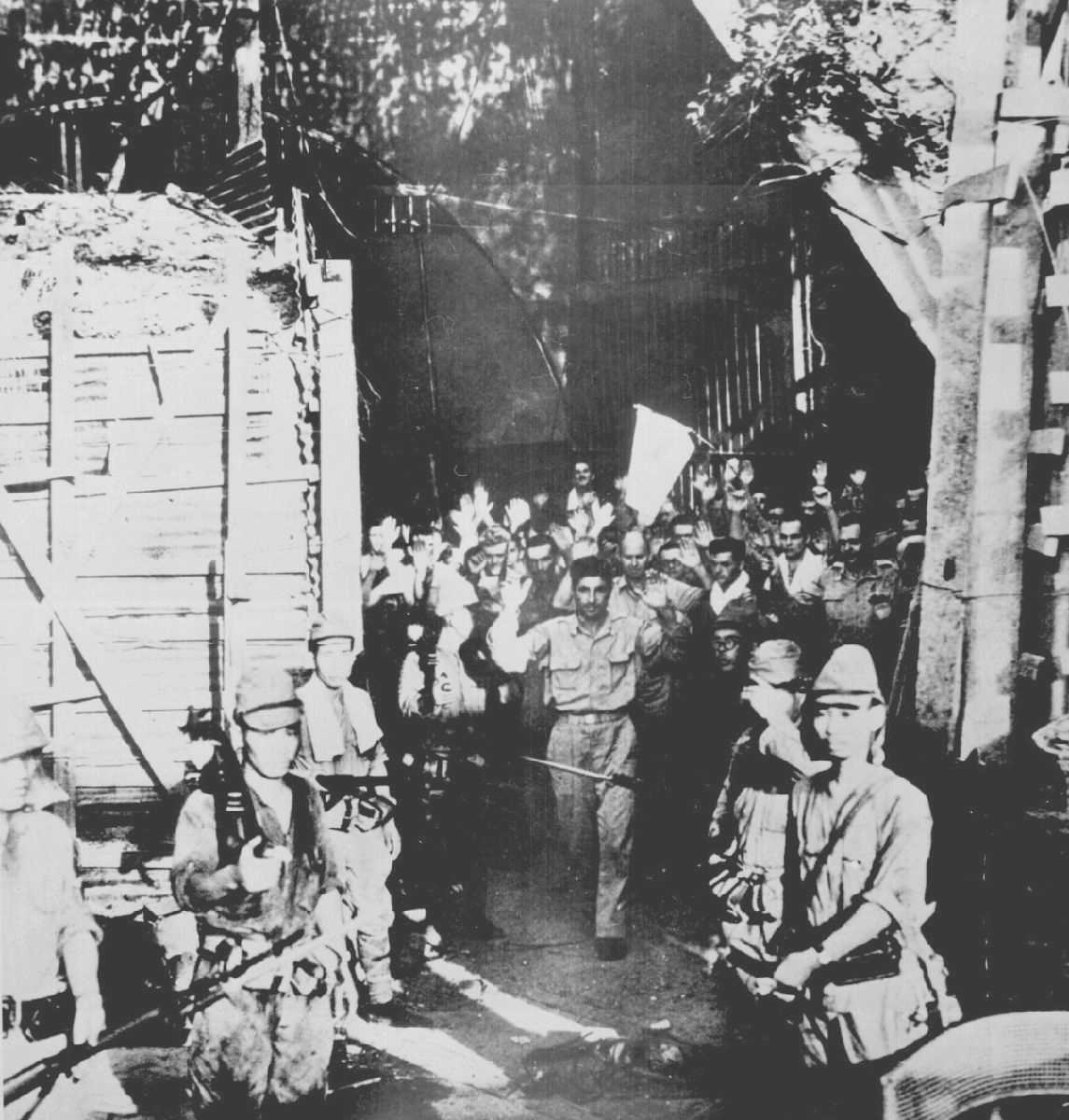
The Philippines.  But victory would not be easy.  America was strategically in a horrible position at the start of the war.  With the Pacific battleship fleet destroyed, America could not bring supplies or reinforcements to its troops stationed in the Philippines, and those Americans troops – and their Filipino allies – would experience the same savagery that the Chinese had suffered at Japanese hands.  Sadly, after almost five months of effort to hold out as a surrounded force with no military supplies or even food able to support them, the American and Philippine troops finally surrendered.  Consequently, 12,000 American troops – and even more Philippine troops – were marched off to Japanese prison camps, with thousands dying along the way – and even more doing so during their consequent life in those camps.
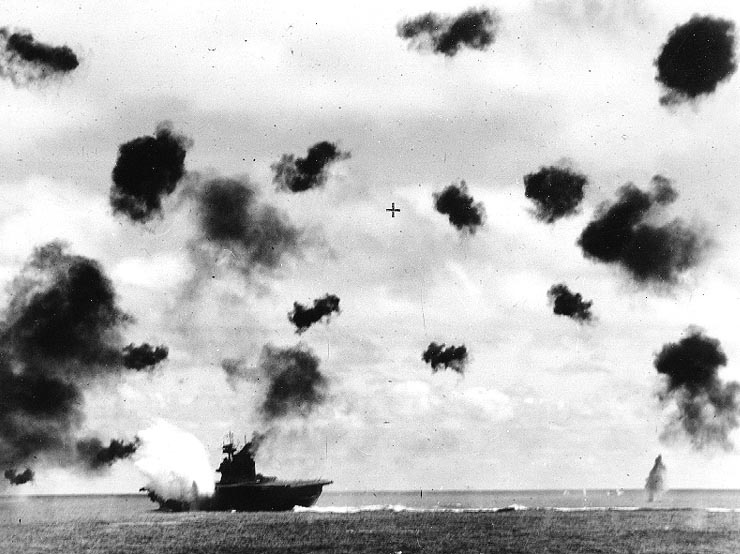
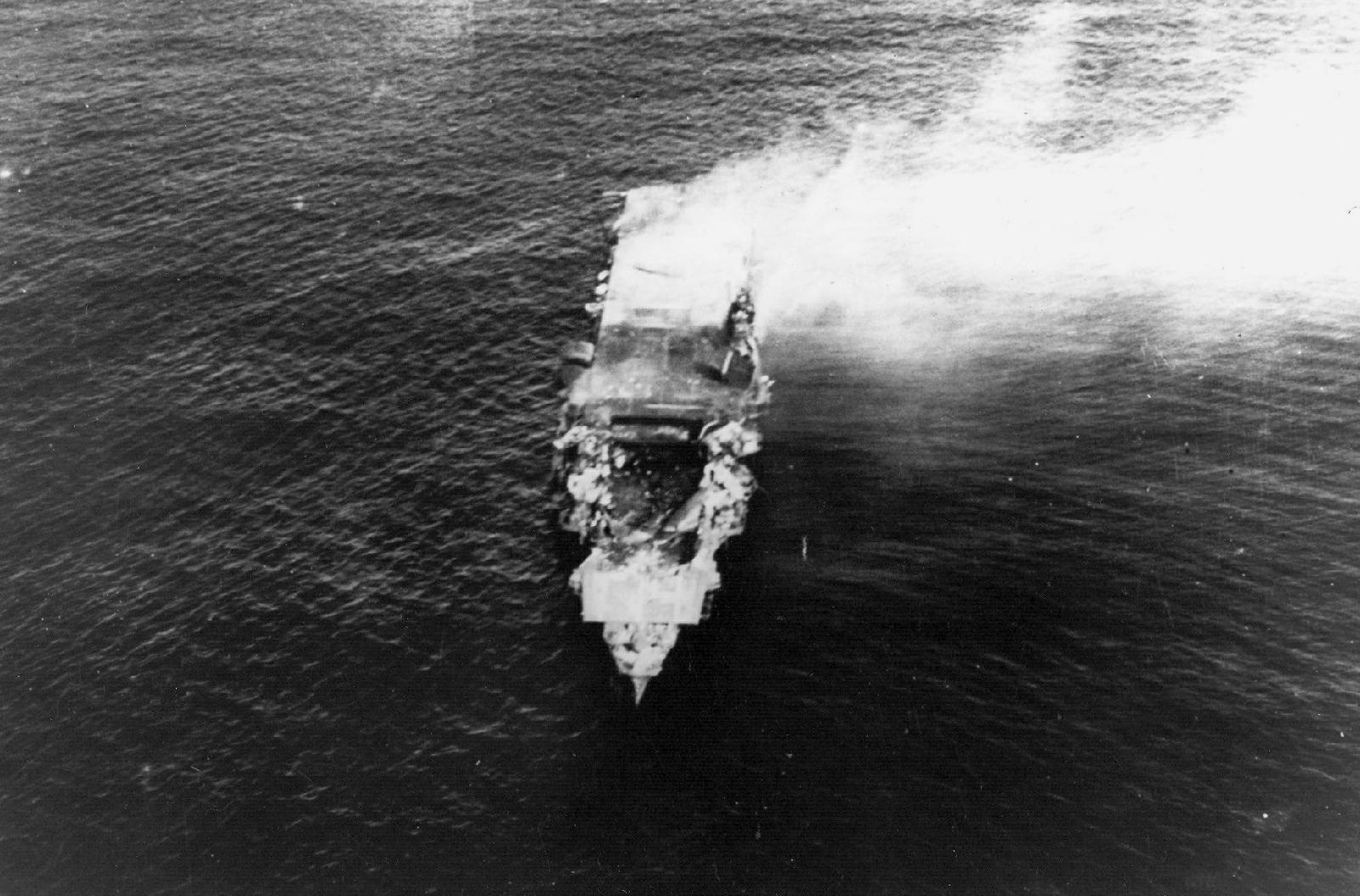
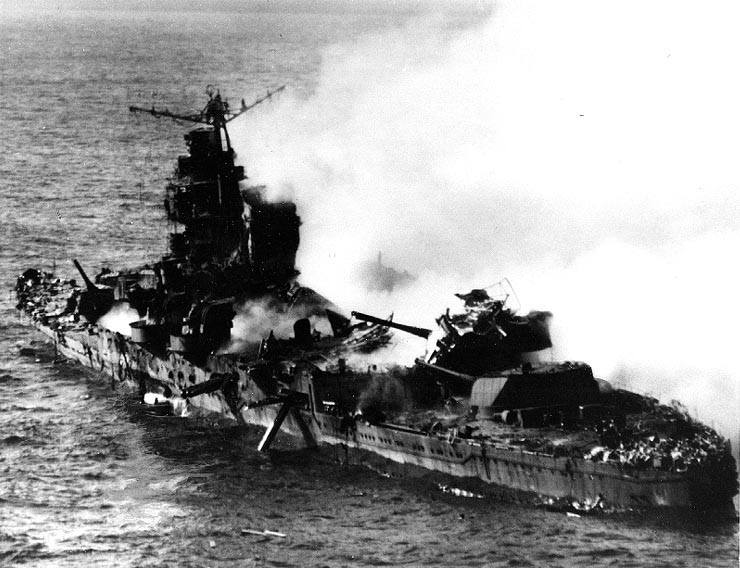
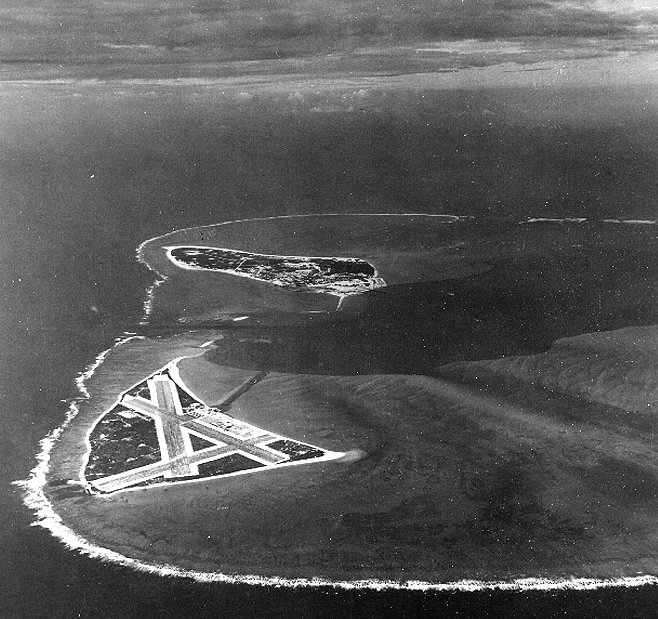
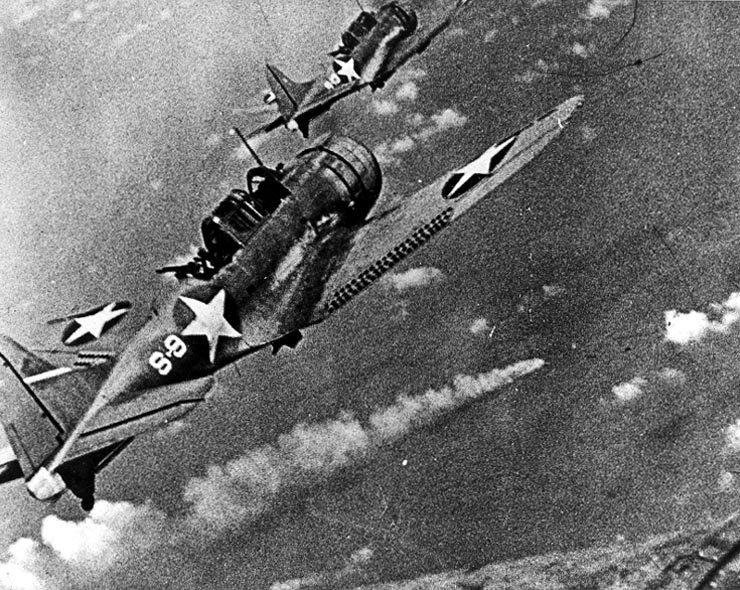
Midway (June 1942).  Fortunately, four American aircraft carriers had been out on a training mission when the Japanese bombed Pearl Harbor and thus had escaped the destruction of the rest of America's Pacific fleet.  Furthermore, because America had cracked the Japanese radio code, Americans were aware that the Japanese fleet was headed to seize Midway Island – located in the mid-Pacific halfway between Japan and the West coast of America, a point from which the Japanese could then attack ships coming out of California to rebuild the American naval position at Hawaii.

Not aware of America's knowledge of their movements, the Japanese were caught off guard – and in the resulting Battle of Midway, they lost badly in the contest.  The Japanese would never be able to mount such a bold attack against America after that.  Indeed, from this point on, Japan would be fighting a purely defensive action in the Pacific against a steadily advancing, greatly rebuilt American Pacific fleet.
North Africa.
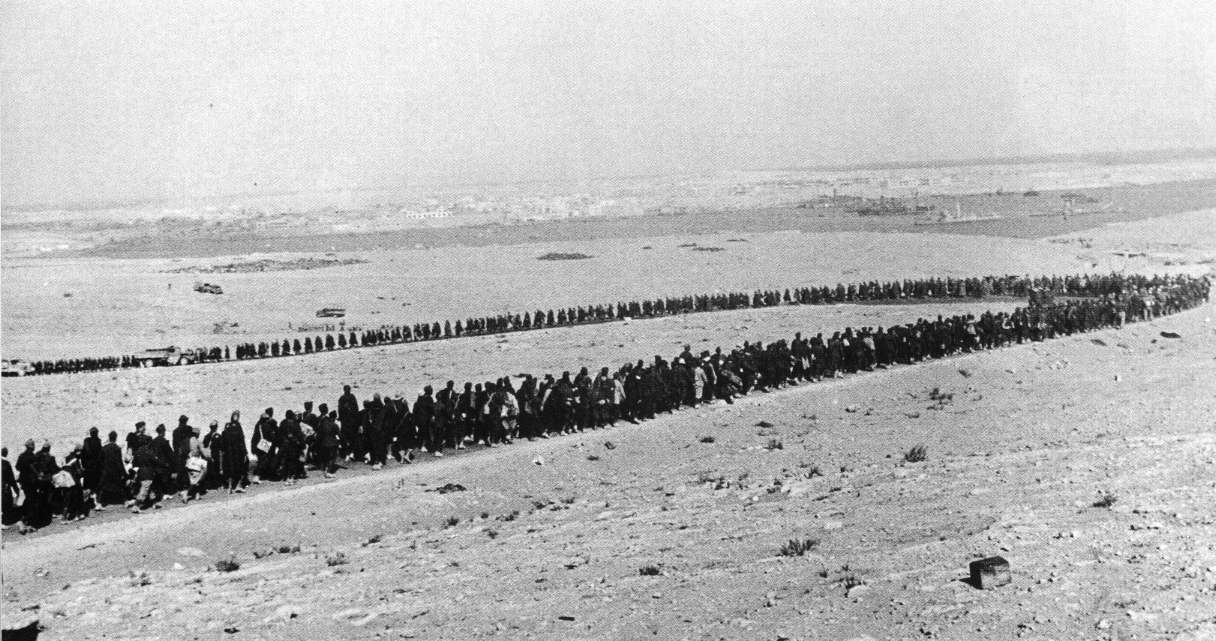
 In the European theater America's contest with Germany (and Italy) was initially centered on North Africa – with America's British allies off in the Eastern portions of North Africa defending the vital Suez Canal in Egypt against the advance of German General Irwin Rommel – and the Americans themselves getting their first experience in battle coming in from the West, from Morocco and Algeria towards Tunisia.  Finally able to reach Tunisia – and their first serious confrontation with the Germans – the Americans did not do well at first.  But they learned quickly and soon got themselves together, so that in May of 1942 the Americans and British were able to close forces in Tunisia.  What was left of the Germans and Italians pulled out of Africa and headed across to Sicily – but leaving a quarter of a million German and Italian troops behind as prisoners.

Sicily and Italy.
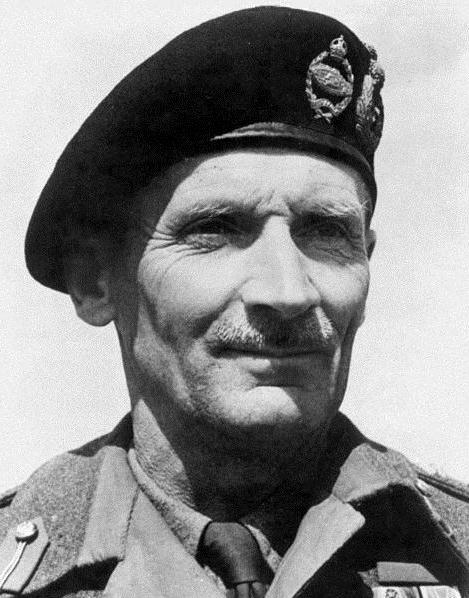
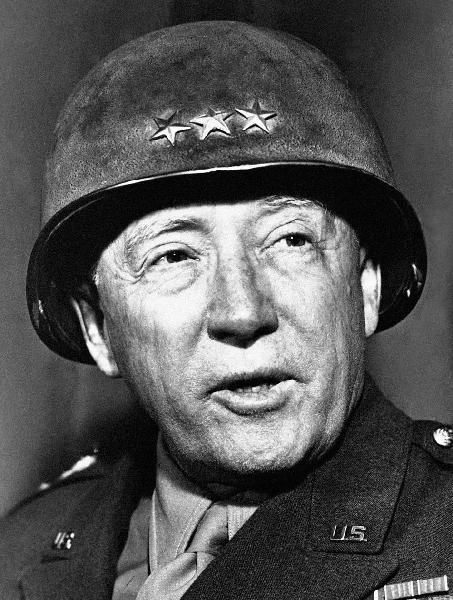
  British and American troops were intent on delivering a huge blow to the Germans and Italians in Sicily – though it appeared to many that American General George Patton and British General Bernard Montgomery were more interested in winning the contest of who it was that would gain the honor of being the victor of Sicily.  In the end (that August) both armies routed the Germans and Italians – but narrowly missed an opportunity to surround their enemies before they made their escape to Southern Italy.
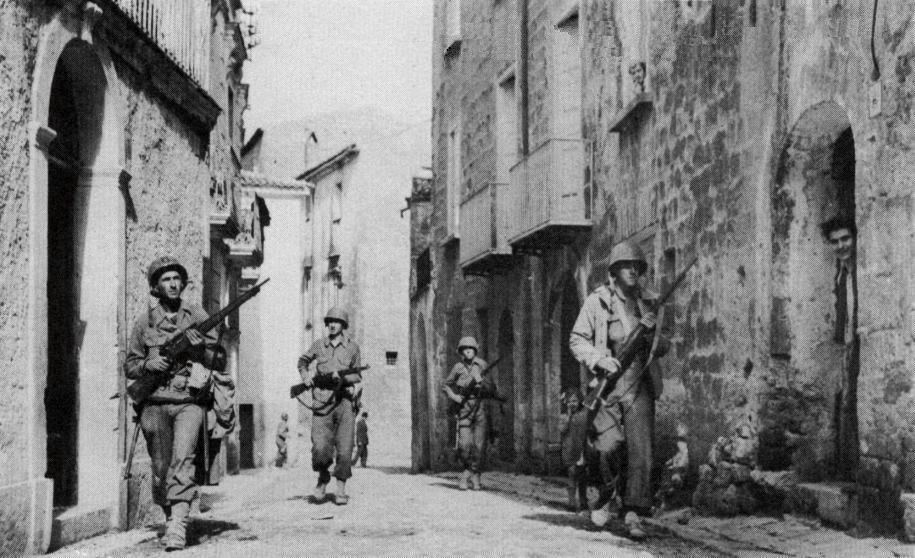
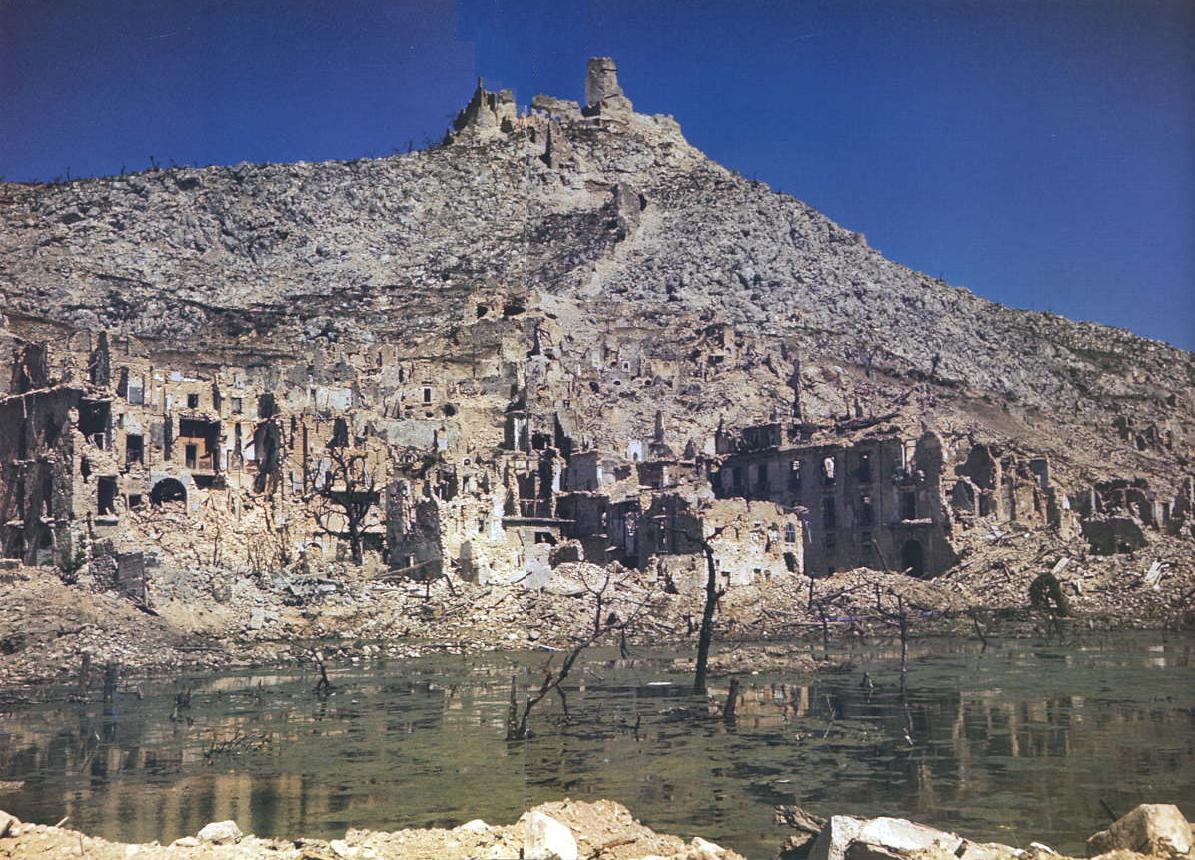
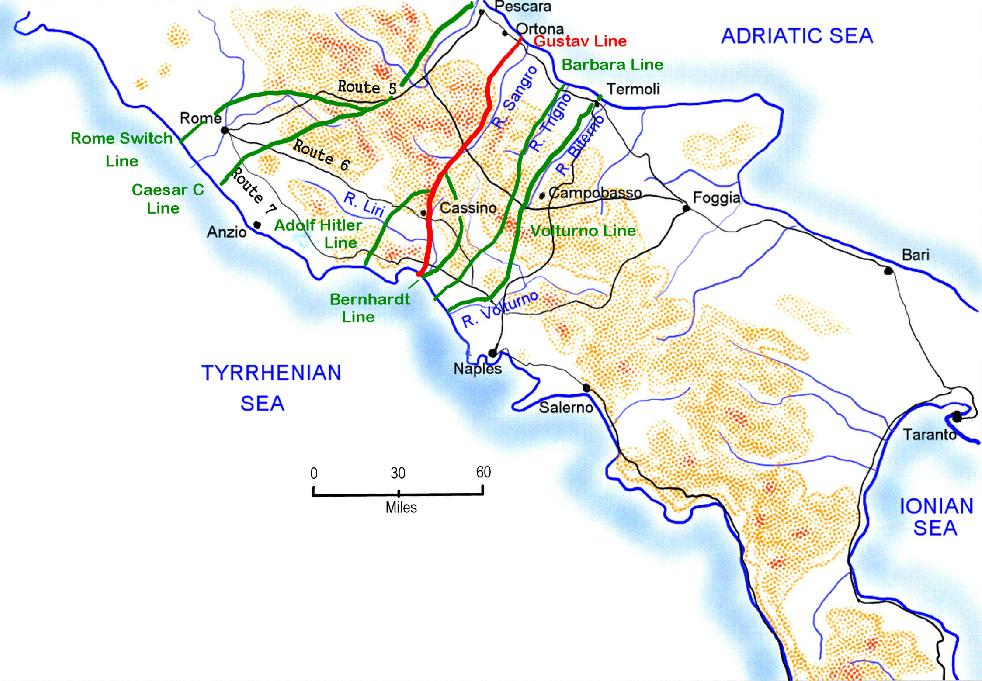
But at this point the Italians were fed up with Mussolini's program and announced a full armistice.  The Italians were officially out of the war.  But the Germans certainly were not, and consequently they dug into the mountainous interior of Italy to contest the British-American advance up the Italian peninsula, every step of the way.  Thus the allied advance against the Germans became very slow – and very bloody.  1942 turned into 1943, which turned into 1944 – and the Allies had made only painfully slow progress.

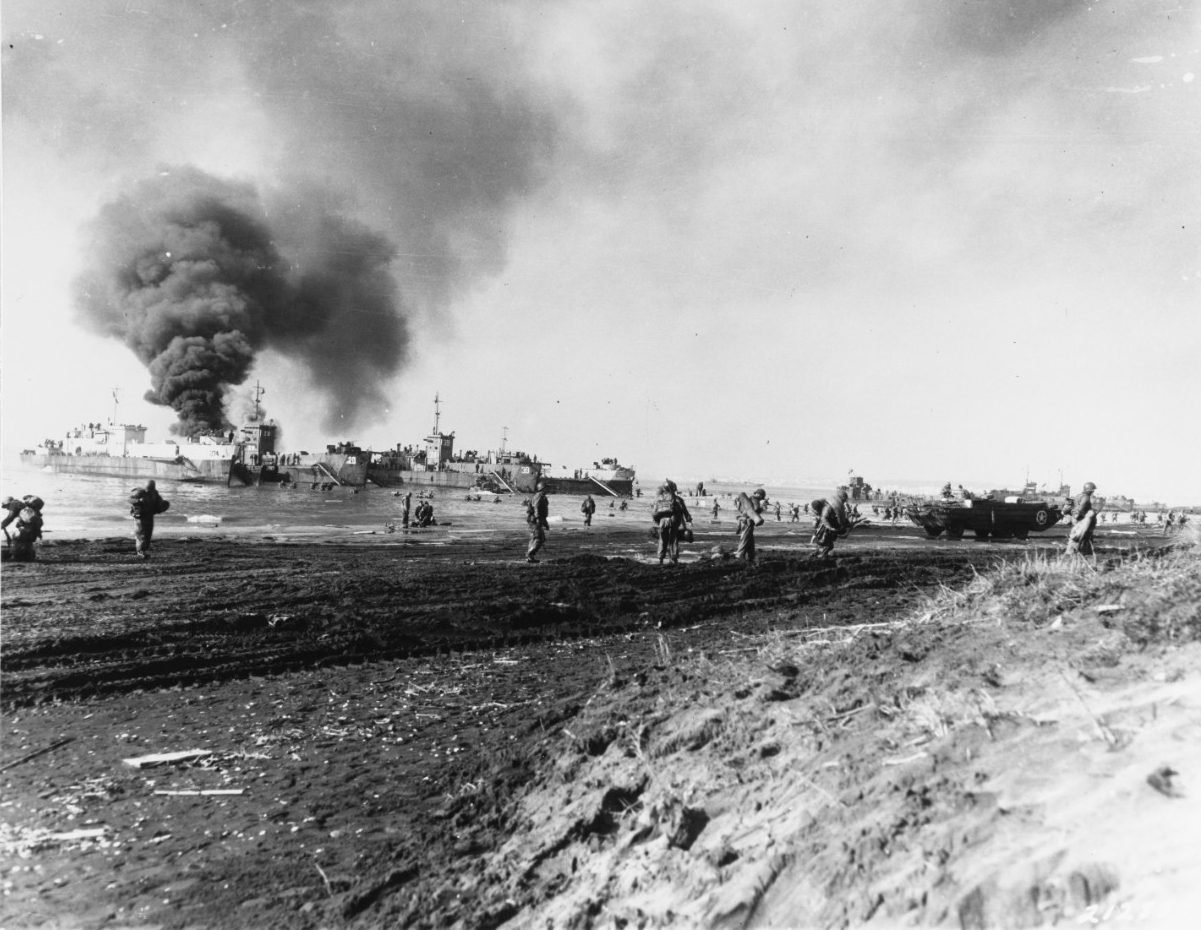
The Americans finally in January of 1944 decided to do an end-run around German lines and launch a surprise landing at 
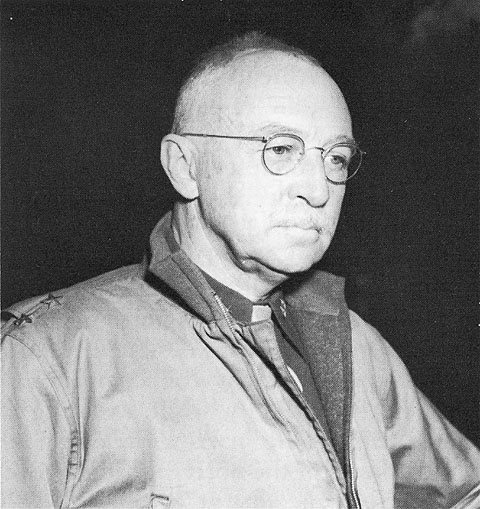
Anzio – which however failed to be a surprise when the American commander proved unwilling to move off the beach until he had what he thought were adequate supplies for the mission he was assigned.  That incredibly stupid delay gave the Germans ample time to move into position above the Anzio beaches – and the Americans found themselves trapped there.  It would not be until five months later that the Americans – after having suffered huge losses – were able to break out of their position at Anzio and continue on their march north.
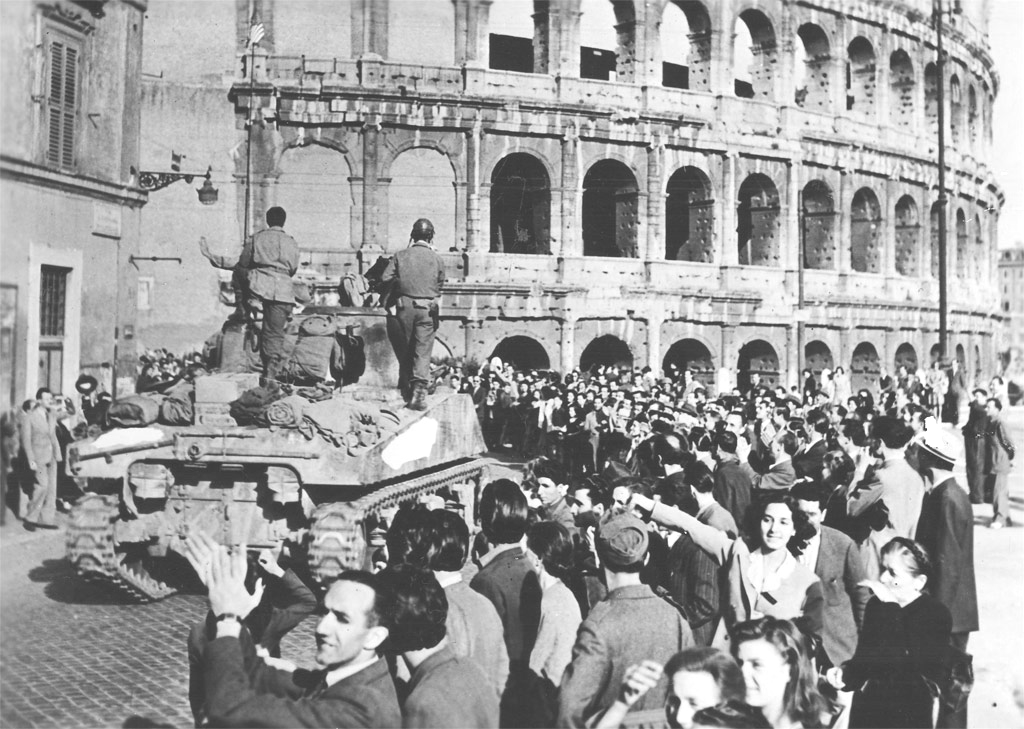
Then rather than heading straight east across the Italian peninsula, swinging behind the well-entrenched German army – and thus surrounding it and bringing it to defeat – the Americans decided to head north to liberate Rome (June 1945) – a major emotional success but another military blunder of the first order.  It allowed the Germans to quickly retreat to a position from which they could then dig in again and thus continue to hold the northern half of Italy under full German control.  Again, for the Americans the glory of a single victory (Rome) overrode the greater requirements of war itself.
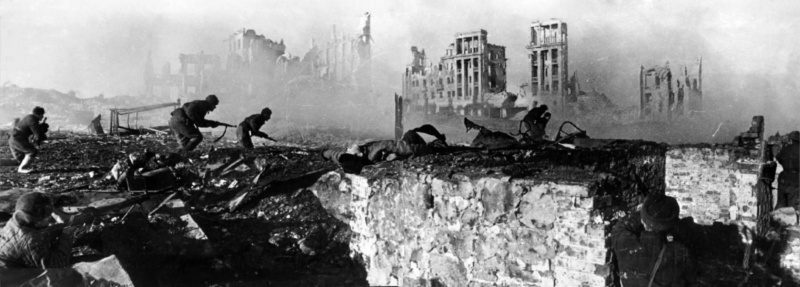
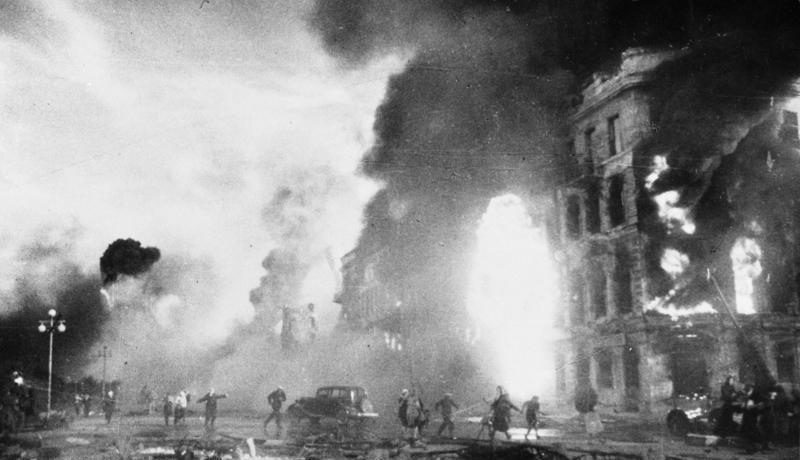
Stalingrad (1942-1943).  Meanwhile on the "Eastern Front," 
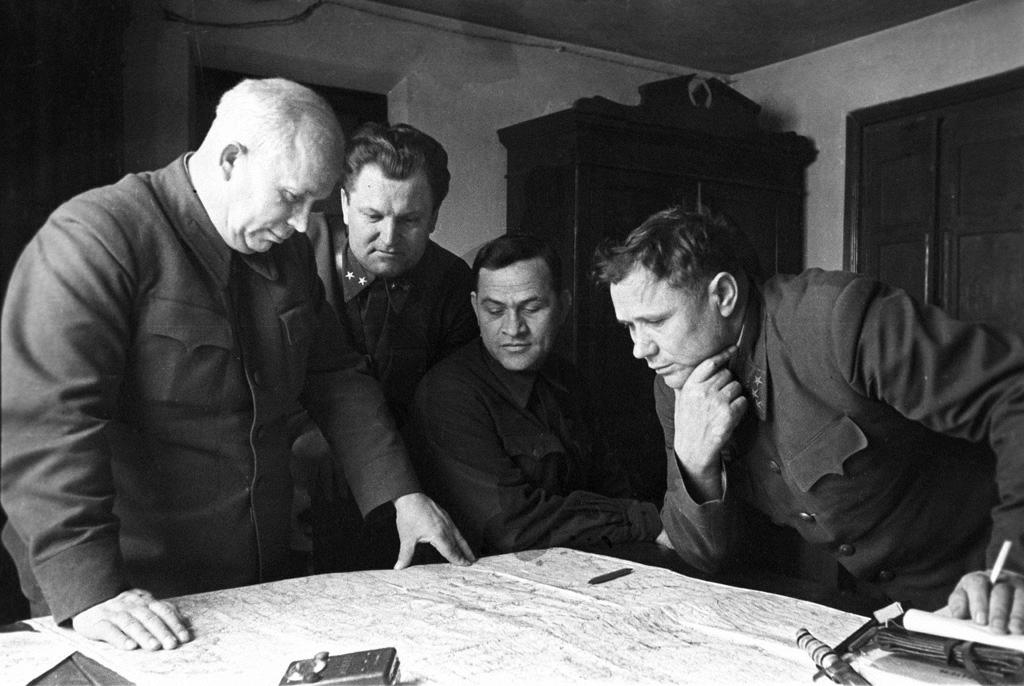
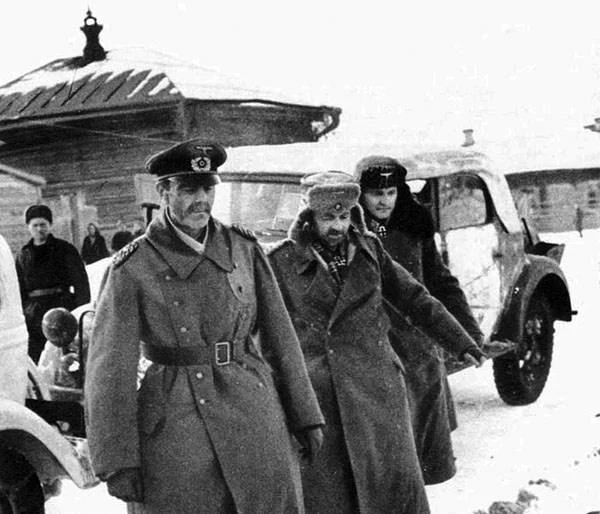
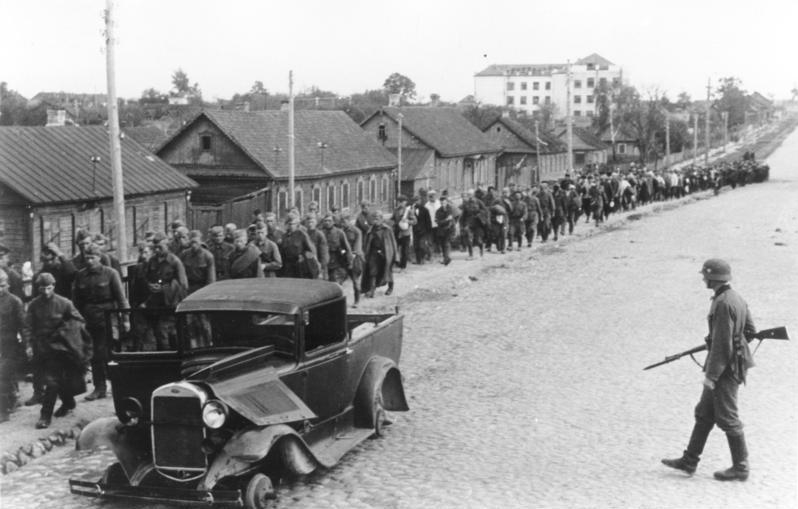
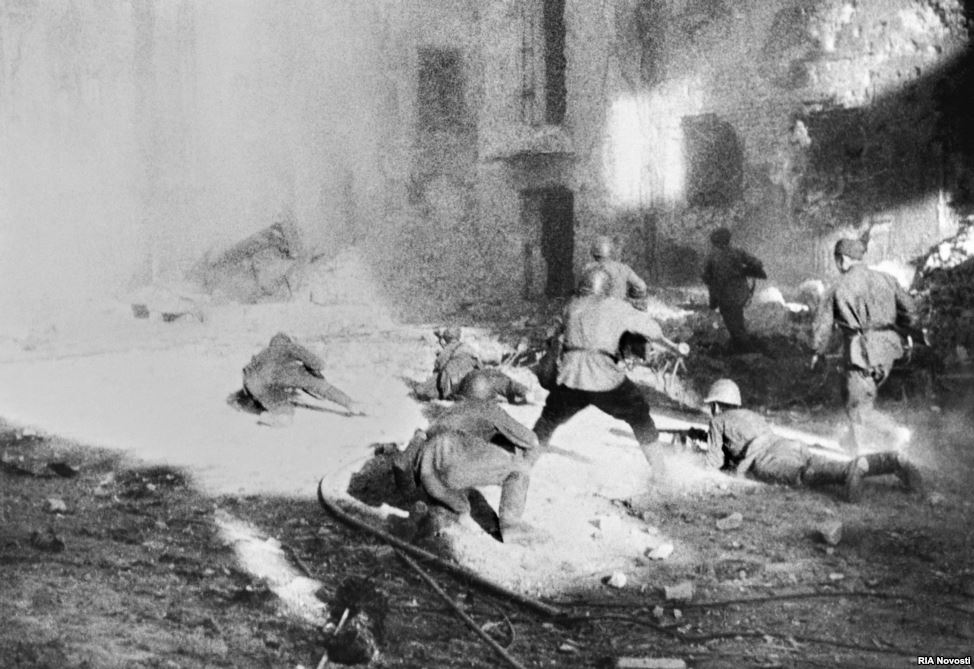
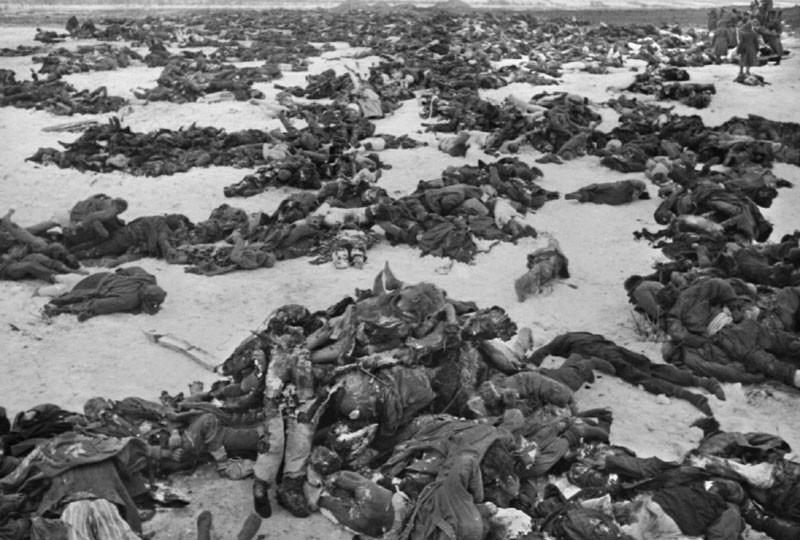
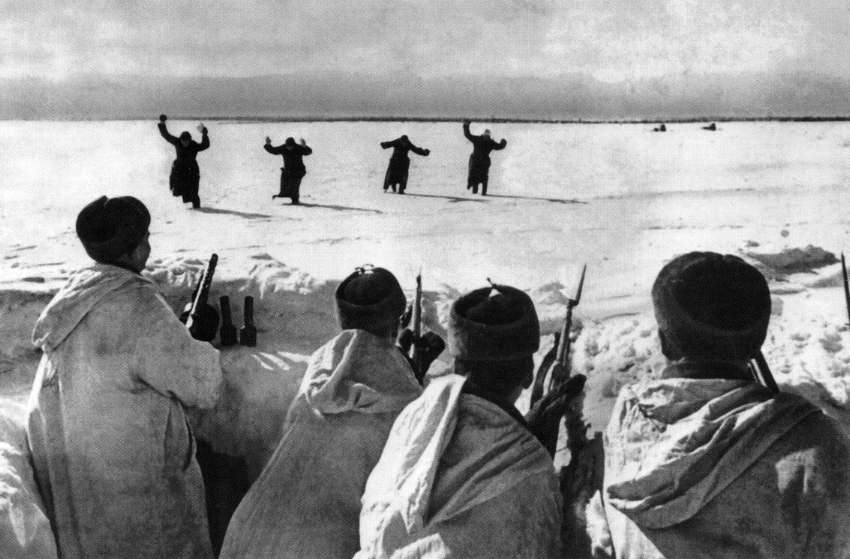
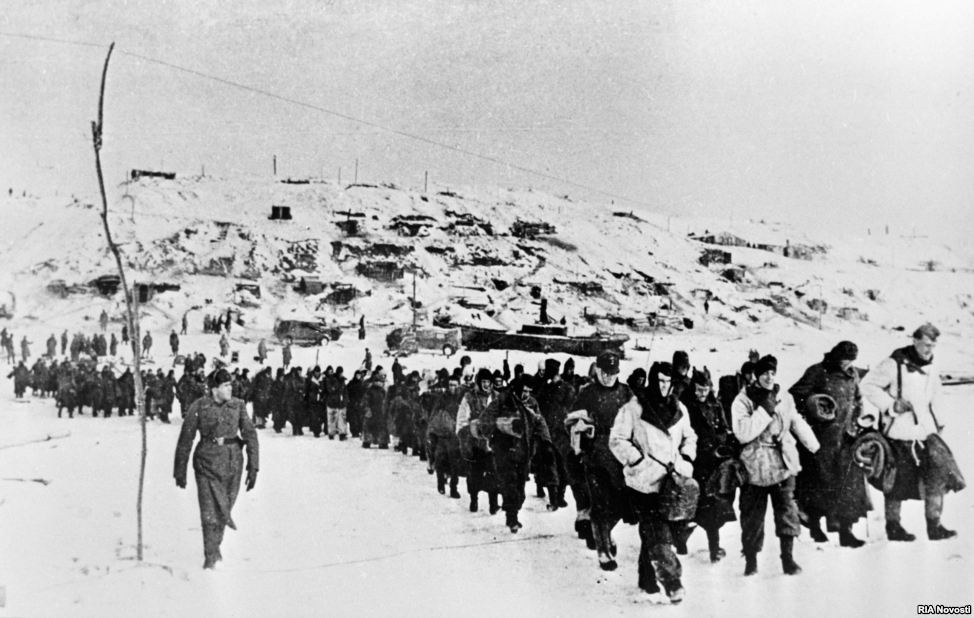
Stalin's troops were under the strictest orders not to retreat from their strategic position against the Germans at the city of Stalingrad, the adjacent  Volga River being the last serious position of defense that the Russians could offer against the German expansion.  Thus a massive battle was fought there.  But the Russian line did hold, a huge German army succeeded in getting itself surrounded when Hitler refused to let those troops retreat from the trap, and now the Russians found themselves able to take to the counter-offensive against a deeply exhausted German army.
France (1944).
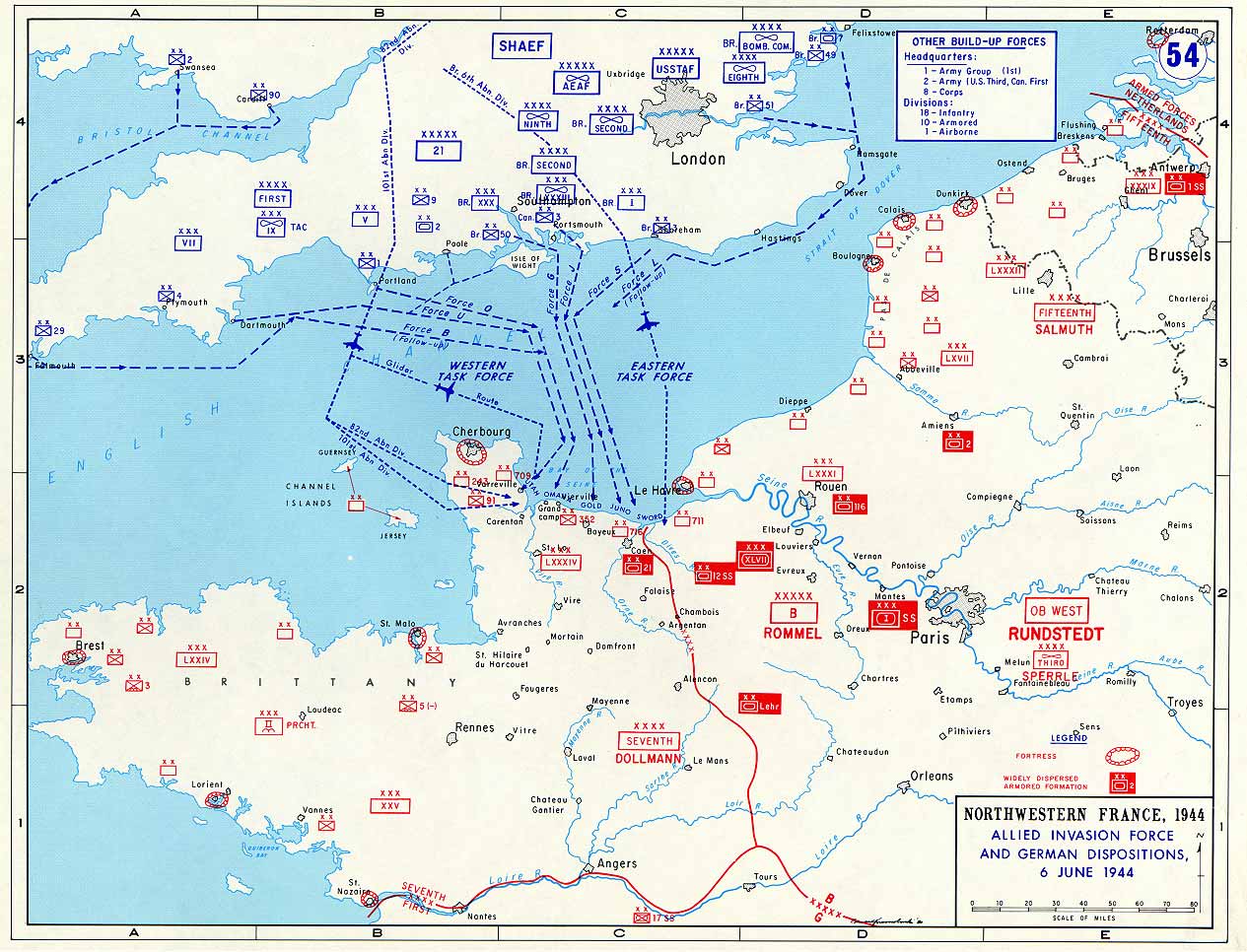
  On the "Western Front," Americans had been gathering in England for what was to be a grand attempt to cross the English Channel with their British, Canadian (and other) allies and secure a position in Western France from which they could then begin to make some kind of advance against the Germans positioned in France.  An earlier attempt (August 1942) at Dieppe along the northern Normandy Coast by the British and Canadians (and a small number of Americans) had proved to be a huge disaster – and thus the idea of such a crossing was considered much less than a certain success.  Thus both the huge buildup of troops and supplies – and the secrecy (and deception) involved in the operation – in order to keep the Germans unknowing of the where and when of such a crossing.

Finally, on June 5th (1944), the order was given by Allied Commander American General Dwight Eisenhower to make the crossing the next day.
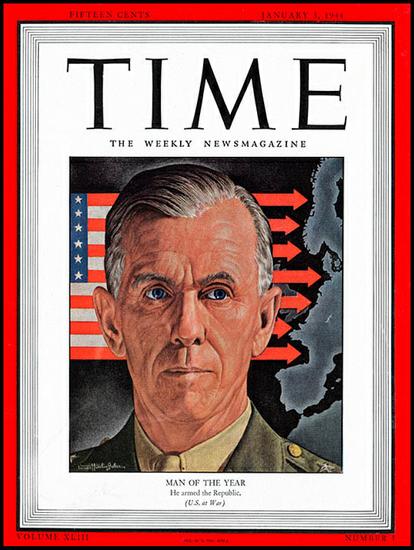
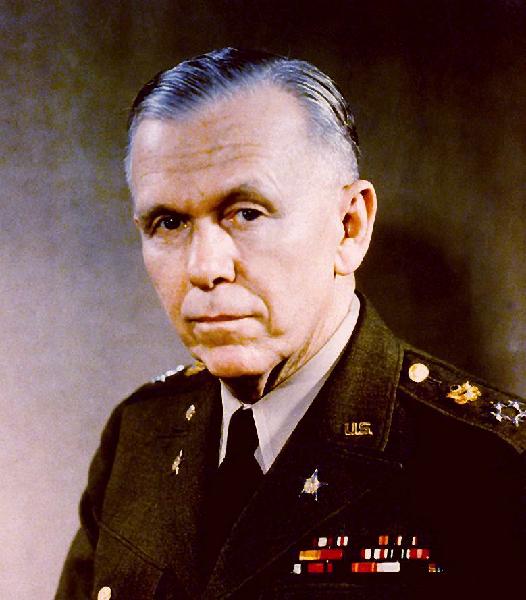
General GeorgeMarshall.  Interestingly, that announcement should have come from the U.S. Army's Chief of Staff, General George Marshall.  Marshall had been the one to organize this massive operation, which required the ability to work not only with prima donna generals but also U.S. Congressmen.  Marshall was so effective in his work that when it came time to appoint the individual who would lead the huge event itself, by all rights that honor should have gone to Marshall.  But Roosevelt pleaded with Marshall to remain in Washington by his side, because the president depended so heavily on Marshall's advice and support in leading the nation.
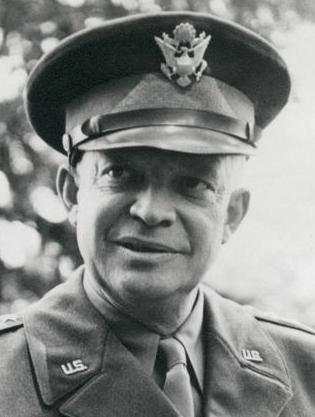
So, Marshall took a piece of paper, and on it wrote the name of his close friend, Eisenhower, and passed it to the president indicating that Eisenhower would be the one to lead the assault.  And he did so, fully aware that history would remember Eisenhower, not Marshall, as the one who carried off this grand event.

Eisenhower was surprised to receive the honor, but performed well, and stepped into history as the war's most memorable general.  And on the basis of that fame, eventually Eisenhower became president of the United States.  Marshall gave up that honor in order to continue to serve the country, rather than his own personal career. Now there was a truly great man!

But this would not be the last time that the nation would call on the well-deserved reputation of Marshall for wisdom and integrity, in dealing with problems that still lay ahead.

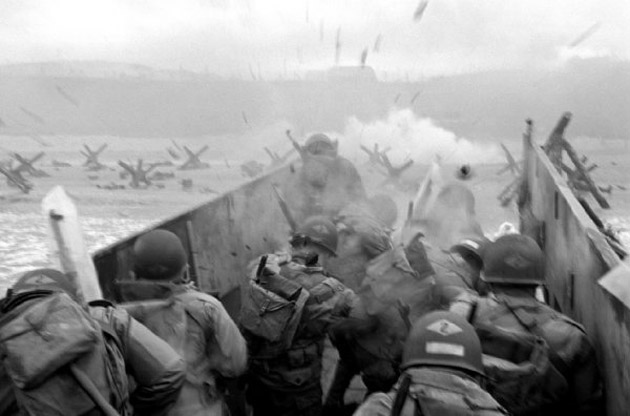
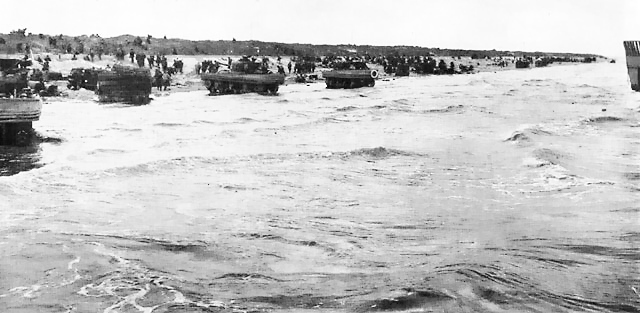
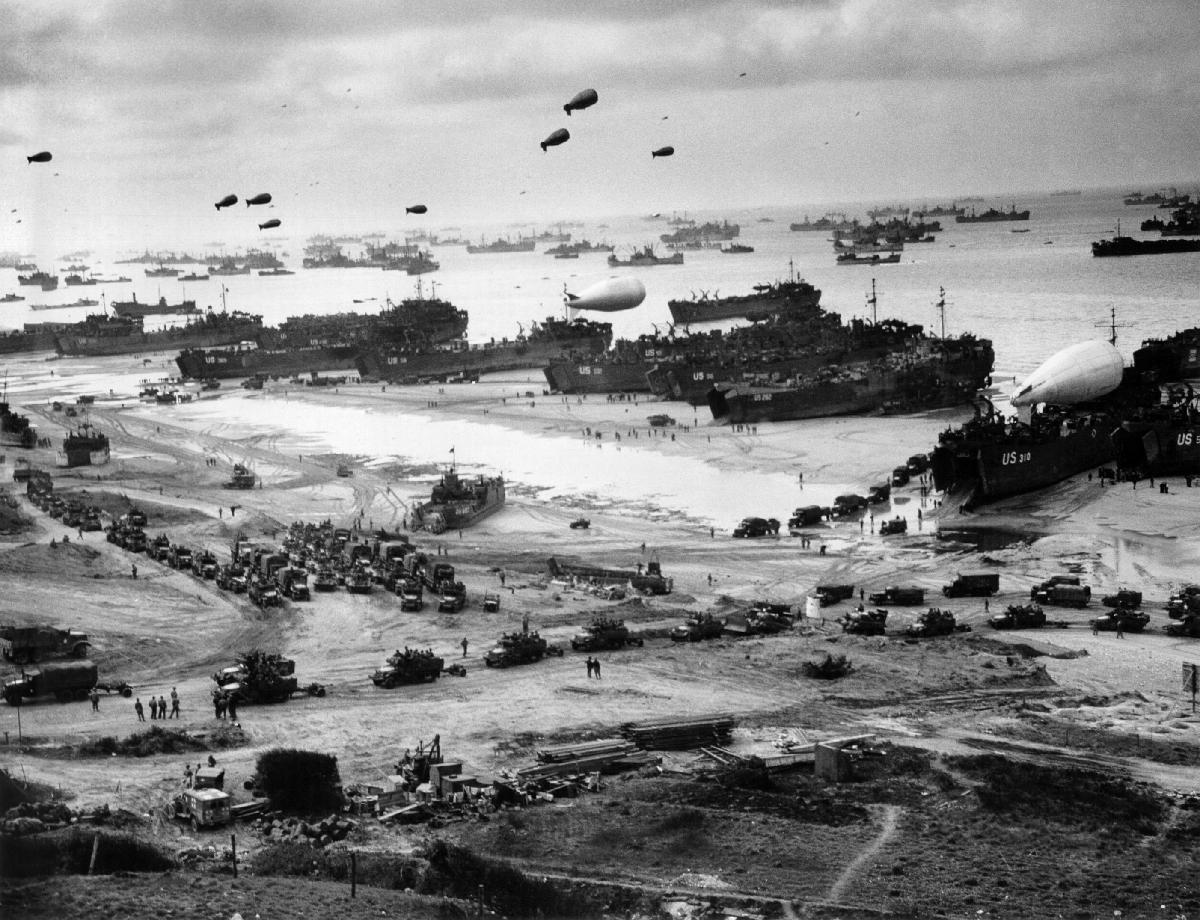
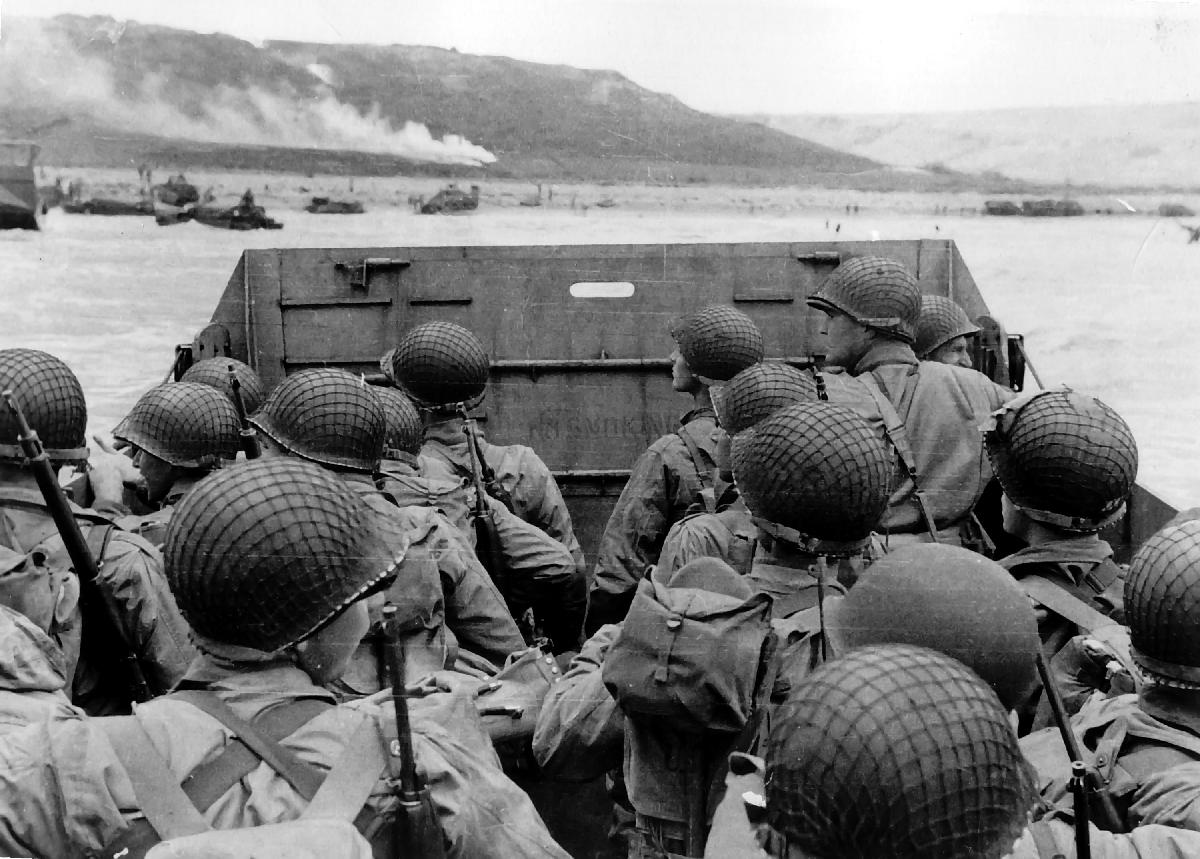
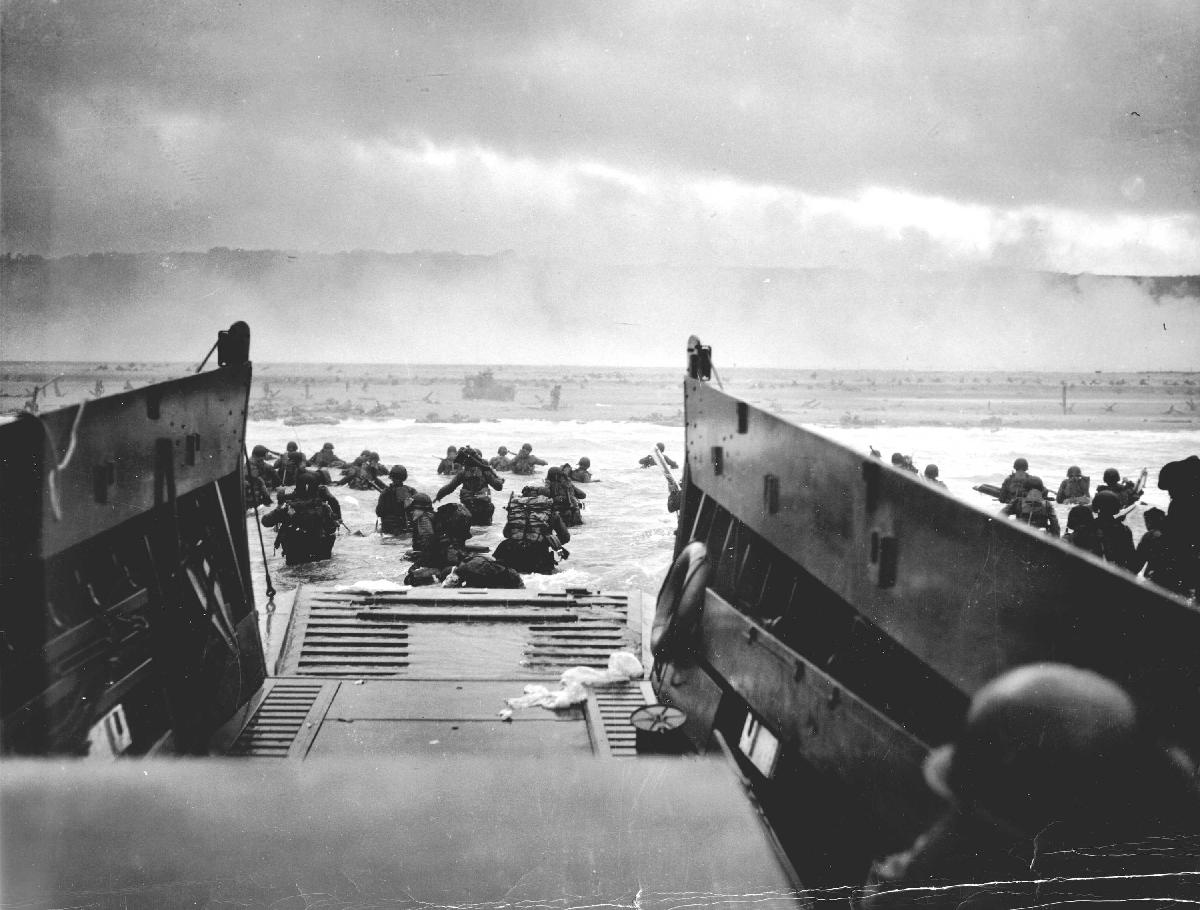
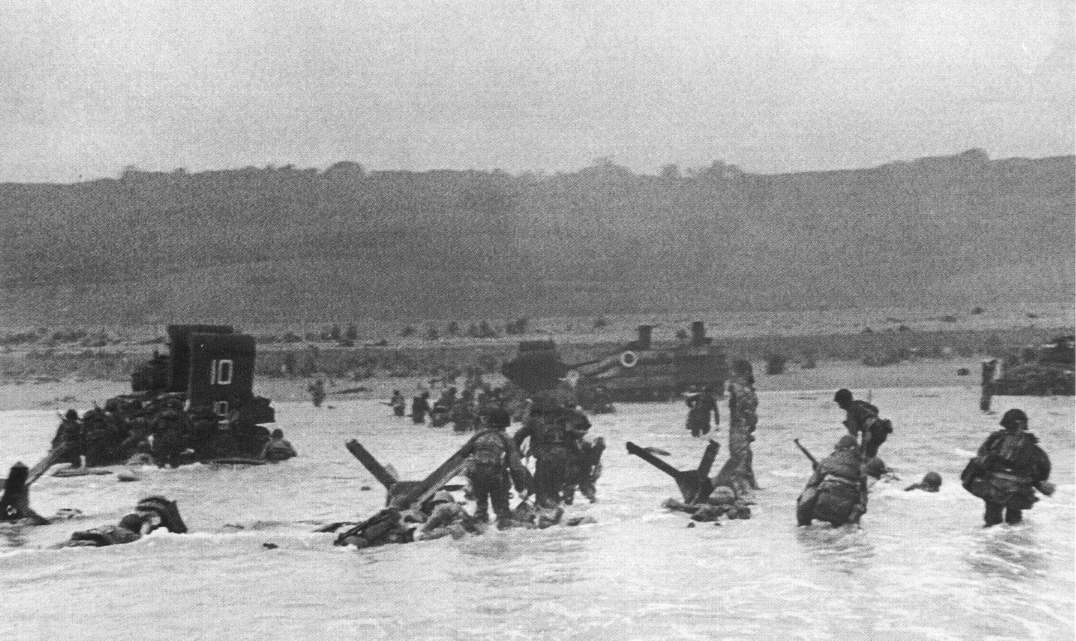
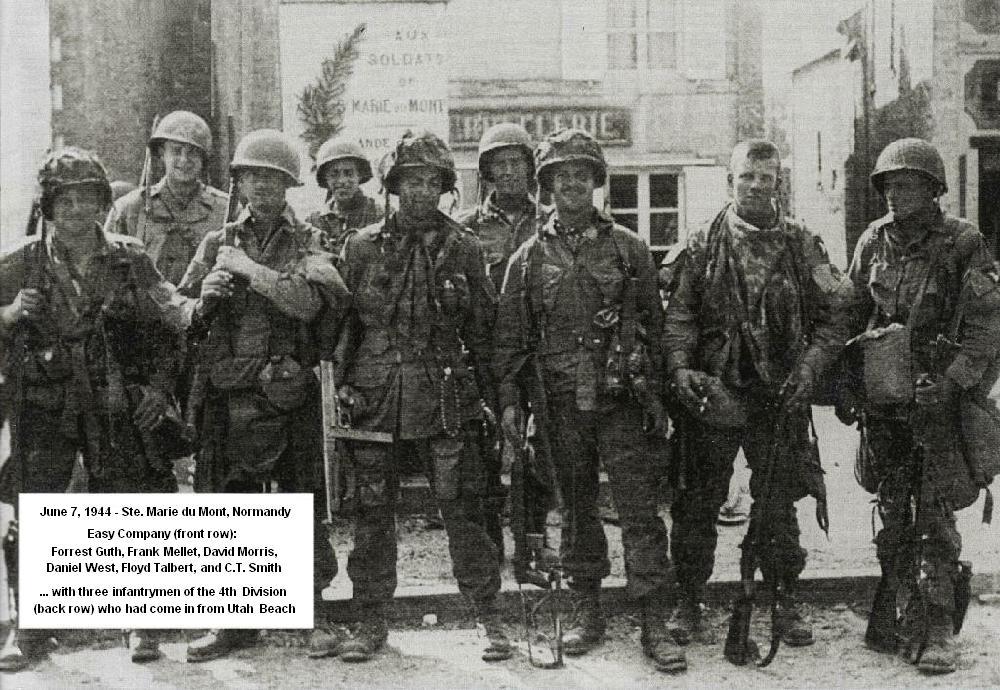
D-Day.  When the "D-Day" landing occurred (June 6th), the Germans were spread widely across the French coast – and the surprise landing at the southern French Normandy beaches by a massive allied force was stunningly successful.  However, at Omaha Beach the heights of the cliffs and the German entrenchments made the landing one of horrible slaughter of the American troops who first landed there.
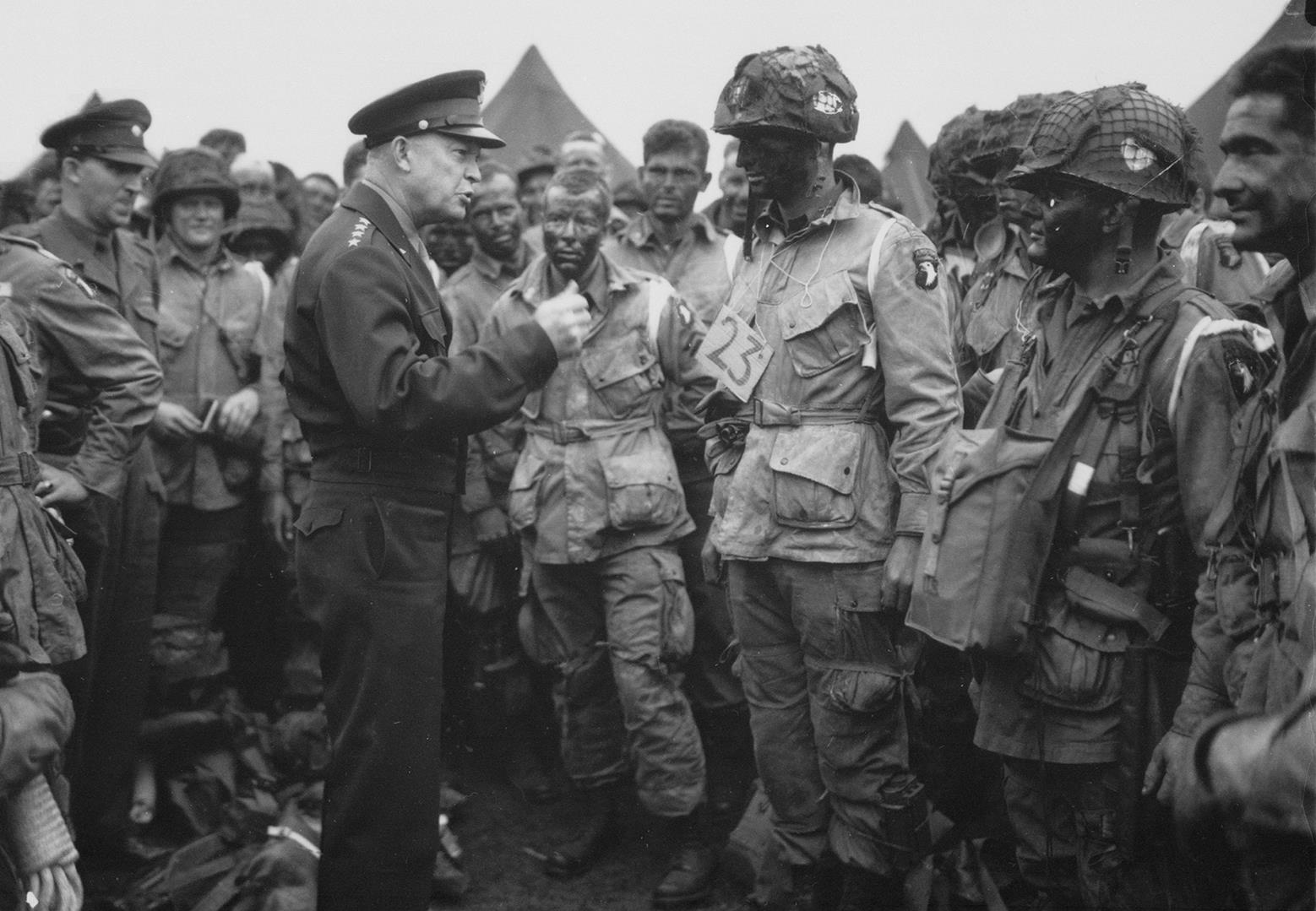
Roosevelt's prayer.  That night 
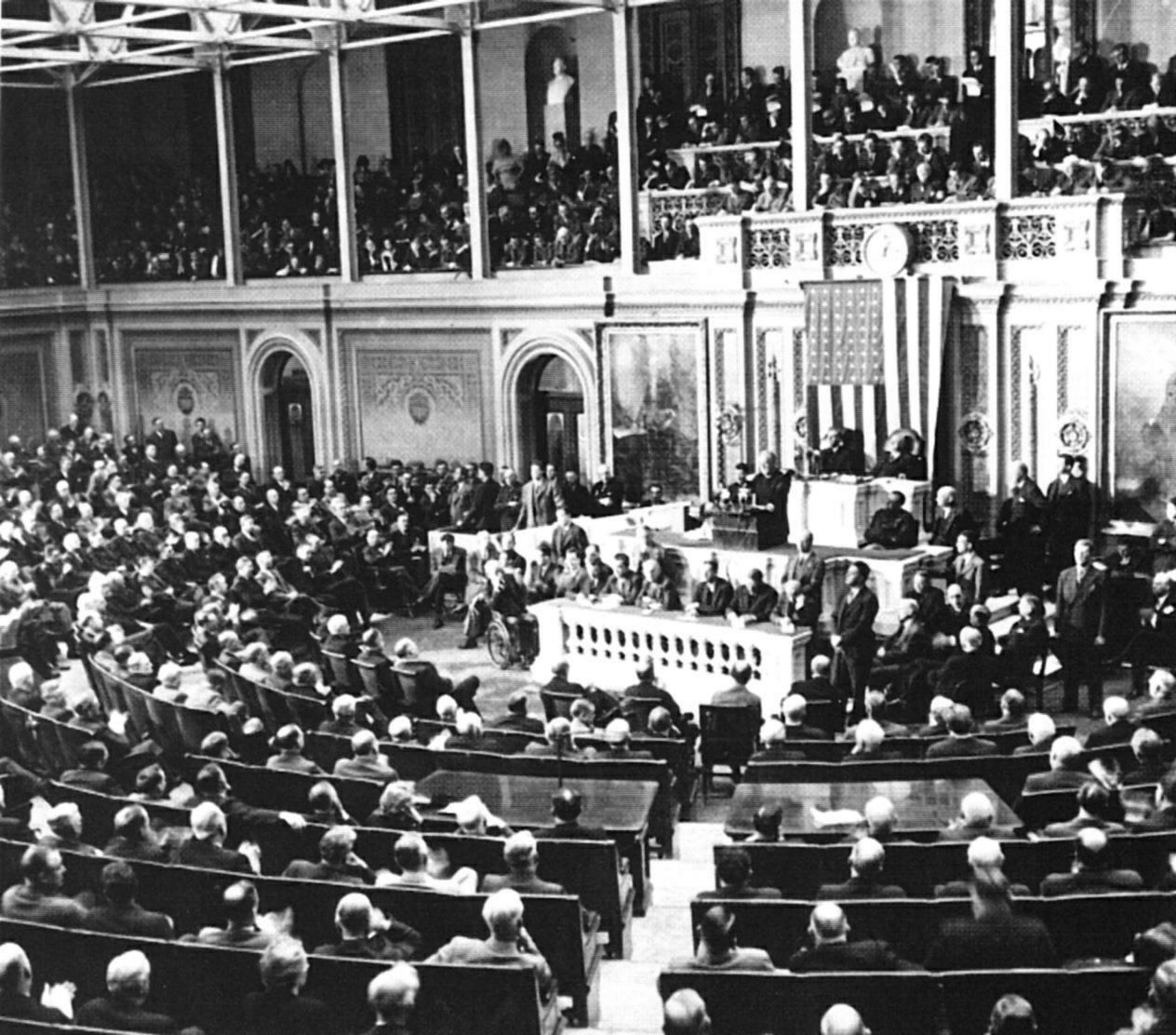
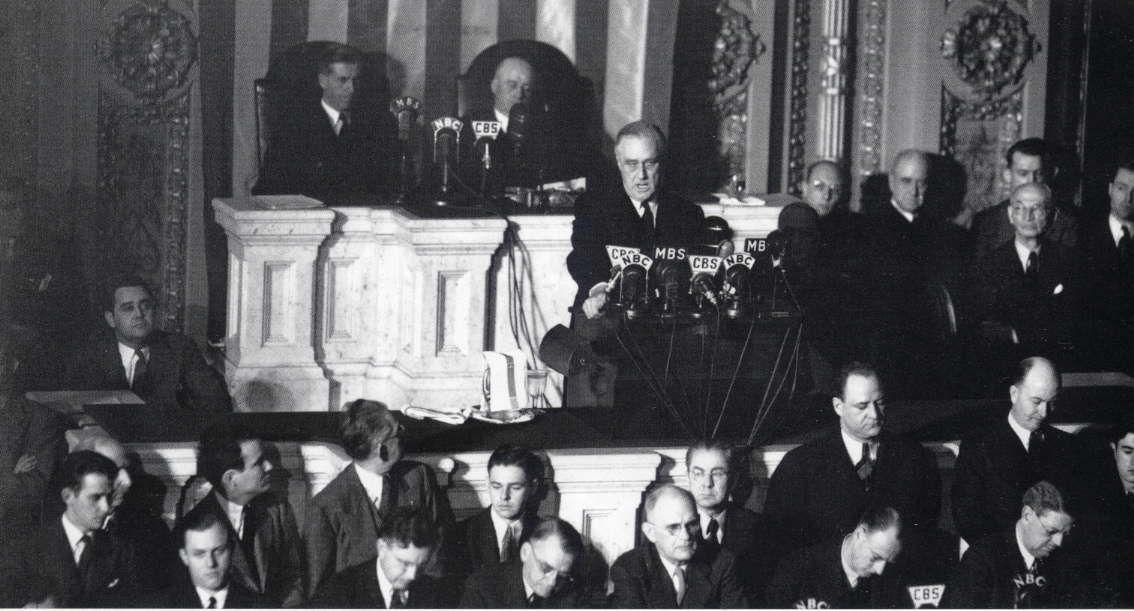
Roosevelt went on the radio to call the American nation to prayer:

My fellow Americans: Last night, when I spoke with you about the fall of Rome, I knew at that moment that troops of the United States and our allies were crossing the Channel in another and greater operation. It has come to pass with success thus far.

And so, in this poignant hour, I ask you to join with me in prayer:

Almighty God: Our sons, pride of our Nation, this day have set upon a mighty endeavor, a struggle to preserve our Republic, our religion, and our civilization, and to set free a suffering humanity.

Lead them straight and true; give strength to their arms, stoutness to their hearts, steadfastness in their faith.

. . .

Some will never return. Embrace these, Father, and receive them, Thy heroic servants, into Thy kingdom.

And for us at home fathers, mothers, children, wives, sisters, and brothers of brave men overseas whose thoughts and prayers are ever with them help us, Almighty God, to rededicate ourselves in renewed faith in Thee in this hour of great sacrifice.

. . .

With Thy blessing, we shall prevail over the unholy forces of our enemy. Help us to conquer the apostles of greed and racial arrogancies. Lead us to the saving of our country, and with our sister Nations into a world unity that will spell a sure peace, a peace invulnerable to the schemings of unworthy men. And a peace that will let all of men live in freedom, reaping the just rewards of their honest toil.

Thy will be done, Almighty God.   Amen.

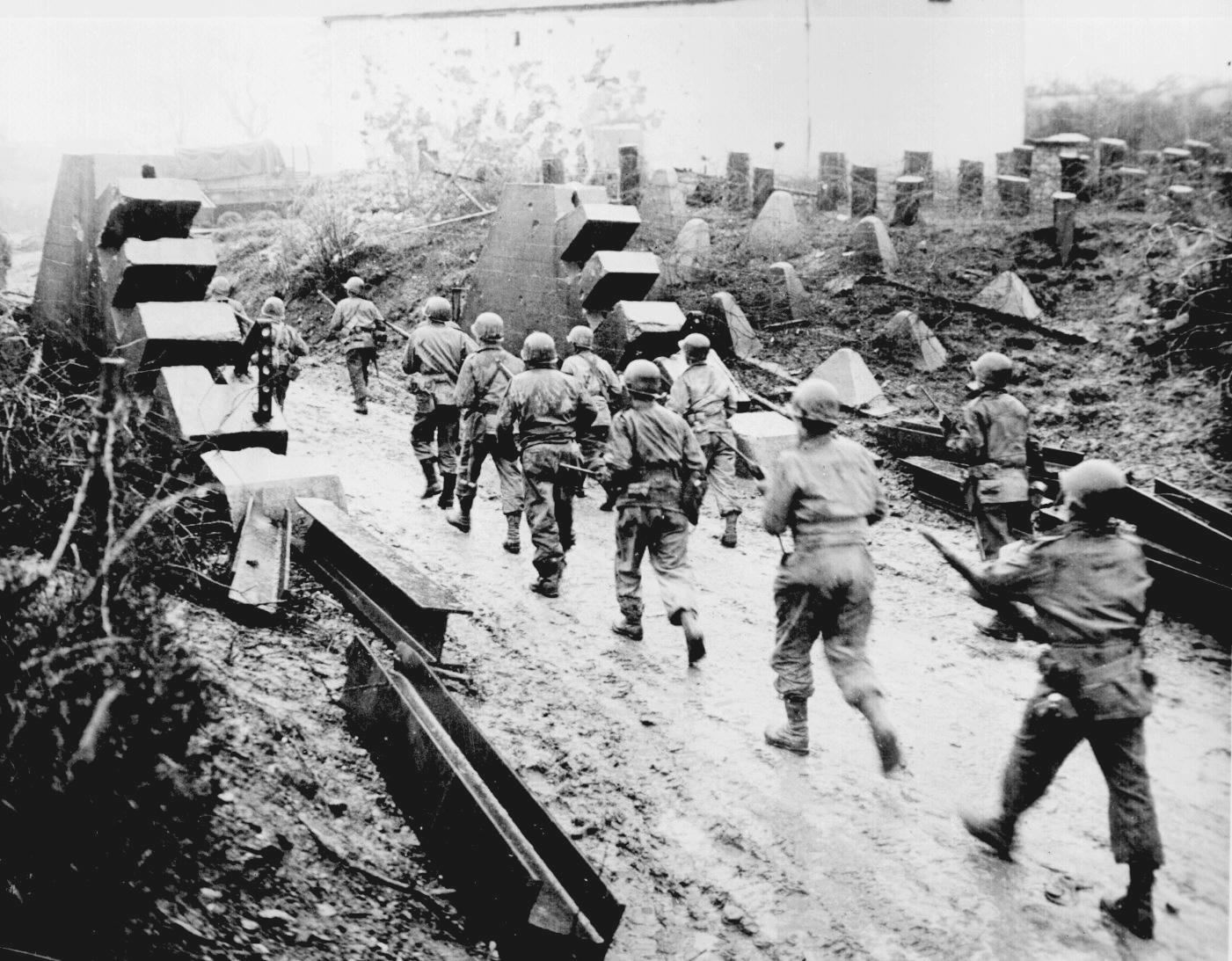
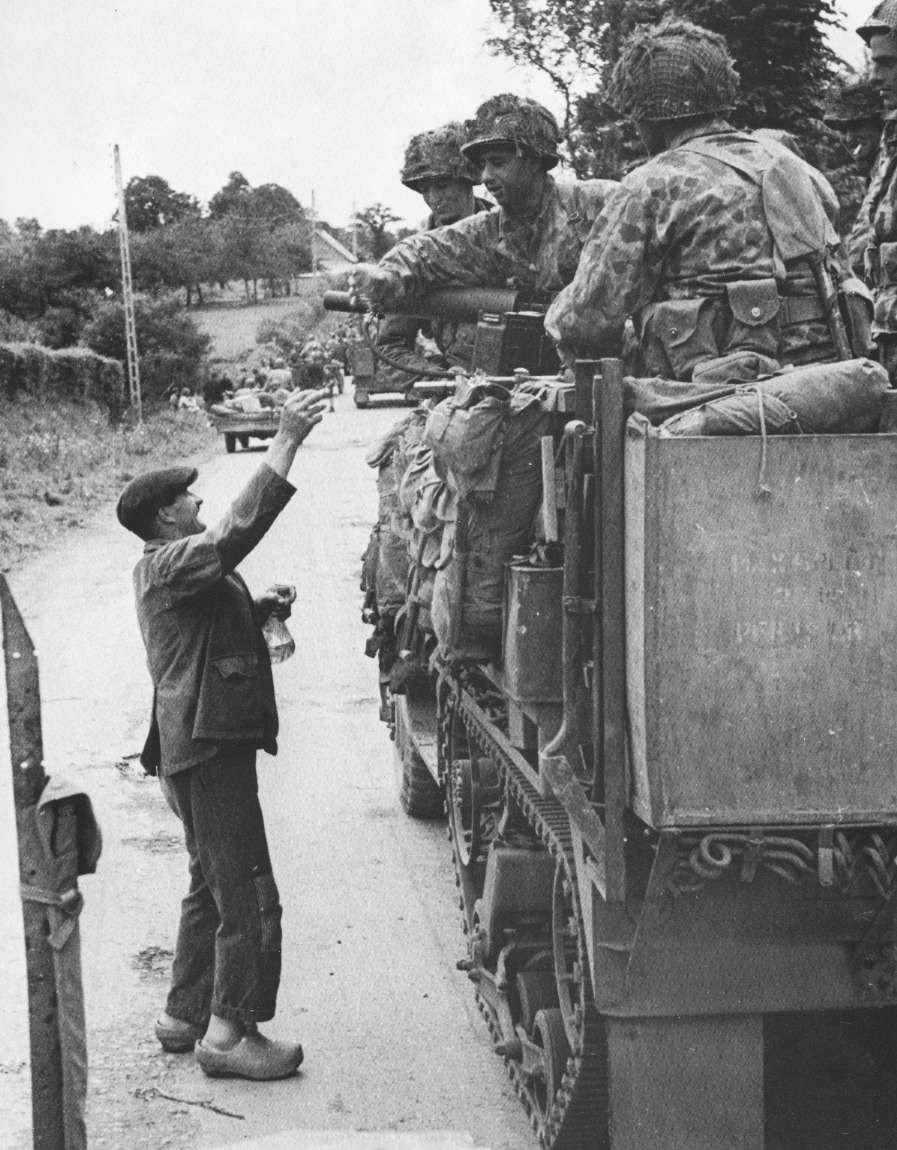
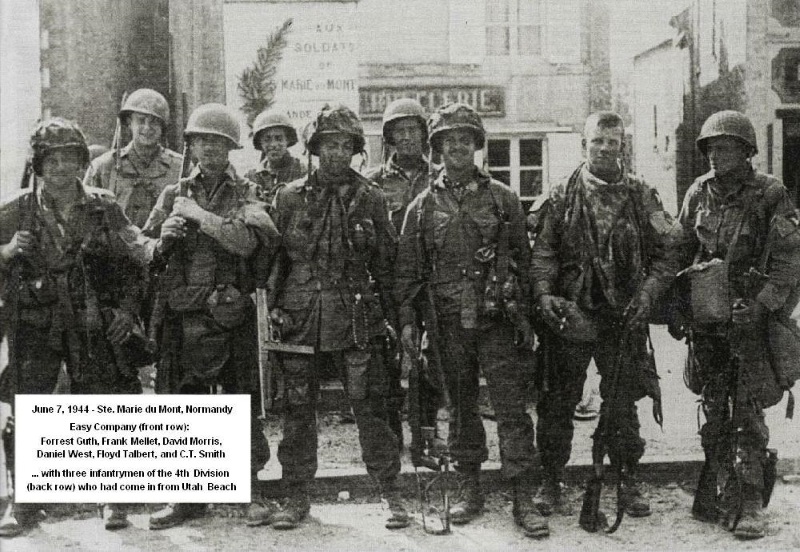
And thus it was that ultimately the Allies found themselves in a position to begin their advance across France – in the direction of Germany.
The politics of potential victory.
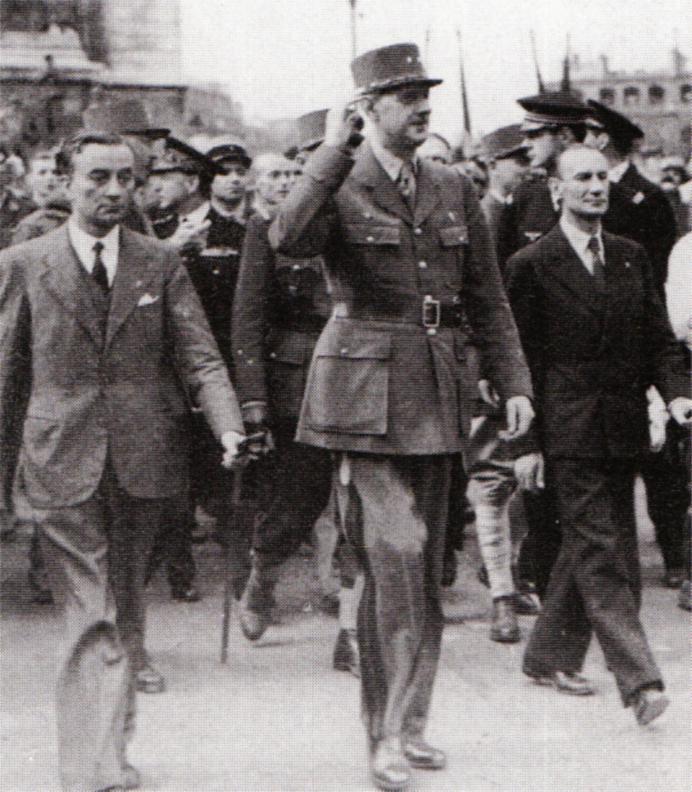
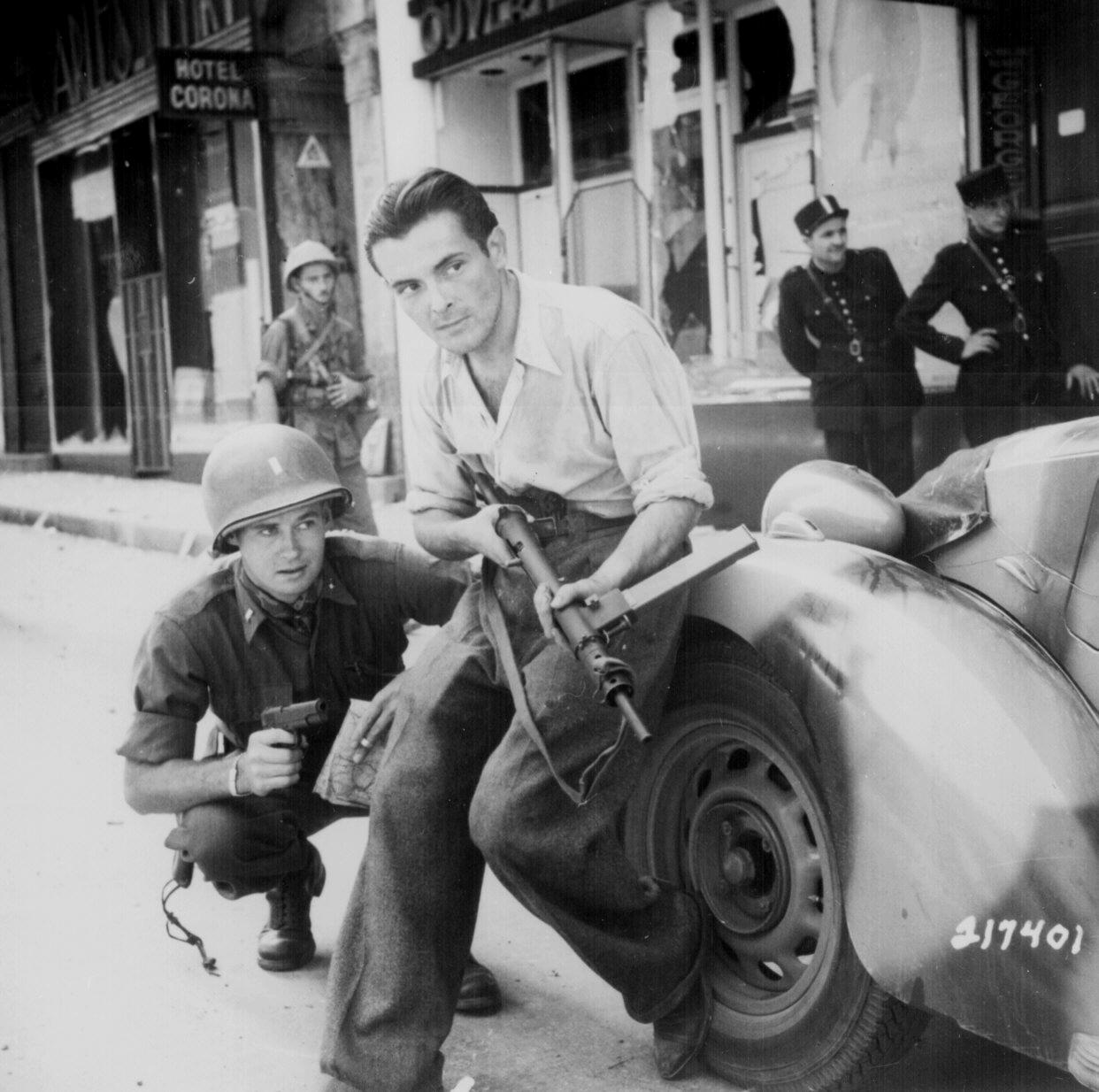
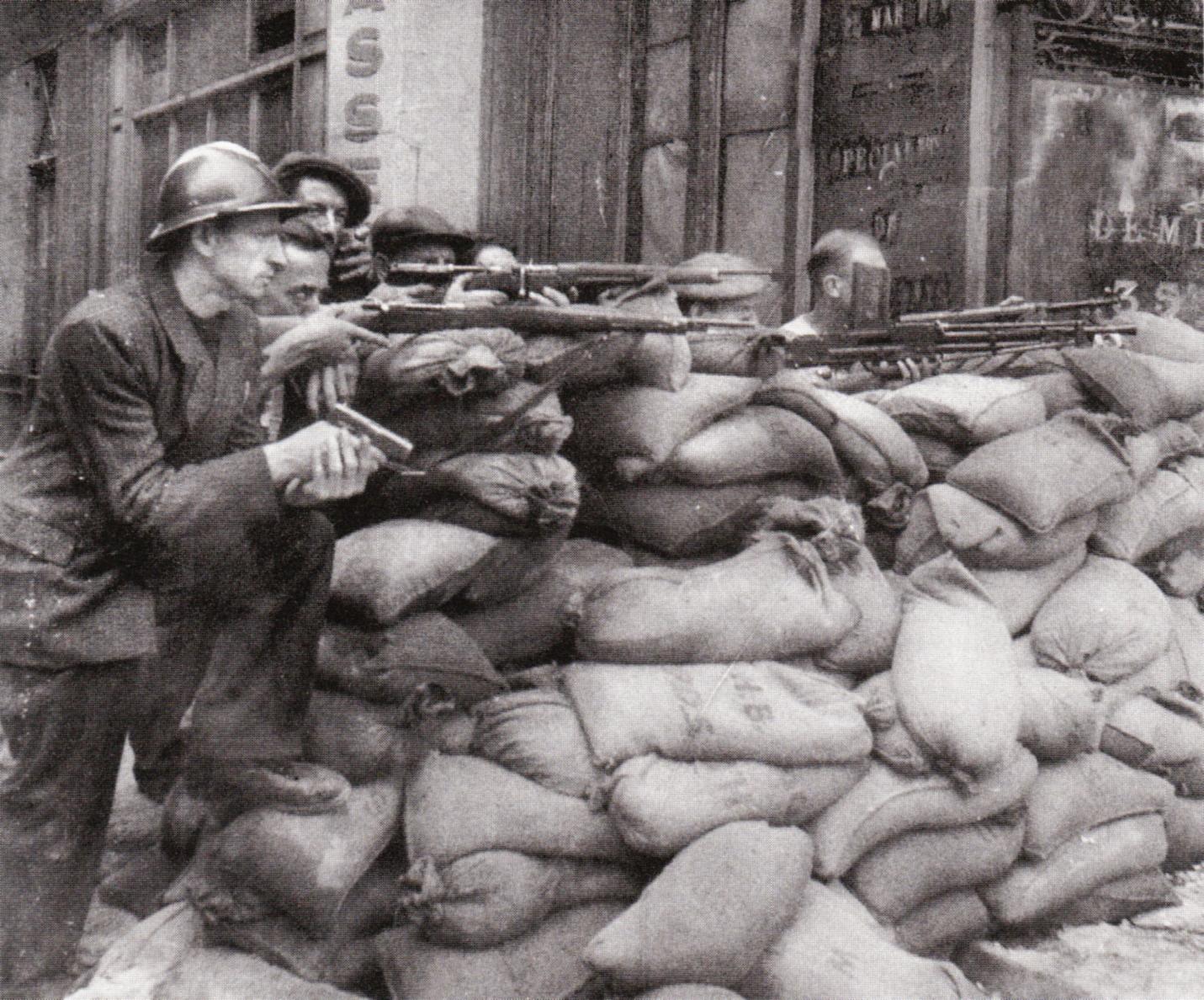
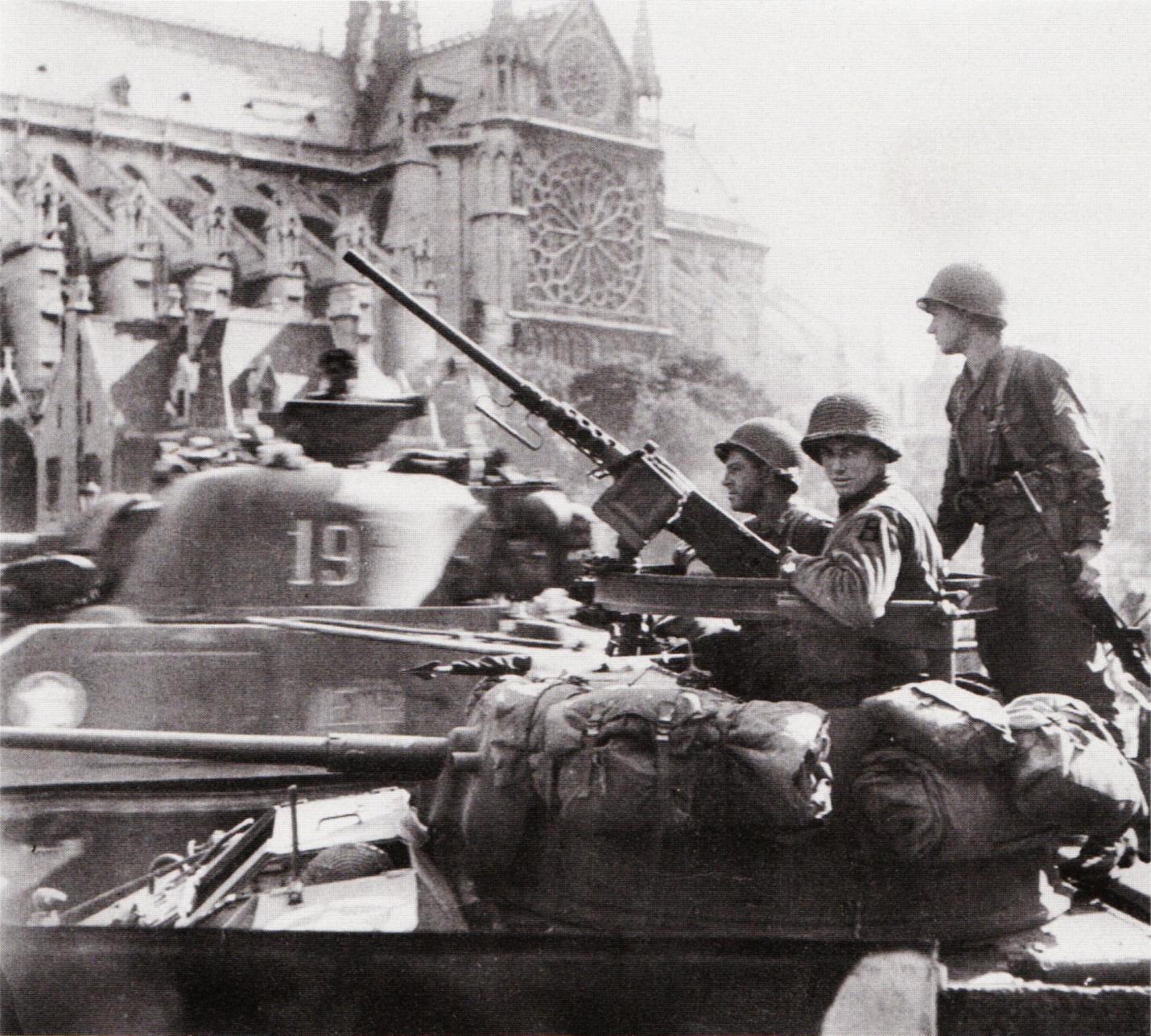
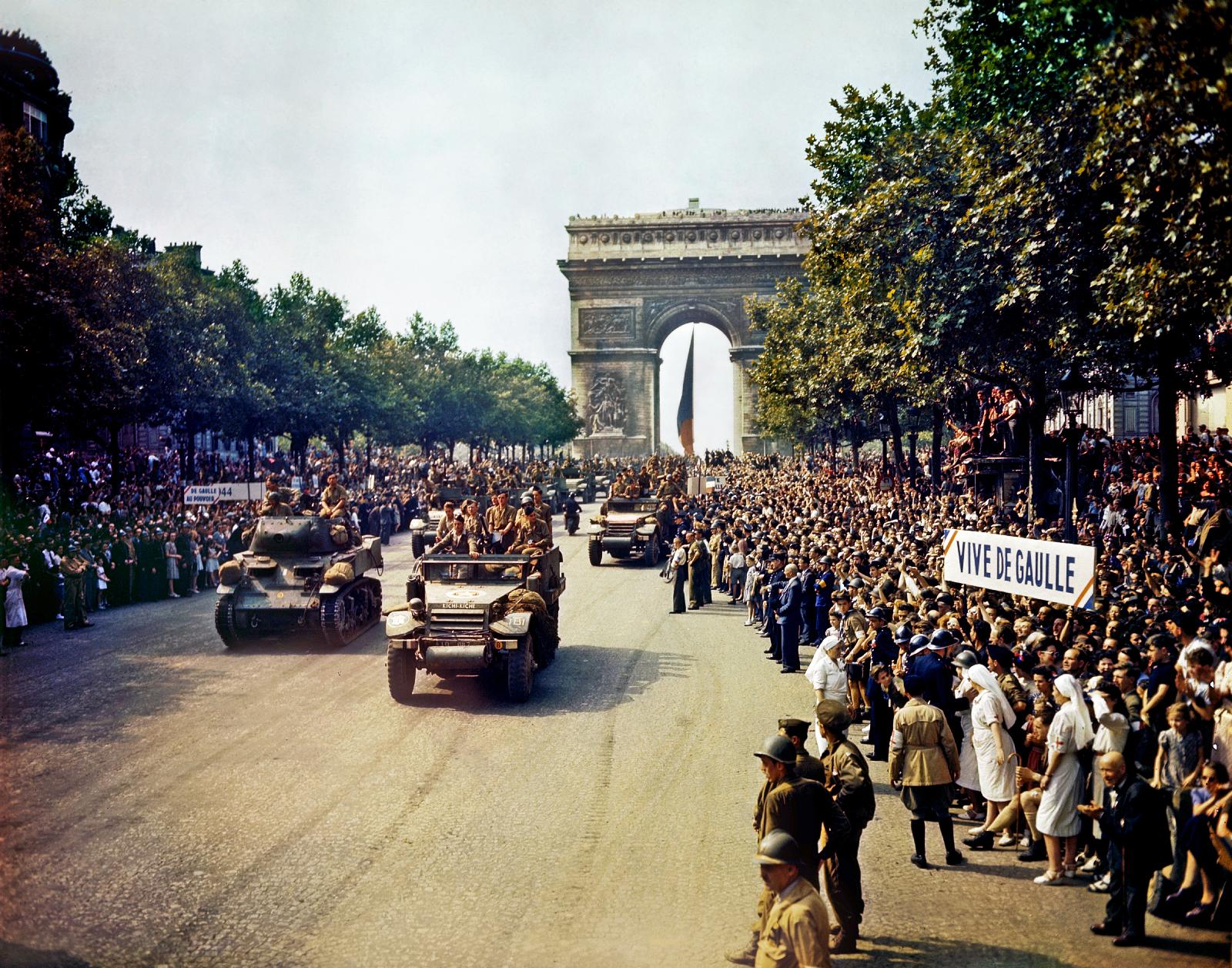
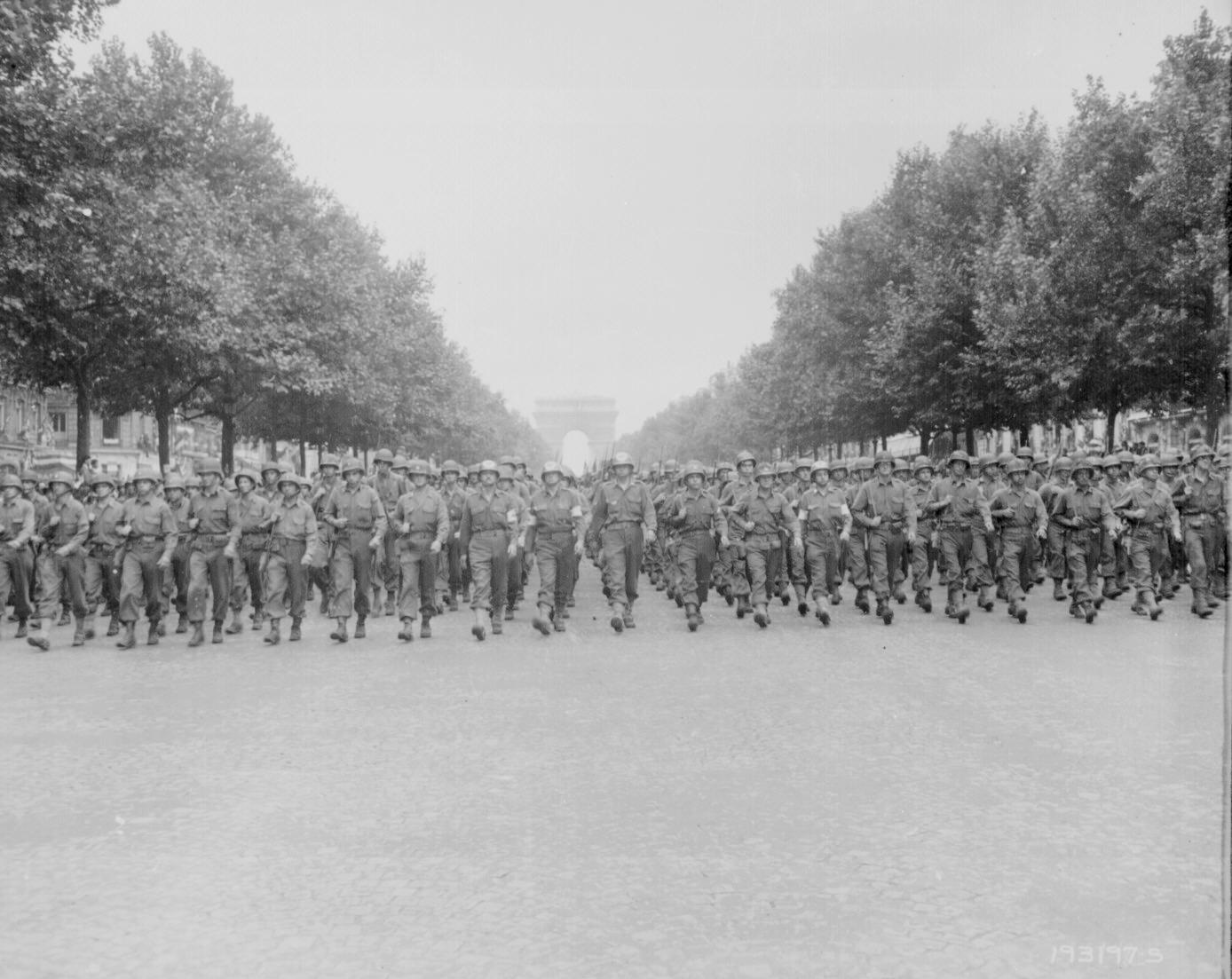
 Here too the decision was made to direct the Allied effort to liberating the French capital at Paris rather than heading directly towards the Rhine and the German nation lying beyond it.  But this was a wise move, for the liberation of Paris occurred just before Hitler's order to utterly destroy Paris could be carried out.  On the other hand, although Russia on the opposite or Eastern Front against Germany was still fully involved in simply clearing the German army out of Russia – there was implicit the sense that whoever got to Berlin first, Russia from the East or the British-American allies from the West, the very character of a post-Hitler world would be largely determined by that particular party.  So, a bit of a race was on.

Advance against the Japanese in the Pacific.
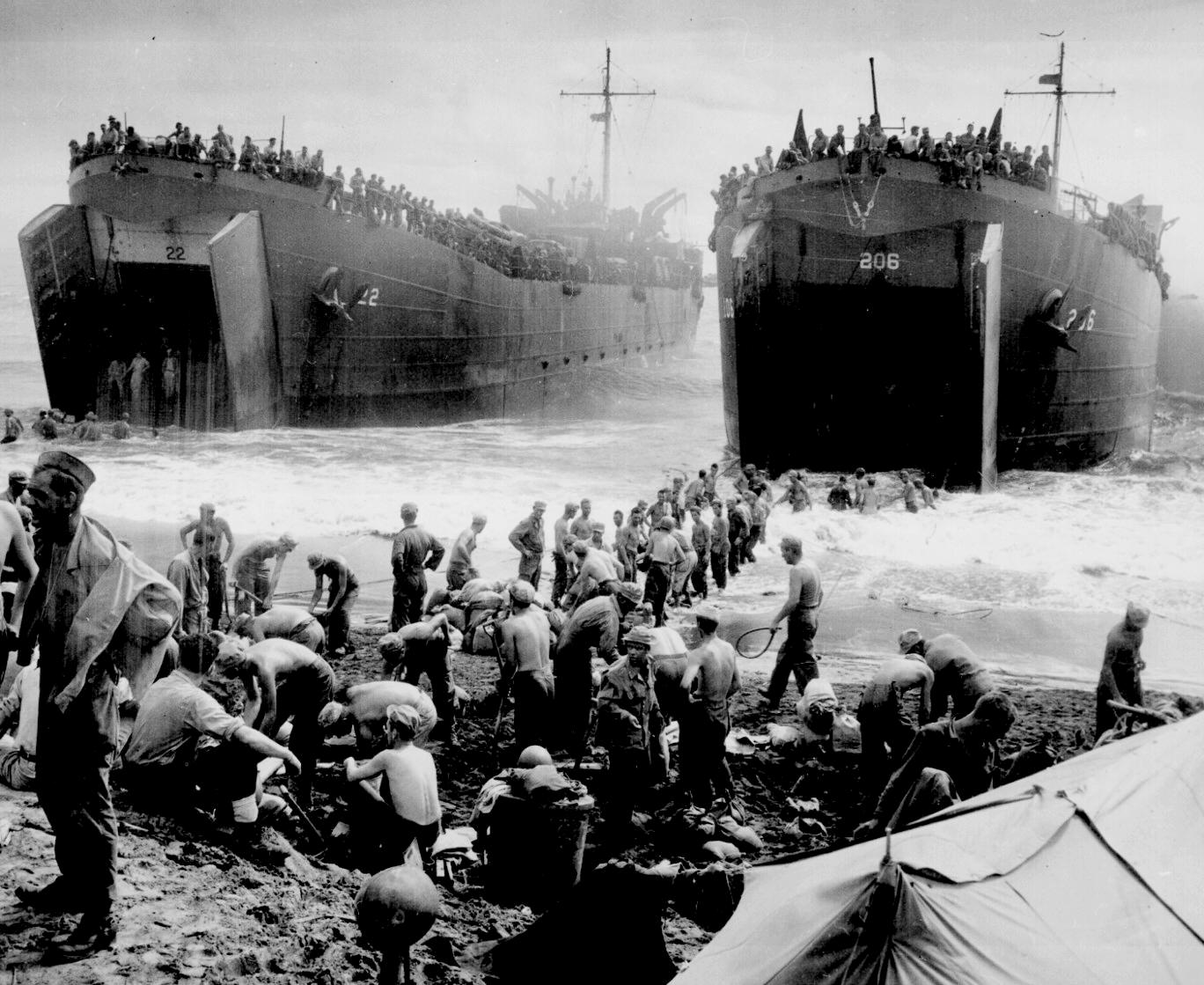
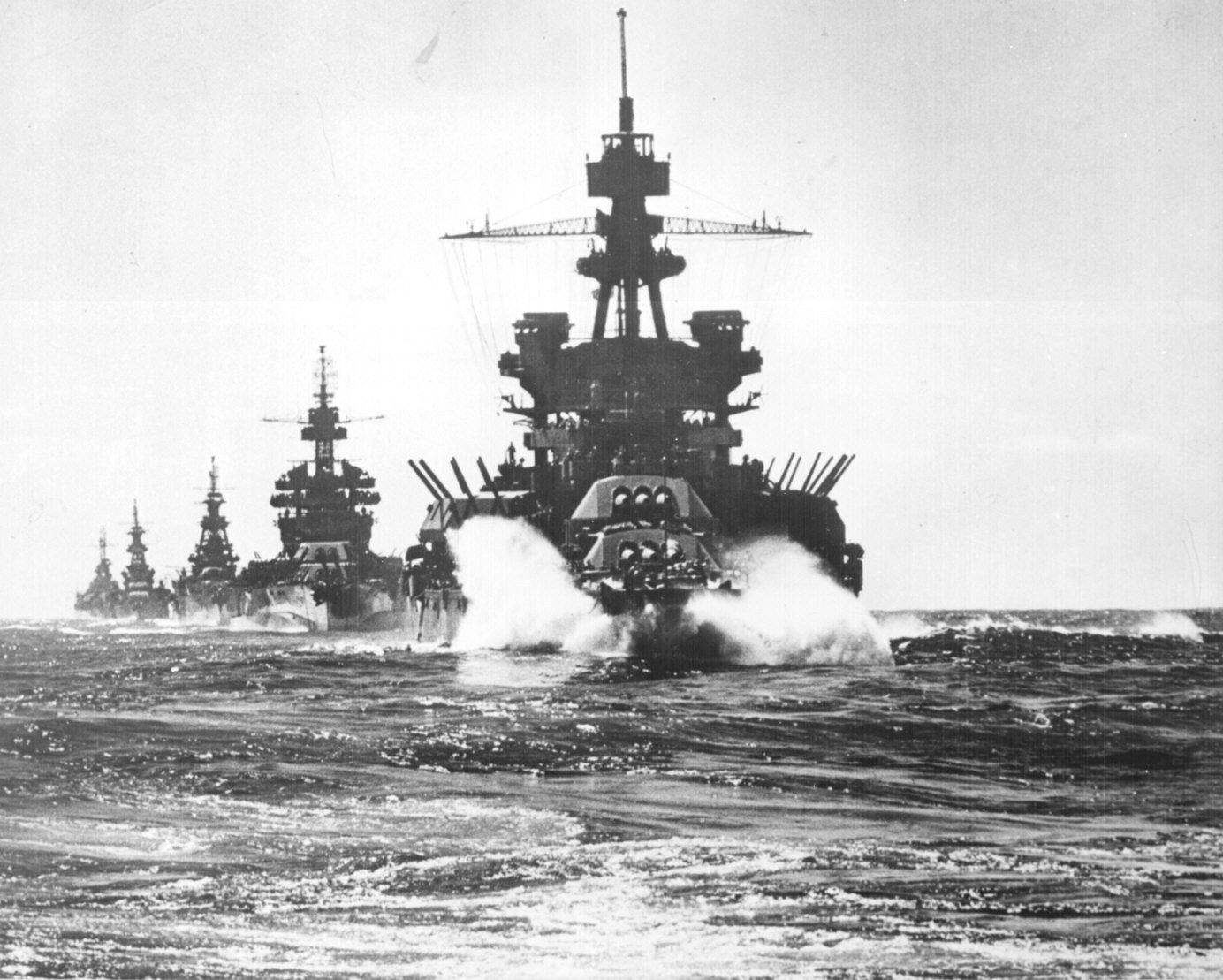
 Meanwhile the Allies were advancing against the Japanese on two fronts, one coming in from the East across the Pacific, jumping past some islands but fighting for others – where airbases were already located or could be built – and up from the South, from northern Australia and the eastern islands of Dutch Indonesia.

The Japanese 
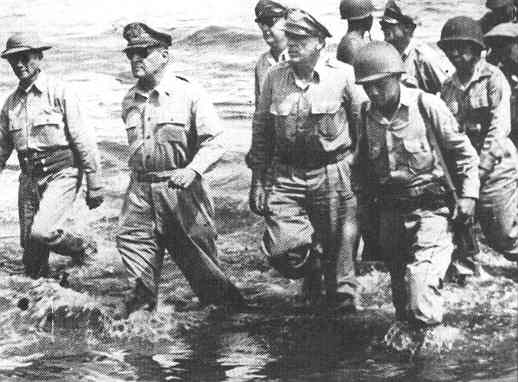
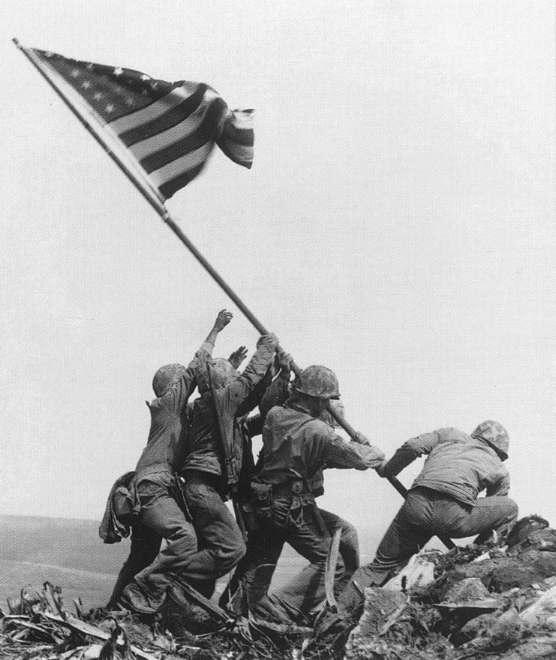
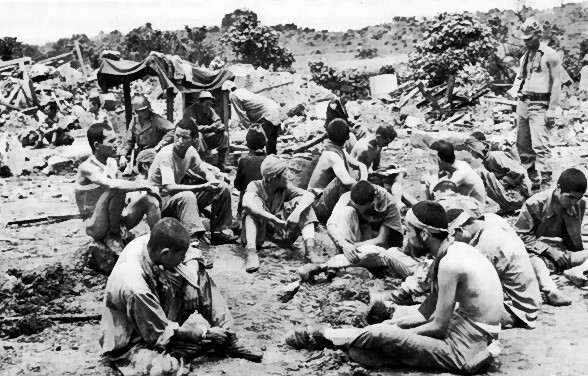
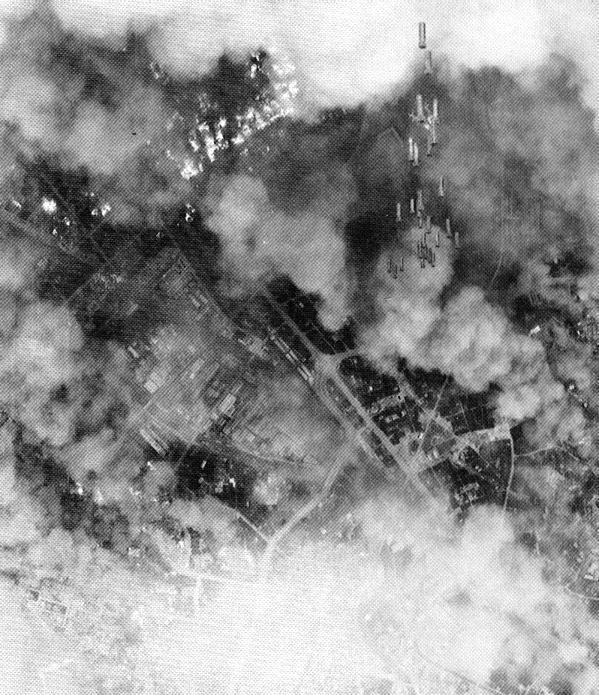
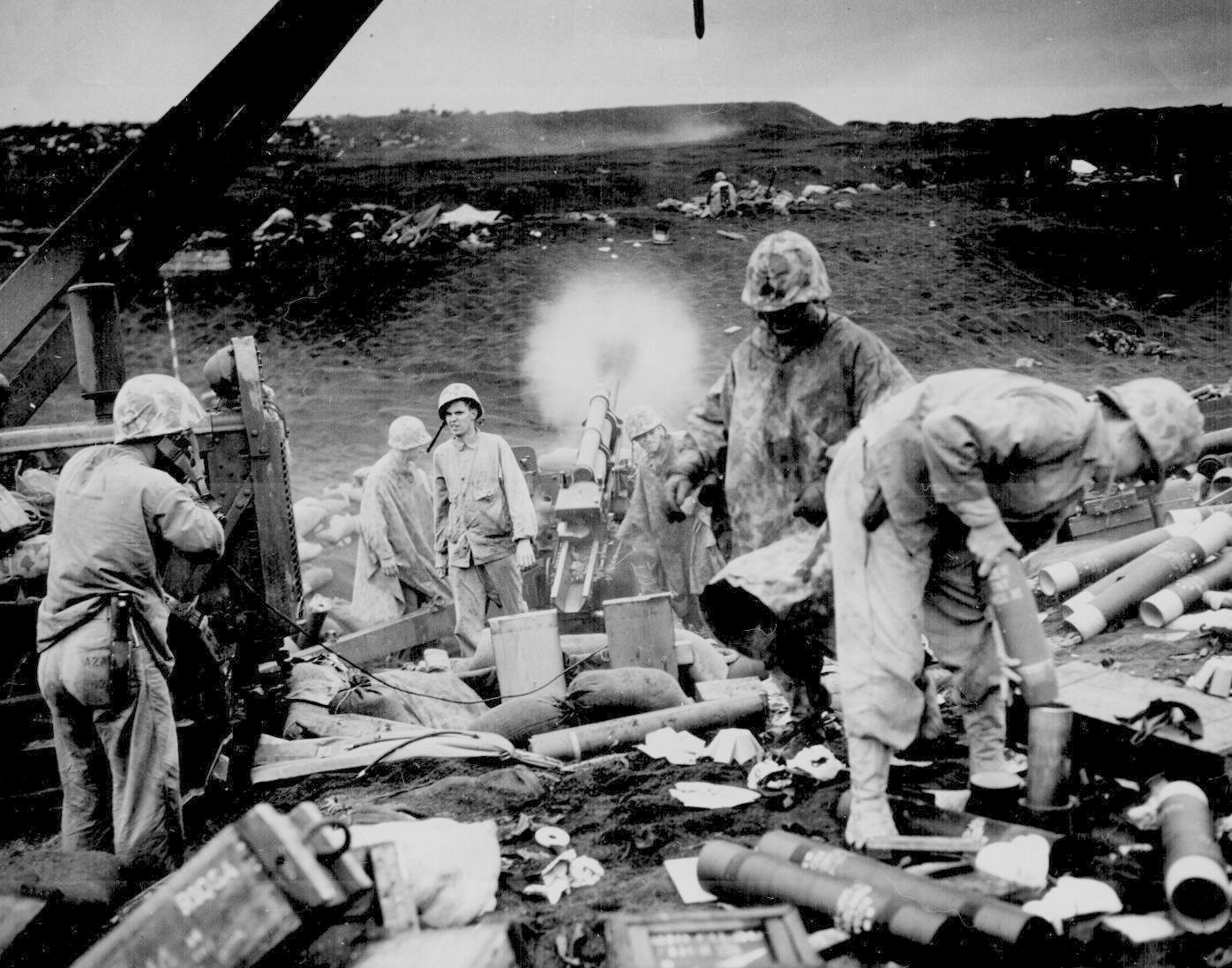
bushido code of military honor knew no such thing as surrender, instead calling for suicidal banzai charges against American machine guns when it was apparent that the Japanese soldiers were about to be overrun.  The slaughter was terrible, unnerving young American soldiers.  Thus the fighting was extremely brutal, as the Allies fought for such islands as Guadalcanal, the Solomon Islands, Tarawa, Kwajalein, Eniwetok.  In capturing Guam (August 1944) they now found themselves in a position to bomb Japan itself. Finally they were able to liberate the Philippines (October 1944 to February 1945) and reach Japanese territory itself at Iwo Jima (February 1945), having to kill nearly all of the Japanese forces in the process.  And the same held true at Okinawa (April-June 1945).
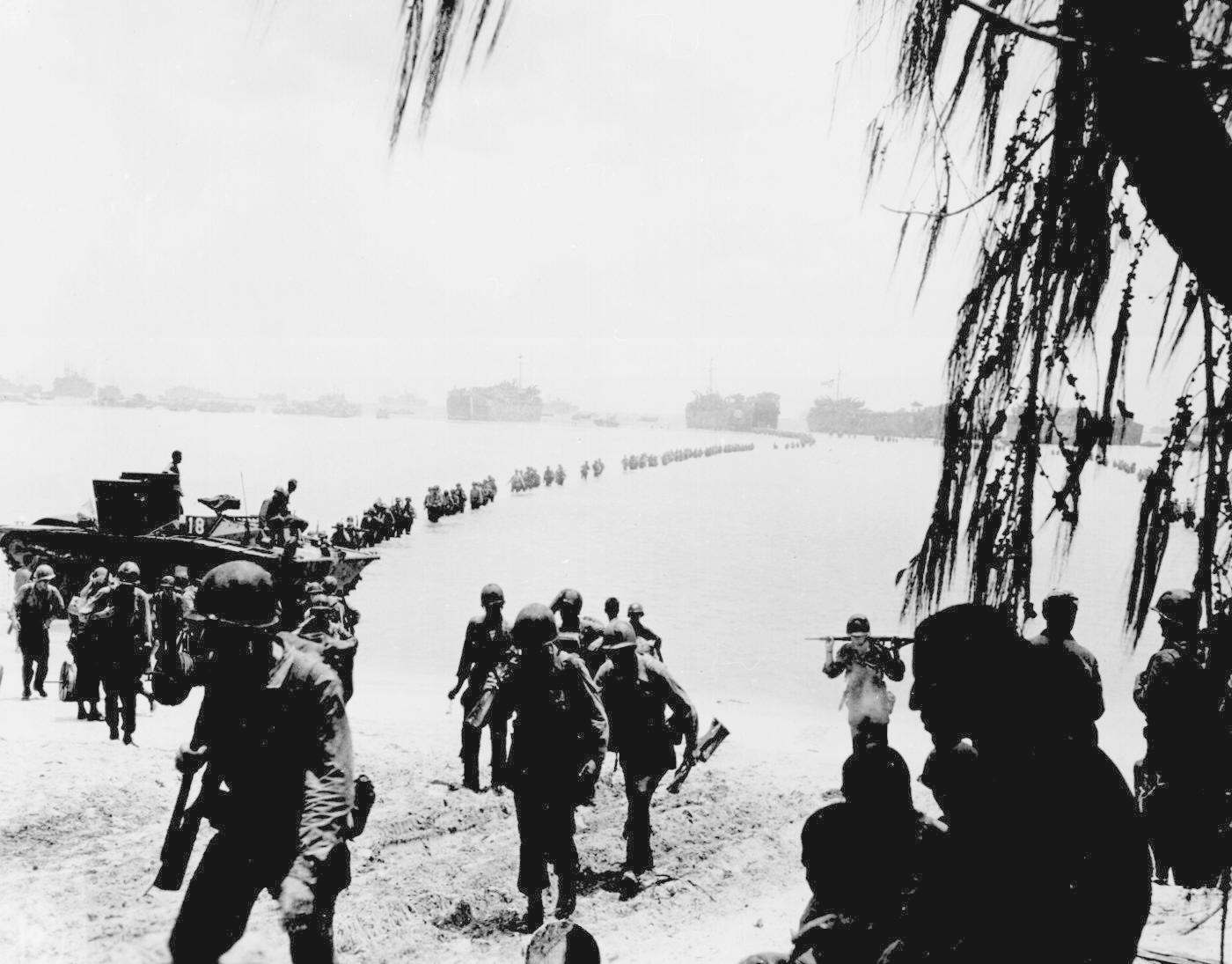
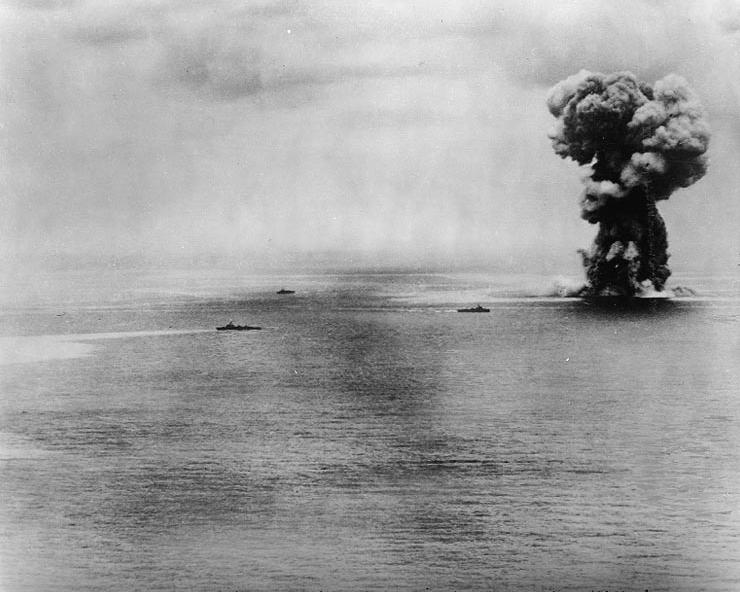
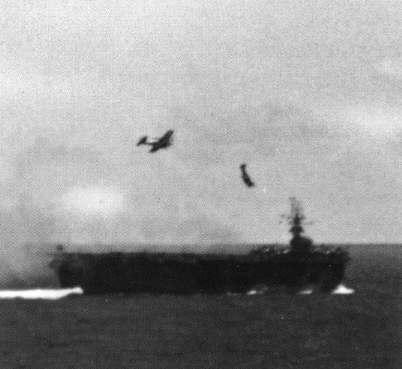
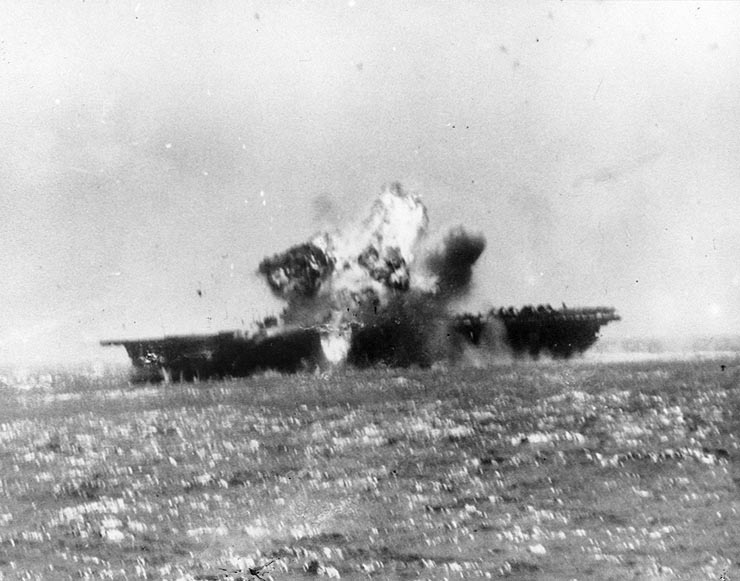
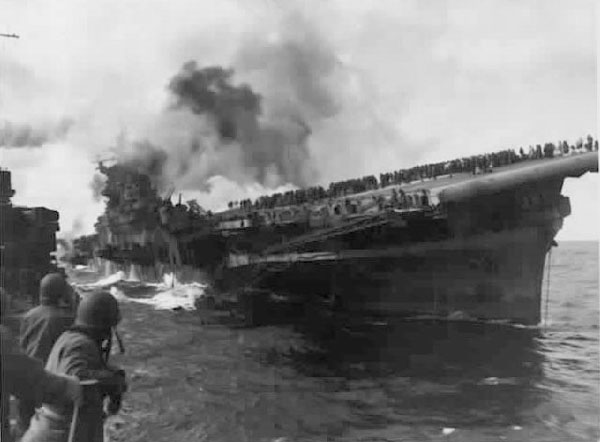
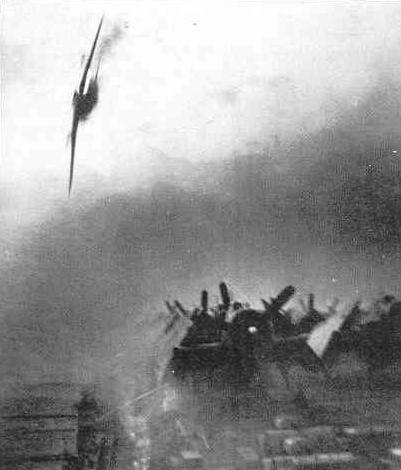
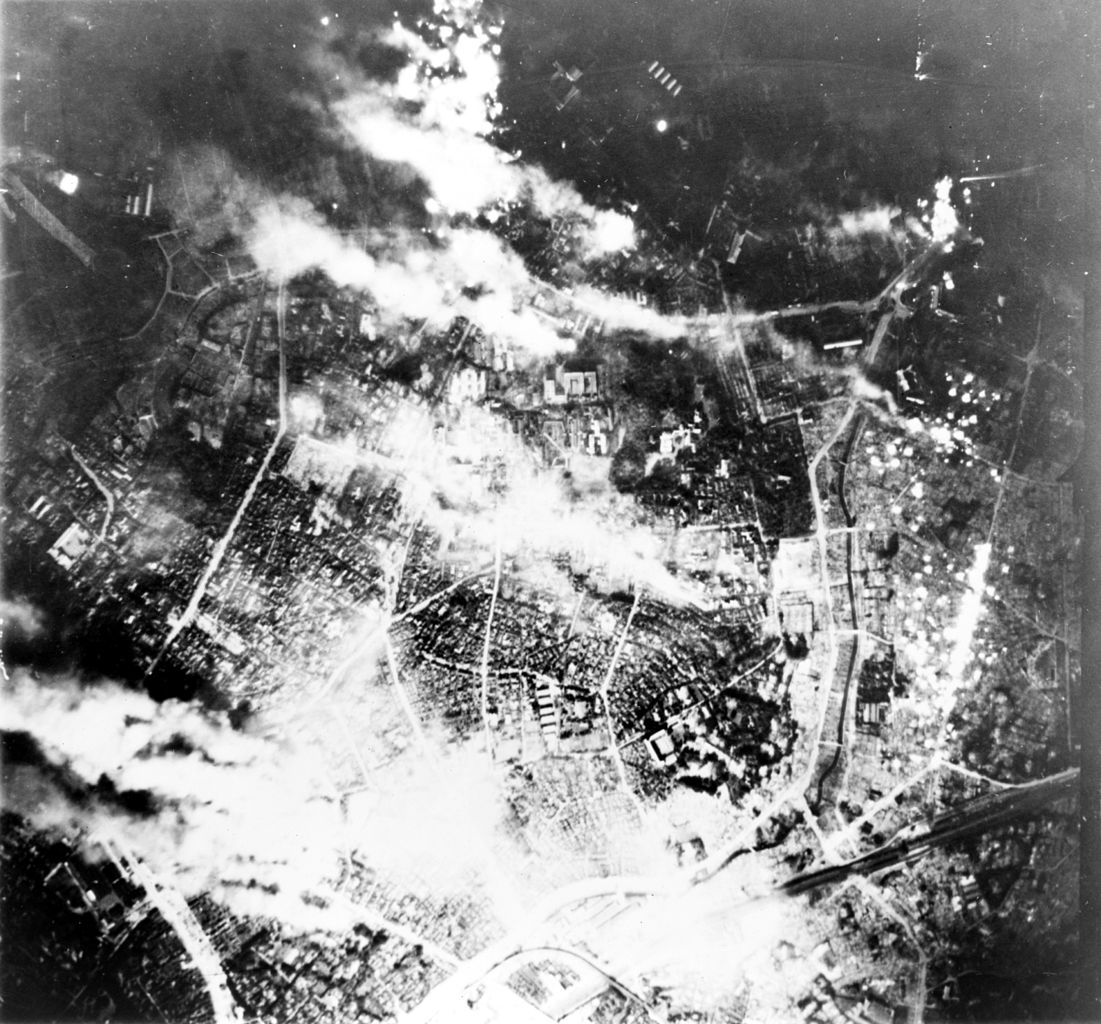
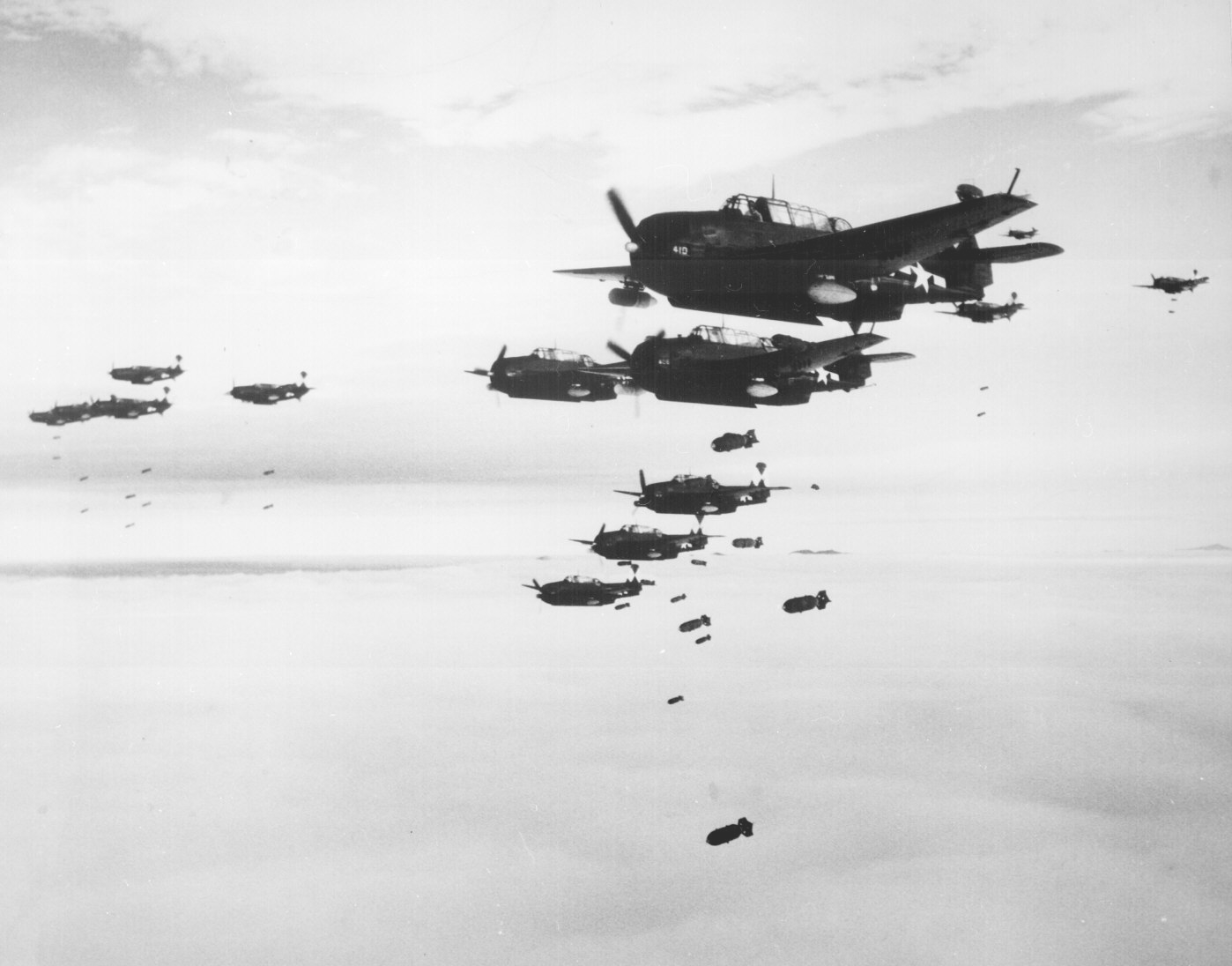
At the same time the Japanese countered the best they could the huge American naval force gathered against them with suicidal kamikaze crashes of young and inexperienced pilots of their explosive-laden planes against those American ships.  Only a small percentage were successful, although even then they were able to sink 30 American ships and cripple 300 others.  But this was not enough to stop the Allied bombing of Japan, which was now taking place round the clock.

The failed " Market Garden" offensive.
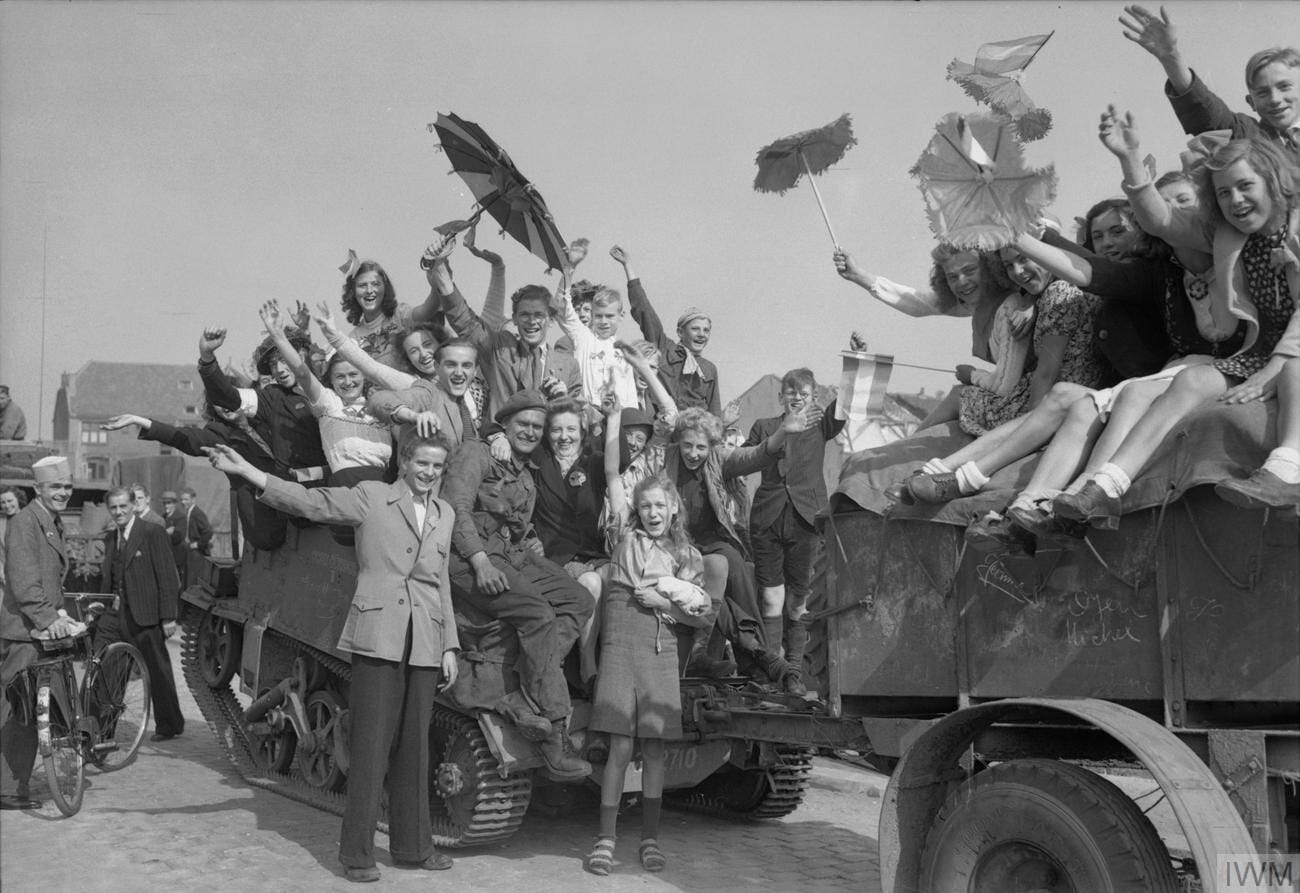
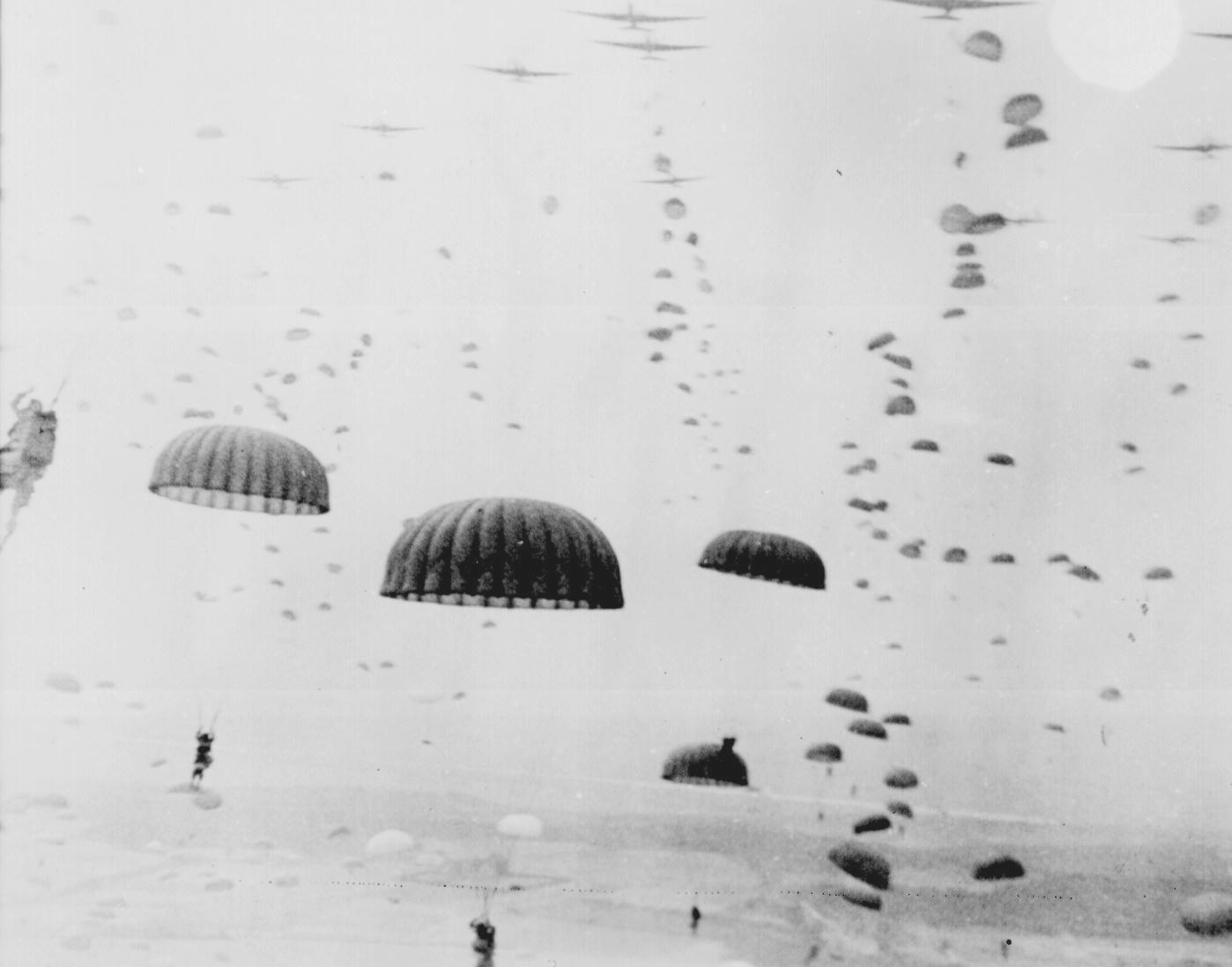
   As the Allies advanced across France, British General Montgomery stepped forward with a plan to make the much-feared Rhine River crossing into Germany take place in the extreme north (the British sector of the Western Front) – much to the irritation of American General Patton, whose tanks were headed for the Rhine at the very center of Germany's Western border.  Montgomery's plan was ultimately approved by the Allies.  But it brought Patton's advance to a halt when supplies were thus redirected to the British sector.  But ultimately the plan was a dismal failure, with the British losing the element of surprise (the Dutch slowing the Allies' advance by crowding the roads to celebrate with their British liberators), and the Germans were able to detonate the various bridges the Allies would need to cross into Germany.
The 
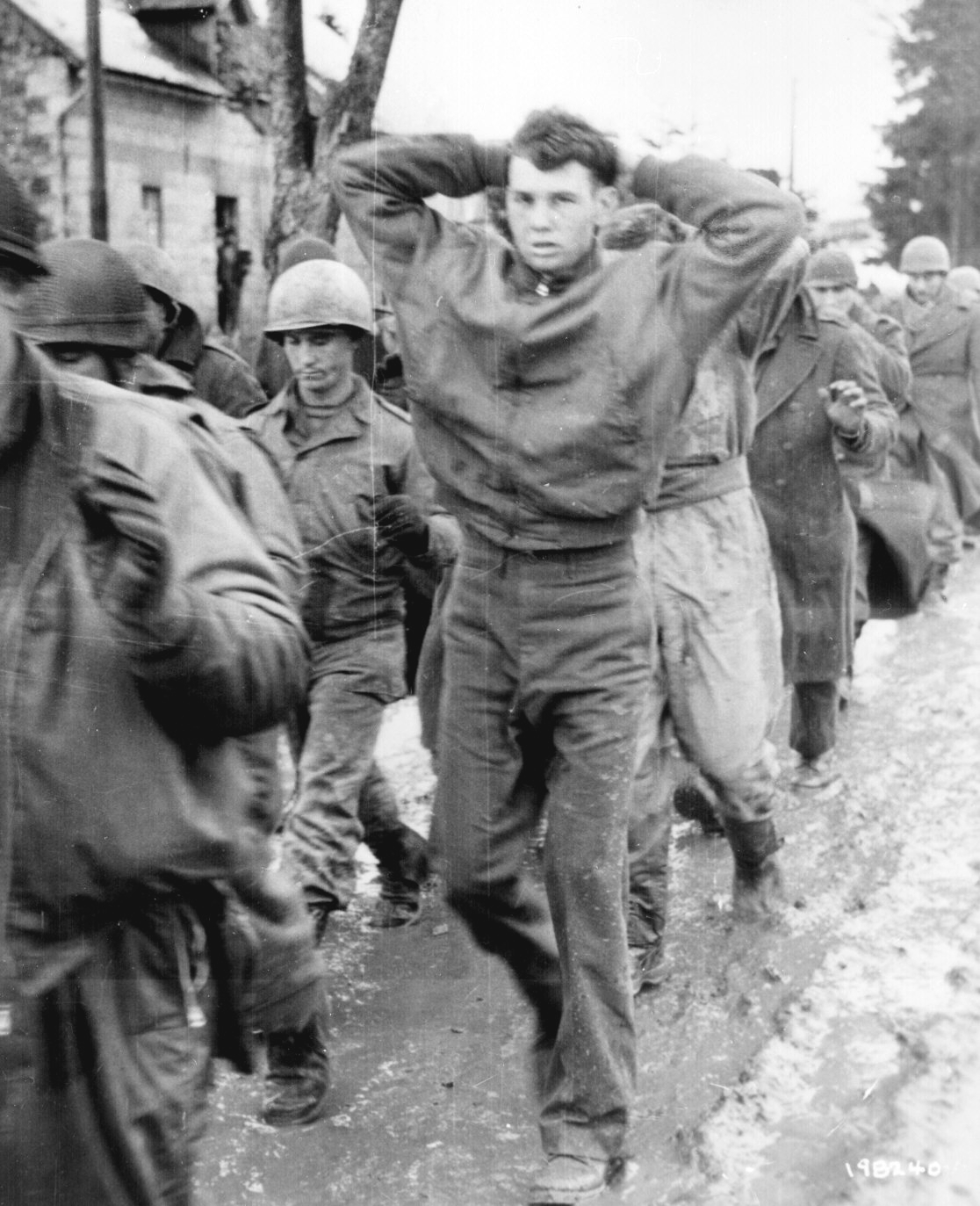
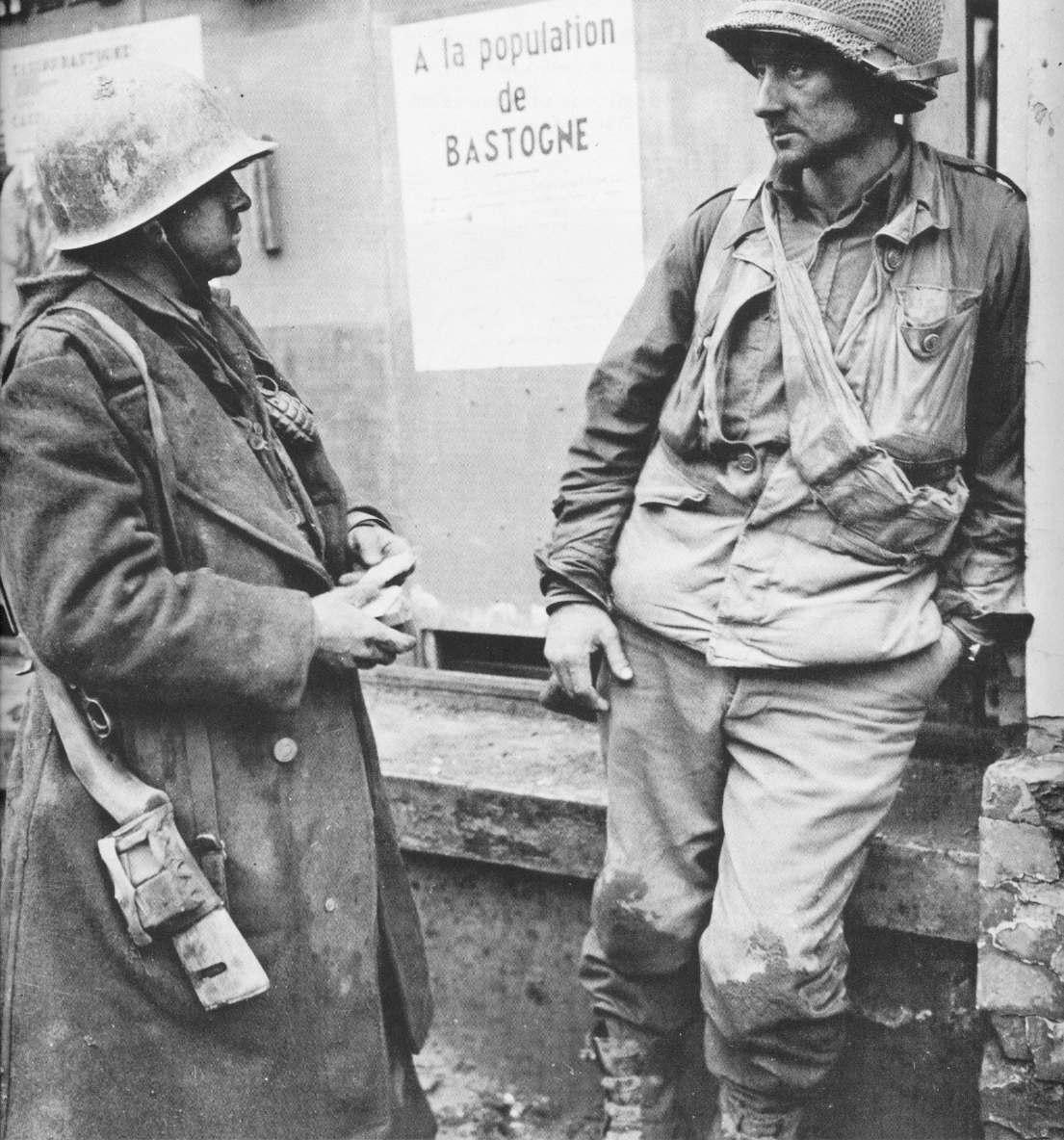
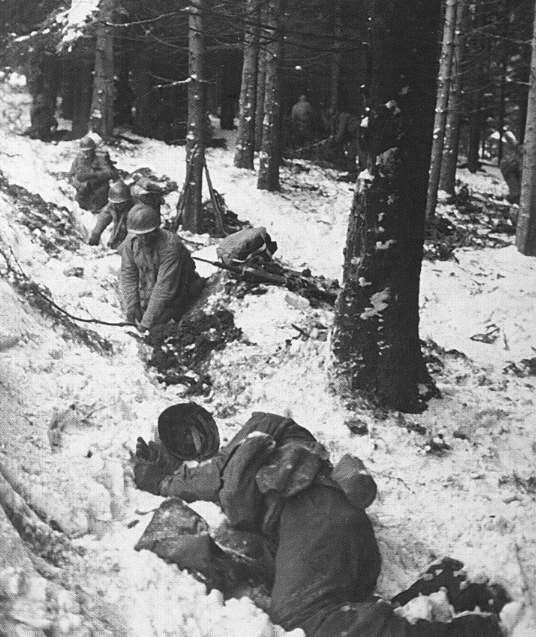
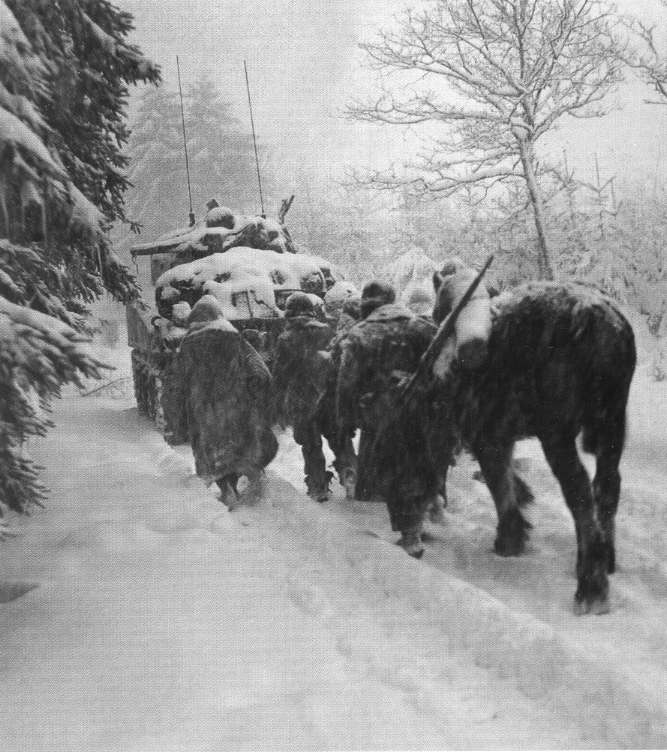
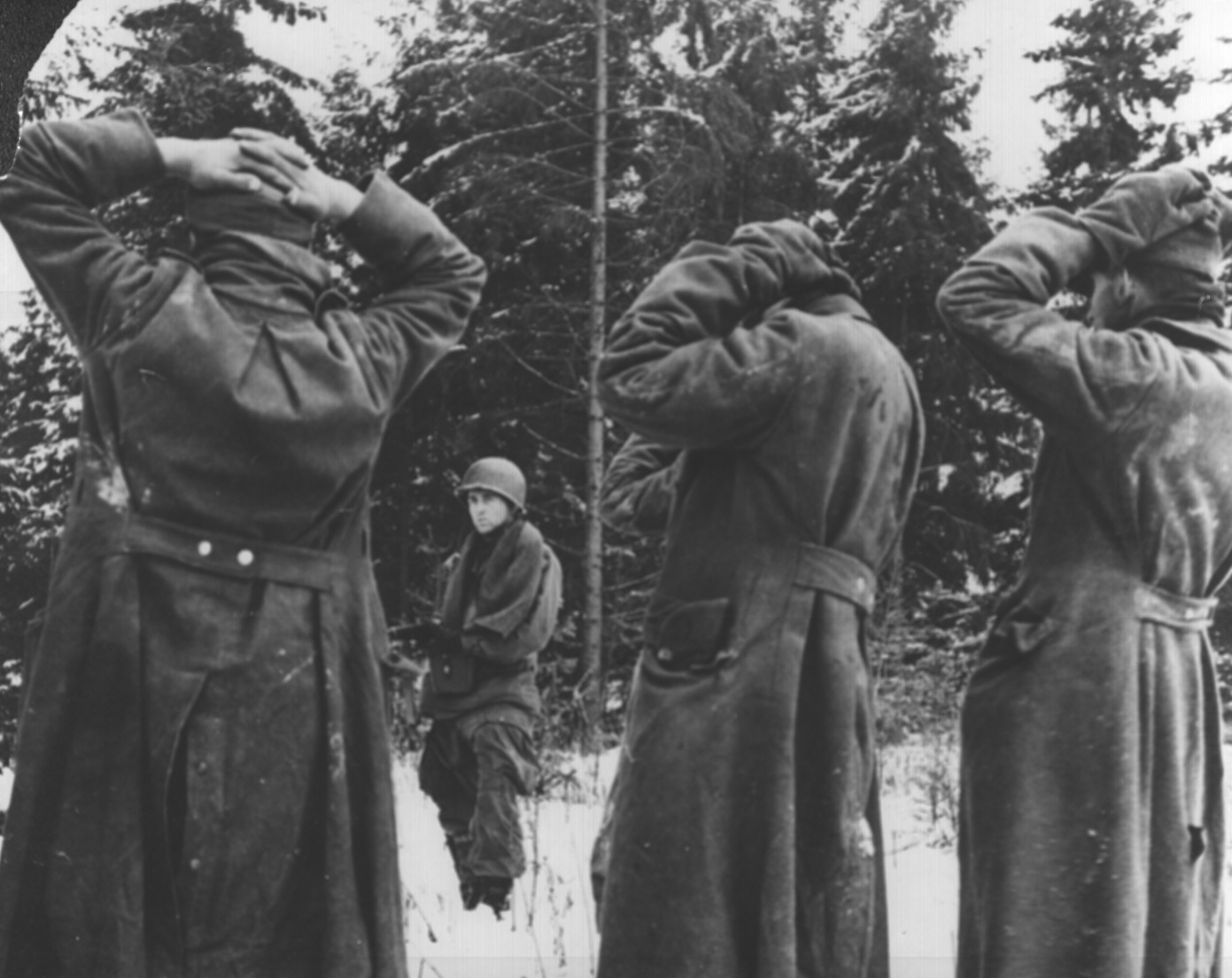
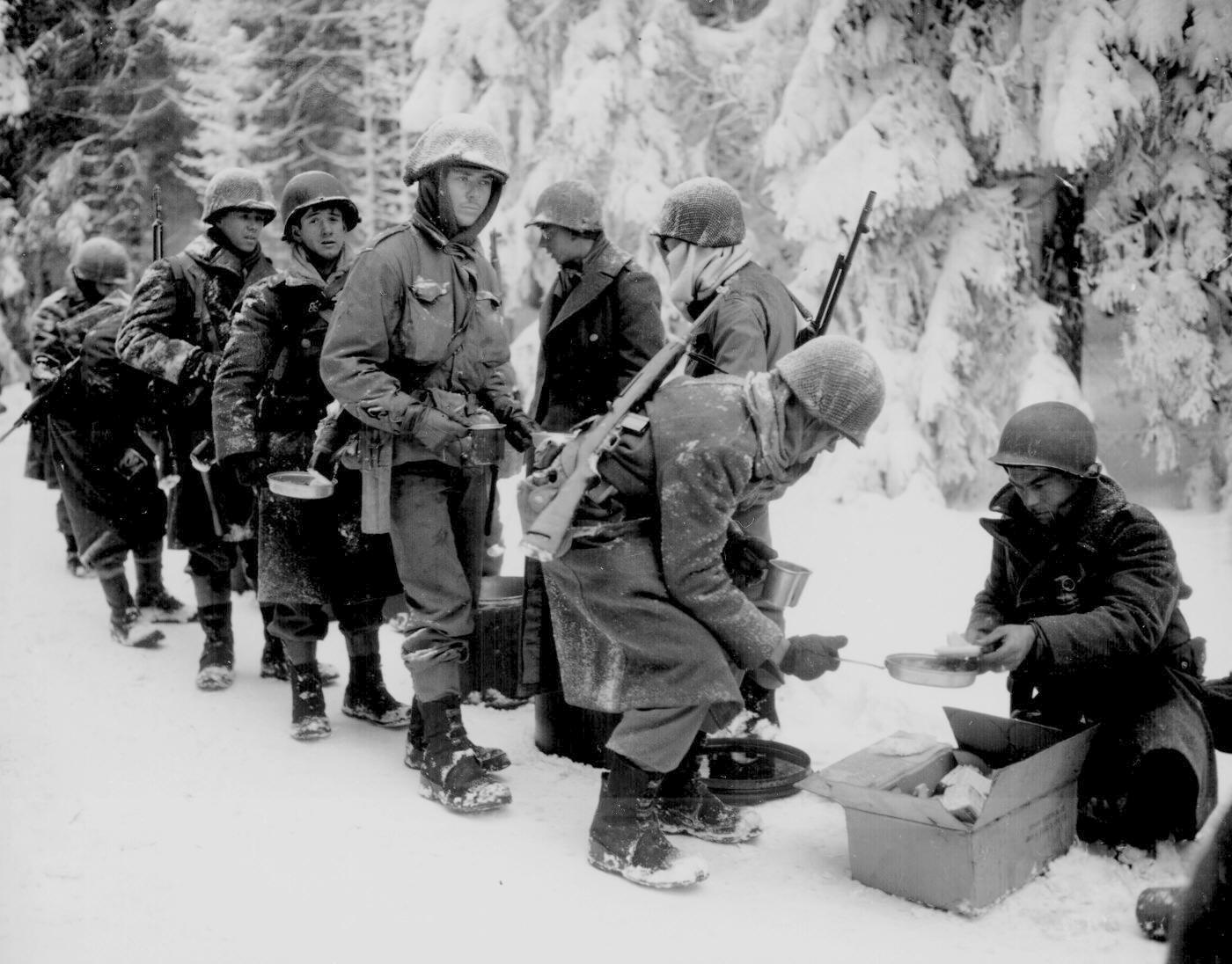
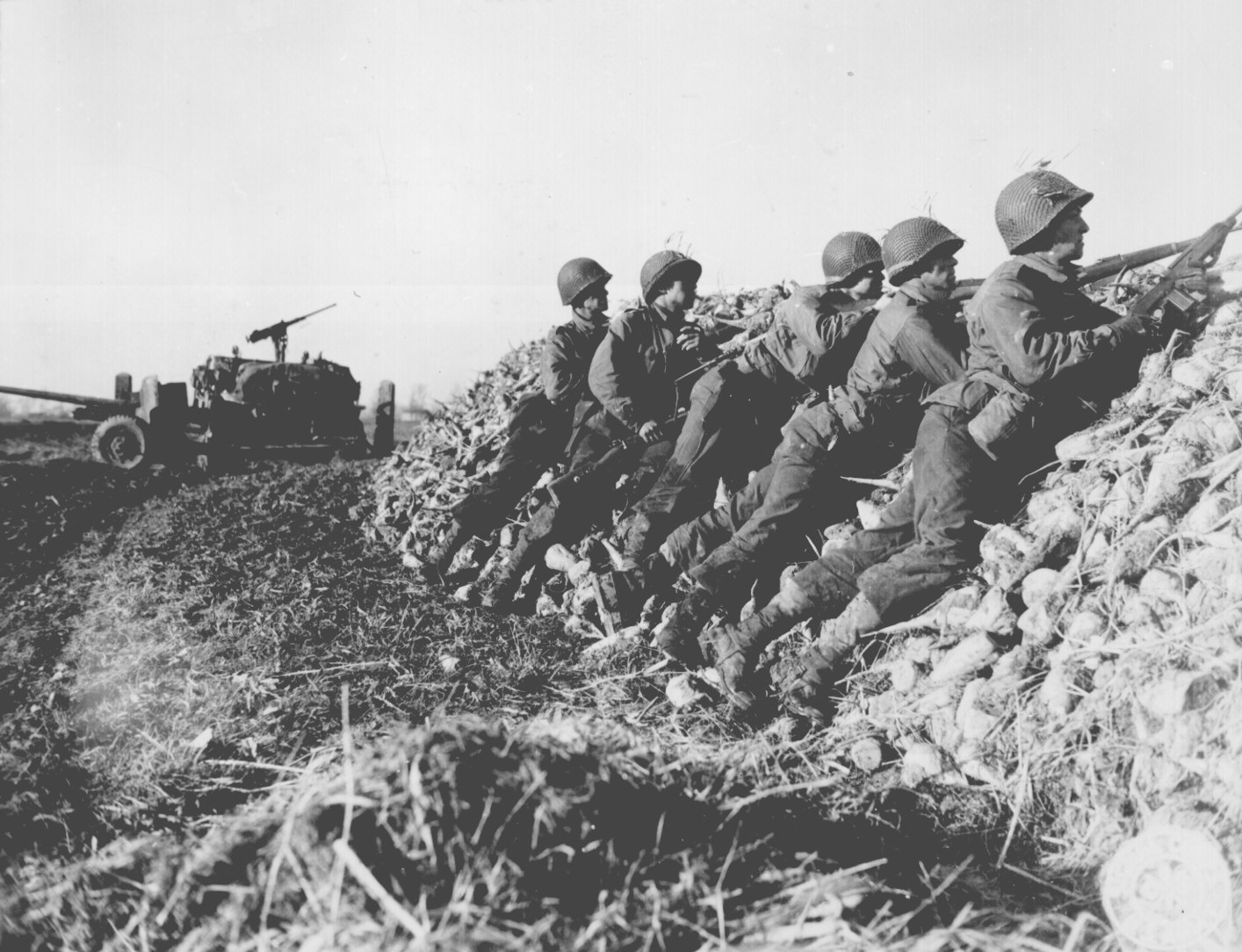
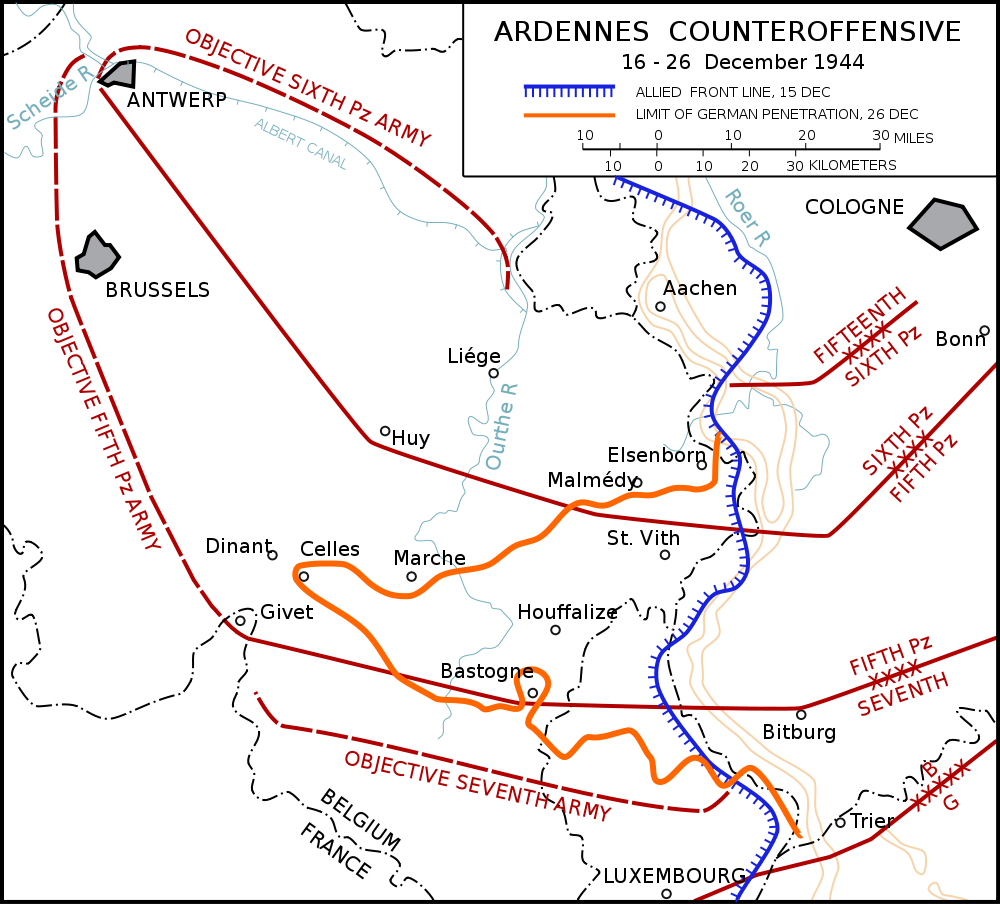
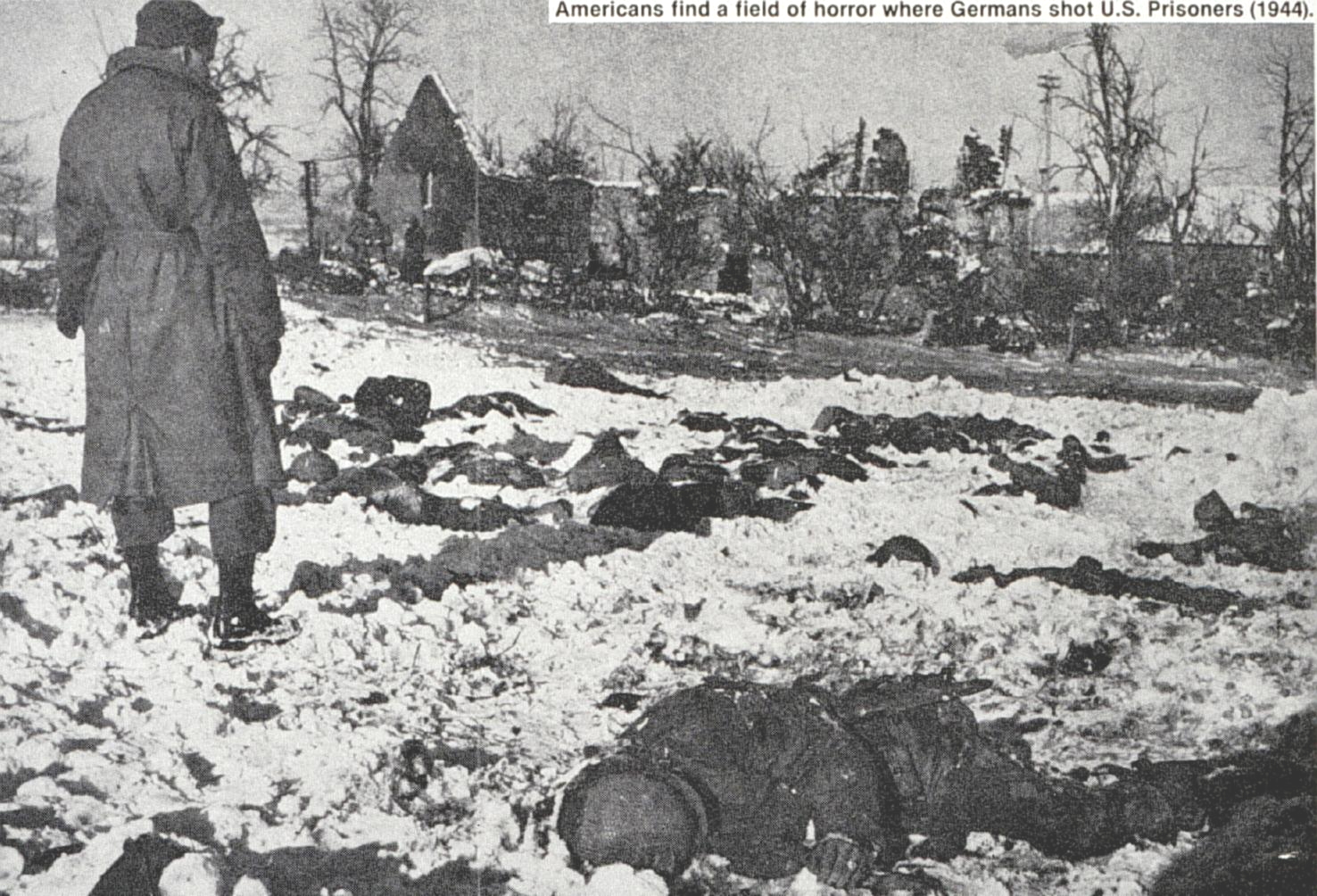
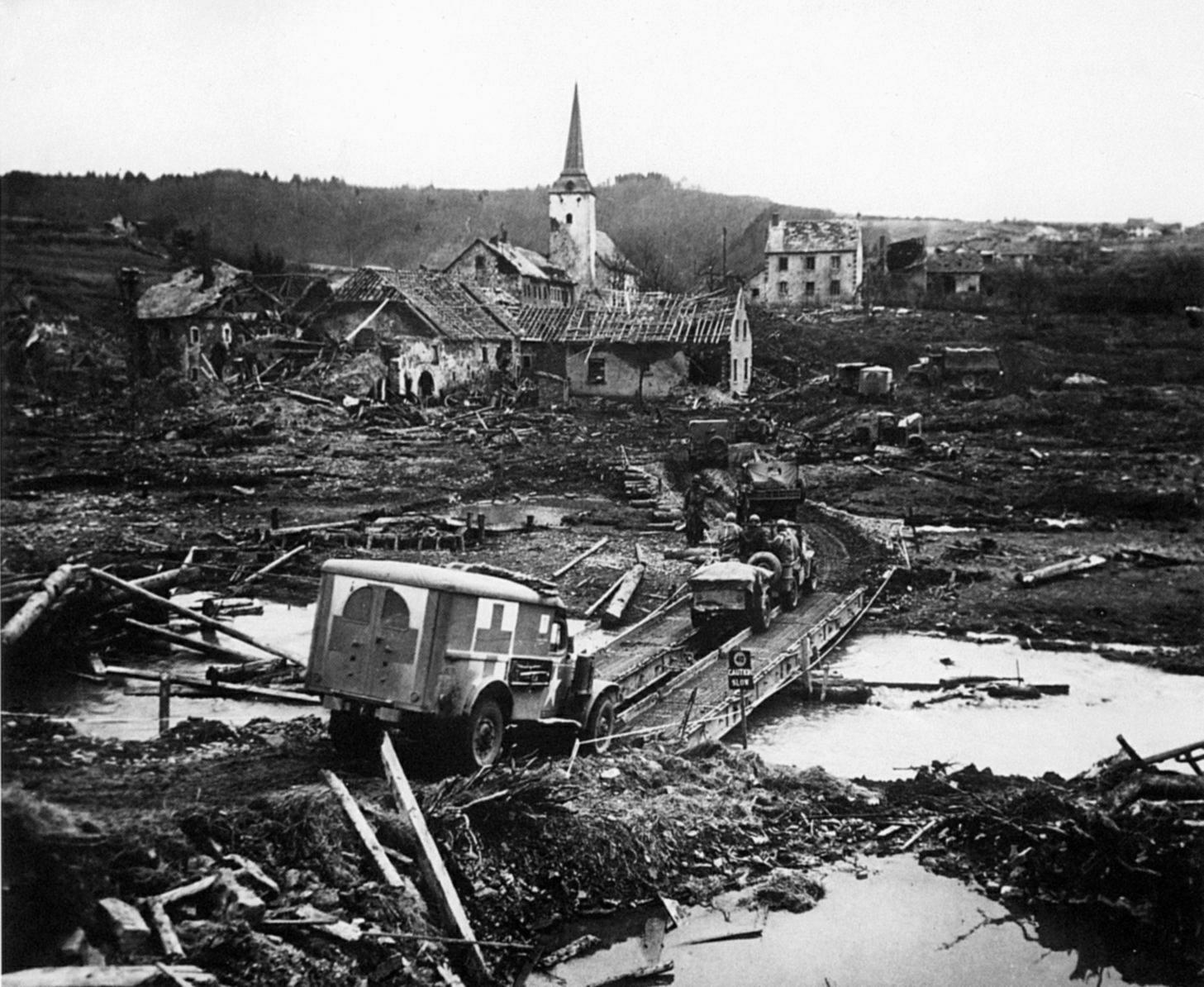
Battle of the Bulge.  But by this time the winter was coming on – and the advance slowed up considerably – except that the Allies did not know that the Germans had planned a massive breakout at a very quiet part of the Western Front (the forests of Eastern Belgium).  In mid-December the Germans launched an all-out effort at air and ground Blitzkrieg against a weakly defended part of the American line, with the intention of grabbing American supplies (especially much needed fuel), and roll all the way to Antwerp to stop the massive unloading of Allied supplies at this vital harbor.  However the Americans refused to retreat from the vital central position at the town of Bastogne; they blew up their own supplies to keep them out of German hands; the winter clouds over the battlefields finally cleared, allowing Allied bombers to hit the German troops, and the Germans soon ran out of fuel – bringing their tanks to a complete halt.  The "Battle of the Bulge" turned out to be a complete German failure.

The race for Berlin.
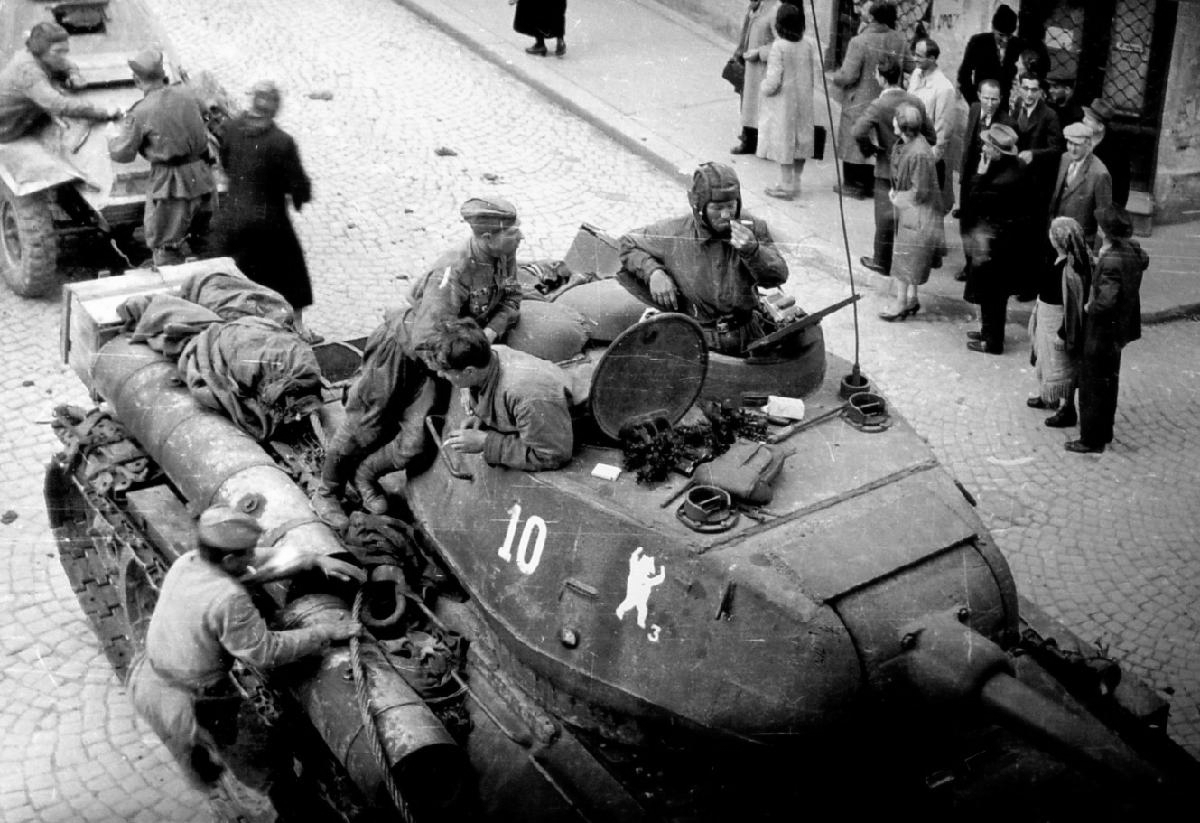
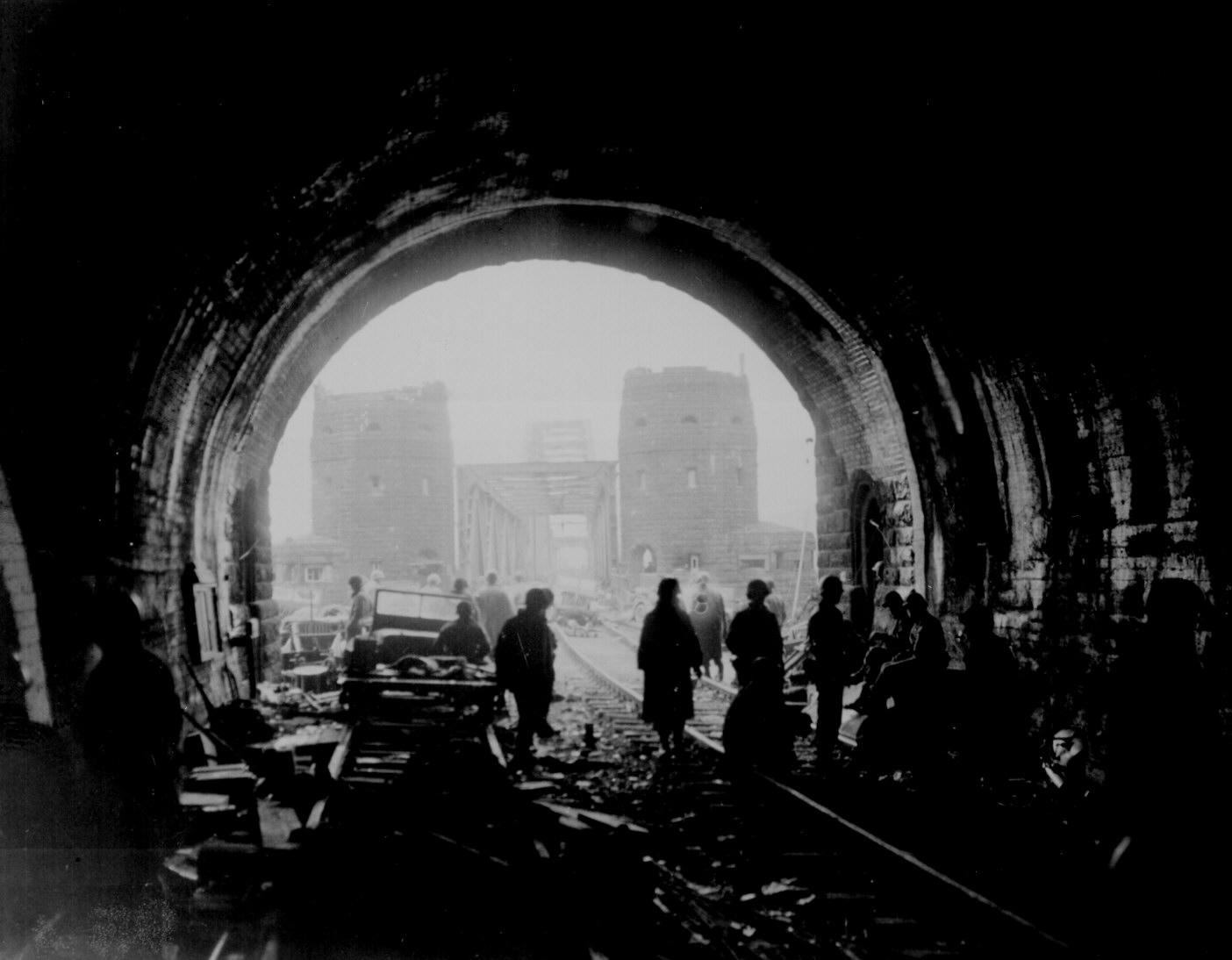
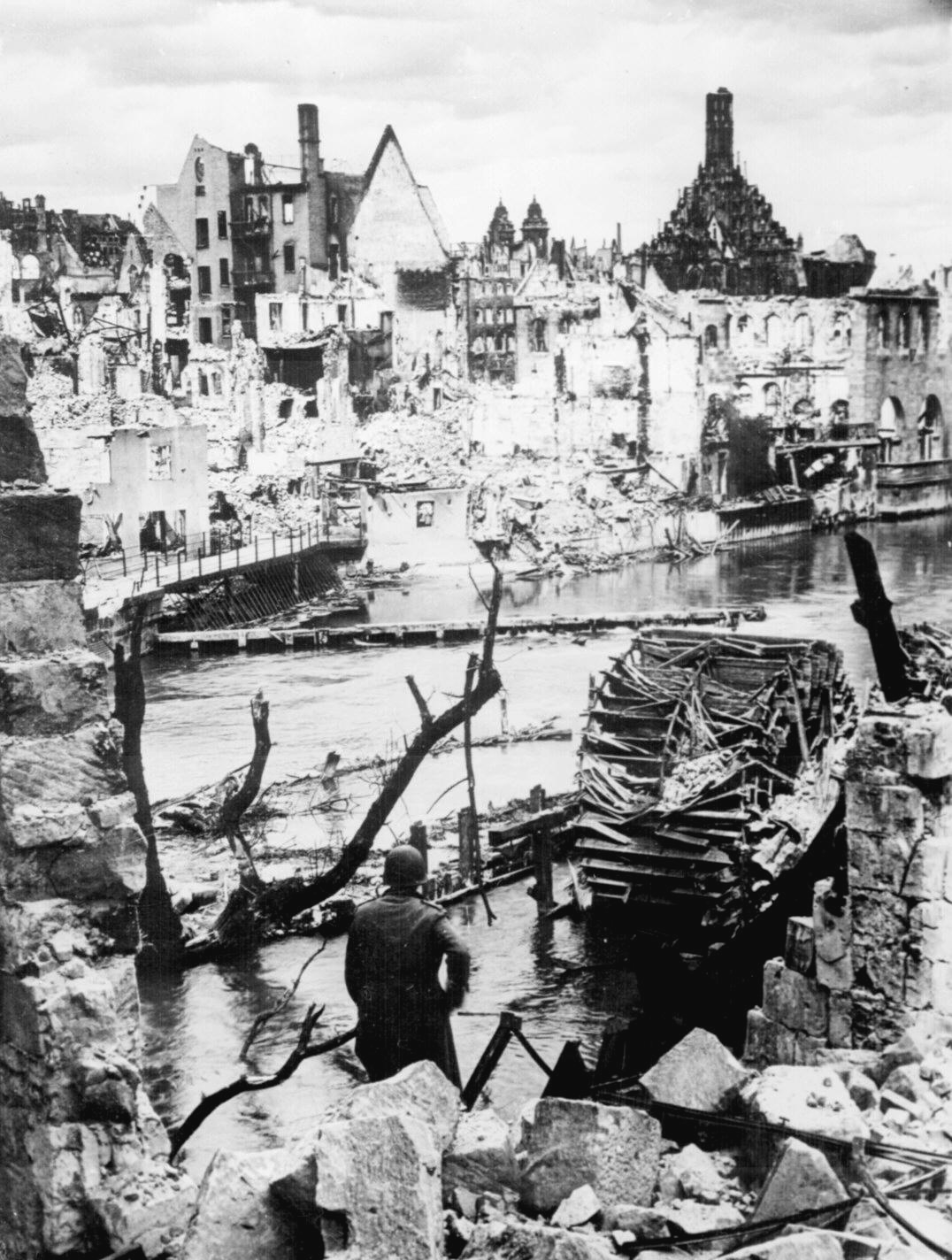
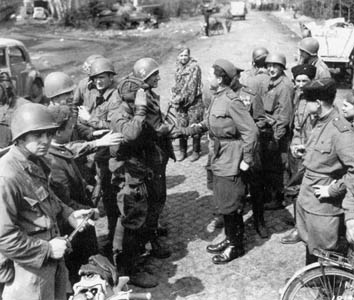
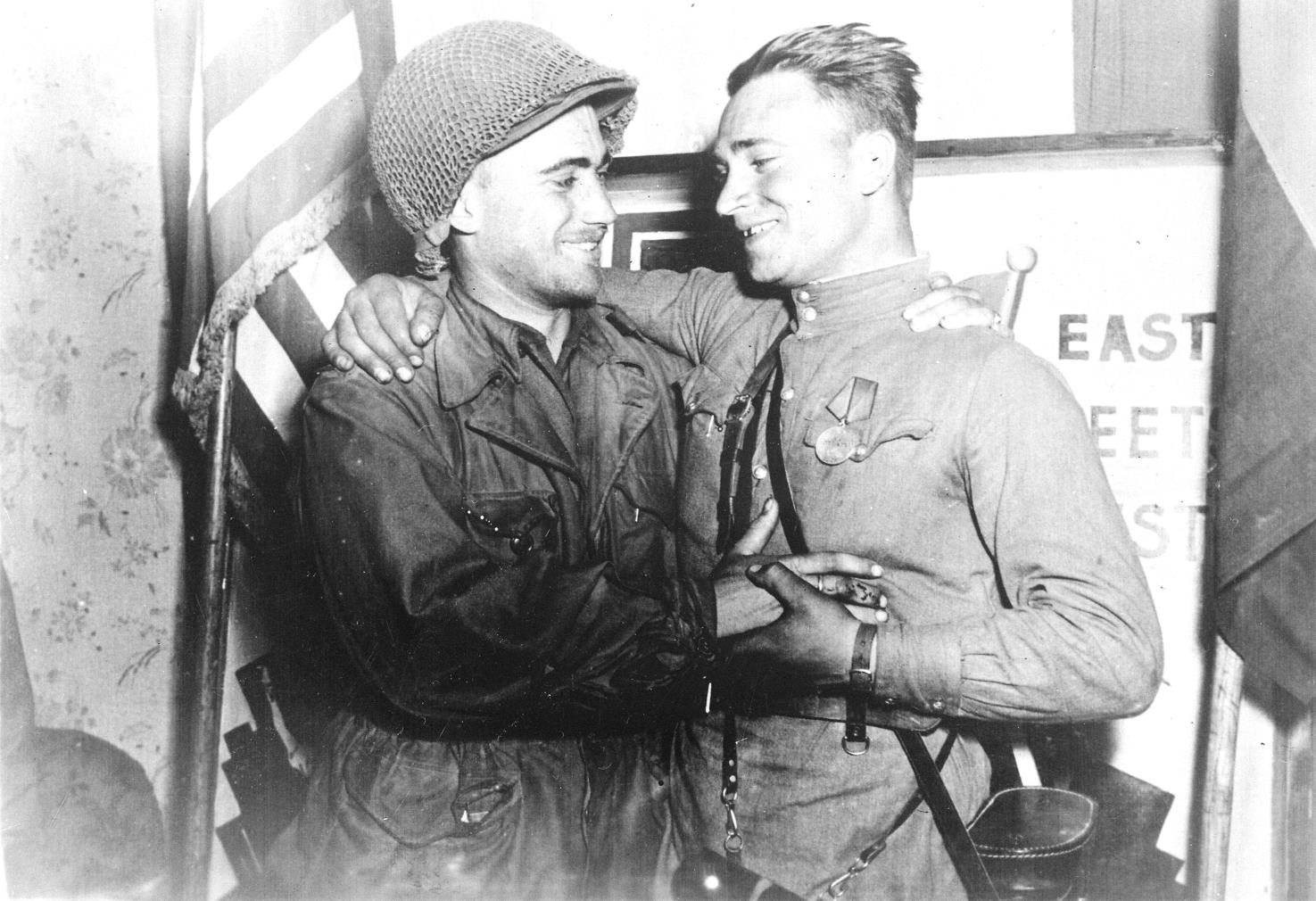
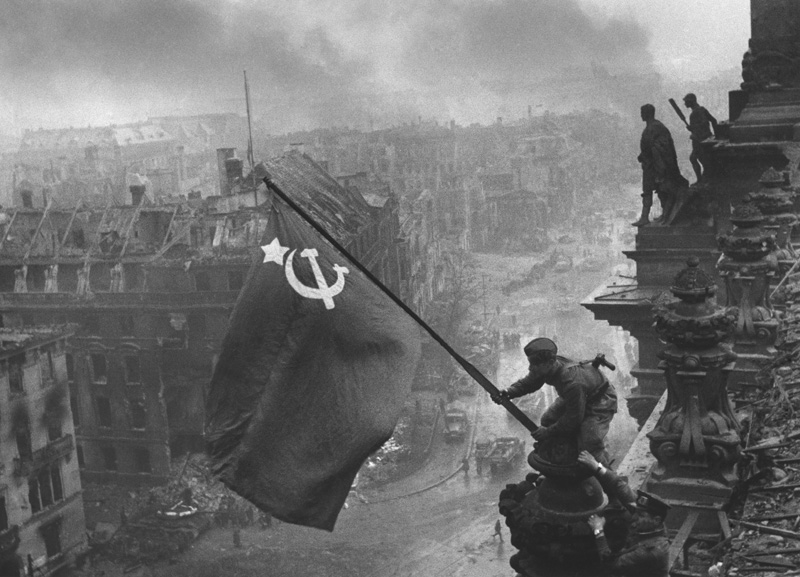
  From this point on it was a race between the British and Americans coming in from the West and the Russians coming across Poland from the East to get to Berlin first. In that, the Russians won quite decisively.[2]

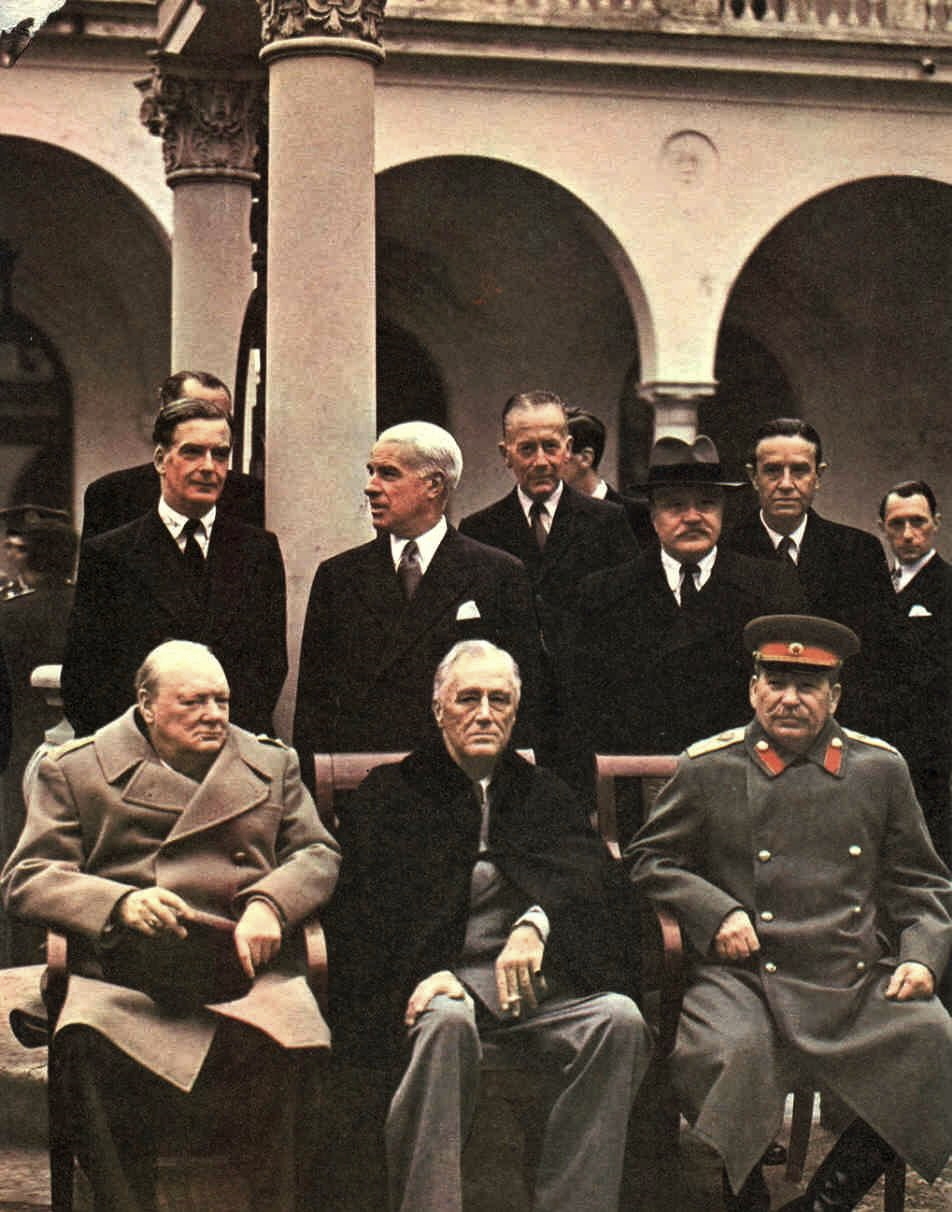
Yalta.  In February of 1945 Roosevelt (soon after being re-elected to his fourth term as American President!) met with 
Churchill and Stalin at Yalta in the Russian Crimea.  Roosevelt was a sick man (the Americans had no idea of how sick he was) – but was trying to arrange for the best post-war outcome possible.  Certainly the Big Three (America, Britain and Russia) would be in charge – in particular of occupied post-war Germany.  But there were other lands that had fallen within Hitler's Empire that had to be accounted for.

And then there was the question of Japan.  Russia thus far had no involvement in what was going on in the East – and Roosevelt wanted the Russians to help bring the war there to a close.  It was estimated that at the rate they were making progress against a very resistant (even suicidal) Japan, it was going to take another two years (and huge loss of life) to bring Japan to defeat.  Consequently a very generous offer was extended to Russia: if they were to join the Allies in the war against Japan, Russia would be given the right to occupy and supervise the withdrawal of the Japanese from Manchuria until such time as the Chinese were able to take over from them – and they would have the same supervisory rights in Japanese-occupied Korea – at least in the region north of the 38th parallel (America taking the same role south of that line).


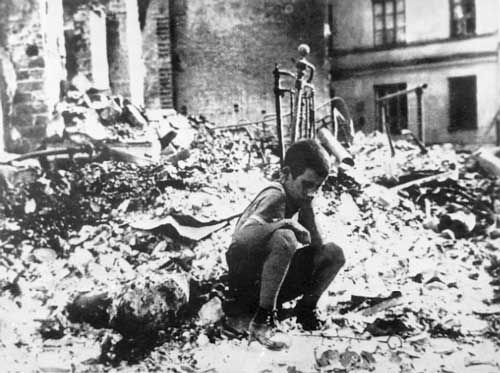
[2]But along the way, Stalin cleverly ordered a Russian halt of its advance against the Germans as the German retreat brought the action to the center of Poland, and the Poles decided to take this opportunity to rise up against their German occupiers, in order to secure control of their own country prior to the arrival of the Russians.  The Germans, in their rage against this Polish insolence, completely destroyed the Polish effort, not to mention historic Warsaw, which now lay in ruins.  Thus the Germans achieved for Stalin what the Russian dictator wanted dearly:  the complete destruction of the Poles' ability to defend themselves.  Once this was accomplished, the Russians then resumed their offensive against the Germans.  And Stalin could content himself with the knowledge that in all this, an uncontested position of immense Russian military-political dominance had just been achieved in the very heart of Eastern Europe.  And he had let Hitler do that for him!


FROM ROOSEVELT TO TRUMAN

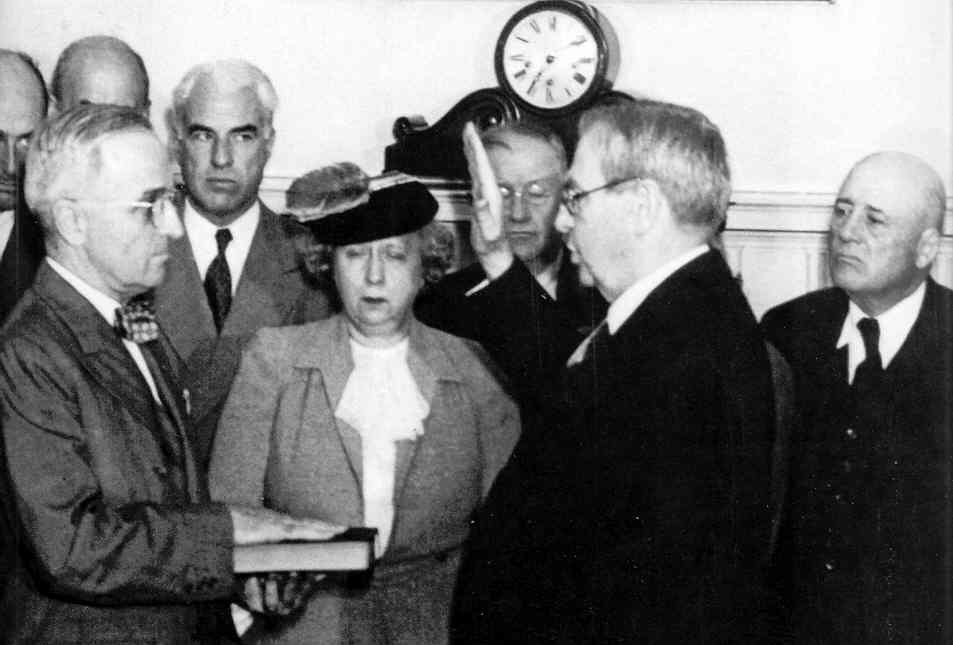
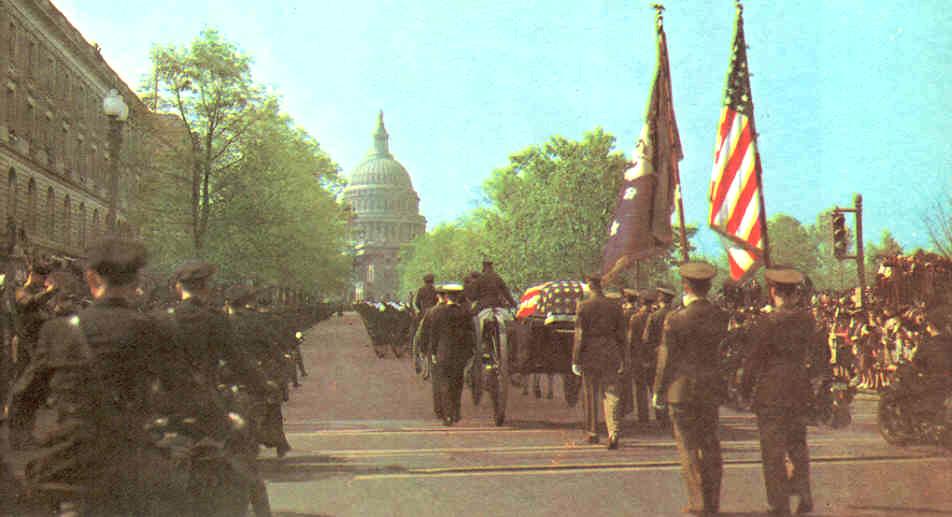
Roosevelt's death.  Then just as the Americans were making their way rapidly across Germany (mid-April) they were shocked to learn that Roosevelt had suddenly died while on a visit to his health spa in Georgia.  Equally shocked was Harry Truman – who as newly elected Vice President had been left out of all previous presidential planning and now had the most unwanted responsibility of taking over American command in this massive war.  This war – despite Germany's imminent collapse (and the problems that would certainly follow in Europe) – was expected to drain American society for another couple of years in bringing down Japan.

But Truman quickly stepped up to the enormous responsibility.

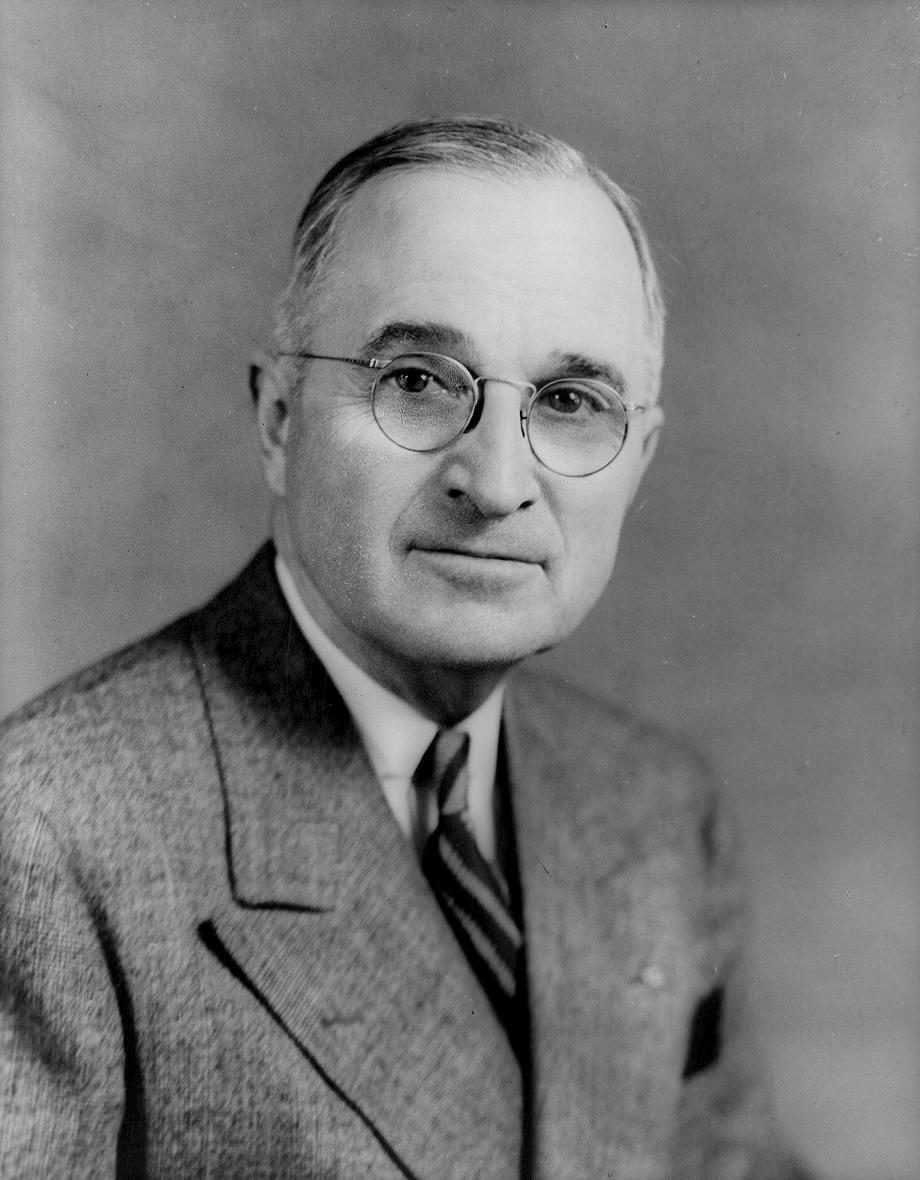
Harry S. Truman.  Whereas 
Roosevelt had been the polished aristocrat – the great charmer who seemed to know how to keep people's spirits up in even the darkest of times, Truman immediately came across as someone with personal qualities like those of your uncle – or your neighbor next door.  He seemed so average.  He was indeed Middle Class – brought up with no special privileges awaiting him, but knowing how to take on very real challenges that had to be met head on rather than be smooth-talked away.  He was not a ruling-class, program-man like Roosevelt, but one who related very personally to the world immediately around him.

Born in 1884, Truman had been raised on a 600-acre farm in Missouri, to a father who was active in local Democratic Party politics.  Truman's hopes after finishing high school were to attend the U.S. Military Academy at West Point.  But his poor eyesight blocked that possibility.  He found jobs as a clerk, but after memorizing the eye chart, was able to join the Missouri National Guard as a corporal in an artillery battery!  After six years of such service he dropped out (1911), but was quick to rejoin the unit when America went to war in 1917, bringing friends in with him – who in turn elected him as their 1st lieutenant.  In the war itself, now as a captain, he proved to be an outstanding officer, converting an unruly artillery company into a very disciplined unit, which in Truman disobeying higher orders to retreat, instead held their position – and destroyed a German artillery unit, thereby saving an American division that would have come under the heavy fire of the German battery.  His discipline and leadership resulted in the loss of not a single man in his unit, and their eternal love and support of Truman (which would later factor into his political rise from obscurity).
After the war, he went into business as a co-owner of a men's clothing store, which did not do well.  But a war-time friendship with Tom Pendergast, son of the Missouri's Kansas City boss (of the same name) would prove, on the other hand, to work greatly to Truman's favor.  In 1926, with Pendergast support, Truman was able to gain the position as his county's presiding judge.  This was largely an administrative rather than legal position – although at the time, Truman had taken up the study of law at night school.

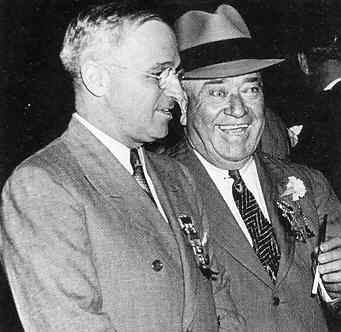
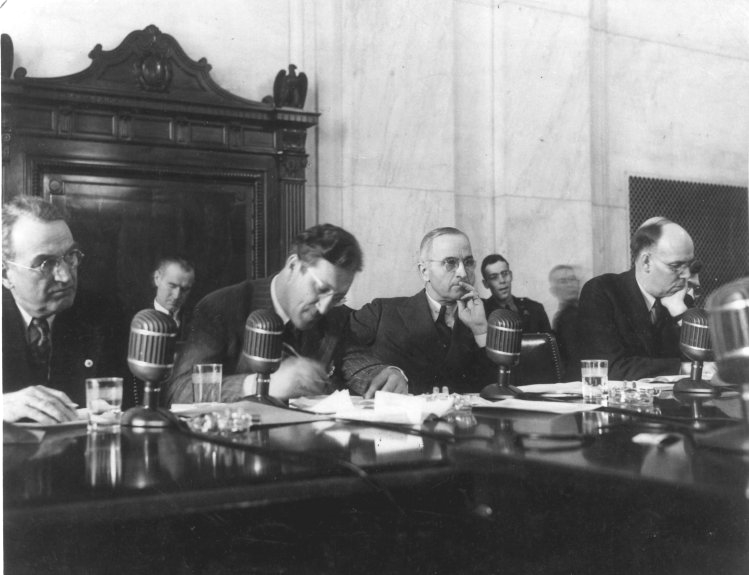
Truman so impressed Boss Pendergast with his dedication to his work that Pendergast used his influence to have Truman appointed as director of one of Roosevelt's local New Deal Programs.  This would bring Truman in contact with Roosevelt's personal advisor, Harry Hopkins.  But ultimately Boss Pendergast decided to run Truman as Missouri's U.S. Senator in the 1934 election, which as a Democrat, Truman won the election handily.

Of course being a Pendergast protegé brought suspicions from fellow U.S. Senators about Truman's integrity.  But that reputation would soon pass, as 
Truman worked very hard at his job, demonstrating to his fellow senators the deep integrity that shaped his world.  That same integrity – and his natural suspicion about the "big-money boys" in both the corporate and government world – led him to create (late 1940) and chair a subcommittee of the Senate Committee on Military Affairs, investigating U.S. army bases.  Then with America's entry into World War Two a year later, the work of his Truman Committee would soon draw national notice.  His committee not only eventually saved the U.S. government from as much as $15 billion in waste but also drew the attention of Time magazine which featured him on its March 1943 cover (the first of many).

Thus it was that Truman's name came up when in 1944 Roosevelt began considering his run for a fourth term as U.S. president.  Henry Wallace had been serving as Roosevelt's vice president.  But Wallace's virtually Socialist ideals were putting off Democratic Party leaders.  And so it was that 
Roosevelt and his advisors turned to Truman as a candidate as his new running mate (the vice-presidency), not exactly a position, however, expected to have great significance.  Nonetheless, with the Democratic Party's 432–99 electoral college win over the Republican Party in the 1944 election, Truman became America's vice president.

But consequently it was also that Truman was soon to become the new U.S. president.  Personally, Truman was himself shocked that, with Roosevelt's death only a few months into the new presidential term, such a heavy post-Rooseveltian legacy had suddenly fallen on his shoulders.  He was fully aware of the heavy responsibilities of the presidential office, especially during this time of war, and was unsure of the level of support he would receive in having to fulfill those responsibilities.  But he was one who had learned to accomplish much, especially when so little was expected of him.

He presented himself immediately before Congress, ending his address with this comment: 
 

As I have assumed my heavy duties, I humbly pray Almighty God, in the words of King Soloman:  "Give therefore thy servant an understanding heart to judge thy people, that I may discern between good and bad; for who is able to judge this thy so great a people?" I ask only to be a good and faithful servant of my Lord and my people.

Indeed, Truman would attempt to live up to that enormous responsibility.  But actually, few thought at the time that this new and unsought president would be able to meet those standards.  Yet despite his common ways (and often even profane language) Truman personally was a man of great personal faith in God and Christ, a man of daily prayer, and highly Biblical in the way he analyzed, categorized and chose critical decisions that fell to him to make.  Most of this was of a very private nature, but highly important to the nation that he would have to guide through the political, economic, social and spiritual minefields that awaited America and the world after the collapse of the German and Japanese empires.


VICTORY!

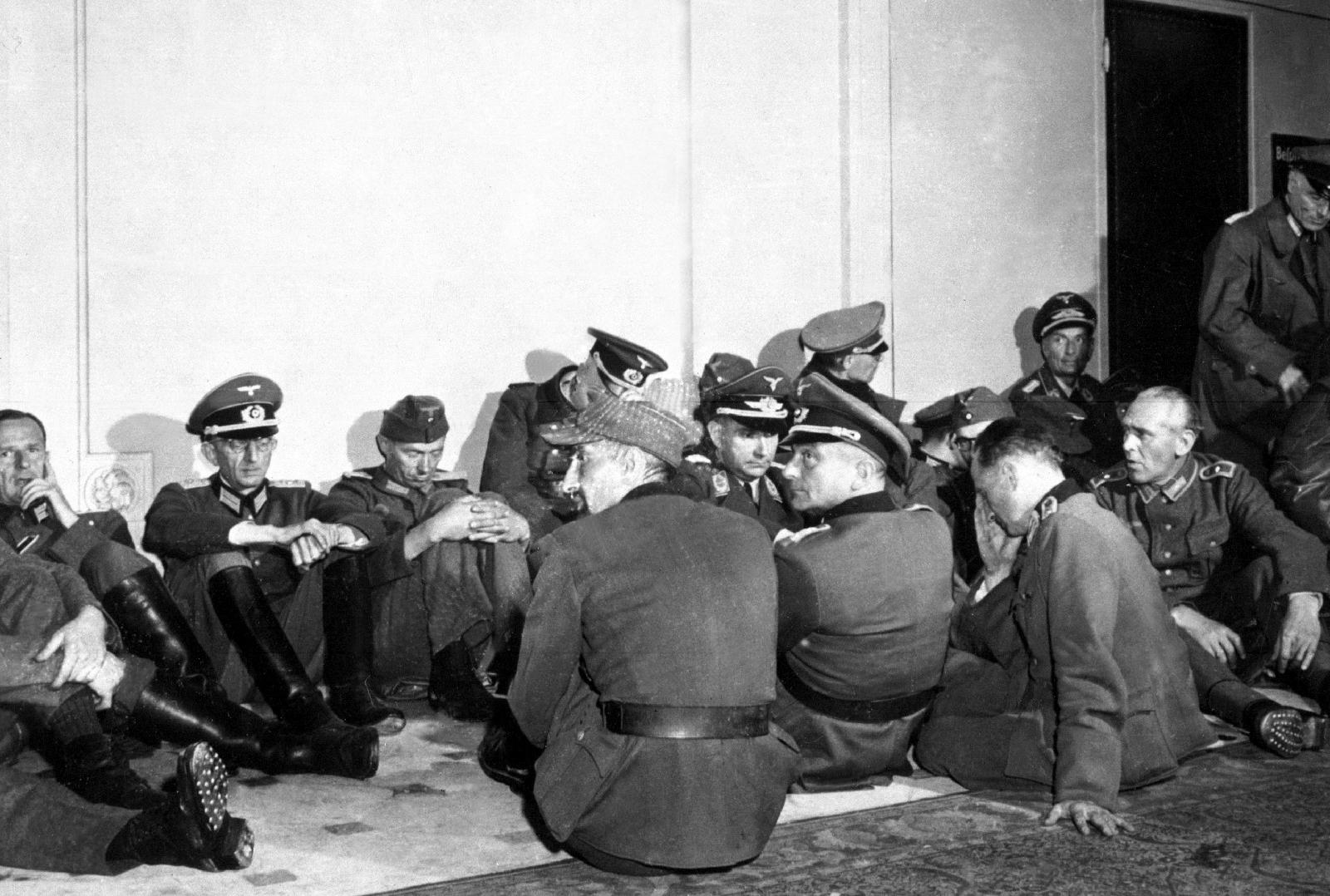
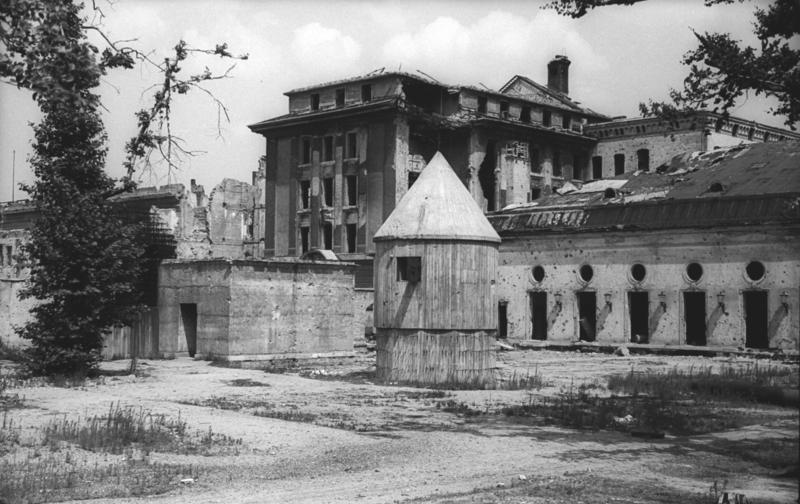
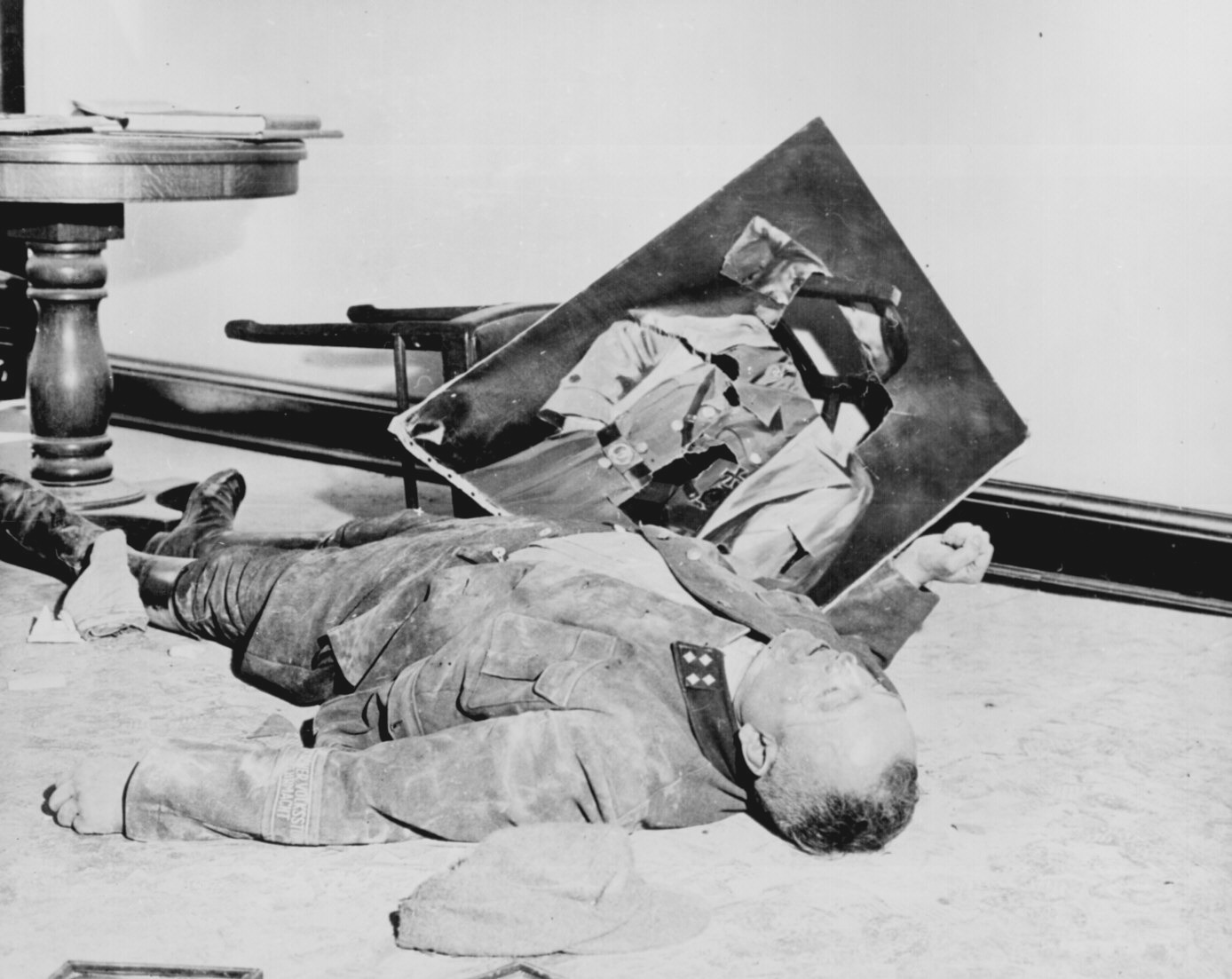
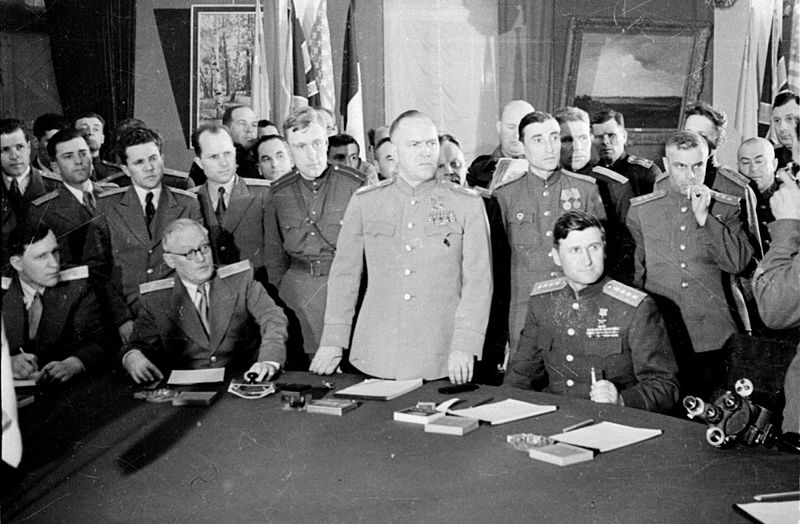
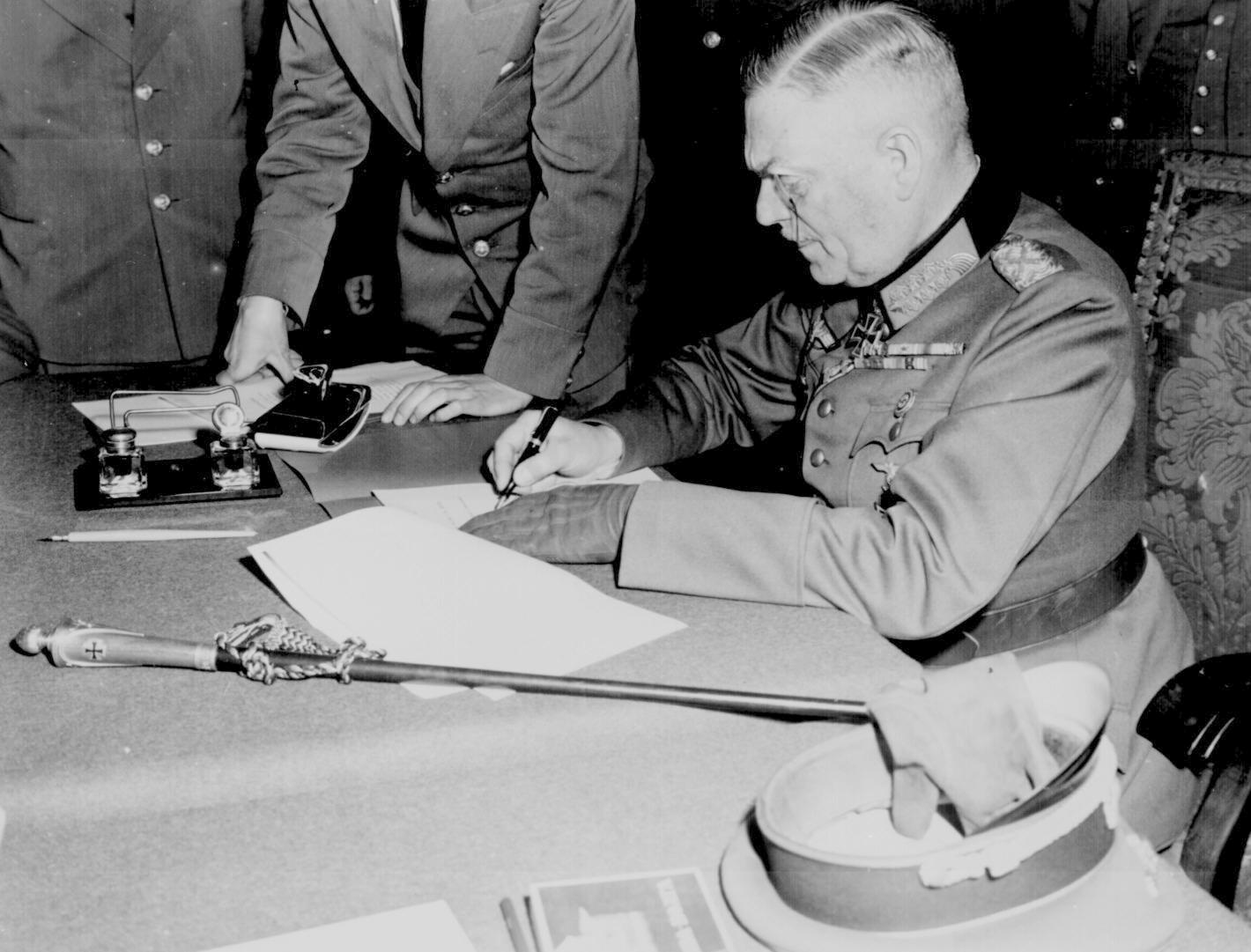
Hitler's suicide ends the war in Europe.  In any case by early May (1945) Hitler had committed suicide and the German armies were surrendering everywhere.  In effect World War Two was over – at least in Europe.

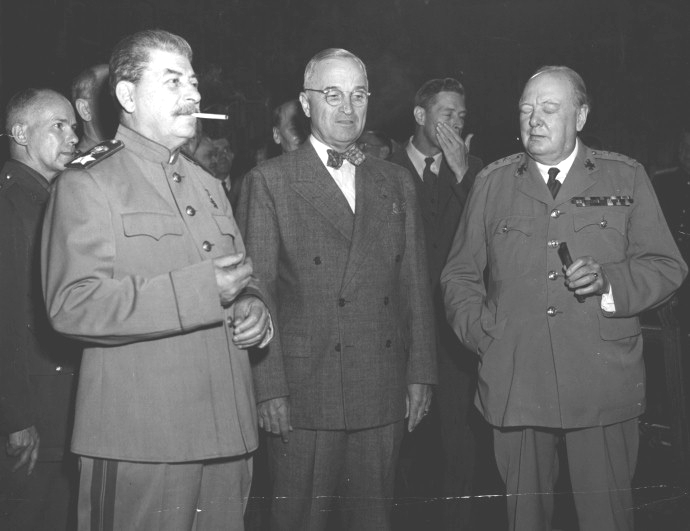
The Potsdam Conference.
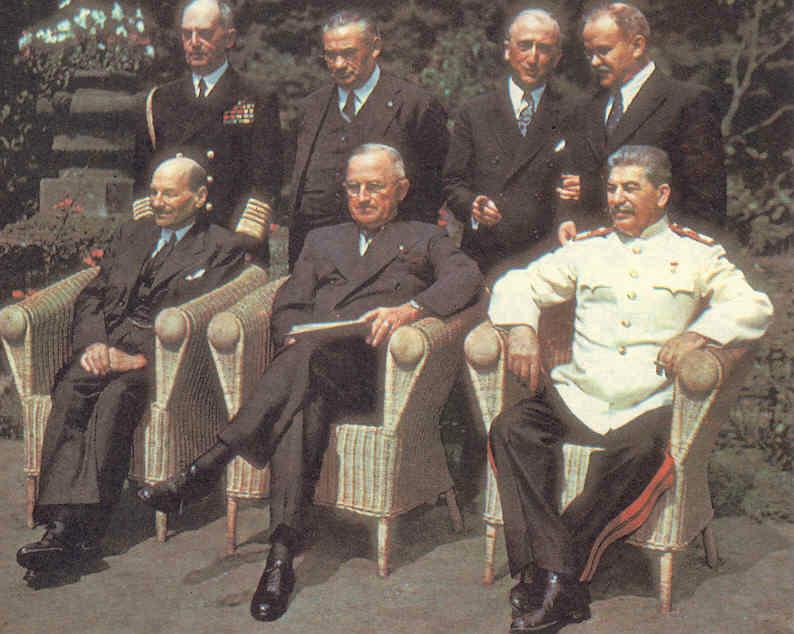
  In late July/early August Truman journeyed to the Berlin suburb of Potsdam to meet with Churchill and Stalin – his first encounter with the latter.  He quickly took a much more skeptical assessment of Stalin's reliability than had Roosevelt – the latter who actually had believed that he could charm Stalin into almost any kind of political relationship.  Indeed, Roosevelt was actually more suspicious of Churchill's motives than Stalin's with respect to plans for the world's future.  However, Truman and Churchill immediately hit it off – both possessing a similar hard Realism in their approach to the world of power and politics.

But unfortunately the British people themselves did not – and in their first election held since before the beginning of the war, the British voters turned 
Churchill and his Conservative Party out of power and brought to power the Labour Party under Clement Attlee – right in the middle of the Potsdam Conference.  What the British had done was to turn to the promise of Socialism in the hope for a happy fix for the economic uncertainties facing their future.  What they in fact made certain however was that in choosing the Socialist road (nationalizing all of Britain's key industries) they were going to ruin all possibilities for an early post-war economic recovery.

The bomb.
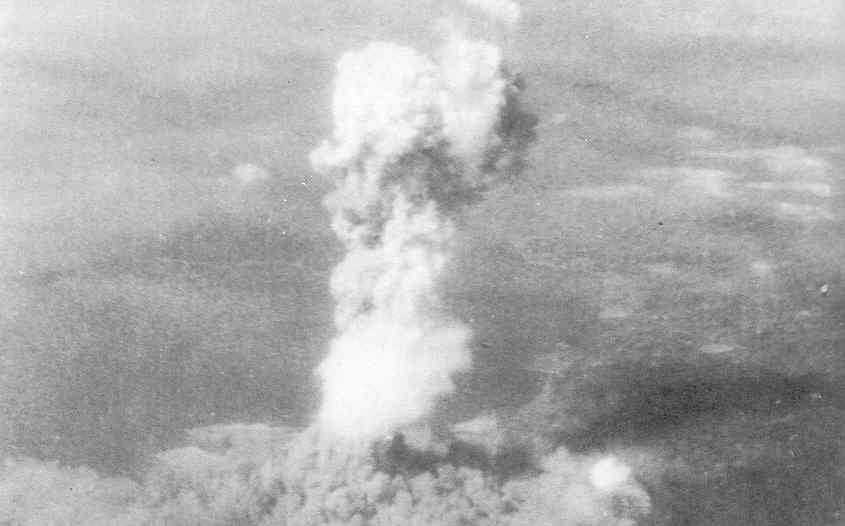
  While Truman was at Potsdam, he was given the news (not a surprise to Stalin whose spies had been keeping him abreast of American developments) that the atomic bomb experiment in New Mexico had proven a success.  The bomb was horrible beyond belief.  Now Truman was faced with a major moral dilemma: to undertake a bold strike to break the will of a resistant Japan – causing Truman to go down in history as ordering the dropping of the most destructive device in history – or just go through the slow death of advancing village by village, killing as they went in order to bring Japan to the same end.  Ultimately – understanding not only that this device should shock Japan to some better sense of where things were headed for their country – Truman would also need to have the political leverage that the bomb afforded America in order to make Stalin behave in the post-war era.  He realized that he would have to demonstrate to Stalin that America really would dare to explode such a device over an enemy – otherwise it would have absolutely no deterrent effect whatsoever with Stalin.

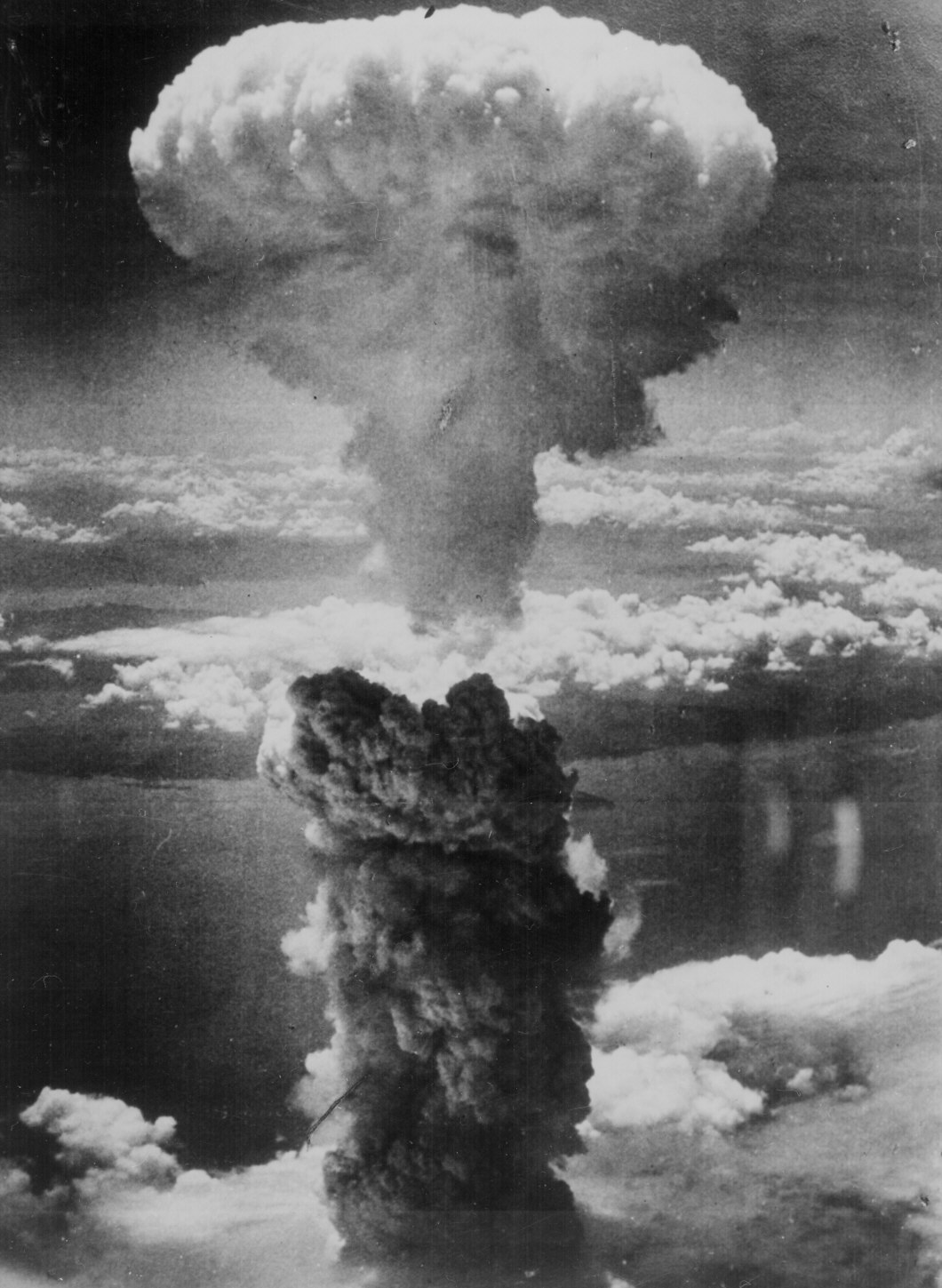
Thus just a few days after the close of the Potsdam Conference, Truman ordered the use of the bomb over the city of Hiroshima (August 6th).

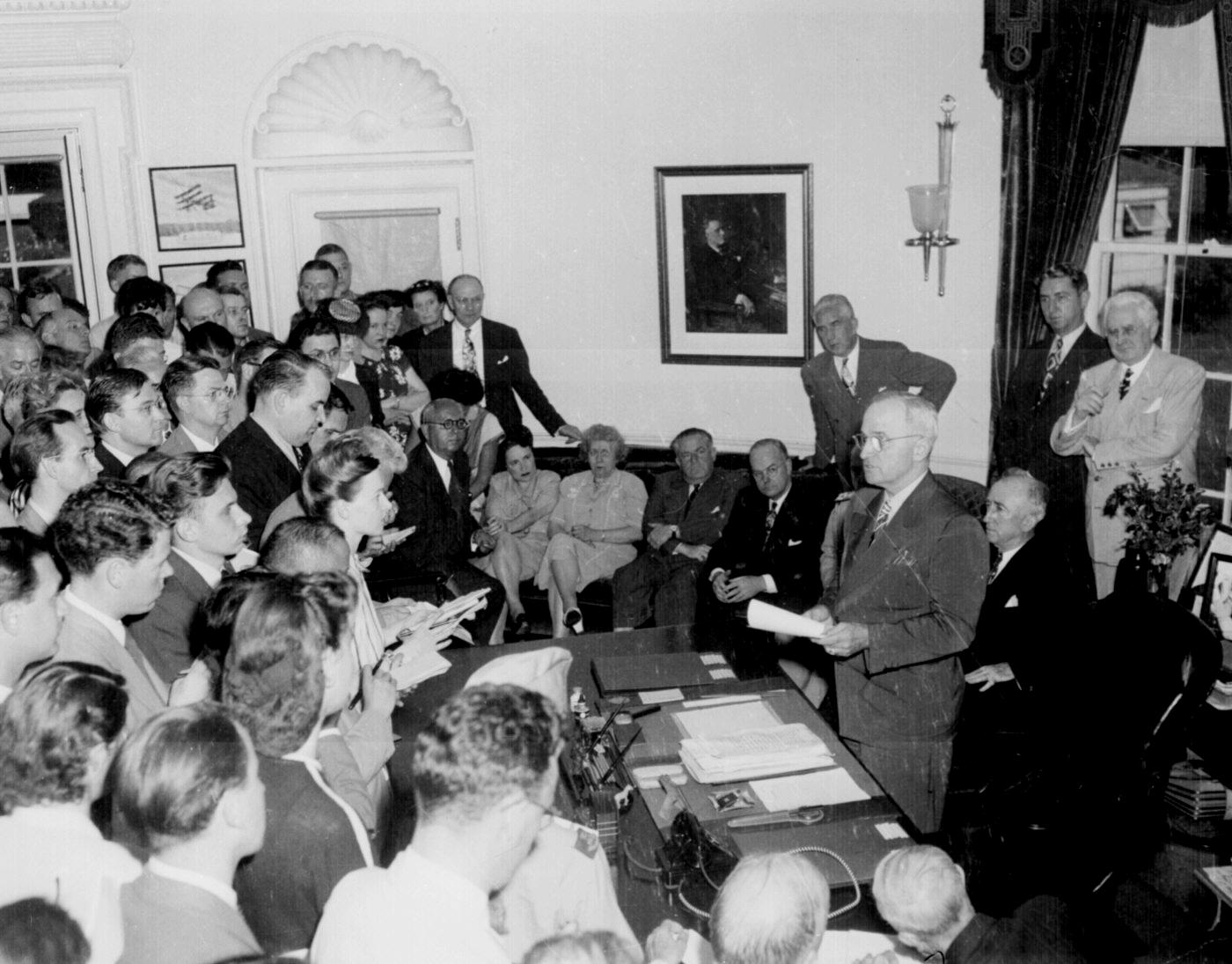
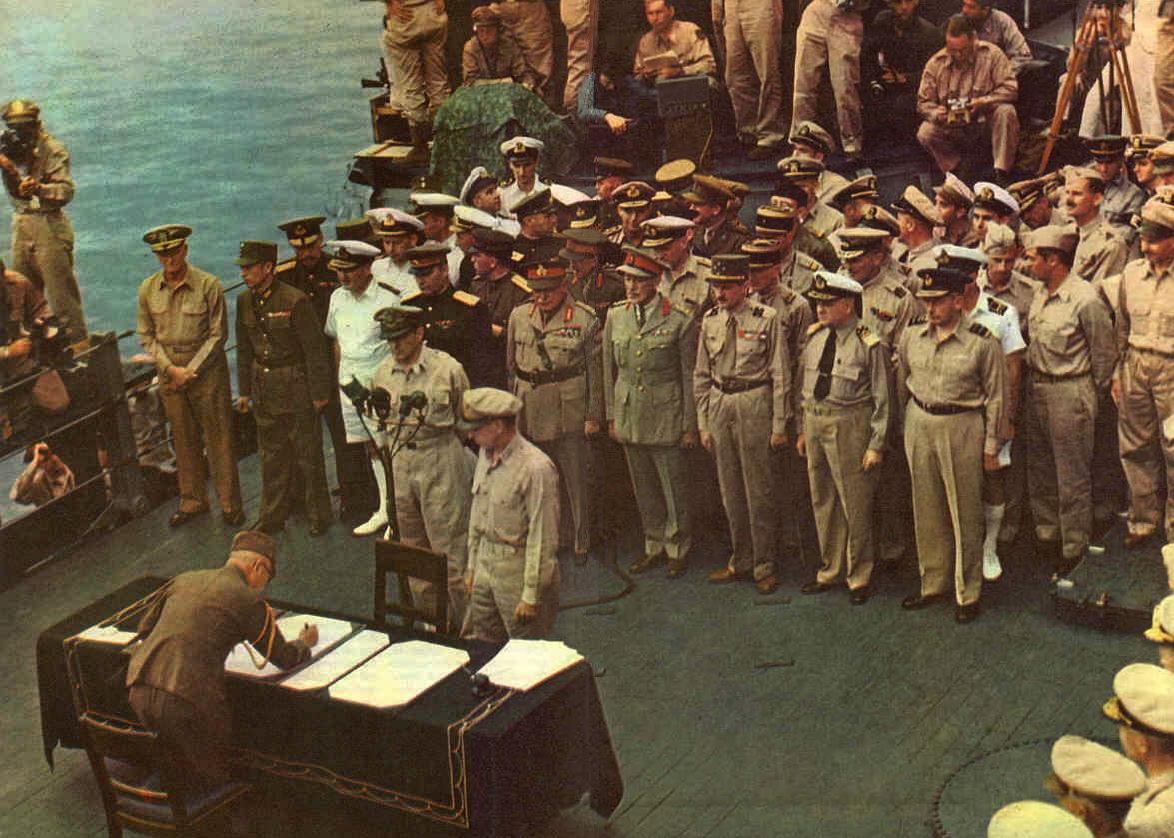
The Soviet Russians jump into the war in the East.  Stalin immediately declared war on Japan, suspecting that the war was about to be over – not wanting to miss out on Roosevelt's promise that if the Russians joined the war effort, they would receive those valuable positions in Manchuria and North Korea.  Indeed, a second bomb dropped on the Japanese at Nagasaki three days later (the 9th) brought, on the 15th, the Japanese announcement of its surrender.  World War Two was over.

Victory, and its personal costs.
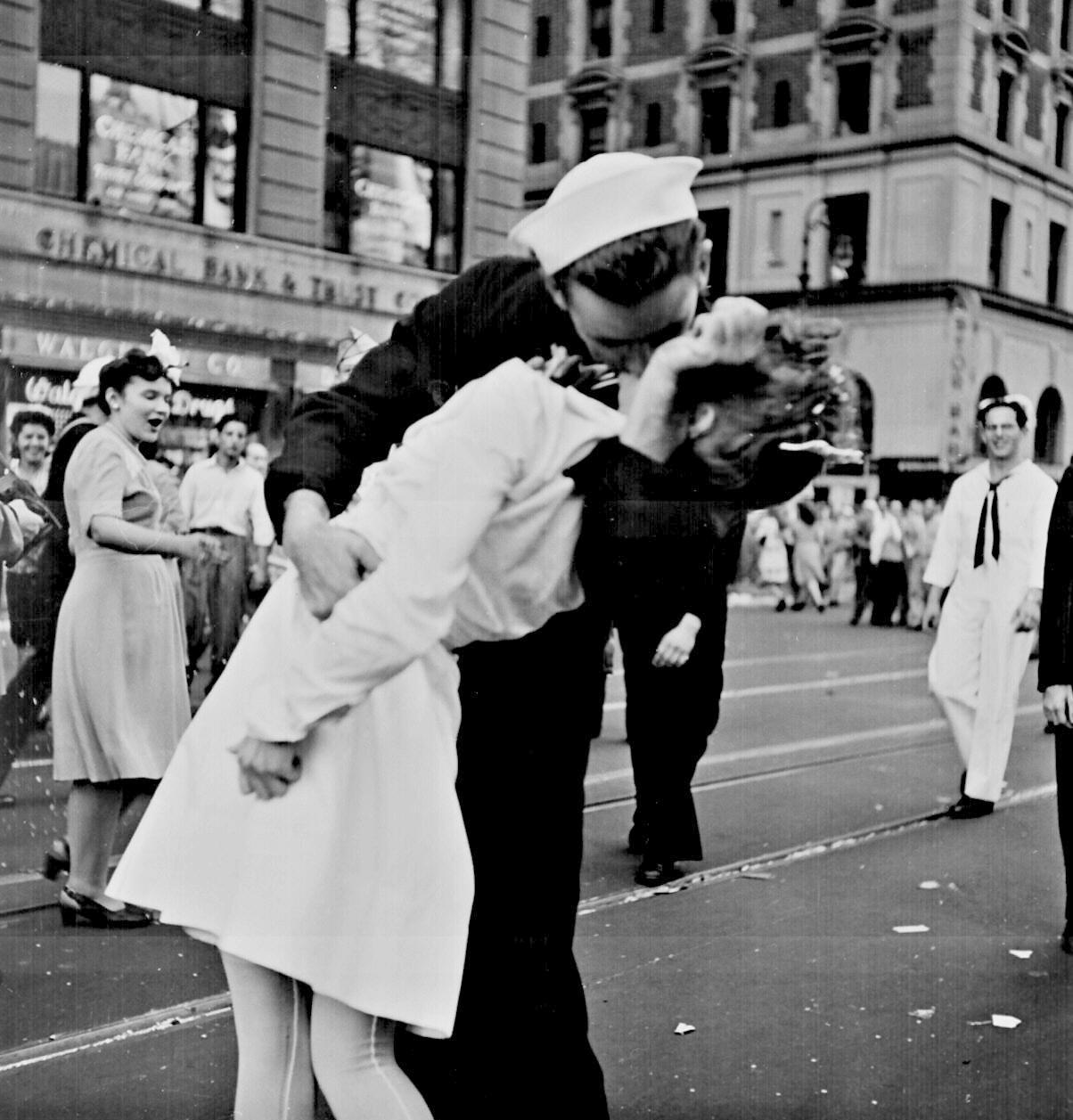
  Understandably, America was in a very celebrative mood.  They had won!  They had defeated these two self-presumed "superior" military powers, Germany and Japan.
But of course they also had wounds to lick.  Victory had come at a great price.  Over 16 million Americans had served in the armed forces.  That was a huge portion of that age-group typically called to military service.  And that service ultimately led to the deaths of over 400 thousand who served, and another 700 thousand wounded or missing.  Consequently, the war touched painfully many families in the most intimate of ways, with the loss of those family members.

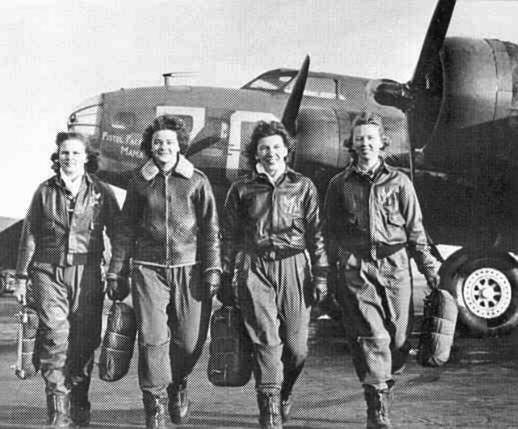
But the word "served" extended well beyond even that.  In this war, everyone served, in some capacity or other.  The "war on the home front" that everyone talked about had brought new avenues of industrial service to women, and even in small ways to children (scrap paper, scrap metal, etc. collections or "drives").  And everyone lived on rationing.

A generation trained to the sense of service or duty.   Consequently, emerging from this war was a generation of Americans – to be termed here the "Vets" because they were veterans of this war, and products of wartime social dynamics – shaped deeply at how they engaged life through a deep sense of personal service or duty.  But this was not just a matter of American patriotism or service or duty to the nation.  That sense of service or duty actually – and most importantly – started in the family, in all sorts of ways.  Obviously, this included sons (and some daughters as well) joining the service.  But the Depression had already started this idea as the family being the primary or key unit that disciplined individuals with the understanding of the vital importance of mutual service within the family, for the purpose of survival itself. And then, from these very strong family foundations, that sense of duty extended outward, to the local community, its churches, its school boards, its libraries and city halls.  Indeed the very peace of the streets and neighborhood was built on this dynamic (crime rates in America were amazingly very, very low in those post-war days).  Then this mind-set quite visibly reached to the very idea of national service.  America was their country, and they would serve it, die for it, some even saying "right or wrong" (not actually a very good idea!).  But ultimately that sense of service or duty reached in the most personal of ways to the heights of heaven, to God himself.  Americans would serve God, and ultimately no other.  This was now a very, very patriotic, Christian America.


Go on to the next section:  The Startup of the Cold War


  Miles H. Hodges