Obama was born in 1961 to two students at the University of Hawaii
– a White mother, Ann Dunham, from Kansas and a Black father, Barack Obama,
from Kenya, the two marrying just before Barry (the name he went by during his
pre-teen years) was born. But soon after
his birth, his mother took Barry with her for her studies in Washington State, and
his father the next year moved on to study at Harvard. Then, following their divorce in 1964, he
returned to Kenya (actually he was already married to a Kenyan woman at the
time). Young Barry would see his father
only once more, very briefly in 1971 when he was age ten.[2]
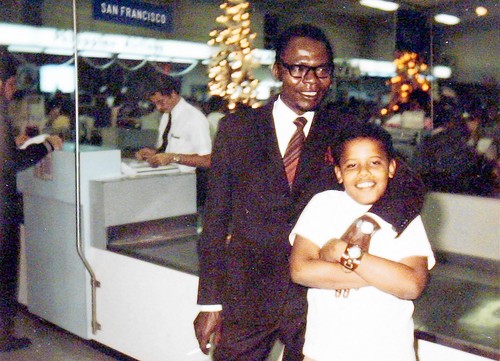
Barack Obama, Sr. with his
son Barry
during his only visit to Hawai'i.
His mother returned to Hawaii, married an Indonesian student, Lolo
Soetoro, a Muslim by background but quite Western in attitude – at least as
long as they were still in the States.
But the family moved to Indonesia in 1967 when Barry was six (his
step-father worked with American oil companies), where Barry would take up
schooling, first at a Catholic school (three years) and then a public school
(Islamic, as Indonesia itself was largely Islamic). Actually, this highly varied religious
experience did not dig deeply into Barry's life, especially as his mother was
something of a self-designed spiritualist.
In 1971 Barry was sent back to Hawaii to live with his White
grandparents, joined the next year by his mother, who had returned to Hawaii to
finish her doctorate, and his younger half-sister Maya. That fall Barry was
able to enter 5th grade at the prestigious Punahou School, thanks to
a scholarship – and the hard work of his grandmother, who paid the balance of
the costs (his grandfather was retired).
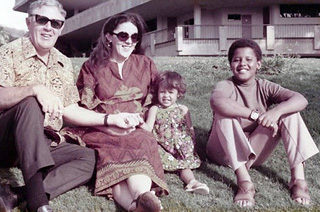
Ann Dunham with her father
and children
during Ann's brief
stay
with her family in Hawaii during the mid-1970s.
Bishop Hall, on the campus
of Punahou School,
in the background.
Four years later (1975) his mother returned to Indonesia and Barry would
continue on at Punahou, finally graduating in 1979 as "Barack," now
preferring the more exotic sound of his father's name.
Indeed, although Hawaii was a land of many races, young Barack had
found getting a fix on his own identity problematic. As a male, he had grown up with largely only
strong-willed women to guide him in his personal development, the male input
(again, typical of Gen-Xers anyway) largely lacking. He would idealize his African father,
but receive no actual direction from him on the path of male development. And high school drug use would not help the
situation any.
He headed on to California and Occidental College, but
two years later, with a scholarship in hand, transferring to the more
prestigious Columbia University in New York City – to major in political
science. While he was there, he
naturally explored that world, in the process discovering the Black cultural
world of Harlem to be very inviting. And
thus it was that he began to secure his own identity – despite his "White"
upbringing – as "Black." And
he would eventually become quite purposeful in confirming that particular
racial identity. The White world would
no longer be his, but instead a highly problematic matter for him.
This process did not happen immediately, but instead developed in
stages. At first, upon graduation in
1983, he took a job with a corporation helping businesses invest and operate
abroad. But that work did not appeal to
him. Then he joined Ralph Nader's campus
activist organization, before moving to Chicago (1985) to work with a Catholic
organization doing community development work in the city – helping to
administer a number of developmental programs, including legal support.
Thus he found himself fascinated by the power of law, and after
three years in Chicago headed off to Harvard Law School. Here he became a very focused, hard-working
law student. Indeed, at the end of his
first year he was elected as an editor of The Harvard Law Review. The next year he was even elected president
and editor-in-chief of the Review.
During the two summers between classes, he headed back to Chicago
for internships, the first summer (1989) interning under Michelle Robinson, a
Princeton University and Harvard Law School graduate, who had joined the firm
only the previous year. By the end of
the summer they were actually dating (they would marry three years later, in October
of 1992).
Upon graduation in 1991 from Harvard Law summa cum laude
(with highest honors) he returned to Chicago and took a position at the
University of Chicago as a Visiting Fellow, also working hard in directing a
massive voter-register drive designed to get Blacks on the voting lists. His work in this matter would bring him
serious national political attention (as well as his book, Dreams from My
Father, which he was putting together at the same time).
Soon he was appointed to the board of directors of a number of
major community development corporations, at the same time that he moved up the
ranks as Lecturer at the University of Chicago Law School.
But the death of his mother in 1995 would shake up his world, when
uterine cancer forced her to return to the States in early 1995 – to then die
that November. Not only had her disease
and death been a heartbreaker for Obama, all the hassle to get medical
attention and accompanying medical insurance coverage for such treatment had
also deepened his despair greatly. It
would leave him deeply committed to the idea that something was badly needed to
improve such a draining medical system.
The following year (1996) Obama would enter the elective-office
world, taking up a vacated seat in the Illinois Senate, then being reelected in
1998 and again in 2002. Meanwhile he had made a run for the U.S. House of
Representatives in 2000, but lost that race rather substantially. But he was determined to enter national
service, and took on the challenge of a race for the U.S. Senate in 2004 –
easily winning the spot as the Democratic Party candidate.
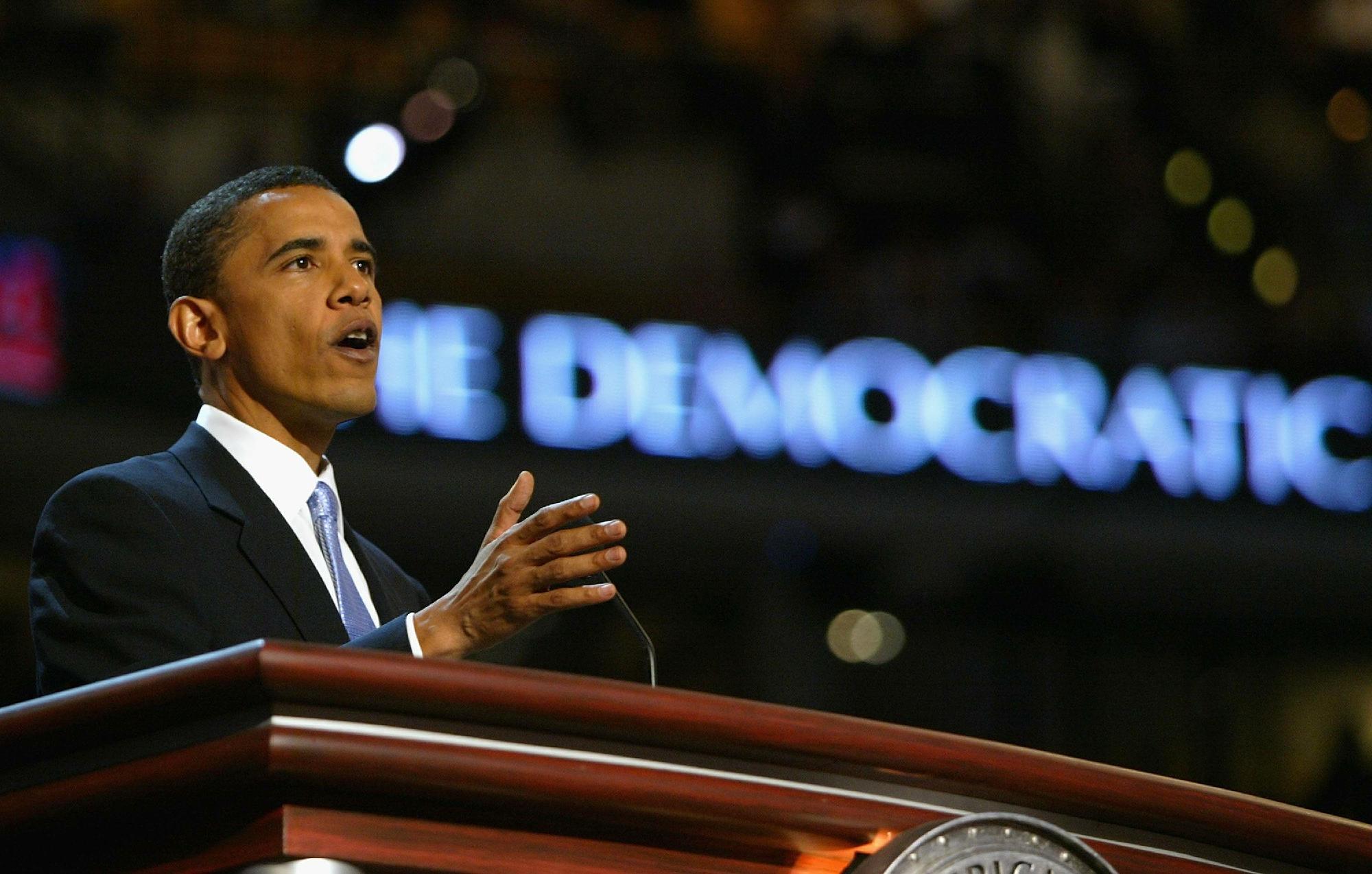
Barack Obama delivers the
keynote address at the 2004
Democratic National Convention in Boston
And as the election approached, his
Republican opponent resigned his candidacy over a sex scandal, opening the door
for Obama to an easy win (70% of the state's vote) that November.
Now a U.S. Senator (January 2005) he was assigned to several
committees as a junior member, the Senate Foreign Relations Committee being the
top of the list in importance ... allowing him some considerable travel abroad.
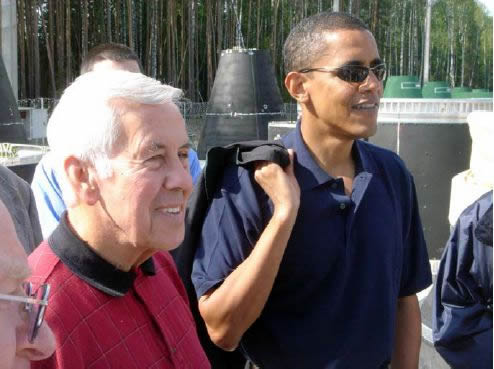
Senate Foreign Relations
Committee Chairman Richard
Lugar and Committee member Barack Obama at a base near
Perm, Russia (August 2005). This is where mobile launch
missiles are being destroyed by the Nunn-Lugar
program.
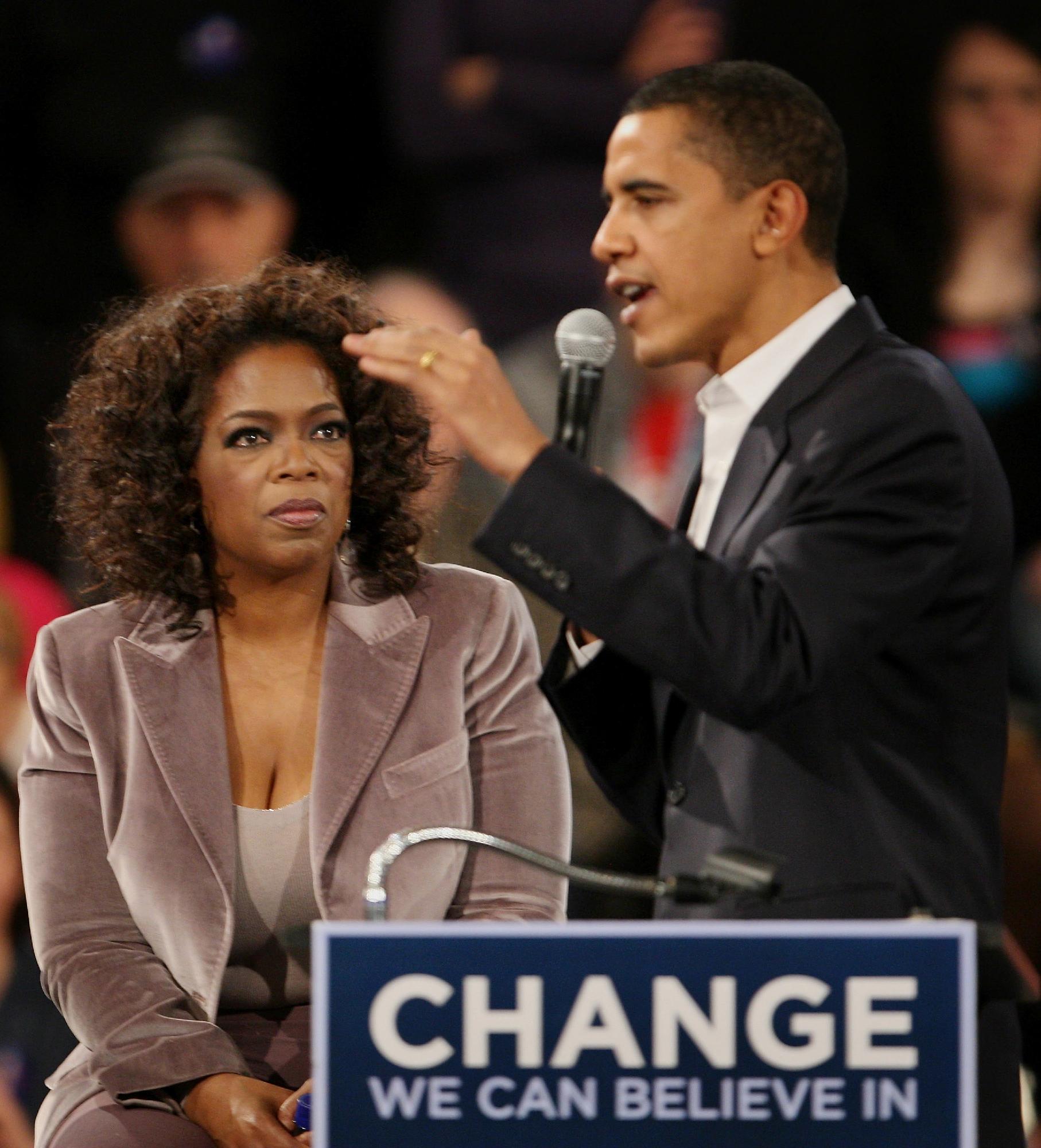
Then Oprah stepped into the picture in September of 2006, finding
in Obama everything she longed to see in a political figure, and worked hard at
promoting the idea that, although Obama had no serious amount of experience in
political administration, he would make a wonderful U.S. president –
representing personally all the values that she supported. She put more muscle into the effort, interviewing
Obama again the following month, with his wife Michelle also
participating. And Oprah pushed Obama's
second book, The Audacity of Hope to the number one spot on both The New
York Times and Amazon's bestseller list.
And thus it was that Obama became a very serious contender in the 2008
race for the U.S. presidency.
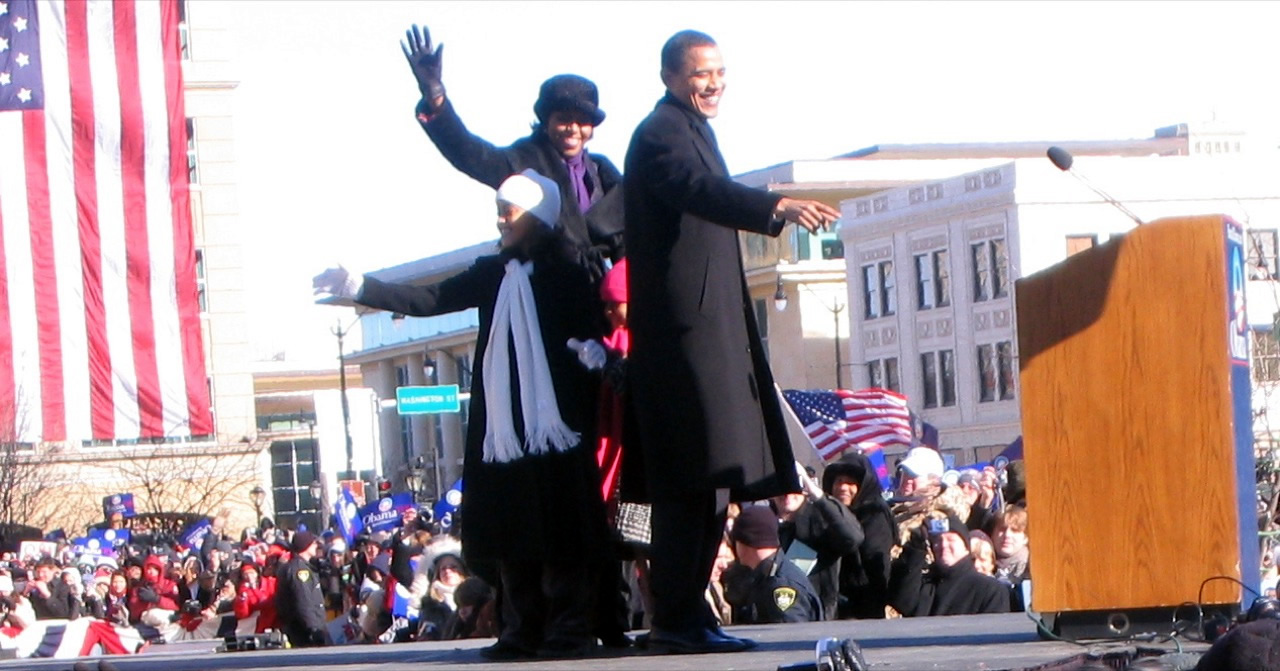
Obama stands on stage with
his wife and two daughters
just
before announcing his
presidential candidacy in
Springfield, Illinois, Feb. 10, 2007
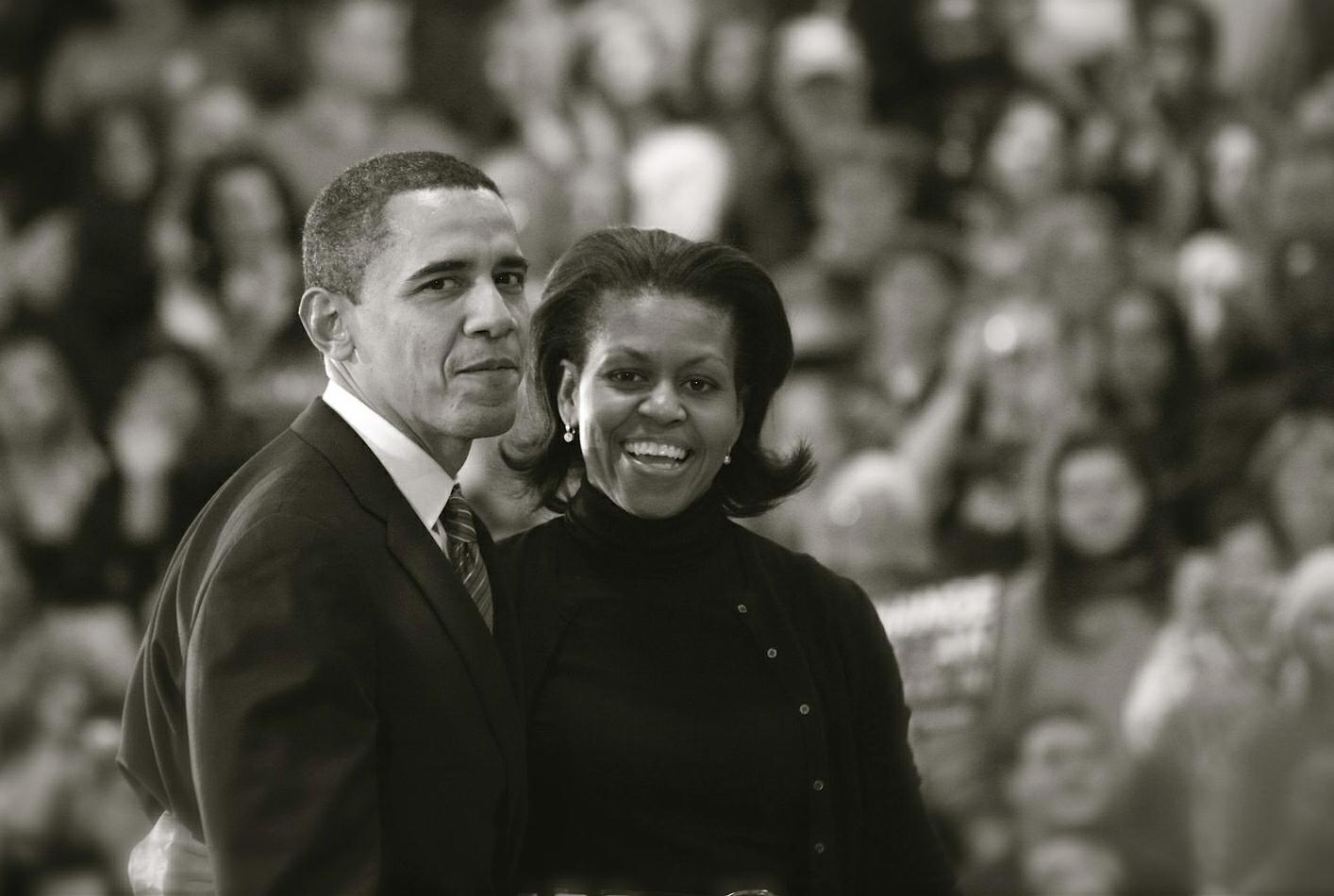
Barack Obama and Michelle
Obama – 2008
As
for the presidential campaign itself, a large field of contenders had narrowed
down by early 2008 to only two contenders, Obama and Hillary Clinton.
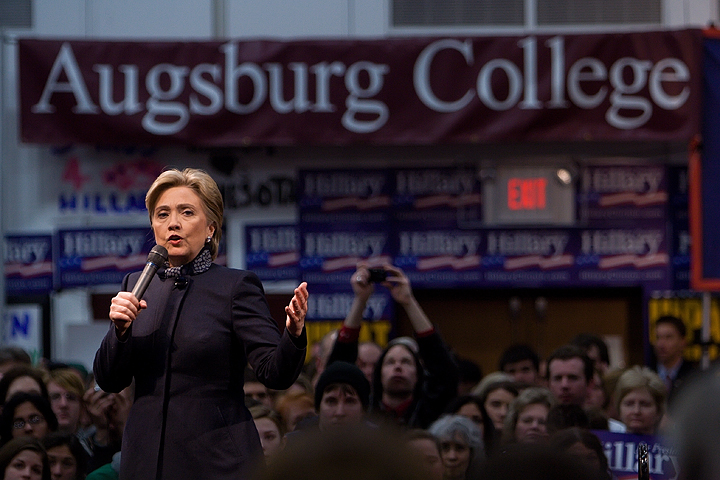
Hillary Clinton campaigning
hard for the Democratic nomination
February 3, 2008
Hillary Clinton campaigning
at the Democratic National Convention
August 26, 2008
Along
the way a sad event had taken place for Obama, when a sermon delivered by the
Chicago pastor Jeremiah Wright was presented in part on the ABC News, showing
the Rev. Wright repeatedly cursing America for its failings. Despite the fact that this pastor had served
as something like the father that Obama had long needed – for twenty years, in
fact – Obama distanced himself not only from the comments, but from the man
himself. Indeed, Obama soon went before the nation in a televised address to
deliver a speech "A More Perfect Union," in which he explained his negative
views on racism, racism of any sorts.
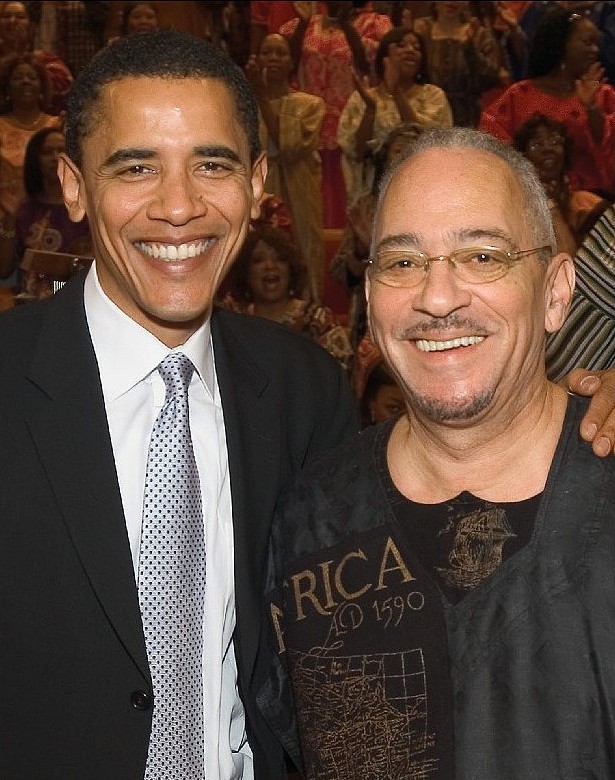
2005 - Obama and his Chicago pastor of 20 years,
Rev. Jeremiah Wright
In
the end the controversy and his public response probably helped considerably
move his candidacy ahead within the Democratic Party primary process. For indeed at this point he pulled ahead in
the race, and in June Clinton dropped out.
But this had an additional side effect, for in distancing himself from
the Rev. Wright, Obama would not find another such pastoral figure to support
his spiritual journey as president.
This
would merely increase the Secular nature of the leadership flowing from the
White House with Obama in place there (January 2009). This was sad for both the Obama family and
the nation.
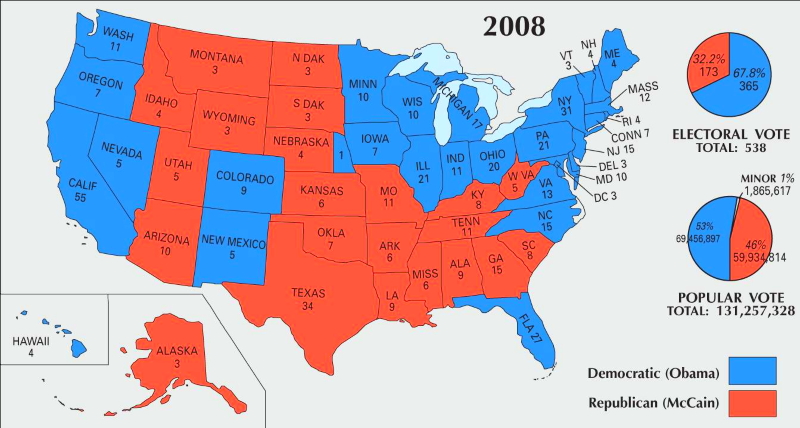
The results of the 2008 presidential
election
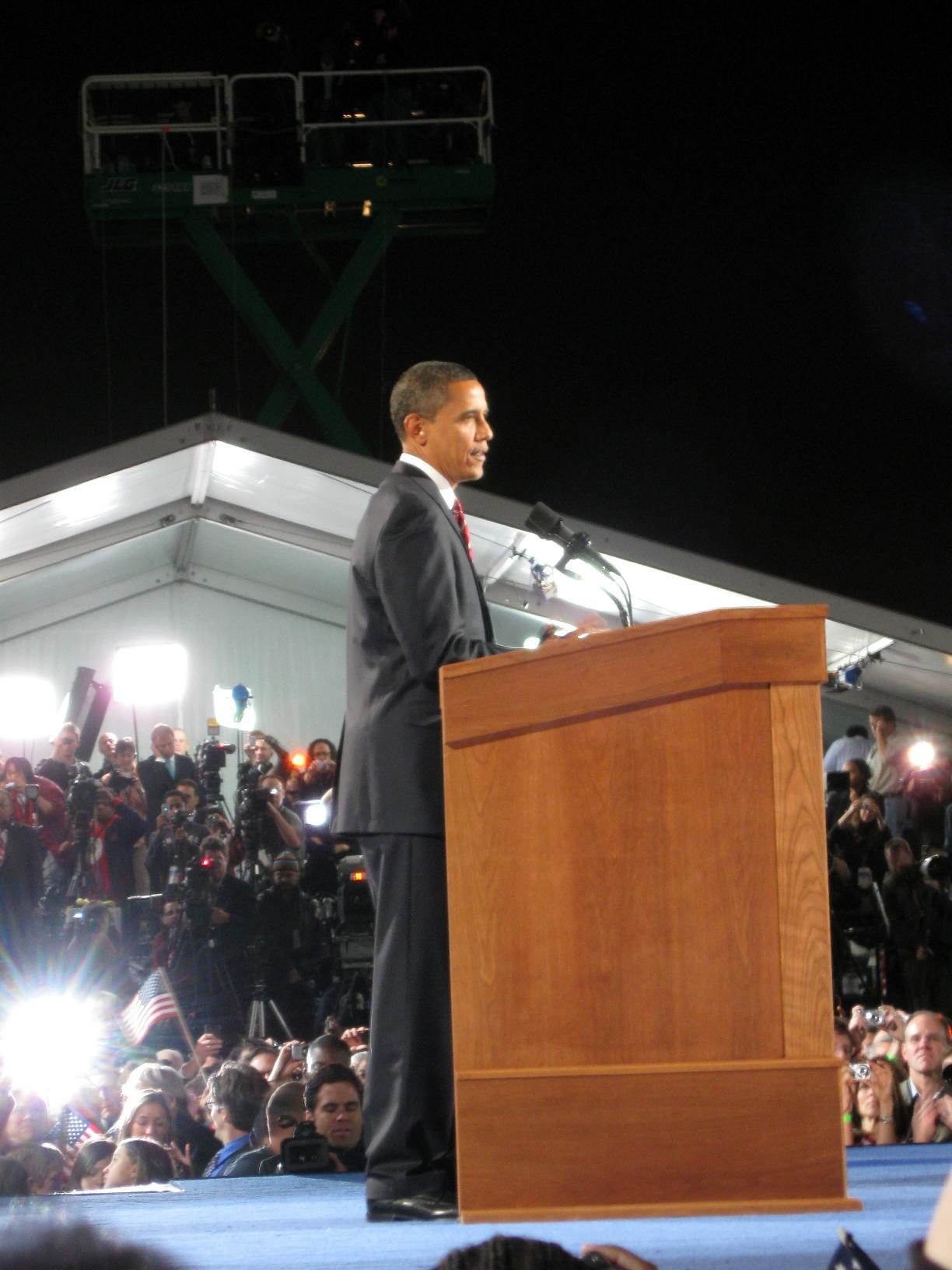
Obama delivers his presidential
election victory speech
in Grant Park
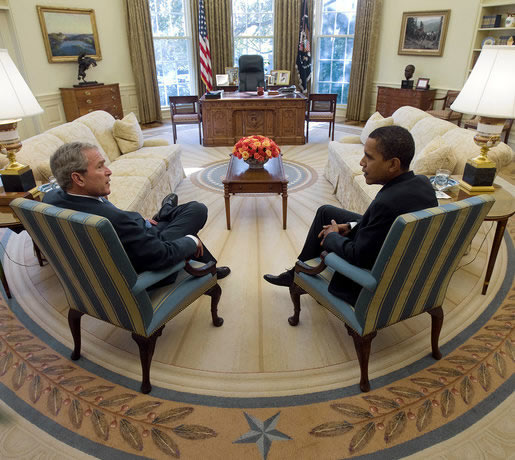
President Bush and President-Elect
Obama meet in the Oval
Office
- Monday, Nov. 10, 2008
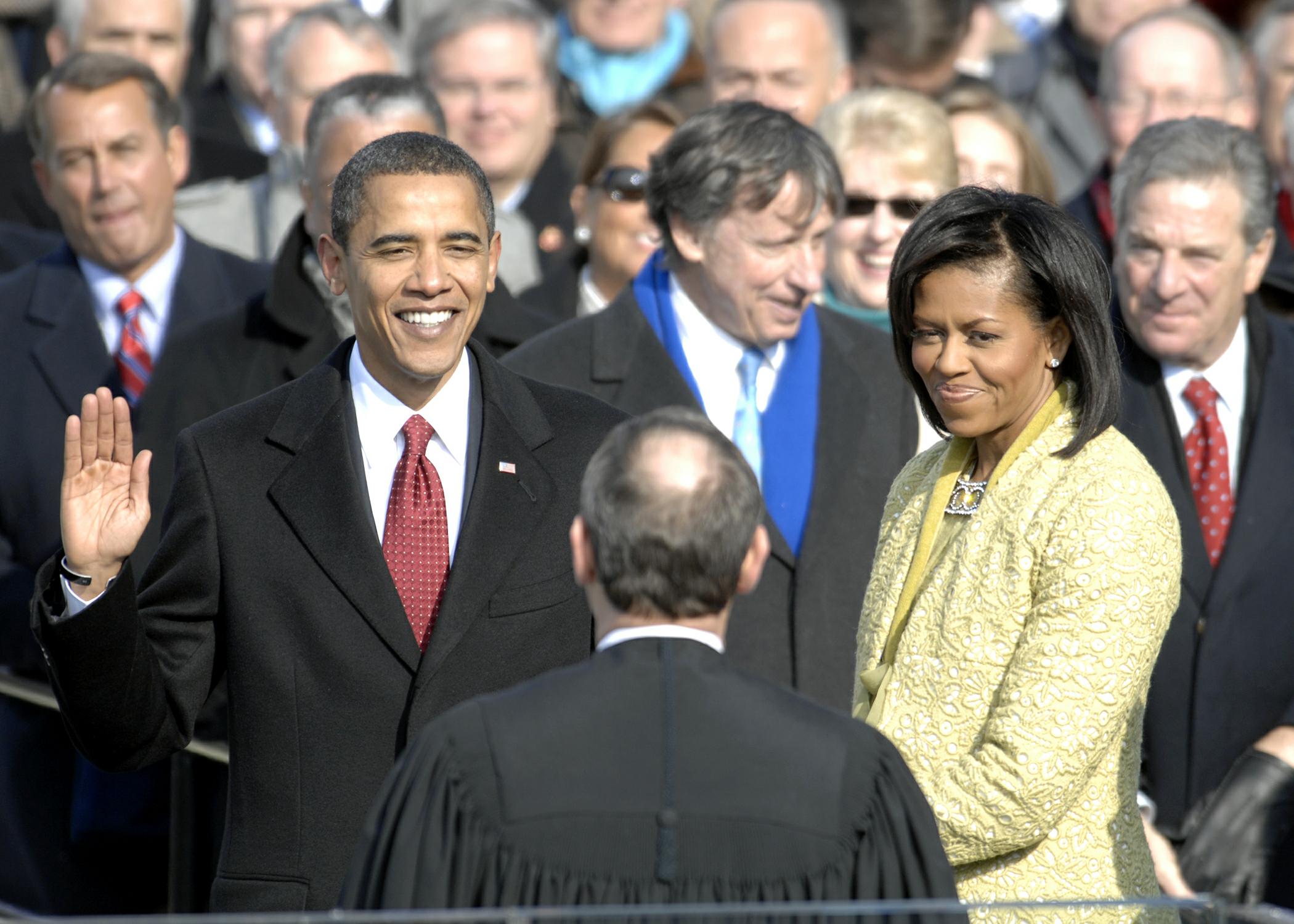
Barack Obama taking the oath
of office – January 20, 2009
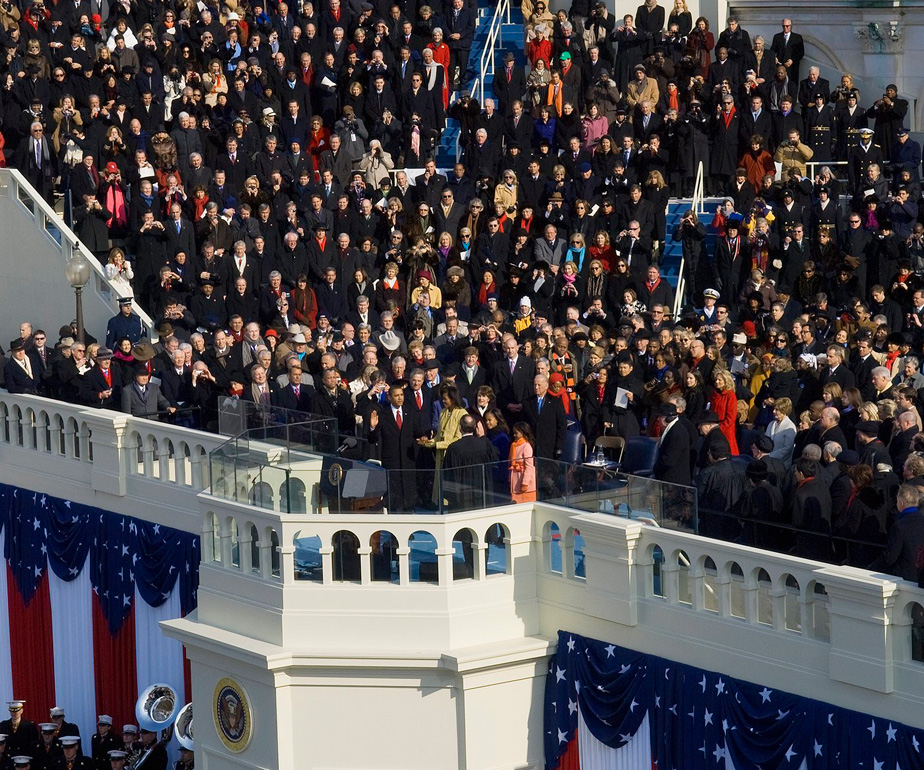
Barack Obama taking the oath
of office on January 20, 2009
at the U.S. Capitol.
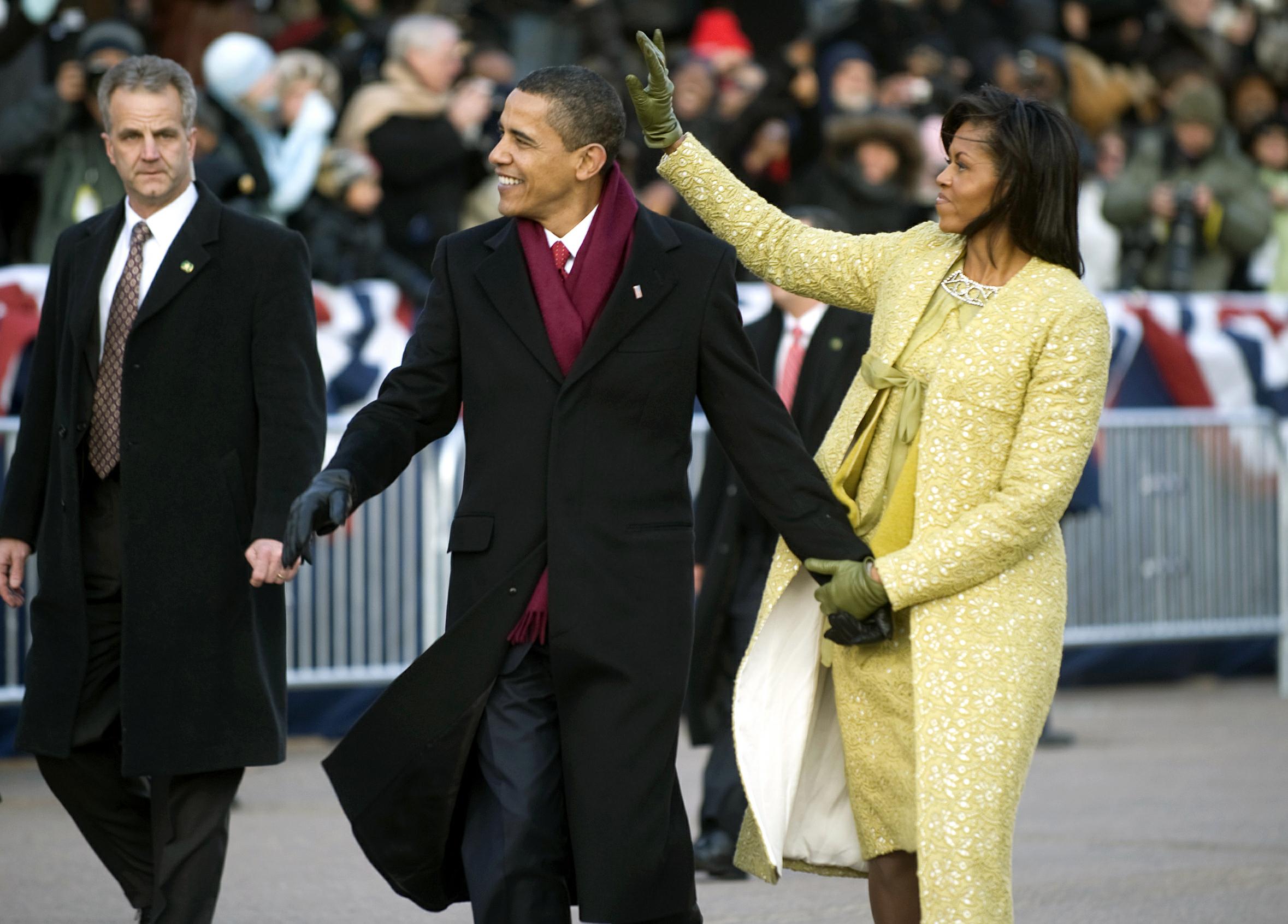
President Barack Obama and
first lady Michelle Obama
wave to the crowds lining Pennsylvania Avenue
during the
56th Inaugural parade, Washington, D.C., Jan. 20, 2009
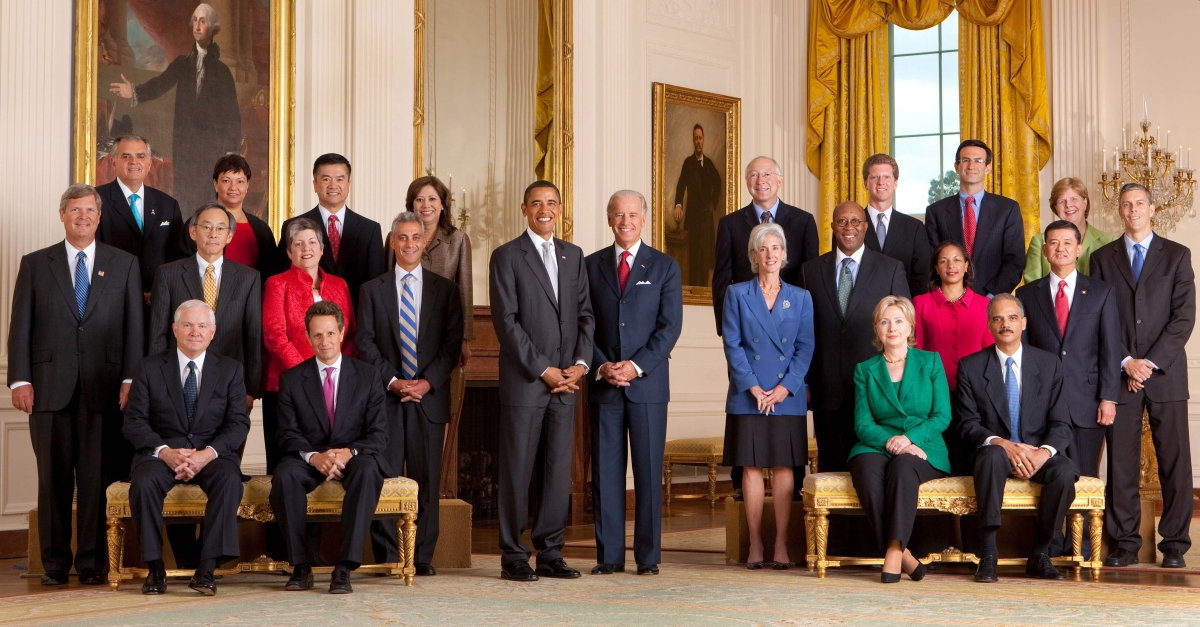
The Obama Cabinet -
2009
[2]The
senior Barack Obama was killed in a car accident in Kenya in
1982.
Expressed beautifully
in his New York Times best-seller, Dreams from My Father; A Story of
Race and Inheritance, New York: Crown Publishers, 1995.

Go on to the next section:
 Miles
H. Hodges
Miles
H. Hodges

 The 2008 candidates
 "Deep change"
  "Generation X"
  Barack Obama