11. THE 1970s: AMERICA DIVIDED
|
| VIETNAM |
The
very idea of Vietnam had become a matter of major
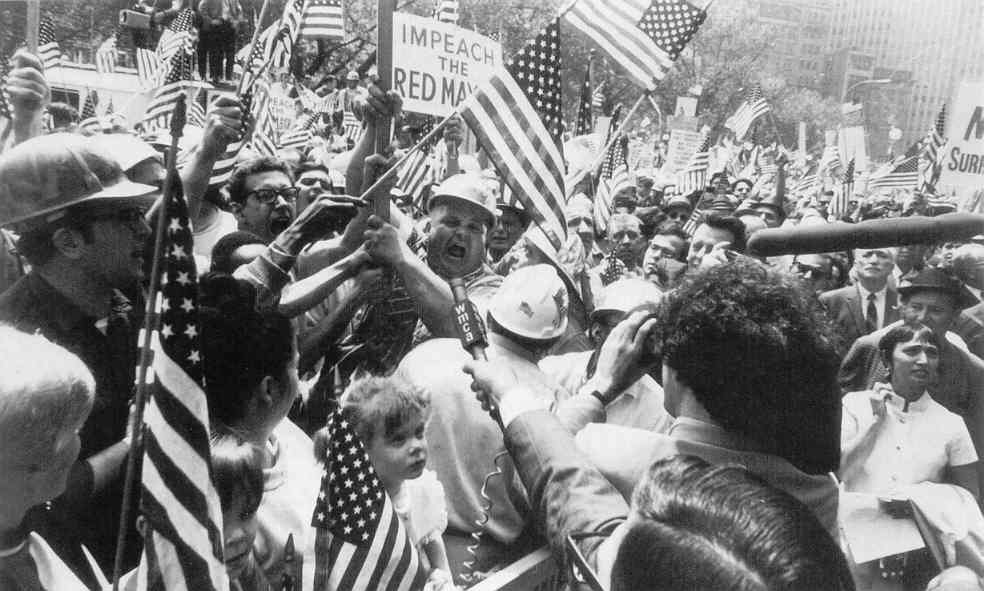
political crusade – not that both sides wanted different goals. Both sides wanted America out of Vietnam. But the two sides differed greatly – even
violently at times – as to the manner of that departure. Vets were hoping that there would be
some way to leave behind in Vietnam some measure of
accomplishment achieved by all the blood and social agony America had expended
in trying to "do the right thing" in Vietnam. But the Boomers wanted out now, yesterday
even, and they did not care how an immediate departure would leave Vietnam itself. They were very angry about having been called
to do pointless killing in Vietnam and they could see no reason
to stay a day longer there. They wanted
out now – and any voices calling for any other approach to the problem they
were willing to turn out in huge numbers to protest, shout down, and confront
violently if need be.
Being
able to pull any kind of success out of the Vietnam misadventure would not be
easy. But Nixon – who had promised America to "bring
the boys home" – would attempt to effect an American departure – yet at
the same time leave behind some kind of pro-American legacy. His goal was to force North Vietnam to back away from its support
of the South Vietnamese Viet Cong guerrilla fighters – and get Russia and China
to back away from their support of North Vietnam – so as to make it more
likely that North Vietnam would have to yield to Nixon's game plan.
But first he would have to make it clear that although America
would be transferring ground operations over to the South Vietnamese military
(the "Vietnamization" of the war), he would continue to offer
American air cover – a strategy in which America would hold a distinct
advantage over its Vietnamese adversaries.
The Viet Cong had used non-uniformed guerrilla fighters in opposing
clearly-identified American troops to great military advantage. But America had its own realm of distinct
military advantage: air power. And, as a political Realist, Nixon intended to go at the Vietnam challenge using fully that
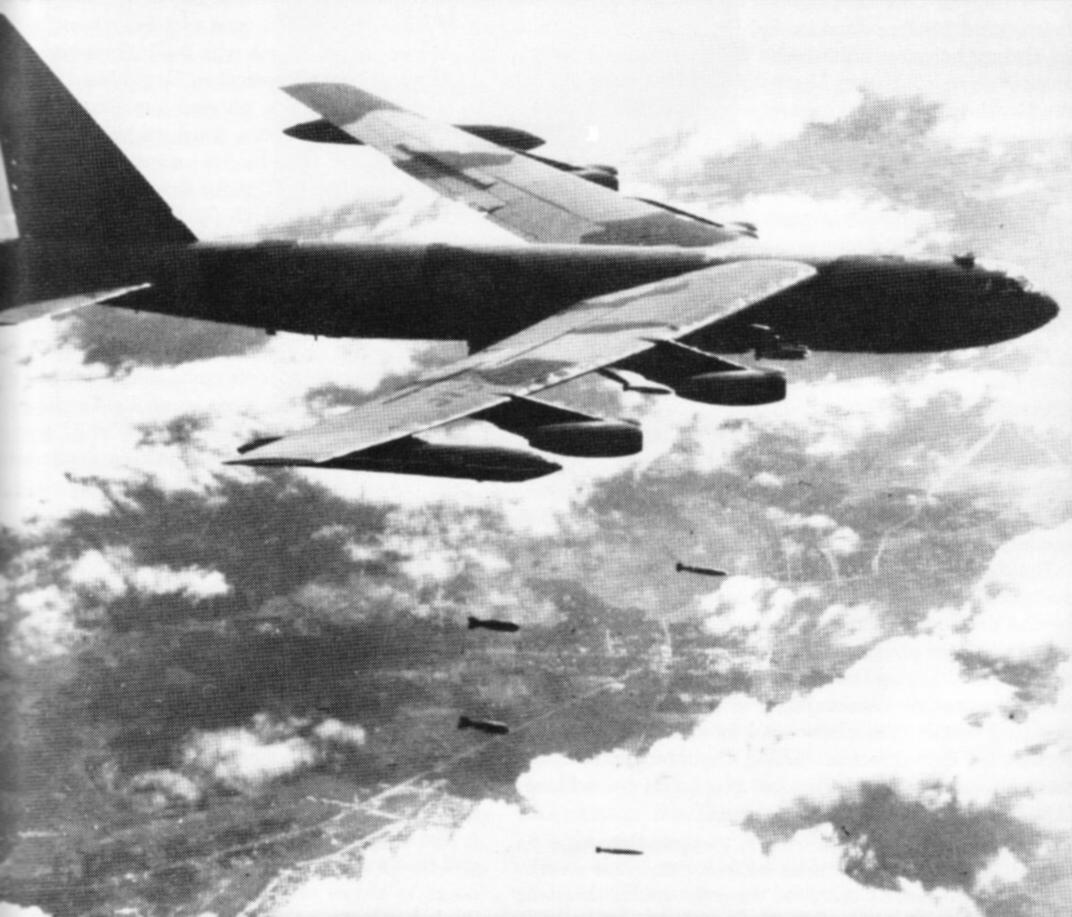
distinct advantage. Thus he immediately
ordered a new round of B-52 bombing raids in Vietnam – in anticipation of the
withdrawal of 60,000 troops scheduled to take place by the end of that first
year (1969) – the first round in the withdrawal of the 550,000 American troops
stationed in Vietnam. The plan was for a 15-step troop withdrawal,
to be completed by the end of 1972.
But
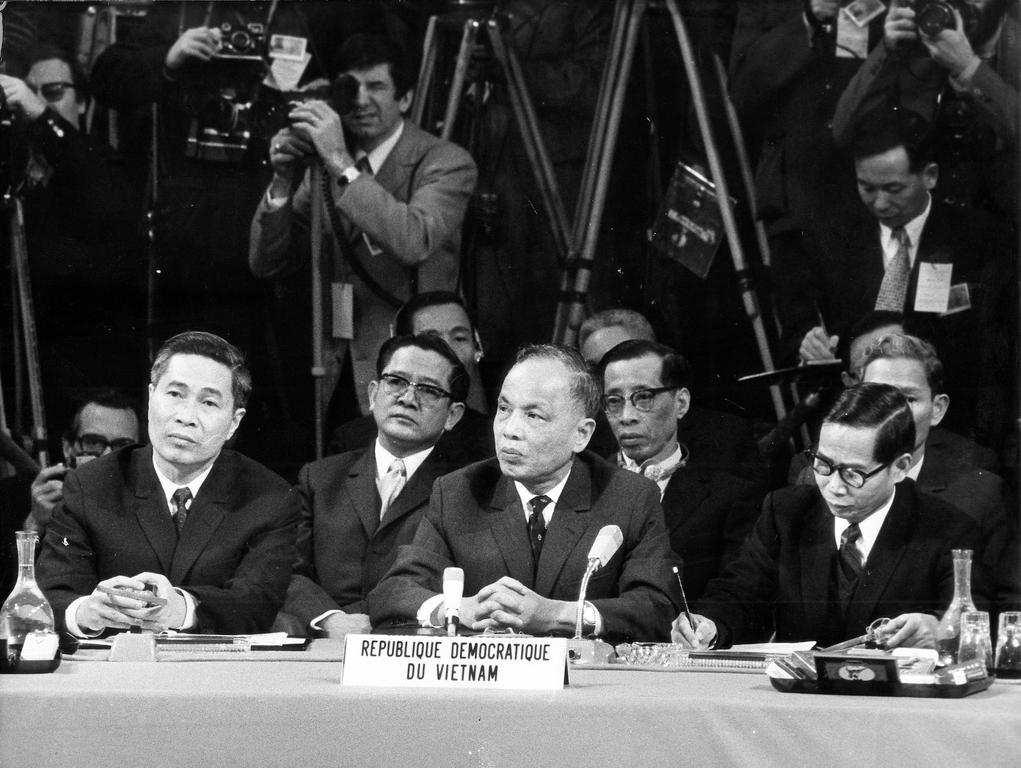
there was still ground-laying to be done in Vietnam at the same time. Peace negotiations between North and South Vietnam had long been dragging on in
Paris – a nervous South Vietnam facing a still aggressive
North Vietnam. Nixon decided to act – in order to
strengthen the position both on the ground and at the peace table by ordering a
withering assault (April 1970) on the Ho
Chi Minh trail – a military supply route running just inside the Cambodian
border next to South Vietnam by which the North brought
tons of military supplies south to the Viet Cong. This was something that Johnson had avoided
doing, supposedly so as not to drag a neutral Cambodia into the conflict. But Nixon was not slowed up by the fiction of
Cambodian neutrality. In any case, the
assault was highly successful – and crippled rather severely the Viet Cong
effort in the South.
| THE KENT STATE MASSACRE (MAY 1970) |
Such
"Fascist Imperialism" was exactly the enemy that Students for a Democratic
Society (SDS) leaders needed to energize their movement – and focus was turned
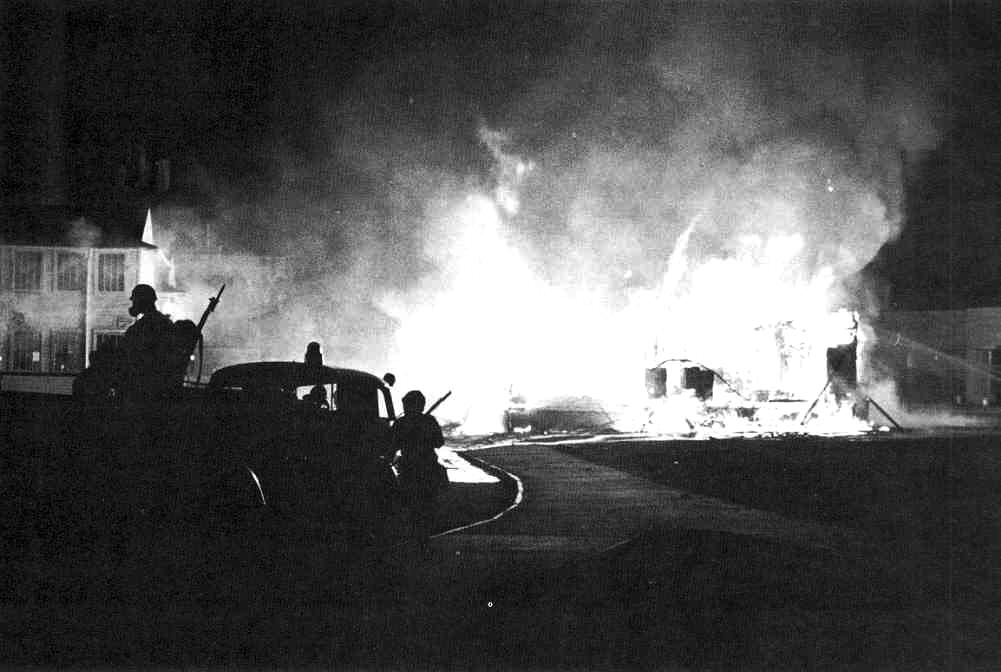
on the campus of Kent State University, where the SDS organized a huge protest,
including the burning to the ground of the Reserve Officers Training Corps (ROTC)
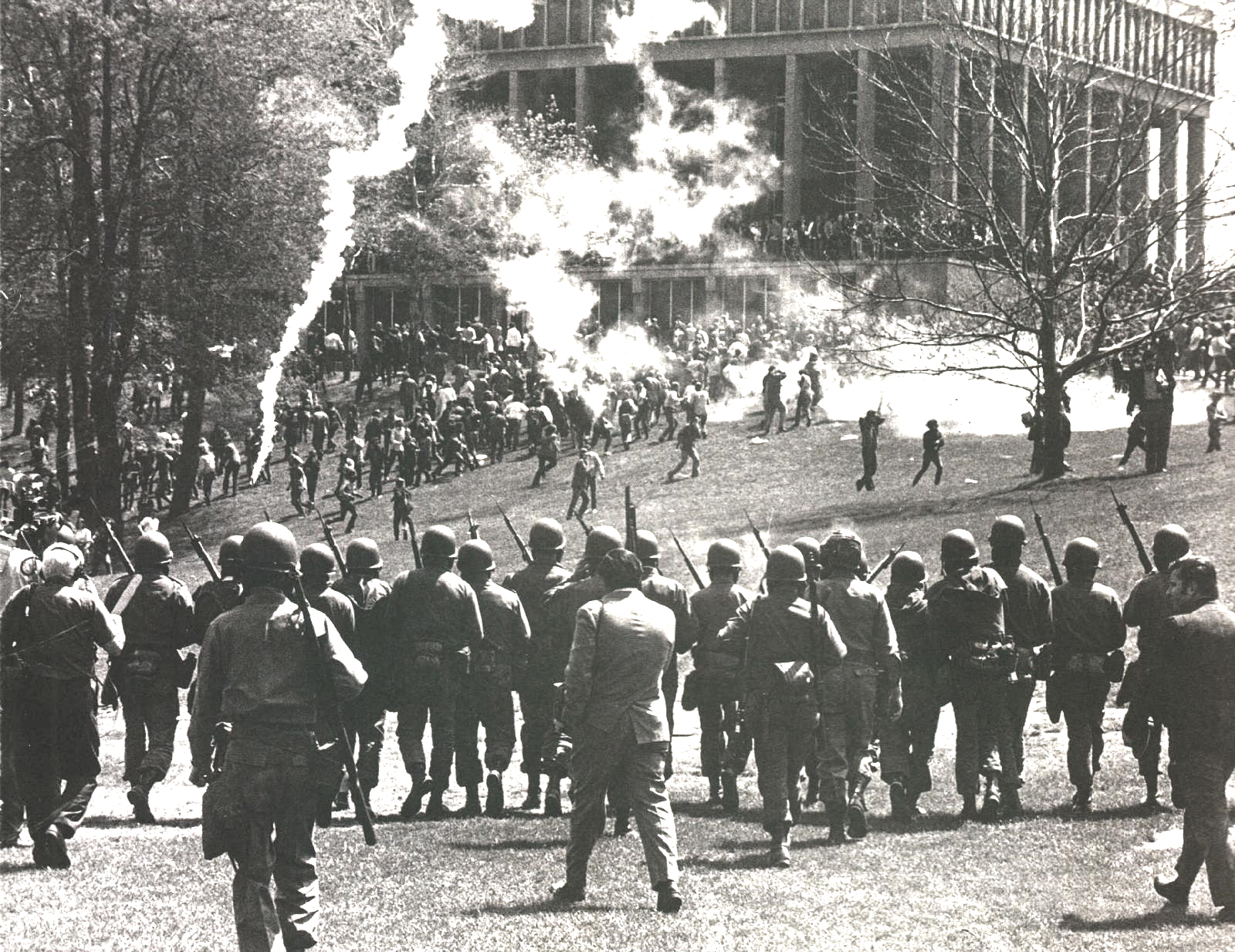
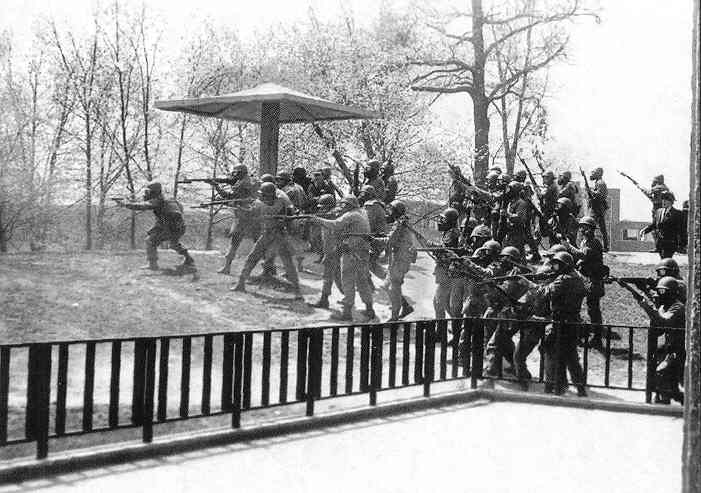
building on campus. However two days
later, when the SDS leaders called for yet a wider protest on the central
campus, protesters now found themselves faced by the Ohio National Guard –
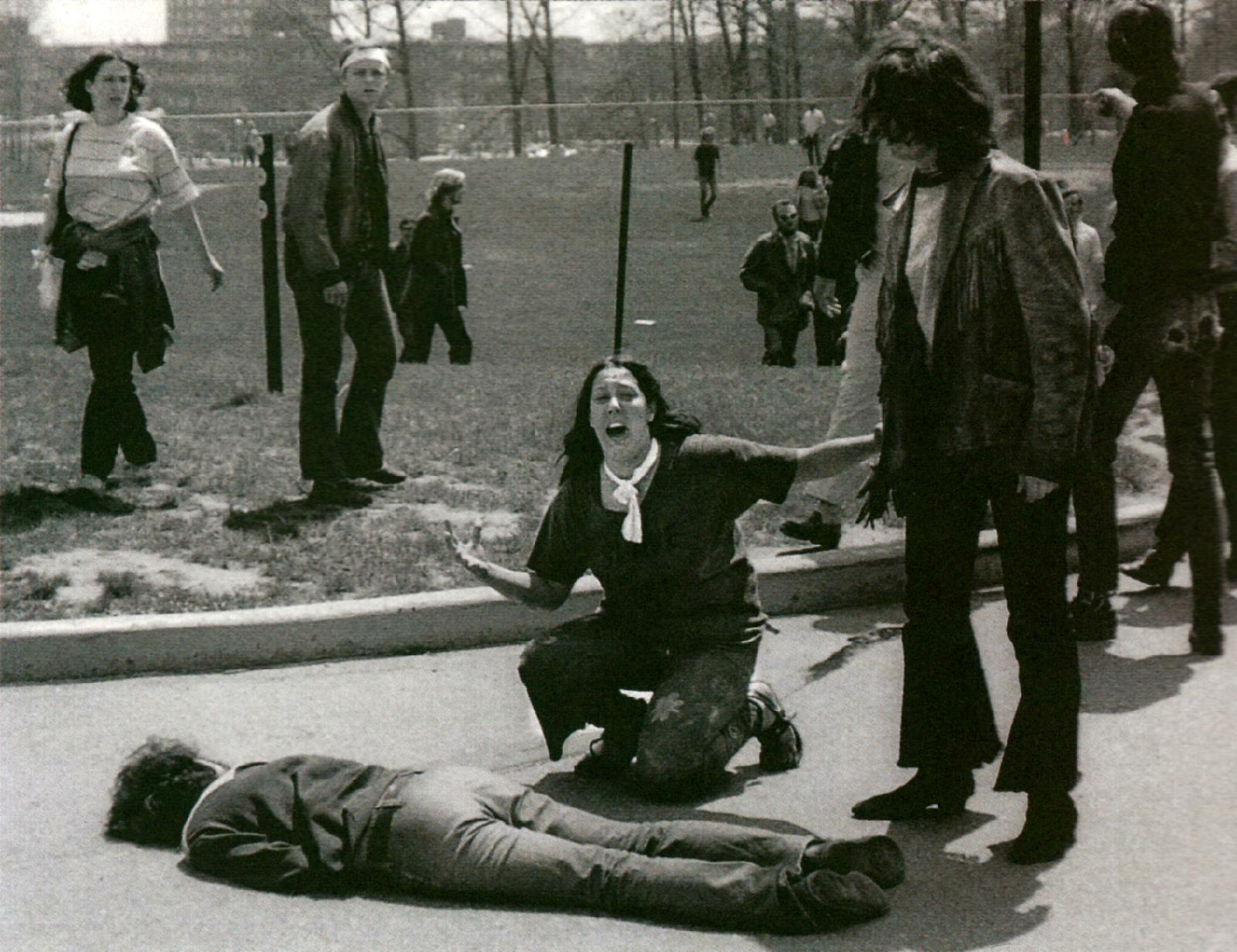
which had been called out to protect the campus from just such protests. Shots suddenly rang out, and four students
were killed and nine wounded – some protesters, some just observers of the
event and some just students crossing campus to get to another class. A major tragedy, one that would shake the
nation, had just taken place: the Kent State Massacre.
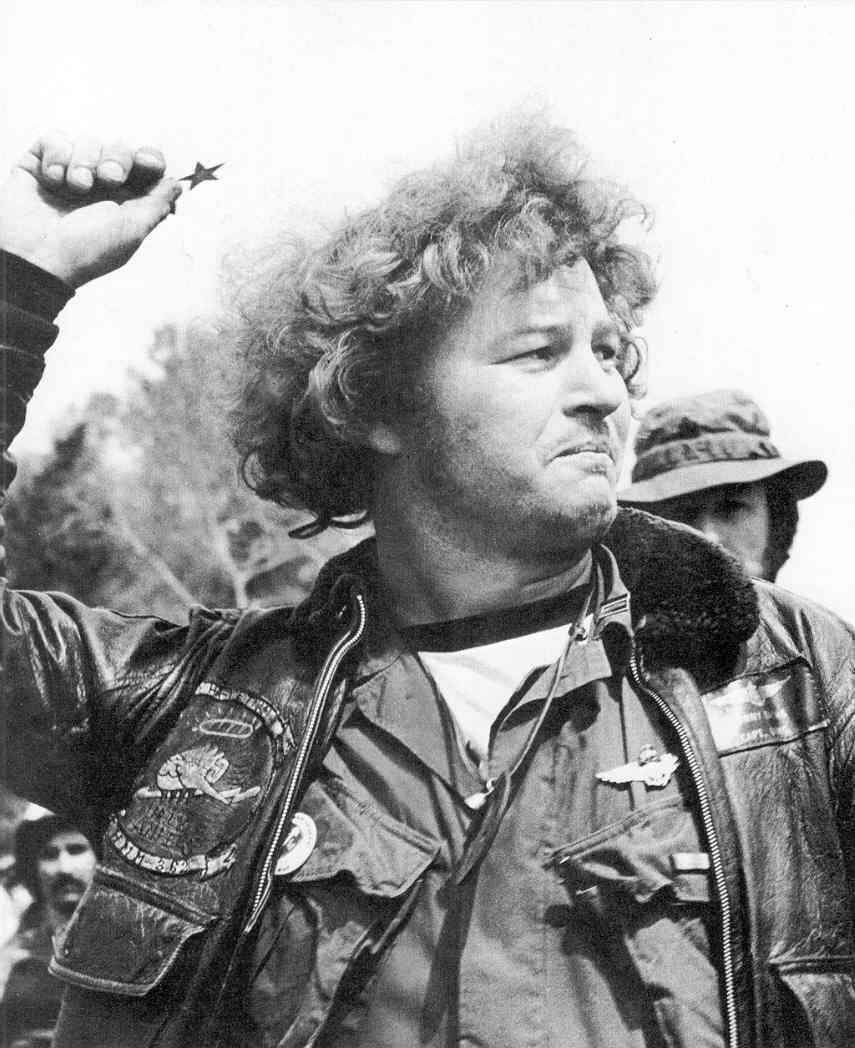
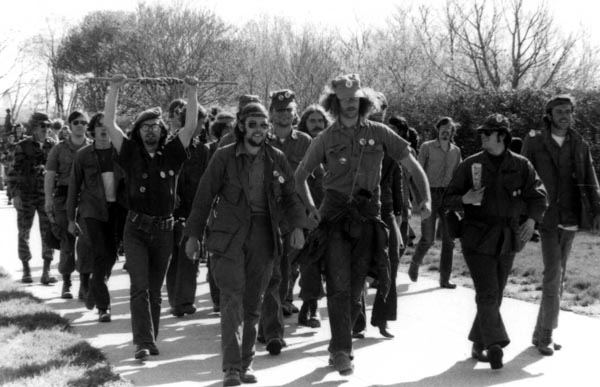
VIETNAM VETERANS AGAINST THE WAR
... not isolated incidents but crimes committed on a day to day
basis with the full awareness of officers at all levels of command.
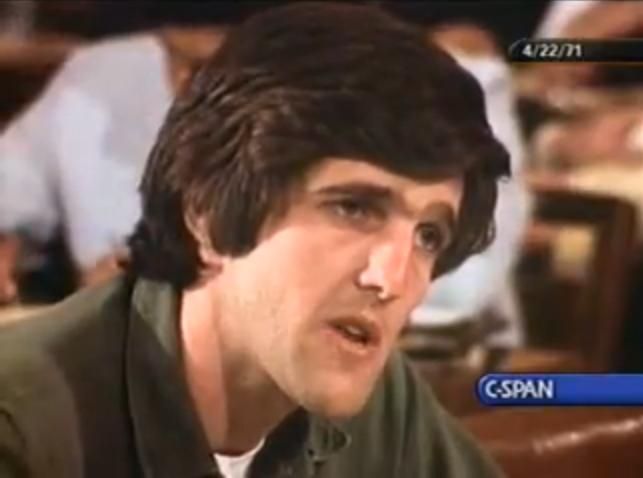
Kerry spared no detail in describing
the gruesome behavior – which he personally did not actually witness (he served
in Vietnam only four months), which
under American law therefore made his testimony mere hearsay:
They told the stories at times they had personally raped, cut off
ears, cut off heads, taped wires from portable telephones to human genitals and
turned up the power, cut off limbs, blown up bodies, randomly shot at
civilians, razed villages in fashion reminiscent of Genghis Khan, shot cattle
and dogs for fun, poisoned food stocks, and generally ravaged the countryside
of South Vietnam in addition to the normal
ravage of war, and the normal and very particular ravaging which is done by the
applied bombing power of this country.
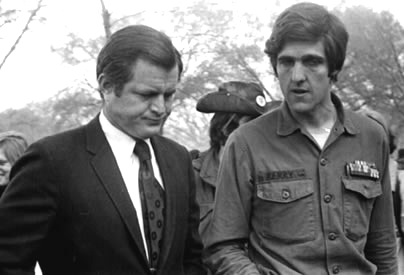
This act of "shaming"[1]
his fellow soldiers would not only bring considerable public attention to Kerry but open his way eventually to
service as Massachusetts Lieutenant Governor (1983-1985), following that as
U.S. Senator (representing Massachusetts, alongside Kennedy), and finally even
the Democratic Party presidential candidate in 2004. However the last achievement would be
undercut greatly when a number of men who had served in Vietnam came out in protest against Kerry's own service medals, claiming
that some were most undeserved – damaging considerably the Kerry campaign. But Kerry would make a grand political
comeback when President Obama appointed Kerry as his Secretary of State
(during Obama's second presidential term,
2013 through 2016). Such are the
enormous social rewards that come from the simple anti-Fascist act of shaming
America.
[1]The "shaming" of America became for the Boomers (and their
offspring) a kind of ideological vaccination supposedly protecting them from
falling victim to the Fascist disease of patriotism – a disease supposedly
rampant among their Vet parents. Being
visibly anti-patriotic or as Boomers termed the matter, anti-Fascist – for
patriotism and Fascism were the same thing in the Boomer lexicon – Boomers participated eagerly in protest marches, the
burning of flags, even the burning down of ROTC buildings, for instance. To them, participation in such group action
was a popular way of evidencing just such immunity to "blind
patriotism" – of manifesting a high degree of personal nobility. Thus Kerry’s
shaming of his fellow soldiers before Congress stood him out as a person of
enormous integrity and nobility. That’s
how things worked in those days (and generally since then): to be able to shame
America in some form or fashion automatically elevated a person to political
sainthood.
They
also were invited to speak before a Democratic Party controlled Congress about
their concerns – most notably a young (27) Lieutenant John Kerry, who was brought in by Senator Kennedy to describe the shocking
behavior of fellow soldiers in Vietnam – and the depravity of
American officers who covered up – even supported – such behavior:
THE PENTAGON PAPERS
The
nation was shocked – angered actually – by the knowledge that American
presidents had played the American people so deceptively – especially Johnson. But oddly enough, the anger – which should
have fallen largely on Johnson – was instead cleverly
redirected by Nixon's enemies at Nixon himself, who actually had no
part whatsoever in the Vietnam deception. Democrats did not bother to point out that
most of this scandal was a result of the (bad) political choices of the two
previous Democratic presidents ... but instead stressed the point that such behavior
was a natural outflow of the office of the presidency itself, an office which
had become intoxicated with its political powers. Thus to the Liberals of the Democratic Party
– and its followers in the world of media, higher education, and bureaucratic
professionalism – The Pentagon Papers clearly
underscored the grave dangers to American democracy and American personal
liberties posed by the "imperial presidency" – which Nixon clearly exemplified. Certainly therefore, America needed to do
something to curb such presidential imperialism – meaning, the ability of Nixon to effectively conduct the
office of U.S. presidency. Presidential
power needed to be trimmed back – drastically.
DETENTE – AND THE FULL WITHDRAWAL OF AMERICAN TROOPS FROM VIETNAM
[2]The
French word détente,
means a relaxing or backing down.
But
he had also been busy on the larger world stage – working to improve East-West
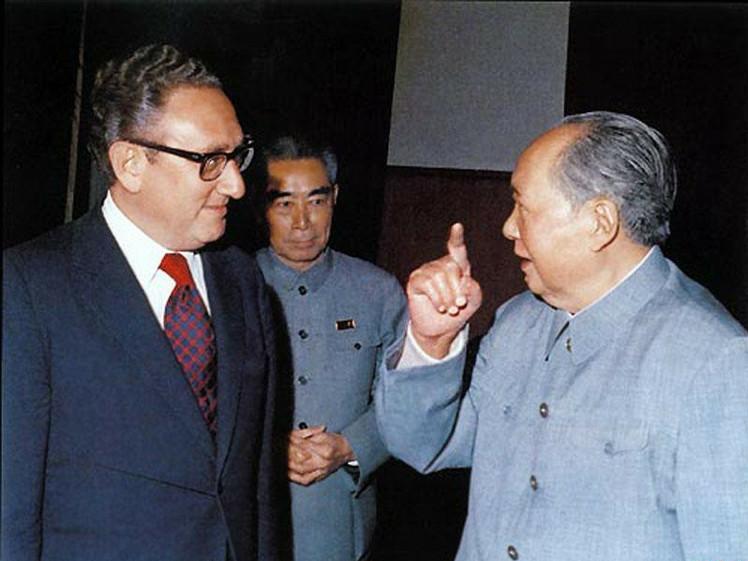
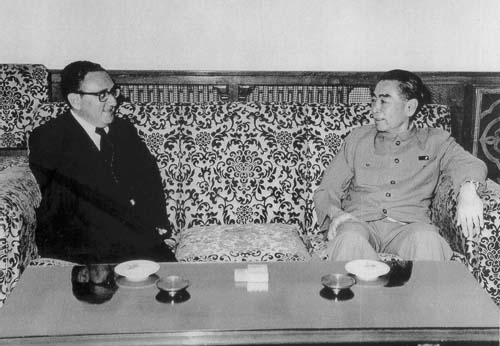
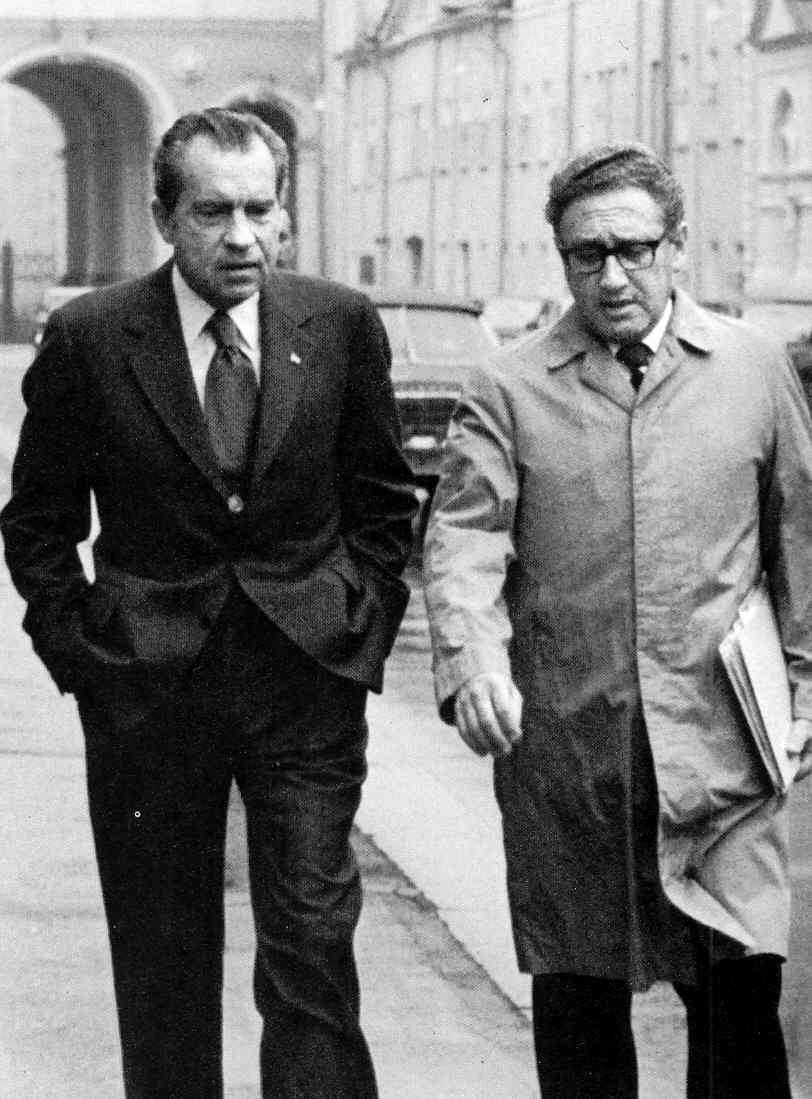
relations – but also with an eye on helping smooth America's exit from Vietnam. He had sent Kissinger off to China to explore the
possibilities of improved Chinese-American relations – a diplomatic initiative
helped by the fact that Chairman Mao had been moderated greatly in his
political behavior by the grand failure of his Cultural Revolution – allowing
the more sensible Chinese Foreign Minister Chou En-lai (Zhou Enlai) to take a
stronger hand in shaping Chinese foreign policy. And having once been the militant
anti-Communist congressman (in the late 1940s) no one could fault Nixon as being soft on
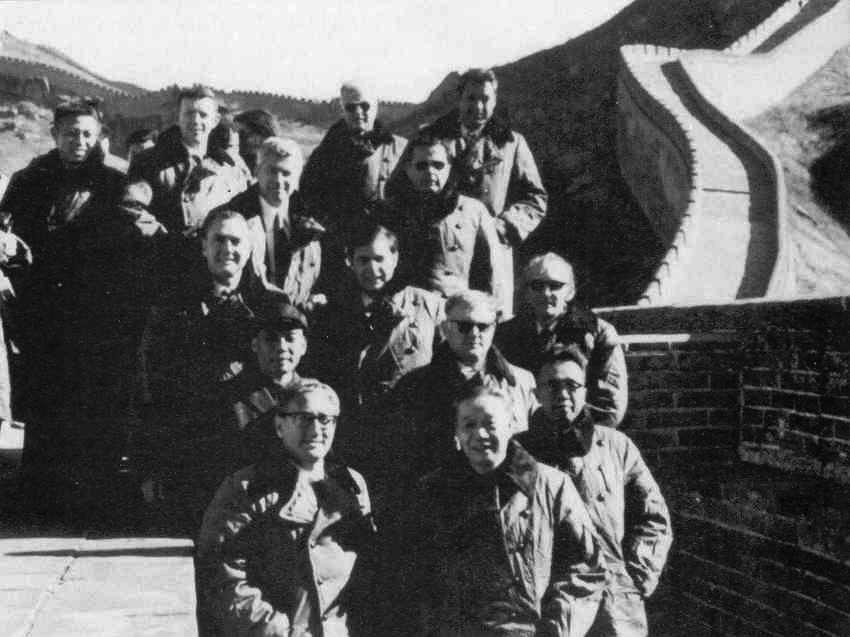
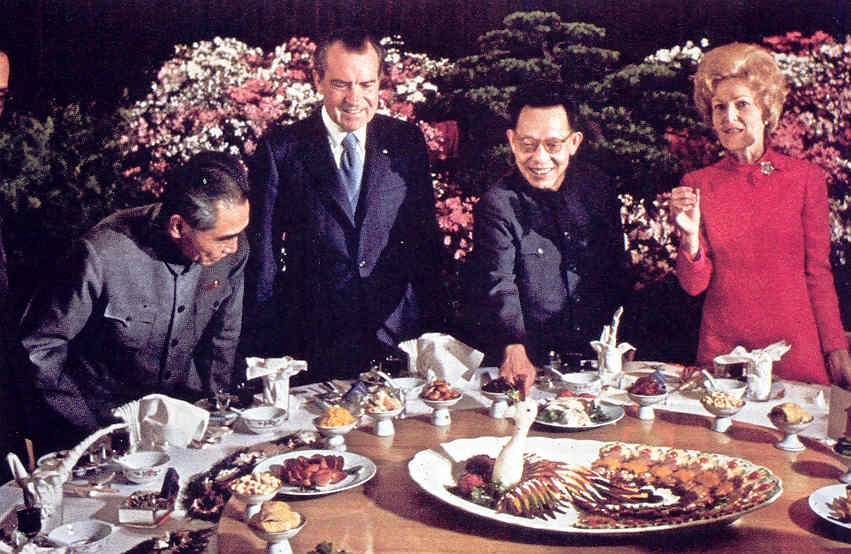
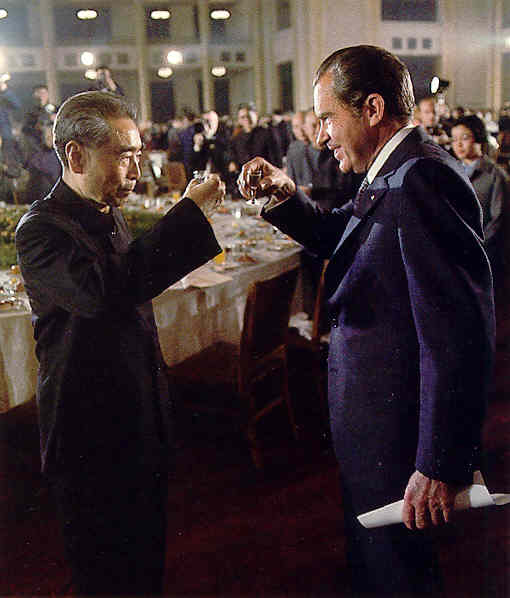
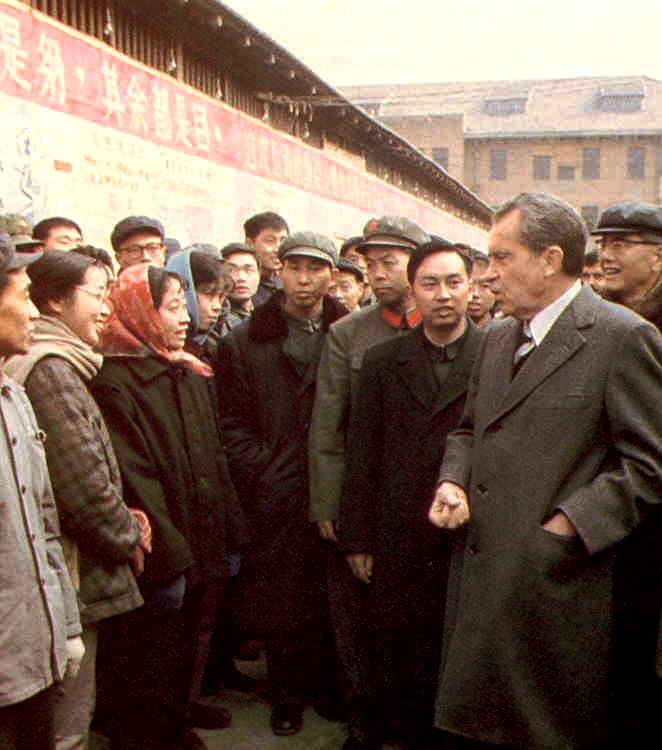
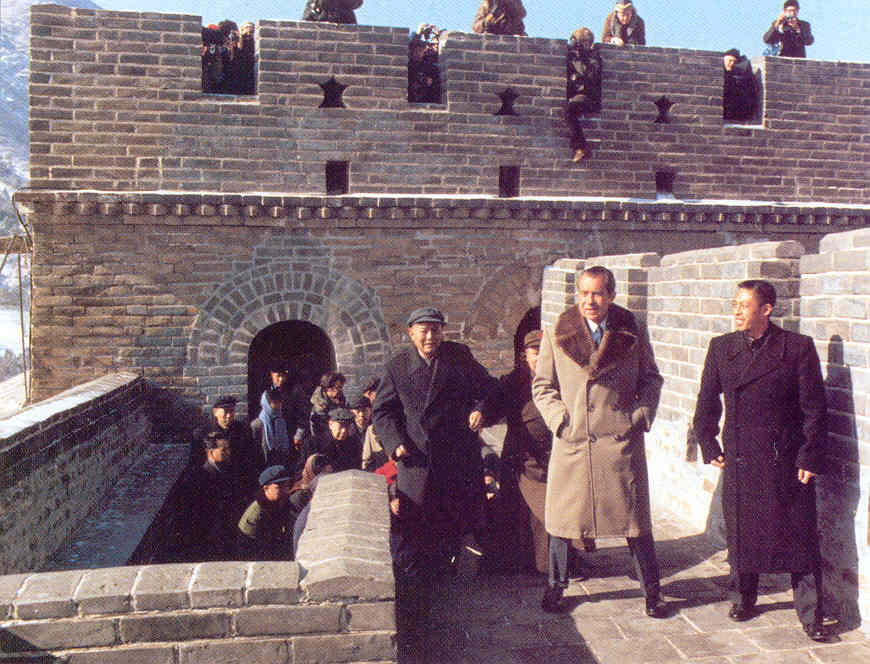
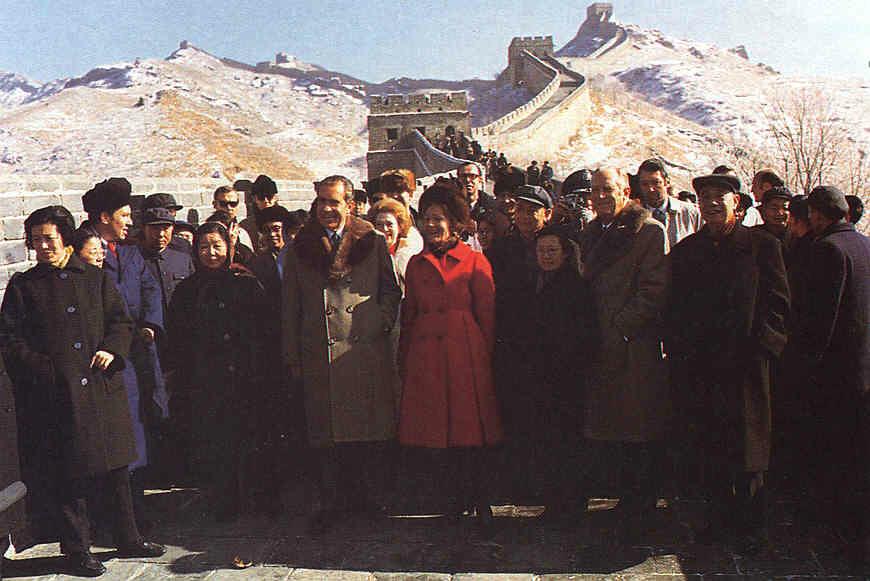
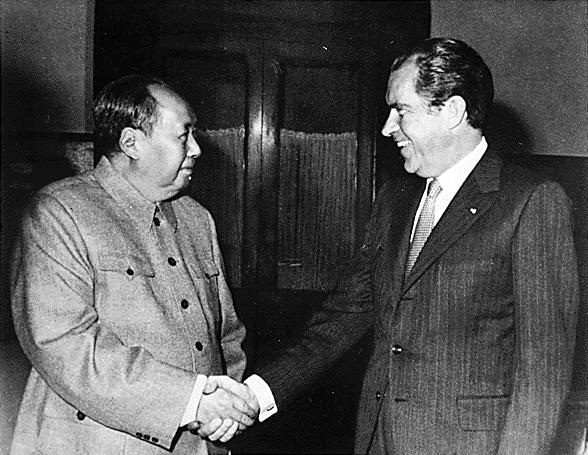
Communism. And thus it was that in
February of 1972 Nixon himself flew to China to follow
up on the program of improving relations with China. The 25-year American boycott of mainland
China had come to an end.
But
at the same time Nixon took the same diplomatic line
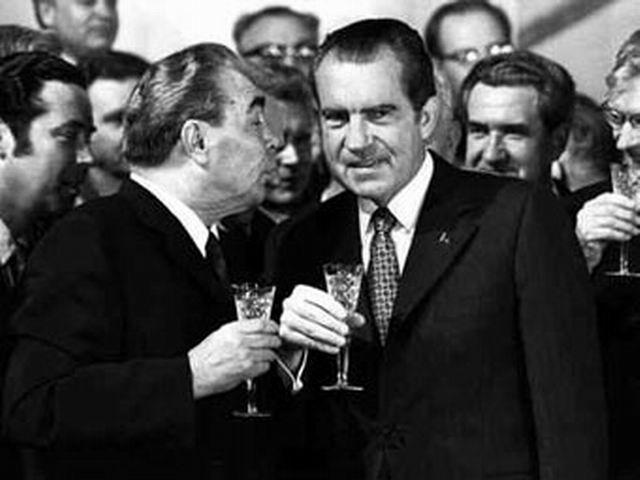
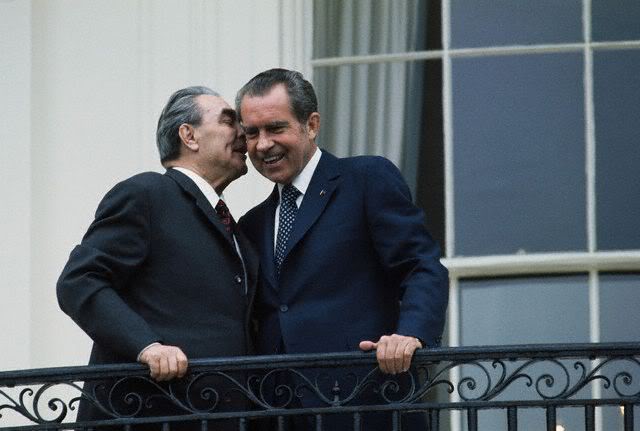
toward Soviet Russia – just three months later (May 1972) flying to Moscow to
open talks with Soviet Premier Brezhnev about the possibility of
working together to bring the arms race under some kind of control. The reception in Moscow was highly positive.
Actually,
Nixon and Kissinger were playing the Realpolitik game – playing to the
weaknesses of their Cold War adversaries – knowing full well that China
and Russia, though both being Communist nations, were bitter rivals on
the
stage of world diplomacy. Cutting back
on the tensions (popularly termed a détente)[2]
between America and these two nations would strengthen both Russia's and China's
hand in their mutual rivalry. But this
assistance from America would come at a cost: Nixon intended to link (the policy of "linkage")
these improved East-West relations with some kind of understanding that America
now expected both countries to back away from their support of Nixon's adversaries in North Vietnam.
NIXON'S RE-ELECTION (NOVEMBER 1972)
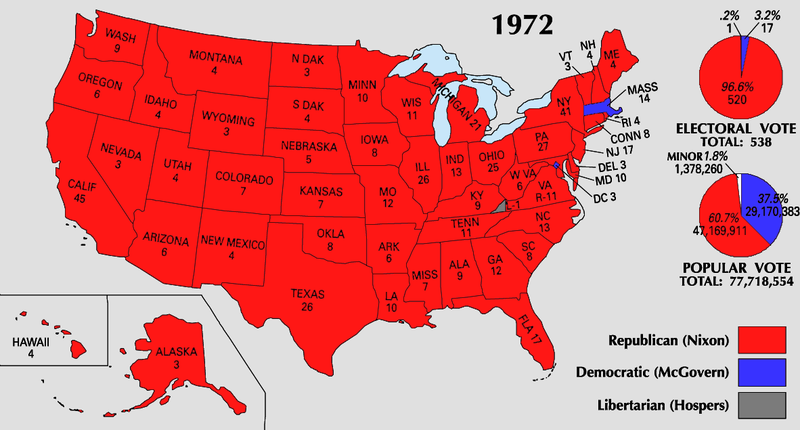
[3]Nixon
received 60.7% and McGovern 37.5% of the popular vote; the electoral college vote went
520 votes for Nixon against a mere 17 votes (14 from the very Liberal Massachusetts
and 3 from equally Liberal Washington, D.C.) for McGovern.
But
all that pro-Nixon enthusiasm did not however
alter the makeup of Congress itself – with both the House and Senate remaining
under a Democratic Party majority and thus control. Consequently, the battle lines between the
Republican White House and the Democratic Congress would merely harden because
of the 1972 national elections.
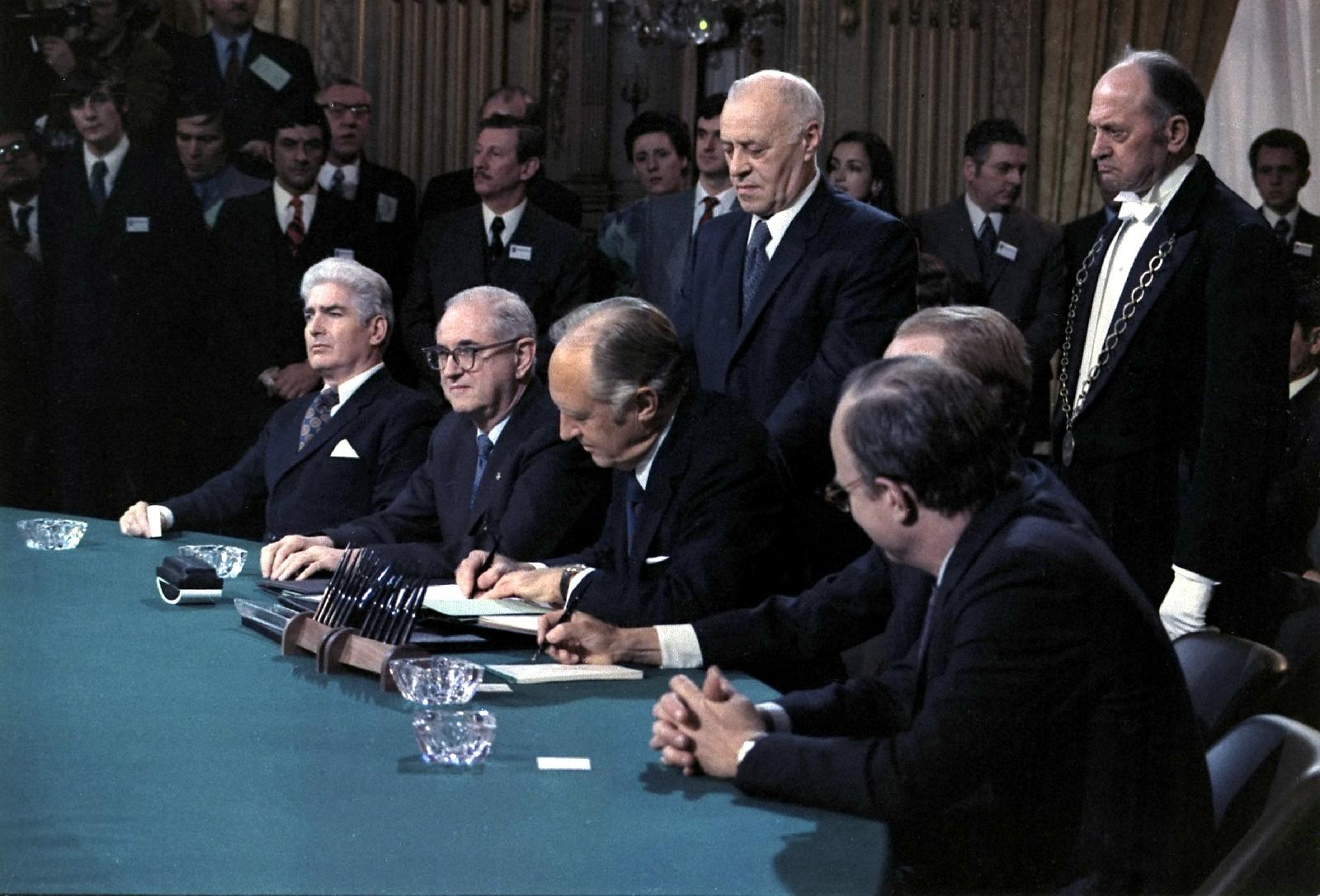
THE 1973 PARIS PEACE ACCORDS
While
Nixon's enforced peace in Vietnam made great sense in terms of
international Realpolitik, it was a policy greatly
weakened by one key fact: the Democrats
in Congress were in no mood to support Nixon's success in any field of
endeavor – and would do everything in their power to embarrass and handicap Nixon's ability to conduct "imperialistic"
American foreign policy. This would soon
become quite apparent.

Go on to the next section: Nixon's Chaotic Second Presidential Term
Miles
H. Hodges