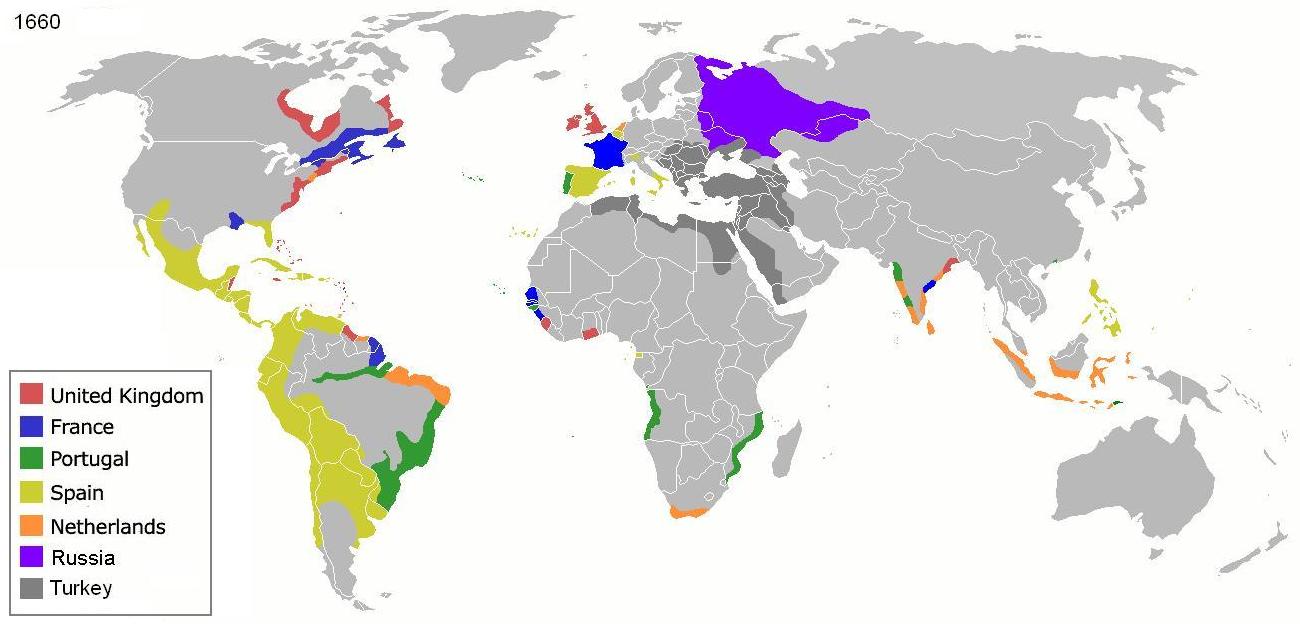
The Spanish and Portuguese had shown little interest in North
America, although they considered the Atlantic Ocean their private domain and
thus blocked efforts of other European powers to explore the New World. But after the Spanish had suffered a number
of defeats, the opportunity to explore and secure the riches of the New World
(American furs were particularly popular) both the French and the Dutch got
into the act.
But
the French sent not only explorers (Cartier, 1530s; Champlain, early-1600s;
Joliet mid-1600s) to what would eventually become New France (basically Quebec
and the Maritime Provinces), they sent Jesuit priests (for instance, Father
Marquette, mid-1600s) to claim Indian souls for the Church, not just along the
St. Lawrence riverway but well beyond that into the Ohio region and then
finally down the Mississippi River, establishing French outposts along the way.
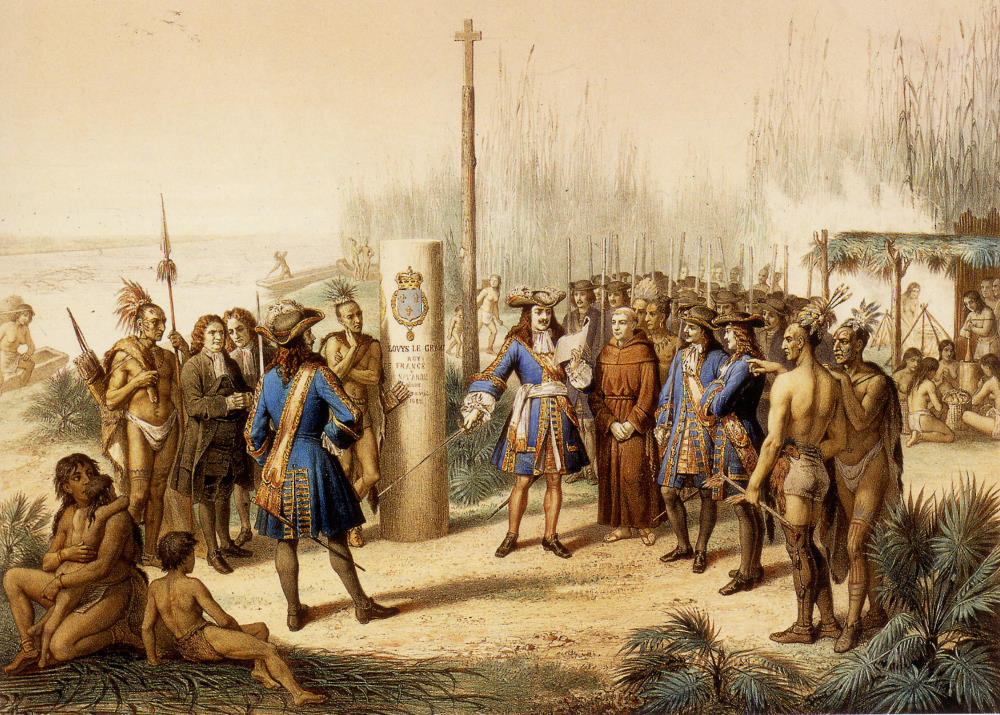
La Salle claiming the lands
of the Mississippi valley
as he stands at the mouth of the river – April
9, 1682
The
Dutch meanwhile hired the English explorer Henry Hudson to do some exploring
for them along the middle reaches of the North American Atlantic coastal region,
where, in 1609, he discovered a river (named after him) which he hoped would
provide the greatly hoped-for passage through the Americas to the Pacific Ocean
and thus also to the wealth of Asia across that great ocean. Although that plan did not work out, it
enabled the Dutch in 1615 to place a trading post (for valuable Beaver pelts)
up that river at Fort Nassau (Albany), soon to be joined by another Dutch
settlement (1624) at the mouth of that river at Manhattan (New Amsterdam), and
also claim the land between these two settlements, which became the basis of
New Netherland. Then the Dutch attempted
to expand that position further south into what today constitutes New Jersey
and Delaware.
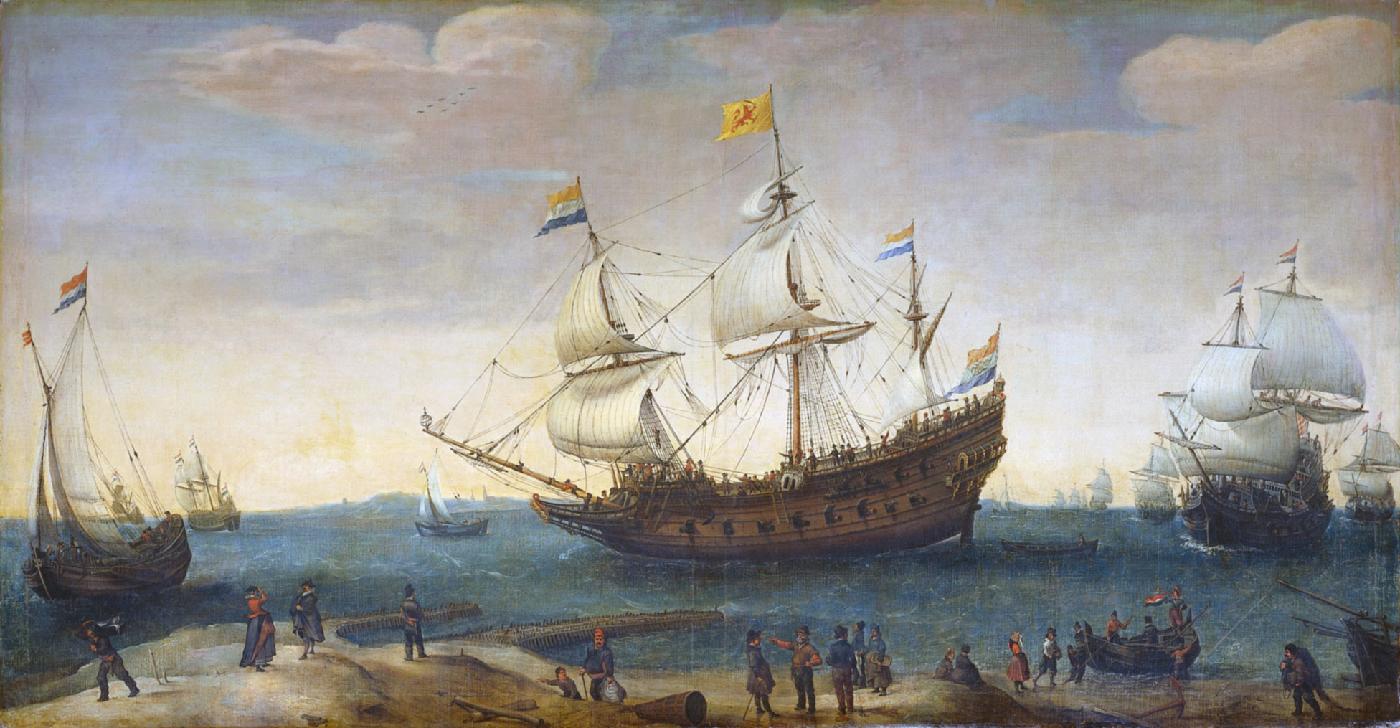
Dutch East-India trading ships – by Hendrick Cornelis Vroom (1600)
Amsterdam,
Rijksmuseum
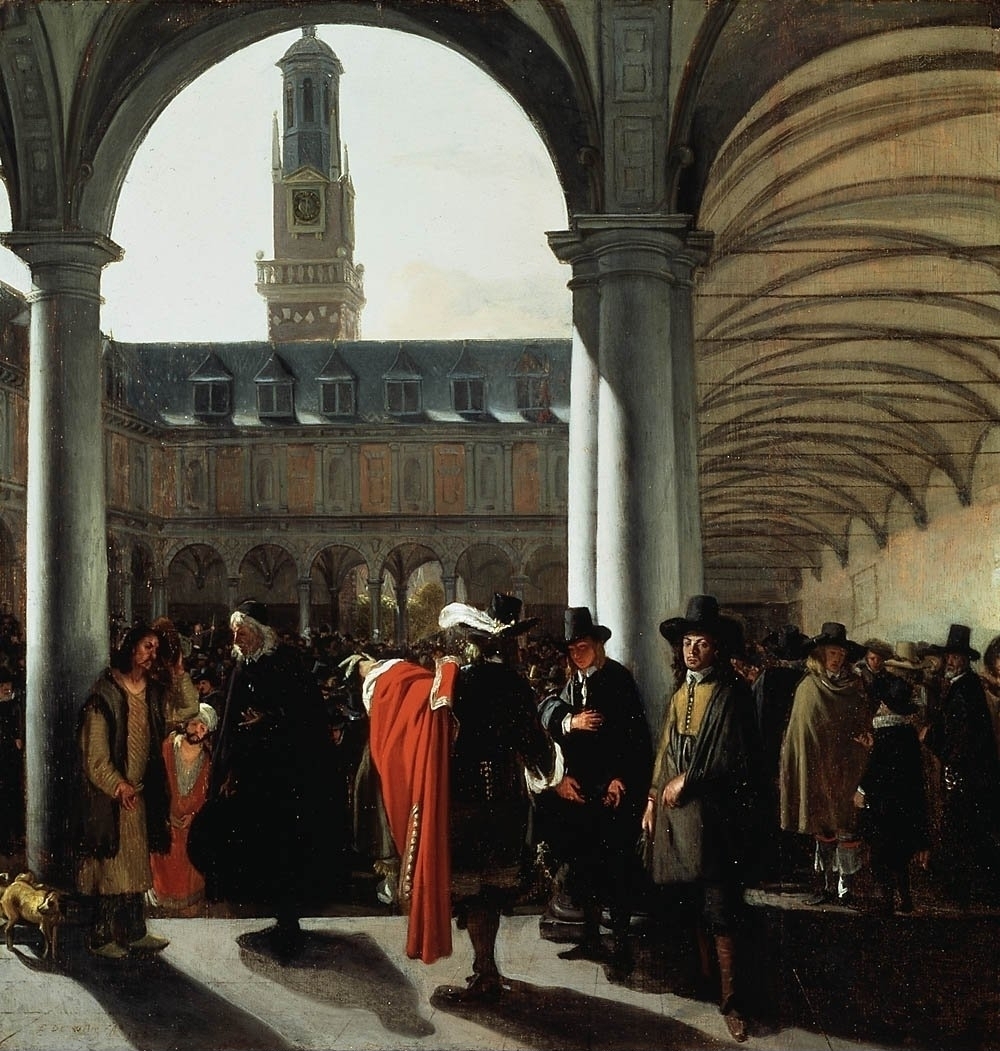
Emanuel de Witte
– Courtyard of
the Exchange in
Amsterdam (1653)
Museum Boijmans Van
Beuningen
Go on to the next section:
 Miles
H. Hodges
Miles
H. Hodges

 The Spanish colonies
 Portuguese Brazil
  The French and Dutch in North America