<


2. GETTING STARTED IN AMERICA

THE ENGLISH SETTLEMENT IN NEW ENGLAND


CONTENTS

The Plymouth Plantation

The Puritan "Great Migraton" to Massachusetts (1630-1642)

Rhode Island and Connecticut

Troubles with Anne Hutchinson

Relations with the Indians


The textual material on this webpage is drawn directly from my work
        America's Story – A Spiritual Journey © 2021, pages 53-62.

THE PLYMOUTH PLANTATION

Persecuted "Separatists."  Meanwhile another English settlement was in the making – but of a very different nature.  It began in the Dutch Netherlands (at Leiden), to which in 1607-1608 a group of English Calvinists of the "Separatist" variety had fled in order to escape the persecution they were experiencing in England.  They were labelled "Separatist" because they had given up all hope that the Church of England would ever be reformed to Puritan standards and simply wanted to "separate" themselves from the English Church, something King James felt amounted to treason.

But it had not been an easy time in Leiden for these English "
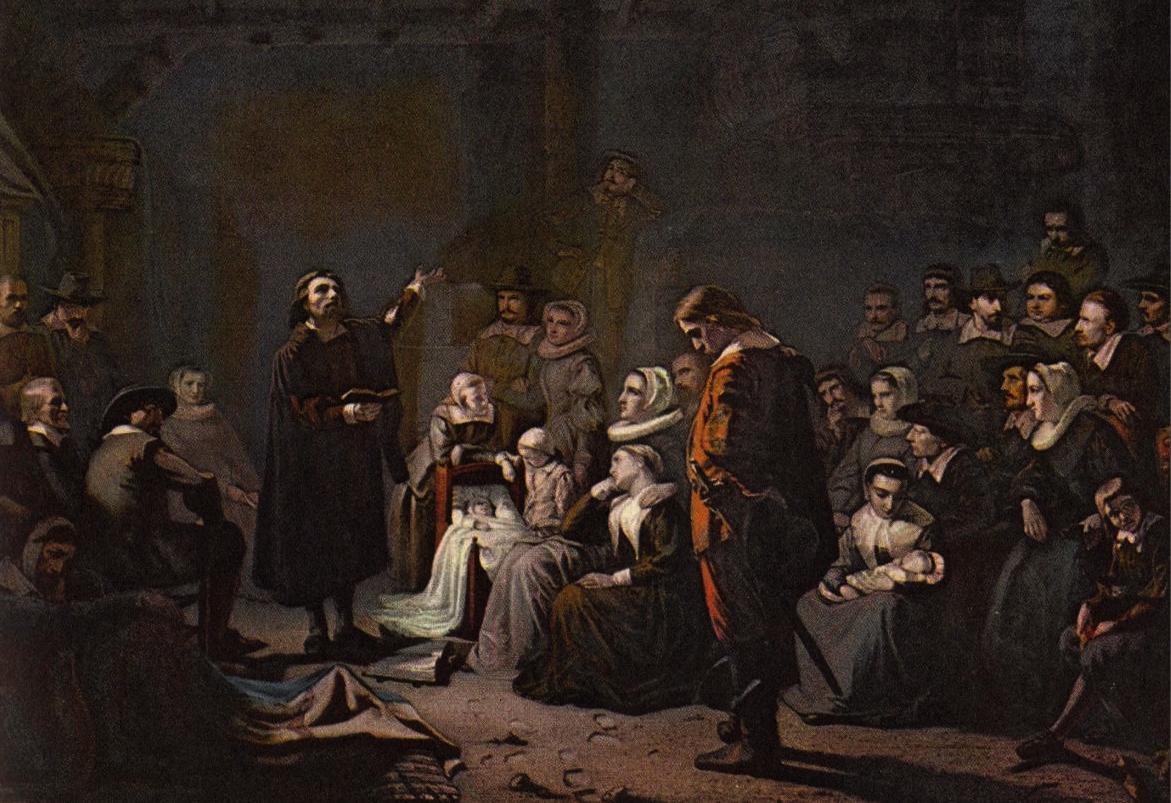
Pilgrims", as only some of them possessed technical skills that could find work there, the rest being simply of a farming background and thus having to take menial jobs just to survive.  Also these Pilgrims wanted to retain their English identity, which seemed to hold less importance among their youth, who were taking up the Dutch language and its more libertine ways.  And Dutch politics was bringing them under pressure, as the English King James was leaning on the Dutch authorities to suppress the English Separatist communities taking refuge in their land … at a time that the Dutch needed English support in the face of ongoing Spanish efforts to defeat the Dutch and force them back into Catholicism.

Thus after ten years at Leiden, the 
Pilgrims knew they had to move on.

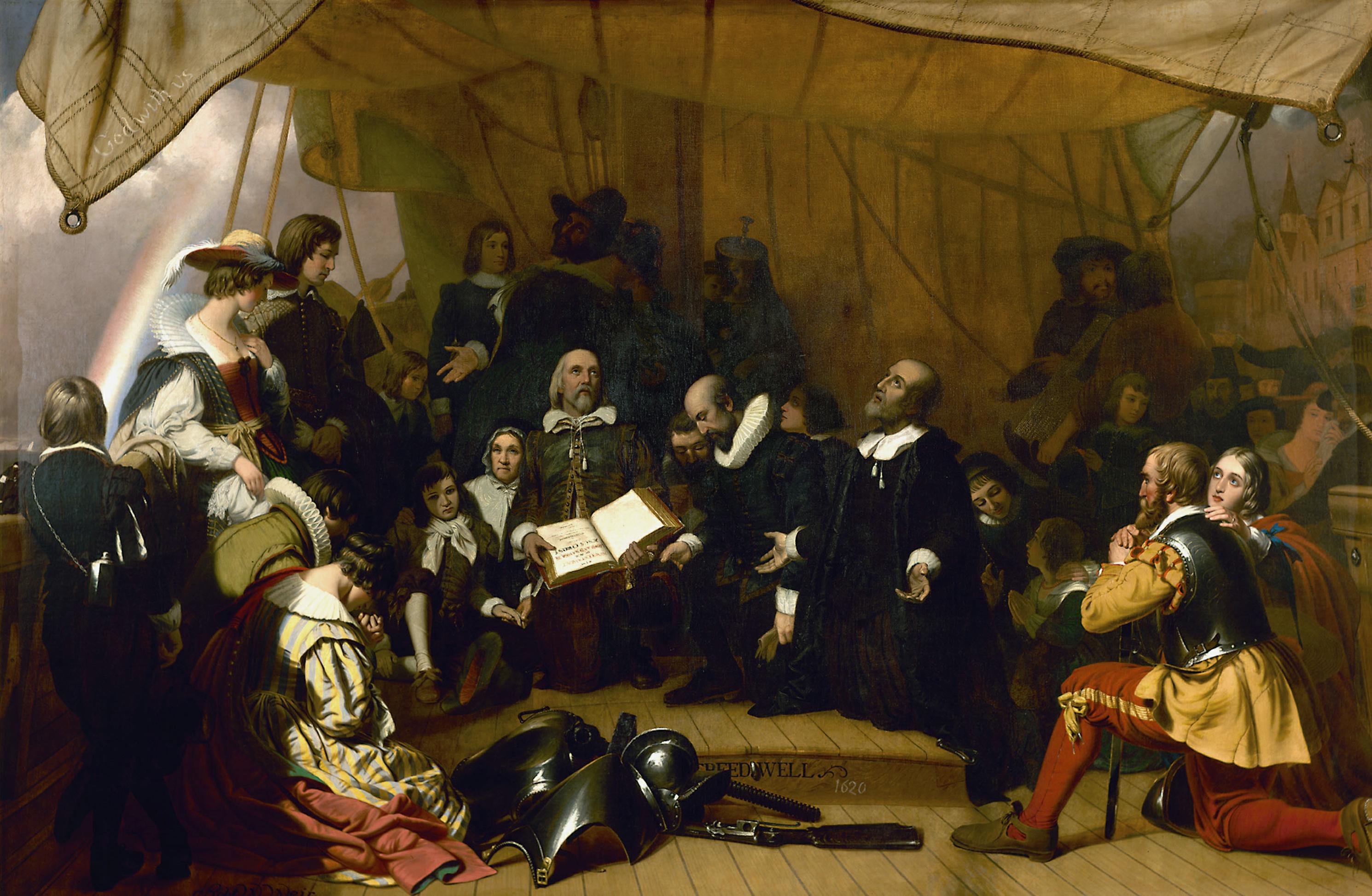
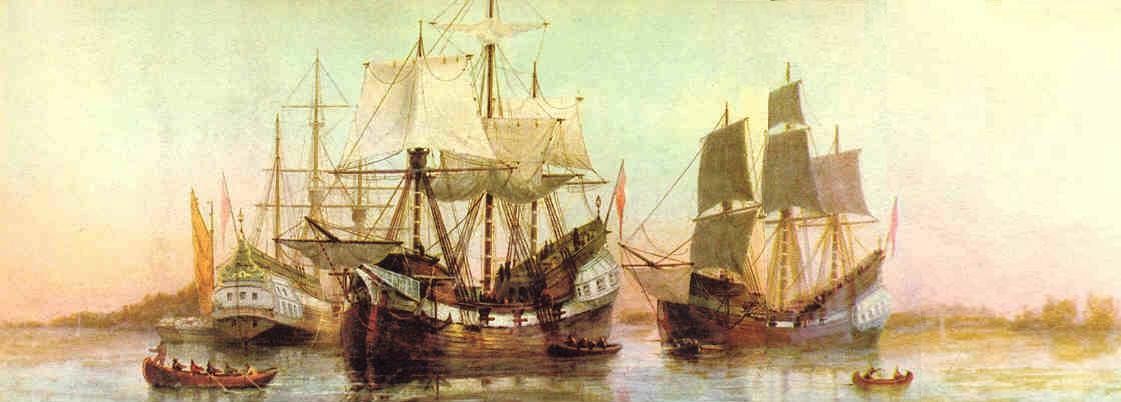
The Plymouth Plantation and the Pilgrims.  Finally, the English refugees chose to make that move to North America, despite the horror stories concerning the "dying times" that accompanied all English attempts at settlement there.  They had a social ideal as a "Reformed" Christian community to live up to, in America if need be.  And they would meet this responsibility no matter what the cost might be.  They were like soldiers going off to war, except their war was in service to God, not any king, not any bishop, not any such human authority.

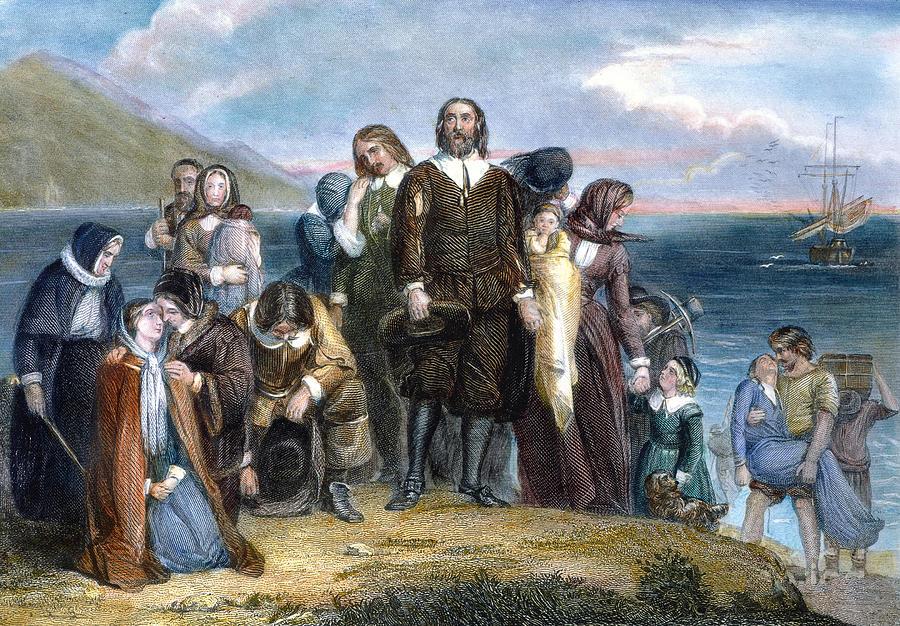
Tragically, these Pilgrims suffered a huge delay in their departure (a leaking ship forced them to return to port, then try again) and consequently they arrived late in the season (November) at a destination in America that proved to be well north above where they were assigned to settle.  Also, the prevailing winds that had blown them north of their course prevented them from heading south along the American coast to that intended destination (the Hudson River area).  Thus they were stuck there at Cape Cod – just as winter set in upon them.

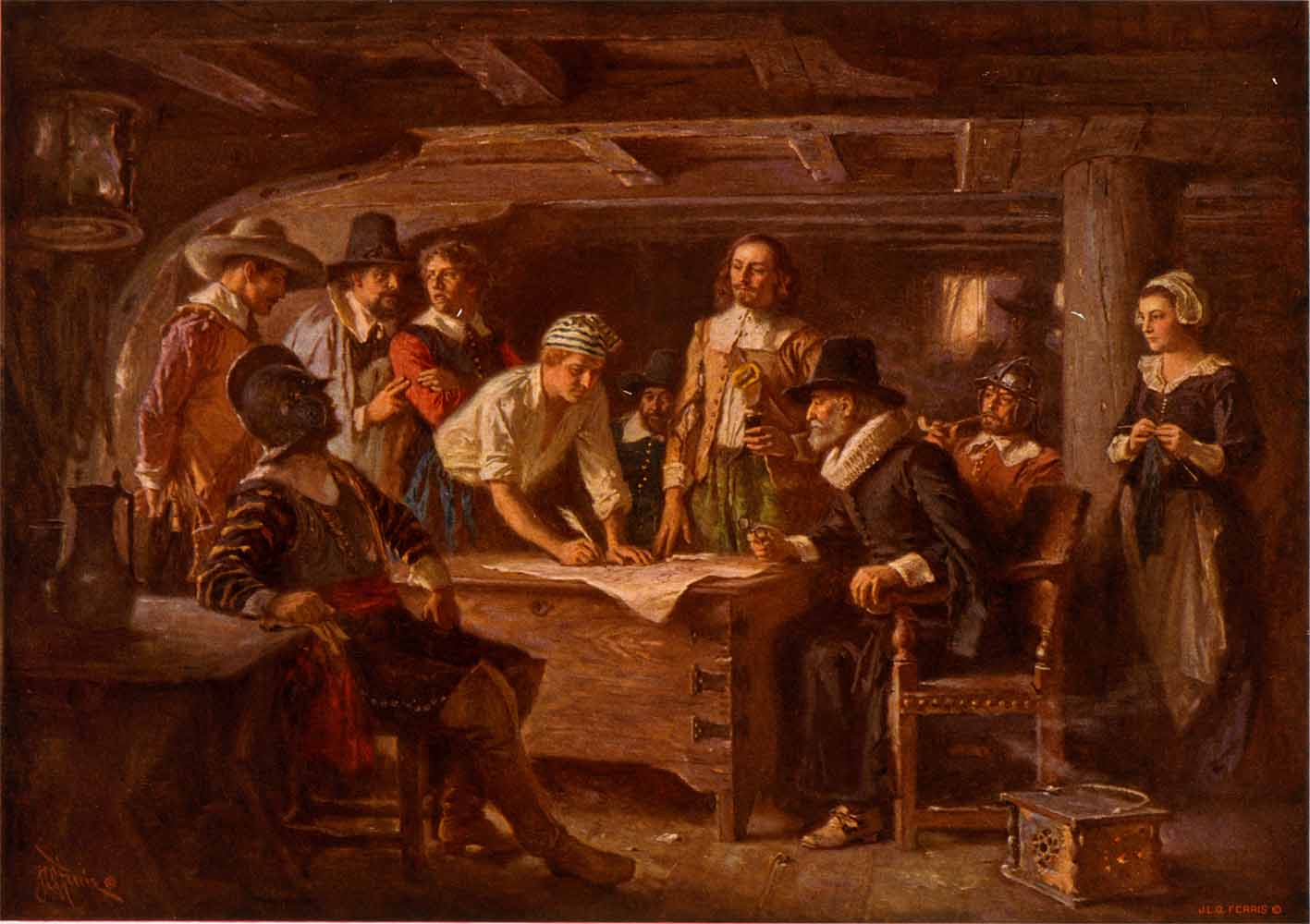
But they were determined to make the most of this unexpected situation.  Thus before they disembarked from their ship, they created a covenant (the 
Mayflower Compact) among themselves, covenanting to work together as a community.[1]  And then they set out to do just that.

But the winter weather they were forced to contend with proved to be a deadly challenge – and tragically in January (1621) a building they had just constructed to shelter their group burned down. At this point death began to ravage their numbers, the community and the crew losing half its members (of the 102 colonists only 47 survived).  The dead included 14 of the 16 women in the group.  The children tended to survive better than the adults – although now a number of them found themselves to be parentless orphans.

Nonetheless these Pilgrims persisted – and finally that spring they were able to put into place a permanent settlement, a plantation they named "
Plymouth."

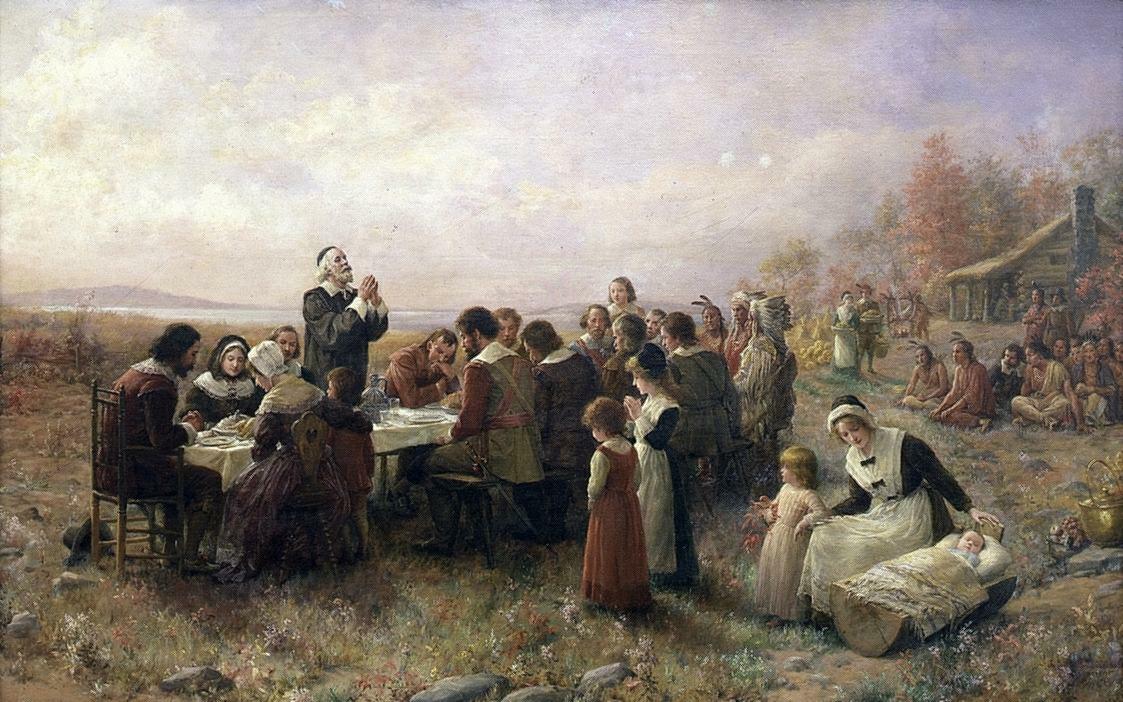
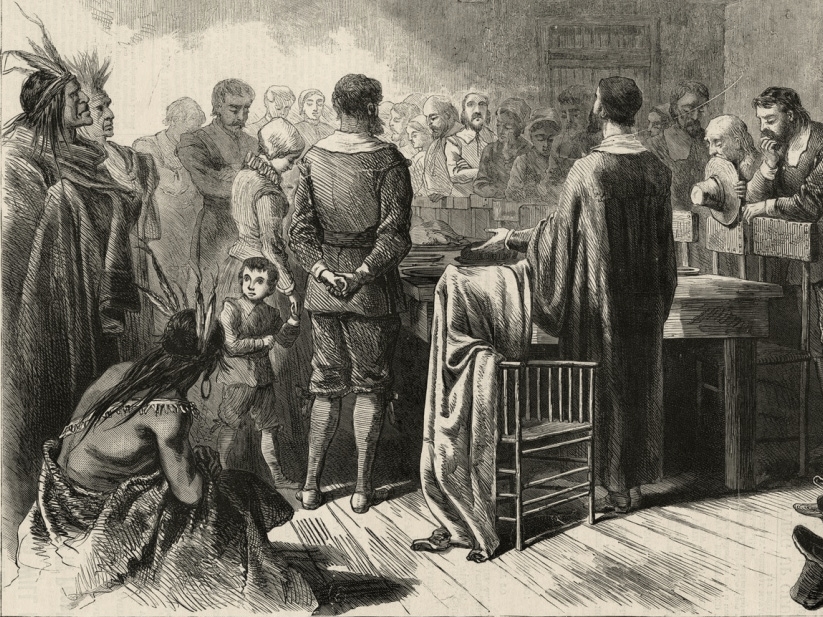
Friendly relations with the local Wampanoag Indians (including, miraculously, the English-speaking Squanto who showed them how to grow corn!) helped immensely.  And thus at that first harvest time in New England they were able, with their Indian friends, to celebrate a great Thanksgiving to God for their success. Clearly, they had built a community of Christian faith where they now could freely worship God as they understood he was to be worshiped – without fear of the English authorities.[2]  And they prospered, not elegantly like English (or Virginia) nobility, but like the hardworking Protestant commoners they indeed were.


[1]The Mayflower Compact reads:  In the name of God, Amen.  We whose names are underwritten, the loyal subjects of our dread Sovereign Lord King James, by the Grace of God of Great Britain, France and Ireland, King, Defender of the Faith, etc.

Having undertaken, for the Glory of God and advancement of the Christian Faith and Honour of our King and Country, a Voyage to plant the First Colony in the Northern Parts of Virginia, do by these presents solemnly and mutually in the presence of God and one of another, Covenant and Combine ourselves together into a Civil Body Politic, for our better ordering and preservation and furtherance of the ends aforesaid; and by virtue hereof to enact, constitute and frame such just and equal Laws, Ordinances, Acts, Constitutions and Offices, from time to time, as shall be thought most meet and convenient for the general good of the Colony, unto which we promise all due submission and obedience.  In witness whereof we have hereunder subscribed our names at Cape Cod, the 11th of November, in the year of the reign of our Sovereign Lord King James, of England, France and Ireland the eighteenth, and of Scotland the fifty fourth. Anno Domini 1620.

[2]Today’s Secular-Humanist historians mention only that the Pilgrims came to America to find freedom, as if this were some Hippie venture.  They fail to mention that the Pilgrims came to find the freedom to worship God the way they knew God expected of them.  Religious freedom is thus not mentioned, only freedom, as if that alone (with no greater purpose behind such freedom) would have led these Pilgrims to stake their lives on such a dangerous venture.


THE PURITAN "GREAT MIGRATION" TO MASSACHUSETTS (1630-1642)

The Pilgrims were soon followed to New England by other settlers, including, importantly, a Puritan settlement well to the north of Plymouth at Salem.  But poor organization and poor leadership almost scuttled the plantation there – and by 1630 most were returning to England, having given up on the venture.

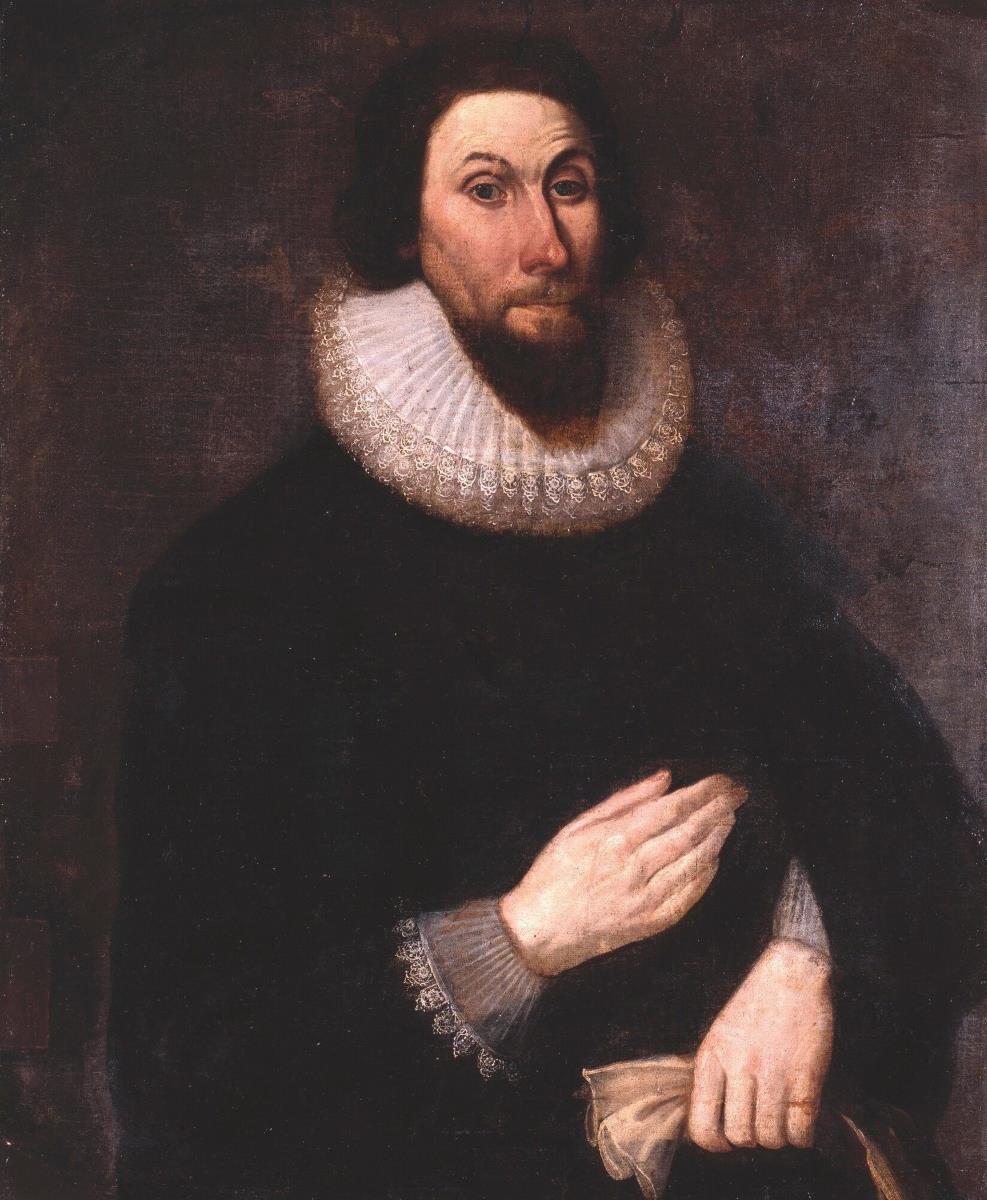
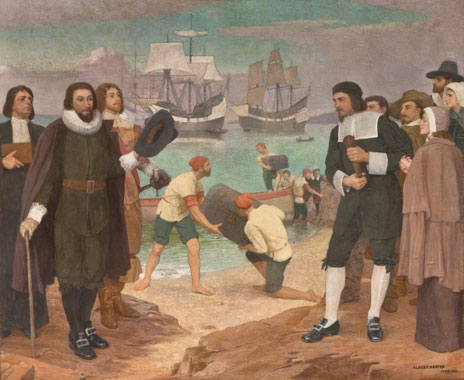
But another attempt was made that same year, one which would be amazingly successful – due to the excellent leadership of John 
Winthrop and the accompanying leadership team of equally talented and deeply dedicated Puritan pastors and elders.  Winthrop himself personally helped finance the migration of the first group of eleven ships carrying some 1000 Puritans from England to the new Massachusetts Bay colony, located in the large harbor region (the future Boston) just south of the Salem site and north of the Plymouth plantation.
In essence this group of Puritans were now also 
Separatists by the mere fact that as Puritans they were facing heavy opposition from the newly crowned and quite pro-Catholic King Charles who took the throne in 1625 when his father James died.  Thus it was that numerous Puritans had finally concluded that it was time to leave England.  They thus had applied for a charter to set up a colony of their own in America, King Charles believing that this was simply just another commercial venture like the Virginia Company.  But it was not.  Not only would the major financial backers be themselves part of this group leaving England for America (1630), but this group was the advance guard of some 20,000 Puritans who would over the next dozen years migrate to New England, in order to establish there the Reformed society that they had previously hoped would take root in England.
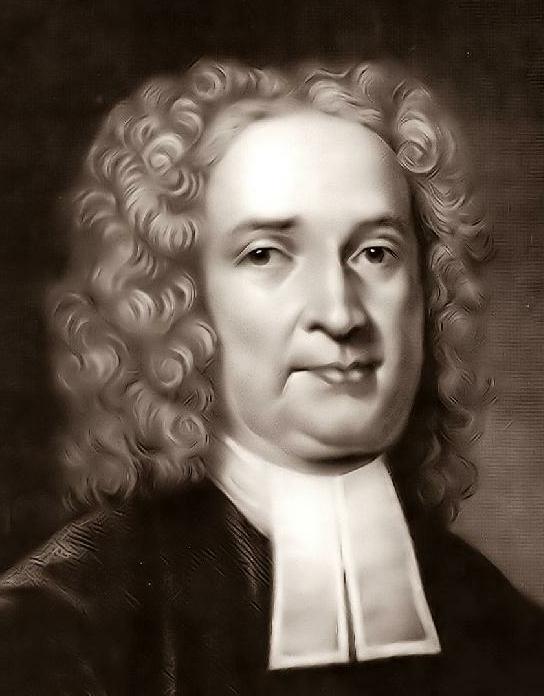
The Puritan covenant.  Just as this first wave of Massachusetts Bay settlers were about to leave on ships for their new life in America (March 1630), 
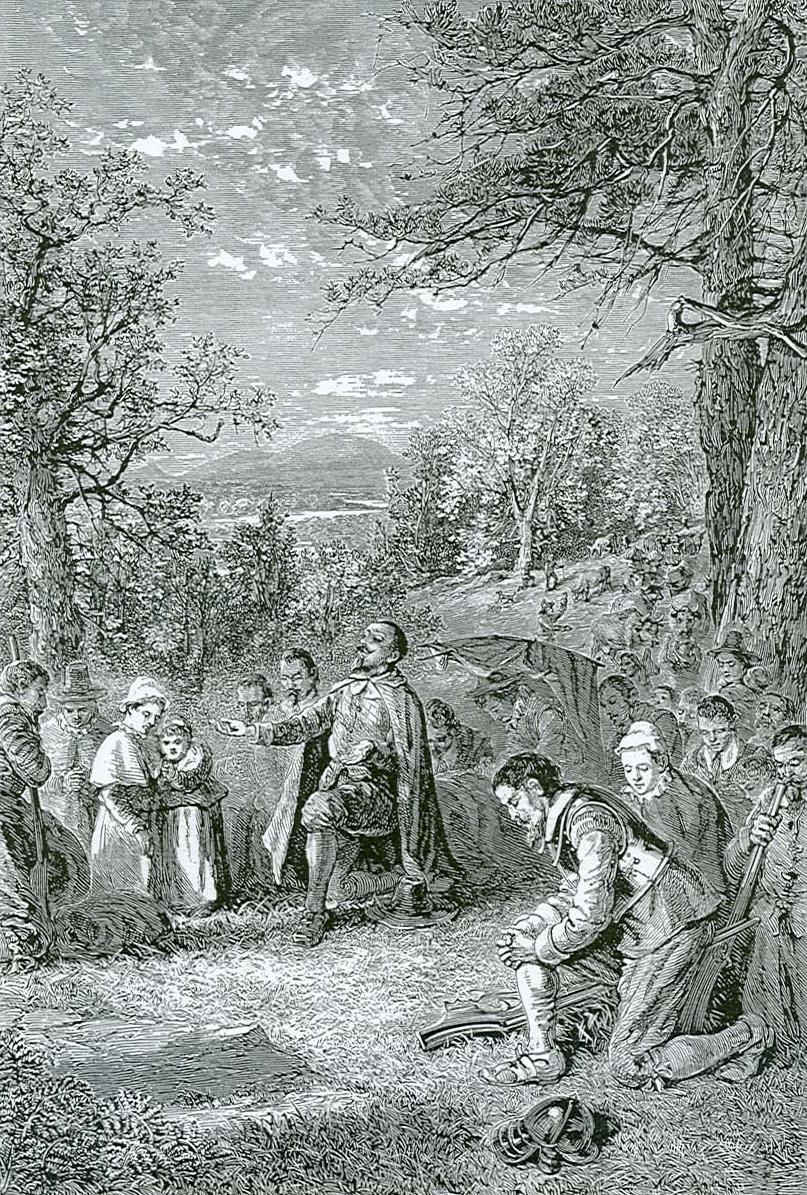
Winthrop delivered one of America's most famous sermons, reminding these Puritans of the Covenant they were taking out with God, he to be their God and they to be his people.  In this Covenant, their settlement was to serve as a "City upon a Hill," a "Light to the Nations," demonstrating to the larger world how living under the authority of God in Christ – in close accordance with God's Word in Holy Scripture – could bring human life to great success.   He told them:

Thus stands the cause between God and us. We are entered into covenant with Him for this work. We have taken out a commission. The Lord hath given us leave to draw our own articles. We have professed to enterprise these and those accounts, upon these and those ends. We have hereupon besought Him of favor and blessing. Now if the Lord shall please to hear us, and bring us in peace to the place we desire, then hath He ratified this covenant and sealed our commission, and will expect a strict performance of the articles contained in it; but if we shall neglect the observation of these articles which are the ends we have propounded, and, dissembling with our God, shall fall to embrace this present world and prosecute our carnal intentions, seeking great things for ourselves and our posterity, the Lord will surely break out in wrath against us, and be revenged of such a people, and make us know the price of the breach of such a covenant.

Now the only way to avoid this shipwreck, and to provide for our posterity, is to follow the counsel of Micah, to do justly, to love mercy, to walk humbly with our God. For this end, we must be knit together, in this work, as one man. We must entertain each other in brotherly affection. We must be willing to abridge ourselves of our superfluities, for the supply of others' necessities. We must uphold a familiar commerce together in all meekness, gentleness, patience and liberality. We must delight in each other; make others' conditions our own; rejoice together, mourn together, labor and suffer together, always having before our eyes our commission and community in the work, as members of the same body. So shall we keep the unity of the spirit in the bond of peace. The Lord will be our God, and delight to dwell among us, as His own people, and will command a blessing upon us in all our ways, so that we shall see much more of His wisdom, power, goodness and truth, than formerly we have been acquainted with. We shall find that the God of EstIsrael is among us, when ten of us shall be able to resist a thousand of our enemies; when He shall make us a praise and glory that men shall say of succeeding plantations, "may the Lord make it like that of New England." For we must consider that we shall be as a city upon a hill. The eyes of all people are upon us. So that if we shall deal falsely with our God in this work we have undertaken, and so cause Him to withdraw His present help from us, we shall be made a story and a by word through the world.

In short, they were going to attempt to do in America what Calvin had achieved in Geneva.

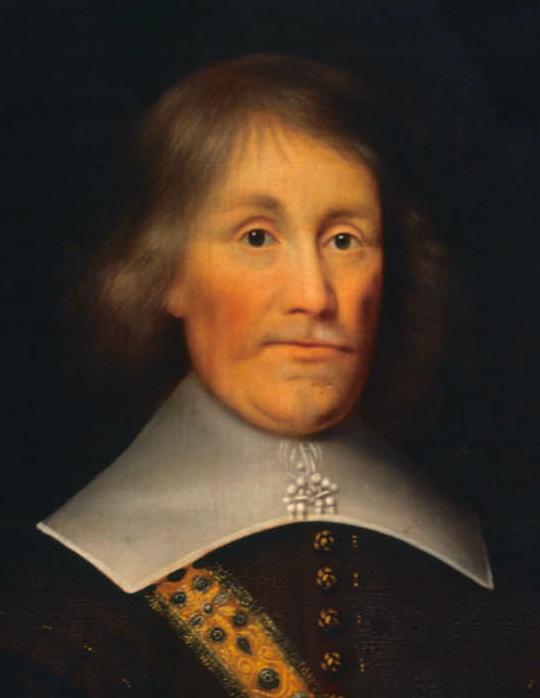
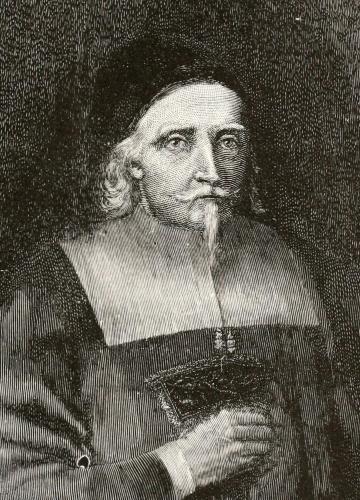
John Winthrop –Puritan New England's Founding Father.  Indeed, 
Winthrop was the "Calvin" to New England, the one above all others who directed the course of Puritan Massachusetts to its success as a grand religious or social experiment, on quite new and untested principles.  It was Winthrop's sense of vision and his optimism that kept New England on course.  It was Winthrop who helped steer the course of this development between the dangerous rocks of religious fanaticism on the one hand and heavy-handed religious legalism on the other.  And as with all true leaders, he did so by setting the example himself of the kind of humble, self-critical behavior needed by all in order to produce the spirit of mutual cooperation that the new society needed in order to thrive.  He inspired others to higher behavior – rather than use his social office to dominate and control the behavior of others.  And although he sincerely loved those he was responsible for, he was not one in need of their constant approval.  Ultimately, he was answerable only to God – as Winthrop reminded his followers that they too were.  They were all to live by the counsel of God (prayer and Bible study), and that alone.  Winthrop was to them merely an advisor, not their judge.

Winthrop was actually nobly born to a father who was a lawyer, landowner, and Cambridge University director, who opened similar doors to John in his development.  After graduating from Cambridge, John became Lord of the Manor at Groton and then eventually a member of his father's law firm in London.

John was also profoundly 
Puritan in his beliefs, relying on his Christian faith to get him through the death of two wives and then the growing problems as a Puritan with the reign of King Charles.

When as a Puritan he was removed from the Court in 1629, he was then free to take the lead in the development of the Massachusetts Bay Company, using his own finances to help assemble the fleet necessary to bring the first 1000 Puritans to America, be willing to face personally the well-known challenges of life in America by leading that voyage himself, and recruit other 
Puritan pastors to the same risky mission as leaders in the towns and villages that would constitute Puritan New England. And thus it was that America was blessed to have the New England colony come under such splendid leadership.  Winthrop was a gift of God to America.

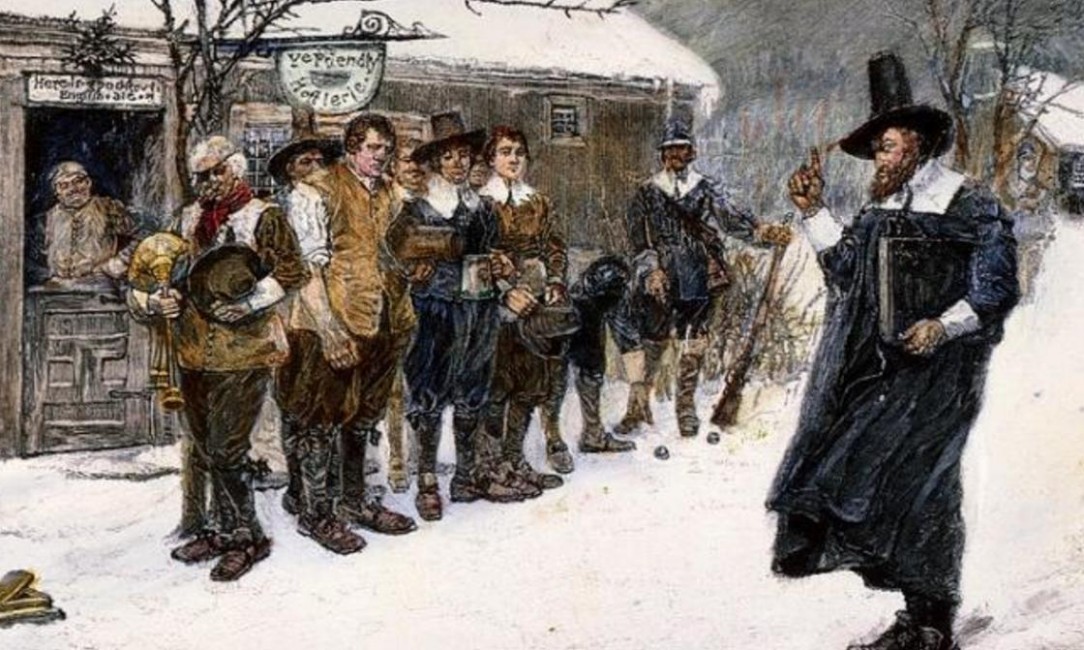
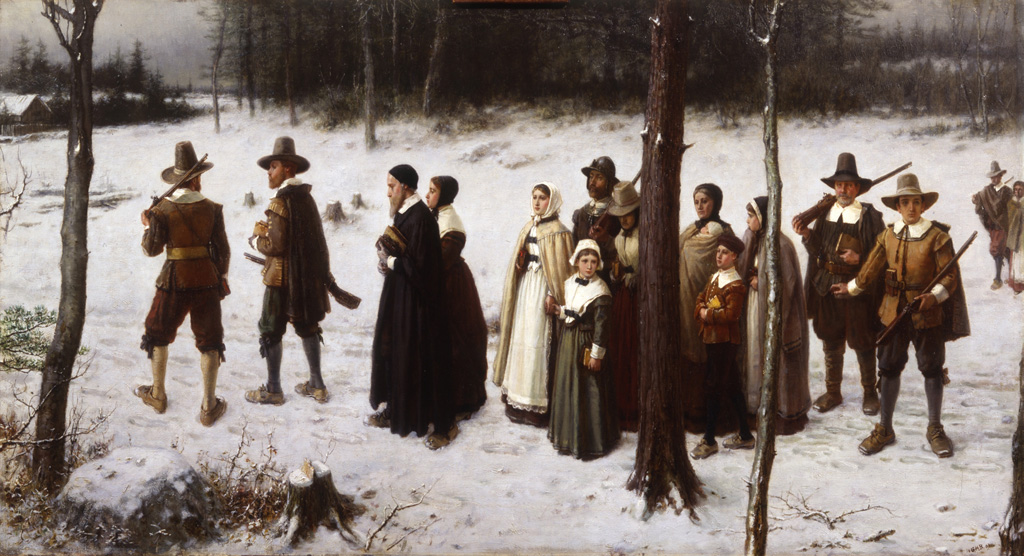
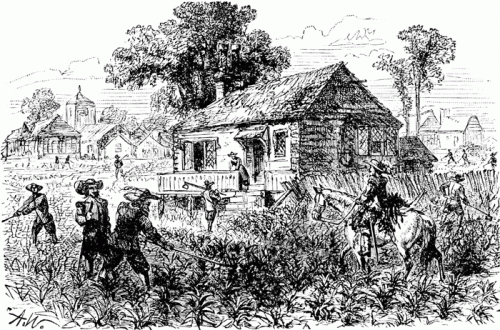
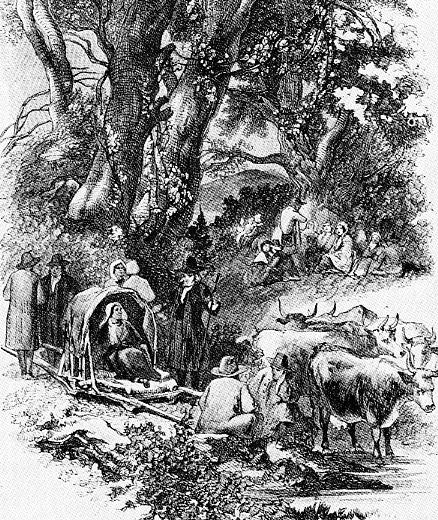
"Democratic" small-town Massachusetts.   Massachusetts Bay Colony would take on a character very, very different from Virginia.  The New England soil was rocky and the forests thick – not suitable for huge plantations to develop.  Besides, from the very beginning this was never intended to be an economic venture – nor the path to social status.  Many of those coming to New England were in fact leaving behind quite respectable social status in order to start a new life in America.  And they would be living at a social level fairly equal to everyone else making the trip.  Upon arrival they would be assigned plots of land just large enough to support a hardworking family, these land allotments arranged in such a way as to form a small village, centered on a town square equipped with a meeting house which would serve the village as both church and town hall.  And each village would have a seminary educated pastor[3] whose job was to help guide the village as it attempted to live out its new covenant life.

When the available plots of land for a village were fully distributed, then another village, normally to the west, would likewise be surveyed and subdivided into fairly equitable plots of land for distribution to 
Puritan newcomers.  And so the Massachusetts colony slowly spread its way ever westward.

Thus it was that Christian religious refuge – not improved economic status – was the theme that not only brought those Puritans to New England but also became the moral-cultural underpinning of the entire venture.  This had very little to do with what was going on way to the south in Virginia.

[3]This is why Harvard College was founded in 1636, only six years after their first arrival in America.  They needed pastors faster than what Cambridge University back in England was able to provide them.  Note that Virginia would not take similar action until 1693 when the College of William and Mary was established, in part finally to train Anglican priests.


RHODE ISLAND AND CONNECTICUT

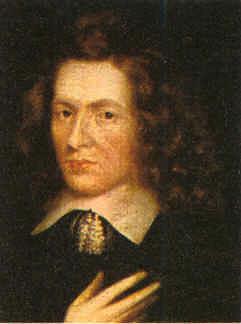
The whole enterprise being essentially religious in character, it was natural that questions of religion and society would develop among the leaders of this enterprise themselves.  At one point, Roger Williams was forced to leave the Massachusetts colony when he loudly and persistently complained about a number of ways the colony there did not meet his dramatically high idea of proper Puritan standards – first at the Boston church assigned to him, then the Plymouth church, and finally the Salem church.  His constant fault-finding with the lack of proper religious purity in Massachusetts (for instance some of the Puritans had failed to repent of the sin of having taken communion in the Church of England back in the home country) threatened greatly the new-born and still very fragile foundations of the community. Tiring of his tirades, the colony's leaders finally forced him to leave, to start up his own colony elsewhere (Providence, Rhode Island). There he could also put into service his understanding that religion and secular government ought to be treated as separate functions of the colony.

Hooker requested and received leave to establish a colony of his own in the more fertile Connecticut River valley (already being settled by English immigrants) – and there build a community in which also religion and secular government were treated as separate entities.

Finally Williams came to understand the difficulties of leading a new social venture when he ran into his own troubles with the rowdies who moved to his colony to avoid the disciplines of the Massachusetts colony, rowdies who were glad to remind him of his own words spoken earlier about political freedom amidst religious discipline!  It was frustrating meeting human expectations and demands.  Thus it was that Williams would increasingly look to friendship and counsel with Winthrop over leadership matters.  Indeed Winthrop, Williams and Hooker would find that the path of mutual friendship and counsel served each of them very well over the years, as they took their colonies through the various challenges involved in colony-planting and development.


TROUBLES WITH ANNE HUTCHINSON

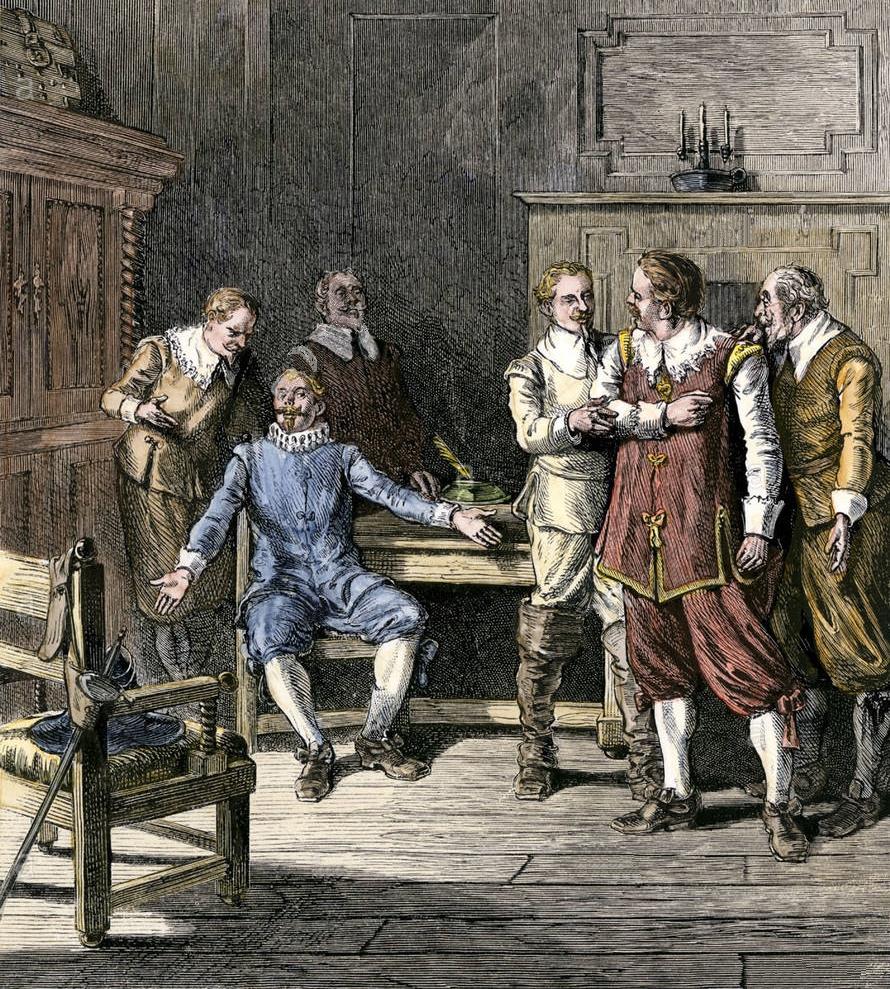
An event involving deep contention over the running of the Massachusetts Bay Colony has today been made by "progressive" or "revisionist" historians into their unique measure of the moral character of that colony – and of Puritanism in general.  We are talking about the expulsion from the colony of Anne Hutchinson.  What supposedly is highlighted by the revisionists in this event is the "male chauvinism" that directed horribly not just the colony but Puritanism in general.

What is overlooked by such historians was that she was constantly and most loudly undercutting the leadership of this new and fragile colonial venture (the mid-1630s) – although not for the reason that these historians would themselves sympathize with if they would be more honest about the matter.  It is claimed that she was expelled simply because she was a woman who dared to organize her own study group (including males as well as females), and to speak her mind so openly.

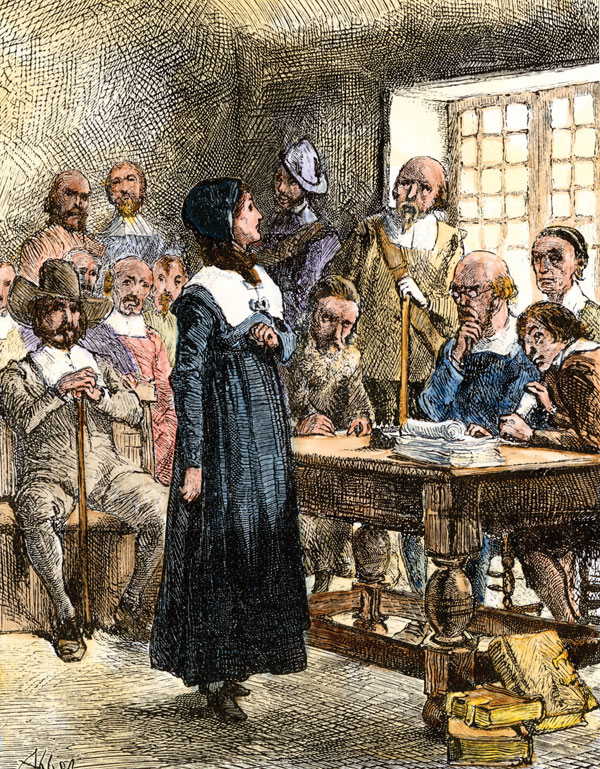
Actually, women holding such study groups attended by both men and women – and giving strong opinions on various matters – was not the uncommon event these historians pretend it to be.  Rather, she was expelled because she loudly and unrelentingly put forth a claim that, through a prophetic voice given her by God himself, she could see clearly that all the pastors of the colony – except her beloved pastor John Cotton – were in fact serving the "anti-Christ," the Devil himself.

In serving as this highly negative prophetess, she had succeeded in gathering a circle of discontented souls (discontented for one reason or another), and thus threatened to split the still-fragile colony into antagonistic factions.  Realizing that she was set on destroying the fragile social order holding this colony together, the authorities (including 
Winthrop) told her that she had to leave the colony.  That punishment was mild in comparison to the damage she would have caused the colony if she had been allowed to continue her "prophetic" denunciations of the colony and its social order.

But ironically (and tragically) the curse she had pronounced on the Massachusetts colony at her departure ultimately fell on her and her family instead when, in the Dutch colony to which she eventually moved (she was even moved on from William's Providence Colony in Rhode Island!), they were murdered in an Indian attack.


RELATIONS WITH THE INDIANS

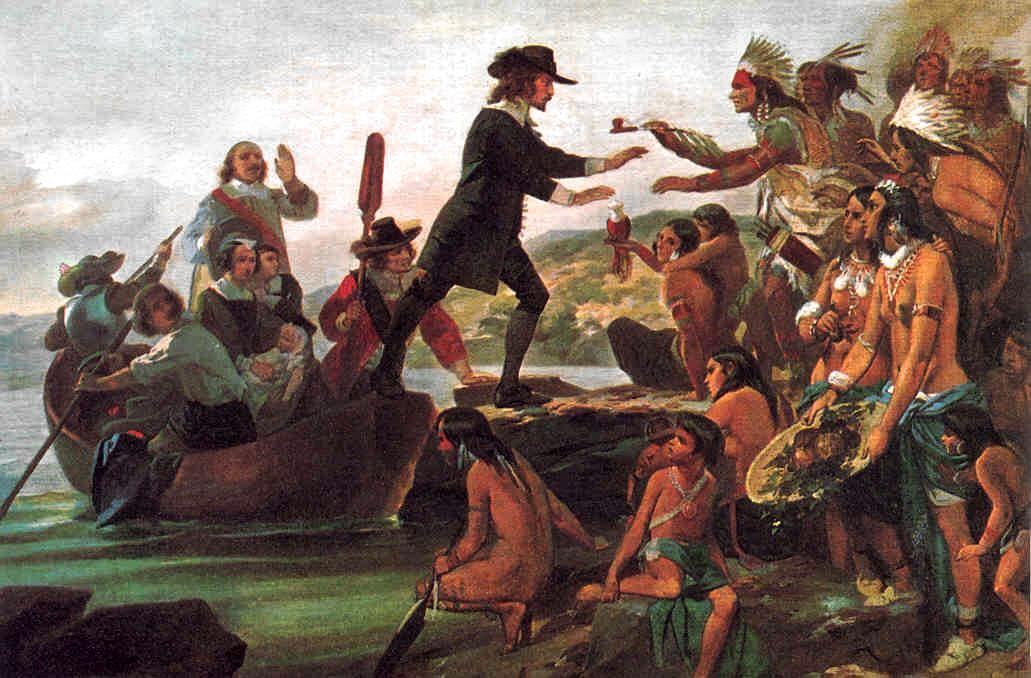
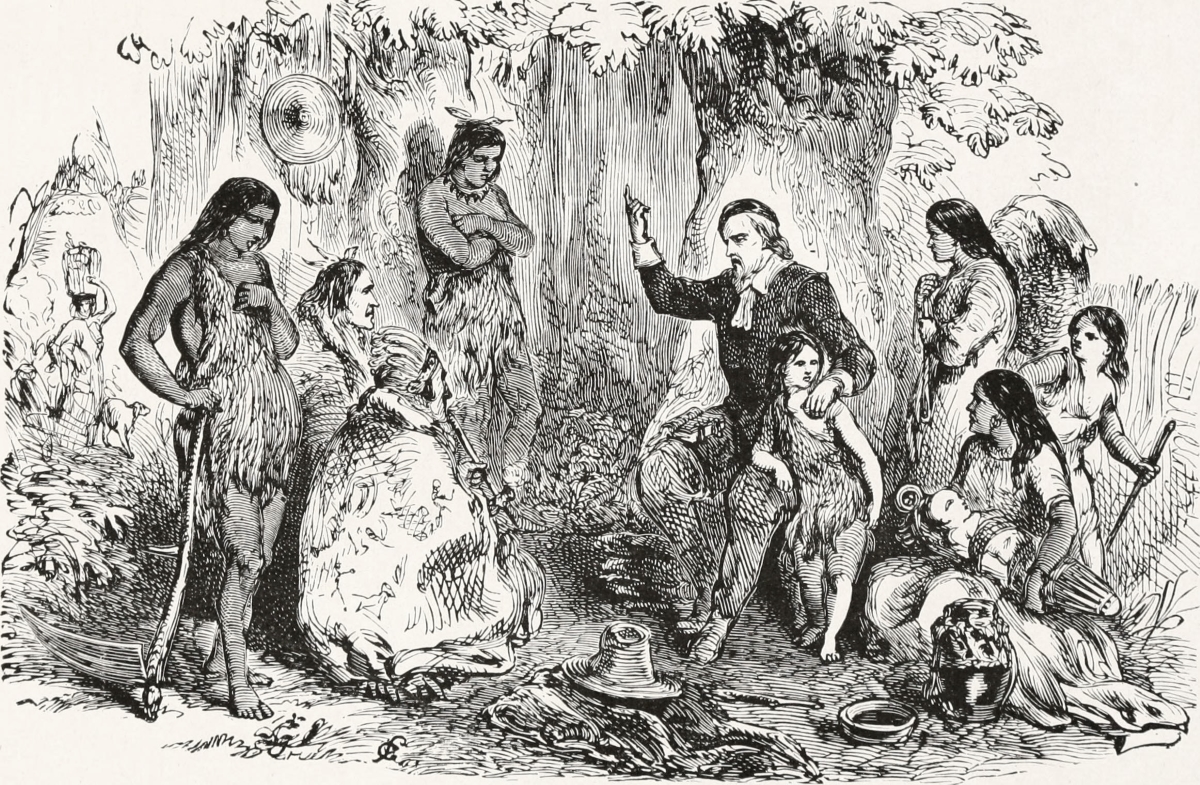
The Indians that the English encountered were at first quite friendly, even anxious to work with the English settlers in the matter of trade (beaver pelts in exchange for English tools, for instance) and even in the hope of enlisting the English as allies in the on-going tribal conflicts among the Indian tribes themselves.   And the English, in turn, were interested in bringing their precious Christian gospel to their Indian neighbors – eventually even creating communities of "Praying Indians" who joined the English in taking up for themselves the Christian faith.

But ultimately tensions would grow between the Indians and the English over the matter of land rights, as English settlers pressed onward into the Indians' hunting lands.  The English did not understand that the woods that housed the animals the Indians hunted were not open land just waiting for human settlement and agricultural development.  These were well-fought-over tribal properties vital to the survival of the Indian hunting societies.  Conflict thus eventually developed.

At first these conflicts tended to be merely local, although still a matter of life and death for those involved.  Such was the case of the conflict with the 
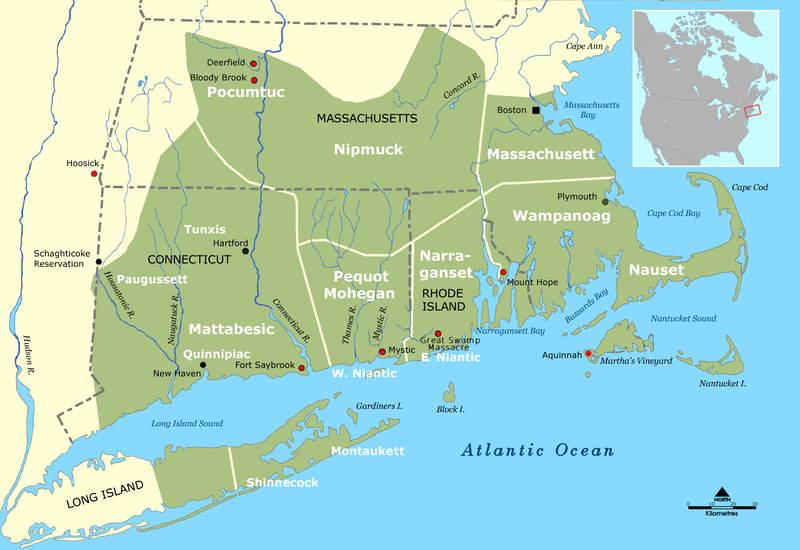
Pequot tribe (1636) which involved both the English and their Indian allies in a war against the Pequot, which step by step became increasingly bloody for both sides as battles raged back and forth.  In the end the war basically destroyed the entire tribe – whose members fled, were killed, or were enslaved.

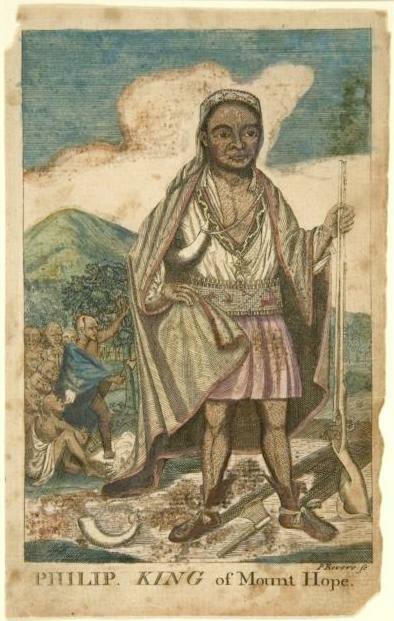
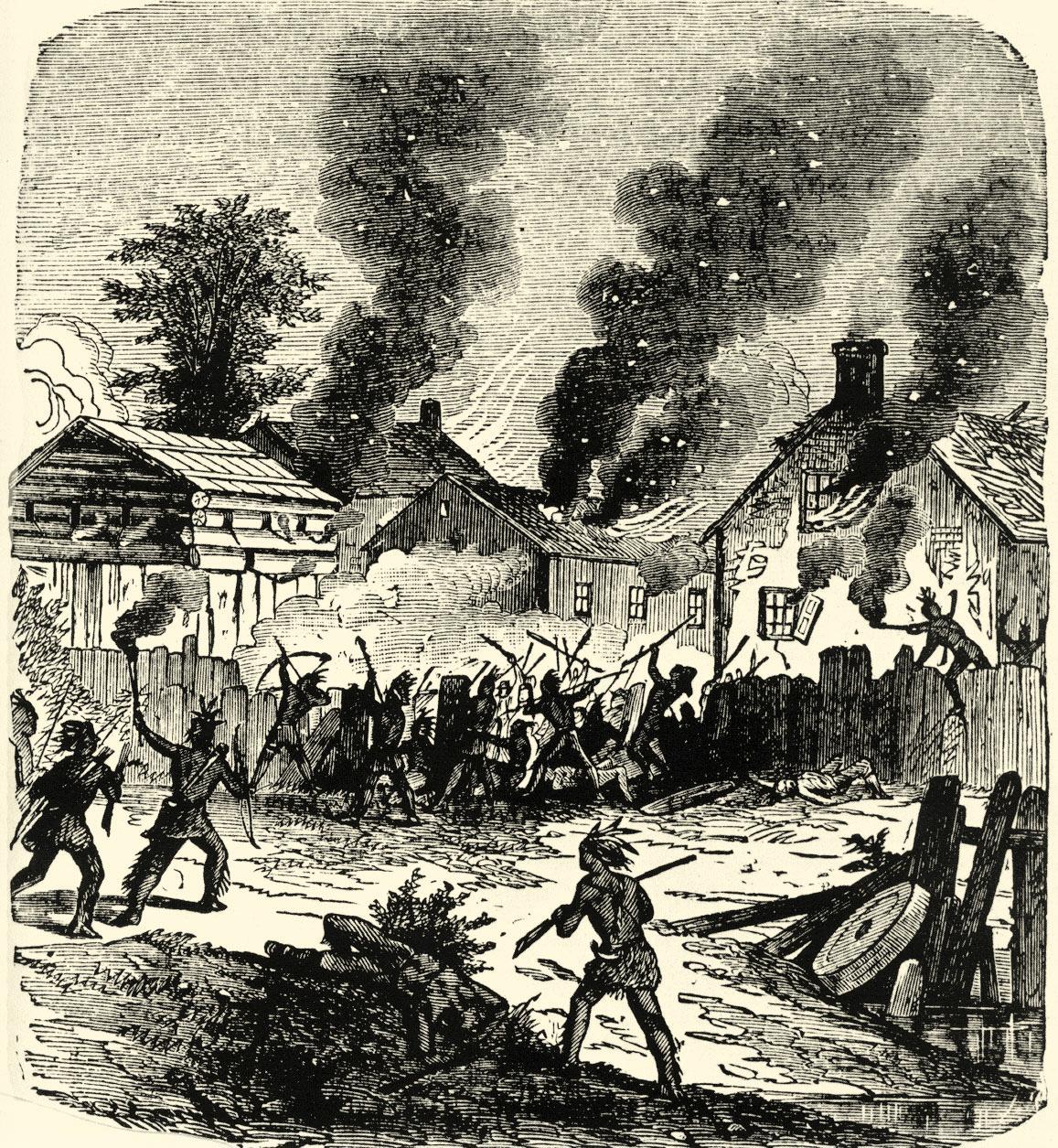
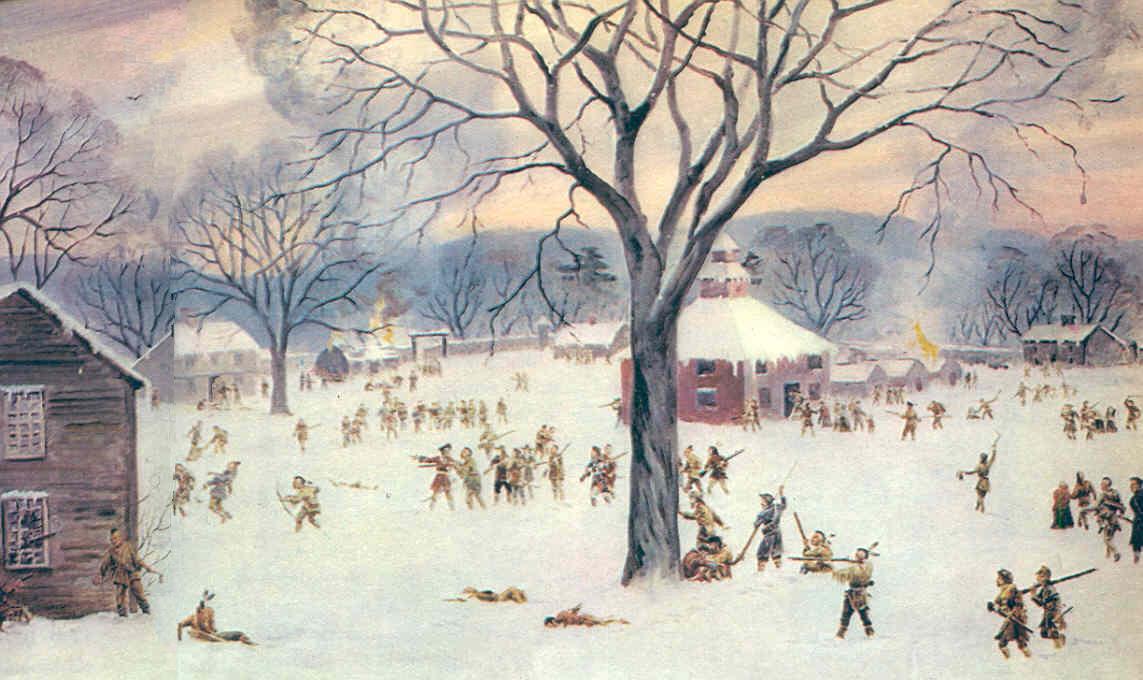
But the bloodiest battle ever fought between the English and the Indians – bloodiest in the long history of Anglo-Indian relations because of the highest percentages of deaths on both sides during this war – took place in 1675-1676 when the once-friendly Wampanoag came under the leadership of an individual known to the English as King Philip – who went on the warpath against the huge Anglo community which now reached deeply into Indian territory (all the way to Springfield in today's Central Massachusetts).  A coalition of Indian tribes at first were very successful in the conflict, burning and slaughtering English settlements everywhere – even reaching as far east as the Plymouth settlement at the Cape and the once-friendly Providence, Rhode Island (the latter which the Indians burned to the ground).  But in the end the Indians began to receive the worst of the deal, having missed a growing season and facing a hard winter ahead of them.  Indians began to surrender as amnesty was offered to those who did – starvation, disease or the possibility of enslavement or slaughter as the alternative.  And little by little the war ground to a halt finally by the following August.

This was simply the early stages of a dynamic that was to continue all the way through the 1800s.  The land would be fought over, as it had been since time immemorial.  The Indians themselves were warriors, because it was vital to them to be able to defend the forests that they hunted for meat – against other Indian tribes seeking the same privilege.

The problem with the arrival of the European to their land was that socially and technologically, the Indians were now hugely outmatched by these new contenders for the privilege of land ownership.  The Indians were a people still living at the level of early Neolithic life, whose economic mainstay of hunting and fishing was supplemented only by rudimentary levels of farming.  Thus the land could support only very small, widely scattered Indian communities.  The Europeans, on the other hand, were commercial farmers, capable of clearing sufficient land to produce farms able to support comparatively huge numbers of individuals.  And thus it was that the European intruders into the Indians' traditional hunting grounds would come to vastly outnumber the Indian population of the area.

Ten Europeans for every Indian killed in battle over the land would be required to keep the two different populations in some kind of balance or stalemate.  And try as the Indians might, they simply were not capable of reaching such numbers in their wars waged against the intruding Europeans.  Besides, the Europeans came well equipped militarily.  Indian bows and arrows were serious weapons; but European muskets were just as deadly and more easily brought to skilled use by the European commoner who was less the warrior and more the farmer, but a dangerous foe to the Indian nonetheless.  Also, the Indians had so long been adversaries among themselves, tribe against tribe, that it was difficult for them to find the unity necessary to offer joint resistance to the European.  Indeed, at first some Indians tribes saw the Europeans as useful allies against their traditional tribal foes.

Thus it was that history was set against the Indian in this contest with the European for the land.  It would be a cruel contest, cruel for both sides of the contest.  But in the end, it was the destiny of the European to win this all-important battle for the land.


Go on to the next section:  The Founding of the English Proprietary Colonies


  Miles H. Hodges