<


15. INTO THE AGE OF TRUMP

THE


CONTENTS

The national elections of 2016

The making of Donald Trump

Special Counsel Mueller investigates the "Russian connection"

Trump's Federal Court appointments

The 2018 Congressional elections

Impeachment, round two

Coronavirus

"Black Lives Matter"

Antifa takes charge

The Supreme Court expands the legal support of LGBTQ dynamics


The textual material on this webpage is drawn directly from my work
        America's Story – A Spiritual Journey © 2021, pages 455-470.

THE NATIONAL ELECTIONS OF 2016

The media as kingmakers. The 2016 presidential primaries gave rather strong confirmation that the traditional nominating conventions, attended by seasoned politicians assembled to choose from among their ranks the best-qualified candidate for the American presidency, had given way to the new process of selecting presidential candidates by the national media, on the basis of social identity.  This was not entirely a new thing, but it was becoming the determining thing.  Indeed, this new driving force in American politics reached back to 2007-2008 when TV celebrity Oprah Winfrey helped considerably push the only slightly politically experienced Obama past the well-developed political machine of Hillary Clinton to win the Democratic Party's presidential nomination in 2008.

Thus it was that in this new age of constant (24/7) barrage of entertaining news and media social hype – complements of not only the TV, but also the computer and the smartphone – the media would be the platform from which American leaders would now be selected.  All the media needed to do was to shape and ultimately control the political narrative.  And that is exactly what they lived for.

The "Trump Style."
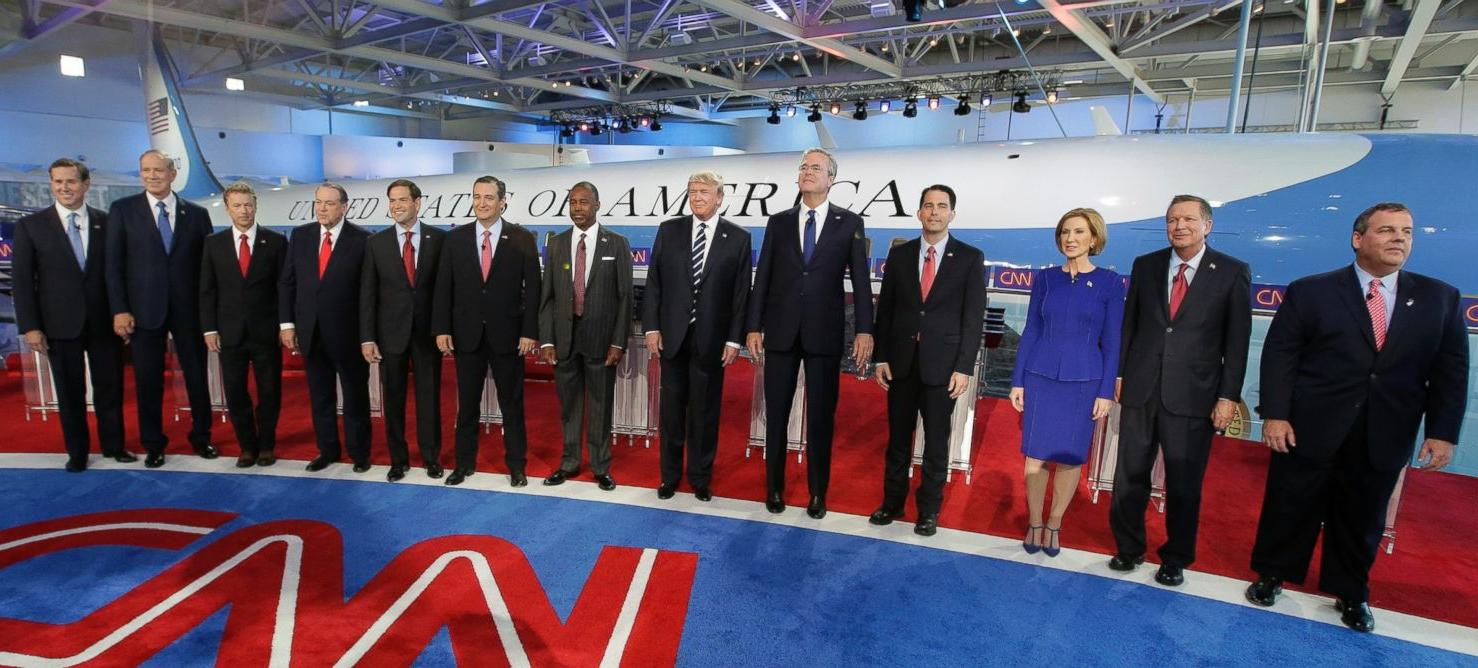
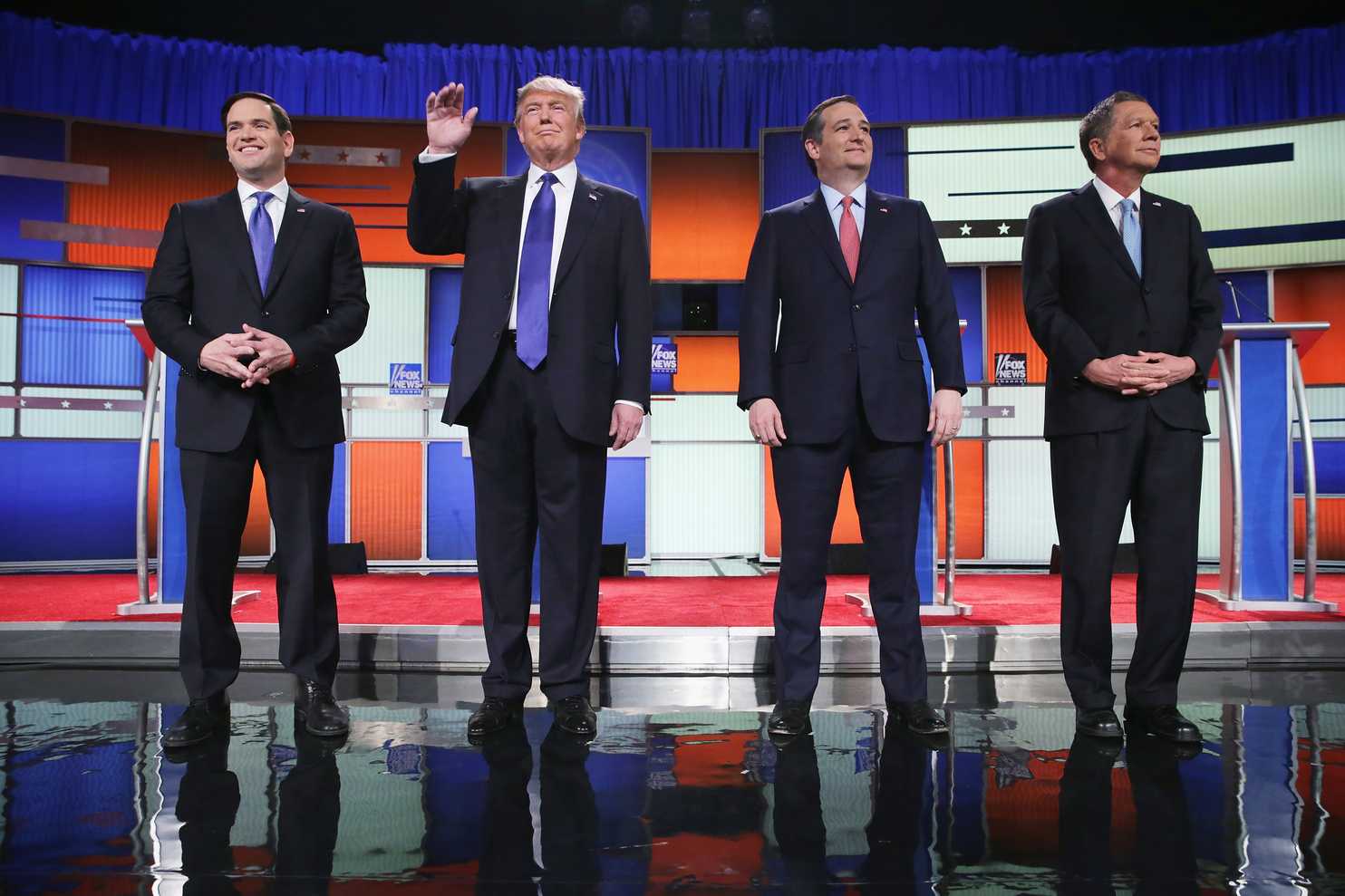
 And it certainly was the case when the 2015-2016 series of televised debates hosted by the various news networks helped push the totally governmentally inexperienced Donald Trump to the head of a huge list of presidential candidates, and thus gain the Republican Party's presidential nomination in 2016.  But this media coup Trump carried off all by himself, having served a dozen years as an aggressive TV director and host of the popular TV program, The Apprentice.  Thus he made up in extensive media experience what he lacked in political office experience, and used that skill to run crudely over his Republican opponents in the primaries.

He was heavily engaged in 
Twitter in offering ongoing accounts of the failures of his opponents.  Employing a stream of personal insults, he would run roughshod over his Republican opponents, issuing such ad hominem phrases as "Little Marco" (Senator Marco Rubio) or "Lyin' Ted" (Senator Ted Cruz).  About Republican opponent Florida Governor Jeb Bush, he had this to say:  

Jeb failed as Jeb! He gave up and enlisted Mommy and his brother (who got us into the quicksand of Iraq). Spent $120 million.  Weak no chance! 

He even needlessly went after former Republican candidate John McCain (thus turning McCain into a dedicated political enemy):

. . . not a war hero, he's a war hero because he was captured.  I like people that weren't captured.

But he kept up this attack also even during the televised debates – when he would offer very audible insulting side comments, drawing the attention of the cameras to himself, away from those whose turn it was to present their case before the viewing audience!  And thus it was that he drove his opponents to defeat one by one, and ended up, by the process of such elimination, with the Republican Party's presidential candidacy.

Then he turned on his Democratic Party opponent Hillary Clinton, whom he constantly termed "Crooked Hillary," over the use of her personal email account to transmit Secretary of State messages, some considered top secret.

But the media act did not stop there.  He also issued sweeping statements that had virtually no chance of being true, but which, repeated often enough in simple form, took on their own weight, thanks to media coverage, (even if the coverage was trying to be fully negative).  Thus 
Trump keep repeating about how Mexico was going to pay for a greatly expanded wall along America's border with Mexico (which refugees from Central America were breaching in massive numbers).  But exactly how was he going to get Mexico to pay for that expansion?  He never explained.

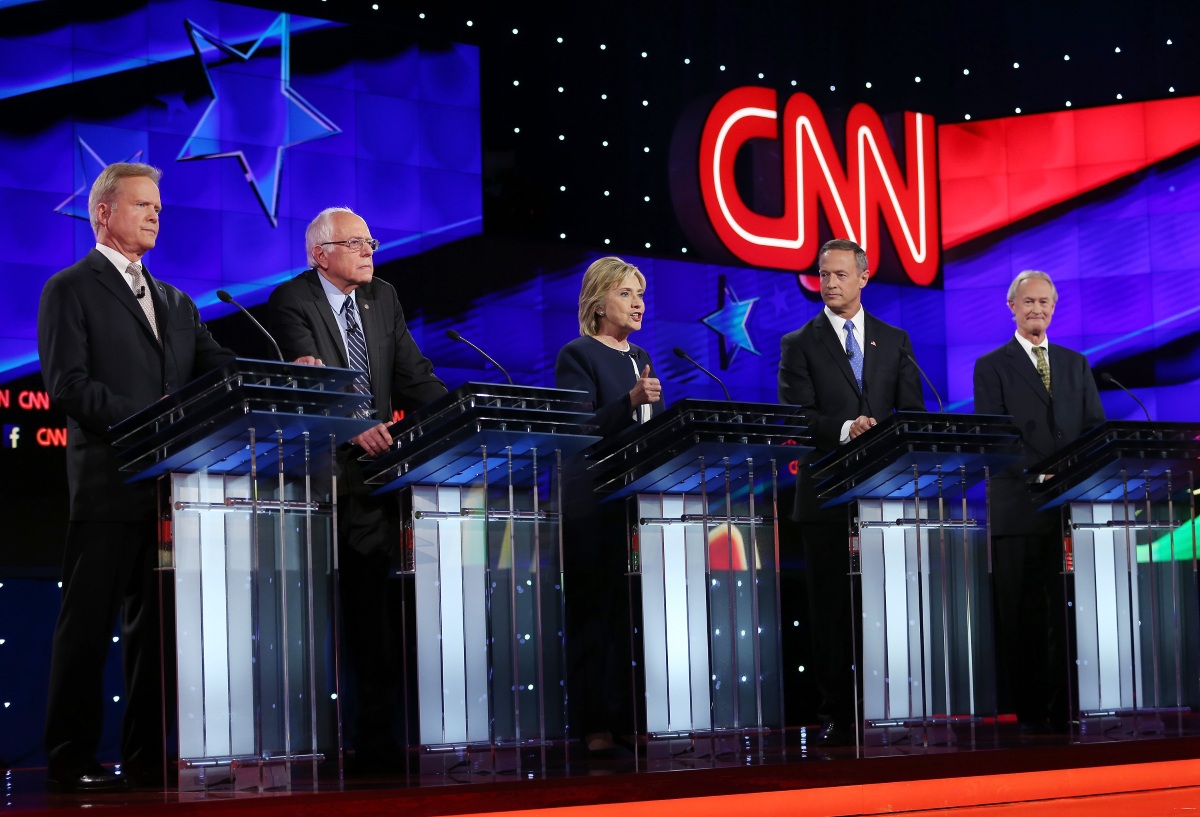
The 2015-2016 Democratic Party contest between Hillary Clinton and Bernie 
Sanders.  Over on the Democratic Party side of the presidential contest, Clinton had stepped down from her position as head of the State Department back in February of 2013, allowing her to devote her energies to directing the Clinton Foundation – focused primarily on developing women's rights globally (ah, identity, more identity!).  But those years also saw her busy fending off Republican efforts to undercut her politically because of the Benghazi fiasco and the discovery of her use of her private email accounts to send confidential messages, in violation of Department of State policy.  Basically she held up well under the accusations.  At the same time, she was preparing herself for another run at the U.S. Presidency, gathering massive campaign support and hitting the speaker circuit extensively.

Her only serious opponent within the Democratic Party was the Vermont Senator, Bernie 
Sanders, an avowed Socialist with all the political instincts Socialism stands for.  Actually, the race was intense and Sanders did surprisingly well, indicating how far America had moved away from its traditional Middle-Class cultural roots.[1]  Hillary had tremendous support from major corporate donors (such as the billionaire George Soros), as well as Blacks and Hispanics, and of course, women.  Sanders' support came from younger, White, and more small-town Americans, as well as the more independent-leaning of Democrats.  But in any case, from a very nearly equal start at the beginning of primary season, Clinton began to pull ahead of Sanders in gaining pledged delegates – and arrived at the Democratic National Convention in Philadelphia in July of 2016 with approximately a 20 percent lead in the delegate count (still, an amazing count in support of the Socialist Sanders), ensuring her the Democratic Party nomination.

The 2016 campaign.  Clinton gave indication that she would stand with the changes in American society undertaken by Obama, even protect those from any effort of her opponent, Trump, to reverse those changes, as Trump clearly indicated he would do if elected president.  In a sense, the campaign between the two seemed to be a lineup (as a continuation of the Obama social legacy) of Middle America versus America's many minorities, which included not only Blacks and Hispanics, but women, or at least the professional class of women working outside the home who saw themselves as part of that "minority" world.  That was a huge segment of the American population.  Thus Hillary was expecting a fairly easy win over Trump.

The 
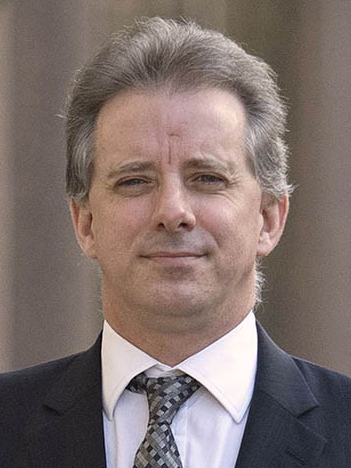
Steele dossier.    But just to make sure, Clinton campaign operative Marc Elias paid Fusion GPS $1.02 million to dig up dirt on Trump, and Fusion in turn hired for $168 thousand former British MI6 agent Christopher Steele to see if he could find some kind of political connection between Trump and the Russians.  Steele obliged the Democrats, coming up with 16 different memos (based on information that Steele later admitted he had taken from a discredited CNN blog).  Then in October of 2016 the periodical Mother Jones published rumors about the existence of Steele's anti-Trump dossier,  which was actually put in the hands of the FBI, US State Department officials, and the office of Senator John McCain – the latter whose office in turn would put the very damaging dossier in the hands of the nation's press on January 10th, only 10 days before Trump's inauguration.  While this would have no immediate effect on the election – which Trump had already won handily in the electoral college – this would provide the fuel for efforts immediately to impeach Trump and chase the Democrats' new "public enemy" from the White House.

The election itself.
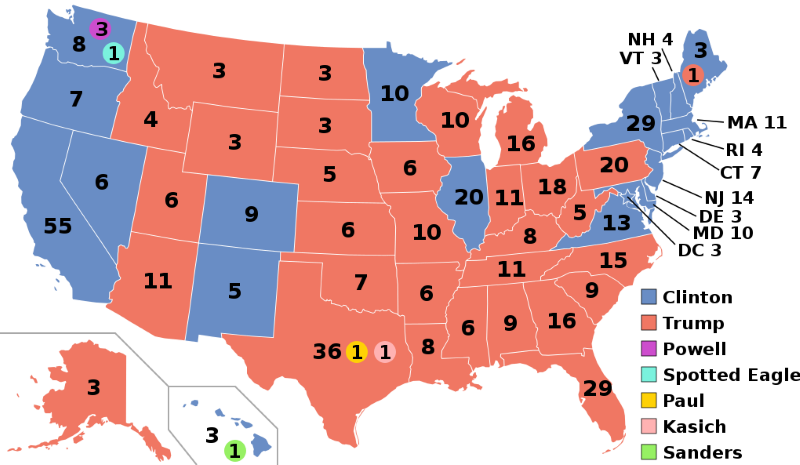
  Trump, though indeed crude and vulgar, was no nitwit, and carefully targeted his campaign efforts with an eye on winning the electoral college vote (exactly as the Constitution specifies).  And the results on election day (with only about 55 percent of eligible voters turning out to vote), he won 304 electoral votes to Clinton's mere 227 votes.  The Democrats were shocked at the result, complaining bitterly about the way the electoral college weighted the vote in favor of Trump, because in the actual popular vote, Trump had won only 63 million votes to Clinton's 65.9 million votes.  Thus she "won" the popular vote.  Actually she did not.  4.5 million votes went to the Libertarian Party (generally considered a party of the Right) and 1.5 million went to the Green Party (generally considered a party of the Left).  If these votes were combined by actual political lineup, the Political Right won 67.5 million votes and the Politically Left won 67.4 million votes!  Close, but in any case, not exactly a Hillary victory.

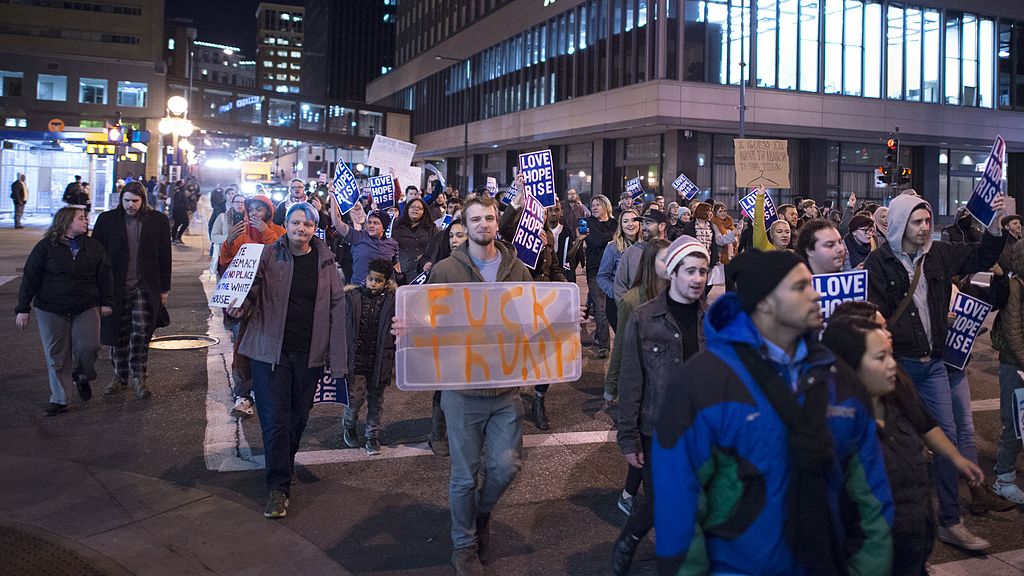
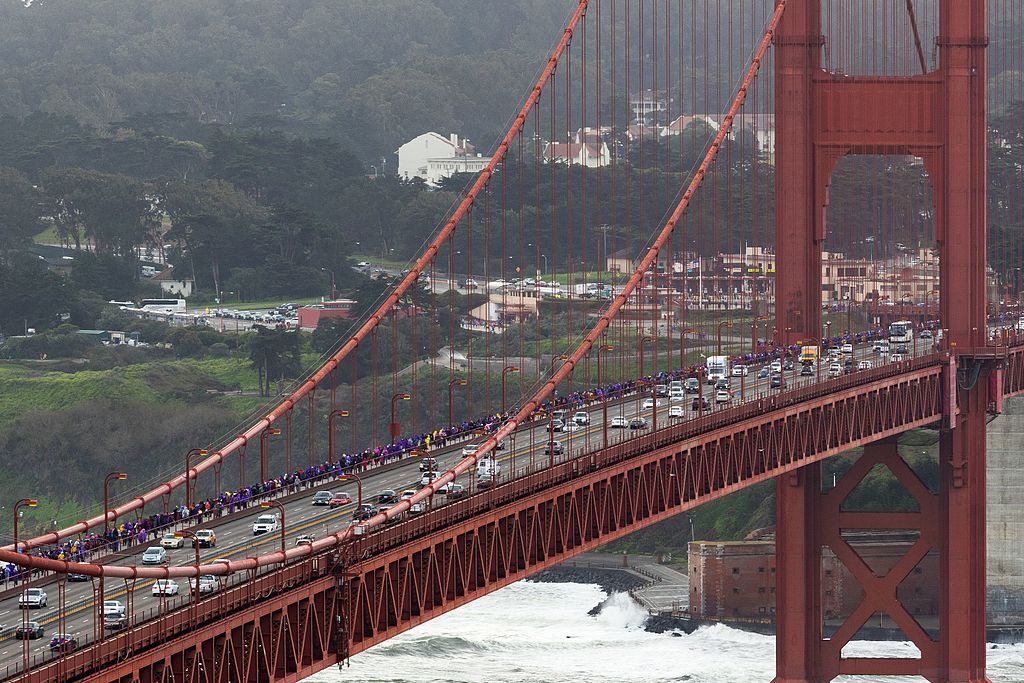
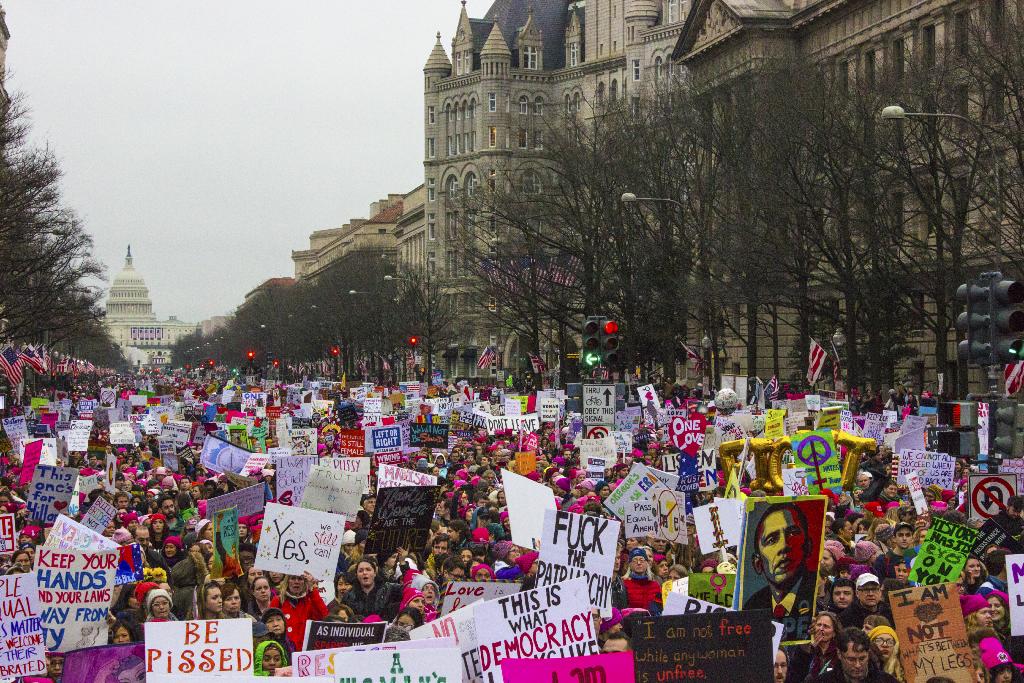
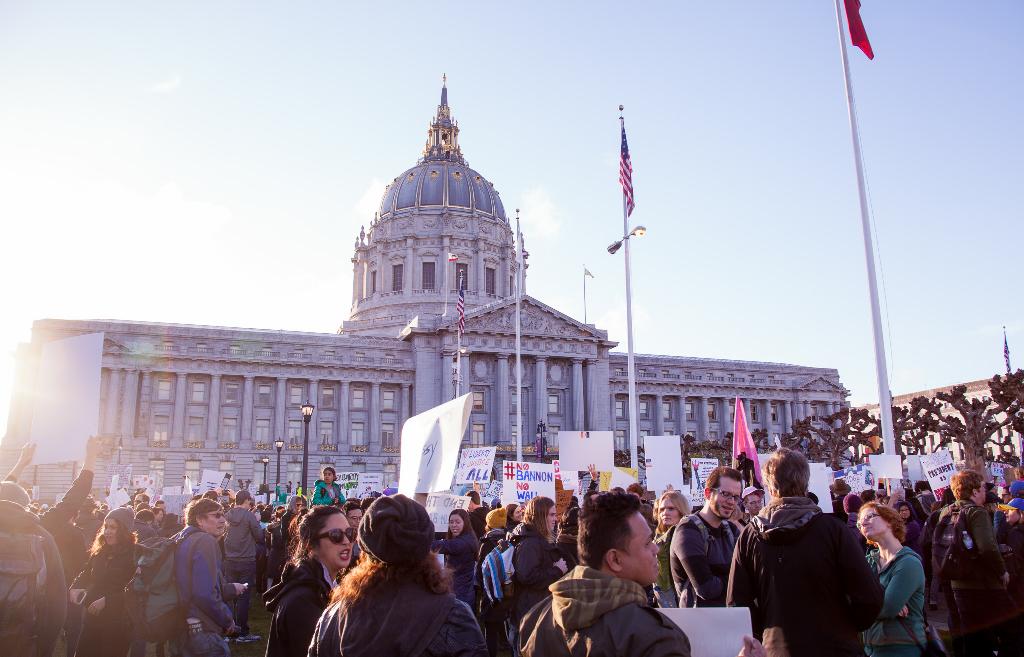
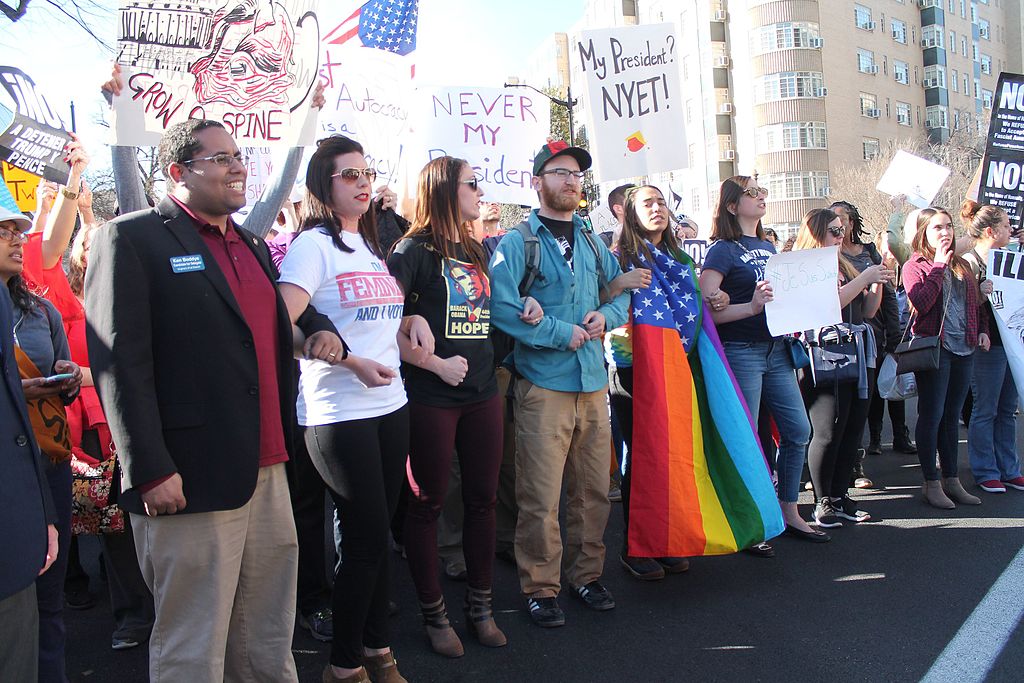
Angry protests about the election results broke out immediately, not only in America but across much of the world.  Here too, telecommunications aided considerably in mobilizing this huge outcry.  Younger generations of Americans took to the streets announcing "not my president."  And women dressed in pink also turned out to make it clear that there was no way they would ever consider 
Trump their president.  And celebrities joined the anti-Trump chorus, some even announcing the possibilities of simply leaving the country, they were so angry.

They were all angry, very angry.  
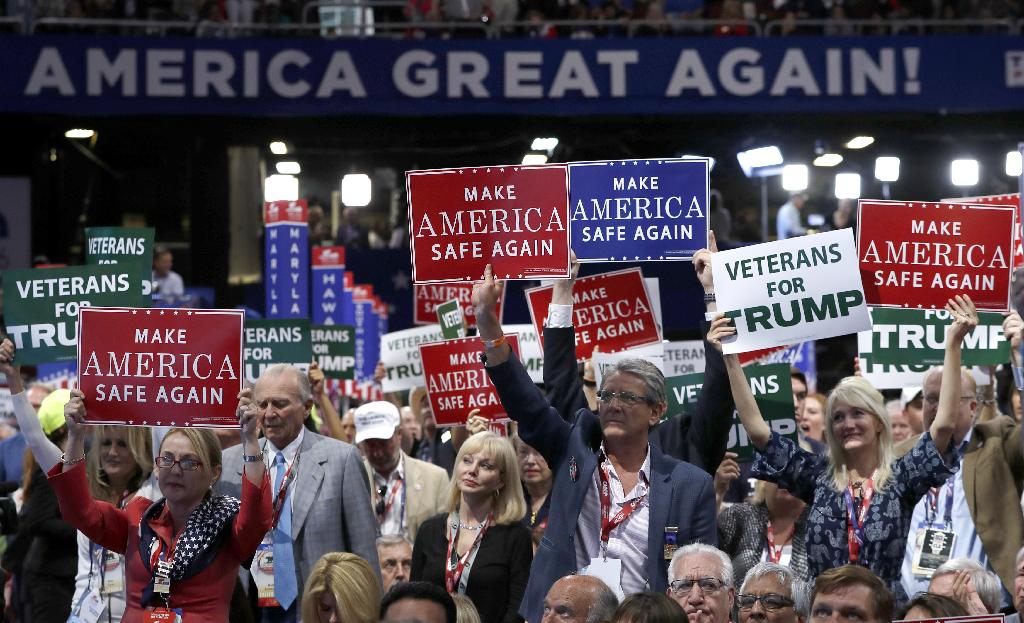
Trump personally represented everything they had come to believe to be the source of great evil in the country:  White privilege, toxic masculinity, homophobia and Christian superstition.  And, with Trump's slogan "Make America Great Again" (MAGA), it was obvious that Trump intended to undo all the wonderful changes Obama had brought to America.  They would fight him over his MAGA program, from protesters in the streets to angry Democrats on Capitol Hill.

Already, Congressional Democrats were calling for Trump's impeachment, even before he had formally taken office.  Not only was the new president-elect vulgar and ridiculous, they were claiming that he was a dangerous sociopath.  But to impeach him he had to be found guilty of having committed the high crime or misdemeanor of … ?


[1]Middle-Class Americans were noted for their strong support of the political idea that success in life is achieved through individual initiative and personal responsibility – rather than on the basis of a dependency on the offerings that larger society "owes" individuals as their personal entitlements, entitlements always paid for by someone else.  This "something for nothing" or "everything for free" was viewed by Middle-America as the grandest political deception of all offered by ambitious political demagogues.  To Middle-America, such Socialism always leads to a horrible condition of personal dependency on the state for whatever favors come to the people – a very destructive undermining of personal freedom, one which also invariably leads to the economic and spiritual collapse of the community, Venezuela being a most horrific recent example.  But it is a mentality fundamental to most Latin American politics, and politics in other parts of the world as well.

It never belonged in Christian America, which was the moral-spiritual foundation of this idea of the sovereignty of the individual, and not the state.


THE MAKING OF DONALD TRUMP

And yes, Trump certainly came across most frequently as vulgar and ridiculous.  And he could certainly be very theatrical.  That was indeed a key part of his background.  But he was a successful venture capitalist, who took on huge investment risks, sometimes failed, but never backed down (except one period of depression in his life), and pushed ever-onward to various goals he had set before himself – big goals.  And certainly one of those goals included residency in the White House.

Trump was born in 1946 (just months apart from both Bill 
Clinton and Bush, Jr.) and came from a family line of successful entrepreneurs, especially his father, who developed a huge housing construction and landowning company in the New York City boroughs of Queens and Brooklyn after World War Two.  Trump grew up in a dedicatedly "Middle Class" (despite the family's enormous wealth) Presbyterian home as the fourth of five children (two sisters, one who went on to become a U.S. Circuit Court judge and another to become a Chase Manhattan Bank executive, and two brothers, one a TWA pilot and the other who eventually took over the family's property-management business).
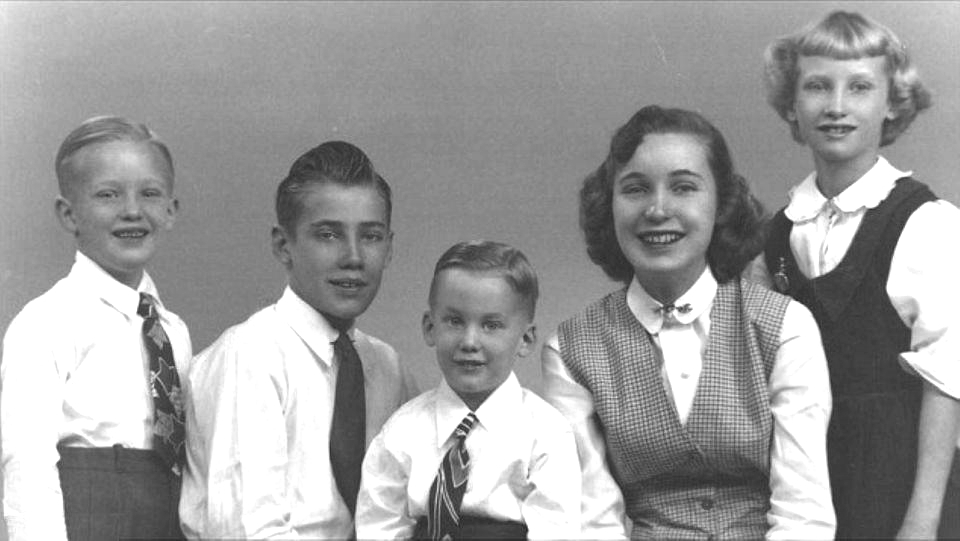
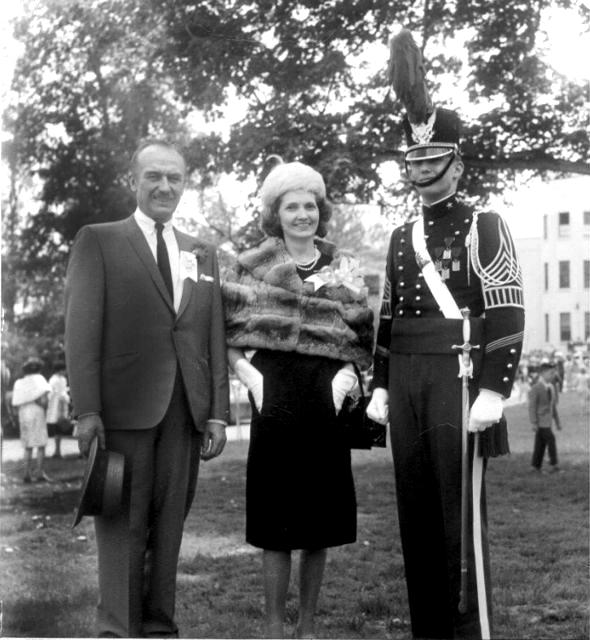
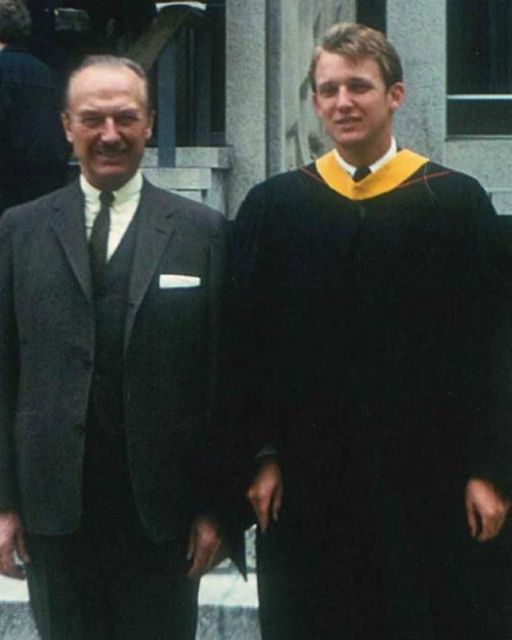
Trump was raised fashionably, eventually entering (8th grade) the New York Military Academy, where he proved to be an outstanding athlete in several sports.  Upon graduation in 1964, he started college at Fordham University, then transferring to the Wharton business school at the University of Pennsylvania, to prepare himself to take up the family real estate business. During those years he worked closely with his father in a major apartment complex redevelopment in Cincinnati, Ohio, and then, with $1 million in support from his father upon graduation, took on the challenge of major building construction in New York City (Manhattan).
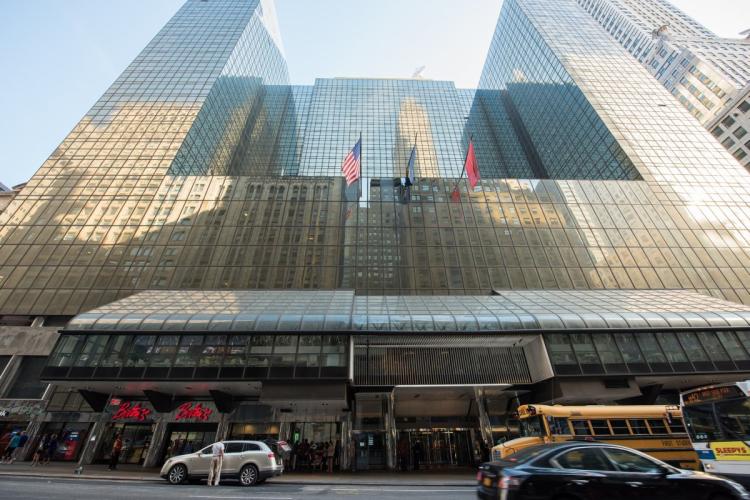
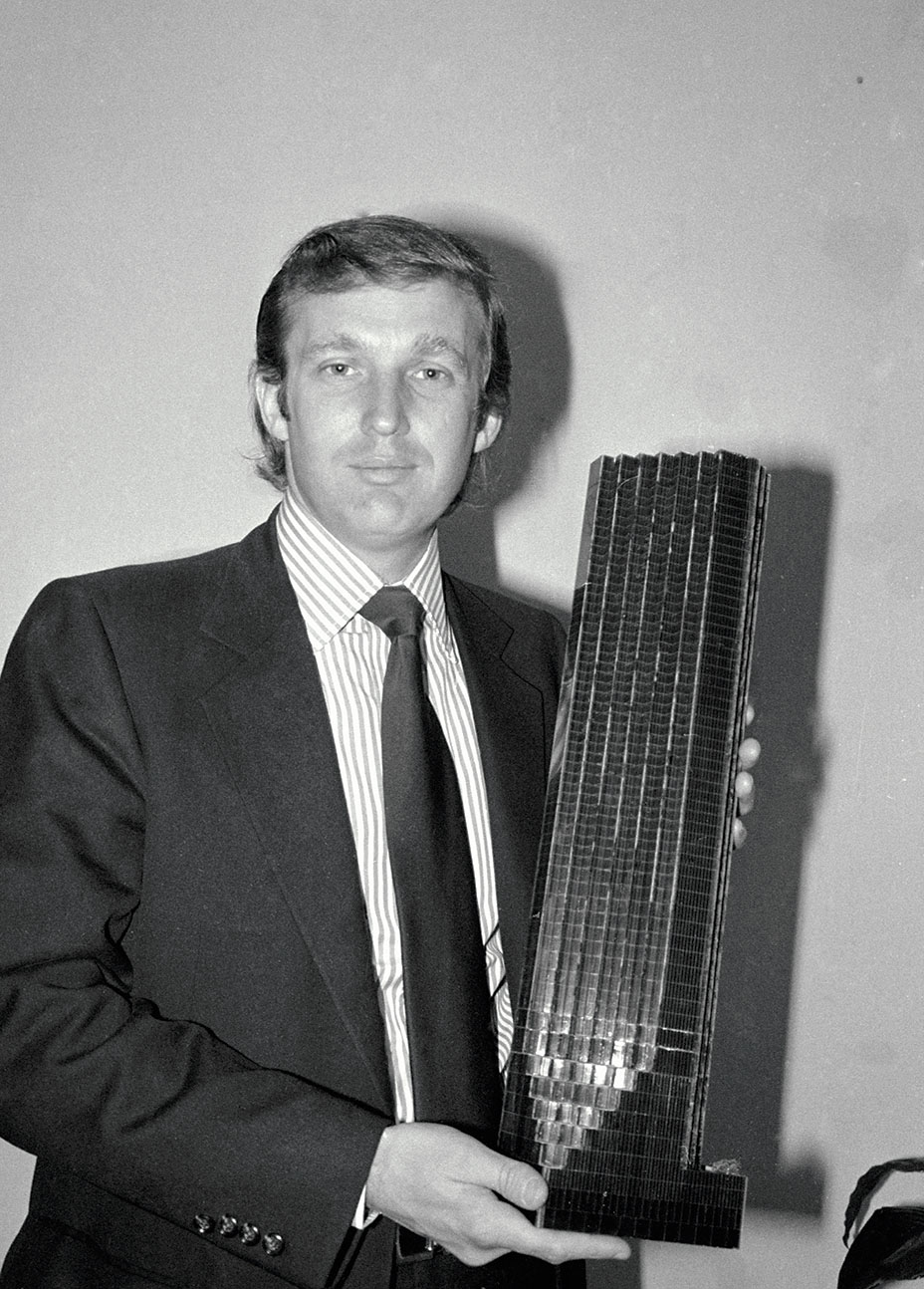
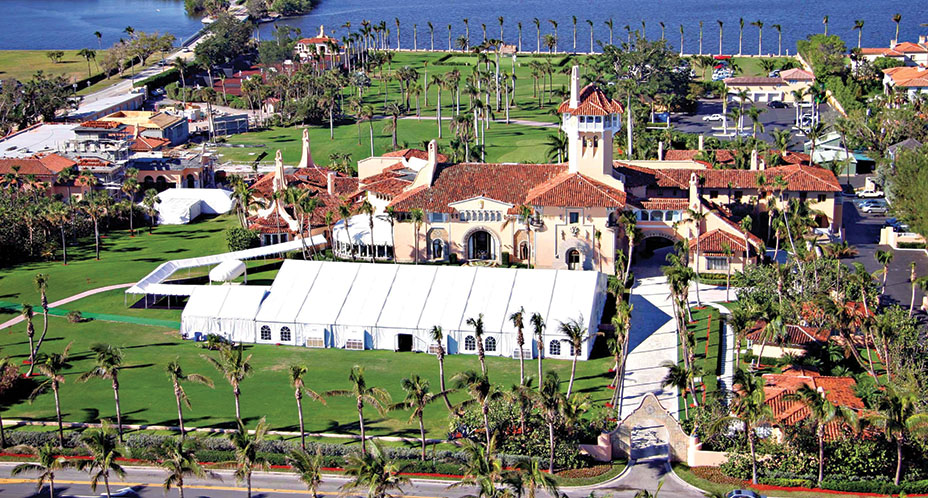
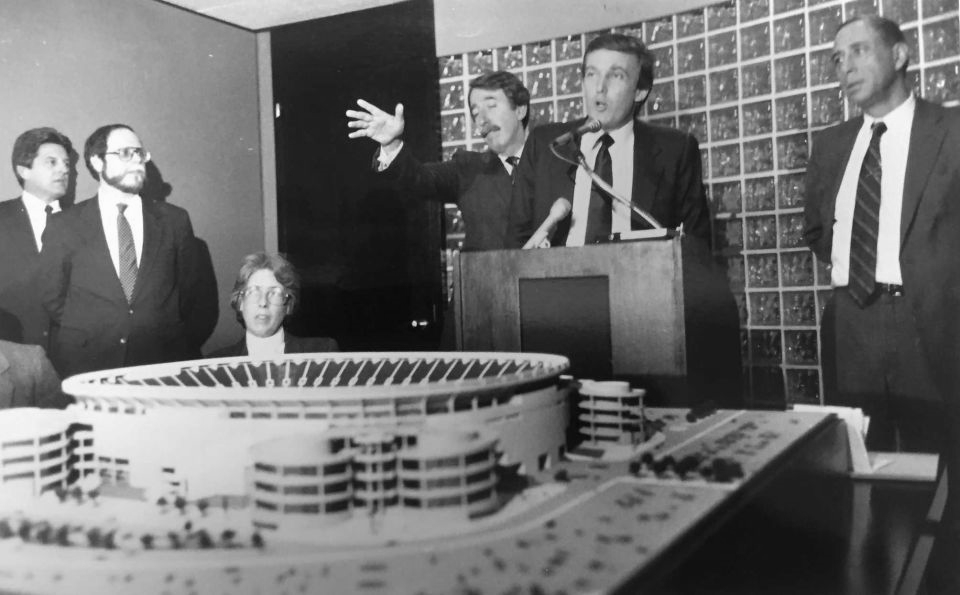
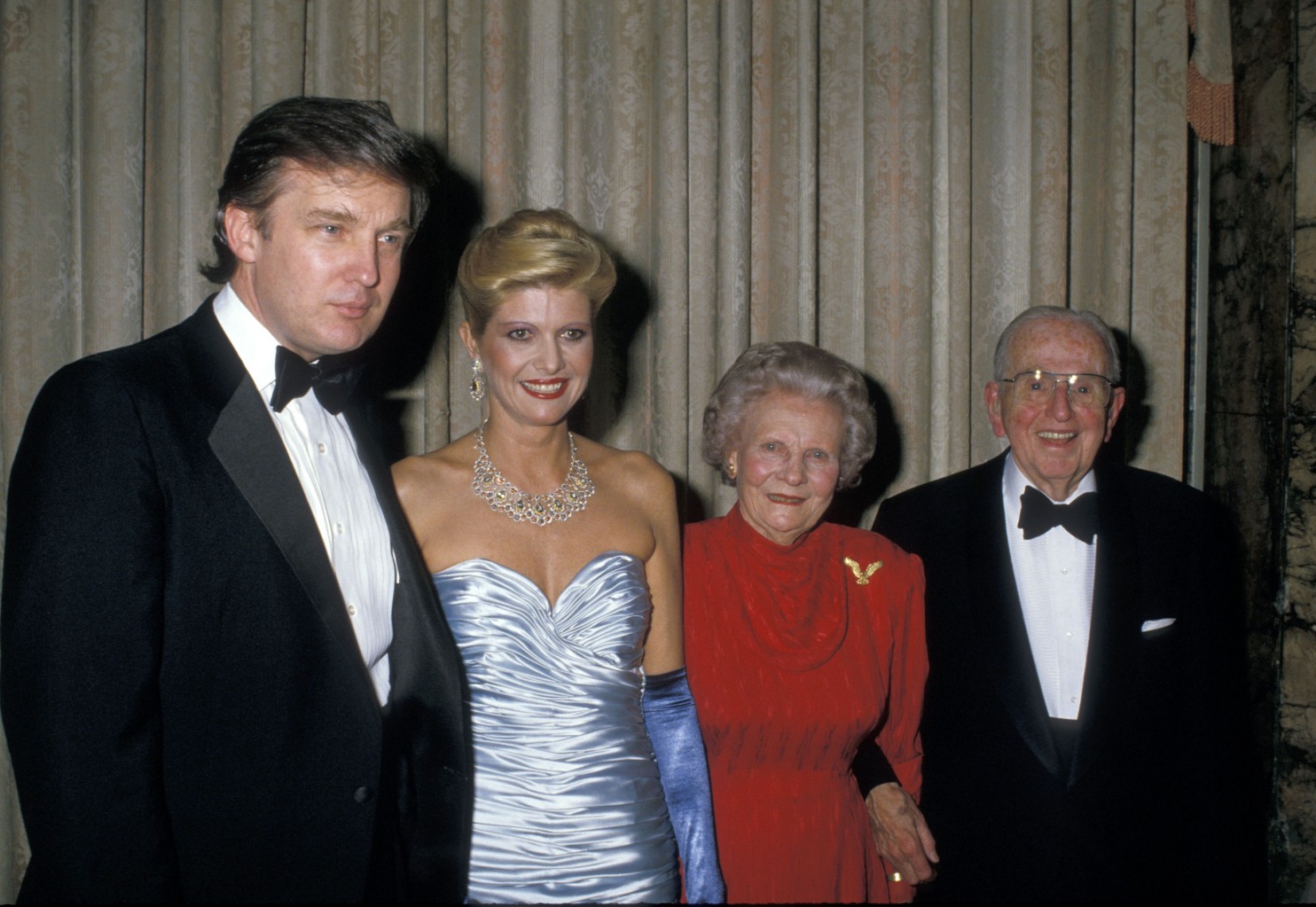
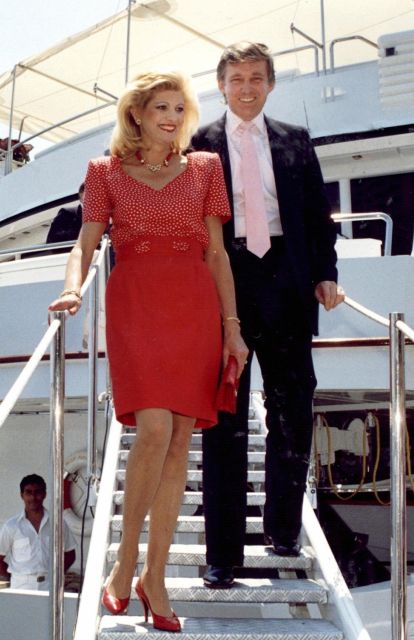
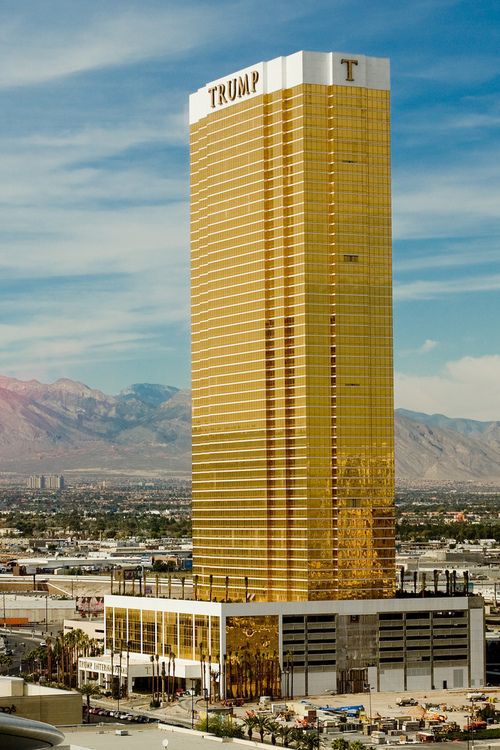
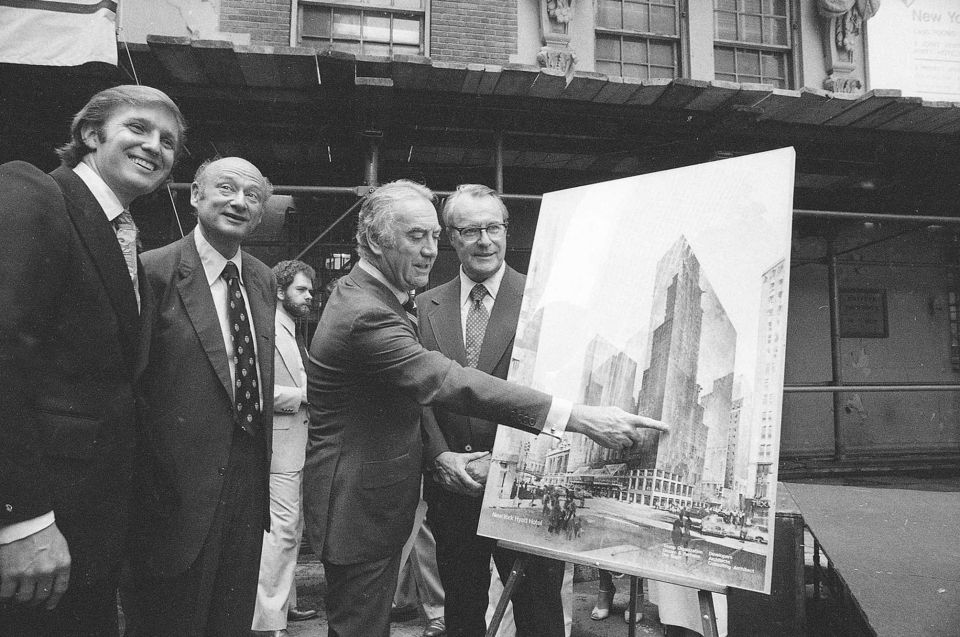
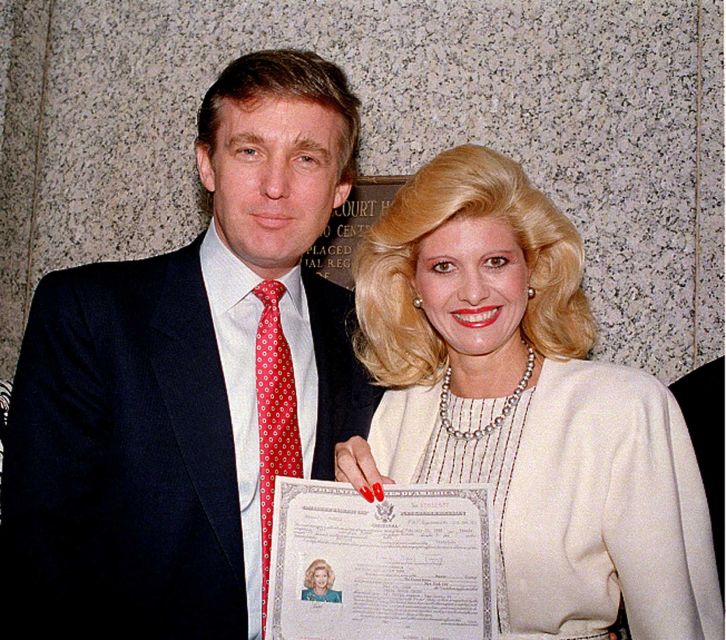
He would work hard at developing his professional world.  But within a dozen years the was able, at a cost of $100 million, to convert an unprofitable hotel into the fabulous Grand Hyatt on 42nd Street, adjacent to the Grand Central Terminal.  And things got only grander after this.  By 1979 he built his Trump Tower ($200 million in expenses) on New York City's fashionable 5th Avenue, then went on other projects:  a casino in Atlantic City, an Eastern Airlines shuttle service, a skating rink in New York City's Central Park, partial ownership of Miss Universe and Miss USA pageants, a New Jersey football team (briefly), and in 1985 ownership of the Mar-a-Lago estate in Palm Beach Florida, something that became a personal get-away home for him and his family.  And along the way, he met and then a year later married (1977) the Czech athlete and model, Ivana Zelnikova, and soon father three children, Don Jr., Ivanka and Eric.
Such a grand success was he that in 1987 he published something of an autobiography, Trump:  The Art of the Deal (New York: Ballantine Books).  It would become a New York Times bestseller for almost a year – and stay on the top of the list for three months – making the fairly young 
Trump one of Gallup Poll's top-10 best-known Americans at the time.
But ironically that same year financial disaster hit when the stock market crashed, and America slid into deep recession, throwing masses of people in the world of industrial and real-estate development into bankruptcy when the market for their products dried up.  Trump himself was deeply invested in his work, owing $billions to banks, and nothing moving on the sales front of his real estate projects.  But fortunately, the banks were not interested in another bankruptcy (especially one on this scale) and worked out a program to help him pay out his debts, costing him the loss of a lot of property in order to do so.
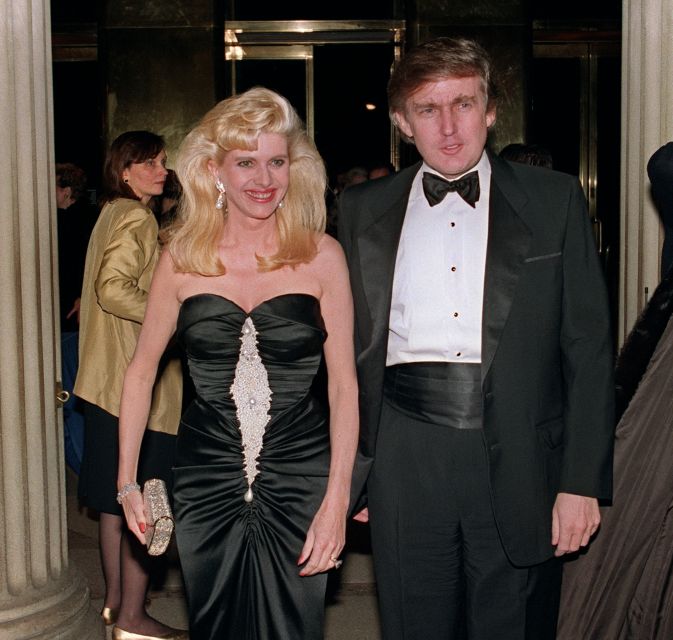
And this was accompanied by the news that he was having an affair with a pregnant Georgia model, Marla Maples, shattering his married world as well.  He and Ivana would go through a very expensive divorce in 1992, and Trump would then go on the next year to marry Marla after their daughter Tiffany was born.  But that marriage was not really headed down a primrose path, an in 1997 they would separate, and then divorce two years later.
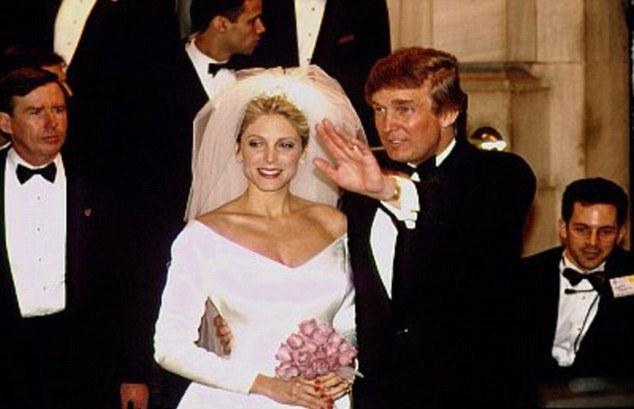
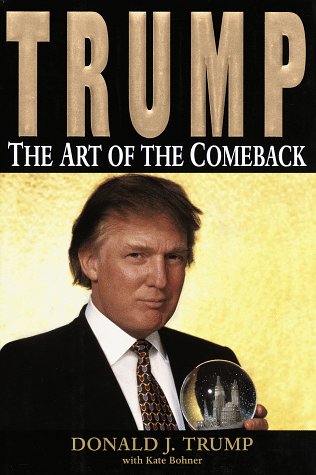
But 1997 was the year he published his second book, The Art of the Comeback (New York: Times Books).  And indeed 
Trump had slowly achieved just that, a true comeback.  In 1994 he had been able to acquire 50 percent ownership of the Empire State Building, and in 1995 finally finish the restoration and then sell the Plaza Hotel (which he renamed the Trump Building).

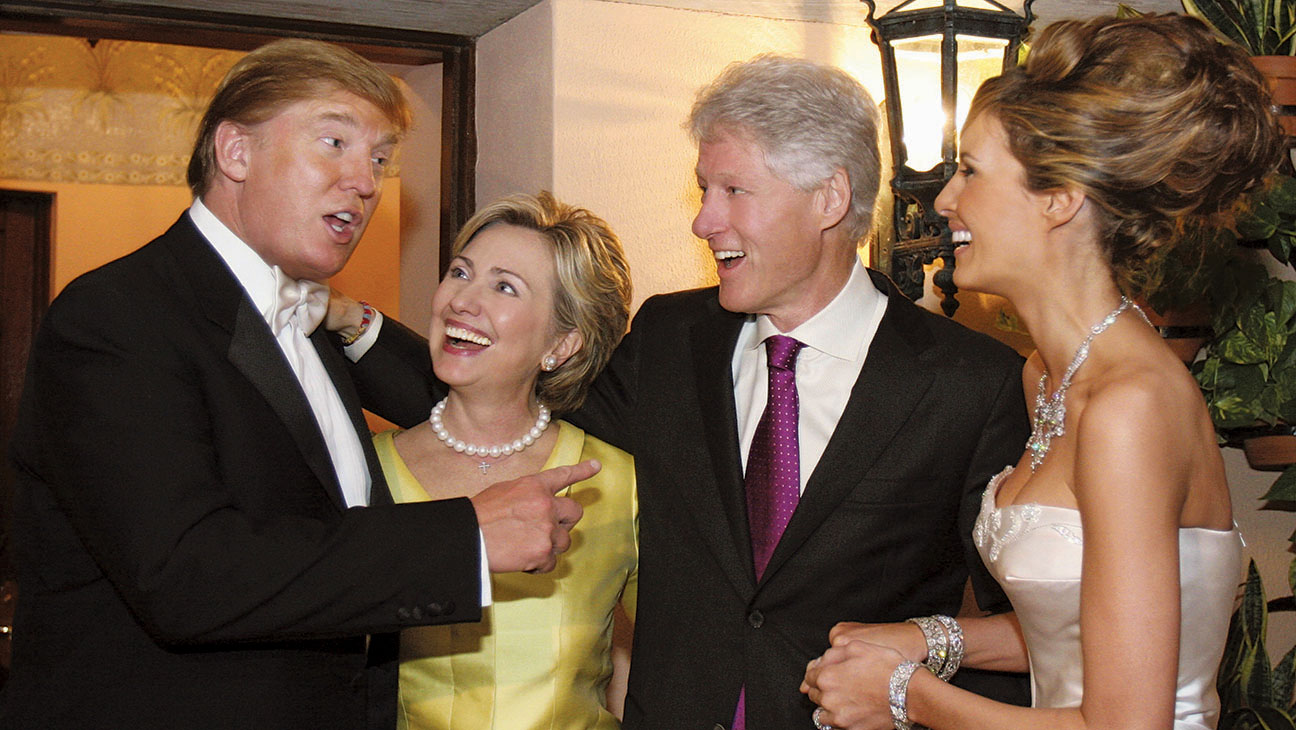
The following year he met the Slovene model, Melania Knauss, though it would not be until 2005 that they would marry.  Attending the wedding were numerous political and media celebrities, including Bill and Hillary Clinton!   A little over a year later Melania would give birth to their son, Barron.
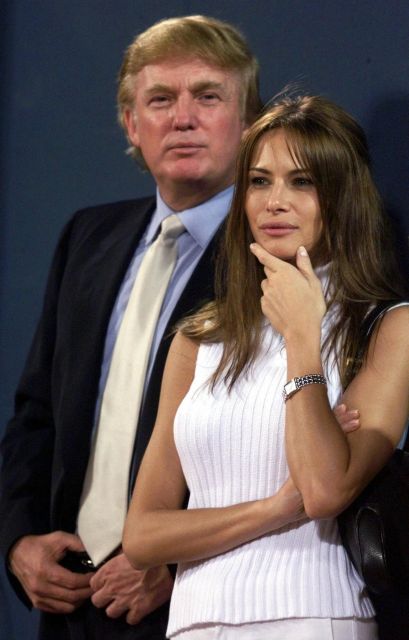
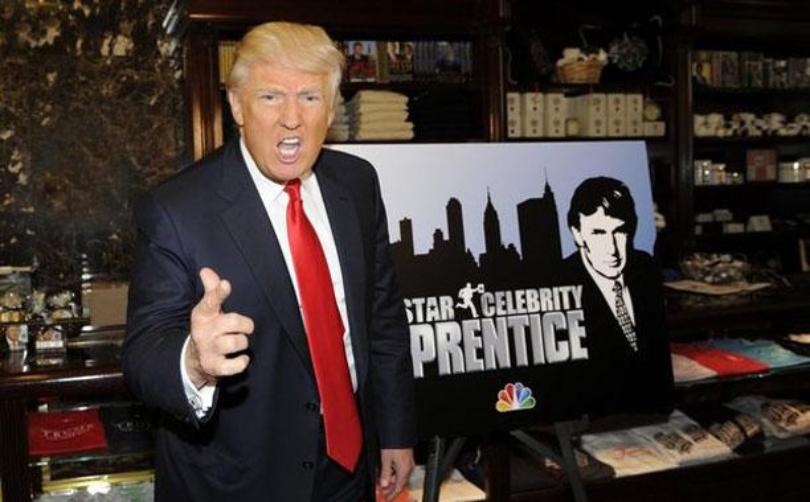
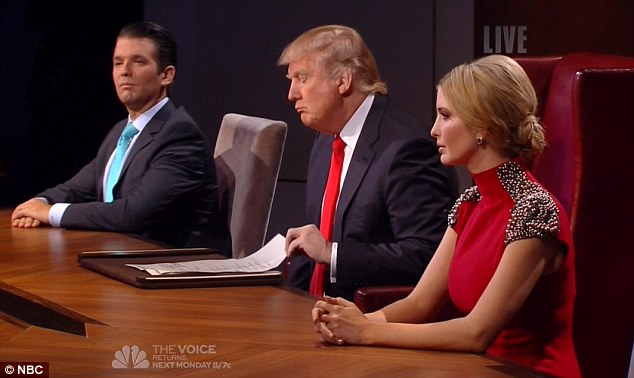
Being the restless soul that he was, in 2003 he turned to the challenge of the world of television, becoming producer and host of the NBC show, The Apprentice ... the program becoming very popular.  Eventually he would take on celebrities as his show’s participants, thus in 2008 renaming the program The Celebrity Apprentice.  He would continue in this role until 2015, when he turned fulltime to his next challenge, national political office.  At this point, Trump's personal fortune was in the $3 billion range.
Trump had some earlier thoughts on the matter of politics, back in 1999 trying a run at the U.S. presidency via the Reform Party, then in 2004 even undertaking fundraising for the Democratic Party presidential candidate Kerry.  But in 2012 he would return to the Republican Party, thinking of a presidential run himself, before throwing his support to Mitt Romney.

Trump announced his candidacy for the Republican Party presidential nomination, running on the challenge to "Make America Great Again" (MAGA).  This, unfortunately was a concept in total violation of the moral inclination of America's younger generations, who believed that their "shaming" of America was a sign of personal nobility and that such patriotism as Trump was proclaiming was simply ugly Fascism, which they were personally dedicated to root out at all costs.
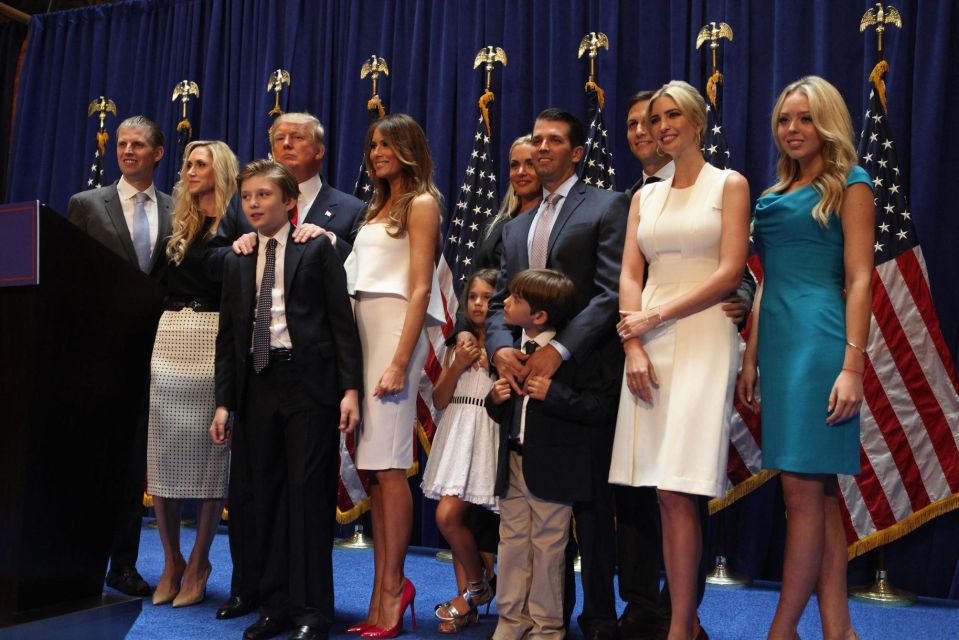
Nonetheless, employing  the same careful calculation by which he had built up his huge business empire, 
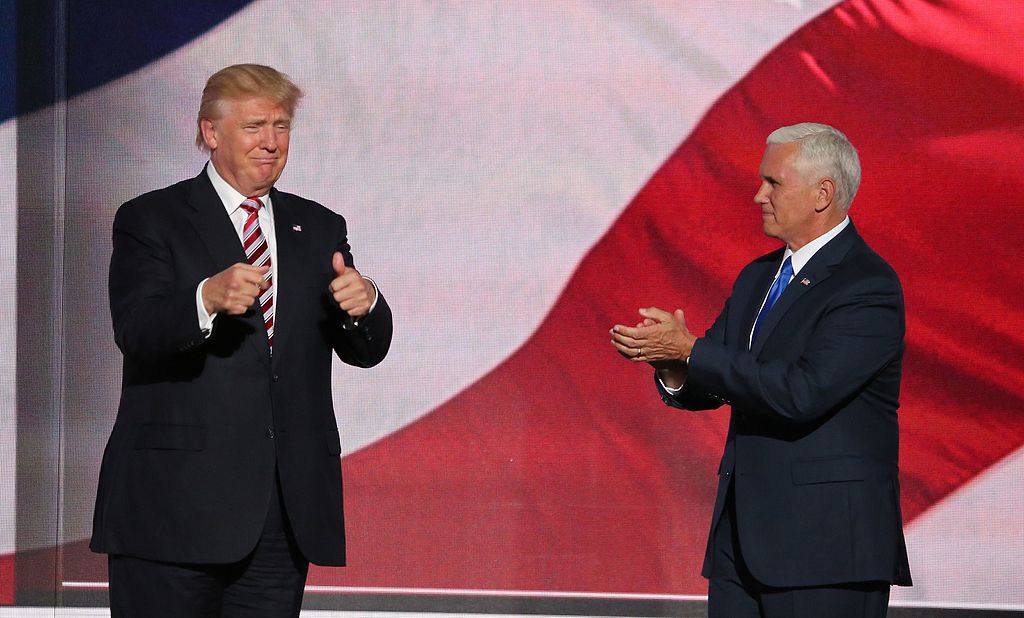
Trump pulled ahead of his competitors, first of all to gain the Republican Party presidential nomination, and then to conduct a carefully strategized move to win the electoral college votes needed to gain the presidency itself.

No, Trump was no nitwit.  Vulgar and abrasive at times, yes.  Misleading in his broad public statements about what he planned to do with respect to this issue or that, often yes.  But a nitwit.  No.

Trump the Christian.  
Trump was also a dedicated Christian, but in a very Trumpian way.  He was raised in a Presbyterian family, but once deeply immersed in the business world, religion seemingly played no particular role in his life.  But in later years (around the year 2000?) he seemed to find an interest in Christian televangelism, eventually especially in that of Paula White, an attractive (and very wealthy) White woman leading a largely Black congregation.  Her "prosperity gospel" version of the Christian faith, popular among many Evangelicals, touched Trump deeply (she is said to have finally "led him to the Lord" in 2011), and he found himself taking advice from her on matters of Christian faith, both before and then during his tenure in the White House.  Thus it was that he was identified fairly closely with the American Evangelical community.
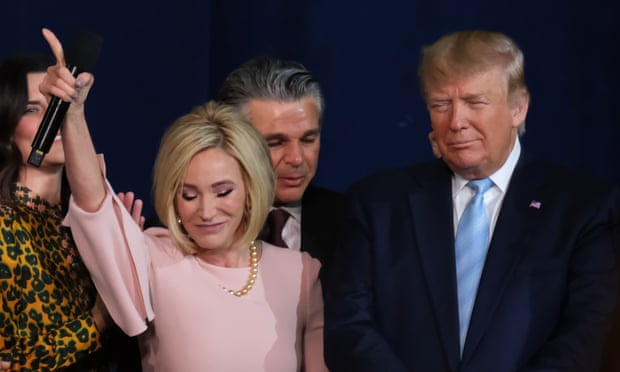
His political opponents accused him of course of taking on these Christian loyalties for purely political reasons.  But then 
Trump was accused of a lot of things, which Trump was always quick to argue back in his own way.  In any case, it will always be hard for anyone else to assess the reality of another person's spiritual life.  Indeed, religion can be a matter of much show.  But privately, it can also be very sincere in a most individualistic way.

In any case, as President he would work closely with the Christian pastoral world (as had Presidents before him), but especially with the various members of his evangelical advisory council, and join them in attempting to free public Christian prayer from governmental prohibition (placed there by the courts), only minorly successful in the effort.  And he would push (again only slightly successfully) to allow people whose faith did not put them in accord with the legal requirements of "political correctness" not to be punished by the courts for failing to obey the courts' official social-moral directives.

He was accused of politicizing the Presidential prayer breakfast in February of 2020,[2] commenting on the religious hypocrisy of individuals "who use their faith as justification for doing what they know is wrong", "nor do I like people who say, 'I pray for you' when you know that is not so."  It was generally understood that he was referring to political opponents, Mitt 
Romney who had just cited his Mormon faith as to why he, as a Republican, had voted for Trump's conviction, and Nancy Pelosi, who had announced that she prayed regularly for the supposedly deeply misguided President ("He really needs our prayers"), while directing the ongoing effort to remove Trump from office.  Trump apologized for his comments at the end of his speech.   "I'm sorry.  I apologize.  I'm trying to learn.  It's not easy.  When they impeach you for nothing and then you're supposed to like them, it's not easy folks.  I do my best."

And indeed his Good Friday Message that April – and accompanying prayer by Pentecostal bishop Harry Jackson, who also praised Trump for his Christian work – was a deeply moving event calling for peace, reconciliation and deliverance in this time of national troubles, brought on especially by the Covid-19 pandemic.  There were no Trumpian swipes at his Washington opponents in the message!  And it was also another indicator of the very high standing that Trump had within key parts of the Black as well as White Evangelical community.


[2]But this breakfast was taking place the very next day after the Senate had dismissed the impeachment charges delivered to it from the Democrat-controlled House, and just after the mainline Christian journal Christianity Today had strongly denounced the president.  But it was also three days after Trump had been prayed for in the launch of the bi-racial organization, Evangelicals for Trump Coalition.


SPECIAL COUNSEL MUELLER INVESTIGATES THE "RUSSIAN CONNECTION"

Once in office as President, by May of 2017 the Steele-inspired rumors of "Trump collusion with the Russians" had mounted so high – thanks to the scandal-hungry media and his dedicated opponents on Capitol Hill – that Congress called for the creation of a special counsel to look into these rumors.  Soon former FBI director Robert Mueller was assigned the task, given wide authority to find out whatever he could on the matter.

Then for the next two years, the world had to wait while 
Mueller's investigation was conducted behind closed doors.  This, however, did not keep the news media from speculating wildly about what certainly Mueller must be finding out about the criminal president.  But weren't they horrified when finally in March of 2019 – after much federal expense in time and money – Mueller came up with the conclusion that though he did not approve of some of the things Trump did, he could find no basis for criminal charges to be brought against the president.

That was not what so many on Capitol Hill and the national press wanted to hear.  Impeachment therefore would have to go down a different road than the much hoped-for Russian connection.  They were not going to give up on this all-important crusade against the evil president.


TRUMP'S FEDERAL COURT APPOINTMENTS

In the last year of Obama's presidency, Conservative Supreme Court Antonin Scalia died.  Obama naturally sought to fill that appointment, but obviously not with a similarly Conservative individual.  He proposed a "centrist" Merrick Garland, which simply would have cut further the Conservative voices countering the small but very Liberal Supreme Court majority.  The Republican-dominated Senate let Obama know that they would hold up any replacement appointment until a new president was installed as a result of the elections coming up that fall.  Thus no action was taken on the Obama appointment.

Then with 
Trump taking office, not surprisingly he appointed Neil Gorsuch, a judicial Conservative or judicial "originalist," one that insists on a very limited role for federal judges in how federal law is applied.  The appointment was ultimately approved in the Senate, 54-45, not surprisingly along purely Republican-Democratic Party lines.  Okay, a conservative to replace a conservative.

But then the next year, "centrist" 
Anthony Kennedy (originally a conservative, who like so many, over the years had moved to the Left to become more "activist" in his judicial philosophy) announced that he would be retiring in July (2018).

When it became apparent that 
Trump was going to nominate another Conservative or "originalist" to that spot, the battle was on.  The Supreme Court was, after all, the supreme legislative body in the land.  And the idea that it would take a more Conservative view on legal matters was totally unacceptable to the Democrats, who looked for their ideological agenda to be enacted through the Supreme Court if they could not get it enacted through Congress. That's how Congress's strongly supported Defense of Marriage Act (DOMA) was overturned during the Obama years.

So they did what they attempted to do years earlier with the Conservative Justice Clarence Thomas, by bringing forward a female "victim," Christine Blasey Ford, who narrated an incident that happened back in her high school days (36 years earlier) when she was accosted ("feared for her personal safety") by a group of drunk teenage boys at a party.  And she was sure that one of them was Trump's new appointee, Brett Kavanaugh, although she did not know him personally at the time.  But the victim card the Democrats played did not work very well when a friend of hers who was with her at that party remembered no such event having taken place.  And Kavanaugh's friends attested to the fact the picture Ford painted was not possible of the Kavanaugh they had known in high school.  And his record since then as a judge was spotless, though, yes, conservative.  And that was the best the Democrats could offer in their attempt to destroy the character of Kavanaugh.

The news media however spun as negative a picture as possible in support of the victim narrative.  Thus the hearings dragged on, until finally in October the Senate approved his appointment 50-48.

Then there was the matter of the 
Ninth Circuit Court – always reliably Liberal – and therefore the court that the ACLU and other "progressive" groups brought their cases to with the expectation of a very favorable decision in their litigation.  But vacancies were occurring, and Trump was appointing more Conservatives, although the Democrats were doing everything possible to hold up the appointments.  But even then, the Liberals needed not to worry, as only nine of the twenty-five Circuit Court judges had been appointed by Republican presidents.  Trump had a very long way to go to get the Ninth Circuit Court out of Left field, so that he could shut down legislation through judicial decree.

Then in 2020, just a month (October) before the scheduled November elections, 
Trump was able to appoint yet a third individual to the Supreme Court, replacing Ruth Bader Ginsburg, who had died the previous month (September).   The Democrats were furious, remembering how the Republicans had stalled Obama's intended appointment in the last months of his presidency.  But the Republicans, possessing a majority in the Senate, pushed ahead with hearings on the Trump appointment of Amy Coney Barrett to the position, a judicial "originalist" or conservative (and a Catholic) – replacing a very Liberal (and JewishGinsburg.  Needless to say, Barrett's Christian loyalties ("dogma" it was termed by Democratic Senator Feinstein) came under considerable questioning by the Democrats (where did she stand on the matter of abortion and gay rights?).  In the process the American Bar Association (which usually is listened to in such matters) gave her its highest recommendation for "integrity, professional competence and judicial temperament."   But this did not bring on any support from the Democrats.  In any case, in the end, the Republican majority was able to confirm her appointment 52-49, with none of the Democrats in favor and even one Republican (Susan Collins of Maine) voting in the negative.

Thus her appointment probably heightened the fear considerably of the Democrats that the Supreme Court would be even less likely than ever to be the ultimate recourse to put their "progressive reforms" into place by decree.

But they had not yet had the opportunity to see what a Democratic White House (soon-to-be-President Joe Biden) would be able to achieve simply through issuing multitudes of executive orders (presidential decrees) as the law of the land.


THE 2018 CONGRESSIONAL ELECTIONS

By long-standing political habit of the American voter, the midterm elections of Congressmen (all members of the House and one-third of the Senators) have typically produced a major setback for the party previously in power, especially if it is the party of the individual in the White House.  Thus the Democrats were looking forward to some major electoral victories, ones that would finally give them the leverage to do what they wanted most of all to do:  get rid of Trump.   And indeed that is how the elections for the House seats went:  the Democrats were able to regain their majority position, and all the political benefits that went with that.  But the elections for the Senate proved to be a shocker:  the Republicans actually picked up more seats, thus increasing the size of their majority in the Senate.  Congress would thus be divided deeply along party lines separating the agenda of the House (to impeach Trump) and the Senate (to move on to other things).

But most interesting, three new female House members – two Muslims and one Hispanic – received the political spotlight that freshmen Congressmen otherwise never get until they have accumulated some years of experience on Capitol Hill.  But not these three members of the "Squad," as they were termed by an adoring press.  They held press conferences in which their very words carried the weight of long-established Congressional leaders, even more so.  This was another indicator of how media interest – not actual political experience – had moved into position to shape the country's political narrative.  Where was that dynamic likely to take the country?


IMPEACHMENT, ROUND TWO

Now with a majority in the House, the Democrats were ready to make the long-awaited move:  impeach Trump.  They, of course, would need some kind of legal grounds to do so.  The Mueller investigation had failed to come up with anything they could go with.  So they would have to find some new Trump action they could use to justify their actions.

And Ukraine, not Russia, would seemingly offer them what they wanted so badly.  An unidentified "whistleblower" inside the Washington Establishment passed information to Democrat Adam 
Schiff's House Intelligence Committee that in a phone conversation Trump had on July 25th (2019) with Ukrainian President Volodymyr Zelensky, Trump had requested help in getting information concerning corruption rampant in the Ukrainian business world, indicating they he would not release American assistance funds (which would typically end up in the pockets of Ukrainian officials) until this matter was cleared up.

The "issue" in all this was that the Ukrainian gas company Burisma Holdings, one of the most corrupt of the organizations, had Hunter 
Biden, Joe Biden's son, serving on the company's board of directors, for which he received a monthly salary of $50,000.  Bringing Hunter Biden into the matter was what the Democrats were hoping to get Trump on, because they could claim that Trump was violating the federal law making it illegal to involve foreign influence in the conduct of American electoral campaigns.  And as Joe Biden (former Vice President during the Obama years) was running as a strong Democratic Party presidential candidate, Trump's request (which Trump did not deny that he in fact had made to the Ukrainian president) was an illegal effort to involve Ukrainian influence in the elections.  But Trump countered that looking into corruption in Ukraine before he released funding was an important responsibility he had as president, especially as Americans themselves were involved.  It was unfortunate that the person involved was the son of Joe Biden.  But Trump had a job to do.

So at this point, whether a 
Trump crime had been committed – or not – involved simply the matter of which ideological version of the event you wanted to go with.

Trump was in no mood to be dragged before Congress to be interrogated by a hostile
Schiff and his Democrats – and simply refused to appear on Capitol Hill.  So now the issue for the committee became one of Trump's "obstruction of Congress" and "abuse of power."  So those two very vague procedural matters were what the Democrat-controlled House finally decided to impeach Trump over.  The Ukrainian issue was dropped because it had become increasingly clear that pushing on that issue was not going to work well for the Democrats, and in fact might actually do some considerable damage to Biden if there was too much digging into the details of the event.  So that part got dropped.

Thus on December 18th (2019) the House passed impeachment charges against 
Trump, almost completely along party lines, again, making the matter one of pure politics rather than the law.  But then on February 5 (2020) it was dismissed by the Senate. There was no way that any Democrat-dominated House impeachment was going to get even close to a 2/3s vote needed to convict in the Republican-dominated Senate, although the "abuse of power" article did get the support of Republican Mitt Romney, another Republican whom the Trump mouth had succeeded in converting into a dedicated political opponent.

This was clearly a case of partisan politics, not the law, as indeed the impeachment urge had been since its origins in early 2017, in fact every time it had been brought into play since the 1970s.  And unfortunately, what the American public would be forced to make of this now on-going event would be shaped (as always) entirely by the way the media wanted to present the "facts" of the case itself.

In any case, it appeared that "impeachment" was now going to serve as a regular instrument of American politics, to be called on to cripple the White House by a hostile Congress, even though the 2/3's Senate vote requirement was going to make it difficult to ever get a conviction.  But the impeachment proceedings would of themselves offer all sorts of political opportunity for an anti-White-House congressional opposition, not to mention a scandal-hungry national press.

This was a very bad policy to be bringing into America's national political arena.  But it was there, fully supported by Congressional leaders who should have known how dangerous such a new political procedure could make America's national political life. This was nothing more than sleazy Third-World political antics ... used regularly to negate national elections that did not go in the direction that certain politicians were wanting them to go.  That is to say, elections themselves would no longer be treated as final in their outcomes.  There would no longer be any graceful concessions by the defeated contestant, but instead simply an on-going contest of the election decision.


CORONAVIRUS

While all this Democrat-Republican animosity was going on, a horrible pandemic caused by a new coronavirus hit the world.  It seemed to have its origins in a Chinese food market in late 2019, spread rapidly across China, then hit Europe – finally moving on to America by January of 2020. No one was quite certain what to do, or what this disease meant for the safety and strength of American society.  Fearing a social and economic panic, Trump tried to play down the threat the disease posed to American life – but did attempt to restrict travel coming into America from China, being accused by his opponents of anti-Asian racism in the process!  But watching things develop in Italy and Spain, hit especially hard by the disease, by early March it was apparent that something very serious was happening here.  Seeing Italy and Spain respond to the disease by instituting the policy of "lockdown" (keeping people in their homes, allowing them out only for such "essential services" as food shopping), a similar lockdown began to be taken up at the state level by America's governors.  Thus shops, restaurants, schools, churches, etc. were closed down, and the American streets emptied.  But the American economy also went into lockdown mode.  How long America would have to remain under such economy-crushing measures was completely unknown.

Trump's federal response was in early-March to authorize $8.3 billion in emergency funding for medical research and hospital care – quickly realizing that this hardly met the severity of the crisis.  By mid-March he put before Congress a request for $1.2 trillion in federal assistance, not only for medical assistance but also in support for struggling businesses and support for state unemployment insurance programs.  Republican Senate Majority Leader Mitch McConnell was about to bring support to the request when Democratic House Speaker 
Pelosi entered the dynamic, demanding instead a $2.5 trillion ... with a much wider range of financial support involved (education programming, environmental support, and other funding of Democratic Party goals) – including a cutback in the financial support Trump originally wanted for corporate America.  This was to be more than an economic measure.  It was to be a full social programming venture.  And it would also be a huge addition to the national debt.

But in the end a "compromise" was required to get any action at all on the matter, and the net result was a $2.2 trillion program – which included a $1200 or $2400 grant to every American household (depending on single or double adult status).  But this was politics rather than economics.  Of course.  It's what Washington does![3]

Meanwhile the virus lockdown was having its own impact – social and psychological – as March turned into April and April turned into May.  How long was this lockdown going to last?  Tempers began to heat up as debate, even street protests, began to break out over the ongoing restrictions.


[3]The U.S. government has come to feel that it has the right (even some kind of duty) to run up a virtually unlimited debt, such as the astronomically high one it has accumulated today, totaling around $28.6 trillion (as of mid-2021) and still rising rapidly.  That's approximately $86,000 per person or $270,000 per the average American family of 3.14 members.  Who (or what future generation) is ever going to be able to pay that off – or even cover the interest on that debt if it were allowed to move to a more realistic 6% interest rate, rather than the politically set rate today (thanks to policies of the Federal Reserve) which has been held below even 1%?  A normal interest rate would consume all of Washington's discretionary/non-mandatory spending, bankrupting the federal government.  But it appears that nobody in Washington thinks much about this pending financial disaster.  Instead Washington seems very willing to add even another $trillion or two onto the debt, if it is perceived as advancing the interests of this group or that group.


"BLACK LIVES MATTER"

Then in Minneapolis on May 25 occurred the arrest and death of a Black man, George Floyd, by a White cop, Derek Chauvin, involving Chauvin's holding a resistant Floyd to the ground by keeping his knee on Floyd's neck – as Floyd protested "I can't breathe."  Indeed he could not, and died as a result.  All of this was caught on video and shown repeatedly across all the media, Facebook and YouTube as well as the national news media.

Black fury exploded in Minneapolis – where the incident took place – and Minneapolis quickly began to look like Los Angeles during the Rodney King riots ... and Fergusson, Missouri, during the Michael Brown riots. Shops were broken into, then burned to the ground, with whole neighborhoods coming to look like bombed out war zones.

But the action did not stop there.  It soon spread to city after city across America as Blacks (and Whites) turned out for "peaceful" protest on behalf of the cause, "Black Lives Matter."  Unfortunately, these peaceful protests were also soon accompanied by the looting and burning in city after city across America, similar to those continuing day after day in Minneapolis.  Tragically, in St. Louis, Black retired police captain David Dom was killed defending a friend's store … and many police (Blacks among them) were wounded (some killed) during the riots.  At this point even some prominent Blacks came out in opposition to the way the demonstrations were developing, complaining that this was not the way to improve race relations in America.


ANTIFA TAKES CHARGE

Meanwhile, the cause was joined by angry, mostly-White, Antifa ("Anti-Fascist") youth who turned the matter into a grand assault on all social authority – the pandemic restrictions being big contributors to the anti-authority mood.  And the dynamic became one of physical attack on the police (called out, of course, to contain the damage caused by the rioting) – characterized by Antifa rioters (and minority voices as well) as Fascist devils.  So this dynamic became more than just one of racial tensions.  It began to look like wholesale social revolution … especially in early June when Antifa youth took control of downtown Seattle and turned six city blocks into their police-free "Capitol Hill Autonomous Zone" … defended by fully-armed youth.

At this point, a number of big-city mayors (Liberal Democrats) came out with the announcement that they would be cutting back funding on their police budgets … to relocate that money into more "socially sensitive" minority-support programming.  Soon this was becoming a refrain heard even more widely among America's state and urban public authorities.  Defunding the police was becoming the new thing in the world of "political correctness" … which a lot of local officials wanted to get on board with.  Needless to say, with the police on the defensive as "fascists," urban crime skyrocketed.


THE SUPREME COURT EXPANDS THE LEGAL SUPPORT OF LGBTQ DYNAMICS

In the meantime, America was so caught up in the street rioting occurring across the American political map, that it almost missed the importance of the decision that the Supreme Court came to in the case of Harris Funeral Homes v. Equal Employment Opportunity Commission (2020).  On June 15th the Supreme Court announced that the 1965 Civil Rights Act included also protection of transgender sex … in deciding 6-3 that the Michigan Funeral Home had violated the law when it refused to allow one of its employees to cross-dress when meeting with grieving family members – in violation of the business's dress standards.  Interestingly, on the majority side was the supposedly conservative "originalist" Justice Gorsuch … who explained that Title VII of the 1965 Act did not include exactly the wording of transgender rights, but it certainly could be understood to have intended that in the category of "sex" discrimination outlawed by the Act.

What was this?  Was Gorsuch sliding Leftward ideologically?  Furthermore … although 
Kavanaugh joined Thomas and Samuel Alito in dissenting, he did so only out of the strictest of originalist principles.   Personally, he expressed himself extensively in favor of all the progress happening elsewhere in LGBTQ rights.

But the Left paid no attention to his efforts to put himself on the Progressive side of politics … and attacked him for his vote nonetheless.

And so the politics of the highest court in the land continued to develop.


Go on to the next section:  America and the World in the Age of Trump


  Miles H. Hodges