<


15. INTO THE AGE OF TRUMP

THE CHAOTIC 2020 ELECTIONS


CONTENTS

The critical role of the pandemic

A shameful political debate

Biden wins

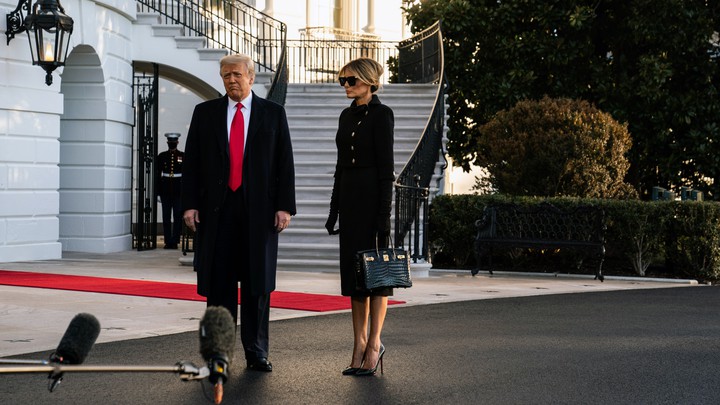
A graceless political transition

Political damage in Georgia

The assault on Capitol Hill


The textual material on this webpage is drawn directly from my work
        America's Story – A Spiritual Journey © 2021, pages 478-481.

THE CRITICAL ROLE OF THE PANDEMIC

Not surprisingly, the Covid-19 pandemic impacted the electoral process deeply, with both the Democratic and Republican parties having to hold mostly virtual (online) conventions, with few delegates able to attend physically, because of the new public participation restrictions.

In the process, the Republicans reconfirmed the 
Trump-Pence ticket. And the Democrats chose Washington veteran Joe Biden, who had served in the U.S. Senate from 1973 until his move to the position as Obama's Vice President in 2009, also an unprecedently elderly 78 at the time of his selection as the Democrat's presidential candidate!  And out of the predetermined category of  a "woman of color" to be chosen as his vice-presidential running mate – a bold act of politically-correct racism/sexism actually – Biden finally chose Kamala Harris, U.S. Senator representing California since 2017 and California attorney General prior to that (2011-2017).

The pandemic would also reshape deeply the way the November voting itself went … with the majority of the vote by way of mail-in voting rather than personal presence at a voting station.  The latter in fact became itself a major campaign issue, with the Republicans claiming that mail-in voting could easily lead to massive fraud (it is after all easier to check on the authenticity of a registered voter at a polling station) … and with the Democrats supporting mail-in voting as a matter of justice as well as convenience.

Then President Trump contracted (a fairly mild) case of the virus in early October … and had to be quarantined, keeping him from attending rallies during this important month leading up to the elections. This did further damage to his presidential credentials, which were already suffering from voter discouragement over the whole pandemic issue.  Being the president, he was subtly expected to have solutions to the crisis.  He was working on the matter … but not as fast as much of the public expected, an expectation now heightened greatly by the Democrats.


A SHAMEFUL POLITICAL DEBATE

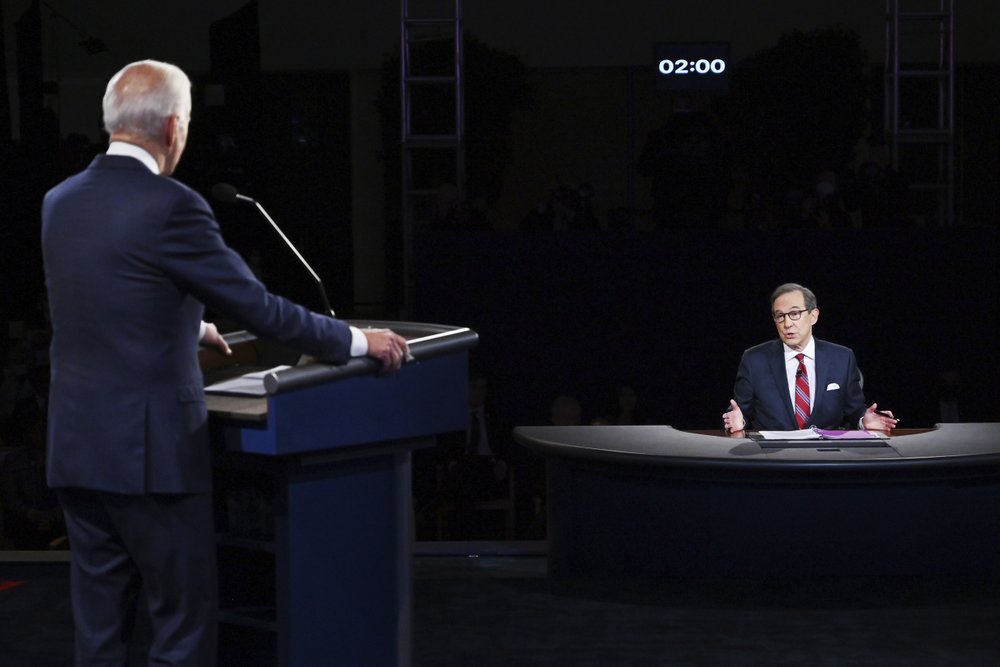
But the real problem facing Trump going into this election was the behavior that went on during the first presidential debate held at the end of September.  It was a repeat of Trump's performance four years earlier when he constantly interrupted his opponents, in this case Joe Biden, during his presentation.  Insults were sent back and forth dominating the conversation … rather than in-depth policy clarification.  And the moderator, Mike Wallace, merely added to the confusion with his own frequent interruptions in the discussions.  All in all, it was a bad scene – especially for Trump, whose rating suffered the worse of the two candidates … according to the media polls, which of course, varied substantially in their measurement on the basis of their own ideological preferences.

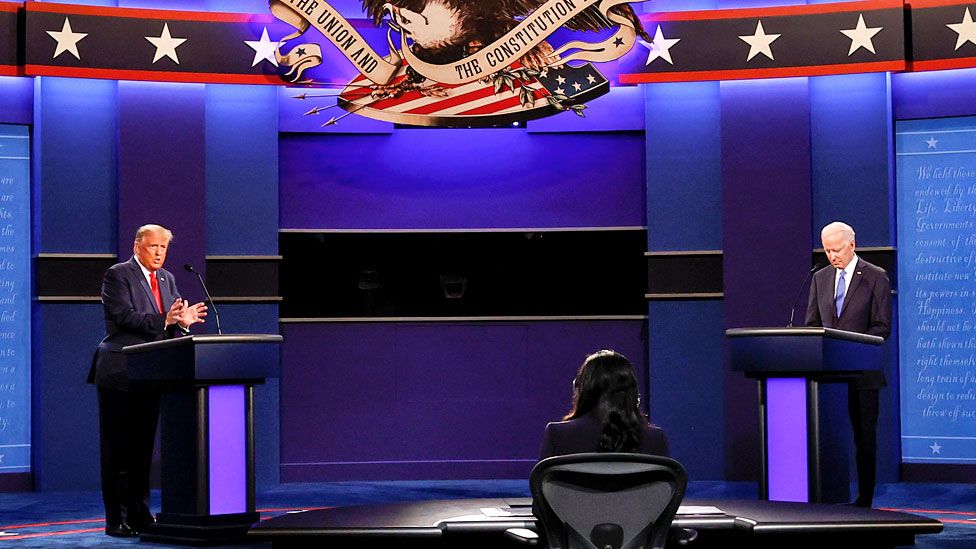
A second debate had to be called off, because of Trump's illness.  So only one more debate was conducted (October 22nd) … much calmer and more to the policy point this time.  But it seemingly changed little in the political standing of either candidate.  Trump's terrible first performance had pretty much decided the "undecideds" against him.  Thus, according to the various polls, Biden was running well ahead of Trump at the approach of the elections.


BIDEN WINS

On November 3rd the nation "went to the polls" (the group that had not already voted by mail before that date).  Because of the new voting dynamics, it would take several days before a fully clear picture of the outcome could be discerned … and that only when the close Pennsylvania vote was finally confirmed.

Ultimately, over 81 million votes went to Biden and over 74 million votes went to
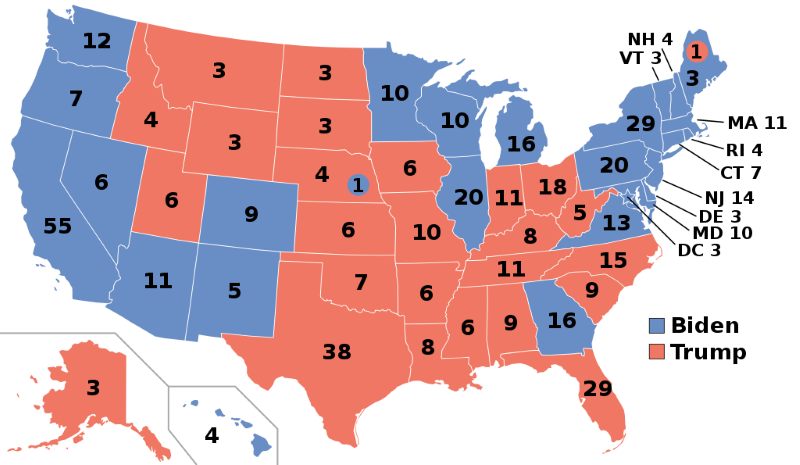
Trump.  This was the largest number ever of votes cast in an American presidential election, with both candidates (even Trump) receiving more votes than any previous candidate.  Both won 25 states each in the electoral college vote (Biden naturally also winning unfailingly Democratic Party D.C.'s 3 electoral votes), though Biden's strength in both New England and the Pacific Coast put the actual electoral vote strongly in his favor, 306 to 232.  And surprisingly Biden's vote included (very narrowly) Georgia and Arizona, both Republican-leaning since the 1990s … and a matter of great interest to Trump.


A GRACELESS POLITICAL TRANSITION

There had been much previous speculation as to whether or not Trump would offer a graceful turnover of power to his opponent, should he lose the election.  As it turned out, the transition was indeed far from graceful.

Rather than concede when it was clear to all (including even the conservative Fox News) that 
Biden had won the election fairly enough, Trump claimed that Biden had done so only through extensive voter fraud, illegal ballots having given Biden his victory.  Trump – despite Attorney General William Barr's announcement that an extensive FBI inquiry into the matter found no evidence pointing to extensive fraud – was going to challenge the results in court in a number of instances (a strategy he had learned years earlier as a businessman).

Despite the assurance of the state authorities that the voting had been amazingly clean, 
Trump pressed his case (most notably in Georgia, Michigan, Nevada and Pennsylvania) … not able to actually demonstrate any true amount of fraud he assured everyone was key to the illegal outcome.

It was simply Trump being Trump … using his own reasoning (notably with the help of a band of lawyers) to press his case, by whatever means possible.  Ultimately the day of the vote of the Electoral College arrived (December 14th) and the earlier count in favor of Biden was reaffirmed.


POLITICAL DAMAGE IN GEORGIA

Tragically for the Republican Party, Trump's pressure on Georgia to reexamine the vote (and declare a Republican win) – not once but three times – did not play well in Georgia's runoff elections held on January 5th.  In the November elections, Republican incumbent Senator James Perdue had failed to receive the 50% required by the state to be returned to Washington as the state's senatorial representative.  Perdue had gained only 49.4% of the vote … with his Democratic opponent Jon Ossoff gaining 47.9% of the vote.  But Trump's behavior had created such ill feeling among Georgian independents, that when the runoff was held, the vote switched entirely, even with a smaller turnout:  Ossoff with 50.6% and Perdue with 49.4%.  Thus the Republicans lost a vital seat (and consequently its majority) in the Senate, largely because of all the Trump antics.  The Senate was now tied, 50 Republicans (even some of those rather "independent-leaning") and 50 Democrats, with the new Democrat Vice President Harris able to vote to break any voting ties that might occur.


THE ASSAULT ON CAPITOL HILL

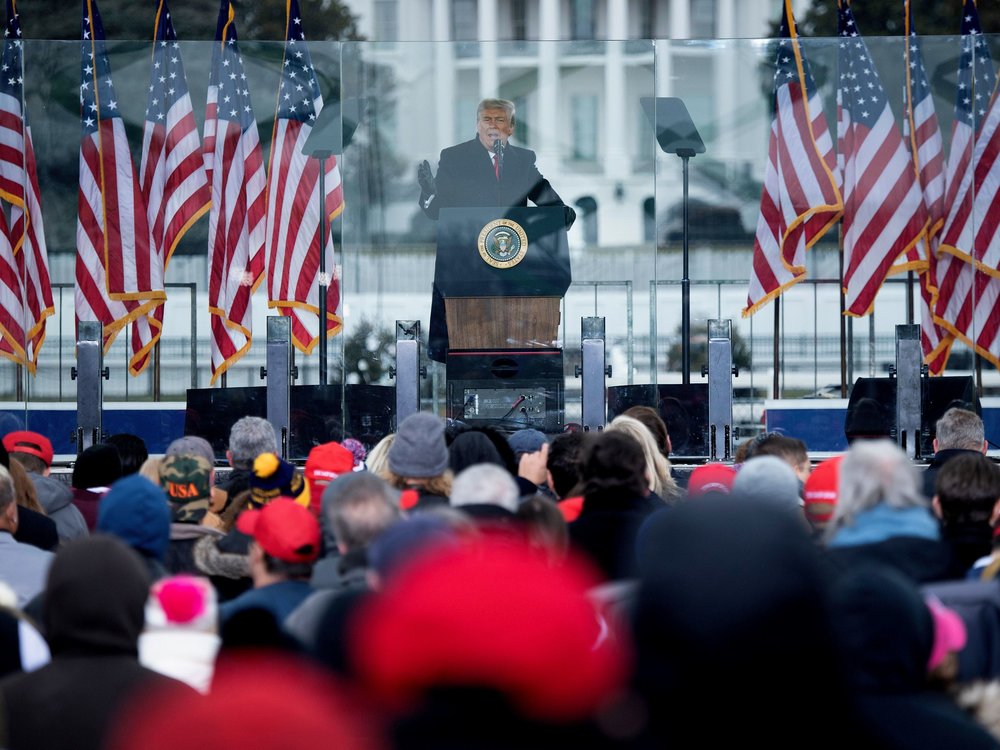
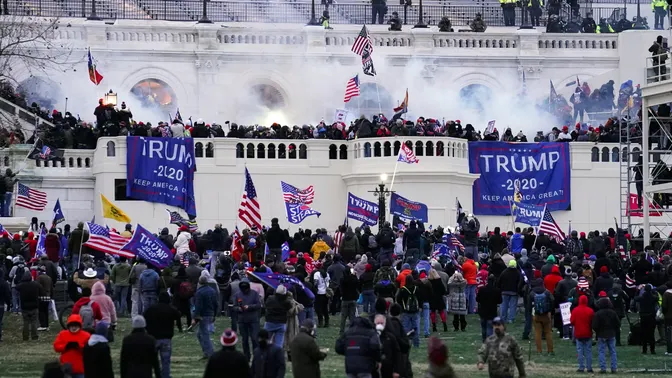
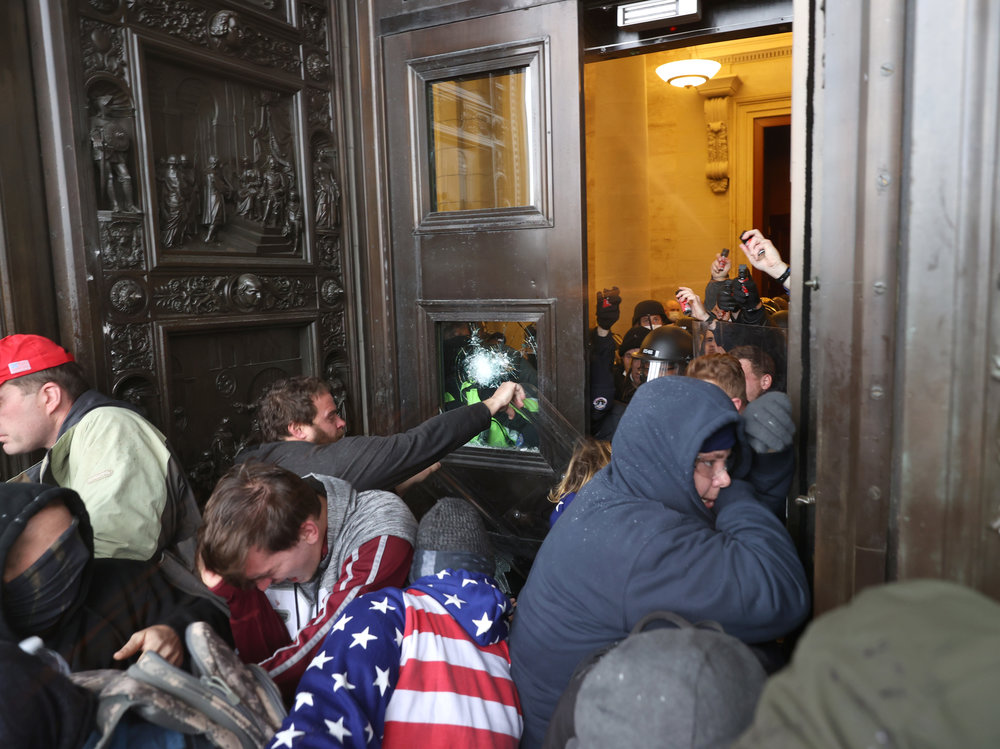
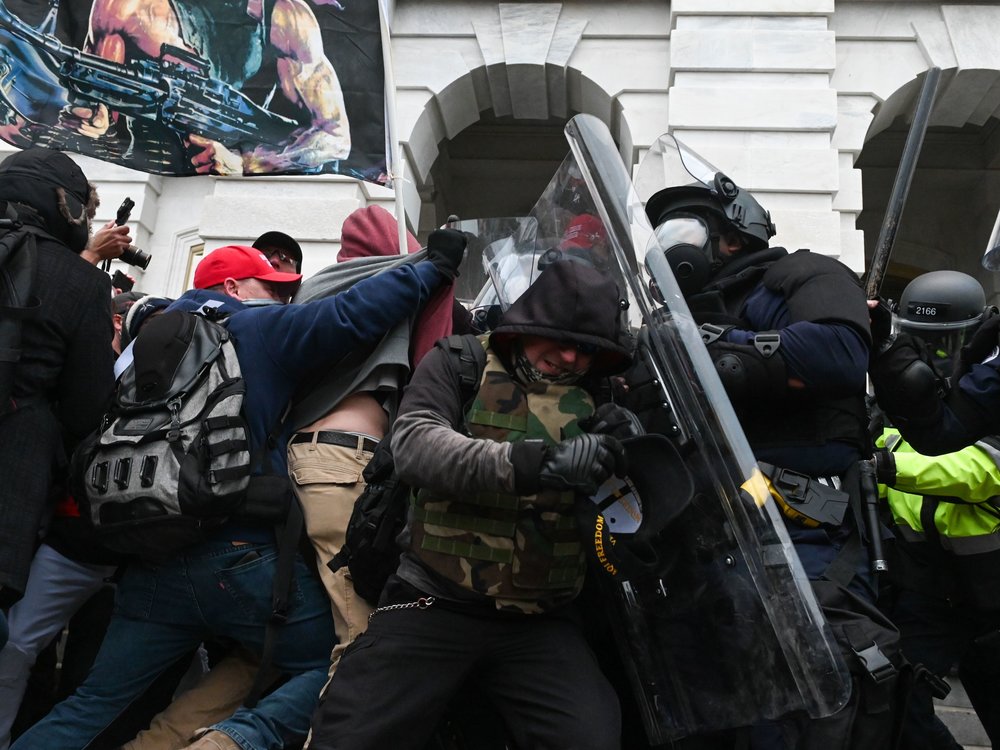
Then on the following day … just to make the transition even uglier, Trump called for a rally in front of the White House … and challenged a huge and very hyped-up gathering to march on the Capitol Building – and demonstrate to Congress (which had gathered that day to give official authorization to the Electoral College vote) their anger over the supposedly fraudulent elections.  This they did … but not stopping merely on the lawn in front of the Capitol Building, but instead storming it … thus producing a very violent confrontation with the Capital police – and the retreat in fear of the gathered Congressional members.  In the melee, a female Trump supporter was shot and killed, several protesters died, presumably from medical emergencies, and numerous officers were hurt badly, one dying from his wounds, before they could be cleared out.  Many of the participants would later be identified and arrested for what was clearly a federal crime.

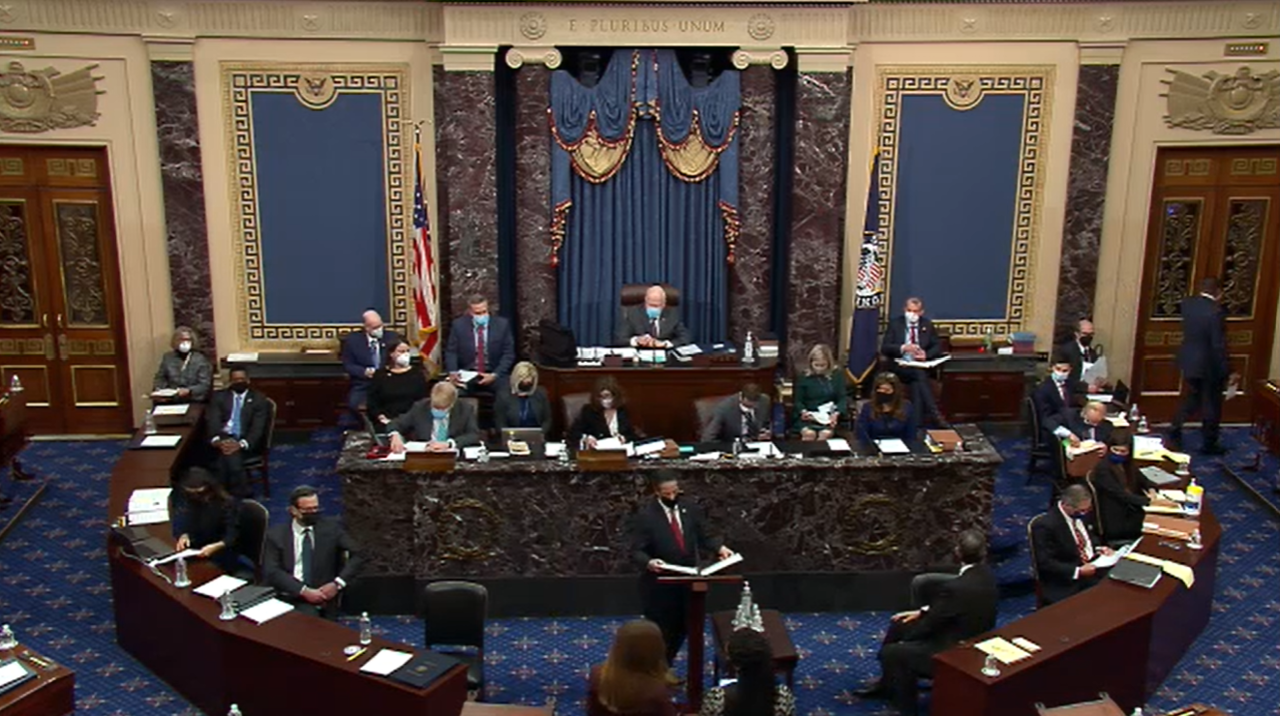
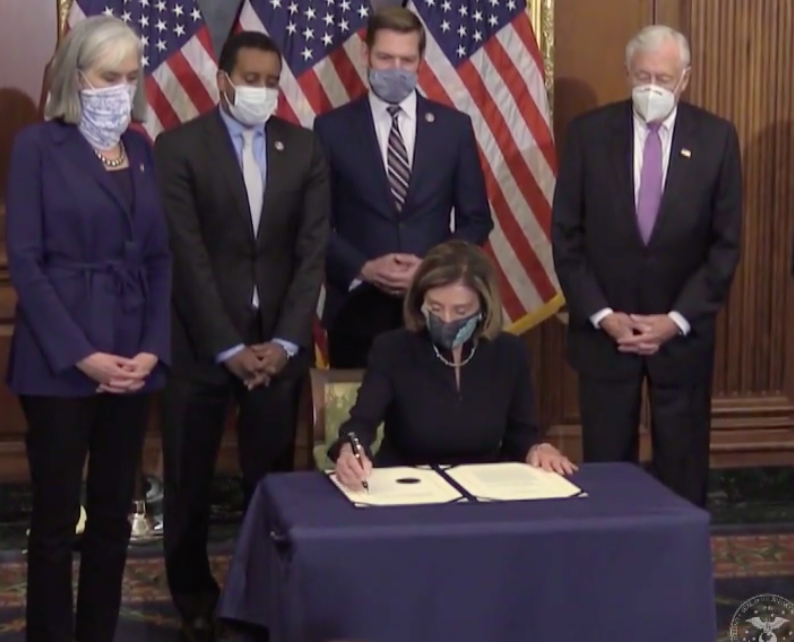
Immediately calls were issued for the impeachment of Trump (the third attempt) … and indeed on the 13th of the month the House successfully voted exactly that.  But of course this action would then have to go to the U.S. Senate … where, even with some Republicans switching to the side to convict, the necessary 2/3rds vote would not be forthcoming.  57 Senators (including 7 Republicans) voted to convict; 43 (all Republicans) voted to acquit.  But almost immediately speculation arose as to the possibility of the Democrats finding another way to take Trump down … permanently, so that he would be unable to run again for the presidency.


Go on to the next section:  Biden Takes Command


  Miles H. Hodges