China seemed to be going down the same road as North Korea, strengthening
the role of the Great Leader in society.
Chinese President Xi Jinping had been making his firm
grip on affairs both at home and abroad very attractive to the Chinese mind –
that sees this strength only in a Tianzi or "Son of Heaven." Thus in March of 2018, the Chinese National
People's Congress voted 2,964 to 2 to end the Chinese Constitution's two-term
limit on the presidency – put in place back in the 1990s by Chinese reformer Deng Xiaoping, to ensure the "collective"
rather than personal rule of the Chinese Communist Party (such as had been the
disastrous case under Mao Zedong). So, the Chinese found themselves heading down
the road of unlimited personal rule again.
That seemed to work best for them in their understanding of political
dynamics.
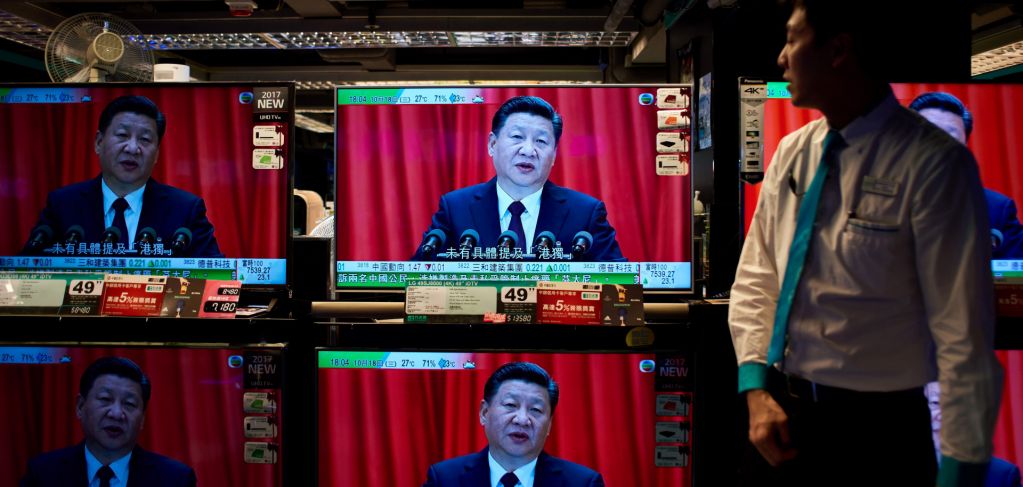 Xi Jinping building Chinese power around his own personal rule
... as if he were founding a new Chinese dynasty!
Xi Jinping building Chinese power around his own personal rule
... as if he were founding a new Chinese dynasty!
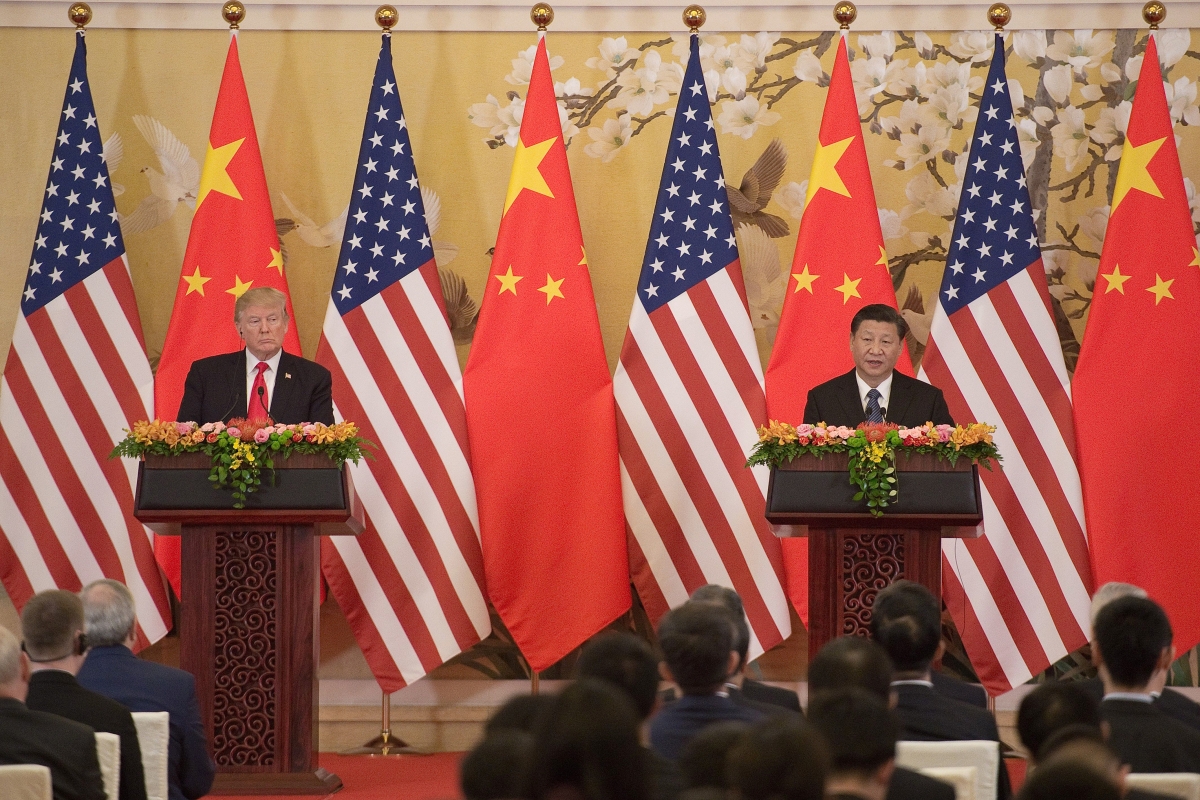
Trump in China - November 9, 2017
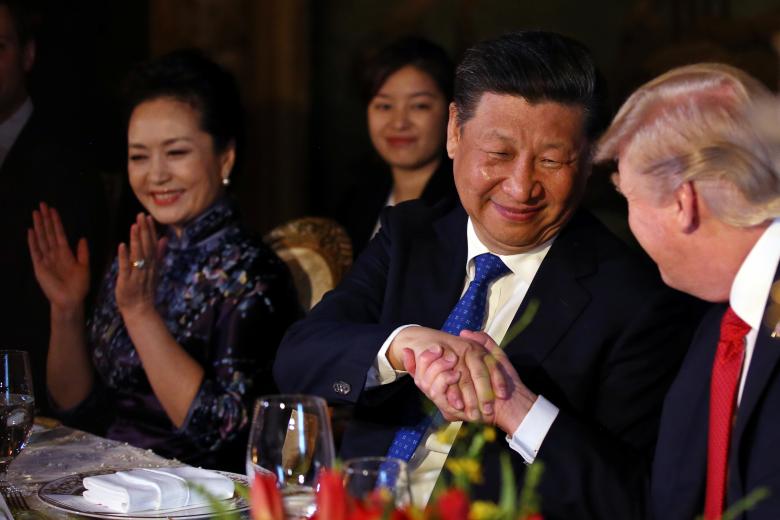
Trump presumed himself able to build better relations with
China ...
simply on the basis of his own personal ties with
China's
President Xi Jinping. He seemed not to understand
that
international relations are built largely on foundations of
relative
national power ... and the willingess of national
leaders to use
that power.
And indeed, the
Chinese had reasons to be well pleased by the service Xi had been offering the country. He was a skilled player of political Weiqi
(or Go), a Chinese board-game where a player wins by the careful
placement of numerous checker-like pieces on the grid, and succeeds in finally
isolating the opponent, who cannot make any further moves. The Chinese government was carefully
sending out technical advisors to numerous Third World countries, to help them
develop their economies, in the process making the Chinese economic – and thus
also political – position indispensable in their countries.
But
China was also taking an ever-stronger position in the West's world as
well. America (and many other Western
countries) find their industries deeply dependent on governmentally subsidized
and thus cheap Chinese labor to make their products inexpensive and thus
marketable. At the same time, China was
skillfully developing its electronic communications industry, financed also by
extensive government subsidy – plus a lot of disregard of the World Trade Organization's (WTO)
international patent rights (just plain technology theft) – in order to advance
China's own technological position.
China was also helping its 4G telecommunications giant Huawei move
into dominance in the 5G telecommunications sector, hoping to make as much of
the world as possible China-dependent in the telecommunications field. Also, Chinese companies such as Alibaba and
Tencent were growing to enormous size, both in China (near monopolies in their
respective realms), but also to positions of dominance abroad by buying out
foreign companies.
As a
sign of the success so far in this venture, in April of 2019 the leaders of
some 40 countries gathered in Beijing to celebrate the success so far of China's
"Belt and Road Initiative"
(started up in 2013) designed to integrate closely the economies of these
countries with the Chinese economy.
Needless to say, America did not participate – nor did China’s Asian
archrival India. But Putin did, as well as a lot of
African and Middle Eastern leaders, and some European leaders (Poland, Hungary,
Serbia, Greece, Italy, Spain. Czech Republic, Switzerland), even NATO ally Turkey, and some Latin
American countries (Chile, Argentina).
That was quite a show of Chinese support!
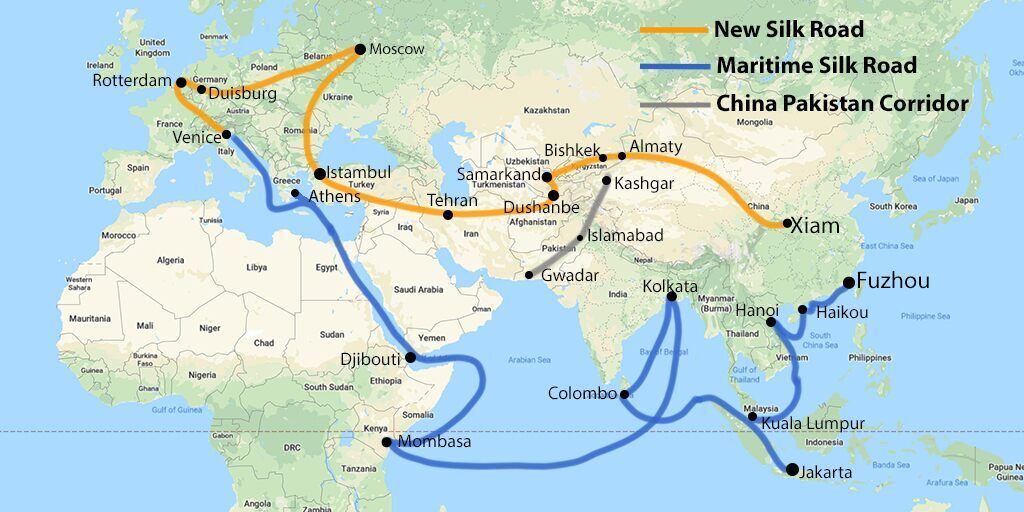
China's
"One Belt, One Road" or Belt and Road Initiative
(BRI), initiated back
in 2013, involves trillions of dollars in
infrastructure development
assistance offered to countries
struggling financially to meet their
economic challenges.
This puts China in a very persuasive
position as to political
as well as economic developments in the many
(100 or more?)
countries receiving BRI ... and also China's Asian
Infrastructure Investment Bank (AIIB) assistance.
Trump responded in March of 2018 by
putting in place tariffs amounting to $250 billion on Chinese goods seeking
entry into American markets, in order to bring them closer in line with the
pricing of unsubsidized international goods.
China retaliated with $100 billion aimed at American goods coming to
China (but the Chinese were actually already importing much less of the more expensive
Western products). Efforts between Trump and Xi to renegotiate trade relations
were attempted in 2019, but with little by way of results. But other Western countries joined the effort
to not have Chinese products dumped into their economies, or have their
companies bought out by Chinese profits gained in the government-subsidized
economic competition.
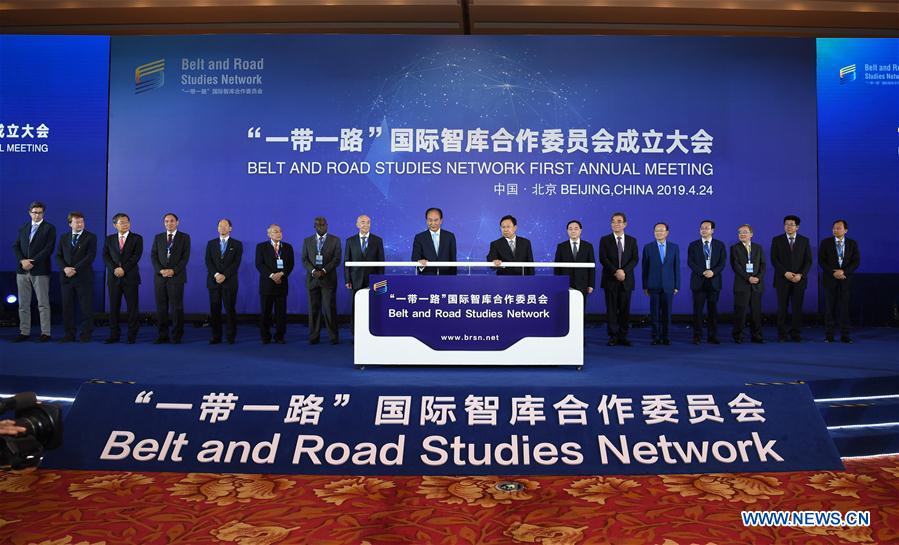
"Partners" in the Belt and Road program meet in Beijing –
April 24, 2019 to initiate a "Studies Network" The goal is a
sharing of communications and ideas from universities and
research centers across the globe.
Russia's "President-for-Life" Putin was doing everything he
could to bring Russia out of the Third-World status it fell into when it
attempted "democracy" under Yeltsin – and return the country to
the status of being something resembling more closely the superpower it once
was. After all, it still held an
amazing quantity of nuclear weapons and possessed a well-developed military
machine.
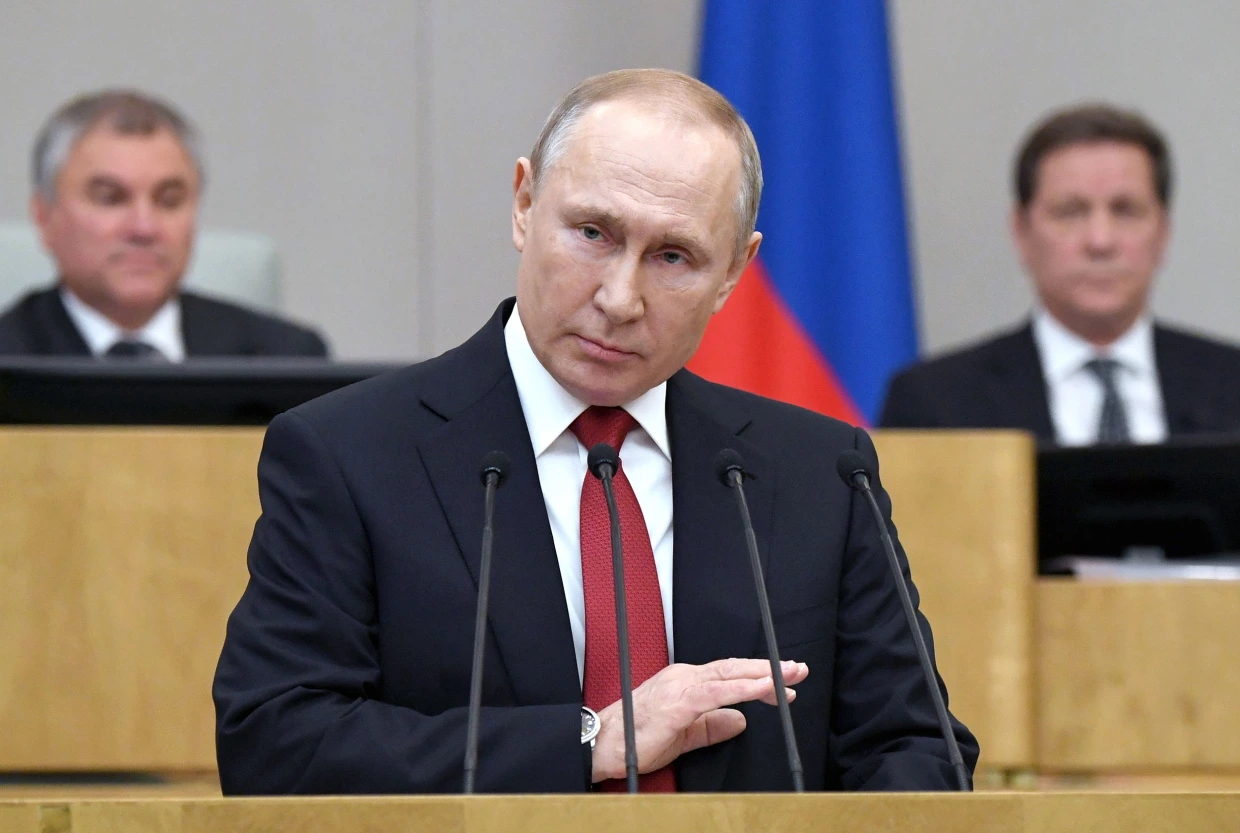
March 10, 2020 – Putin
speaking at the Russian Duma ... as the
Russian Constitution is being
amended to allow Putin to stay
in power past his current term ending in
2024... for an
additional 12 years!
And,
like Xi, Putin was very aggressive in
putting his country into the middle of global dynamics again, having Russia act
exactly like the major power it once was.
In fact the two, Putin and Xi, found themselves working closely
together because they shared the same goal:
to bring down America from its superpower status and have it join the
company of the former international greats, Spain, Portugal, France, Britain,
Germany, the Netherlands, etc., who now occupy at best only a secondary level
of importance in the international scheme of things.
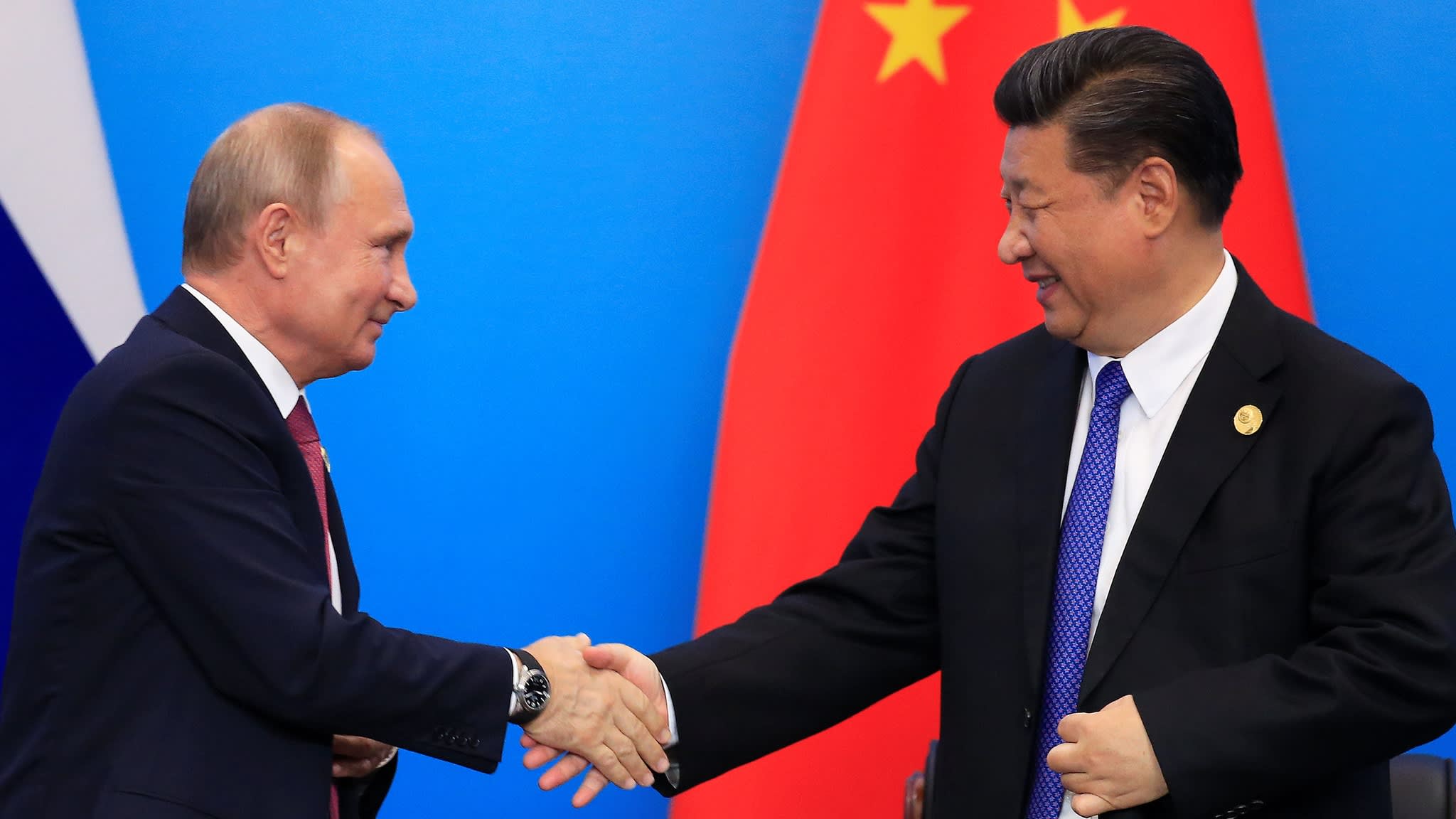 Putin and Xi recognizing that they have more in common
rather than deep political differences in their desire to work
together against an American-dominated world - June 2018
Thus
it was that Putin was quick to come to Assad's
aid in Syria when Obama tried to weaken and then topple
Assad's government, merely undercutting America's diplomatic position there, and
advancing Russia's at the same time. And
thus it was that Putin was also quick to come to Iran's
aid when Trump attempted the same thing
against Iran, in rejecting Obama's treaty with the Muslim
government and then deepening the boycott of Iranian oil. And thus also Putin jumped to the opportunity to be
of help to Maduro's government in Venezuela that Trump was trying to bring down. And so it went, counter-moves (in alliance
with China and others) whenever America attempted to exert influence over
developments abroad.
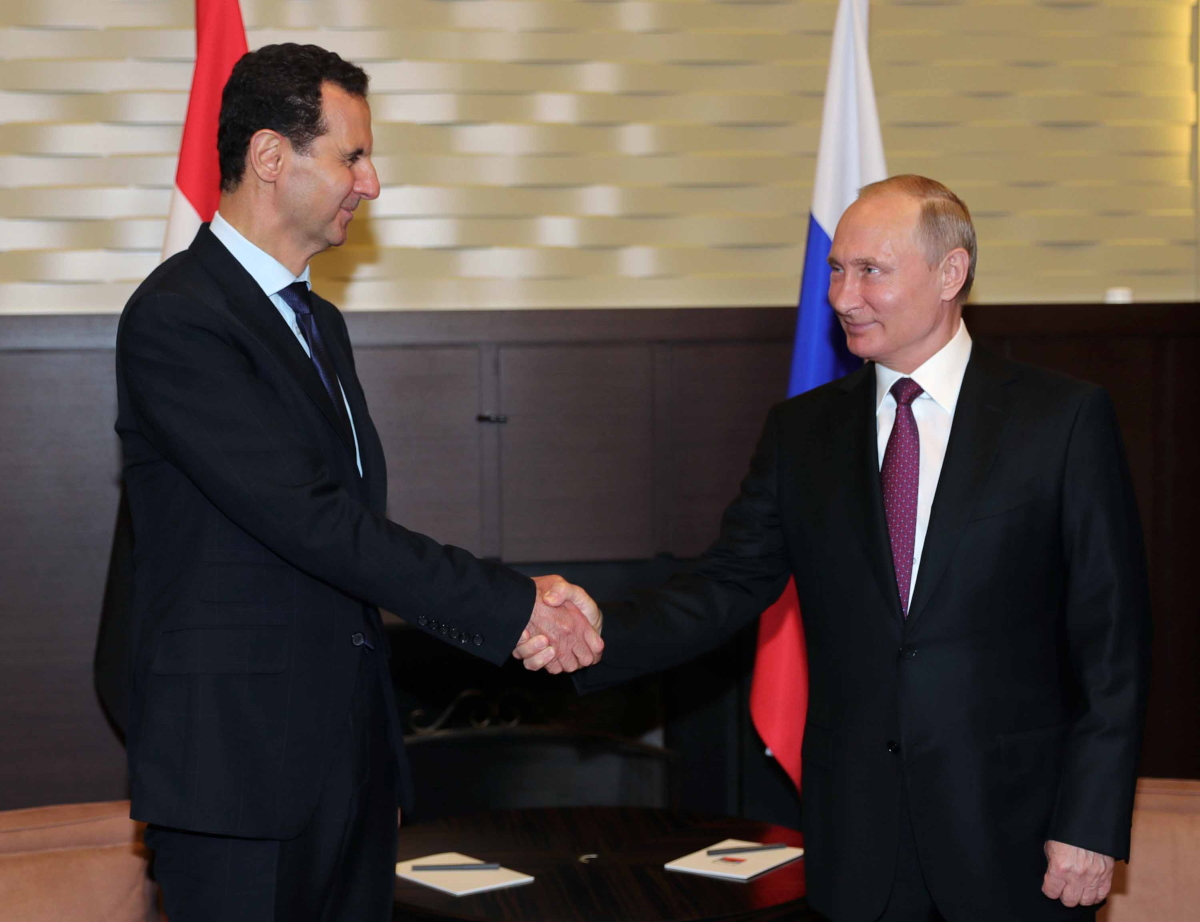
Putin and Assad working closely together (May 2018) -
since the Obama fiasco needlessly alienating Assad in the
days of the Arab Spring (2011)
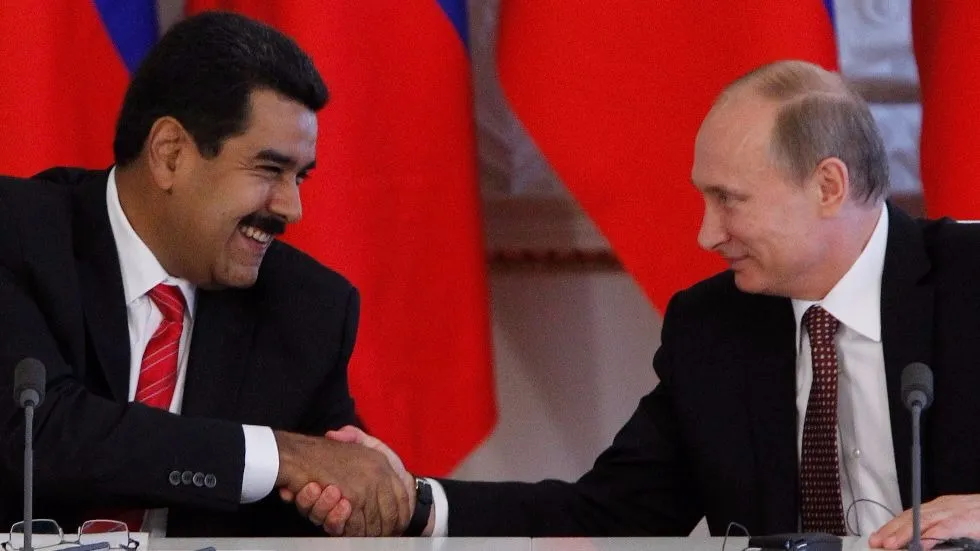 Likewise, Putin recognizing that he has much to gain in
helping Maduro stay in power in Venezuela (February 2020)
Indeed, Putin and Xi's cooperation was extensive, developing
China's Maritime Silk Road access to Europe
across the newly open waters of the Arctic above Russia's Siberia, at the same
time working to complete the Russian pipeline with the goal of sending
much-needed natural gas to the vast Chinese market. And the two countries found themselves working together in
the development of a new 5G network, as well as in other infrastructure and
technology development.
And
then there was also the matter of Russia's natural gas pipeline to Europe,
notably to Germany which also was deeply dependent on that Russian gas. This helped put Russia in a pivotal
economic position in Europe that America was finding it hard to compete with.
And
thus it seems that the Russians were in no hurry to replace Putin with any other individual. The Russians were not as wed to the idea of "democracy"
as America and the rest of the West.
They had not fared well in the 1990s with their democratic experiment
under Yeltsin. They have been very happy to have a strongman
lead them, and – like the Chinese – have seen no need to turn over leadership on a
regular basis.
Indeed, a 2019 poll taken
by the Levada Center[2] revealed
even that 70 percent of the Russians believed that (what we consider a monster) Stalin played a completely or
relatively positive role in the life of the country!
[2]FP Morning Brief (Foreign Policy), January 12, 2021.
Why Western-style government is not going to work in the world of Islam. It seems almost impossible for Americans to understand the world
of Islam. When Sunni and Shi'ite Muslims are not fighting each
other (their mutual hatred is ancient and deep, something along the lines of
the Catholic-Protestant rivalry of the 1500s and 1600s in Christian Europe),
they find the one thing they do agree on to be the danger that Western Secular-Humanism poses to their world. Unlike the Westerners themselves, they
understand Secular-Humanism to be simply another
religion, one which as Muslims, whether Sunni or Shi'ite, they deeply oppose, simply
for the way it has placed Human Reason at the head of human
life, not the God or Allah that created and directs all life. In this they share parts of the same
worldview as Christians, although they are as anti-Christian as they are anti-Sunni or Shi'ite in their own world. It's confusing. But not beyond understanding, if Western
leaders – such as American presidents – would simply take the time to learn
about these things. It would have saved
America a lot of trouble in Iraq, Afghanistan, Libya, and Syria. And it was only the intervention of the
Egyptian military in Egypt that spared America from making the same mistake in Egypt.
Bush never really caught on to this
all-important dynamic. But Obama seemed to understand this
dynamic no better than Bush, supposing that "democratic" Secular-Humanism would inevitably rise to
dominance in the Muslim Middle East if we simply got rid of other Arab
dictators, like we did with Saddam. Libya, Egypt and Syria became test cases for
the Obama (and Bush, Jr.) idea that "democratic
progress" would be the inevitable result.
And
of course, as in Iraq and Afghanistan, such intervention merely spun these
societies into a horribly cruel state of civil war, from which millions of
people were displaced from their homes and thrust into refugee status. And in the end, this merely gave opportunity
for fiercely anti-Western Sunni Muslims to advance the cause of
jihad, even to the point of succeeding in establishing a new Sunni Caliphate (the Islamic State)
in the war-torn zone of Western Iraq and Eastern Syria.
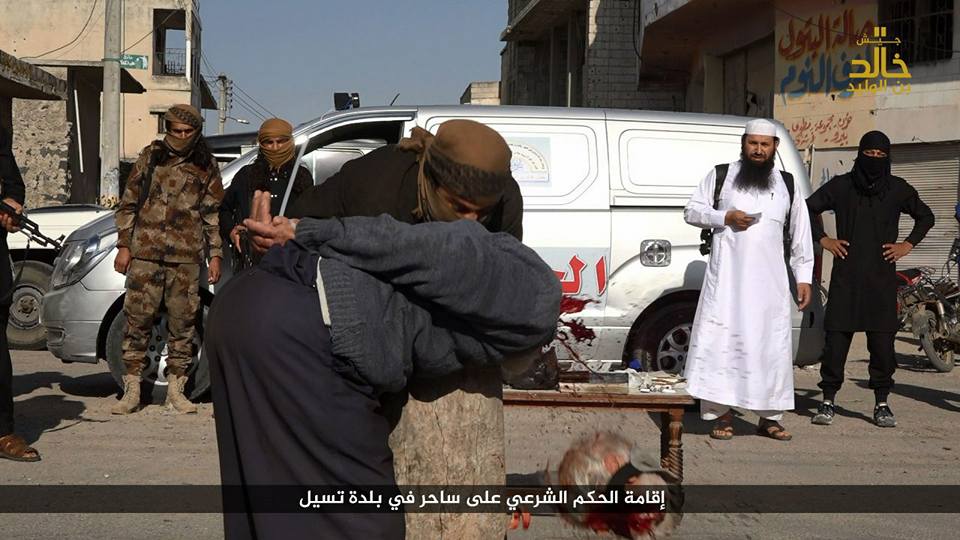 March of 2017 ... ISIS is still very active in conducting and
recording the beheadings of various individuals
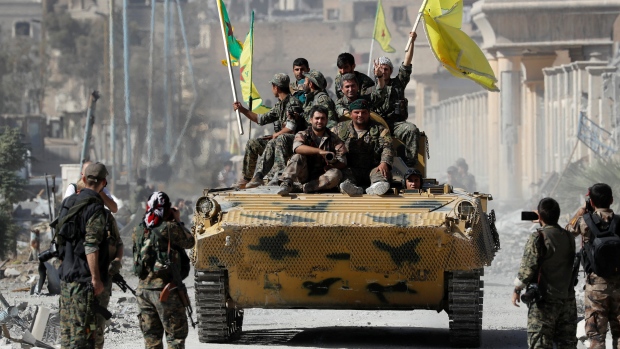
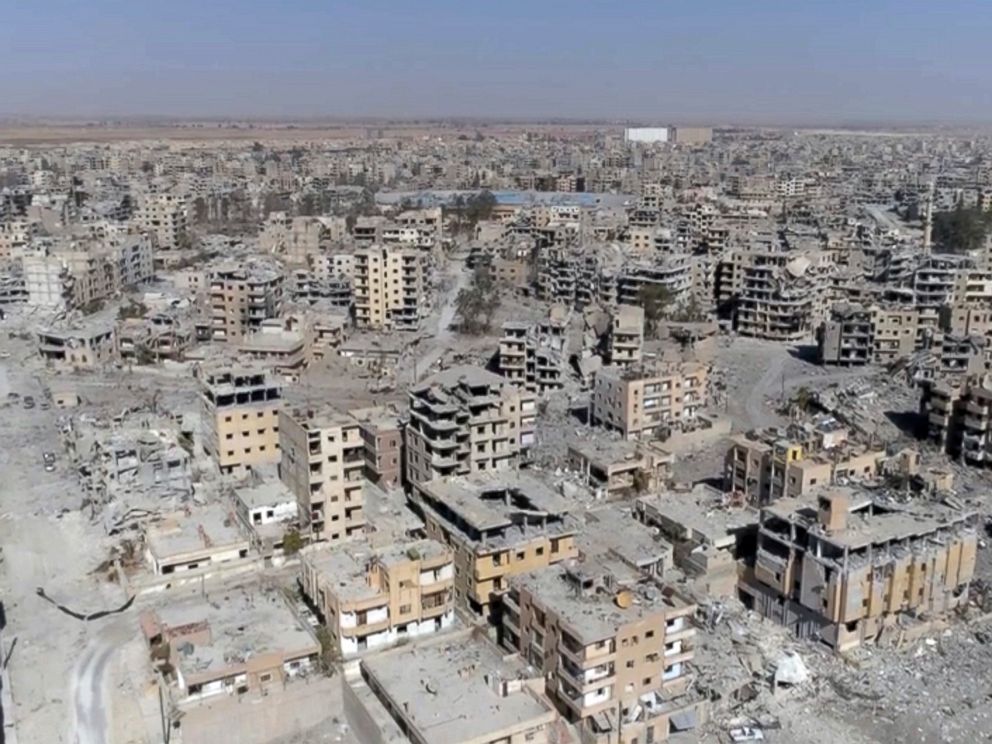
Finally in October of 2017 ISIS troops have been driven
from Raqqa by Iraqi and Syrian government troops
But
Raqqa itself is vastly damaged
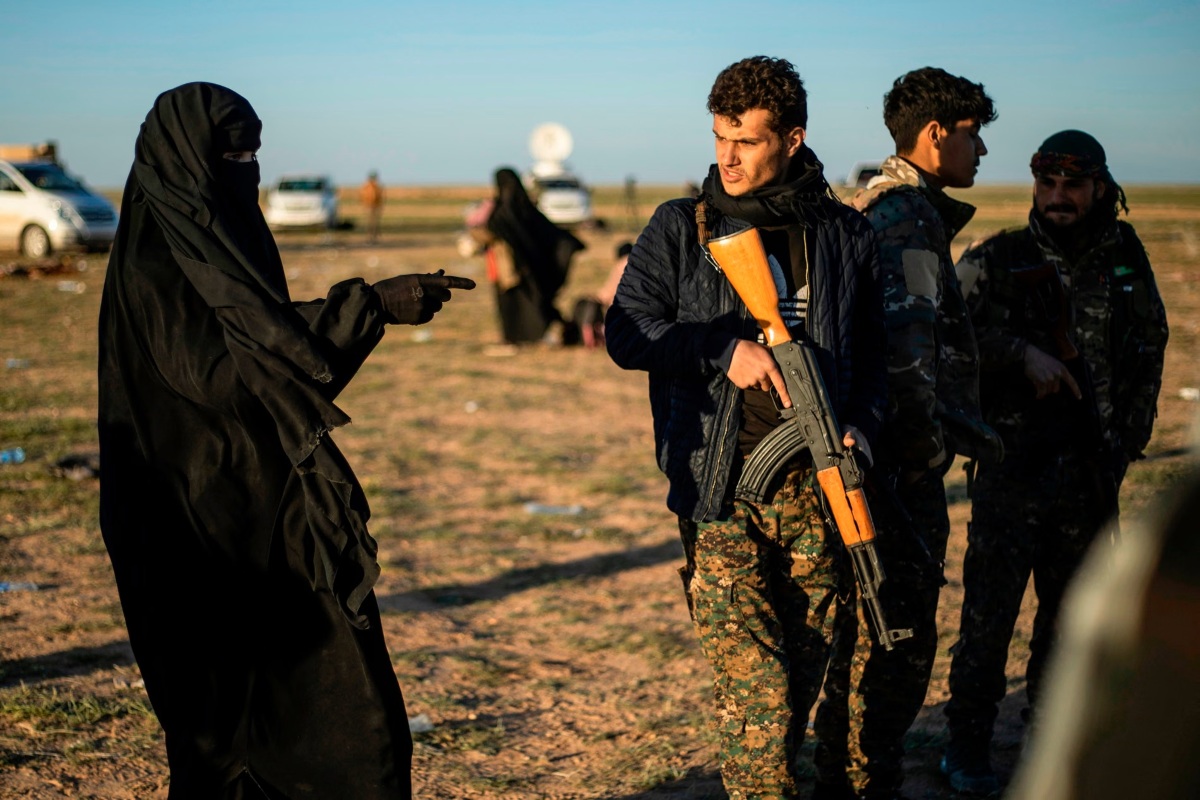
March 2019 - Syrian forces have taken control of the last ISIS stronghold, Baghuz
Dealing with Iran. But Obama did feel that he had achieved
at least one foreign policy success (in addition to the taking out of Osama bin Laden in Pakistan) with his
appeasement rather than confrontational approach to Iran, with the signing of
the nuclear development agreement that would open the West (Europe as well as
America) to Iran again.
But Trump didn't see things in Iran the Obama way, claiming that a country
whose motto was "Death to America" was not one to be trusted to keep
its word on the agreement (there was already way too much secret activity going
on in that part of the world concerning nuclear development) and he thus
terminated Obama's agreement with Iran.
Whether
confrontation rather than appeasement would prove more effective in keeping an
Iran determined to bring the West's – and most notably America's – Secular-Humanist cultural dominance in the
world to an end remained (and still remains) to be seen. But
Iran had been very busy allying with the Russians and Chinese wherever possible
in undercutting the American-led Western position in the larger international
realm.
Would continuing appeasement have
changed the direction of Iranian politics?
Certainly not, at least as long as militant Shi'a Islam continues to dominate
Iran.
Of
course, there were (and are) still many Secular-Humanists in Iran, but they have been
deeply undercut politically by the Muslim militants and the Iranian Muslim
leadership in Iran. And American
toughness seemed to do nothing to help the political position in Iran of these Iranian
Secularists, who appear to other Iranians as highly treasonous in the way they
seem to share the same values as the hated American enemy ... an enemy under Trump clearly out to destroy Iran's
economy and thus society itself.
Trump replaces American army with American naval presence in the Middle East. On
the other hand, Trump also made the decision to start
withdrawing American ground troops from other positions in the Muslim world, at
the same time beefing up the American naval presence in the Middle East,
especially in the vital Persian Gulf region where Saudi Sunni and Iranian Shi'ite oil interests were in direct
conflict.
However,
it was the U.S. withdrawal from Syria that finally severed Trump's stressful relationship with
his Secretary of Defense Jim Mattis, who disagreed strongly
with the move. But it was part of Trump's effort to get the country out
of the business of "nation-building" abroad, and
instead finding other ways of working with the world of Islam. Indeed, Trump went on to actually hold diplomatic
talks with the Taliban, which in turn opened the way
for broader political negotiations among all the Afghan political parties. The Democrats, however, were not impressed
(naturally), but said little about the matter. There was little interest in
bringing attention to any diplomatic breakthroughs that Trump might have secured for the
country.
The
general withdrawal of American ground-troop involvement in the Middle East did
not mean the withdrawal of American involvement in the region, as Trump demonstrated when he ordered a
temporary beefing up of the American air and ground offense against the Islamic
Caliphate at Baghouz (Syria), which Americans brought to collapse with the massive
bombing in early January of 2019. This
did put an end to the Islamic State. But
of course it did not end the Islamic spirit of jihadism, although it certainly
put something of a damper on that spirit.
At the same time, Trump worked very hard to strengthen relations with
America's old Arab ally, Saudi Arabia – plus others of the Arab Gulf
states. But his agreement
to sell arms to Saudi Arabia drew a lot of opposition from the Democrats, for
no particular strategic reason other than it was Trump who put the deal together. It seems that the Democrats instead would
rather have him punish the Saudis for their involvement in the assassination of
the Saudi journalist Jamal Khashoggi.
Likewise the diplomatic agreement that Trump led the Arab States of Bahrain and the United
Arab Emirates to enter into with their old enemy Israel received no acclaim
from the Democrats, in fact very little mention at all by the American press
corps of the enormous significance of this diplomatic breakthrough.
| TRUMP'S RELATIONS WITH EUROPE |
The Trump mouth turned out to be as big a
problem in Europe as it had been in America. Trump found it easy to offend people,
especially those that political necessity normally required a strong working
relationship. It made little sense. And it offered the "never-Trump" groups in Europe plenty
of ammunition for their crusades. Thus
it was no secret how much Germany's long-time chancellor Angela Merkel disliked Trump, although she and others tried
to warm up the relationship as much as possible.
Of
course Trump's "hit hard and then
negotiate a compromise" strategy (presumably developed during his many
years in the business world) did have its positive results, in that his
pressure did get some of America's allies moving up to meet their full national
financial responsibilities as members of NATO.
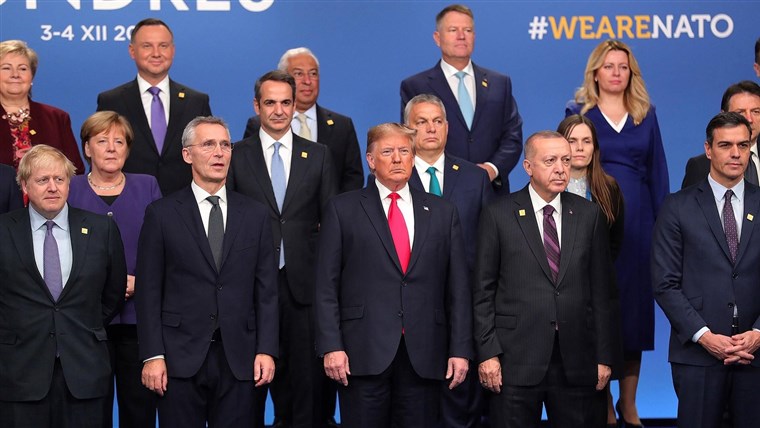 Trump and NATO leaders in the United Kingdom for a NATO
conference – December 4, 2019. The press did what it could
to portray Trump as the "man out" in the otherwise close
circle of allies. Certainly there was stress over his insistence
that others should pay their share of NATO's costs.But
the world of politics is as much a matter of visible symbolism as it is
behind-the-scenes deal-making, something that obviously Trump failed to understand. Thus his threat in June of 2020 to withdraw
American NATO troops stationed in Germany
tended to result merely in deepening the anti-Trump mood in Germany ... and
elsewhere in Europe.

Go on to the next section:
 Miles
H. Hodges
Miles
H. Hodges

 Trump's wall
 A new trade pact with Canada and Mexico
  Venezuela
  Confronting China
  Putin's Russia
  The world of Islam
  Trump's relations with Europe