An event that occurred during the summer's presidential election
campaign would provide exactly the opportunity to undo the results of the
election that had just delivered the humiliating defeat to the Democratic Party
in its attempts to capture the presidency.
Fairly high-level staff members of Nixon's re-election committee decided
it would be a cool [yet quite unnecessary][1]
trick to raid the Democratic Party offices in the Watergate apartment complex in order
to plant listening devices – sadly rather typical of the "dirty tricks"
that go on with political campaigns.
Except that their prank got detected by Watergate security police – and a
number of these pranksters were caught and arrested.
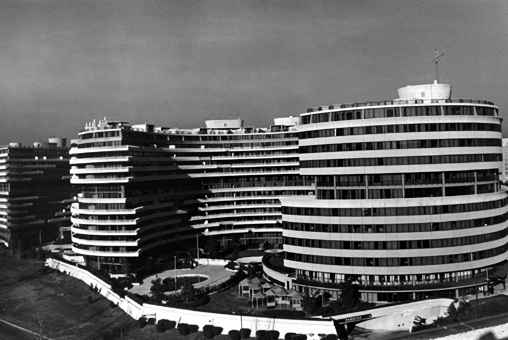
The Watergate
apartment complex –
Washington,
D.C.
where the Democratic national headquarters
were located
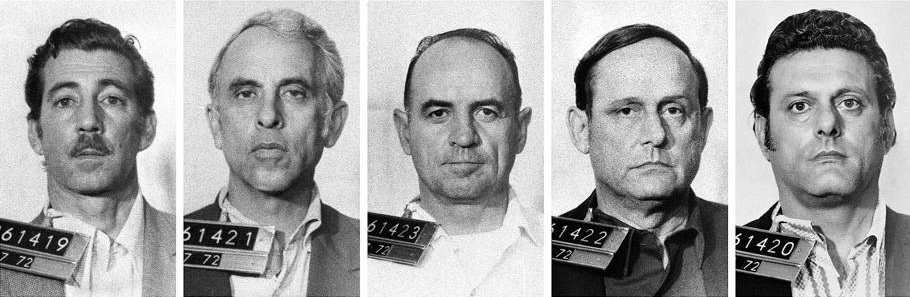
The Watergate burglars
James McCord, Virgilion Gonzales, Frank
Sturgis,
Eugenio Martinez, Bernard Baker
Woodward and Bernstein. This event would likely have gone largely
unnoticed, except that two young crusading journalists of The Washington
Post, Bob Woodward and Carl Bernstein, saw a headliner story in
this event, one that might reach all the way up to the president himself. And with some inside help from an FBI
informant, they began to develop the story into a full-blown presidential
scandal.
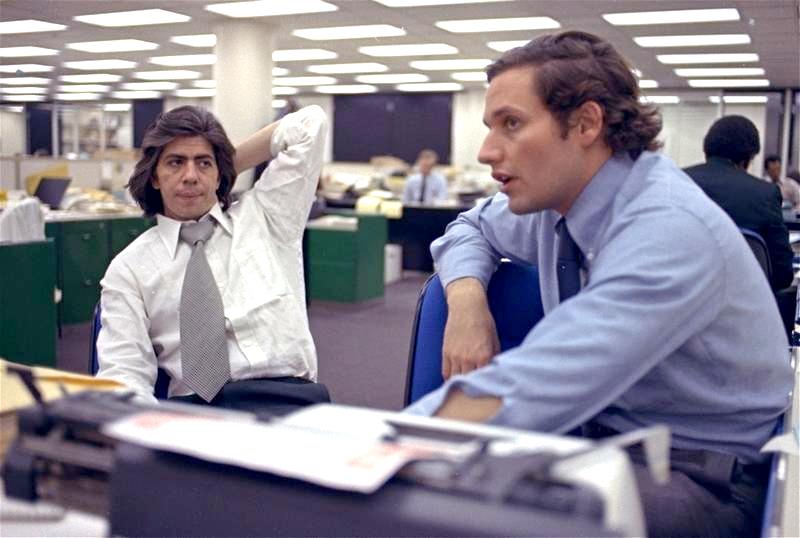
Washington Post reporters Carl Bernstein (left)
and Bob Woodward
(right)
Congress goes to war. With the beginning of the
trials of the culprits in January of 1973, the call went out for a complete
Congressional investigation into the affair.
Kennedy sponsored a resolution calling for the creation of a select
committee of four Democrats and three Republicans to undertake a full
investigation of Nixon's re-election committee. Senator Sam Erwin, rather than Kennedy, would
however head up this committee – as Kennedy's moral credentials were not
themselves all that great – and he had ambitions to run for the 1976
presidential race and did not want the committee to look like it was part of
his personal electoral strategy.
Actually,
of course, as with everything that goes on in Washington, this was all indeed
pure politics. Although Nixon was likely not part of the Watergate prank, the committee was
hunting for something, anything, that would lead directly to a Nixon involvement that they could then
bring him down with.
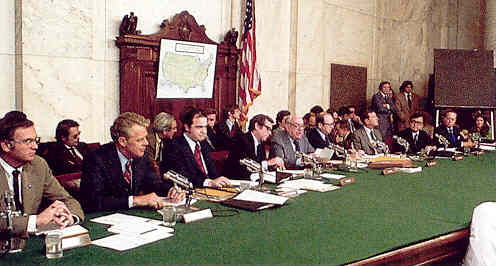
The Senate Watergate Hearings
– Summer of 1973
(Senate Select Committee
on Presidential Campaign Activities)
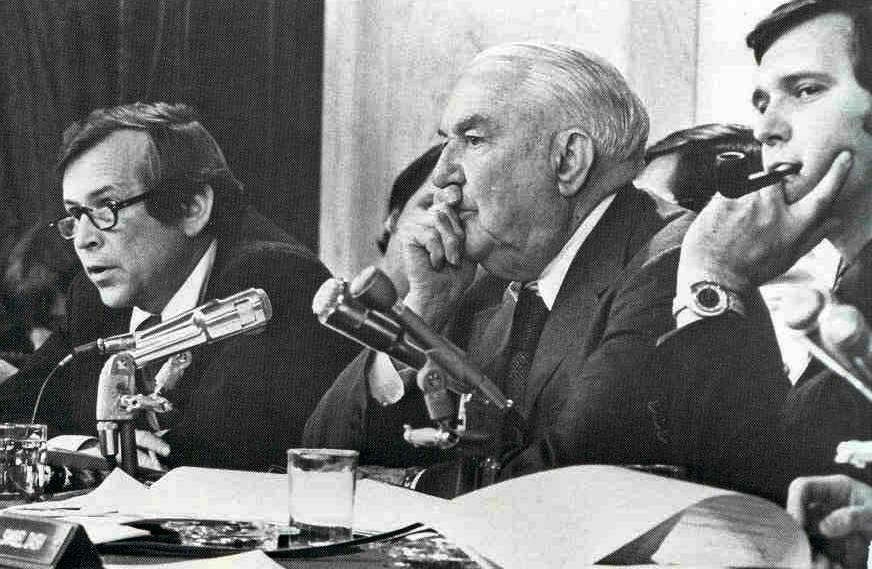
Republican Senator Howard
Baker and Democratic Senator
and Committee Chairman Sam Ervin directing the Senate
Watergate
Hearings
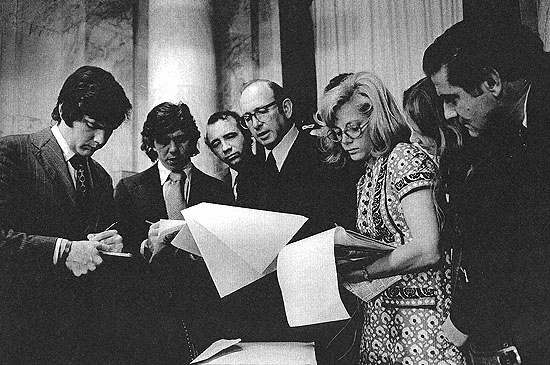
Senate Chief
Counsel Samuel Dash (center)
conferring with
Washington Post reporter Carl
Bernstein and CBS
correspondent Leslie Stahl – June 3, 1973
Nixon paranoia.
Nixon did not help his own case – paranoia in
dealing with the Democratic Congress and an equally hostile and aggressive
press having completely overtaken Nixon at this point. At first Nixon tried to head off the investigation –
the very thing that the Democrats would be looking for in their efforts to find
impeachable "high crimes and misdemeanors" on the part of the
president. Then (April 1973) he fired a
number of his staff – merely further conveying the image to the press of Nixon conducting a cover-up.
John Dean.
At the same time, Nixon's young Legal Counsel, John Dean,
decided at this point that it was wise to switch sides in this political
contest and offer himself as a witness before Congress (June 1973) to Nixon's attempted cover-up of the criminal
investigation. Dean did not have any
actual evidence to offer, other than the assurance that Nixon certainly knew about the Watergate coverup and also tried
himself to keep things hidden away. And
he suspected that there was taped evidence that would corroborate his story.
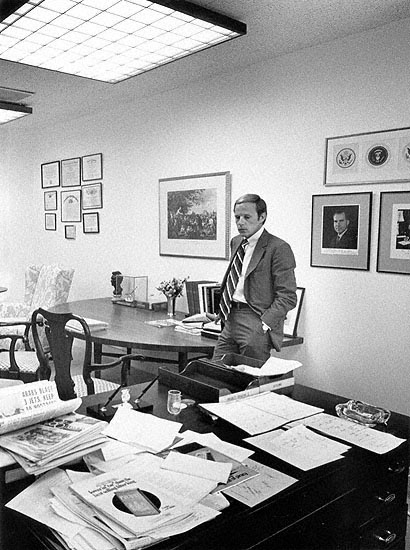
White House
Legal Counsel John Dean
– September 17, 1970
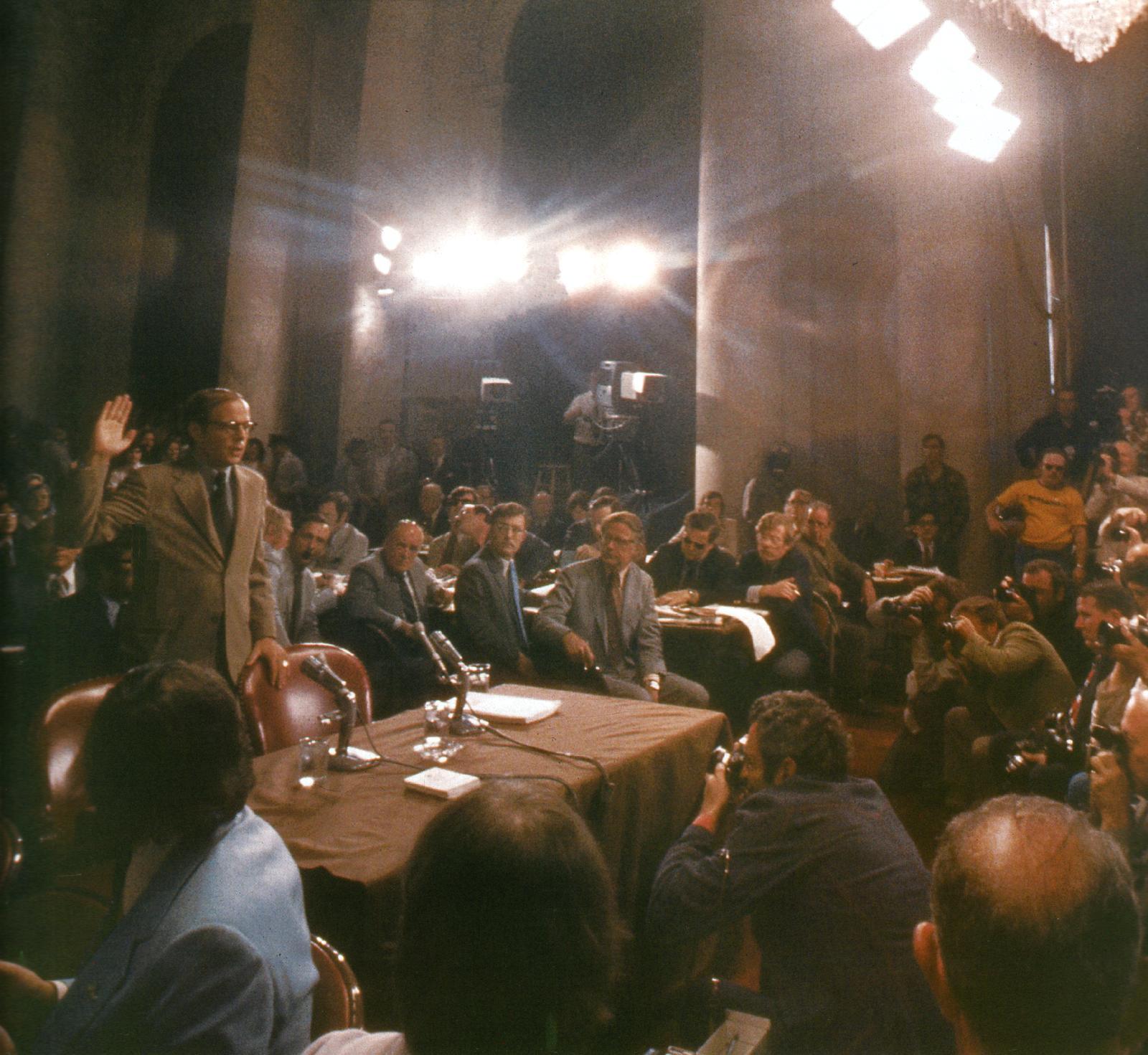
John Dean testifying against
his former boss Nixon
at the Senate Watergate hearings
Dean
was describing a series of taped recordings that Nixon had been making over the years of White
House operations – with the intent of eventually using those tapes to help him
write and publish his memoirs. Congress
wanted to get their hands on those tapes – in order to find actual evidence of
an attempted coverup of the investigation.
A battle over the tapes ensued.
The "Saturday Night Massacre."
Attorney General Elliot Richardson had earlier, in May – in
agreement with the House Judiciary Committee – appointed Archibald Cox to look
into the Watergate affair. Understandably, tensions in the White House
grew over Cox's wide-ranging investigation, when it became apparent that Cox
was clearly also looking for broader instances of corruption in Nixon's Administration (even the president
himself), and was particularly interested in getting his hands on Nixon's tapes. When Cox finally insisted that Nixon had to turn over taped copies of his
White House conversations, Nixon refused, offering instead to turn
them over to Senator John Stennis to review and summarize. But Cox refused the "compromise." Thus on the night of October 19th, Nixon at that point demanded that Richardson
fire Cox. But Richardson refused, and
instead resigned. The same would also
hold true that same night with Deputy Attorney General William Ruckelshaus –
who also resigned rather than carry out the Nixon request. Finally the matter fell to Solicitor General
Robert Bork, who complied with the order,
firing Cox, though Bork would fairly quickly appoint
Leon Jaworski to fill Cox's position.
This
event finally began to swing American public opinion in favor of impeaching the
president.[2] But even more importantly, it finally gave
the House of Representatives justification for undertaking the process of
impeachment when Nixon refused to comply with a
congressional subpoena to turn over those tapes.
[1]The polls made it quite clear that Nixon was running well ahead of
McGovern in the race for the presidency.
However, the break-in was perhaps motivated by the hope of finding
precise information about Democratic National Chairman Larry OâBrienâs
connections (if there actually were any) with the incredibly wealthy but highly
secretive Howard Hughes. It seems that the Democrats had been feeding information to Nixon
through his rather improvident brother Donald that Nixon was
going to lose the 1972 campaign because OâBrien had damaging information about Nixon
given him by Hughes – including evidence that the gift of $205,000 from Hughes
back in 1957 to rescue Donaldâs failing restaurant business was actually given
as a political favor for then Vice President Nixon. Such information – true or not true – would
have damaged the 1972 Nixon campaign tremendously.
However, the whole thing was likely a hoax. But this was the kind of misinformation that
the Democrats were possibly hoping would put Nixon in a
self-destructive frenzy. Unfortunately,
it was not untypical of the kind of antics that go on in races for political
office. But in any case, it did succeed
after all (quite ironically) if this is what got the Nixon team
to attempt the disastrous Watergate stunt.
[2]However, only slightly at the time, with now 44% in favor of
impeachment versus 43% opposed, and 13% still undecided.

 Watergate: "Dirty Tricks"
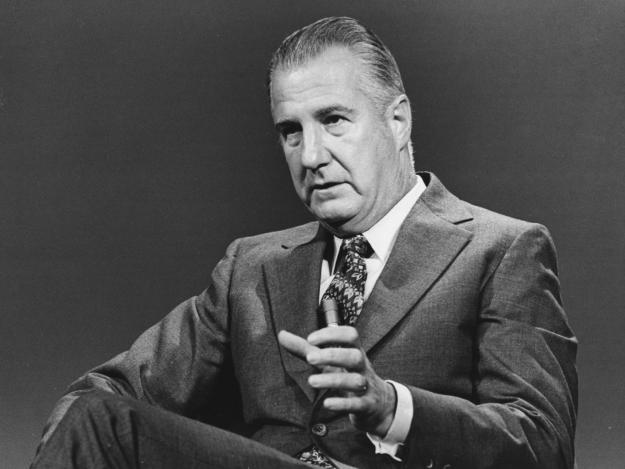
 Vice President Agnew
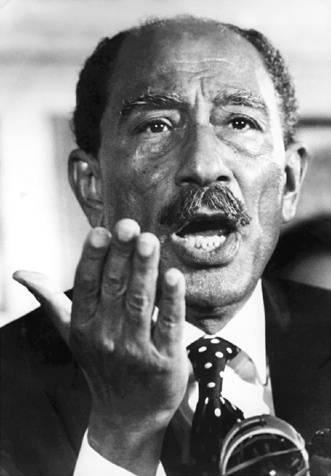
  The Arab-Israeli Yom Kippur or October War of 1973
  Congress takes over American foreign policy
  Stripping the president of his discretionary spending powers
  Watergate finally brings Nixon to resign (August 1974)