In the meantime, the situation in South Vietnam was worsening
drastically. In early 1975 panic set in
among the South Vietnamese soldiers who now saw their cause as lost without
further American aid. And at the end of
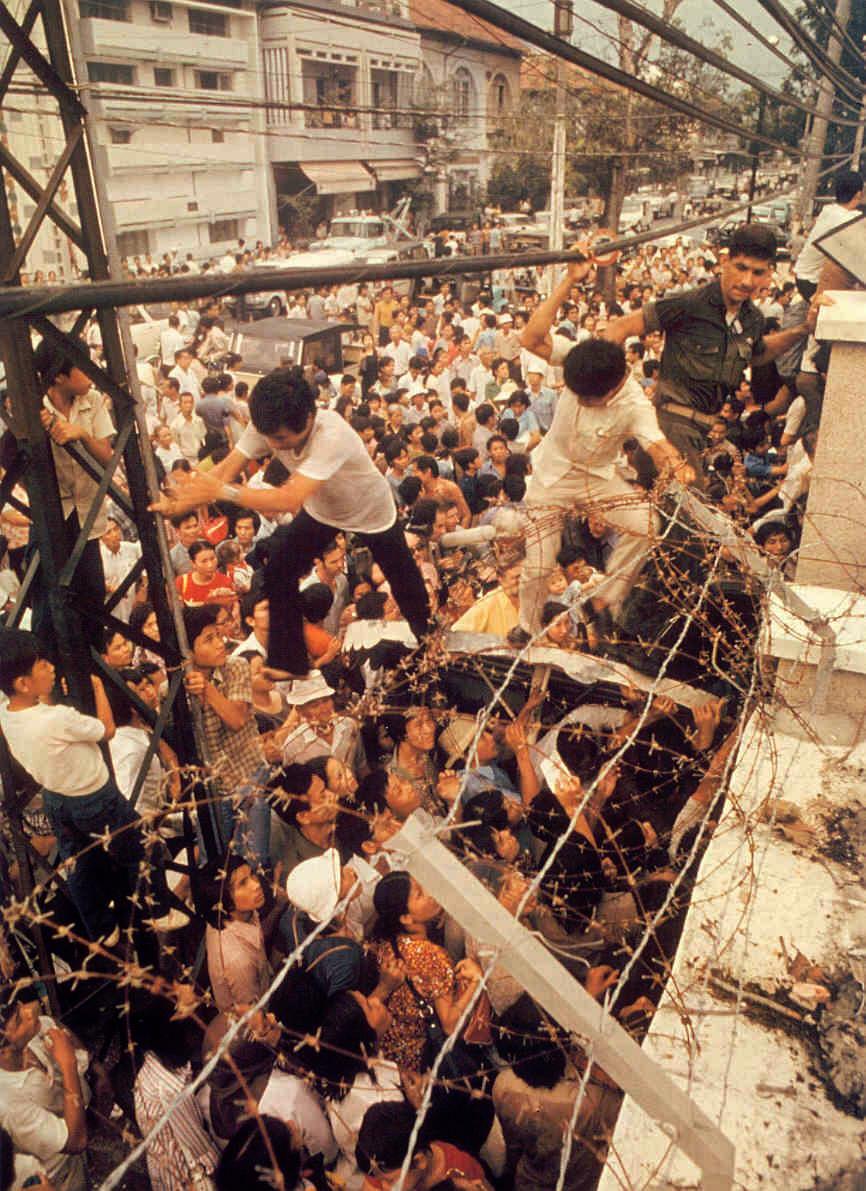
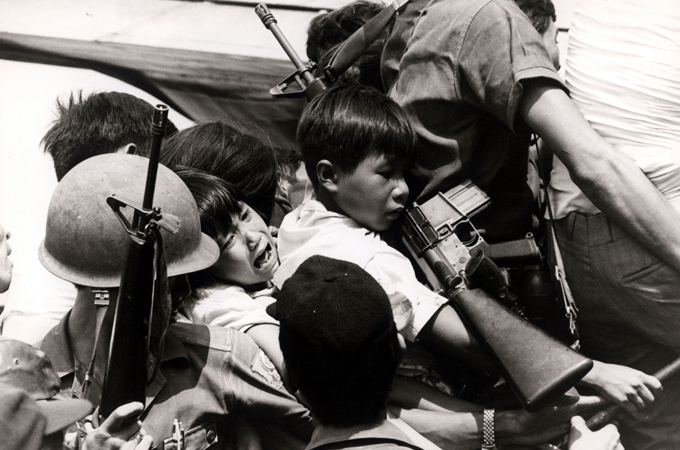
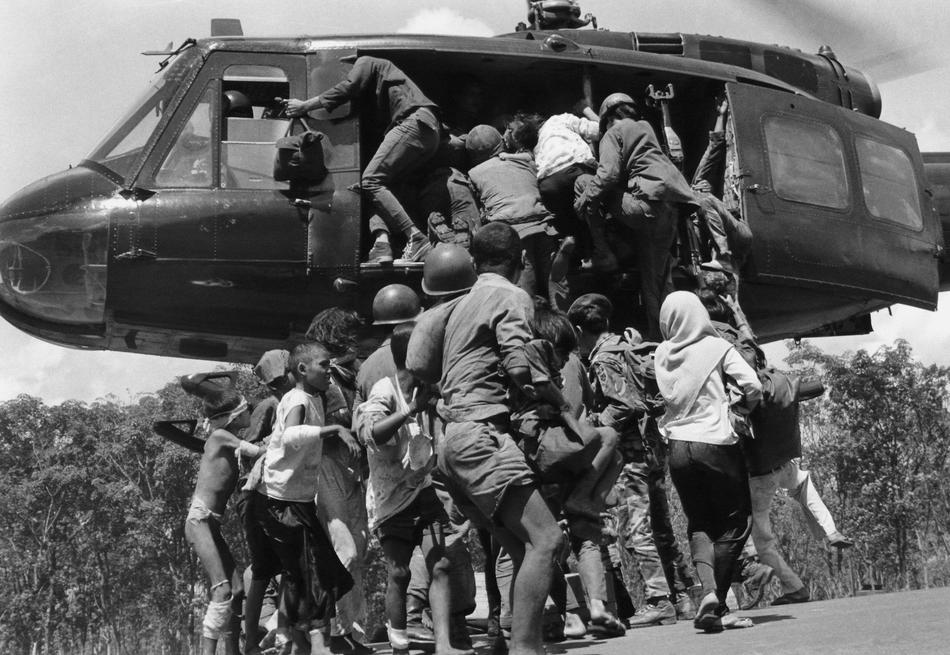
April the world was treated to the spectacle of the last of the American
diplomatic mission beating a cowardly retreat from Saigon – with loyal
Vietnamese civilians hanging on to the American helicopters in an effort to get
out of the country with them.
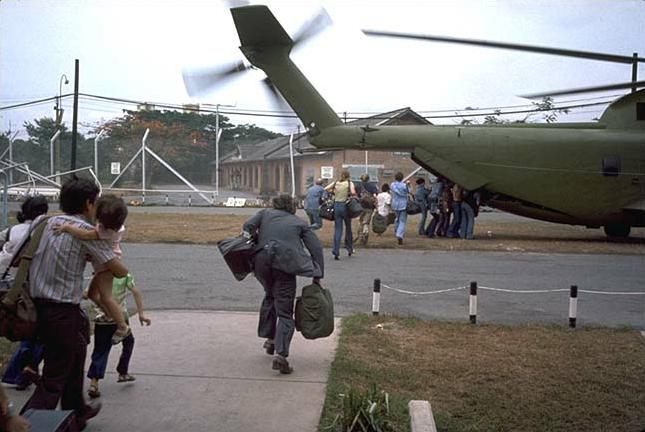
South Vietnamese and Americans
head for the helicopters
out of Saigon
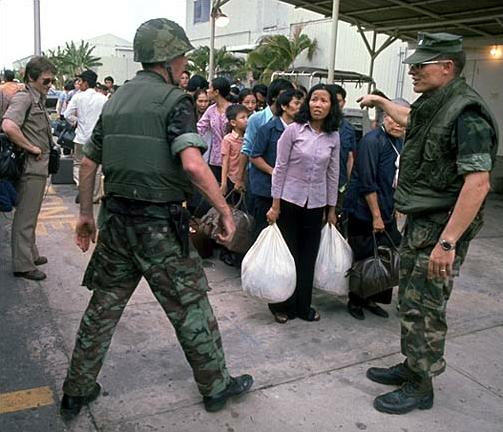
South Vietnamese seeking
escape out of Vietnam with
American servicemen
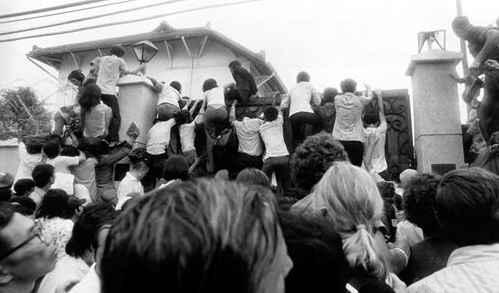
South Vietnamese and Americans
trying to get into the
American Embassy compound – April 29,
1975
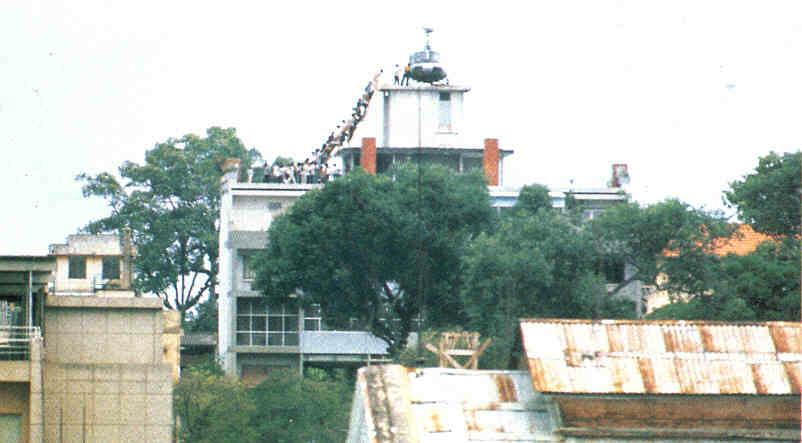
The
Evacuation of Saigon
from atop an apartment building housing
CIA employees – April 29,
1975
Desperate Vietnamese trying
to escape Saigon
with the departing Americans – April 29, 1975
Vietnamese trying to escape
Saigon
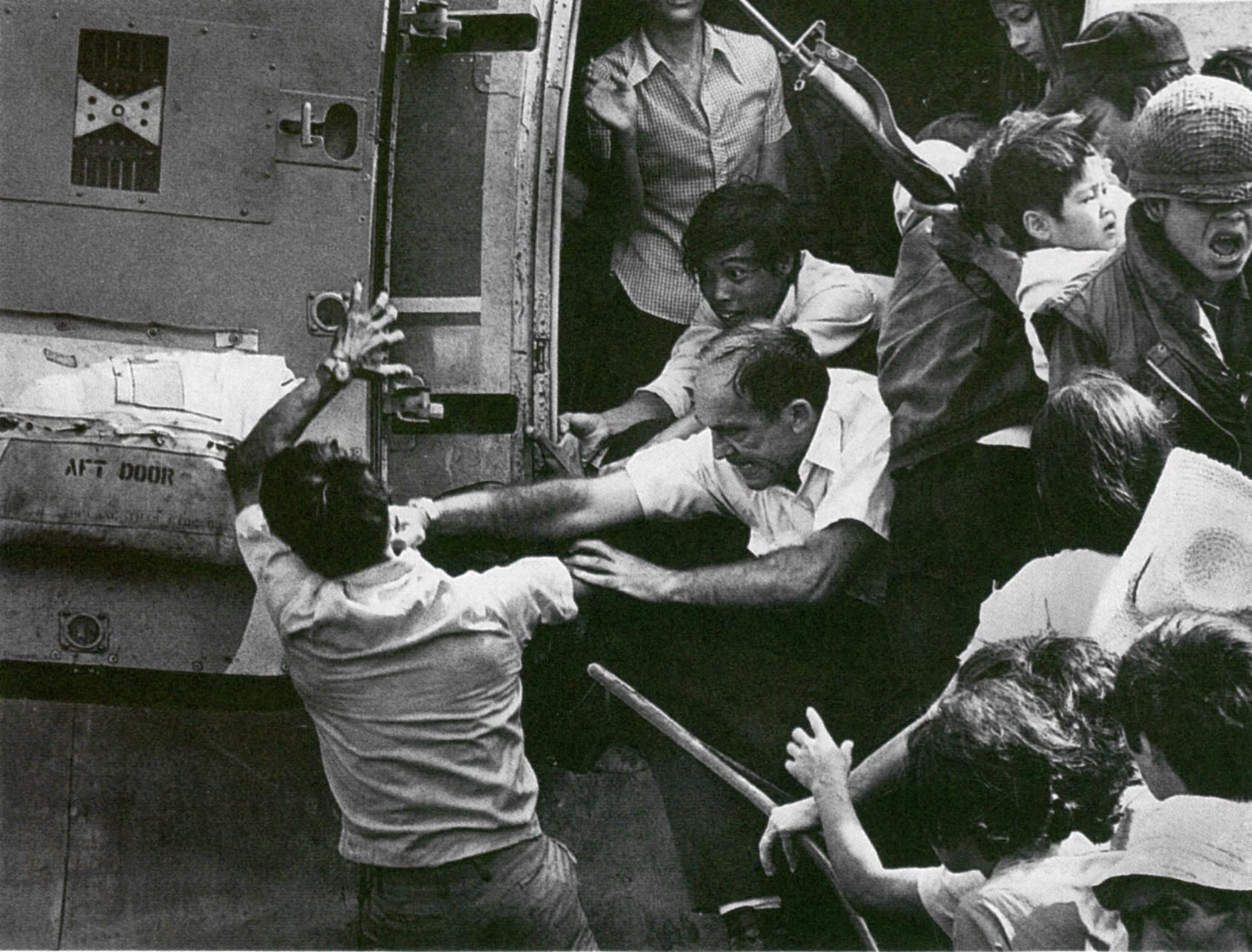
Fending off Vietnamese attempting
to flee Saigon
ahead of the Communist takeover – 1975
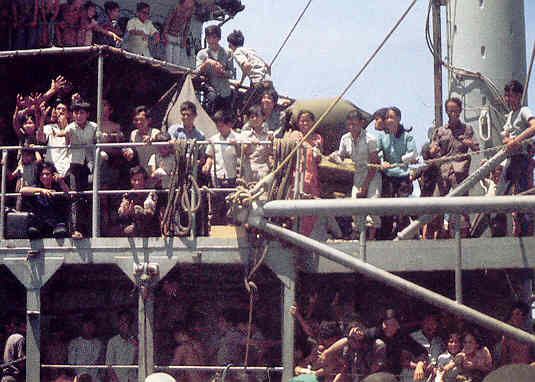
Vietnamese attempting to
escape advancing communists –
April 1975
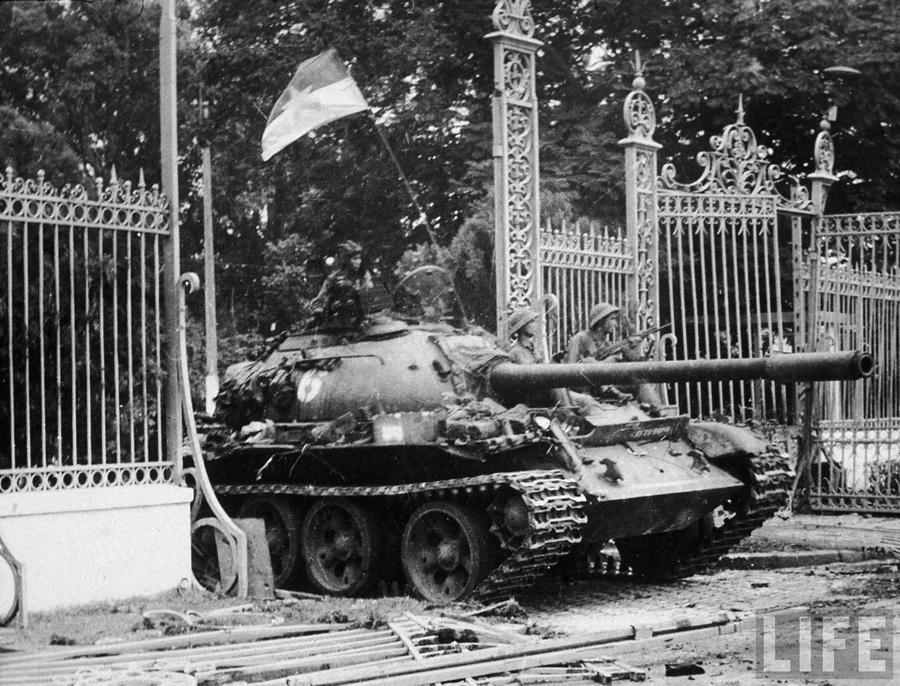
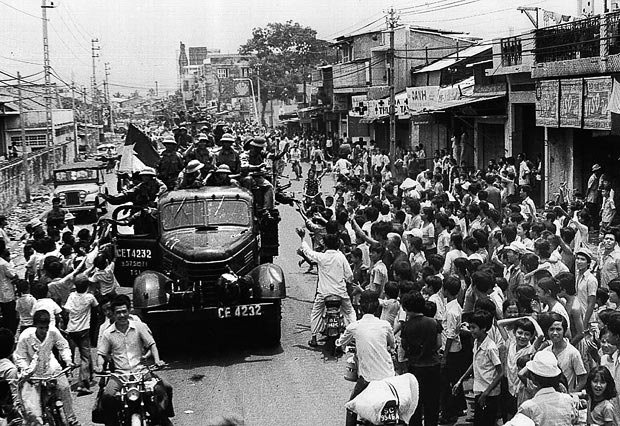
North
Vietnamese troops welcomed into
Saigon
The
Communists had completely routed the mighty America in Vietnam. But this also meant that the political status
quo in the entire region of Southeast Asia was going to suffer a huge shift.
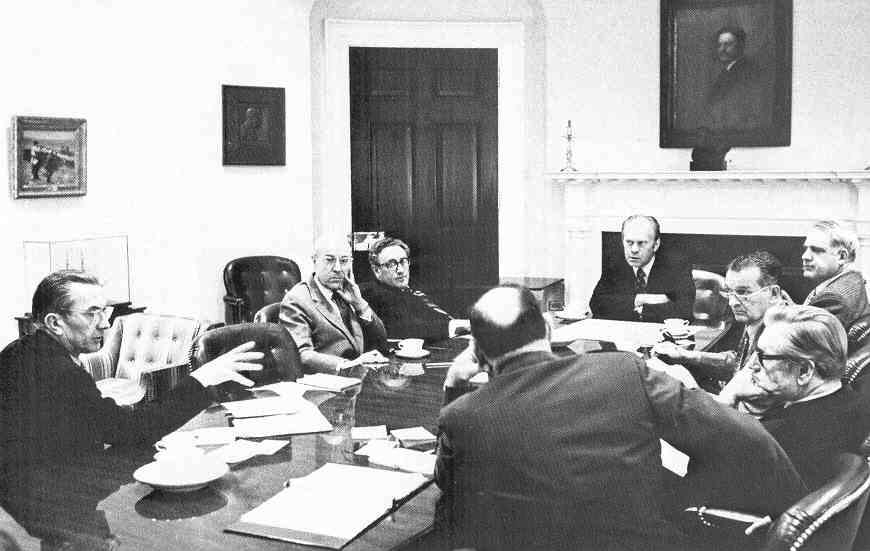
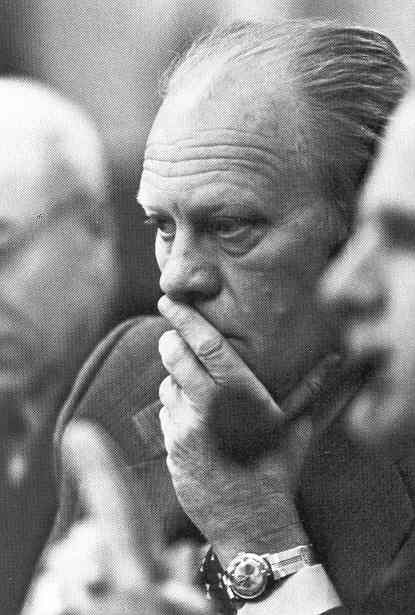
President Ford deliberates
with his National Security Council
concerning the fall of Saigon in 1975
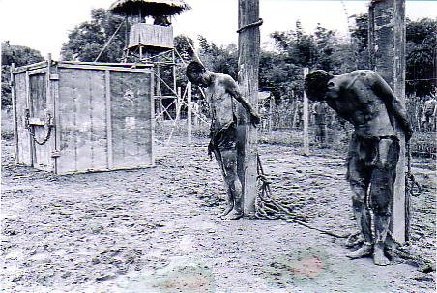
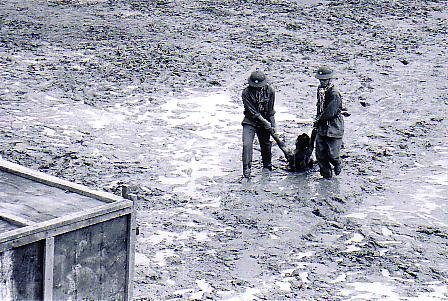
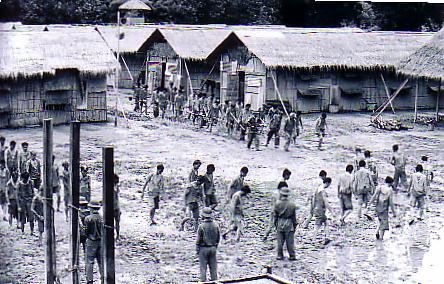
The Communist "re-education" camps.
Now the Communist victors in the South began to march multitudes
(possibly as many as a million) of Vietnamese off to "re-education"
camps – to cleanse them of the "capitalist" ways they might have
picked up in those years working with the Americans. Conditions in these camps were so terrible
that huge numbers of them died.
And
then to make the situation even worse, the new regime seized the small
independent farms and local businesses in order to collectivize or bring them
under full governmental control – thus crippling further the economy – to the
point of human disaster.
The Vietnamese "boat people." Consequently, millions of Vietnamese attempted
to flee the country – by any means possible.
Some fled across the countryside in an attempt to reach Thailand or
Malaysia.
Many made it to overcrowded refugee camps of neighboring
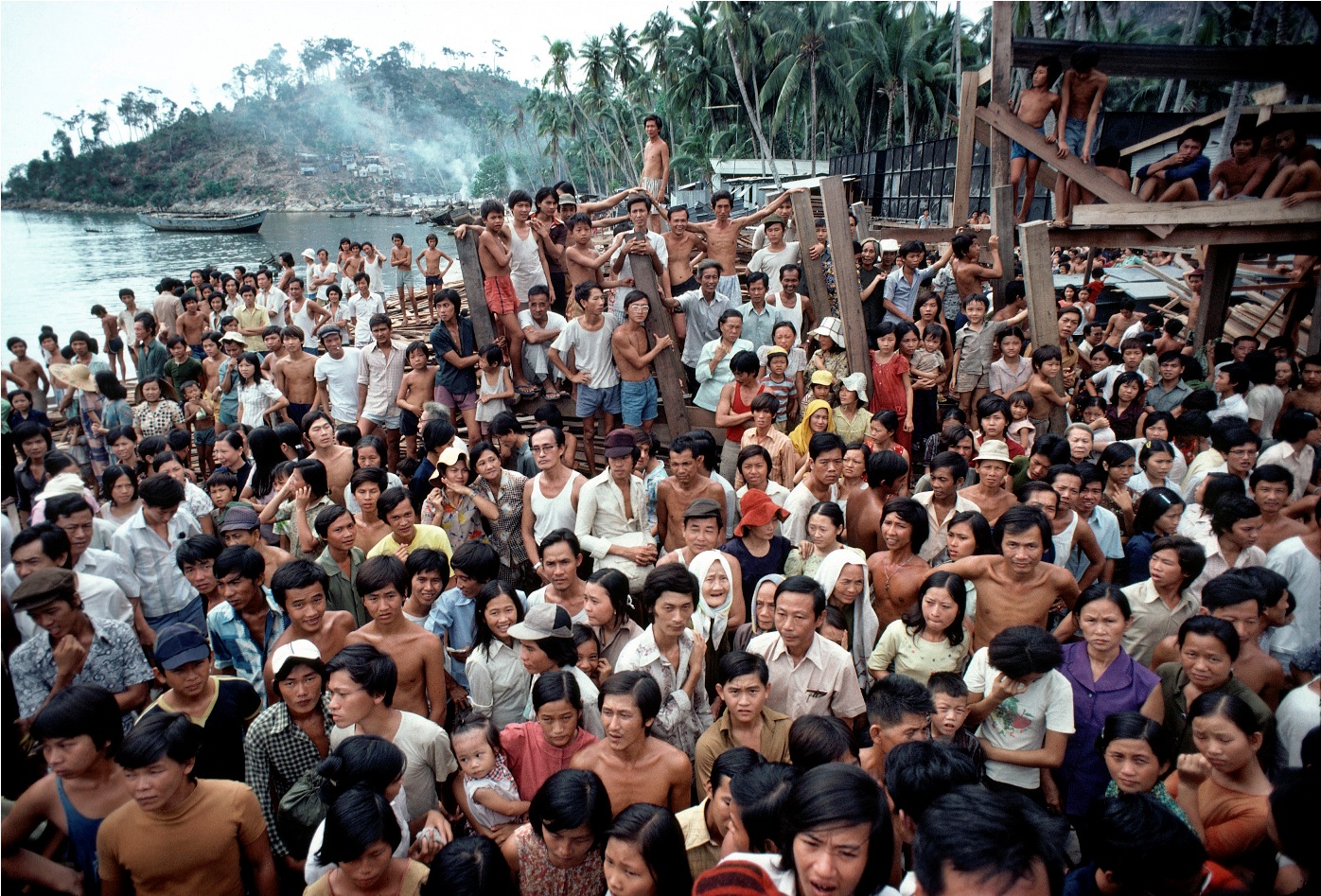
countries ... such as the Pulau Bidong Island Camp in Malaysia
where
some 36,000 were located as of this 1979 photoOthers took to boats – or
anything that would float – in the hopes of being picked up by passing Western
commercial freighters and thus brought to freedom in the West. Multitudes simply drowned. Many were picked up by pirates and raped and
killed or sold into slavery. Even then, if they were somehow able to reach
foreign lands in the area (the Philippines, Malaysia, Thailand) they would
spend months, even years, waiting to receive refugee status in the West. But ultimately, America took in 800,000 of
these refugees – and another 250,000 were
settled in Europe or England's Commonwealth countries.
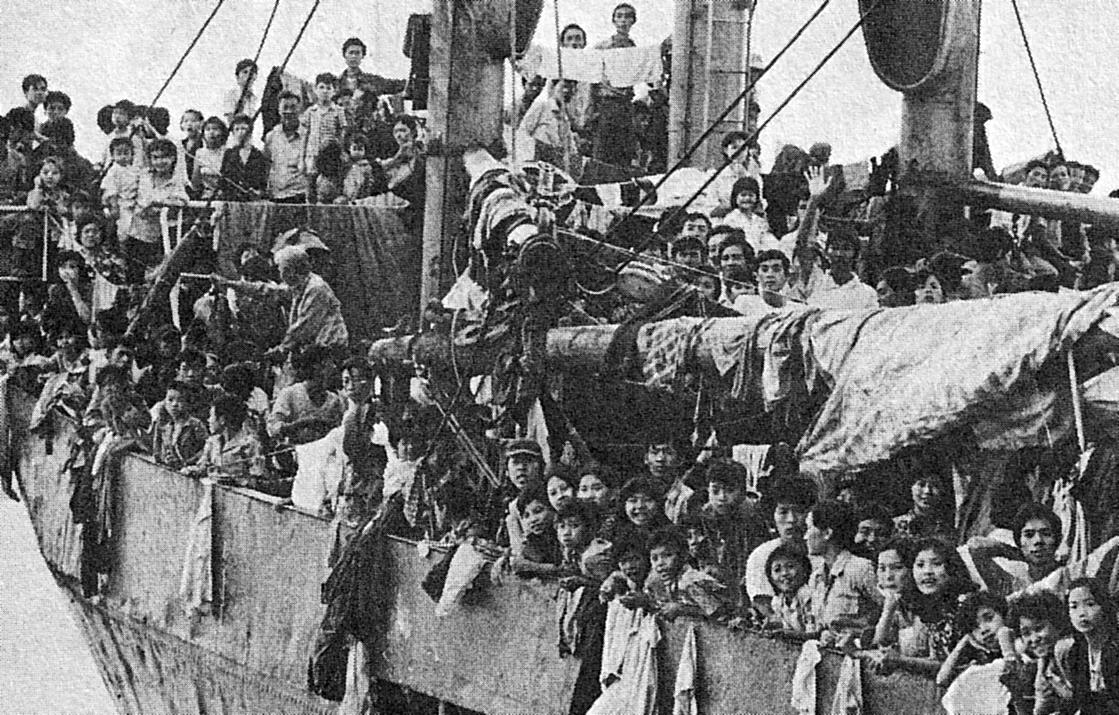
Vietnamese "boat people"
seeking escape from Vietnam
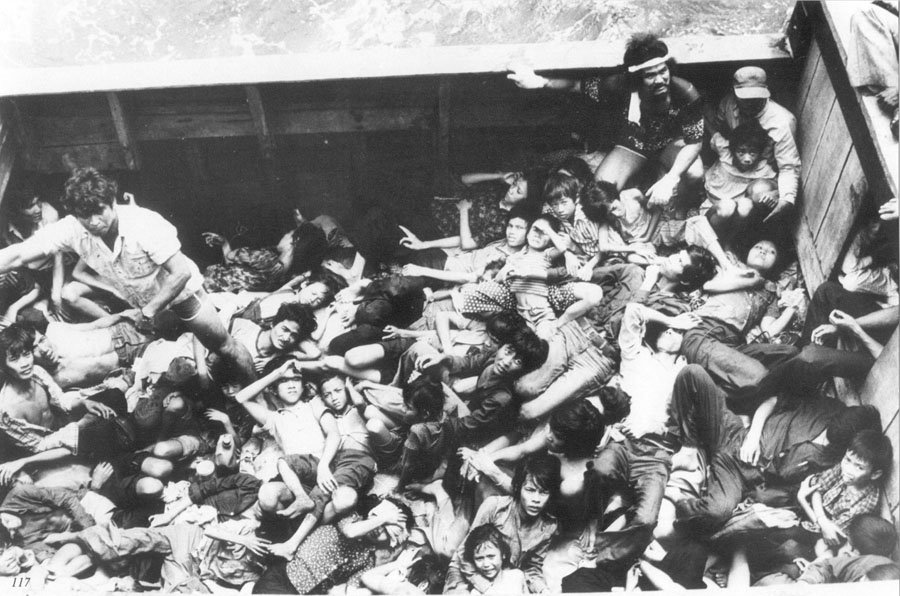
But so many of them did not
make the journey successfully.
Tragically, so many of them will die at
sea.
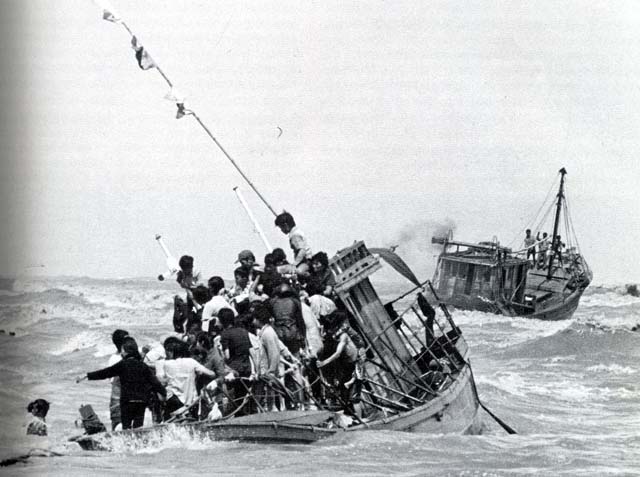
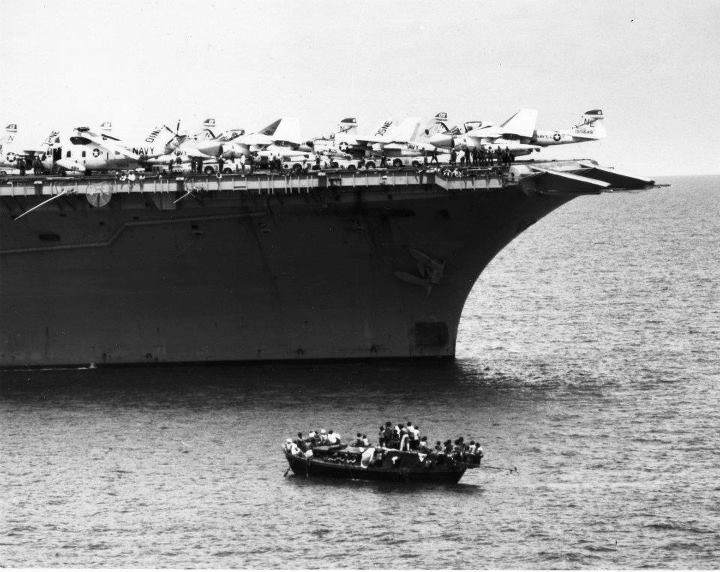
Some, however, will be
fortunate enough to be picked up
by friendly ships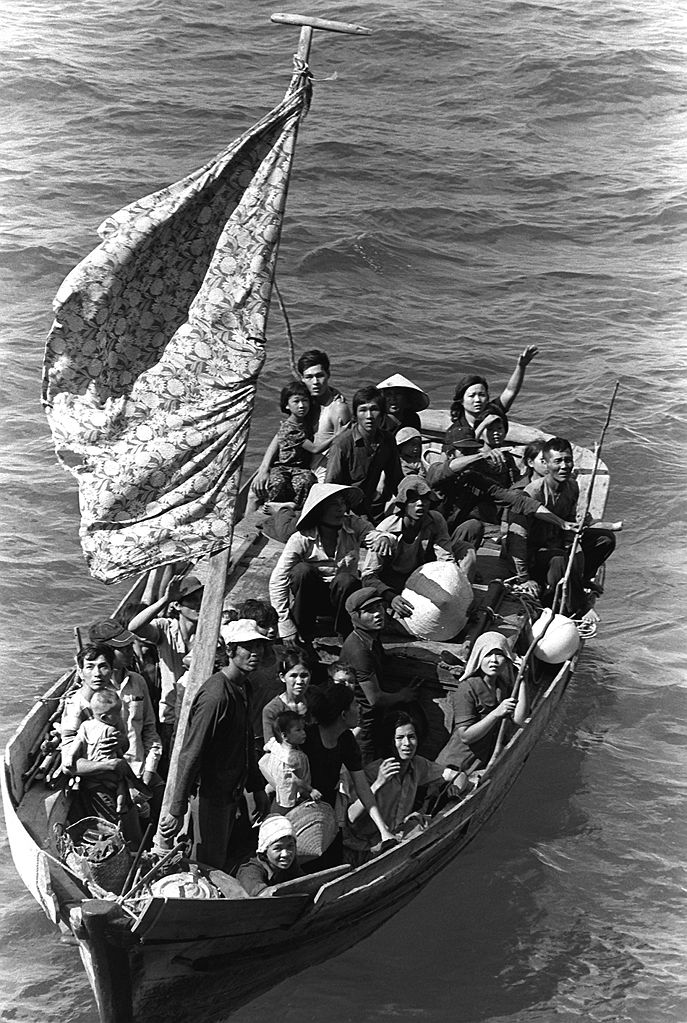
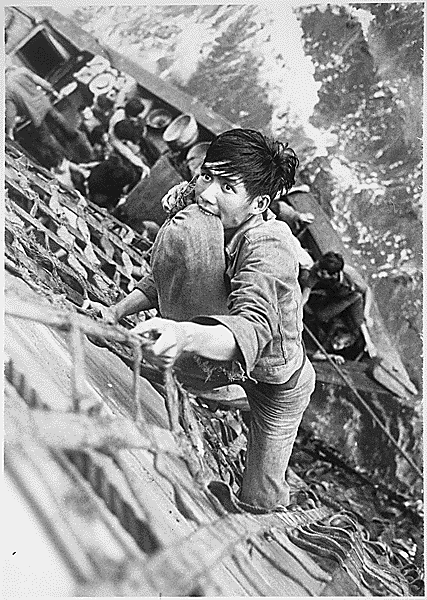
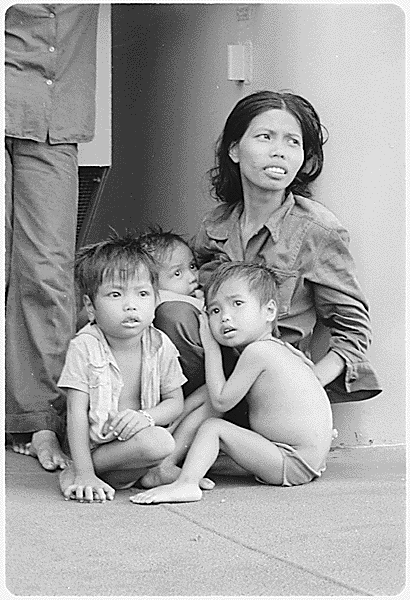
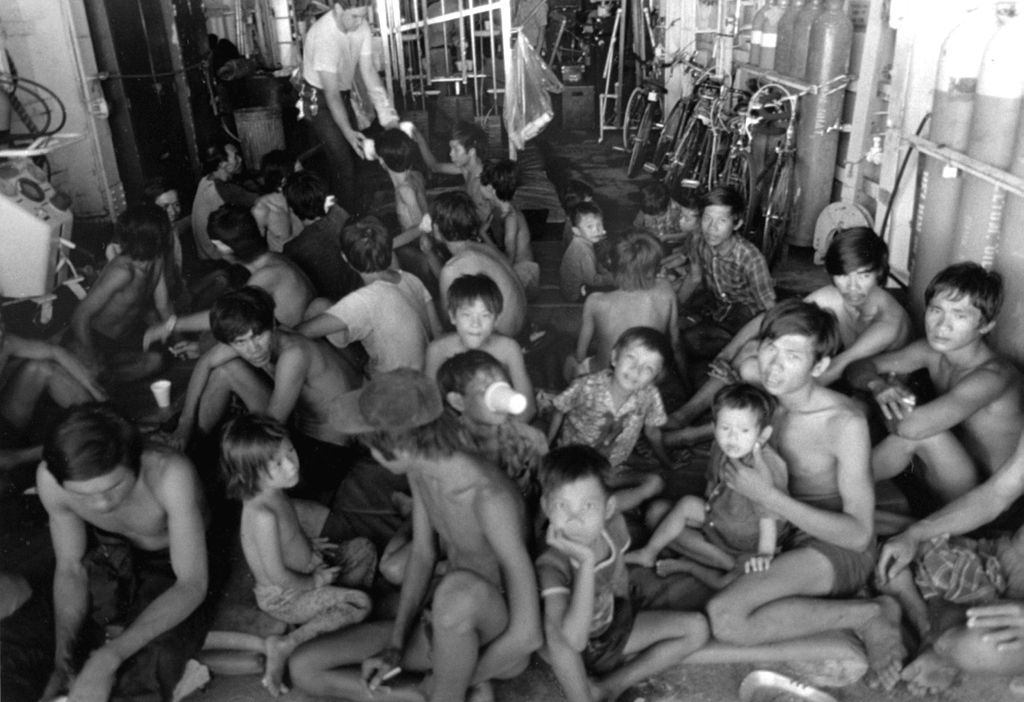
Vietnamese refugees
rest as crewmen aboard the guided
missile cruiser USS FOX (CG-33) give them something to
drink
- 1 June 1982
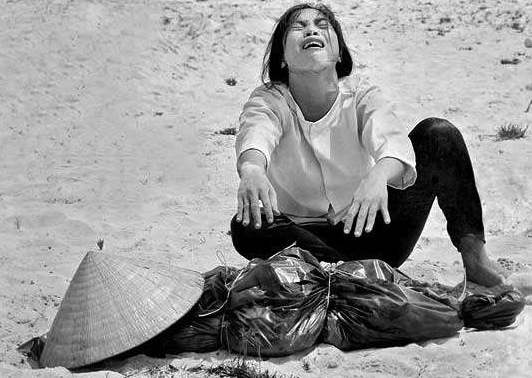
While Vietnamese were
taking to the sea to escape Vietnam,
many others fled overland to surrounding
countries ...
with similarly tragic results
The "Killing Fields" of Cambodia. One place the
Vietnamese were not headed for in their escape from Vietnam was next door in Cambodia – for there the
situation turned even uglier than was even the case for poor Vietnam. With
the withdrawal of the American presence in Vietnam, Communists were also emboldened to end the
fiction of Cambodian neutrality and simply take over the country. But this was a different group of Communists
– not of the North Vietnamese type – who mostly took their ideological cues
from Russia. These were Maoists, termed
the "Khmer Rouge"[2] under
their leader Pol Pot, taking their cues from the zany Mao Zedong – who, like him, held some kind of romantic
view about the purity of rural life in contrast to the corruptions of urban
life (supposedly too Western or capitalist in style). Urban Cambodia thus had to be purged of this
evil – with those who had come under its influence either marched off to
re-education camps of the Maoist variety – or simply executed on the spot. No one was keeping population statistics at
the time – but the best estimates run in the range of 1.5 to 2 million
Cambodians died from either execution or exhaustion/starvation – this holocaust
discovered when multitudes of "killing fields" of thousands of
skeletal remains were later uncovered – discovered when the Vietnamese
Communists next door finally sent troops into Communist Cambodia to end the
slaughter.[3]
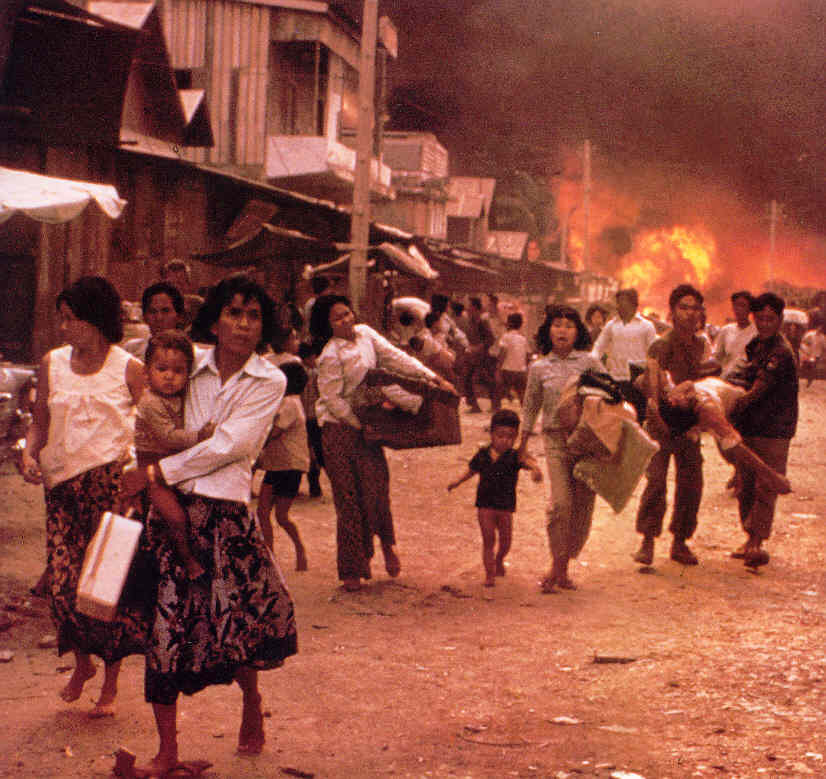
Phnom Penh (April 17, 1975) – Khmer Rouge
attacking the
capital where over a million people had sought refuge
–
just as
the Vietnamese Communists were about to overrun
Saigon
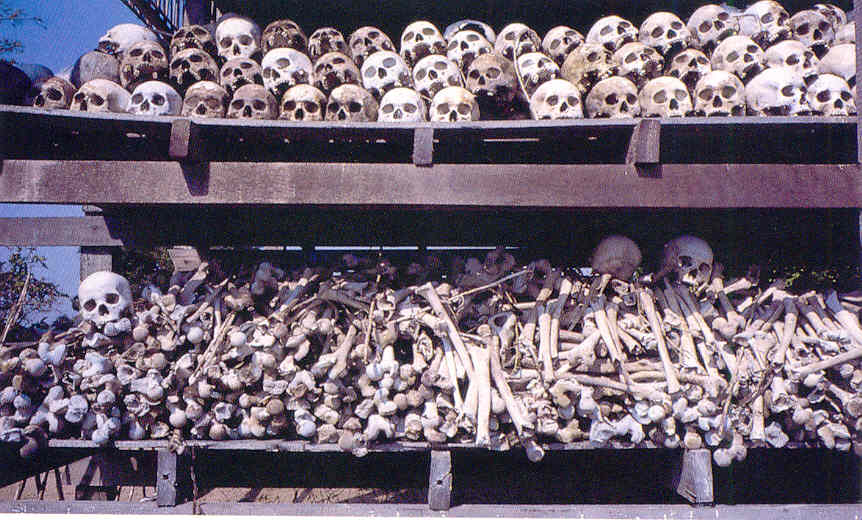
Skeletons of Cambodian victims
of the Khmer Rouge,
discovered when the Vietnamese
invaded Cambodia
December 1978
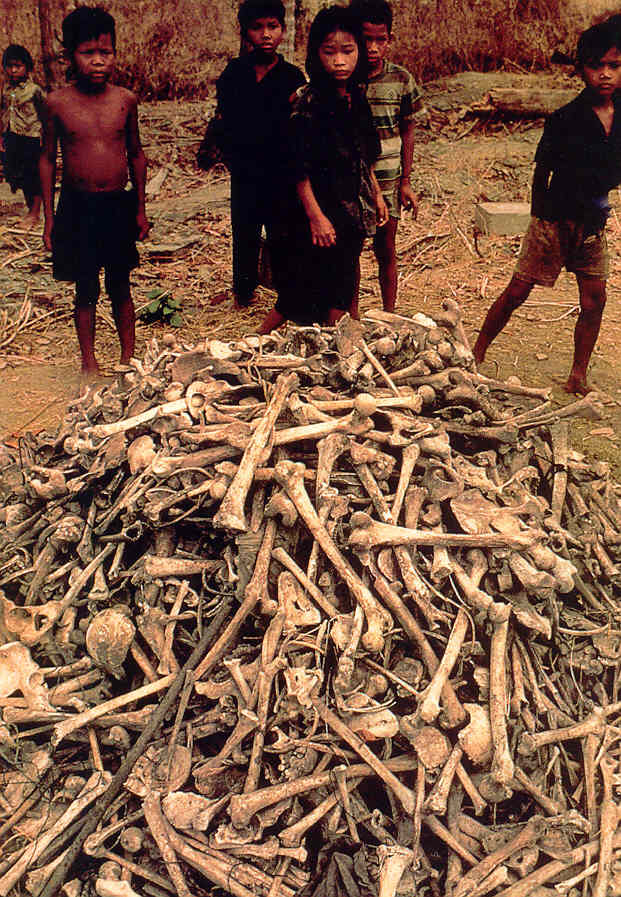
A
pile of human bones as
the by-product of the Khmer
Rouge's revolution in Cambodia – 1979
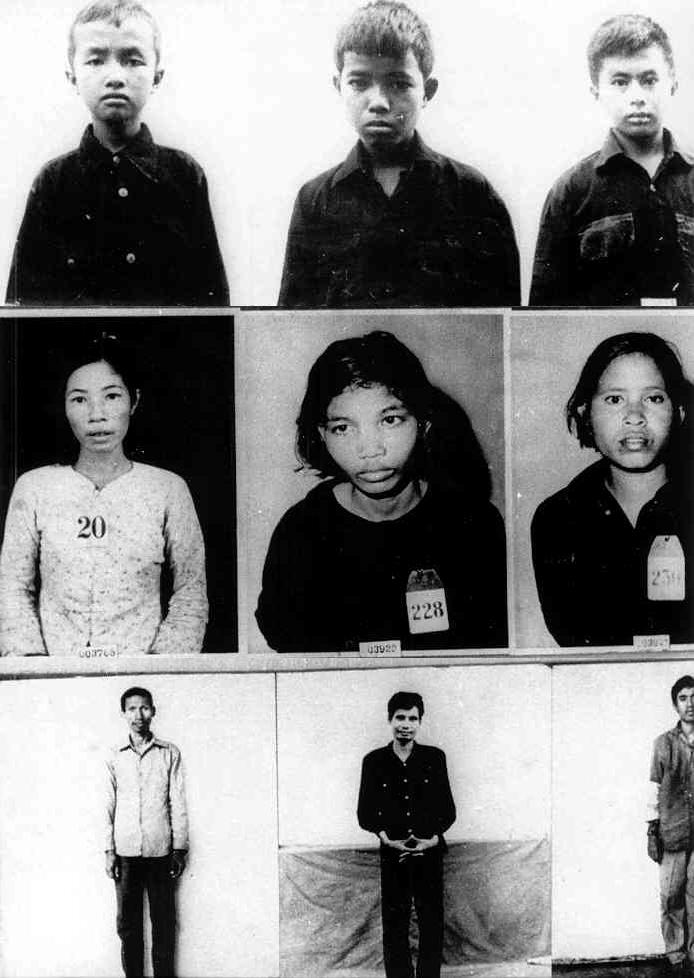
Victims of the Khmer Rouge
security police,
some of the million Cambodians
slaughtered by
Pol Pot's Communist regime – 1975
[2]The French name of the group comes from the fact that a number of the
leaders of the Khmer Rouge were Paris-educated intellectuals of the worst kind with
their pure and unyielding idealism, idealism that turned them into moral
monsters.
[3]Although both Vietnam and Cambodia were officially Communist as of 1975, the two
countries practiced very different forms of "Communism" (actually just ethnic
nationalism) and found themselves in conflict along their mutual borders from
1975 onward – with the Cambodian Khmer Rouge actually undertaking several
direct attacks on Vietnamese territory.
Finally in late December 1978, the Communist Vietnamese invaded
Communist Cambodia and overthrew the Khmer Rouge government, placing in power a
pro-Vietnamese government in the Cambodian capital, Phnom Penh. This finally brought the massacre of the
Cambodian population to an end.
| THE AMERICAN BI-CENTENNIAL |

 Ford takes over from Nixon
 Horrifying collapse in Southeast Asia
  The American Bi-Centennial (1976)