The "Arab Spring" breaks out in
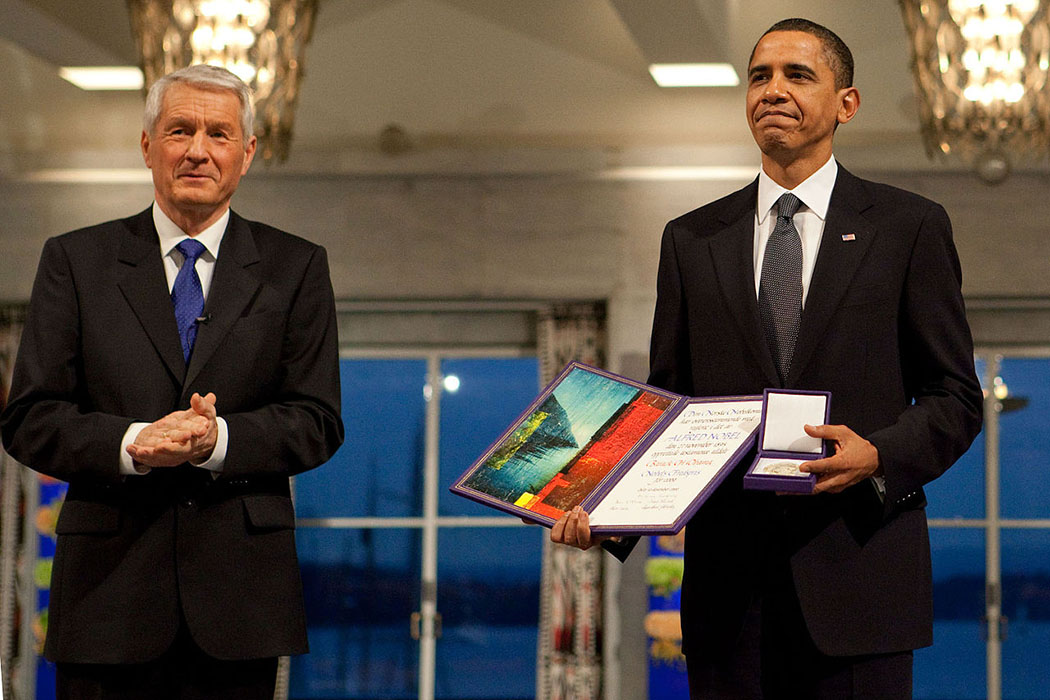
Tunisia (2011). Part of Obama's "New Look" included
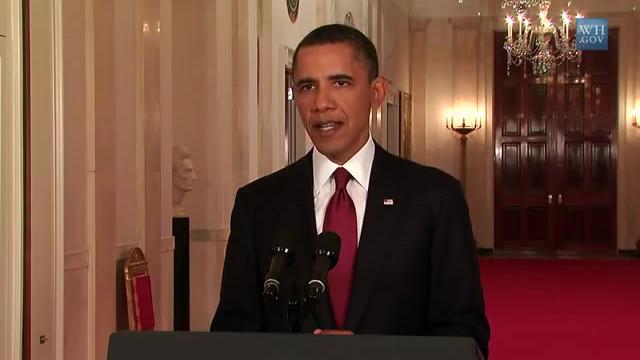
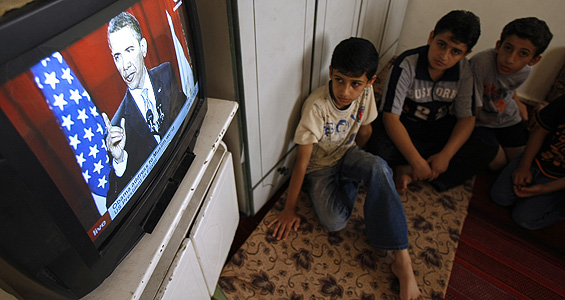
his widely watched televised speech "A New Beginning" that he
delivered to the Arab world during a visit to Egypt in June of 2009. In that speech, he emphasized his commitment
to helping develop a greater spirit of personal freedom, political democracy
and economic development in the Middle East, not exactly a novel ideal for
Americans, for that had also been part of Bush, Jr's intent in Afghanistan and
Iraq. In short, America under Obama would remain in the business of
supporting nation-building abroad. Would this work any better than it had for Johnson in Vietnam, Carter in Iran, and Bush, Jr. in Afghanistan and
Iraq? Time would soon tell.
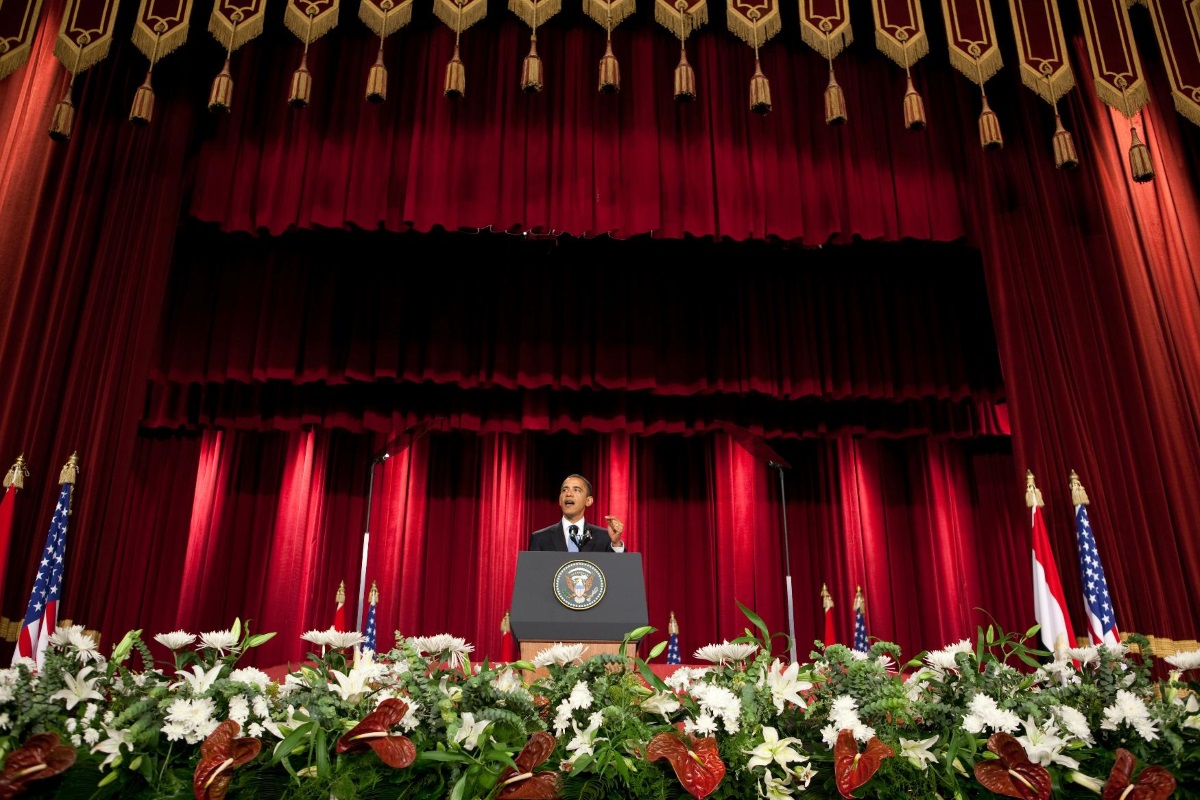
Obama's Cairo speech to the
Muslim world inviting the
Muslims to seek a "new beginning" ... citing his own
Indonesian experience and personal family background
in Islam and
noting the distinction between peaceful Muslims
and violent
extremists, declaring that "this cycle of
suspicion and discord must
end"
Troubles in the streets broke out in January of 2011, when
Tunisian youth came out in huge numbers to protest a broad number of social
issues that had them deeply angered.
With this, the "Arab Spring" got underway.
The
protest was characterized by much electronic connect through computers and cell
phones, and the active involvement of the media in dramatizing the event. By the middle of the month Tunisian President
Zine ben Ali had fled the country, and it seemed that the youth had achieved a
tremendous political victory, although street action continued all the way up
to October, when finally elections were held to appoint those who would write
Tunisia's new Constitution.
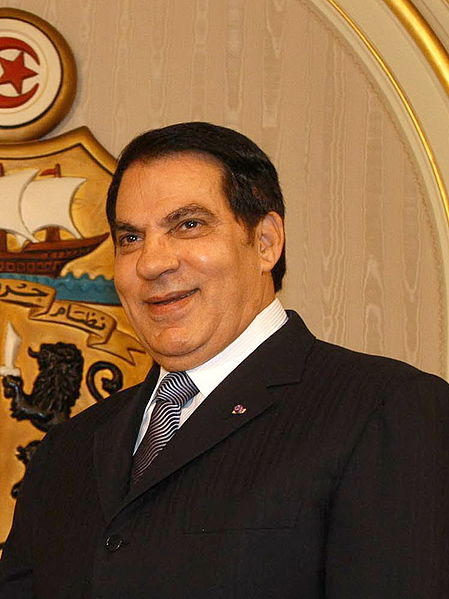
Zine El Abidine Ben Ali –
2008
President of Tunisia
(1987-2011)
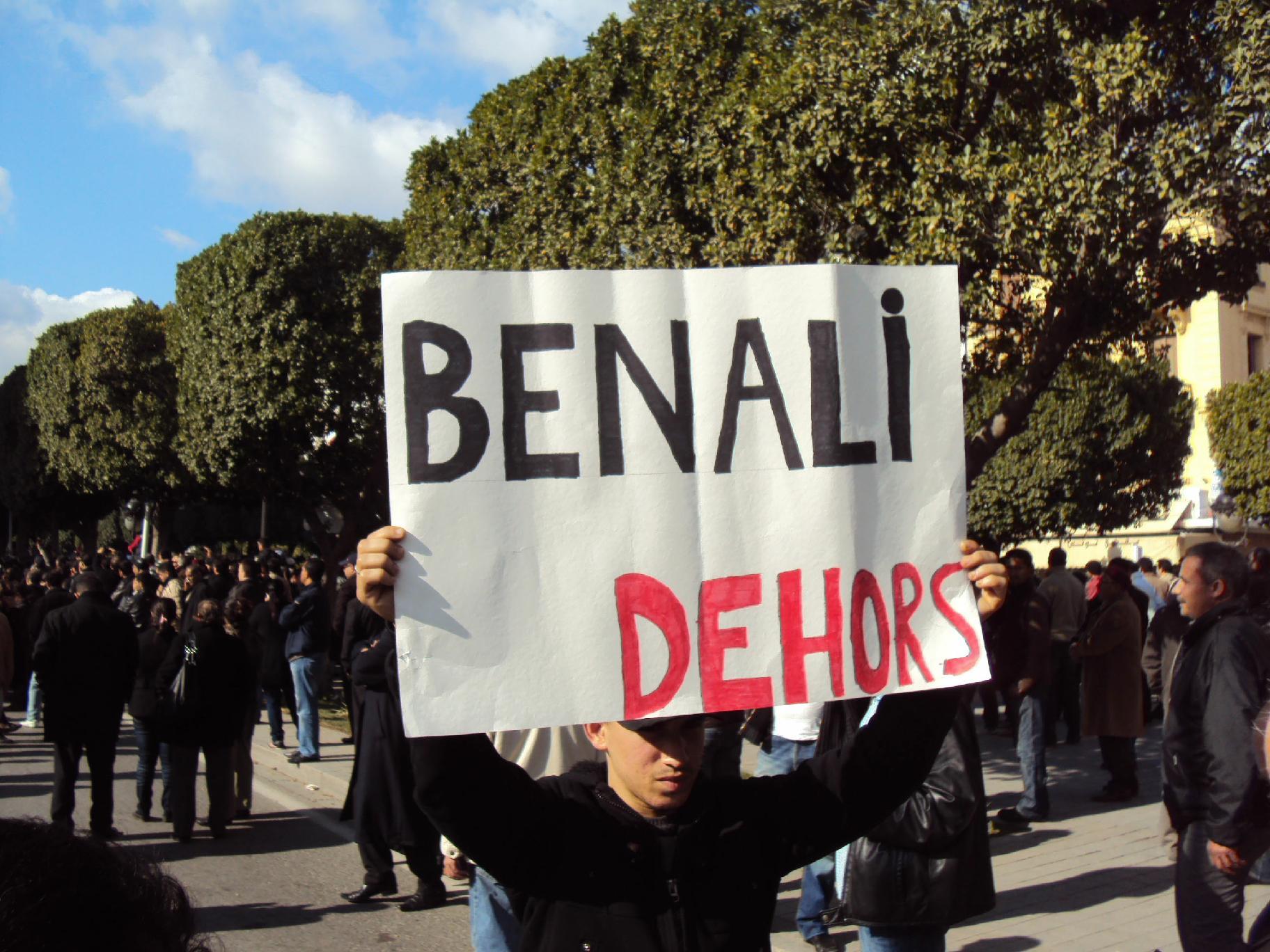
"Out with Ben Ali" – 14 January
2011
Protesting unemployment
high food prices, corruption
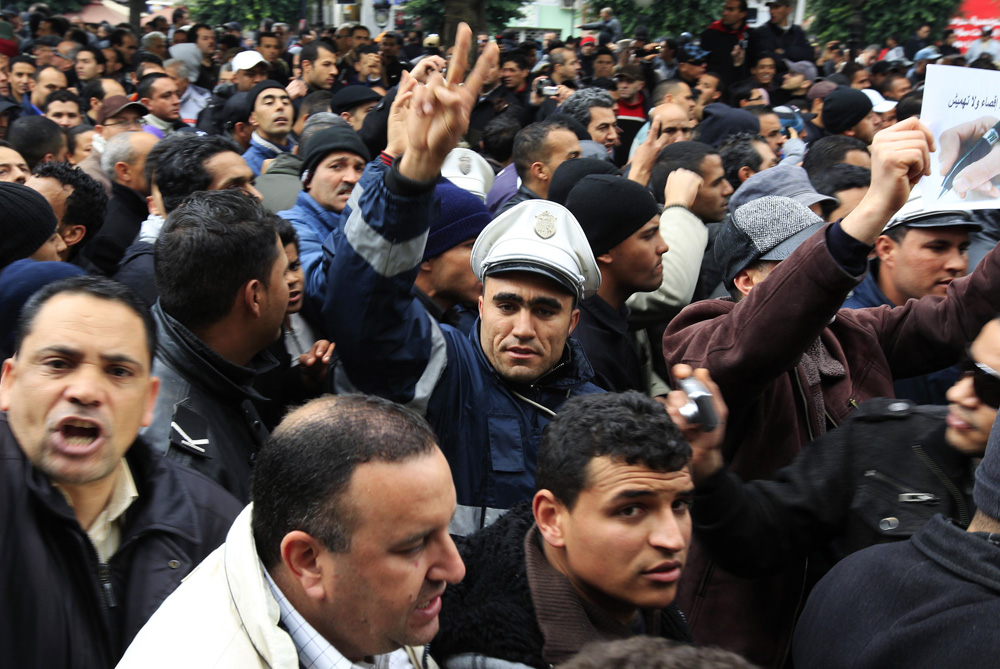
Tunisian
Protesters
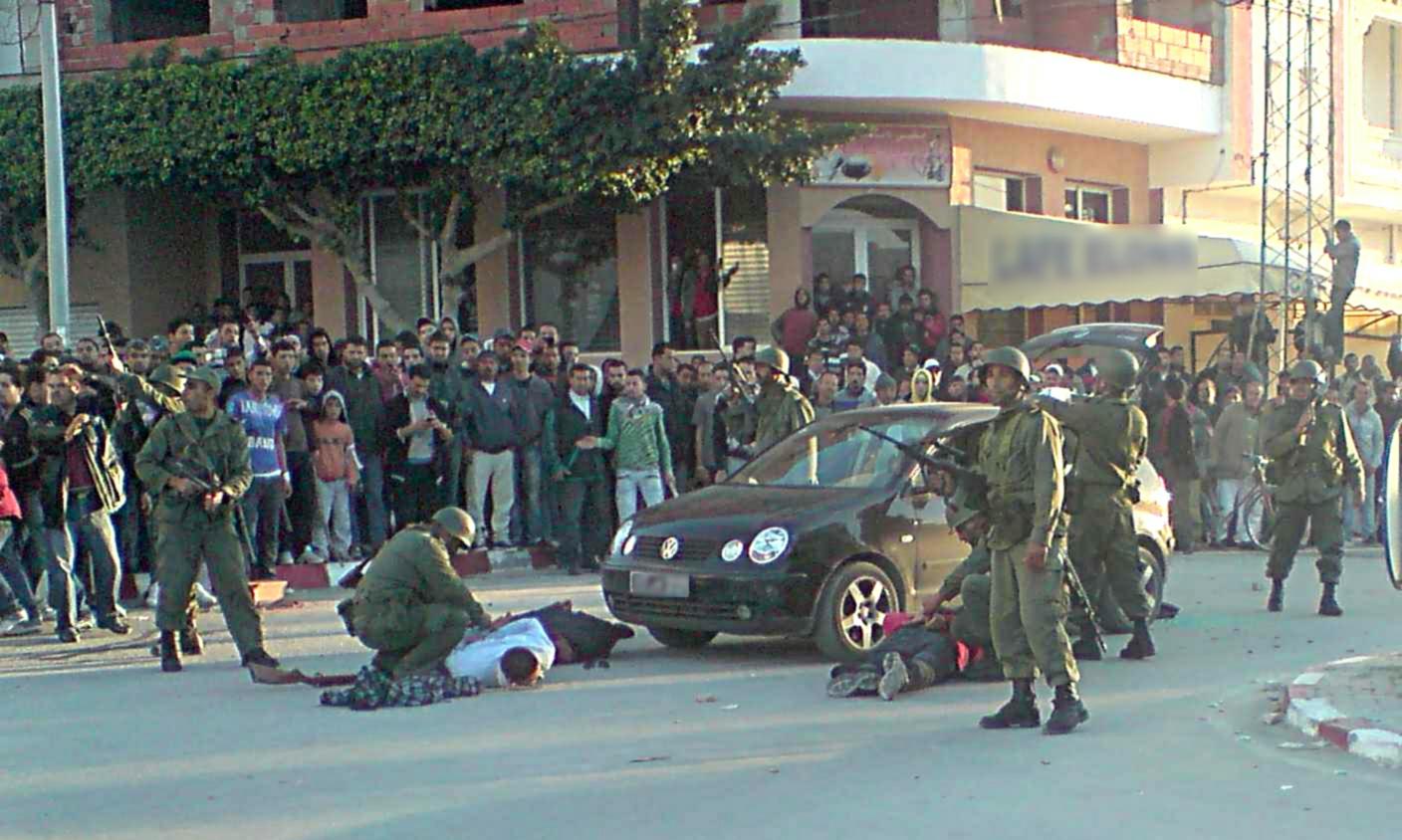
The Tunisian National Army
restored order in absence of police
services.
The picture shows a civilian
who was stopped
because of a weapon in his car.
15 January 2011
The Arab Spring comes to Egypt.
But the rest of the Arab world was watching events in Tunisia
closely. And soon the youth of other
Arab states took up the same cause: to
overthrow their long-standing governments, in order to replace them with new
similarly "progressive" systems.
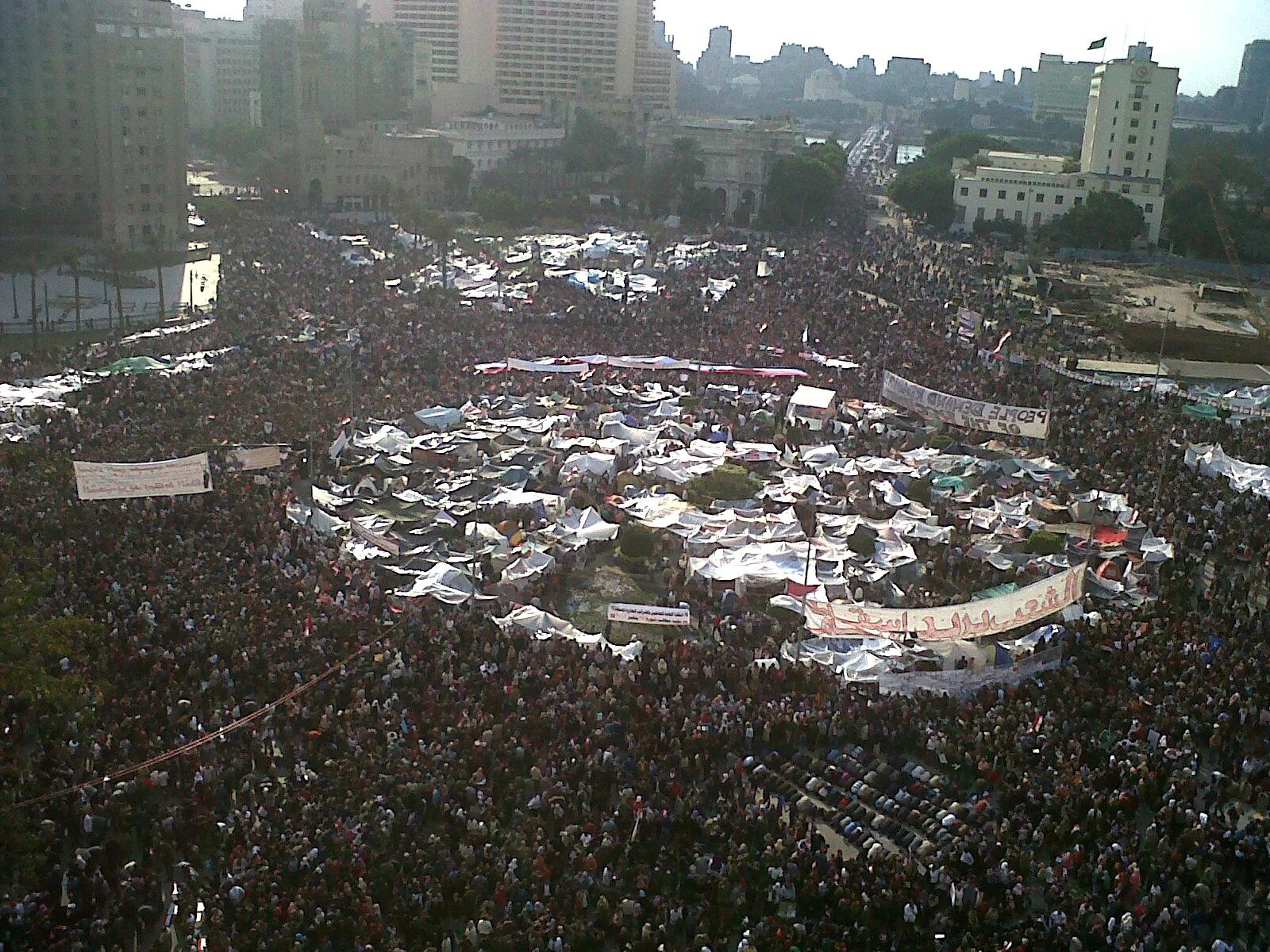
Egypt would be hit hard with this rising mood, as Egyptian youth camped
out in Tahrir Square in Cairo with the intentions of outstaying the Egyptian
police until the nearly 30-year-long regime of Hosni Mubarak was brought to an
end (actually the elderly and very sick Mubarak was preparing his son, Gamal,
to take over his position as Egyptian president.)
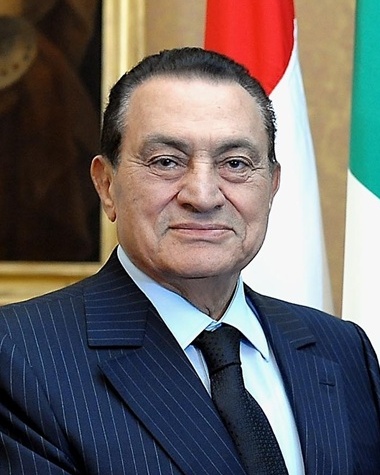
Egyptian President Hosni
Mubarak in 2009
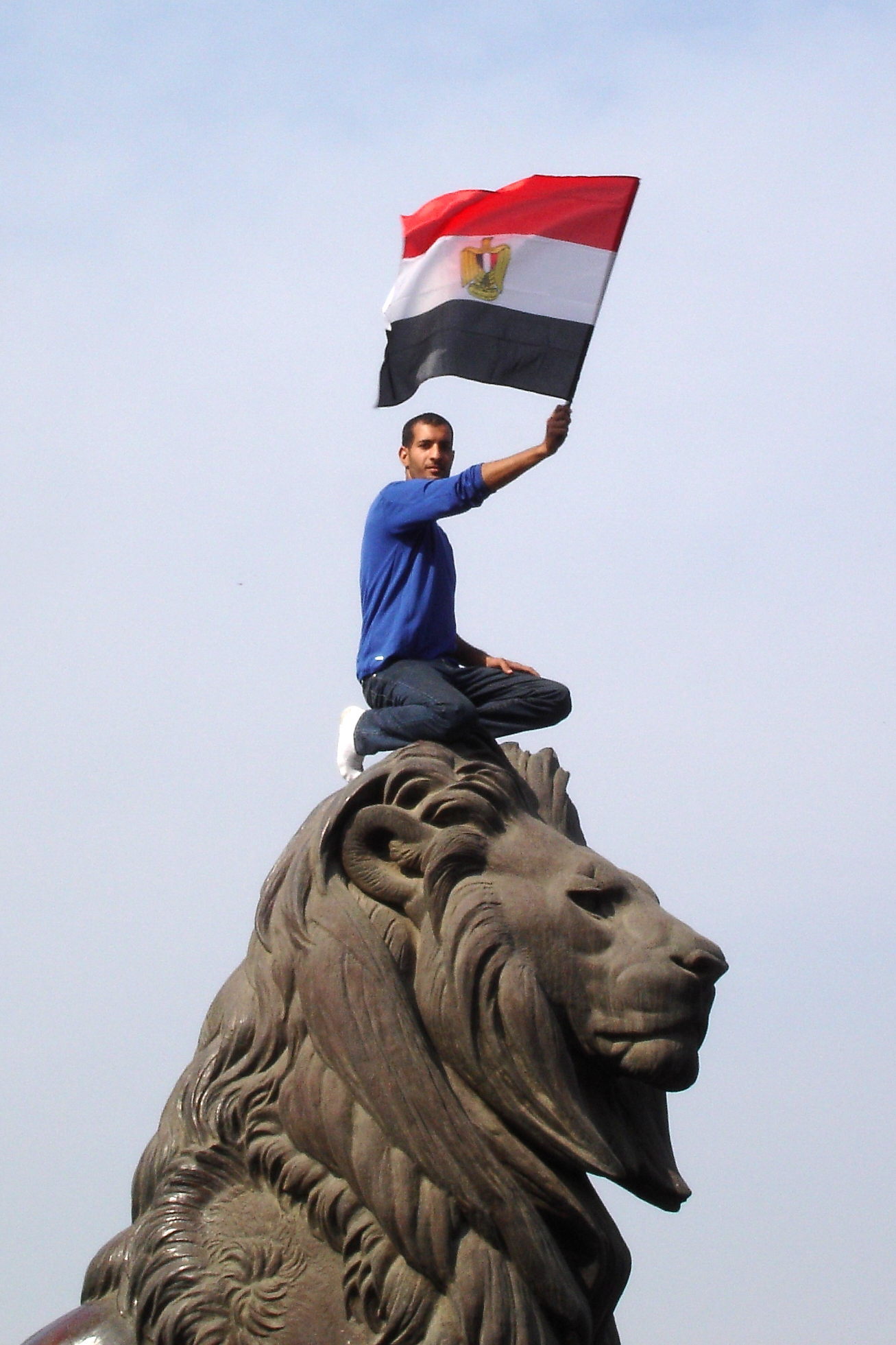
A picture of an Egyptian
protester holding the Egyptian flag
– February 1, 2011
Demonstrators in Cairo's
Tahrir Square on 8 February 2011As
the Cairo protest dragged on, Mubarak shut down the internet, but also made
some efforts to appease the protesters with changes in the Egyptian government
cabinet and the appointment of a Vice President (not part of the Mubarak
family!).
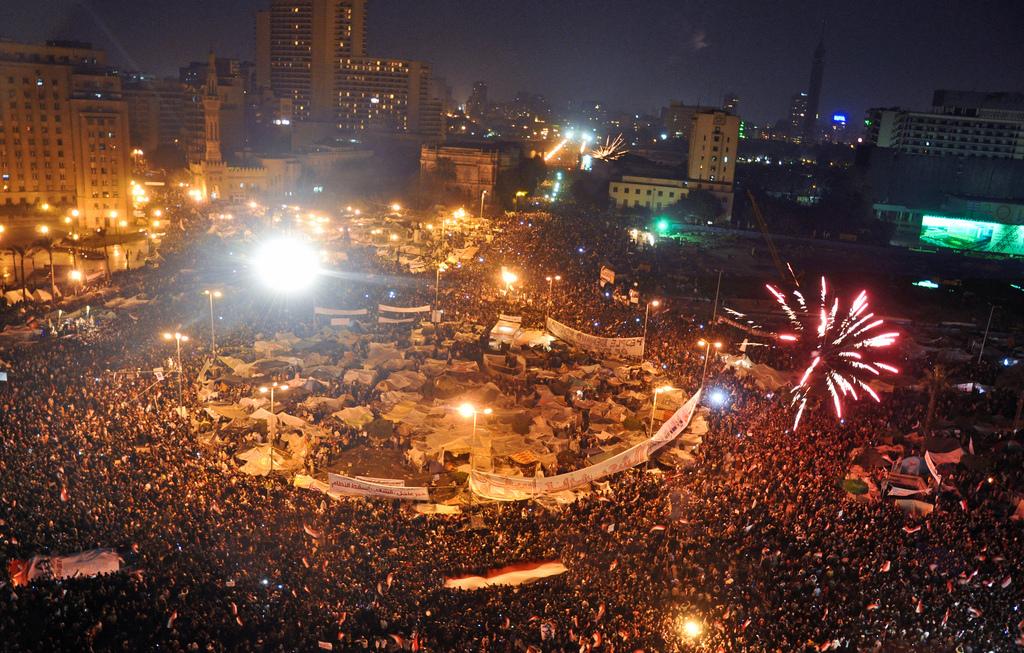
Celebrations in Tahrir Square
after Omar Soliman's statement
that concerns Mubarak's
resignation. February 11, 2011 – 10:15 PM
But this hardly satisfied the
protesters, whose numbers gathered in Tahrir Square merely increased (similar
to the way things had developed over the days and weeks in Tiananmen Square in
Beijing). Seeing huge troubles
developing, the Egyptian military finally stepped in and in mid-February
arrested Mubarak and took control of the Egyptian government, promising
constitutional reforms. But still, the
protesters remained encamped in Tahrir Square ... their numbers continuing to
grow.
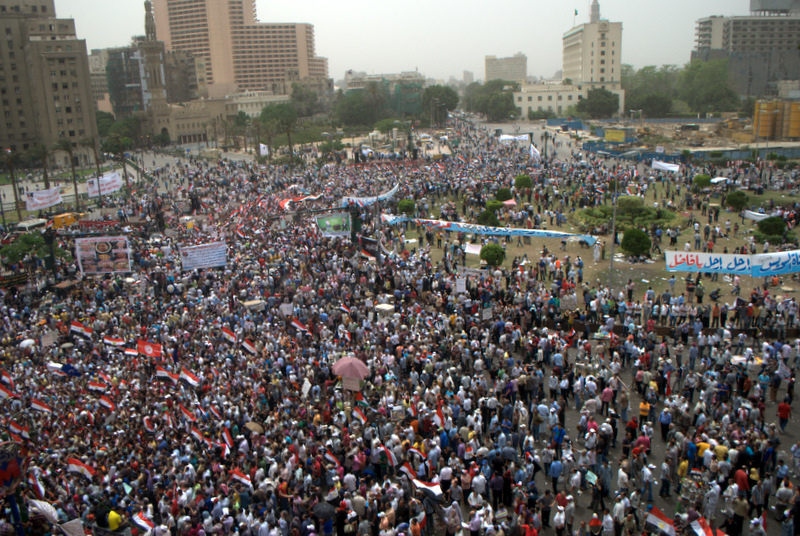
The "Second Revolution of
Anger" – people protesting in
Tahrir Square on 27 May 2011,
demanding food, jobs, and
punishment of the former government officials
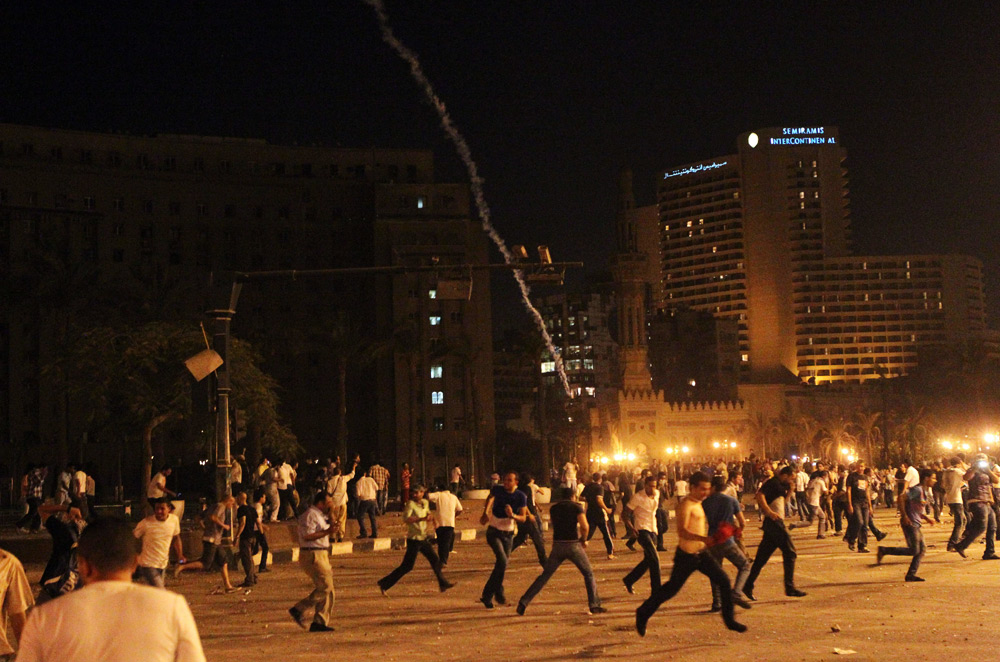
Another round of protests
at Tahrir Square beginning the evening
of 28 June, 2011
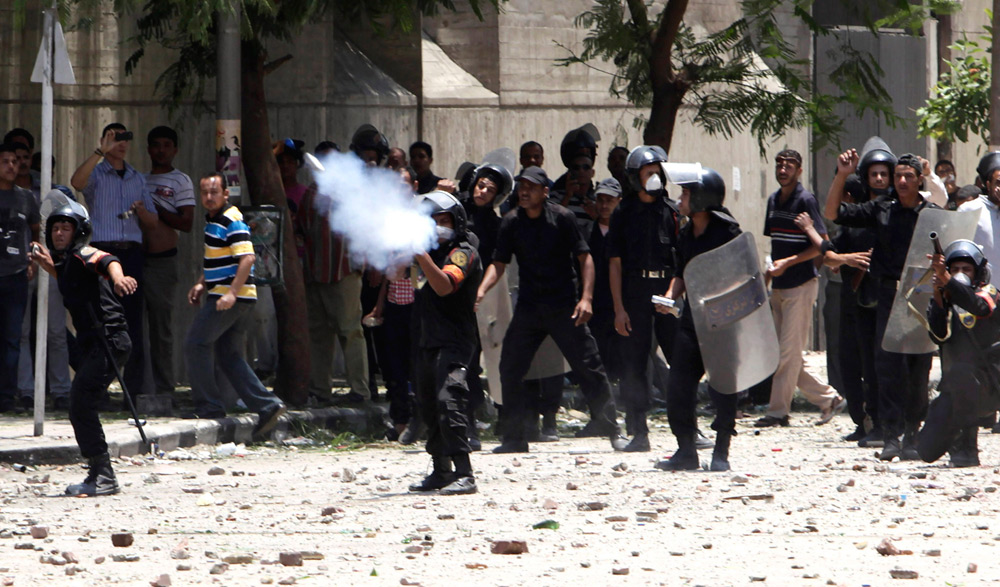
The protests continue the
next day – June 29 2011
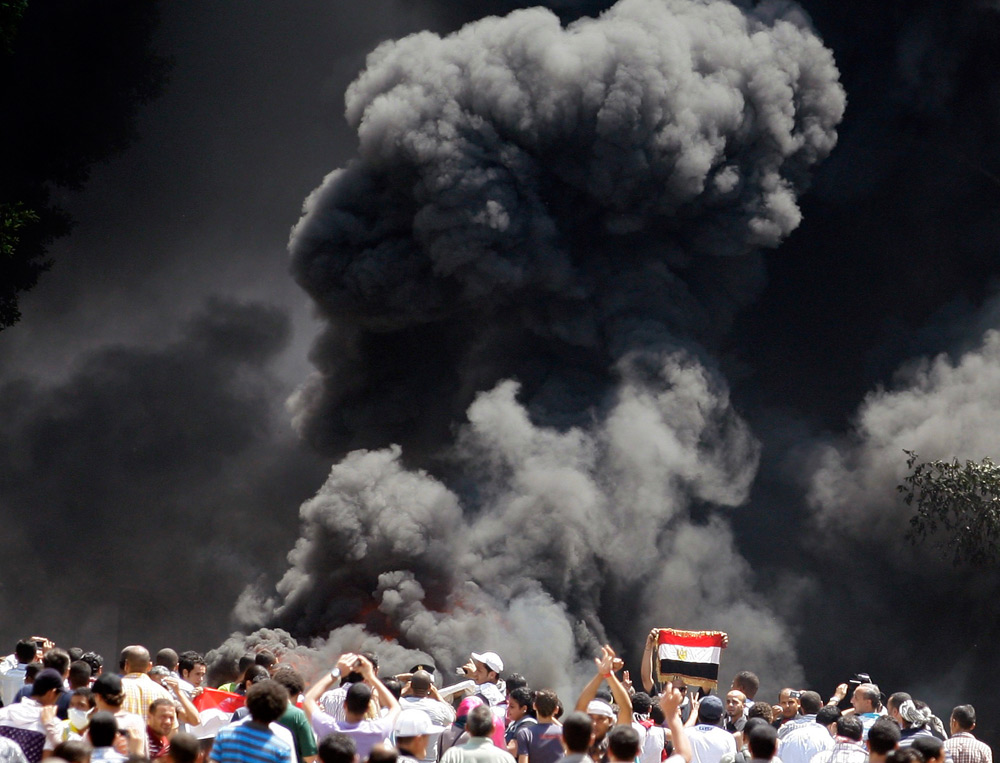
Protesters are seen in front
of smoke burning from a destroyed
police booth June – 29 2011
Now
Egyptians found themselves fighting fellow Egyptians as the days, weeks and
then months passed, the level of violence continuing to mount through the
summer and into the fall. Sectarian or
religious-cultural violence became a key part of the chaos, as, for instance,
Coptic Christians (about 10 percent of the population) became objects of Muslim
retribution. Also Muslim groups
themselves turned on each other, as well as against the more culturally secular
of the Egyptians.
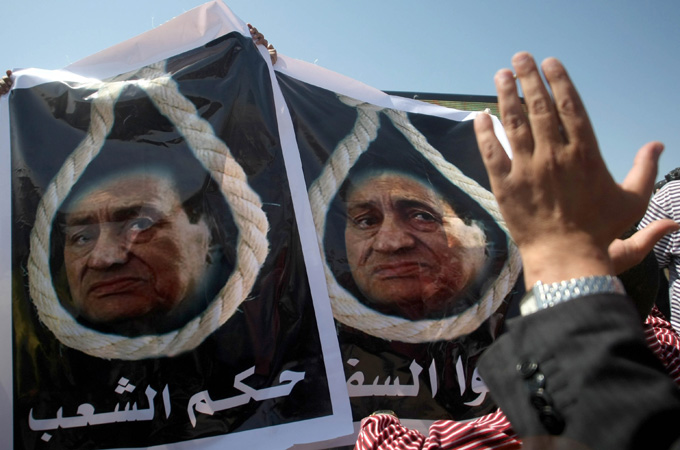
Some demonstrators that
gathered
outside the court demanded
the death penalty for the ousted president
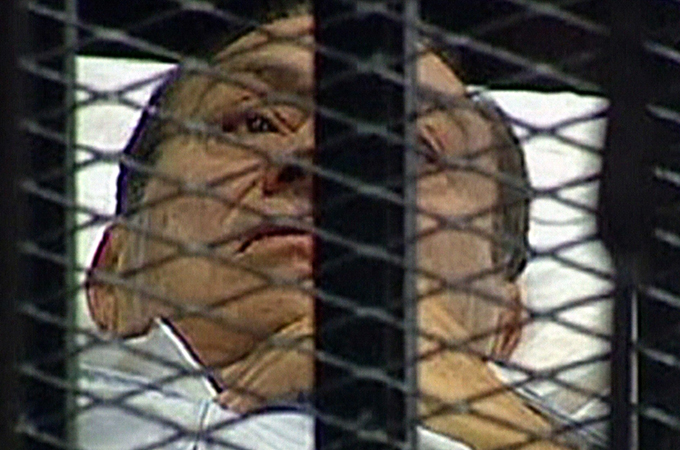
By the time that
elections for the new Constituent Assembly were held in November, Egypt was on
the verge of civil war.
But
hope ran high that elections under the new Egyptian constitution, held in May
the following year (2012), would produce the step of Egypt into the world of
democracy that Obama supported so strongly. In those elections, Muslim Brotherhood leader
Mohammed Morsi won 51.7 percent of the vote, his Secularist opponent Ahmed
Shafik coming close at 48.3 percent. Obama was enthusiastic about the
results and congratulated Morsi on this wonderful development. But a wiser Shafik left the country, just
before Morsi put out a warrant for his arrest.
So much for Third-World democracy.
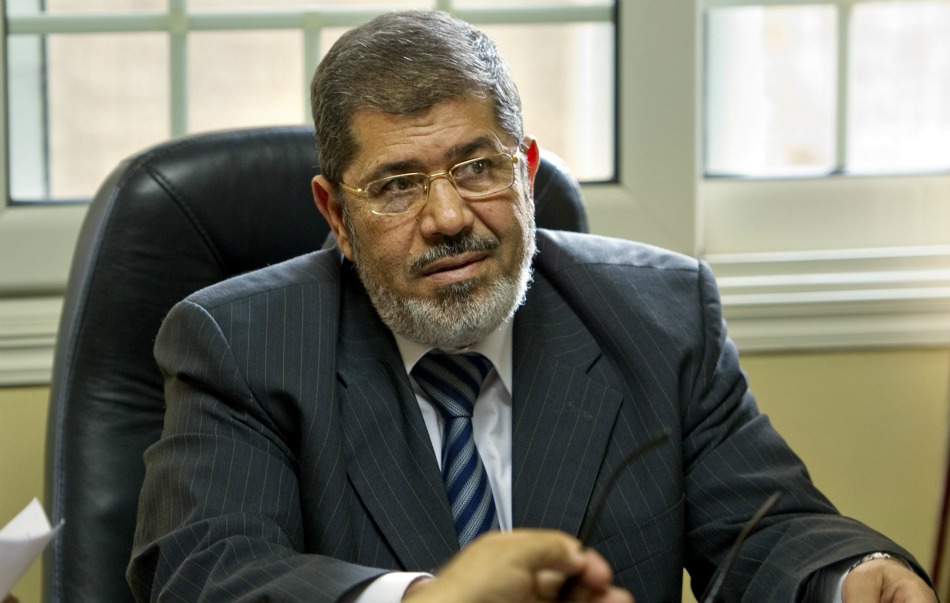
The New Egyptian President,
Mohamed Morsi
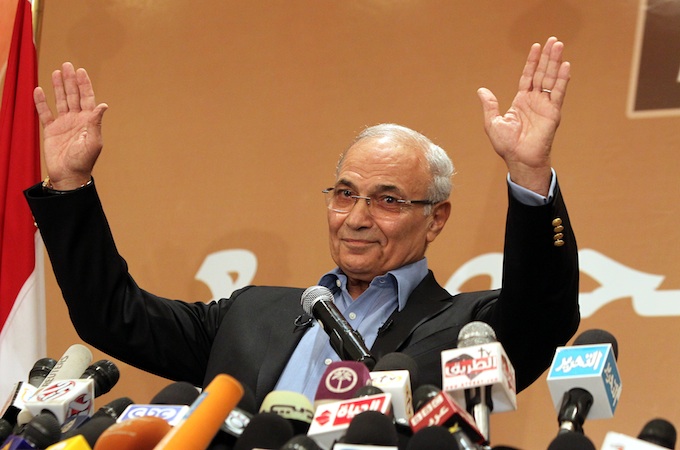
His opponent Ahmed
Shafik. Shafiq flees the country ...
and chaos mounts in Egypt as Islamists battle Secularists
and Christian Copts.
And
the chaotic situation in Egypt did not improve any – "forcing" Morsi
to take an ever-stronger or dictatorial hand.
The situation grew so bad that finally, with not just Tahrir Square but
the very streets of Cairo filled with anti-Morsi protesters, the Egyptian
military again stepped in and deposed Morsi, finally bringing Egypt back to
order.
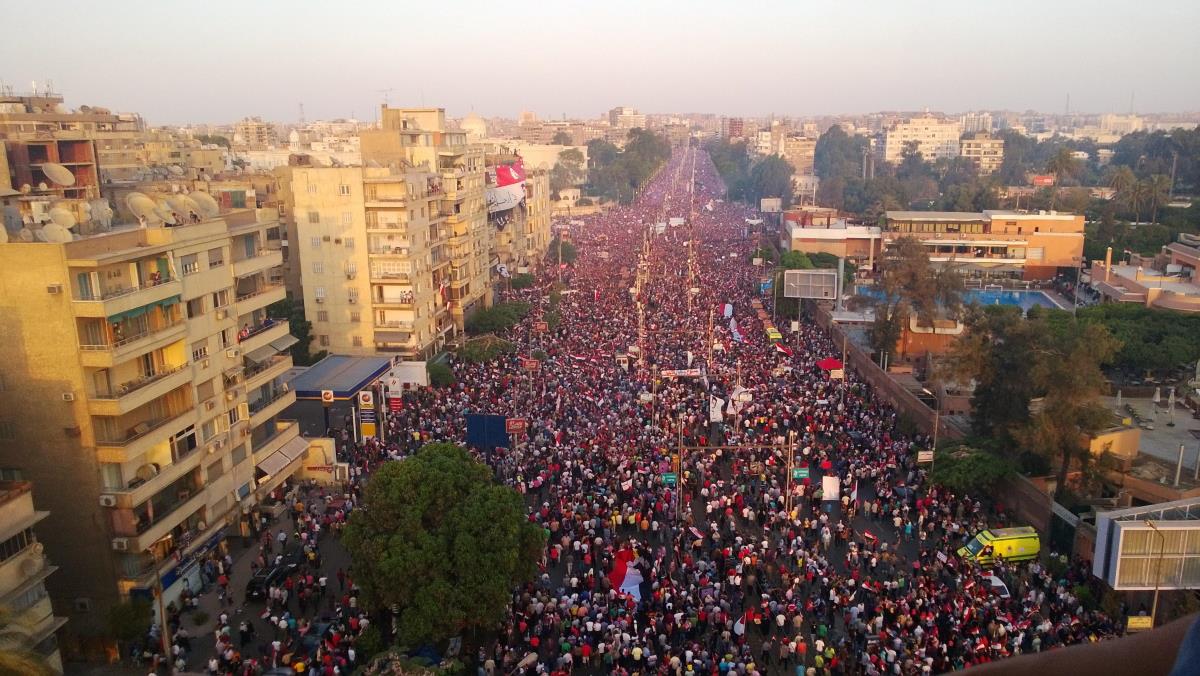
By
June of 2013 tens of millions of Egyptians had taken to the
streets to protest the policies of Morsi ... and the chaos that was tearing Egypt
apart.
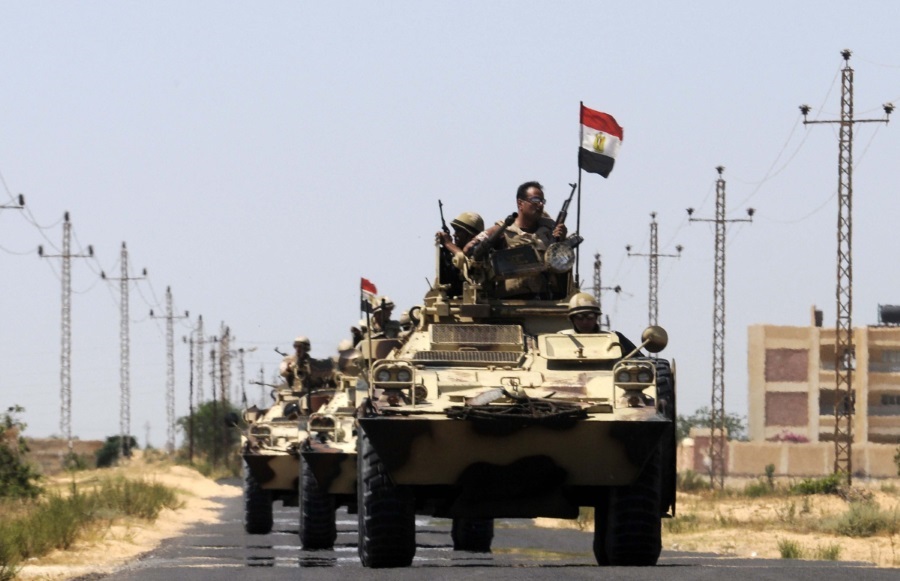
The
military put out a warning that if the contending political
parties did
not come to some kind of agreement within 48
hours, the military would
be forced to intervene to restore
order in Egypt.
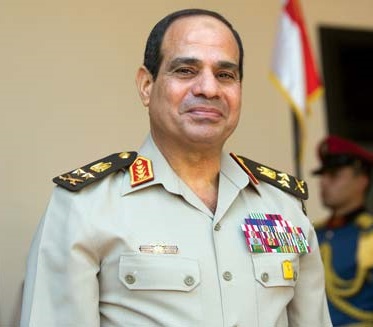
Ultimately the military, under Egypt's Defense Minister
General Abdel Fattah el-Sisi took over ...
and arrested Morsi.Obama was furious over this violation
of "democracy." But he could
say little about matters in Egypt when another election was held (with Muslim
radicals boycotting the election) and former General / now President Sisi
gaining huge Egyptian civilian support for his leadership.
Then Syria.
Meanwhile by mid-March of 2011, the mood of youthful protest had moved
on to Syria, where protesters gathered in Damascus with their own list of
demands for political and economic reform.
But as in Egypt, the demands became increasingly confusing as they
intensified, some wanting more secular reform, others more Islamic reform, but
deeply divided as well over whether that should take a Shi'ite or Sunni character. Even more than Egypt, Syria was a complex mix
of all sorts of sectarian groups, not only Sunni versus Shiite Muslims, but also
Druzes (semi-Muslim), Christians (from various versions of Eastern Orthodox to
equally culturally diverse Catholic groups), not to mention long-standing
family, clan and tribal loyalties. And
of course there were a huge number of simply Secular Syrians, diverse in
character as well.
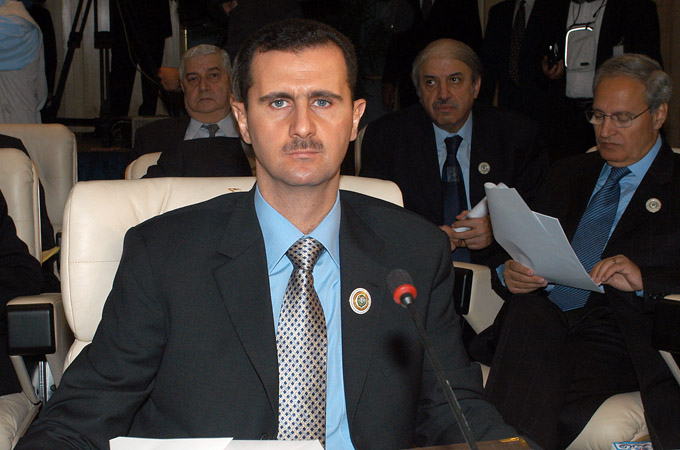
Syrian President,
Bashar al-Assad, second son of Hafez al-Assad
Syrian
President Bashar al-Assad was a member of the Alawi sect, part of Shi'ite Islam, but mostly Secular in
political character. He and his father
before him had been holding this fragile social mix together, at times by
forceful means. Actually, at first
protests were for simple reforms, not for any end to the Assad presidency.
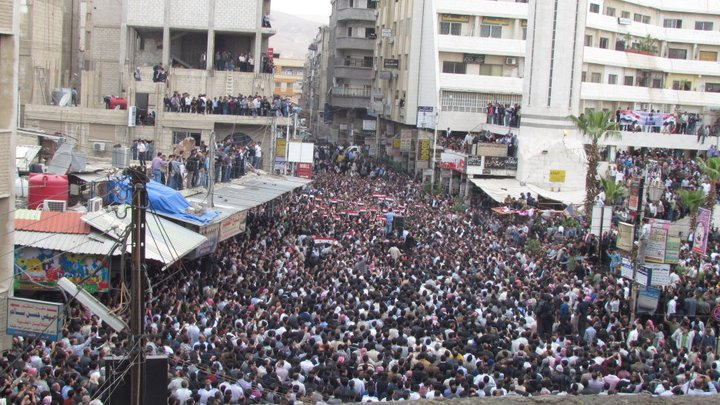
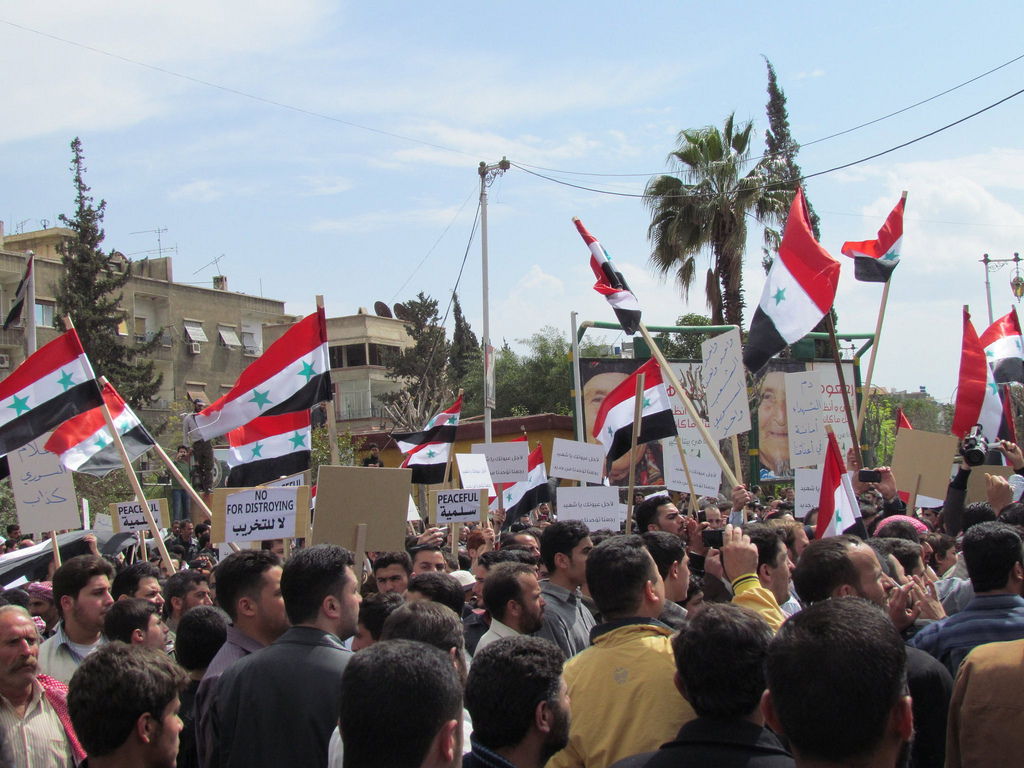
Protest in Duma, a city
near Damascus, Syria (5 April 2011)
Protesters in Duma (8 April
2011)
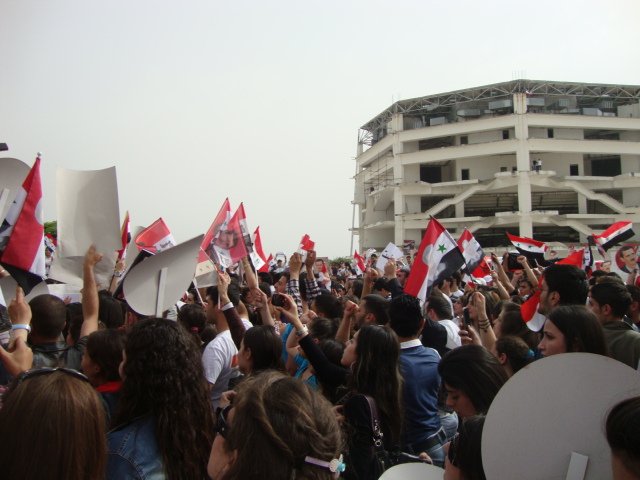
A pro-Assad student
rally at Tishreen University, Latakia, Syria
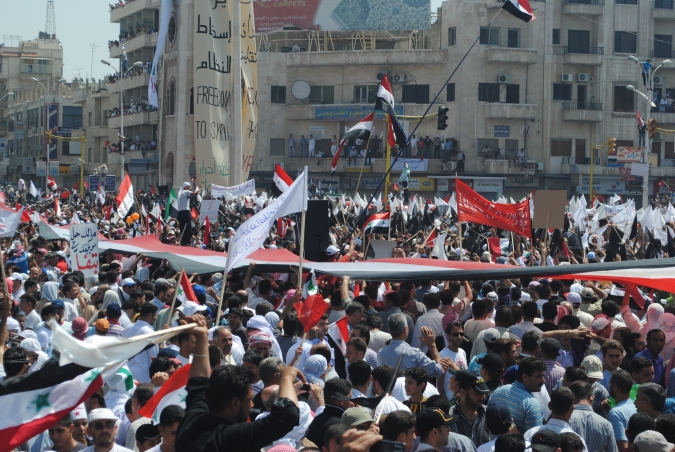
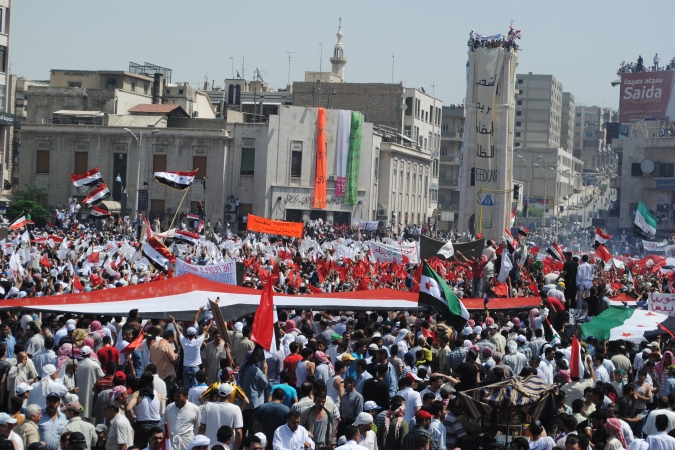
Thousands continue to take
to the streets across Syria,
despite the bloody crackdown on protests. Activists say that
thousands
of civilians have been killed by security forces.
But with time as the protests radicalized,
they did indeed take on an anti-Assad position, which merely provoked an equally
militant reaction of Assad supporters.
It was everything Assad could do to keep the country from falling into
bitter civil war.
Then Libya.
There was also the matter of Libya, where the "Arab Spring" had hit that
country in February. Actually, in Libya
the rebellion involved no more than a rivalry between the two chief cultural
regions that made up the country, regions that had long competed against each
other in that part of North Africa (Libya was assembled as a "nation"
by the Italians in the early 1900s by lumping these mutually antagonistic
regions into a single colonial holding).
Thus the Arab Spring in Libya entailed simply
a civil struggle between the groups, one found mostly in the eastern part of
the country with its political center in Benghazi and one in the western part
of the country with its political base in Tripoli. Libyan President Muammar Gaddafi held this together by
building a strong political base in Tripoli, and keeping the country focused on
foreign developments – which Gaddafi involved himself in
constantly (and rather flamboyantly and recklessly) in order to keep his people
distracted.
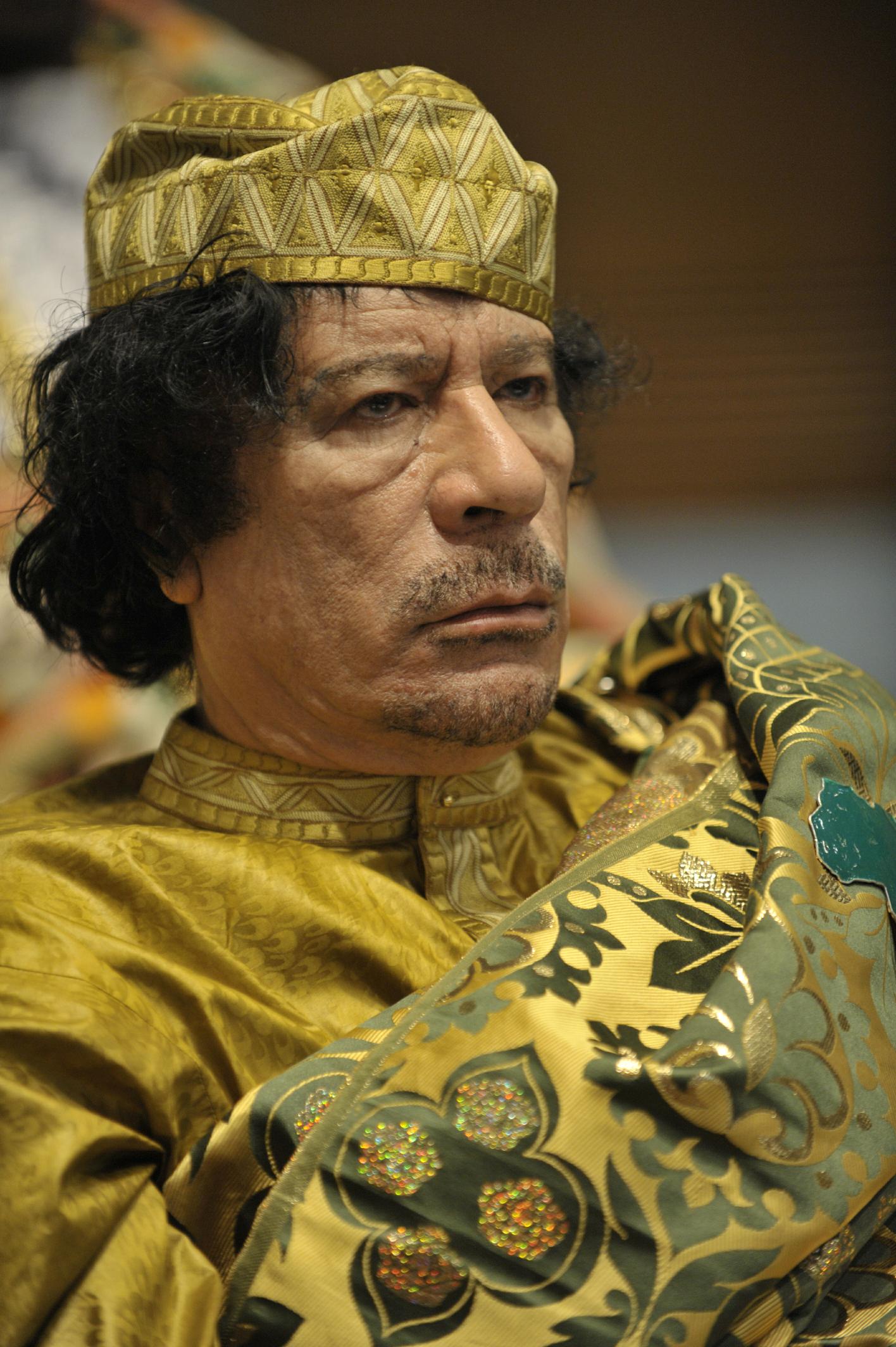
Muammar al-Gaddafi – President of Libya (1969
- 2011)
at the
12th AU summit, February 2, 2009, in Addis Ababa
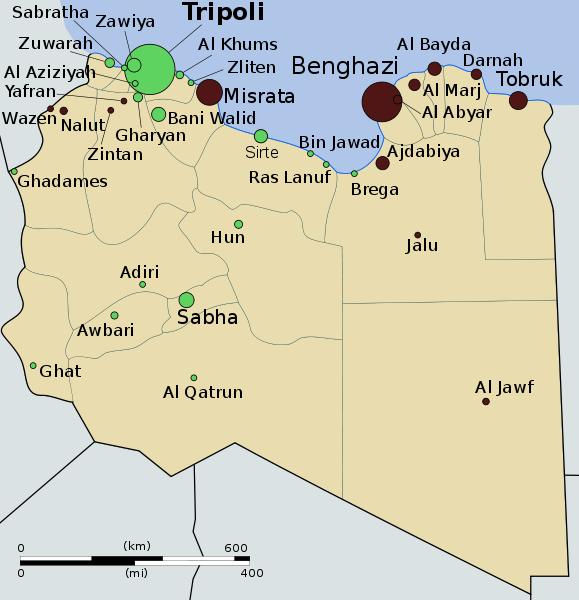
(Green) Cities controlled
by pro-Gaddafi forces (as of July 1, 2011);
(Brown) Cities controlled
by anti-Gaddafi forces (supported
by coalition forces)
Wikipedia – "2011
Libyan civil war"
In
the midst of all this confusion, Obama and his NATO allies (notably France) decided
that this would be an opportune time to get rid of the very troublesome Gaddafi, and at the same time bring
Libya to real democracy. So they called
for a no-fly zone over the country (meaning that Gaddafi could not use air power in
the defense of his government), and then "enforced" this decision by
flying their own missions in Libya to bomb his forces, and to supply his
adversaries, most notably the National Transition Council (NTC). And thus with considerable NATO (including American) support,
the NTC was able to extend its position in Libya, until Gaddafi was trapped, caught and
executed on the spot, all graphically displayed to the world. In Libya, part of the country cheered; part
of the country seethed. But Obama felt well content that America
and its NATO partners had just led Libya to
the right kind of political dynamics.
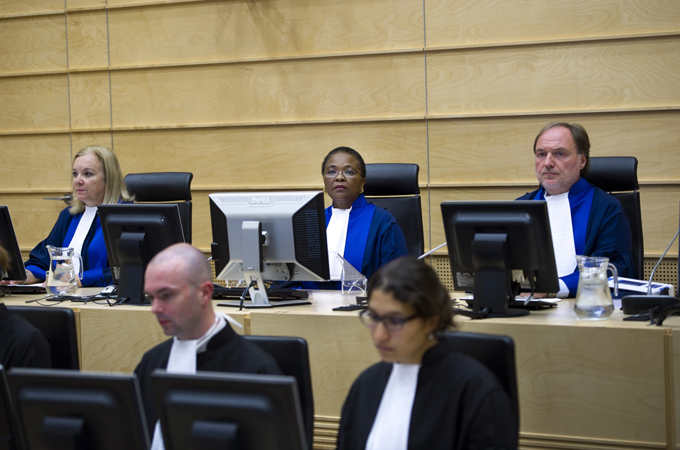
The International Criminal
Court has accused Gaddafi of crimes
against humanity
and of ordering attacks
on civilians
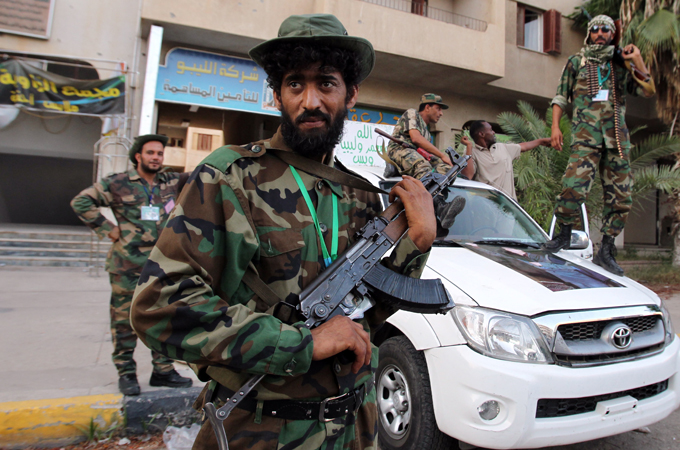
Forces loyal to Gaddafi ... located mostly in the western portions
of the country
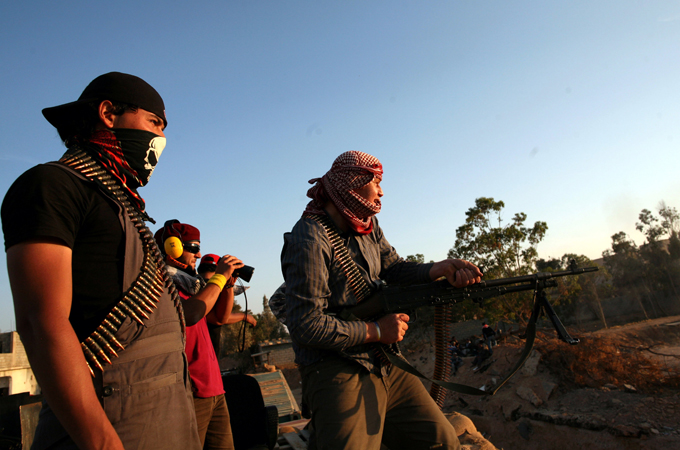
Forces opposing Gaddafi at Brega
(the eastern portion of the country)
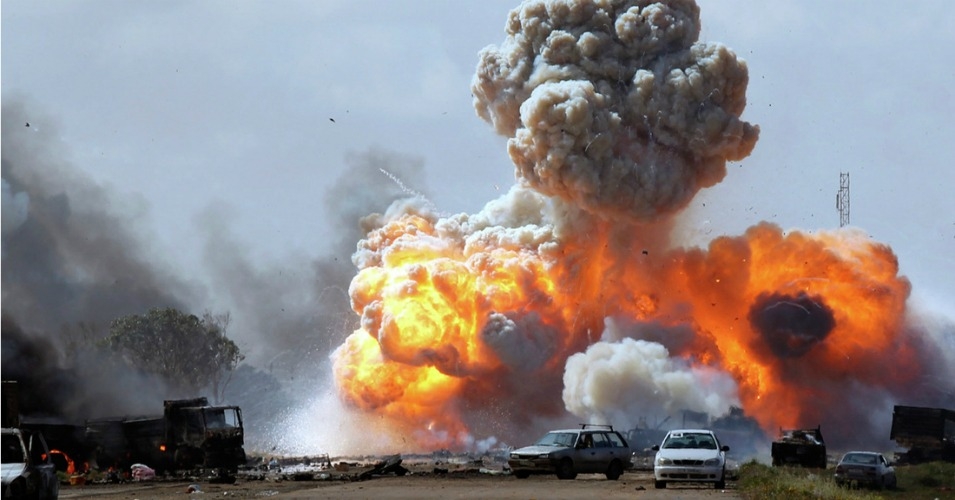
A NATO airstrike directed at the pro-Gaddafi forces
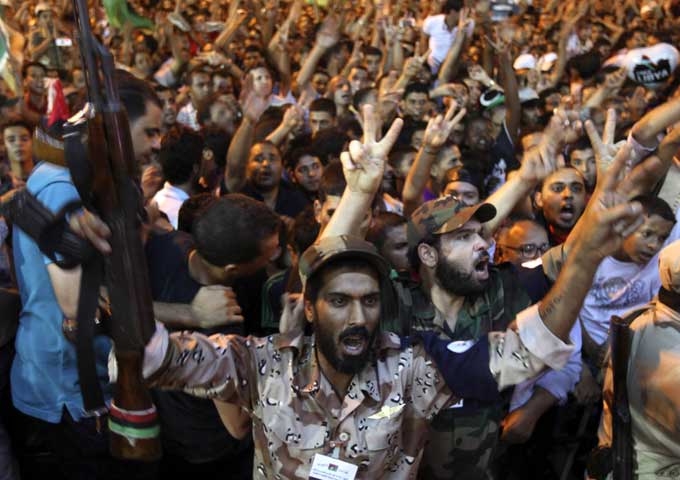
At news that Gaddafi was
losing his grip on power, celebrations
erupted in cities across Libya
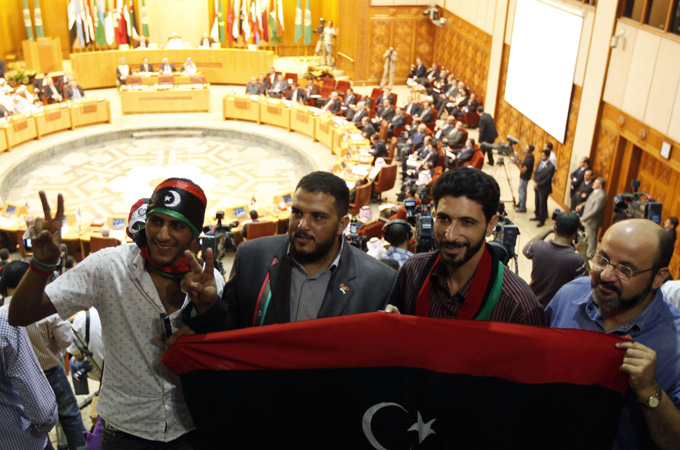
Libyan citizens hold a Kingdom
of Libya flag as they attend
the Arab League meeting in its headquarters
in Cairo
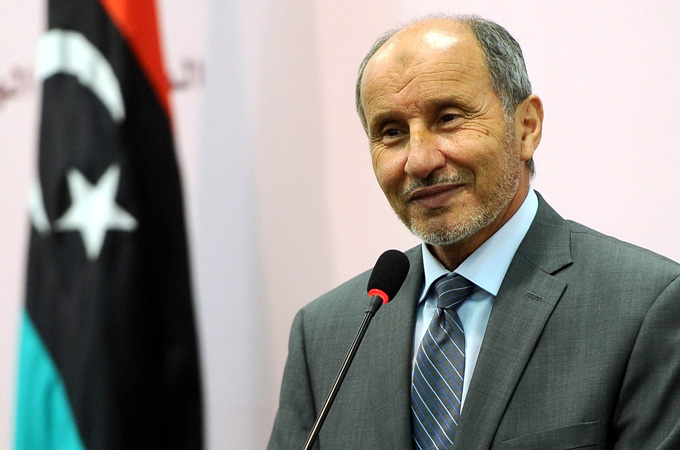
Libya's National Transitional
Council is led by Mustafa
Abdel-Jalil, Gaddafi's former justice minister
(Mahmoud
Jibril, Chairman
of the NTC's Executive Board, is
another key NTC leader)
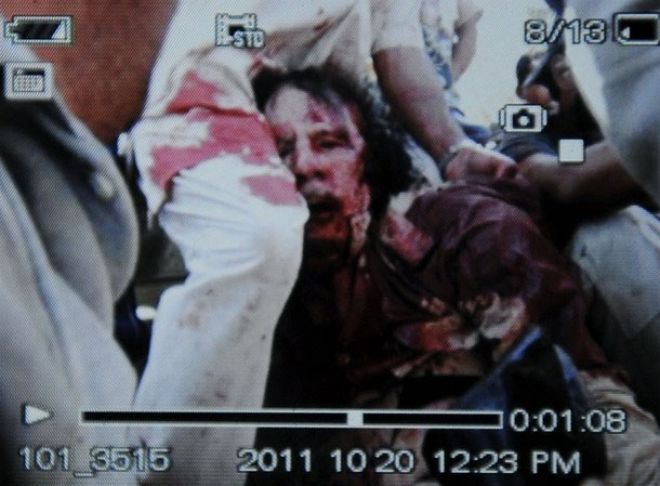
An image captured by cellphone showing a battered Qaddafi
just before his on-the-spot execution – October 20, 2011
The chaos worsens in Syria.
Meanwhile, back in Syria, there too the international community decided
that it needed to get involved in helping return Syria to some kind of social
order. Shi'ite Iran decided that it needed
to help fellow Shi'ite Assad in crushing the
rebellion (which would also bring the reach of Iran all the way up to the
Mediterranean Sea). Russia's President
Vladimir Putin noticed the same possibility of
finding itself usefully stationed in Syria by offering Assad some military
assistance (and thus also achieve in the process the long-sought goal of a
Russian position in the eastern Mediterranean).
And the Turks next door were growing increasingly concerned about the
violence spilling over into their country and wanted something done to stop the
chaos.
Obama decided to "help"
Syria (like the help offered Libya), demanding in August that Assad step down
in order to allow his country to move to actual democracy (like Iraq?). He was even more forceful in threatening
Assad with "serious consequences" if he crossed a "red line"
in the illegal use of chemical weapons and certain categories of bombs in his
efforts to crush the rebellion. But
Assad was too busy trying to stop Syria's collapse into complete chaos to pay
much attention to Obama's threats, and simply ignored
them. An embarrassed Obama ultimately came up with no
compelling "consequences" and had to backtrack on his threats, prompting Putin to agree to step into the mess
and help "mediate" between Obama and Assad. But instead Putin moved to full support of Assad,
at the same time that Obama (in cooperation with the
Saudis) began sending arms, even tanks, to one of Assad's Sunni opposition groups.[1]
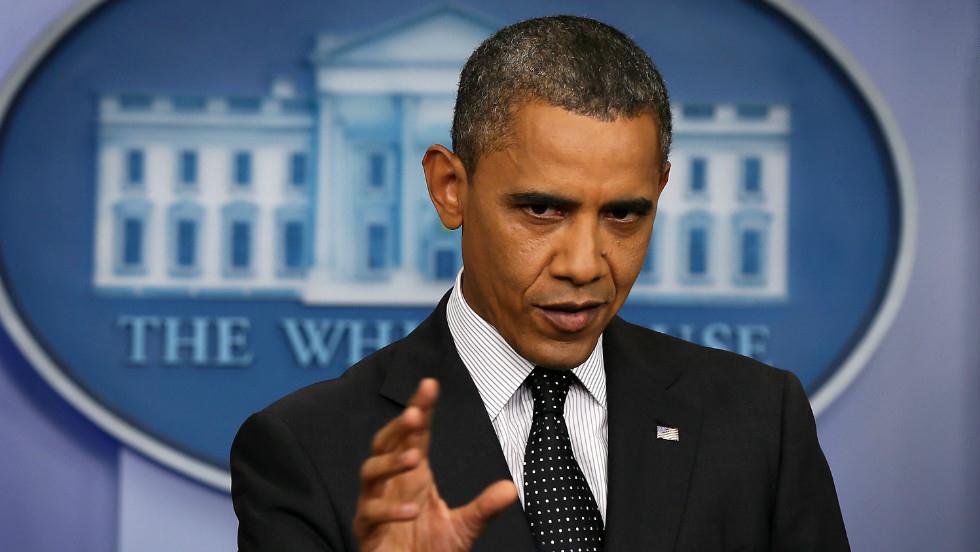
Obama warning Syria not to cross
a "Red Line" in using
illegal (chemical/biological) weapons (August 20,
2012)
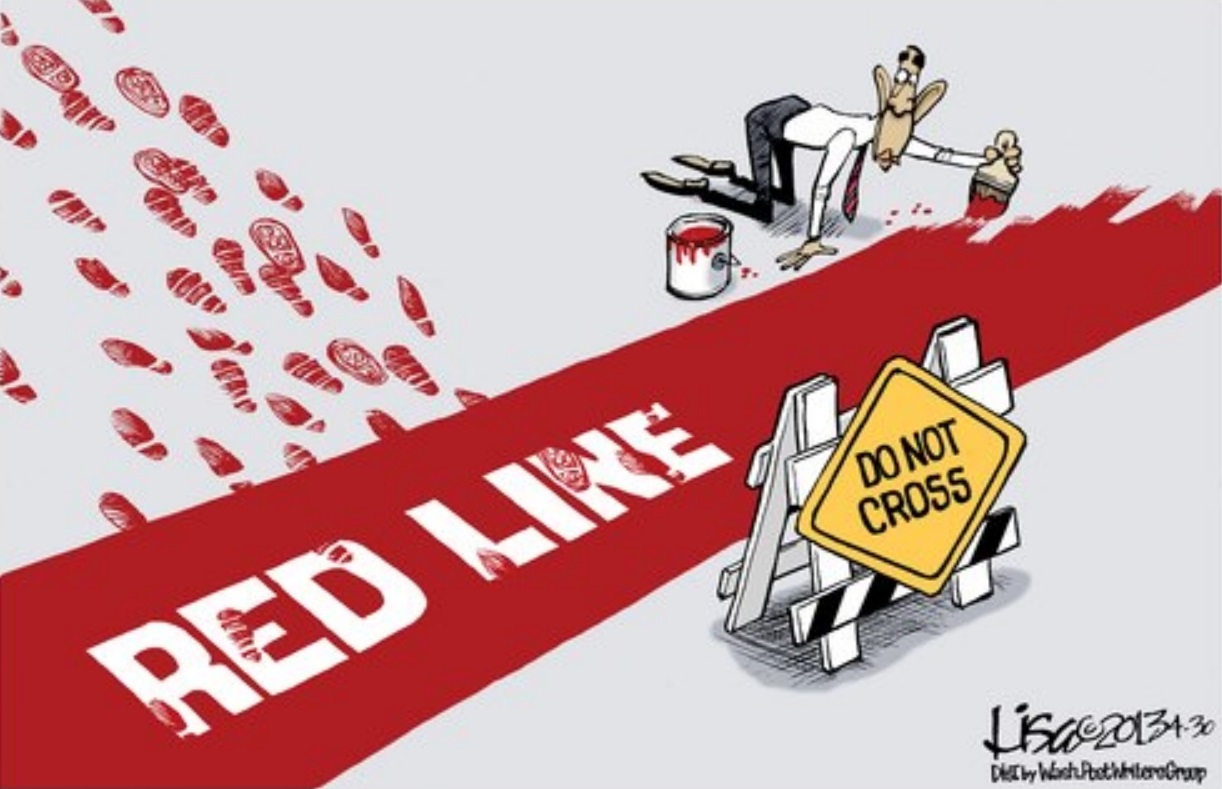
Obama took a lot of flack for his "Red Line"
threat!
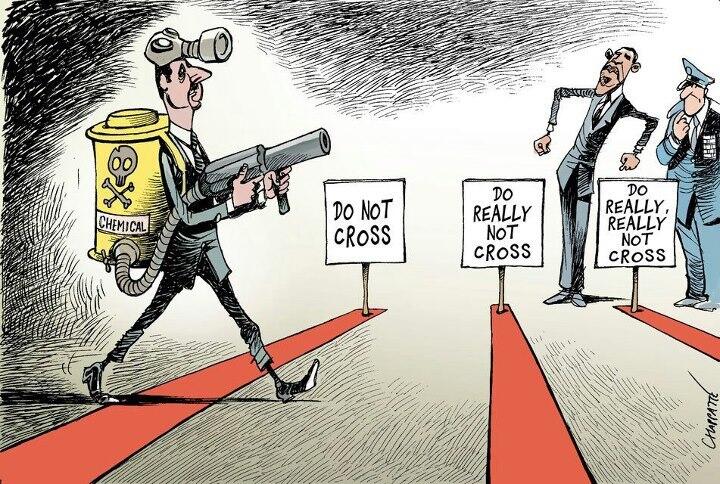
But
unlike Libya, Obama's intervention did not tip the
balance in favor of a "democratic" group able to bring the war to a
close by crushing Assad and his supporters.
The intervention simply intensified the violence all the more.
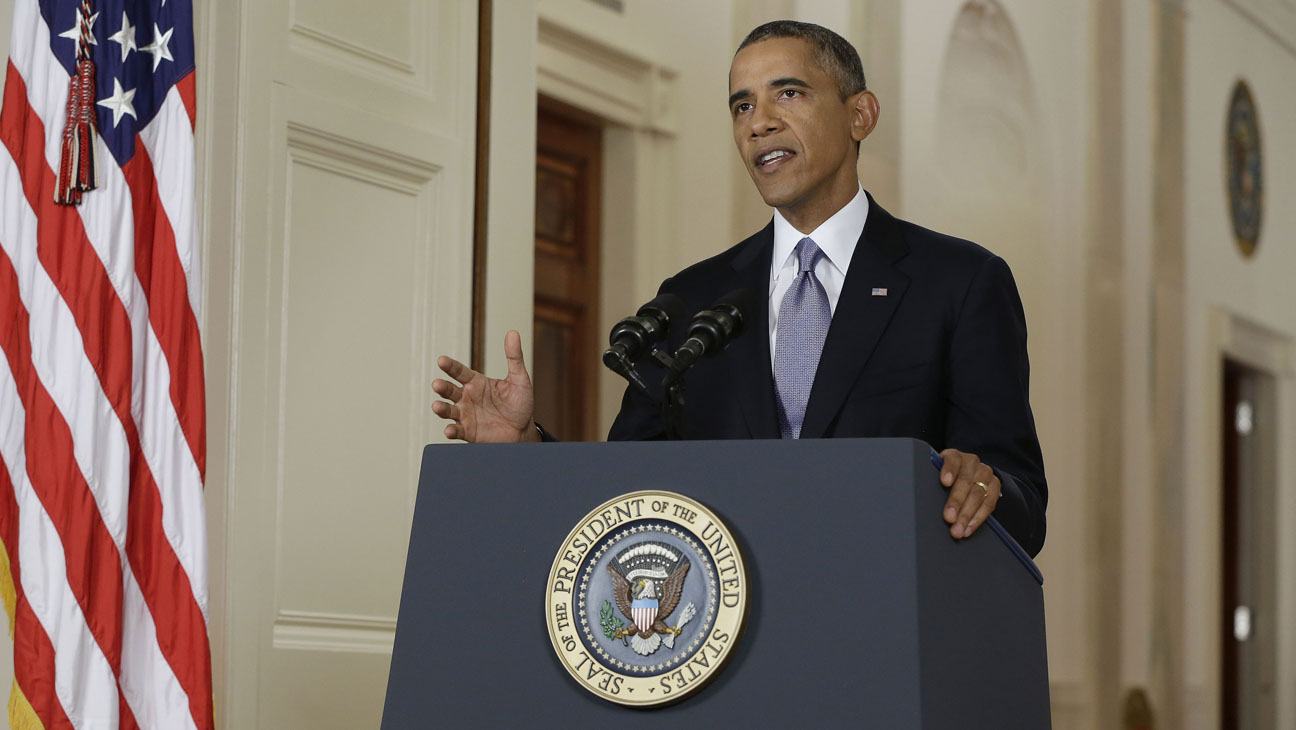
A year later (September 10, 2013) Obama goes
before the nation
with a special televised address concerning the situation in Syria
... and
America's need to step into that situation
to straighten things out.
Worse, Sunni jihadists who were escaping Shi'ite dominance in Iraq, were able
because of the total chaos prevailing in Syria not only to position themselves
in the eastern half of the country bordering the Sunni lands of Iraq, but were even
able to set up a new caliphate (Sunni Islam's highest religious-political
office) as the nucleus of a new jihadist Islamic State, from which they could
then cleanse the earth of unbelievers.
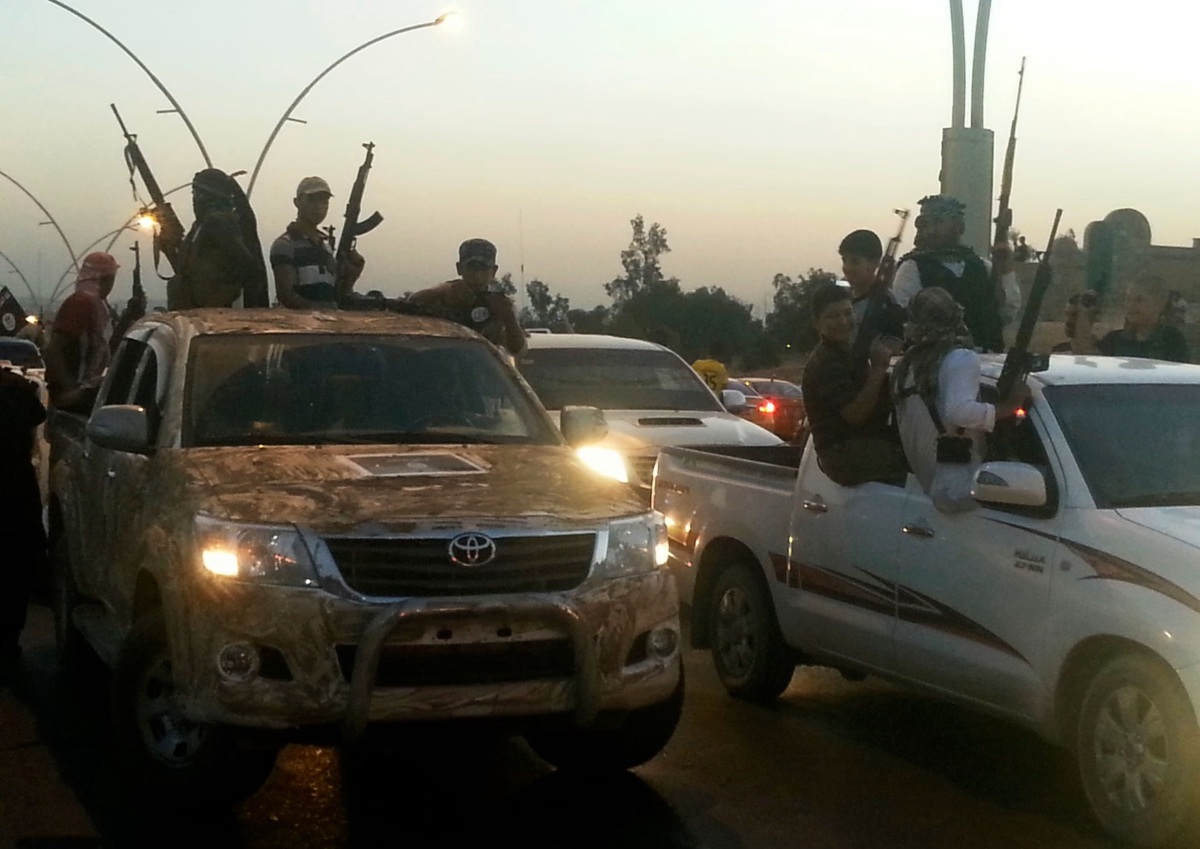
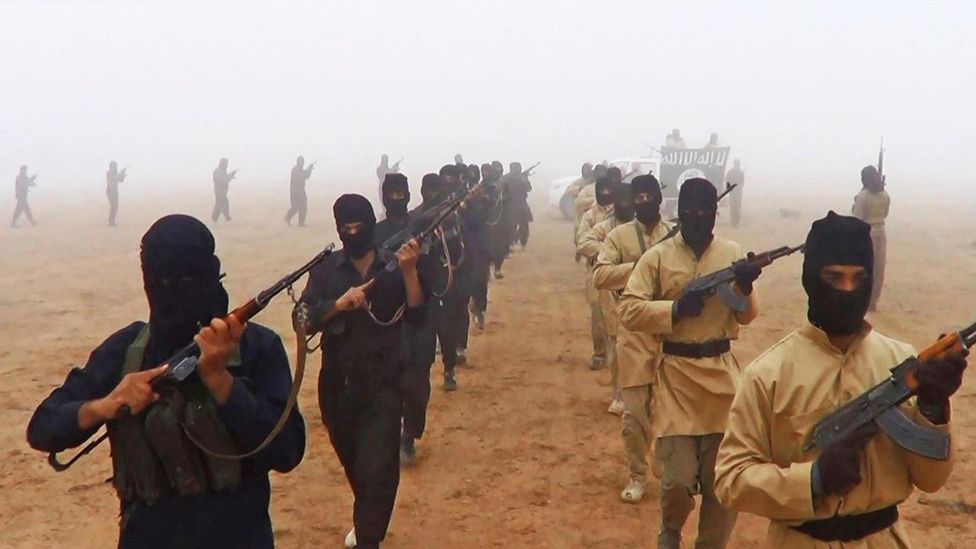
ISIS (the Islamic State of Iraq and Syria) troops taking
control of Mosul - 2014
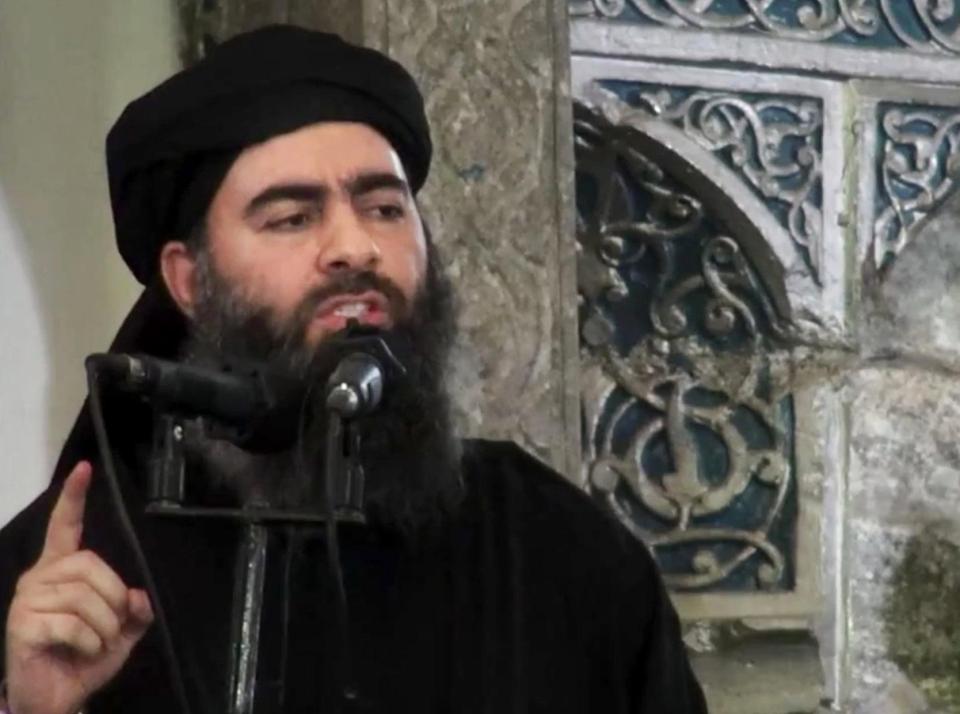
The new Caliph Abu Bakr
al-Baghdadi in Mosul (mid-2014)
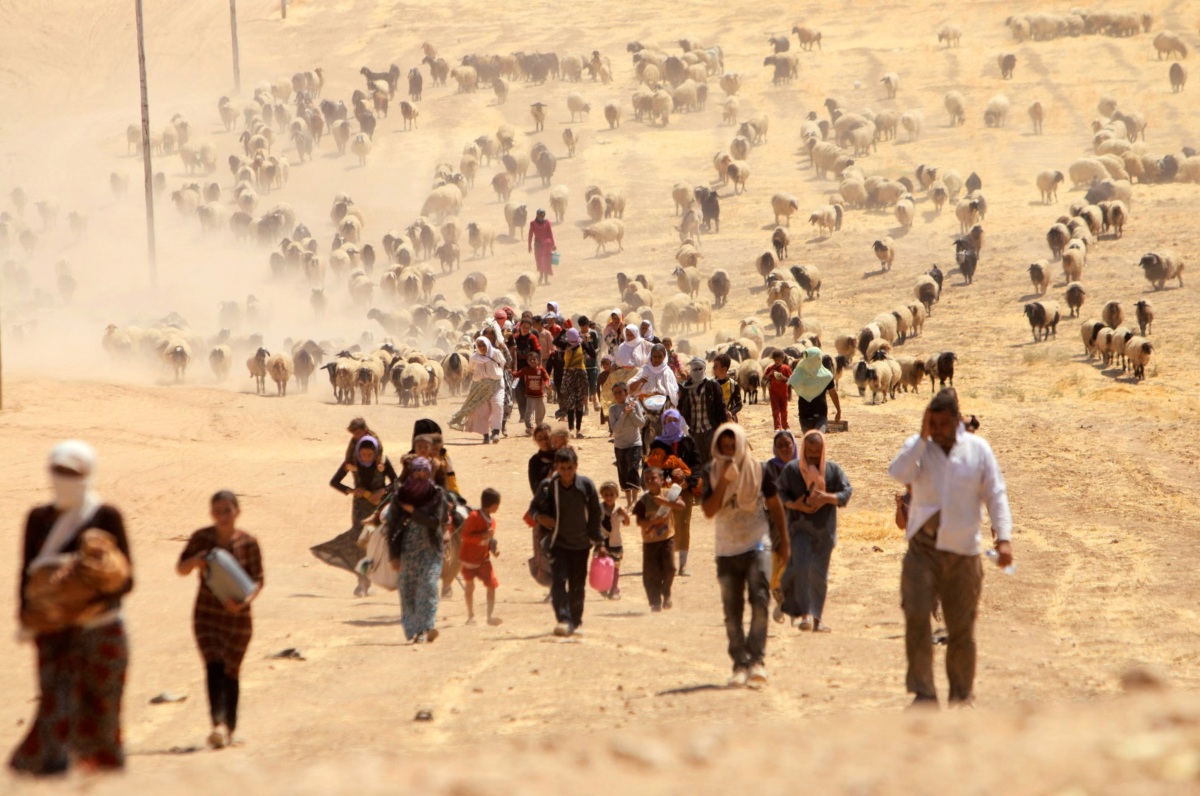
Civilians fleeing ISIS control
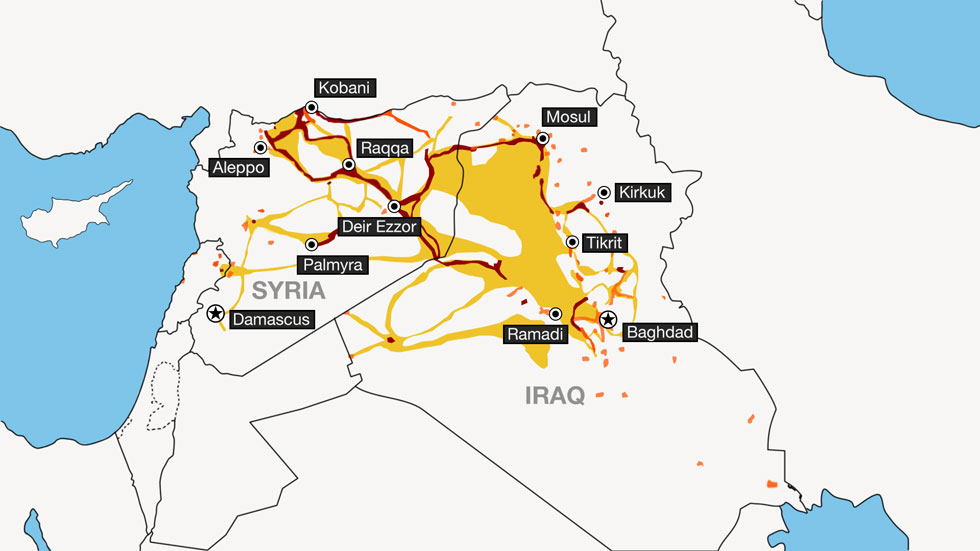

By
mid-2015 ISIS had spread its control along communication
lines
connecting vital parts of northern Iraq and Eastern Syria
... and were
trying to reach into Kurdish territory in the
Iraqi
northeast.
They
claimed that out
of the chaos of Syria (and a highly
disenchanted Sunni Iraq in the
country's northwest) they
were going to build a new social order
founded on the
strictest rules of the Islamic faith. They would
"cleanse" the
society of anyone not submitting to this new regime of
Shari'a (Muslim law).
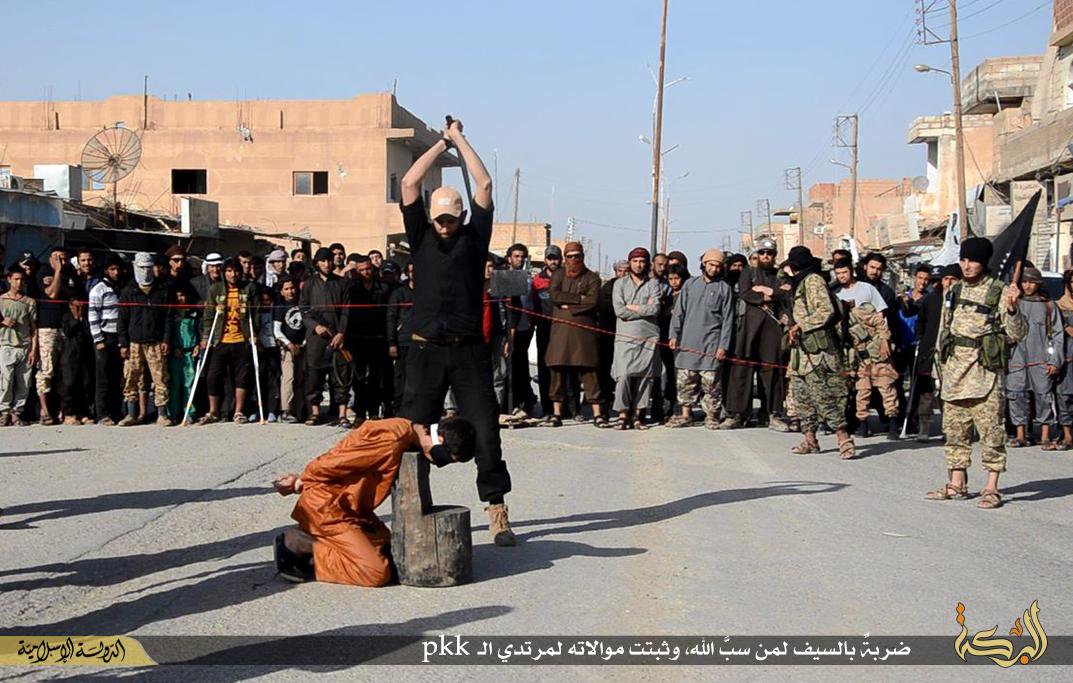
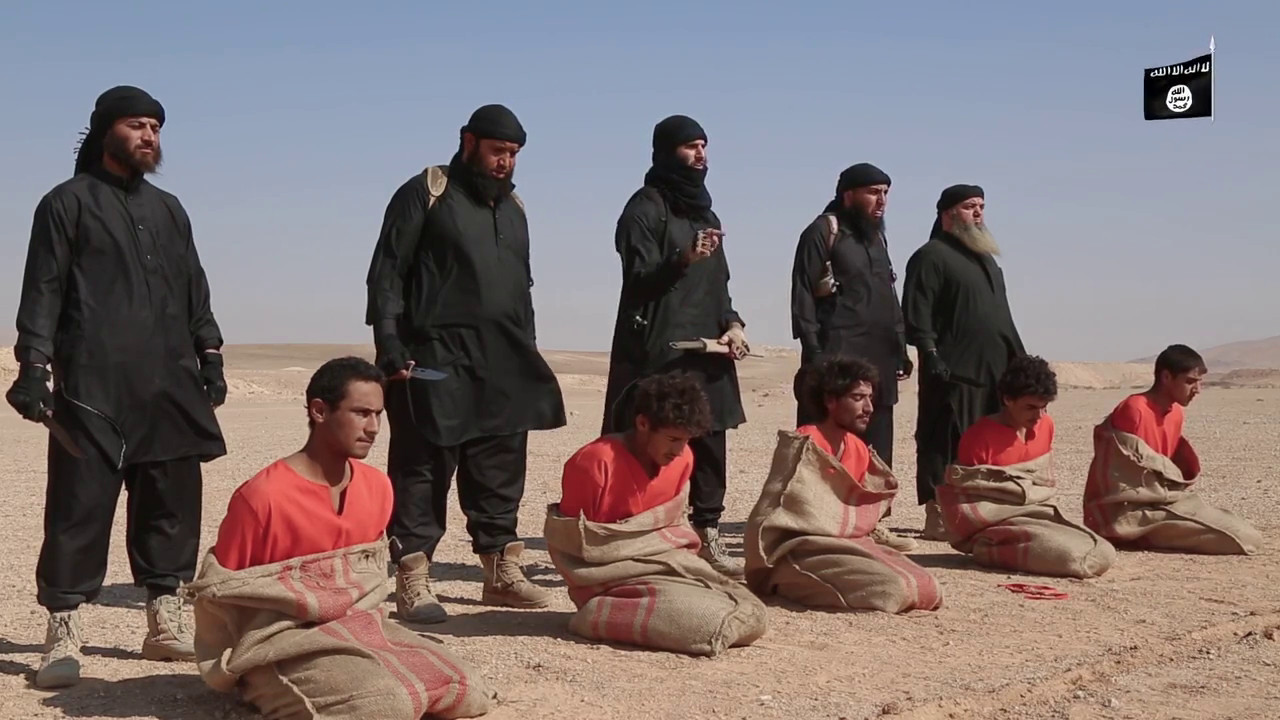
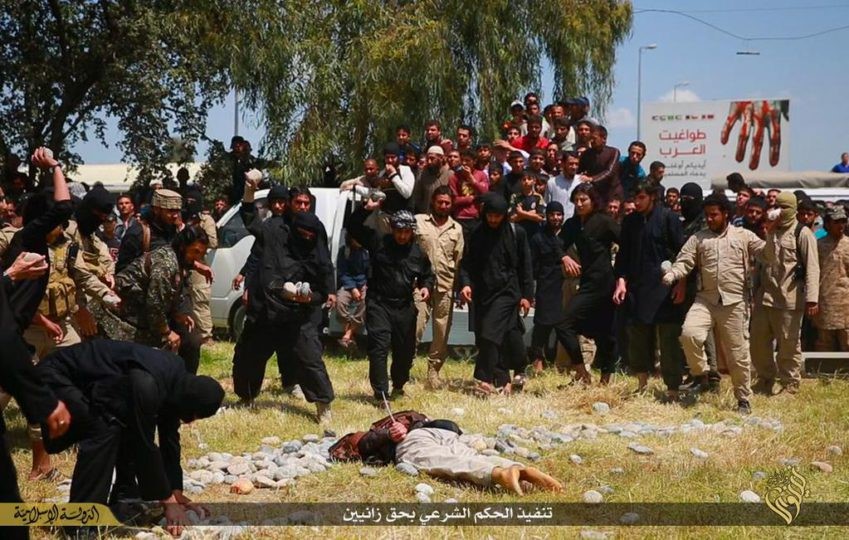
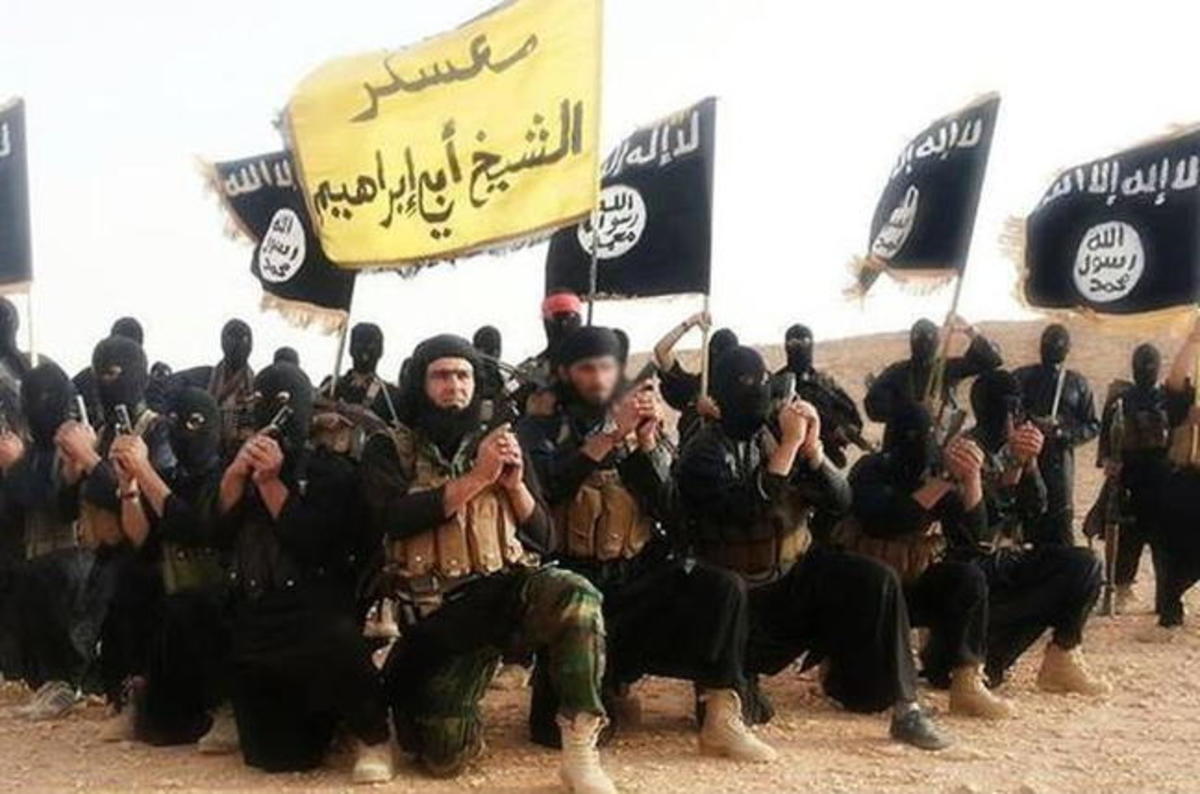
The beheading of men and stoning of women
became the
hallmark of the new regime, graphically presented in video
streaming ... making their point ... and attracting a huge
number of
disenchanted Muslim youth (from even America
and Europe ... as
well as the Middle East and Africa) who
wanted to be part of such a
major event
as the restoration
of the Caliphate.
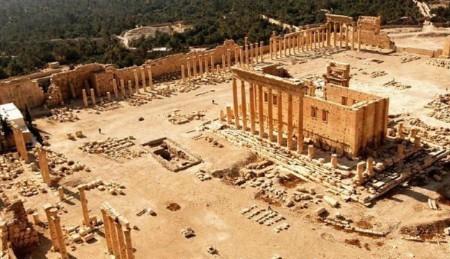
_________________________________________________
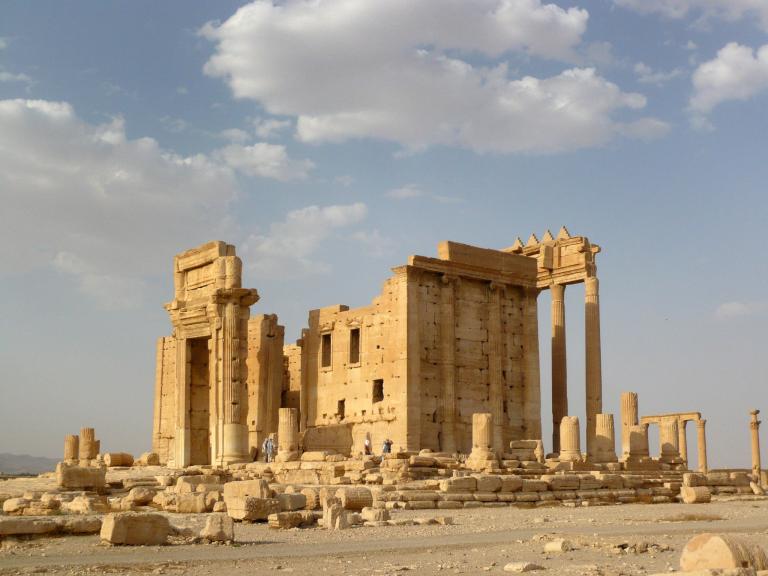
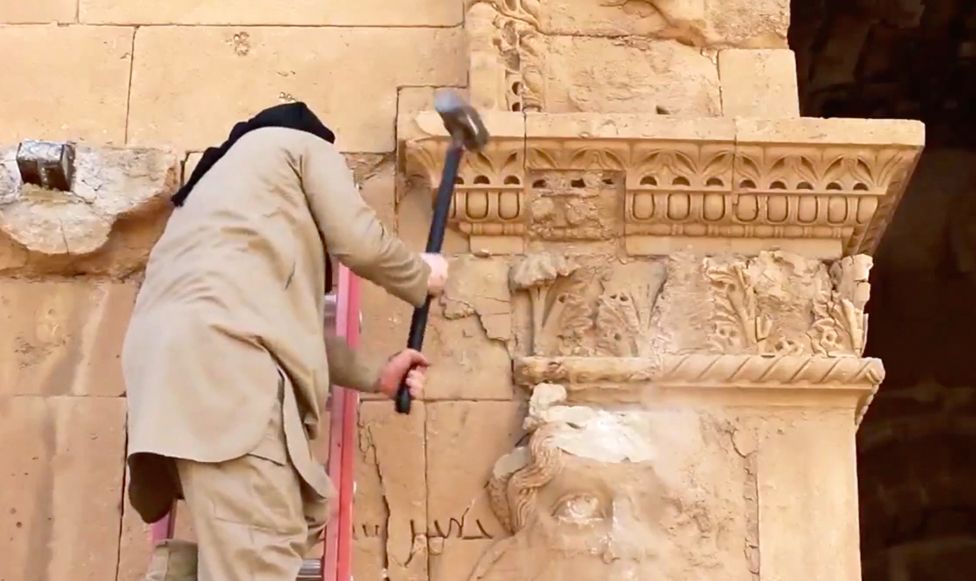
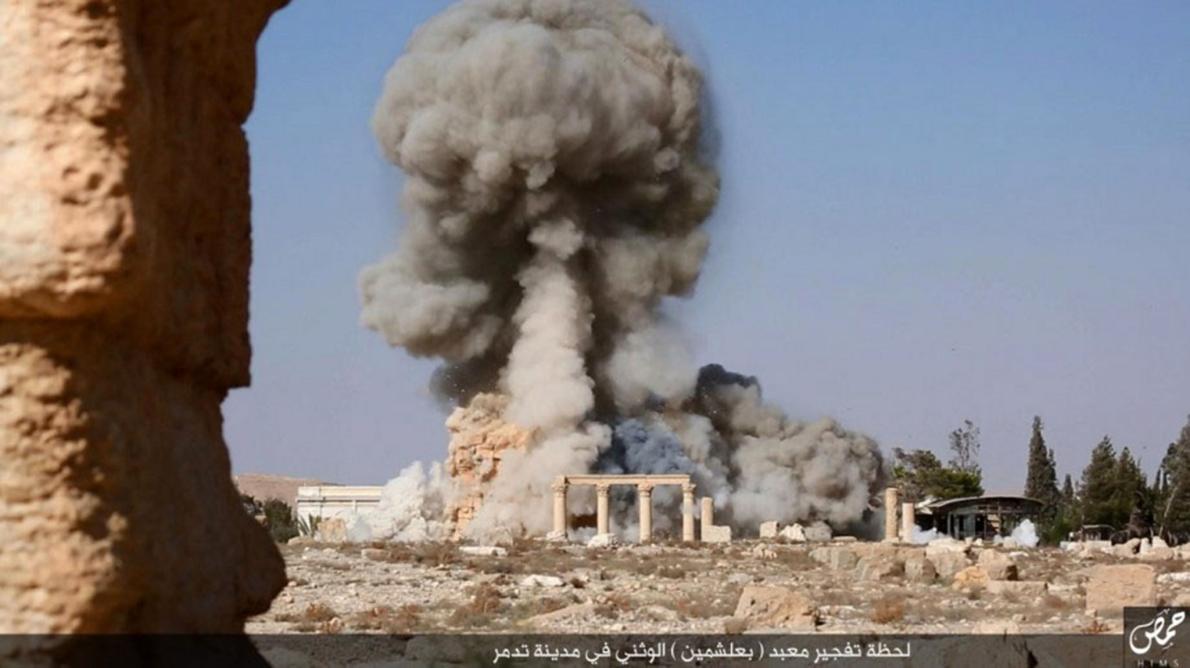
Roman ruins at Palmyra leveled by ISIS (August 2015)
The world was shocked when ISIS displayed pictures of the
1900-year-old Roman Temple of Bel in Syria that they had
just systematically destroyed
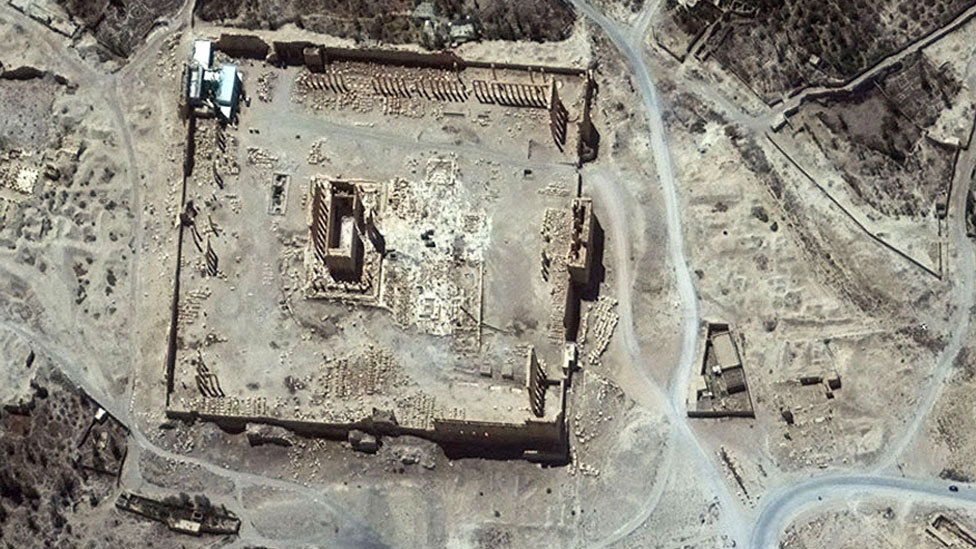
The Temple of Bel (or Baal) before /
and after ISIS had done its work 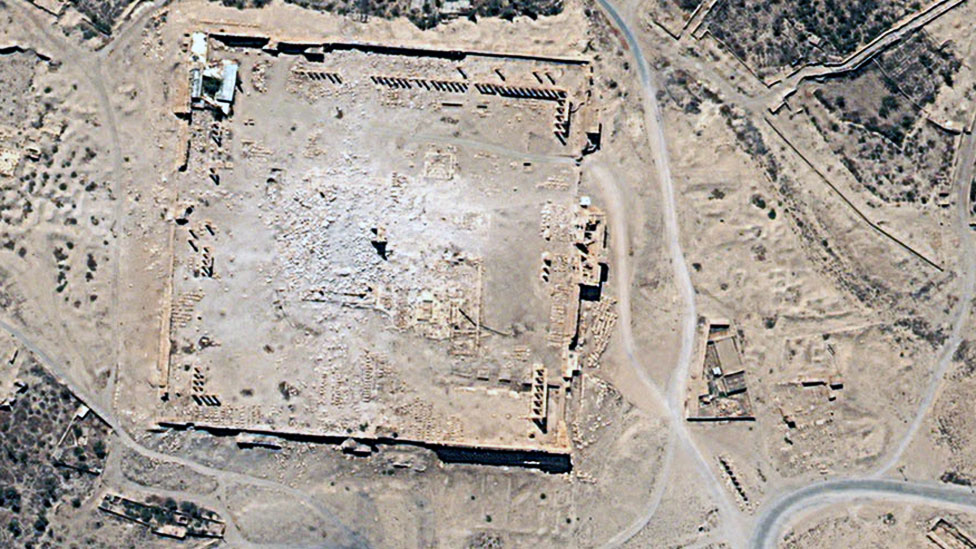
________________________________________
ISIS
beheadings were sent out as internet videos to frighten
enemies ...
and
woo budding jihadists into joining the movement
(March
2015)
(December
2016)
An Iraqi woman stoned to death in Mosul City ...
for having
refused to marry an ISIS jihadist (Oct 2016)
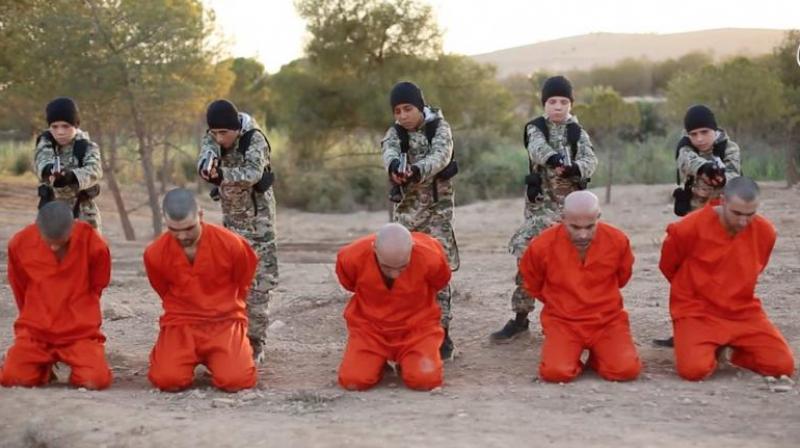
ISIS children executing Kurdish prisoners (the second from
the
right is an 11-year-old English boy)
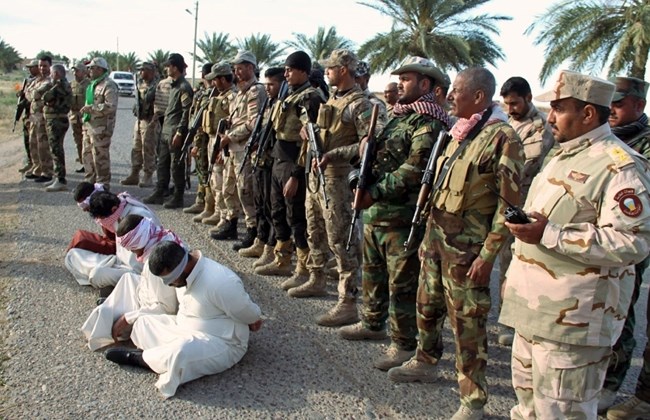
At the same time Iraqi forces (heavily Shi'te) strike
back
where they can ... in an attempt to retake territory seized by
(Sunni)
ISIS.
As
for the vast majority of the Syrians, they now found themselves
with only one serious alternative if they were to survive at all: flee to other countries where they could live
out at least a very minimal existence in refugee camps, or, if really lucky,
possibly escape into Europe. Millions of
Syrians now took flight. Syria was no
longer a place fit for human habitation, thanks in great part to all the
outside "help" the culturally-diverse country was getting.
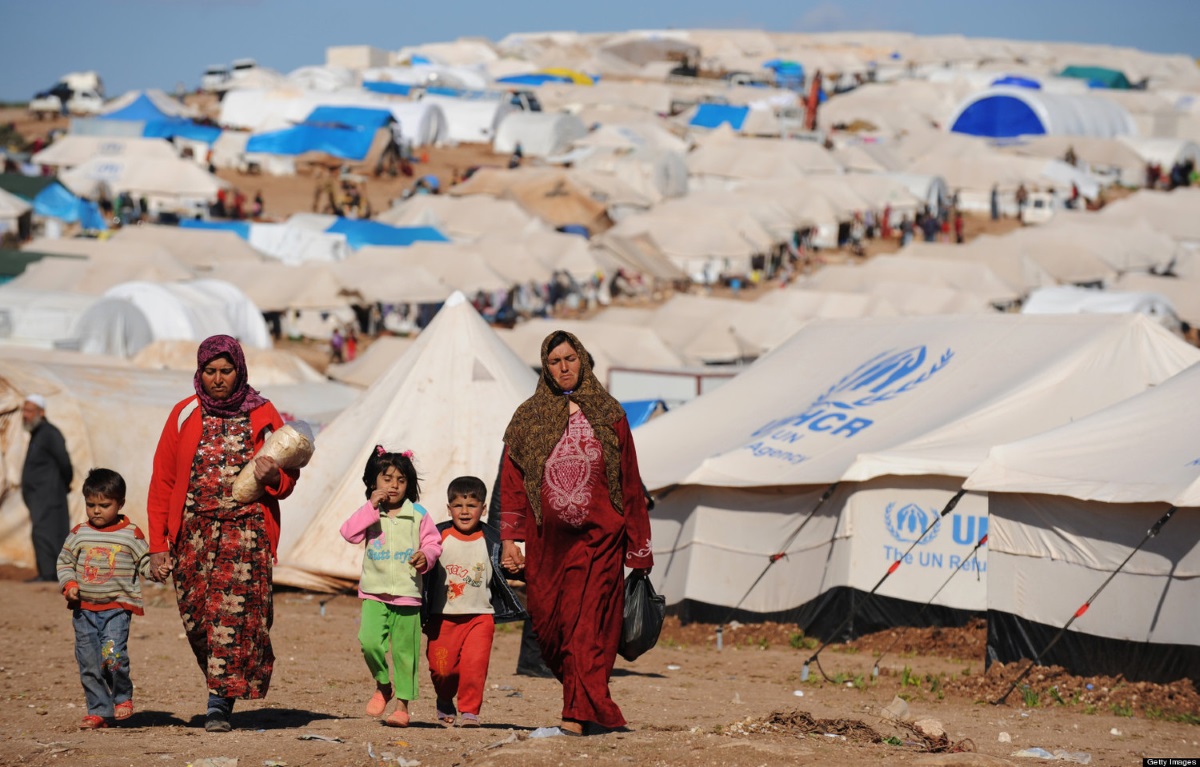
A Syrian refugee camp in Lebanon – part of the 1.4 million
Syrians driven from
their homes as of April 2013. By 2017
that number will reach 7
million.
All
of this merely increased the desperate flow of refugees
... particularly
out of Syria where ISIS was extremely cruel to
non-Sunni Arabs
(including many Christians). This of course
presented a
major problem to the surrounding countries ...
which did not want to take on the burden of a massive
number of impoverished
refugees.
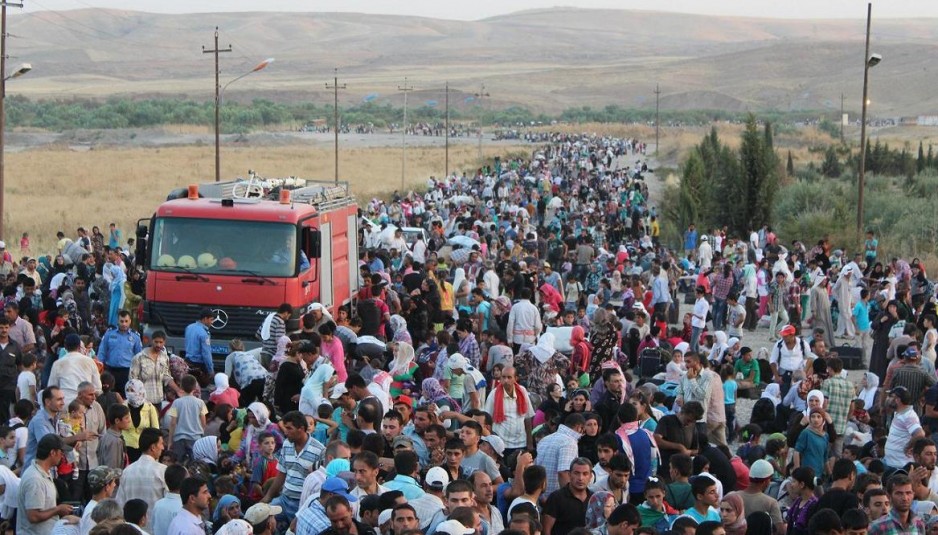
August 2013 – Refugees heading toward Iraqi
Kurdistan
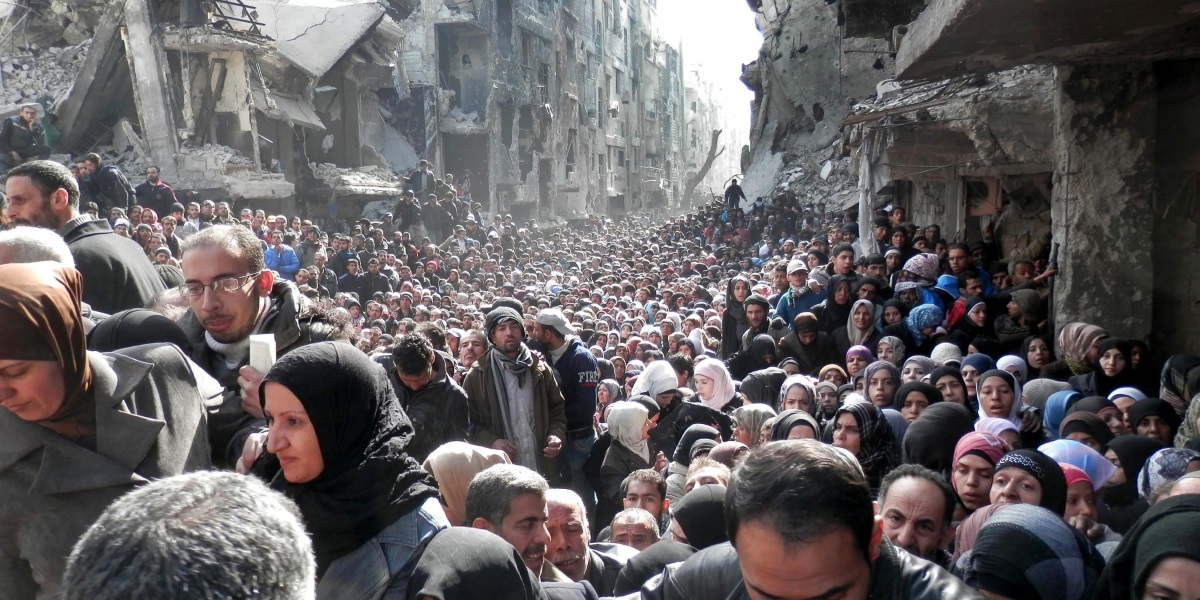
February 2014 – more Syrian refugees moving out of their
destroyed
cities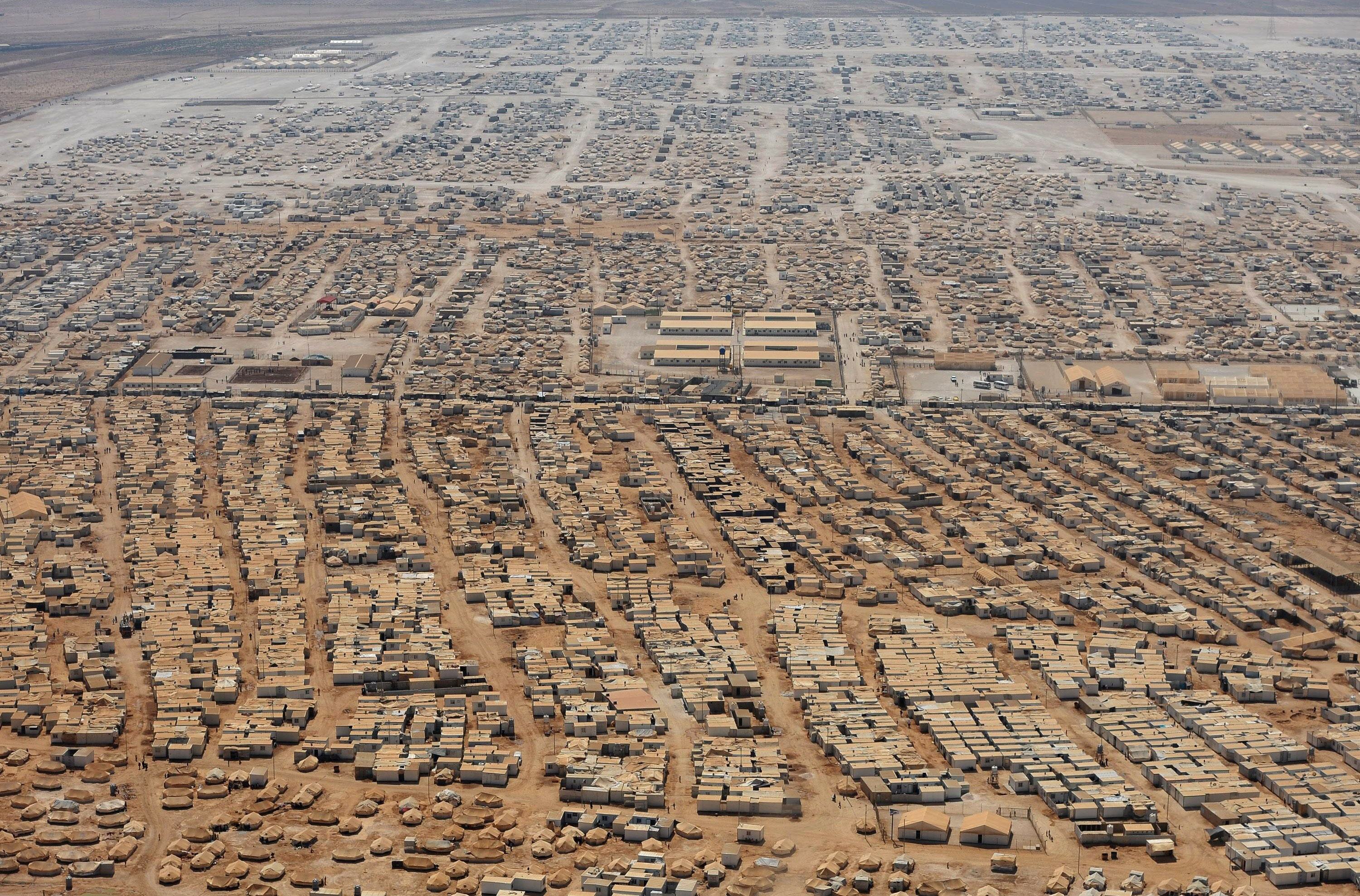
A Syrian refugee camp in Jordan with
115,000 residents.
By 2015
fully 25% of the population of Lebanon was made up
of Syrian refugees and 20% of the
Jordanian population ...
with huge numbers of Syrians scattered all around the
countries bordering on Syria ... and even beyond.
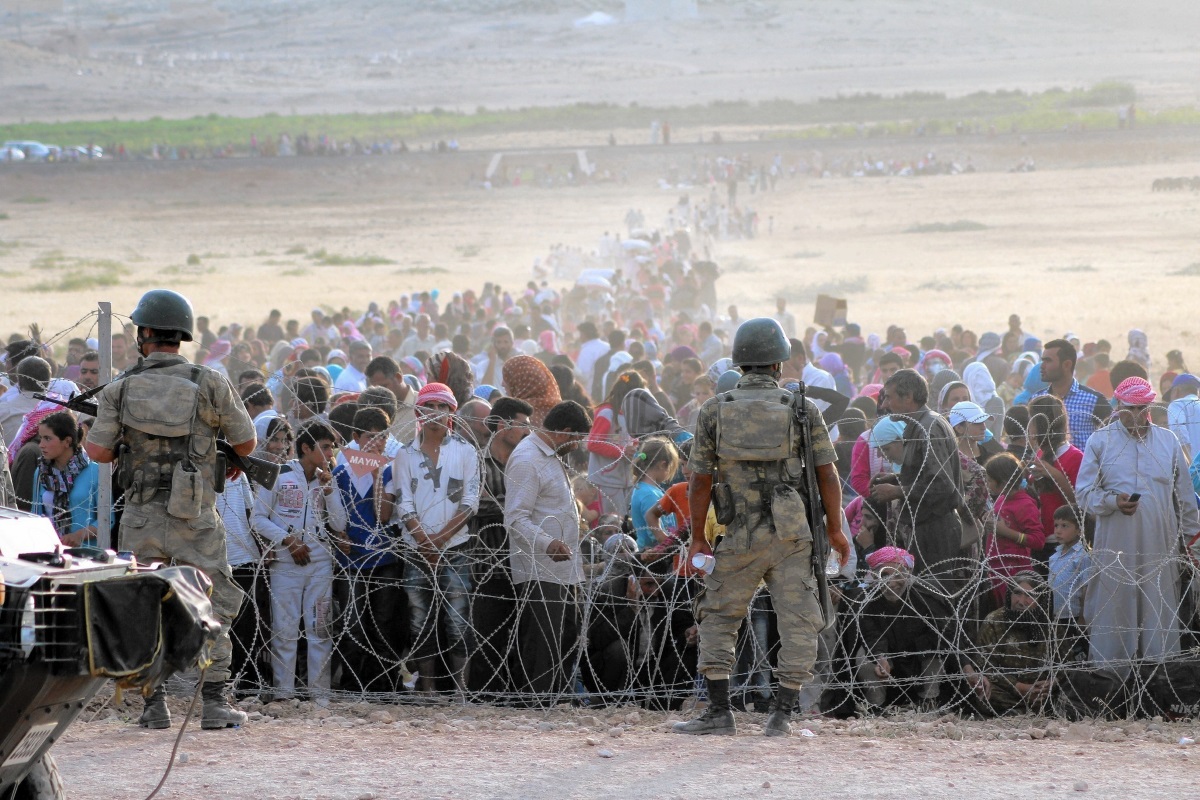
Many other Syrians have simply taken to the road ... trying
to reach well
beyond the Syrian borders ... even to Europe
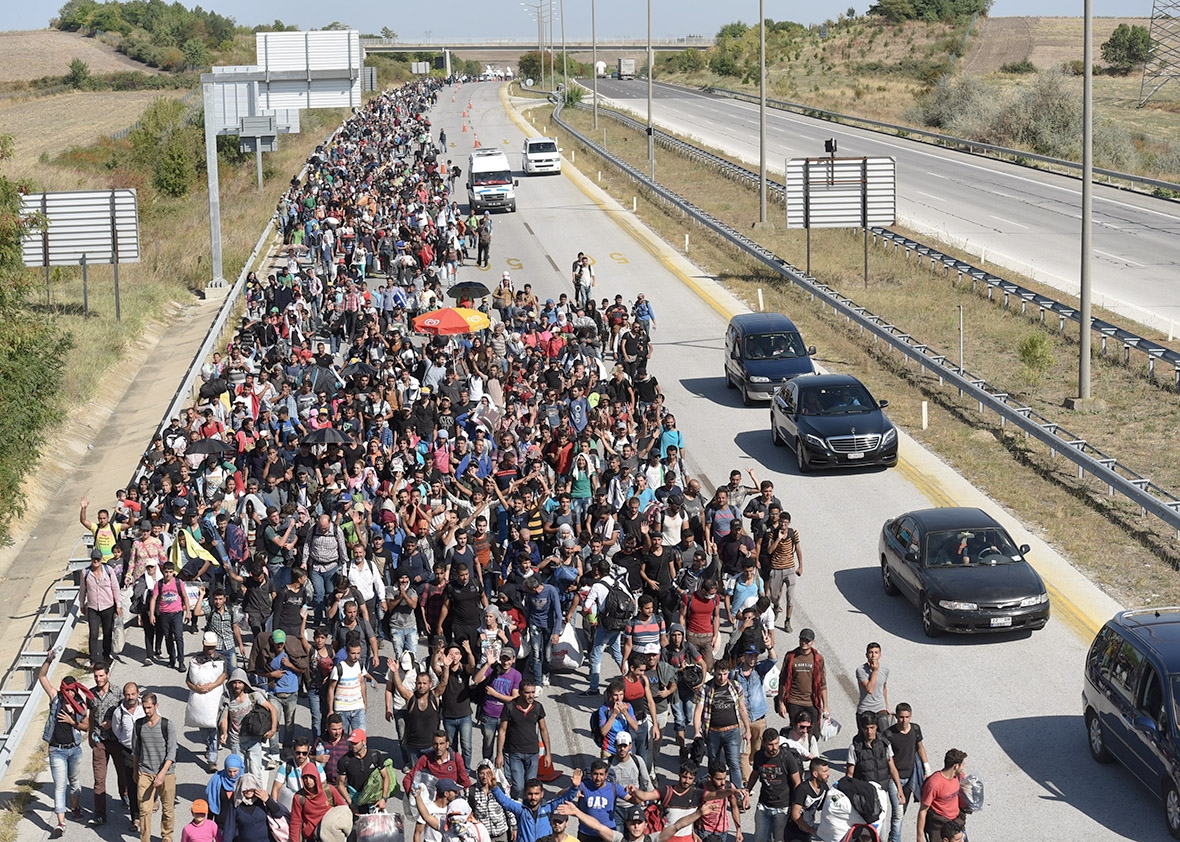
September 2015 -
Syrian refugees heading across Turkey
to Greece
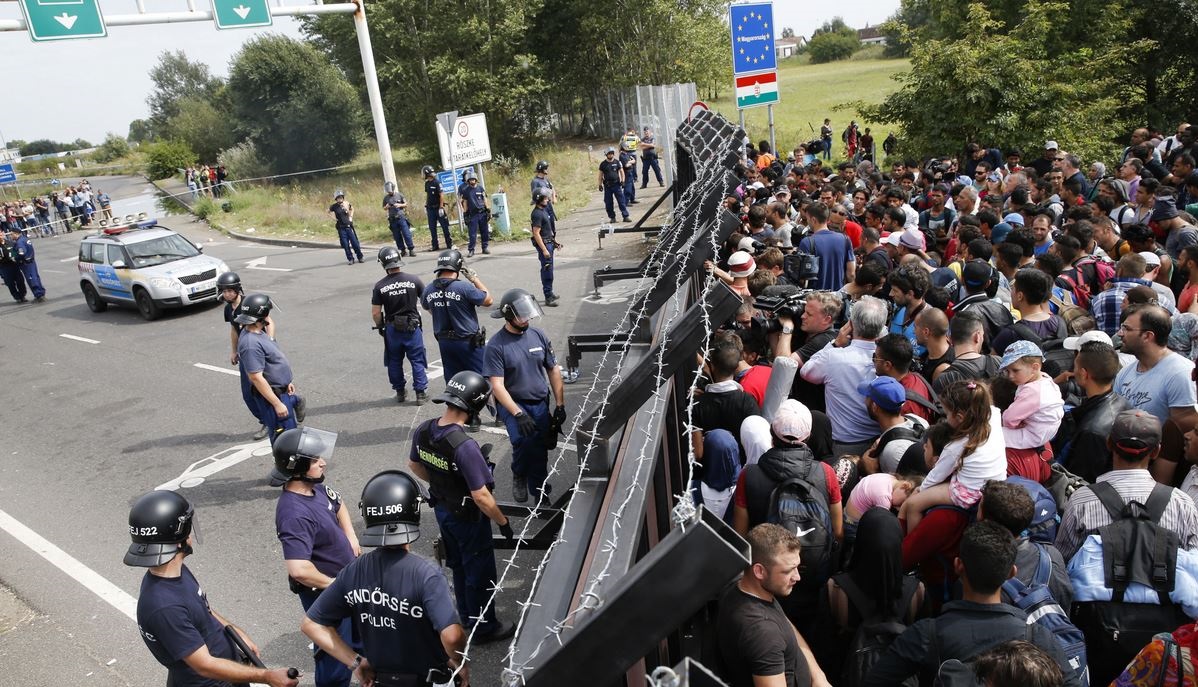
Others
passed on through the Balkans ... but got stopped
at the Hungarian border, which had put up barriers to stop
the flow of refugees into Hungary
(2015)
Yet,
with Russian and Iranian help, Assad was surviving. And indeed, both Russia and Iran now found
themselves positioned politically in a very strategic location along the
Eastern Mediterranean coast.
Furthermore, a very violent form of Islam found itself well-based in the
wastes of Eastern Syria and Northwestern Iraq, ready to take on the world. And as for America, Obama had succeeded only in making
America politically a persona non grata (unwanted personage) in what was left
of life back in Syria.
[1]Obama's
Saudi allies were of course totally uninterested in seeing Obama-style
democracy (whatever that actually meant under the complex cultural
circumstances of Syria) put in place in Syria, but instead a strong Sunni
government that would replace Assad's Shi'ite Ba'athist government.

 The "New Look"
 Pakistan ... and bin Laden's takedown
  NATO troop draw-down in Afghanistan
  The "Arab Spring" of 2011
  Benghazi
  Growing problems with Putin's Russia
  Growing problems with Xi's China
  "Improved" relations with the Islamic Republic of Iran