At the same time, the American medical industry was in crisis mode,
although not because the health industry was in financial difficulties, but
because ordinary Americans seeking medical help were finding it financially
impossible to meet skyrocketing healthcare costs. The American medical industry boasted about
the sophistication of the industry itself in comparison to the European
healthcare industry. But the fact of the
matter was that Europeans could receive rather normal medical care without
being thrown into deep debt, whereas for many Americans just a 15-minute visit
to the local doctor cost the equivalent of a full day's wages, making medical
visits as rare as possible. And costs
for a single night's stay in a hospital could easily amount to a several months
of a person's income. Worse, problems
that required a "lengthy" stay (meaning more than a day or two) in a
hospital could run costs up into the $millions.
Of
course there was medical insurance to cover those enormous costs. But Insurance companies were not in the
charity business and covered expenses by way of very expensive insurance
premiums available to the Americans. And
those costs were rising rapidly.
And
what did these rapidly rising costs have to do with "improvements" in
the medical industry? With insurance
costs rising 5 to 10 percent annually, did this imply that healthcare was also
improving at that rate? What was driving
up these costs? And the answer can only
be, greed on the part of those involved in the industry – fancy hospitals,
high-status doctors, wealthy insurance companies, but probably most of all,
medical liability lawyers who were more than happy to bring a client's lawsuit
against any doctor who made medical mistakes (doctors are not supposed to make
mistakes, even though medical analysis is a highly risky matter). The rewards for the medical "malpractice"
industry ran medical costs up into the clouds.
But this meant that the problem was more that of a social or
ethical matter than a political or governmental matter. Nonetheless, Obama would attempt to take the
problem head-on with his July 2009 1017-page document (which no Congressman had
the time or ability to read in its entirety) Affordable Care Act (ACA) – or "Obamacare" as it was popularly
termed. Again, Republicans balked at the
bill, especially the part that proposed to put a government health plan into
effect in competition with the private health insurance companies – Republicans
claiming that this would give the government the power to drive those companies
out of business and leave the country with only a government or "Socialist"
medical program for the country. Also
the Congressional Budget Office's analysis revealed that this would run the
government deficit up another $1 trillion, minimally (if not even more than
that figure). And polls were indicating
that the American voters themselves were deeply concerned about what this "change"
in the American medical industry would mean to them personally. Democratic Party House Speaker Nancy Pelosi's comment "just trust us"
was not very reassuring to the general public.
Thus
the fast action on this bill that Obama was hoping for just simply did
not happen. By the end of 2009 only the
Senate had passed the bill, 60-40 (along party lines), and at that point it was
greatly changed, having dropped the government insurance program option. When early the next year (2010) the House
finally voted on the measure, it narrowly passed with a 219 to 212 vote. On March 23, Obama was pleased to finally sign his
signature Obamacare bill into law.
In the end, although Obama had his law, he forfeited a lot of popular
support in the deal. And in the
Congressional elections that November, the Democrats lost their majority to the
Republicans in the House, the latter picking up 63 seats, the biggest swing in
party fortunes since the 1938 election.
With Republicans now holding 242 seats to the Democrats' 193 seats, Obama had lost his former position in the House. But this was also when he pushed to overturn
the "don't ask' don't tell" rule in the military, before those 242
Republicans could take their seats in January of 2011 and he would no longer
have full control of Congress.
| THE NATIONAL DEBT CONTINUES TO CLIMB |
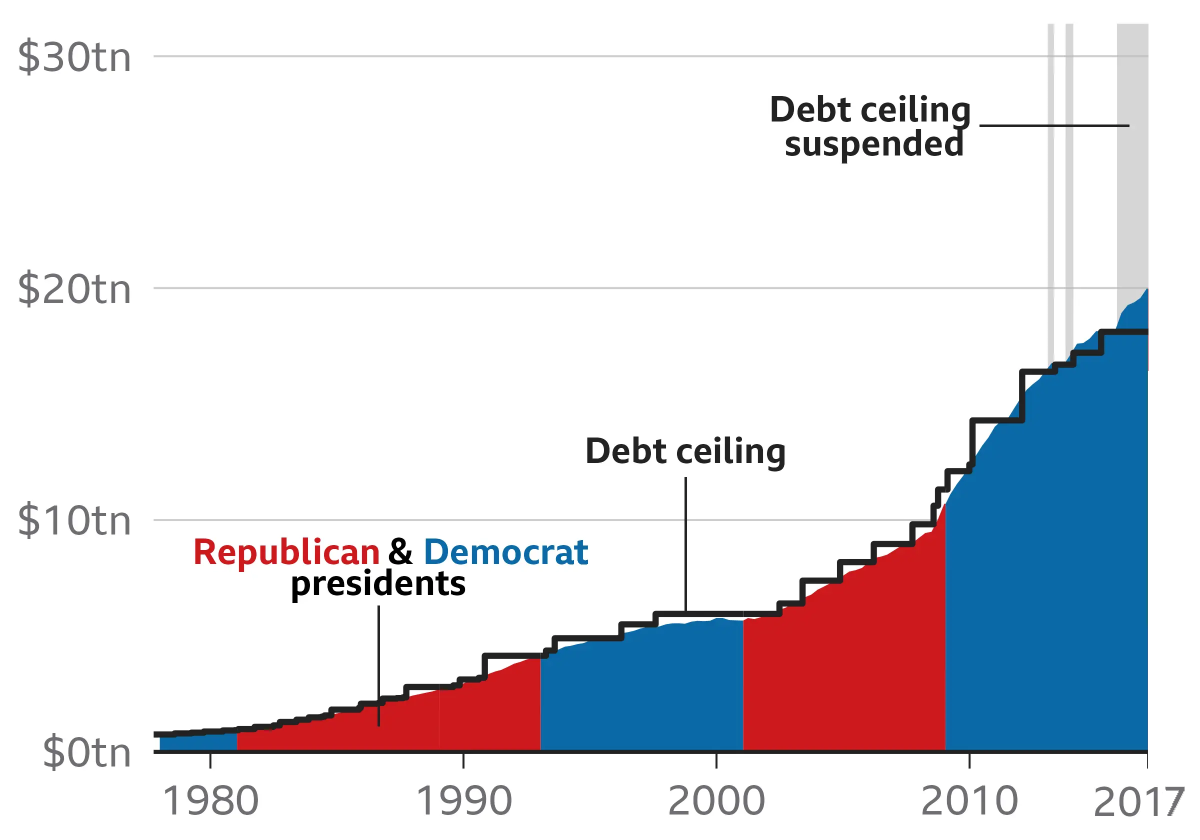
By August of 2011, the government debt was approaching its debt
ceiling, preventing the government from borrowing (selling bonds) beyond that
figure. But the Republicans were much
opposed to simply adjusting upward the debt ceiling, and instead wanted
government spending to be brought under reduction in order to bring the budget
closer to a balance of income versus spending.
It was even proposing a constitutional amendment requiring government spending
to stay within the limits of its income.
But all this speculation was making investors very
nervous, and even the global stock markets began to take big hits. Worse, Standard & Poor downgraded the
U.S. credit rating from a solid AAA to a reduced AA+, the first downgrade since
1919. Ultimately there seemed nothing
left for the Republicans to do except to give in to the inevitable: the debt ceiling would have to be raised in order
for the government to continue its operations.
It repositioned the figure at $14.5 trillion, a new ceiling which government
spending quickly reached by the end of the next year (2012).
But at this point increased borrowing had simply
become a debtor's habit for the government, and the debt ceiling had to be "temporarily"
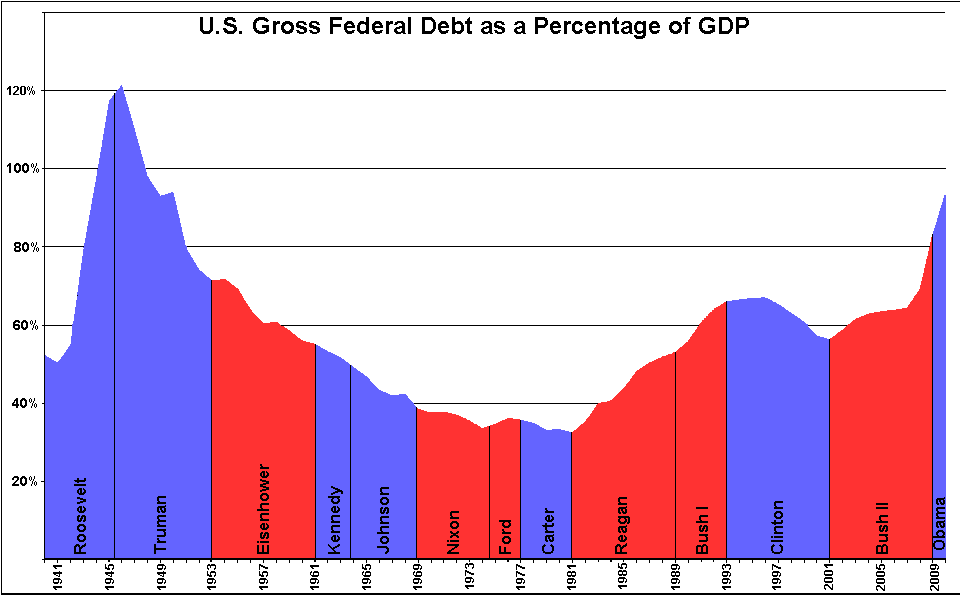
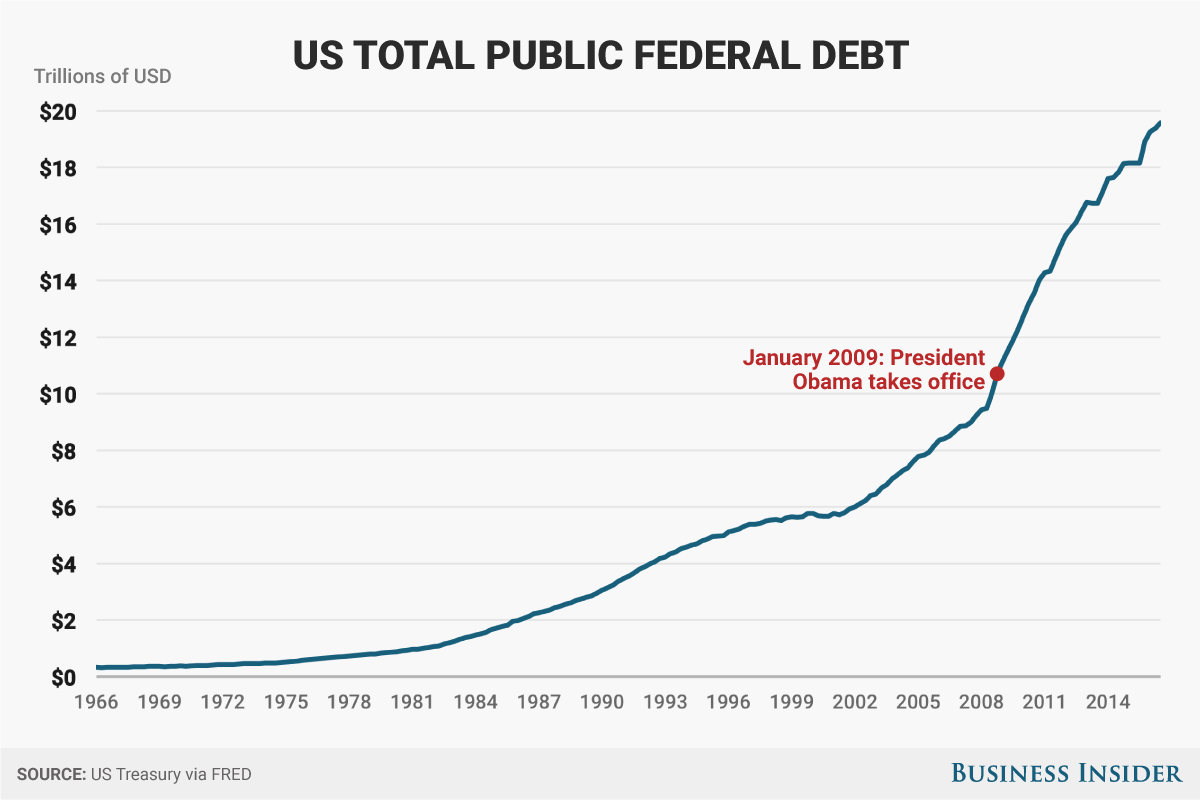
suspended in 2013, then again in 2014, again in 2015. By the end of Obama's presidency in January of 2017, the national debt had reached the figure of nearly $20
trillion or 104 percent of America's annual productivity – the debt having also
doubled, like Bush's administration, in Obama's eight years as president.

Go on to the next section:
 Miles
H. Hodges
Miles
H. Hodges

 Government grants
 Bankruptcy in the auto industry
  "Cash for Clunkers"
  The rising national debt
  "Obamacare"
  The national debt continues to climb