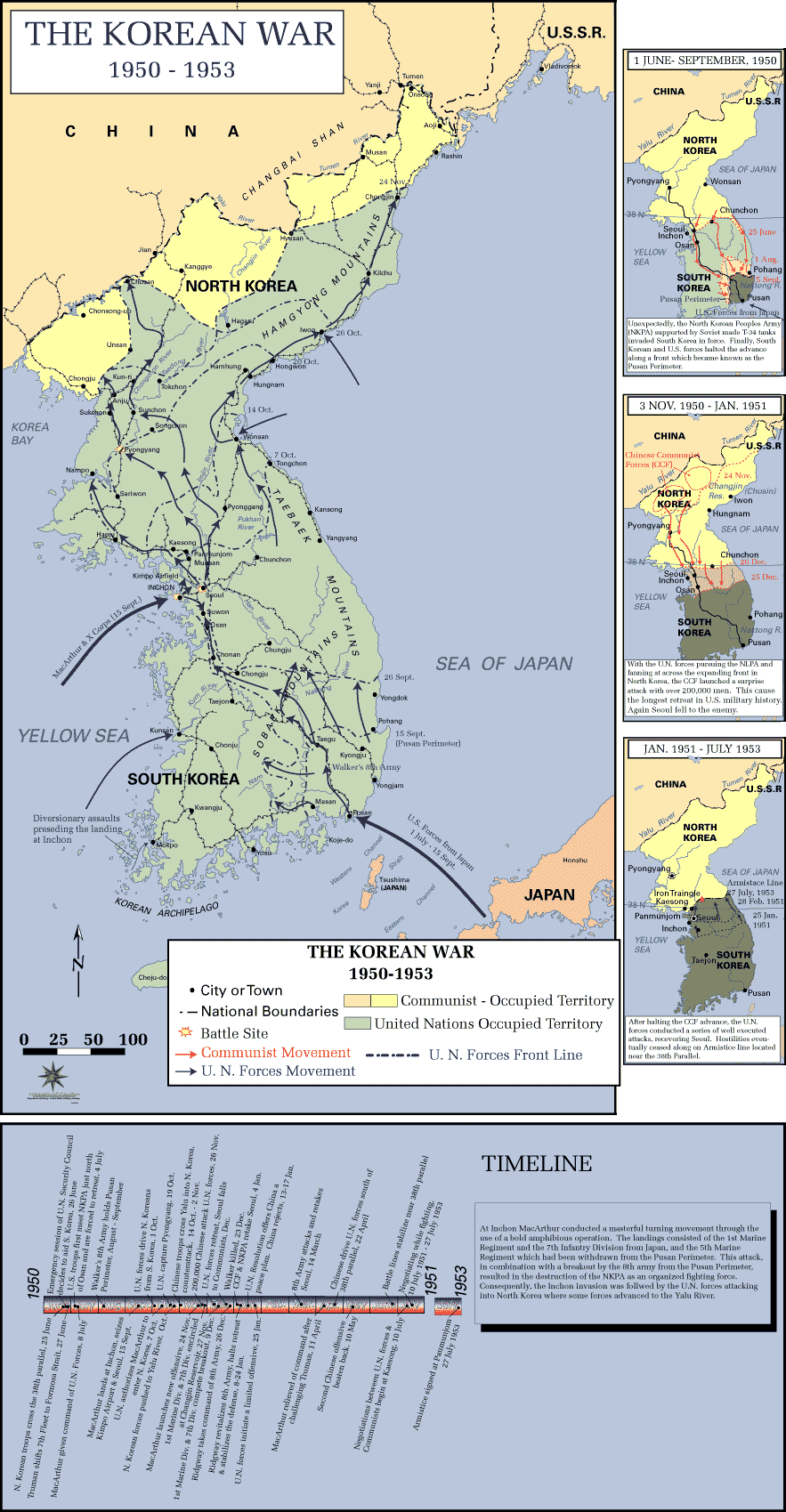
In the meantime, Truman moved to make this an
international incident – claiming that it was the U.N.'s responsibility to
protect the Korean regime that it itself had set up. Thankfully at the time Soviet Russia was
boycotting the meetings of the U.N. – angry over the refusal of the other
members of the Security Council to let Mao's Chinese government take the
China seat now that Chiang had been forced to take refuge
in Taiwan. Thus there was no Soviet veto
of the Security Council decision to call on U.N. members to construct a United
Nations military force to rescue South Korea.
British and French soldiers (and others) were sent to Korea as part of
the U.N. Peacekeeping force. But
basically the U.N. troops (as they called themselves) were mostly Truman's American troops sent to
Korea as a "police action" against the North Korean aggressor.
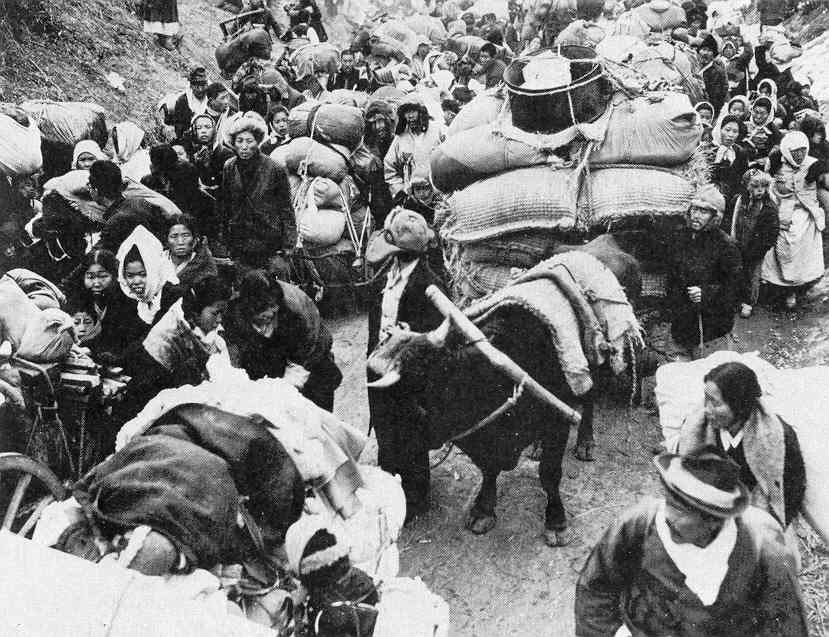
Koreans fleeing the
fighting
United Nations (US
Army)
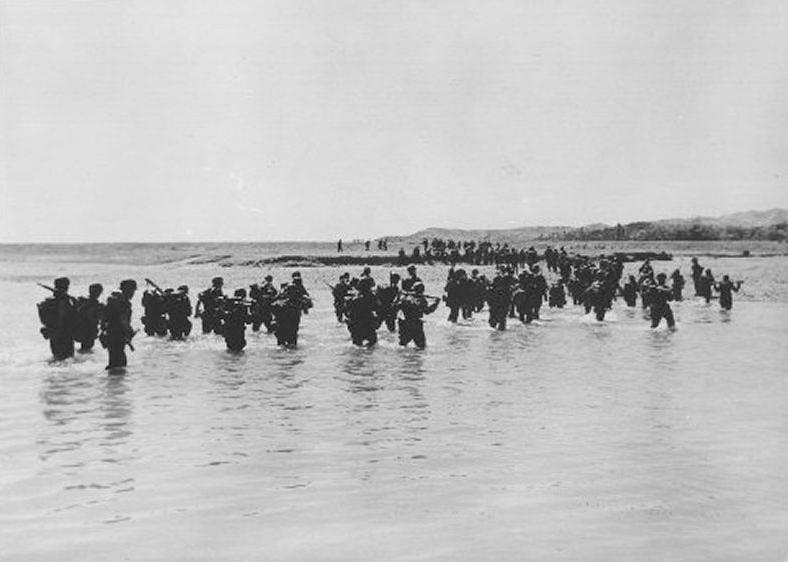
Men of the 1st Cav Div go
ashore somewhere in Korea,
18 July 1950
United States Army
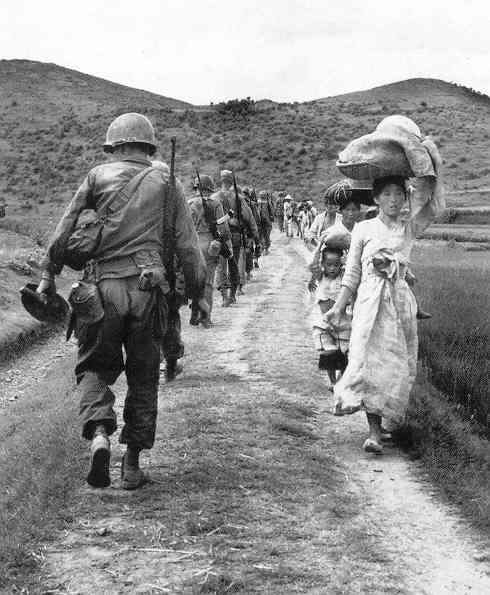
GI's advancing to the action;
Koreans civilians fleeing
the action – August 1950
The landing at Inchon.
But the North Korean troops were well dug into the huge mountain range
that runs down the center of the Korean peninsula. It was like Italy only a few years earlier. Advancing against an enemy well entrenched in
mountainous heights was painfully slow.
And indeed it was like Italy – in that a decision (as at Anzio) was made
to send a force of 75,000 troops ashore at Inchon behind North Korean lines. Except this time (unlike Italy) it worked –
brilliantly. General MacArthur gave his troops no rest
when they hit shore; immediately he headed them inland – cutting off the North
Korean Army's supply line back to the North.
Now it was the North Korean Army's turn to panic – and panic turned
itself into a full flight of the North Korean army.
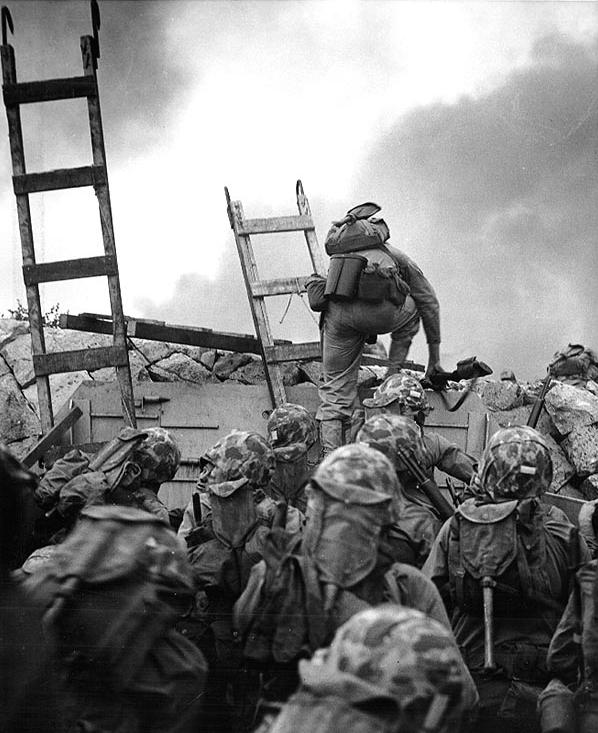
Soldiers Climbing Sea Wall
in Inchon - September 15, 1950
The Battle of Inchon (code
name: Operation Chromite)
was a decisive invasion and battle during the
Korean War.
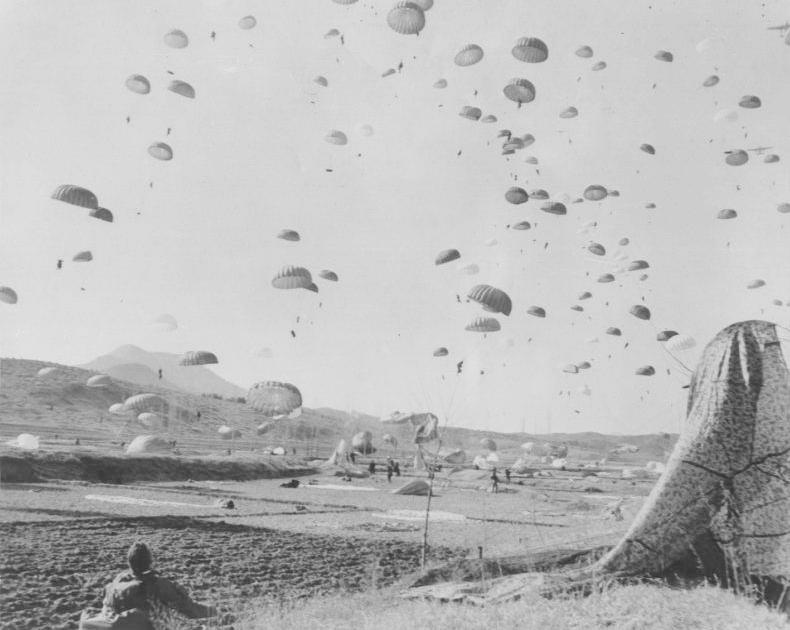
Paratroopers of the 187th
A/B BCT float earthward
near Munsan, Korea.
United States Army
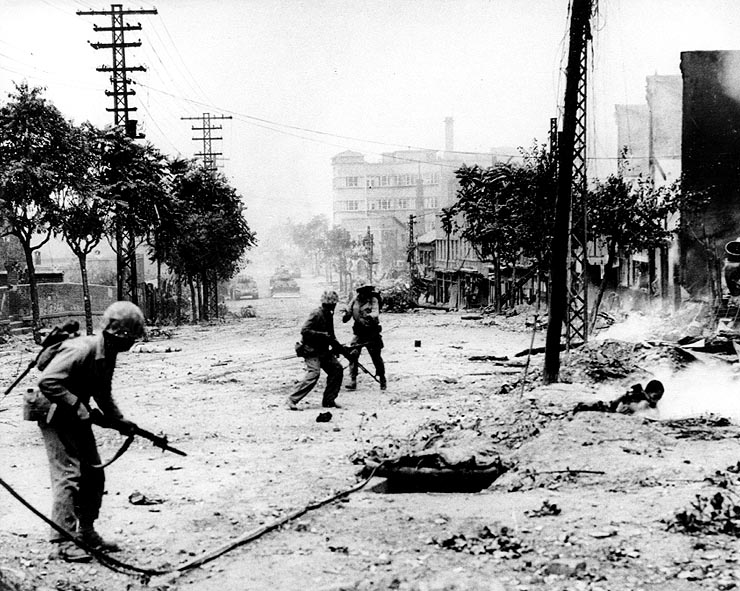
U.S. Marines fighting in
Seoul, Korea, Sept. 1950
Seoul was liberated – and then on October 1st the U.N. troops
crossed the 38th parallel and headed into the northern half of the
peninsula. Within two weeks they had
captured the North Korean capital at Pyongyang.
The North Koreans seemed unable to hold back the forces advancing north.
Now it was Mao's turn to get very interested in
Korean developments – fearing that this U.N. army might possibly decide to not
stop at the border between Korea and China at the Yalu River – and instead roll
on into China in order to liberate China from Mao's Communist control. Warnings were sent by Mao for U.N. troops not to approach
the Chinese border with Korea at the Yalu River – for China would under no
circumstances tolerate such a development.

At this point Truman and MacArthur began to have a major difference of opinion
as to how to proceed. Truman urged caution.
But MacArthur went before the press to argue about how an
invasion of China to cut off Chinese supply bases supporting the North Koreans
was a necessity. So who was in
charge? The American Constitution makes
it clear that the President is the Supreme Commander of all American military
forces. But MacArthur (who always loved public attention) was
beginning to sound like some kind of Caesar wannabe.
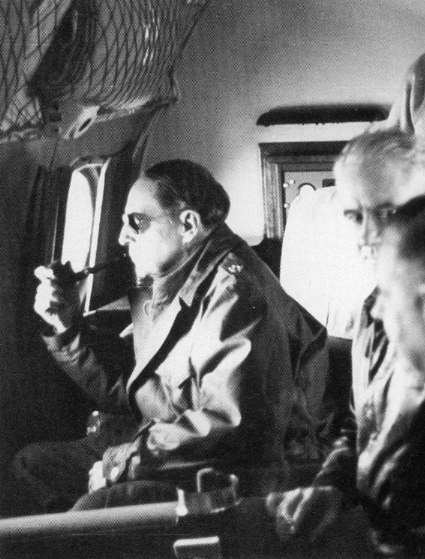
MacArthur looking over North
Korea along the Yalu River
border with China
as the US offensive reaches that
border -
November 24, 1950. But somehow he failed to detect the
300,000
Chinese below gathering to counterattack
the Americans
National Archives
In any case, Mao was not going to wait around to
see who won this debate about the American Constitution and on October 25th
sent some 200,000 Chinese "volunteer" troops into North Korea against
the advancing Americans – conscripted "volunteers" because he did not
want to find himself officially at war with the United Nations! Then a bitter winter set in on North Korea
and some 30,000 American troops found themselves at one point facing a Chinese
army four times their size at the Chosin Reservoir – and 15,000
American casualties resulted (though the Chinese loss was even greater). Americans now began a retreat – back to the
38th parallel. Even briefly Seoul was
once again lost to the North Koreans – for about a month before U.N. troops
were able to retake the initiative and again liberate Seoul ... also once again
advancing across the 38th parallel.
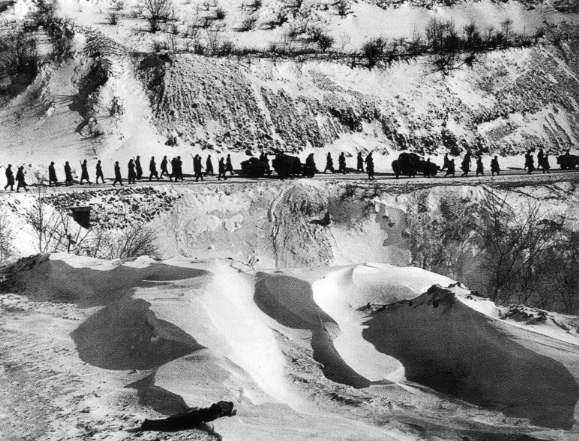
GIs retreating before an
on-slaught of Chinese "volunteers"
in North Korea
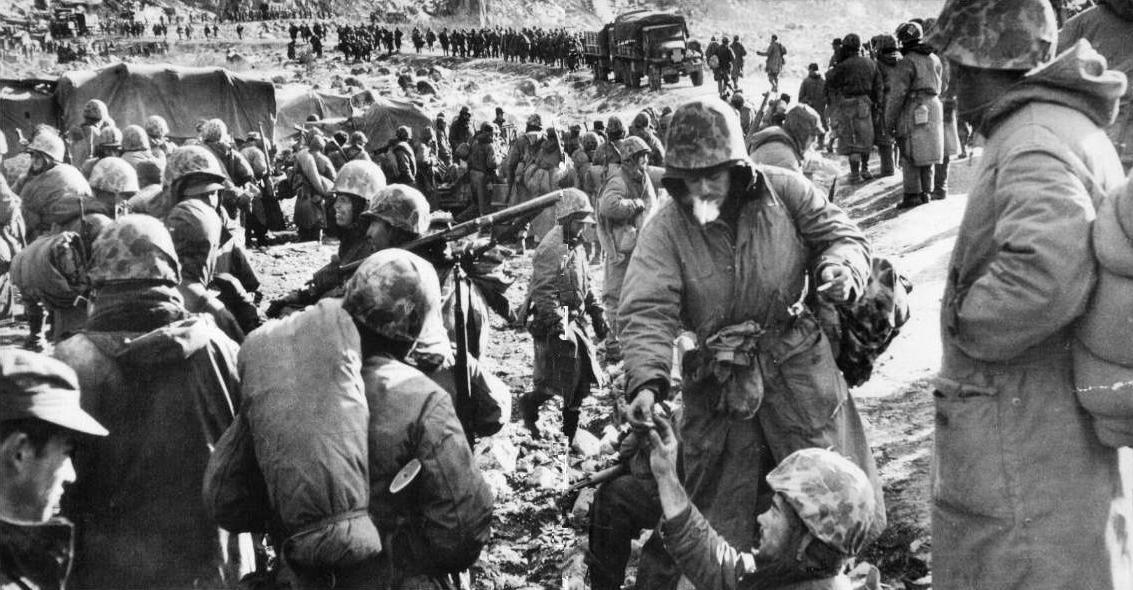
Marines retreating from the
Chosin Reservoir in sub-zero weather
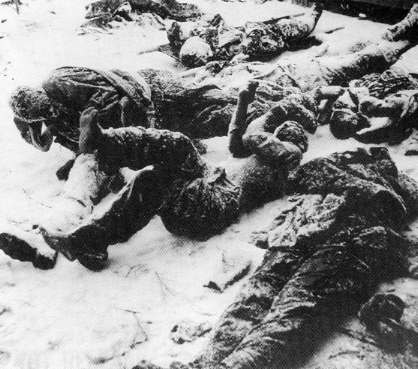
Marine dead brought back
from the fighting in the Chosin
Reservoir area
National Archives
Meanwhile, MacArthur continued his speculations before the
adoring press, this time about the feasibility of using nuclear weapons to
defeat the Chinese – even suggesting that the decision should be his rather
than the President's. This was for Truman the final straw – and in mid-April (1951) he
simply fired a stunned MacArthur.
Mighty Caesar had been cut down! Truman was well aware that he would take a lot of flak
for firing this self-made American hero.
But it needed to be done.[2]
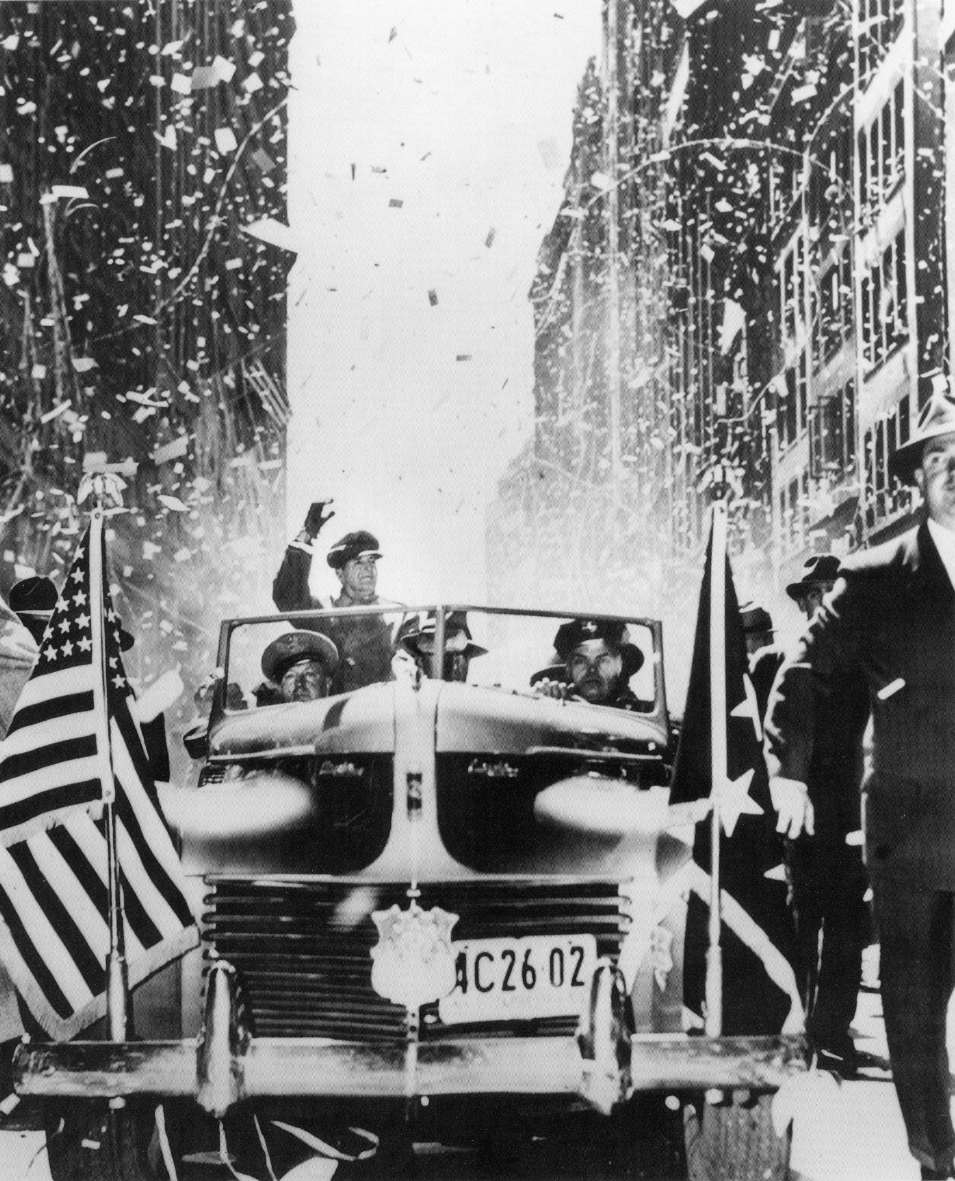
After being relieved of command (April 10, 1951) MacArthur
returns to the states ... receiving a hero's
welcome in New
York City (7 million turned out to cheer him). But Congress
understood the matter better than the average American
... and backed Truman on his decision
[2]Because of this action, many Americans came to view MacArthur
as a national hero – and Truman as a coward, if not almost a traitor. But a Congressional investigation ultimately
concluded that Truman had indeed acted correctly, and that MacArthur
(who actually spent all his time in Tokyo) was out of touch with political
realities in Korea … as well as in the rest of the world.
Once more a huge Chinese offensive opened up
(some 700,000 Chinese troops this time) at about the same time. But after about a month (May 1951), an
immovable frontline of battle seemed to set in, a military stalemate that
appeared to be rather permanent.
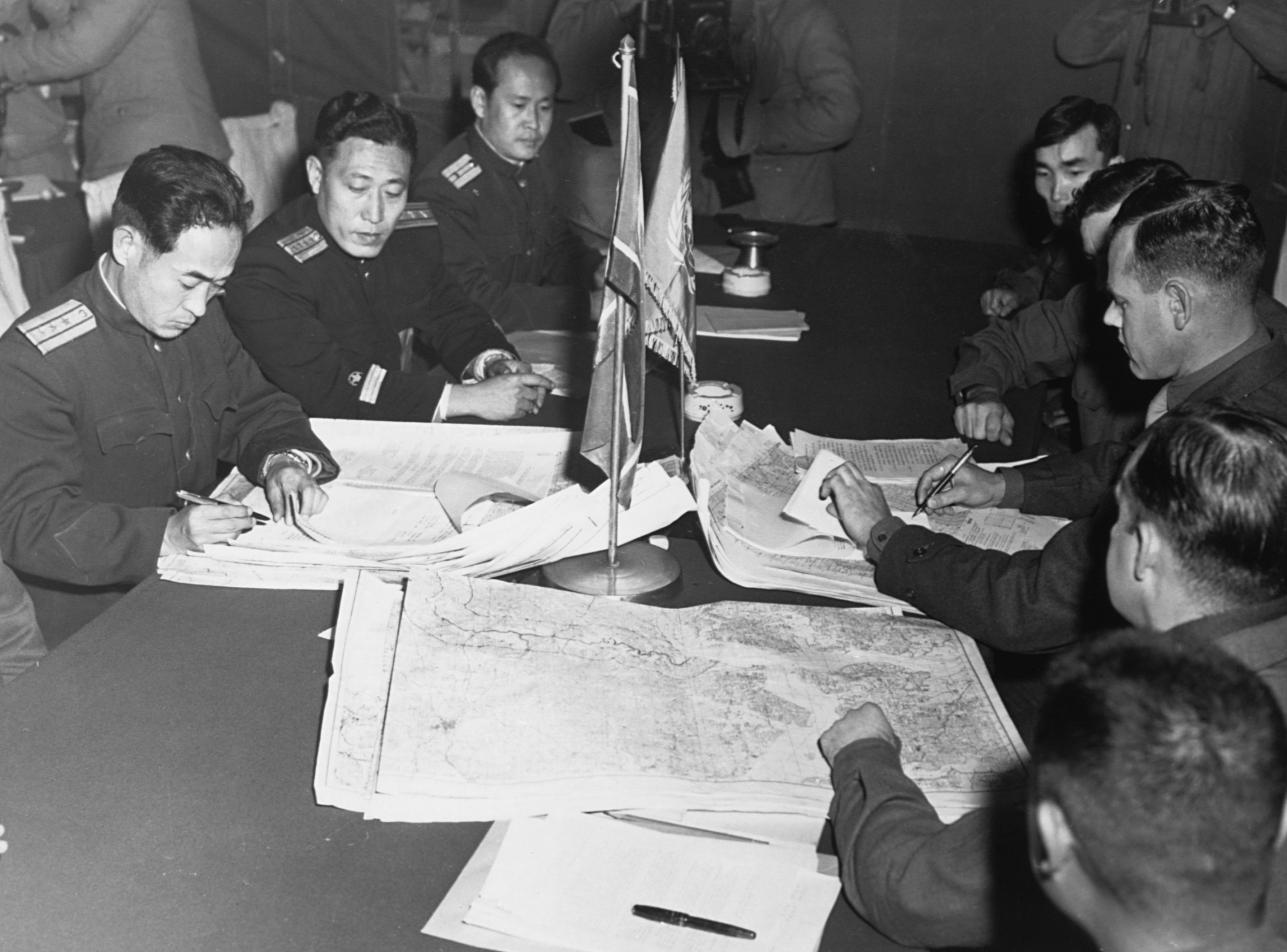
Early discussions (October 1951) concerning an Armistice ...
but nothing was ultimately decided
Go on to the next section:
 Miles
H. Hodges
Miles
H. Hodges

 Political developments in postwar Korea
 North Korea invades the South
  The "United Nations" (America) responds
  China intervenes
  Truman fires MacArthur
  Stalemate