From one perspective, America – as it stepped from the 1800s into
the 1900s – was going through an amazing period of development. In only a couple of generations Americans had
gone from horseback to automobiles, and even to flight. Electricity lit up not only cities but also
homes, news of the larger world arrived almost instantly to an increasingly
attentive population, personal phones put people in direct communication with each
other across even the miles, and wealth reached down into even the middle classes,
who knew that they were living better than kings and queens had lived only a
few centuries earlier. All this change
was very heady stuff.
A Photo Gallery of a Prairie
Town – Dorrance, Kansas – 1910 (population: 281)
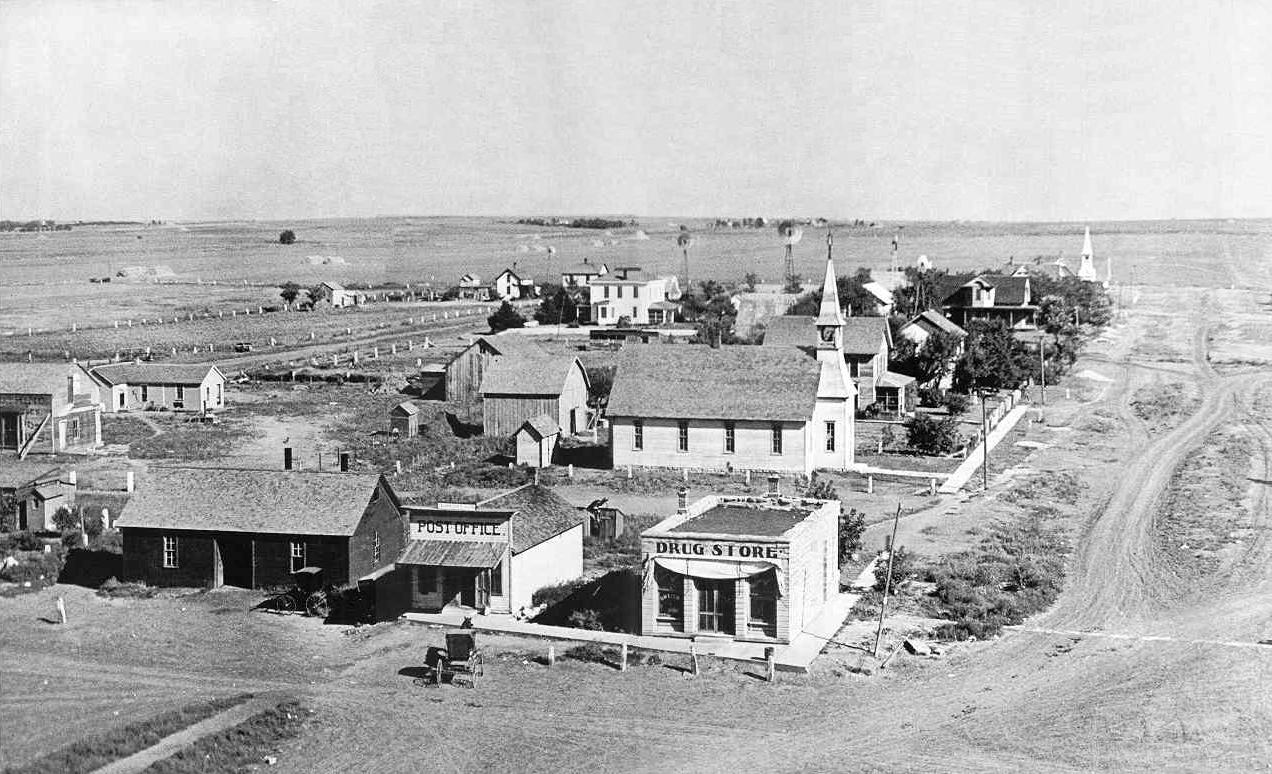
Dorrance, Kansas
Kansas State Historical
Society
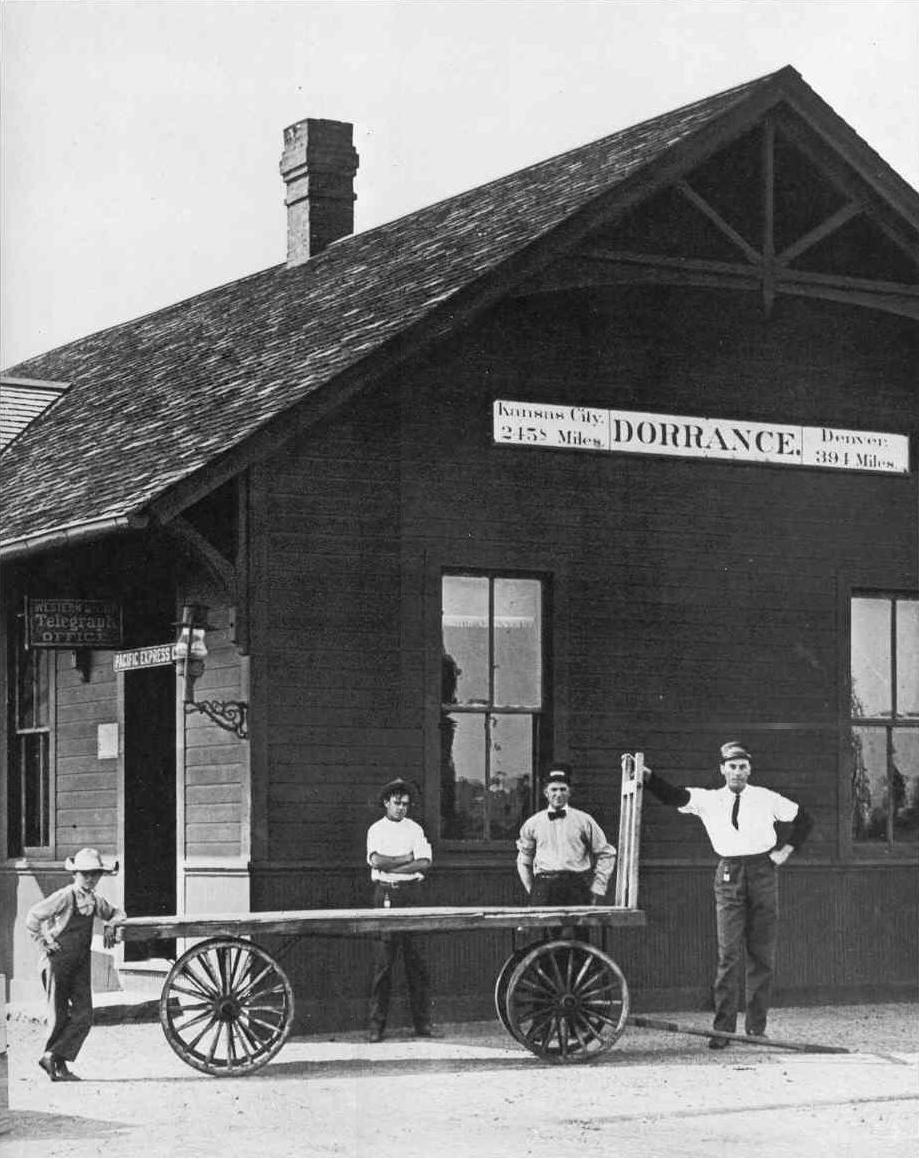
The Dorrance train
station
Kansas State Historical
Society
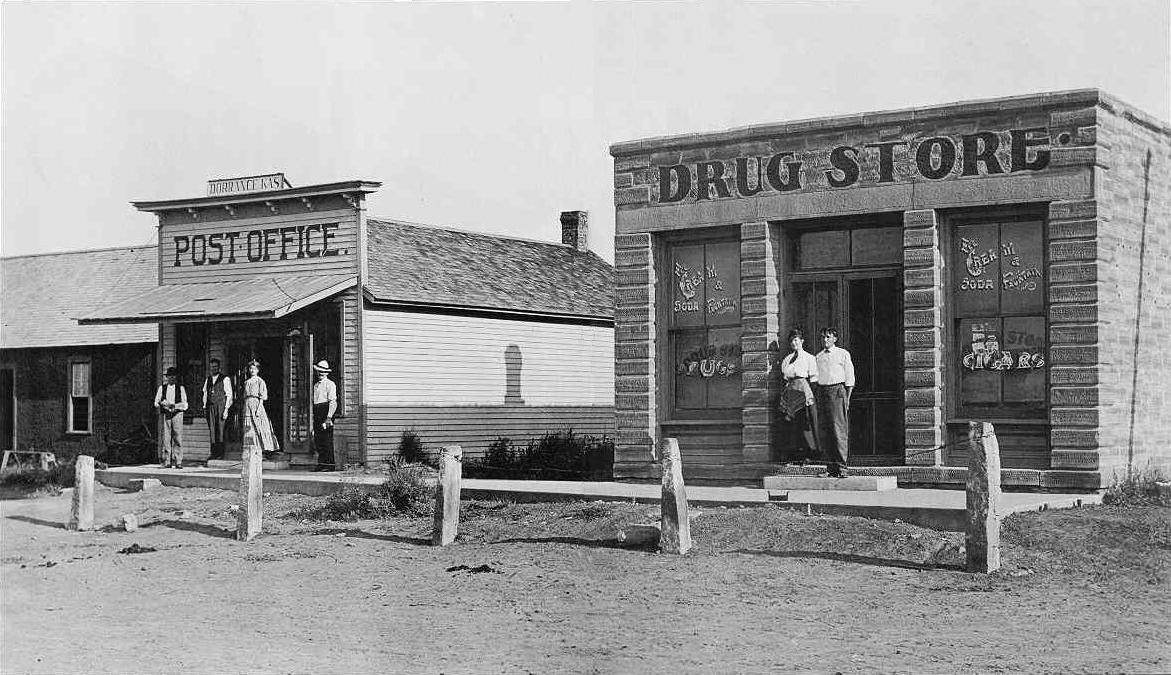
The Dorrance post office
and drug store
Kansas State Historical
Society
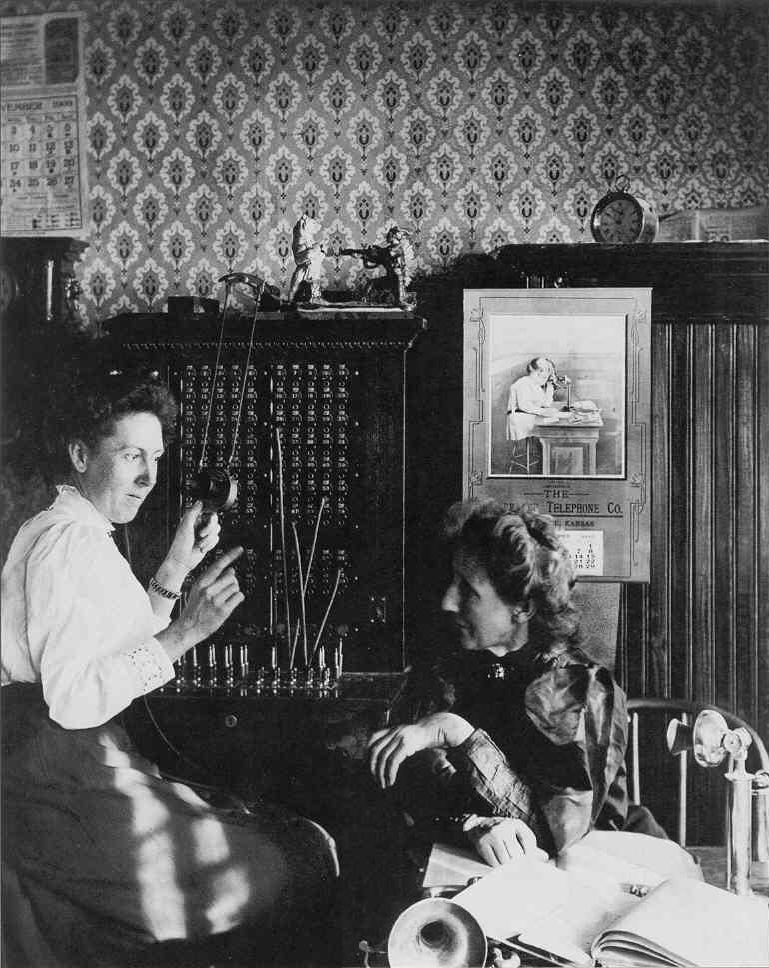
The Dorrance telephone
switch-board
Kansas State Historical
Society
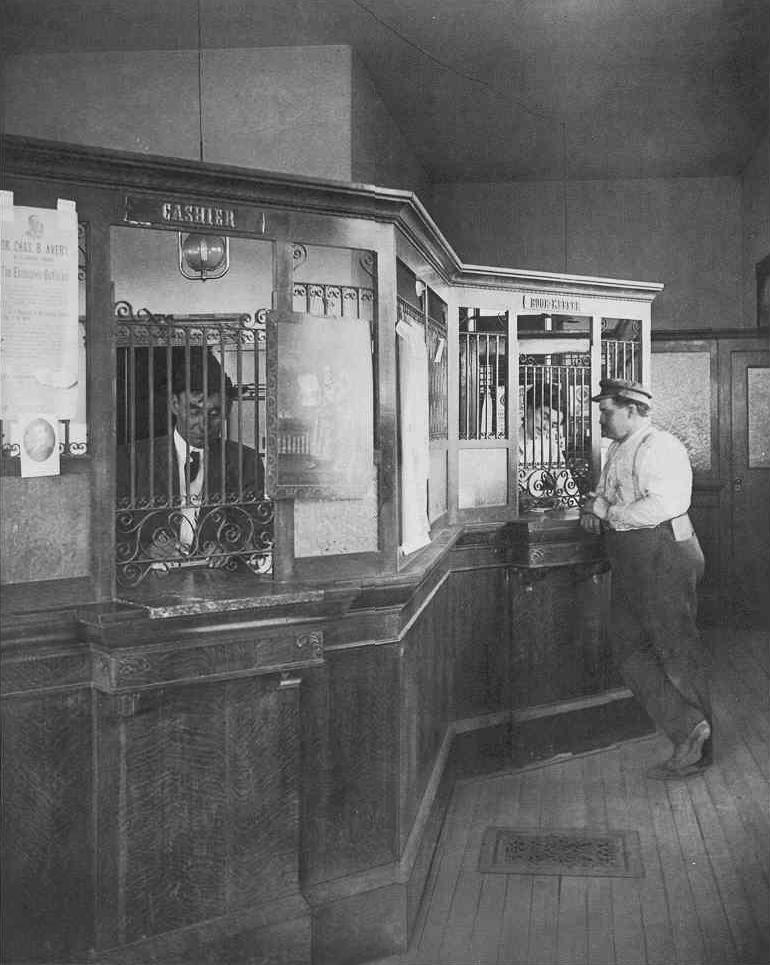
The Dorrance Citizens' State
Bank
Kansas State Historical
Society
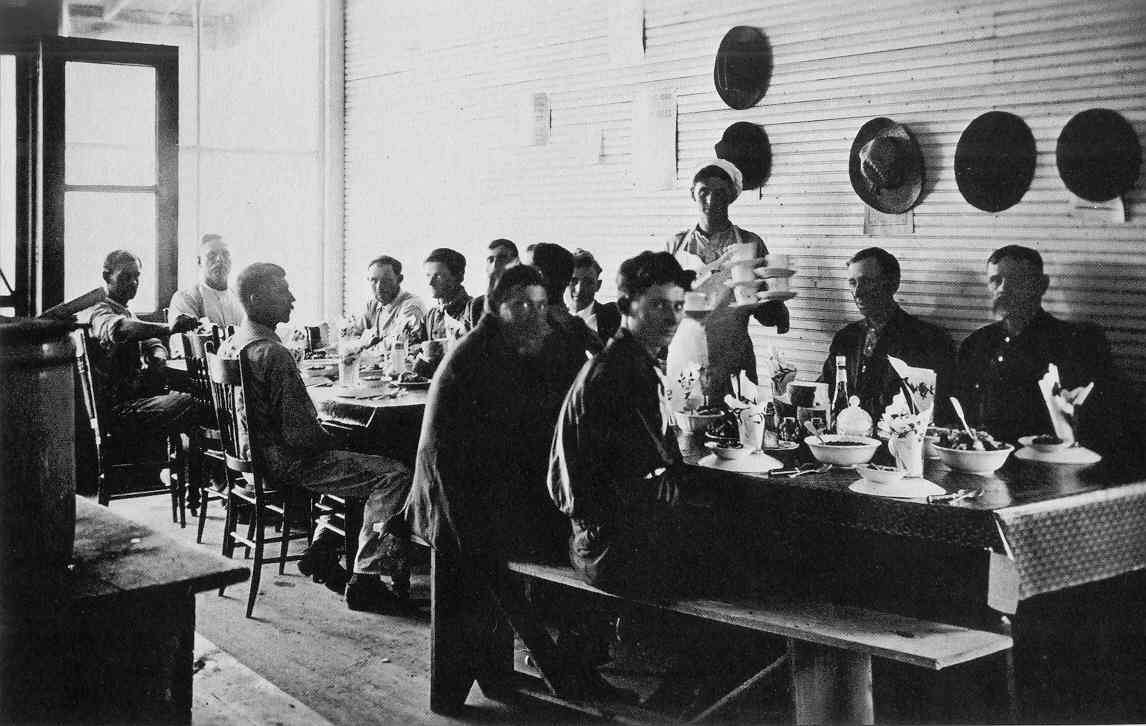
Sheetz's Restaurant on Main
Street
Kansas State Historical
Society
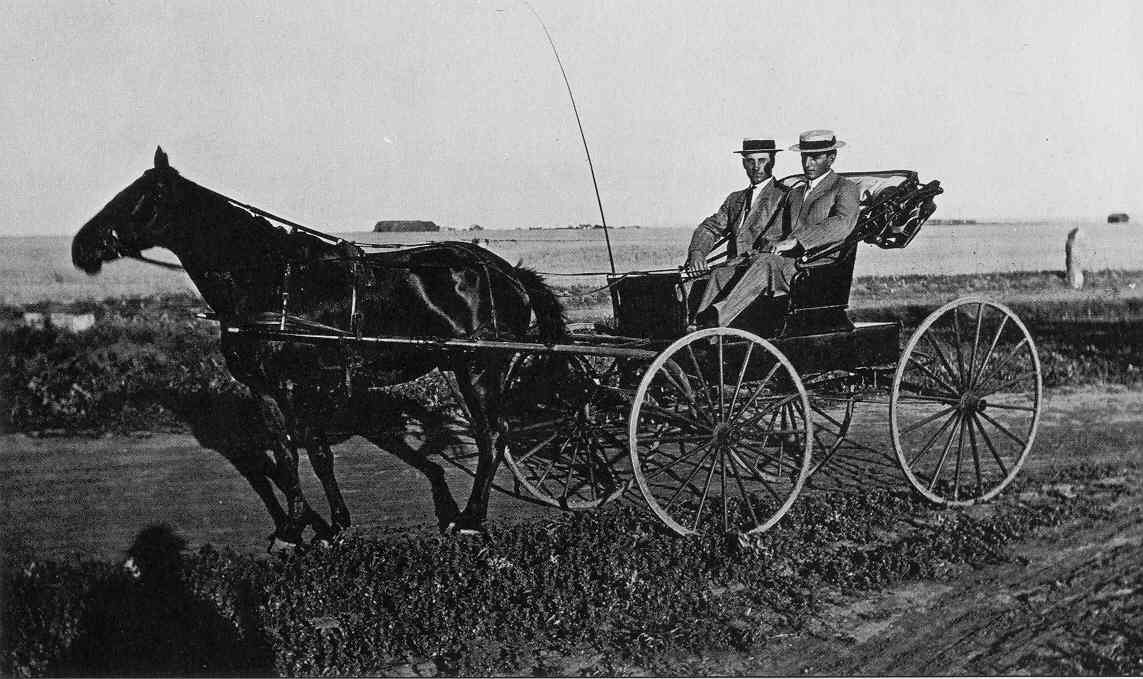
Peter Steinle and Henry Heinze
on their way to Sunday worship
Kansas State Historical
Society
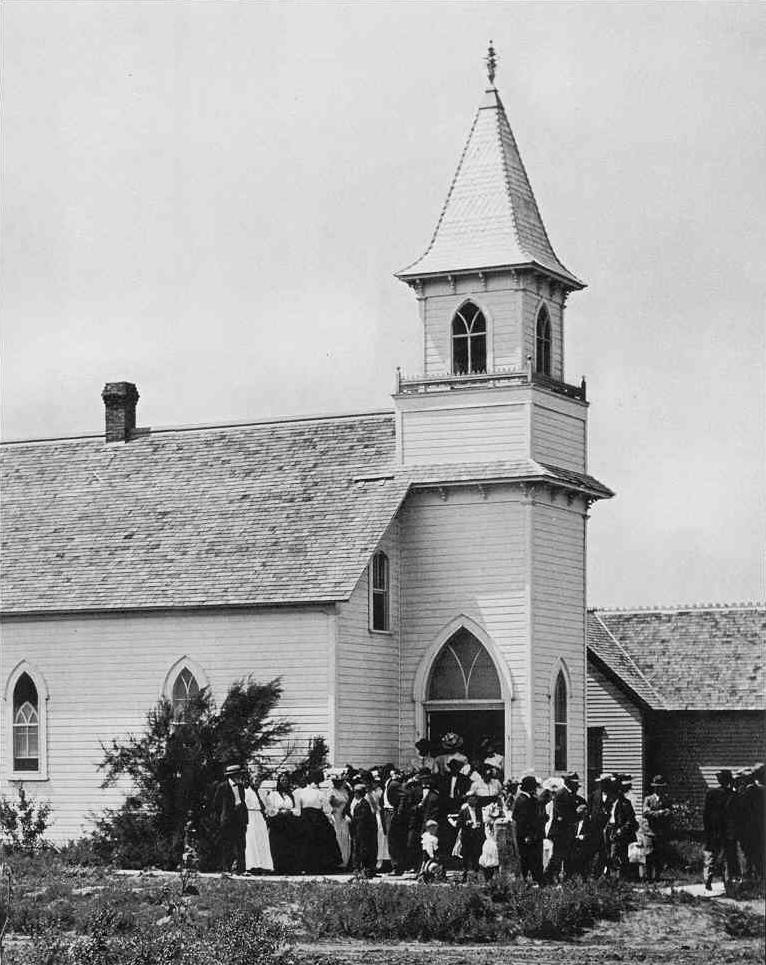
The Dorrance Lutheran Church
(one of 4 churches in town)
Kansas State Historical
Society
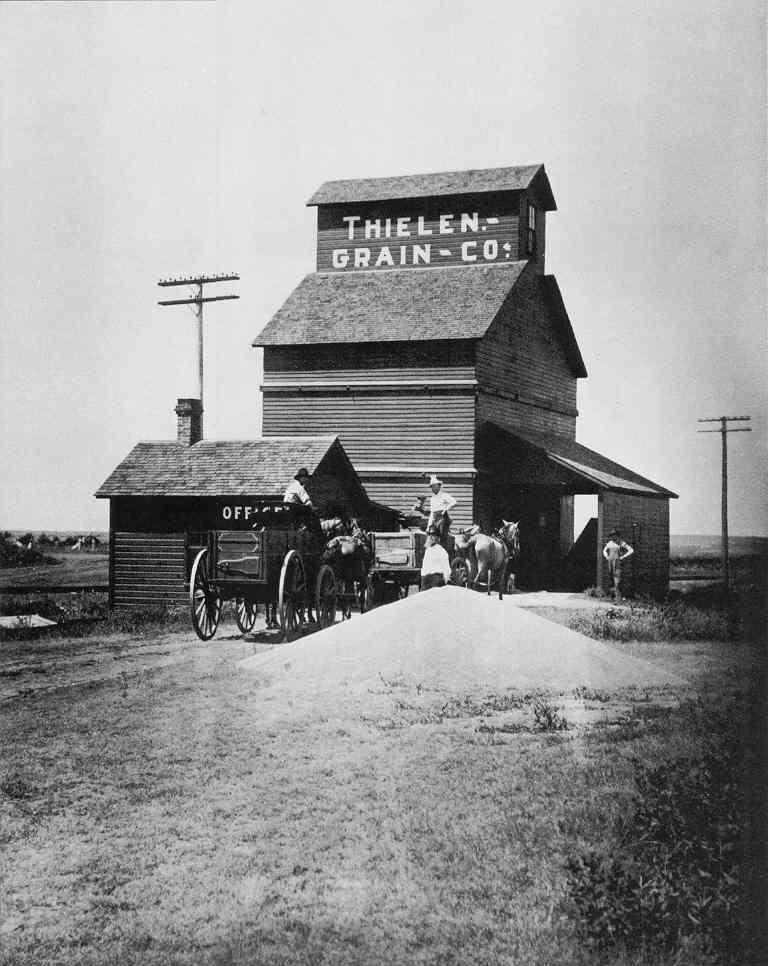
A grain elevator built by
German immigrants – who brought
with them the winter wheat grown locally
Kansas State Historical
Society
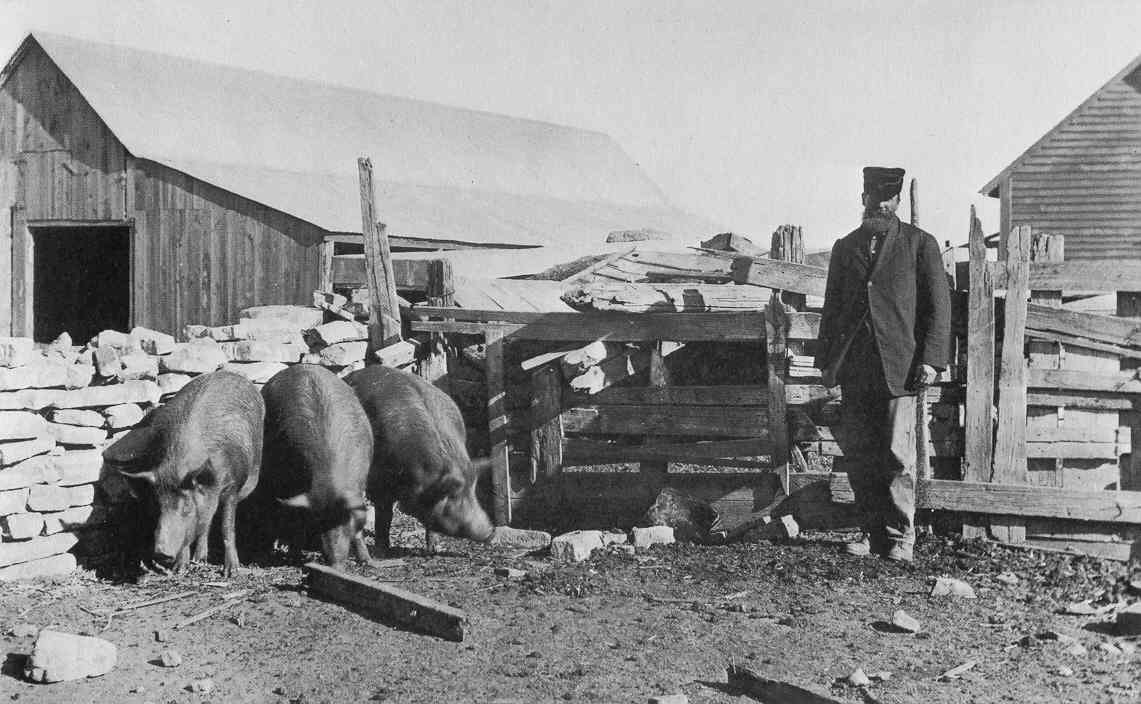
Hogs raised as an income
supplement to wheat-farmer Shilts
Kansas State Historical
Society
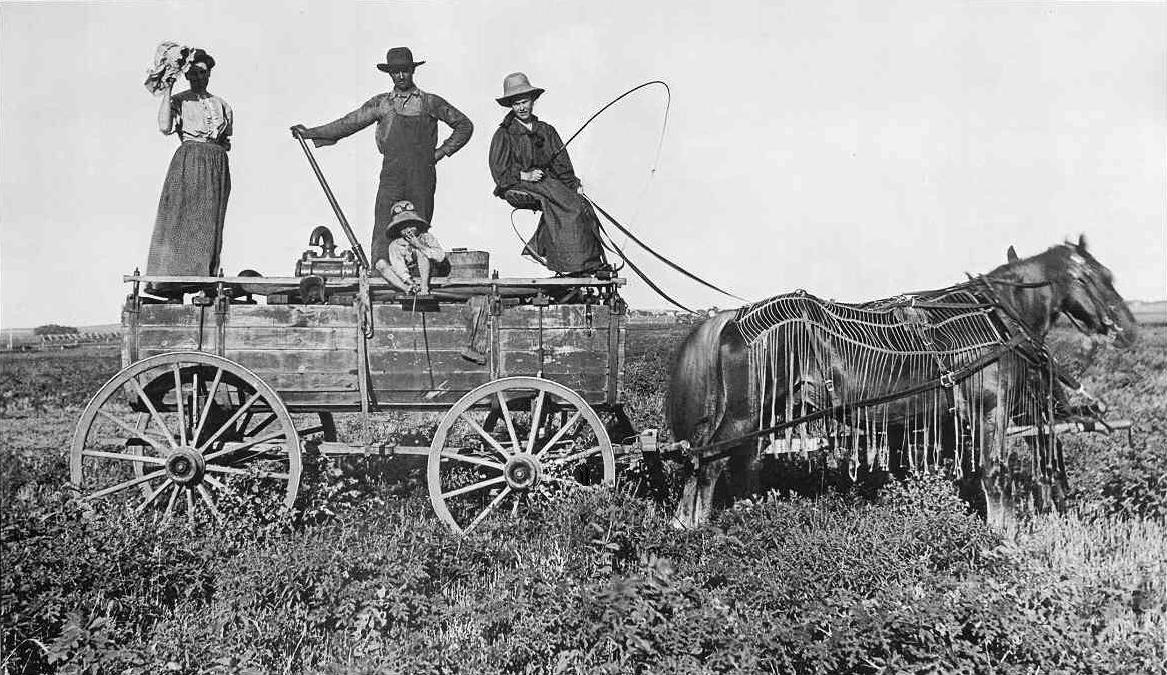
Driving the water wagon out
to refill the steam engine powering the threshing machine
Kansas State Historical
Society
____________________________________________________________
Other examples
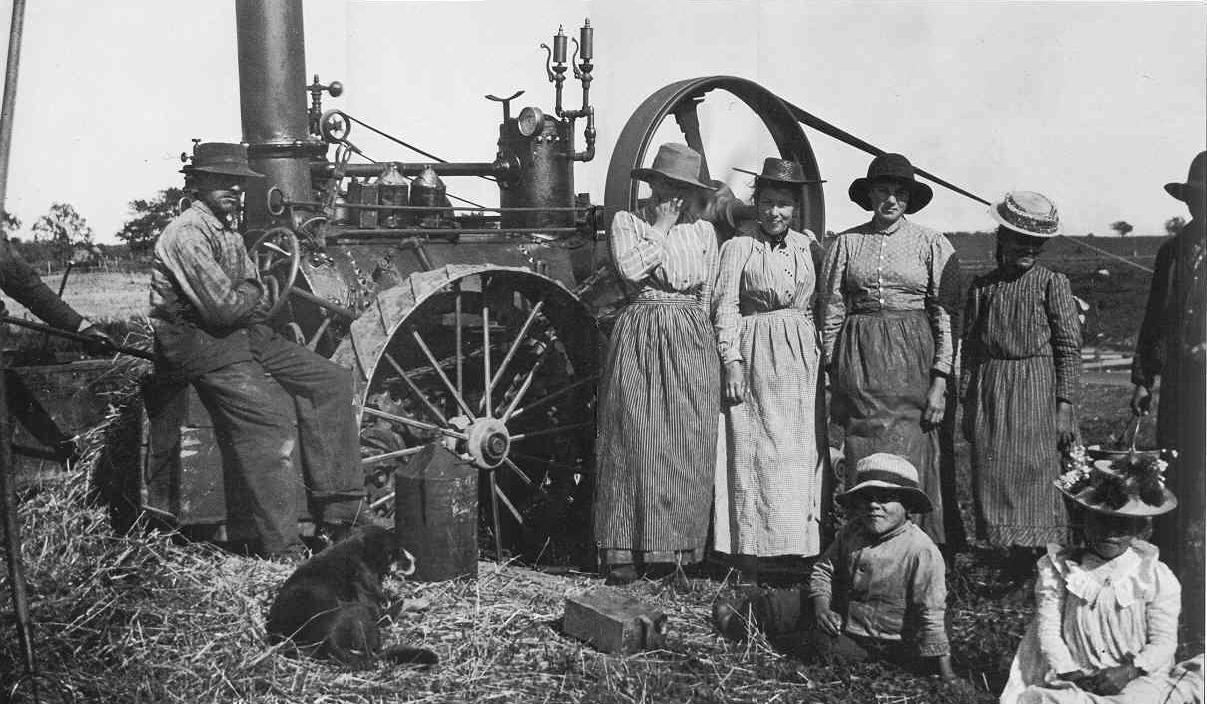
Lunchtime on a Minnesota
farm – 1901
Minnesota Historical
Society
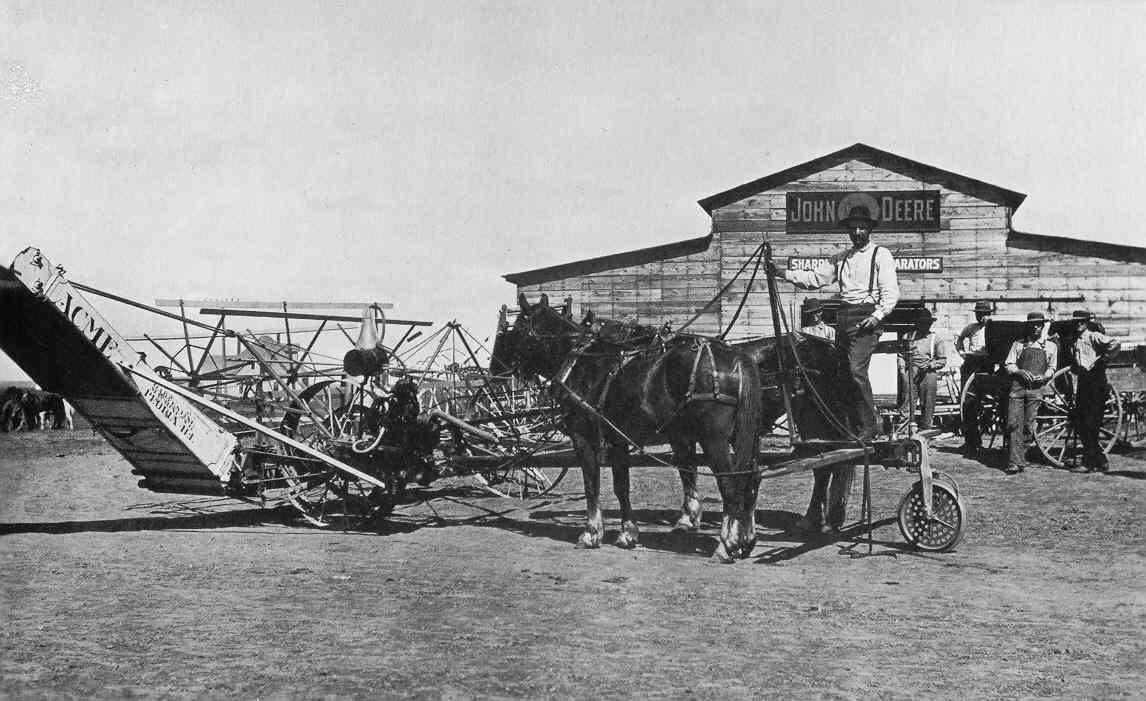
A John Deere header machine
for reaping wheat
Kansas State Historical
Society
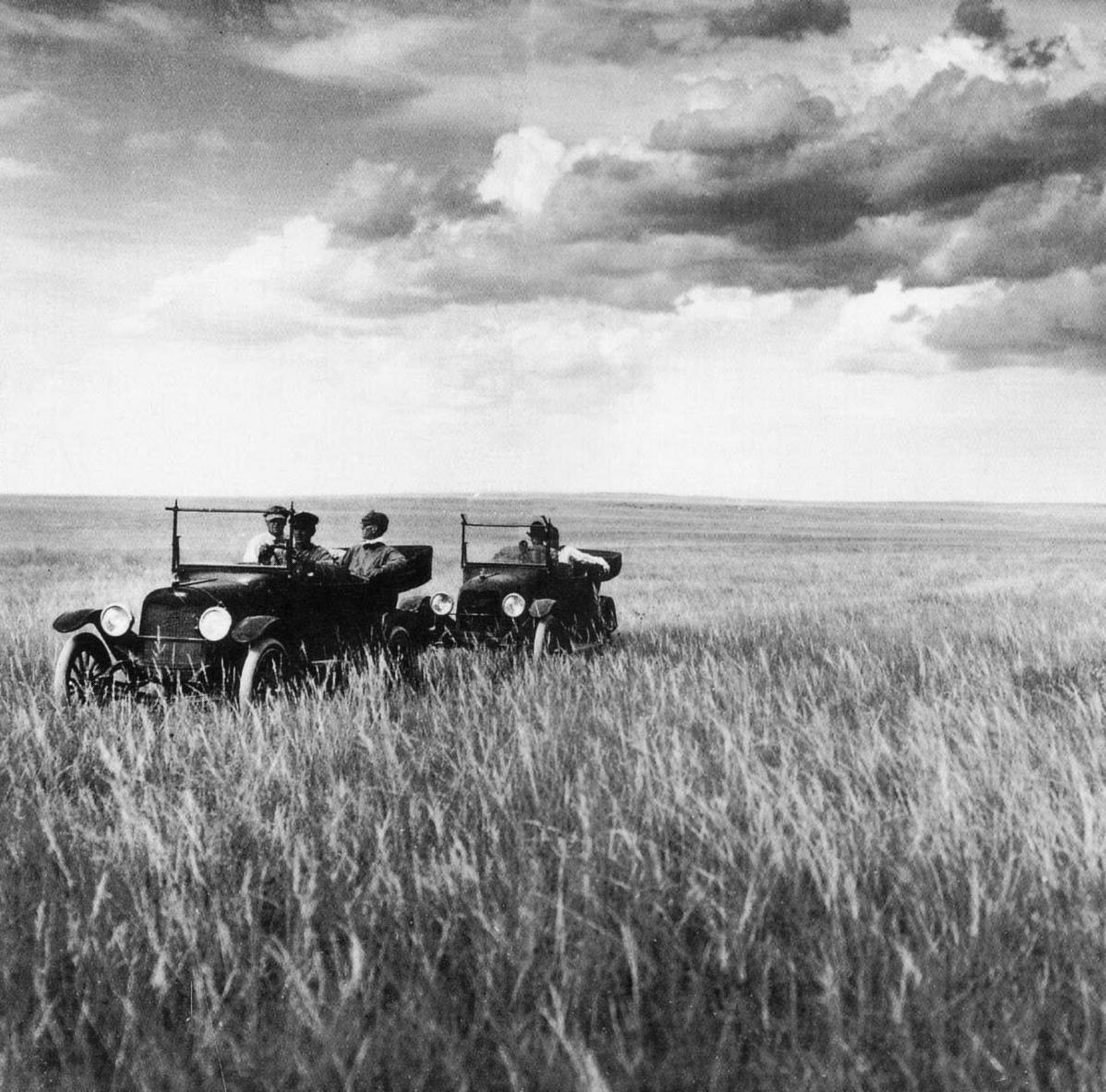
Farmers looking over the
Nebraska wheat fields
in the golden days of US farming – 1916
_________________________________________________
America was long familiar with urban life – but on a small
scale closely connected to rural America's needs
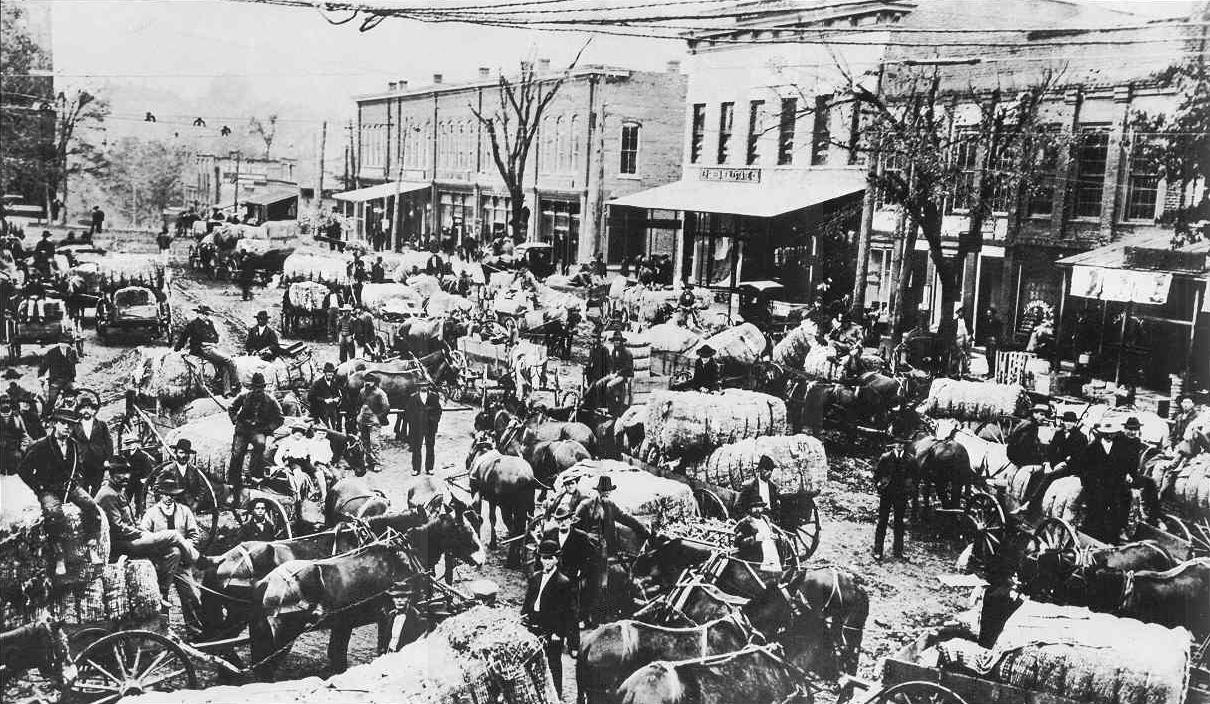
Cotton-marketing day, Marietta,
Georgia – 1905
Atlanta Historical
Society
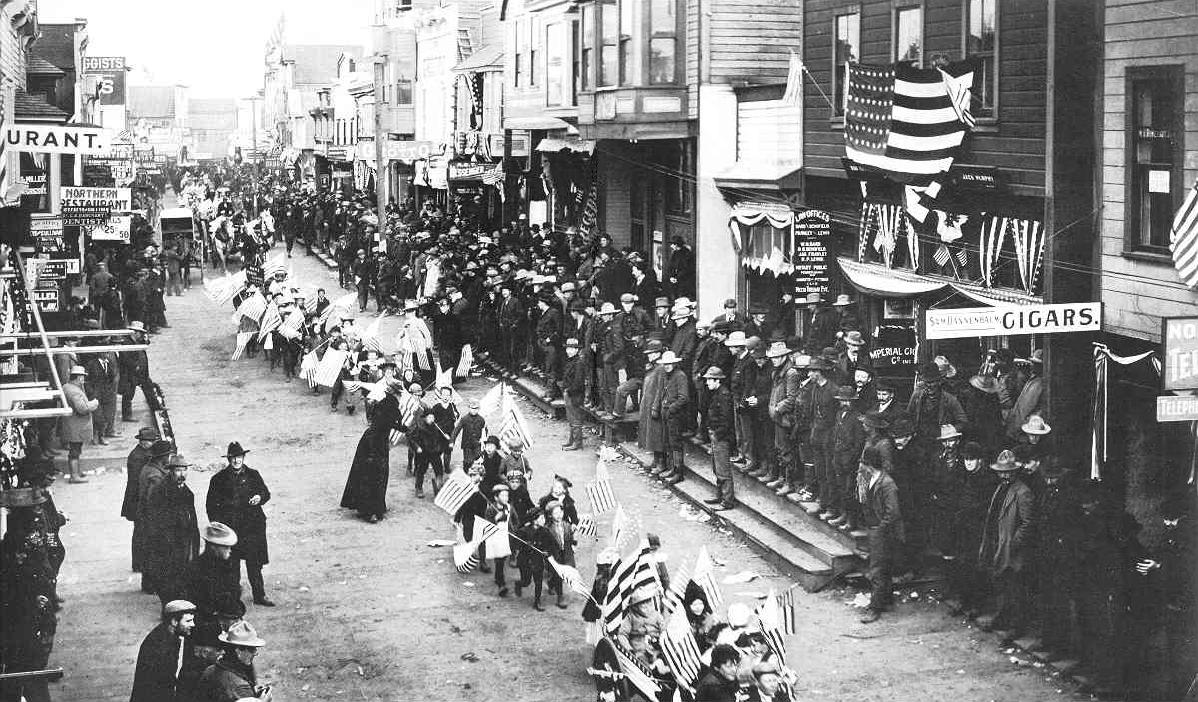
4th of July – Nome, Alaska – 1901
_____________________________________________________
A picture album of Junction City, Kansas - 1910 (population 5000) –
a typical American town serving rural America
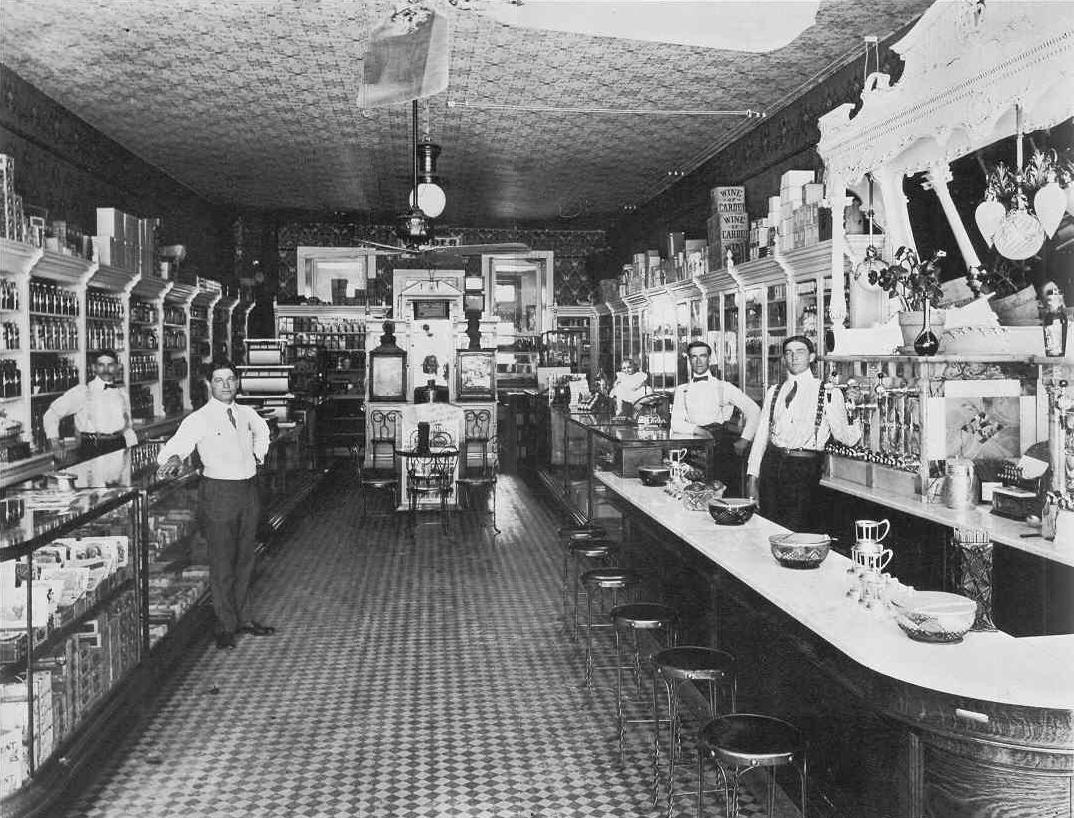
Loeb and Hollis Drug Store
in Grand Junction
Pennell Collection, University
of Kansas

Frey's New Cafe on main street
in Grand Junction
Pennell Collection, University
of Kansas
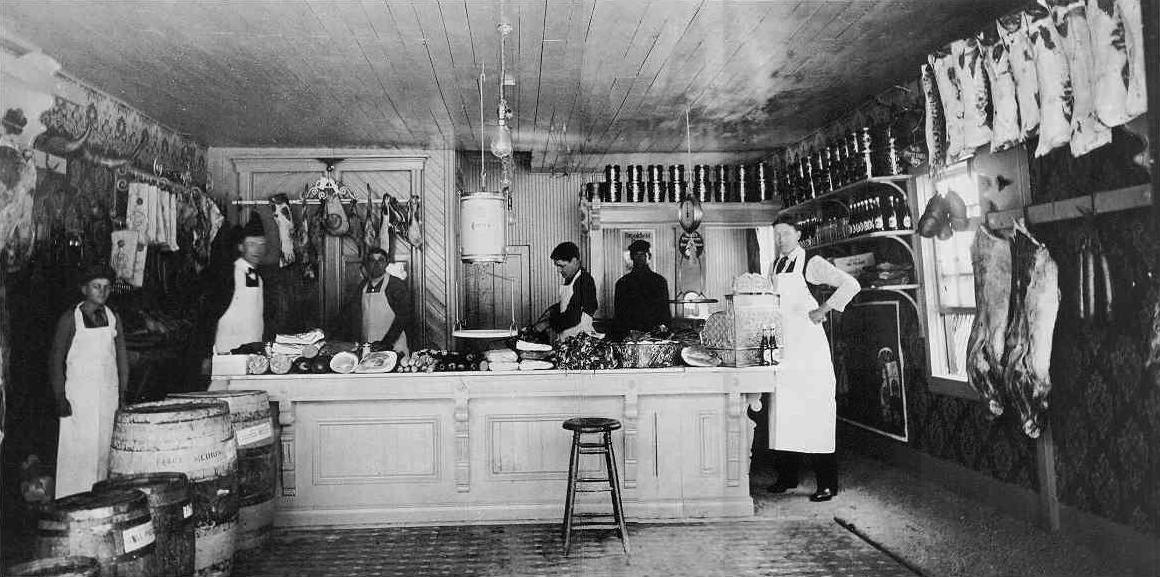
Park Meat Market in Grand
Junction
Pennell Collection, University
of Kansas
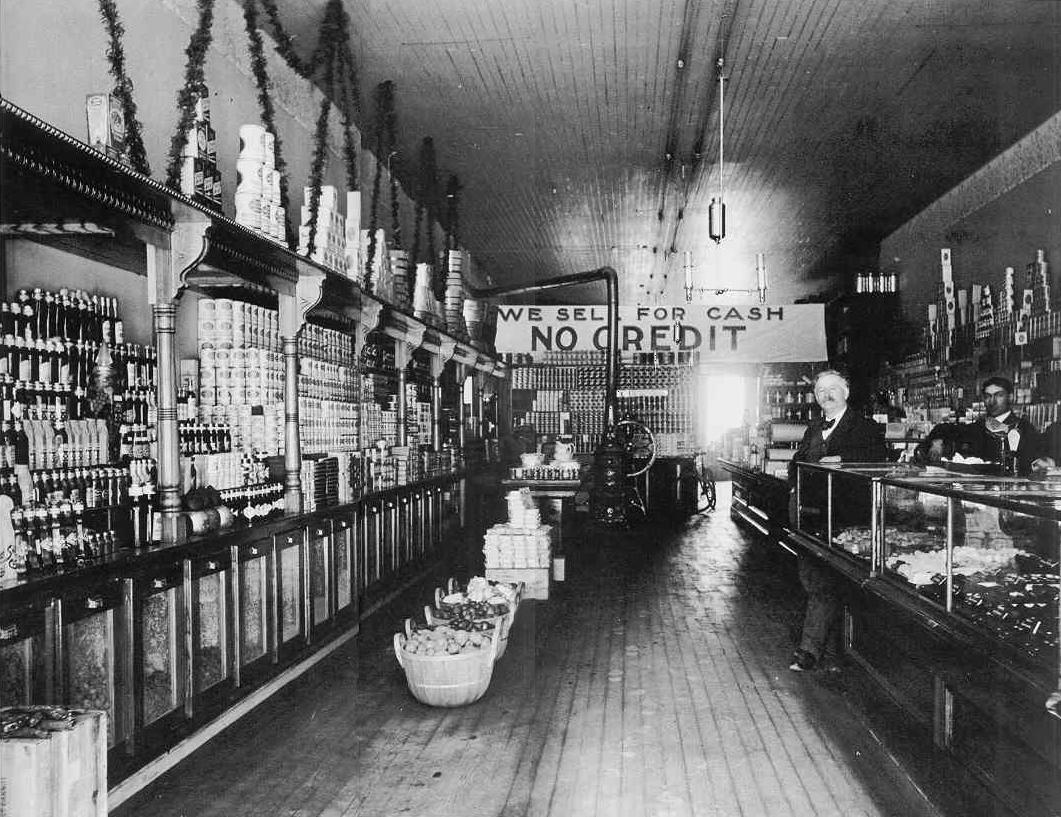
Latham's Grocery in Grand
Junction
Pennell Collection, University
of Kansas
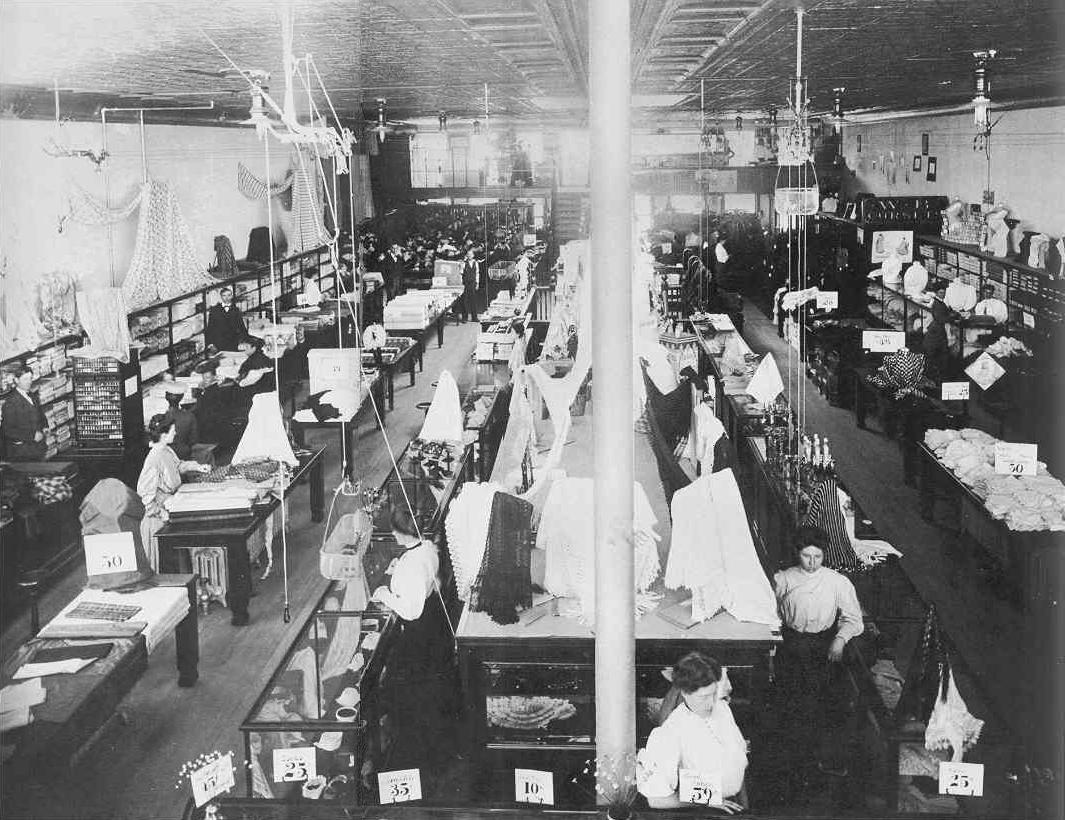
The Pegues, Wright Department
Store in Grand Junction
Pennell Collection, University
of Kansas
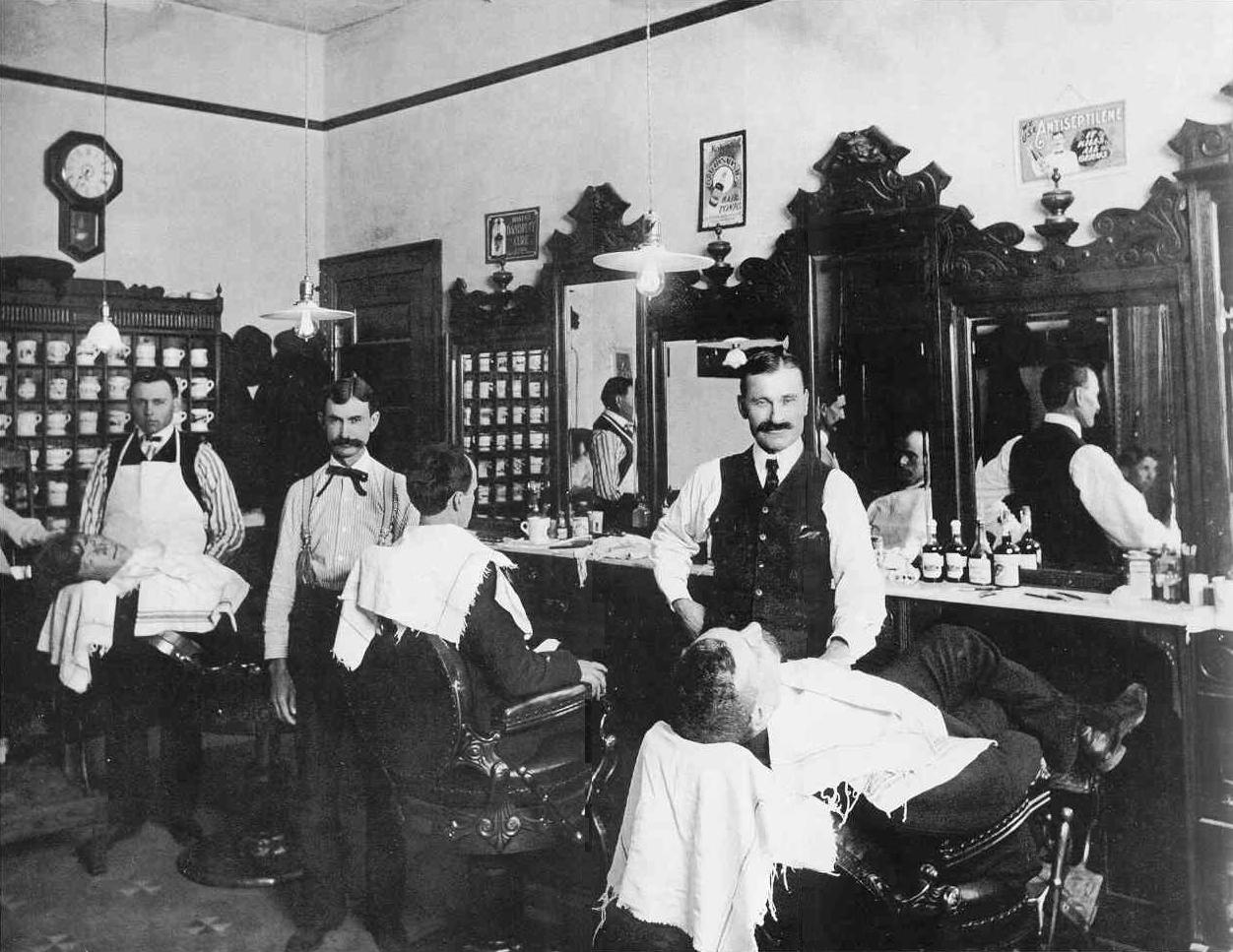
Rudy Sohn's barber shop in
Junction City, Kansas
Pennell Collection, University
of Kansas
Also
the American population itself was undergoing very rapid growth in numbers, with
accompanying social changes. In the
forty-year period between 1870 to 1910 the population went from 38.5 million to
92.3 million, growing by about 25 percent each decade (28 percent by 1880,
another 27.6 percent by 1890, and another 21 percent for each of 1900 and
1910). This time period also marked a
huge shift in the nation's demography, 10 to 11 million (figures are not exact)
Americans moving from farms to America's fast-rising cities, where they were
joined by another 25 million immigrants streaming in from Europe.
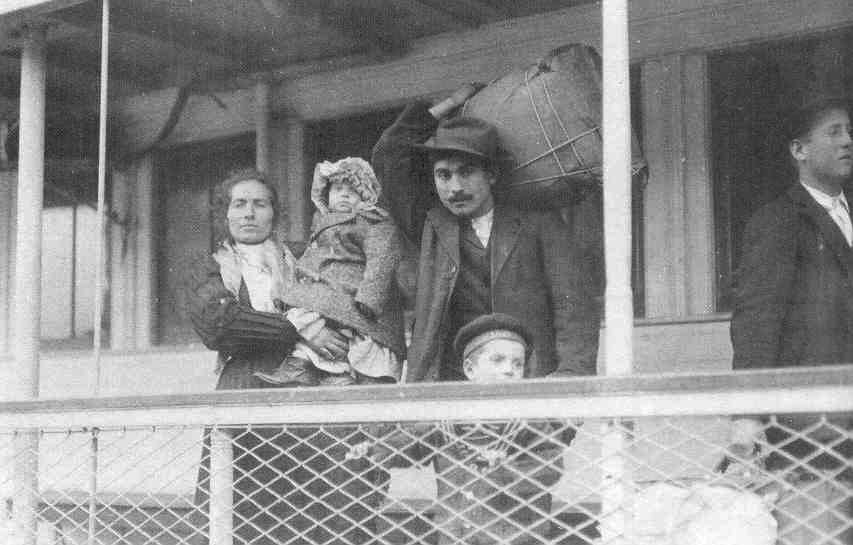
An Italian family arriving
in America
New York Public Library.
Astor, Lenox and Tilden Foundations
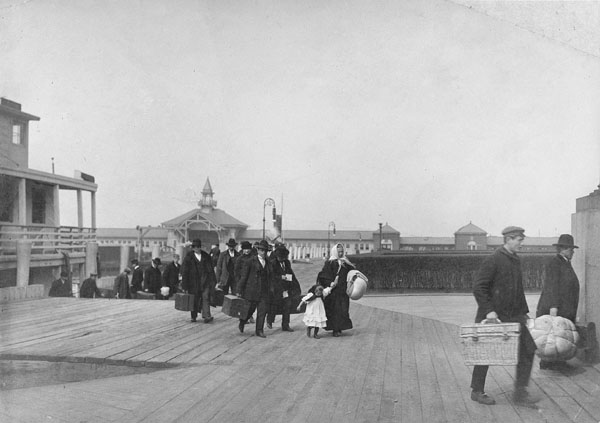
"Immigrants Landing at Ellis
Island"
National Archives
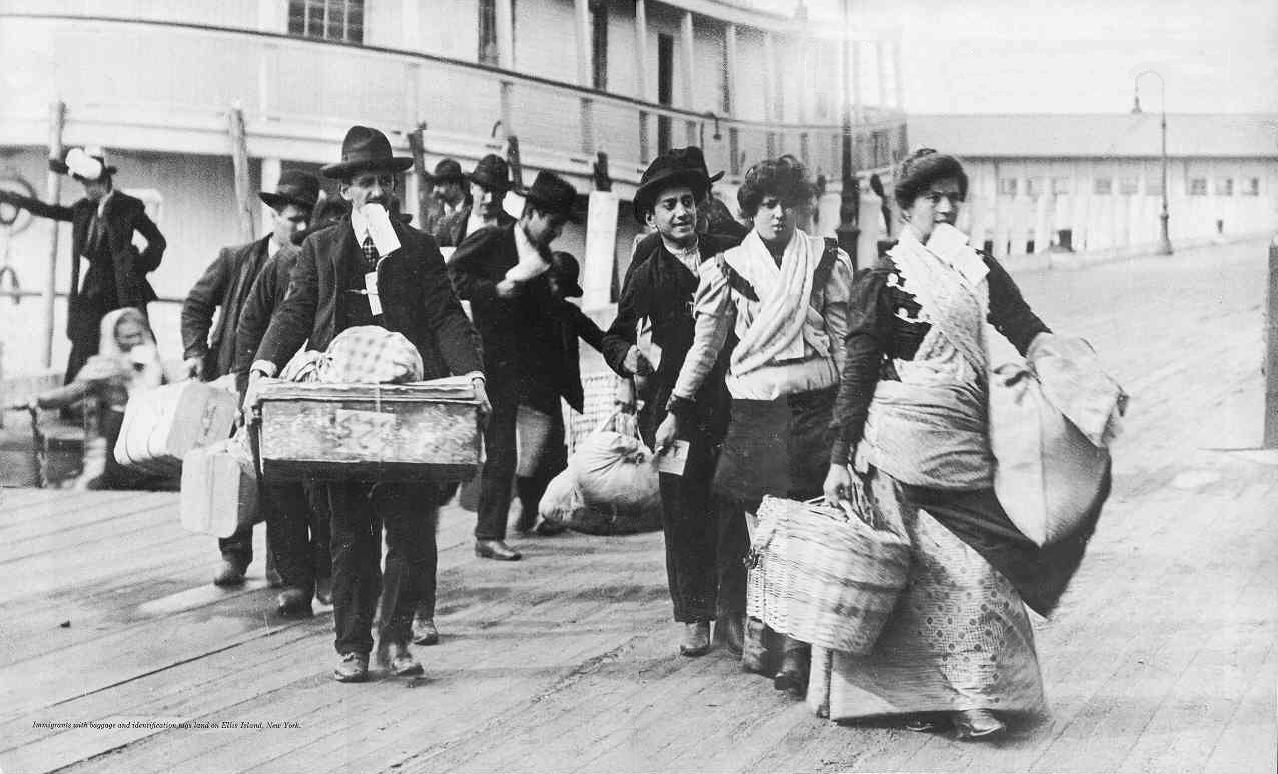
Immigrants landing on Ellis
Island
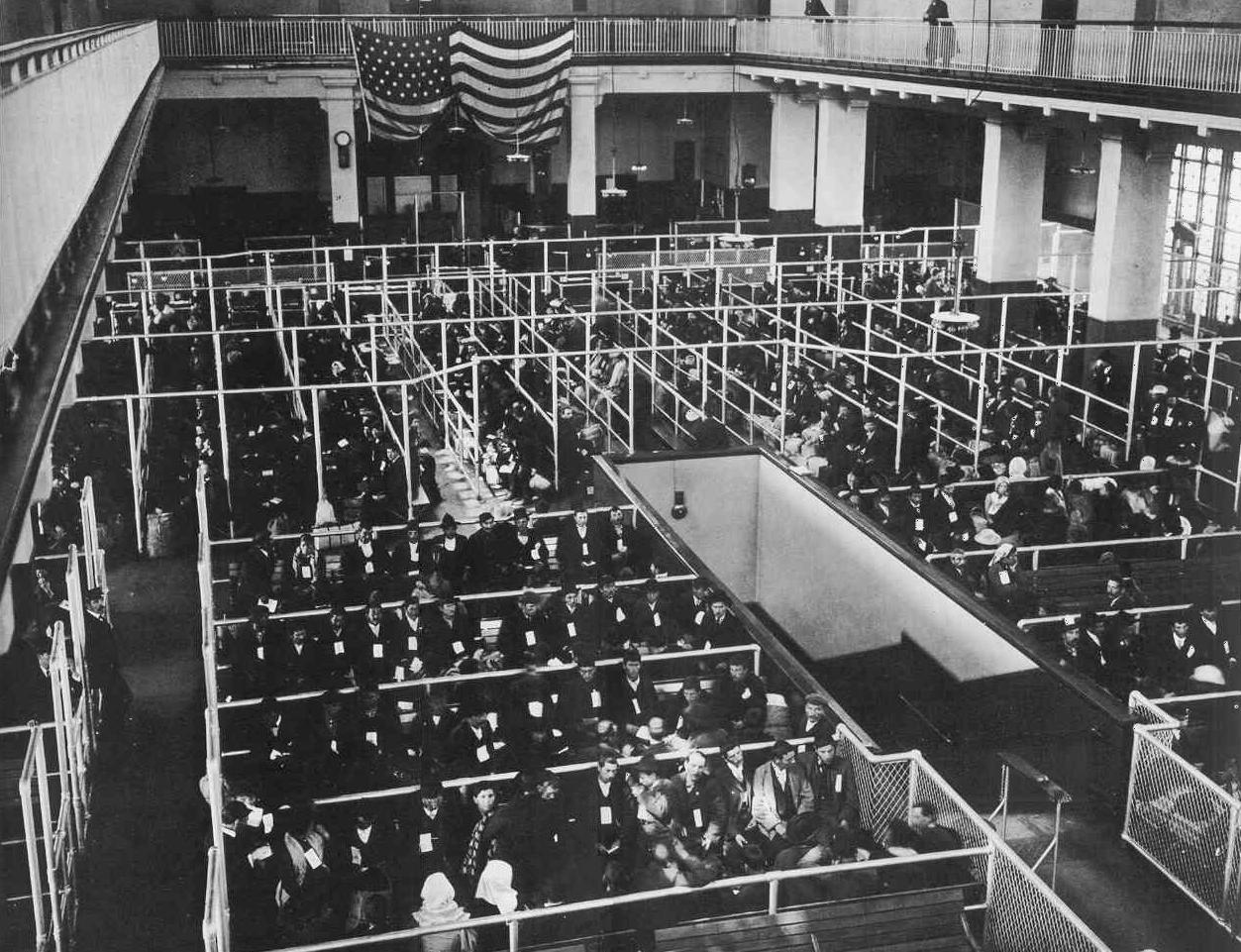
A waiting room on Ellis
Island
(the Ellis Island facility
processed an average of 4000 people
a day, 2,000 of which had to stay overnight)
New York Public
Library
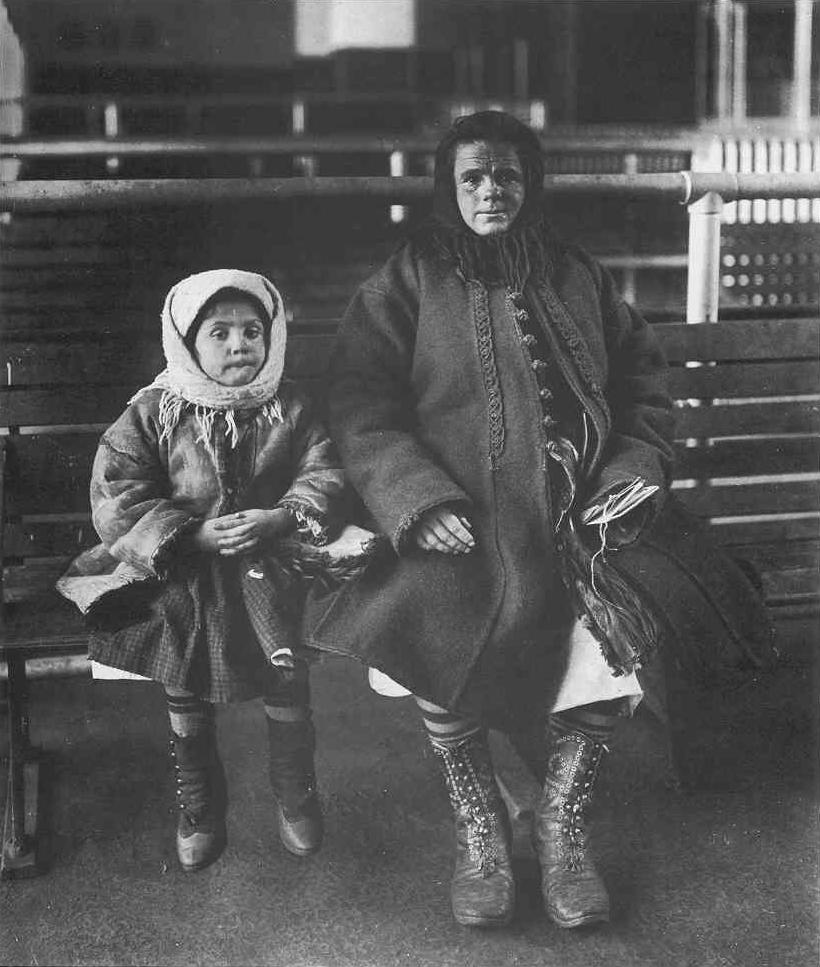
An immigrant mother and daughter
at Ellis Island
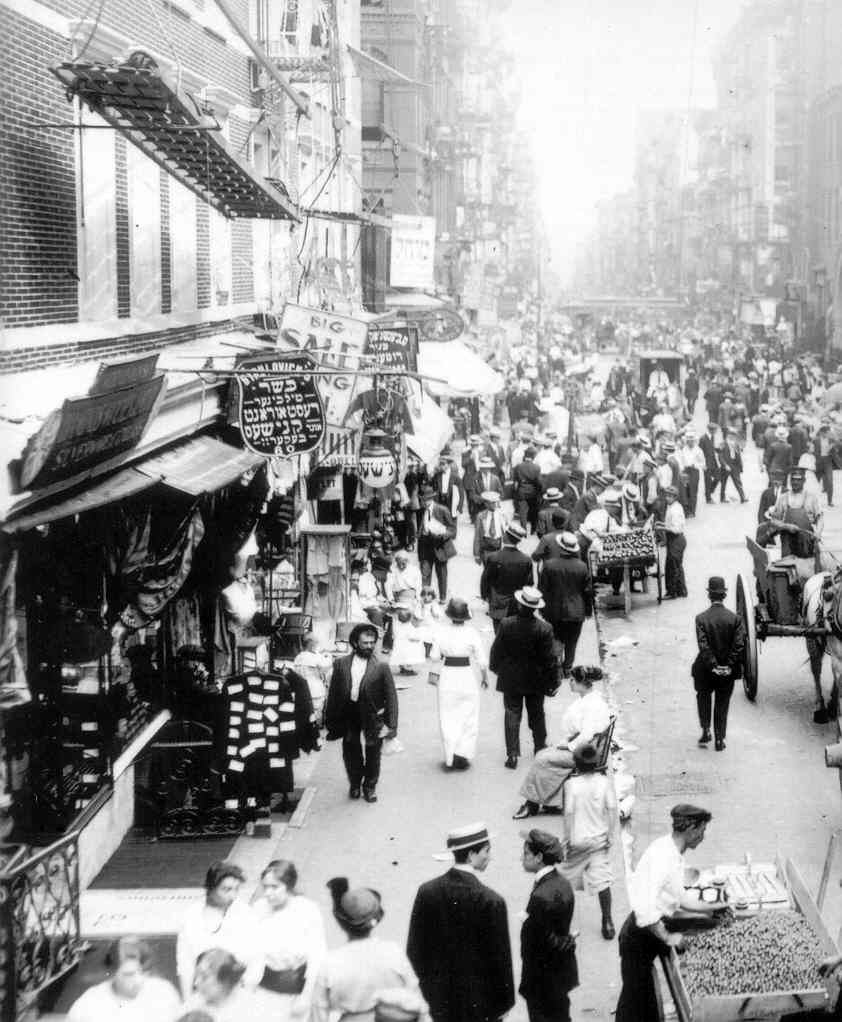
New York's Lower East Side
Lewis Hine Collection /
New York Public Library
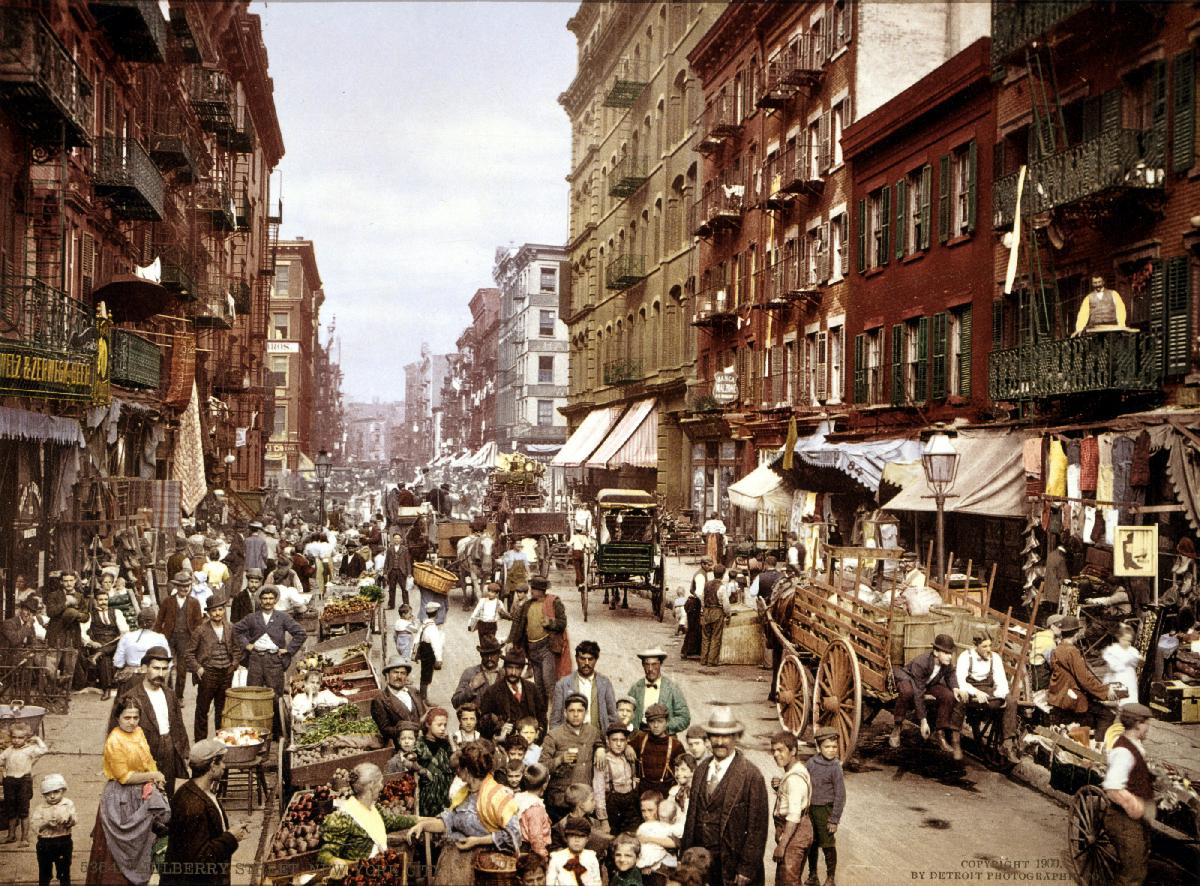
Mulberry Street – New York
City – 1900
(the center of the city's
"Little Italy"
Library of Congress
This
movement was not always a happy event, but one normally necessitated by the
need to find life-support in a physical or geographic world that itself had
expanded none. Things were getting
tight. And poverty was an accompanying
feature of this tightness or scarcity of opportunity. And things were merely growing worse with
time.
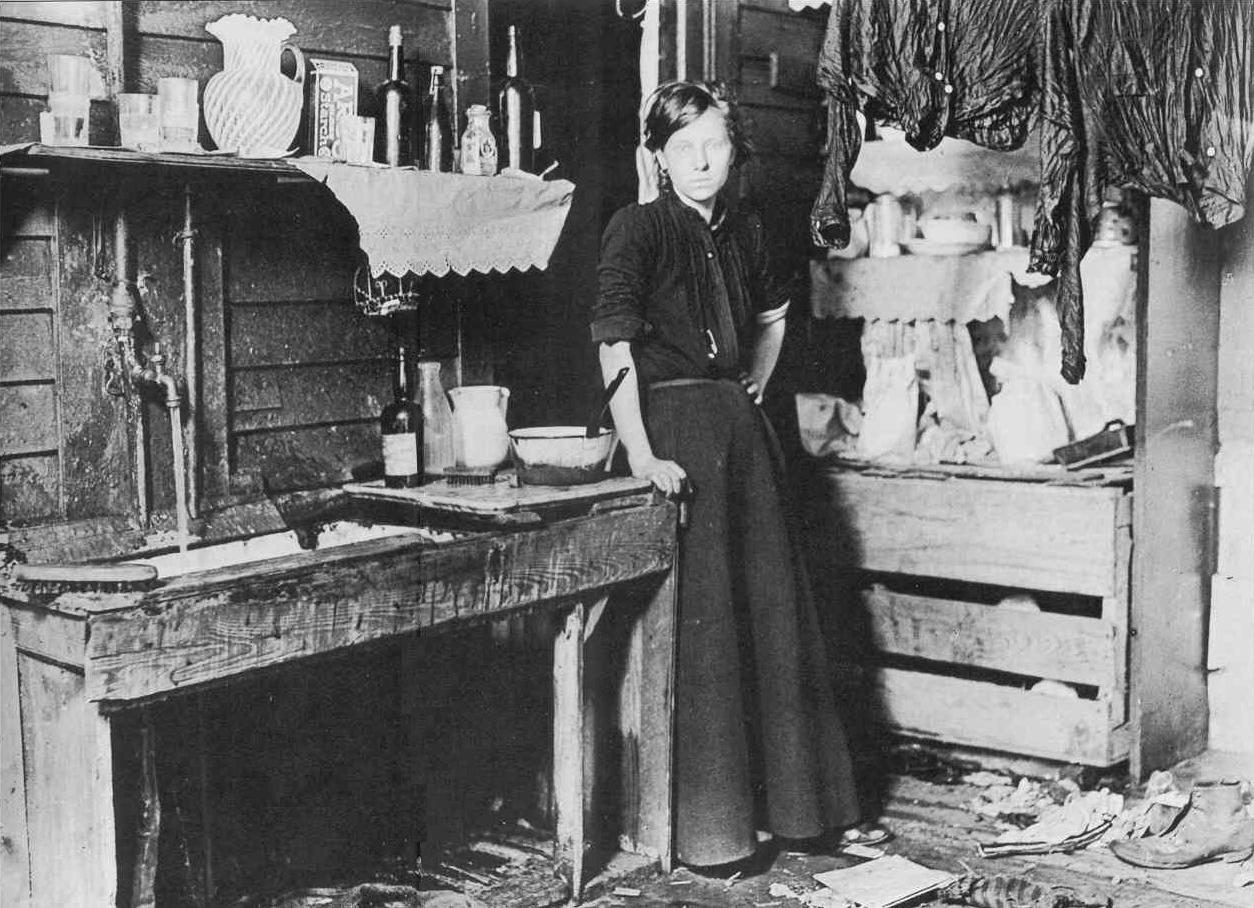
Life in the tenements could
be very tough
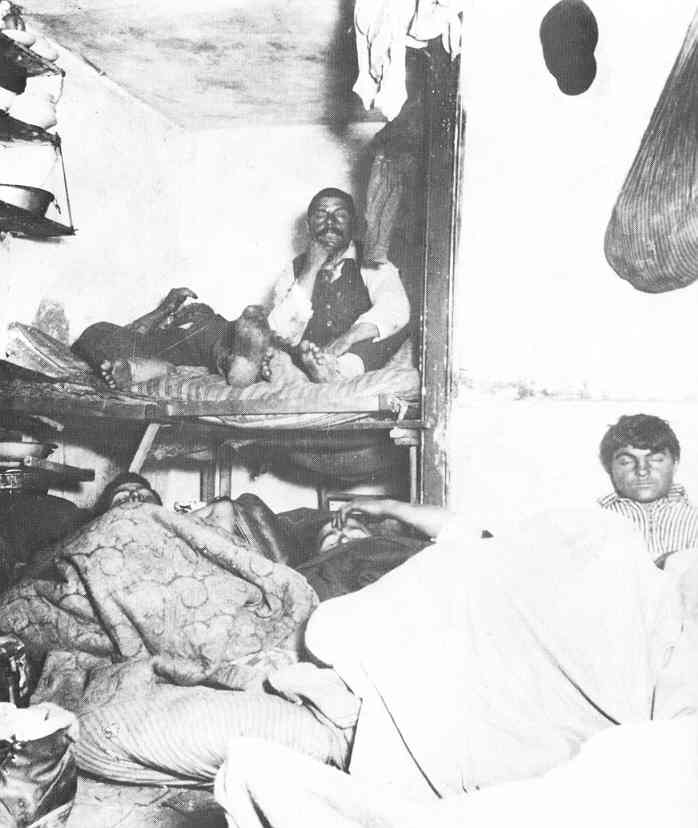
"5 cents a spot" – lodgers
in a Bayard Street Tenement in New
York's Lower East Side .
For some, the new life proved
to be
downright cruel
But this problem occurred not only in densely populated
urban America ... but in places across the country
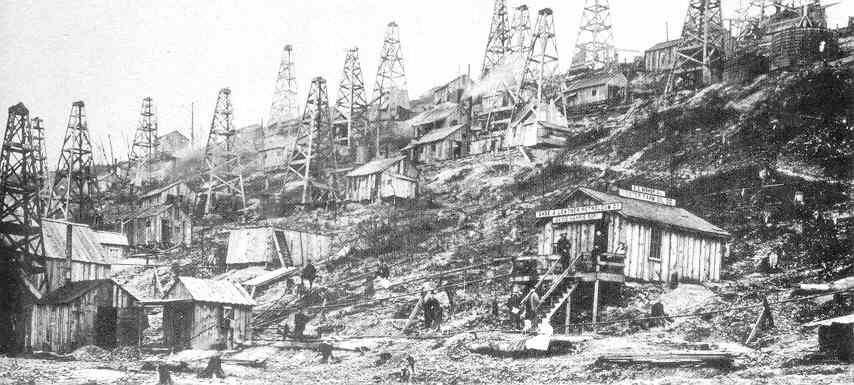
Oil boom at Pioneer Run,
Pennsylvania
American Petroleum
Institute
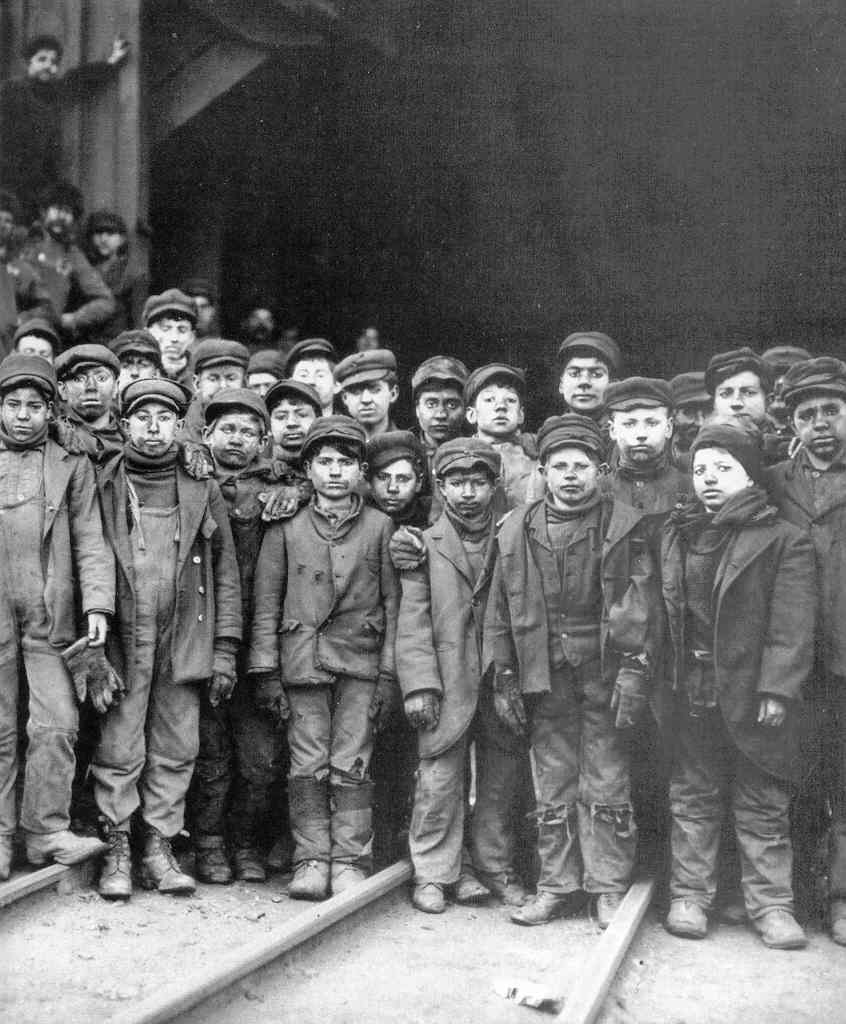
Young "Breaker Boys" in
Pennsylvania
Lewis Hine / National
Archives
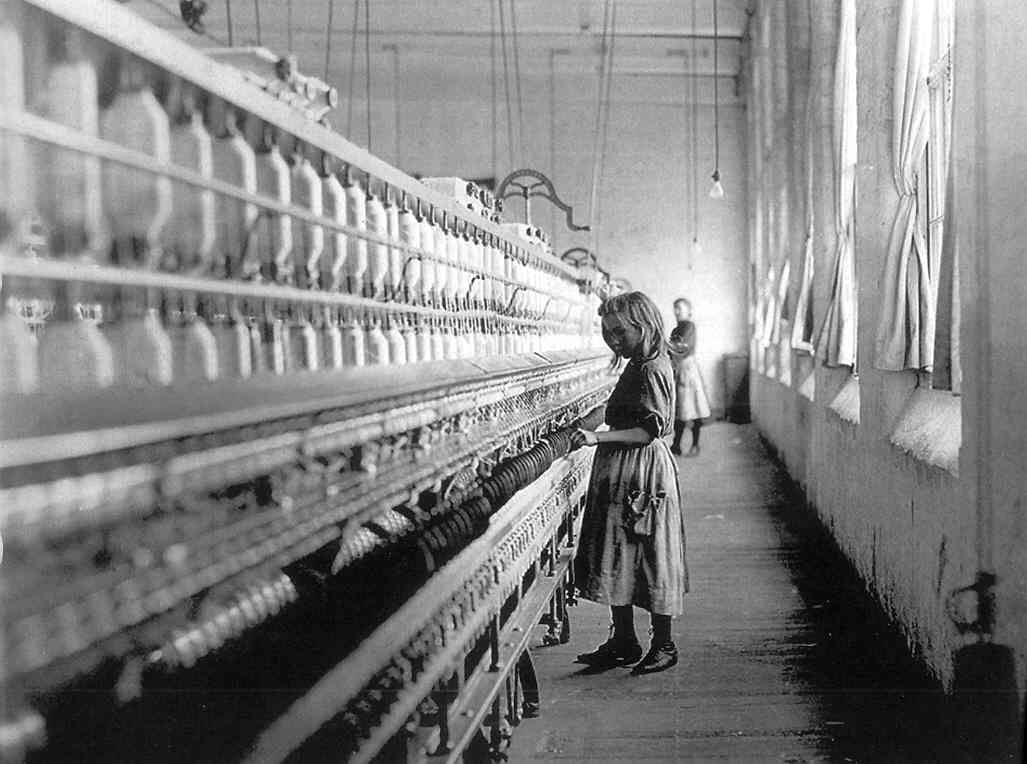
Child Labor in South Carolina
- 1908
National
Archives
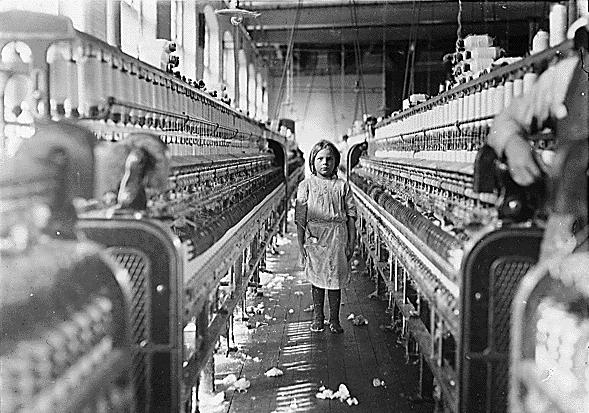
Child Laborer, Newberry,
S.C. 1908.
The overseer said apologetically,
"She just happened in."
She was working steadily
Lewis W. Hine – National
Archives
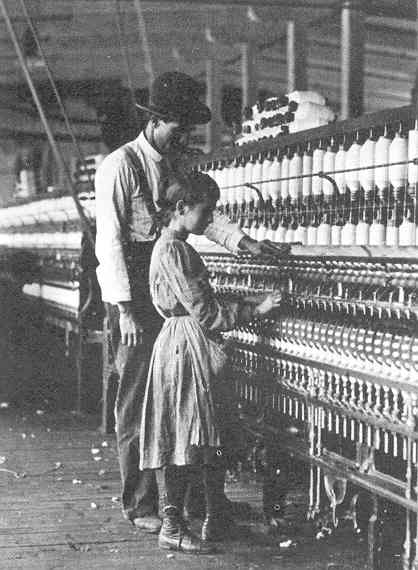
A girl is being taught the
operation of a spinning machine
George Eastman House
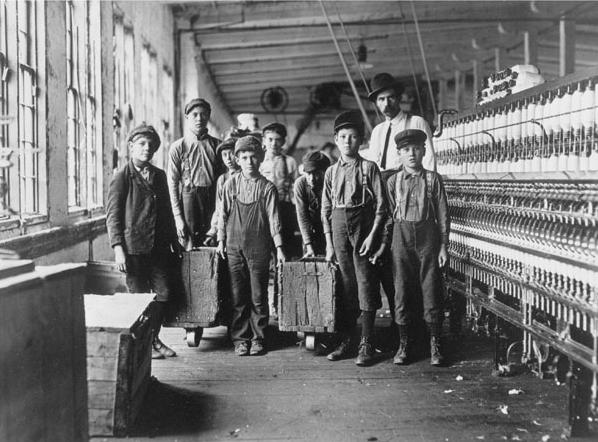
"Some of the doffers and
the Supt.
Ten small boys and girls about this size out of a force of
40 employees. Catawba
Cotton Mill. Newton, NC"
By Lewis Hine, December
21, 1908
National Archives
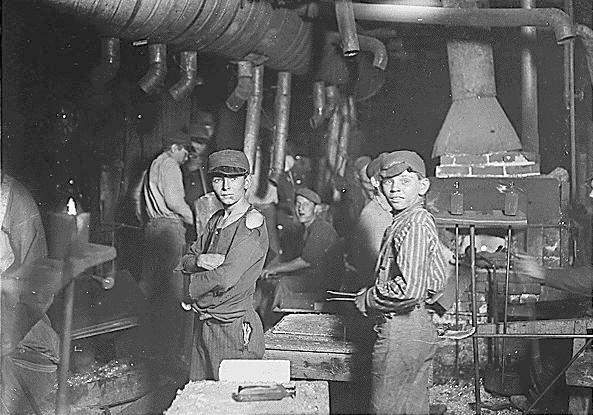
Child Laborers in Indiana
Glass Works, Midnight, Indiana – 1908
Photographer: Lewis W. Hine
National
Archives
| THE AMERICAN LABOR MOVEMENT |
Actually, Americans had begun to take action
against this mounting socio-economic crisis years earlier, with the founding in
1869 of the organization, Knights of Labor, originally a union
of skilled workers, designed to protect their professional positions in the
face of the invasion of masses of unskilled workers (farm boys mostly) into
their industrial world. But over time it
broadened its membership and pushed for specific items, such as the 8-hour
working day ... reaching nearly 30,000 in membership by 1880, 100,000 by 1884,
and 800,000 by 1886 ... involving around 20% of America's industrial
workers.
But
then a number of things would bring this organization to rapid decline after
that. Its leadership was not skilled in
organizational matters. It was heavily
Catholic in membership, and drew the opposition of the Catholic hierarchy
because of its secretive ways. Also,
Chinese laborers were always glad to take the place of the workers when they
went on strike for their 8-hour day program.
And the organization could not find support within the American press,
which depicted it as being merely a group of anarchists. Ultimately, it was most unfairly depicted as
the cause of the 1886 Haymarket Square Riot[1],
undercutting the organization's reputation so badly that by the time of the
1893 Panic it had become only a very small operation.
The
organizing of American labor was subsequently taken up by the American
Federation of Labor (AFL) founded that pivotal year of 1886 by Samuel Gompers as a result of a
dispute with the Knights of Labor over competing labor
contracts. It united a number of guilds
or unions of skilled workers and craftsmen (as opposed to common day laborers)
– beginning with the cigar makers' unions.
Then as the Knights of Labor faded away during
the later 1880s, the AFL held steady, even picking up new members.
Overall, it supported the idea of capitalism, simply
attempting to put skilled workers in a better position to take advantage of the
huge profits being accumulated in the industrial revolution sweeping
America. Also, its political caution,
and distinct patriotism[2] helped
bring the U.S. government alongside the AFL in support of its labor
program. By 1920, the AFL had grown to
nearly four million members.
Sadly, the right to get rich by owning a business was
considered more importantthan the right to make a
decent living working for a business
The Pullman Strike
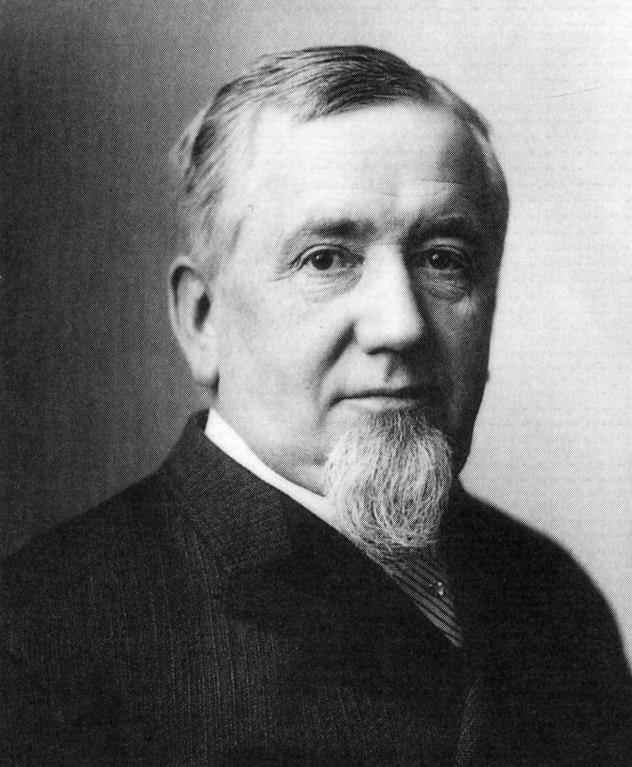
George Pullman – owner of
the Pullman Palace Car Co.
(specializing in private
luxury cars for the very wealthy
American elite)
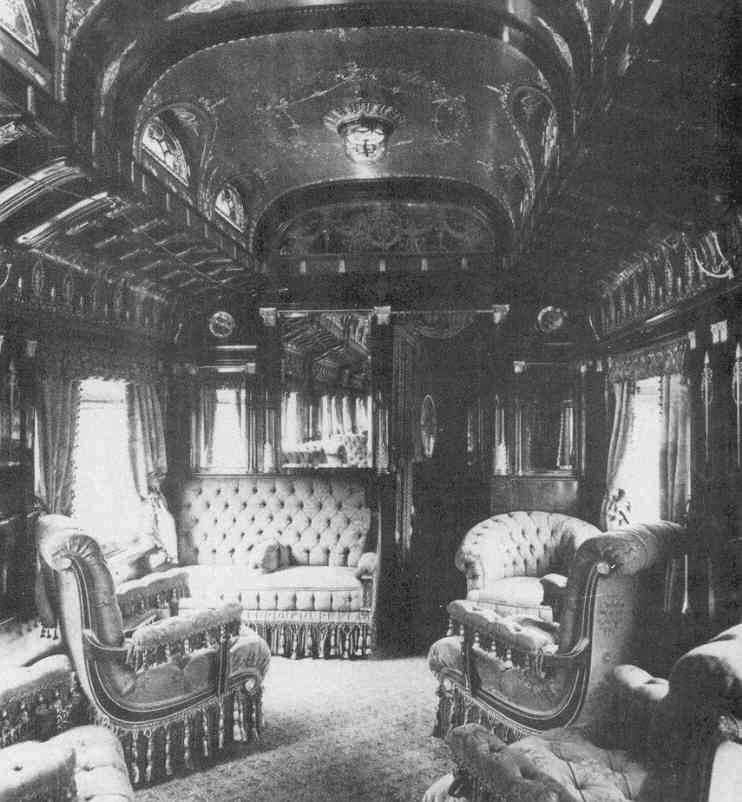
One of George Pullman's Pullman
Palace Car Co.
private luxury cars – The Countess
Library of Congress
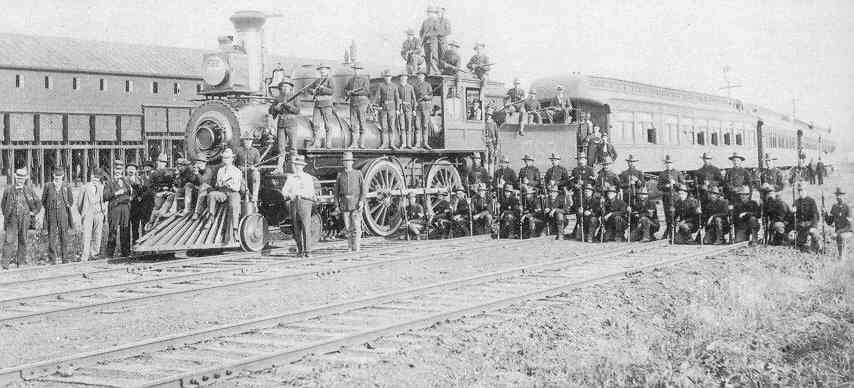
Federal troops sent to Chicago
by President Cleveland to break
the Pullman strike – 1894
Library of Congress
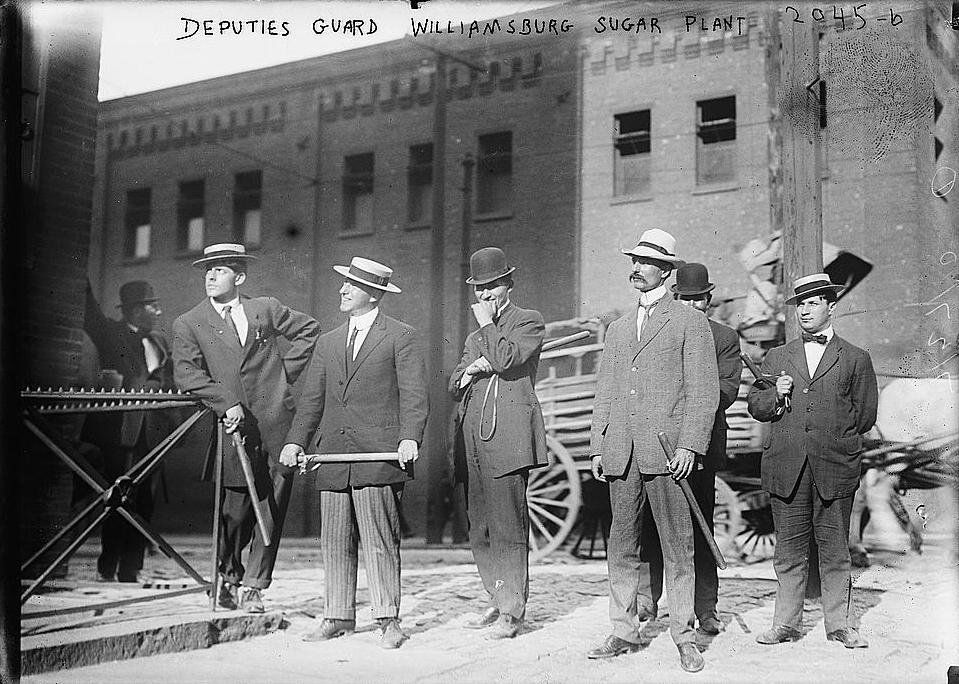
Deputies awaiting strikers
at the Williamsburg Sugar Plant – 1910
Library of Congress
LC-B2-2045-6
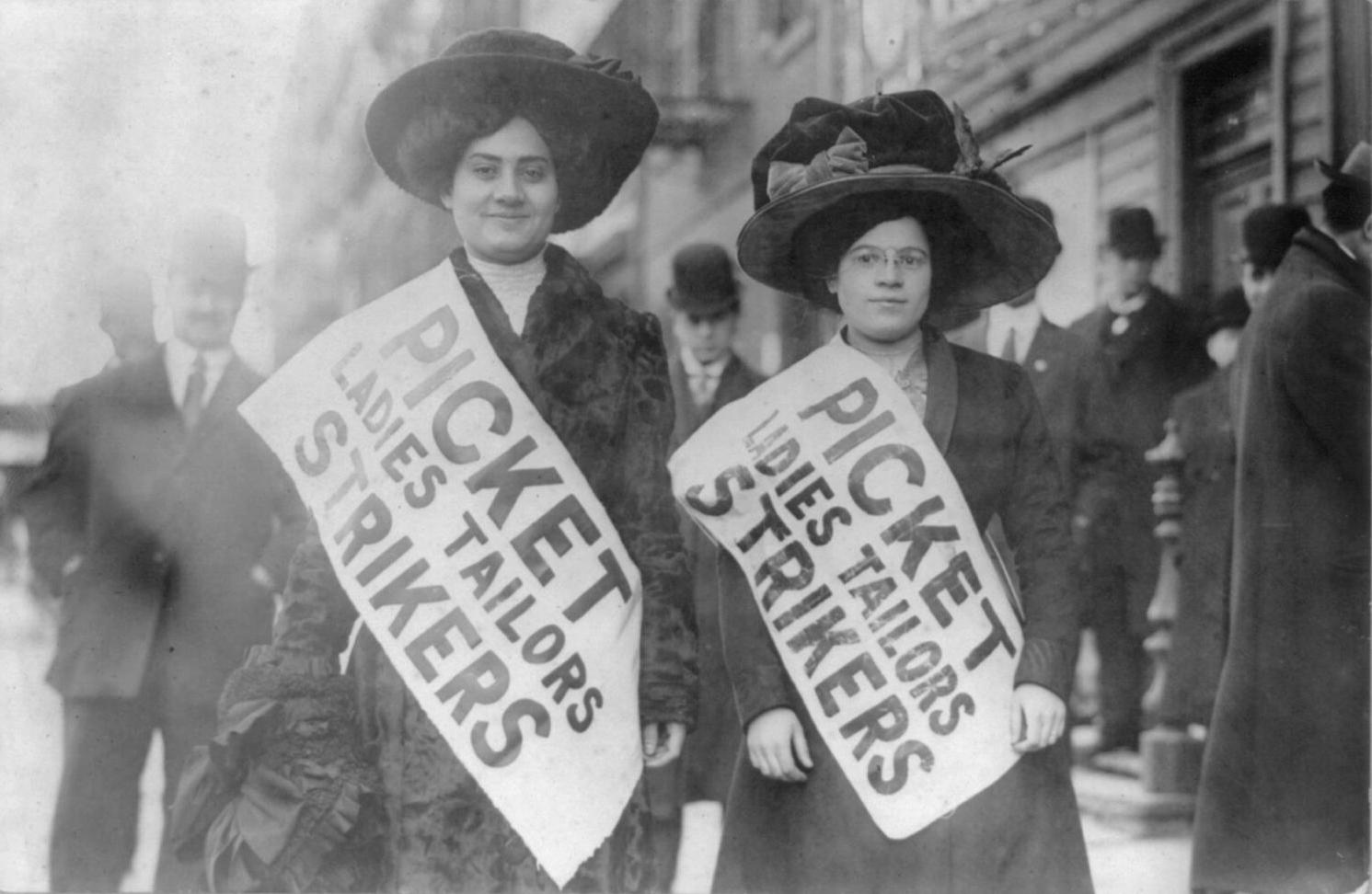
Ladies Tailors strikers – 1910
Library of Congress
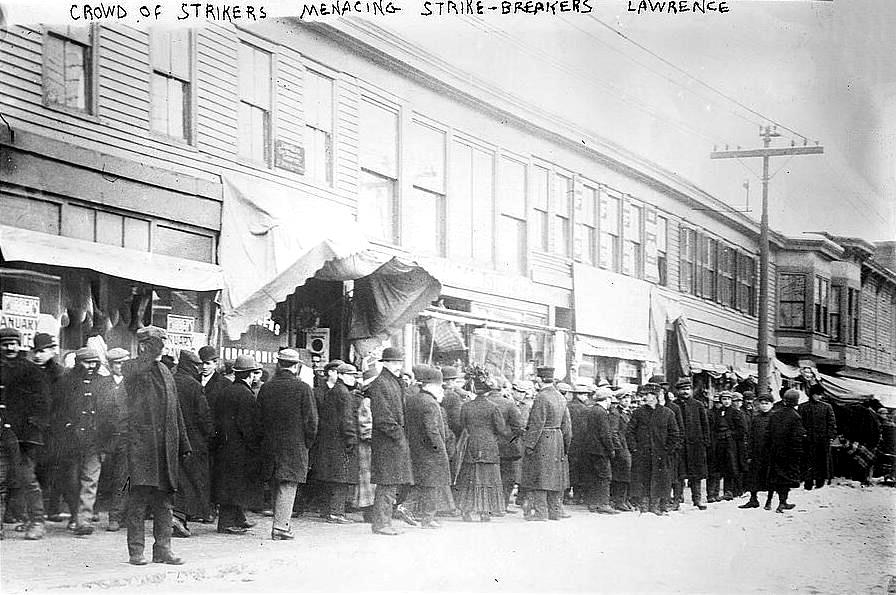
Woolen mill strikers at Lawrence,
Massachusetts menace
strike-breakers – 1912
Library of
Congress
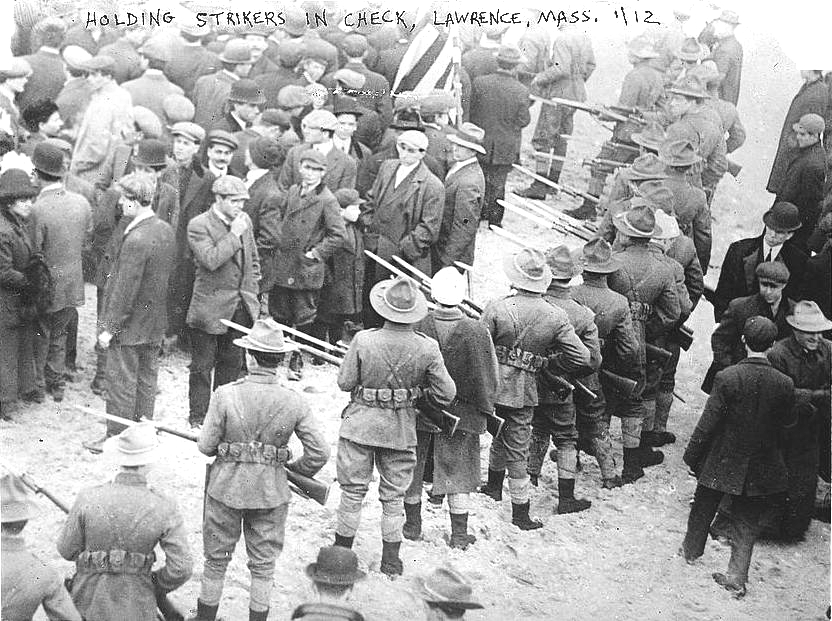
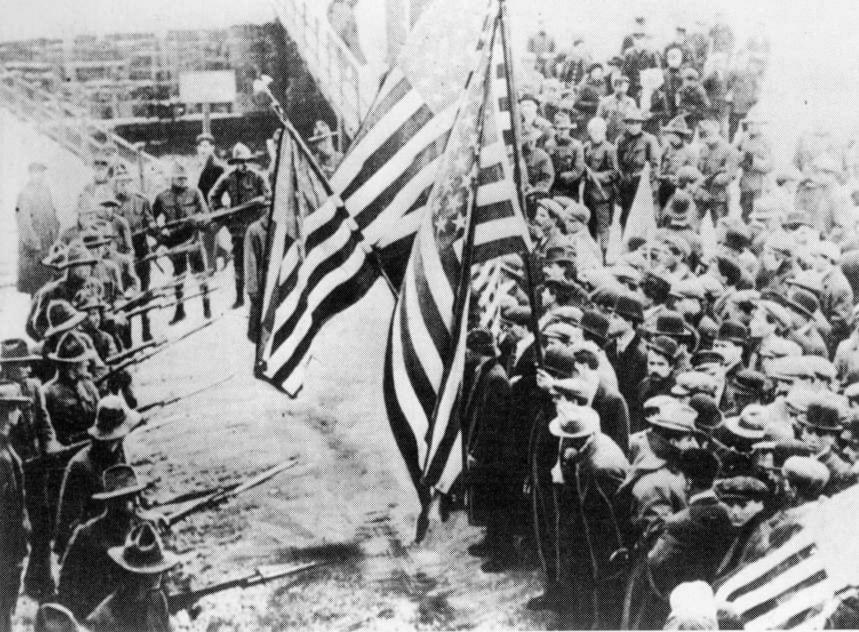
Woolen mill strikers at Lawrence,
Massachusetts confronted
by state militia – 1912
Library of
Congress
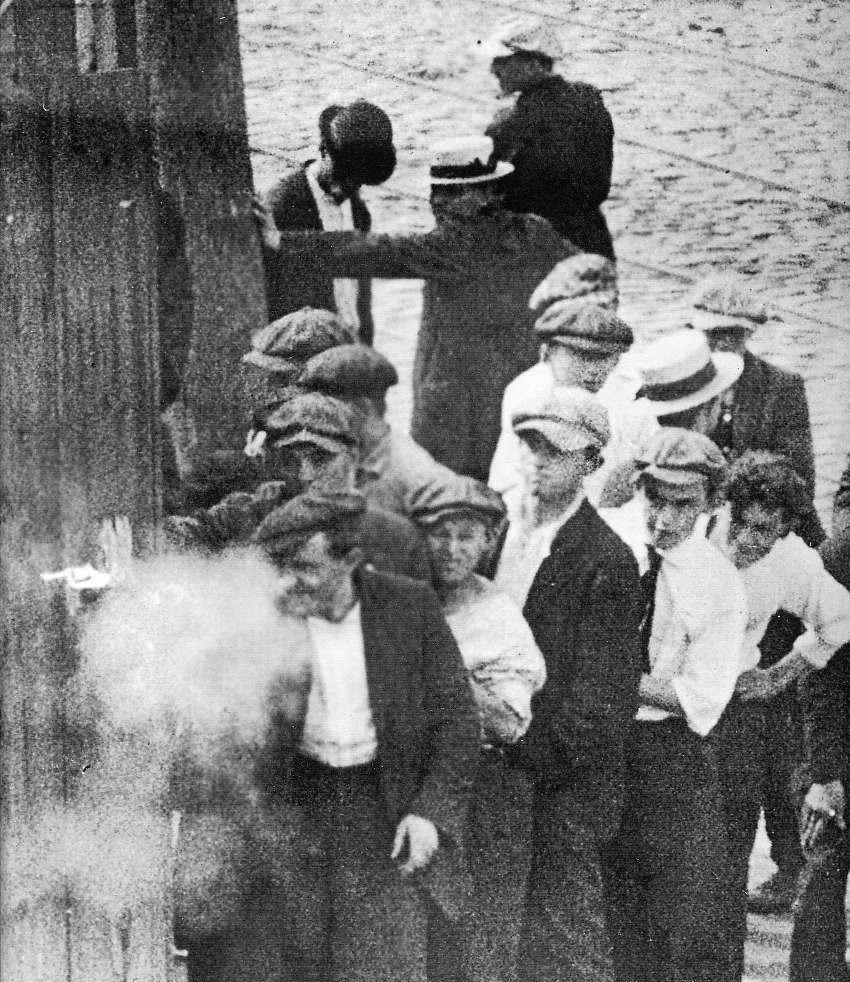
Strikers firing a pistol
at private guards at the Standard Oil
refinery in Bayonne, NJ – June 1915
[1]At a gathering of workers at Haymarket Square in Chicago who were
demanding the eight-hour working day, an unknown person threw a bomb at police
who were in the process of dispersing the crowd, killing seven officers and a
number of civilians. On the basis of
scanty or non-existent evidence seven (mostly German) anarchists were sentenced
to death by hanging (a number of them had not even been present at the
gathering) for their contribution to the tragedy. Only four were actually hanged, as one
committed suicide in jail and the two others had their death sentences commuted
to life imprisonment, but were pardoned by the Illinois governor in 1893 who
(as did many) considered the trial a total travesty of justice.
[2]Such political caution and patriotism was clearly demonstrated during
World War One, and in its opposition to the more radical (mostly immigrant)
labor organizations such as the “Wobblies” (the Industrial Workers of the
World) and the more radical Socialist Party.
| THE AMERICAN WOMEN'S OR FEMINIST MOVEMENT |
A huge stimulus to a new women's movement spread across America
was alcohol, and the devastation it caused in so many American families, as
husbands would spend what little earnings they achieved drowning their labor
sorrows on payday at the local bar, arriving home tipsy and with most of their
earnings gone. And thus the Women's Christian Temperance Union
(WCTU) was born in 1874, ultimately striving not for temperance in the drinking
of alcohol (a long-standing Christian virtue) but instead for total abstinence
(not at all part of the Christian tradition, but soon to be treated as an
absolute Christian law).
But the women's movement moved further, to demand for women the
right to vote (women's suffrage), at first to give the women the political
leverage they would need to perform their all-important task of protecting
their families. But then it became
increasingly clear to the more active in the women's movement that women should
have the same rights as men in all capacities – publicly as well as
privately. It was time to end the idea
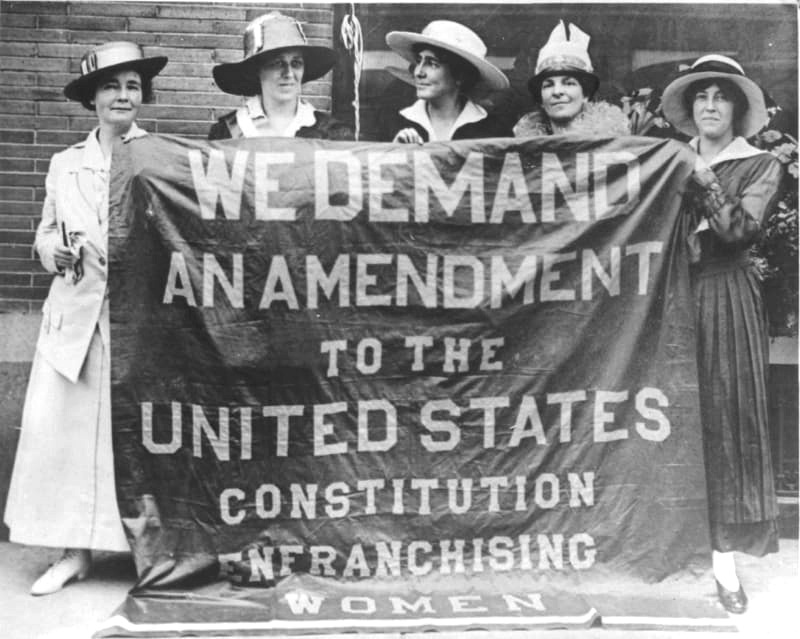
that the public domain was strictly the man's world. Thus the founding in 1890
of the National American Woman Suffrage Association, with long-standing
suffragist Susan B. Anthony heading up the organization. But it would take another 30 years of marches
and other forms of protest to finally secure the right of women to vote in
every American election with the 19th Amendment which went into effect in 1920.[3]
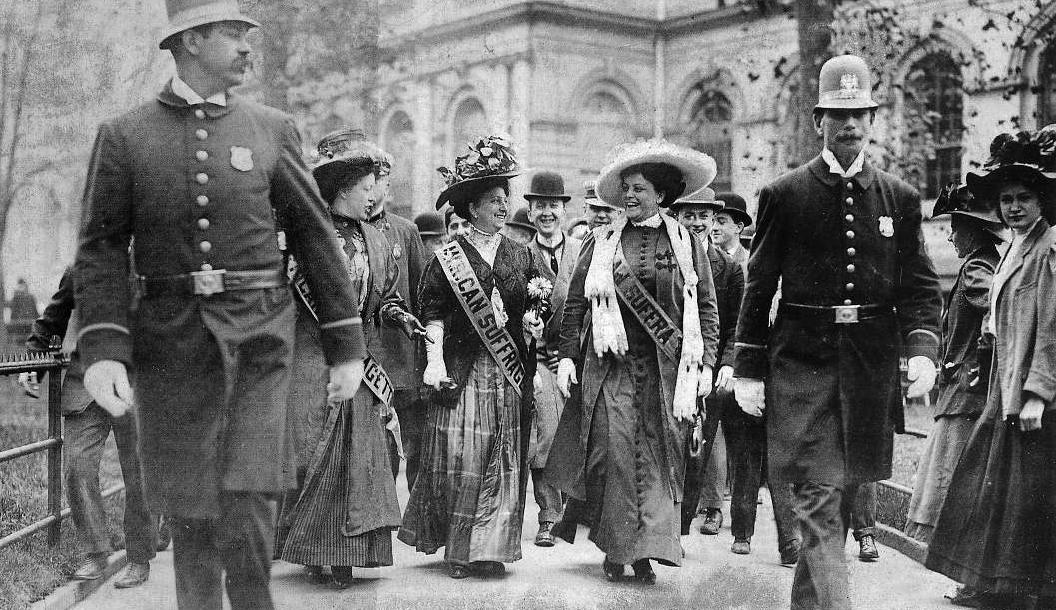
Suffragettes marching on
New York City Hall – 1908
[3]Some of the Western states, Wyoming (1869), Utah (1870) Colorado
(1893), Idaho (1896), had already taken the lead in this, prior to the end of
the 1800s.
Other Americans found themselves greatly distressed at how America's
capacity to create enormous industrial wealth was held in the hands of only a
tiny group of Americans – and how industrialism was also degrading so many
people to the status of serfs. Americans
(and immigrants) were being forced by rising economic circumstances to have to
leave the open-air work of farming and submit themselves to lives underground
in America's mines and inside the sweatshops of America's factories. The work was grueling, paid little, and – to Progressivists – was totally
dehumanizing. Indeed, alcohol was
becoming the sole source of relief for desperate workers – but also the growing
cause of the ruin of America's industrial working-class families. Something needed to be done to save America's
soul! Thus it was that "trust-busting"
would be a key feature of this new spirit stirring Americans to action on
numerous fronts.

Go on to the next section:
 Miles
H. Hodges
Miles
H. Hodges

 A rapidly growing America
 The American Labor Movement
  The American women's or feminist movement
  Trust-Busting