When Napoleon unleashed his fired-up
French citizen-soldiers against the professional armies of Europe's monarchs,
he ran right over the opposition. But he
also fired up the peasants of those countries, when the monarchs had to call on
their own people, and not just their private armies, to save their
thrones. And with this, a huge spirit of
"nationalism" was born, actually unleashed!
And
it would be a very emotionally charged force for these monarchs to deal
with. With popular participation in the
defense of the lands went the demand for participation in the politics of those
lands as well. Thus something akin to "democracy"
began to stir, something that the monarchs were quite leery of, having watched
what such "democracy" had done to France in its 1789 overthrow of the
Bourbon monarchy that had long-directed that country.
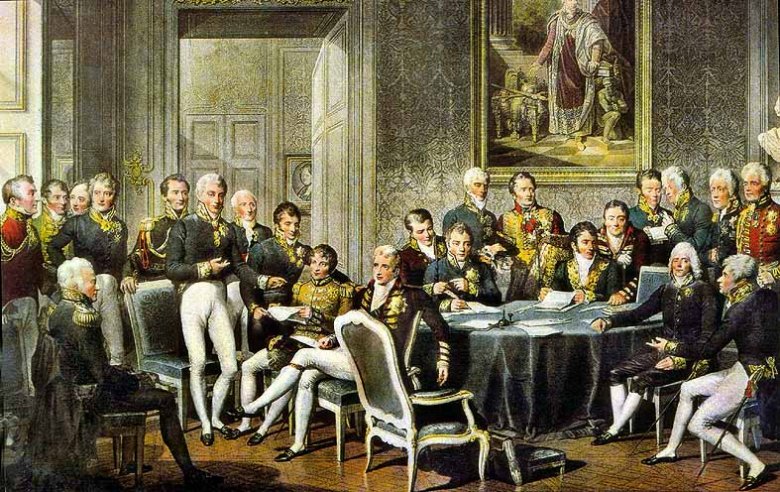
The Congress of Vienna (1814-1815) - by Jean-Baptiste Isabey
The
Congress of Vienna first assembled with Napoleon's
initial defeat in
1814 ... for the purpose of putting Europe
back together again in a
form as close as possible to the
way it looked before the French
Revolution ... something
that was just not destined to happen.
But
it was a time of a kind of a "Romantic" stirring that also
accompanied this new political awakening of the European continent's
commoners. In Germany, divided into
hundreds of small states, the hunger to see an actual German "nation"
arise out of the political chaos was deepened by the poetry and writings of
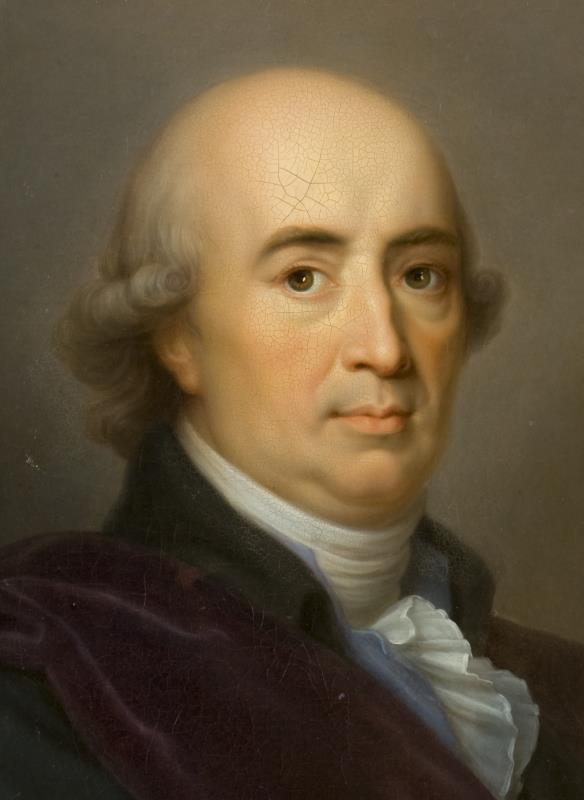
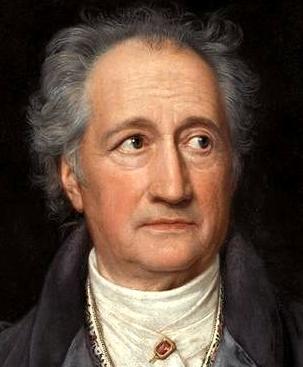
such Germans as Johann Gottfried Herder and Johan Wolfgang von Goethe, who, in
the 1770s, even prior to the French Revolution, helped birth the Sturm und Drang (Storm and
Drive) movement pushing for German national development.
Johann Gottfried Herder Johan Wolfgang von Goethe
Indeed, this political-intellectual hunger
stirring in Germany ended up, over the course of 1800s, not only bringing to
life various revolutionary movements in Germany (such as the
partially-successful Revolution of 1848) but also making German scholarship a
leading force in a more broad intellectual awakening that reached deep into
European society, and made German scholarship one of the leading forces of 19th
century Europe.
 And
eventually this romantic hunger in Germany would find its fulfillment in the
skillfully played war with neighboring France in 1870, which stampeded all
these smaller German states unto a single German Bund or Federation under the
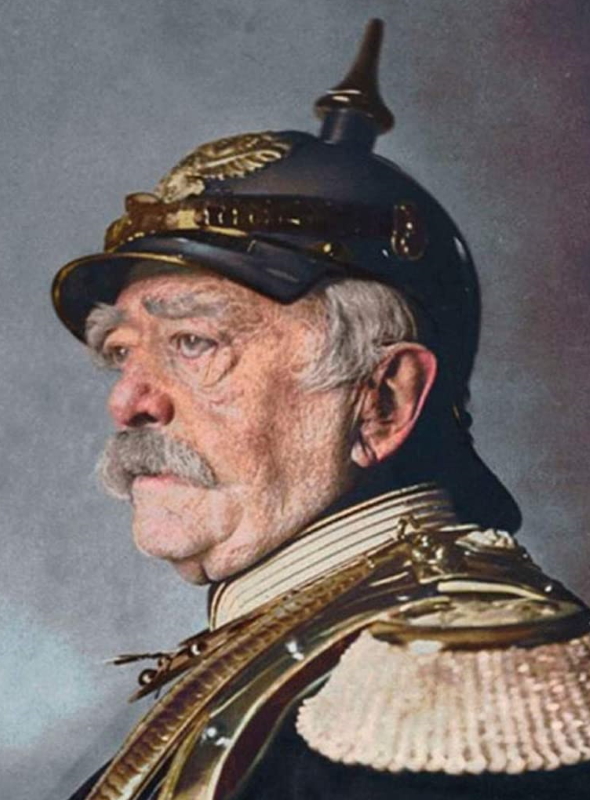
direction of Prussia's brilliant Prince Otto von Bismarck!
And
eventually this romantic hunger in Germany would find its fulfillment in the
skillfully played war with neighboring France in 1870, which stampeded all
these smaller German states unto a single German Bund or Federation under the
direction of Prussia's brilliant Prince Otto von Bismarck!
In
fact, this same thing was happening all across Europe at the time, as everyone,
from Norwegians in the North to Italians in the South and Russians in the East
to Irish in the West, began their march towards their "national destinies."
But
it was more like a revival of the tribalism that Charlemagne's feudalism 1200
years earlier had put an end to, with his feudal restructuring of European
society, placing Europe under long-standing ruling classes and their dynastic
masters.
But
where was it headed? And who was
managing this unleashed force, so that things did not get out of hand?
Tragically, the "Great War" of 1914-1918
(World War One), which bled Europe of a whole generation of young men, made it
clear that no one was really able to bring this national-tribal impulse under
some kind of civilized management once it was unleashed. Not even American President Woodrow Wilson, who thought (very incorrectly) that he had the
answer to the whole matter.
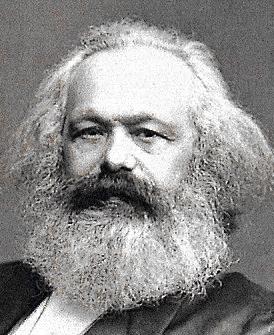 Another
individual who believed that he had the proper answer to this growing
nationalist impulse was Karl Marx, who did not like the lines that nationalism
was taking. Like Wilson, who believed that democratic
constitutions following the American model (although personally Wilson even preferred the British model) were the
proper path to a glorious future, Marx was convinced that it was through a
carefully managed industrial-class revolution that the future was best
met. And he did his best, Darwin-style (he was a big supporter of Darwin) to prove through his own historical
research presented in his 1867 publication, Das Kapital, the iron laws
of social development, development determined by the dialectic of class
conflict – conflict among the various social classes that emerged historically
as a result of the deep changes in economic structuring that occurred over the
span of history.
Another
individual who believed that he had the proper answer to this growing
nationalist impulse was Karl Marx, who did not like the lines that nationalism
was taking. Like Wilson, who believed that democratic
constitutions following the American model (although personally Wilson even preferred the British model) were the
proper path to a glorious future, Marx was convinced that it was through a
carefully managed industrial-class revolution that the future was best
met. And he did his best, Darwin-style (he was a big supporter of Darwin) to prove through his own historical
research presented in his 1867 publication, Das Kapital, the iron laws
of social development, development determined by the dialectic of class
conflict – conflict among the various social classes that emerged historically
as a result of the deep changes in economic structuring that occurred over the
span of history.
And Marx was certain that the recent
Industrial Revolution that was clearly unfolding in Europe was the true
millennium that others (such as the Christian world, which Marx did not approve of either) saw
headed their way in history. To Marx, the rising of the industrial
working class or "proletariat" against the grip of the "capitalist"
owners of Europe's new industries would bring history to its final
developmental stage., sort of putting some kind of completion to all historical
development.
Thus
was born Marxist Socialism's own quite Romantic offering – actually even
something of a religious offering (like Europe's "nationalism" and Wilson's "democracy") to
the masses. All they needed to do was to
follow Marx's advice, and rise up against
their capitalist oppressors. And voilà , then
would automatically follow a "natural" movement of modern society
into its final, utopian stage – some kind of workers' democracy.
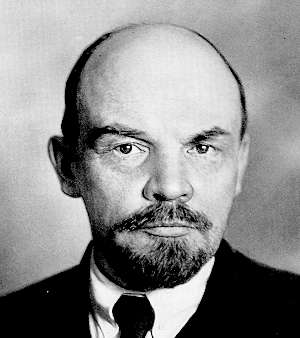 But
the Russian intellectual, Vladimir Ilyich Ulyanov, popularly known simply as "Lenin," was not as certain that
the Marxist utopia would come into being of its own accord simply through spontaneous
revolutionary action on the part of Europe's industrial workers. Especially when it came to Russia – where the
industrial revolution had only recently got underway, and thus was hardly "ripe for revolution"
– Lenin took up the political line of thought that a workers' revolution was
going to need quite a bit of help from political specialists, intellectuals
(principally himself and his fellow Bolshevik Party leaders) to take the
initiative on the part of the largely undeveloped Russian industrial working
class and conduct Marxist revolution for them, in other words, a "people's
revolution" carefully directed by this small Leninist group serving as the
"vanguard" of the industrial proletariat.
But
the Russian intellectual, Vladimir Ilyich Ulyanov, popularly known simply as "Lenin," was not as certain that
the Marxist utopia would come into being of its own accord simply through spontaneous
revolutionary action on the part of Europe's industrial workers. Especially when it came to Russia – where the
industrial revolution had only recently got underway, and thus was hardly "ripe for revolution"
– Lenin took up the political line of thought that a workers' revolution was
going to need quite a bit of help from political specialists, intellectuals
(principally himself and his fellow Bolshevik Party leaders) to take the
initiative on the part of the largely undeveloped Russian industrial working
class and conduct Marxist revolution for them, in other words, a "people's
revolution" carefully directed by this small Leninist group serving as the
"vanguard" of the industrial proletariat.
But
it would not be until the midst of the Great War, and all of its bloody havoc –
and the way it simply broke down all sense of political authority – that Lenin would have the opportunity to
put his ideas into action in Russia. And
in doing so, he would plunge the country into a civil war lasting into the
early 1920s ... killing more Russians than had even the terrible war they
dropped out of in early 1918 in order to conduct this proletarian revolution.
The
world, which finally was able to pull out of the horrible nationalist slaughter
of World War One in late 1918, was forced to look on in horror as the
bloodletting continued, actually worsening, in Russia. It was all such a sickening – and frightening
– sight.
Europe vowed that never again would it allow itself to
get caught up in such political hysteria.
Nice resolve. Too bad it did not
last very long.
Go on to the next section:
 Miles
H. Hodges
Miles
H. Hodges

 America simply follows an increasingly "rational" Europe
 Rousseauian anarchism
  The Hegelian dialectic
  Darwinism
  Nationalism as a rising tribal religion
  Marxism / Leninism