At the time, "Christianity" was so deeply embedded in
the idea of America that the ideological developments going on in Europe seemed
to have little impact outside of some smaller intellectual circles in
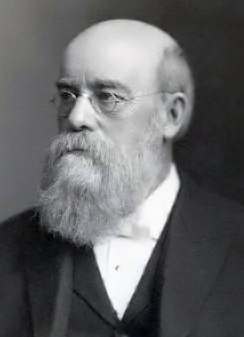
America. Even Liberals like Dewey did not at first see themselves
as offending Christianity just because he was not working within a deeply
Christian worldview. He was simply doing
science the way others conducted science in their chemistry or biological
labs. What he was doing had nothing to
do one way or the other (not at that time however) with Christianity. However, with time, (by the time of the
publication of the 1933 Humanist Manifesto) Dewey would find himself taking on a
more distinctly anti-Christian role.
America needed deliverance from not just tradition, "Christian"
as such tradition claimed to be, but from the superstition that accompanied it.
But for the time being, for the vast majority of
Americans, still sitting regularly in the pews of the American churches,
Christian tradition had not yet been shaken by this "higher"
intellectual inquiry going on in the rarified atmosphere of America's
intellectual circles.
"Science" or "religion"? And yet God himself as "providence"
or provider of American blessings was losing much of his place in American
hearts. The social dynamic driving the
country was seemingly handled quite nicely by the progress that science and
technology were achieving. And science
worked mechanically, no miracles needed.
And judging from the considerable material progress America was
experiencing at the time, science was more than adequate as the true sustainer
of society and its progress.
At the same
time, the bedrock of America's Protestant Christianity – Biblical Scripture as
the "Word of God" – had recently come into deep debate ... especially
in the higher social circles of science and theology. This debate involved an
argument between religious "modernism," supporting the role of
science and technology, and religious "traditionalism," with its
support of divine miracles that had no known scientific basis for their
occurrence. Which of these contending
positions was a thinking person supposed to support: science (materialism) or religion (mysticism),
especially as the Biblical writings themselves raised those very questions?
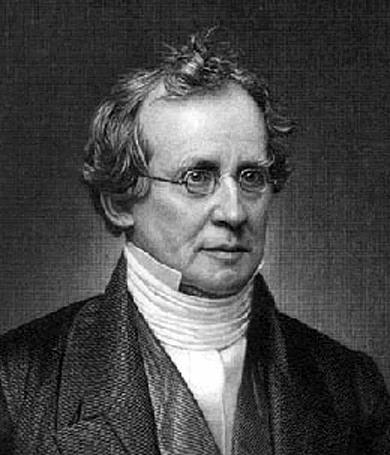 Christianity attempts a reply. Princeton Seminary
had long taken the position under the dominating influence of Charles Hodge (1850s through most of
the 1870s) to be unbending in the attitude that every word of Scripture was
God-breathed and thus not to be questioned or disputed. In short, Hodge was defending very strongly
the principle of the "inerrancy of Biblical Scripture." But he would find his position increasingly
challenged as the 1800s moved towards its close.
Christianity attempts a reply. Princeton Seminary
had long taken the position under the dominating influence of Charles Hodge (1850s through most of
the 1870s) to be unbending in the attitude that every word of Scripture was
God-breathed and thus not to be questioned or disputed. In short, Hodge was defending very strongly
the principle of the "inerrancy of Biblical Scripture." But he would find his position increasingly
challenged as the 1800s moved towards its close.
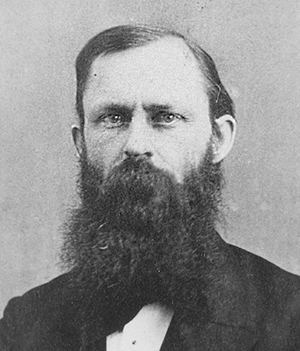 Meanwhile,
another approach to this issue was that of those who simply chose to ignore the
debate, and focus on the issue at hand:
saving souls. One such individual
was Crawford H. Toy, a professor at the Southern Baptist Seminary, who won
hearts by simply focusing on the spirit of love that stood at the heart of
Christianity – rather than theological doctrine. Unfortunately, even that proved to be too
much of a compromise for the otherwise creedless Baptists, whose Convention in
1879 forced him to resign his position at the seminary because he was not
taking a sufficiently pro-inerrancy stand.
Meanwhile,
another approach to this issue was that of those who simply chose to ignore the
debate, and focus on the issue at hand:
saving souls. One such individual
was Crawford H. Toy, a professor at the Southern Baptist Seminary, who won
hearts by simply focusing on the spirit of love that stood at the heart of
Christianity – rather than theological doctrine. Unfortunately, even that proved to be too
much of a compromise for the otherwise creedless Baptists, whose Convention in
1879 forced him to resign his position at the seminary because he was not
taking a sufficiently pro-inerrancy stand.
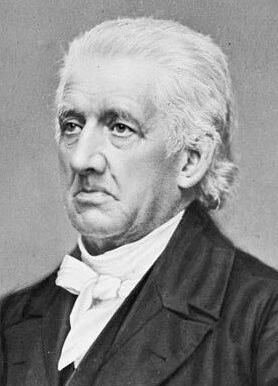 More successful in this middling approach was Henry Ward Beecher, son of the
conservative Presbyterian preacher Lyman Beecher and brother of fellow
Abolitionist Harriet Beecher Stowe (author of Uncle
Tom's Cabin). As a popular pastor
and circuit preacher, Beecher sidestepped the controversial intellectual issues
of evolution and Biblical reliability, even stating at one point that he saw no
problem with the theory of evolution – as long as it understood God to be at
the heart of the process. He preached a
very upbeat message of love and a willing accommodation to the changing
industrial culture developed around the Christian community. And he proved to be quite successful in
developing a stable middle-class message in the face of Darwinism's intellectual challenge,
all the way up until his death in 1887.
More successful in this middling approach was Henry Ward Beecher, son of the
conservative Presbyterian preacher Lyman Beecher and brother of fellow
Abolitionist Harriet Beecher Stowe (author of Uncle
Tom's Cabin). As a popular pastor
and circuit preacher, Beecher sidestepped the controversial intellectual issues
of evolution and Biblical reliability, even stating at one point that he saw no
problem with the theory of evolution – as long as it understood God to be at
the heart of the process. He preached a
very upbeat message of love and a willing accommodation to the changing
industrial culture developed around the Christian community. And he proved to be quite successful in
developing a stable middle-class message in the face of Darwinism's intellectual challenge,
all the way up until his death in 1887.
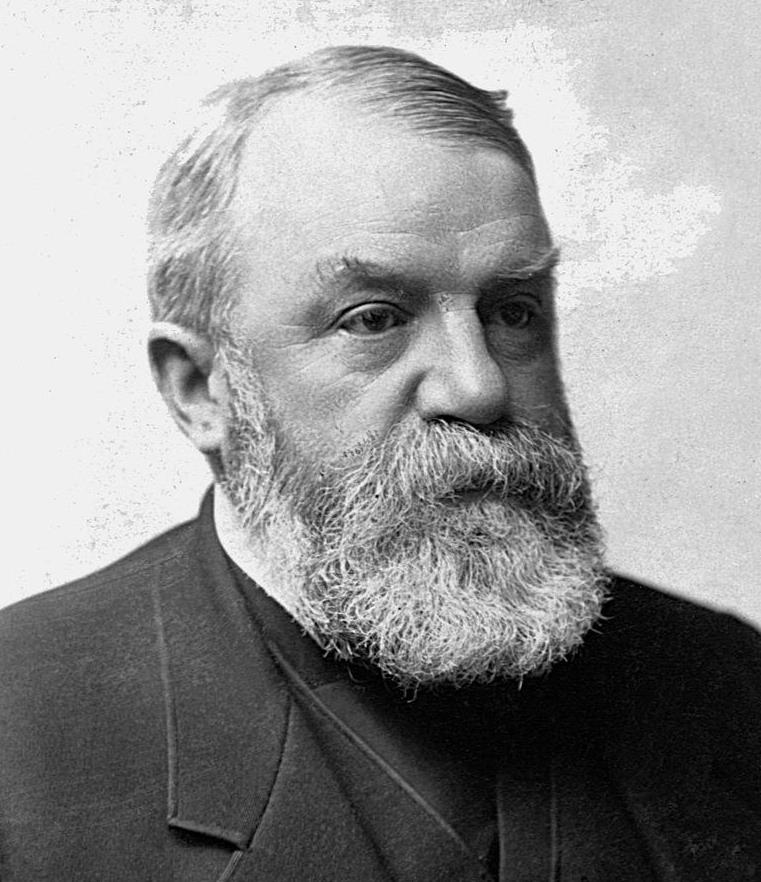 Another individual to take something of a middling
approach to the issue of traditional theological correctness and the rising new
cultural norm of industrial/scientific Rationalism was Dwight L. Moody, circuit preacher and simple but
straightforward evangelist. Moody
preached to crowds of mostly middle-class Americans, who were simply trying to
make sense of the social changes underway in their once-familiar America. Moody was far from being an intellectual Progressivist with a moral program designed to make
the world a better place. Nor did he
have any strong views on the burning issues of the Christian seminaries, such
as evolution or Biblical inerrancy. He
was a classic premillennial who simply looked to Jesus's second coming to clean up the mess that human
sin had made of creation. And that
approach to life's challenges at the end of the 1800s made sense to thousands
of people who flocked to hear what he had to say at his various urban rallies
held around the country.
Another individual to take something of a middling
approach to the issue of traditional theological correctness and the rising new
cultural norm of industrial/scientific Rationalism was Dwight L. Moody, circuit preacher and simple but
straightforward evangelist. Moody
preached to crowds of mostly middle-class Americans, who were simply trying to
make sense of the social changes underway in their once-familiar America. Moody was far from being an intellectual Progressivist with a moral program designed to make
the world a better place. Nor did he
have any strong views on the burning issues of the Christian seminaries, such
as evolution or Biblical inerrancy. He
was a classic premillennial who simply looked to Jesus's second coming to clean up the mess that human
sin had made of creation. And that
approach to life's challenges at the end of the 1800s made sense to thousands
of people who flocked to hear what he had to say at his various urban rallies
held around the country.
| CHARLES BRIGGS AND BIBLICAL "HIGHER CRITICISM" |
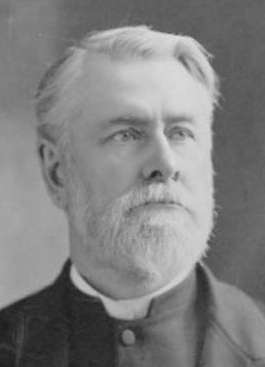 But towards the end of the century, a thunderstorm broke over
Union Theological Seminary's Hebrew scholar Charles Briggs' clear affirmation
that text-criticism or literary analysis amply proved among other things that
Moses did not actually write the first five books of Scripture but that these
writings were the result of the much later collection of at least four different
narrative traditions, and that Isaiah
did not write the entire work given under his name but that later disciples of
the Isaiah school had written the second half of the work.
But towards the end of the century, a thunderstorm broke over
Union Theological Seminary's Hebrew scholar Charles Briggs' clear affirmation
that text-criticism or literary analysis amply proved among other things that
Moses did not actually write the first five books of Scripture but that these
writings were the result of the much later collection of at least four different
narrative traditions, and that Isaiah
did not write the entire work given under his name but that later disciples of
the Isaiah school had written the second half of the work.
Although
for any who might have understood that the Jewish Scriptures were community narrative (not
science), such a revelation should have come as no surprise. Biblical narrative was about finding the path
to Truth through divine inspiration, and was not assembled anciently by those
with a modern scientific worldview. But
Briggs went further, even claiming that the Old Testament was morally inferior
to the moral development of modern times.
This so enraged the Presbyterian denomination that in 1893 it not
only excommunicated him[1] but tried
to block Briggs' professorial advancement at Union Seminary in New York
City. But the seminary refused to
dismiss Briggs, and instead the seminary withdrew from the Presbyterian
denomination (both Briggs and the seminary joined the more "modernist"
Episcopalian denomination).
But Brigg's
excommunication hardly caused the controversy to go away. It merely deepened
the controversy, as biblical perfection or "infallibility" became one
of the essential doctrines, one of the "fundamentals of faith,"
proclaimed by a growing group of Christian traditionalists – who eventually
took or were assigned the name "Fundamentalists" ... derived from the
publication, The Fundamentals, presenting essays over the period of
1910-1915, written by some 65 theologians of various denominations ... essays
in support of the idea of the infallible authority of Scripture.
[1]Commentators have noted that part of his difficulty with the
denomination occurred in part also because of Briggs’ abrasive manner when
challenged.
But the modernizers or religious "Liberals" were hardly
cowed by the Fundamentalists. They had
other things to do than argue over the points of Scripture and its
infallibility. They even backed away
from the idea that Christianity was essentially about saving souls from going
to hell because they had not yet been saved.
Rather, they were advocates of a "Social Gospel" – which conformed
nicely to the Progressivist spirit of the
times. For instance, Congregationalist
pastor Washington Gladden, Baptist pastor Walter Rauschenbusch, and economist
Richard Ely were all active in promoting the idea that Christianity after all
was about social and economic justice, helping the poor the way Jesus looked to the needs of the
poor.
Gladden Rauschenbusch
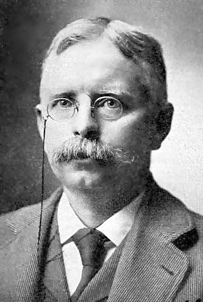
Ely But once again, looking to material salvation rather
than spiritual salvation hardly needed the personal support of God, the
guidance of the Biblical word of God, or any kind of Christian spiritual
conversion in order to move their program forward. A purely Secular approach to social and
economic justice would work just as well.
But once again, Humanist Rationalism or Secularism
hardly met the deeper urges of people to find spiritual connection with the
world around them. But some in the
Modernist camp simply came up with the attitude that any kind of spirituality
would do just fine, something like the Transcendentalists of the early-mid
1800s. Witchcraft was not one of the ideas put forward (at that time). But the spiritual offerings of other
religions were – especially the more exotic kinds coming out of the Far
East.
Indeed,
a number of intellectuals even proposed simply to create some kind of universal
religion, combining the moral features of Christianity, Buddhism, etc. Theosophy was just such an example – cultivated
outside America by such Humanists as the Russian occultist and author Helena
Blavatsky, her British disciple Annie Besant, and the Austrian educator Rudolf
Steiner – that was taken up in America by intellectuals seeking to combine
science and the mysticism of the world's great religions, as a form of personal
development (also very popular later in the 20th century among very
self-focused American hippies!).
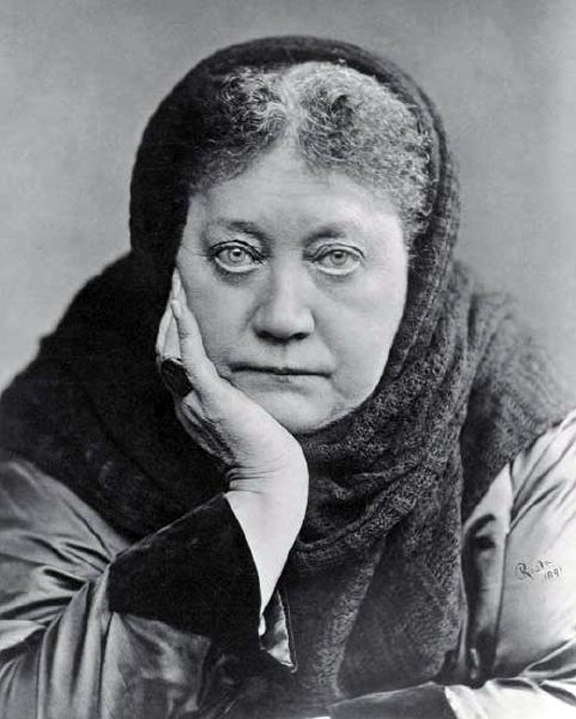

Blavatsky
Besant
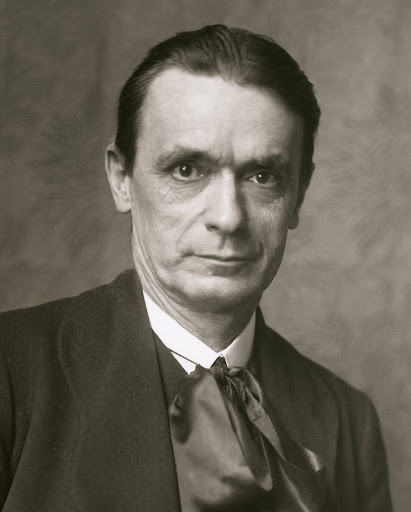
Steiner
Thus
science could continue to pursue fact and Progressive Liberals could pursue
through private faith some kind of universal moral code, even some kind of
personal mysticism. And so a sort of
spiritual "universalism" came into play in certain social circles,
especially among the more modern and thus more enlightened of the Westerners
(including Americans, though not in the numbers as was the case for Europe).
It is important to note at this point that Islam was not as interesting to such hungry hearts, in
part because it was even more fundamentalist in character, and did not conform
well to the goal of "personal freedom" sought by Western
Liberals. Islam is as hungry for submission to authority as
Western modernism is hungry for freedom from just such authority!
| THE AZUSA STREET REVIVAL AND THE AG CHURCH |
Then into this growing world of enlightened Humanism another Christian revival
burst forth – not quite on the order of the two earlier Great Awakenings, but significant
nonetheless. Something very strange
broke out in Los Angeles in 1906 (something quite similar to what was going on
at the same time in Wales in Britain) at a meeting house on Azusa Street.
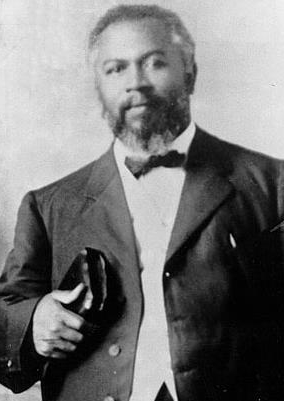 It
started when strange physical healings and "speaking in tongues"
broke out at a home – when a Black holiness preacher and guest speaker William
J. Seymour was kicked out of church after bringing his Pentecostal message there, and was thus forced to move his ministry to
this home. The event soon drew crowds to
witness and then participate in this strange behavior, until it became
literally an on-going twenty-four-hour-a-day phenomenon. When the crowds collapsed the porch to the
house, the revival moved its operations to a Black Apostolic Faith Mission
building on Azusa
Street, making it quite inter-racial in nature as well as inter-ethnic
(Hispanics also attending), even bringing women forward to take leading roles
in the revival. Hundreds, then over a
thousand individuals would soon be attending the meetings. And thus was formed the Azusa
Street Revival.
It
started when strange physical healings and "speaking in tongues"
broke out at a home – when a Black holiness preacher and guest speaker William
J. Seymour was kicked out of church after bringing his Pentecostal message there, and was thus forced to move his ministry to
this home. The event soon drew crowds to
witness and then participate in this strange behavior, until it became
literally an on-going twenty-four-hour-a-day phenomenon. When the crowds collapsed the porch to the
house, the revival moved its operations to a Black Apostolic Faith Mission
building on Azusa
Street, making it quite inter-racial in nature as well as inter-ethnic
(Hispanics also attending), even bringing women forward to take leading roles
in the revival. Hundreds, then over a
thousand individuals would soon be attending the meetings. And thus was formed the Azusa
Street Revival.
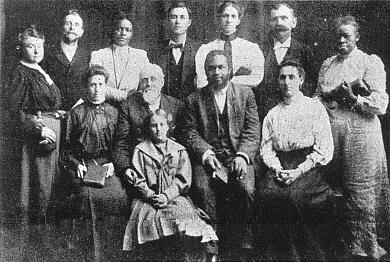
Leaders of the Azusa Street revival
Healings,
speaking in tongues, and almost non-stop preaching took place there, giving
rise to the designation of this growing event as "Pentecostalism" because it so
resembled the events on that ancient day when a similar spirit formed the
foundations of the first Christian community.
Individuals of all social backgrounds were touched by a special
spiritual power or charisma (thus also becoming considered to be "charismatics")
that seemed to drive this whole development.
Eventually the Azusa Street Revival would burn itself out – but not before
birthing the Assemblies of God (AG) church in 1914, a Pentecostal/ charismatic denomination that would continue to grow
through the 20th century, its growth continuing even to today, to the point
where the denomination has around 370 thousand congregations with over seventy
million members worldwide.

Go on to the next section:
 Miles
H. Hodges
Miles
H. Hodges

 Christianity again undergoing deep debate
 Charles Briggs and Biblical "higher criticism"
  The Social Gospel
  Spiritual Universalism
  The Azusa Street Revival and the AG Church