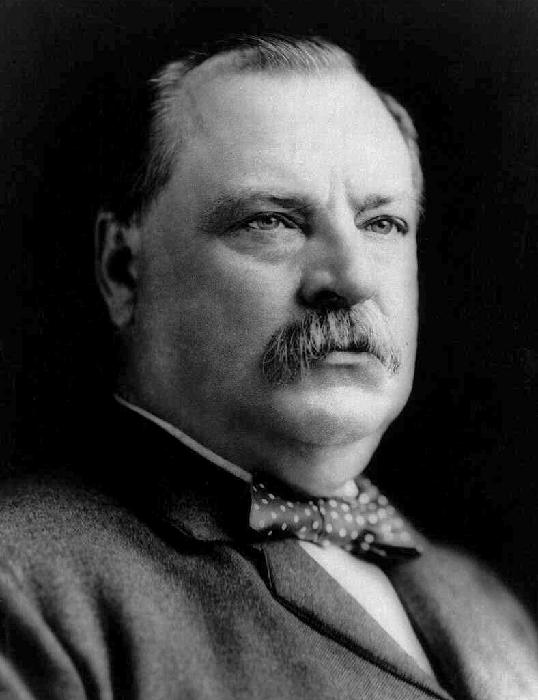
 The election which brought the Democrat Cleveland to the presidency was
fought largely over the issue of personal integrity of the candidates, the
Republican James Blaine, unfortunately well known for his involvement in the
railroad industry spoils system. Cleveland was known as a man of great
personal integrity, which the Republicans attempted to undercut with rumors
about the unmarried Cleveland having once conceived a
child out of wedlock!
The election which brought the Democrat Cleveland to the presidency was
fought largely over the issue of personal integrity of the candidates, the
Republican James Blaine, unfortunately well known for his involvement in the
railroad industry spoils system. Cleveland was known as a man of great
personal integrity, which the Republicans attempted to undercut with rumors
about the unmarried Cleveland having once conceived a
child out of wedlock!
In
the end, the election was very close, coming down to the electoral vote of New
York, when Cleveland had received only a little
over a thousand vote majority out of the million votes cast there. And behind that tiny Republican shortfall had
been the Republican Mugwumps,[1] who simply
could not bring themselves to support the corrupt Blaine.
And
once in office Cleveland resisted as best he could
the demand for spoils from fellow Democrats, even reducing the size of the
bloated federal bureaucracy (and not just the opposition Republicans in the
mix). He moved to strengthen the navy by
getting rid of inferior ships built by corrupt contractors. He took back into federal hands western land
that the railroads had made no progress in developing. And he cut back government support of farmers
and army veterans, which he understood as creating on the part of the recipients
a state of dependency rather than personal and social health.
But
a huge political issue facing Cleveland was one he could not bring
to resolution: the gold versus silver
controversy. Supposedly this was simply
an economic issue, about which of the two, gold or silver, served best to back
the strength of the U.S. dollar. If the matter had been simply that and nothing
more, a reasonable policy could have been arrived at. But actually, it really was not just about
valuable metal. It was also about the
deep social tensions that hit the country as America moved into the industrial
age.
Gold
was very much less abundant than silver.
Being scarce, it was thus much more valuable, therefore a tougher
standard supporting the value of the dollar.
Bankers and financial creditors, especially the big-money boys back
East, pushed hard for the dollar to be based solely on the value of gold alone,
requiring banks (including the federal banks) to hold gold as the backing for
their printed dollars, making dollars themselves very scarce and thus very
valuable. Those supporting the gold
standard were termed "Goldbugs."
Silver,
on the other hand, was still flowing quite readily out of the West's many
silver mines, and thus, ounce for ounce, very much less expensive than
gold. Dollars backed in value by
abundant silver would themselves therefore be much more abundant. And those that found themselves in debt to
banks, such as farmers who lived off of bank loans until harvests came around –
and also had financed much of their operations through bank-held mortgages –
naturally wanted to repay those loans with the cheapest dollars possible. Thus they were strong "Silverites."
But
there was even more to this problem than the matter of the value of the
dollar. The gold-versus-silver matter
was actually a symbolic or ideological matter[2]
that served to align American politics into bitterly opposing groups. The very wealth of America's rising financial
class (mostly back East) was galling to America's struggling farmers, and their
impoverished friends and relatives who had given up the struggle and taken
poor-paying jobs in the newly developing industrial world. This all seemed so un-American, especially
after so many of those who had fought for the Union during the recent Civil War
were finding American society seemingly so insensitive to their social
plight. It was just not fair.
Cleveland was forced to make his way
through this matter, much as presidents before him had been forced to contend
with the slavery issue. But like Grant before him, Cleveland ultimately decided that
gold served the interests of the nation best, in making for a very strong
dollar. He attempted to cut back the use
of silver, which put Congressmen representing the Silverite world of the West,
the rural Midwest and the South, in strong opposition to Cleveland.
Then,
on top of this issue, there was the one of tariffs ... the U.S. government's
primary source of income. Here Cleveland took the position in
opposition to the high tariffs (over a third of the value of the product
itself) that "protected" American industrial production from foreign
goods, and was producing an embarrassing surplus in the government's
budget. Cleveland's attack on the nation's
high tariffs now embittered the up-East side of the East-versus-West or
rural-versus-industrial debate, further undercutting Cleveland's political position
nationally.
And thus it was that Cleveland failed at his effort to be reelected in
1888. He actually won the popular vote, but narrowly lost the vote of the
electoral college, solely by the vote of his home state of New York, which –
because of the opposition of Tammany Hall – left him only 600 votes short of
winning New York's vote, and thereby the presidential election.
[1]From an old Algonquin term meaning “a person of importance,” implying
that those who bolted from the party were being ridiculously sanctimonious or
morally condescending in refusing to support their party’s candidate, Blaine.
[2]Symbolic or ideological, much as the slavery issue had been earlier that century, even to Southerners who
had owned no slaves and to Northerners who had no personal regard for America's
Blacks.
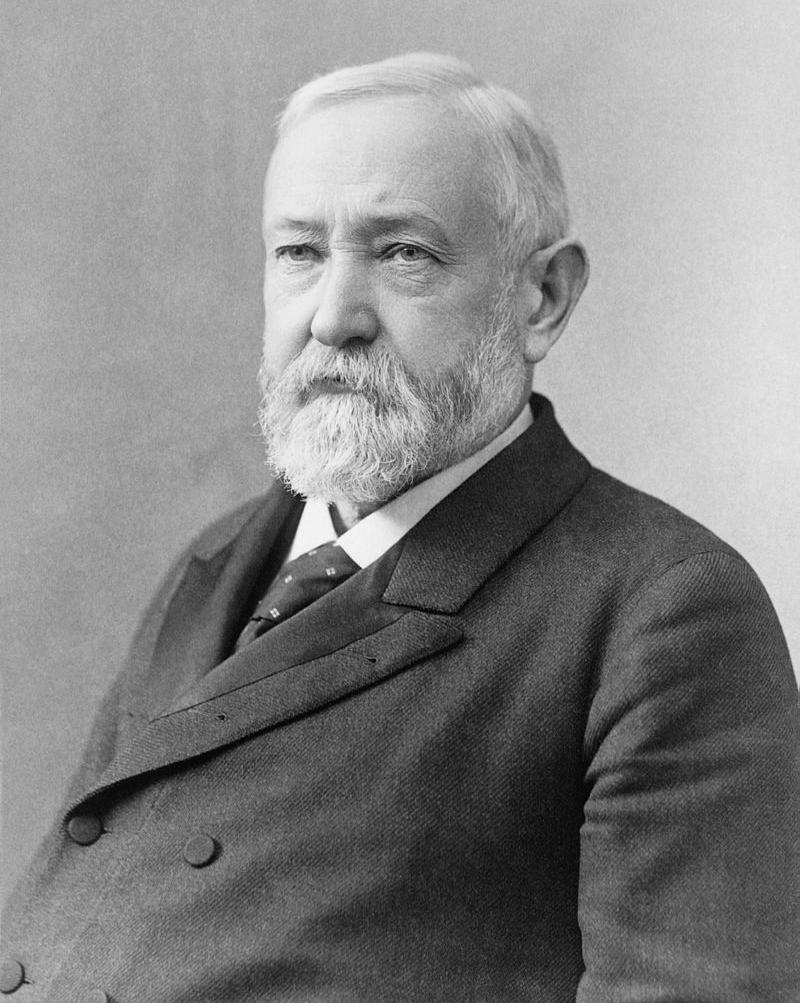
| BENJAMIN HARRISON (1889-1893) |

 Economics overrides politics during the late 1800s
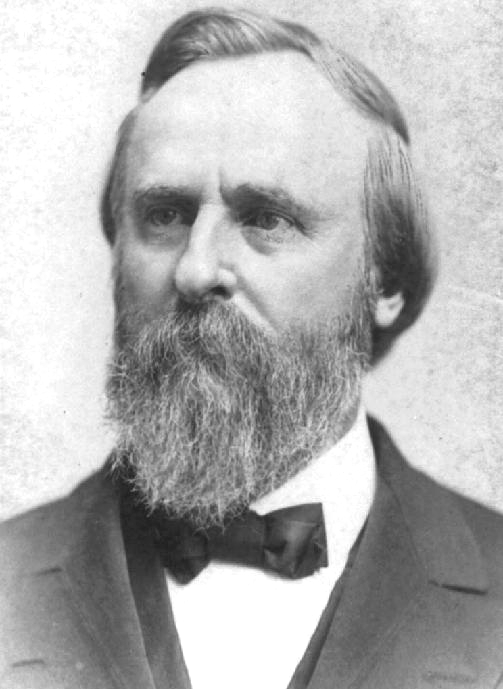
 Rutherford B. Hayes (1877-1881)
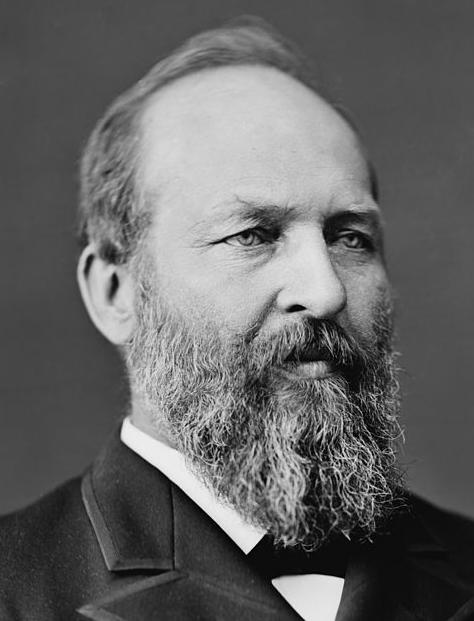
  James A. Garfield (1881)
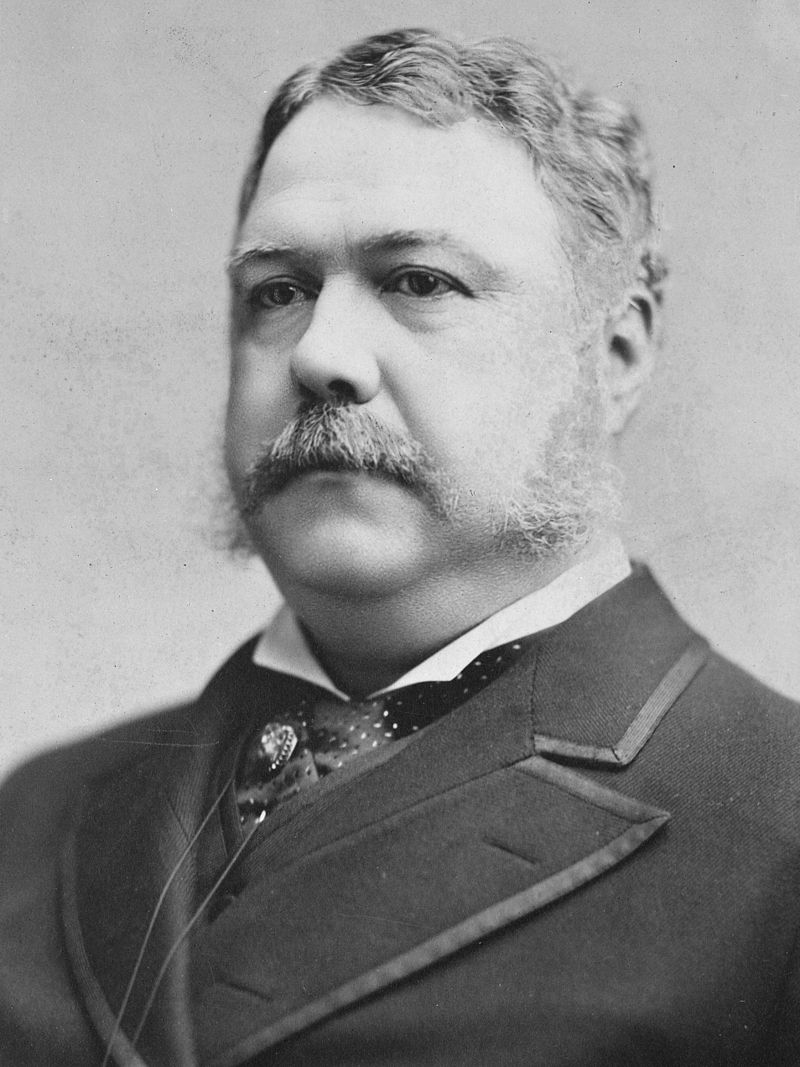
  Chester A. Arthur (1881-1885)
  Grover Cleveland (1st term: 1885-1889)
  Benjamin Harrison (1889-1893)
  Grover Cleveland (2nd term: 1893-1897)
  William McKinley (1897-1901) brings the 19th century to a close