<
13. AMERICA STUMBLES

NATION-BUILDING IN IRAQ
CONTENTS
 Nation-building in Iraq Nation-building in Iraq
 Into the quagmire Into the quagmire
 Mission accomplished? Mission accomplished?
 Political repercussions back home in America Political repercussions back home in America
 The 2007 "surge" in Iraq The 2007 "surge" in Iraq
The textual material on this webpage is drawn directly from my work
America's Story – A Spiritual Journey © 2021, pages 417-421.
|
What then possessed Bush to turn his attention to Iraq
remains to this day an unanswered question.
Iraq's President Saddam Hussein was a dictator, a
flamboyant self-appointed candidate to become the leader of the entire Arab
nation (all the Arab countries of the Middle East), in competition with other
such Arab candidates. He used the usual
Arab call to unity around the Jewish intrusion into the Arab world in the
establishment of Israel and made all kinds of noise in that regard. And he built up his military accordingly in
order to present a plausible claim to such candidacy.
But
as we have seen, he overstepped himself in Kuwait and he and his army got
burned badly. He was put under all sorts
of military quarantine which restricted his venturesome ways – though not
necessarily his language, used to keep himself "important" in the
eyes of his own people. Bush Sr. had not bothered to do more
than kick him out of Kuwait, but had gone no further in the matter of hemming
in the loud dictator. As his then Secretary
of Defense Dick Cheney would later explain, to have
gone deeper into Iraq would have amounted to entry into a "quagmire." Nothing would be gained – at great expense to
everyone concerned.
But Bush Jr. somehow decided that the
world would be a better place if Saddam were to just disappear. And it would also offer Iraq the opportunity
to go "democratic." That, to Bush, justified the huge
enterprise. He was determined to go nation-building in Iraq, no matter
what the cost involved.
But Bush's cabinet seemed to be less than
unanimous about undertaking this project.
However, Dick Cheney, now Bush's Vice President and closest
advisor, was changing his tune – and was now fully in favor of jumping into the
quagmire. Likewise his Secretary of Defense, Donald Rumsfeld, not only had the U.S.
military standing in readiness, but had the perfect candidate in mind, Ahmed
Chalabi, to lead Iraq to "democracy."
And the U.S. Congress, in October of 2002, not wanting to appear to be
unpatriotic, authorized exactly such action in Iraq – by a huge majority:
297-133 in the House and 77-23 in the Senate.[2]
But
unlike his successful efforts in enlisting allies for his Afghan program, he
got very little support from the international community (Britain would however
join Bush in this enterprise – at great
loss to both Britain and its Prime Minister Tony Blair). At first Bush tried the "Bush Doctrine," claiming Saddam's support for al-Qaeda, and thus candidacy for
American retribution. But nobody bought
that explanation. Then in September
2002, Bush went before the United Nations
General Assembly to put forward the claim that Saddam was violating the
international restrictions he had been placed under since his rebuke over
Kuwait – that Saddam was secretly developing
weapons of mass destruction (WMDs).
The
physical evidence in this claim offered by U.S. intelligence was very
questionable – and it quickly appeared that the larger world was not buying his
story. Ultimately the UN simply decided
to send more inspectors into Iraq to see what evidence they themselves could
find on this matter.
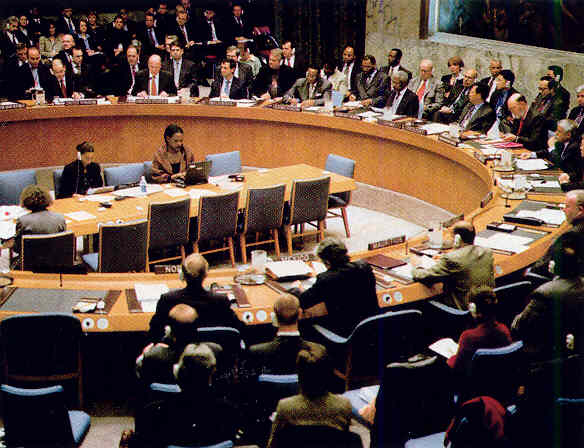
The U.N. Security Council
votes unanimously to return
UN inspection teams to Iraq
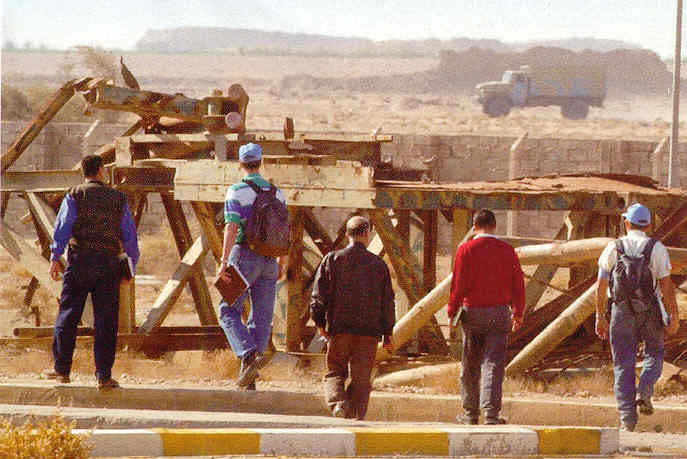
U.N. weapons inspectors in
Iraq
But
when, after months of searching Iraq, the UN inspectors were unable to come up
with any such WMD evidence, an anxious Bush saw his case before the court of
world opinion weakening rapidly. Thus he
made one more effort to win the world to his cause, using the excellent
international reputation of his Secretary of State, Colin Powell, to make a hopefully
compelling presentation in February of 2003 before the United Nations on this WMD matter. Bush also had an American proposal
put before the UN Security Council authorizing action against Saddam. But when it became apparent that France,
Russia and Germany were strongly opposed to this, he had the proposal
withdrawn.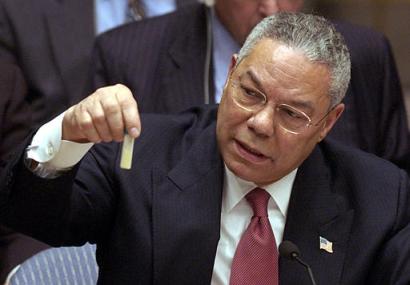
At the UN, Colin Powell holds
a model vial of anthrax,
while arguing that Iraq
is likely to possess WMDs –
5 February 2003.
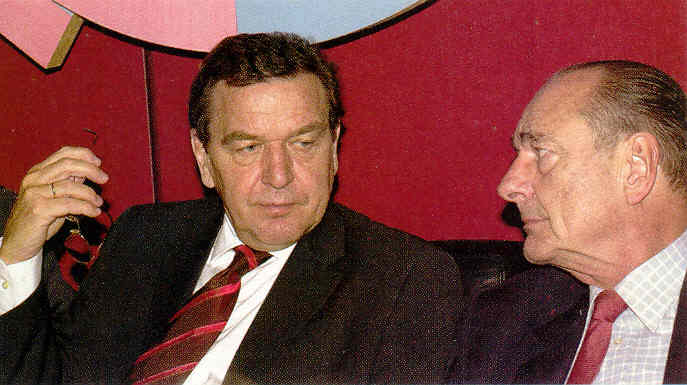
Some of America's key allies
decide that they are not with the
US on the decision to invade Iraq
(Germany's Chancellor
Gerhard-Schröder
and France's President Jacques Chirac)
Bush thus decided that he was going to take out Saddam anyway, no matter what the rest of the world's
opinion happened to be on this matter.
[2]All but 8 of the 213 Republican congressmen approved the resolution;
but 126 of the 208 Democrats did not. In
the Senate, all but one of the 49 Republicans voted for approval. But so did 29 of the 50 Democrats (one
independent voting "no"), those voting in favor including Hillary Clinton,
John Kerry and Charles Schumer – who would of course later try to backtrack
on that unfortunate decision of theirs.
Thus on March 20th, Rumsfeld's military unleashed "Shock and
Awe" (very heavy bombing) on the Iraqi capital of Baghdad. Saddam went into hiding and Iraq
found itself leaderless as Americans, joined by British (and smaller units of
Australian and Polish) military invaded their country. Within a few weeks Iraq found itself
delivered over to its new "democratic liberators."
Then
the quagmire revealed itself. Looting and ransacking of Baghdad got
underway as people scrambled to get what they could of items before the economy
shut down. Then the three major ethnic
groups that had been held together only by Saddam's tough hand fell into
fighting among themselves: the Sunni Kurds in the North, the Sunni Arabs in the West, and the Shi'ite Arab community in the East
and South. And the Turks next door –
America's long-standing NATO ally – became intensely upset
with Bush and his American invaders
because Iraqi social breakdown also jeopardized the social order in heavily
Kurdish south-eastern Turkey. This would
mark the beginning of the Turkish pull-back from its formerly close
relationship with America.
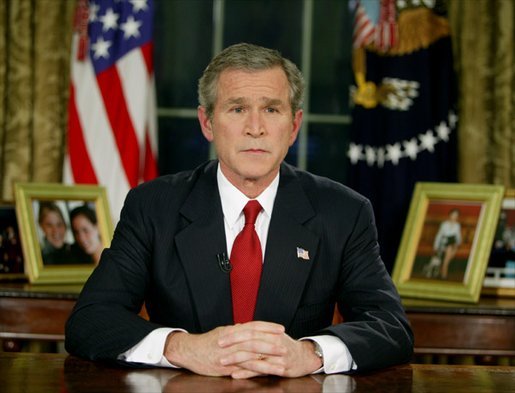
President George W. Bush addresses the nation from the Oval Office
at the White House Wednesday evening, March 19, 2003, announcing
the beginning of Operation Iraqi Freedom. "My fellow citizens, at this
hour, American and coalition forces are in the early stages of military
operations to disarm Iraq, to free its people and to defend the world
from grave danger ..."
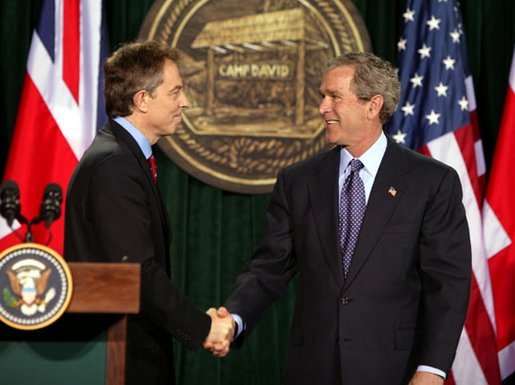
Prime Minister Tony Blair shaking hands with President Bush,
after they concluded a joint news conference at Camp David
27 March 2003.
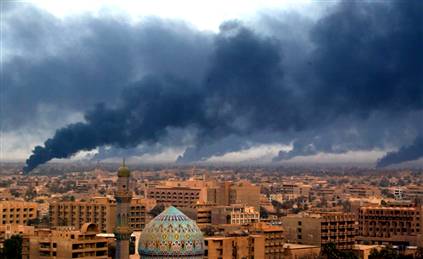
Saddam's OIl trenches burning
April 2, 2003
to cover and protect Baghdad
just prior to the US attack
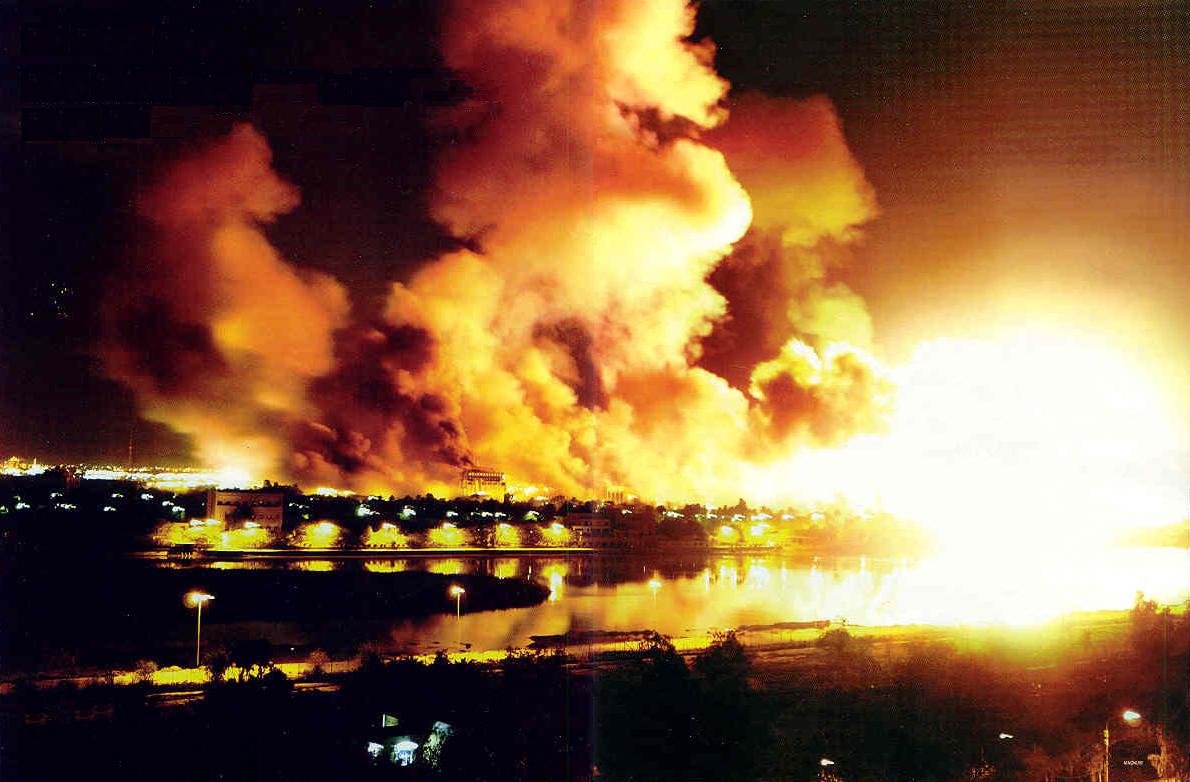
"Shock and Awe" over Baghdad
by US bombers
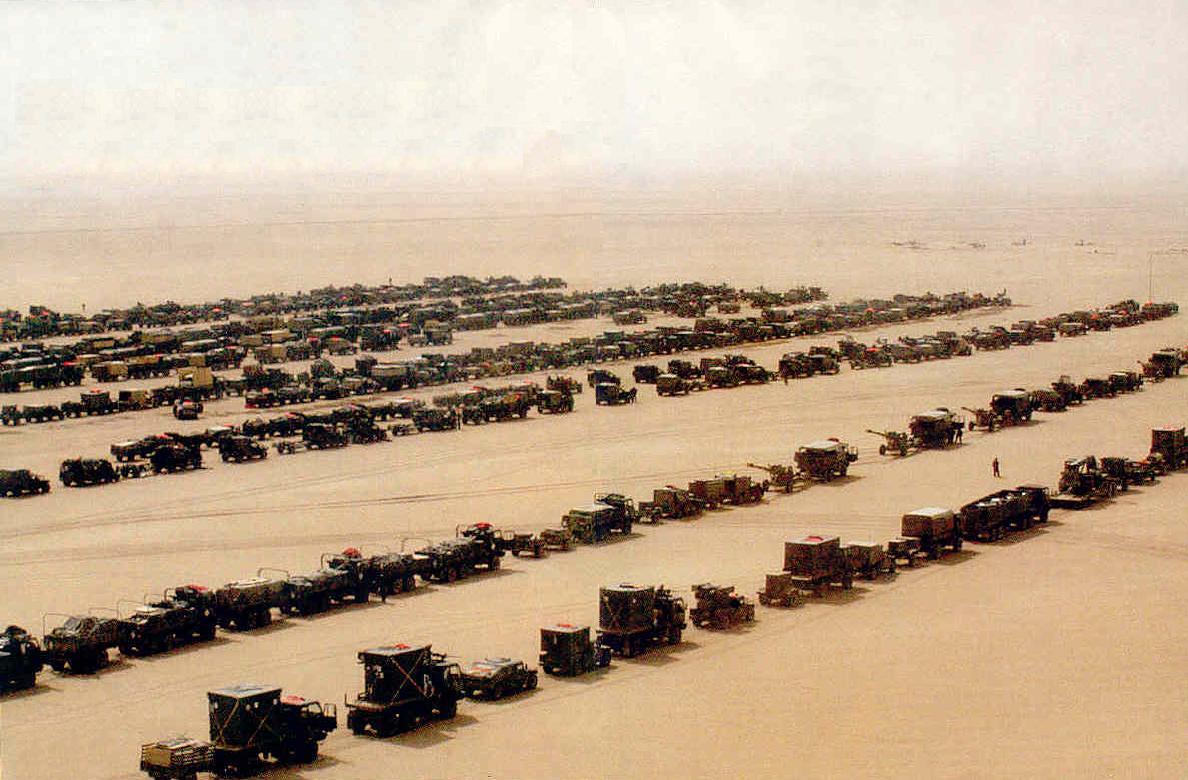
U.S. Forces preparing for
the ground invasion of Iraq
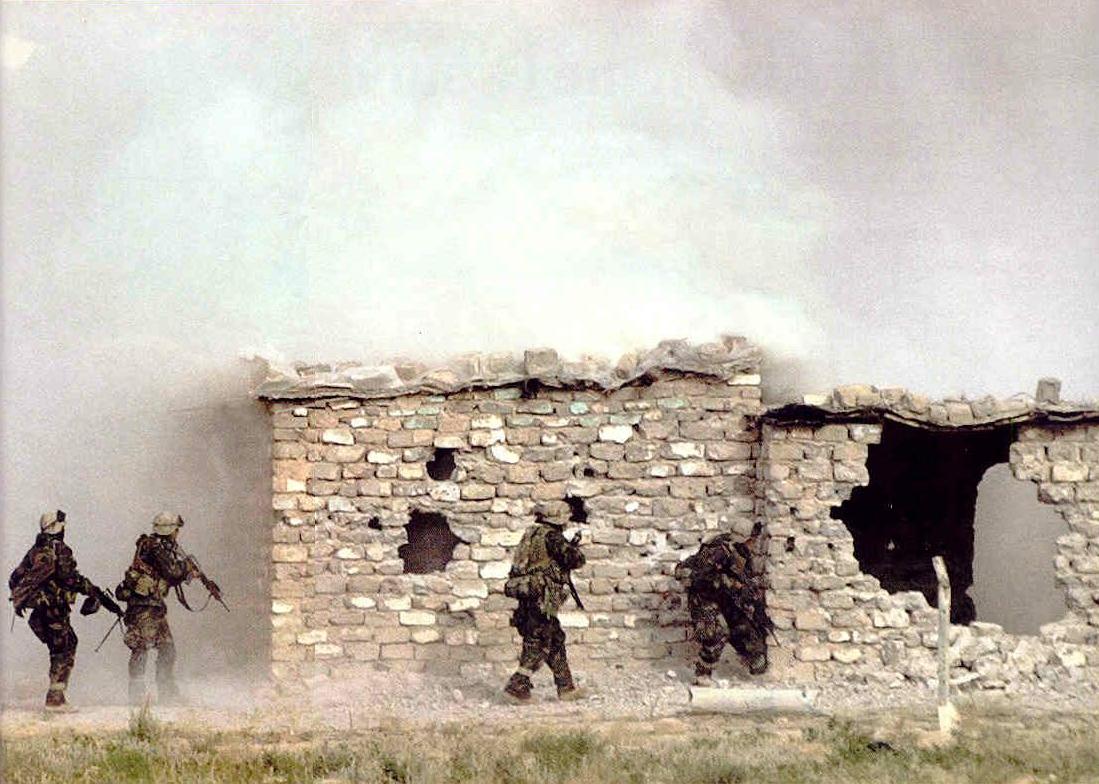
U.S. Forces going house to
house in search of Iraqi resistance
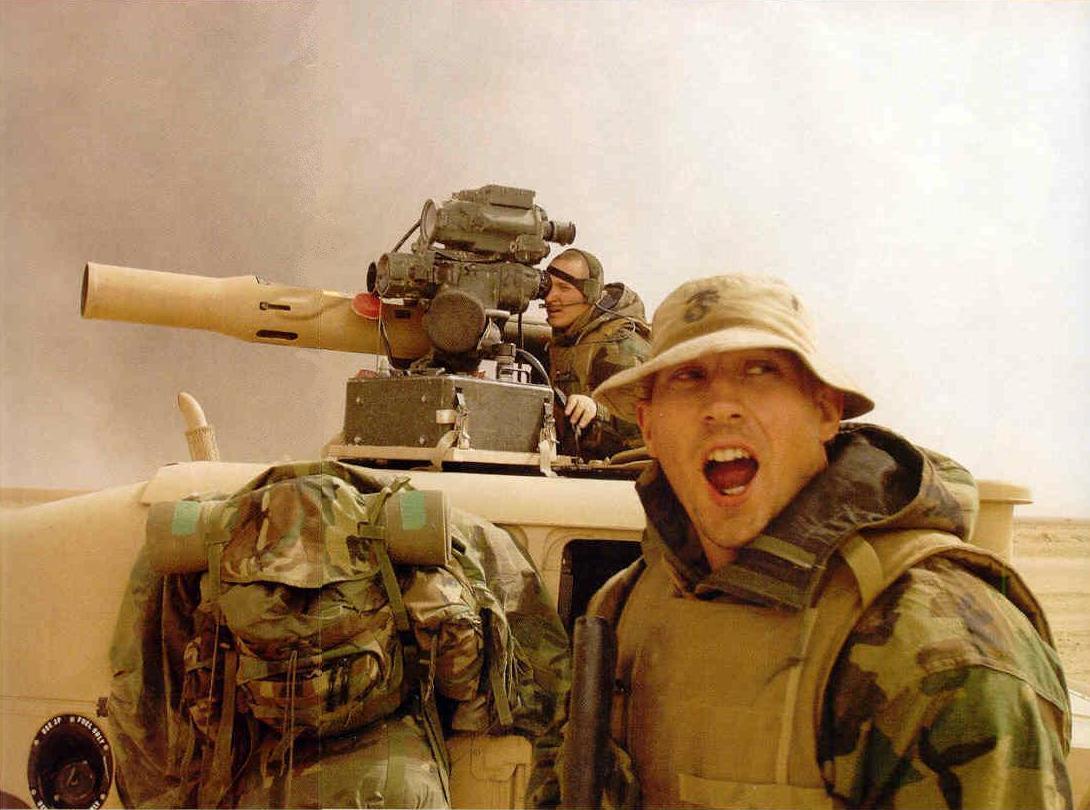
U.S. tank troops
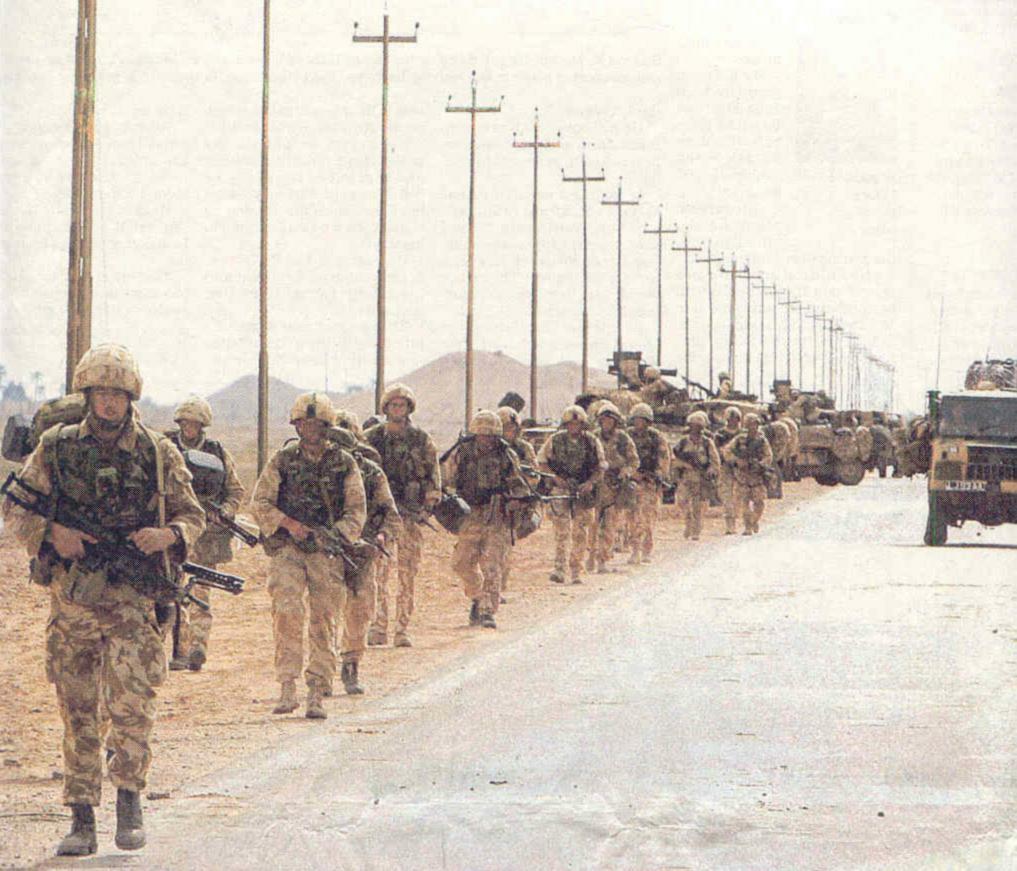
British Royal Marines travel
north in southern Iraq as allied forces fight toward Baghdad.
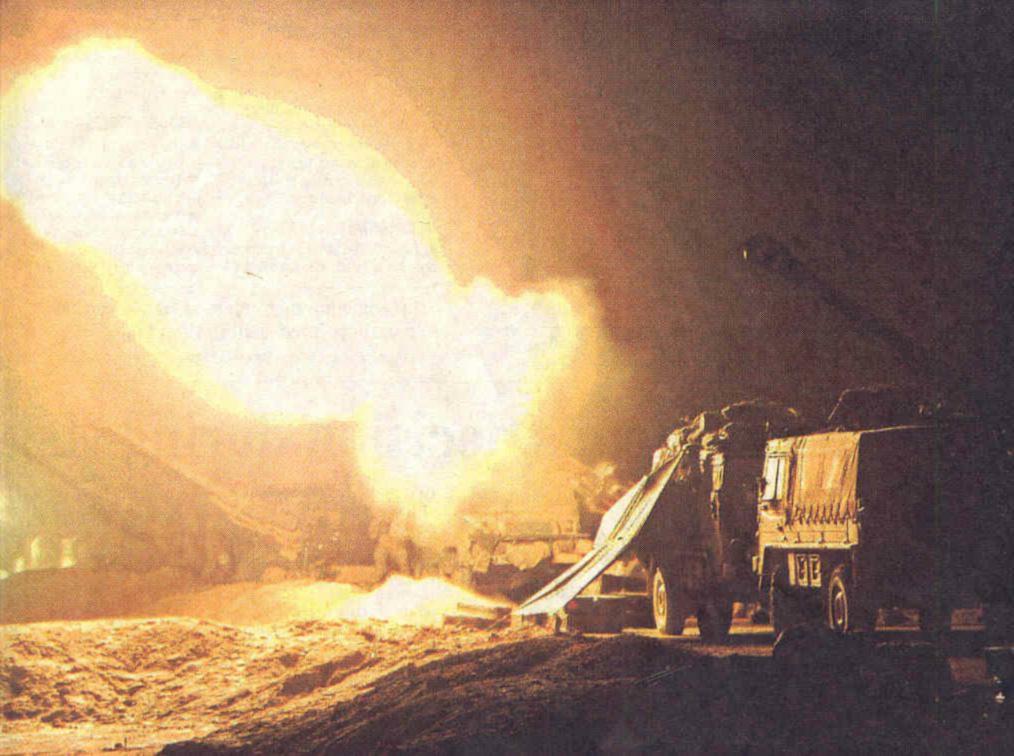
Members of the British 29
Commando Regiment Royal Artillery fire 105 mm guns in southern Iraq.
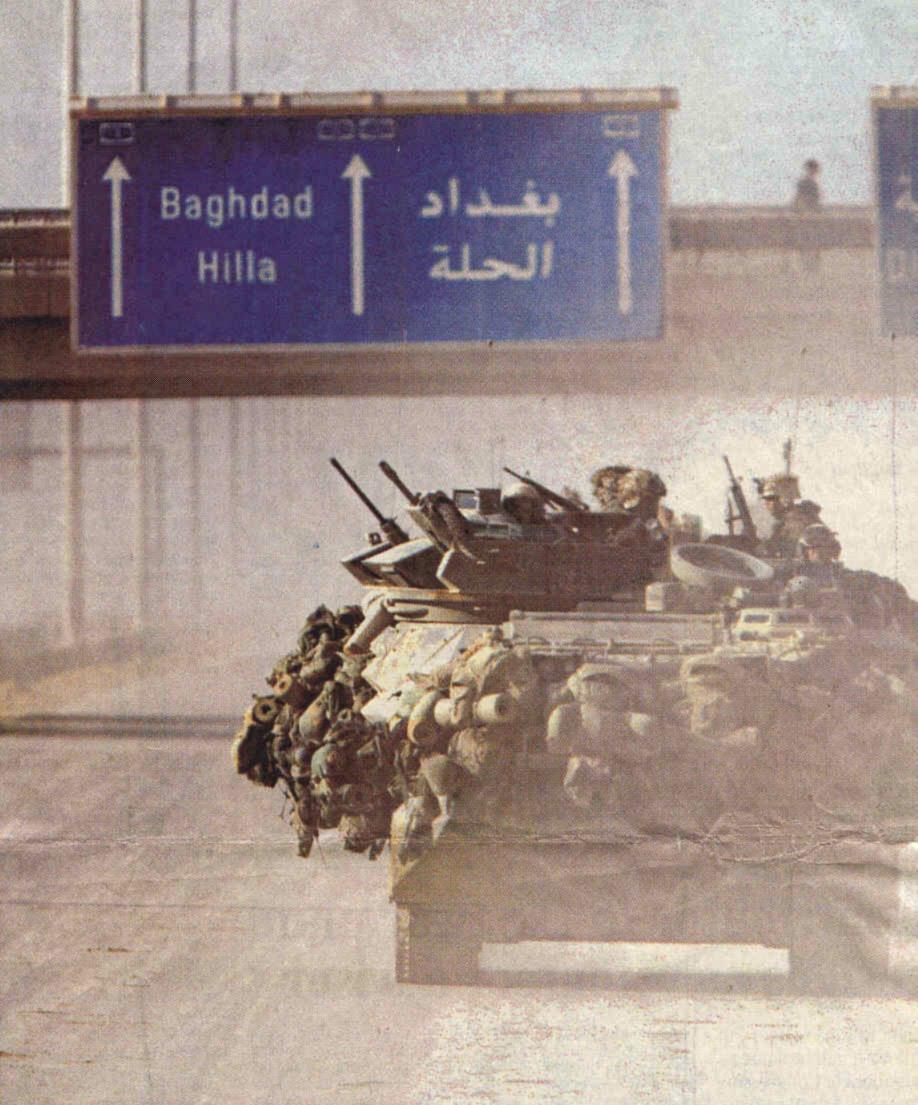
Marines from the 1st Battalion,
5th Regiment, 1st Marine Division, are on a highway to Baghdad.
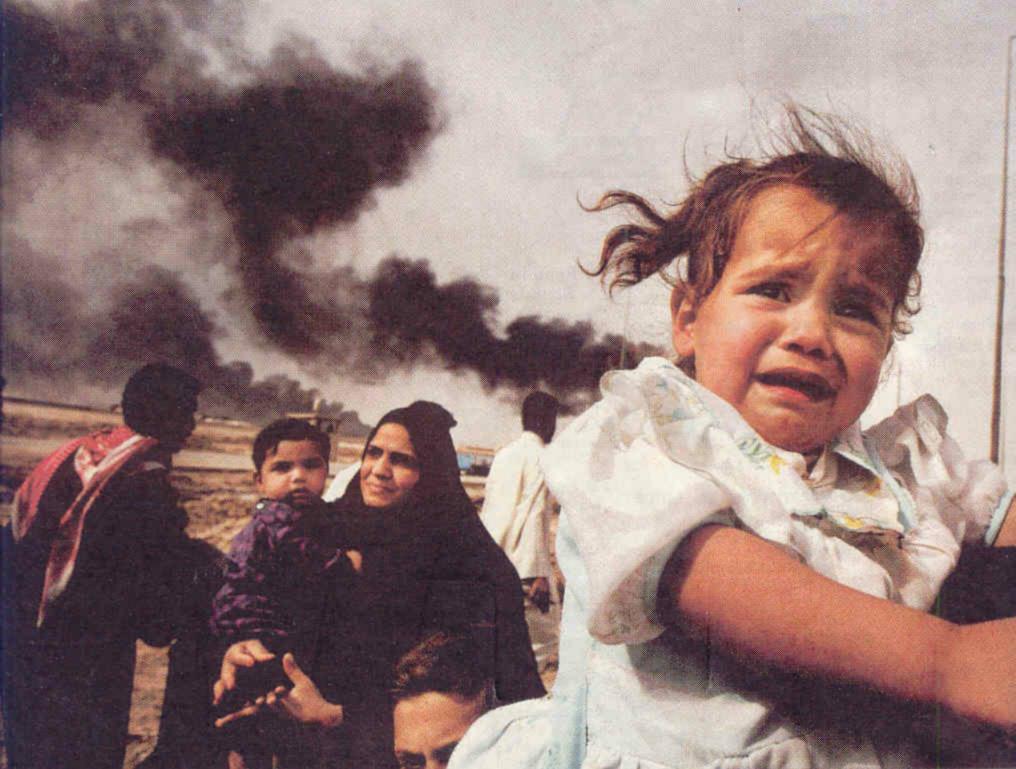
Refugees flee the fighting
in Basra, Iraq's second largest city.
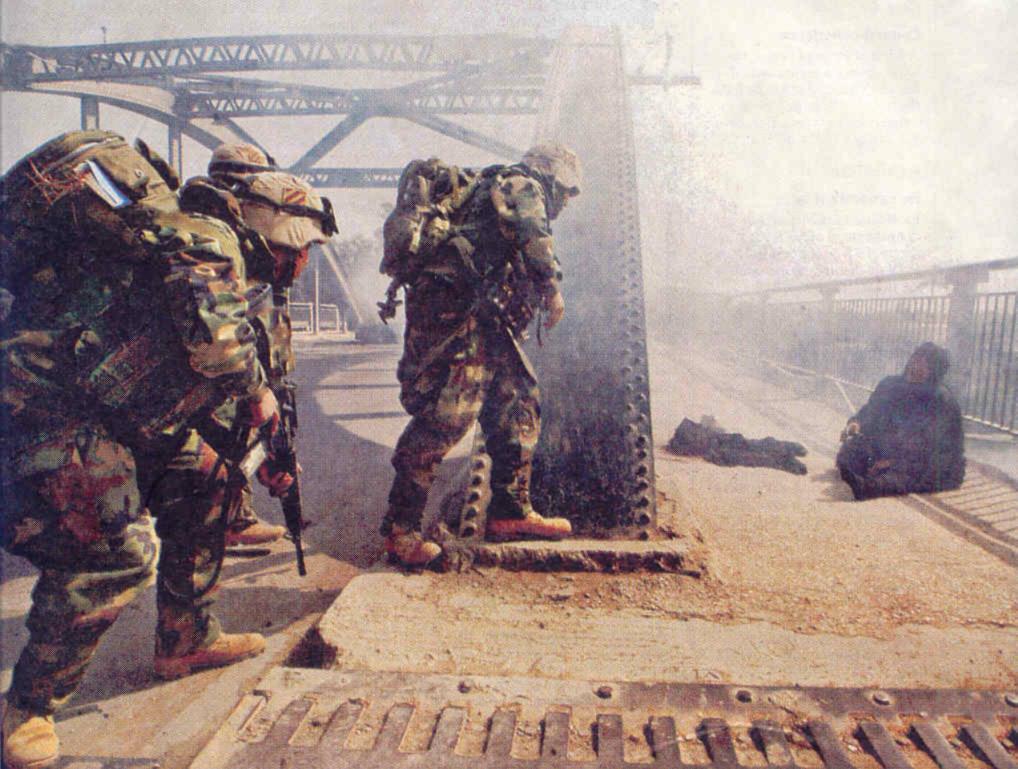
U.S. Army soldiers approach
a wounded Iraqi woman on a bridge over the Euphrates River in Hindiyah. The woman had been caught
in crossfire with Iraqi forces.
Bush ignored these deepening
disasters, and on May 1st, arrived by jet aboard a U.S. carrier located
offshore from San Diego (not somewhere in the Middle East!), Bush wearing a flight suit, although
he himself had not piloted the plane. He
changed clothing and then appeared on deck to address the world with a very
upbeat speech, with the huge banner "Mission Accomplished" displayed
above the deck – in indication of how things supposedly stood on this Iraqi
matter.
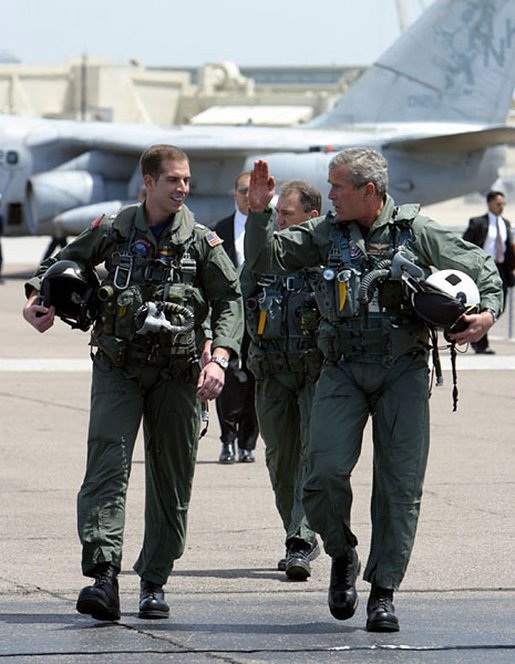
President George W. Bush
walks across the tarmac with NFO Lt. Ryan Phillips to Navy One, an S-3B Viking jet, at Naval
Air Station North Island in San Diego Thursday, May 1, 2003.
Flying to the USS Abraham
Lincoln, the President will address the nation and spend the night aboard
ship.
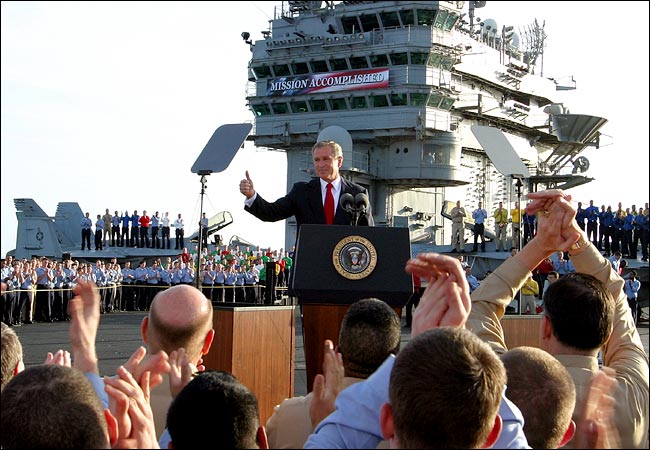
"Mission Accomplished"
President Bush, after declaring
the end of major combat in Iraq, spoke on May 1, 2003,
aboard the carrier Abraham
Lincoln off the California coast.
 But
at this point nothing except disaster had been accomplished! And that would immediately be worsened even
further by Rumsfeld's envoy, Jerry Bremer, sent
to administer Iraq as Bremer himself saw the need. In early May, Bremer issued fundamental
Orders 1 and 2. The first declared that
anyone formerly connected with Saddam's Ba'athist Party (virtually every
professional in the country) would be prevented from serving in their former
capacity in the "new Iraq."
But
at this point nothing except disaster had been accomplished! And that would immediately be worsened even
further by Rumsfeld's envoy, Jerry Bremer, sent
to administer Iraq as Bremer himself saw the need. In early May, Bremer issued fundamental
Orders 1 and 2. The first declared that
anyone formerly connected with Saddam's Ba'athist Party (virtually every
professional in the country) would be prevented from serving in their former
capacity in the "new Iraq."
And the second order, issued over the objection of the U.S. military
commanders who had called on the service of the Iraqi army to keep some degree
of order in the country, was to disband the Iraqi army – to un-employ hundreds
of thousands of young men with rifles, and the knowledge of how to use
them.
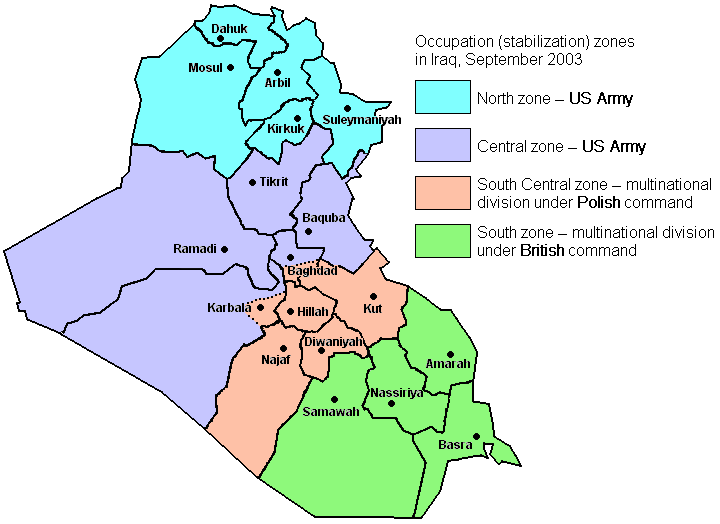
Occupation zones in Iraq
as of September 2003
So upset was the U.S. military
command over this huge political blunder that all of the top generals chose to "retire"
– leaving the new military matters in the hands of a very inexperienced
American one-star general (actually Rumsfeld would direct overall U.S.
military policy from DC anyway).
It
was also at this point that anger aimed by the Iraqis against their fellow
Iraqi social-cultural opponents now got turned on the occupying Americans and
British, especially against the Americans.
At this point the real Iraqi war got underway. And it would drag on for years – a true
American (and British) quagmire.
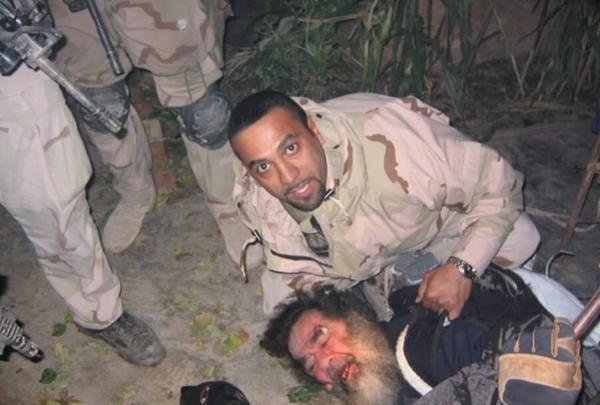
Saddam captured that December ... hiding in a hole in the ground
at a farm near his hometown of Tikrit
Ultimately,
Americans never came up with any evidence of Saddam having been developing WMDs.
However, Saddam himself was finally captured,
sentenced and then executed – for committing crimes no worse than the ones Lincoln had committed in order to
preserve the unity of the U.S. against Southern rebels. Then Americans directed those Iraqis willing
to take up the task of putting together a new Iraqi constitution – something
that supposedly would finally justify this grand misadventure.
But
politically speaking, all that would develop from this effort to "democratize"
Iraq was to shift power from the Sunni Arab portion (about 20%) of the
population, the sector that Saddam had counted on for his
political support, to the Shi'ite Arab portion of the
population (about 60%), the largest of the social groups and the one that had
suffered minority status under Saddam. But oddly enough there was little gratitude
from the Shi'ites for their "liberation"
by the Americans and the British.
Instead they simply took this opportunity for revenge against the Sunnis, and then turned on the
Americans and the British when the latter group tried to settle the angry Shi'ite community down. And then
there were the non-Arabic Sunni Kurds (another 20%), who had been waiting for
decades for Kurdish independence (much to the anger of the Turks next door),
the only group that showed some degree of real support of the American presence
in Iraq.
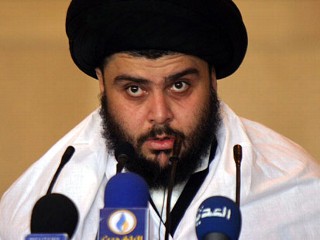
Shi'ite cleric (and largely the Shi'ites' political leader) Muqtada
al-Sadr ... who showed no gratitude to America for putting
his Shi'ites in power in Iraq
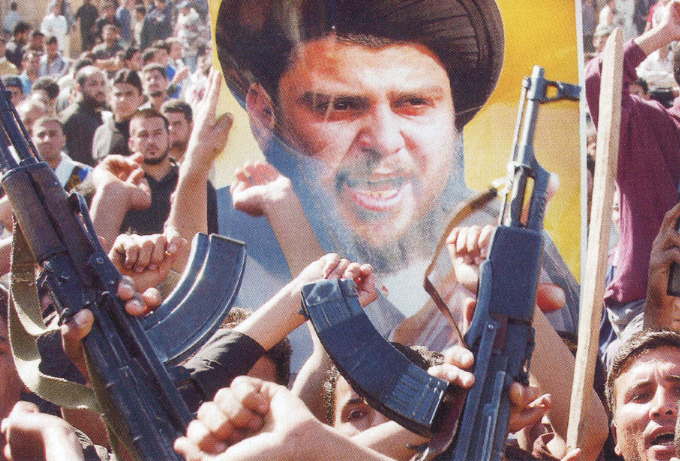
Followers of Muqtada al Sadr
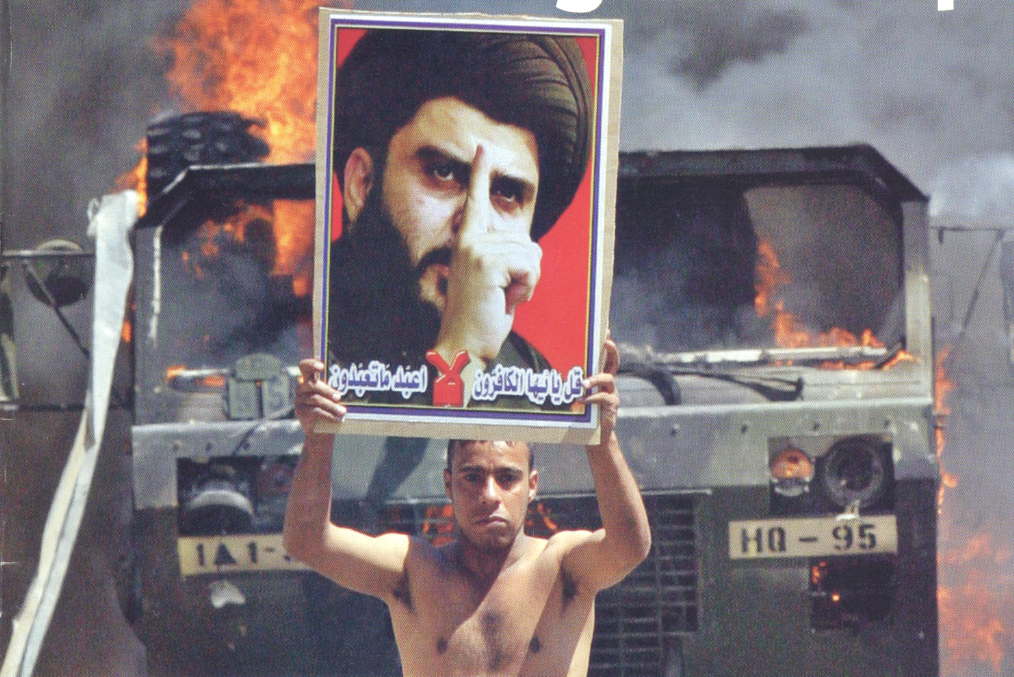
A Muqtada al Sadr supporter
and a burning US army vehicle
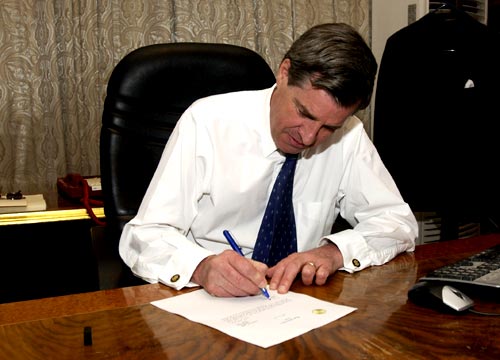
Bremer signing over limited
sovereignty to the American-appointed
Iraqi interim government – June 28, 2004.
Bush
presenting Bremer with America's highest civilian honor,
the Medal of
Freedom (December 2004) ... explaining that "for
fourteen months Jerry
Bremer worked day and night in difficult
and dangerous conditions to
stabilize the country, to help its
people rebuild and to establish a
political process that would
lead to justice and liberty." What was he
talking about?
Bremer was in DC the whole time (dangerous
conditions?)
... and the results of his policies were hardly stability,
much less justice and liberty, for Iraq.
Thus exactly how leaderless "democracy" was going to
restore social unity in Iraq instead of merely intensifying these deeper social
divisions would remain a mystery to Iraq's American and British "liberators."
None of the Iraqis had ever even heard of Rumsfeld's presidential candidate
Chalabi (!!!) and so coming up with a leader was going to become
difficult. Finally (October 2005), under
the new constitution, national elections were held (boycotted by most all of
the Sunni Arabs) and a Shi'ite, Nouri al-Maliki, was put forward as a leader
of a coalition and thus also as prime minister.
But
this in no ways settled down the violence that consumed Iraq. In 2006 the situation worsened deeply when
some group blew up the al-Askari or Golden Dome in Samarra, one of Shi'ite Islam's most holy sites. Shi'ites turned on Sunni mosques and murdered the imams
found there.
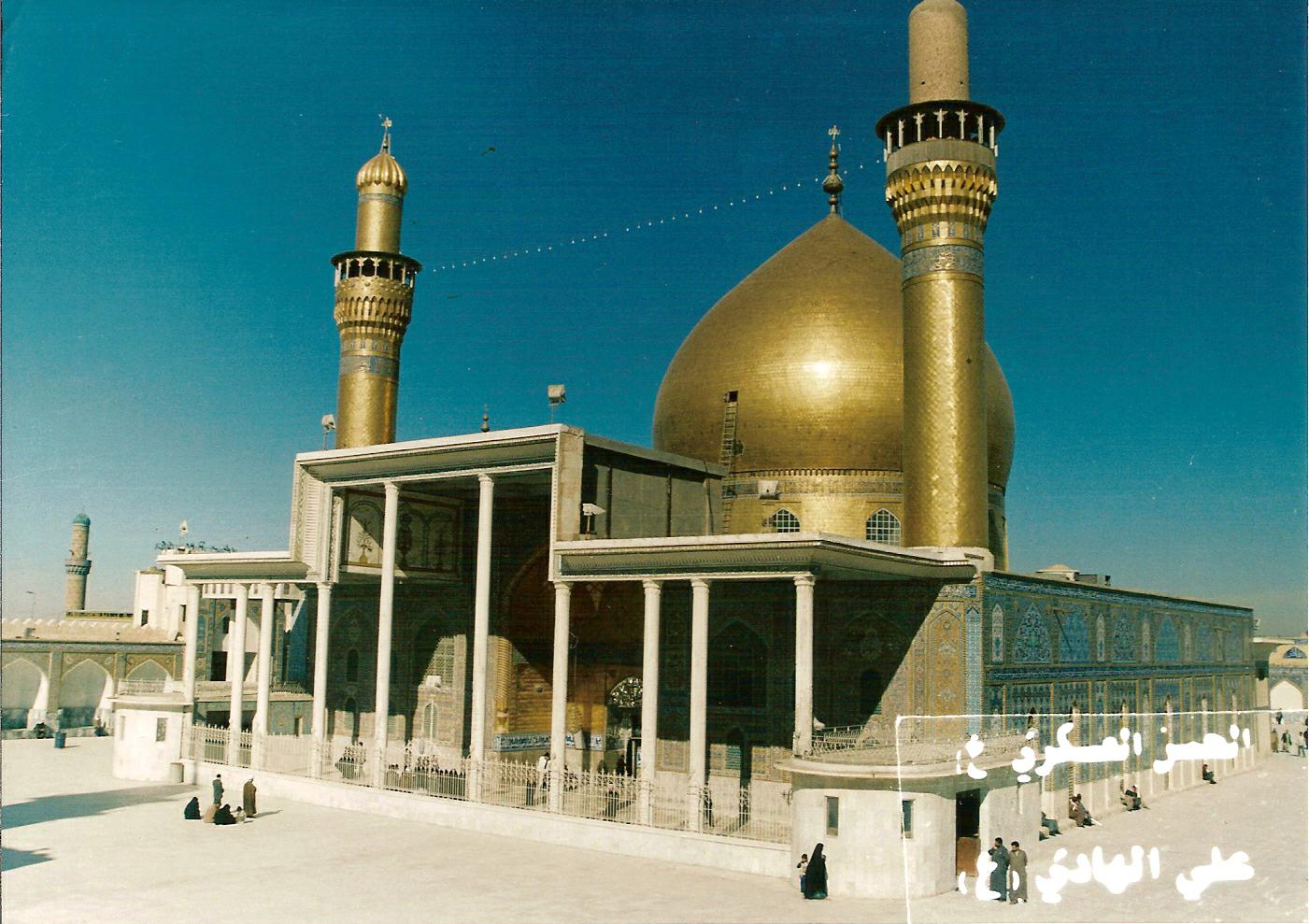
The Al Askari or Golden Dome
Mosque in Samarra – blown up in
January 2006 (Shrine of the 10th and 11th Twelver Shi'a
Imams:
Ali an-Naqi and Hasan al-Askari)
Soon death squads were
roaming the country, especially in the Sunni West where American troops were
expected to keep some kind of order (although Rumsfeld was trying to maintain a "small
footprint" by keeping U.S. troops mostly restricted to the U.S. military
bases in the country).
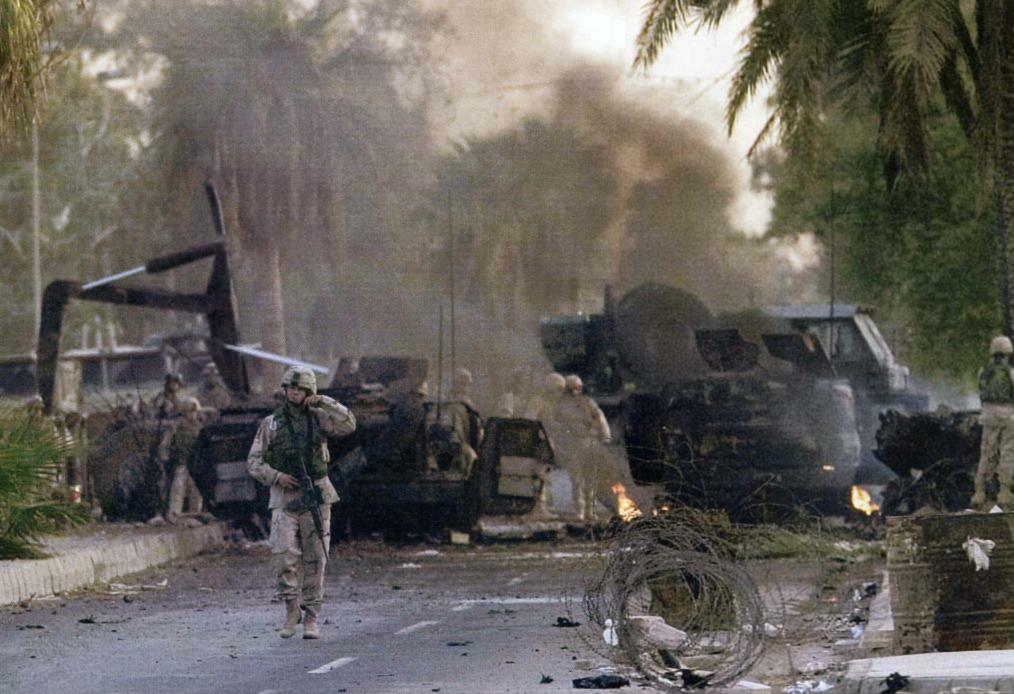
Another car bombing in
Baghdad
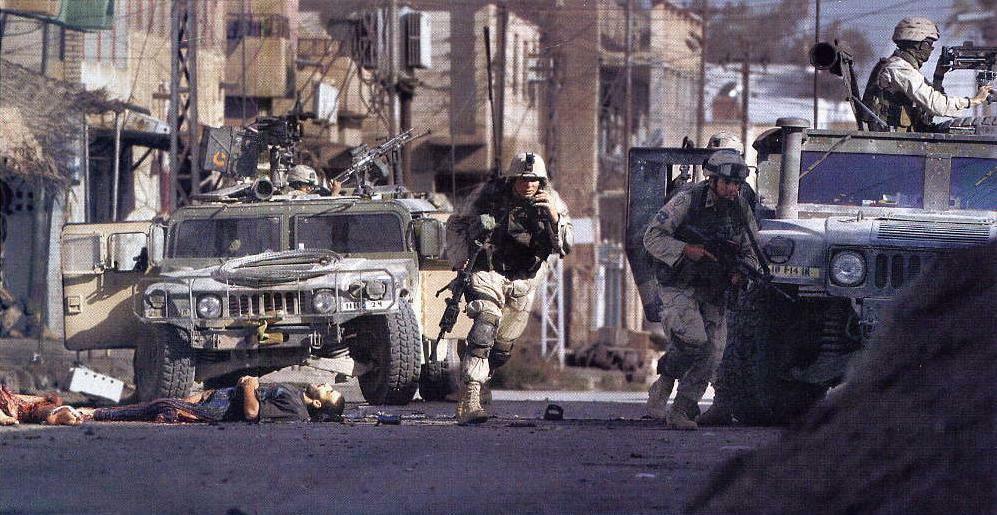
US troops in Samarra sweep
past dead insurgents
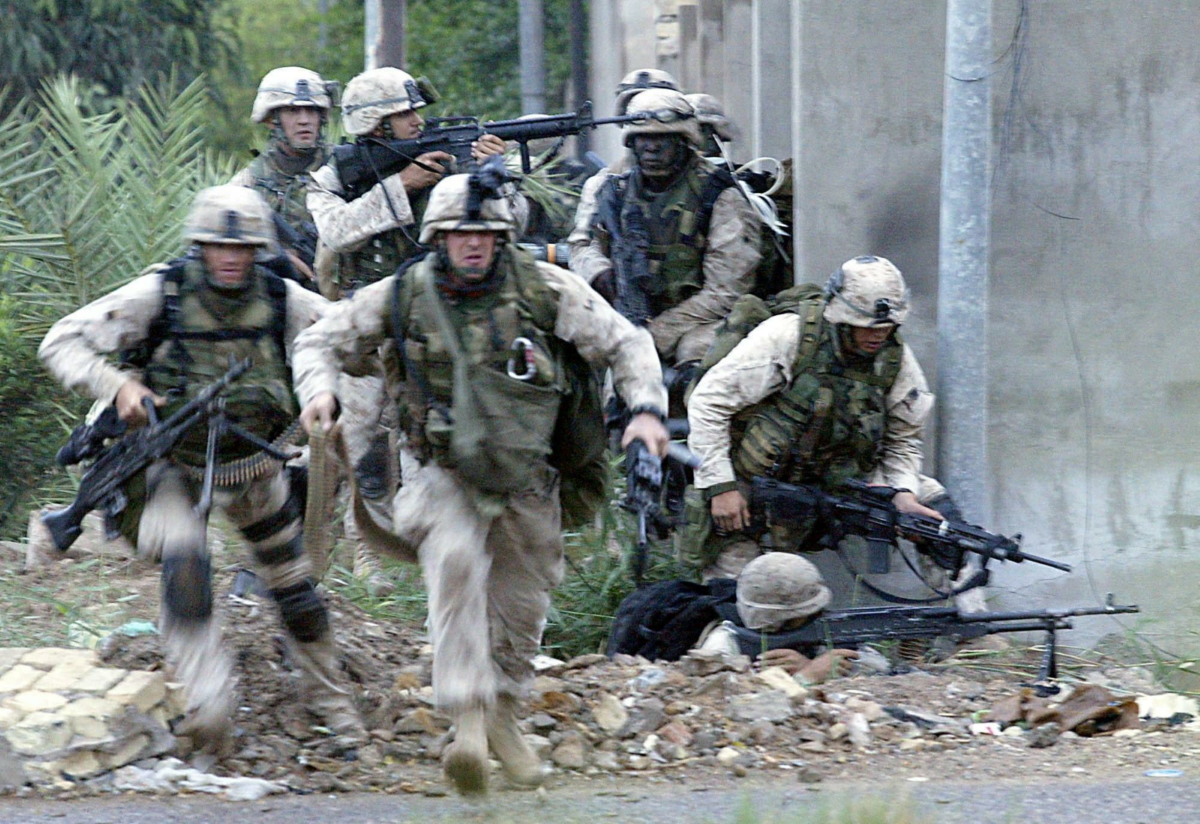
US Marines cross a road in
Fallujah while others provide covering fire
during Operation Phantom
Fury/Operation Al Fajr (New Dawn)."
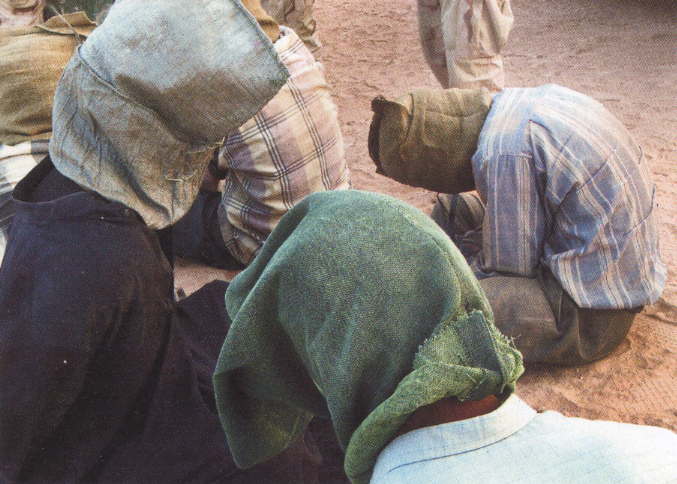
Hooded Iraqi
prisoners
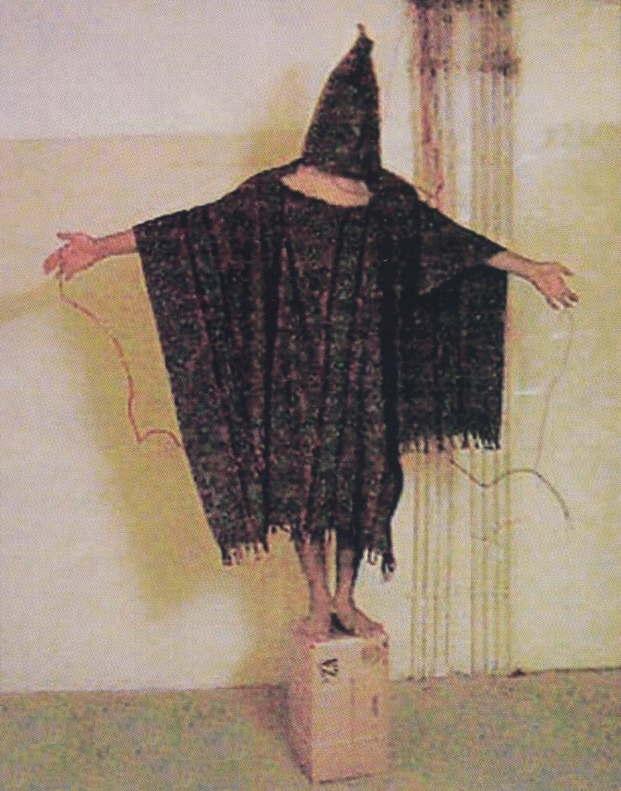
A picture of an Iraqi prisoner
at Abu Ghraib prison
who was told that he would
be electrocuted if he stepped off the box
(not true – but convincing
torture to a hooded prisoner nonetheless)
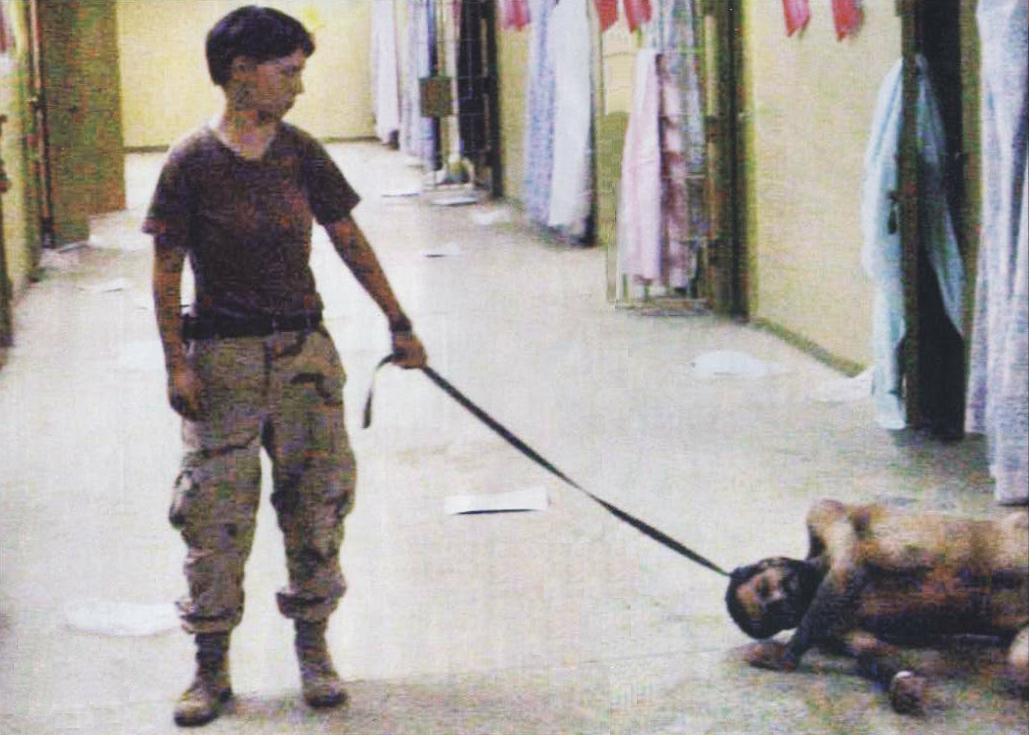
Private Lynndie England with
an Iraqi prisoner on a leash at
Abu Ghraib prison in Baghdad
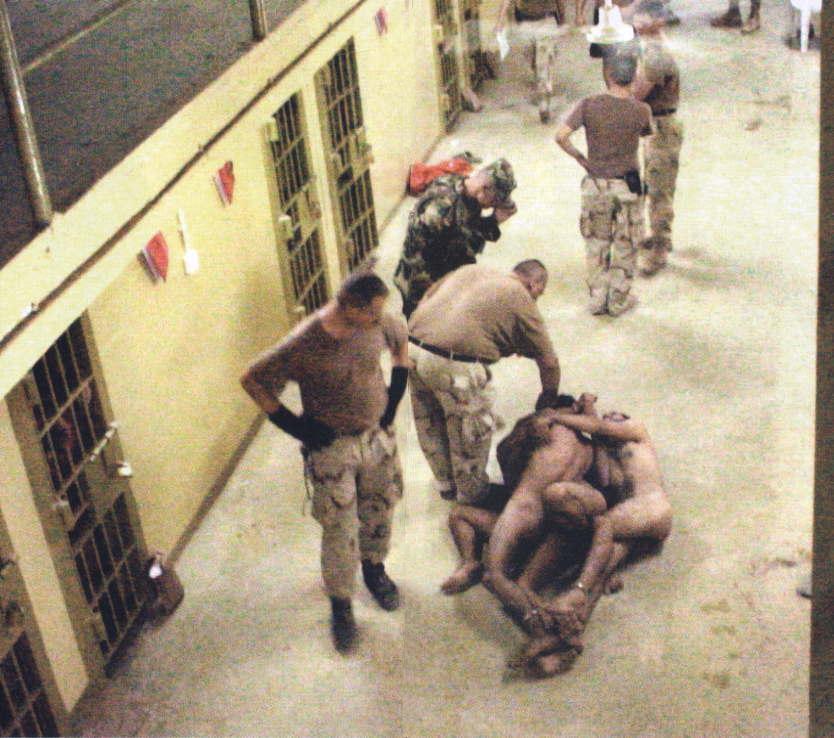
Naked Iraqis naked and bound
together under US troop supervision
And wouldn't you know, all this chaos (thanks to Bush)
would allow al-Qaeda and other Sunni jihadists finally to make their way to Iraq and
begin to base their operations there, a much more strategic location than
Afghanistan or Pakistan in making anti-Western mischief throughout the Arab
Middle East. Thus it was that the only
true "mission accomplished" that occurred in Iraq was the one gained
by the anti-American Shi'ites (religious kinsmen of the Iranian Shi'ites next door, Muslims pledged to bring "death
to the Great Satan America") in the Iraqi East and South, and the
anti-American Sunni jihadists in the West and Northwest of the
country.
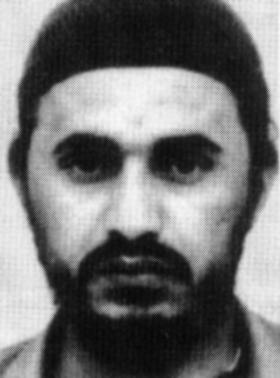
Abu Mussab al-Zarqawi
Jordanian terrorist leader
of "Tawhid and Jihad" in Iraq
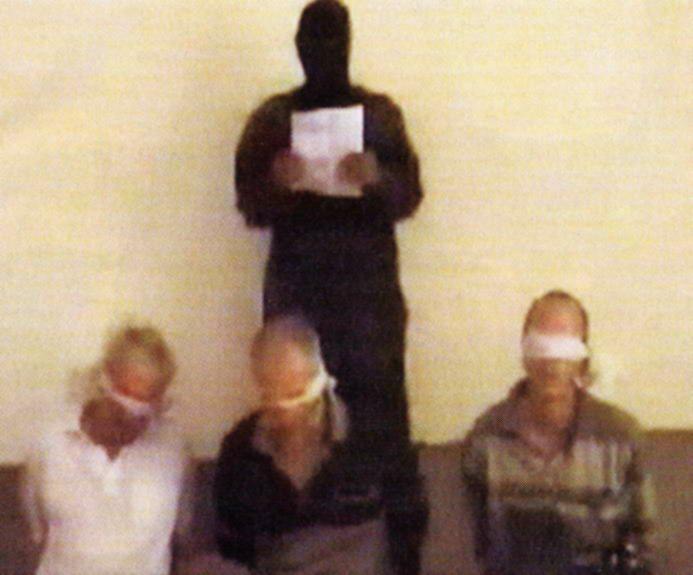
US and British soldiers being
held captive by al Zarqawi
(the US troops were beheaded
in front of the camera)
| POLITICAL REPERCUSSIONS BACK HOME IN AMERICA |
In the 2004 American presidential elections, Bush was able to gain reelection
against the Democratic Party candidate, John Kerry – to a great extent because the
election got to be not about public policy but about very personal
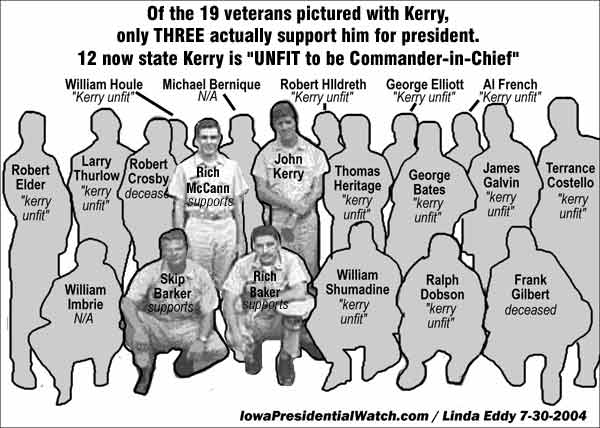
matters. Kerry's Vietnam service record was challenged
(unfairly as it turned out) by a group of Vietnam veterans, sinking greatly Kerry's political support. CBS had countered this attack with its own
report of service scandal on Bush's part – and then had to repent
when it was discovered that the material Dan Rather had been using as "evidence"
was a forgery.[3] While this CBS special was clearly intended
to sabotage the Bush candidacy, it actually stirred
sympathetic support to the besieged president!
Thus it was that, quite exceptionally, Bush was reelected – virtually
unheard of at a time when a leader's war was clearly not going well at all.
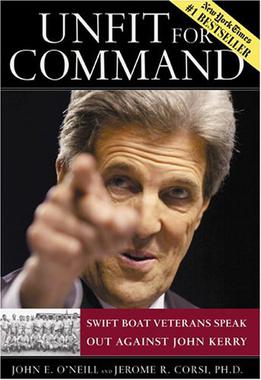
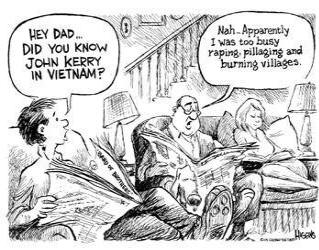
An anti-Kerry cartoon
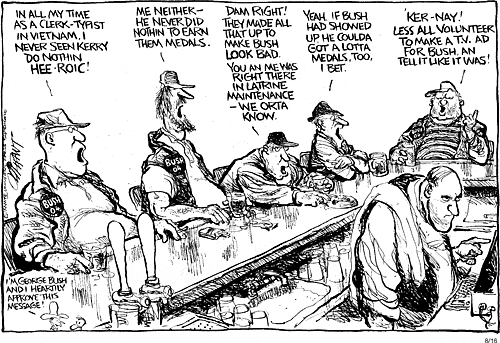
Pro-Kerry cartoon attacking his attackers!
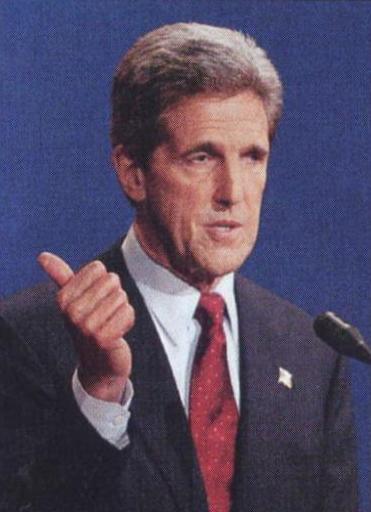
At the presidential debates ... Sen. John Kerry speaking –
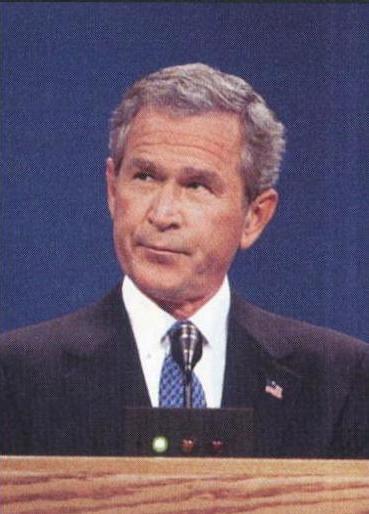
Pres. George W. Bush looking very annoyed
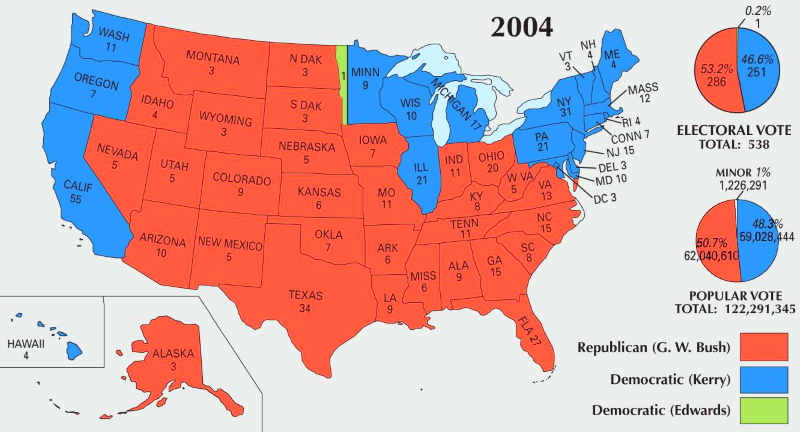
The results
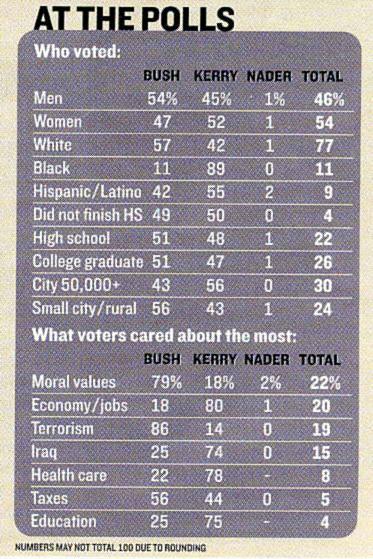
Newsweek, November
15, 2004
But
the 2006 Congressional elections would hit the Republican hard. They lost their majority in the House to the
Democrats and had their position in the Senate reduced further, with also the
two Senate independents tending to vote with the Democrats.
It
was at this point that Bush got rid of Rumsfeld. He had removed Rumsfeld's cabinet rival Powell back in 2004. But Bush was now reversing course (too
late for Powell however) in getting rid of Rumsfeld. But the Republicans were very upset: why hadn't Bush done this before the elections,
when it would likely have helped the Republicans considerably?
[3]Scandal rather than serious news filling America's media front-line
reporting was not a new thing. Grocery
store checkout stations had long been loaded with "newspapers"
reporting such things as: "I was raped by a monster from Mars";
"Dog gives birth to a puppy with two heads"; etc. But when the nation's prestige papers began
to undertake this same behavior, along with national TV feeding sensationalist
"news" to the public 24/7 as simply another form of entertainment,
America's news industry became itself a much-degraded American
institution. The Walter Cronkite days of
CBS news were clearly over.
The situation in Iraq was growing worse, not better through
previous (Rumsfeld) policies. And finally, on the basis of a study that Bush took a great interest in, the
decision was made to end Rumsfeld's "small footprint"
strategy, increase considerably the number of U.S. troops in Iraq and pursue a
very aggressive forward strategy, designated as a grand military "surge." Not surprisingly it worked. It impressed the Shi'ite leaders enough that they
decided to be more cooperative with the Americans, it allowed the British to
back out of an Iraqi mess that had cost Britain's political leadership deeply,
and it cut back considerably the operational abilities of the Sunni jihadists in the
northwest. And hopefully it gave the
Americans (and their private "contractors") the opportunity to do
some serious training of the (now mostly Shi'ite) Iraqi army so as to be able
to take control. And thus as Bush approached the last months of
his presidency in late 2008, he was finally able to begin the drawdown of the
American military presence in Iraq.
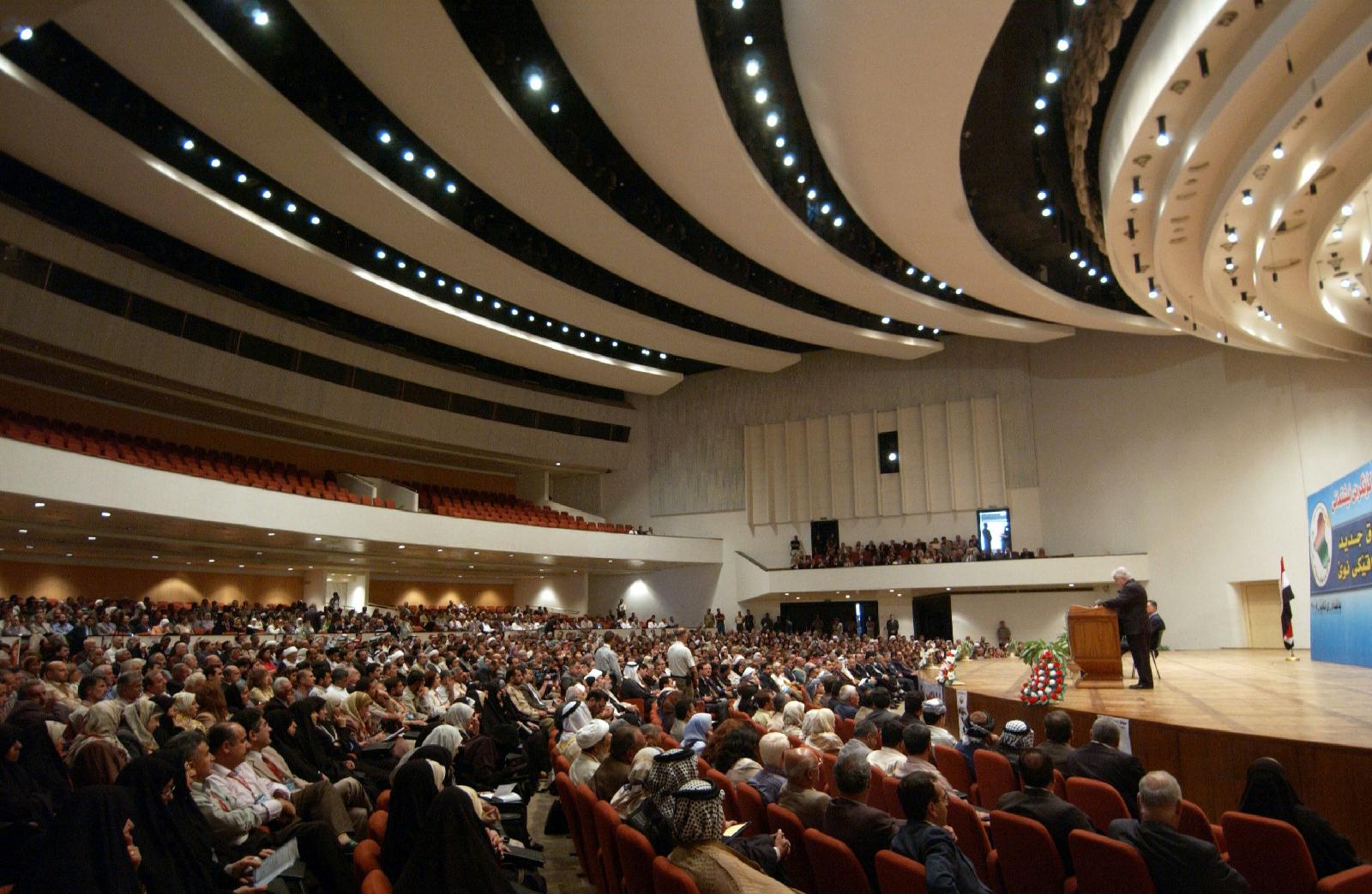
Inside of the Baghdad
Convention Center, where the Council
of Representatives of Iraq meets.
This photo shows delegates
from all over Iraq convening for the Iraqi NationalConference
30 December
2008.