"Democracy" is a term used today by Americans to
describe what it is that they understand America to be in its very essence –
unfortunately not always with the clearest understanding of what is involved
with such a concept or social identifier.
But it is a powerful idea nonetheless, made somewhat dangerous at times
because, unlike the Founders of the American Republic over two hundred years
ago who understood the possibilities and dangers both of the idea of democracy,
to Americans today it has become something like a religion in itself.
Most
Americans know that the idea of democracy was a political legacy given Western
Civilization by the ancient Greeks (500s-300s BC). Actually it was practiced widely around the
ancient world, and not just in Greece – developed out of the need of tribal
peoples, generally everywhere, to consult with clan or household elders
whenever an important decision affecting the tribe had to be made: when to
hunt, when to go to war, when to make a physical move. It was necessary to get every clan, every
household of the tribe on board with the decision – for unity of purpose was
essential to the survival of the tribe.
Thus democratic consultations would continue until some kind of general
agreement was possible prior to taking action with respect to the event in
question.
Thus
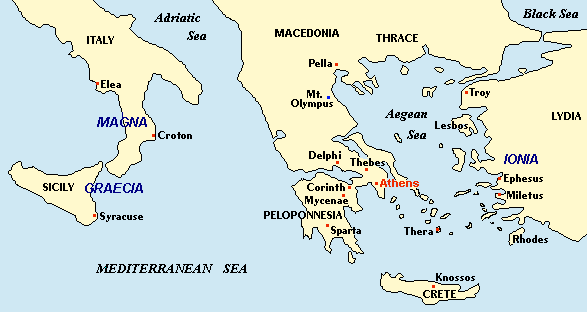
it was that the very ancient or early city-state Athens was quite reliant on the
democratic process of holding meetings to discuss common matters – and have an
affirmative vote from the participants in order to move things forward.
But
when the population of Athens began to grow, participation
of all Athenian citizens in such decisions
became problematic. There simply were
too many people involved to conduct such business in an orderly fashion. Consequently, small groups of people –
especially ones that could claim a longer line of Athenian ancestry – would tend to
take control, turning themselves into something of a ruling class. And the xenoi (foreigners) not born of Athenian ancestry, who were even more
numerous than the Athenian citizenry, had no place at
all in this process, not to mention the slaves, who outnumbered even the xenoi.
Unsurprisingly, as class distinctions developed, so did class
conflicts. Several efforts were made to
improve the democratic process (a toughening of political requirements under
Draco (thus the term "Draconian," something very brutal as social
measures typically go), countered a generation later by Solon – who attempted a
fairer distribution of responsibilities and rewards. However, this did not make a huge difference
in the Athenian political lineup. Finally, in reaction to Peisistratus'
tyrannical rule (a "tyrant" was actually originally a strong-handed
defender of the rights of the poor) and the rising danger of mounting Persian
power to the East, the popular politician Cleisthenes was led to reform the
constitution by simply re-classifying the Athenians into ten residential or
neighborhood "tribes" and having these tribal districts represented
at the Assembly by citizens chosen by lot.
Fair enough! And thus it was that Athens affirmed itself as a "representative"
democracy.
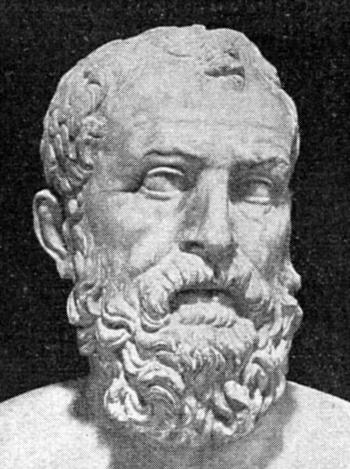
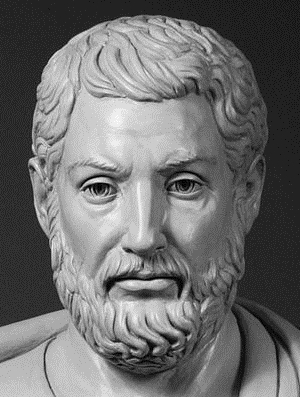
Solon / Cleisthenes
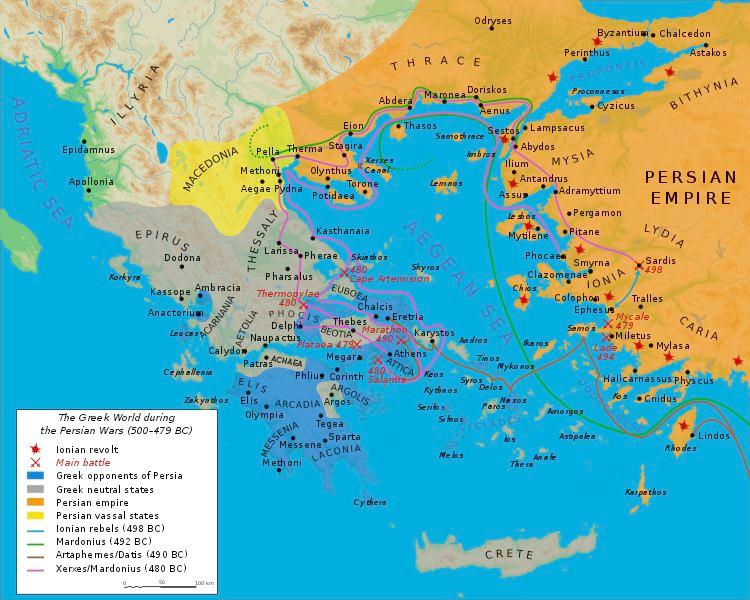
For a time this reform, plus the mounting danger of an aggressive
Persia taking control in the eastern Greek lands of Ionia, brought unity to the Athenian population, bringing even
the Greek city-states to amazing unity under Athenian leadership. It even forced Athens' chief political rival in
Greece, Sparta, to cooperate with Athens militarily. And this unity finally allowed the Greeks to
defeat the Persians at Marathon (490 BC) and Salamis (480 BC).
From
this point on (the mid-400s BC) Athens took on the position as Greece's
leading city-state, particularly when other city-states agreed to send funding
to Athens to support the unified Greek
defenses of the new Delian League against a resurgent Persia.
And
this marked the "Golden Age" of Athens, under the capable political
leadership of Pericles (excellent orator, statesman and general) during the
period from the mid-400s BC to his death in 429 BC, a time in which Athens was also producing the
historical insights of Herodotus (to about 424 BC), the creative works of the
dramatists Euripides and Sophocles (to 406 and 405 BC respectively) and the
outstanding philosophy of Socrates (to his death in 399 BC).
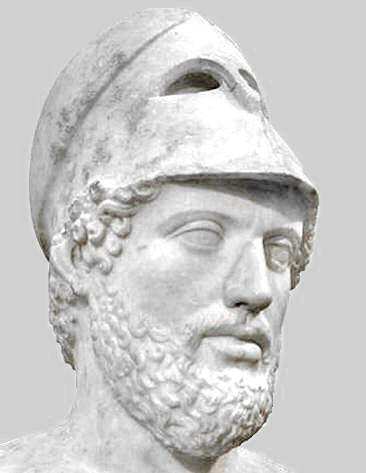
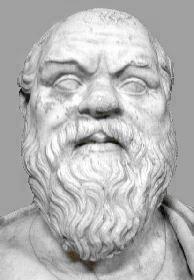
Pericles / Socrates
But
moral problems within Athens itself had begun to mount
during that same period. Peace had
brought not democratic nobility of spirit, but a new greediness, stoked by the
political self-interests of a series of leading Assembly speakers, clever
Sophists or "wise ones," able to convince – through the most clever
use of "reason" – the representatives of the people to do the most
unwise, most self-destructive things, merely because it played to the interests
of one or another of these "demagogues."
For
instance, the demagogues led the Assembly to the decision to use the money sent
by the other city-states to Athens for Greek mutual defense
instead to simply beautify Athens itself (new buildings,
improved streets, grand statuary, etc.), despite the protests raised by its
Greek allies. Ultimately these other
city-states would look to Sparta to champion their cause against an
increasingly greedy Athens, and ugly war resulted.
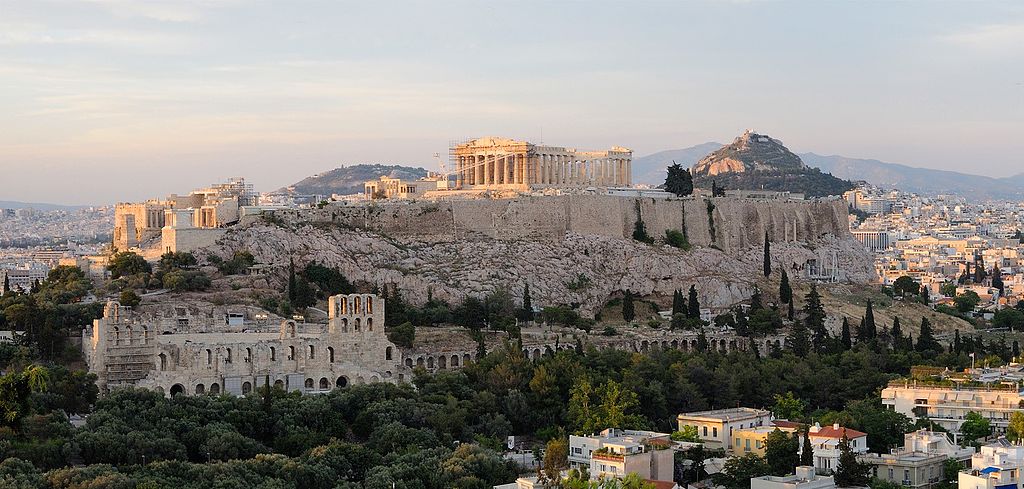
Today's view of the ancient splendor of Athens
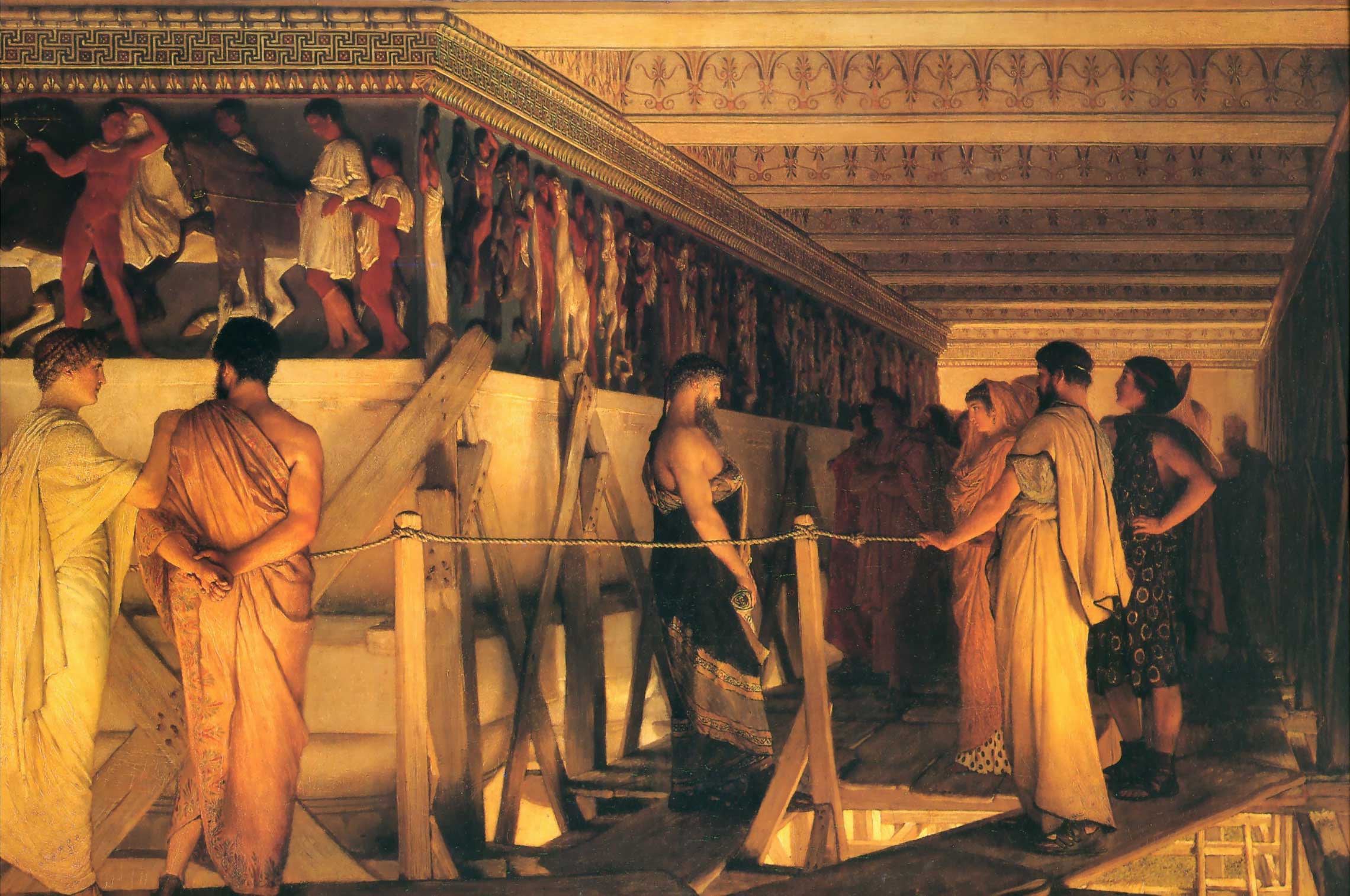
Phidias showing the freize of the Parthenon to his friends
by Lawrence Alma-Tadema (1868)
Birmingham (England) Museun and Art Gallery
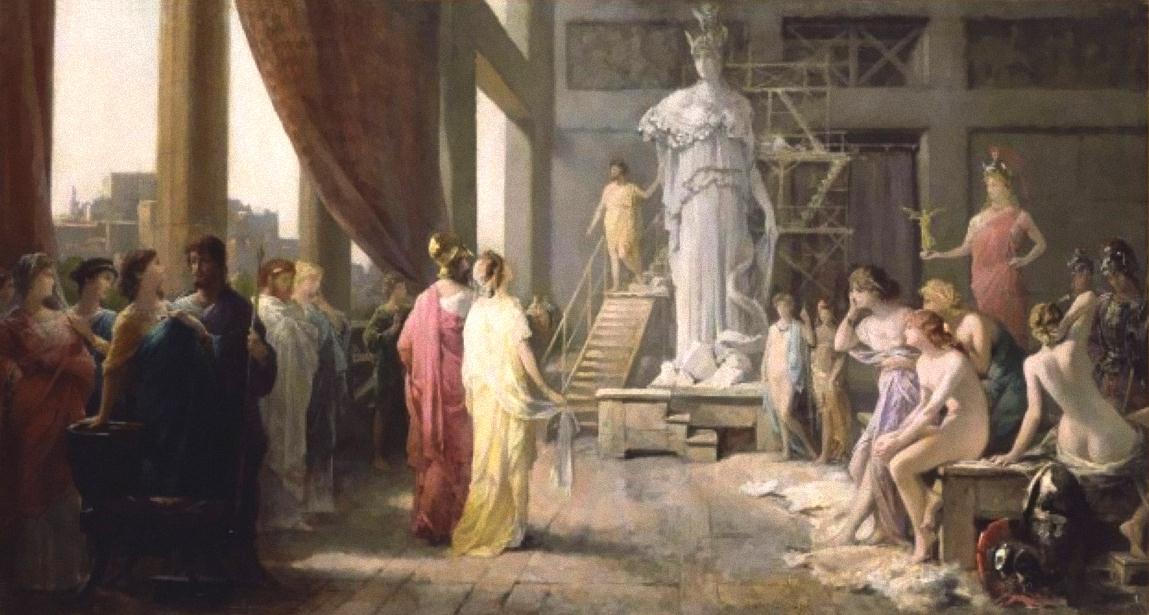
Pericles and Aspasia in Phidias' studio admiring his statue of Athens
- by Hector Leroux
How
stupidly selfish Athenian democracy had become. And the Athenian representatives would also
foolishly ostracize (expelling for ten years) Athens' very best military leaders –
actions inspired by jealous Assembly speakers.
What was this democratic body thinking?
All of this helped lead to Athens' ultimate defeat in a series
of Peloponnesian Wars (the second half of the 400s BC).
Thankfully
Sparta ignored the demands of its city-state allies (Thebes, Corinth and
others) to enslave the defeated Athenian population, but resolved
instead simply to tear down Athens' city walls, leaving the city
defenseless militarily from that point on (404 BC). This was the beginning of the end of Athenian greatness.
But
the foolishness of Athens' democratic Assembly did not
end there.
In
399 BC, the wisest philosopher of the ancient world, Socrates, was voted the death penalty
by the democratic Assembly – because he annoyed Assembly speakers by calling
into question the wisdom of their words and behavior.
In sum, democracy Athenian-style had led that society
down a very self-destructive road.
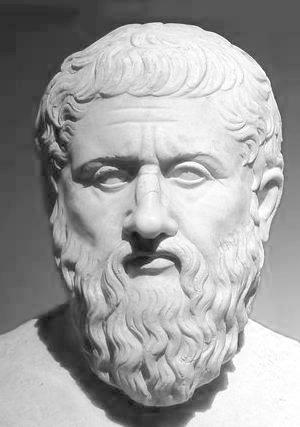 Socrates' pupil Plato tried to find a better approach
to political wisdom by developing in a key philosophical work, Politeia
(commonly known by its Latin name, Republic) his own idea of what a
well-run society should look like. But
the success of such a venture depended entirely on the wisdom of the leading
politician, not the wisdom of the people (which Plato doubted was obtainable
anyway).
Socrates' pupil Plato tried to find a better approach
to political wisdom by developing in a key philosophical work, Politeia
(commonly known by its Latin name, Republic) his own idea of what a
well-run society should look like. But
the success of such a venture depended entirely on the wisdom of the leading
politician, not the wisdom of the people (which Plato doubted was obtainable
anyway).
This
would be the beginning of the tendency of intellectuals to design from their
desks beautiful societies, or "utopias" (a Greek word meaning
literally "nowhere"!) – built entirely on their own powers of
rational planning, and not on the basis of actual human experience (which tends
to be not very pretty much of the time).
But Plato would have the rare opportunity
as an intellectual to discover how well his ideas actually worked, when he was
invited by the young tyrant of Syracuse, Dion, to put his philosophy to work
there. The end result when Plato faced political reality was
total disaster for Syracuse (20 years of chaos under the social breakdown that
his experiment ultimately produced) and Plato's own arrest, imprisonment and
sale into slavery, which he was finally
purchased out of by a sympathetic fellow philosopher.
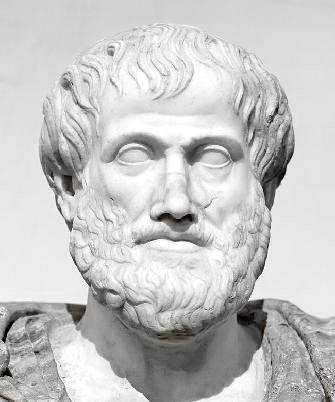 Plato's own student, Aristotle, was more cautious in his
approach to political design, actually studying historically various patterns
of social governance. In his famous
works, Politics, he stated that on the basis of his research, the
measure of good or bad in a society and its government appeared to depend not
on the constitutional form of government itself – whether a government was made
up of one (as in a monarchy) or a few (as in an aristocracy) or the many (as in
a democracy) – that is, not by how many ruled, but by how morally they
ruled. A rule of one could be good – or
bad – depending on the moral quality of the ruler. A rule of the many could be good – or bad –
as for instance a rule by an enlightened citizenry would be considered good ...
whereas rule by a frenzied mob would most definitely be viewed as some perverse
form of popular tyranny. Thus to Aristotle, "good" or "bad"
depended not on how many ruled but how well the society was ruled by its own
high moral standards. Failure to hold to
its foundational standards would soon enough bring any society to ruin.
Plato's own student, Aristotle, was more cautious in his
approach to political design, actually studying historically various patterns
of social governance. In his famous
works, Politics, he stated that on the basis of his research, the
measure of good or bad in a society and its government appeared to depend not
on the constitutional form of government itself – whether a government was made
up of one (as in a monarchy) or a few (as in an aristocracy) or the many (as in
a democracy) – that is, not by how many ruled, but by how morally they
ruled. A rule of one could be good – or
bad – depending on the moral quality of the ruler. A rule of the many could be good – or bad –
as for instance a rule by an enlightened citizenry would be considered good ...
whereas rule by a frenzied mob would most definitely be viewed as some perverse
form of popular tyranny. Thus to Aristotle, "good" or "bad"
depended not on how many ruled but how well the society was ruled by its own
high moral standards. Failure to hold to
its foundational standards would soon enough bring any society to ruin.
As we shall see further on in this narrative, the
Founding Fathers of the American Constitution (1787) were college men, back
when college or university education meant principally a study of the
humanities (philosophy, theology, history, law, and the social sciences). Thus they were very aware of both the
political history of ancient Greece, and the philosophy of the Greeks,
especially Plato and Aristotle. We
shall see more of how this influenced their decision deeply as to how to build
a new Federal system uniting the thirteen newly independent American
states. Full democracy was not
their goal. Democracy was included as part of the dynamic. But they attempted to put it under the
considerable restraint of a constitutional "checks and balances"
system. More about that later.
While we are on the subject of ancient Greece, it is important to
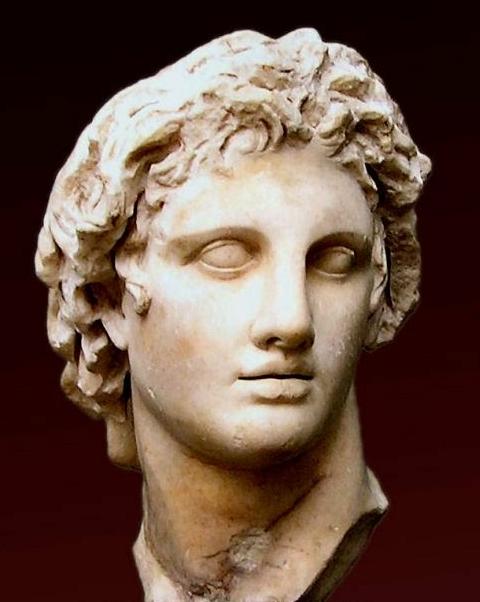
bring into the narrative the role that a single individual, Alexander of Macedon, would play in
the development of the ancient world. He
was the son of Philip II of Macedon, the latter a
strong warrior who many of the Greeks had looked to in order to bring Greece
out of the disorder ongoing in that land since the days of the Peloponnesian
Wars. Philip, anticipating a permanent
(or dynastic) call to Greek governance, prepared to have at his side a son, Alexander, well informed in the ways
of the people Philip intended to rule.
So he sent Alexander off to study under the very
wise Aristotle. But Philip was killed in 336 BC, and his
20-year-old son suddenly found himself at the head of his father's project.
Philip II / a young AlexanderMost
amazingly, Alexander proved to be as much a
leader as his father. He was finally able
to assemble the Greeks into some kind of united community, to take on the
powerful Persians directly – in Persian territory itself this time. There would
be no more just sitting passively waiting to fend off another Persian assault,
as had been the pattern previously. Alexander intended to go at the
Persians in their own world.
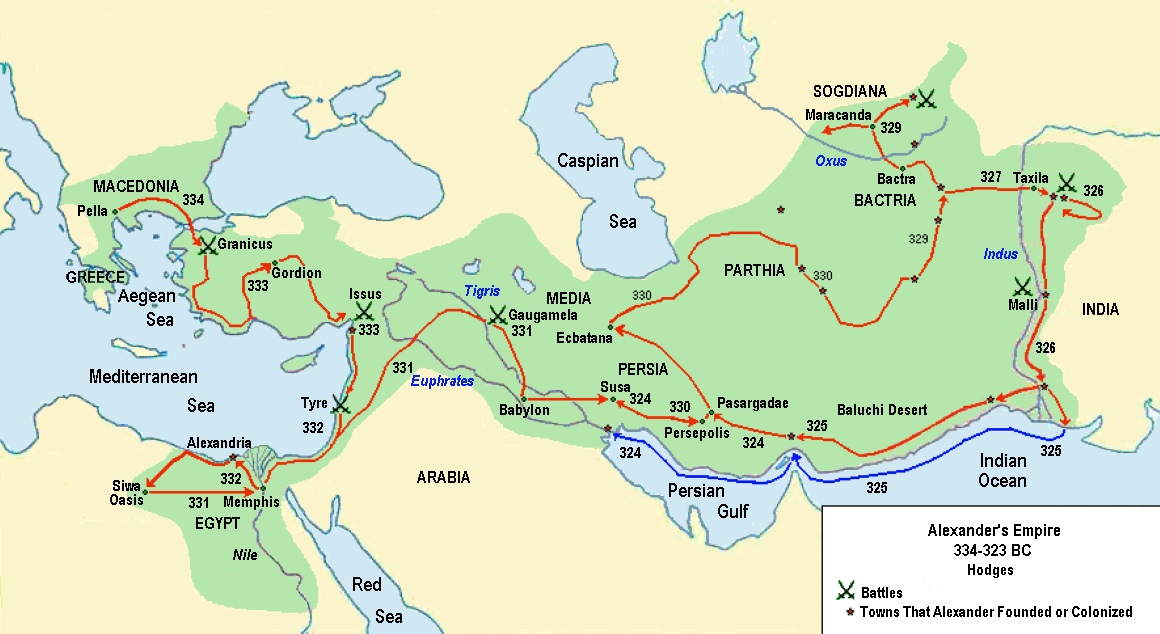
He
first captured the lands bordering the Eastern Mediterranean, including even
Egypt. He then swung his army eastward
and crushed the Persians' own efforts at self-defense in 331 BC.
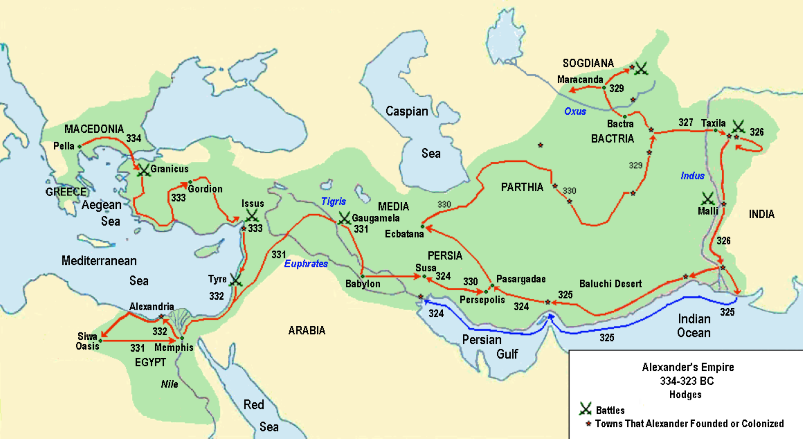
But Alexander had a roll going, and kept
on conquering, deeper into central Asia, and even down into the Indus River
valley. But his soldiers were at this
point exhausted and wanted to go home, or at least back to Babylon, the former
Persian capital, but now theirs as well.
Thus he turned around (however, losing half his men trying to get across
the Baluchi Desert). But back in
Babylon, Alexander was himself soon to die
(323 BC), probably his death resulting simply from sheer exhaustion.
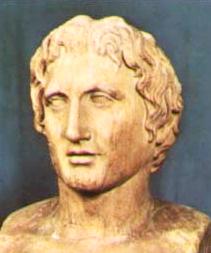 Alexander thus left a huge Greek
legacy for his successors to deal with (they ultimately split Alexander's huge empire into a number
of smaller empires). And it left a
lasting Greek cultural imprint on the entire region, not only in the Eastern
Mediterranean but even into the Mesopotamian lands (principally today's Iraq)
and large sections of central Asia.
Alexander thus left a huge Greek
legacy for his successors to deal with (they ultimately split Alexander's huge empire into a number
of smaller empires). And it left a
lasting Greek cultural imprint on the entire region, not only in the Eastern
Mediterranean but even into the Mesopotamian lands (principally today's Iraq)
and large sections of central Asia.
The
importance to Americans of this Alexandrian legacy is that Greek culture was so
dominant in the times of Jesus and the first century church
that all of Christianity's foundational writings were done in Greek, not the
local Semitic language (Hebrew and Aramaic) of the lands where Christianity was
birthed, or even the Latin of the then-dominant Roman Empire.
Actually, America long-identified itself as a republic – not as a
democracy. There is a difference. A republic refers simply to the idea of the
actual ownership of a society – not the particular method by which it
goes about the business of being governed.
The word "Republic" comes from the ancient Latin res
publica or "thing of the people."
A Republic belongs to no particular ruling dynasty (such as the kings or
emperors), no ruling class, no particular tribe, sect or socio-economic group
within a society. It belongs to all the
people of that society.
And
for such an understanding, we Americans are deeply indebted to the Romans, for
it is from them that the concept originated.
Under the Romans, their government or "republic" was
originally designed to be a government not of human wills, whether the will of
one person or even the many. The Roman
Republic was intended to be a government of laws, a permanent body of rules
that would describe the order that all Romans were to live and thrive under –
an unshakeable legal order that would continue forward in a precisely-defined
way regardless of whatever personalities played their assigned parts in this
order. A Republic was intended to be a
system of fundamental or unchanging constitutional laws – not a system governed
by the whims of human ambition and personal political interest, no matter how "rational"
these whims might claim to be. And
these laws were supposedly eternally valid, because they found themselves
detailed on 12 bronze tablets (450 BC) posted in the Roman Forum (central
market and religious center) for all to see.
And all Romans knew these laws well.
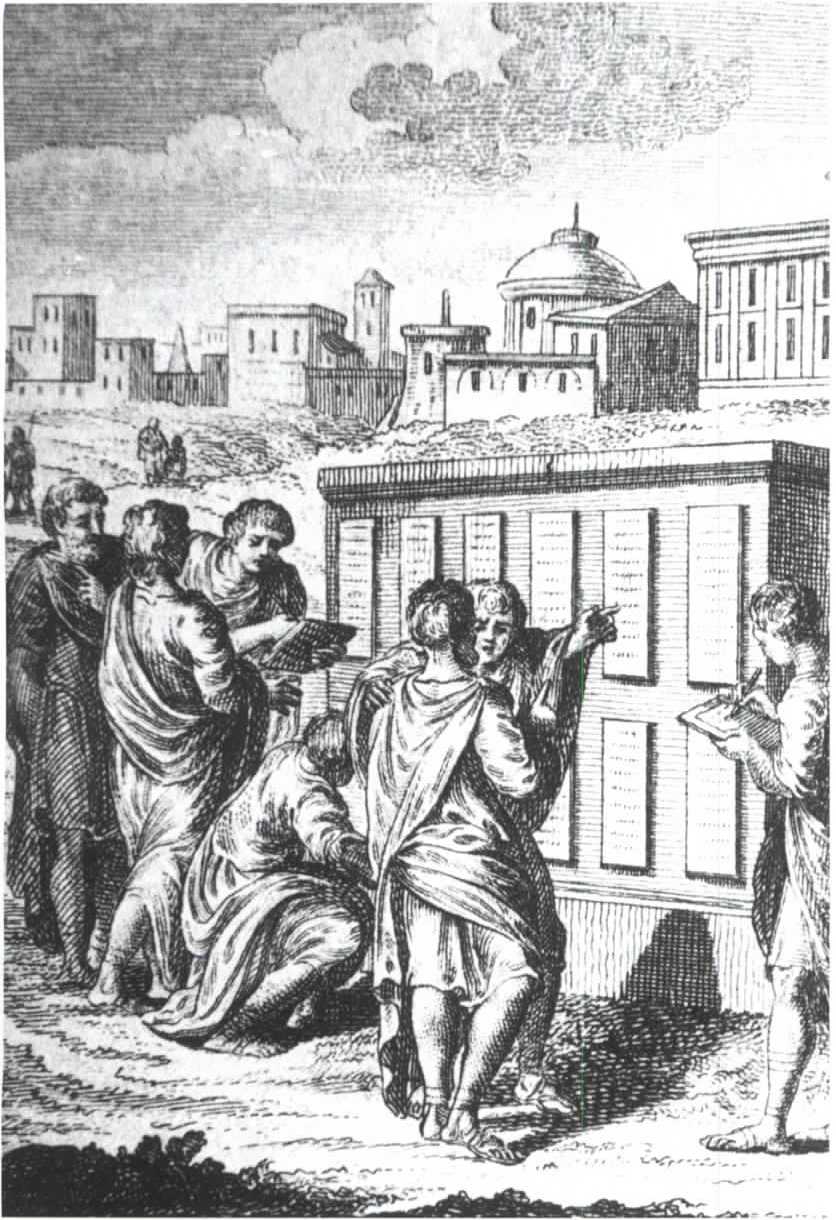
The 12 Tablets of the Law
(actually the tablets would have been much, much bigger)
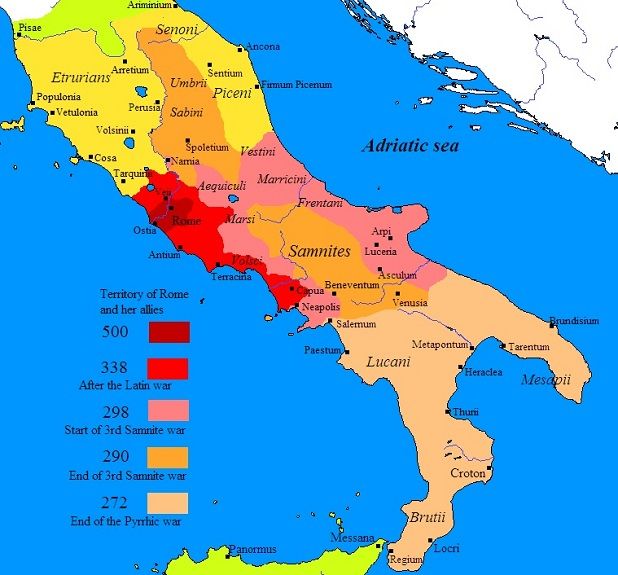
This
was the key to Rome's early success in its expansion across Italy, and then
across the Mediterranean world (and Europe north of the Alps as well). Unlike tribes and nations that have a very
hard time bringing conquered peoples into their social order as fellow members
(choosing instead to enslave them or butcher them on the spot), the Romans
offered participation of those they recently conquered in their society as full
members, provided they were willing to come under Roman law and live
accordingly as Roman citizens. That was
not only fair, it was powerfully effective in developing Rome's wide-spread
multi-ethnic republic.

And
it created a powerfully effective socio-economic order. Given their legalistic mindset, Romans almost
instinctively organized the world around them physically and materially as they
conquered it, building roads (still standing today in many places) to provide
rapid communication, troop movement and ultimately commerce connecting the
Roman center to its outlying territories.
Wherever they conquered they planted military camps (naturally on a
perfectly uniform grid pattern!) ... which became the heart of new commercial
towns which quickly grew up around these garrisons. They cleared the seas of pirates and kept
marauding tribal raiders from central and east Europe closed out beyond a well-defended
line running from the Rhine River in Germany to the Danube in the Balkan
Peninsula. Consequently, the Mediterranean world that Rome had "conquered"
experienced an unprecedented peace and prosperity, one that made Rome the very
model of civilization itself to millions of people.
| THE EMPIRE REPLACES THE REPUBLIC |
But again, such politics – even Republican politics – is not a
perfect thing. It involves people. And people can be very messy to work with.
Over
time, but particularly during the wars with the Carthaginians (the three Punic Wars from the mid-200 BC to the
mid-100s BC), the Roman Senate had become the center of all Roman power. It was a club of old Roman families (the "patricians")
joined by a select group of "commoners" (the "plebeians")
of recently acquired wealth, which closed its ranks against the rest of the
Roman common or plebeian citizenry. In
short, the Senate had turned itself into a ruling oligarchy. Meanwhile rising taxes necessitated by
ongoing war, and competition from the growing amount of slave labor acquired in
these wars, were bringing the more middle-class Roman plebeians to ruin. And
yet real Roman power, especially the power of the Roman military, was built on
the loyal services of these commoners as citizen-soldiers. Something drastic needed to be done to save
Rome from collapse or revolution.
Thus
as was the case for Athens, efforts were undertaken by
leading Roman citizens to reform the system, opening up bitter debate as to
exactly how that was to work. "Reform"
invites new forms of reasoning into the older legal order, reasoning which can
go most any way, or at least in the way of the most powerful of the social
groupings within society. In short, the
ancient Roman Constitution proved to be not quite as permanent or unchanging as
a body of laws.
Social
problems thus merely increased as various identity groups wielded reason
against each other as Rome sought to upgrade the now-changing
constitution. Tragically, identity politics was overwhelming
the constitutional republic.
The
Gracchi brothers, Tiberius and Gaius, as Tribunes (Rome's political officers
representing the interests of the commoner plebeians), attempted reforms in
favor of the plebeians (133-121 BC), which were blocked by a jealous Senate. The
brothers were either clubbed to death by a mob or forced into suicide in
advance of a mob, stirred to action by the Senate.
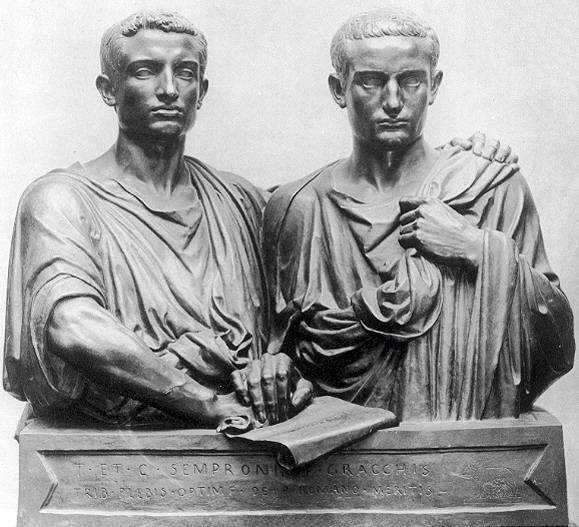
The Gracchi brothers
This
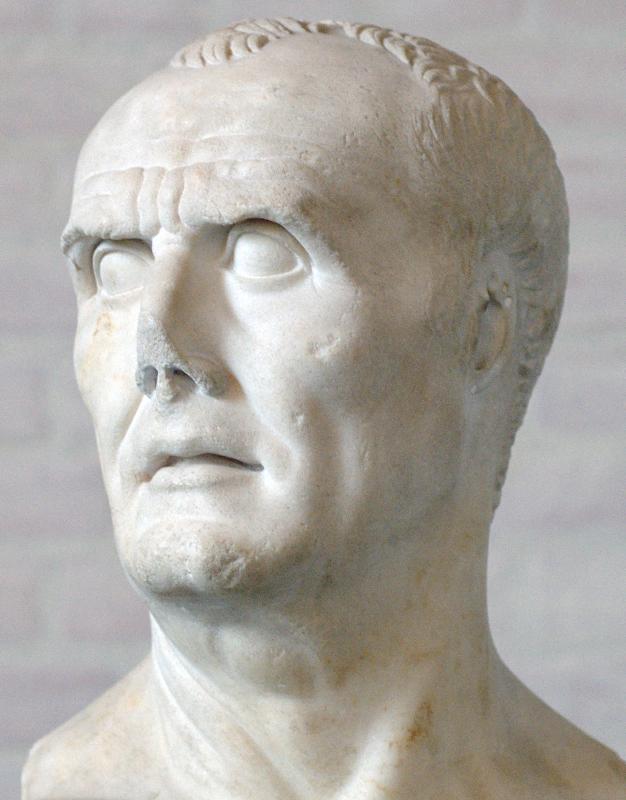
brought forward the military leader Marius (108-100 BC) who tried to use his
power to clean out the corruption in both the military and the massively
expanding Roman bureaucracy. But in the
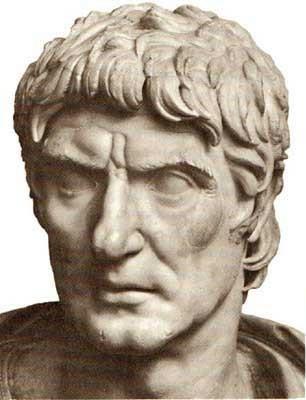
end, he was unable to stop the Roman fall into deeper "Social War." This in turn led General Sulla to march his
troops into Rome (a highly illegal act), designed to undercut the plebeian
reform party and strengthen the position of the Senate. Thus Rome came under the first of its
military dictators (82-79 BC) or "emperors" (from the Latin imperator
or military commander).
Gaius Marius / Lucius CorneliusSulla
But
the chaos only deepened, especially with Spartacus's slave uprising (73-71
BC). At this point, the Senate looked
completely to the Roman military to save Roman society. This resulted in the selection of three
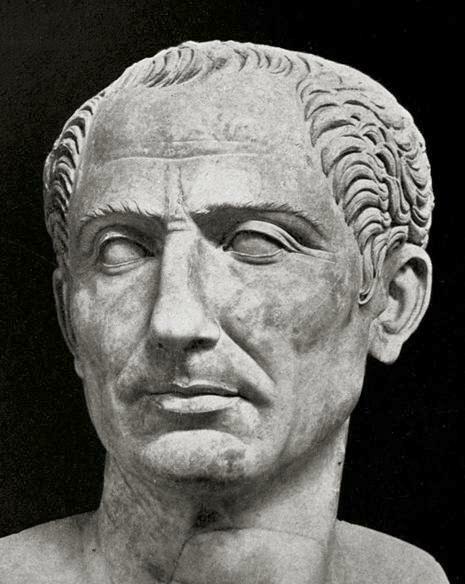
generals – Crassus, Caesar and Pompey – to bring Rome
back under control. But instead, it
simply put Rome through the process of a growing political competition among
these three military giants. One last
effort was made – by Cicero – to bring Rome back under
constitutional rule. But getting
nowhere, Cicero retired from politics, the
last significant spokesman for Roman Republicanism. Finally, with Caesar coming out on top in the
competition among the generals – by marching his troops on Rome in 49 BC – Rome
now found itself under full military rule.
The Republic had just begun its conversion from Republic to Empire
(imperator-ruled).
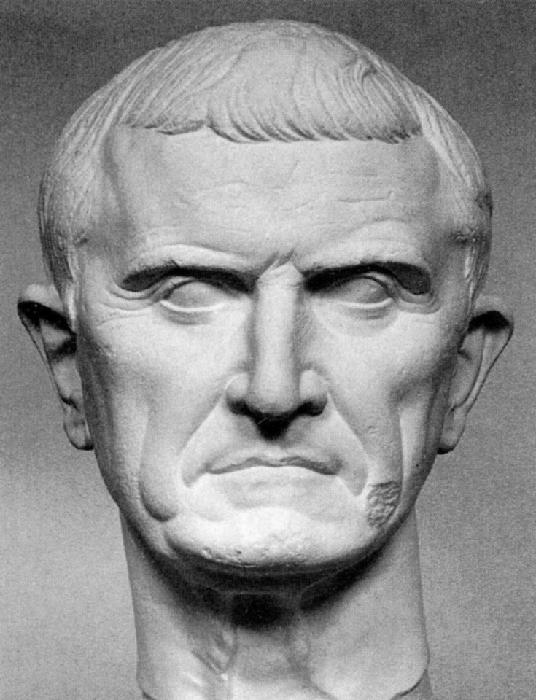
Marcus Licinius Crassus
Julius Caesar
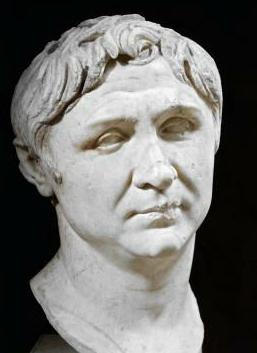
Pompey And
it would be Caesar's adopted-son (actually
nephew) Octavian "Augustus" Caesar who would complete the
conversion, as he tightened up Roman "Republican" society just as a
general would tighten the ranks of his army.
His absolute hold over Roman society did finally bring about much-needed
social order. But it also ended forever
the role of the Roman commoners in determining the shape and behavior of their
society. Rome was now ruled "from the top down" by a rigidly
organized Roman military imperium. The "Republic"
now existed in name only.
And
it would be Caesar's adopted-son (actually
nephew) Octavian "Augustus" Caesar who would complete the
conversion, as he tightened up Roman "Republican" society just as a
general would tighten the ranks of his army.
His absolute hold over Roman society did finally bring about much-needed
social order. But it also ended forever
the role of the Roman commoners in determining the shape and behavior of their
society. Rome was now ruled "from the top down" by a rigidly
organized Roman military imperium. The "Republic"
now existed in name only.
For a while this looked as if it had been exactly the right
development needed by a mighty Rome. And
this "for a while" was set in place by indeed a number of very
capable Roman emperors – Octavian Caesar, Tiberius, Vespasian,
Domitian, Trajan, Hadrian, Antoninus Pius and finally Marcus Aurelius – who
governed the Empire during most of the first two centuries of the Christian
era.
But from the death of Marcus Aurelius in 180 onward,
Rome (or its military legions that actually did the selection of Rome's
imperial leadership) seemed unable to come up with talented leadership. To a great extent this was caused by the deep
infighting that went on among the legions as one or another legion would
promote its own general as Rome's new emperor.
The situation got so bad that in a 50-year period (running from 235 to
285), constant overthrow or assassinations of emperors (25 in total!) going on
within the higher ranks of the military caused Rome to tumble into deep moral
corruption and social chaos. And thus
did Rome begin its fall from greatness – to the status of its Republic being no
more than a fond memory, actually a tragic memory.

Go on to the next section:
 Miles
H. Hodges
Miles
H. Hodges

 The Jewish contribution to Western culture
 Greek (more specifically, Athenian) "Democracy"
 Alexandrian Greece
 The Roman Republic
  The Empire replaces the Republic