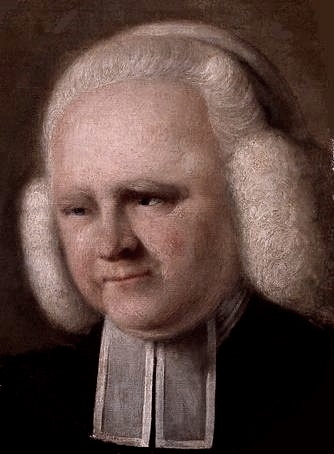
 Then the dynamic seemed to begin to stall somewhat, only to get
underway again with the arrival of George Whitefield to America at the end of
the 1730s. Whitefield would preach a message of
spiritual revival which would reach deeply into the hearts of Americans, from
Georgia in the South all the way north to Maine.
Then the dynamic seemed to begin to stall somewhat, only to get
underway again with the arrival of George Whitefield to America at the end of
the 1730s. Whitefield would preach a message of
spiritual revival which would reach deeply into the hearts of Americans, from
Georgia in the South all the way north to Maine.
When
Whitefield was a student at Oxford University, he befriended Charles Wesley,
who in 1733 invited him to become involved in his brother John's Holy Club ...
the "Methodists," as they were contemptuously called by fellow
students – because of their efforts to discipline themselves to a life of
holiness. But try as Whitefield might,
he just could not achieve the holiness he craved, and finally crashed
spiritually, only then to be filled by a strange new spirit, which he
recognized came solely from the grace of God, not from Whitefield's own efforts
to be holy. This discovery would stand
at the basis of everything Whitefield was to teach and preach from that point
on.
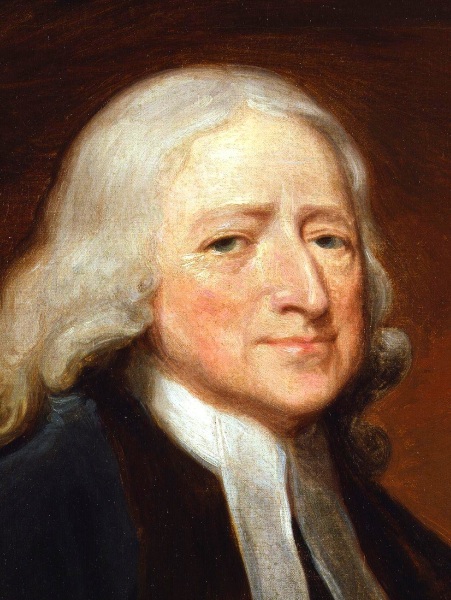

John
Wesley
Charles Wesley
Finally
ordained to pastor the area of Bristol (England) in 1736, he found that his
message of immediate salvation through simple repentance before God was
touching the hearts of the British working classes, the way the doctrinal and
ritualized pattern of Church of England worship did not. Soon, Whitefield had a huge revival
ministry going on in England, even in its fields and streets.
But
in 1738 he felt called to go to the new colony of Georgia, where, once there,
he took a great interest in building an orphanage (his Bethesda
Orphanage). Thus after a short stay in
Georgia, he returned to England to raise funds for his orphanage project. To raise that money (and bring his listeners
to salvation at the same time), he took his preaching wherever he could, to
churches, or, as back in England, to the streets and fields if necessary. This very unorthodox method of preaching to
the masses gained him a great deal of attention, both positive and
negative. Thousands would come out to
hear his preaching, falling into tears of repentance and calling for God to
retake the lead in their lives.

Whitefield preaching on the street in town
Whitefield preaching in the open field
Now, Whitefield undertook to cover the
broader reach of the colonies, taking himself to Pennsylvania with the
intention of founding an orphanage there in partnership with the Moravians (a
large religious group in the rural region north and west of Philadelphia, who
founded towns of their own named Bethlehem and Nazareth!). On his way there, he found himself preaching
every step of the way – often several sermons a day! Then Tennent and Edwards invited Whitefield to New Jersey and
Massachusetts to preach. And thus it was
that Whitefield's open-air revival method
reached north.[1]
 Most surprisingly, the greatest American sage of the
time, Ben Franklin, found himself warmed at least intellectually
by this massive religious revival of Whitefield's.
In fact, he personally saw to the publishing of forty or more of Whitefield's sermons on the front page of his
newspaper, the Pennsylvania Gazette.
Indeed, Franklin and Whitefield formed a friendship that lasted the entire
span of Whitefield's remaining life (he died in America on a
preaching tour in 1770).
Most surprisingly, the greatest American sage of the
time, Ben Franklin, found himself warmed at least intellectually
by this massive religious revival of Whitefield's.
In fact, he personally saw to the publishing of forty or more of Whitefield's sermons on the front page of his
newspaper, the Pennsylvania Gazette.
Indeed, Franklin and Whitefield formed a friendship that lasted the entire
span of Whitefield's remaining life (he died in America on a
preaching tour in 1770).

[1]But at the same time Whitefield
never lost interest in orphanage development, continuing to travel back and
forth between England and America to promote the development of orphanages (in
Georgia and Pennsylvania principally).
| OPPOSITION TO THE "STYLE" OF THIS AWAKENING |

 Freylinghuysen, Tennent and Edwards
 George Whitefield
  Opposition to the "style" of this Awakening
  But there was great Divine Purpose in this strange event