<


3. INDEPENDENCE – AND THE NEW REPUBLIC

THE YOUNG AMERICAN REPUBLIC


CONTENTS

The huge need to "unite" the States

The Constitutional product

The moral-political foundations of the new arrangement


The textual material on this webpage is drawn directly from my work
        America's Story – A Spiritual Journey © 2021, pages 86-98.

THE HUGE NEED TO "UNITE" THE STATES

The need for unity.   The thirteen colonies were now thirteen independent states, each state able to go about its own business on a fully sovereign basis.  And that's where the problems began.  Each state wanted to conduct its own diplomacy abroad with the major European powers – and promote its own industries and trade overseas – in competition with the other American states.  But these smallish American states were like mere children messing with the big boys of Europe – very liable to get themselves into trouble – and even worse, become tempting targets for sophisticated and highly ambitious European powers to grab them in their ongoing wars for territory, territory, territory.  There was no reason to think that the British, given a new opportunity to do so, might not come back across the Atlantic to reclaim their former colonial territories.  After all, treaties at that time had very short lives – merely pauses in the on-going game of big-power politics.  Just because England had signed a treaty acknowledging American independence did not mean that they weren't able to put it aside at their earliest convenience and retake some – or even all – of their former colonies.

And the American leaders of these newly independent states, men who had just gone through the horrors of achieving their states' independence through bloody battle, were well aware of how the game was played.  Something needed to be done to correct the vulnerable position that these new states were in.  Somehow, they were going to have to come together as they had during the recent war – as a "United States of America" – or they would be lost.  But with the immediate pressure of war removed, the incentive for unity was not as strong – at least in the eyes of those who did not understand the dangers now facing them.

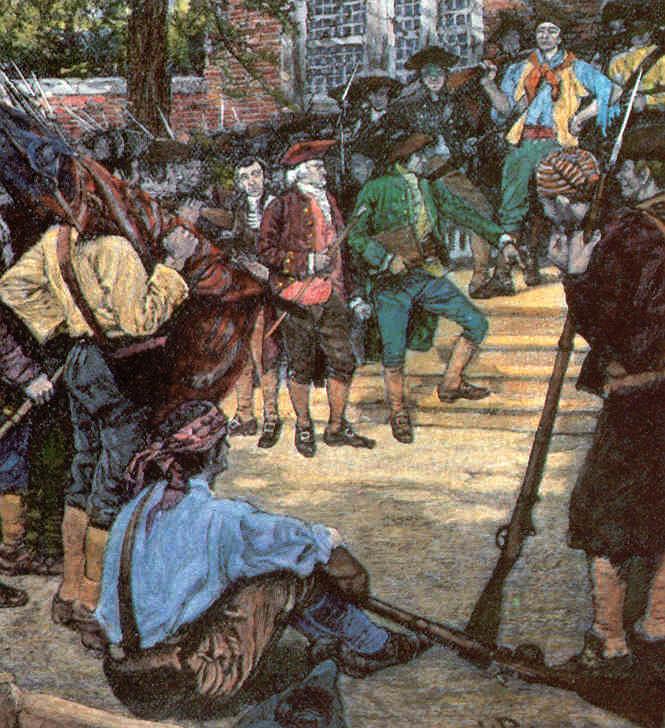
Maintaining domestic tranquility.  There was another problem on their minds at this same time:  the rebellious spirit affecting soldier-farmers, typified by those in rural Western Massachusetts.   American soldiers had returned from the war only to find that their mortgage debts to banks and taxes owed the local and state governments had merely accumulated, to monumental proportions. They received no forgiveness or even reduction of these obligations – or even some kind of compromise in being permitted to pay in goods rather than currency, something they just did not have at war's end.  They were furious – not yet on the scale of 
Bacon's Rebellion a century earlier – but headed in that direction (1786-1787).  It took Washington, appearing with the Massachusetts militia, to break up the Massachusetts (or Shay's) Rebellion, a task which Washington undoubtedly disliked intensely, but one that had to be done.  The newly independent country could not simply let such rebellious behavior infect its budding social order.[1]
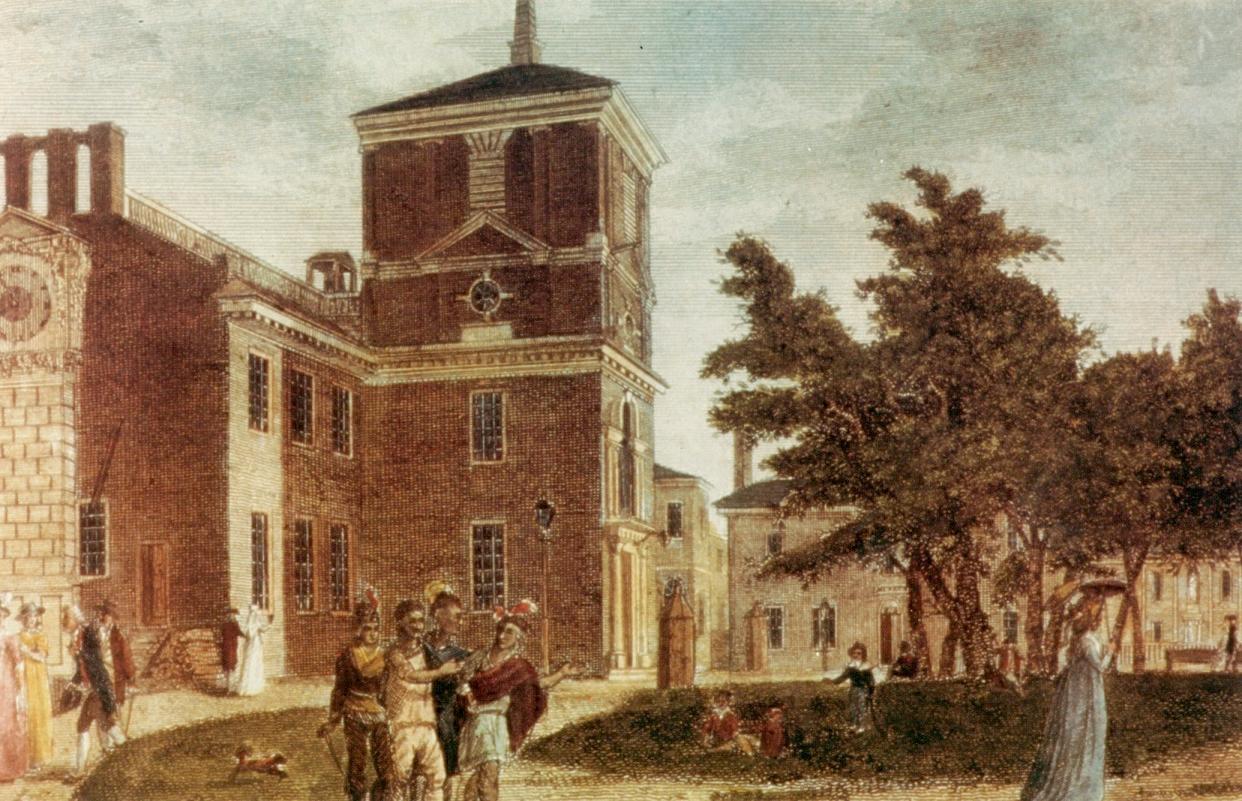
The Constitution of the United States of America (summer 1787).   At first the general assumption in meeting these challenges was that the 
Continental Congress would continue after the war, conducting meetings much as it had done during the war.  But the Continental Congress quickly demonstrated that with no common enemy looming before it, the Congress had no serious powers of its own to insist on a higher degree of American unity than the feeble effort it was getting at the time.  So – the idea came up of reforming the organization, carefully giving it some new powers to restore a degree of American unity and stability among and within the states.  Thus in mid-May of 1787, representatives of the various American states gathered in Philadelphia to begin the process of correcting this huge problem (tiny Rhode Island however refused to attend, fearing the loss of its independence to the stronger, larger states).
The immediate challenge:   big v. small states.   Rhode Island's absence pointed to a major hurdle that those who gathered in Philadelphia had to overcome.  The big states (Massachusetts, New York, Pennsylvania, and Virginia principally) understood that they carried the largest responsibility population-wise and finance-wise for these United States – and resented the fact that in the 
Continental Congress they had no more say in things than did the small states (Vermont, Connecticut, New Jersey, Delaware, etc.), because the states had merely a single vote each.  Thus Virginia arrived at the meeting in May with a plan for a bicameral Congress of two legislative houses – similar to the British Parliament with a House of Lords and a House of Commons (the Continental Congress had been unicameral, with only a single legislative house).  The Virginia Plan called for varied representation in both houses based on the relative size of the states, the larger states receiving more votes than the smaller states in each house.

And that was exactly what the small states feared – that they would simply be reduced to irrelevance because of their small size.  Thus they proposed a unicameral legislature, one with each state, large or small, allotted equal representation (a single vote each), similar to the 
Continental Congress.  However, this legislature would possess stronger powers than the Continental Congress.

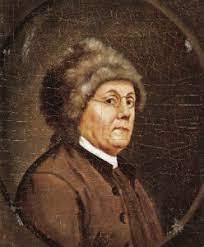
Bringing God's guidance into the proceedings.   Most amazingly, at a point when the discussions seemed to be going nowhere, Ben 
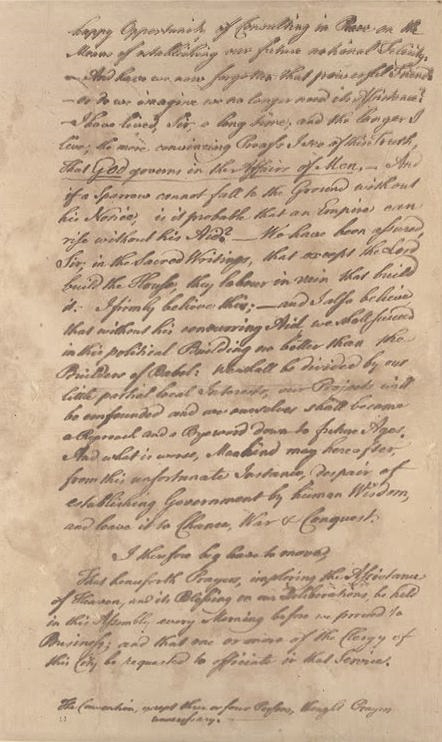
Franklin – always the voice of simple, straightforward reason – spoke to the group (June 28), reminding them that these discussions proceeding from the biting logic of mere self-interest were going to take this assembly nowhere.  They needed to put their self-serving logic aside and instead consult God through prayer, and draw strength from his guidance – just as had been the case during the war when they began their meetings each day in prayer.  Franklin reminded them:

In this situation of this Assembly, groping as it were in the dark to find political truth, and scarce able to distinguish it when presented to us, how has it happened, Sir, that we have not hitherto once thought of humbly applying to the Father of lights to illuminate our understandings?

In the beginning of the Contest with G. Britain, when we were sensible of danger, we had daily prayer in this room for the divine protection.  Our 
prayers, Sir, were heard, and they were graciously answered.  All of us who were engaged in the struggle must have observed frequent instances of a Superintending providence in our favor.  To that kind providence we owe this happy opportunity of consulting in peace on the means of establishing our future national felicity.  And have we now forgotten that powerful friend?

I have lived, Sir, a long time, and the longer I live, the more convincing proofs I see of this truth – that God governs in the affairs of men.  And if a sparrow cannot fall to the ground without his notice, is it probable that an empire can rise without his aid?

We have been assured, Sir, in the sacred writings, that "except the Lord build the House they labour in vain that build it."  I firmly believe this; and I also believe that without his concurring aid we shall succeed in this political building no better than the Builders of Babel: We shall be divided by our little partial local interests; our projects will be confounded, and we ourselves shall become a reproach and bye word down to future ages.  And what is worse, mankind may hereafter from this unfortunate instance, despair of establishing Governments by Human Wisdom and leave it to chance, war and conquest.

I therefore beg leave to move, that henceforth prayers imploring the assistance of Heaven, and its blessings on our deliberations, be held in this Assembly every morning before we proceed to business, and that one or more of the Clergy of the City be requested to officiate in that service.

Miraculously, Franklin's call for daily prayer seemed to be the point at which things settled down and real progress began to be made in the discussions!
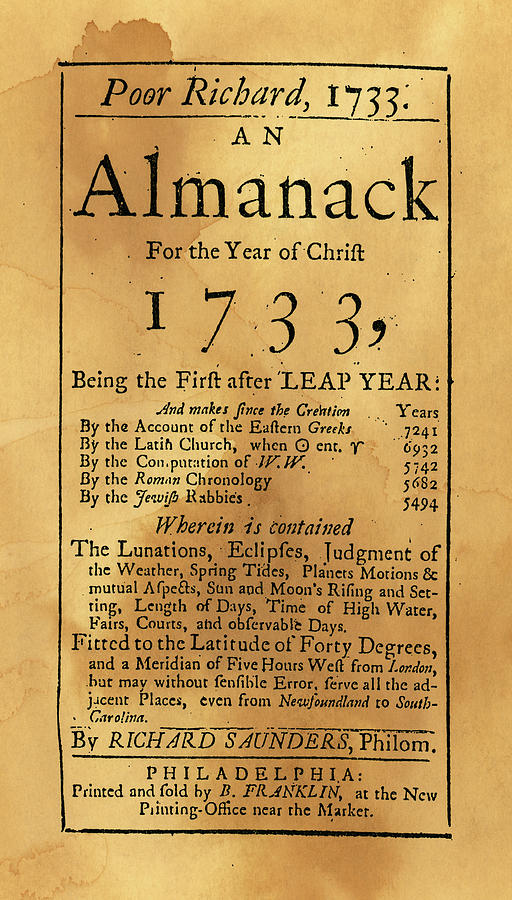
Benjamin Franklin.  This Franklin was greatly loved – but not always well understood – because he was intensely complex.  That was because he served the world around him in so many different ways in the course of his lifetime.  Born in Boston as the last of 17 children, he was early-on expected to become a pastor, but chose apprenticeship in the publishing business of one of his brothers.  But in his teens, he abandoned this duty and ended up in Philadelphia opening his own printing shop, and soon produced not only a local newspaper, The Philadelphia Gazette, but also published annually (1732-1758) the very popular Poor Richard's Almanac – the sales of this book of simple advice making Franklin quite prosperous.
But his huge sense of curiosity about the surrounding world led him also into the world of science, where he became a very well-known expert in the new field of electricity (a very dangerous enterprise, as some were soon to discover!).  He then took his learning into the world of higher education, helping to write educational curriculum, and helping to set up a college that would eventually become the University of Pennsylvania.

And he made his way easily into the world of politics, being sent in 1750 to London to represent the interests of the Pennsylvania colonies, which put him in the heart of the rising tensions between the colonies and the British crown.  And when in 1775 the Second Continental Congress gathered in Philadelphia, he not only was there to represent Pennsylvania, but was sent by the Congress to Paris to try to bring the French in on the American side of the growing American-British conflict.  And there he would remain during the duration of the war, being part of the group that finally negotiated the Paris treaty ending that war.  He then returned to the States in time to become part of the Constitutional Convention of 1787.
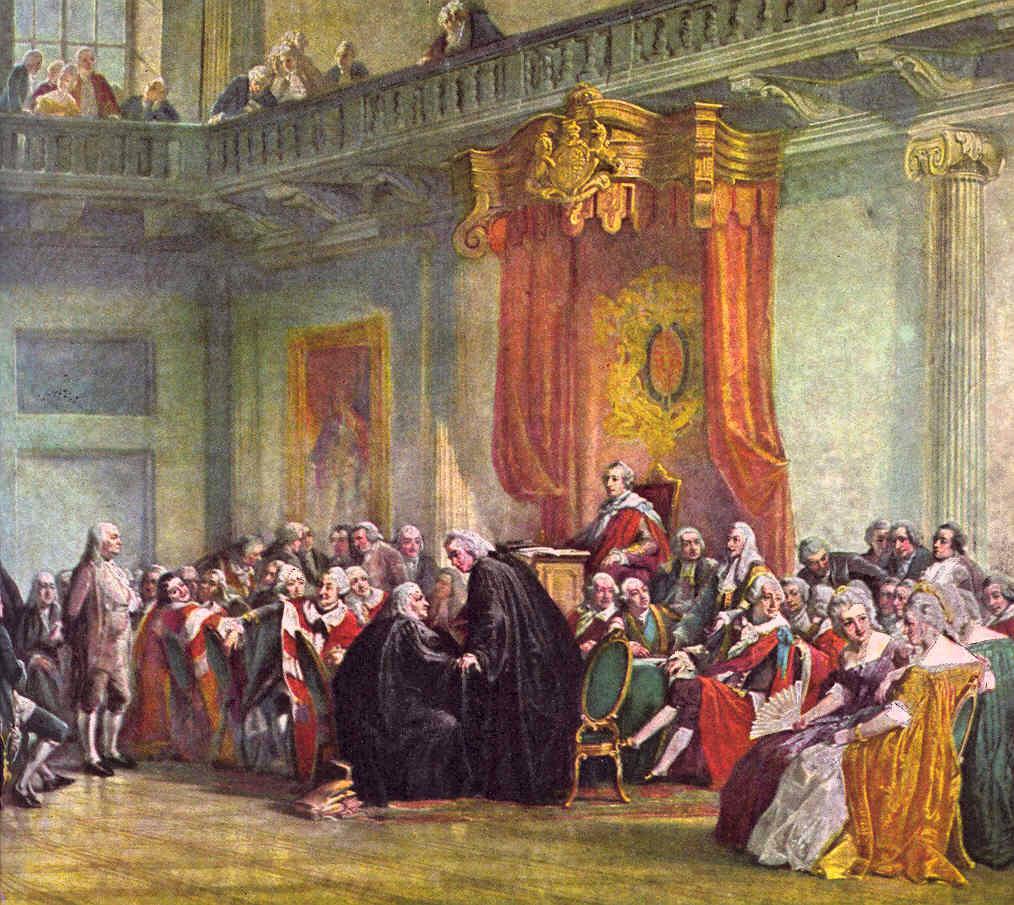
s a person of enormous importance, he took on the ways not of an aristocrat, but almost something of quite the opposite:  a homespun American farmer!  His ways were simply theatrics that 
Franklin employed in his effort to get across to others an understanding of what it was, as an American, that he stood for.  But he could, at the same time, come across as a supreme "wise one" – for indeed, he was brilliant, and recognized as such in all those fields of science, politics, education, and just the philosophy of the times.

At a deeper religious level, Franklin seemed at times, notably in his earlier years, to be merely a standard Deist, one who believes in a Creator-God who long ago put all of life into operation, but who now sits back and watches his creation unfold naturally.   But Franklin went through many changes in religious thought over the span of his 84-year life – at first very reactive to the intense Puritanism of his parents, then probably indeed something of a Deist, but eventually aware of the importance of a religious spirit that transformed life dramatically (thus his long friendship with 
Whitefield), and ultimately, as we have just seen, someone who believed that God indeed was very active in the affairs of both individuals and whole societies.

But, in any case, he pursued his Christian faith so removed from dogma that many denominations (ranging from Catholics to Quakers) could have believed that he was, underneath it all, one of them!  This was because he lived as he saw Jesus having lived, inspiring a higher morality that brought a deeper happiness to life, despite life's material circumstances.

The Connecticut Compromise (July 1787).   Soon after 
Franklin's intervention in the stalled proceedings of that Convention, Connecticut came up with an idea (July 5th) that both sides could – after yet more debate – agree on.  Congress would be made up of two houses.  Congress would have a lower house, like the British House of Commons, that would serve more directly as the voice of the people – and thus base the relative size of each state's representation in that house on the size of the states themselves, the larger states having more representatives and thus more votes in this House of Representatives.  But Congress would have a second or upper house, a Senate – similar to the British House of Lords – with each of the states having an equal voice of two Senators and thus two votes each, regardless of the size of the states.  And to get any real work done, the two houses would have to work together ... so that neither of the two houses would have dominant influence in the new government.

This was eventually (July 23rd) agreeable to all the Philadelphia delegates.  Thus they were finally able to move on to shape the rest of the new Constitutional order.<

At the end of that long, hot summer, they finally (mid-September) had put together a new Federation, a Republic in form – something that looked like it would build that unity among the states they so badly needed.  Under the new Federal Republic they would indeed be "the United States of America."


[1]This is not a dynamic understood by American Humanists, who blanche at the thought of having to maintain necessary social order, even if it is a most unpleasant, most unwanted task, which it certainly can be.  It is a duty of those responsible for the ultimate order to society (which a society, after all, is exactly that:  an institution of human order), a duty that Humanists typically run from.  In fact, they will easily turn on those (such as the police) in ideological fury when this dynamic explodes – which it will do from time to time – and blame the police, not those burning away at the social order, for the disaster in front of them.


THE CONSTITUTIONAL PRODUCT

An alliance of 13 sovereign States.  It is important to note that this Constitution did not set up a new government to rule over the people.  Such rule still belonged to the states – and the people themselves (as clearly stated in the 9th and 10th Amendments attached to the new Constitution:

9. The enumeration in the Constitution, of certain rights, shall not be construed to deny or disparage others retained by the people.

10. The 
powers not delegated to the United States by the Constitution, nor prohibited by it to the States, are reserved to the States respectively, or to the people.

Thus instead of a new government over the people, like some kind of monarchy that the world was well familiar with at that time, the new Constitution provided for an alliance of independent states, bringing them together in vital areas – most importantly in the realm of foreign affairs – so as to protect them from the ambitions of European empires – and also to protect them from any competitive ambitions among themselves that would weaken and thus make the states more vulnerable to just those hungry empires abroad.

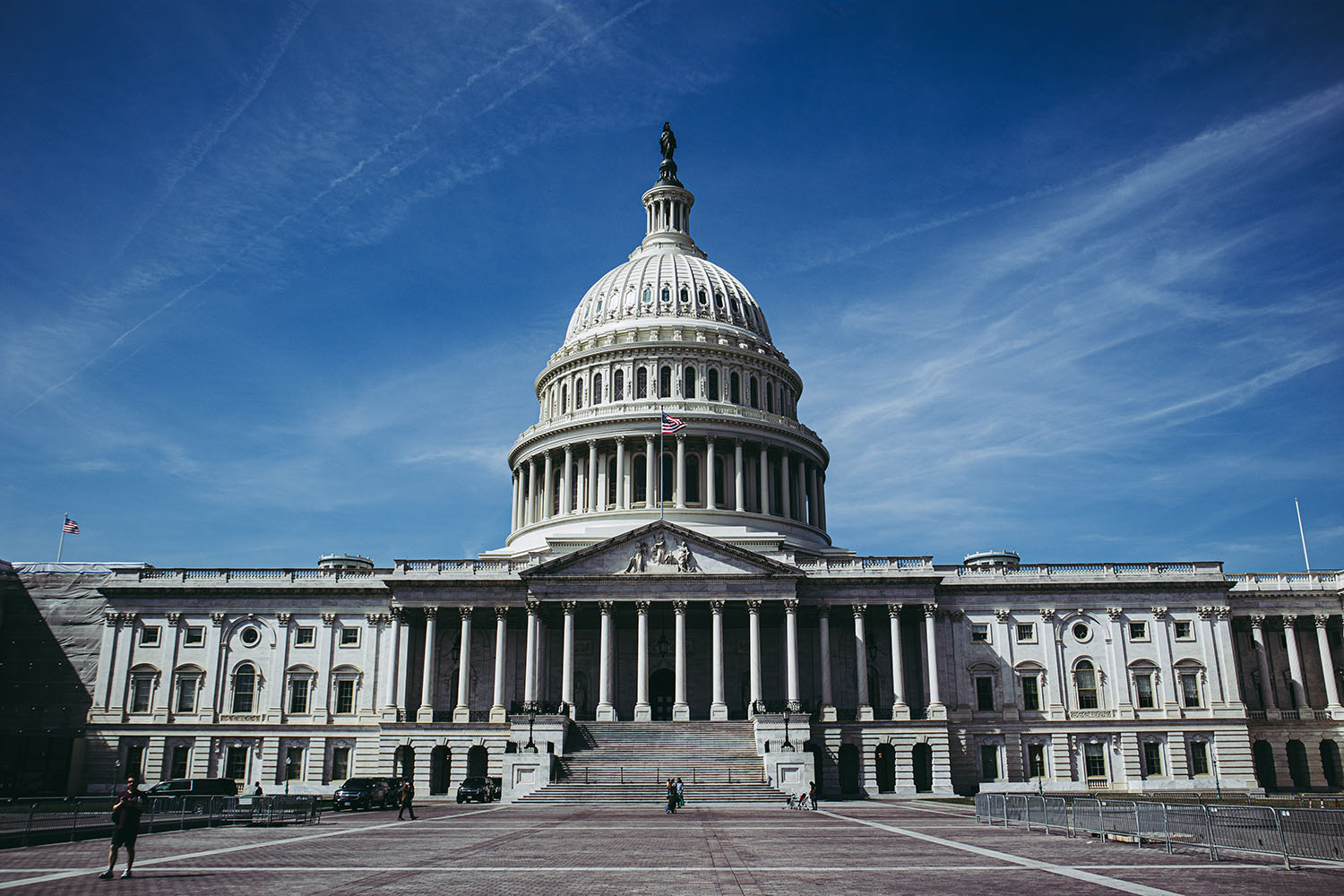
The Federal Congress.
  This new political order was definitely not a democracy – as it is so often supposed in today's cultural climate.  The creators of this Constitution knew too much history to simply turn the federation directly over to the popular will – where "enlightened" demagogues could easily manipulate the gullible masses into doing something really stupid and self-destructive as a society.

The House of Representatives.   They did give the people their voice in a House of Representatives – and recognized the particular responsibility of the American citizenry in the realm of finances and economics by making the House of Representatives the house that would originate all legislation of a financial nature – much in the same manner that the British House of Commons worked.

The Senate.  But the Constitution also set up the new Senate with the clear intention that it would serve as the voice of the individual states – sort of a check on the popular will driving the House of Representatives.  Senators were expected to be senior statesmen chosen by the legislatures of each of the states (as per the Constitution's original provisions in Article I, Section 3),[2] whom the states esteemed to be the ones to best represent in Congress the interests of the sending states.  In other words, Senators were expected to be senior statesmen (like the British Lords), older, wiser, deeply experienced in public affairs.  In line with this expectation, the Constitution specified that ratification or approval of all treaties, all ambassadorial appointments and other key areas in the conduct of the foreign policy of the new Federal Union was to be the special responsibility of the Senate – in conjunction, of course, with the President who initiated all action in these areas.  Also, the confirmation of appointments by the President of all Federal judges was to be the matter only of the Senate.  Again, this was because a greater dignity and political maturity was expected of the Senate.

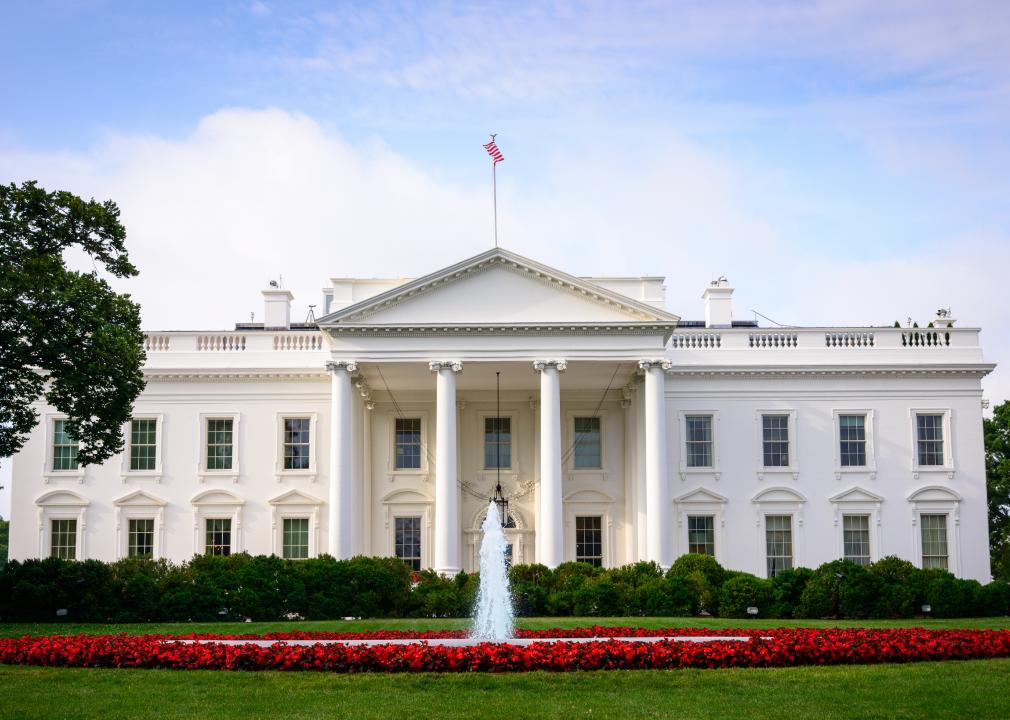
The President.  As permanent head of the Union, the President had executive responsibilities – to call Congress into session, to address it annually with his estimation or appraisal concerning the State of the Union, and as a permanent officer to see that the laws of Congress were faithfully executed as Congress itself had directed.  But he was also to serve somewhat like a king, in sending and receiving diplomats to and from other countries (the states no longer had such foreign policy rights) and he was to serve as the top commanding officer of the army and navy serving the United States.  And, rather unanimously convinced that Washington himself would be the one called on to fill that position, the Framers of the Constitution had a fairly clear idea of how this high office would likely shape up – even though Washington himself had given no indication whatsoever that he was interested in that responsibility.  But if not Washington, who then? There would be pressure coming at Washington to accept the job.

In any case, the President – functioning as one who presides rather than rules – would himself be chosen by the states – not by the people.  Each state would appoint its own members of the Electoral College, the institution assigned the task of choosing a new President every four years.  The number of voting members of the Electoral College allotted each state would be determined by the size of that state's presence in Congress (the total number of their Representatives plus their two Senators – although Congressmen and Senators themselves could not serve as presidential electors).  Furthermore, each state was given the right or responsibility of deciding exactly how they would choose those presidential electors (Article II Section 1).

As previously mentioned, the President was to supervise the actual application of the laws of Congress in specific situations facing America.  It was not expected that the President would have a great influence in originating the laws.  That was supposed to be Congress's job ... in doing so representing the will of the sending states (the Senate) and their citizens (the House of Representatives).  No, the President was not supposed to be the maker of the laws, only the supporter and enforcer of the laws enacted by Congress.

However, the President's required approval of Congress's new laws was a key part of the whole legislative or law-making process.  If the President himself felt for one reason or another that he could not approve a proposed law coming out of Congress, the President could veto that law.  That would not totally stop further progress on the enacting of that law.  But it might – or at least it could – slow its passage up considerably, because to get past a presidential veto of a proposed law, Congress would have to make another attempt at its passage – needing not just a simple majority this time, but instead a 2/3 vote in favor of the law so as to actually put a vetoed law in place.  That would not be an easy thing to pull off.

In any case, the general idea was that all laws designed to guide the country would have to have the very broadest of political support in order to be operable, and not be simply the will or design of one or another particular interest group.  The new Republic was intended to be built on a foundation of national consensus, not on the partisan interest of this social group or that social group – not a king, not a privileged ruling class, not some military or bureaucratic faction, not a particular ethnic group, regional faction or religious sect.

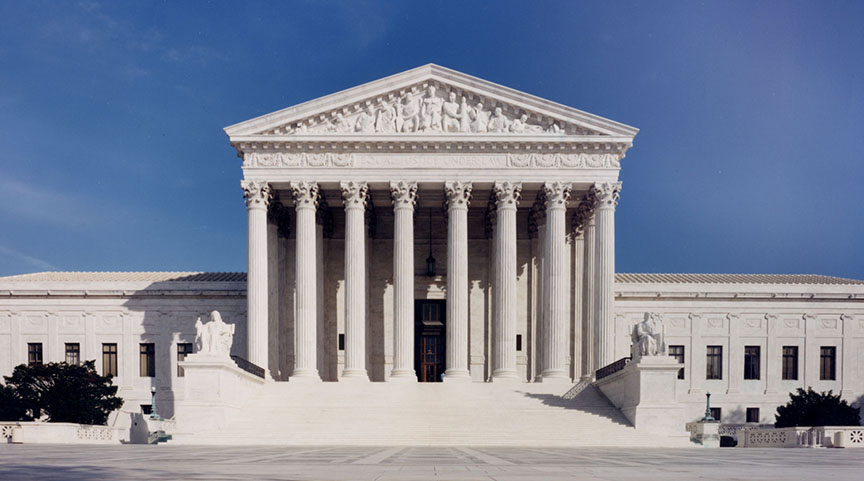
The Supreme Court.  Then too, the Constitution briefly provided for a judicial branch of the new Union, the Supreme Court, given the power to see that Congress and the States adhered strictly to the rules of the Constitution when disputes arose (law cases) over the actual functioning of the Federal legal system.  These Supreme Court Justices – and the judges serving below then in the lower-level federal Circuit Courts – would be appointed to life-time service by the President (but confirmed by the Senate) – lifetime meaning there was no way to remove them once in place – except under the unlikelihood of them committing some great crime.  This gave the Federal judges unlimited power.

Hopefully they would remain neutral in their judgments.  But expecting judges not to have distinct political philosophies of their own was/is most unrealistic.  The Framers, however, seemed not to be aware of this power possibility because judges in the English legal tradition that they personally were well familiar with actually had only very limited powers.

The Framers in no way anticipated that the Supreme Court would eventually become the one part of the Republic able to dismiss or reshape the nation's laws as it chose to do so – without any further recourse anywhere in the legal system by which such actions could be blocked or reversed.  These justices would step by step take on virtually unlimited or total political power, awarding themselves the authority to reshape the Law of the land to read in any form or fashion as they personally saw fit.

In short, these federal judges or justices would eventually make the Supreme Court – not Congress – the supreme legislative authority of the Federal government.

But at the time, this was not even suspected as a possibility.

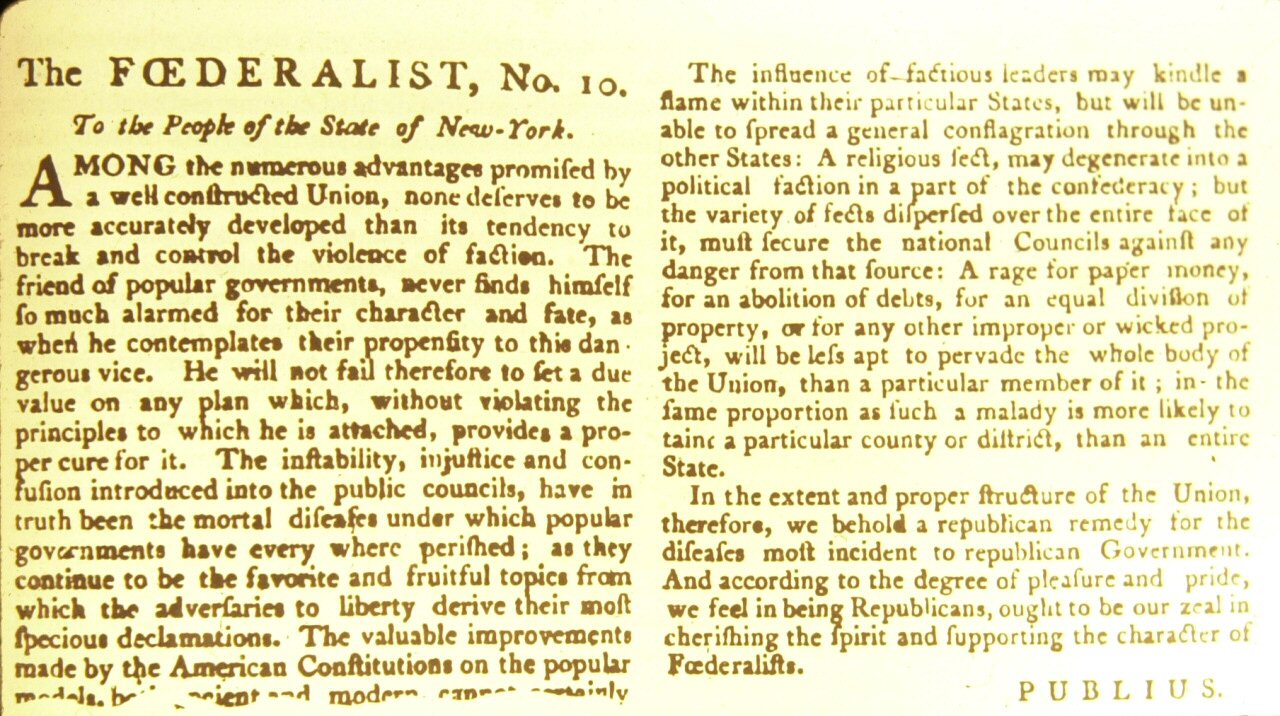
Ratification.  Once the Constitution was drawn up it had to be approved or ratified by the states – usually by the calling together of special state conventions for the express purpose of voting on the new Constitution.  In some cases, ratification was quick – and in other cases it took a fair amount of time to get the Constitution approved.  There were those who opposed this new Constitution ("anti-Federalists").  But through the writings of those who supported and explained carefully the beneficial features of the new Constitution (notably James 
Madison and Alexander Hamilton and their many newspaper articles later collected as The Federalist Papers), the pro-ratification or Federalist group carried the day.  The promise to add a number of Amendments to the Constitution (the Bill of Rights comprising the first ten Amendments) – guaranteeing that the new federal system would not be able to take away the rights of the people and the states – also aided in getting the new Constitution ratified.

Thus, two years later, in 1789, the Constitution went into full effect – and the new Republic immediately took up its duties of uniting the states in their encounter with the larger world.  America was now officially a Federal Republic.


[2]The 17th Amendment to the Constitution, put into effect in 1913 at the beginning of the Wilsonian Era, would however "democratize" the choosing of the states' two senators, by taking this responsibility or right from the state governments and awarding it directly to the people, a move that the Framers of the original Constitution would have been strongly opposed to because of their fear of unchecked democracy.


THE MORAL-POLITICAL FOUNDATIONS OF THE NEW ARRANGEMENT

"A Republic, if you can keep it" (Franklin).   When coming out of that long and hot Philadelphia convention of 1787 and asked what it was that the delegates had come up with for America as its new governmental form, Franklin most insightfully replied, "A Republic, if you can keep it."

A Republic, if you can keep it, indeed.  A major concern at the time was the question of how such a Constitution could hold against the political forces that seem inevitably to drag all political orders eventually into some kind of tyranny (a tyranny of one, of the few or of the many).  Those that put the Constitution together were very aware of history and the lessons it taught about the immense difficulties that societies had holding to their original political purposes.  Unbounded political ambition had invariably brought societies of the past to tyranny and ultimately self-destruction, repeatedly.

And more recently, in their own lifetimes, they had seen how the lure of power had changed the English monarchy from a distant and largely inactive agency in the life of the Americans – Americans who had therefore developed the very special talent at that time of taking care of life's challenges themselves.  However, recently had arisen a very interventionist, even dictatorial king who loved political power so much, and similar to the French kings, supposed that he had the right, even the necessity (by way of his own superior "enlightenment") to rule directly and fully over the American "peasants."  But Americans were no peasants.  They were very self-sufficient citizens of a quite free land.  And they not only intended to keep things that way but were willing to die for such a right, as indeed many – very many – just had.

But they clearly now needed a larger political system of their own, to protect their small, but independent states.  But how were they to set this up so that there would be just the right amount of power to provide that protection – but no more than that, lest it stir the ever-human lust for just a little more power here and there, just a little more power to put themselves in greater control of life's outcomes?

In short, how were they to protect themselves from the temptation to turn themselves into little gods, striving to bring their free (but challenging) world under control by some overbearing human agency?  This problem had never been solved successfully in the past.  Historically aware, they understood very clearly the necessity, but also the dangers, of power. The Greeks had struggled with the issue.  The Romans had struggled with the issue.   And it had been a source of great controversy during the West's long "Christian" era.

Thus they well understood the question in front of them:  how was this new venture in government design likely to prove to be any different?

A system of checks and balances.  As Madison pointed out in his 
Federalist Papers articles, the system was set up in such a way that cooperation among a number of various branches of government would be required to make the system work at all.  And cooperation meant compromise, the necessity of having to give up the desire for total power, in order to employ any power at all.  If one of the branches of government (that would include also the member States themselves as part of the branches of this federal union) would start to assume more power for itself (a rather certain possibility) this would stir the indignation of the other branches, which out of a self-serving sense of the relative loss of their own power, would gang up on the usurper of their joint power!  A very ingenious system!

Unfortunately, Madison did not give any indication as to how the Supreme Court could likewise be checked – except to wait for vacancies to be filled by new appointments as seats on the court were vacated by death or self-chosen retirement.  And 
Madison had no way of understanding how a U.S. president's Executive Orders (not part of the original constitutional design) could bypass this constitutional system of checks and balances, and become a source of presidential dictatorship.

Yes indeed, power was a very tricky matter!

The very hand of God.   But by no means did the Framers of the Constitution rely entirely – or even mostly – on this ingenious mechanical system.  They were well aware, just as 
Franklin had stated, that this whole enterprise would succeed or fail on the key issue of God's (not man's) will.  They needed to stay closely in line with the will of God – who after all had given them the victory against royal tyranny in the first place.  Otherwise nothing, not even clever mechanics, would protect them from human evil.

As we have already noted, the hand of God in establishing the rights and leading the behavior of American society was made very clear in the opening of the famous Declaration of Independence:

We hold these truths to be self-evident, that all men are created equal, that they are endowed by their Creator with certain unalienable Rights, that among these are Life, Liberty and the pursuit of Happiness.

Thomas Jefferson would expand on this idea a few years later in his Notes on the State of Virginia (1781):

God who gave us life gave us liberty.  And can the liberties of a nation be thought secure when we have removed their only firm basis, a conviction in the minds of the people that these liberties are a gift from God?  That they are not to be violated but with His wrath?  Indeed I tremble for my country when I reflect that God is just, and that His justice cannot sleep forever.

Likewise, George Washington stated the case very clearly in the speech he addressed to the nation as he took office in 1789 as America's first President: 

It would be peculiarly improper to omit, in this first official act, my fervent supplication to that Almighty Being, who rules over the universe, who presides in the councils of nations, and whose providential aids can supply every human defect, that His benediction may consecrate to the liberties and happiness of the people of the United States.
. . .
No people can be bound to acknowledge and adore the Invisible Hand which conducts the affairs of men more than the people of the United States.  Every step by which they have advanced to the character of an independent nation seems to have been distinguished by some token of providential agency.
. . .
[W]e ought to be no less persuaded that the propitious smiles of Heaven can never be expected on a nation that disregards the eternal rules of order and right, which Heaven itself has ordained
.

This was not mere political posturing, Washington's reference to God as the ultimate provider behind America's development and recent success in preserving its independence.  It was very serious business – for it rested on a Truth that recent experience had made very, very clear.  This was not just religious platitude, designed by Washington to comfort the people with an assurance that he was a proper church-going Christian (which he frequently was not).  This was testimony to the reality of politics that all of these quite astute practitioners of politics had come to understand – at a very deep level.  The American venture would not fail – as had Athens' and Rome's and Israel's attempts at self-government – as long as it retained a very deep sense of connectedness to God and his hand in the affairs of man.


Go on to the next section:  The American and French "Revolutions" Compared


  Miles H. Hodges