That was not the case for the French. Prior to their rebellion against their king
in 1789, the French people had absolutely no experience whatsoever in
self-rule. They certainly talked about
the possibility a lot, especially at the polite gatherings in fashionable
French homes of French intellectuals and socialites – where the dreams of
political reform were often the central topic under discussion. These enlightened dreamers could come up with
the most beautiful of ideas about constructing a more perfect political
world. But these were ideas not based on
any real experience, but only on the fanciful dreams that these Idealists held
about human nature – and the possibilities of marshaling such human nature in
order to build a utopian society. In
short, they had no idea of what it was they were talking about – as events
would soon prove.
Once they
succeeded in collapsing the monarchy, they then took on the privileged feudal
aristocracy – and then also the French church and its prestigious hierarchy of
bishops and priests.
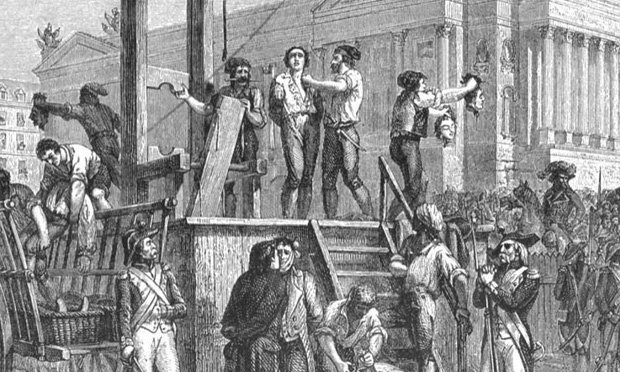
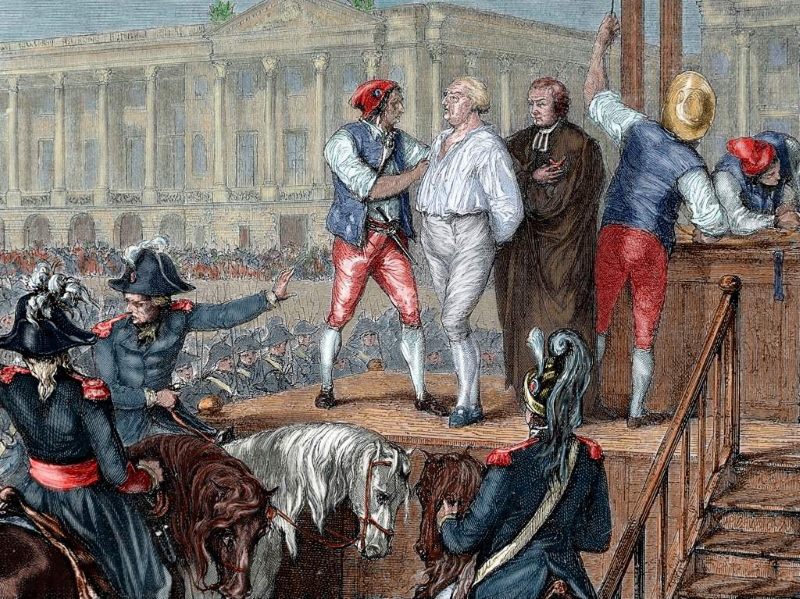
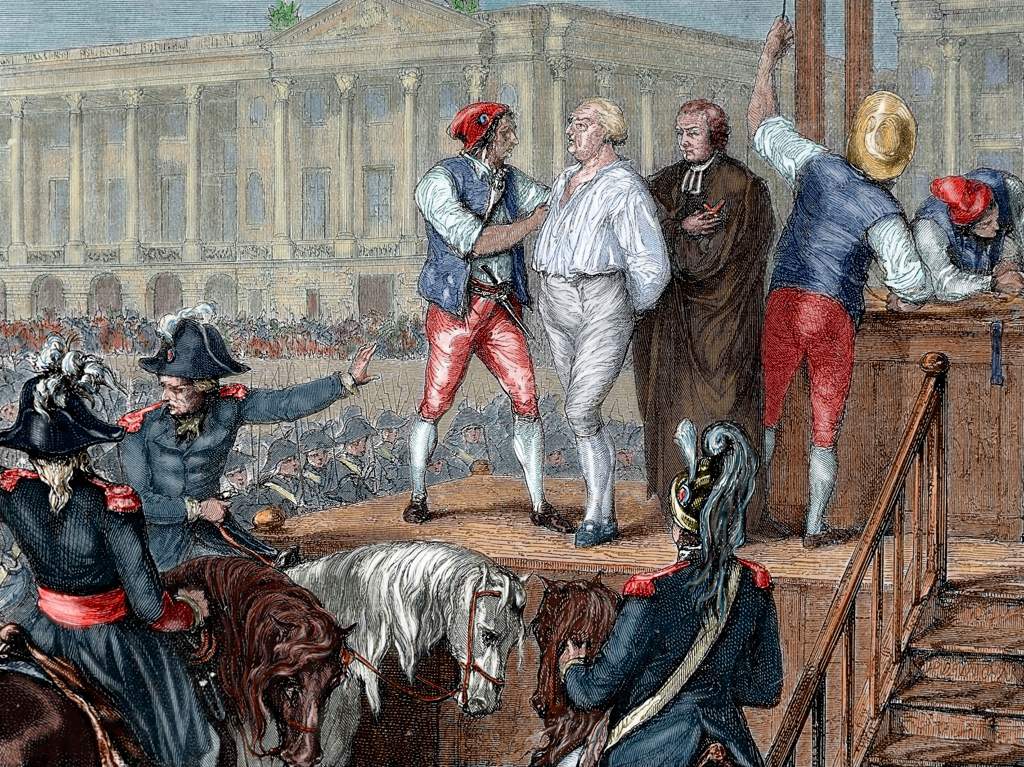
The execution of French King Louis XVI – January 21, 1793
But slaughtering
off the keepers of the Old Order (the Ancien Régime) did not automatically open the way
to the establishment of a stable, working Republic – for French society had no
particular moral foundations at this point on which to erect their radically
new society. Chaos thus reigned in
France – and only got worse when then the intolerant intellectuals (Girondins
and Jacobins) then turned on each other as betrayers of the Revolution –
because they differed with each other on points of Reason – or just because of
intense political jealousy. By 1793-1794
a "Reign of Terror" consumed France, the
guillotine busy night and day cutting off the heads of enemy intellectuals, including
most ironically, the most idealistic of the French revolutionaries, Maximilien
Robespierre!
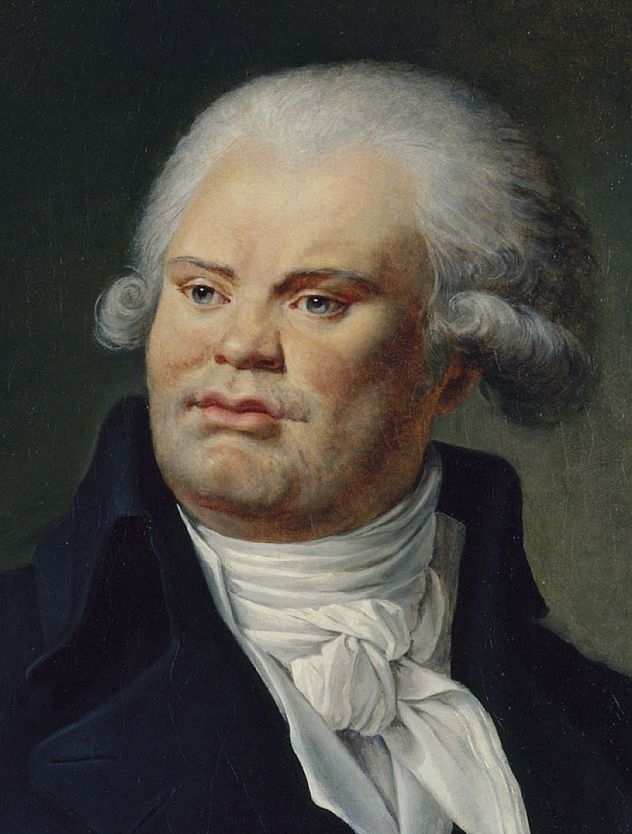
Georges-Jacques Danton – early leader of the Girondins ...
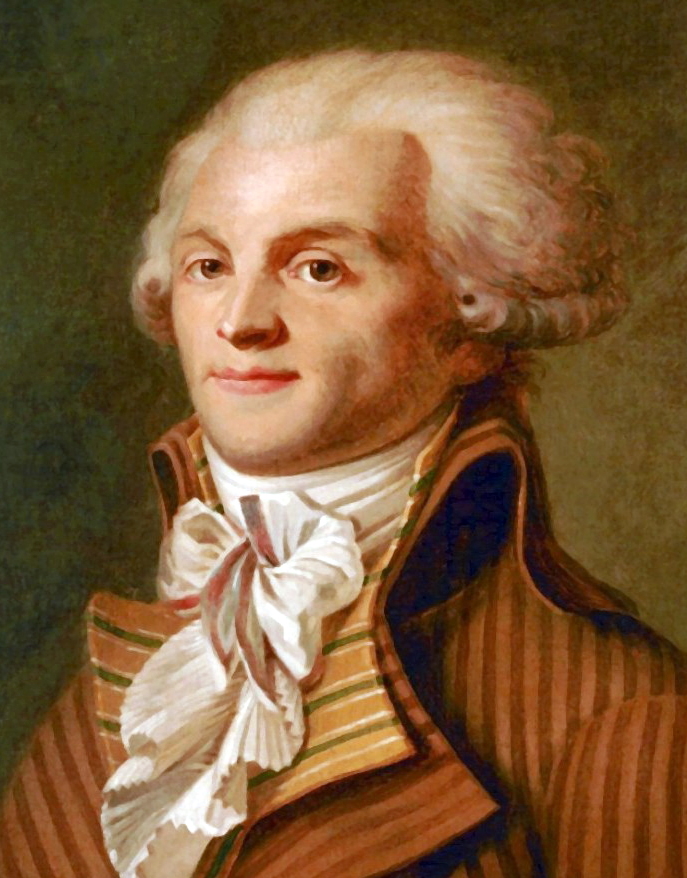
replaced by the more radical Jacobin leader, Maximilien
Robespierre
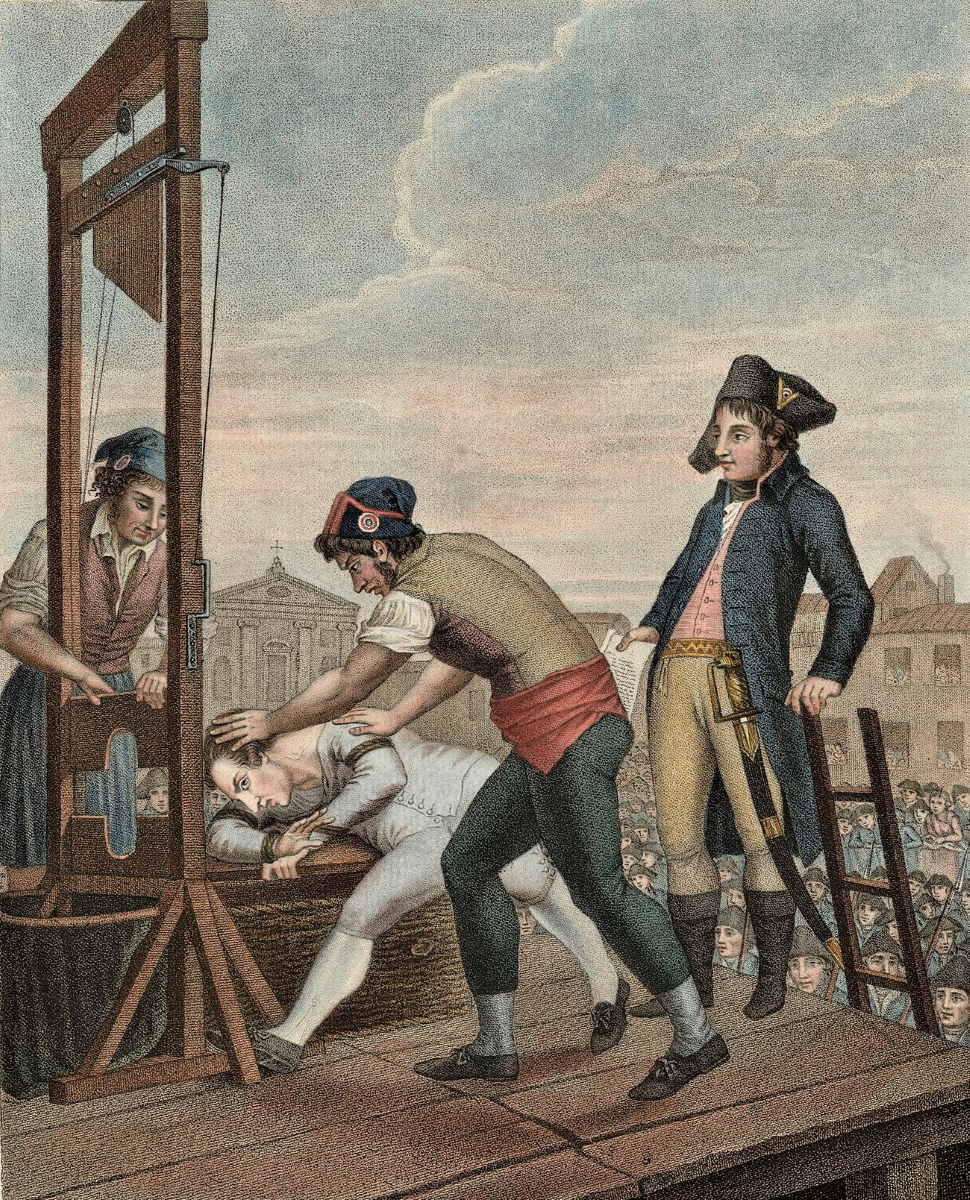
The mass-murderer Robespierre himself is finally
guillotined (July 28, 1794) ... the beginning of the
slowdown of the Reign of Terror
At this point, no one was in command of the hungry mobs that
prowled the streets of Paris – and in a good part of the French countryside.
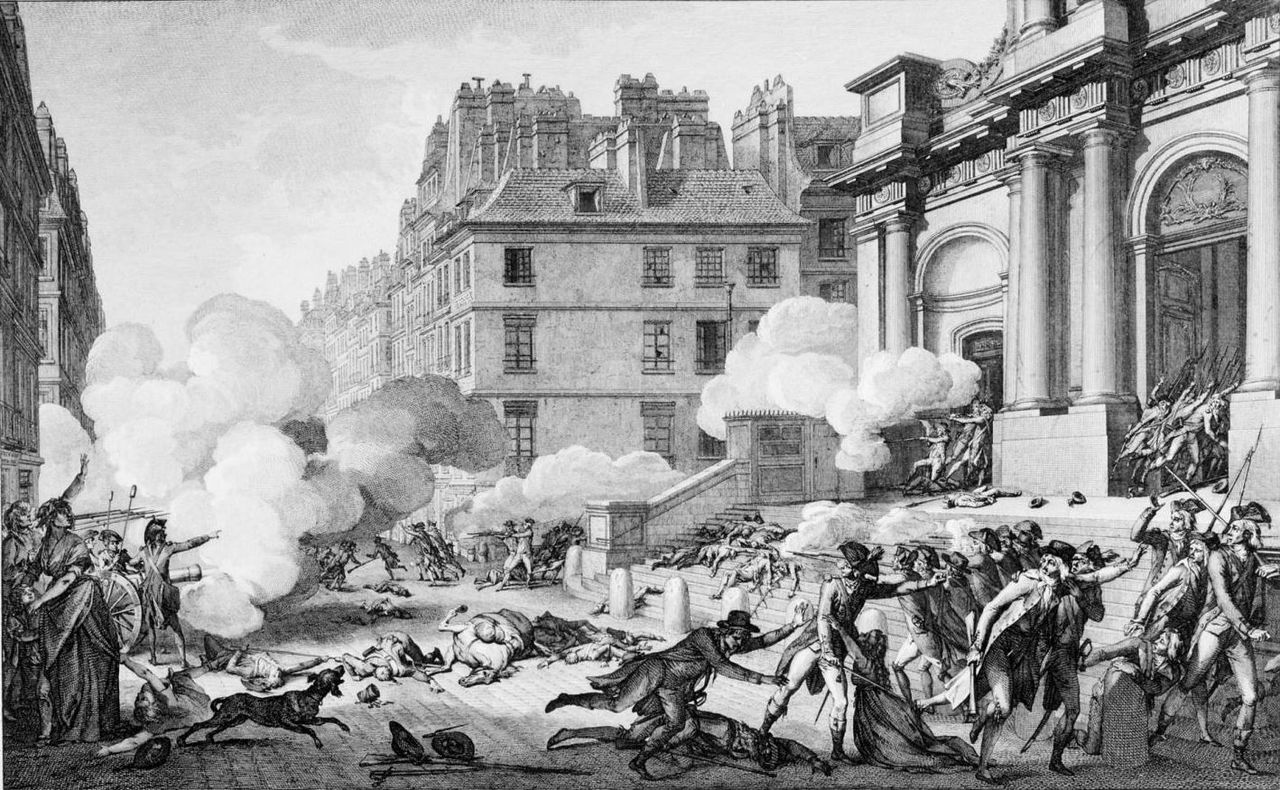
13 Vendémiaire (October 5, 1795)
Napoleon's troops defeat remaining royalist forces in order
to establish yet a new form of government (the Directory)
... which will eventually lead to his dictatorship in France
It finally took the dictatorship of Napoleon Bonaparte (approximately 1799 to 1815) to
bring France back to order – mostly by calling on the Paris mob and fired-up
French nationalists of the countryside to join his new French army in its
thrust outside of France to "liberate" the rest of Europe from the
monarchs whose families had long ruled the continent. This solved the problem of violent discord
among the French – but now pitted the highly nationalistic Frenchmen against
the kings, barons and commoners of the rest of the European continent (all the
way to Russia) – and also the British just offshore to the northwest of France.
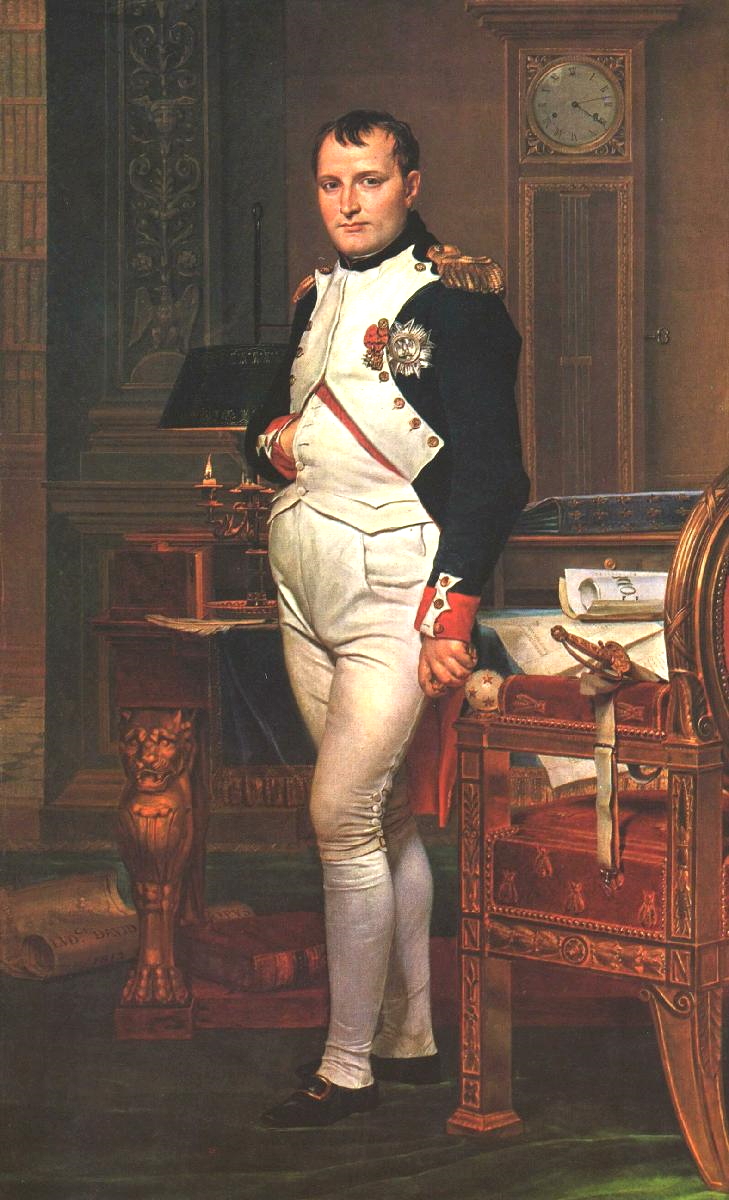 The Emperor Napoleon Bonaparte (reigned 1799-1815) finally
settles France down ... before spinning the country outward
in a campaign of European conquest
| THE IMPACT ON THE POLITICS OF THE WESTERN WORLD |
Eventually (1814-1815) Napoleon was defeated by a grand
coalition of European monarchs – and the Bourbon monarchy was (briefly)
restored in France. But Europe would
never be quite the same again with all this nationalism stirred to life – as
the English, Spanish, Germans, Italians organized themselves as nations in
order to counter aggressive French nationalism.
But in finally ending French nationalist domination, this new spirit of
nationalism awakened in Europe would not then go away – but merely grow more
aggressive – nation by nation – until it resulted in the mindless war of mutual
national slaughter which was termed at the time "The Great War", and
which we know today as World War One (1914-1918).
Meanwhile
a young Republic – fully engaged with challenges of its own over in America –
did its best to stay out of all this dynamic that was rattling Europe. In this it would be only partially
successful.
But at least
the American Republic itself would hopefully remain strong – a system of fixed
laws rather than changing personal political wills, which popular governments
had the tendency to turn into, such as France had just become, and later, such
as the "People's Republics," would become under their "enlightened"
Communist dictators.
Indeed, as Franklin put matters: "A Republic, if you can keep it."
Go on to the next section:
 Miles
H. Hodges
Miles
H. Hodges

 The American effort
 The French effort
  The impact on the politics of the Western world