3. INDEPENDENCE – AND THE NEW REPUBLIC
|
| AMERICAN RESISTANCE AGAINST ENGLISH ROYAL AUTHORITARIANISM |
Since
its very founding, colonial Americans had learned to take care of themselves
against Indians, face the challenging natural world around them ... and of
course take on the even greater challenge of working together to build a stable
society. Thus the politics and
leadership of England played only a minor role in the life of the
colonies. And with the Georges on the
throne – busied in things other than the affairs of their American colonies –
this independent spirit only anchored itself even more deeply in colonial
America.
But
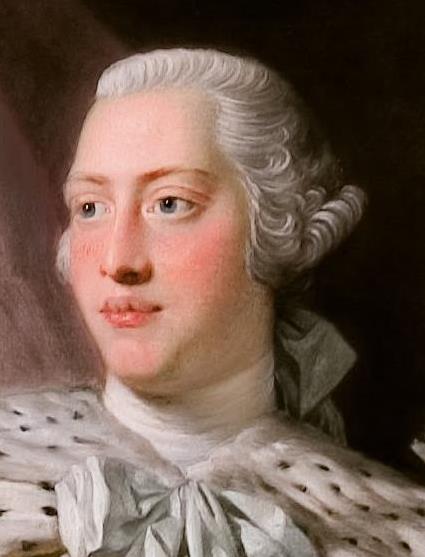
things would change drastically when the young George III took the English throne in
1760. He was thoroughly English and
thoroughly royal – on the model of the French kings who at the time set the
European standard of royal absolutism.
According to the theory of royal absolutism, God alone had chosen the
peoples' kings – and thus by "Divine Right," kings were to rule in an
unquestioned fashion over their lands and people. And to George III that doctrine applied also
to his subjects in the American colonies.
Trouble began to develop immediately.
Taxes. At this time royal armies were somewhat like
private armies financed by the kings' own personal treasuries – treasuries
which, given the frequency of the bitter quarrels among the various royal
dynasties ruling Europe, were easily drained almost to the point of
bankruptcy. This was no less the case
for the young English King George III – who, so as to replenish
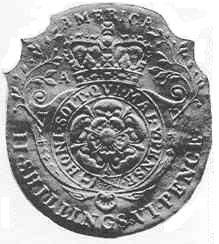
his empty royal treasury, pushed the English Parliament to approve new taxes –
including taxes on his English colonies in America. The Americans were very upset, for they had
not been consulted on this matter, and had supplied – at their own expense –
American militia or "minutemen" (citizen-soldiers normally called
quickly to action to ward off an Indian attack) to fight George's French
enemies and their Indian allies.
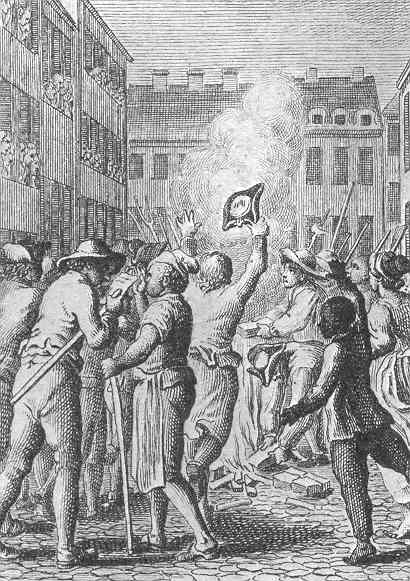
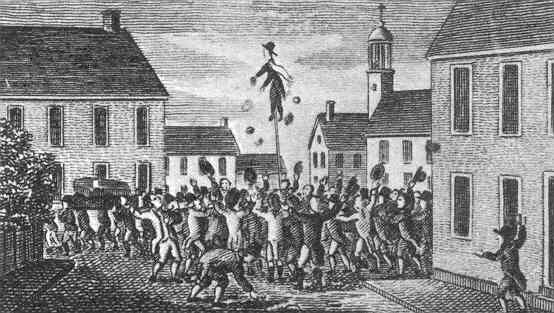
Protests. Protests over the new taxes led George to
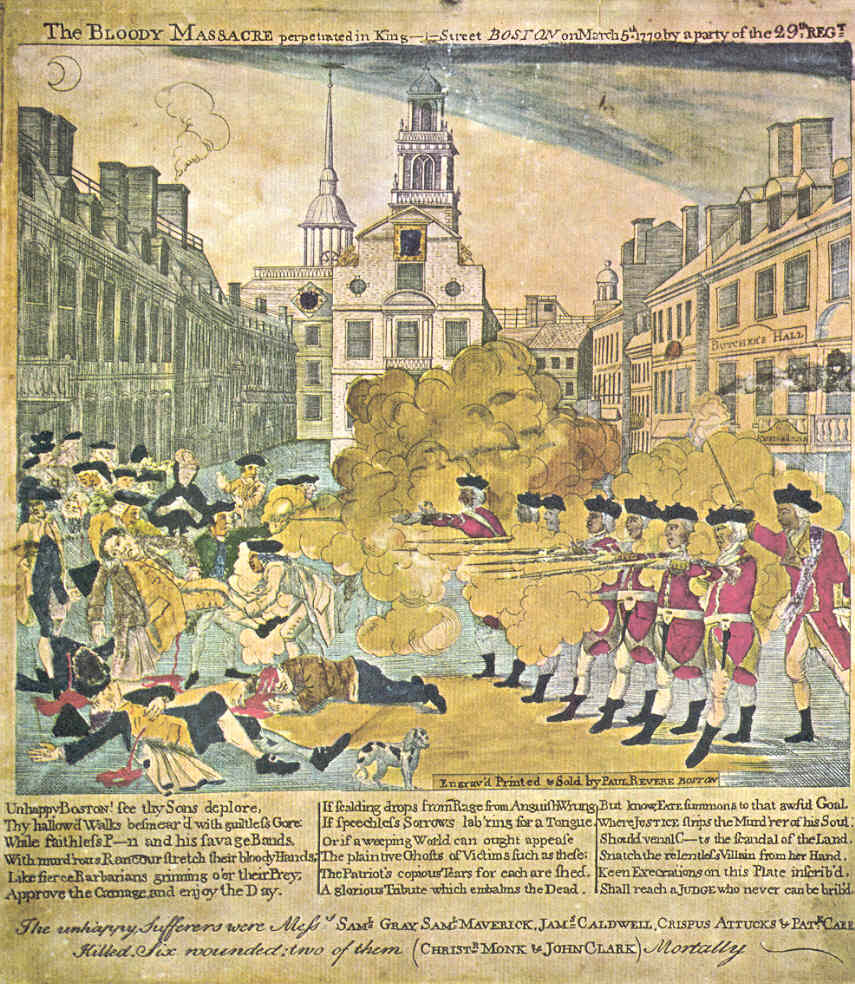
send British troops to the colonies to protect his tax collectors. This in turn sparked an incident in March of
1770 when a group of Bostonians taunted a small squad of very nervous British
soldiers ("Redcoats") who reacted by firing on the crowd, killing
three and wounding eight Bostonians (two of whom would die of their
wounds). Surprisingly, a relatively
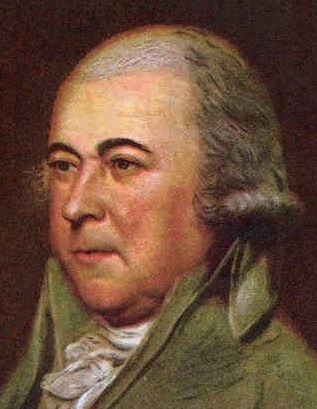
unknown lawyer, John Adams, stepped forward to defend the
soldiers, bringing considerable notice to him as one who was a definite
Patriot, but one dedicated to being totally "just" in his
patriotism. The world would see more of
John Adams as a result.
George also forced the colonies to
stop buying Dutch tea and instead buy the more expensive tea of the British
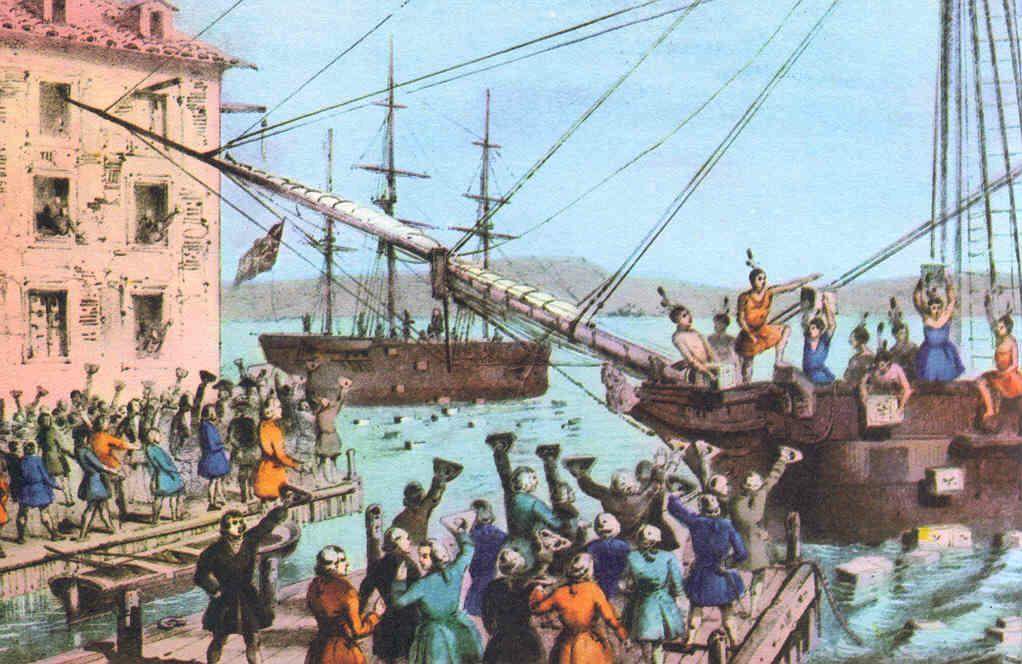
East India Company (the English company was in deep financial troubles). When a group of Bostonians in 1773 dumped a
shipment of English tea into their harbor in protest, George was so angry at
this insolence on the part of his subjects that he sent royal troops to shut
down Boston harbor – and strangle the city economically so as to force its
submission to his royal will. And to
make sure the citizens of Boston got the point, he forced the Bostonians to
house personally the rowdy troops sent to discipline the city.
Then
he irritated the colonials further by promising his Indian allies west of the
Appalachian Mountains that he would stop Anglos from moving west into their
lands; he promised his French subjects in Quebec that he would authorize the
Catholic faith (and its church officers) full authority not only in Canada, but
also in an expanded Quebec province which reached into that same territory to
the west of the Appalachian Mountains; and to top that off, he discussed openly
the possibility of also placing the American independent or congregational
churches under the hierarchical authority of his Church of England officers
(archbishop, bishops, etc.). He was
quite aware of the religious foundations of the American colonials'
independent-mindedness, and wanted that spirit broken.
| WAR BREAKS OUT |
We hold these truths to be self
evident, that all men are created equal, that they are endowed by their Creator
with certain unalienable Rights, that among these are Life, Liberty and the
pursuit of Happiness.
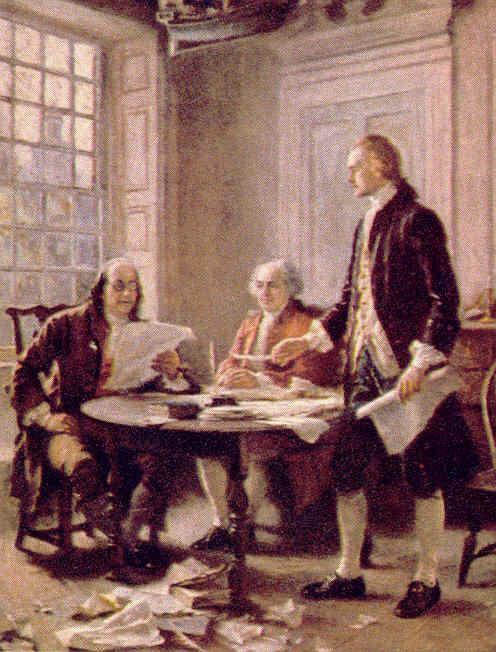
Notice that this declaration,
originally designed by the young Virginian Thomas
[1]Ironically this event became the initiating cause of the French and Indian War
(1754-1763), and ultimately even Europe's bigger Seven Years' War!
The forming of the Second Continental Congress (May 1775).
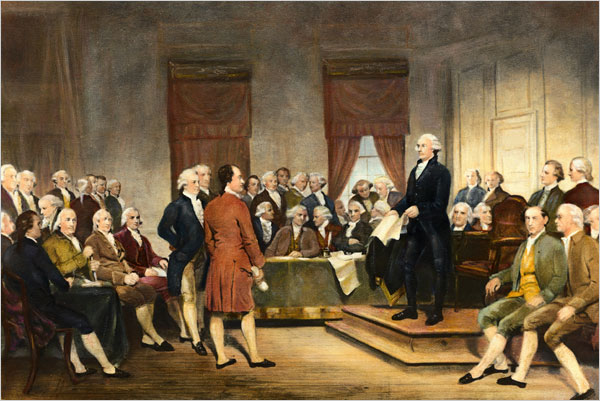
Thus in May, delegates from the various American colonies met in
Philadelphia to form the Second Continental Congress, to coordinate
the American response to the British challenge.
In the process, they agreed to authorize an American Continental Army, and
called on the Virginian George Washington to command it – a smart move designed
to improve the likelihood of Virginia agreeing to join the rebellion, which at
this point appeared to be mostly a New England rebellion.
This
decision of the Continental Congress to authorize a
full rebellion against their king was a very brave thing to undertake, for in
essence if this action ended in failure, it would mean that these Congressmen
would all be hunted down and hanged or shot as traitors. Furthermore, history offered no example of
how this kind of action really ever was successful. However, they counted not on historical
statistics but on serious aid from God, with whom their ancestors had first
covenanted a special relationship, one which they understood had brought them
successfully to the present, and would take them successfully into their
future.
George Washington.
The selection of Washington as Commander of the Continental Army was a
brilliant move, not only politically in the way that it helped pull Virginia
into this dangerous rebellion, it was brilliant in ways that the Continental Congress had as yet no
way of knowing. But they had selected
someone who was truly a God-send to their cause.
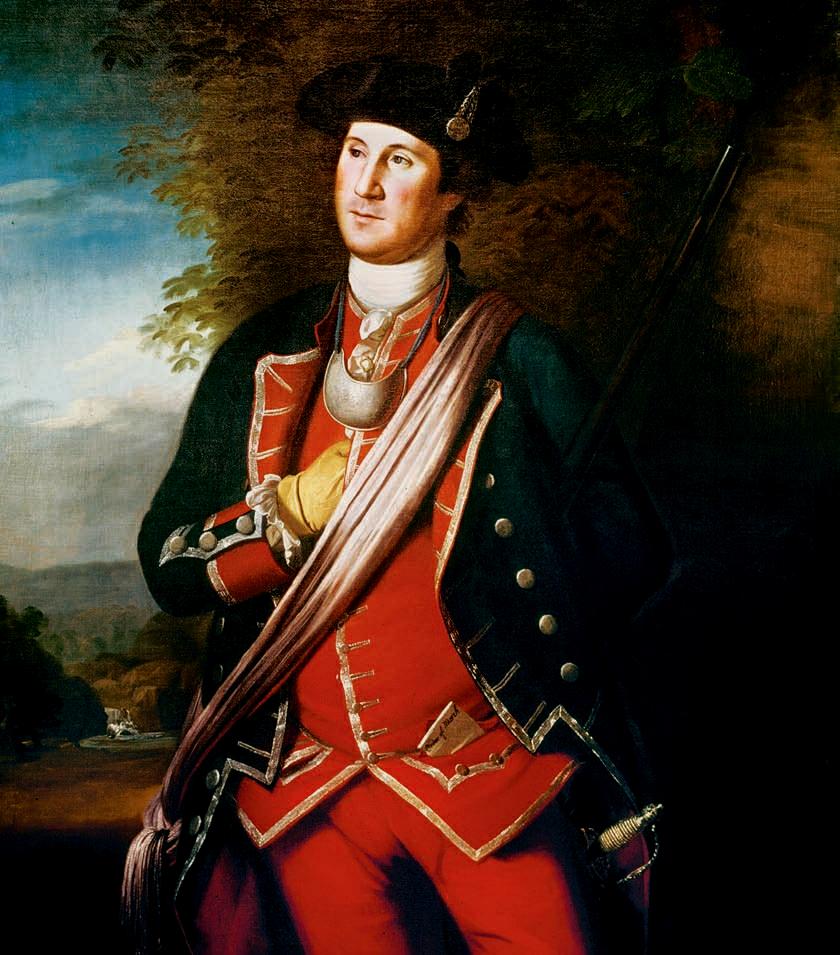
As a young man
Washington was typical of someone born to the ranks of Virginia aristocracy. He
came of a highly respected family, and was very ambitious, seeking every
opportunity to see his social rank improved even further. But he had to work at this matter, which he
did, diligently. In being bold in this
matter, he would make mistakes, suffer professional setbacks, but learn from
the experience. A big part of this was
that from very early on, he felt that he was someone – chosen by Providence no
less – destined to greatness. And he
would rely heavily on that divine hand in his life to move forward in the very
competitive game of life.
As the younger brother of a
prominent Virginia family, he would not inherit high status, but would have to
work at his own advancement in life. And thus Washington took up surveying, and
soon found himself called to survey Virginia's land claim on the frontier
(which at the time reached all the way into the Ohio Valley). He thus learned a lot about land, and its
challenges and possibilities, and added such land to his own holdings. It also made him very knowledgeable about the
lay of the frontier, which he would soon be called on to put to good use.
Along the way,
Virginia Lieutenant Governor, Robert Dinwiddie became impressed with Washington's
frontier work, and put Washington in charge of one of Virginia's four military
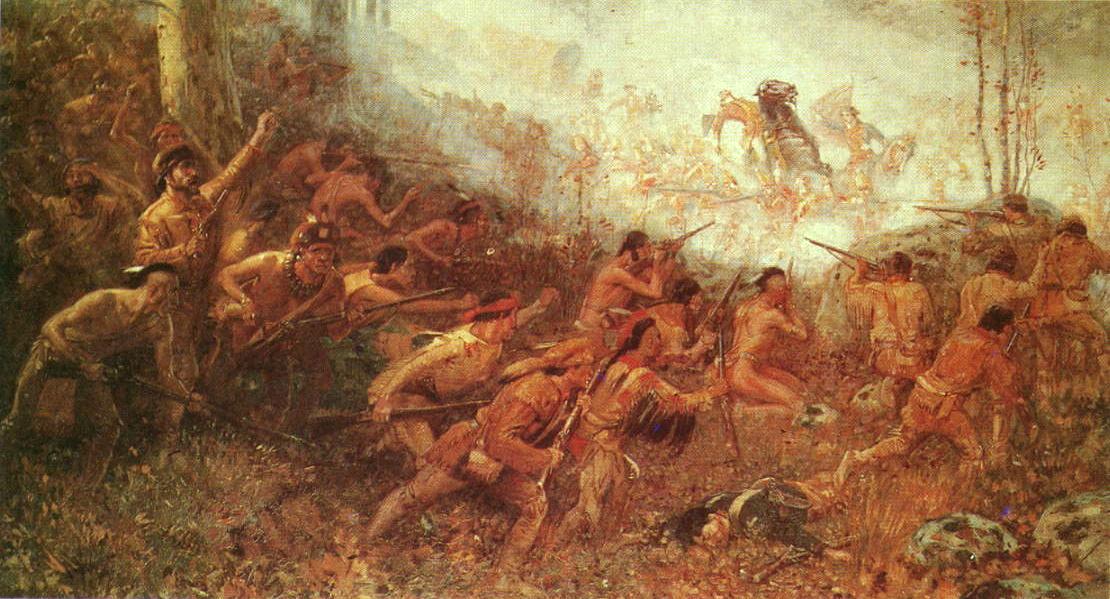
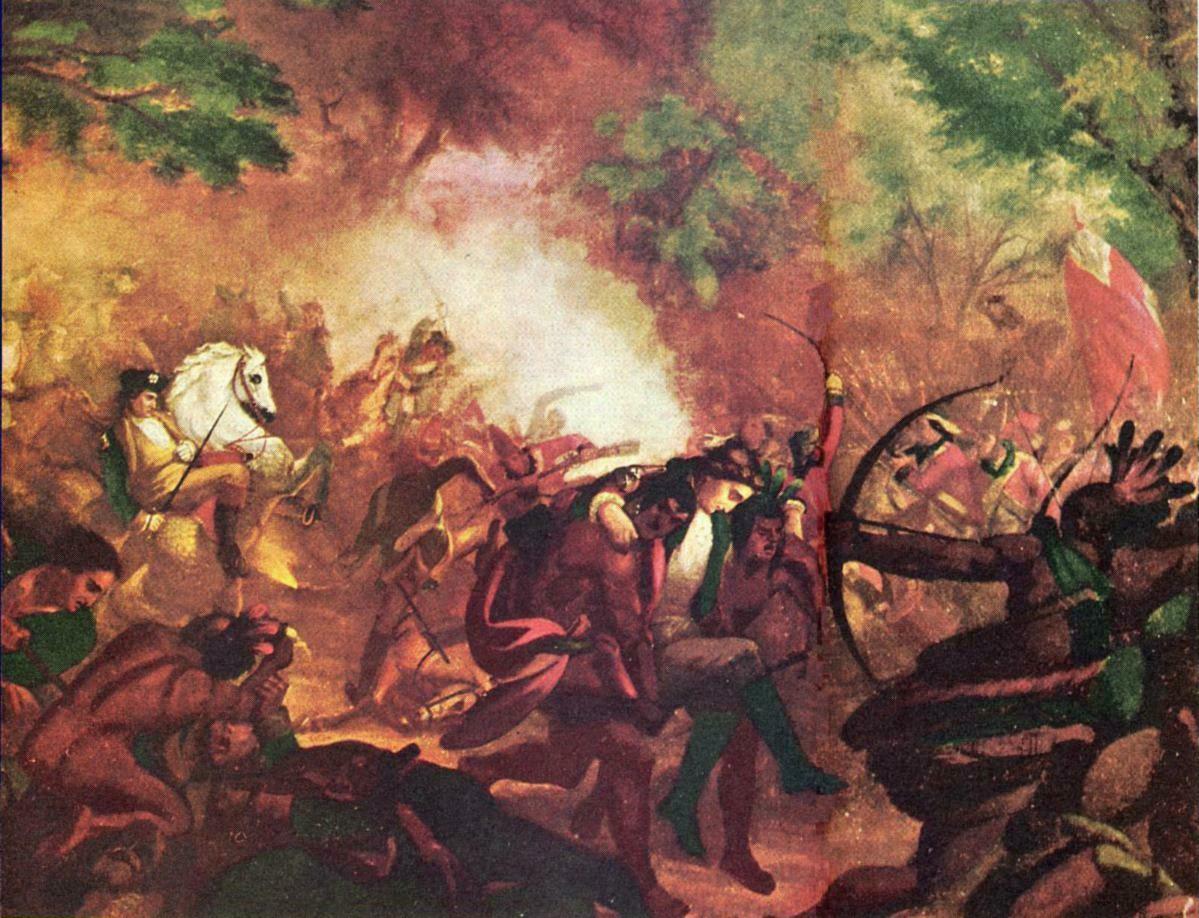
districts. Actually, Washington's first military engagement against the French
in the Ohio region brought "shame" in victory for Washington when his
Iroquois allies killed and scalped surrendered French troops[1],
and his second action at Fort Necessity actually brought him a humiliating
defeat. Washington thus resigned his
position as commander.
But he was called back into service the next
year, serving under British General Braddock, but efforts to dislodge the French from
the Ohio region once again ending in disaster – General Braddock even losing
his life in the contest. Yet Washington
held up valiantly in the battle, having two horses shot out from under him and
bullets hitting his hat and coat.
This so impressed Dinwiddie (and some of the Indians) that
Washington was asked, and agreed, to take command of the much-enlarged Virginia
Regiment. But in doing so, he would find his command challenged by another
ambitious officer – something that Washington would have to get used to, and
learn to get around in order to keep going!
And in his only
serious engagement as commander, he was able to finally take French Fort
Duquesne in 1758, when the French abandoned it just before his arrival!
The following
year he married a very wealthy widow, Martha Custis, and settled himself down
as a Virginia "planter", now possessing huge estates worked by
hundreds of slaves. Furthermore, being
such a planter, he was expected to be active in Virginia political
affairs. Thus he was called on to
represent Frederick County in the Virginia House of Burgesses. During this time, he began to distinguish
himself as a very strong opponent of the effort by the British King and his
Tory-dominated Parliament to bring the colonies under royal control, especially
the effort to tax the colonies without their consent (supposedly a basic
British right belonging to the people).
Indeed, working closely with George Mason, Washington was able to
bring Virginia to support the boycott of British goods (1769).
Then as tensions mounted, particularly with the British effort to
strangle Boston into submission, again working with George Mason, in 1774 he drew up a list of
resolves (the "Fairfax Resolves") put forward by the Fairfax
Committee that Washington chaired, which called for the creation of a Continental Congress. And when a Continental Congress was actually
called into being (autumn of 1774), he was sent off to Philadelphia to
represent Virginia. At this point he
also took up the challenge of organizing Virginia militias, in anticipation of
troubles ahead.
And when a Second Continental Congress was called in
May of 1775, Washington headed off to Philadelphia to participate in its
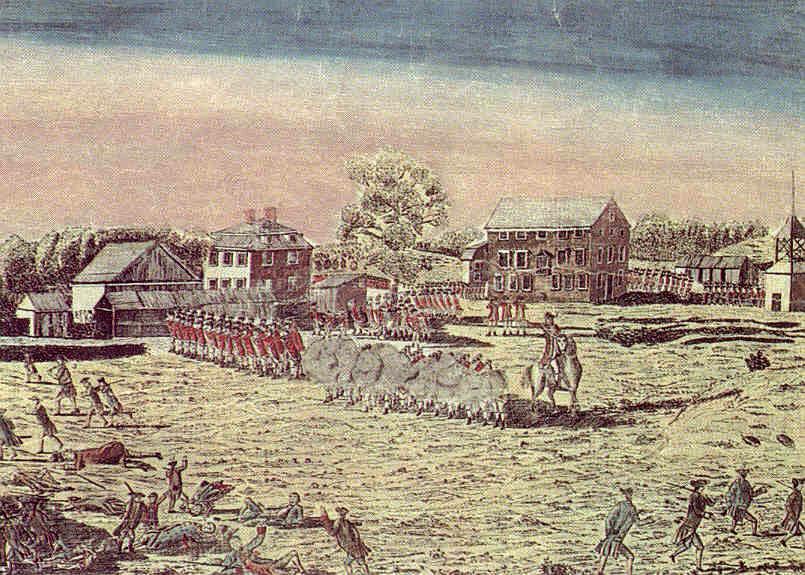
doings. Things were looking very serious
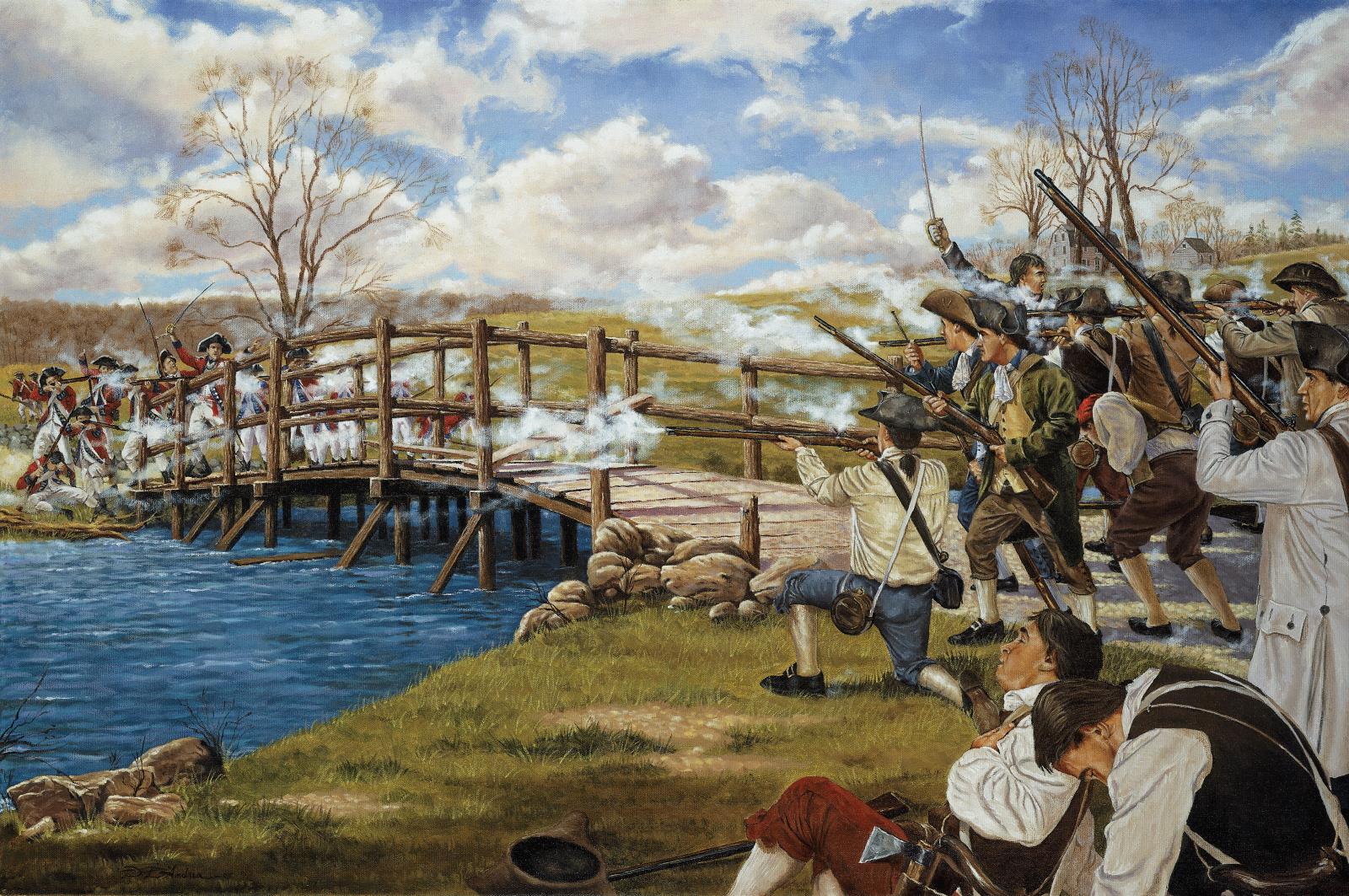
after the battles at Lexington and Concord.
War actually seemed to be unfolding, wanted or not.
And there in Philadelphia, he quickly impressed the Congress,
particularly the Massachusetts firebrand Samuel Adams (organizer of the "Boston
Tea Party"), and his cousin John Adams. Thus it was that Washington was chosen (over
Massachusetts commander John Hancock) to command the new Continental Army.
The
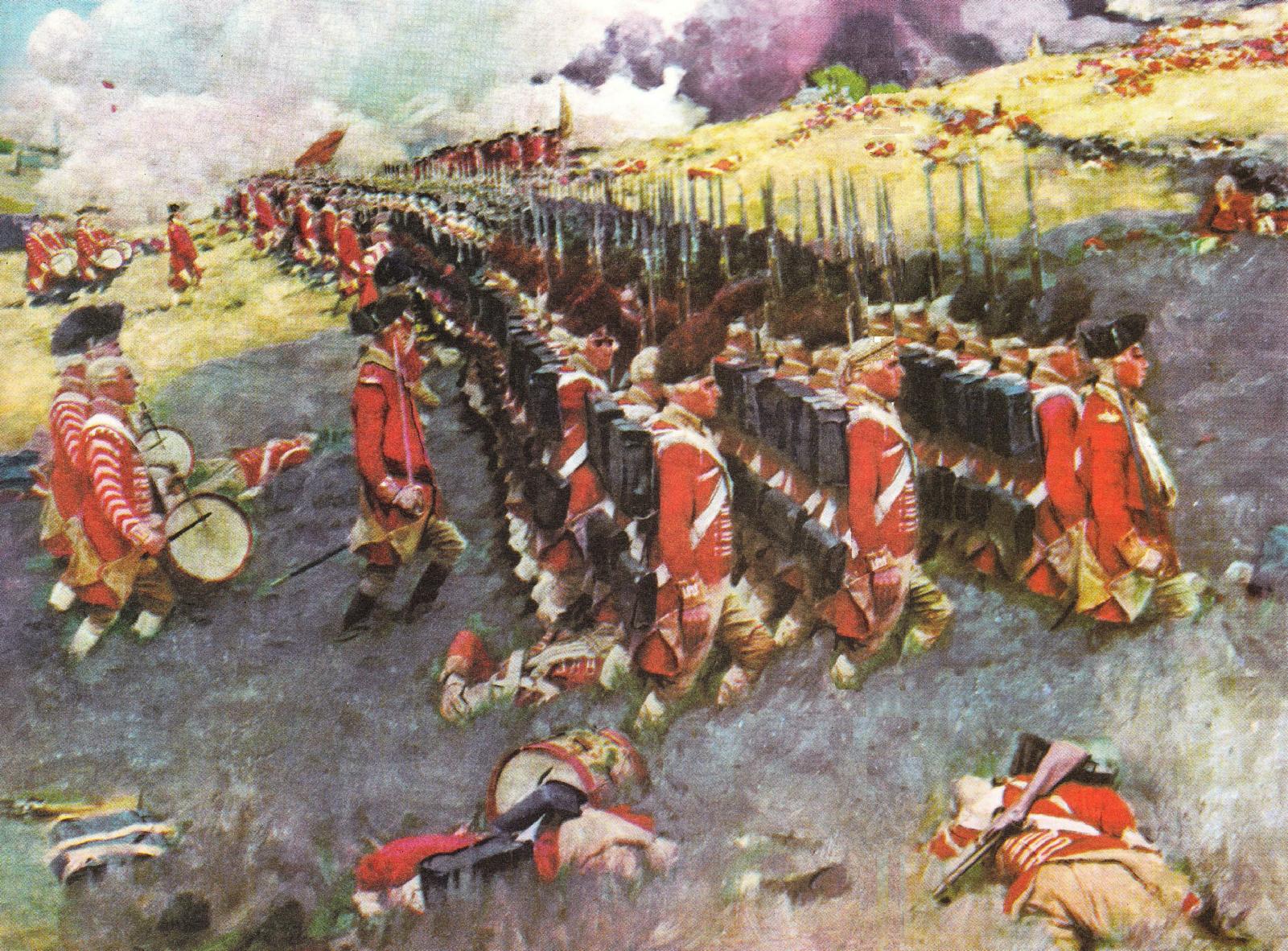
Battle of& Bunker (and Breed's) Hill (June 1775).
Meanwhile, the colonies also began to send aid to Boston – including
American militiamen (soon to be termed "Patriots" or "Whigs"), who in June gathered in the heights
above Boston at Bunker Hill and Breed's Hill.
Here they found themselves armed with cannons and guns seized from Fort
Ticonderoga by the troops of Ethan Allen and Benedict Arnold.
When English troops were then ordered to dislodge these threatening
militiamen, it took several charges and a huge loss of British officers (by
American sharp-shooters) to do so. And
even then, the American retreat was orderly – taking place only when the
Americans ran out of ammunition.
But
the next spring (1776), the Americans had resumed their positions above Boston,
but with even more cannons – and Washington in place as commander. At this point the English troops,
understanding the resolve of these colonials – and the danger of the position
they now found themselves in – withdrew from Boston. Along with them went the "Loyalist"
or "Tory" (pro-king) colonists who had taken refuge there. They would not attempt a return to Boston
during the remainder of what had now become an all-out war.
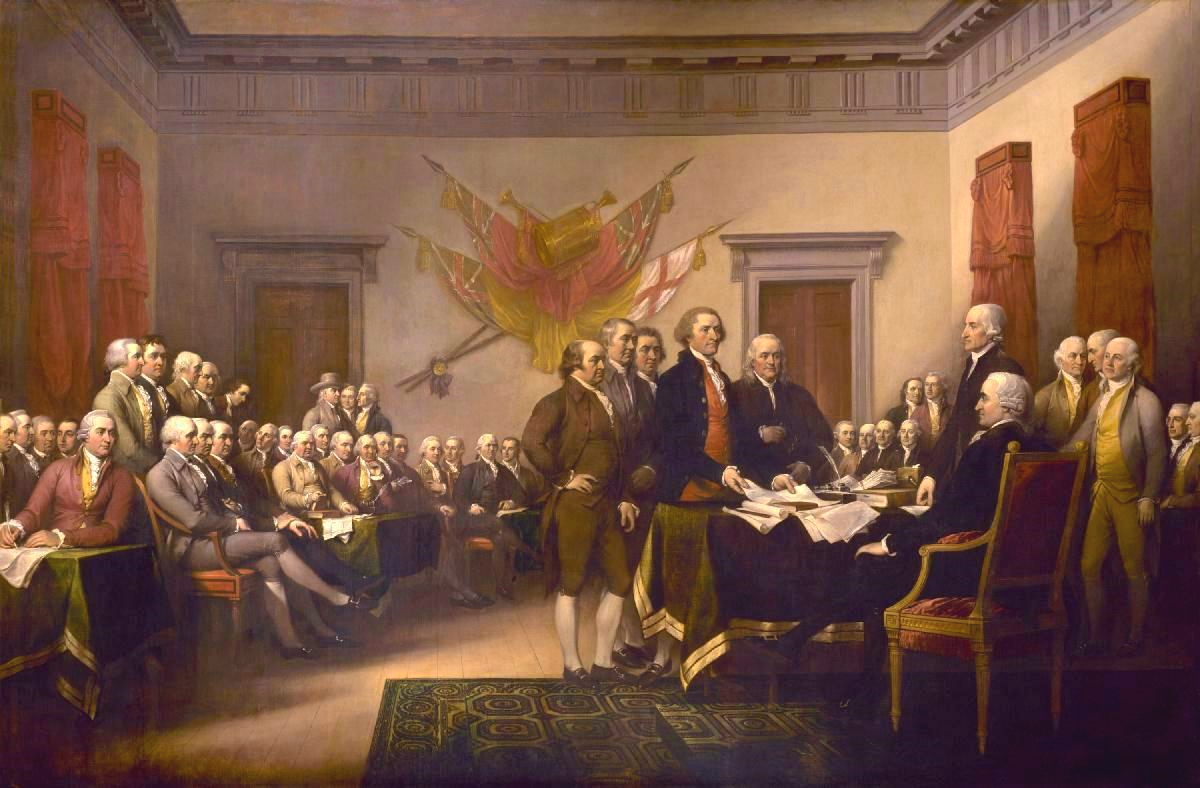
The Declaration of Independence (July 1776). < That summer, while the
newly self-proclaimed independent states (Massachusetts, Virginia,
Pennsylvania, Maryland, Georgia, etc.) busied themselves drafting new
constitutions for themselves, their representatives in Philadelphia drafted and
adopted a formal Declaration
of Independence from England. Its
preamble became very well known to Americans over the generations:
That to secure these rights,
Governments are instituted among Men, deriving their just powers from the
consent of the governed, That whenever any Form of Government becomes
destructive of these ends, it is the Right of the People to alter or to abolish
it, and to institute new Government, laying its foundation on such principles
and organizing its powers in such form, as to them shall seem most likely to
effect their Safety and Happiness.
Then the delegates began work on
drafting a new constitution for their Confederation of American States, a
structure designed to help them work together in facing the task of securing
that independence against the efforts of the British king to force them back
into submission.
A LONG, TOUGH ROAD AHEAD
I was riding with him (Mr. Potts) near Valley Forge, where the
army lay during the war of the Revolution.
Mr. Potts was a Senator in our state and a Whig. I told him I was
agreeably surprised to find him a friend to his country as the Quakers were
mostly Tories. He said, It was so and I was a rank Tory
once, for I never believed that America could proceed against Great Britain
whose fleets and armies covered the land and ocean. But something very
extraordinary converted me to the good faith.
This was what gave Washington the power to answer unflinchingly
the call to service, one that would morally exhaust others and make them quit.
[2]He and his troops managed to escape entrapment and
complete destruction by the British only because a thick and long-lasting fog
allowed them to escape the Brooklyn Heights across the East River to
Manhattan. This was clearly an
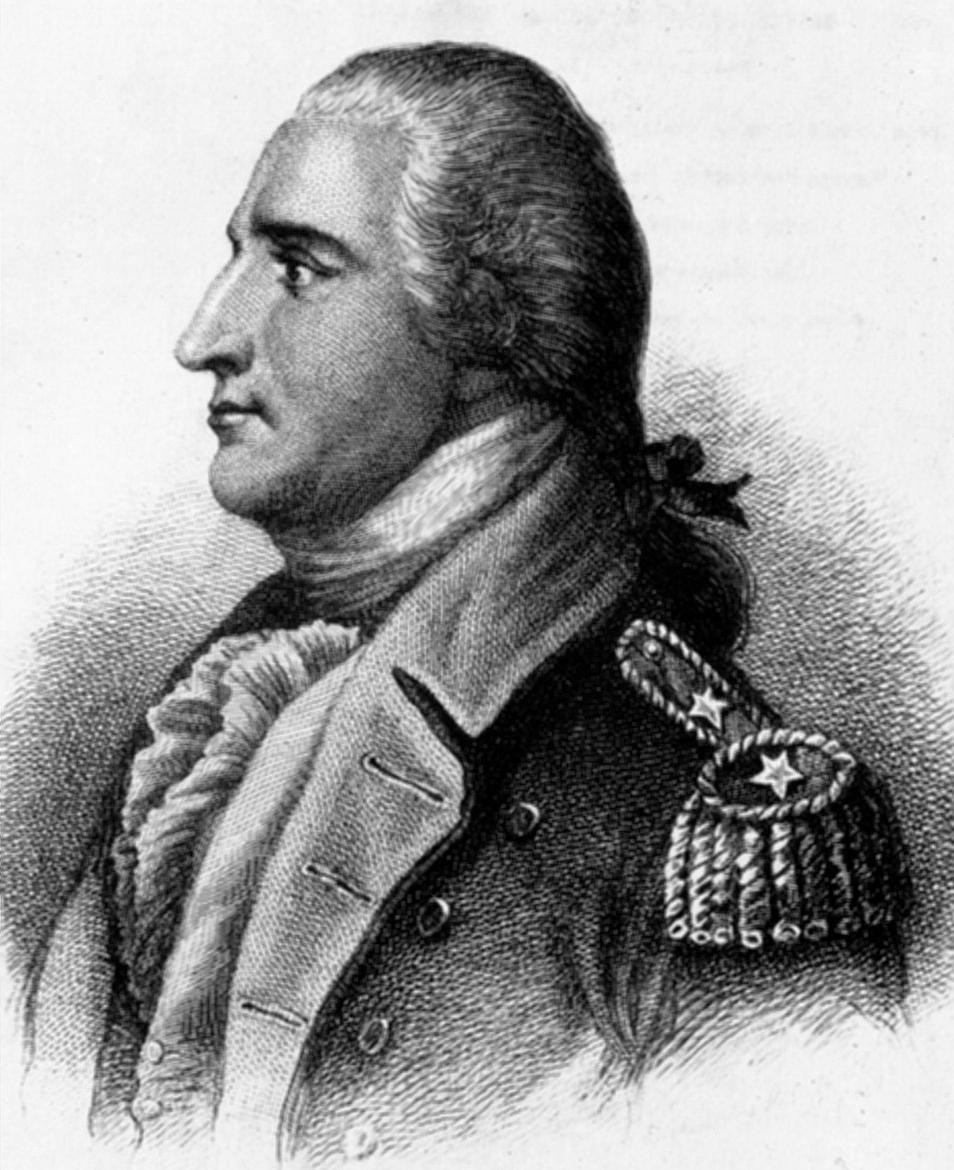
intervention of God himself, which Washington was well aware of. [3]Arnold had
given the Patriot effort his all, and got virtually no support from the
politicians at the Continental Congress.
Individuals there even had the nerve to complain about his request for
troop funding, after Arnold had exhausted all his own personal financial assets to support
his men. Finally, his pretty Tory wife,
Peggy Shippen, convinced him that he was supporting a cause that was directed
by the wrong element, and that instead he should put his effort in supporting
the Tories. This he did (to
Washington’s great distress, for he was the one general Washington had trusted),
and would come to regret this decision deeply.
He had to live out the rest of his life in Britain, far from his native
Connecticut. And in his will, he asked
that he be buried in his American, not his British, officer’s uniform. Truly sad!
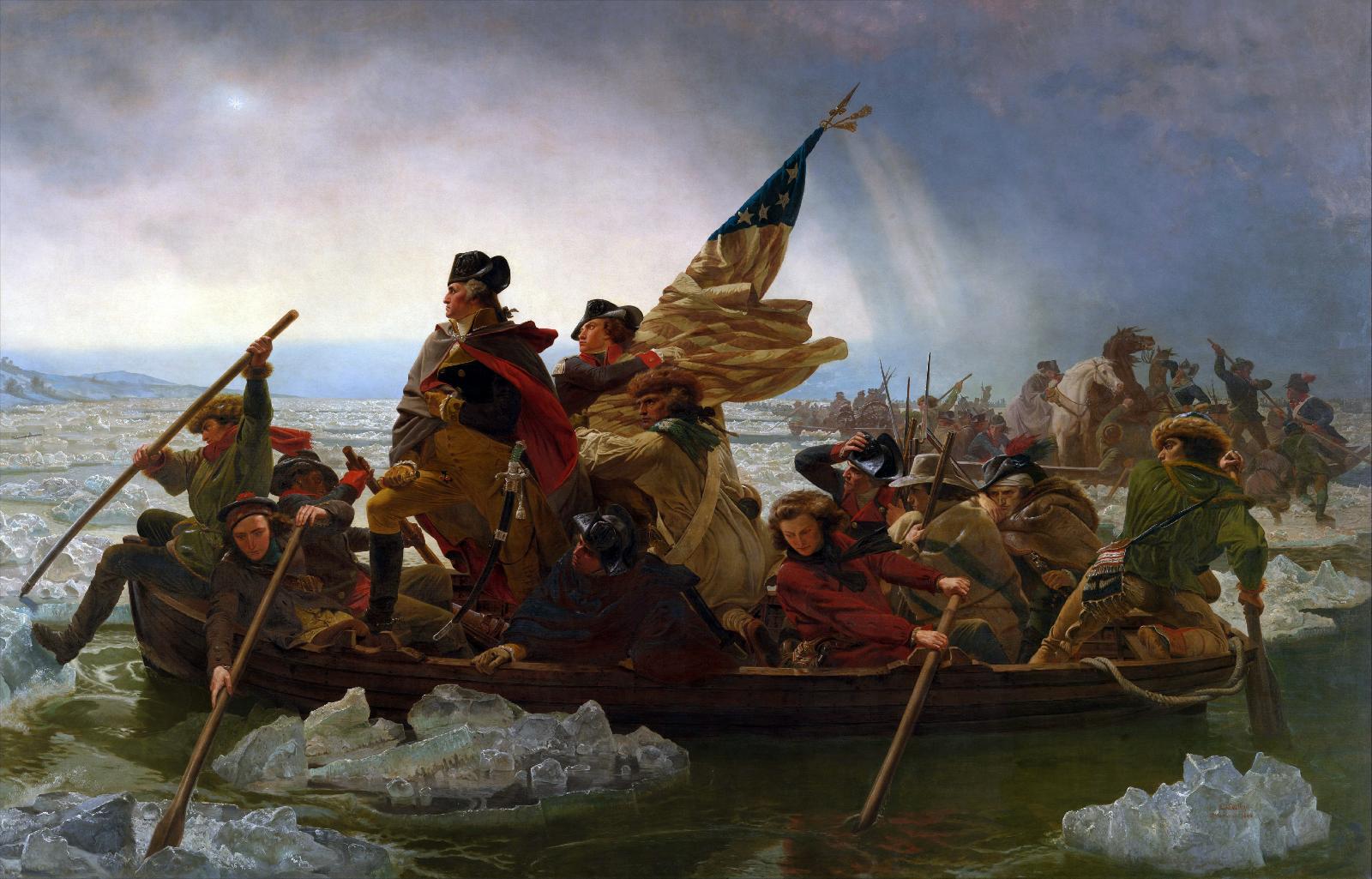
Trenton and Princeton. But on Christmas night of 1776
Washington took his men across the icy Delaware River and marched them ten more
miles during a drizzly/snowy night to Trenton (New Jersey) – to catch an
unsuspecting German unit of George's Hessian troops off guard and completely
rout them – then hold off a British counterattack at nearby Princeton a week later – giving new
courage to the American cause.
British
failure at Saratoga (September-October 1777). The
British responded to this humiliation by putting together a plan to converge on
the northern States from different directions and cut off New England from the
middle States – thereby hoping to cripple the American rebellion (running
strongest in the North). But the various
British units failed to connect. British
troops coming from Canada turned back when their Indian allies deserted the
cause upon hearing that Benedict Arnold was involved as an American commander
(despite Arnold's failure to take Quebec, he was well known
to be a fearless fighter); another British group was badly mauled in a battle
which took place at Bennington; and the group which was supposed to come up
from New York City went off on another venture.
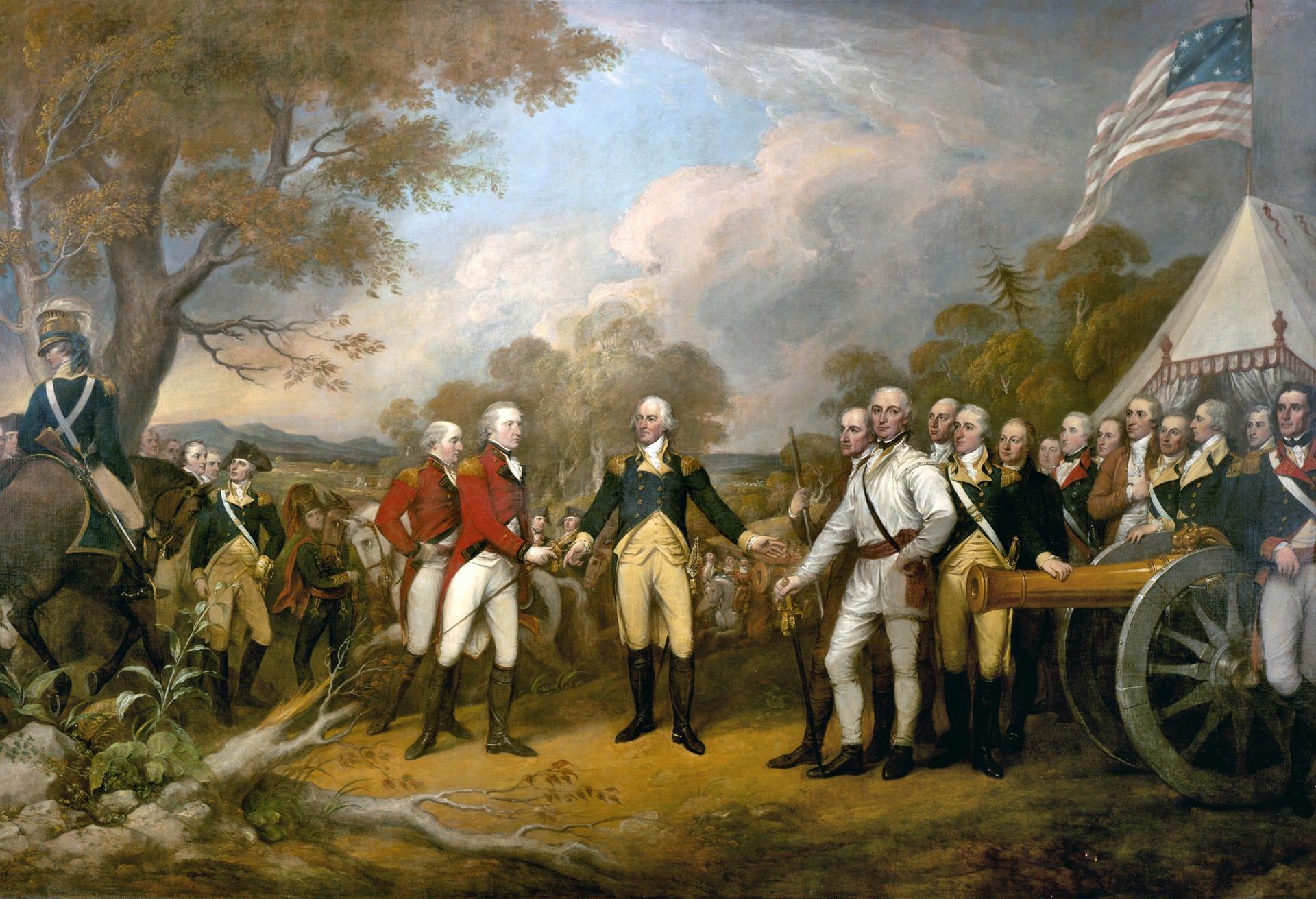
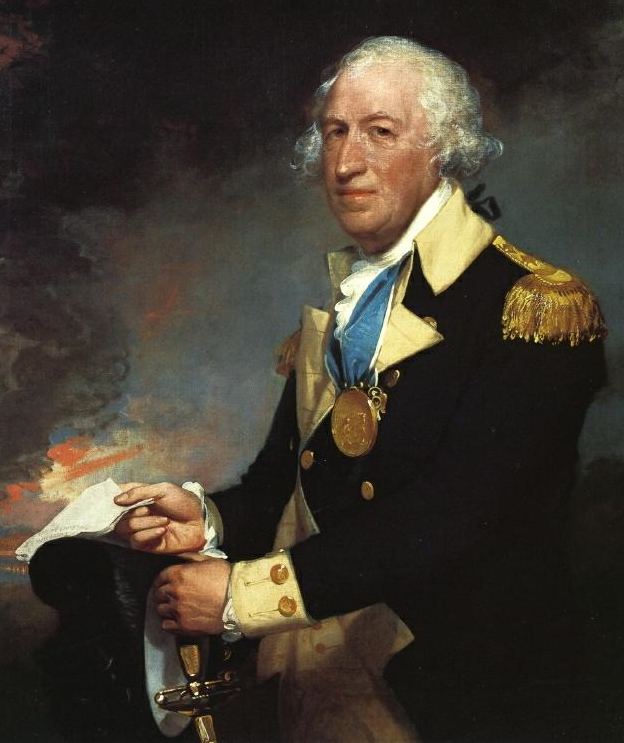
Thus the main British force under John Burgoyne arrived at Saratoga, and
then waited for the others to show up, as Americans gathered under the command
of Horatio Gates, and for weeks the two armies sat there
facing each other, but doing little.
Finally, Arnold disobeyed Gates' order to stand down and instead led his
men on an attack, which inspired the rest of the American forces to join the
action. And thus it was in October of
1777 that a huge British army of 6,000 men was brought to surrender.
But
typical of the politics of the day, in Gates' victory report to the
Congress, he failed to mention Arnold's role in the affair, Gates taking full credit for the
victory as the "hero of Saratoga."
The
French ally with the Americans (February 1778).
Nonetheless the victory was real, and majorly significant. With this American victory, the following
February, French King Louis XVI decided to jump in the fray to do some
serious damage to his British rival George III by supporting the American
rebellion. Little did Louis realize that
he was setting loose forces that would be the undoing of his own rule. In any case, the French help would come to
weigh importantly in the outcome of the American War of Independence.
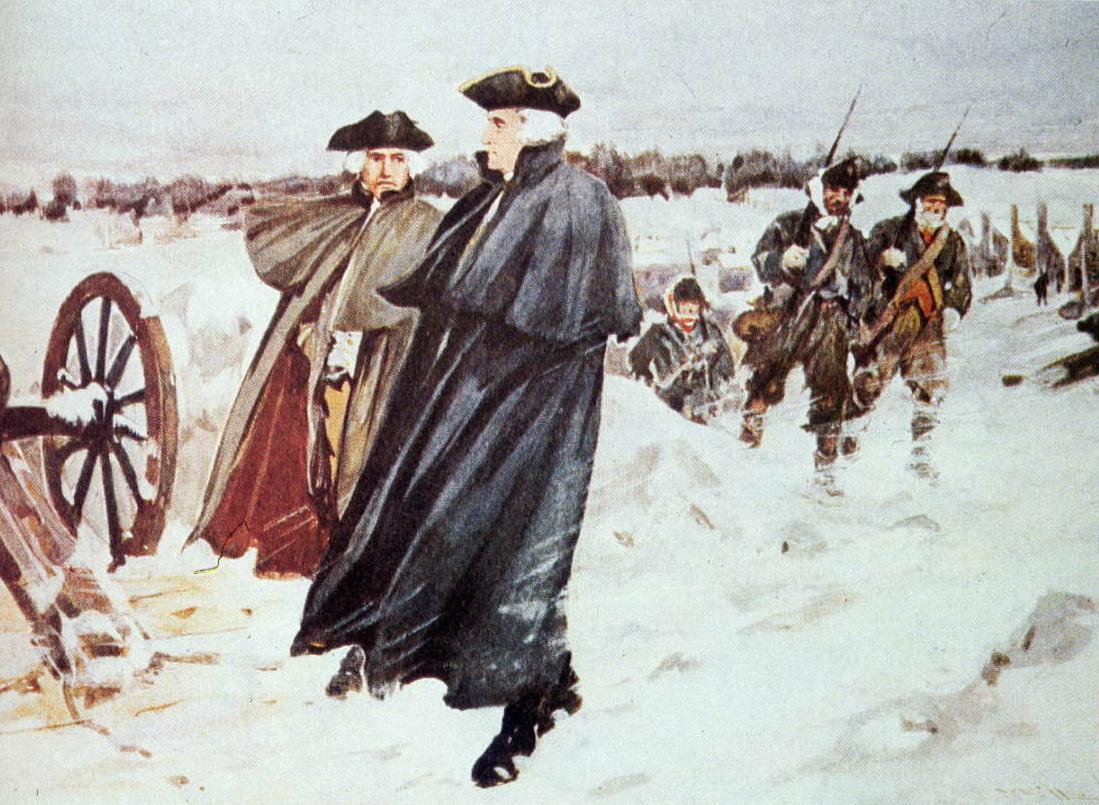
The winter at Valley Forge (1777-1778). Meanwhile, Philadelphia was lost to the
British when they marched on the city (October 1777), the Continental Congress fleeing into the
Pennsylvanian hinterland, and Washington having to take his troops into winter
quarters at nearby Valley Forge, with nothing to show for his effort – except
(most importantly) that the British had failed to bring the rebellion to a
close.
But
the Valley Forge winter would produce a highly disciplined American army –
among those who survived the winter's ordeal anyway. 2.500 of his 10,000 troops
would die that winter. But the remainder
would emerge as a highly disciplined fighting force. Prussian Baron von Steuben's discipline and
Washington's own example as a highly disciplined – as well as spiritually
disciplined (including daily prayers) – individual served to produce that
result with his men. Indeed, the idea of
an army at prayer grew right alongside the now well-understood role of physical
training (and tightened discipline) caused by the death and dying.
Washington: military
insight. Washington understood the nature of
the challenge in front of him as few others (if any) did at the time. While
other generals typically understood the war between America and Britain as
involving simply a battle of armies (ones they themselves commanded),
Washington knew most importantly that this war was about a battle of wills, of
human resolve, of sheer determination not to quit no matter how grim things
looked.
The goal of all war is to make the other side tire
of the game first and simply quit. How
that was to occur in colonial America with mere militia coming up against
experienced and vastly more numerous British troops would entail far more than
armies and battles, although they certainly weighed importantly in the
matter. But wars are won as a matter of
the commanding officer's ability to see things from a much higher perspective
than the viewpoint dictated simply by immediate circumstances, which is what
lesser souls tend to focus on. True,
immediate circumstances had to be answered – as best as possible given the
greater weight of military power of the British enemy. But ultimately Washington's job was to keep
the courage of the Patriots intact, to keep them focused on victory, while at
the same time undercutting the morale of the British (and American Tory or
Loyalist) adversaries – until the latter were willing to call it quits.
The mindset and spirit of a great leader. Here is where leadership – true leadership,
the kind that Washington offered America – came into play. And, as is typical of great leaders, although
Washington was as sensitive to public opinion as anyone else, ultimately he
went to God, not public opinion, to take full measure of his own actions. Washington was a man of very, very deep faith
in God, in God's personal call to him to take up such dangerous and often very
unrewarding service (materially speaking).
The
role God played in Washington's life is well illustrated by a particular
example recorded for us in the Diary and Remembrances of a Presbyterian
Minister Rev. Nathaniel Randolph Snowden, who recorded a conversation he had
with Isaac Potts of Valley Forge, Pennsylvania (at whose home Washington was residing that winter):
What was that? I inquired. Do you see that woods, and that plain? It was about a quarter of a mile from the
place we were riding. There, said he,
laid the army of Washington. It was a
most distressing time of ye war, and all were for giving up the ship but that
one good man. In that woods, pointing to
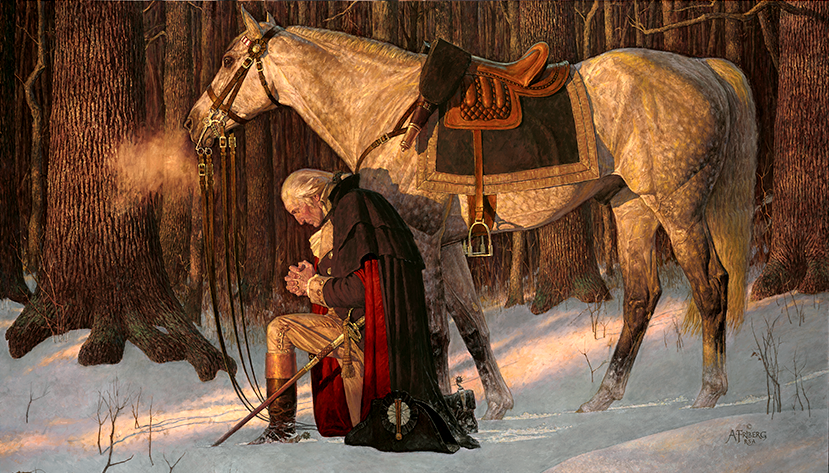
a close in view, I heard a plaintive sound, as of a man at prayer. I tied my horse to a sapling and went quietly
into the woods and to my astonishment I saw the great George Washington on his
knees alone, with his sword on one side and his cocked hat on the other. He was at Prayer to the God of the Armies,
beseeching to interpose with his Divine aid, as it was ye Crisis and the cause
of the country, of humanity, and of the world.
Such a prayer I never heard from the lips
of man. I left him alone praying. I went
home and told my wife, I saw a sight and heard today what I never saw or heard
before, and just related to her what I had seen and heard and observed. We never thought a man could be a soldier and
a Christian, but if there is one in the world, it is Washington. We thought it was the cause of God, and
America could prevail.
Tragically,
this was the case for Benedict Arnold, who switched sides to the
British because after giving the American cause his all, he finally tired of
being undercut constantly by other colonial leaders, including fellow American
generals.[3]
Washington
too (as all leaders) had his detractors, eager for his job as commanding
officer (Gates and Lee for instance). But Washington paid little attention to their
maneuverings with the Continental Congress behind his
back. He simply stayed focused on the
job at hand, the job he had been called to by God. And to God and God alone did he answer.
But Washington's spirit infused his
troops (and again, the American people) with the same spirit: to keep moving forward against huge obstacles
– and not get lost in a concern with those immediate obstacles – because there
was a higher calling to be answered.
He
had his men pray with him, to understand that their cause was much bigger than
just personal success; it was to preserve the precious independence of their
American society, so that America could itself continue to serve God to great
purpose. His men were not just soldiers,
they were crusaders, crusaders for the world's "little guy," the
average person like themselves – average in social status but awesome in
action!
Disappointment at Monmouth (June 1778).
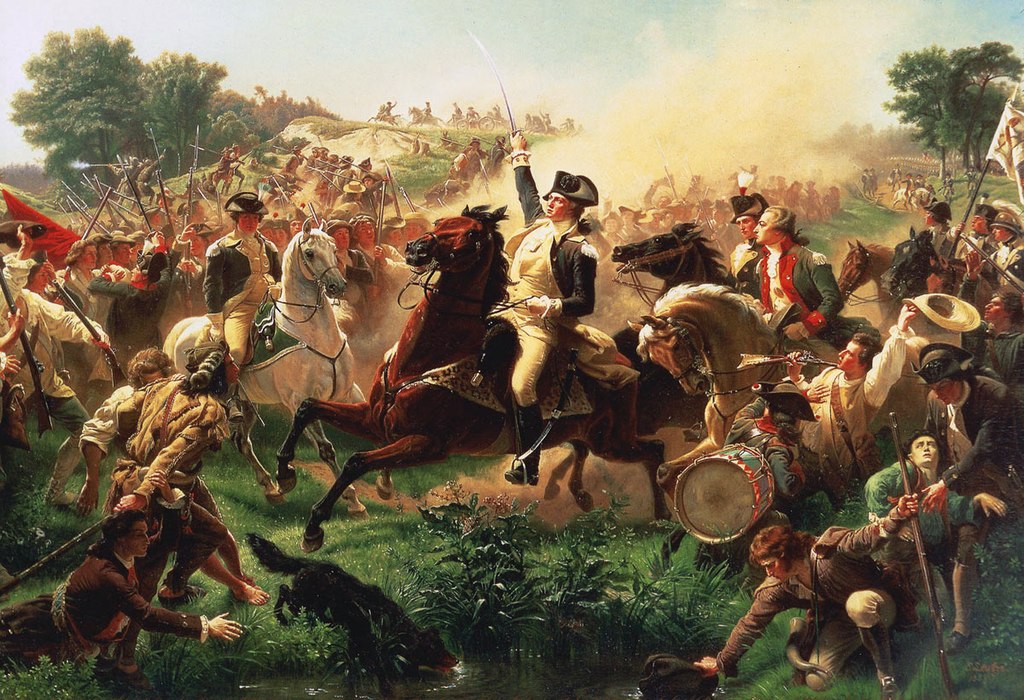
As an example of the agony that Washington had to constantly overcome,
the following June (1778) Washington had skillfully put his army in a position
to deliver a crushing blow to the huge British force that had decided to
abandon Philadelphia and head back to New York. But his plan was itself brought
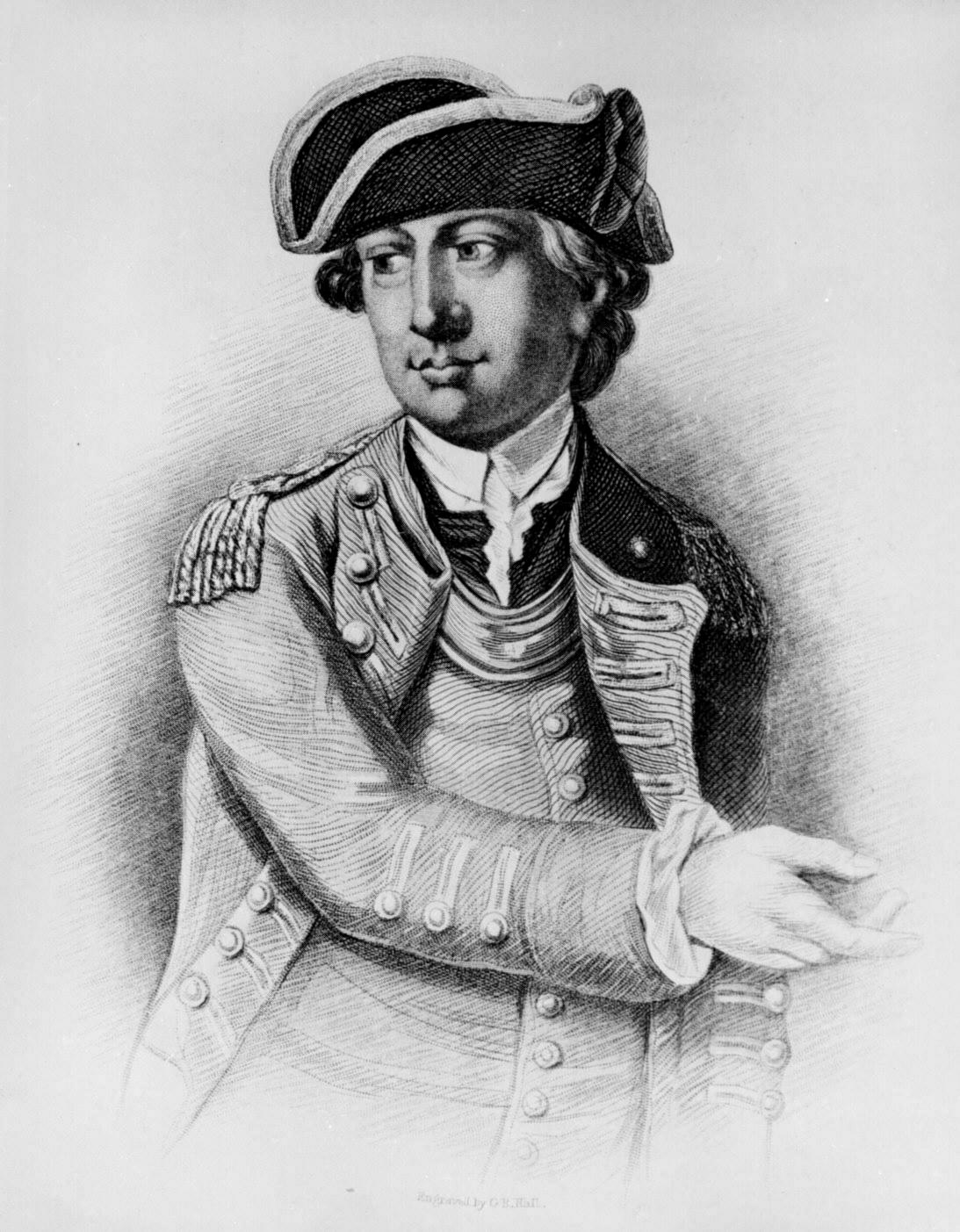
to near defeat by an arrogant American General Charles Lee, given actual command of the
operation (officially second in command, although a constant thorn in
Washington's side), who lost courage at the very moment that the action
actually got underway. Instead of
pushing forward the American advantage dependent on a surprise attack from
behind, Lee ordered a retreat, which immediately turned into a panicked rout of
the American troops. Washington
miraculously was able to rally his fleeing troops, and then turn the battle
ultimately into at least a military standoff.
That night an exhausted British army was able to slip away from an
equally exhausted American army. And
thus a grand opportunity for the Americans to end things right there had been
lost. But at least it enabled Washington
to finally get rid of the troublesome Lee.
And it made very clear to all that Washington's army was now a serious
fighting force.
And actually, this led the British to decide to give
up the war in the North and take the battle into the American South.
THE WAR MOVES SOUTH
Disaster for the American Patriots (December 1778 to September 1780). But at the end of
1778 the British finally decided to go all-out in their offensive in the South,
hoping that American Tories would join them in the effort.
Mostly they didn't! But huge
British units captured the weakly defended Savannah (December 1778); they did
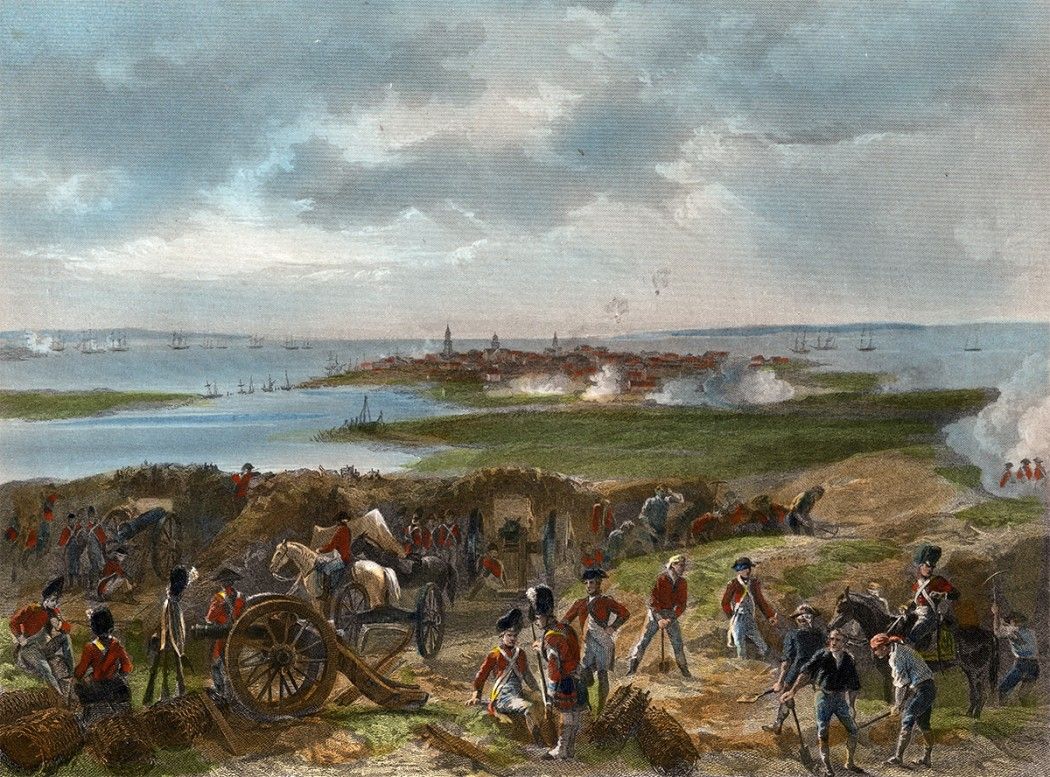
the same in Charleston (May 1780) when 14,000 British troops, surrounded, cut
off and defeated the 5,000 Americans attempting to defend the city; and then
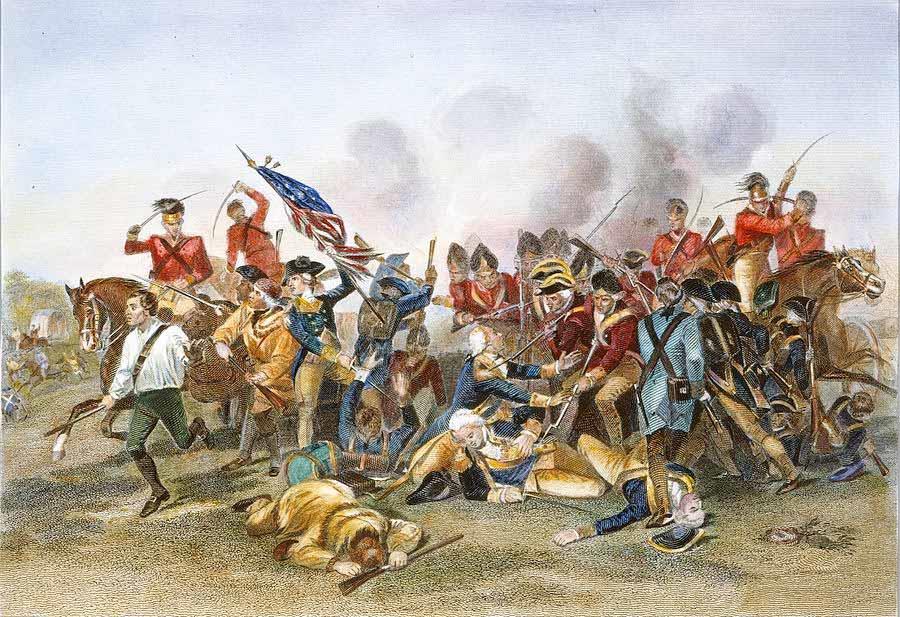
they repeated that success in August at Camden (South Carolina) when
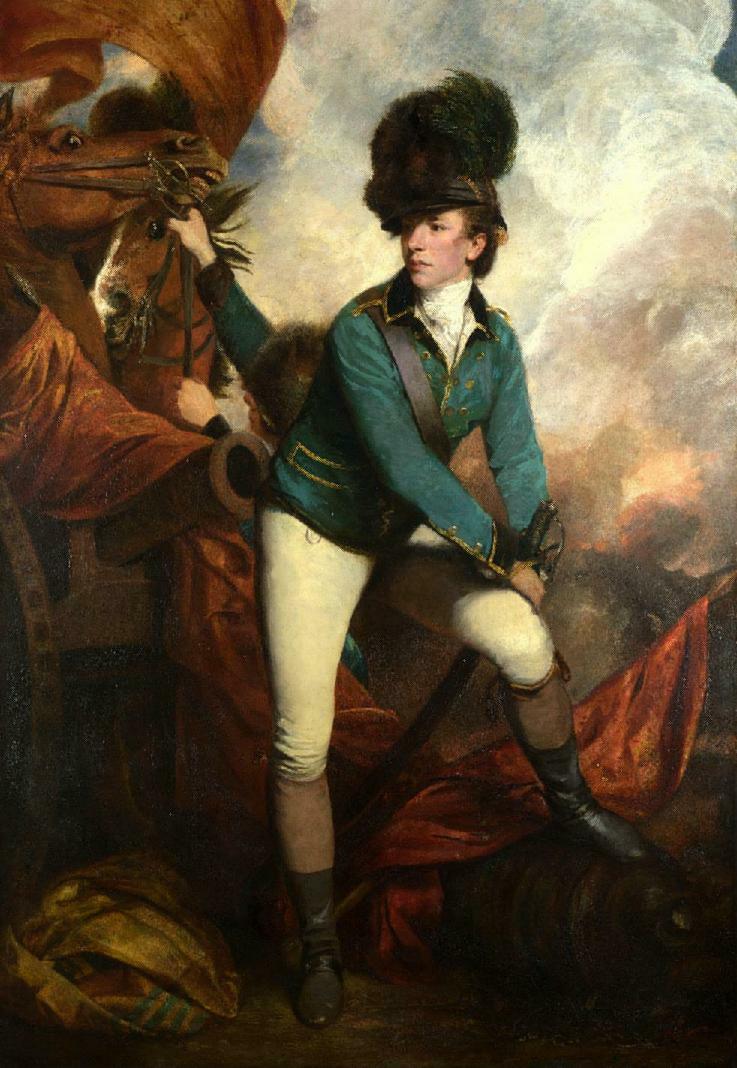
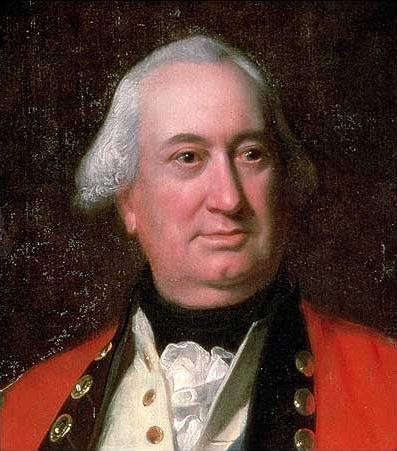
incompetent Gates foolishly attacked directly British General Charles Cornwallis' well-disciplined army, and Gates'
troops broke and fled – resulting in the loss of another 2,000 American
troops. Then in September it was
learned that Arnold had changed sides and was now fighting on the British side. At this point the Patriot cause looked as if
it were about to go down in defeat.
VICTORY!
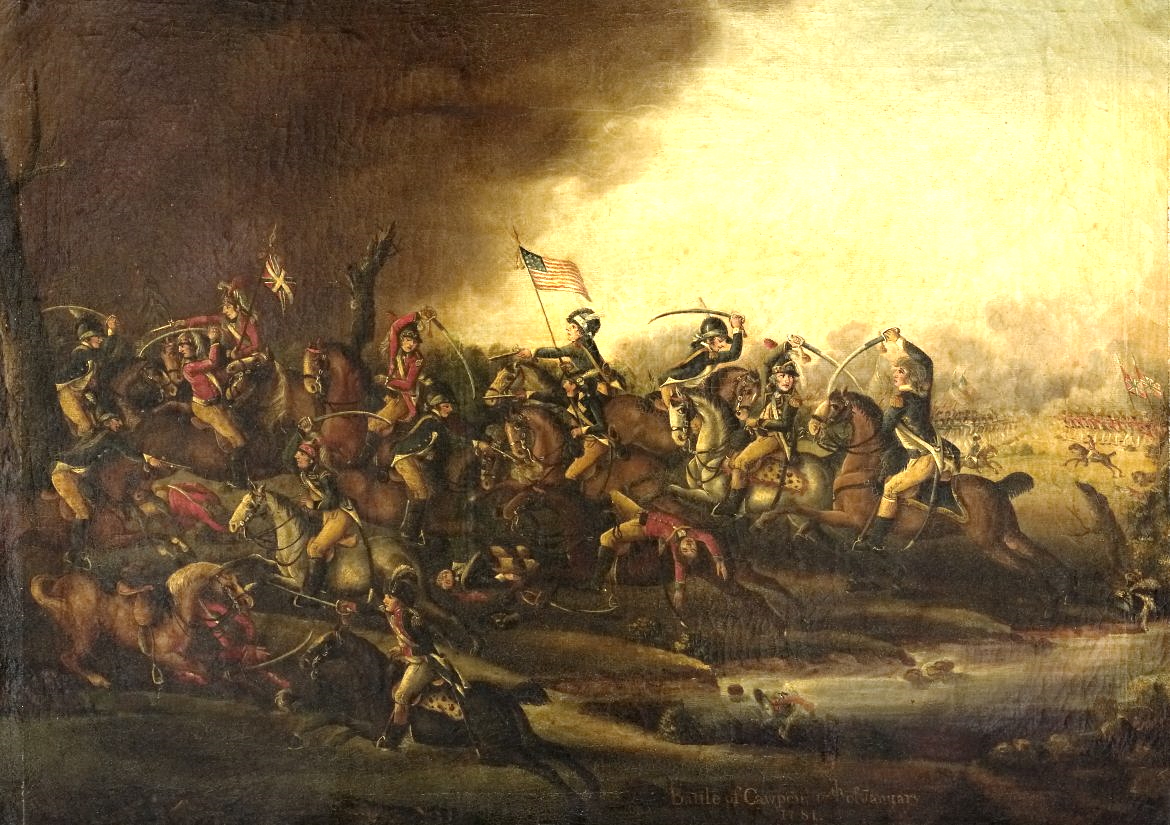
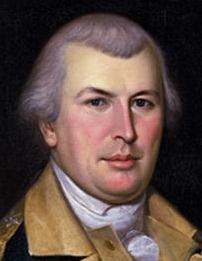
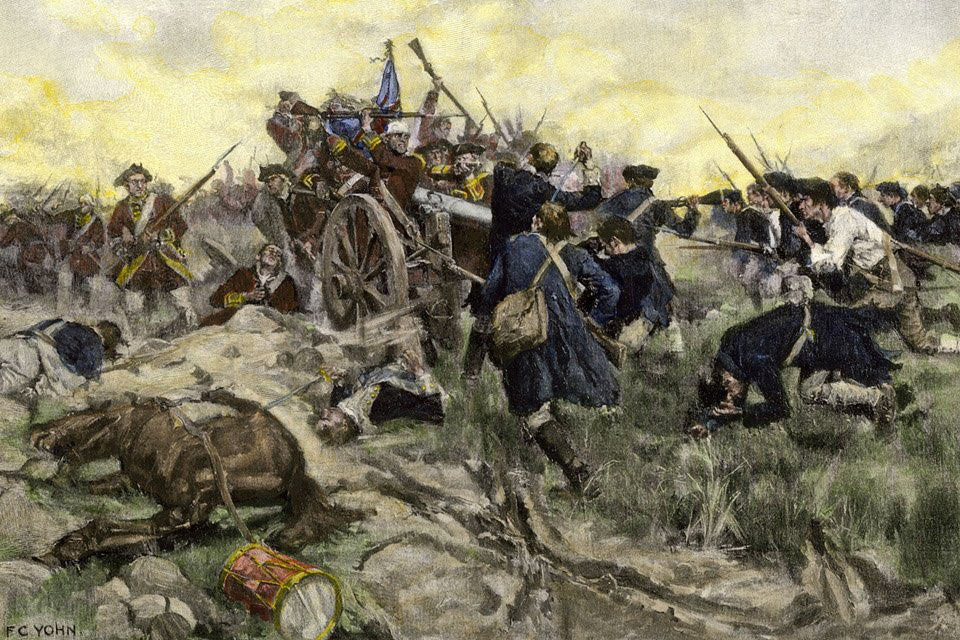
Cornwallis decided to counter by
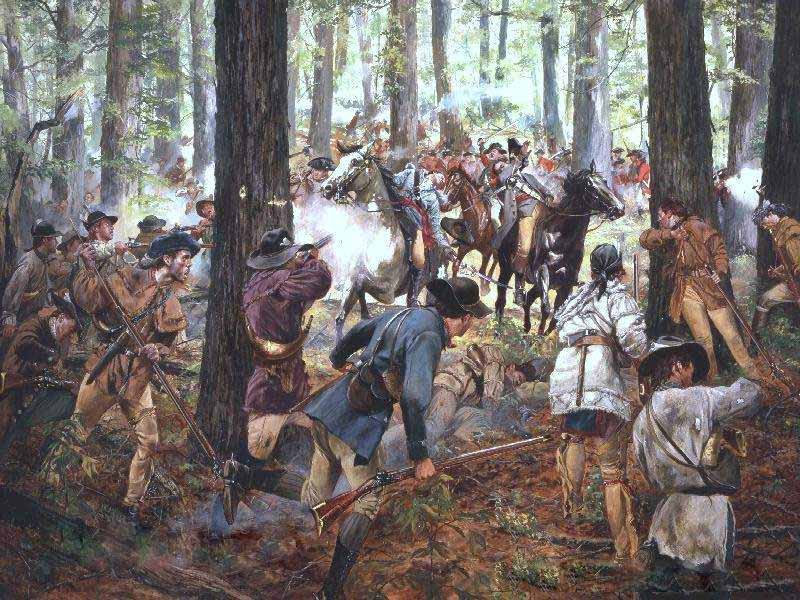
chasing down the American army under the Southern commander Nathanael Greene –
and indeed humiliated him at a battle in March (Guilford Courthouse, South
Carolina) – but a humiliation that Greene managed to shake off with his army
still intact – leaving the "victor" Cornwallis with the loss of a huge
number of troops that Cornwallis could ill afford –
something of a Pyrrhic victory!
Yorktown (September-October 1781). Cornwallis badly needed more troops
and supplies – and decided to head his army north into Virginia to the port of
Yorktown to await reinforcements shipped in to him there by way of the
Chesapeake Bay. But he had marched
himself into a trap, when Washington slipped his troops from New York (where
the British were expecting Washington's attack) to a position surrounding
Yorktown – along with General Lafayette's French troops who joined
him there. And the French navy was able
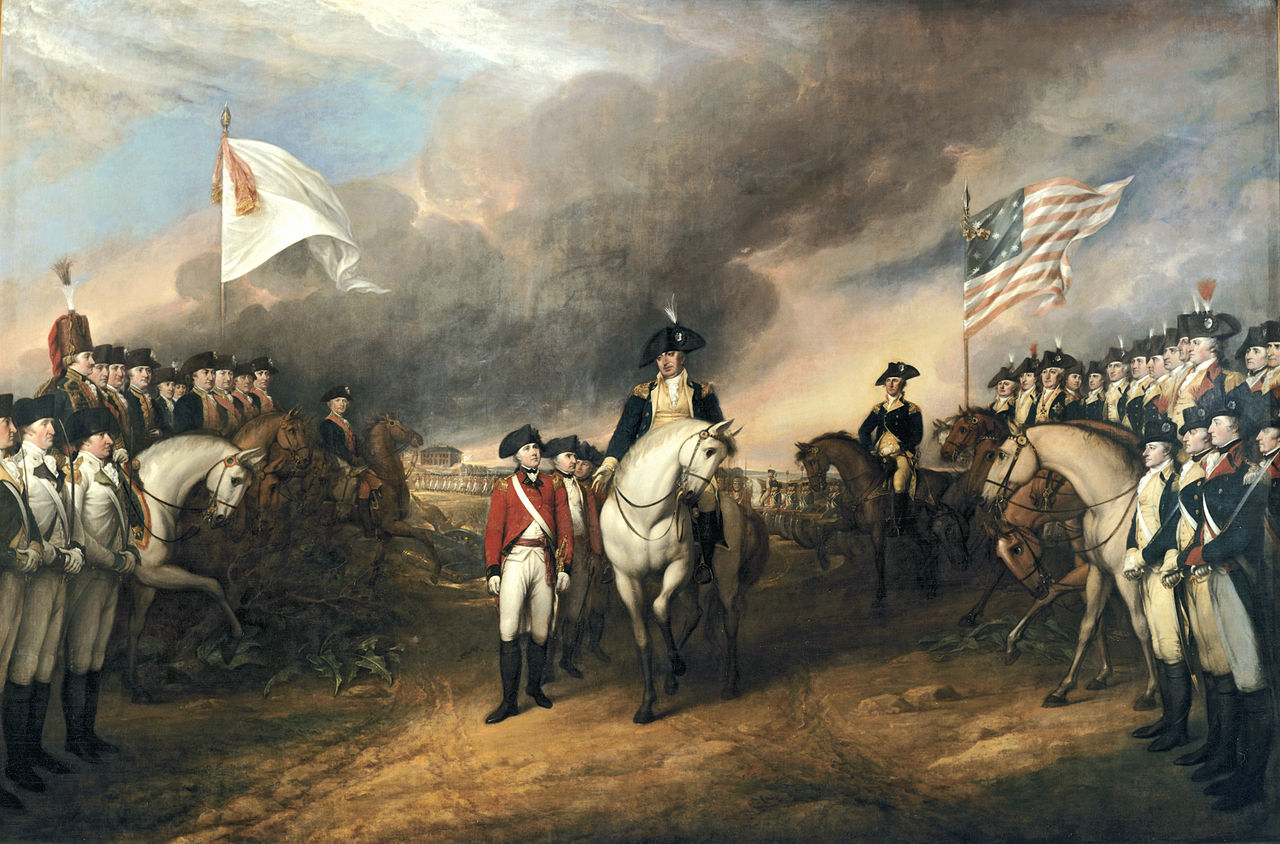
to defeat the British ships sent to relieve Cornwallis. Thus Cornwallis found himself with nowhere
to go and no help on the way. A final
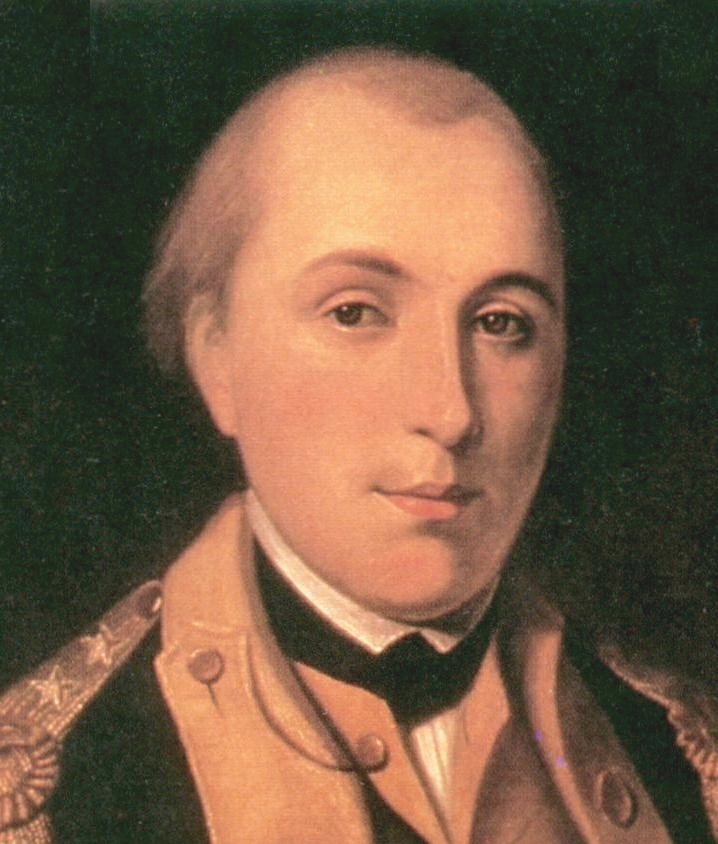
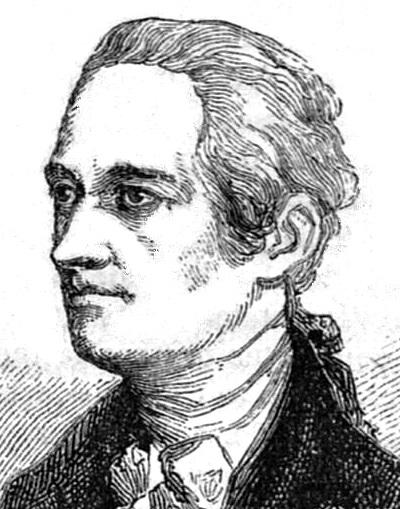
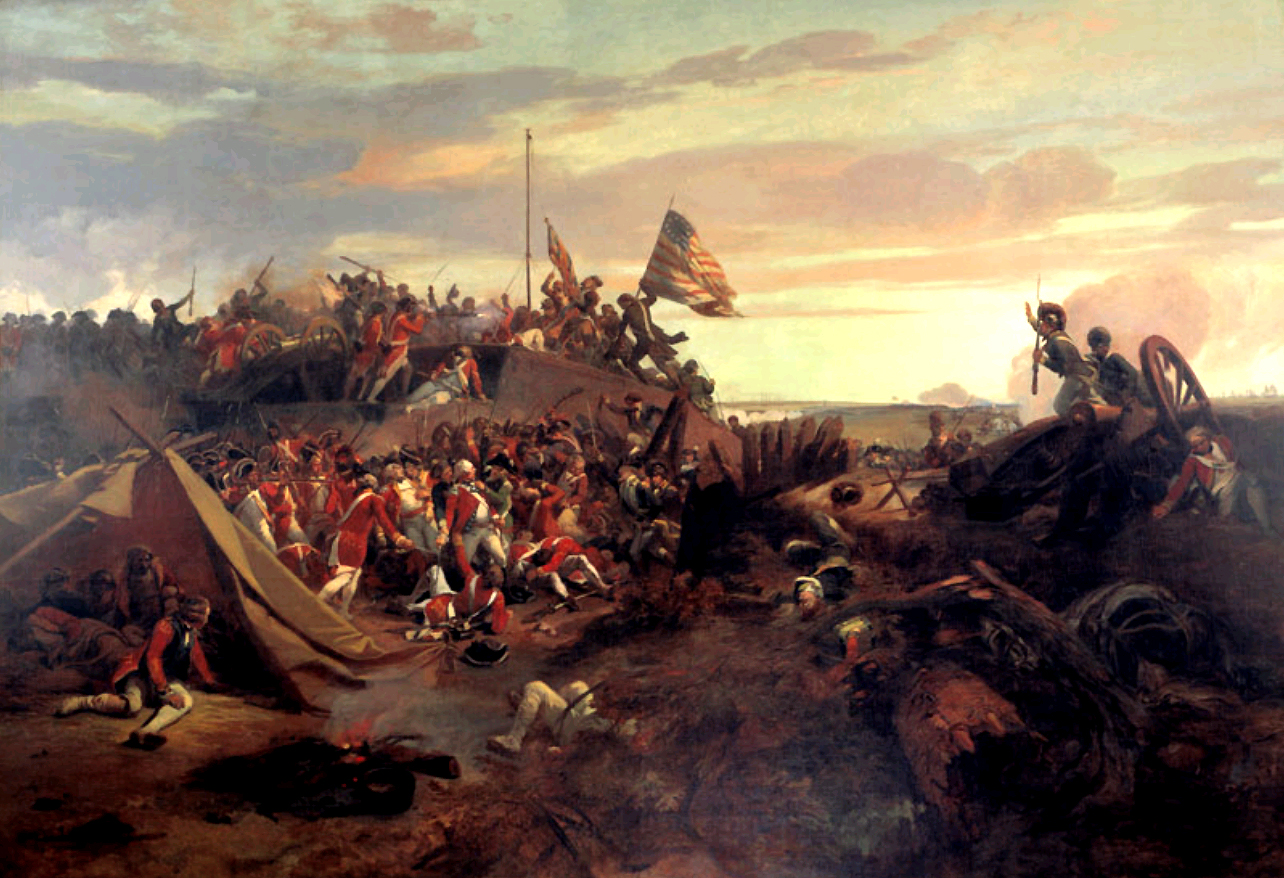
assault on his position by the French (led by Lafayette) and the Americans (led by Washington's top assistant, Alexander Hamilton) forced Cornwallis to surrender his 8,000-man
army to Washington. This was the event
that finally broke the British will to continue the war.
When
news reached England of what had happened at Yorktown, British Prime Minister
Lord North declared "Oh God, it's all over." And indeed it was. Although British troops still held New York
City, the British would undertake no more military ventures in America.
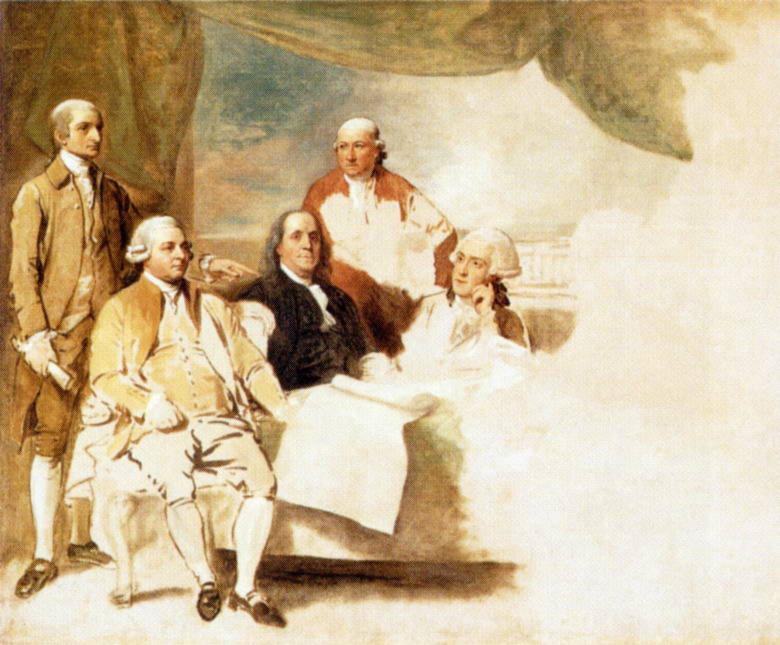
The Treaty of Paris (1783).
It took some time for the British and Americans to work out the terms
ending the war. But basically, the
agreement drawn up in Paris (notably through the efforts of John Adams, Ben Franklin, John Jay, and a few others representing
the Americans) acknowledged that the Americans were indeed an independent
people, no longer part of the British Empire.

Go on to the next section: The Young American Republic
Miles
H. Hodges