With Lincoln's assassination, Vice
President Andrew Johnson stepped into the
presidency – hoping to pursue Lincoln's policy of Northern-Southern
reconciliation. But he lacked the
political leverage that Lincoln commanded – and found himself
intensely opposed by the Northern Radicals – who were in no mood for
reconciliation. Instead, they wanted the
South to pay deeply for its rebellion – and they were intensely focused on
demolishing entirely the South's traditional political culture.
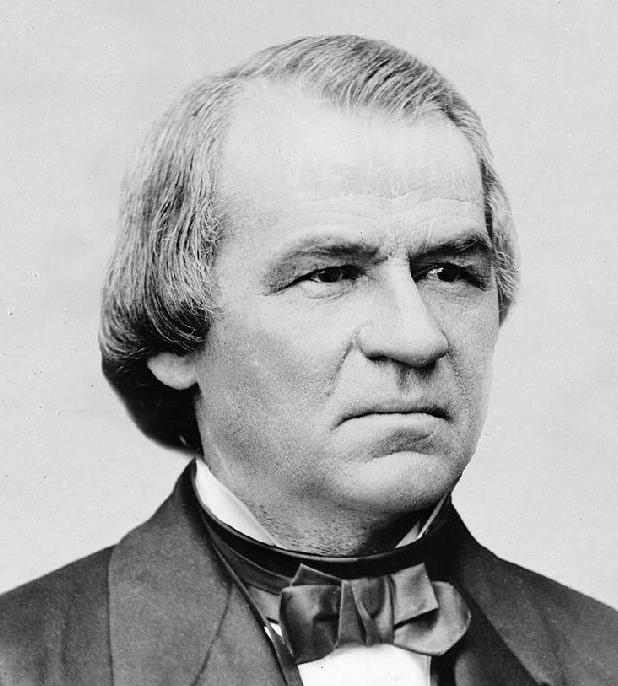
Andrew Johnson – US President 1865-1869
Johnson found himself vetoing bills coming
out of a Congress dominated by the Radicals Thaddeus Stevens and Charles Sumner
– only to have his veto overturned by a 2/3 vote in Congress.
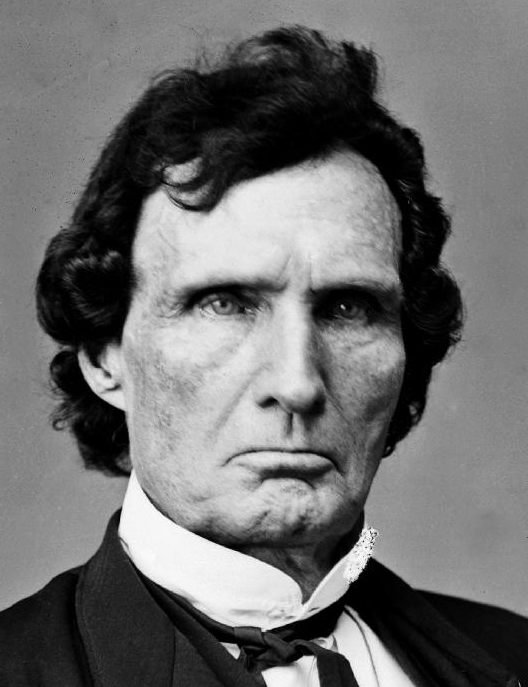
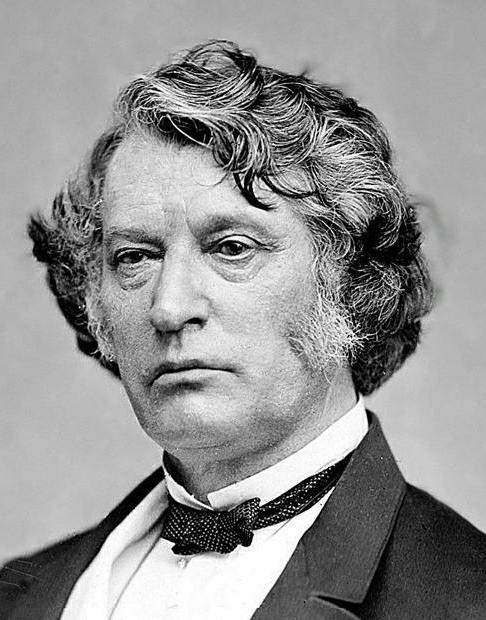
Thaddeus
Stevens and Charles Sumner
National
Archives
Then he vetoed the Congressional bill
sponsoring the 14th Amendment affirming the legal equality of all Americans –
except for Indians and Confederate rebels – forbidding the latter even from
holding office anywhere in the U.S. government – or getting compensation for
any loss of property (slaves) or even pensions for service in the Confederate
army or government.
Johnson's veto of this last bill enraged the Radicals so deeply
that Johnson lost all political footing with Congress. And in early 1868 the Radicals voted for his
impeachment in the House of Representatives.[1]
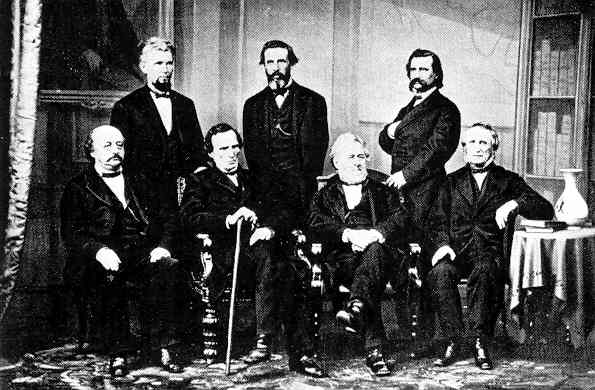
Senate Committee to try
President
Johnson's
Impeachment charges
(May1868)
Ultimately, he avoided conviction when the
Radicals came up one vote short of the 2/3 vote required for full conviction by
the Senate. But from this point on, for
the remaining two years in office, Johnson was totally powerless in the face of
a Radical Congress.
Slaves
were already being freed as the Union armies moved through the South – although
there really was no place for them to go (except follow the Union armies). With the end of the war the economic picture
of the South was so bad that not only did newly freed Blacks have no real
opportunity to get themselves established in the New South – but also neither
did the Confederate soldiers who had to return to devastated farms – not to
mention demolished plantations and pillaged towns and cities.
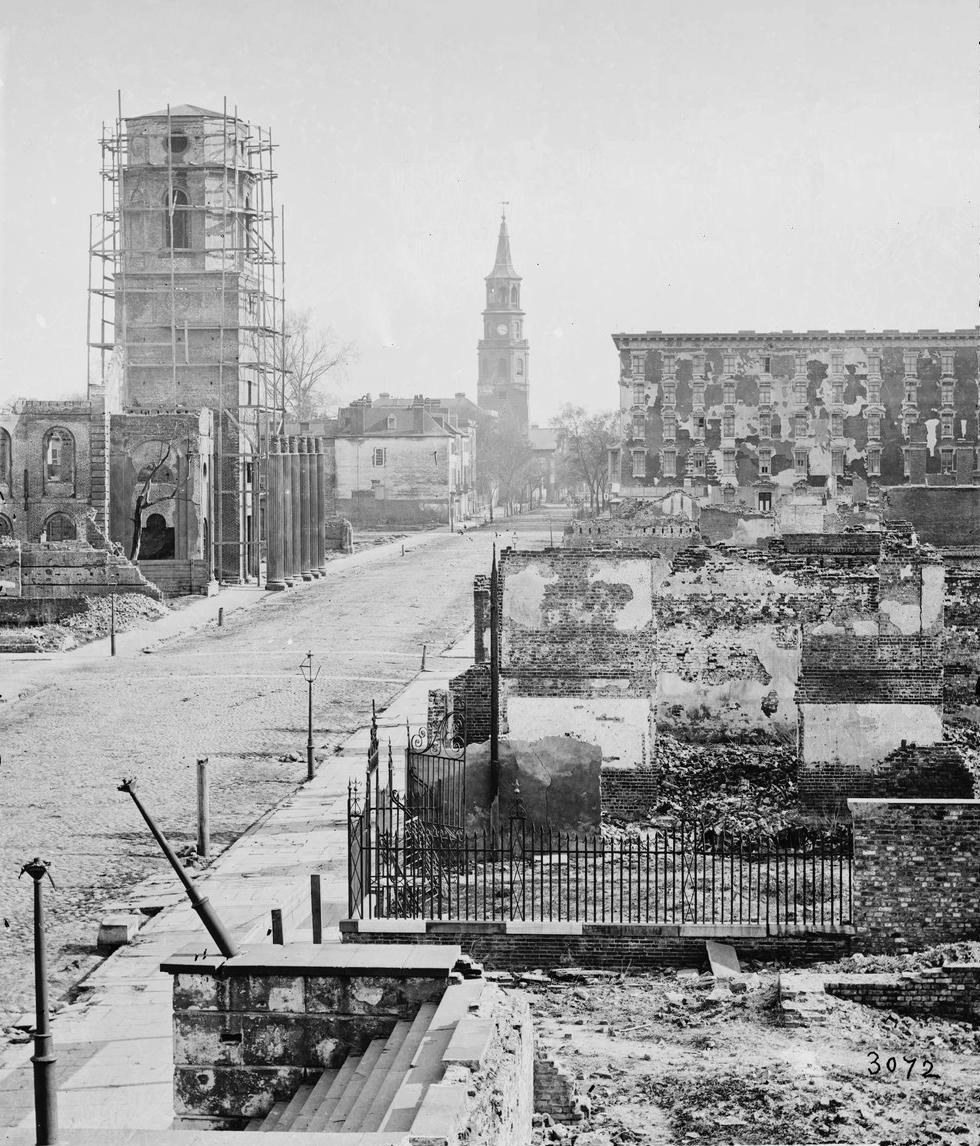
Charleston under
Reconstruction
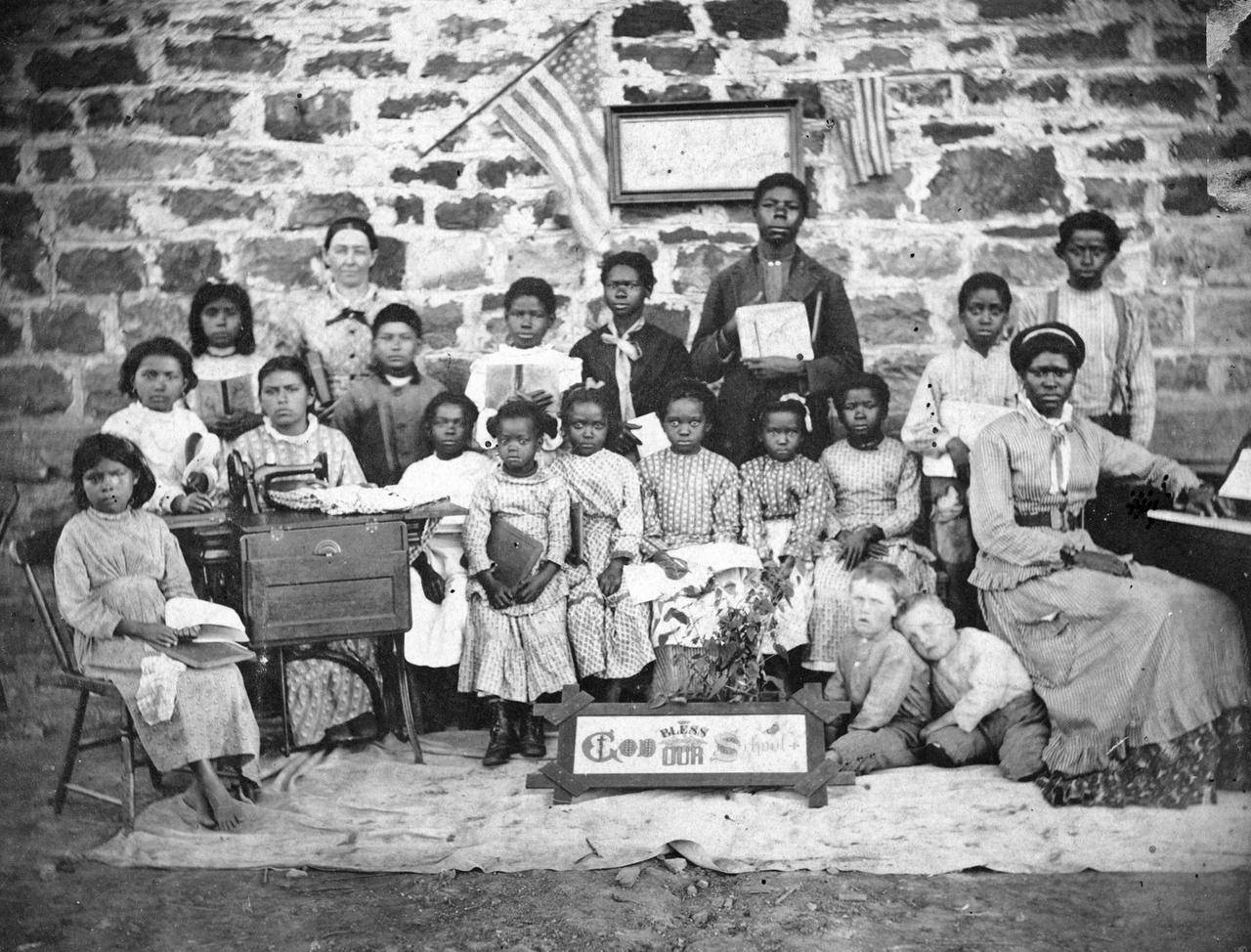
At first the South was simply governed by Union army
officers – and Northern administrators sent South by the Freedmen's Bureau,
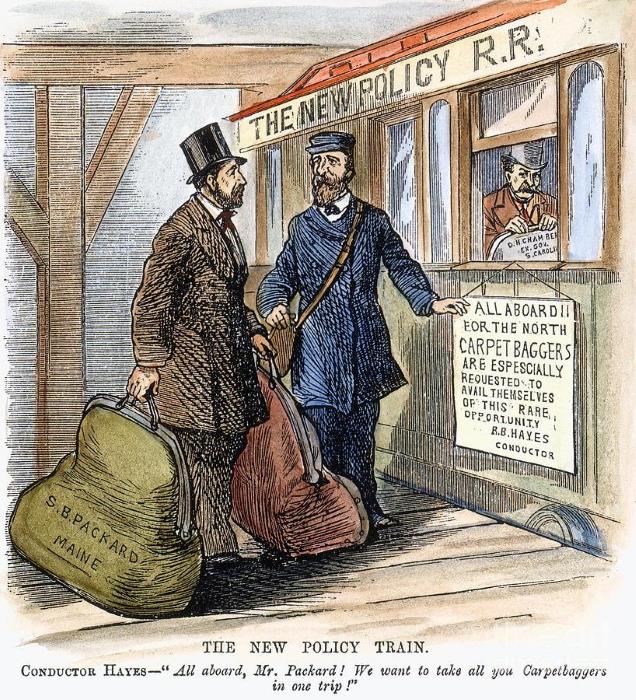
individuals who arrived with their luggage (carpet bags) not only to take over
local government but also to set up and run schools for the newly freed
Blacks. This helped the Blacks
(somewhat) adjust to their new lives of freedom, but intensified the hatred of
poor Whites towards Blacks – as well as towards the Northern "carpetbaggers" whom they detested intensely.
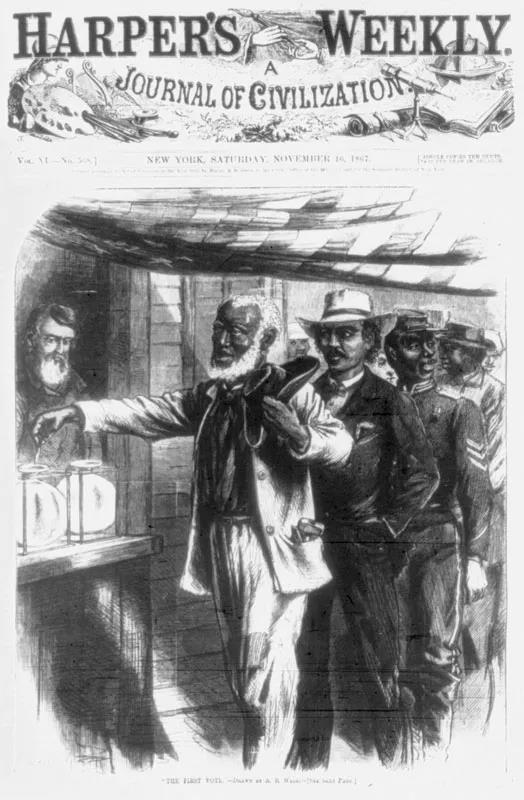 Blacks voting for the first time
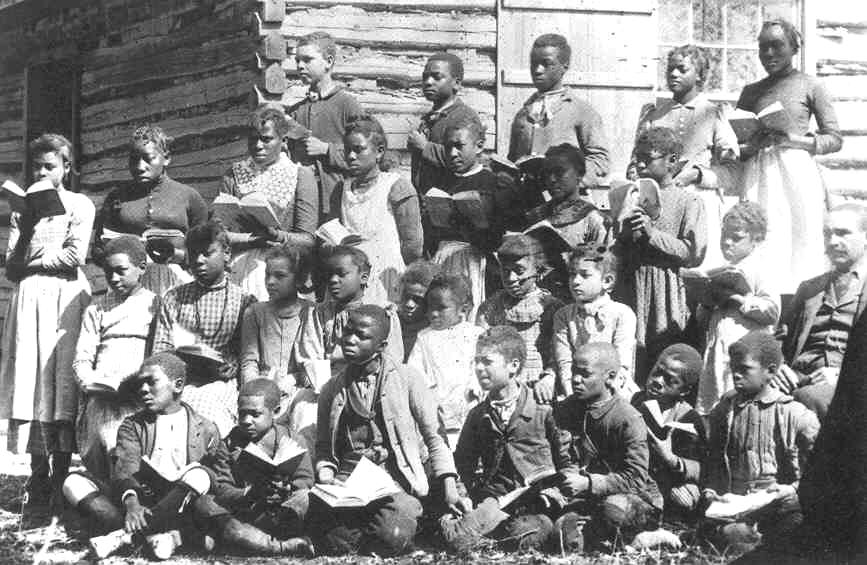
A Freedmen's Bureau school
for former slaves
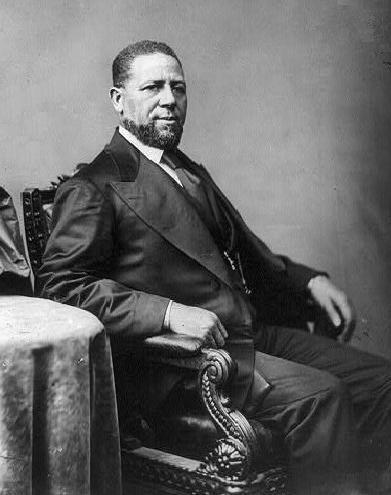
Hiram Revels – First Black
Congressman
(appointed to serve a 1-year unexpired term
in the Senate)
- 1870Soon local groups such as the Ku Klux Klan began to form up – to defend the
traditional South against those attempting to overturn ("reconstruct")
Southern culture. Things got very ugly
fast.
 Confederate General Nathan Bedford Forrest forms the
Ku Klux Klan serving as its first Grand Wizard (1867)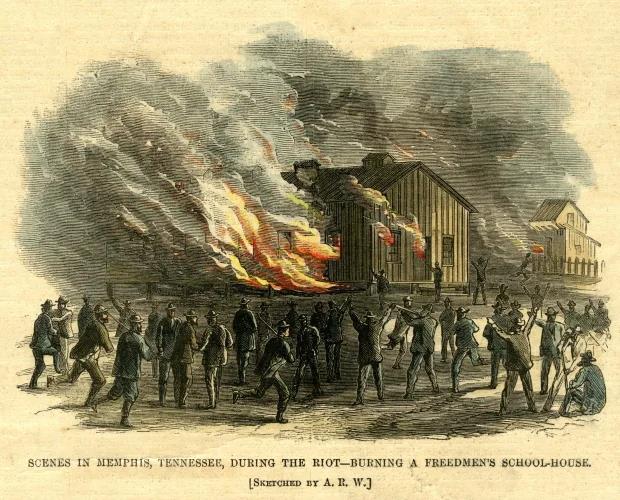
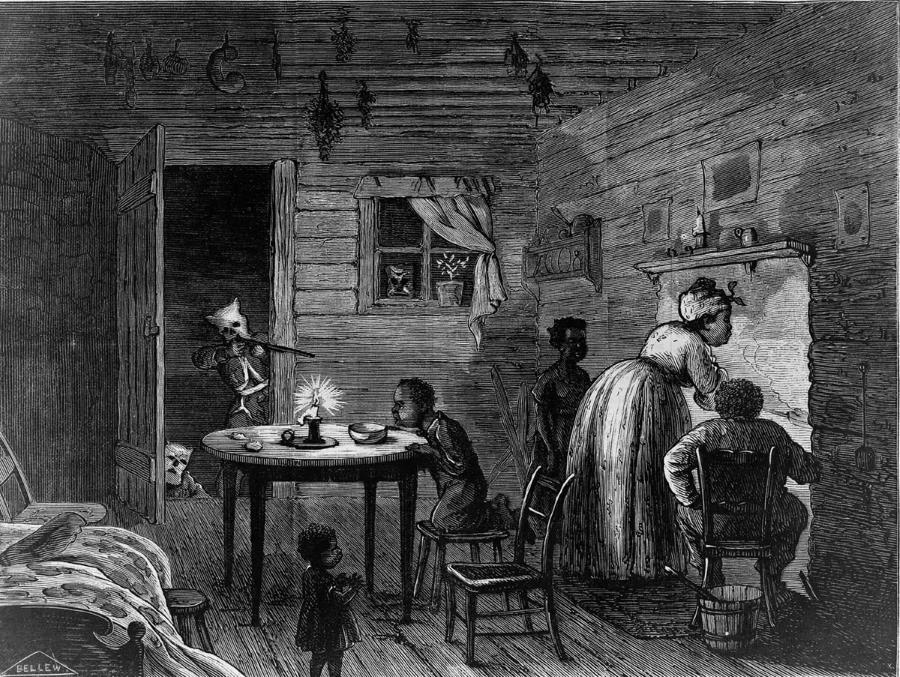
Visit of the Ku-Klux – Frank Bellew (1872)
[1]When he removed Radical Edwin Stanton from his position as Secretary
of War, to replace him with Grant, he
did so in violation of the 1867 Tenure of Office Act (of dubious
Constitutionality!) enacted by Congress specifically to end Johnson’s power to
remove Lincoln’s
Cabinet appointments.
| THE GRANT PRESIDENCY (1869-1877) |

 Reconstruction
 The Grant Presidency (1869-1877)
  The end of Reconstruction