Depression in rural America. With European farmers taken away to the
trenches of World War One, Europeans (at least the French and British) became
heavily dependent on American farm products.
Consequently, during the war the American farmer did very, very well as
an agricultural businessman. Thus he
borrowed heavily from his local bank to purchase more land and the machinery to
work that land. Unknowingly, all this
was creating a situation very similar to the one that occurred a century
earlier during the Napoleonic Wars, which in the longer run did not go well for
the American farmer.
At
the end of the war, European soldiers naturally returned to their farms, and
the need for American farm products dropped away accordingly – as also did the
prices for their products. Thus for
example: wheat prices in 1919 were at
$2.15 a bushel. The farmers were doing
very well! But by the fall of 1920 the
price had fallen to $1.44 a bushel. And
by 1922 the price was down to 88 cents a bushel! It seemed even at times that the earnings of
the American farmer did not meet their production costs. Farming had become a most unprofitable
enterprise.
Thus at the same time, the farmers could no longer
meet the requirements of the heavy payments to their banks on the loans they
had taken out during the good years to buy more land and machinery. Bankruptcy swept through the farming industry
when farmers found themselves unable to make those payments. That meant losing
their farms and machinery to the banks.
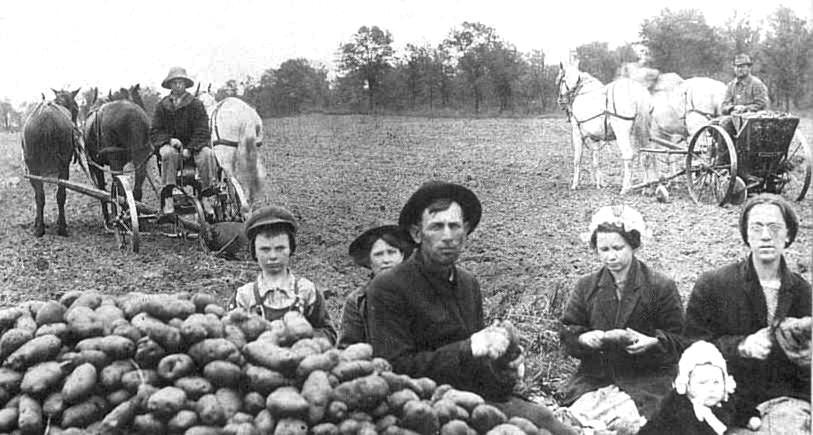
Minnesota potato farmer -
1920s
But
the banks had no use for seized farms and machinery. Nor could they find customers to buy this
property off their hands. Thus the
banks, by way of their loans to their farming customers, found themselves
having invested way more money in these farms and equipment than they were now
worth. And so the banks were now holding "assets" (farms and
machinery) in current value far below what they themselves owed their
depositors. Thus seeing looming failure
facing their banks, panicked depositors made runs on their bank to get their
money back before the banks folded. And
indeed, fold the banks did, one by one, until there was a mass sweep of
bankruptcies through the world of the rural banks.
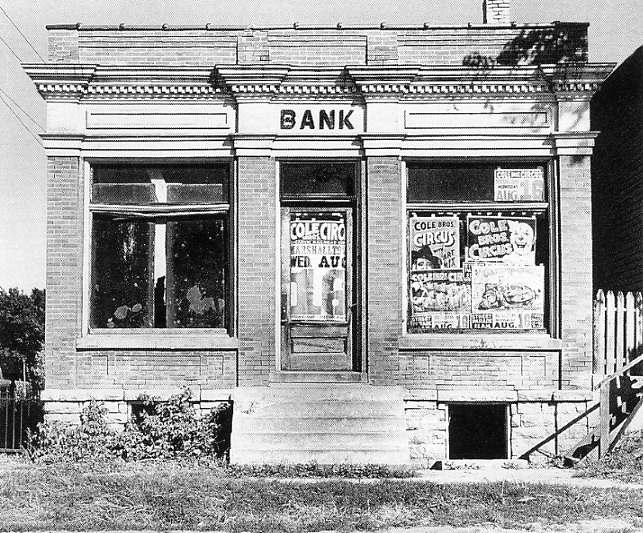
A closed bank – a typical
sight in 1920s rural America
(Tragically, my grandfather, a bank president,
experienced the same catastrophe)
Now
deep misery set in on rural America. In
actuality, the Great Depression had set in there ten full years before it was
to hit urban America.
But party-time in America's cities. In post-war America a very different picture
presented itself in the country's booming cities. During the war the cities had also been the
picture of economic wonder, producing all sorts of war goods, including
uniforms, rifles, artillery, ammunition, trucks, airplanes, etc. But the money accumulated among the urban
entrepreneurs, plus an ever-expanding technology, led easily to a transition to
post-war production of cars, radios, home appliances, new housing – to meet the
huge demand of a prospering urban society.

The radio
department
60,000 families owned radios
in 1922; by 1930, 13.8 million

An Oregon family gathered
around the radio – 1925

Dancing to the
radio

Radio Broadcasting in the
1920s – a Minneapolis radio station

Radio program
production
_________________________________________________
And the movie industry has become a matter of huge importance

The lobby of the Fox Theater – San Francisco

Loew's Paradise Movie Theater – seating for 3,936

Actress Clara Bow – the
starlet with the "It" appeal
__________________________________________________
And the automobile became
a more central part of American life

Standard Oil of New Jersey
– 1920: 12 stations / 1929: 1,000 stations

Opening of a new Gulf station
in Kentucky – 1925
But car sales vastly outpace
road building

Typical scene in rural America – 1920s
_______________________________________________
Air Travel has moved up to
join automobile travel as part of
the new material culture

Pan American passengers
boarding
a flight to Havana in 1928

A typical air terminal – the
Ford Airport, Detroit

Airline pilots take on a
dressy uniform as a sign of their
prestigious occupation

Some of the first stewardesses –
dressed warmly for flying conditions

A steward serving a
meal
____________________________________________________
And just in general – America's
material culture explodes to life

Salesman of home appliances – 1920s

Woolworth – 1920: 1,111
stores
/ 1929:1,825 stores

J.C. Penney – 1920: 312
stores
/ 1929:1,395 stores

A&P – 1920: 4,621 stores
/ 1929: 15,418 stores

Safeway Stores – 1926:
766
stores / 1929: 2,660 stores

Piggly Wiggly – 1920: 515
stores / 1929: 2,500 stores

Western Auto Supply Co.
–
1920: 3 stores / 1929: 54 stores
_______________________________________________________________
And urban American life begins
to outpace rural/small-town life
in America in growth and excitement

Fifth Avenue at 42nd Street – New York, 1926
Most exciting of all is the
New York Stock Market which even
ordinary citizens can invest in – with the high expectation
of gaining great material profits.

The trading floor of the
New York Stock Exchange – 1920s
Consequently,
a sense of new things, a desire to explore and innovate, was felt strongly in
urban America – especially among the youth.
In part it was because of a hope that the nightmare of the recent past
was put behind permanently. In part it
was simply the energy that naturally comes from youth – as they find themselves
ready to try new things, new clothing styles, new music, new social styles. It was the age of the Charleston (dance),
bobbing (girls cutting their hair short), cigarettes (young women and men,
both), scantily clad bathing suits – and drinking at the speakeasies.

A young lady having her hair
"bobbed" by a barber

A young man wearing his "Oxford
bags"

A slicked-down, center-parted
hairdo as part of the new look

A raccoon coat and peekaboo
hat as high fashion

College undergrads doing
a bit of "crooning"

American "flapper" and
friend

Doing the Charleston in
competition – St. Louis, 1925

Carroll Dickerson's band
plays for a jazz floor show – Chicago – 1924

Louis
Armstrong

The first Miss America pageant
in Atlantic City with contestants
from 9 cities – 1921. The winner: Margaret
Gorman, 16,
(3rd from the left) of Washington D.C.

A "liberated" flapper taking
a puff
Thus,
while rural America – once the basic symbol of heartland America – was
floundering in economic depression, urban America was aglow with prosperity –
and a cultural gaiety that merely deepened the hurt of rural America. At a time when immigrants were pouring into
American cities, this growing difference between city and country, not just
economic but now also cultural – and even spiritual – made rural/small-town
Americans all the more resentful of the fact that they were completely cut off
from whatever was going on in urban America.
Troubles brewed.
Prohibition. Alcoholism was a huge problem in industrial
America, especially in the mining and manufacturing towns of America – where
wearied laborers drowned their sorrows at the local bars with the week's
paycheck – making their problems all the worse.
As we have seen, women took up the challenge to begin a huge crusade
against alcohol – which went from a call for temperance to an all-out demand to
shut down completely the sale of any and all alcoholic beverages. They finally got what they wanted when the
18th Amendment to the U.S. Constitution went into effect in January of 1919 –
with the beginning of full enforcement a year later.
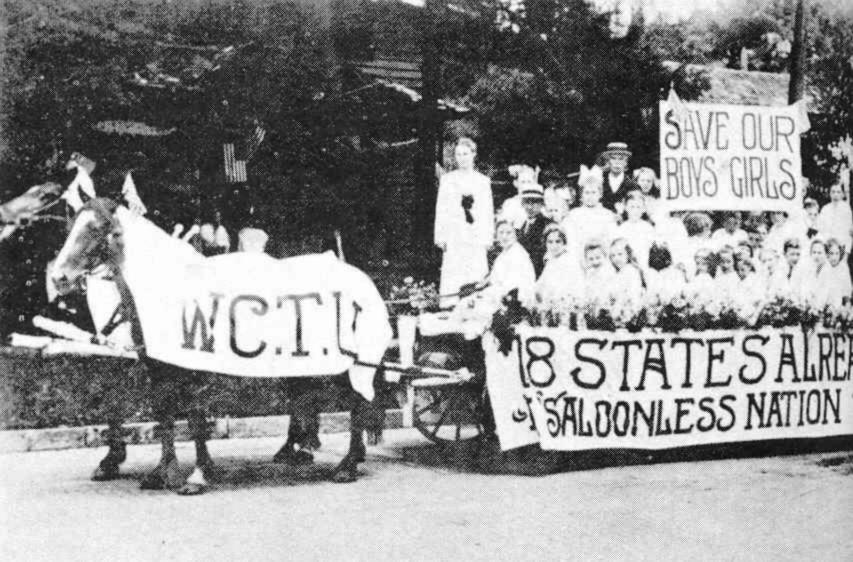
WCTU float calling for support
of Prohibition Amendment
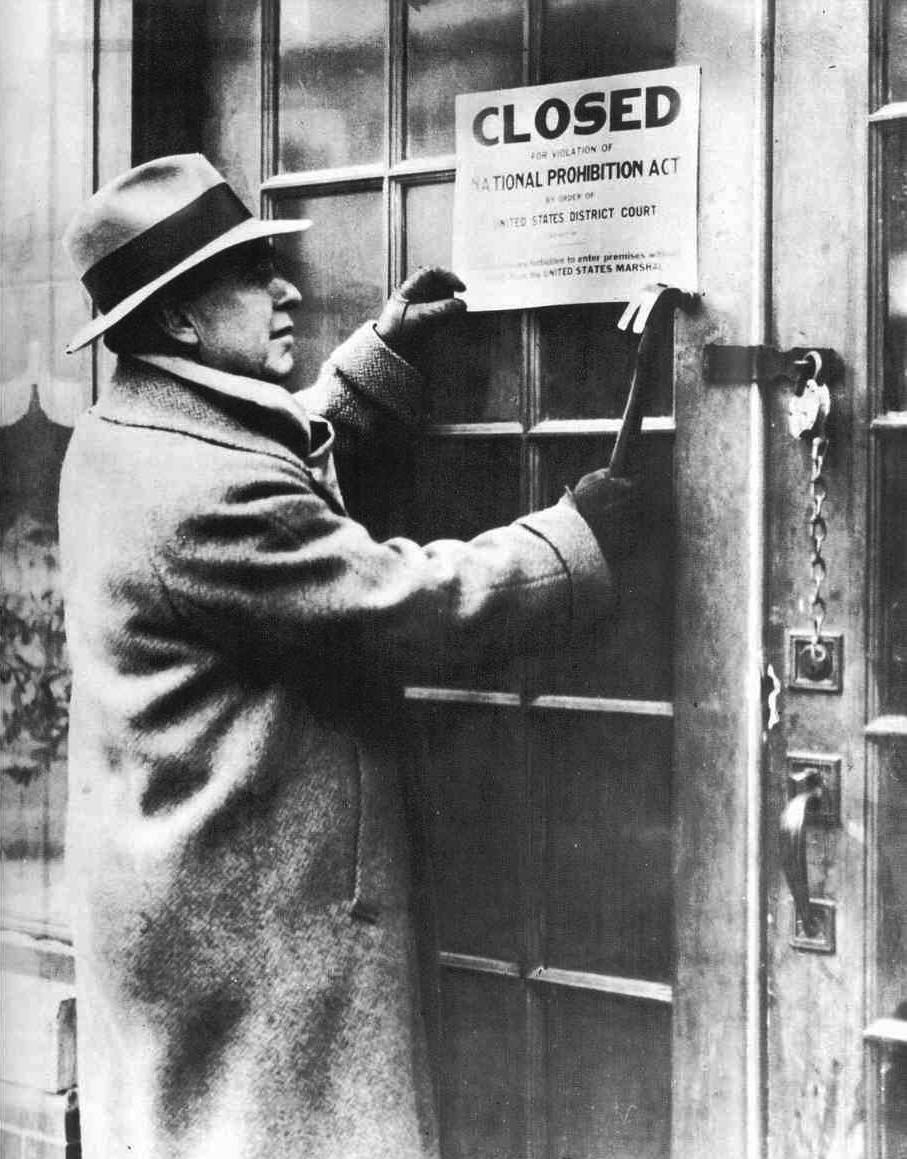
A Revenue Agent posting notice
that this bar has been closed
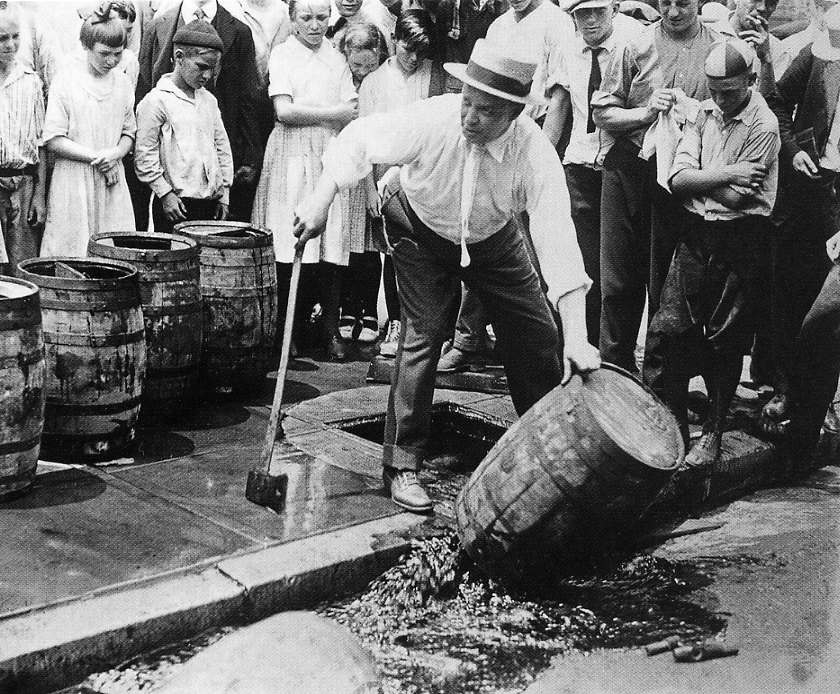
A Revenuer dumping booze
in conformity with the
18th Amendment which went into effect on
January 29, 1920
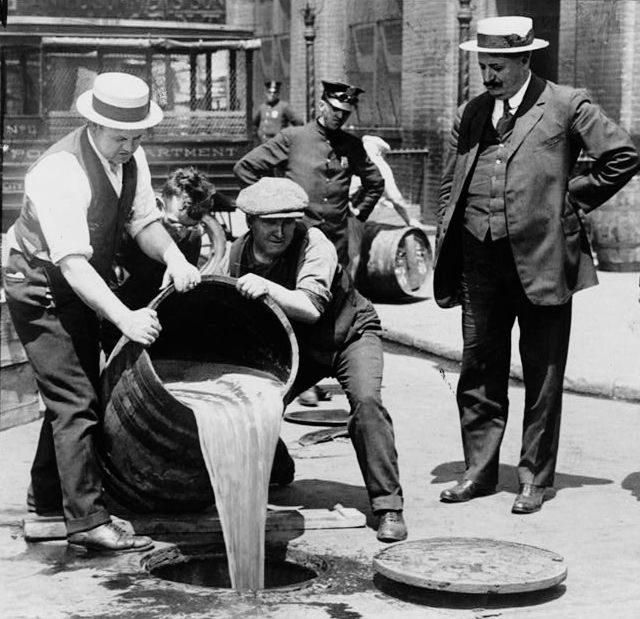
Dumping
booze
At
this point it became most un-Christian to indulge in any alcohol usage – at
least within Protestant rural and small-town America. But to urban America, not only vastly more
secular but also home to numerous immigrant groups (accustomed to having beer,
wine, vodka or other alcoholic drinks as part of their everyday diet), this
made no sense at all. Prohibition was
immediately perceived by urban America as a clamping down on its freedom by a
resentful rural America (which indeed it was).
Thus the very idea of Prohibition – prohibiting the enjoyment of a drink
or two – became the call to counter-action – usually in the form of open
defiance of the law.
Speakeasies
paid off city cops to look the other way and not raid their businesses –
encouraging massive corruption among local law enforcement agents. And the number of urban speakeasies
multiplied rapidly – to a number greater than the open bars that had existed
prior to Prohibition. And then there
were the alcohol entrepreneurs – running booze illegally but very, very
profitably – so profitably that various groups or mobs competed violently
against each other for the lucrative trade in alcohol. From the point of view of traditional
rural/small-town America, the nation was sliding down into a moral cesspool.
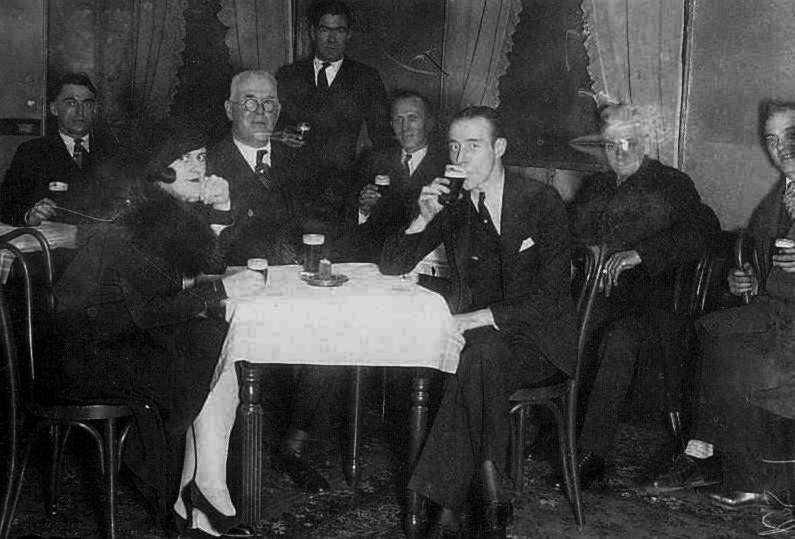
A 1920s
Speakeasy
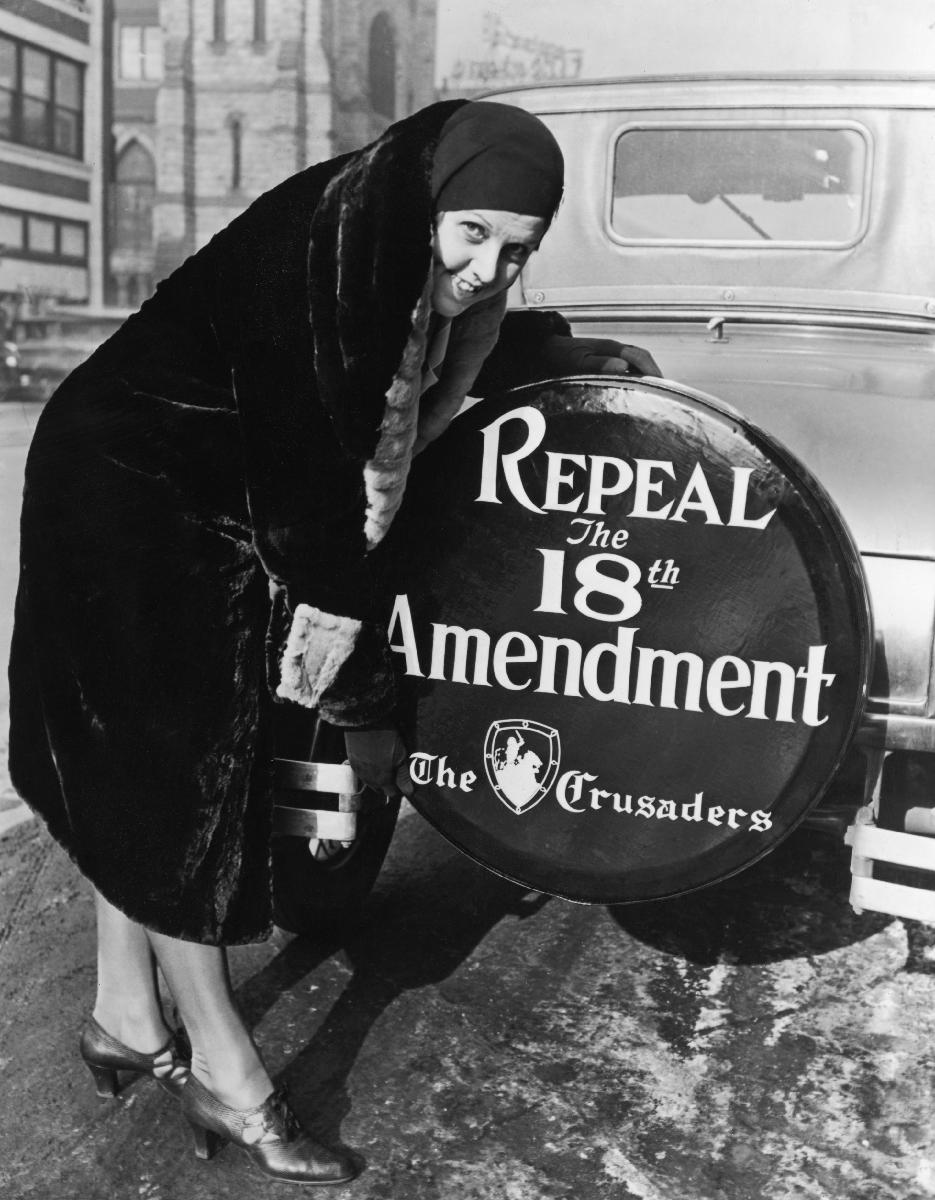
A flapper advertising her
support
of the repeal of the 18th Amendment
Library of
Congress
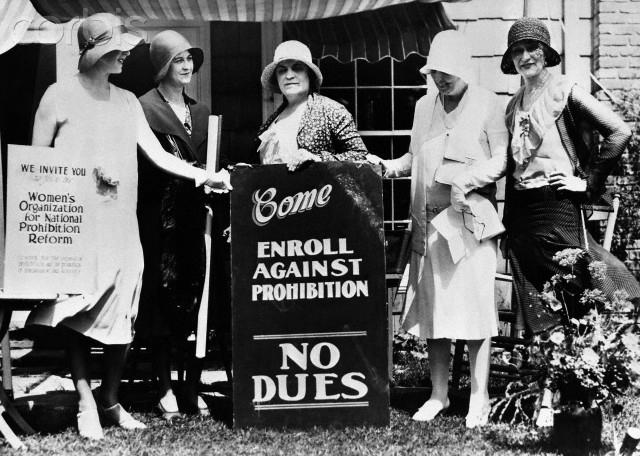
Prohibition "reformers"
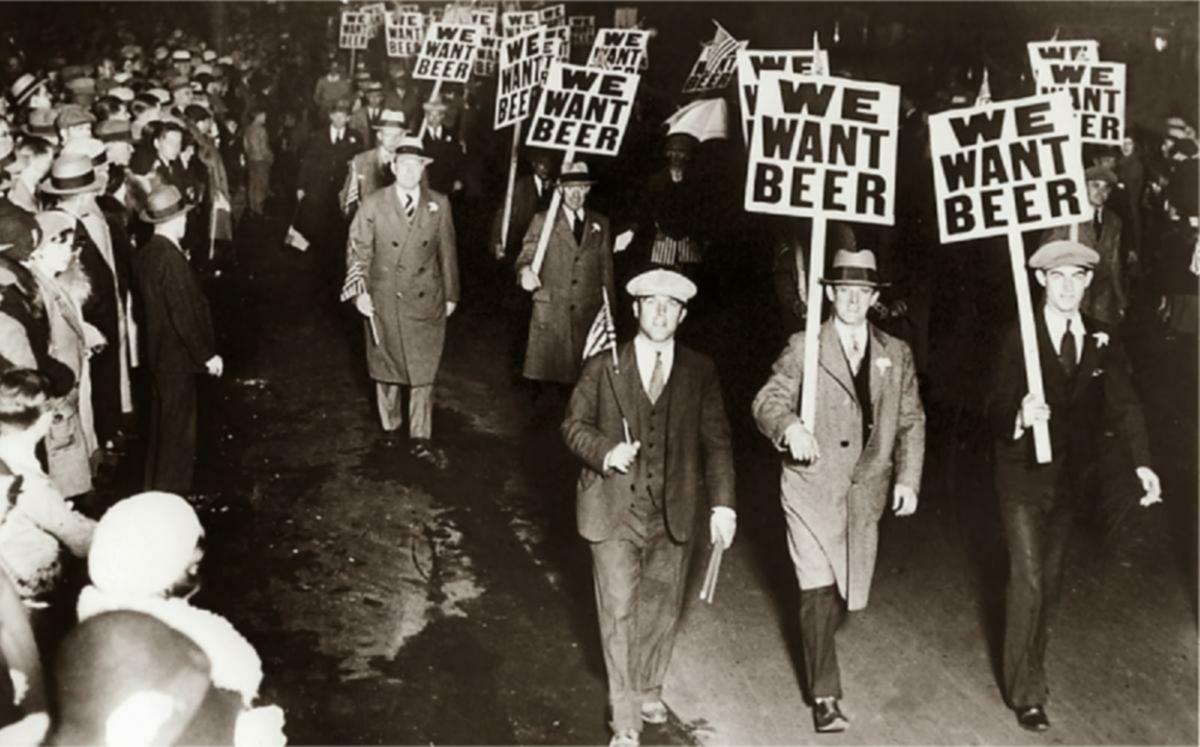
Men marching for
Repeal
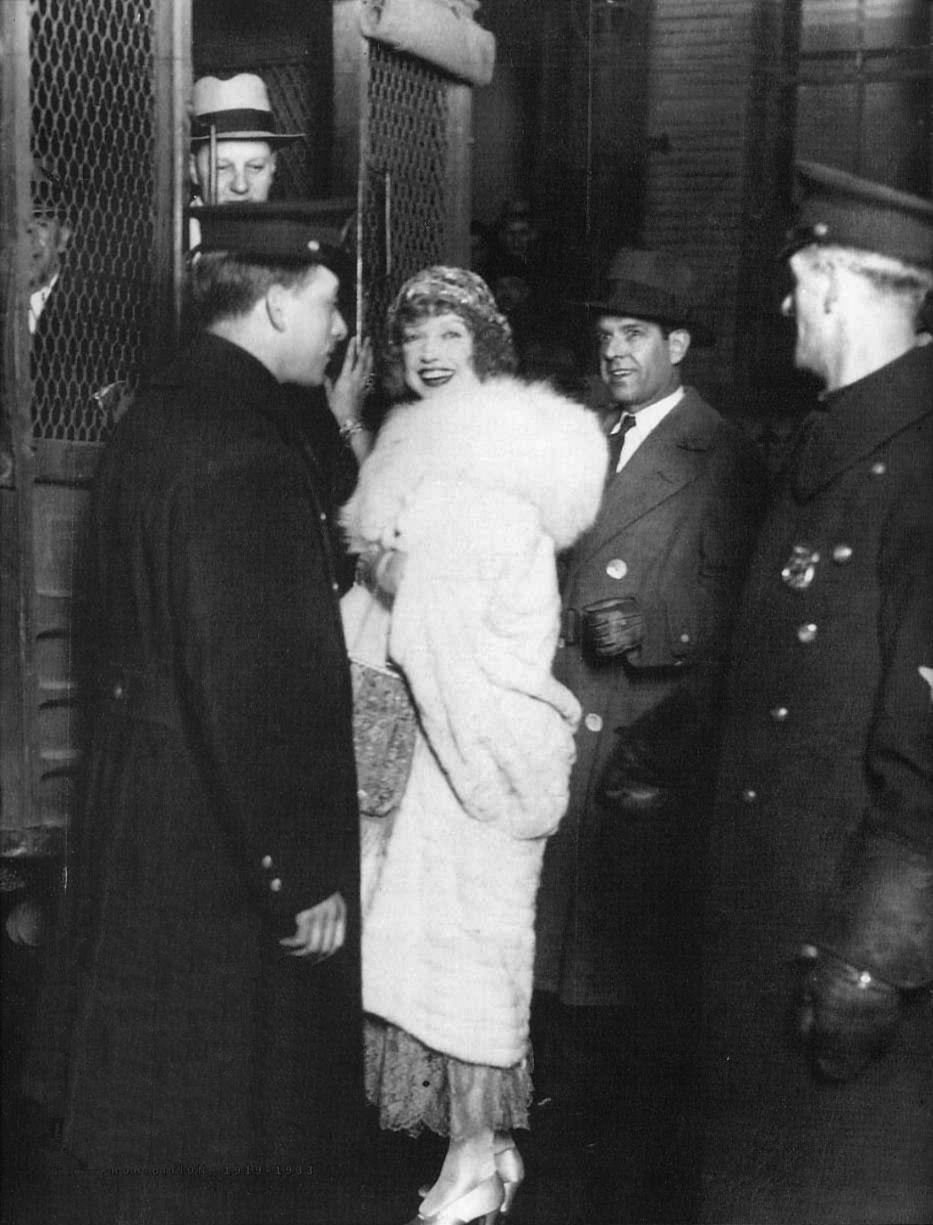
New York speakeasy hostess
Texas Guinan being escorted
into a Paddy Wagon. The arrest was a charade – because
her
connections with the Democratic boss James Hines would
always bring about her immediate
release
at police headquarters.
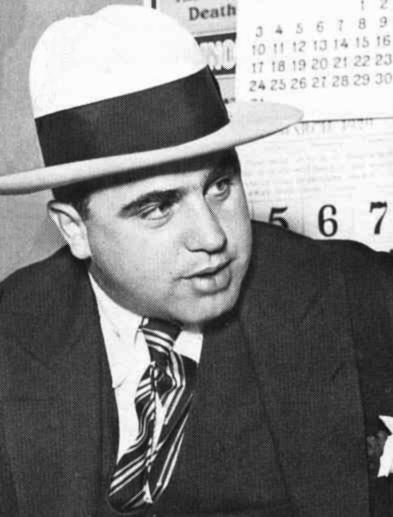
"Scarface" Al
Capone – The well-known Chicago gangster
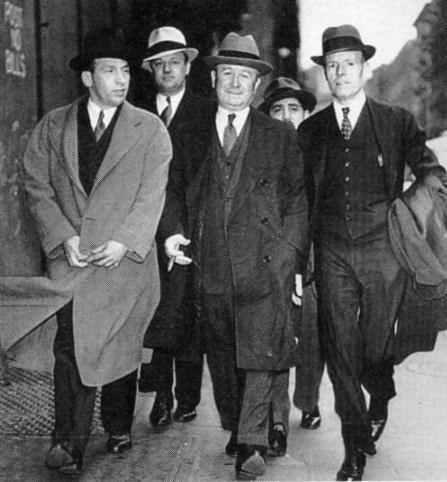
Johnny Torrio, Capone's mentor
in Chicago gang action -
who subsequently retired
and turned his operations over
to Capone. He has just posted bail
on federal charges
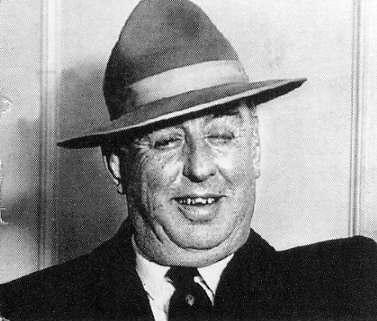
Chicago three-time Mayor
Bill Thompson – who was an ally of Al Capone's
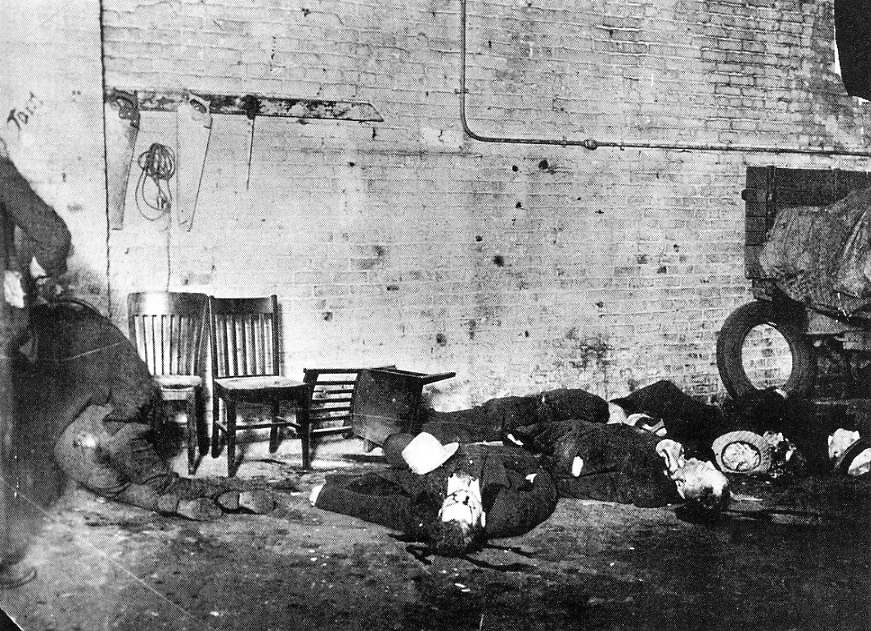
St. Valentine's Day massacre
ordered by Al Capone
of gangsters of the rival
Bugs Moran gang in Chicago –
February 14, 1929
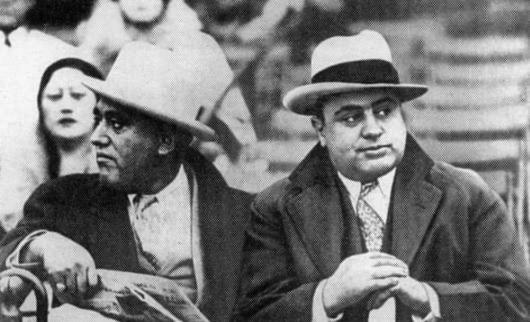
Al Capone at a baseball game
with former Chicago Alderman
A.J. Prinano – 1931
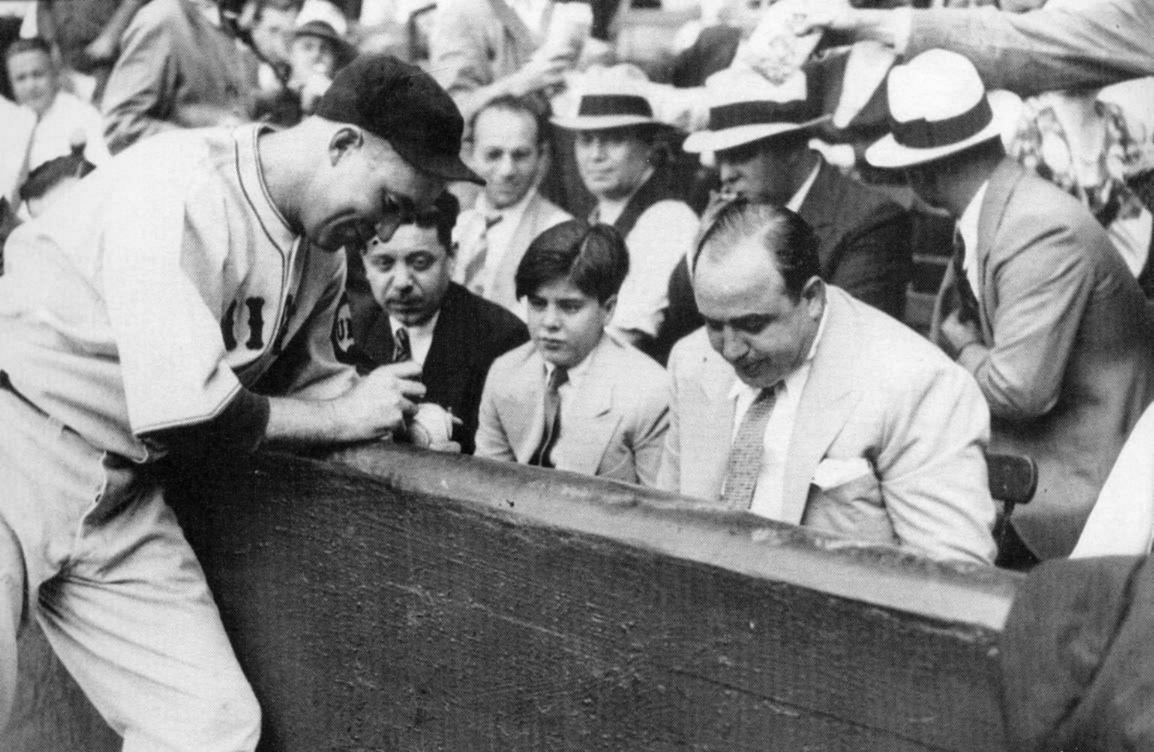
Al Capone and a baseball
signing – 1931
The "Lost Generation." Off on another front, for those who had once
held the highest hope that Western Civilization was entering the completion of
its rise to greatness, the war had come as a massive nightmare, one that they
could not shake. Despite the huge rise
in the West's material culture after the war, that was not enough to shake the
depression of those who felt so deeply about civilization and its
offerings. Notable in this regard was a
group of American writers who gathered in Paris, this greatest of Western
cultural citadels, to try to recover their cultural enthusiasm. Famous American writers such as F. Scott Fitzgerald and Ernest Hemingway gathered there to
find intellectual and cultural support.
But alas – not even Paris could offer this to wha Gertrude
Stein – who basically
presided over this expatriate group – termed the "Lost
Generation." It was very symptomatic of the times. Those
who explored deeply the psyche of
Western culture were bound to be very disappointed, cynical, even
depressed,
about what the recent war had done to Western civilization.
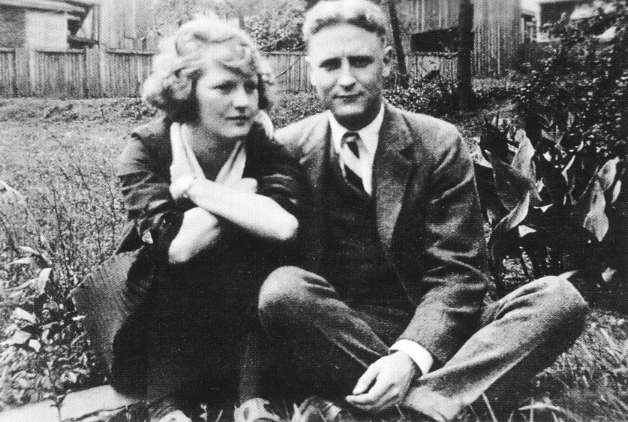
F. Scott and Zelda Fitzgerald – models of Jazz Age flapperdom
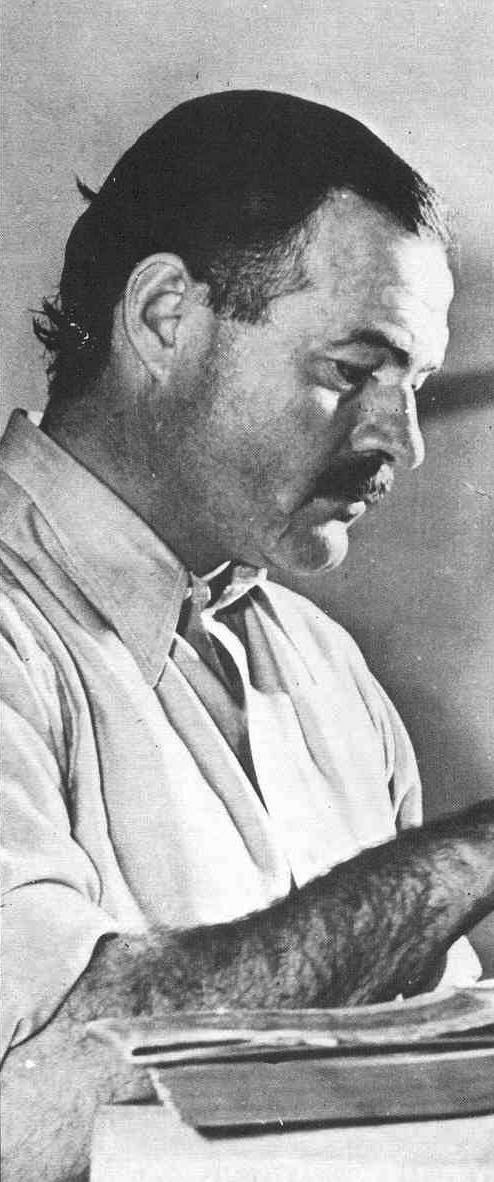
Ernest
Hemmingway

Gertrude Stein
| THE "SCOPES MONKEY TRIAL" (1925) |
Then there was another matter tearing at 1920s America: a trial going on in Dayton, Tennessee,
contesting a Tennessee law that made it illegal to teach Darwinism. The trial was itself a clever scheme of some
of the townsfolk to bring an issue to the town that would put it on the
map.
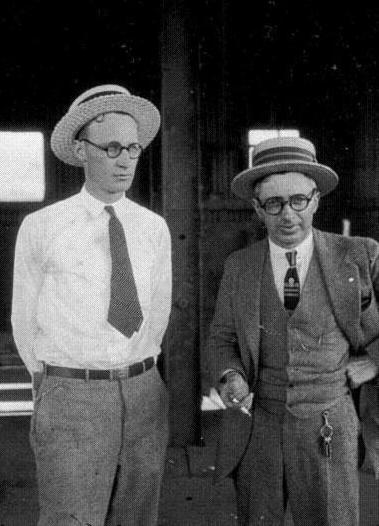
John Thomas Scopes (left) and George
Washington
Rappleyea (right), Dayton, Tennessee, June 1925.
Scopes had purposely violated the law by introducing
Darwinism in his classes
Smithsonian Institution
Archives
And indeed it did, as the "Progressivist" American Civil
Liberties Union (ACLU) jumped into the action and
brought in famous New York lawyer Clarence Darrow to challenge the
law.
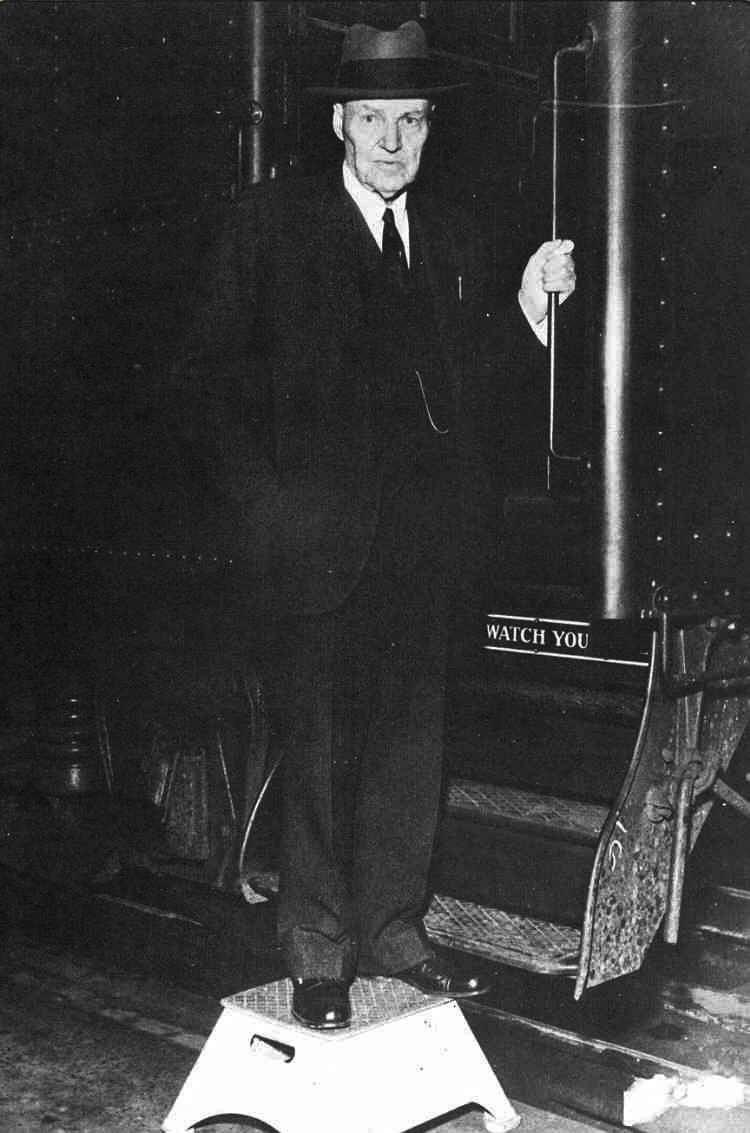
Clarence Darrow arrives in
Dayton, Tennessee – 1925
Certainly
there seemed to be something un-American about civil authorities dictating what
the people of their state were to believe or not believe. But as it would turn out, this was more than
just a matter of protecting the civil liberties of the Tennesseans. This was the point at which "civil
liberties" ACLU-style meant rolling back
Christian culture in order to make the way for Secular-Humanism to replace that culture as
the nation's fundamental worldview or religion. It was the 1920s, after all, and time for
the ACLU to "progress" America
to a more "scientific" understanding of how life works.
Thus,
like Prohibition, this would end up being just another hot-button issue
separating traditional or "conservative" (Christian) rural/small-town
America from "progressive" (Secular) urban America.
As
the trial unfolded, the matter at hand became clearly one of deciding the
question as to whether nature was a result of the hand of God in its creation
and ongoing life – or whether nature operated simply mechanically according to
scientific laws that required no divine hand to make them fully operative. Was God at the heart of all life – or was he
just something that unscientific or superstitious people made up to help them
cope emotionally with life's challenges?
Of
course both sides had already made up their minds on this matter. That's why the law was enacted in the first
place, supposedly to protect the traditional Christian worldview. But the opposition arrived on the scene with
their own understanding of things well in place, helped immensely by the
writings of the very popular Austrian psychiatrist Freud. Freud had already made it clear to many "hip"
urban Americans that religion was merely a neurosis or deep urge to fantasize
that people resorted to in the face of difficult circumstances.
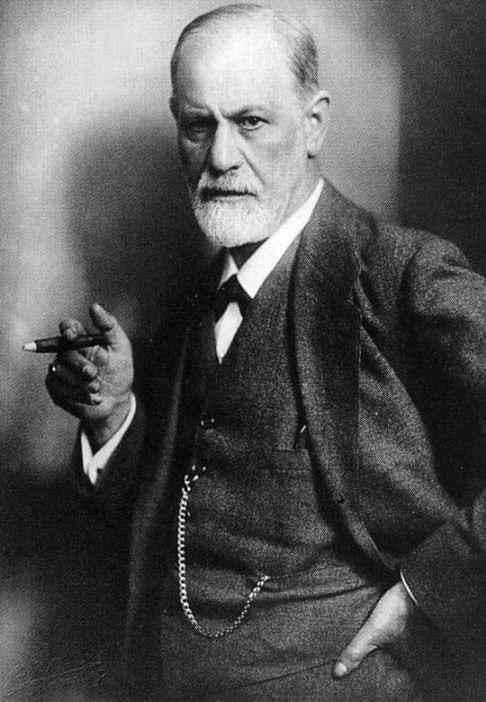
Austrian psychiatrist Dr.
Sigmund Freud
(1856-1939)
Thus
it was that America watched very closely the debate going on between the old
Christian warrior William Jennings Bryan defending Christian
traditionalism and his adversary Clarence Darrow doing the same on behalf of
Secular Progressivism during that hot Tennessee summer of 1925.
As with most matters of human reason or logic, America's
judgment as to which side ultimately won that debate depended on which
worldview the observer came to the contest with in the first place. Ultimately the trial solved nothing – but
certainly clarified the depth to which America was finding itself divided on
the most basic questions of life and its origins – and purpose.
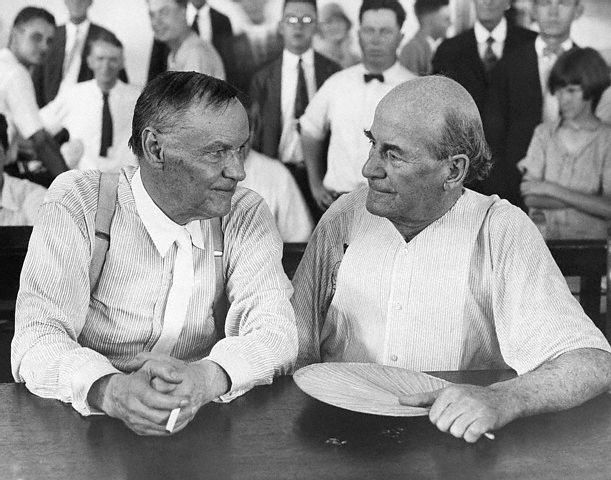
Clarence Darrow and William
Jennings Bryan in Dayton,
Tennessee – 1925
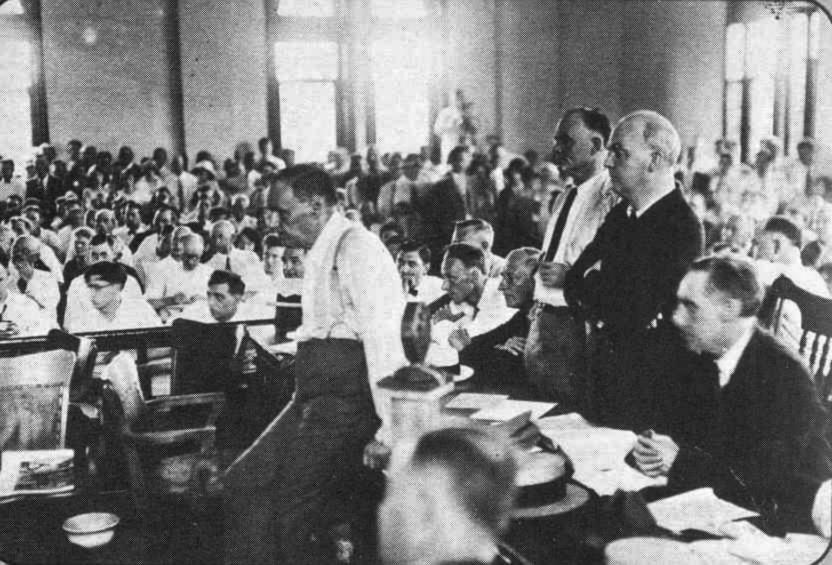
Clarence Darrow in the Dayton
courthouse – 1925
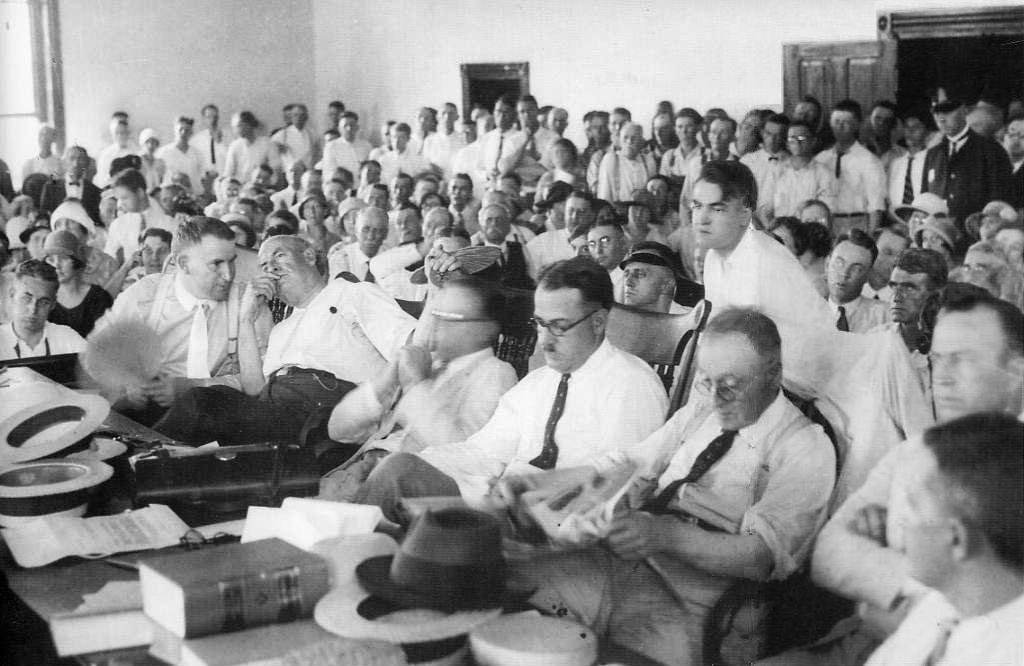
Bryan conferring during the
trial
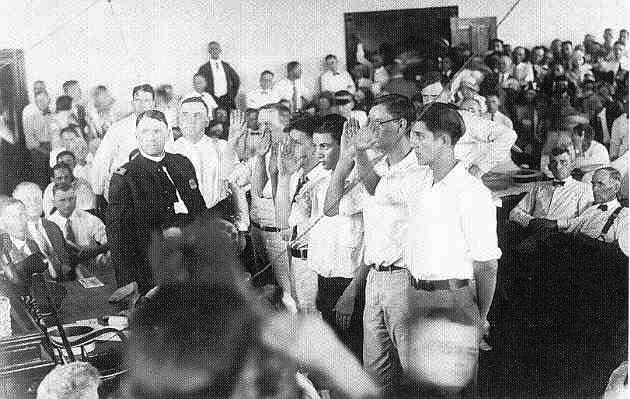
Students being sworn in as
witnesses at the trial
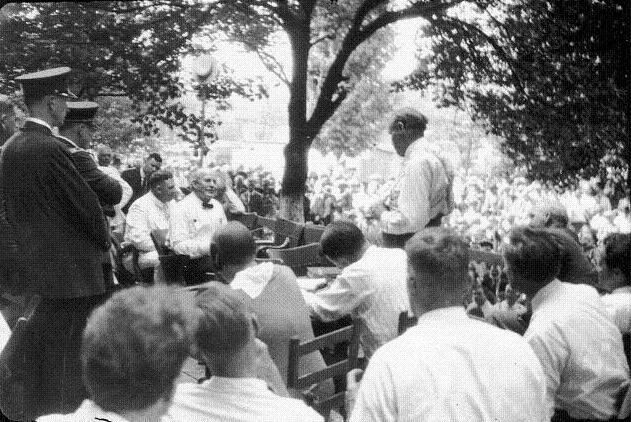
William Jennings Bryan under
examination by Clarence Darrow
(they moved the trial outside because of the stifling heat
in the courtroom)
Smithsonian Institution
Archives
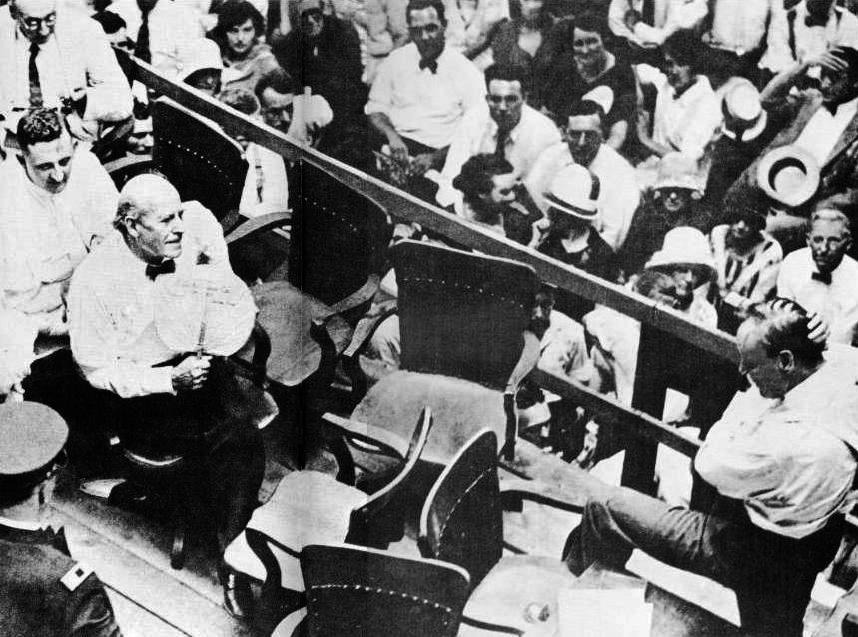
William Jennings Bryan under
examination by Clarence Darrow
(Five days after the trial was over,
Bryan died of a heart attack)
| CORRUPTION IN HIGH PLACES |
Of course, all this 1920s "attitude" would find its way
into the nation's politics as well.
America's traditionally Christian moral fundamentals found themselves
under deep challenge in that very realm.
Consummate
nice guy Warren G. Harding, former Ohio Governor and
Republican candidate, was elected President in 1920 by the largest majority on
record – and brought to his cabinet a number of old Ohio buddies.
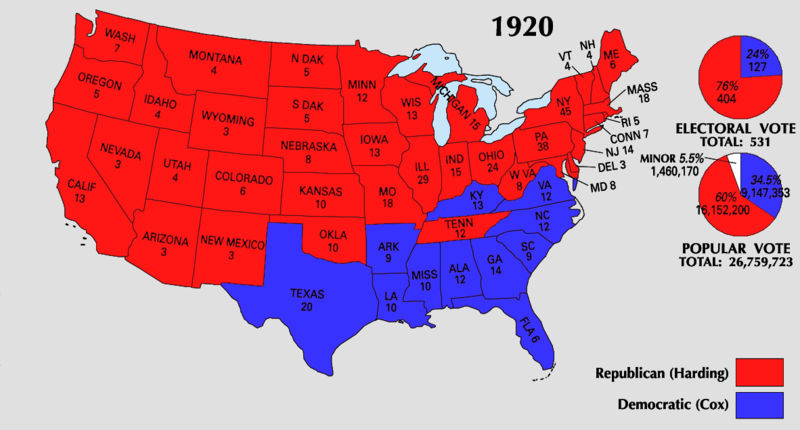

Warren G. Harding
A picnic of President Harding
and industrial notables –
at the Firestone estate, 1921 (along the back side of
the table:
Firestone, Edison, Harding and Ford)
Warren and Frances
Harding
He was hoping that his advisors would help
him manage the federal budget and continue to advance social reforms in favor
of American women, immigrants and Blacks.
But when it came to the personal behavior of many of these Ohio Gang
advisors, Harding seemed to exercise little or
no control. The results were
embarrassing to the President (it would have been even more embarrassing had he
lived a few more years to see his friends get what was due them!) In fact, Harding died as a result of a heart
attack he experienced in 1923 following a trip across the country in which he
had set out to give answer to the growing rumors about the corruption of his
presidential team.
The coffin of President Harding
in the East Room of the
White House – August 1923 (he died on August 2, 1923
while on a speaking tour to try to boost support for his
scandal-ridden
administration)
The
corruption was rampant: his Secretary of the Interior sold off public lands to
private companies – at a great profit to himself personally; his Attorney
General was personally involved in this transaction – as well as others – as
was perhaps also his deputy who committed suicide (or was murdered?) just as a
Senate investigation was closing in on him (and just before Harding's ill-fated trip).
Harry M. Daugherty, "the
Fixer" – Harding's Attorney General
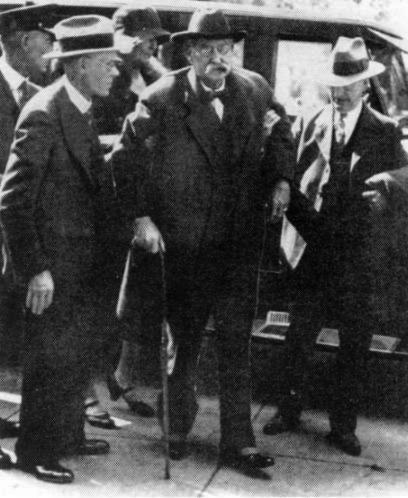
Albert Fall – Harding's Secretary
of the Interior –
being helped into court for his trial in 1929.
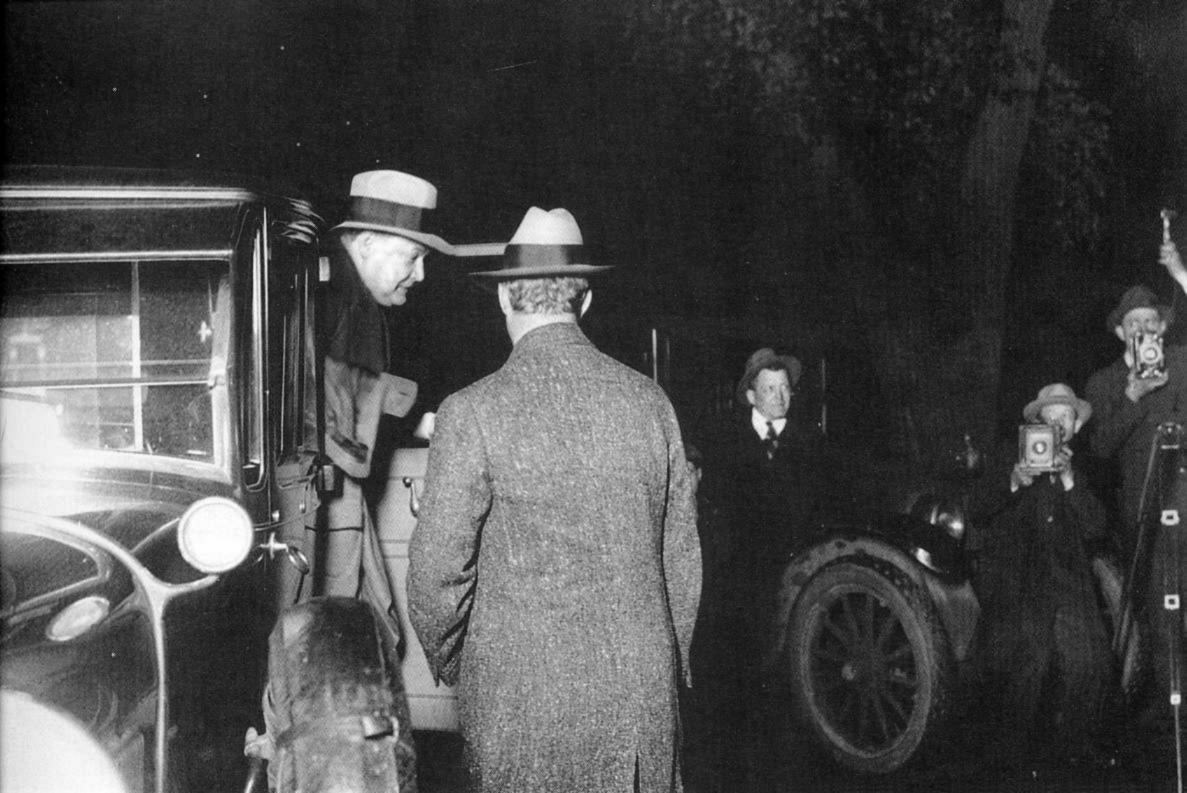
Harry F.
Sinclair arrives
in Washington. D.C. to begin his jail
sentence. With help from
Daugherty, he had leased the
Federal Teapot Dome Reserve for $304,000
from Fall..
| CALVIN COOLIDGE (1923-1929) |
Upon Harding's death in 1923 his Vice
President Calvin Coolidge was automatically
elevated to the U.S. presidency.
However, to almost the same extreme that Harding was the picture of loose
personal standards, Coolidge was the opposite: the picture of authentic Puritan morality – authentic because
his family could trace its roots all the way back to the founding of Puritan New England in 1630!

Calvin Coolidge
As
president, his attitude conformed nicely to the old adage: "the government that governs least
governs best." Although he gave
personal public support to the quest of Blacks and Indians for improved civil
rights, when it came to government programs and spending, he was strongly
opposed. He worked to cut back federal
spending, balance the budget, and leave the nation's economics to American
business, which was doing quite well at the time. Thus in 1924 he was returned to the White
House with 54% of the popular vote, despite there being a third party in the
race (Progressive Party candidate La Follette).
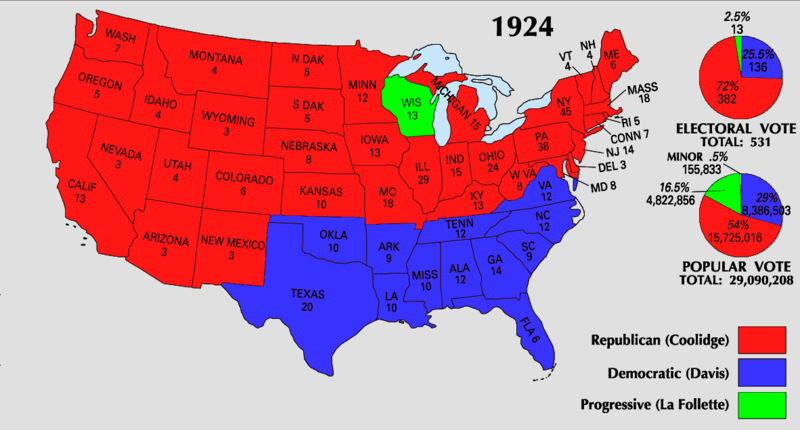
He
finished out his four years in office in 1929 with no major programs of note
(he believed that those matters belonged to the states, not the federal
government) and no scandals. As there
were no major foreign policy issues burning at the time, American foreign
policy during his presidency was also quite low key. But that was the way Americans wanted
things. They had other things personally
to focus on – like getting rich fast.

Go on to the next section:
 Miles
H. Hodges

 The postwar "Red Scare"
 Rural vs. urban life in postwar America
 The "Scopes Monkey Trial" (1925)
 Corruption in high places
 Calvin Coolidge (1923-1929)