<


15. INTO THE AGE OF TRUMP

TRUMP ... AND AMERICA


CONTENTS

Special Counsel Mueller investigates the "Russian connection"

Trump's Federal Court appointments

The 2018 Congressional elections

Impeachment, round two

Coronavirus

"Black Lives Matter"

Antifa takes charge

The Supreme Court expands the legal support of LGBTQ dynamics


The textual material on this webpage is drawn directly from my work
        America's Story – A Spiritual Journey © 2021, pages 463-470.


SPECIAL COUNSEL MUELLER INVESTIGATES THE "RUSSIAN CONNECTION"

Once in office as President, by May of 2017 the Steele-inspired rumors of "Trump collusion with the Russians" had mounted so high – thanks to the scandal-hungry media and his dedicated opponents on Capitol Hill – that Congress called for the creation of a special counsel to look into these rumors.  Soon former FBI director Robert Mueller was assigned the task, given wide authority to find out whatever he could on the matter.

Leaders in the effort to impeach Trump 
(started even before Trump's inauguration):


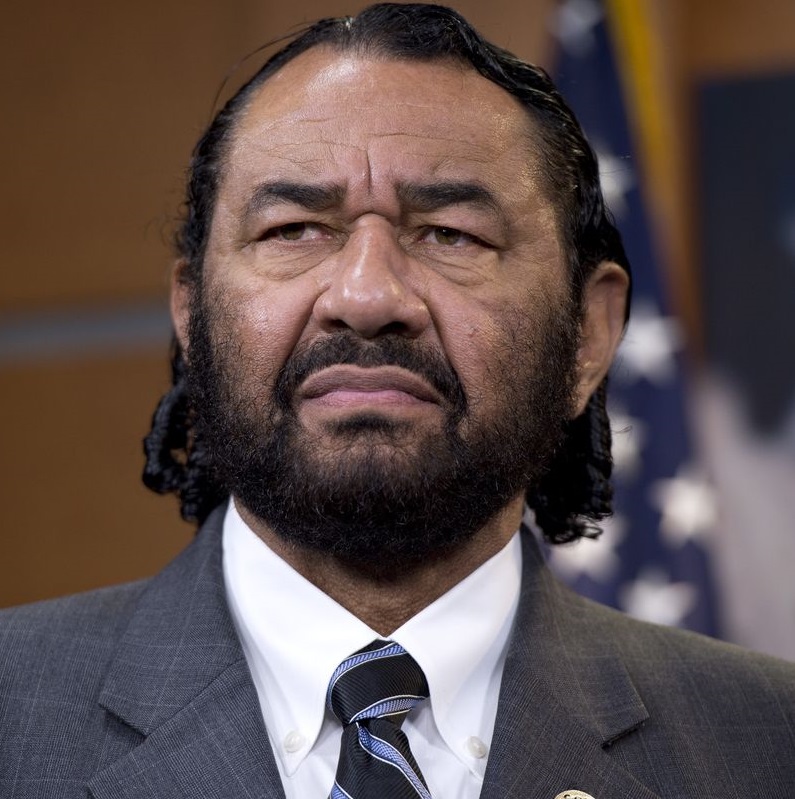
Rep. Al Green (Democrat – Texas)


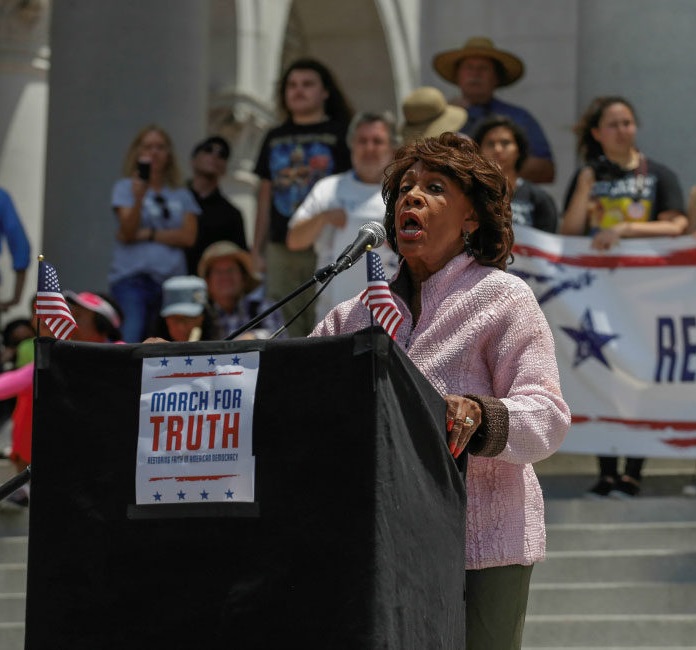
Rep. Maxine Waters (D-California)


In the Senate, leading the effort to find something on Trump
to bring him
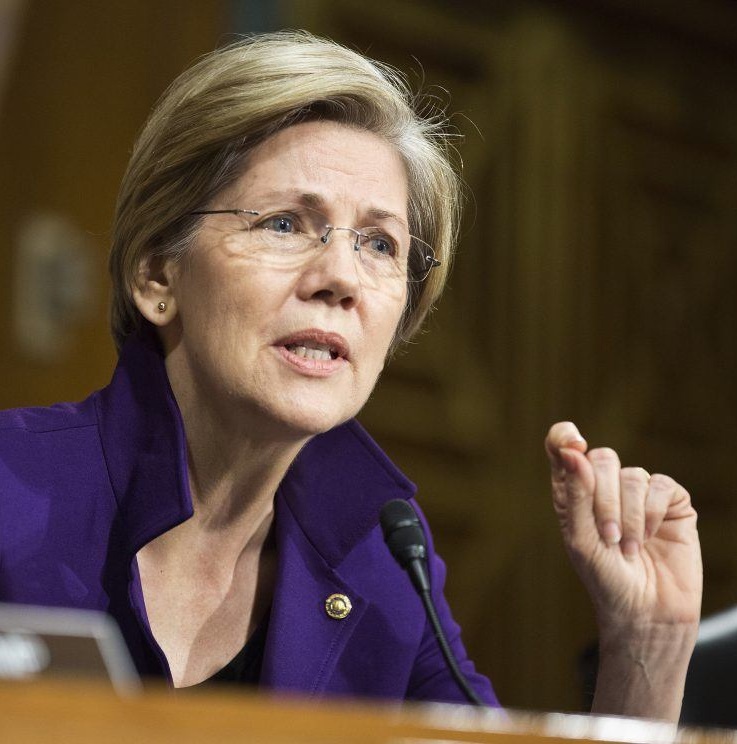
to impeachment is Elizabeth Warren
(D-Massachusetts).


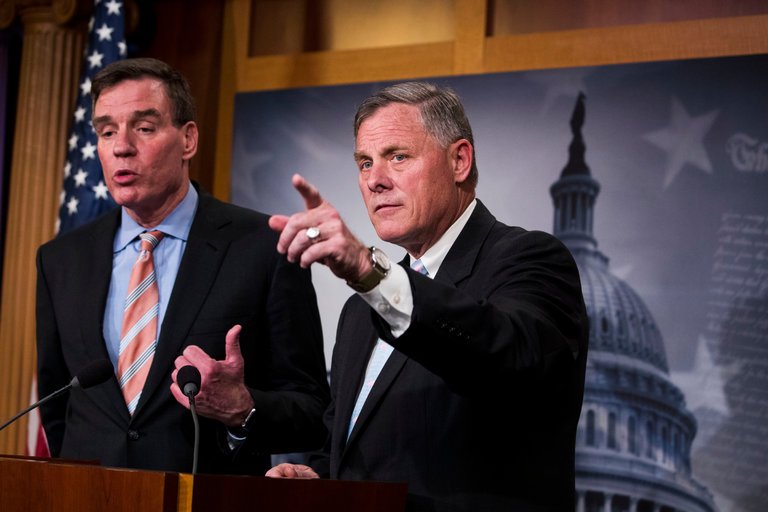
March 2017 - Senators Richard Burr (Republican-North
Carolina) and Mark Warner (Democrat-Virginia) head the
Senate Intelligence Committee looking into the issue
of Russian meddling in the 2016 election.


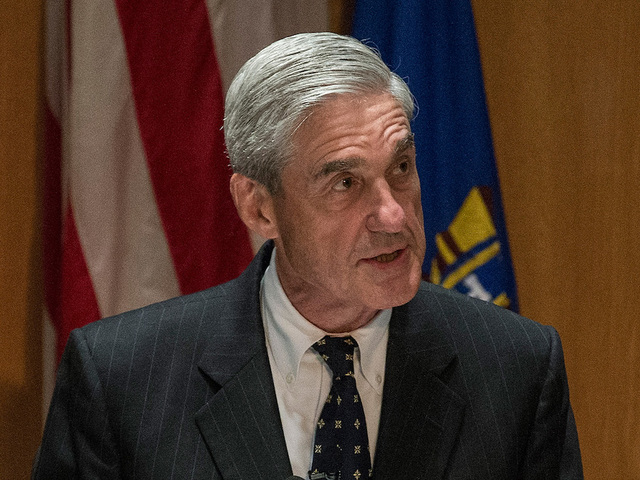
On May 17th (2017) Robert Mueller, longtime FBI Director 
(2001-2013) was appointed as a Special Investigator to 
look into this matter of the Russian involvement in the 
2016 election.


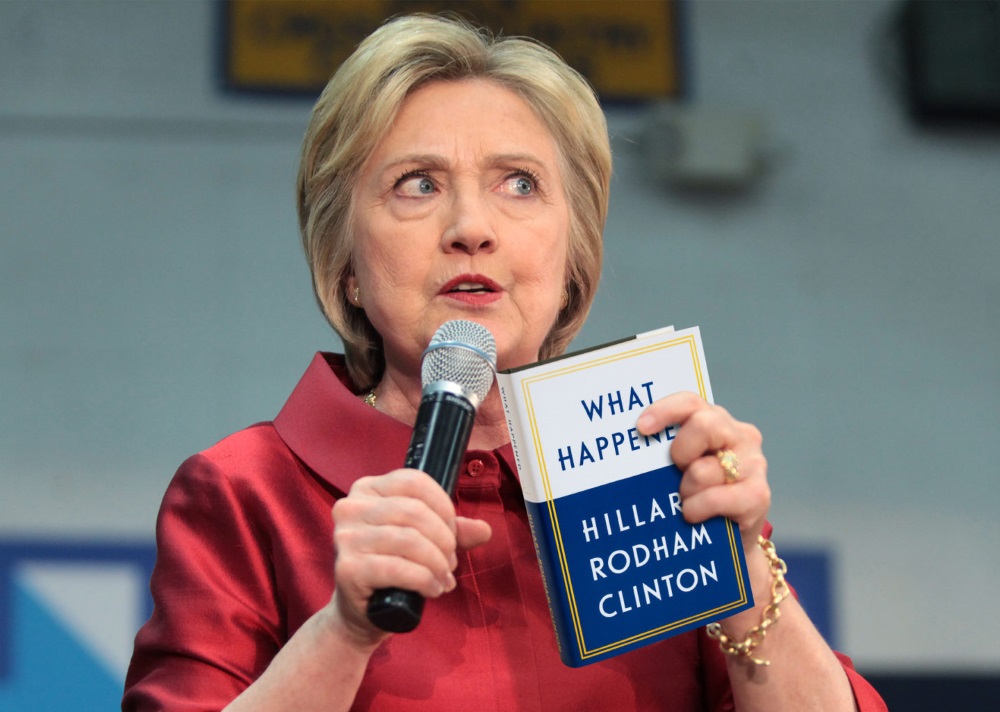
July 2017 – Hillary Clinton came out with her new book, What
Happened
, explaining all the things that acted against
her to cause her to lose the Presidential election.  The
"Russian connection" plays big in the narrative.


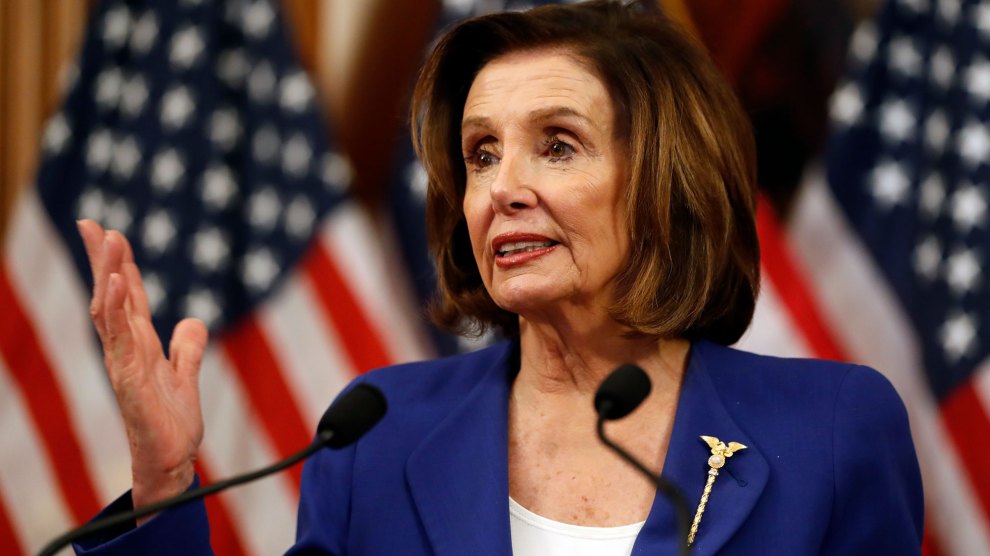
With the Democratic Party Nancy Pelosi back in command in
the House after the 2018
elections, the world waited to see
how  she was likely to proceed with the Democrats'
"impeach
Trump any way you can" mood.

Then for the next two years, the world had to wait while Mueller's investigation was conducted behind closed doors.  This, however, did not keep the news media from speculating wildly about what certainly Mueller must be finding out about the criminal president.  But weren't they horrified when finally in March of 2019 – after much federal expense in time and money – Mueller came up with the conclusion that though he did not approve of some of the things Trump did, he could find no basis for criminal charges to be brought against the president.

That was not what so many on Capitol Hill and the national press wanted to hear.  Impeachment therefore would have to go down a different road than the much hoped-for Russian connection.  They were not going to give up on this all-important crusade against the evil president.


TRUMP'S FEDERAL COURT APPOINTMENTS

In the last year of Obama's presidency, Conservative Supreme Court Antonin Scalia died.  Obama naturally sought to fill that appointment, but obviously not with a similarly Conservative individual.  He proposed a "centrist" Merrick Garland, which simply would have cut further the Conservative voices countering the small but very Liberal Supreme Court majority.  The Republican-dominated Senate let Obama know that they would hold up any replacement appointment until a new president was installed as a result of the elections coming up that fall.  Thus no action was taken on the Obama appointment.

Then with 
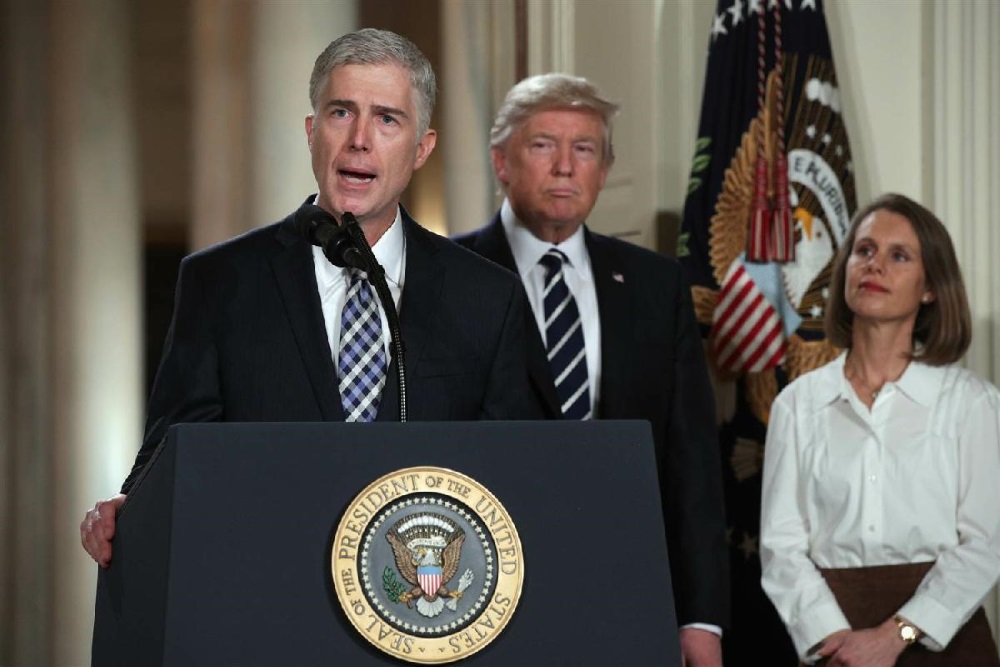
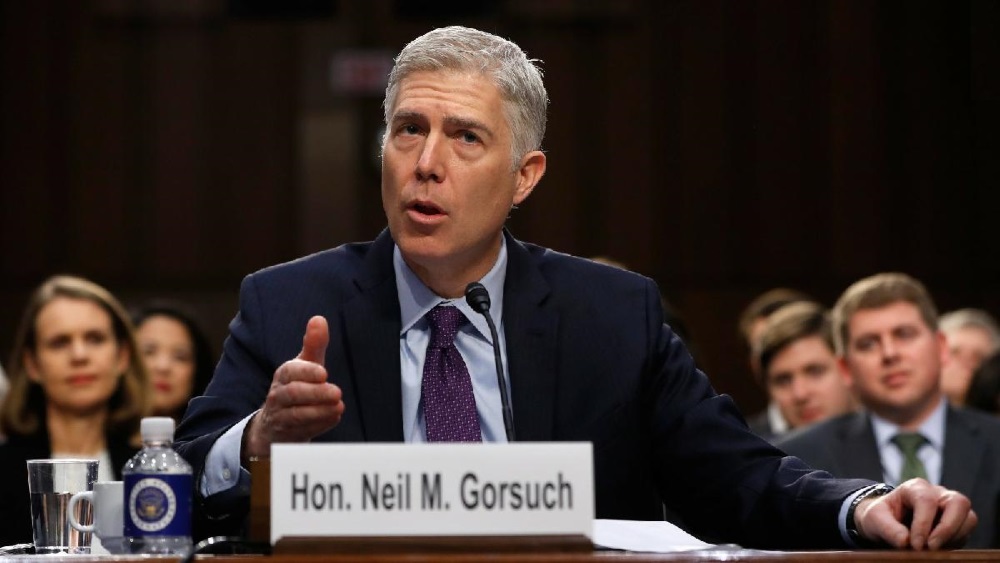
Trump taking office, not surprisingly he appointed Neil Gorsuch, a judicial Conservative or judicial "originalist," one that insists on a very limited role for federal judges in how federal law is applied.  The appointment was ultimately approved in the Senate, 54-45, not surprisingly along purely Republican-Democratic Party lines.  Okay, a conservative to replace a conservative


Neil Gorsuch speaking publically just after the announcement
(February)
of his nomination to the U.S. Supreme Court


Gorsuch undergoing Senate scrutiny prior to confirmation

But then the next year, "centrist" Anthony Kennedy (originally a conservative, who like so many, over the years had moved to the Left to become more "activist" in his judicial philosophy) announced that he would be retiring in July (2018).

When it became apparent that 
Trump was going to nominate another Conservative or "originalist" to that spot, the battle was on.  The Supreme Court was, after all, the supreme legislative body in the land.  And the idea that it would take a more Conservative view on legal matters was totally unacceptable to the Democrats, who looked for their ideological agenda to be enacted through the Supreme Court if they could not get it enacted through Congress. That's how Congress's strongly supported Defense of Marriage Act (DOMA) was overturned during the Obama years.

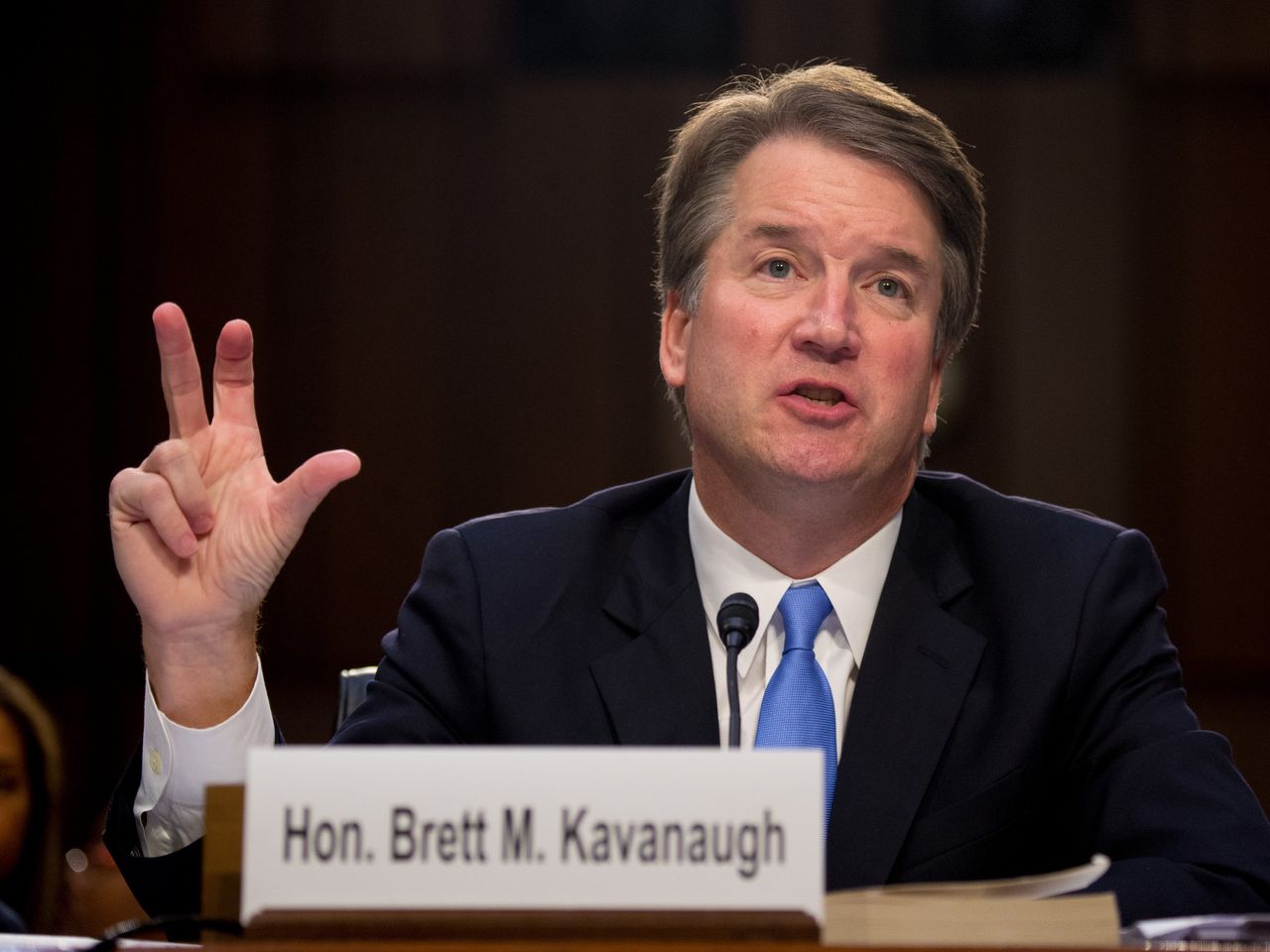
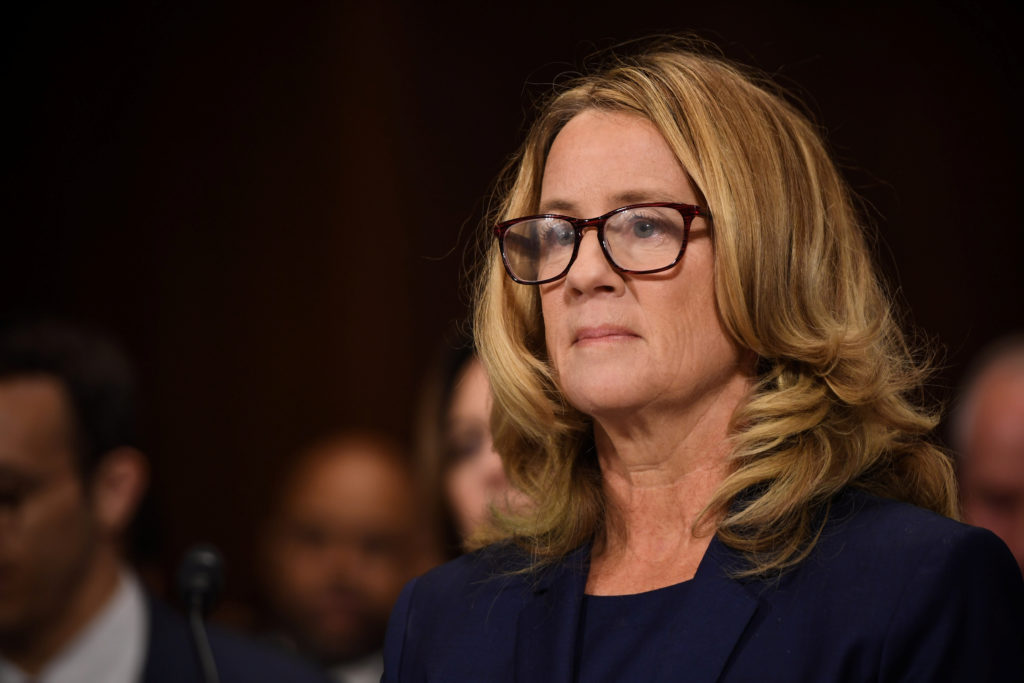
So they did what they attempted to do years earlier with the Conservative Justice Clarence Thomas, by bringing forward a female "victim," Christine Blasey Ford, who narrated an incident that happened back in her high school days (36 years earlier) when she was accosted ("feared for her personal safety") by a group of drunk teenage boys at a party.  And she was sure that one of them was Trump's new appointee, Brett Kavanaugh, although she did not know him personally at the time. 

Conservative Federal Judge Brett Kavanaugh at his Senate
hearing as a new Supreme Court appointee
September 2018

Christine Blasey Ford testifying about an incident back in the
early 1980s at a high school party

But the victim card the Democrats played did not work very well when a friend of hers who was with her at that party remembered no such event having taken place.  And Kavanaugh's friends attested to the fact the picture Ford painted was not possible of the Kavanaugh they had known in high school.  And his record since then as a judge was spotless, though, yes, conservative.  And that was the best the Democrats could offer in their attempt to destroy the character of Kavanaugh.

The news media however spun as negative a picture as possible in support of the victim narrative.  Thus the hearings dragged on, until finally in October the Senate approved his appointment 50-48.

Then there was the matter of the 
Ninth Circuit Court – always reliably Liberal – and therefore the court that the ACLU and other "progressive" groups brought their cases to with the expectation of a very favorable decision in their litigation.  But vacancies were occurring, and Trump was appointing more Conservatives, although the Democrats were doing everything possible to hold up the appointments.  But even then, the Liberals needed not to worry, as only nine of the twenty-five Circuit Court judges had been appointed by Republican presidents.  Trump had a very long way to go to get the Ninth Circuit Court out of Left field, so that he could shut down legislation through judicial decree.

Then in 2020, just a month (October) before the scheduled November elections, 
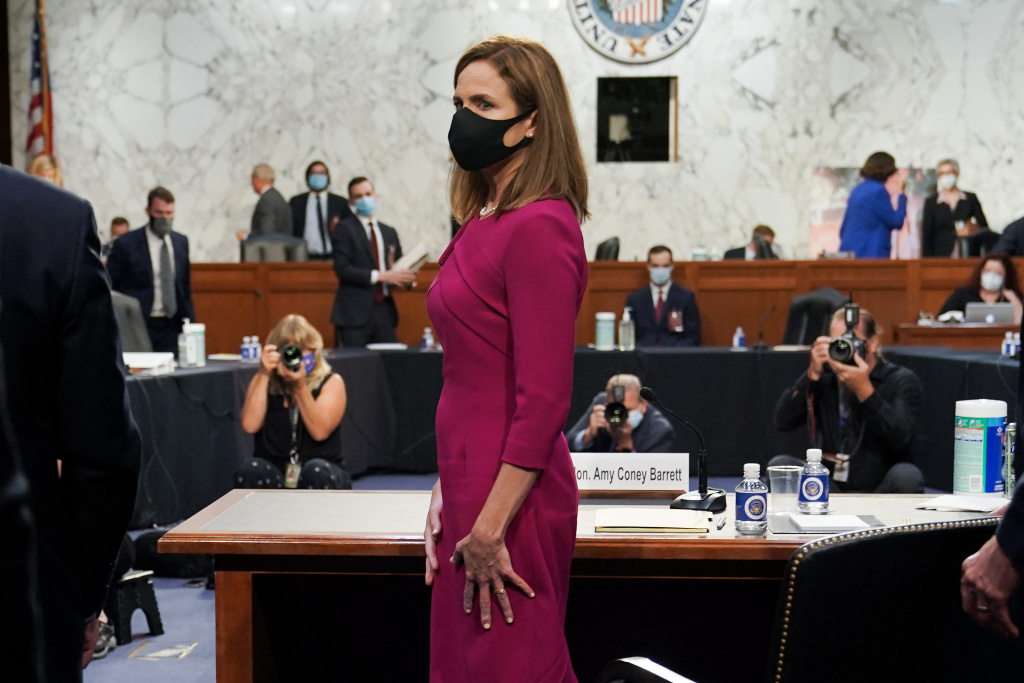
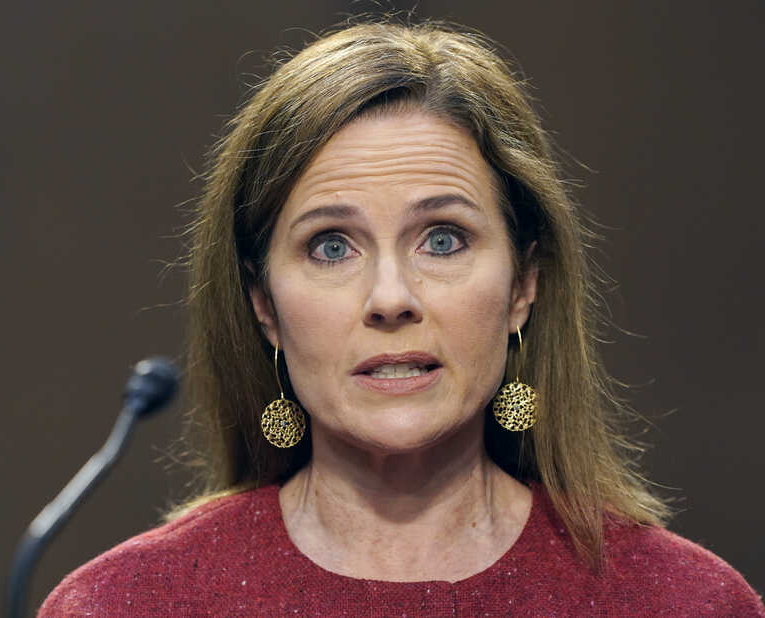
Trump was able to appoint yet a third individual to the Supreme Court, replacing Ruth Bader Ginsburg, who had died the previous month (September).   The Democrats were furious, remembering how the Republicans had stalled Obama's intended appointment in the last months of his presidency.  But the Republicans, possessing a majority in the Senate, pushed ahead with hearings on the Trump appointment of Amy Coney Barrett to the position, a judicial "originalist" or conservative (and a Catholic) – replacing a very Liberal (and JewishGinsburg. 


Barrett at hearings explaining her judicial philosophy of 
"Originalism"

Needless to say, Barrett's Christian loyalties ("dogma" it was termed by Democratic Senator Feinstein) came under considerable questioning by the Democrats (where did she stand on the matter of abortion and gay rights?).  In the process the American Bar Association (which usually is listened to in such matters) gave her its highest recommendation for "integrity, professional competence and judicial temperament."   But this did not bring on any support from the Democrats.  In any case, in the end, the Republican majority was able to confirm her appointment 52-49, with none of the Democrats in favor and even one Republican (Susan Collins of Maine) voting in the negative.

Thus her appointment probably heightened the fear considerably of the Democrats that the Supreme Court would be even less likely than ever to be the ultimate recourse to put their "progressive reforms" into place by decree.

But they had not yet had the opportunity to see what a Democratic White House (soon-to-be-President Joe Biden) would be able to achieve simply through issuing multitudes of executive orders (presidential decrees) as the law of the land.


THE 2018 CONGRESSIONAL ELECTIONS

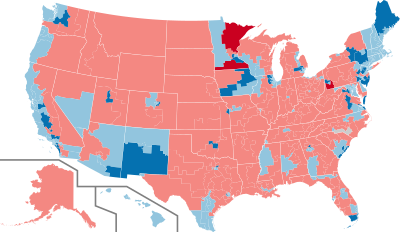
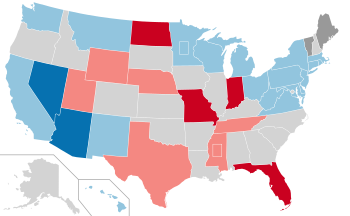
By long-standing political habit of the American voter, the midterm elections of Congressmen (all members of the House and one-third of the Senators) have typically produced a major setback for the party previously in power, especially if it is the party of the individual in the White House.  Thus the Democrats were looking forward to some major electoral victories, ones that would finally give them the leverage to do what they wanted most of all to do:  get rid of Trump.   And indeed that is how the elections for the House seats went:  the Democrats were able to regain their majority position, and all the political benefits that went with that.  But the elections for the Senate proved to be a shocker:  the Republicans actually picked up more seats, thus increasing the size of their majority in the Senate.  Congress would thus be divided deeply along party lines separating the agenda of the House (to impeach Trump) and the Senate (to move on to other things).

The House Elections


2018 House of Representatives results
(territorial delegate races not shown)

     Democratic hold      Republican hold
     Democratic gain      Republican gain

Wikipedia – "2018 United States elections

The Senate Elections

2018 Senate results
(Minnesota and Mississippi each held two Senate elections)

     Democratic hold      Republican hold
     Democratic gain      Republican gain
     Independent hold
   
Wikipedia – "2018 United States elections"

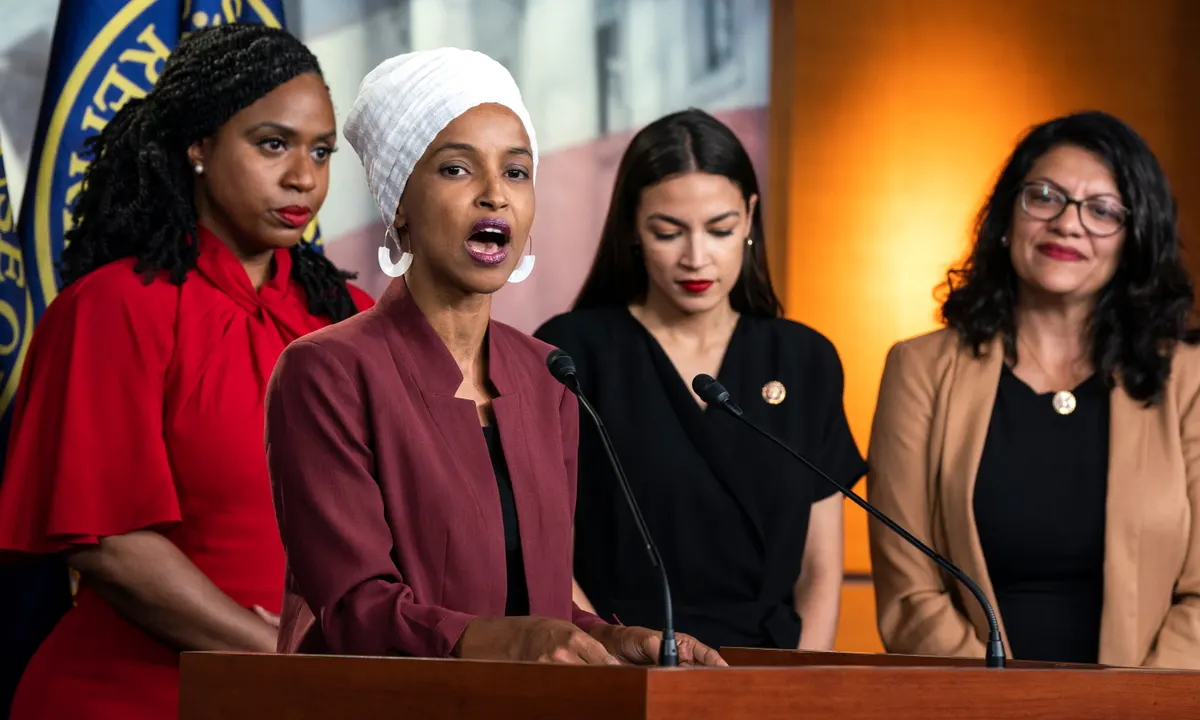
But most interesting, three new female House members – two Muslims and one Hispanic – received the political spotlight that freshmen Congressmen otherwise never get until they have accumulated some years of experience on Capitol Hill.  But not these three members of the "Squad," as they were termed by an adoring press.  They held press conferences in which their very words carried the weight of long-established Congressional leaders, even more so.  This was another indicator of how media interest – not actual political experience – had moved into position to shape the country's political narrative.  Where was that dynamic likely to take the country?

    
Speaking is Ilhan Omar.  Behind her (left to right) is Ayanna
Pressley, Alexandria Ocasio-Cortez and Rashida Tlaib

IMPEACHMENT, ROUND TWO

Now with a majority in the House, the Democrats were ready to make the long-awaited move:  impeach Trump.  They, of course, would need some kind of legal grounds to do so.  The Mueller investigation had failed to come up with anything they could go with.  So they would have to find some new Trump action they could use to justify their actions.

And Ukraine, not Russia, would seemingly offer them what they wanted so badly.  An unidentified "whistleblower" inside the Washington Establishment passed information to Democrat Adam 
Schiff's House Intelligence Committee that in a phone conversation Trump had on July 25th (2019) with Ukrainian President Volodymyr Zelensky, Trump had requested help in getting information concerning corruption rampant in the Ukrainian business world, indicating they he would not release American assistance funds (which would typically end up in the pockets of Ukrainian officials) until this matter was cleared up.

The "issue" in all this was that the Ukrainian gas company Burisma Holdings, one of the most corrupt of the organizations, had Hunter 
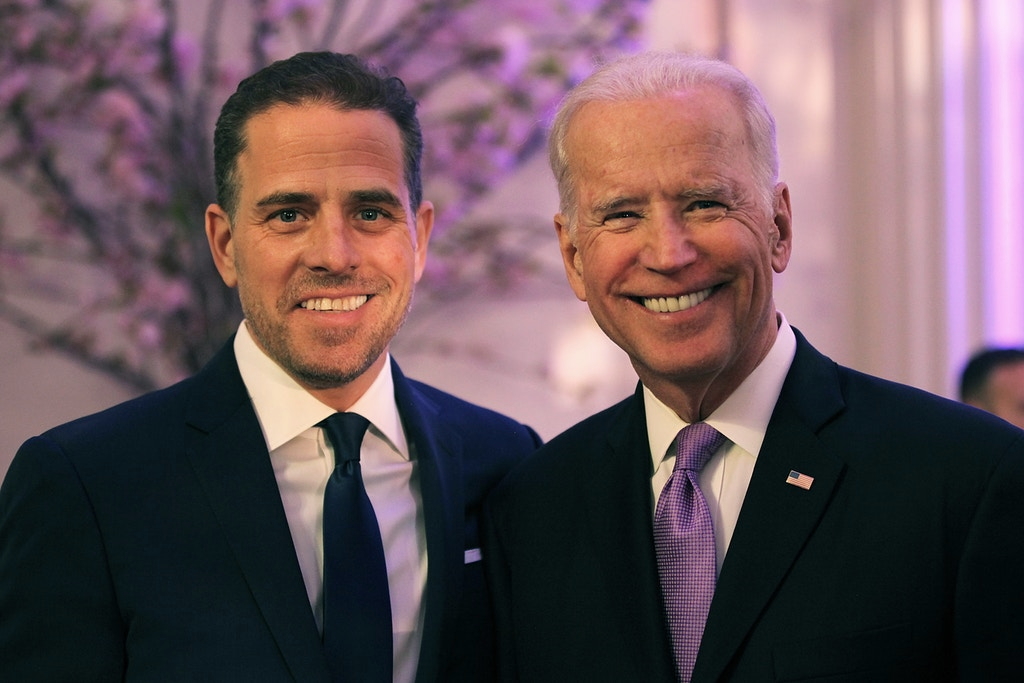
Biden, Joe Biden's son, serving on the company's board of directors, for which he received a monthly salary of $50,000.  Bringing Hunter Biden into the matter was what the Democrats were hoping to get Trump on, because they could claim that Trump was violating the federal law making it illegal to involve foreign influence in the conduct of American electoral campaigns.  And as Joe Biden (former Vice President during the Obama years) was running as a strong Democratic Party presidential candidate, Trump's request (which Trump did not deny that he in fact had made to the Ukrainian president) was an illegal effort to involve Ukrainian influence in the elections. 


Former Vice President Joe Biden and his son Hunter

But Trump countered that looking into corruption in Ukraine before he released funding was an important responsibility he had as president, especially as Americans themselves were involved.  It was unfortunate that the person involved was the son of Joe Biden.  But Trump had a job to do.

So at this point, whether a 
Trump crime had been committed – or not – involved simply the matter of which ideological version of the event you wanted to go with.

Trump was in no mood to be dragged before Congress to be interrogated by a hostile
Schiff and his Democrats – and simply refused to appear on Capitol Hill.  So now the issue for the committee became one of Trump's "obstruction of Congress" and "abuse of power."  So those two very vague procedural matters were what the Democrat-controlled House finally decided to impeach Trump over.  The Ukrainian issue was dropped because it had become increasingly clear that pushing on that issue was not going to work well for the Democrats, and in fact might actually do some considerable damage to Biden if there was too much digging into the details of the event.  So that part got dropped.

Thus on December 18th (2019) the House passed impeachment charges against 
Trump, almost completely along party lines, again, making the matter one of pure politics rather than the law.  But then on February 5 (2020) it was dismissed by the Senate. There was no way that any Democrat-dominated House impeachment was going to get even close to a 2/3s vote needed to convict in the Republican-dominated Senate, although the "abuse of power" article did get the support of Republican Mitt Romney, another Republican whom the Trump mouth had succeeded in converting into a dedicated political opponent.

This was clearly a case of partisan politics, not the law, as indeed the impeachment urge had been since its origins in early 2017, in fact every time it had been brought into play since the 1970s.  And unfortunately, what the American public would be forced to make of this now on-going event would be shaped (as always) entirely by the way the media wanted to present the "facts" of the case itself.

In any case, it appeared that "impeachment" was now going to serve as a regular instrument of American politics, to be called on to cripple the White House by a hostile Congress, even though the 2/3's Senate vote requirement was going to make it difficult to ever get a conviction.  But the impeachment proceedings would of themselves offer all sorts of political opportunity for an anti-White-House congressional opposition, not to mention a scandal-hungry national press.

This was a very bad policy to be bringing into America's national political arena.  But it was there, fully supported by Congressional leaders who should have known how dangerous such a new political procedure could make America's national political life. This was nothing more than sleazy Third-World political antics ... used regularly to negate national elections that did not go in the direction that certain politicians were wanting them to go.  That is to say, elections themselves would no longer be treated as final in their outcomes.  There would no longer be any graceful concessions by the defeated contestant, but instead simply an on-going contest of the election decision.

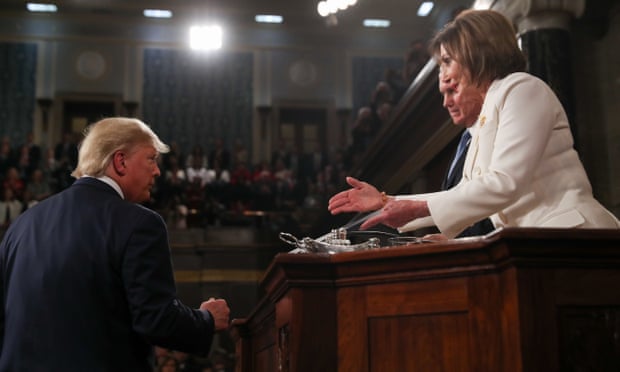
Political Fallout:  the President's February 4th 
2020 State of the Union Address


Pelosi does not give the usual laudatory announcement of
the President as he arrives to address Congress 
... and
Trump refuses to shake her hand


He was still hurting from the impeachment effort she and
her Democrat-controlled House had
once again taken up
against him in that very same room just weeks earlier
... and
which he had just been cleared of by the Republican
controlled Senate)


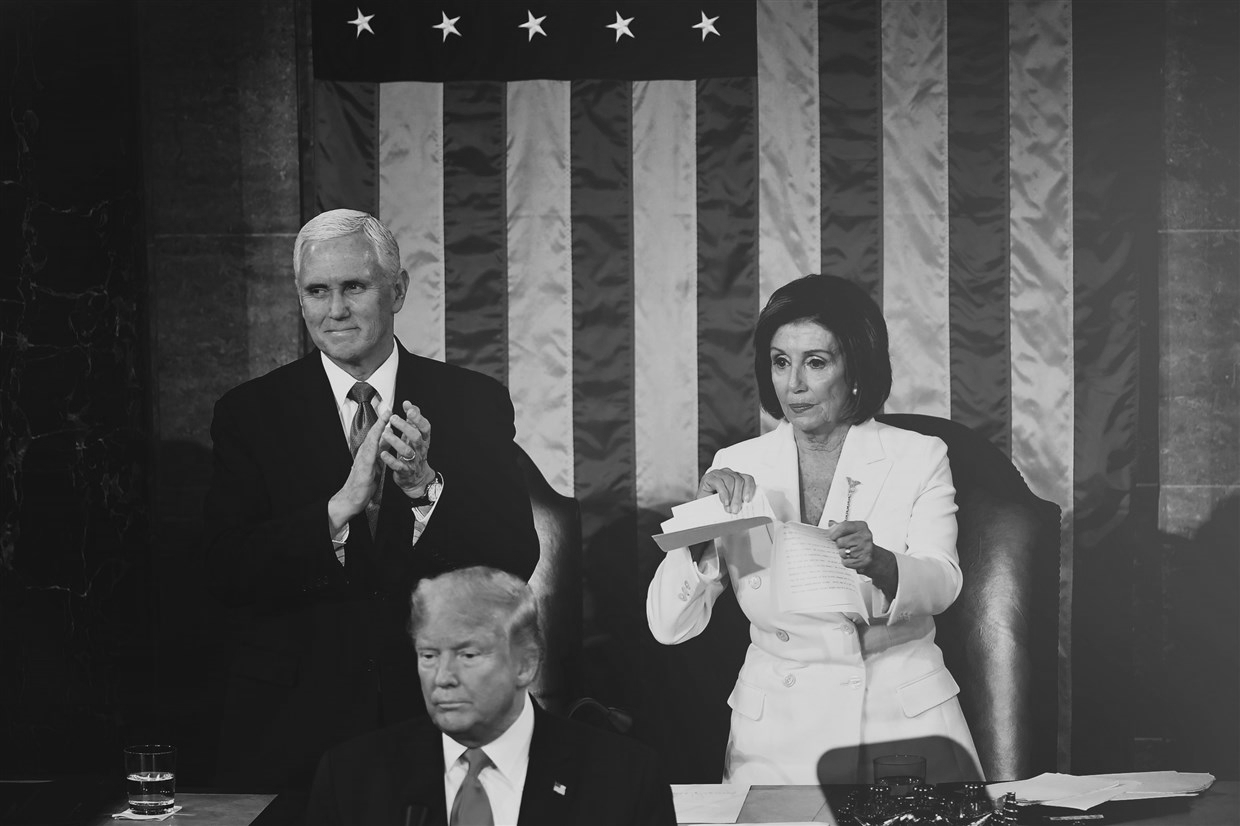
And she returned the symbolic favor by tearing up his
speech in front of cameras
while Congress (the Republicans
at least) were applauding him at the conclusion of his speech.


CORONAVIRUS

While all this Democrat-Republican animosity was going on, a horrible pandemic caused by a new coronavirus hit the world.  It seemed to have its origins in a Chinese food market in late 2019, spread rapidly across China, then hit Europe – finally moving on to America by January of 2020. 


   
The Wuhan wet market
   
It is widely believed that the horrible corona-virus epidemic 
that cut across the world began in this wet market in Wuhan
China.   Others speculated that it may have started in a
Chinese biological  research lab ... and got carried to that
market.  Others have different theories on the origins.  
Chinese were even to claim that it got started by
American agents!

No one was quite certain what to do, or what this disease meant for the safety and strength of American society.  Fearing a social and economic panic, Trump tried to play down the threat the disease posed to American life – but did attempt to restrict travel coming into America from China, being accused by his opponents of anti-Asian racism in the process!  But watching things develop in Italy and Spain, hit especially hard by the disease, by early March it was apparent that something very serious was happening here.  Seeing Italy and Spain respond to the disease by instituting the policy of "lockdown" (keeping people in their homes, allowing them out only for such "essential services" as food shopping), a similar lockdown began to be taken up at the state level by America's governors.  Thus shops, restaurants, schools, churches, etc. were closed down, and the American streets emptied. 

As with the rest of the world, the virus hit America hard!



New York City for instance

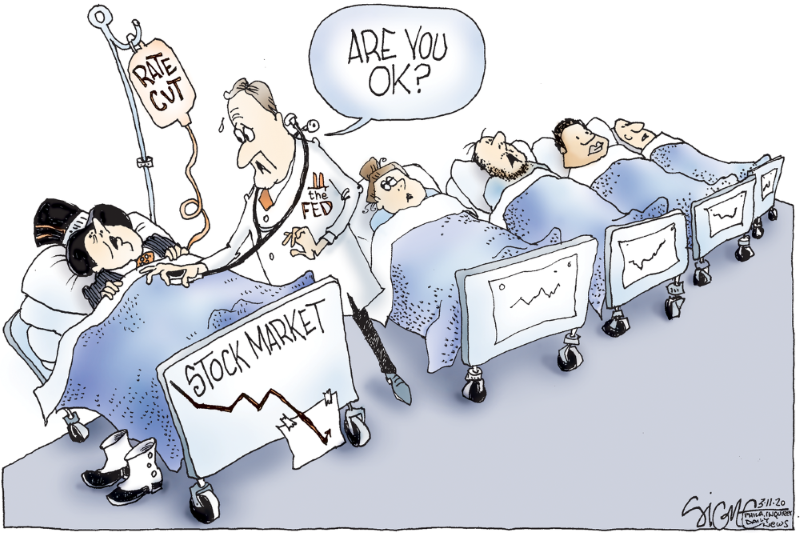
But the American economy also went into lockdown mode.  How long America would have to remain under such economy-crushing measures was completely unknown. 
Trump demonstrating how the Europeans were responding to
the crisis.
Trump himself shut down flights into the country
from China, and put deep restrictions on other flights into the
country.  Democrats immediately complained that Trump's
actions were entirely imperious.  Then later, as the virus did
indeed hit America, he was criticized bitterly by the same
voices "for not having acted soon enough."  Indeed, his
discussions at press conferences (typical of the times) turned
political ... as the media made what it wanted of his explanations,
either supporting his efforts to act against the virus or
attacking him for the way he said this or that.

Trump's federal response was in early-March to authorize $8.3 billion in emergency funding for medical research and hospital care – quickly realizing that this hardly met the severity of the crisis.  By mid-March he put before Congress a request for $1.2 trillion in federal assistance, not only for medical assistance but also in support for struggling businesses and support for state unemployment insurance programs.  Republican Senate Majority Leader Mitch McConnell was about to bring support to the request when Democratic House Speaker Pelosi entered the dynamic, demanding instead a $2.5 trillion ... with a much wider range of financial support involved (education programming, environmental support, and other funding of Democratic Party goals) – including a cutback in the financial support Trump originally wanted for corporate America.  This was to be more than an economic measure.  It was to be a full social programming venture.  And it would also be a huge addition to the national debt.
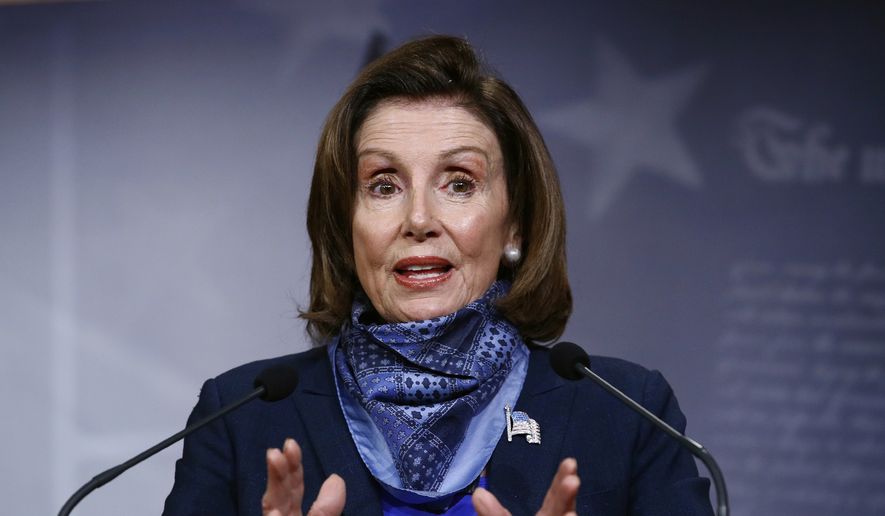

Pelosi explaining the Democratic Party's much greater financial
demands
in the economic relief program 

But in the end a "compromise" was required to get any action at all on the matter, and the net result was a $2.2 trillion program – which included a $1200 or $2400 grant to every American household (depending on single or double adult status).  But this was politics rather than economics.  Of course.  It's what Washington does![1]

Meanwhile the virus lockdown was having its own impact – social and psychological – as March turned into April and April turned into May.  How long was this lockdown going to last?  Tempers began to heat up as debate, even street protests, began to break out over the ongoing restrictions.

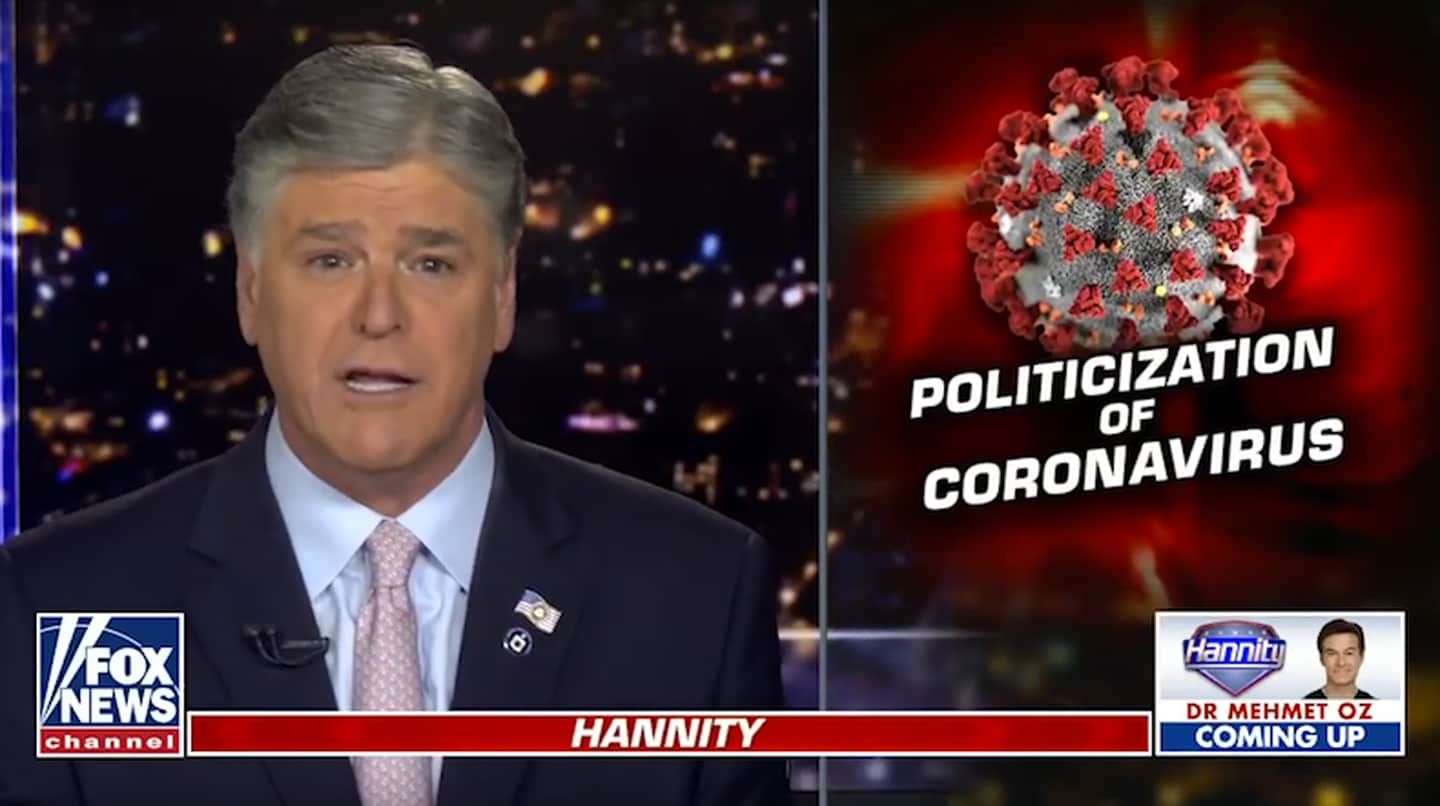
In any case, this national crisis did not bring the country
 together ... but once again seemed only to give political
opportunists yet another cause to go against their
ideological opponents.

[1]The U.S. government has come to feel that it has the right (even some kind of duty) to run up a virtually unlimited debt, such as the astronomically high one it has accumulated today, totaling around $28.6 trillion (as of mid-2021) and still rising rapidly.  That's approximately $86,000 per person or $270,000 per the average American family of 3.14 members.  Who (or what future generation) is ever going to be able to pay that off – or even cover the interest on that debt if it were allowed to move to a more realistic 6% interest rate, rather than the politically set rate today (thanks to policies of the Federal Reserve) which has been held below even 1%?  A normal interest rate would consume all of Washington's discretionary/non-mandatory spending, bankrupting the federal government.  But it appears that nobody in Washington thinks much about this pending financial disaster.  Instead Washington seems very willing to add even another $trillion or two onto the debt, if it is perceived as advancing the interests of this group or that group.


"BLACK LIVES MATTER"

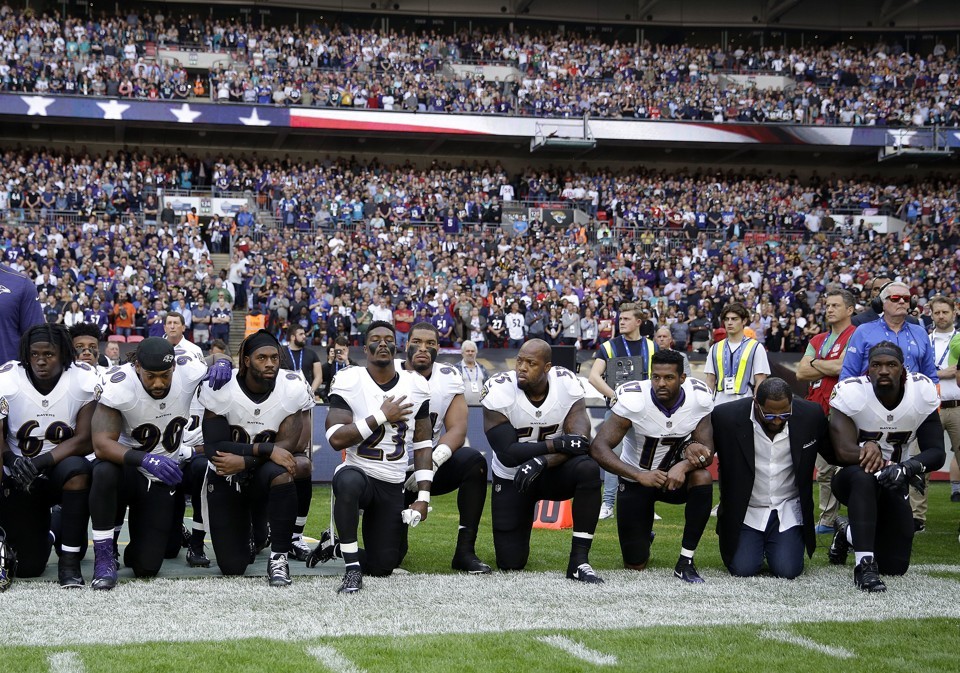
Black players on the Baltimore Ravens taking a knee rather 
than standing for the national anthem as a point of protest 
against ....?  They did however stand for the British national 
anthem (God Save the Queen) – September 24, 2017

Then in Minneapolis on May 25 occurred the arrest and death of a Black man, George Floyd, by a White cop, Derek Chauvin, involving Chauvin's holding a resistant Floyd to the ground by keeping his knee on Floyd's neck – as Floyd protested "I can't breathe."  Indeed he could not, and died as a result.  All of this was caught on video and shown repeatedly across all the media, Facebook and YouTube as well as the national news media.


George Floyd is brought down by Minneapolis policeman
Derek Chauvin on
May 25, 2020 ... and Floyd dies as a result


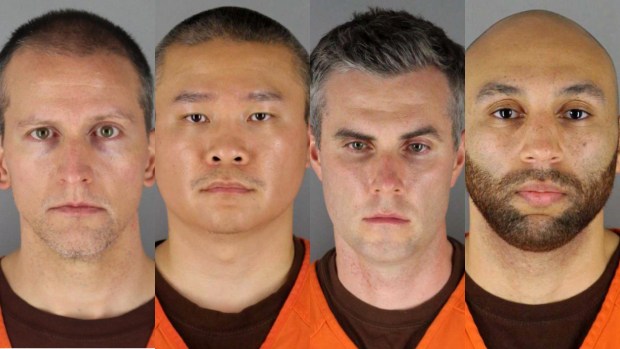
Chauvin (left), plus three other officers (who did not
intervene) are placed under arrest for murder (Chauvin) ...
or aiding and abetting a murder

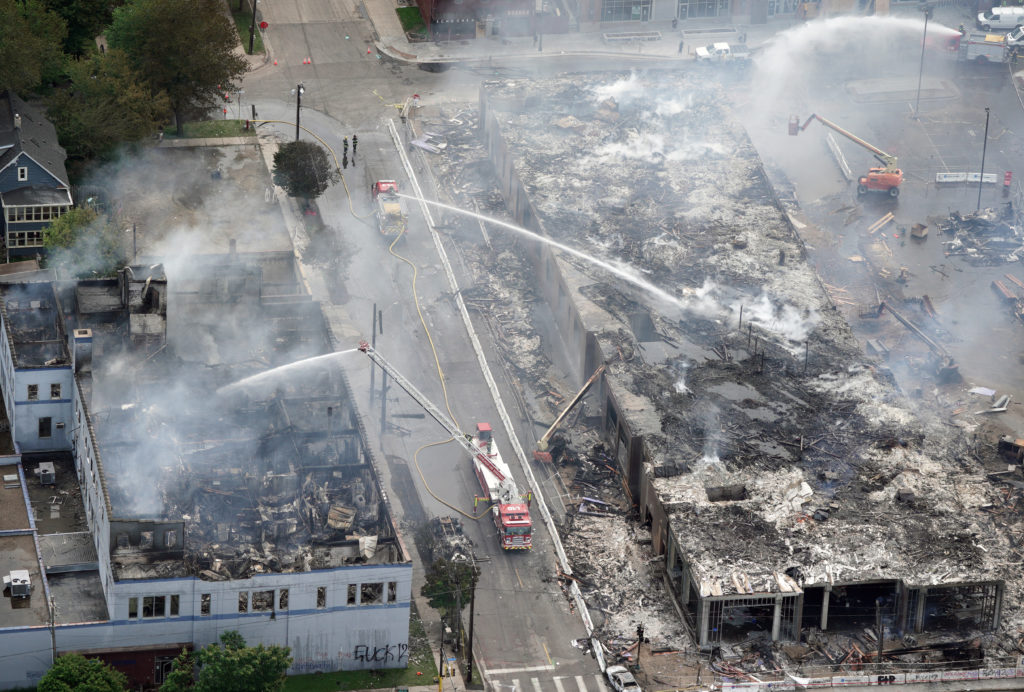
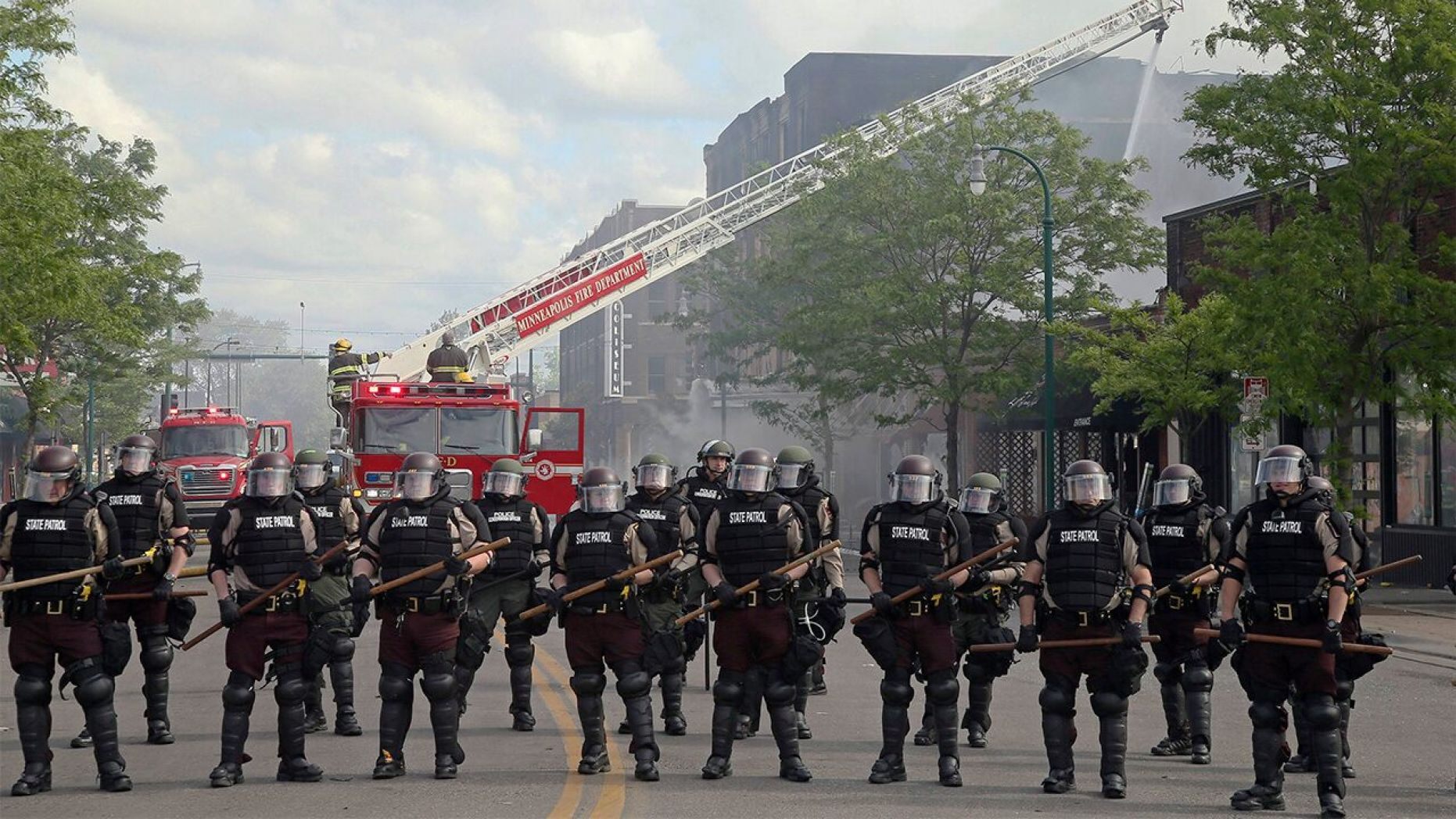
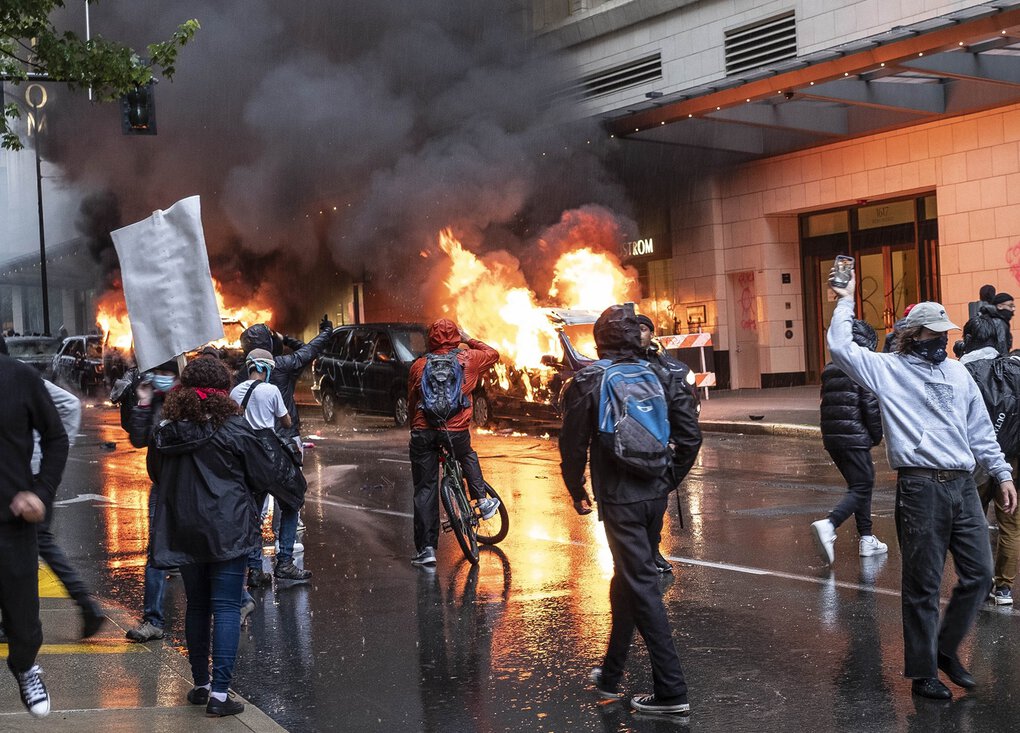
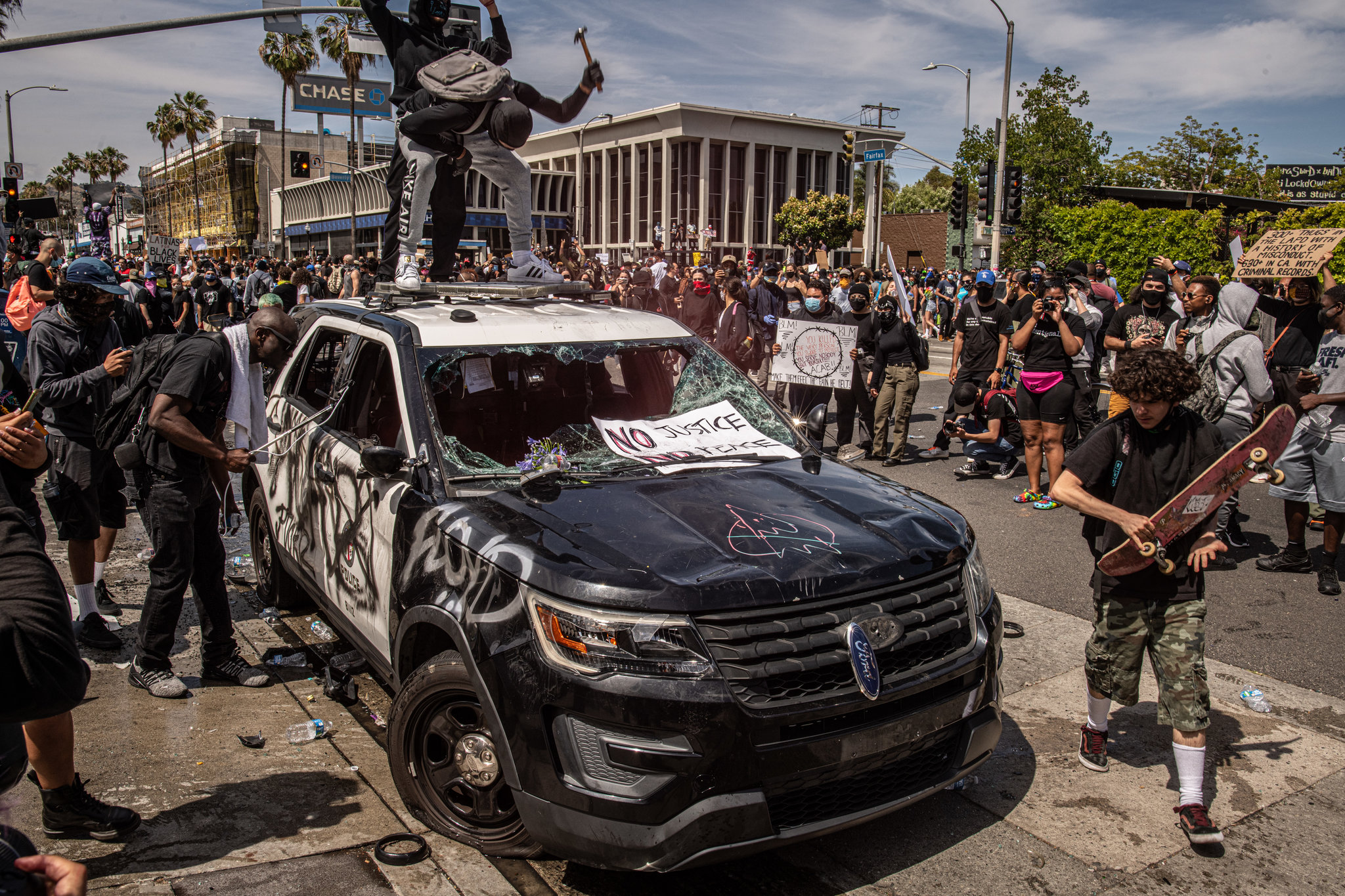
Black fury exploded in Minneapolis – where the incident took place – and Minneapolis quickly began to look like Los Angeles during the Rodney King riots ... and Fergusson, Missouri, during the Michael Brown riots. Shops were broken into, then burned to the ground, with whole neighborhoods coming to look like bombed out war zones.


Minneapolis Blacks go on a rampage over the Floyd murder


Then the protests spread around the country (late May and into June)
   

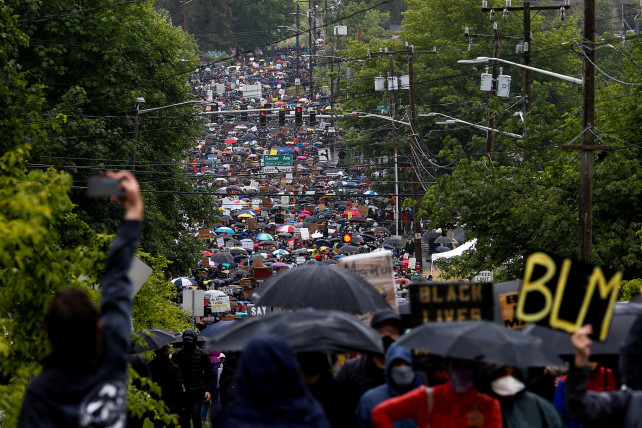
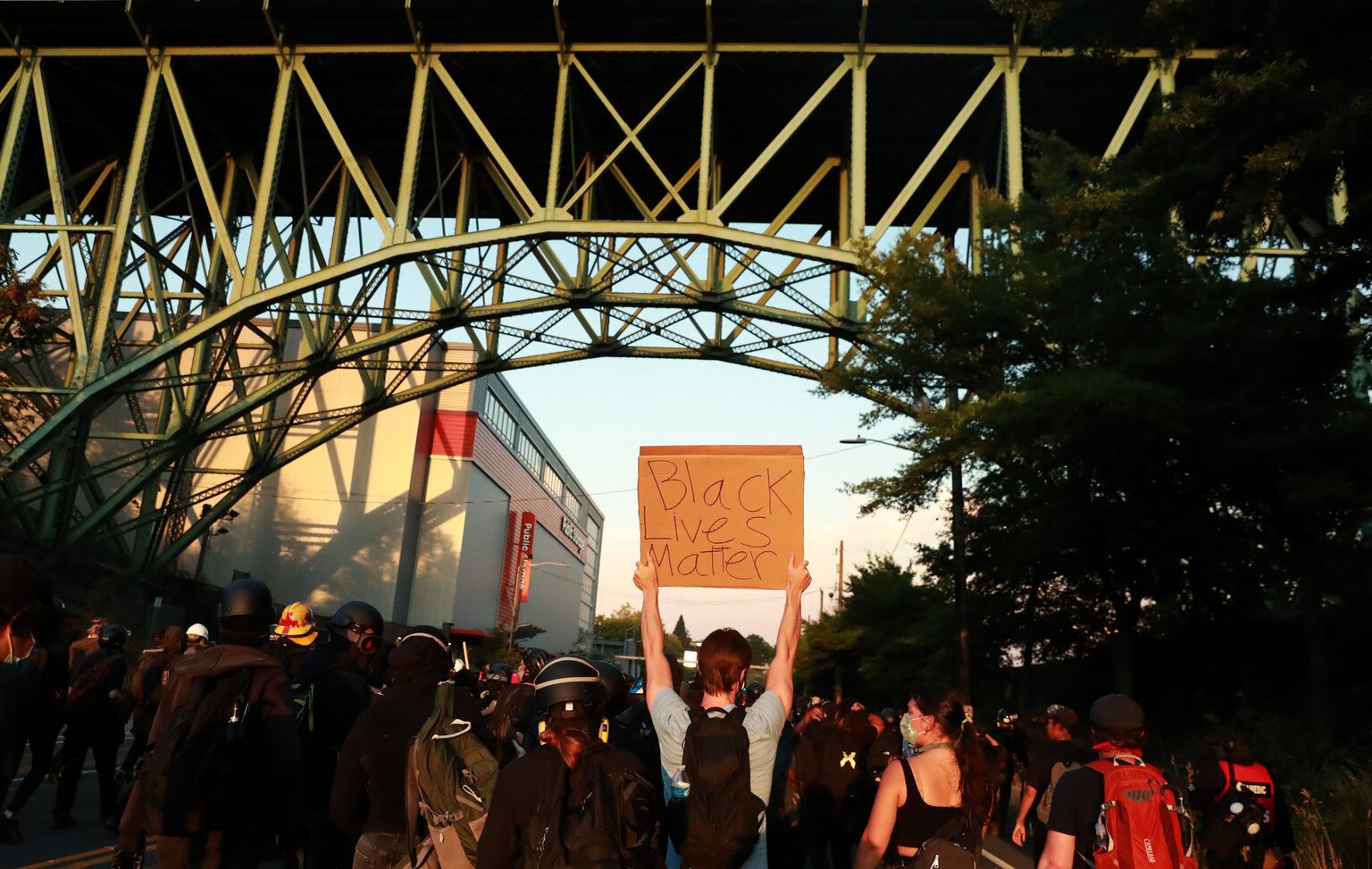
But the action did not stop there.  It soon spread to city after city across America as Blacks (and Whites) turned out for "peaceful" protest on behalf of the cause, "Black Lives Matter."  Unfortunately, these peaceful protests were also soon accompanied by the looting and burning in city after city across America, similar to those continuing day after day in Minneapolis.  Tragically, in St. Louis, Black retired police captain David Dom was killed defending a friend's store ... and many police (Blacks among them) were wounded (some killed) during the riots.  At this point even some prominent Blacks came out in opposition to the way the demonstrations were developing, complaining that this was not the way to improve race relations in America.

In the melee retired St. Louis police chief David Dom is killed when
he attempts to defend Lee's Pawn and Jewelry Shop from looters


Caught on video and arrested for the murder was 24-year old
Stephan Cannon

But a number of Whites want to join the action


ANTIFA TAKES CHARGE

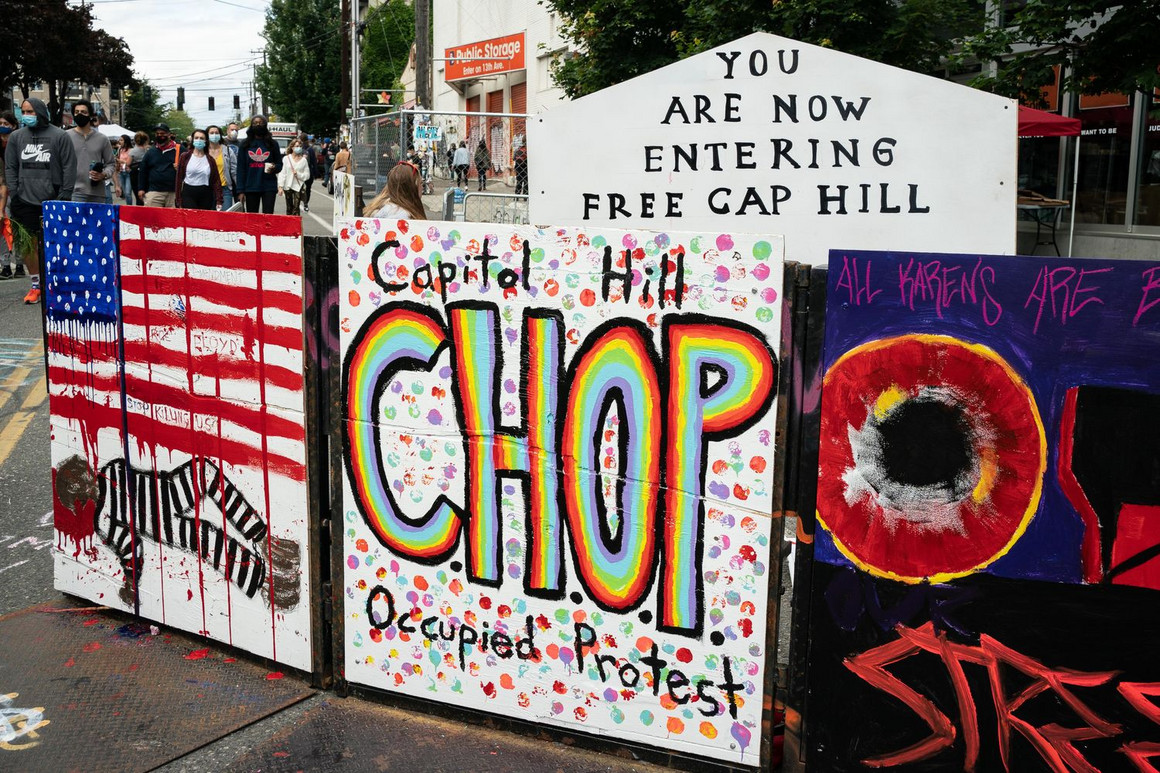
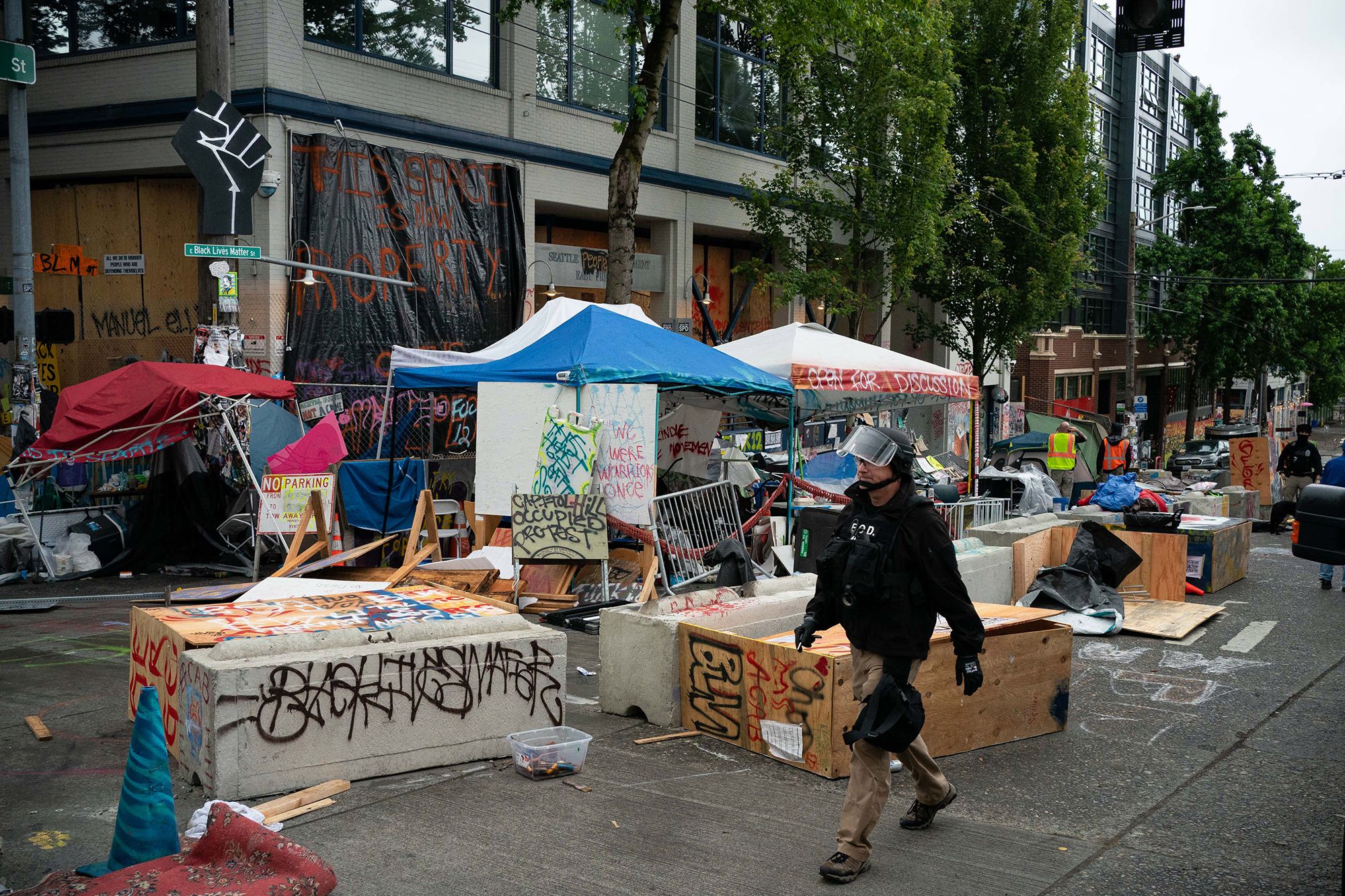
Meanwhile, the cause was joined by angry, mostly-White, Antifa ("Anti-Fascist") youth who turned the matter into a grand assault on all social authority – the pandemic restrictions being big contributors to the anti-authority mood.  And the dynamic became one of physical attack on the police (called out, of course, to contain the damage caused by the rioting) – characterized by Antifa rioters (and minority voices as well) as Fascist devils.  So this dynamic became more than just one of racial tensions.  It began to look like wholesale social revolution ... especially in early June when Antifa youth took control of downtown Seattle and turned six city blocks into their police-free "Capitol Hill Autonomous Zone" ... defended by fully-armed youth.

Another of the uglier versions of the days' events
 took place in Seattle (May 30th)


This inspired young "progressives" to take over 6 city blocks
in downtown Seattle to create their "Capitol Hill Autonomous 
Zone" (CHAZ)  ...  succeeding after two weeks of police and
National Guard units versus activist violence ...  when the 
police were ordered to stand down by Chief Carmen Best


August 2020 ... Seattle continues to rock from the BLM 
movement as BLM marchers demand an end to "White
Privilege" ... a largely peaceful event except for the
small group that advanced into White residential 
neighborhoods and demand that they give up their homes!

And on and on the protests go in Seattle ... 
resulting in ugly conflict in September


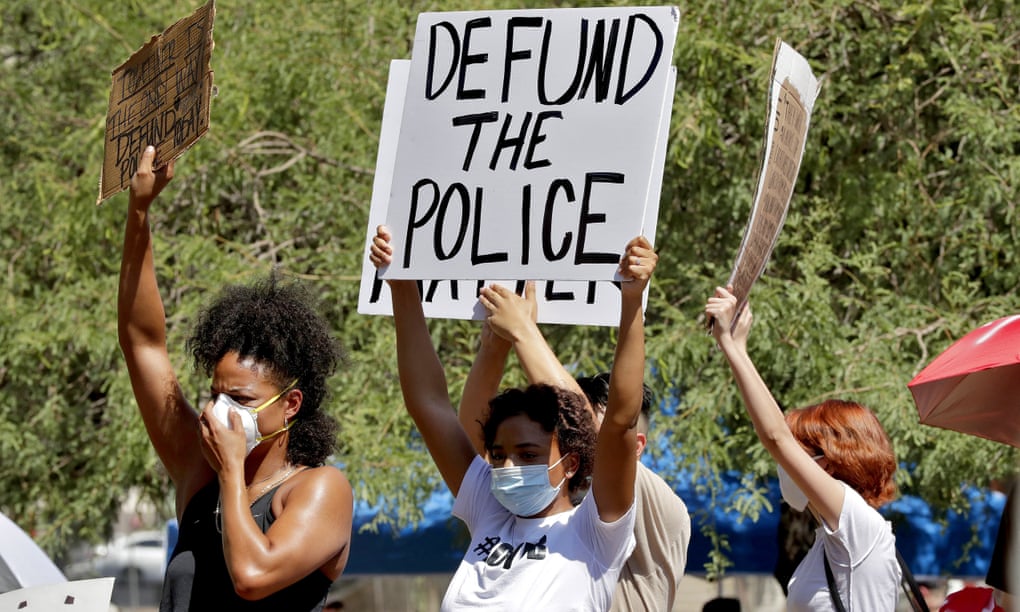
At this point, a number of big-city mayors (Liberal Democrats) came out with the announcement that they would be cutting back funding on their police budgets ... to relocate that money into more "socially sensitive" minority-support programming.  Soon this was becoming a refrain heard even more widely among America's state and urban public authorities.  Defunding the police was becoming the new thing in the world of "political correctness" ... which a lot of local officials wanted to get on board with.  Needless to say, with the police on the defensive as "fascists," urban crime skyrocketed.


THE SUPREME COURT EXPANDS THE
LEGAL SUPPORT OF LGBTQ DYNAMICS

In the meantime, America was so caught up in the street rioting occurring across the American political map, that it almost missed the importance of the decision that the Supreme Court came to in the case of Harris Funeral Homes v. Equal Employment Opportunity Commission (2020).  On June 15th the Supreme Court announced that the 1965 Civil Rights Act included also protection of transgender sex ... in deciding 6-3 that the Michigan Funeral Home had violated the law when it refused to allow one of its employees to cross-dress when meeting with grieving family members – in violation of the business's dress standards.  Interestingly, on the majority side was the supposedly conservative "originalist" Justice Gorsuch ... who explained that Title VII of the 1965 Act did not include exactly the wording of transgender rights, but it certainly could be understood to have intended that in the category of "sex" discrimination outlawed by the Act.

What was this?  Was Gorsuch sliding Leftward ideologically?  Furthermore, although 
Kavanaugh joined Thomas and Samuel Alito in dissenting, he did so only out of the strictest of originalist principles.   Personally, he expressed himself extensively in favor of all the progress happening elsewhere in LGBTQ rights.

But the Left paid no attention to his efforts to put himself on the Progressive side of politics ... and attacked him for his vote nonetheless.
And so the politics of the highest court in the land continued to develop.


Go on to the next section:

America and the World in the Age of Trump


  Miles H. Hodges