Economically speaking, the American South had always functioned as
a supplier of raw materials to England: tobacco, dyes and – at first – small
amounts of cotton. New England on the
other hand had geared its economy largely around the idea of meeting its own
needs locally, from agriculture to finished industrial products.
The impact of the industrial revolution.
The New England or "Yankee" temperament also made for a lot of
industrial creativity – with Samuel Slater in the 1790s for instance
setting up first in Rhode Island, then Massachusetts, then Connecticut and New
Hampshire, spinning mills which turned cotton into thread – at about the same
time that Eli Whitney invented the machine that could do the work of masses of
individuals (slaves mostly) in removing the troublesome seeds from cotton
balls, revolutionizing the cotton industry in the American South – able now to
fill the industrial needs not only of the spinning and weaving factories of
Britain, but also similar factories in the American North.
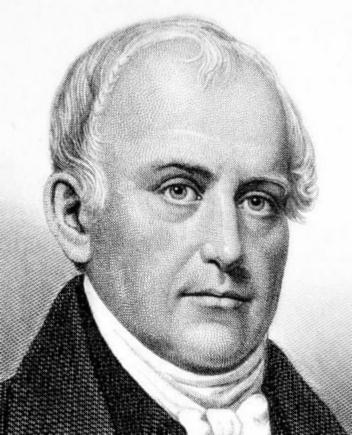

Samuel Slater and Eli
Whitney
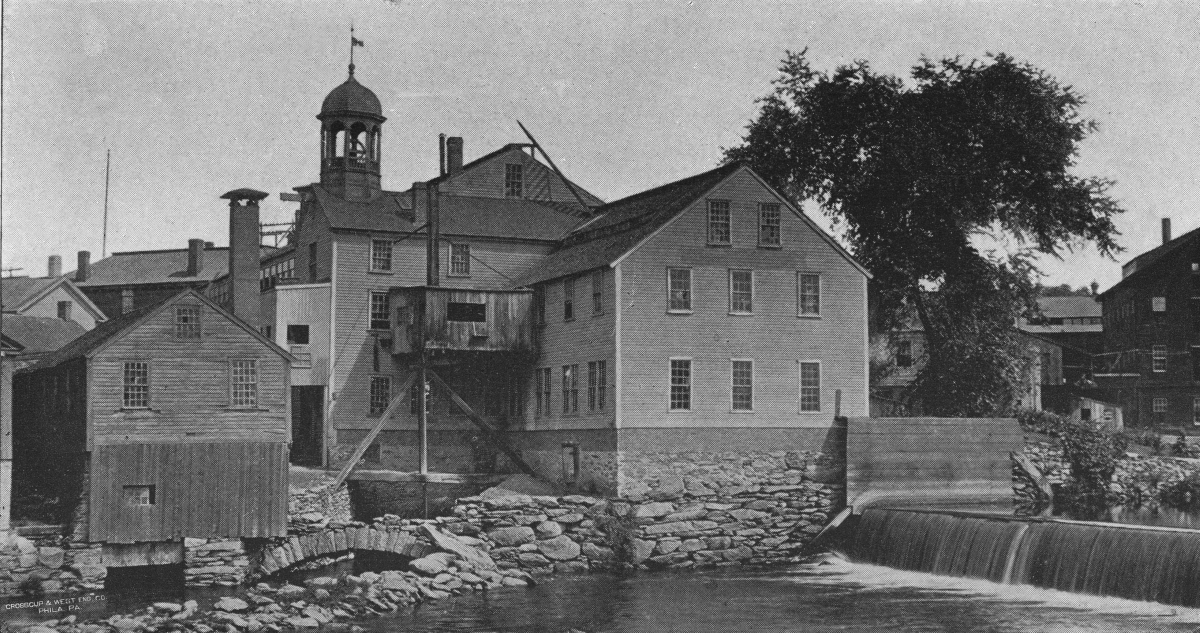
The Old Slater Mill, Pawtucket, Rhode Island (first built in 1793)
The first cotton-spinning mill successfully operated in America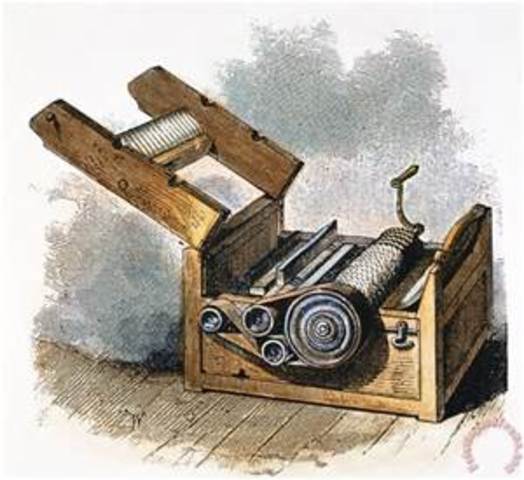 Whitney's 1793 cotton gin – much faster way of removing seeds from
raw cotton, revolutionizing the South's cotton farming industry
(and the slavery to support it)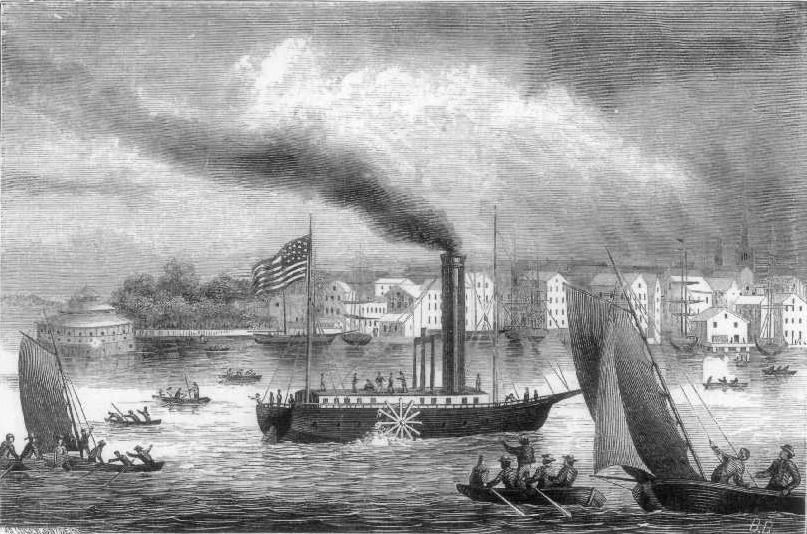 Robert Fulton's paddle-wheel steamboat (August 1807)
making its way up the Hudson River from New York City
Robert Fulton's paddle-wheel steamboat (August 1807)
making its way up the Hudson River from New York City
to Albany in 32 hours of travel time While
this vital North-South industrial relationship should have strengthened the
ties between these two sections of the country, actually the reverse
resulted. While such developments in the
North encouraged the ambitious, hard-working and inventive character of Yankee
culture, the South tended to see in this economic development the ability to go
deeper into its traditional feudal social dream of a leisured gentry standing
atop a social order of hard-working slaves – slaves stripped of any ambition or
ability to think inventively. To be sure
there were plenty of poor Whites in the South found well outside this romantic
dream, living desperate lives trying to compete with the huge plantations in
the cotton export business. But these
poor Whites themselves were caught up in the same Cinderella dream – hoping,
even believing, that they too one day would be sitting on their own verandas,
sipping Mint Juleps while discussing social affairs and grand ideas.
Over
time, such an industrial dynamic was pushing the North way ahead of the South in
terms of overall economic development.
Factories were going up everywhere and infrastructure in the form of
major roads, canals, and even the first of the railroads was being laid out
everywhere. To be sure, some of this
same activity was taking place in the South, but not at nearly the same degree
as in the North. Industrial
entrepreneurship certainly did occur across the South. But it did not bring the prestige or stir
human ambitions and readiness to undertake the hard work to bring about
entrepreneurial success the way it did in the North.
In some strange ways the growing differences between these two
lifestyles were summed up in the personal differences well illustrated in the
lives of Hamilton and Jefferson. Jefferson was the very epitome of the
Southern gentleman – naturally and gracefully born to noble status, reflected
in the way he approached life. Hamilton on the other hand was the
type that the Yankee world seemed to symbolize:
self-advancing from even the humblest of social beginnings, through
incredible self-discipline and hard work – and a resolve to take life head on,
no matter what it threw at you. To Hamilton, Jefferson probably represented
everything he detested about a social snob – and Hamilton represented to Jefferson the vulgarity of the
typical social climber. There really was
no meeting point between the two personalities.
But over time, it would be revealed that the
same held true for the entire realm of Northern and Southern culture. As neither side was willing to back down in
holding such absolutely positive attitudes about itself and equally absolutely
negative attitudes about the other, trouble – bloody trouble – lay ahead.

Go on to the next section:
 Miles
H. Hodges
Miles
H. Hodges

 The impact of the Industrial Revolution
 Jefferson vs. Hamilton