1814. The following year, the war did go in America's
favor in the West, when in March, American General Andrew Jackson delivered a
smashing blow to the Red Stick Creeks in Mississippi.
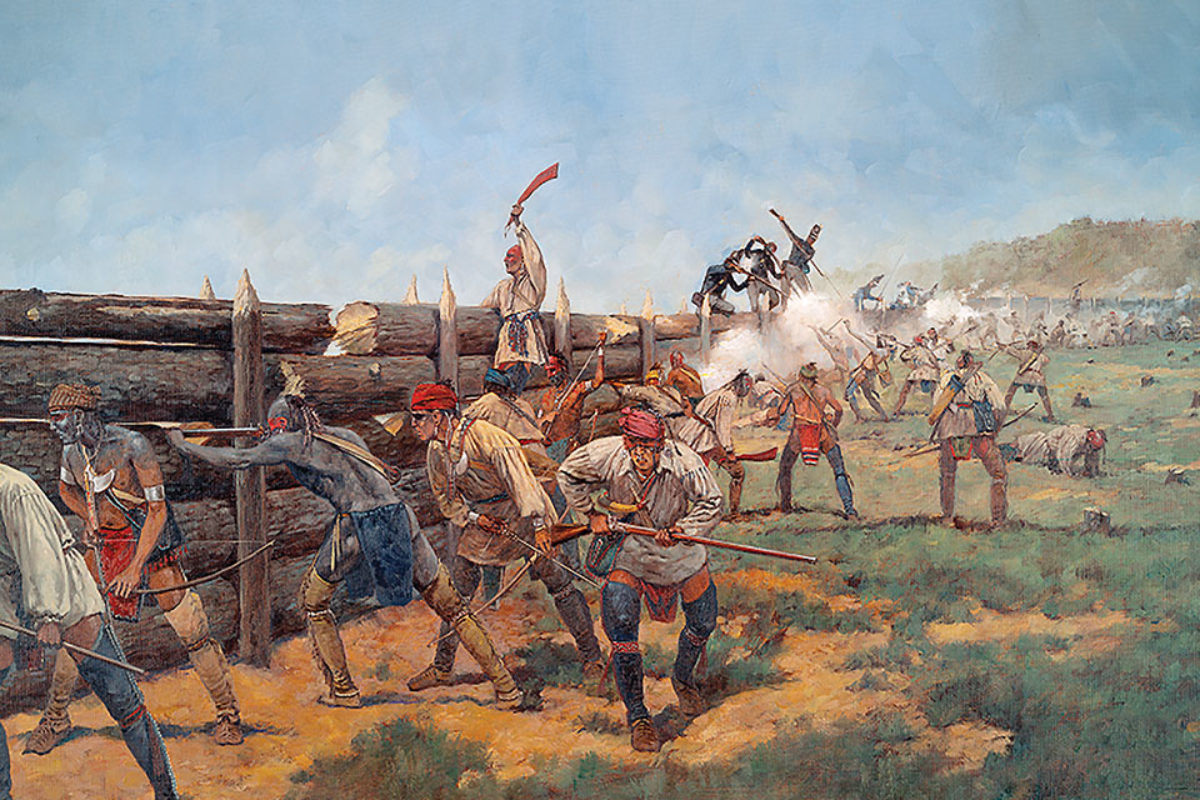
Jackson's men attacked a well-built defense of the Red Stick
Creeks at the bend in the Tallapoosa River. The Indians were
slaughtered and the power of the Upper Creek tribes shattered.
But it went devastatingly against America in
the East when, having defeated and imprisoned Napoleon in Europe, the British felt
free to march on the new American capital at Washington, D.C. in August of that
year and burn it to the ground – payment for the burning of Canada's capital at
York.
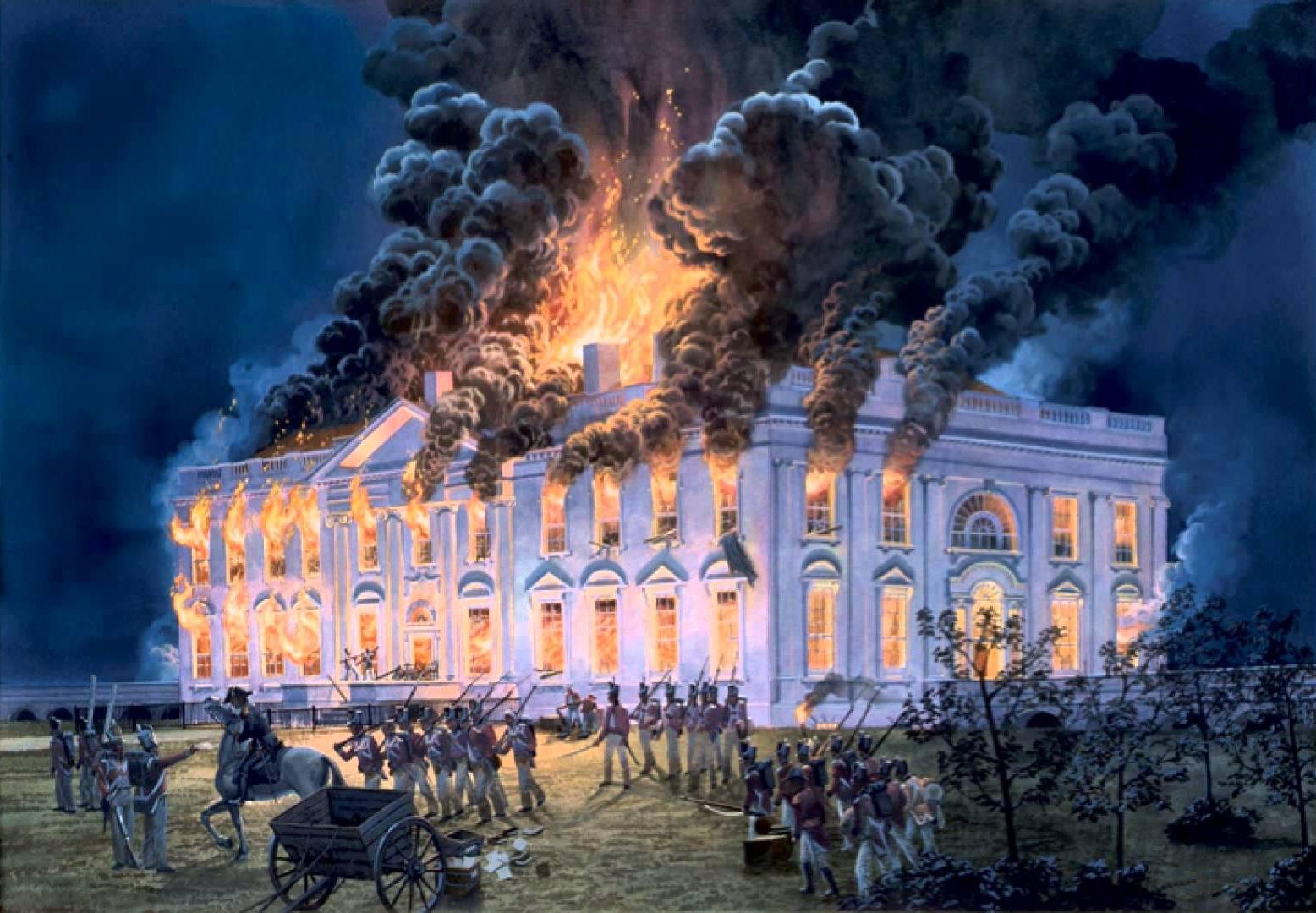
British troops burning an abandoned White House on that same night.
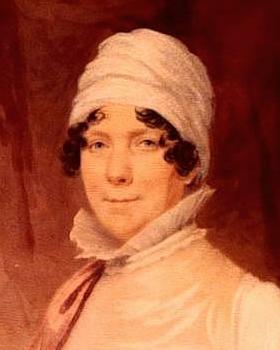
First Lady Dolly Madison had already removed all the documents
and other valuable items ahead of the arrival of the British troops.
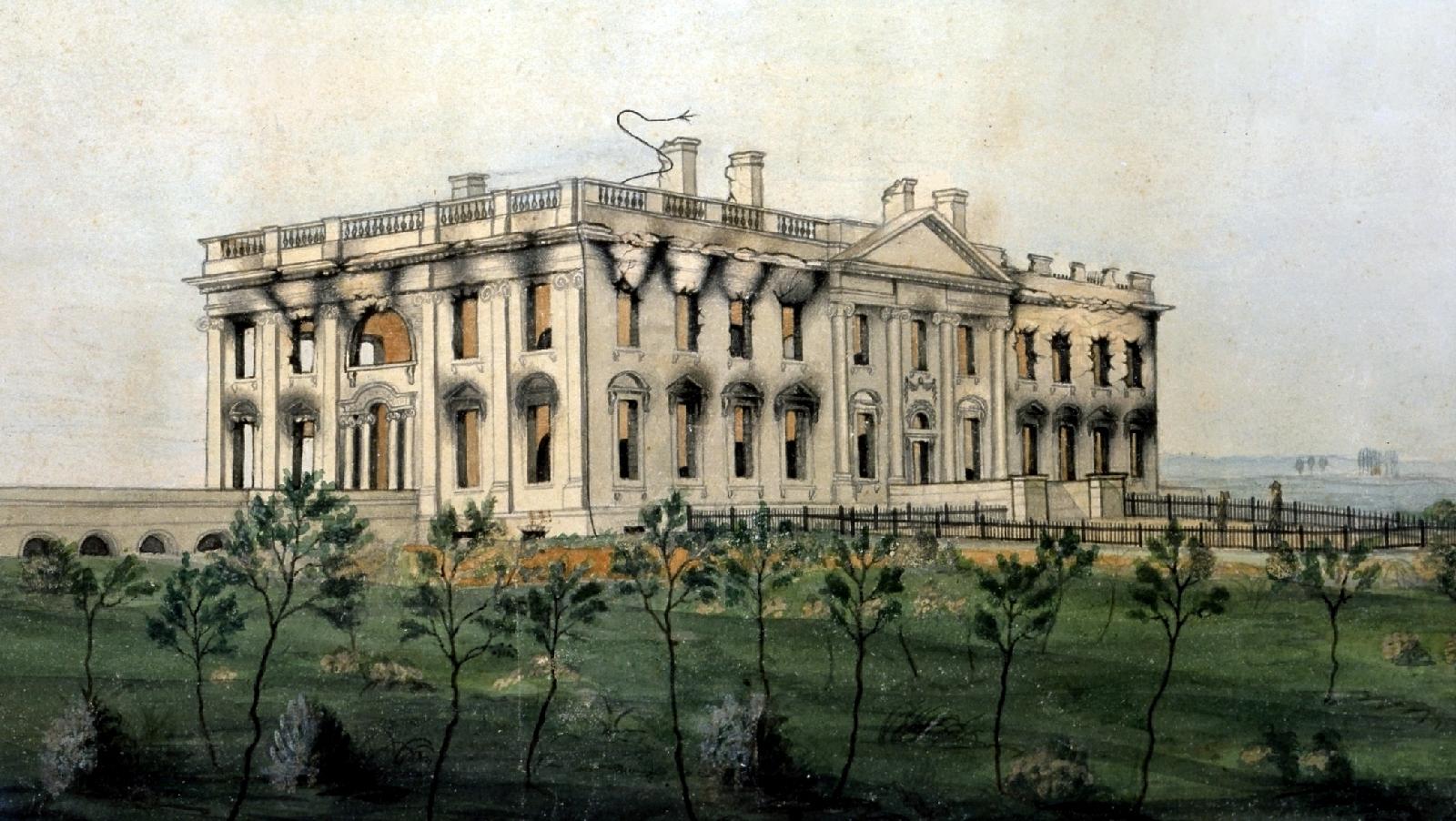
George Munger – The President's
House (White House)
after the burning of Washington
White House
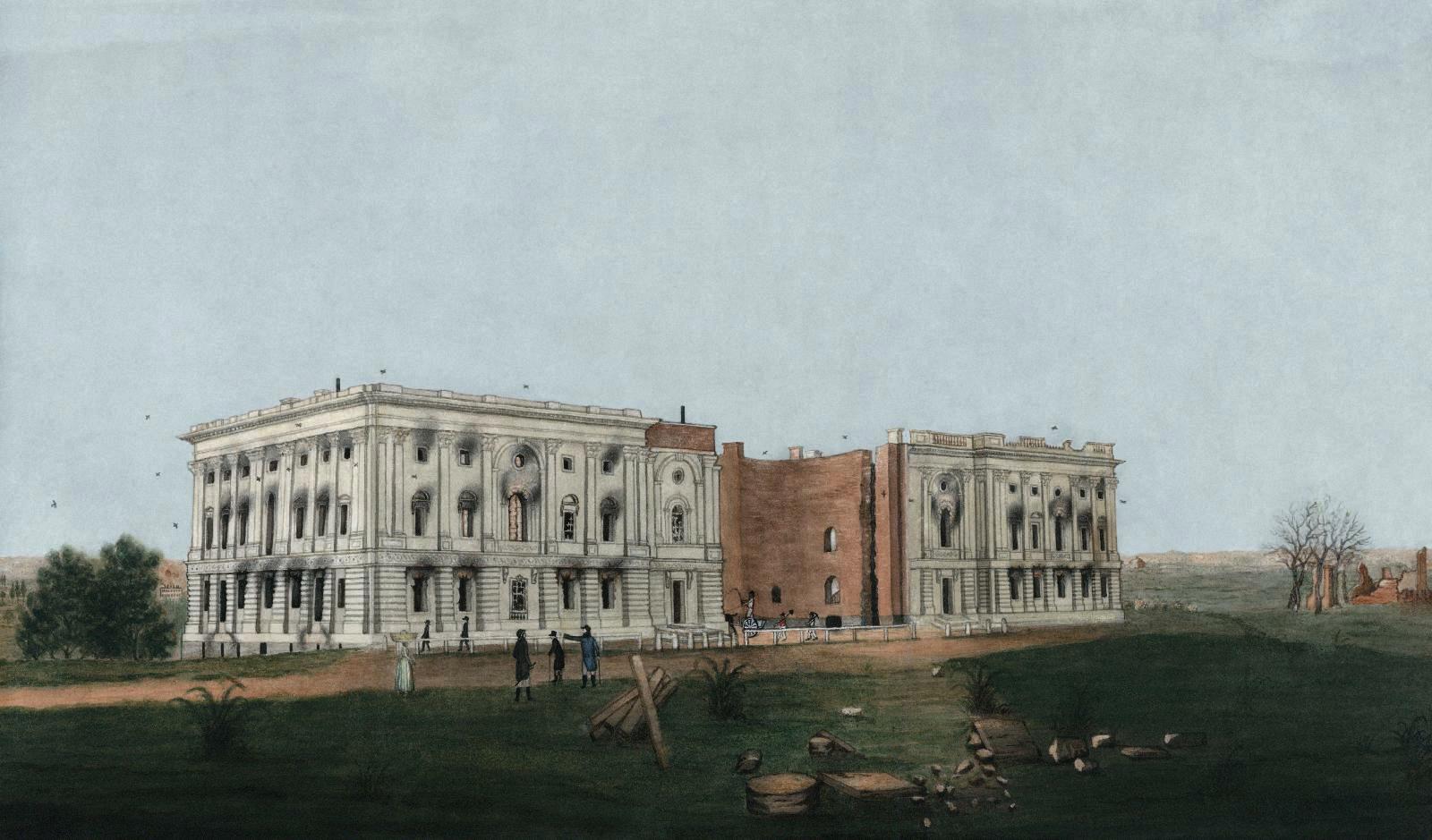
George Munger – The unfinished
United States Capitol
after the burning of Washington
Library of Congress
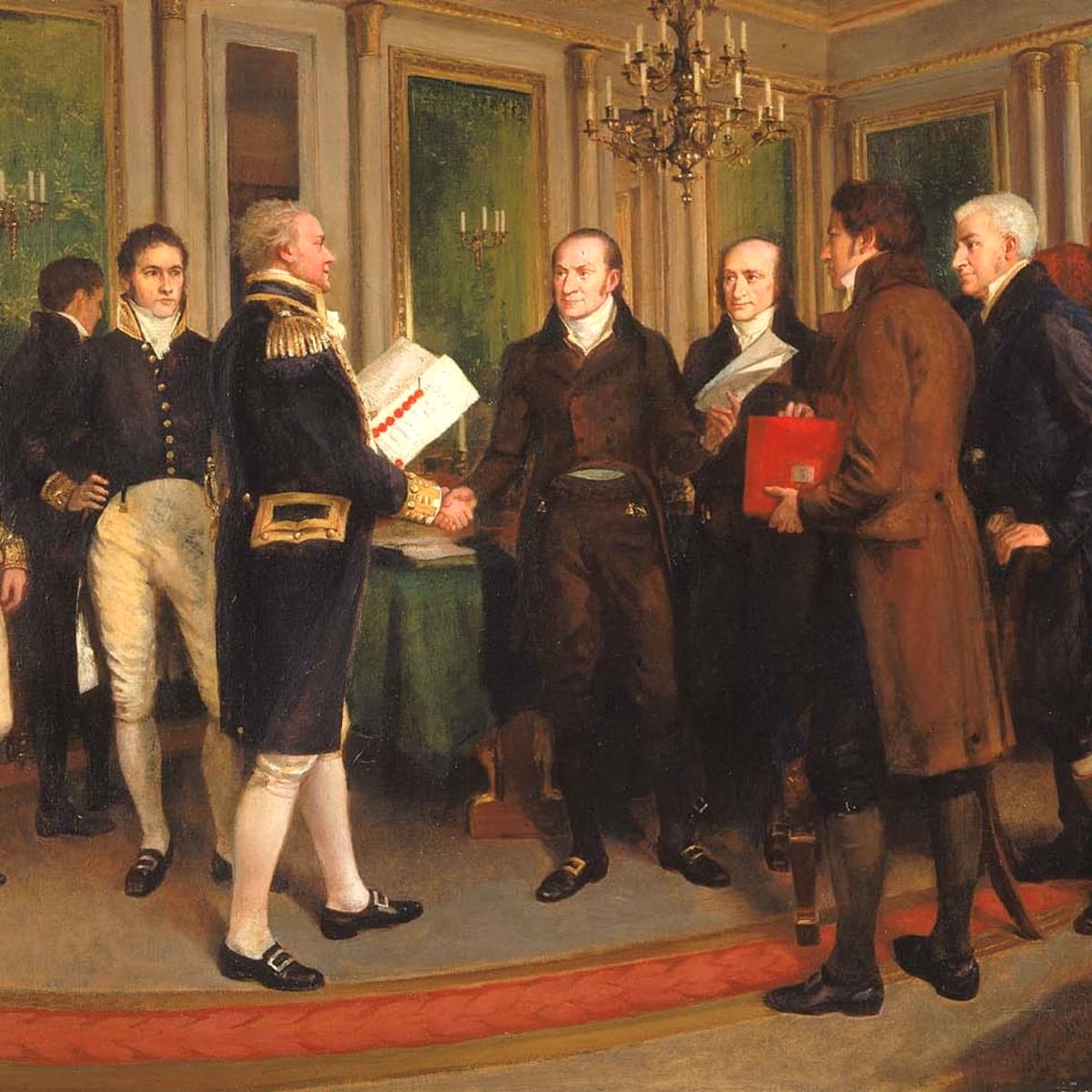
The Treaty of Ghent (December 1814).
But with Napoleon finally defeated and
imprisoned on the Island of Elbe, the British found themselves very tired of
all the fighting that had consumed them over the past decade or more. Also, British revenues were running low
because of the Napoleonic wars – and now this war with the Americans as
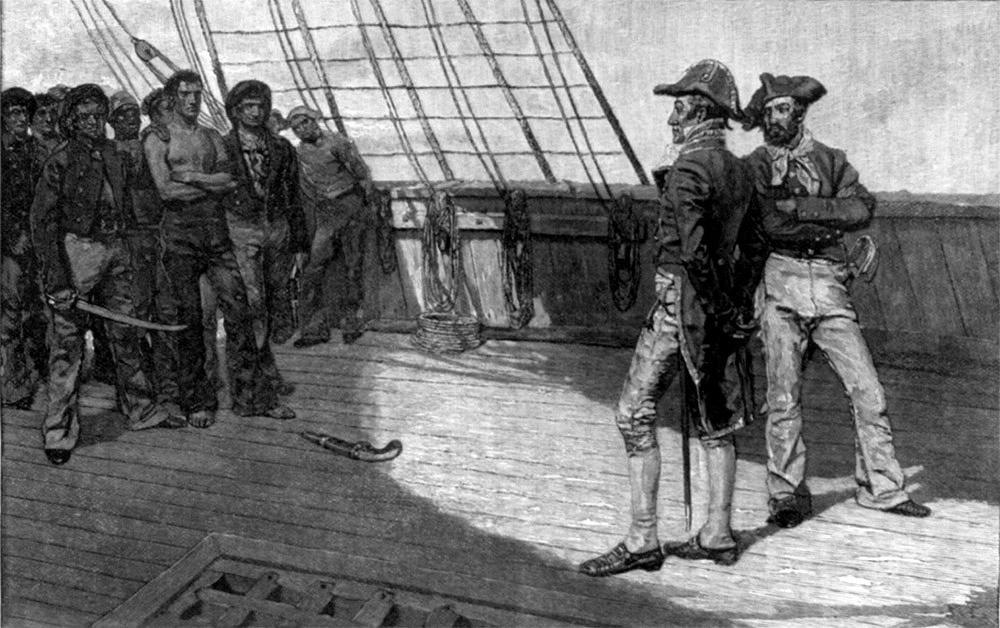
well. Likewise, the British now no
longer saw the need to grab American sailors to fill their own ranks – a major
American grievance against the British.
Consequently, both sides were ready for peace. Thus it was that British and American envoys
gathered in Ghent (Belgium) to negotiate a peace treaty.
At
first the terms that the British were offering the Americans were harsh – and
the Americans refused to accept them.
However, fighting still going on back in America now
began to turn in the American favor.
British efforts in September to take Baltimore failed completely[1] – and the
Americans' naval victory on Lake Champlain (New York) at the same time stopped
the British attempt to march on America from the North.
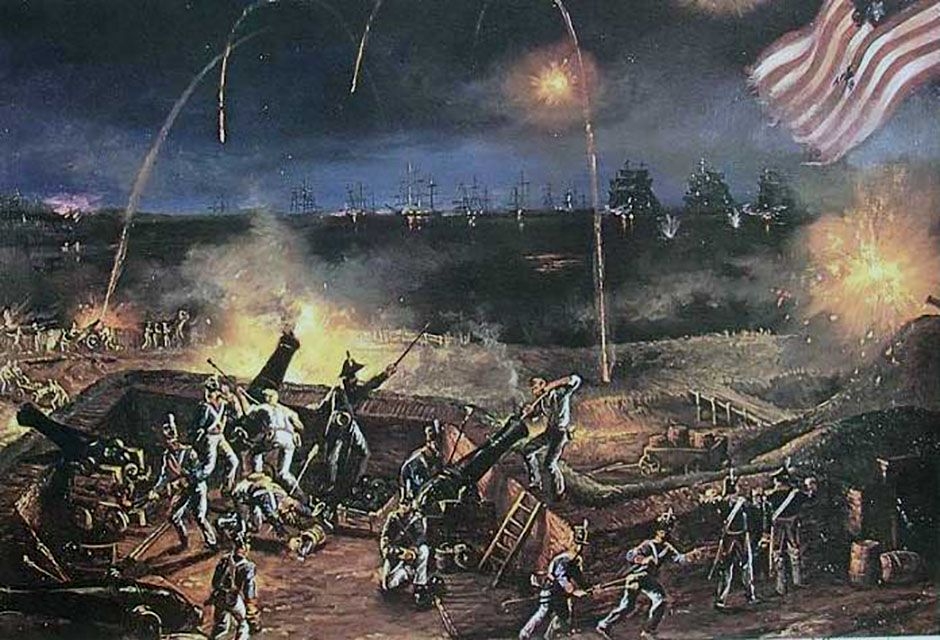
The British advance up the Chesapeake towards Baltimore
(September 12). But they can't get past the defenses at
Fort McHenry (September 13-14) ... and have to turn back
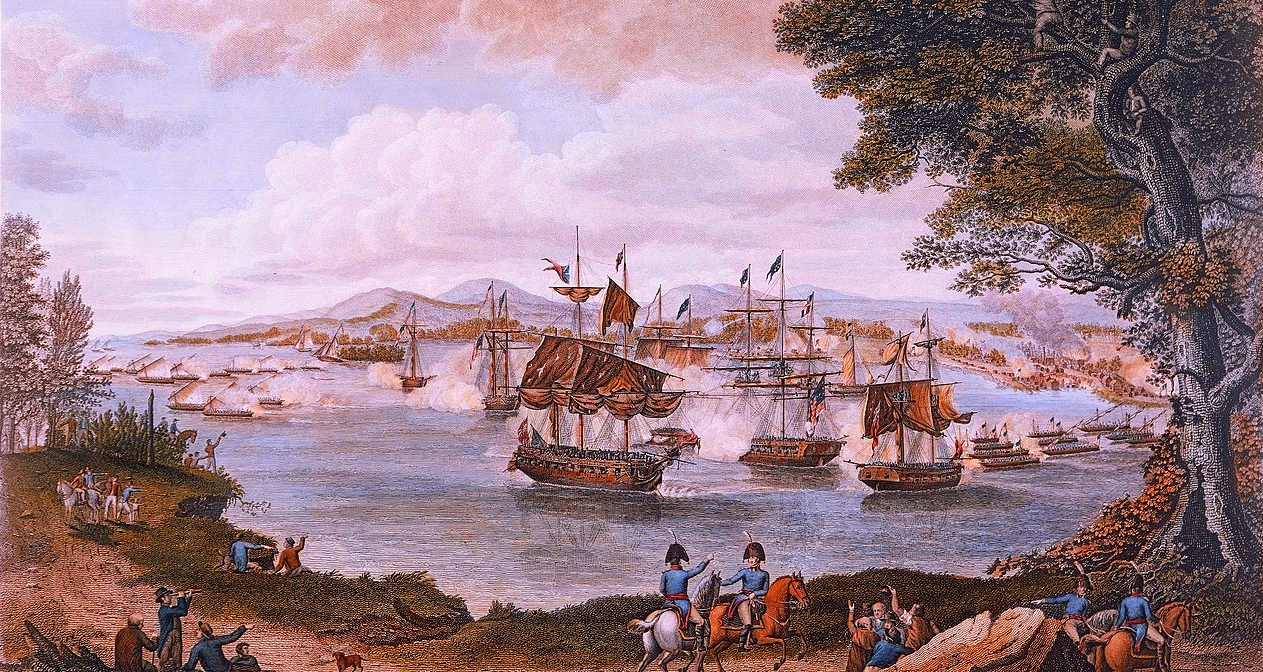
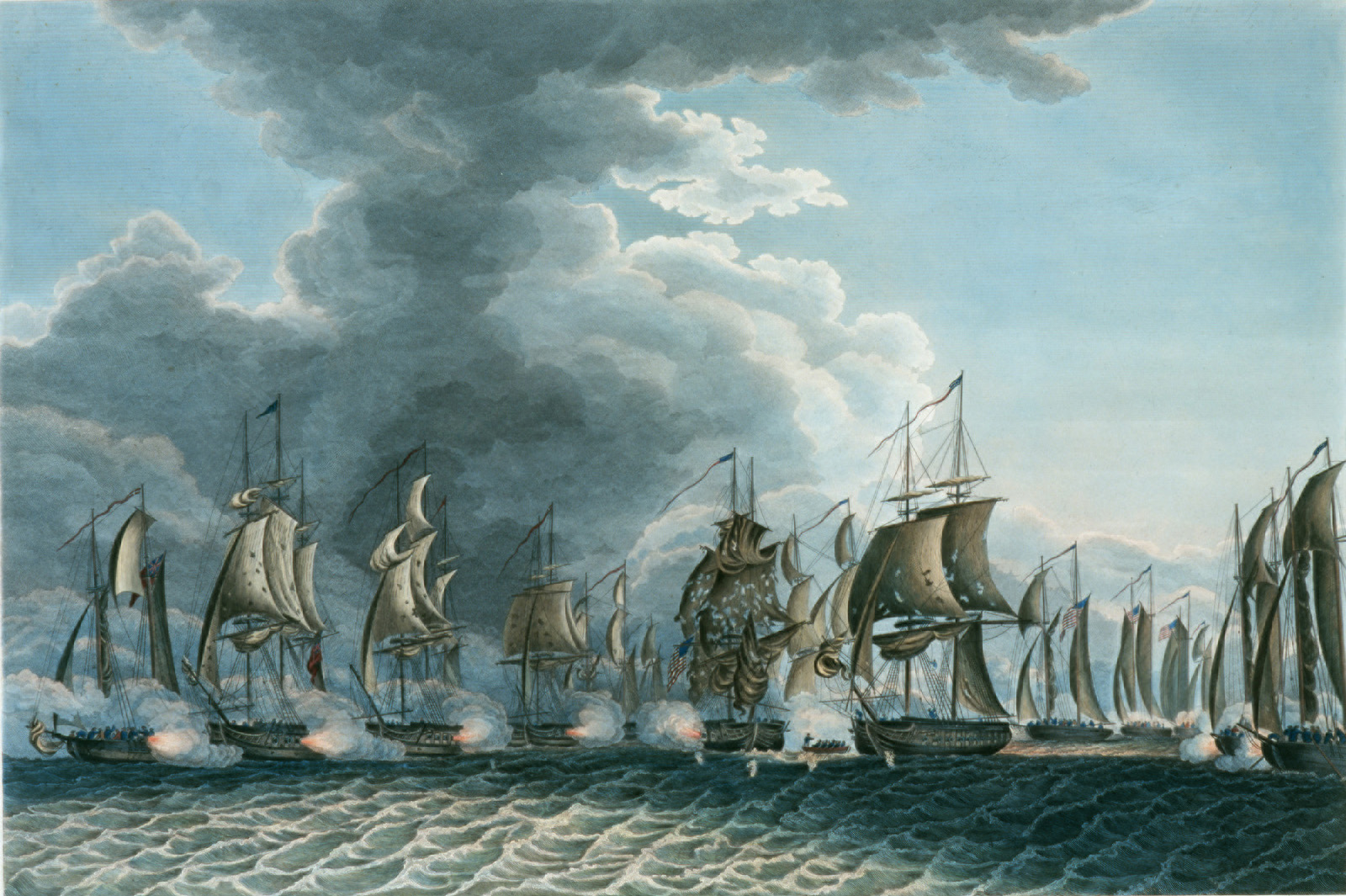
The naval battle at Plattsburgh on Lake Champlain
(September 11, 1814) delivered
the British another huge blow.
Thus before the end of the year, American and
British diplomats finally agreed to a peace treaty based on much more equitable
terms – largely returning things to the way they were prior to the war.
The Treaty of Ghent (Belgium) – Christmas Eve, 1814
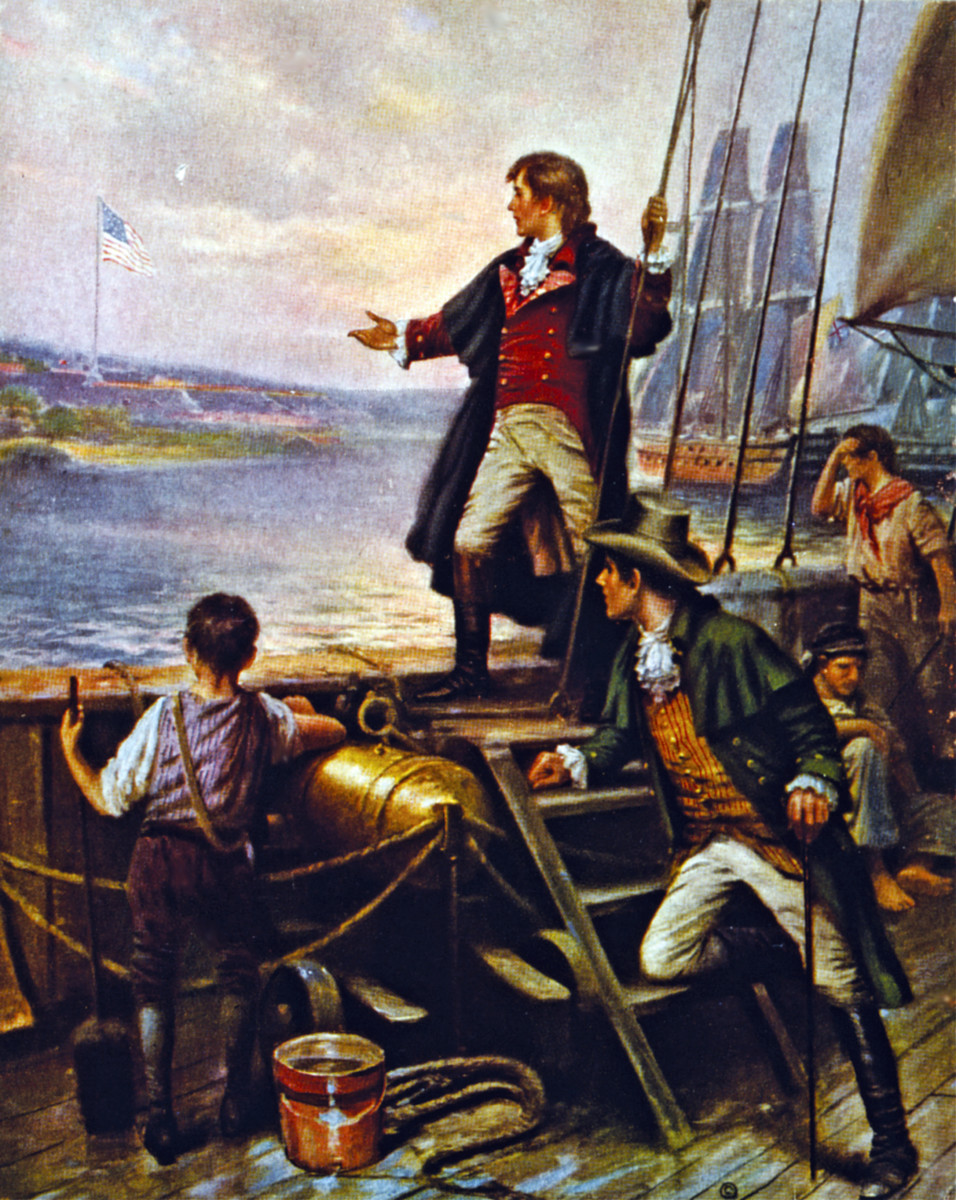
[1]A witness to this British failure at Baltimore’s Fort McHenry was Francis
Scott Key, who wrote a poem about the flag remaining aloft through the night of
heavy British bombardment. The poem was
eventually put to music and became the American national anthem, The Star-Spangled Banner.
Francis Scott Key is inspired to compose his poem
"The Star-Spangled Banner"
| THE BATTLE OF NEW ORLEANS (JANUARY 1815) |
But news of the treaty signing had not yet reached either the
American forces (under Jackson) or the British forces
gathering for a huge battle at New Orleans.
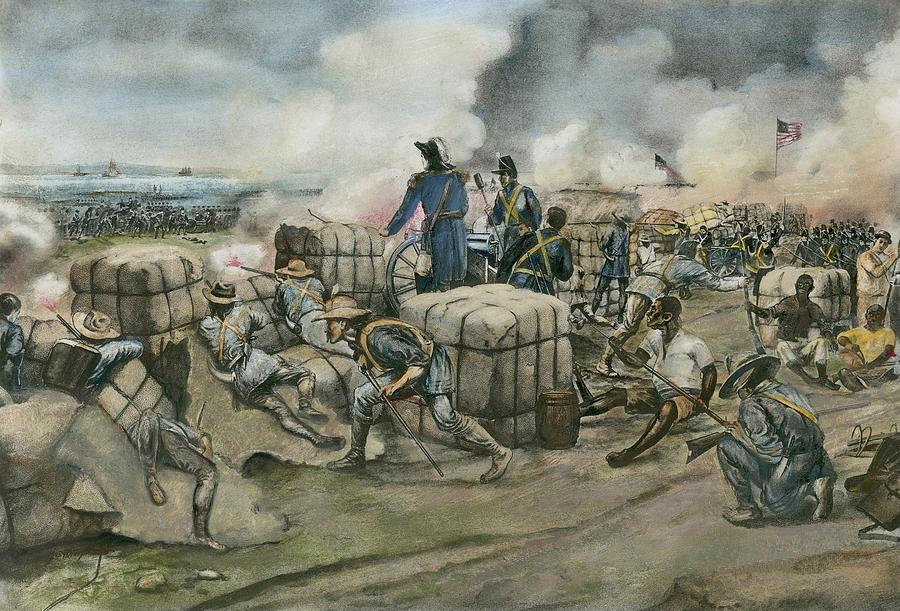
But the British attack on the well-defended American position (behind a
huge wall of cotton bales) led to a humiliating defeat for the British: 291 British killed, 1262 wounded, and 484
captured or missing – with only 13 Americans killed and 39 wounded.
The Americans obliterate the British in their attempted
assault on New Orleans (January 8, 1815)
Although the battle was unnecessary (for it changed
none of the peace terms), it fueled a huge sense of national pride among the
Americans, made Jackson a national hero, and in a way gave the announcement to
the world that America was a rising player in the game of international
politics.

Go on to the next section:
Expansion
 Miles
H. Hodges
Miles
H. Hodges

 James Madison
 The young republic goes to war (1812)
  1813
1813  1814 ... and the Treaty of Ghent (December 1814)
  The Battle of New Orleans (January 1815)