<


4. THE AMERICAN REPUBLIC GETS UP AND RUNNING

EXPANSION


CONTENTS

Florida

But economic crisis (1819-1821)

Slavery intensifies "identity politics" ... and the Missouri Compromise

The Monroe Doctrine (1823)

Adams II (John Quincy Adams)

Andrew Jackson

De Toqueville's Democracy in America

The Indian Removal (1830s)

Texas

"Manifest Destiny"

The Mexican-American War (1846-1848)

The Oregon Territory

The textual material on this webpage is drawn directly from my work
        America's Story – A Spiritual Journey © 2021, pages 117-126.

FLORIDA

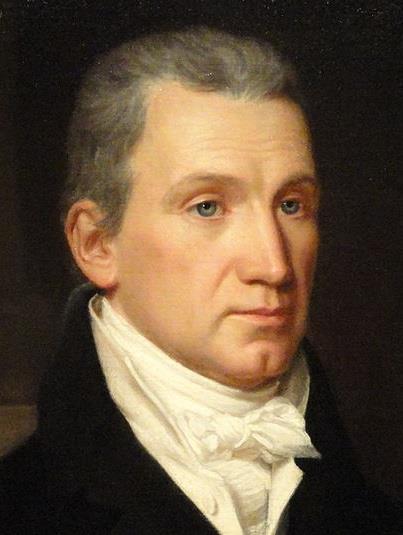
The Napoleonic wars (1800-1815) had undercut Spanish power considerably – both in Europe and in America.  Not only had independence movements (Mexico, Colombia, Argentina, etc.) developed in Spanish America as a result, but the Seminole Indians in Florida had used this opportunity to conduct raids north into Georgia and Alabama.  Now, with the fighting against the British over, General Jackson was thus ordered into action to defend American territory from these Indian raids.  But Jackson took this as authorization not merely to block Seminole raids into the American states, but to take the action against the Indians all the way into Spanish Florida (1818).  And he ended up not only defeating the Seminoles but laying claim to the whole of Florida as U.S. territory.  President James Monroe (the 5th U.S. President and 4th Virginian to hold that office) was embarrassed.  But Americans in general were greatly delighted.  Spain quickly decided simply to sell Florida to America for $5 million – ending further humiliation for Spain.  Now Jackson appeared to be even more of a giant in American eyes.


BUT ECONOMIC CRISIS (1819-1821)

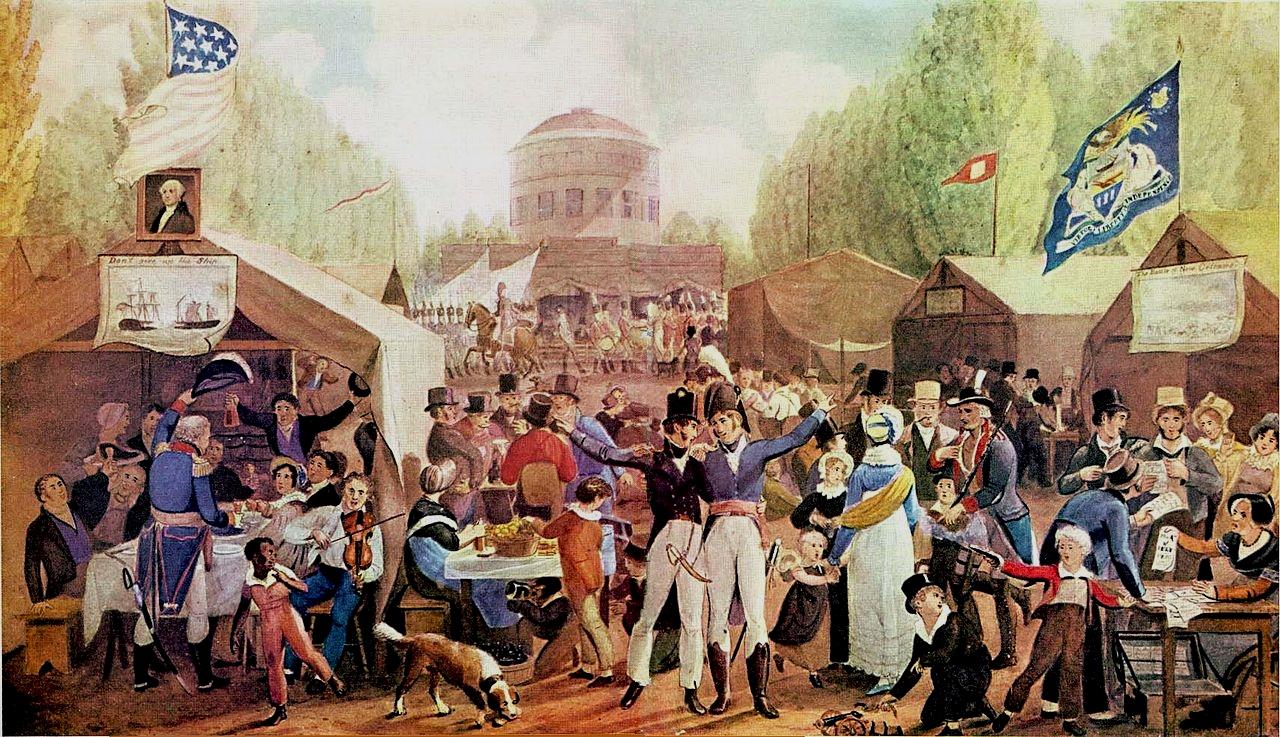
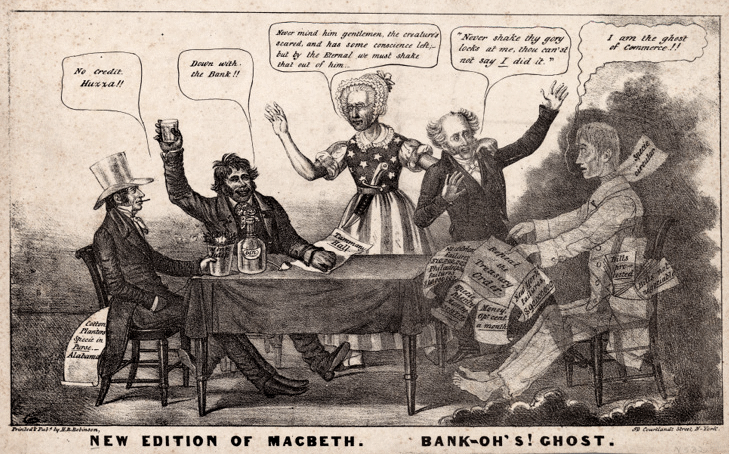
The years after the War of 1812 seem so settled and the national spirit running so high that a Boston newspaper in 1817 termed the times they were living in as "The Era of Good Feelings."  But those Good Feelings were not destined to last, for in the return of Europe's national soldiers back to their farms and factory jobs, the glory days of American agriculture and industry suddenly came to a crashing end.  The demand in Europe for American products disappeared overnight, leaving completely bankrupt the enterprising Americans who had formerly borrowed money to expand their farming and industrial enterprises to meet Europe's high demands during the Napoleonic Wars.  But the banks soon joined these businesses in the growing disaster, because instead of having paying customers (interest and principle on the loans to these businesses) they ended up with only the bankrupted property of these businesses in their hands – whose value had dropped away to a mere fraction of what it previously was.  The banks did not want worthless business property, they wanted payments on the loans.  But that just was not going to happen.  Thus the banks also woke up to find themselves bankrupt right along with their former business customers.  And no one knew how to come out of this crisis.

In fact, this was all a big mystery, one that would now repeat itself on numerous occasions in the future.[1]  Efforts to put in place commercial, financial or economic rules that might counter these swings in economic fortune would be attempted.  But still, for various reasons not always deriving from things that the Americans themselves did, there was usually very little to be done except wait for the shakeout of weaker businesses and the slow return of economic confidence to society – through helpful instruments which would come upon the scene almost as mysteriously as had the earlier causes for the crash.


[1]1837, 1857, 1873, 1893, 1907, 1919, 1929, 1979 – and more recently, the near national economic meltdown in 2008.


SLAVERY INTENSIFIES "IDENTITY POLITICS" ... AND THE MISSOURI COMPROMISE

Then when Missouri applied for statehood in 1819, another brewing controversy boiled over.  The five states of the American Northwest Territories (Ohio, Indiana, Illinois, Michigan and Wisconsin) had been admitted into the Union as free (non-slave) states, and Louisiana had recently been added to the roster of slave states, making a political balance of eleven states each, slave and free.  Missouri itself was about half and half (the state itself divided mostly north and south) and thus the issue exploded onto the political stage: how was Missouri to be admitted, as slave or free?

In Jefferson's days there had been some vague idea that slavery would soon end itself naturally.  Europe was fast moving to outlaw the vile practice, though hardly naturally – as, even there, much bitter debate was involved in Europe's coming to the anti-
slavery decision.  But in America, as time went on, the South dug in more deeply in defense of the practice, showing no willingness to give it up.  Further, any talk of ending the practice (now coming mostly just from the North) seemed to be an attack on Southern culture – a culture which now placed slavery emotionally at the very heart of its social-cultural order.  Slavery was a central element (becoming its key item) forming the distinct Southern identity.

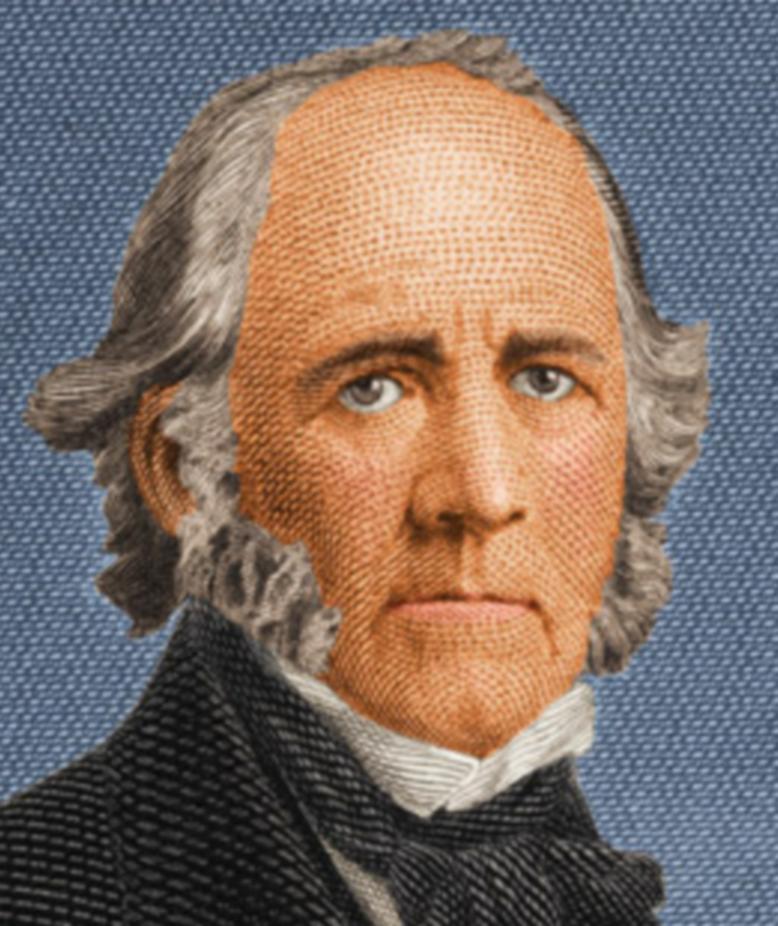
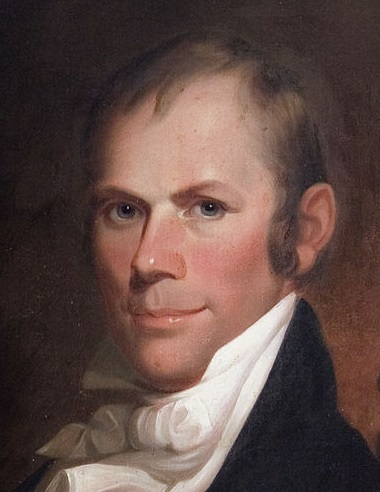
The "Missouri Compromise."  The "Great Compromiser" Senator Henry 
Clay of Kentucky offered a solution: to create some kind of line across the country from East to West, with slavery allowable below that line as territories advanced to the status of states – but Missouri (north of that line) being exempted and admitted as a slave state – because now Maine was requesting admission as a free state, thus continuing to preserve the numeric balance.  So it was that everyone breathed a huge sigh of relief – believing that they had solved the problem.  But in fact, slavery now had become a huge political issue clearly defined publicly, separating both North and South.

Social issues, such as the 
slavery matter, once they get in people's heads (or hearts) as a key social identifier, simply do not go away on their own.  Rather they become major social causes for a society, leading its people to do the most extreme (even highly irrational) things.  At some point people would even prefer to engage in bloody battle – rather than appear to be retreating on the matter.

Thus it was that the inability to find a "rational" answer to the divisive issue of 
slavery only made that social division all the deeper and more emotional with time.   Finally, there really was no compromise available – as each side became more deeply invested in its own particular stand as the socio-political identity issue dragged on, and on.


THE MONROE DOCTRINE

Despite Spanish efforts to hold onto its American colonies, Mexico moved to full independence (1821) and various others of Spain’s American colonies also did so soon thereafter.  As a result, Britain was seeing in all this the opportunity to trade with these newly-independent countries in America, something not permissible under the principle of mercantilism, previously in force in Latin America – which allowed only the mother country (Spain or Portugal) to trade with its colonies.

But not looking for another conflict, Britain approached America to see if it was willing to enter an understanding with Britain that would keep any European power (whether Spain or possibly even France) from taking advantage of the infancy of the new Spanish-American regimes to try to draw them back into a Spanish or even a French imperial circle.  Britain would provide the muscle (its navy) if America would take the political lead in the matter.  And thus in 1823, President Monroe announced in Congress that America would protect the independence of its neighbors to the South (and also the right of Americans to now trade with its southern neighbors as well!).

European monarchs at first laughed at American presumptuousness.  But ultimately, they did nothing when they realized that British power stood behind this "Monroe Doctrine."


ADAMS II (JOHN QUINCY ADAMS)

The New England Federalists had not been active supporters of the American effort in the War of 1812 – and paid dearly for this decision by losing so much support that the Federalist Party simply died away soon thereafter.  With only one party (Jefferson's Republicans) now in existence, the Republicans then themselves split into a number of contending factions – which in the presidential election of 1824 threw the election to the House of Representatives to decide.

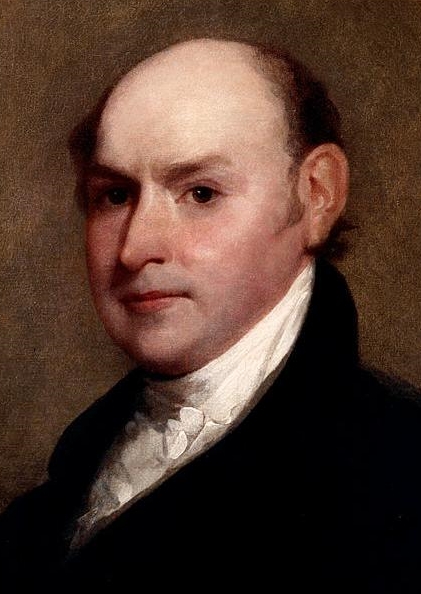
When it chose John Quincy Adams as President (John Adams' son) Jackson was furious, because he had more votes than the others – though not a full majority.  Thus he sat offstage fuming while the younger Adams tried to guide the country – although there were not many issues, because as Secretary of State under Monroe, Adams had taken care of most of the diplomacy problems facing the country (the Executive Branch of government at that time was still pretty much just focused on foreign policy issues anyway.)  Indeed, it was actually Adams that had negotiated the agreement that led to the Monroe Doctrine!

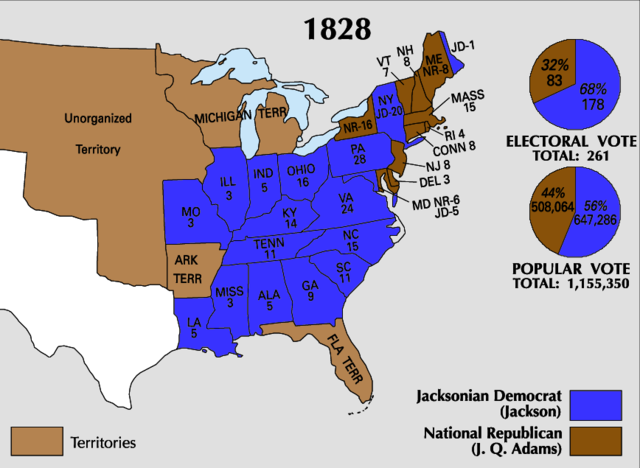
But sadly, Adam's quiet (also not very charismatic) presidency did not connect well with the hearts of American commoners – and four years later (1828) Jackson (with the Southerner South Carolina Senator John C. Calhoun as his running mate) finally won the presidency.


ANDREW JACKSON

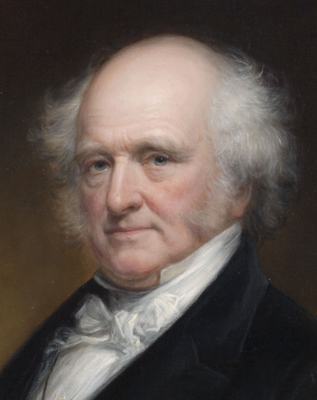
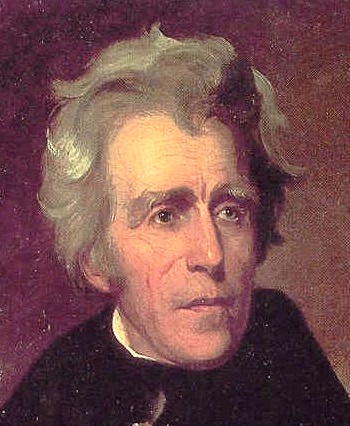
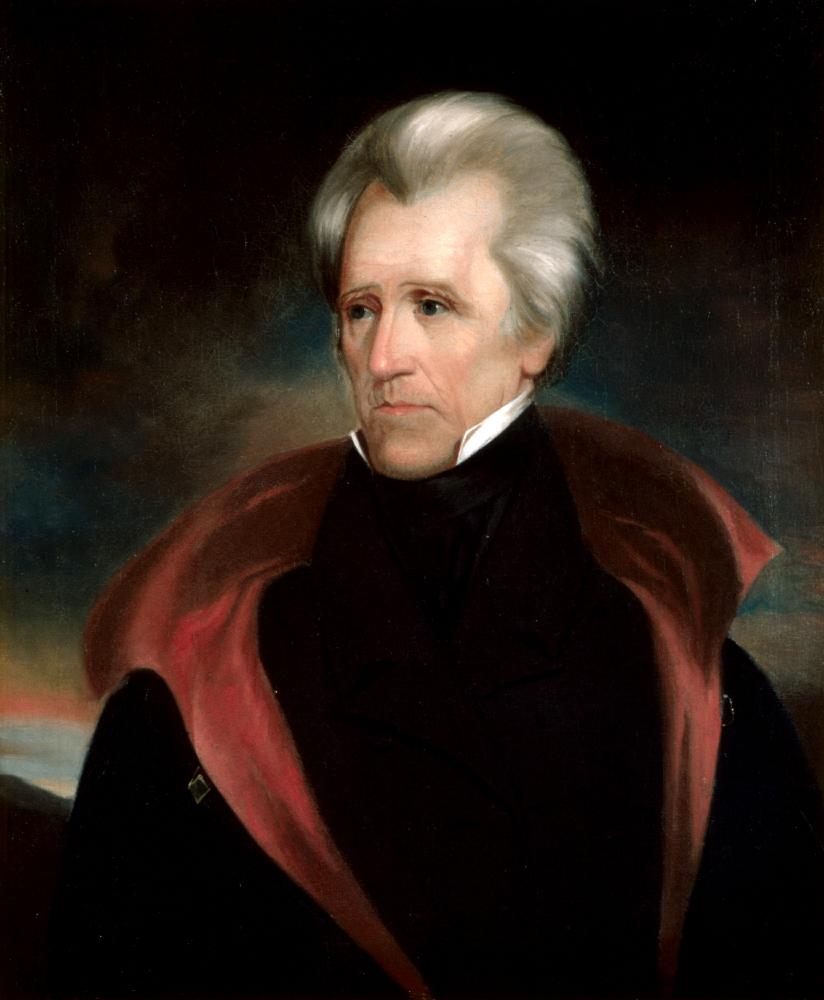
Jackson's world (1830s).  Although Jackson was something of a Southern aristocrat, he knew how to relate to the interests of the American commoners – especially of those in the rapidly expanding American West and Southwest.  Jackson had organized (with considerable help from his political ally, the New Yorker Martin Van Buren) his own political party, which took the name "Democrats."  With this development, American politics took on a more earthy, even vulgar, character – as the political interests of rural and frontier America took the political lead in the country's affairs.[2] 

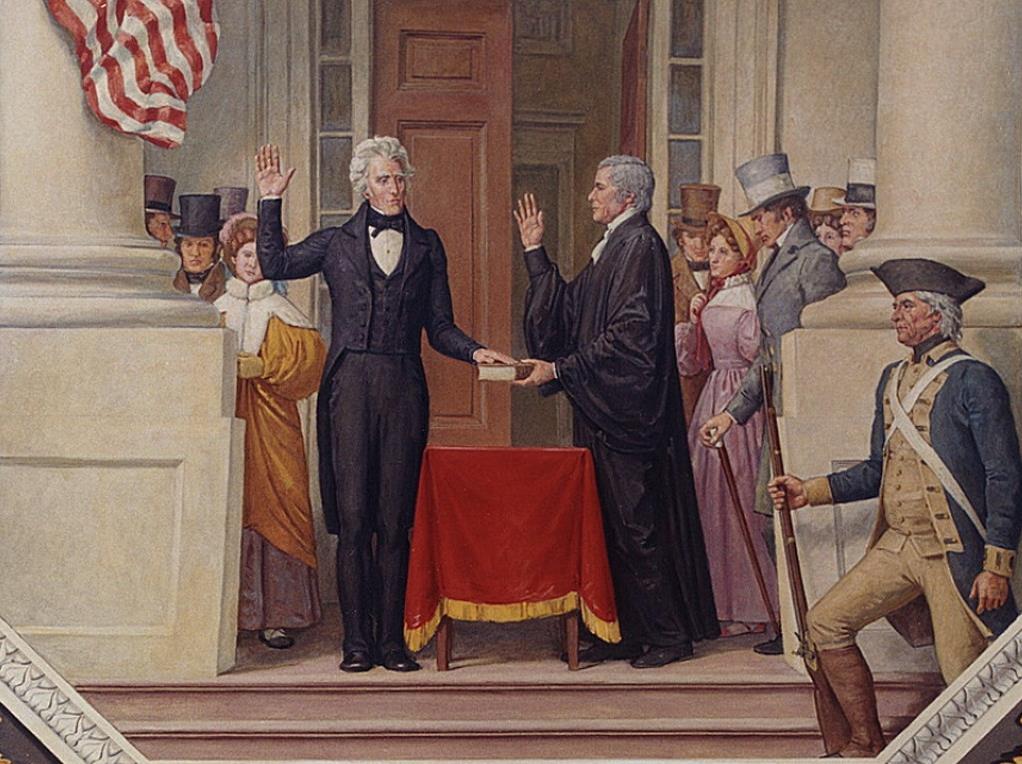
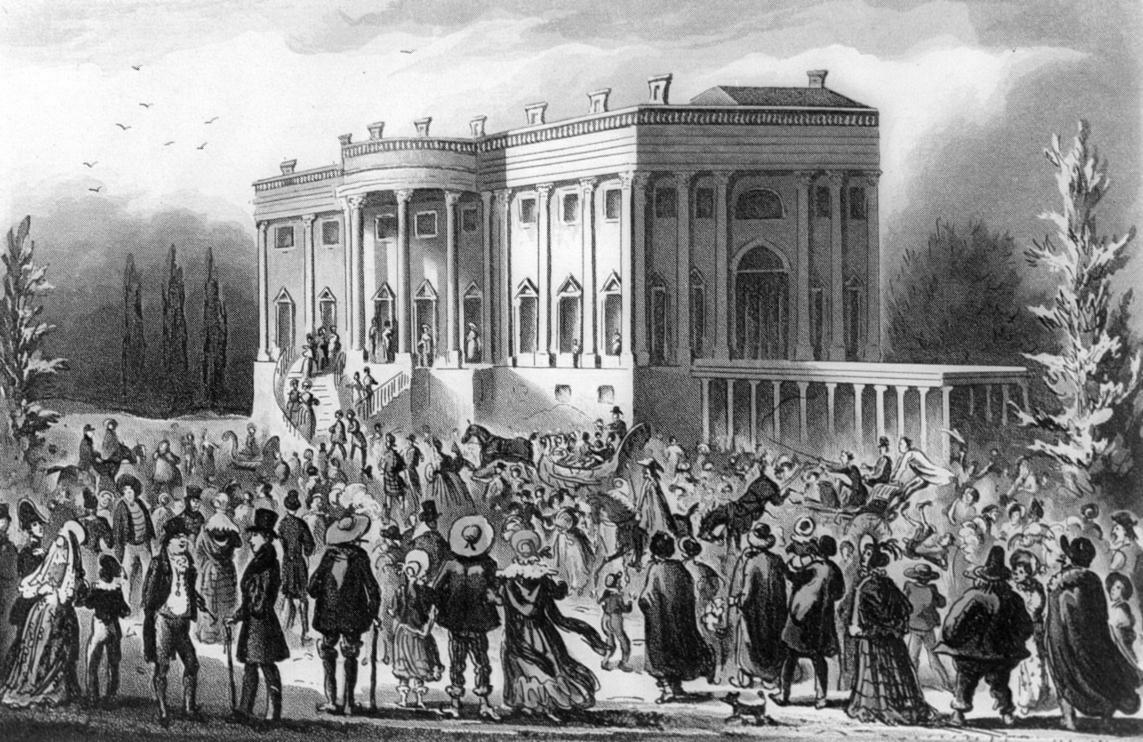
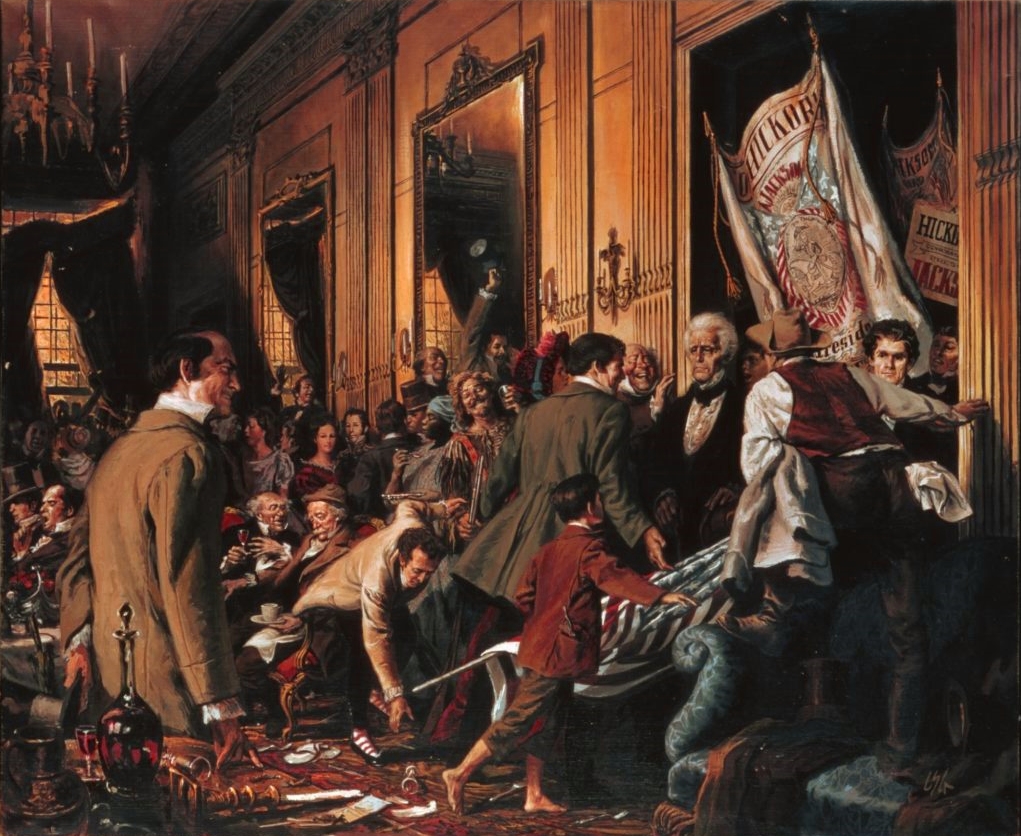
Jackson would become famous for the way he played to the crowds.  Indeed, on inauguration day, throngs of very ordinary people attempted to gather to see and hear their hero being sworn in as president, and then join him at the White House for a major reception.  Even in through the windows the crowds came, muddy boots and all, stepping on the furniture, knocking over tables, smashing china.  Jackson slipped away from the adoring crowd and quietly had dinner with close associates.

In short, Jacksonian democracy was all a grand show, but one for which Jackson himself had no personal interest.  He would let 
Van Buren take care of the political image-making.  As for Jackson, he had other things he would rather be doing!

So, the age of elite-led politics was over.  The noblemen (Washington, Adams Sr., 
Jefferson, Madison, Monroe, and Adams, Jr.) who formerly had quietly assumed the presidency in order to serve the nation, would now be replaced by the politically ambitious, who knew how to work the political imagery necessary for getting elected to public office.  In this, Van Buren, on behalf of Jackson, was a genius.  He understood what it took to appeal to the common voter.  He understood the press and its ability to create reality.  He knew how to line up voters and get them to the polls, especially in the newly emerging democratic age of the general electorate.

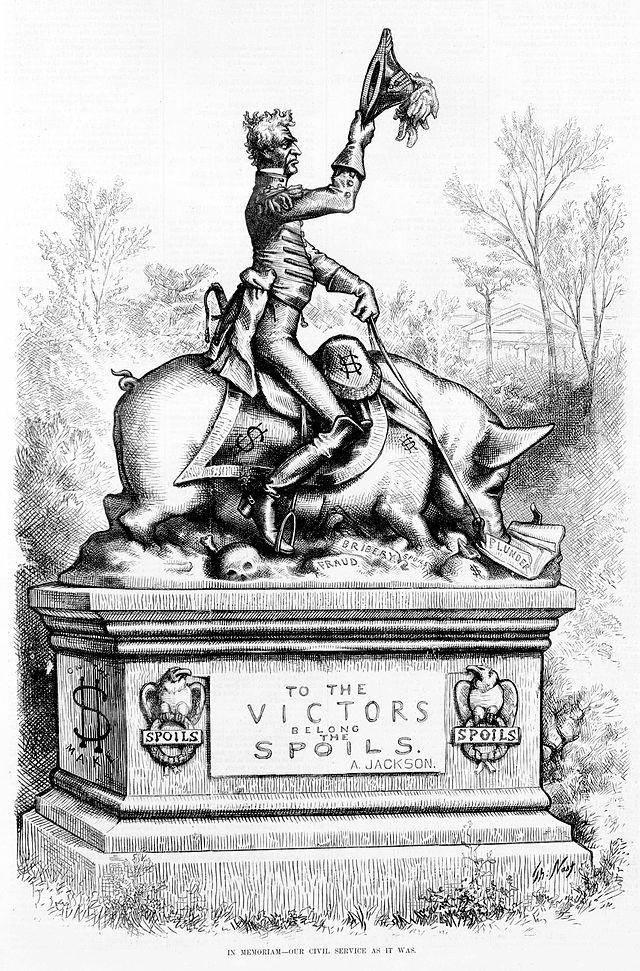
The "spoils system."  This was a term coined by New York Senator Marcy in 1828 after Jackson's victory: "To the victor belong the spoils."  Politics now seemed to have one goal for those who served:  to get reelected.  And to achieve that, politicians would need social assets they could give their supporters as payoff for their votes – government jobs mostly, though sometimes just offering a free round of beer on election day would achieve the same result.

Jackson would become a specialist in this spoils system, for instance, undercutting the vital national bank, the Bank of the United States (BUS) – not because he was opposed to national banking, but because he was afraid that his political arch-rival Henry Clay, who sponsored the renewal of the BUS's charter, would put himself in the position of being able to offer all the BUS's jobs (and loans) to his supporters.  Thus Jackson saw to it that the federal government's financial operations would be done instead through Jackson's regional and local "pet banks" rather than the national BUS, thus crippling the BUS – and in the process much of the national government's financial powers as well.


[2]The election of 1828, for instance, had been particularly vulgar in tone, with candidates, or their supporters anyway, hurling coarse insults against each other. In the case of Jackson, it was slander about the legality of his marriage to his wife Rachel, so vicious that it may have been the reason Rachel died of a heart attack in December 1828, shortly after Jackson’s presidential victory, but before he was sworn into office.  Jackson, understandably, remained forever bitter about this personal tragedy.


DE TOQUEVILLE'S DEMOCRACY IN AMERICA

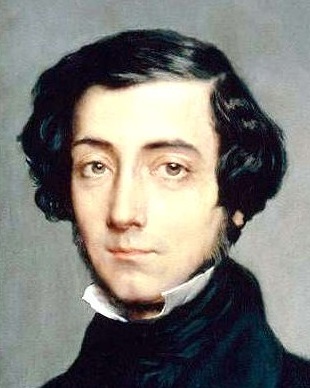
An individual who put on record his own observations about the peculiar cultural nature of this Jacksonian America was the Frenchman, Alexis de Tocqueville, who recorded his observations in his Democracy in America (two volumes, 1835 and 1840).  He noted the highly individualistic spirit of the typical American – tending to take on new challenges without ever having completed the old challenges!  Americans simply loved to "move on" to America's ever-expanding frontiers (not an option in a France with very fixed and well-filled-in national boundaries).  He also noted the deep impact of the Puritan moral legacy (quite different than France's much looser attitudes about sex – yet much stricter attitudes about social status).

And indeed, America was a very different society than the ones back in Europe.  It was young, aggressive, and ever-expansive in its social vision.


THE INDIAN REMOVAL (1830s)

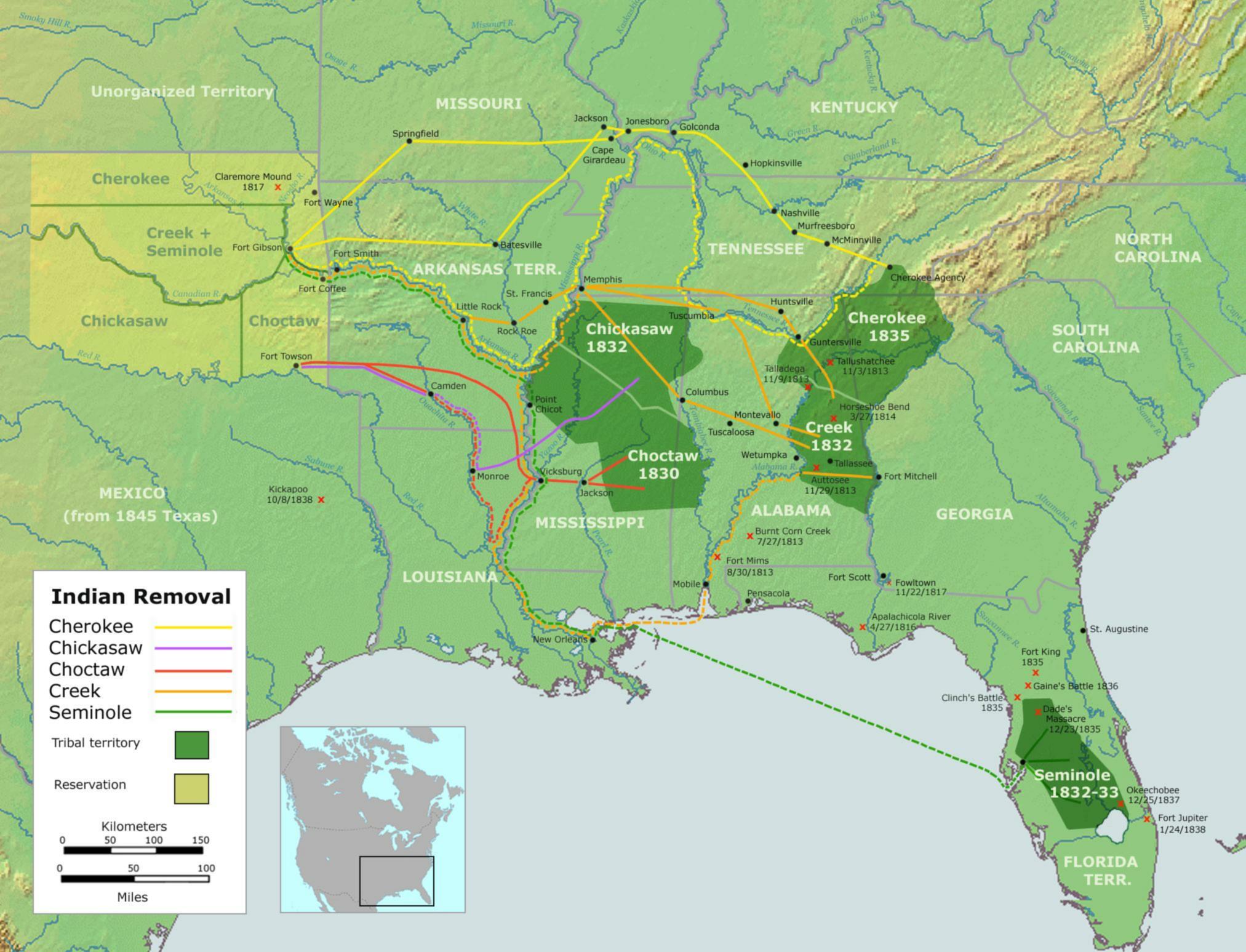
This factor pointed to another political problem that was brewing in those days.  Americans looked greedily at Indian lands still located inside an expanding America – in particular the various tribes located principally in Georgia – but also Alabama and Mississippi.  When the Georgia governor indicated that his government was going to take action on the matter of relocating the Indians tribes out of Georgia, Jackson decided not to be upstaged by the governor, but to take the lead in the matter himself.  Thus it was that Jackson had Congress push through an Indian Removal Act (1830), calling for Indians everywhere to be relocated to the west of the Mississippi River, principally to the Indian territory of Oklahoma.

However, the Cherokee, who had made every effort to adapt themselves to Anglo-American-Christian culture, fought the move by appealing to the Supreme Court – which under 
Marshall simply nullified the right of both the Cherokee and the State of Georgia to act on this matter – presumably blocking removal – or did it?  Anyway, Jackson ignored the Supreme Court's intervention, supposedly inviting Marshall to come and enforce the Supreme Court decision himself personally, if he wanted!

The 
Indian Removal Act was also opposed by the newly rising party of Whigs (heavily Eastern-industrialist in membership) – who claimed that the removal policy violated Christian principles in every way possible. But opening up these western lands for Anglo settlement also stole from this business class the workers they were counting on to man the machines in their new industries back East.

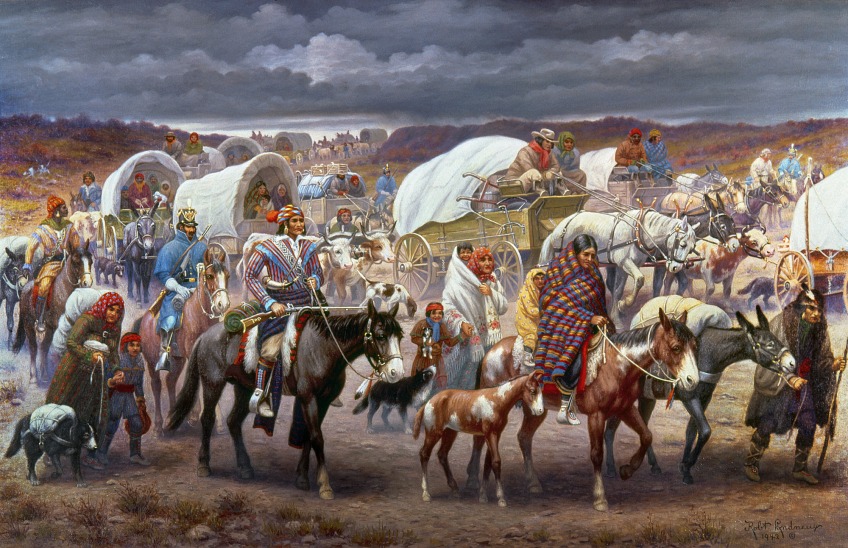
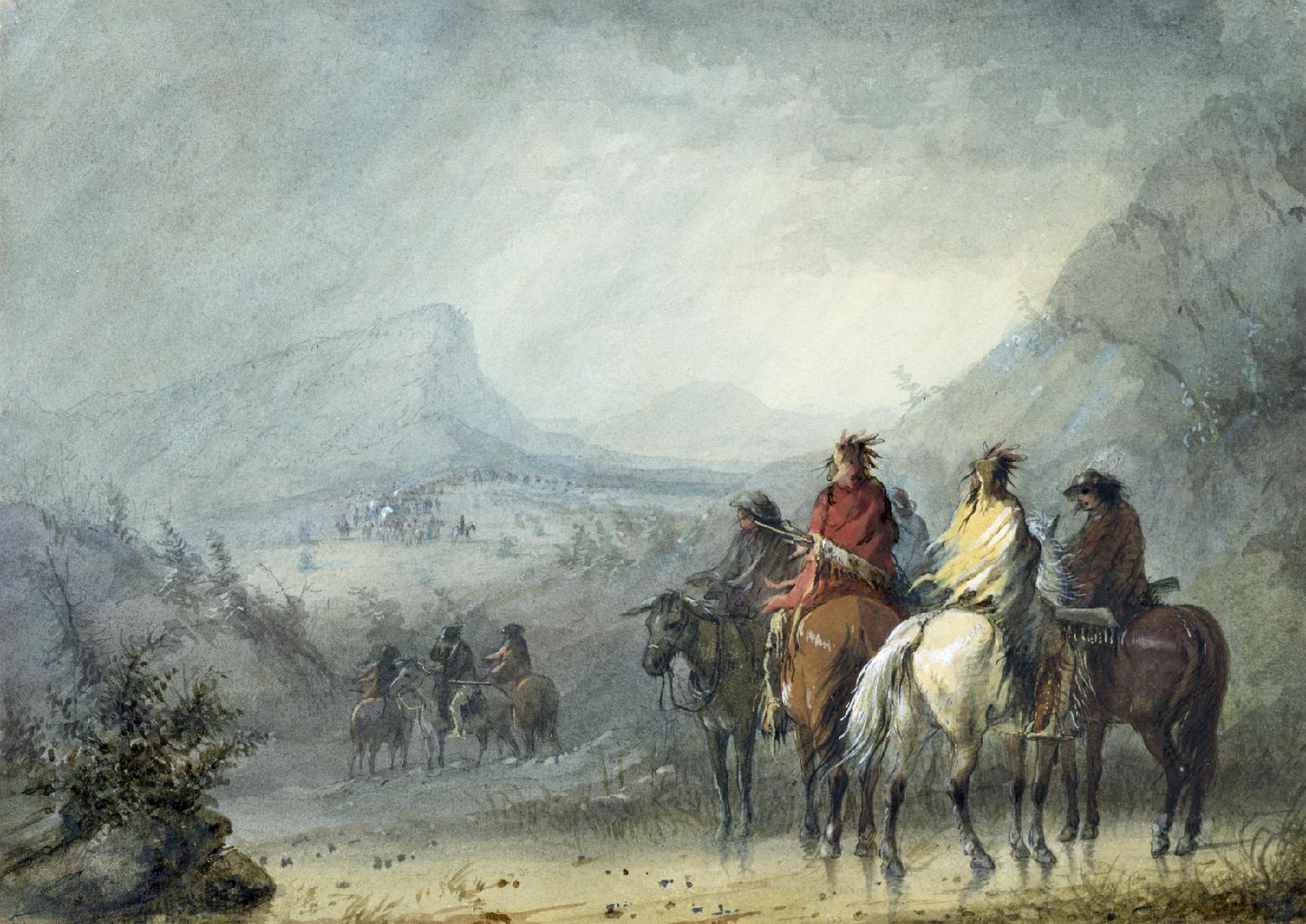
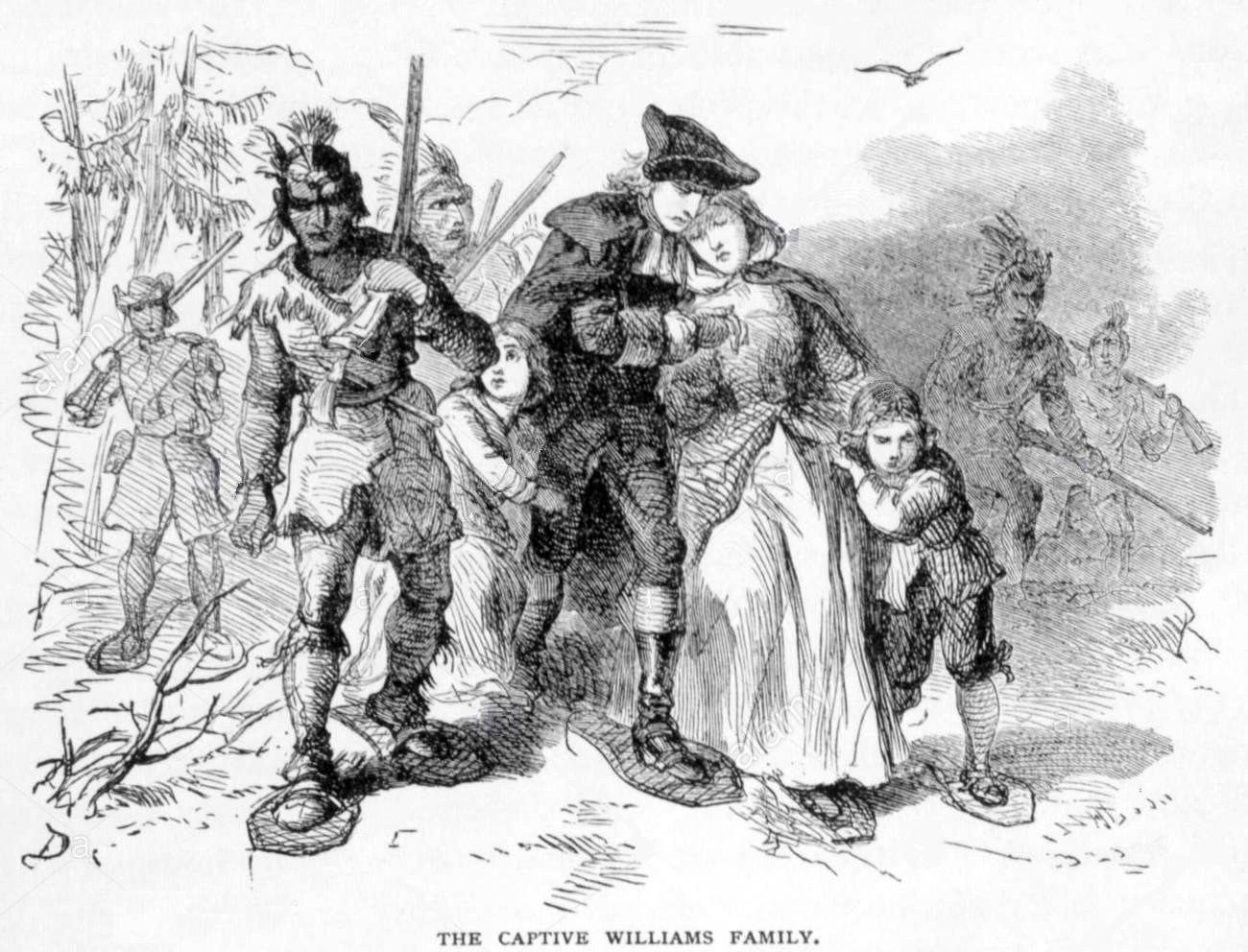
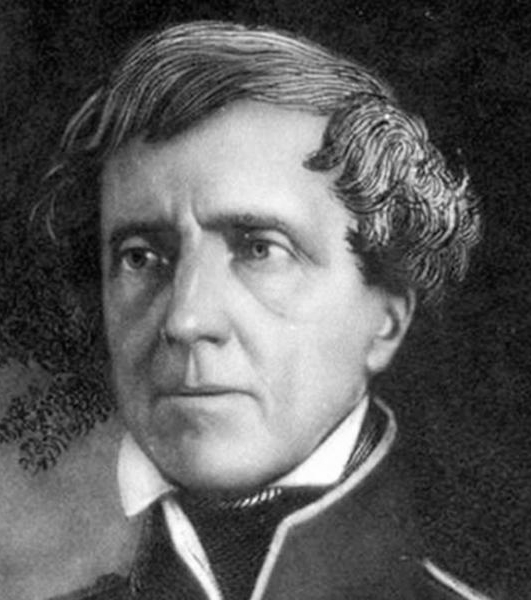
The Indians themselves resisted this removal as best they could.  In Illinois the Sauk and Fox Indians, led by Chief Black Hawk, revolted against the order and had to be put down violently by the Illinois militia (including in its ranks Captain Abraham Lincoln).  But one by one the Choctaw (1831), Seminole (1832), Creek (1834), and Chickasaw (1837) were forced to move.  The worst removal occurred among some thirteen thousand Cherokee, who in 1838 were first herded into camps in Tennessee and then force-marched westward through a freezing, snowy winter by General Winfield Scott's soldiers.  Cold, disease, and starvation took a huge toll in their numbers.  Thus many died along this "Trail of Tears," possibly as many as a third of all Indians involved.  In all, some 46 thousand Indians were relocated in order to open the way for Anglo-American settlement into these Indian lands.


TEXAS

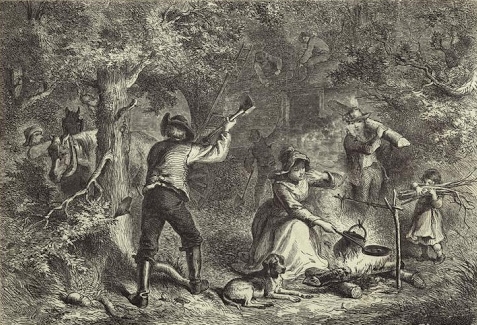
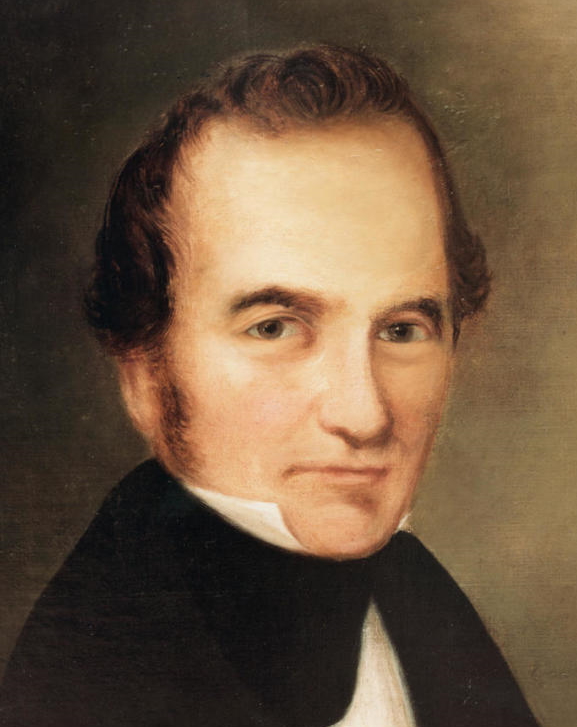
Texas.  Texas was originally a huge but very sparsely settled northern section of New Spain (the latter after 1821 constituting the newly independent "Mexico").  Comanche Indians were such a problem in that region that the Mexicans decided in 1824 to invite Anglo-Americans to come and settle the area – in the hopes of displacing or at least subduing the Comanches.  Stephen Austin had already brought a group of 300 Americans to settle along the Brazos River in 1822 and the idea was to invite other impresarios or group organizers to do the same.  But by 1830 the flow of Americans into Texas had become so extensive that the Texas region was in danger of becoming thoroughly Americanized – and thus the flow was officially stopped.[3]  But the Texans immediately understood this to be an effort of the Mexican authorities to isolate their huge Anglo community – stirring deep resentment among these new settlers.  This mood also found itself developing at a time that Mexico was itself in a state of near civil war between its Centralists and Federalists.
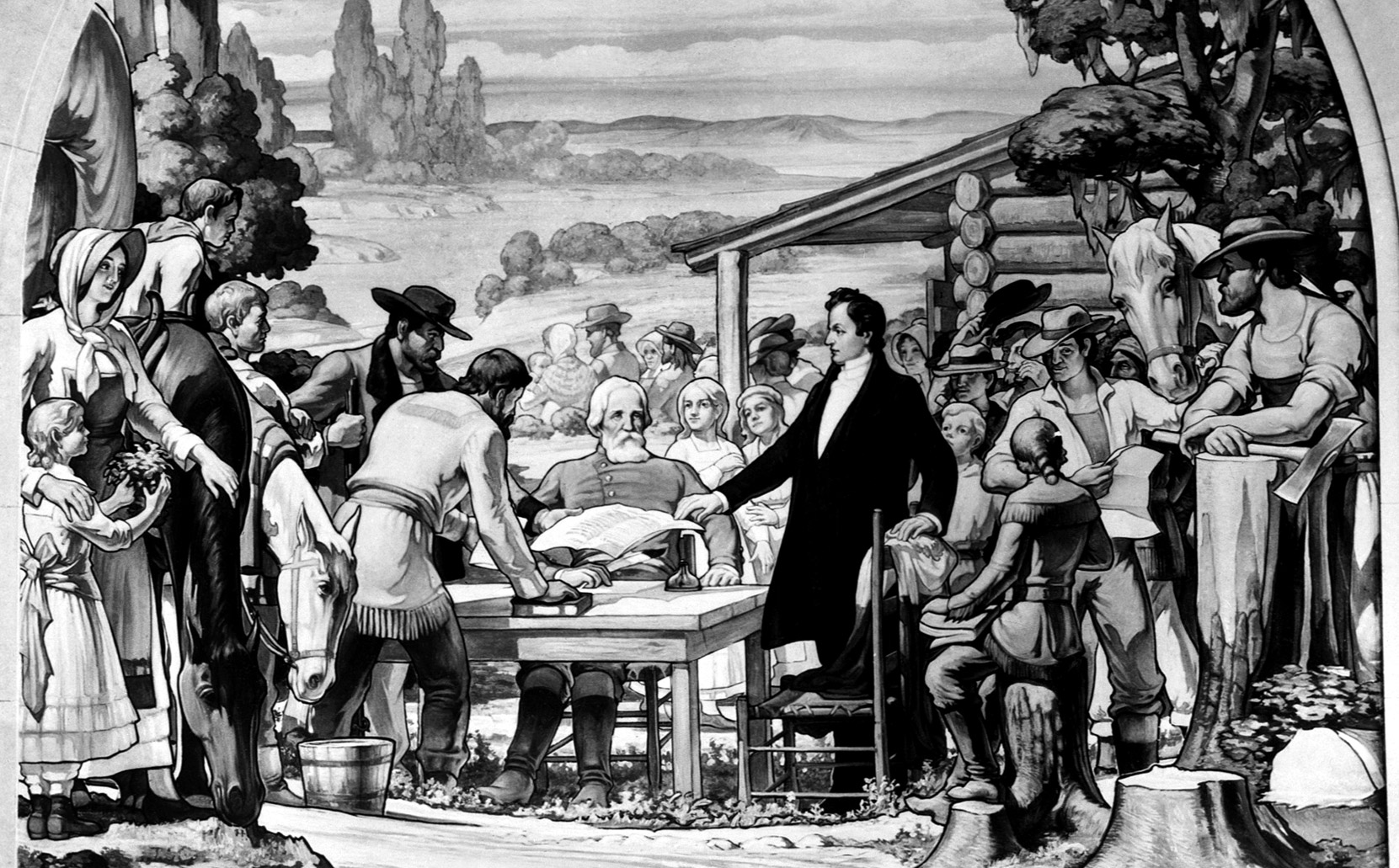
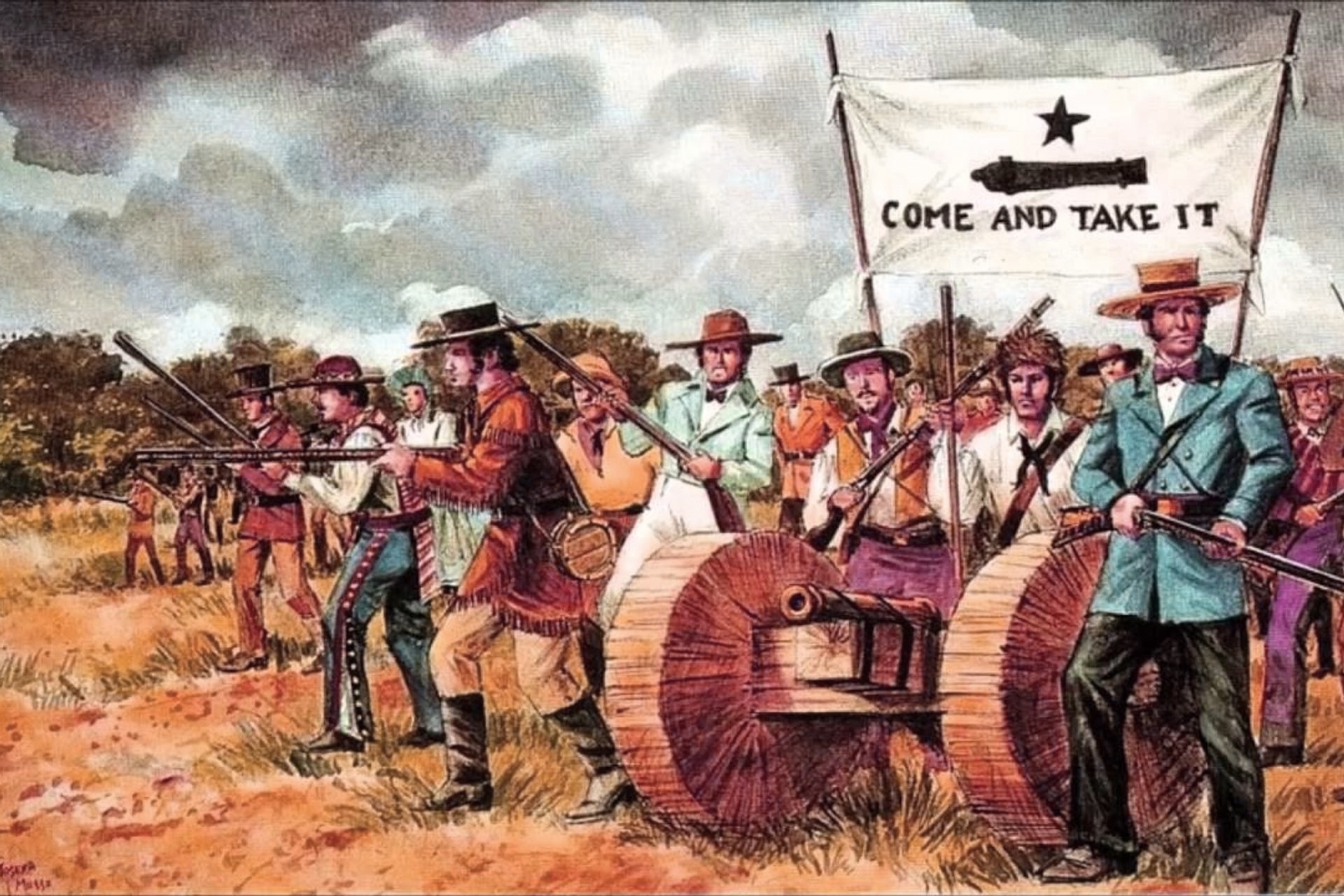
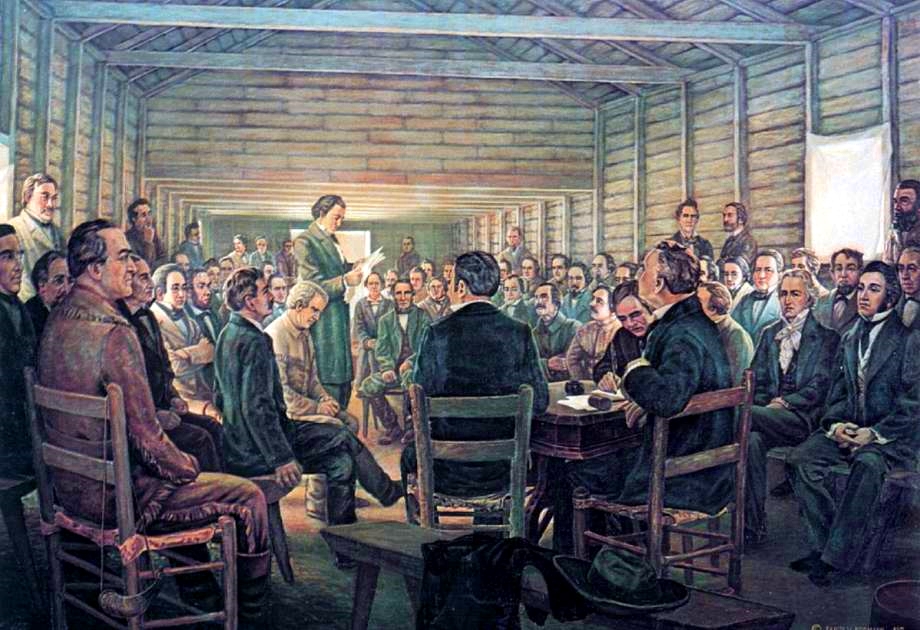
Texas Independence (1836).  Thus it was that a group of Texans gathered near Austin to write the Convention of 1832, demanding a lifting of the immigration restrictions – and greater political autonomy for Texas itself.  The Mexican Congress attempted to answer some of these demands (even authorizing English as a second language).  But this failed to satisfy many of the Texans who were becoming more insistent on total Texas independence.  Then in 1835, when a small Mexican force was sent north to subdue this spirit of independence, it met armed resistance at Gonzales – leading Texans to move to set up their own Texas army under the command of Sam Houston.  The following year (1836) the Texans moved to decree full independence – as the Republic of Texas.

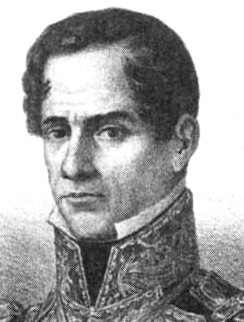
The new Mexican President 
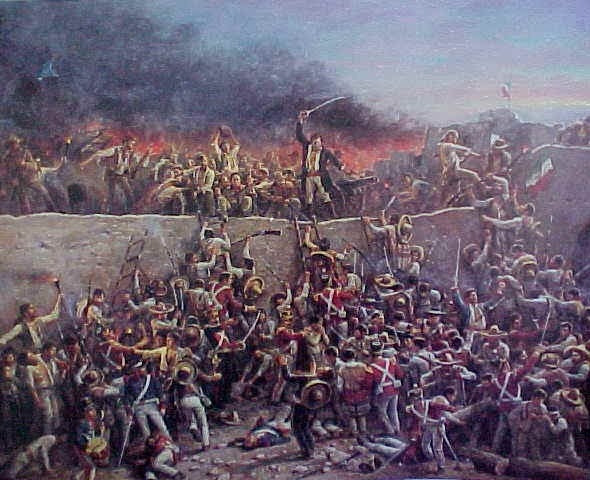
Santa Anna responded quickly by sending 4,000 troops north – to crush the approximately 185 Texans taking a stand at the Alamo – killing the Texans almost to the last man.  Then Santa Anna brought up more Mexican troops, took on more Texans, defeating them, and then moving them to a prison at Goliad.  Then to everyone's shock, he ordered the massacre of the 300 Texan prisoners at Goliad.
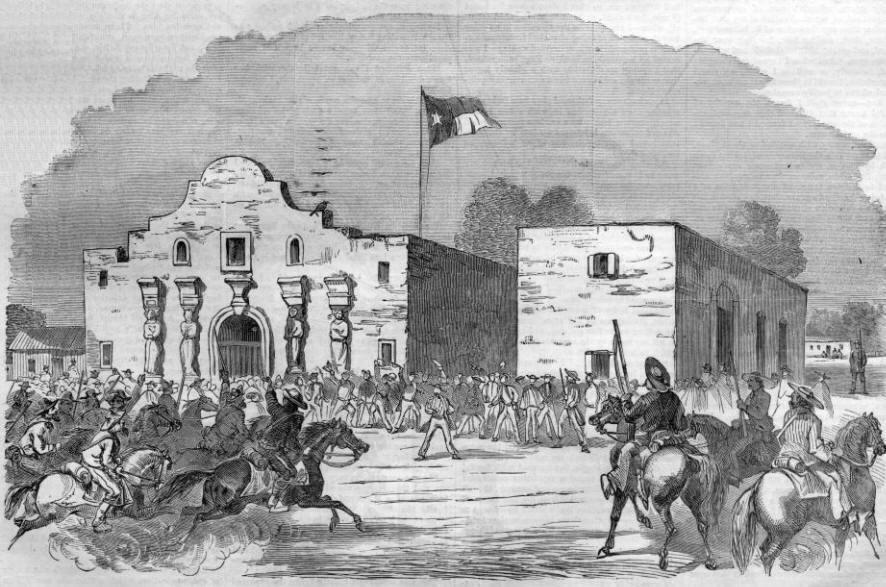
The Texans vowed to never forget what 
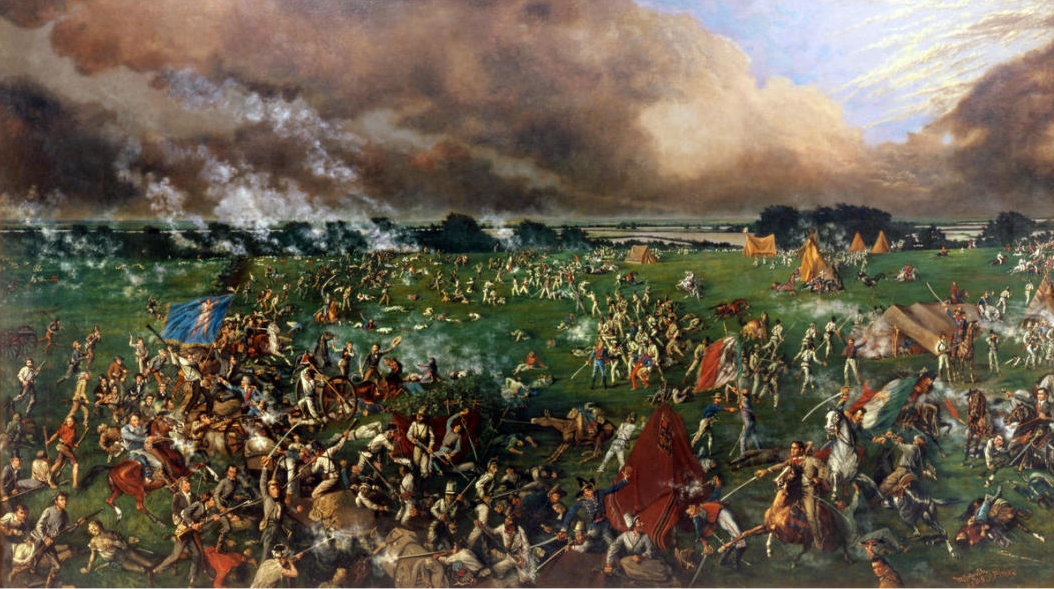
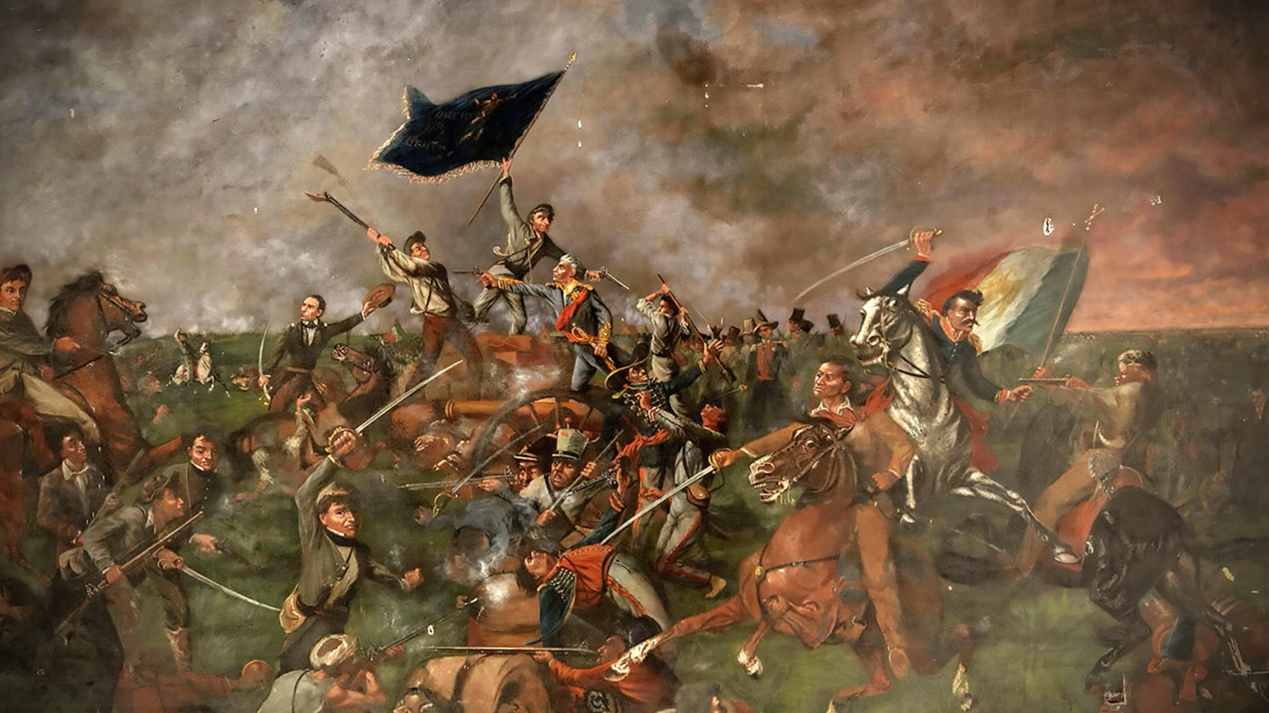
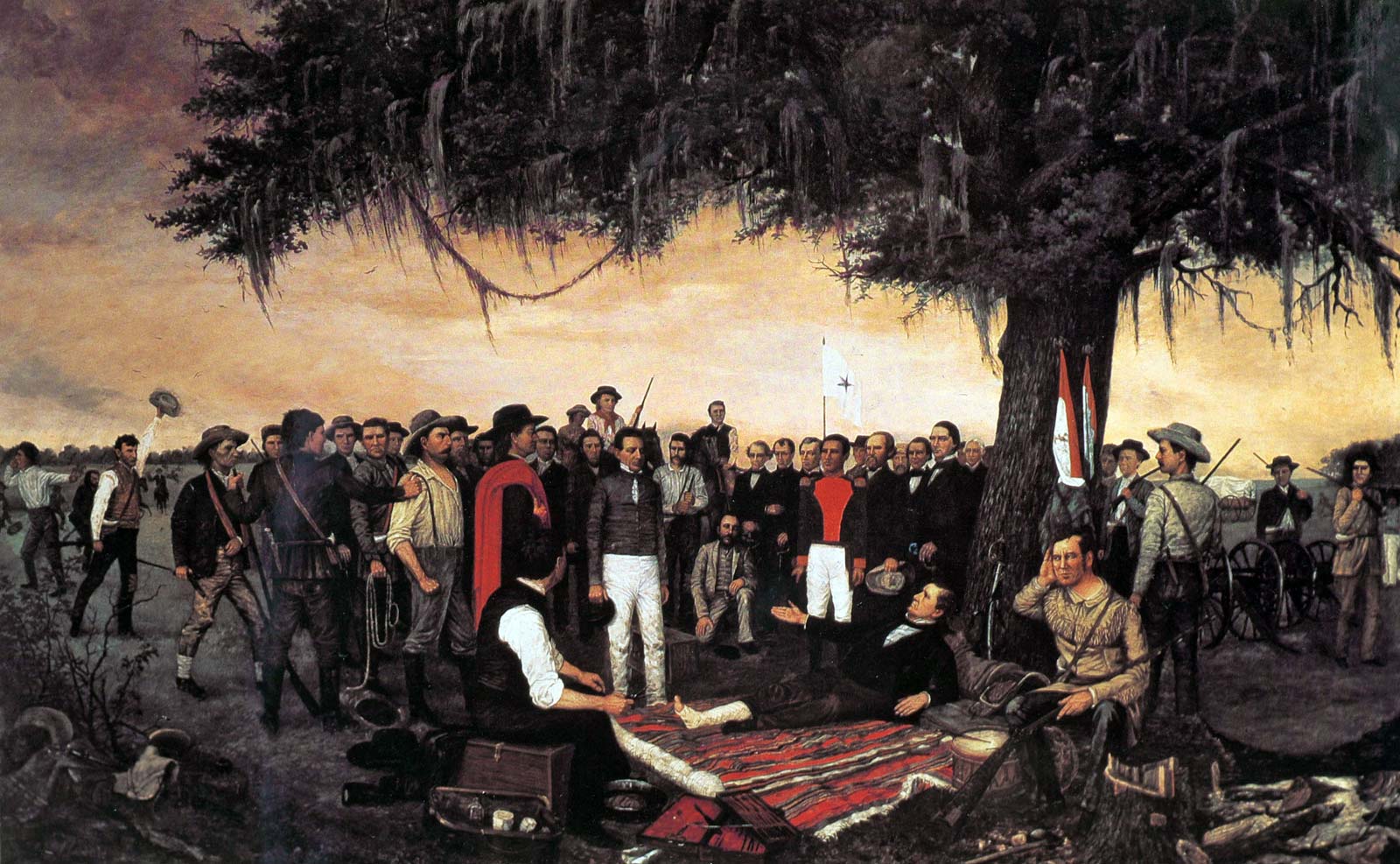
Santa Anna's troops had done.  "Remember the Alamo" and "Remember Goliad" subsequently became the Texans' battle cry.  A month later the Texans had their chance for revenge – smashing the Mexicans at San Jacinto, capturing Santa Anna, and forcing him to sign a peace treaty recognizing the independence of the new Texas Republic (although he would repudiate the treaty once he was back in Mexico).

At this point a huge question posed itself to the Texans:  was their newly independent Texas to remain an independent Republic, possibly expanding itself all the way to the Pacific, or was it more logical simply to prepare Texas to become a new state in the American Union?  The matter was soon resolved when Mexico sent troops north to undo Texan independence, pushing the debate in favor of those wanting to join the U.S.

But this then raised the question in the U.S. itself – would Texas be admitted to the Union as slave or free?  Debate in Congress on the matter turned heated, as 
identity politics always does.  Meanwhile, President Van Buren was struggling with the great economic Panic of 1837 – and was not looking for more contention to trouble America's political waters.

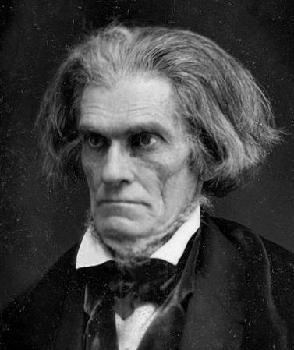
But South Carolina Senator John C. 
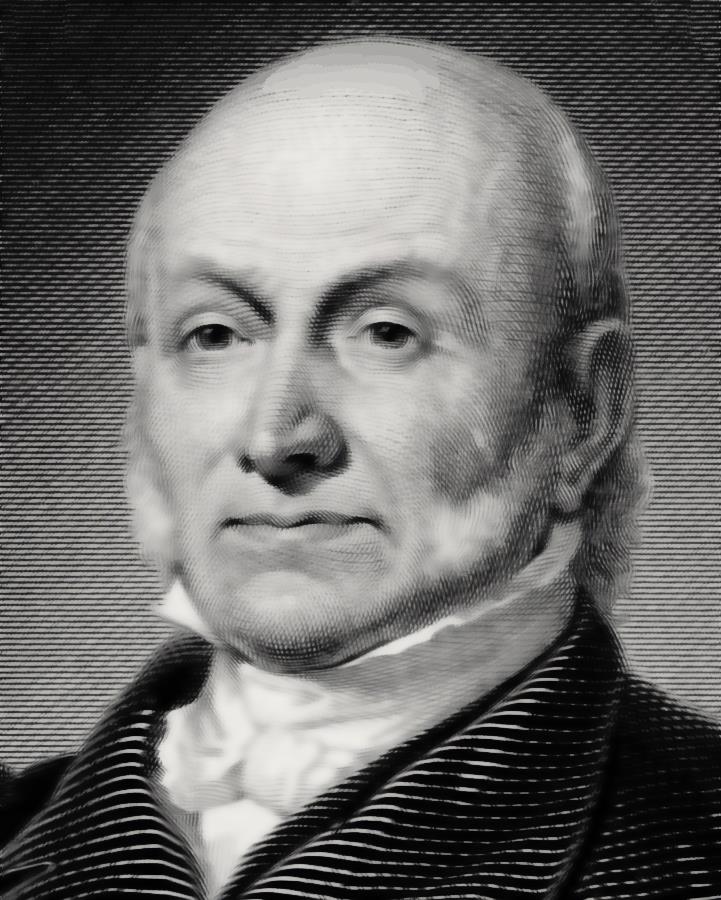
Calhoun (who in the 1820s had switched from being a strong nationalist to instead being a strong pro-slavery Southerner) had made the admission of Texas as a slave state a matter of high principle for the South.  He warned Congress that the Southern states themselves resolved either to stay – or depart from – the Union, depending on how this Texas matter was resolved.  Meanwhile, John Quincy Adams had returned to Washington as a member of Congress – and for three weeks led the opposition to Texas' admission to the Union.  Ultimately nothing was resolved on the matter, and the issue simply settled into a tense stalemate.
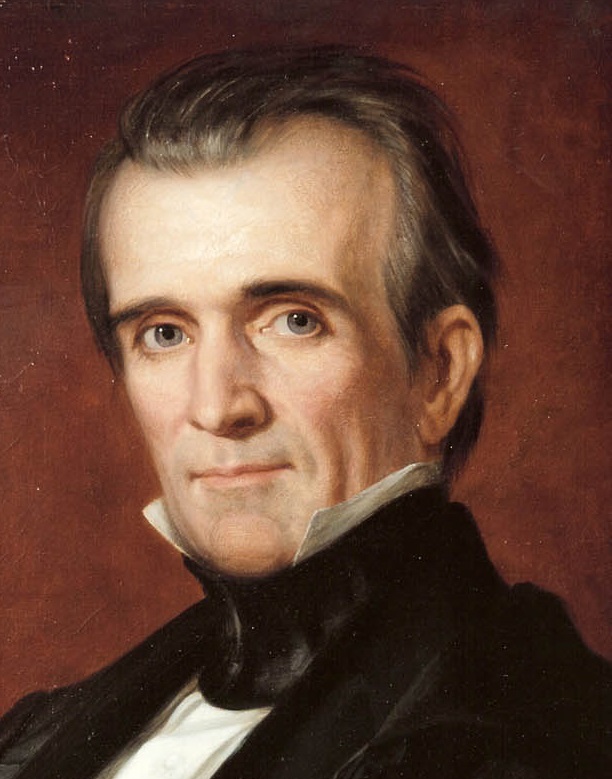
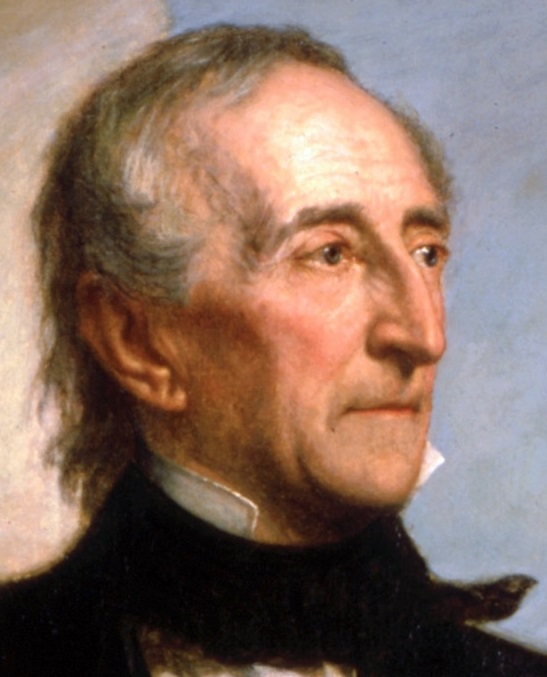
Finally, a number of years later (1845), at the end of his one and only term (another huge economic crisis had hit the nation) President John Tyler, though a Whig, decided to push through a "Lame Duck" Congress[4] an invitation to Texas to join the "Union" as a new state.  Thus the incoming President James Polk would have the honor of overseeing the admission of Texas to the Union as the country's 28th state.  At this point, the South was happy, the Whigs moody, but the Mexicans furious.

[3]At the beginning of the migration in 1825 there were only about 3,500 non-Indian settlers in Texas, mostly Hispanic.  Less than ten years later that figure was over ten times that size, about 80% of them Americans – with a large number of slaves among them.

[4]When an election has changed the makeup of Congressional representation, but the older members are still in position for a few months to do business before they are replaced by the newly elected representatives.


"MANIFEST DESTINY"

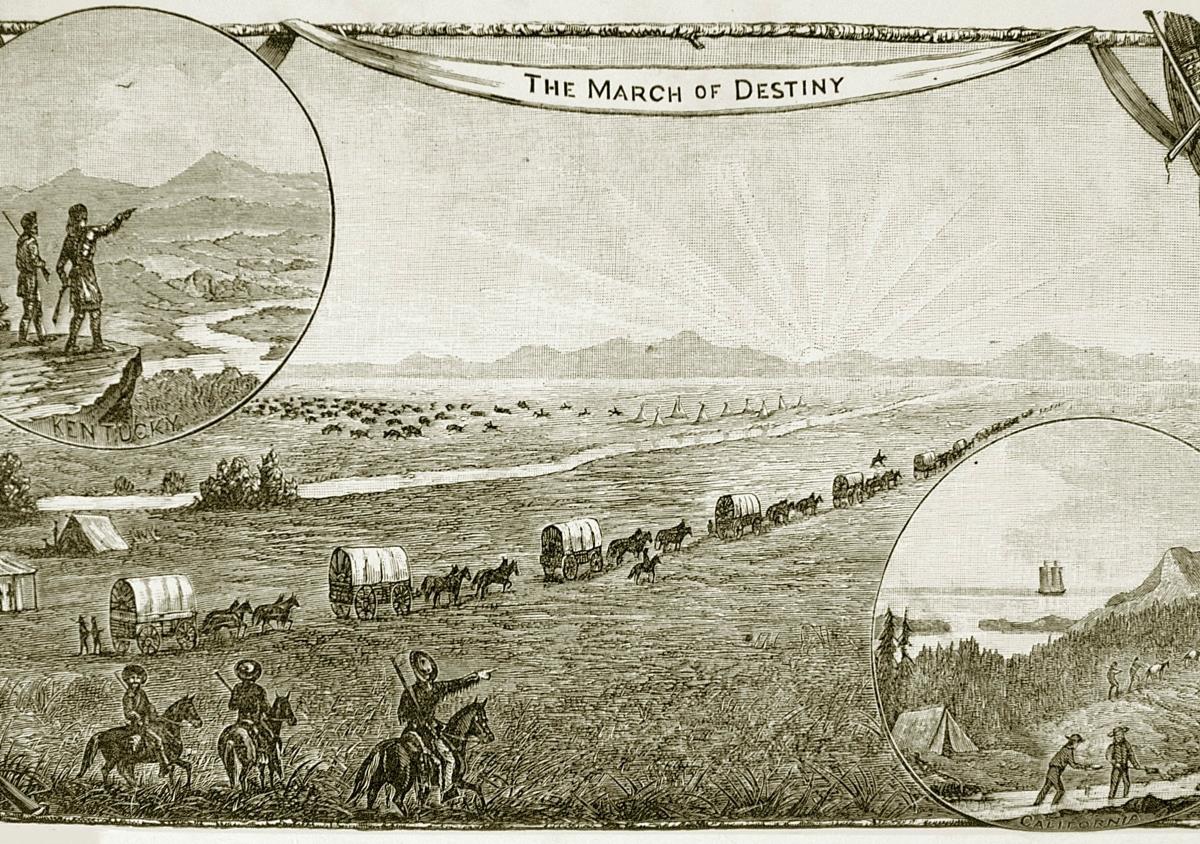
In the midst of this debate, John L. O'Sullivan, publisher of the Democratic Review wrote an article (1845) explaining that it was America's "manifest destiny" to expand itself all the way west to the Pacific Ocean.  All sorts of reactions resulted when this term became part of the national political conversation.  Eastern Whigs considered it nothing more than a crude excuse for imperialism, although their reaction was in part a result of seeing themselves lose their workers to an opening West.  Then there were those who supported the idea whole-heartedly – including importantly Christians, who compared the American westward expansion to the Israelites entering and clearing out the Promised Land to make way for the People of God to develop there.  To such Christians, America had the same divine calling on it, and nothing should get in the way of this call.   It was, after all, their "manifest destiny."
Of course the Indians and the Mexicans had a very different view on the subject.  But ultimately, they were not invited to become part of the conversation.  Nonetheless, they did not intend to be left out of the matter.


THE MEXICAN-AMERICAN WAR (1846-1848)

The new President Polk at first tried to negotiate a settlement with Mexico over the Texas issue, even offering to pay substantially for the acquisition of Texas – as well as other territory all the way to the Pacific.  But Mexico itself was in a state of massive political chaos at that time – and the Mexican leaders themselves could not agree on how to respond to Polk's offer.  When the Mexican Centralists finally won against the Mexican Federalists, the answer to Polk was a very loud "No"!

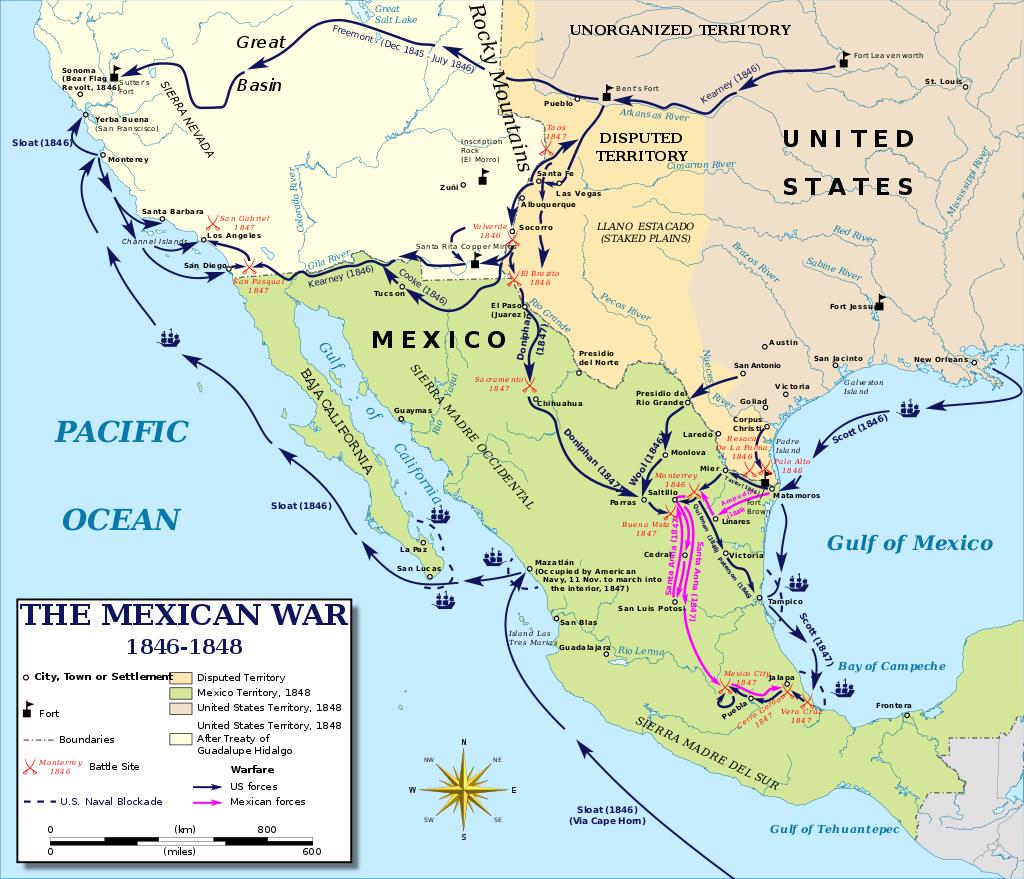
Then Polk responded to the Mexican "No" by moving U.S. troops through Texas – past the Nueces River which the Mexicans had (grudgingly) acknowledged as the southern border of Texas – all the way south to the Rio Grande.  To the Mexicans this constituted an all-out act of war – and they sent 2,000 troops north to reclaim their territory.  There they overwhelmed a small patrol of 70 American soldiers.  A furious Democratic-Party-controlled Congress now responded with a declaration of war (April 1846) – with the 
Whigs opposing this move.

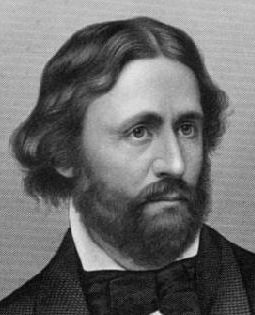
American General John C. 
Frémont then led Americans in California to rise up against Mexican authority there as well.  Briefly the Californians took up the Bear Flag Revolt (symbolizing California's independence) – but quickly declared themselves as Americans.  Then with the help of American General Stephen Kearny joining them from the East, the Californians took San Diego, cutting the Mexicans off from California.  The next year (1847) Mexico was forced to recognize its full loss of California.

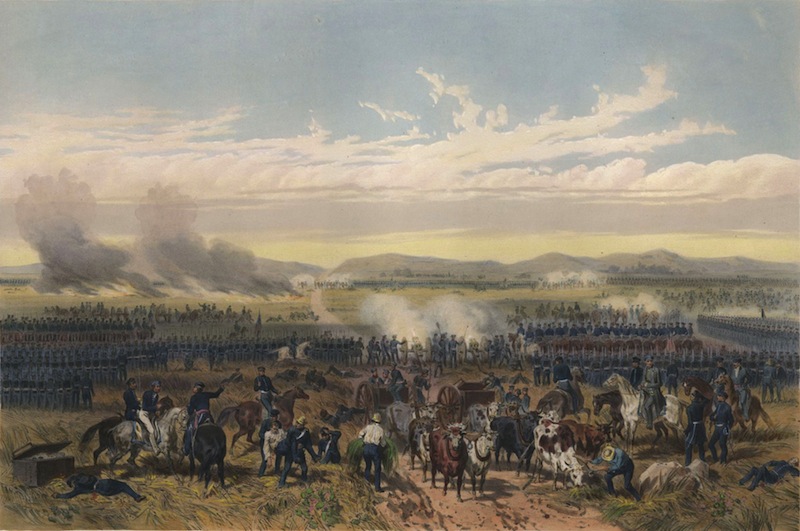
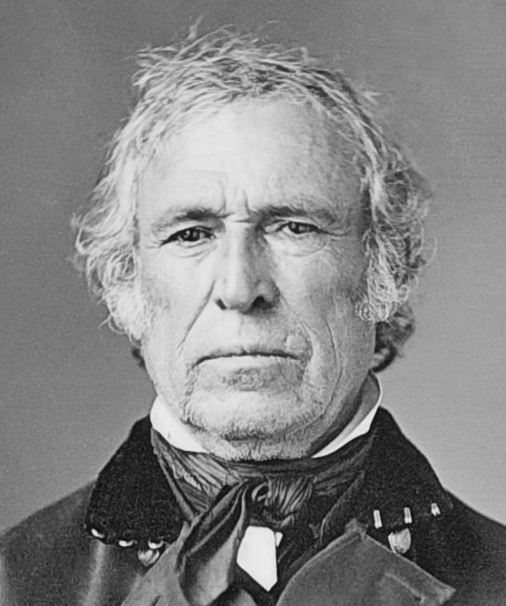
General Zachary Taylor then took his rag-tag army of volunteers deep into Mexico, where he was met by 
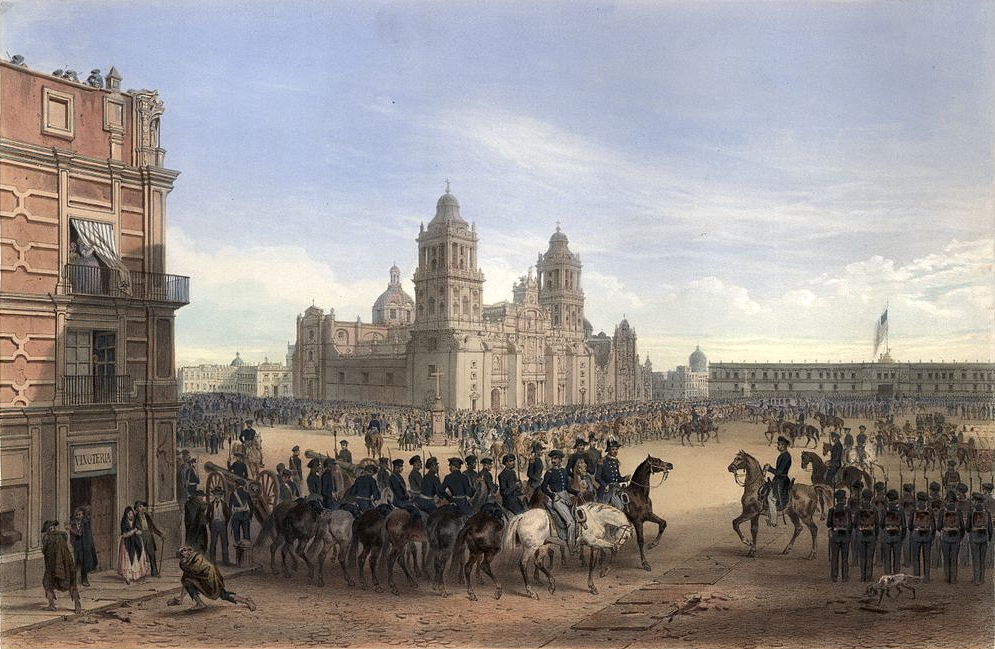
Santa Anna, who had again seized control of the Mexican government.  But a stalemate resulted, broken only when Santa Anna had to leave the battle and head back to Mexico City to protect his political position there.  At the same time, American warships were attacking Mexican towns along the shores of the Gulf of Mexico.  They then unloaded their Marine troops, who headed west to Mexico City (to the "Halls of Montezuma") – and there delivered a knockout blow to Santa Anna and his troops – leaving American troops in total control of Mexico.

At this point some discussion arose about simply annexing Mexico – though not only did the Whigs fight this, but the idea found little support among most Americans.  Consequently, negotiations in January of 1848 resulted simply in an offer of a $15 million payment to Mexico for the acquisition of the land reaching from southern Texas west to California.  The payment was a major face-saving move awarded the Mexicans (the Mexicans had not invested very deeply socially in those areas anyway) – and removed the temptation of Mexico to try to retake the region – especially important at a time when America was soon caught up in its own civil war and would have been weakened greatly in any effort to hold onto this territory.


THE OREGON TERRITORY

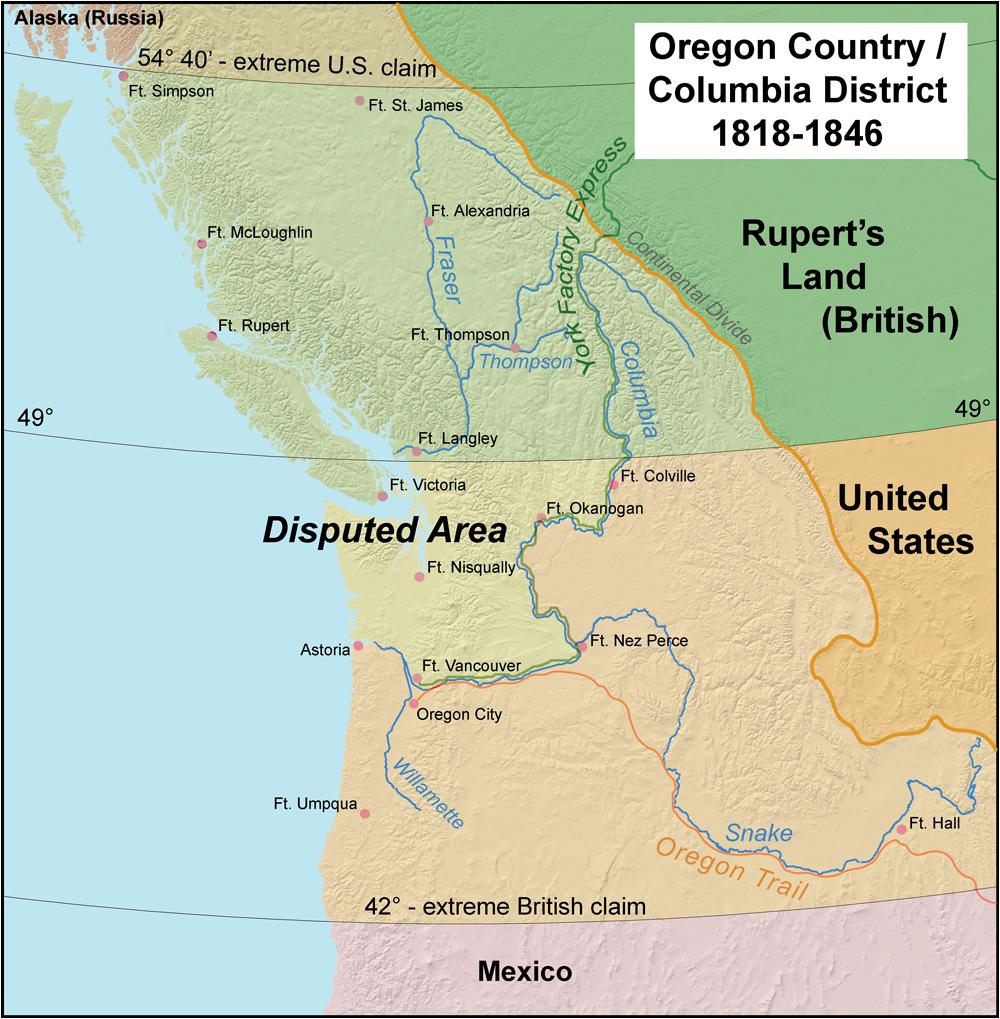
The British and Americans had been able to agree on a Canadian-American border extending westward along the 49th parallel from Minnesota to the Rocky Mountains.  But the territory to the west of those mountains was disputed by both Americans and British, the British claiming the Oregon Territory and the Americans claiming the land in the Pacific region north to the Russian border of Alaska.  The feelings in America grew increasingly heated over this, with some calling for "Fifty-Four Forty[5]  or Fight."   Finally, in 1846 the British and Americans came to an agreement to simply extend the 49th parallel border all the way west to the Pacific (but swinging just south below Vancouver Island).  And thus the Oregon Territory came formally into American hands.

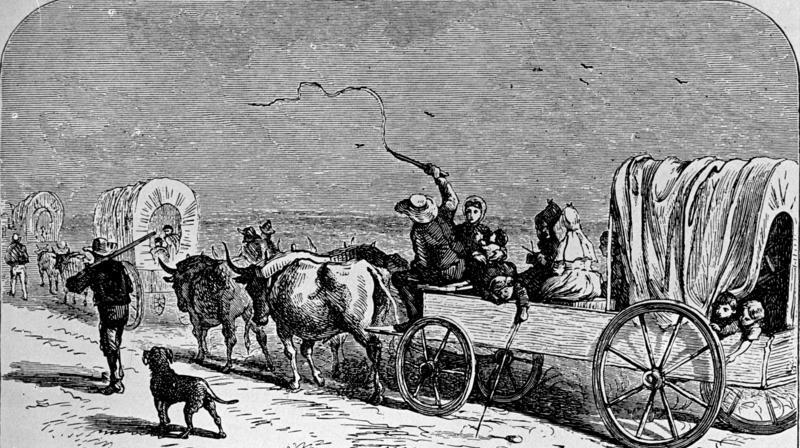
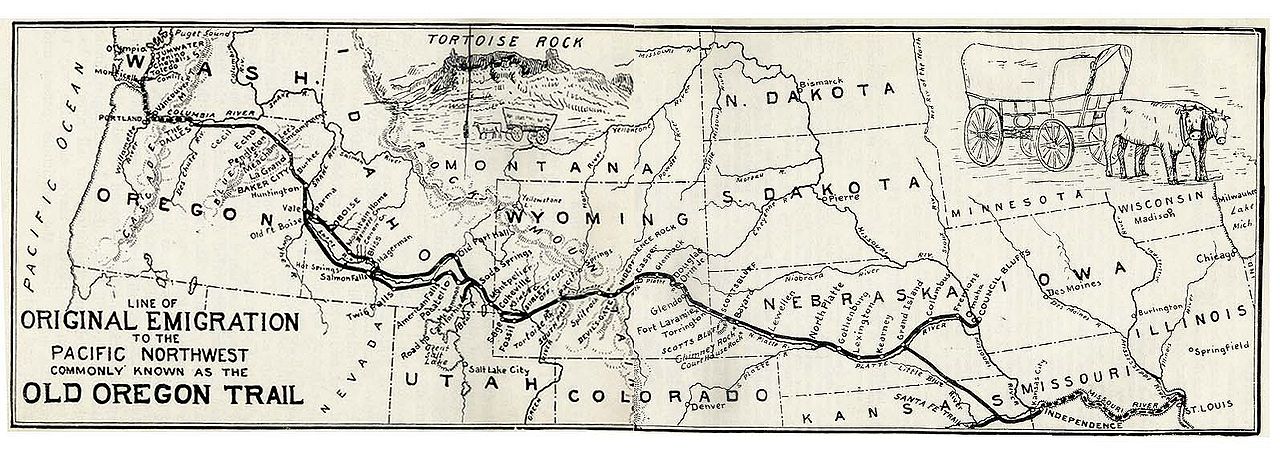
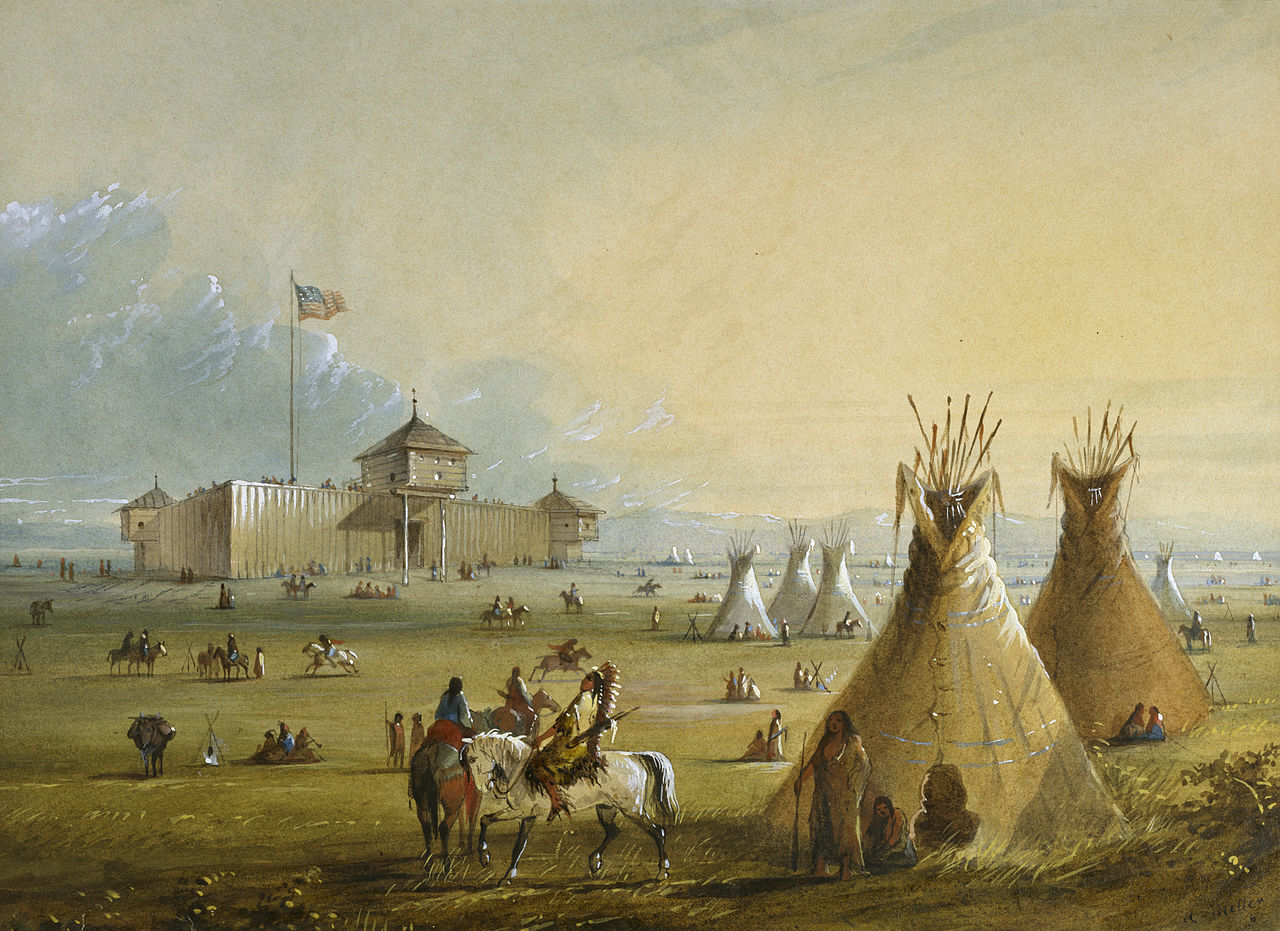
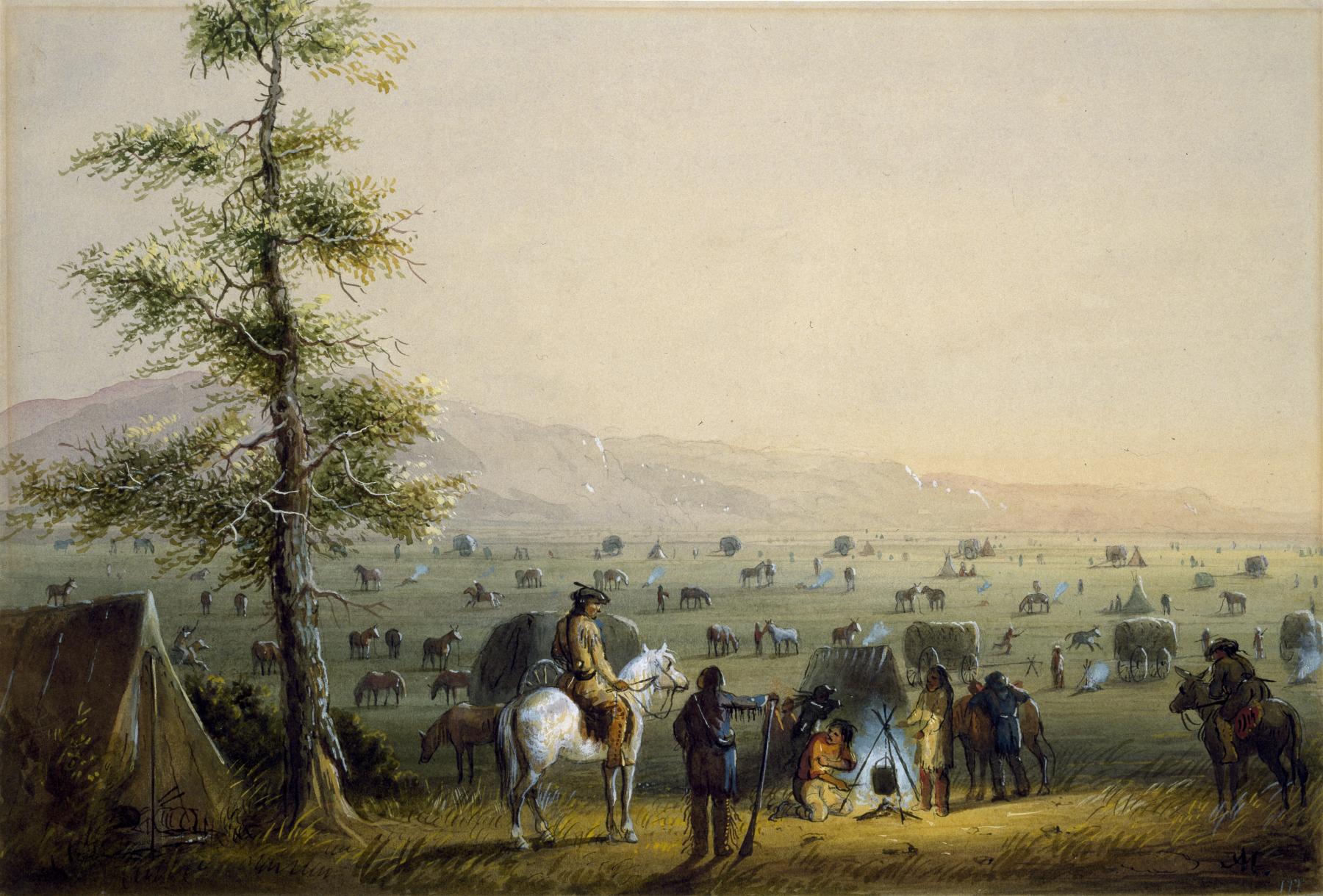
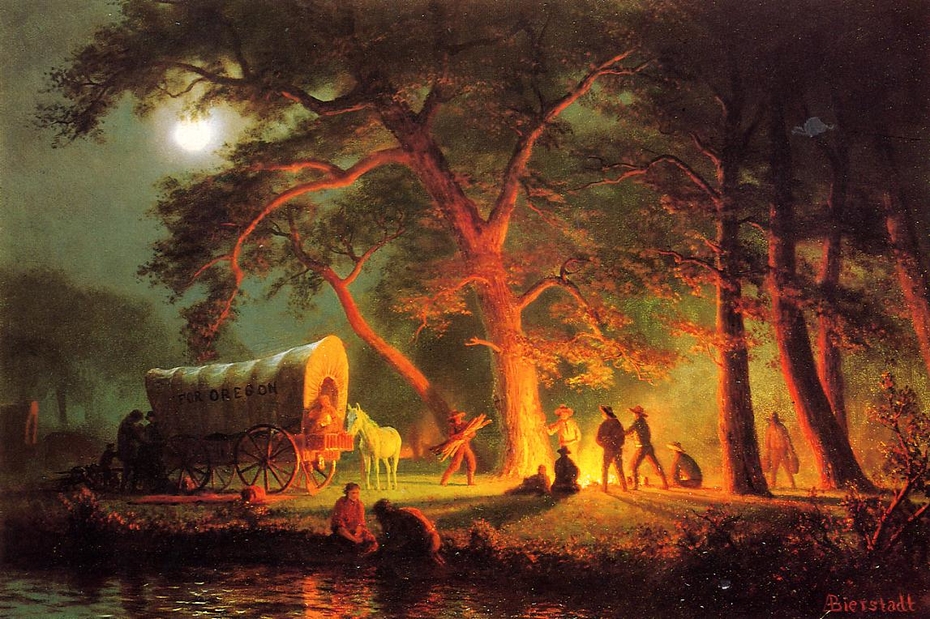
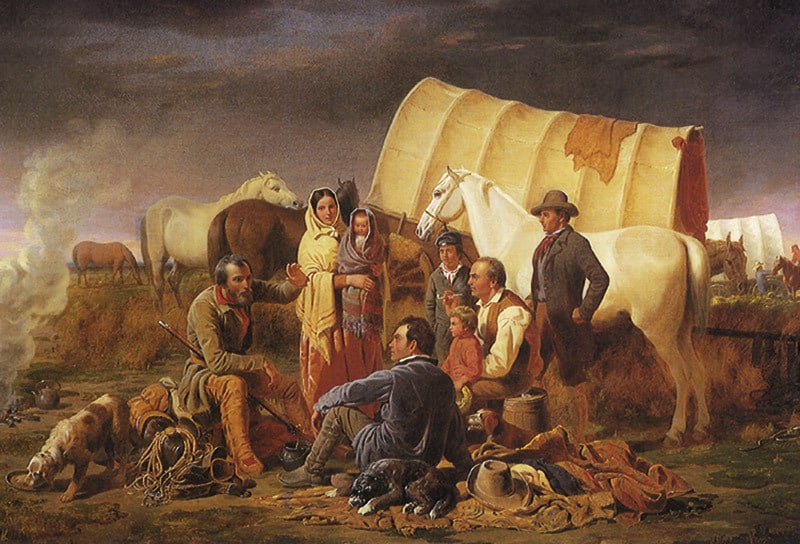
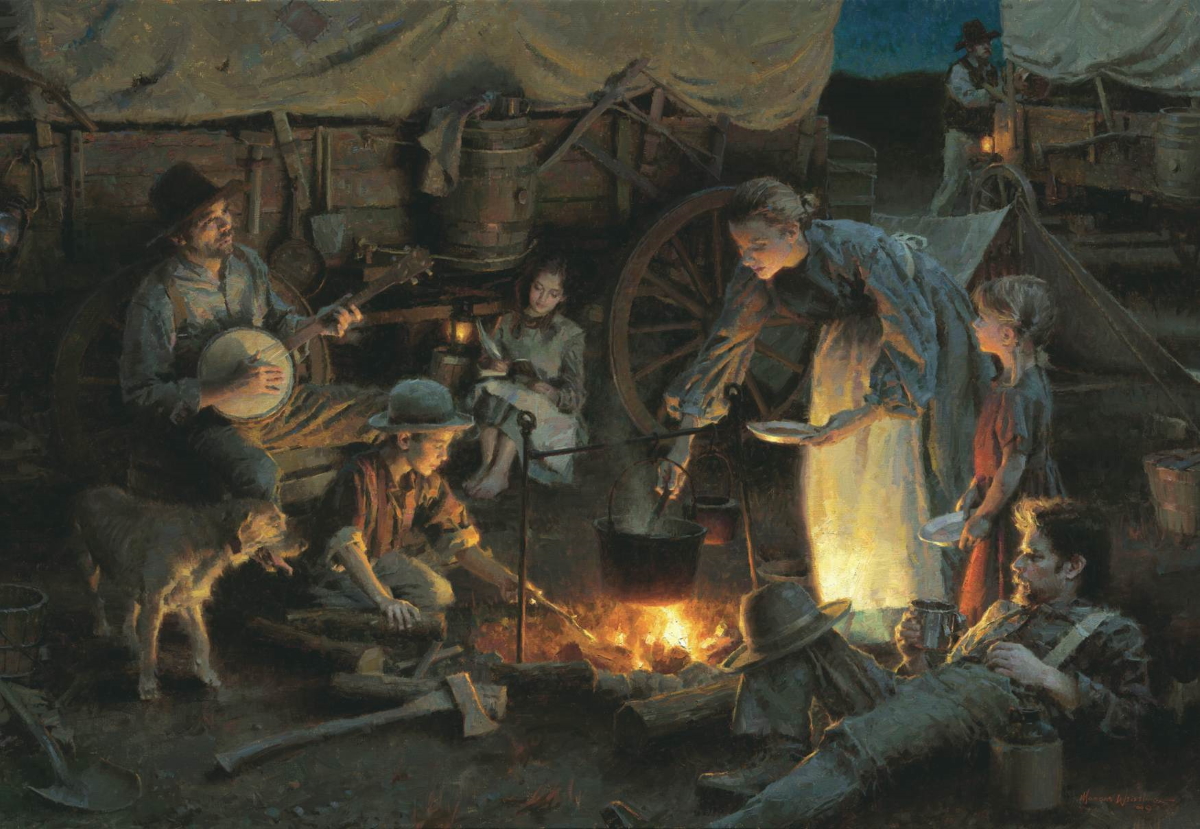
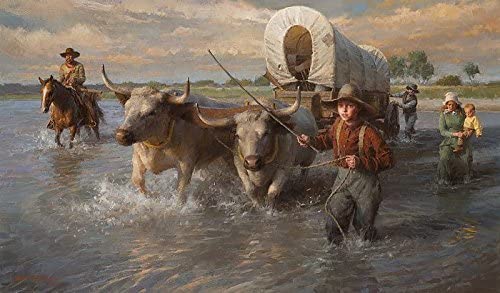
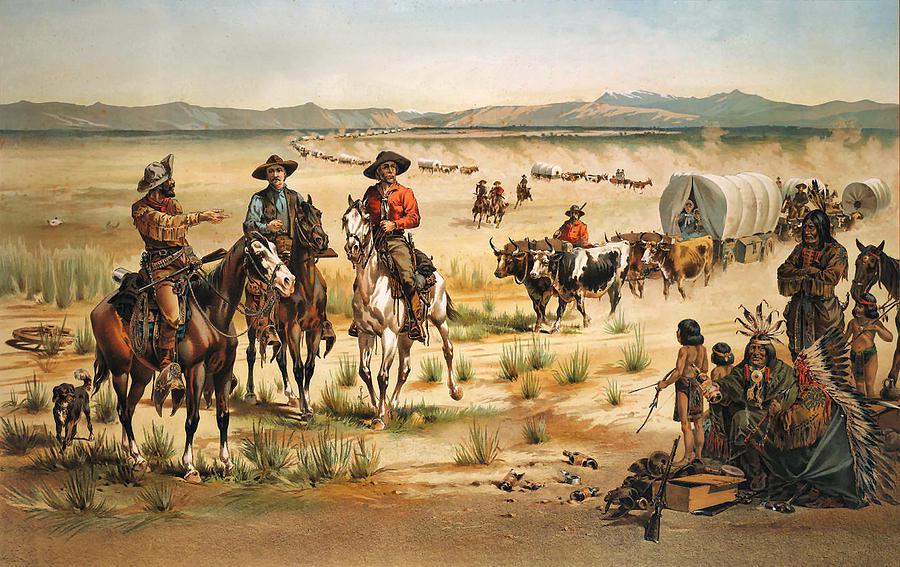
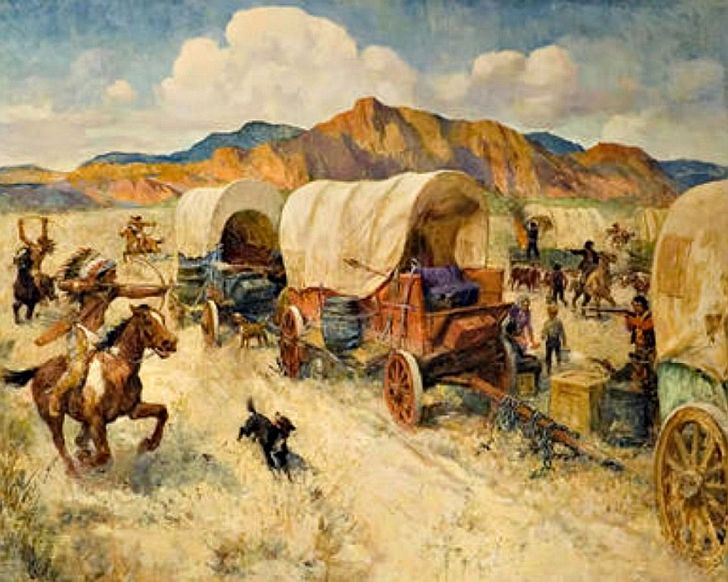
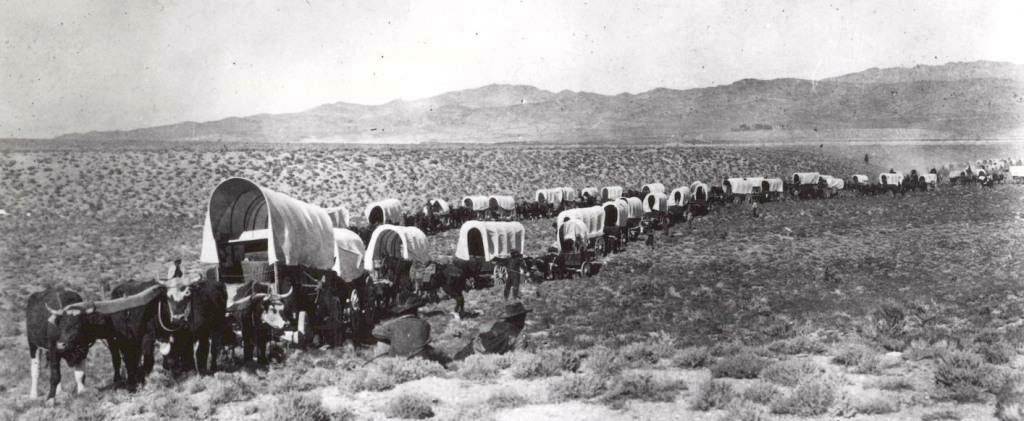
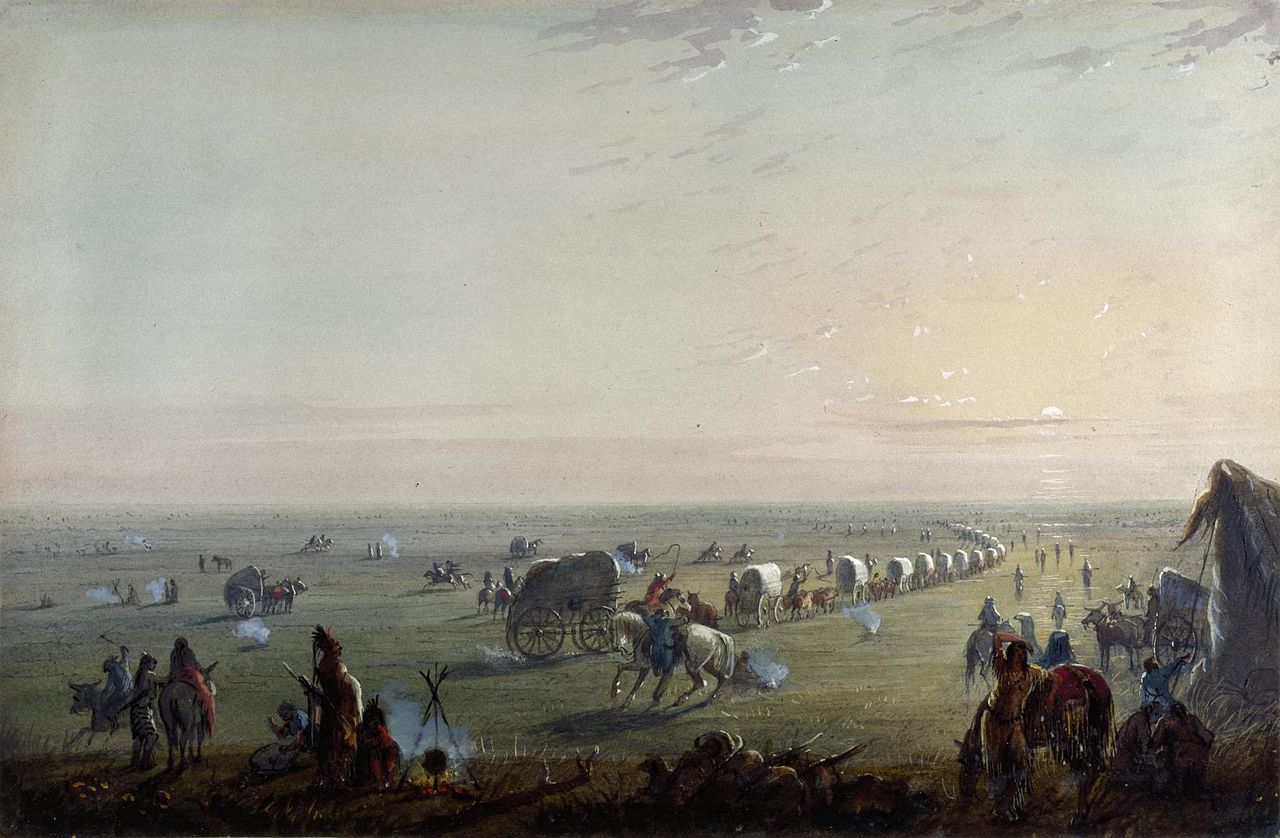
Even before the treaty was signed, both Christian missionaries seeking to bring the Indians to Christ and land hungry Americans had begun pouring into Montana, Idaho, and the Pacific Northwest.  Starting their trek from Independence Missouri, they followed the Missouri and Platte Rivers west to the Rockies, crossed rivers, mountains, snow and ice before descending down into the lush Oregon territory along the Columbia River.  By the time of the 1846 treaty more than 6,000 Americans had already made their way to the Oregon Territory, to begin a new life there.


[5]The line of latitude which formed the southern border of Russia's Alaska territory.


Go on to the next section:  The American Economic Dynamic at This Time


  Miles H. Hodges