<


9. MIDDLE-CLASS AMERICA TRIUMPHANT

EISENHOWER'S AMERICA


CONTENTS

Dwight D. Eisenhower

Korean Armistice

McCarthy finally brought down

Directives to the Boomer:   "Challenge all authority"

The Vets' foreign policy Idealism

Dr. Martin Luther King, Jr. ... and the call for Black civil rights


The textual material on this webpage is drawn directly from my work
        America's Story – A Spiritual Journey © 2021, pages 278-287.

DWIGHT D. EISENHOWER

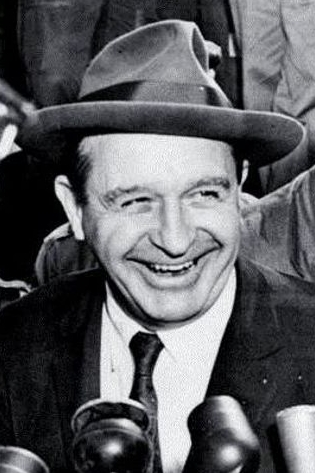
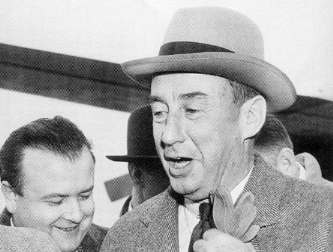
The 1952 election.  Despite the new 22nd Amendment to the Constitution limiting a person to only two terms of office as president (in reaction to Roosevelt's four terms) – it did allow Truman to run for yet one more term.   However his decision to take on the Korean challenge had not warmed American hearts, which factored in his not doing well in the early Democratic Party primaries.  Anyway, Truman was worn out and ready to retire, so he backed out of the race.  In these same primaries Senator Estes Kefauver of Tennessee had done quite well, running on his reputation as an anti-corruption crusader, particularly in fighting the Mafia and also local political corruption.  But the Democratic National Convention (DNC) was still represented mostly by local political machines, hostile to Kefauver.  Thus the Democrats pressured Illinois Governor Adlai Stevenson to run as their presidential candidate (he would personally have preferred to run for reelection as Illinois governor rather than U.S. president!).

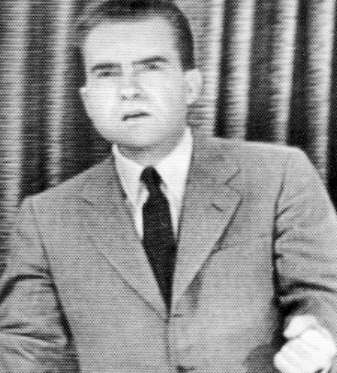
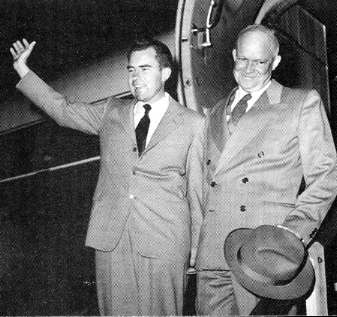
The Republicans bypassed the very conservative Robert Taft (son of former President Taft) to pick the centrist and popular former General Dwight D. Eisenhower (at that point President of Columbia University) – with the HUAC activist Richard Nixon as his running mate ... pleasing the Conservative wing of the party.

Basically, American labor, Southern "Dixiecrats,"[1] and American intellectuals backed the rather intellectual Stevenson ... who distanced himself from the 
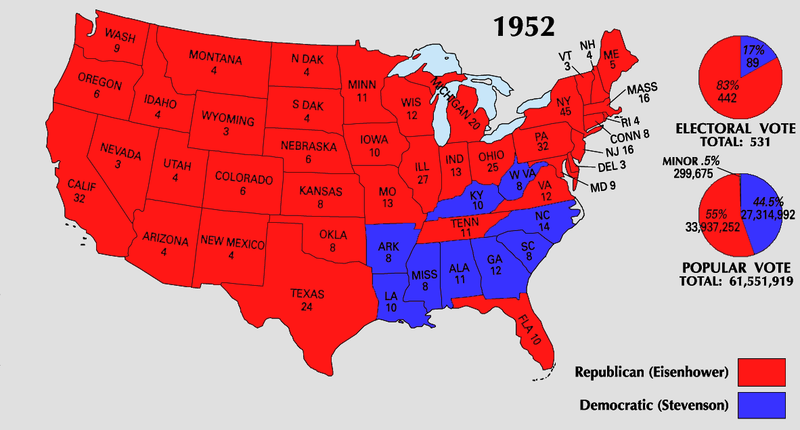
Truman legacy (not doing well at that point) and focused his campaign on attacking Eisenhower for failing to take a strong stance against McCarthy. But Middle America loved everything the war-hero Eisenhower seemed to stand for, and threw its support to him.  Ultimately, the election proved to be a solid win for the Republicans in both the Presidential and House elections – with a Republican-Democrat tie in the Senate.  The presidential vote had been 55.2 percent for Eisenhower to only 44.3 percent for Stevenson, and the electoral college was even more skewed in favor of Eisenhower, 442 votes for Eisenhower and 89 votes for Stevenson.  Eisenhower had managed to gain the majority even in three of the "Solid South" states!

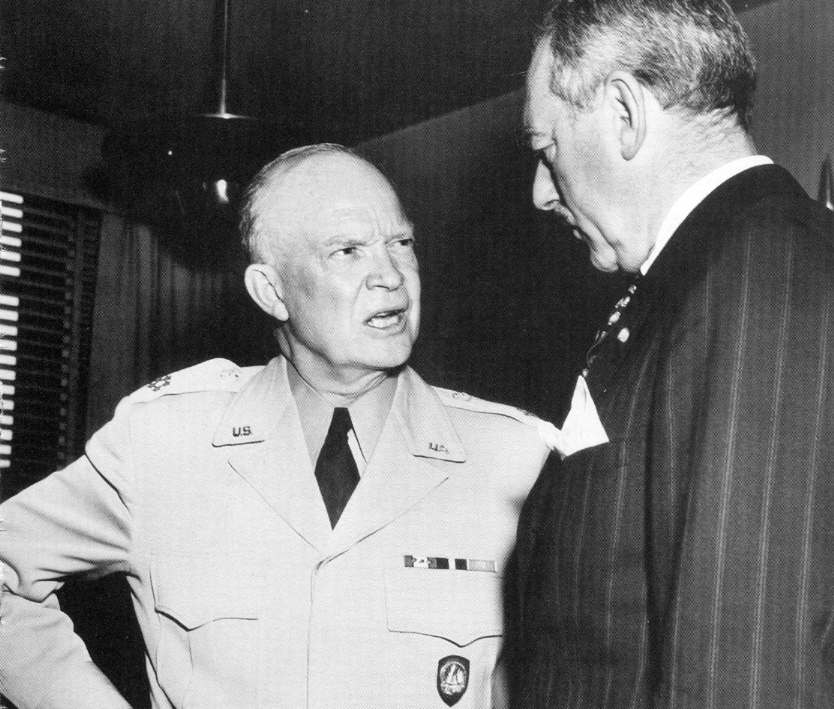
Dwight D. Eisenhower.
 The new president was born third of seven boys in Abilene Kansas, to a rigorously religious family.  After graduation from high school he worked two years to help finance a brother's college education, then – to the disappointment of his quite pacifist mother – was accepted to the West Point Military Academy, which offered a free education.  There he was quite involved with sports, and academically graduated at the middle of a class – one that would go on (because of the Great War) to provide the nation a large number of active officers.

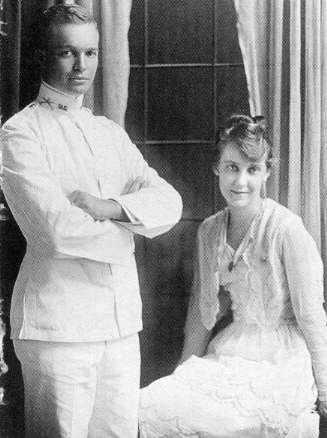
Just prior to America's entry into that war he married (Mamie Doud), and then during the war served at home in various administrative duties (which he became quite good at), becoming deeply frustrated when just as he was finally about to be mobilized for action in France, the Armistice was signed and the fighting in Europe came to a close.

With the long period of peace that followed, he took up both further military study and service as a staff officer in a variety of commands, before being sent to the Philippines in 1935 to serve under General MacArthur, and the following year receive the rank of Lt. Colonel.  He returned to the States at the end of 1939 where he again served as a staff officer to various generals, finally attaining the rank of brigadier general in 1941, just prior to America's involvement in World War Two.

Thus far, however, there was nothing notable about his service that suggested he would one day find himself commanding the most important and final phase of a war in Europe.  Yet his administrative work and well-recognized strategic mind impressed General Marshall.  And his ability to move things forward in the midst of personality clashes was what had him sent to London to take command of operations there, at the time focused on North Africa, Sicily and then Italy.

But as already noted, it was his selection as commander of the crossing of the English Channel and march across France, Belgium and the Netherlands that secured his place in the history books as a battlefield hero.  And after the war, Truman brought him on board as his Army Chief of Staff (Marshall had been sent to China to try to work out some kind of cooperation between Chiang and Mao).  And thus as the 1948 elections approached, it was also that both the Republican and Democratic Parties courted him as a possible candidate for the U.S. Presidency, something that Eisenhower refused.

Instead, he accepted the offer to become Columbia University's president, a strange calling considering the vast difference in mentalities that existed between the scholarly and quite idealistic professors and the quite pragmatic – and deeply religious Eisenhower.  But 
Eisenhower was much more the scholar – or at least man of well-thought-through ideals – than the country understood about him at the time.  He was very active on the prestigious Council on Foreign Relations and a founder of the American Assembly, an organization designed to bring together leaders from all walks of American life to go over a broad range of political, economic and social issues facing the country.  Here Eisenhower developed from a starting point of deep knowledge of military strategy and organization to a quite sophisticated understanding of the broader world of business, economics, and social-cultural matters.

Actually, 
Eisenhower was vastly much brighter than his Columbia University professors – many of whom disliked Eisenhower intensely – and was learning to cultivate excellent working relations with American business leaders – whom liberal professors also tended to distrust.

In 1950 he was appointed Supreme Commander of the North Atlantic Treaty Organization – nonetheless retaining his position at Columbia until sworn in as U.S. president in January of 1953.  This was an important appointment because 
Eisenhower could generate stronger support in Congress for this peacetime organization and its operations than could Truman, and at the same time could leverage America's European allies to make a deeper material commitment (men and money) so as not to make NATO a strictly American operation.

As a Christian, Eisenhower would prove to be one of the most active of all individuals to occupy the White House in support of the Christian faith and its central role in the life of the nation.  He did not come to the White House with much of a Christian testimony and was not even baptized until once in office.  However, as president he took up regular Sunday attendance at the New York Avenue Presbyterian Church.  And also as president, Eisenhower constantly reaffirmed the importance of all Americans taking up their particular Christian responsibilities (including prayer and regular church attendance) as the nation faced social problems at home and political and economic problems abroad. To Eisenhower's understanding of things, God himself expected no less of America.  And Americans seemed glad to take up this very challenge.

Indeed, it would be during his presidency that the words "under God" would be added to the Pledge of Allegiance in 1954, and "In God We Trust" would be confirmed as the nation's motto in 1956.[2]


[1]"Dixiecrat" was a label applied to hard-core Southern Democrats, also known as "yellow dog Democrats", because they claimed that they would vote for a yellow dog for elective office before they would ever vote for a Republican. The Republican Party was still identified in the mind of Dixiecrat Southerners as the party of the hated Abraham Lincoln!  Dixiecrats were reliable Democratic Party voters under all circumstances.

[2]The motto had actually appeared on American coinage since the mid-1800s, although it would not appear on paper money until the 1950s.


KOREAN ARMISTICE

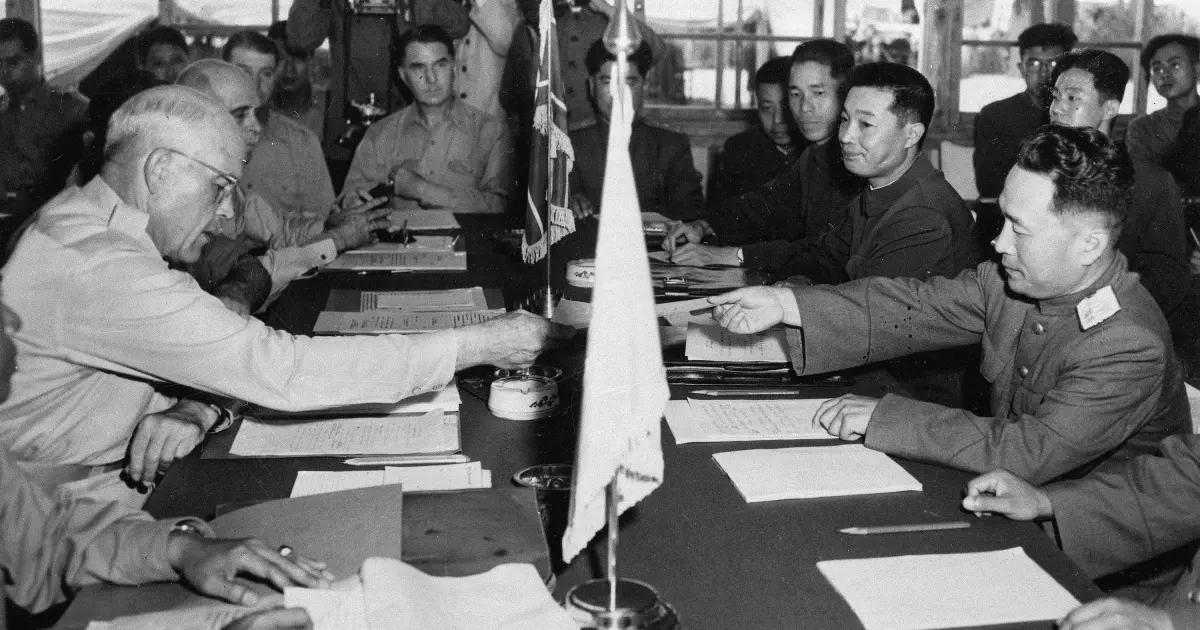
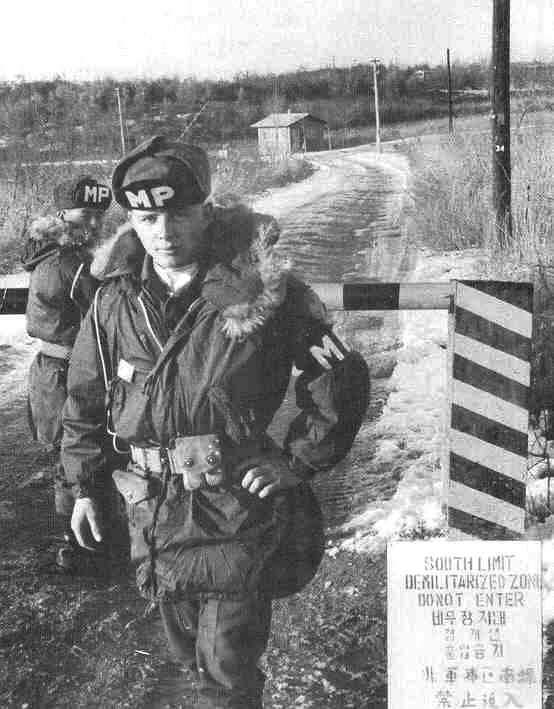
As already noted, during the 1952 presidential campaign, Eisenhower had distanced himself from the whole McCarthy matter – drawing sharp criticism from Stevenson for Eisenhower's failing to denounce McCarthy's witch hunt.  Instead, Eisenhower had focused his campaign on doing something to bring the Korean War to some kind of resolution (the fighting itself had actually subsided substantially since mid-1952).  And thus now as US President, Eisenhower worked to get the various parties involved to sign an Armistice (actually not a formal end to the war) – recognizing the rather permanent division of Korea north and south not too far from the original 38th parallel.  But this seemed to put the Korean crisis now as a thing of the past.  Korean tensions would flare from time to time after that – but leave the line itself intact – even down to today.

There were now two Korean societies, increasingly different in character as they went off developmentally in quite different directions, North Korea to become over time even more "Stalinist" in its political makeup, and South Korea to develop strongly along Western (deeply Americanized) political, economic and social lines.


McCARTHY FINALLY BROUGHT DOWN

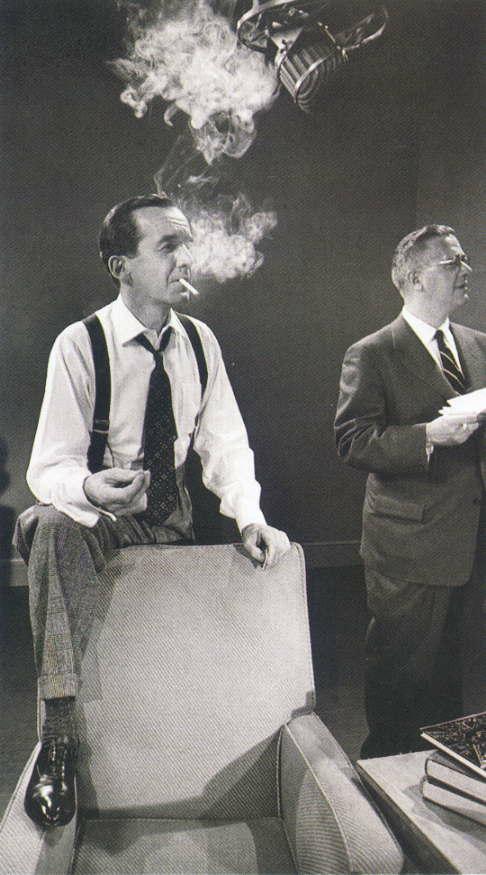
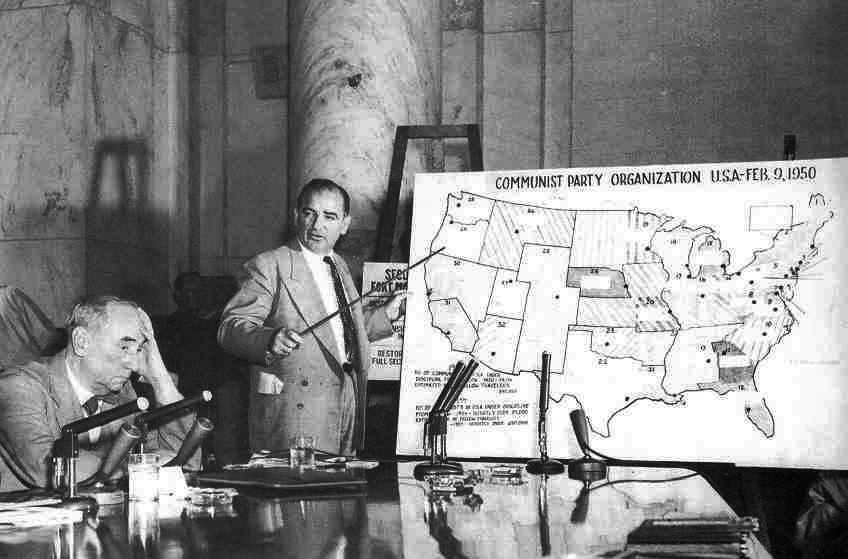
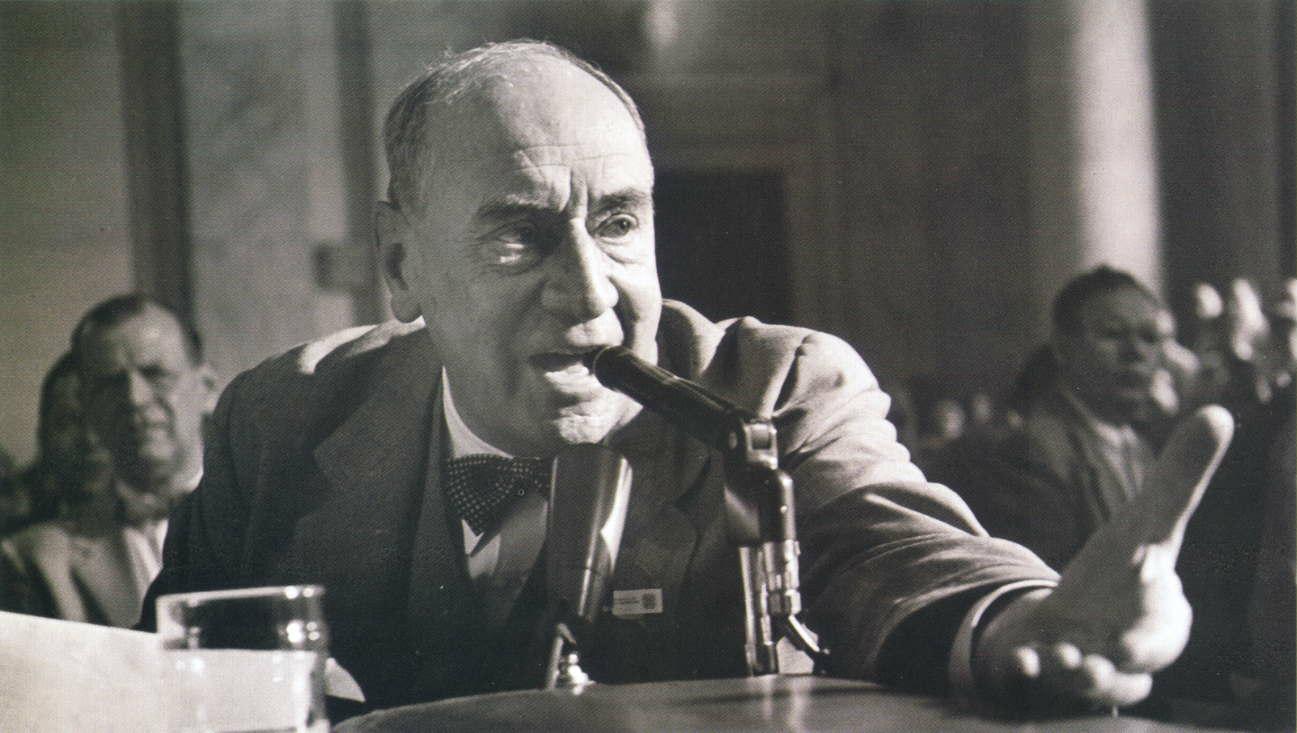
Meanwhile, McCarthy's reckless accusations before his TV audience of "Commies everywhere" had reached into all segments of society – although only on occasion did he actually mention anyone by name.  He was on a major fishing expedition to come up with scandal everywhere – in order to keep things focused on him as America's savior.  But in early 1954, radio and TV newsman Edward R. Murrow actually did a series on McCarthyism – the first to openly challenge McCarthy.  McCarthy's response to Murrow's challenge was not artful – indeed worsening the slowly declining image of the Senator.  But what finally would be McCarthy's undoing was his taking on the U.S. Army officer corps before his Senate committee – and before his enormous TV audience – for the Army's harboring of "known Communists."  Finally, the lawyer leading the Army's defense launched into an attack on McCarthy's destructive and ill-founded evidence.  McCarthy was at a loss for words.  His boldness melted away – and what the Americans now saw on TV was a demagogue with no serious political skills, merely a monstrous political gossip with nothing of substance to his agenda.  At this point the Senate finally found its courage and voted a motion of censure against McCarthy – almost unprecedented in the history of the U.S. Senate.  And although he kept his Senate seat, McCarthy was no longer a person of interest to America.  He eventually faded off into alcoholism – and America moved on.


DIRECTIVES TO THE BOOMER:  "CHALLENGE ALL AUTHORITY"

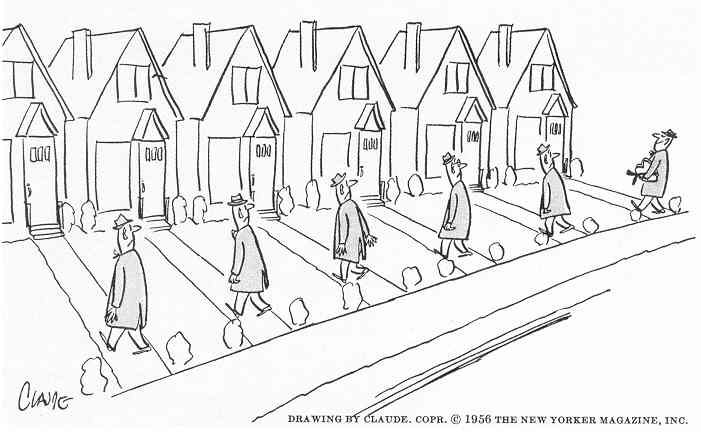
America would move on.  But it had put in place a set of social-moral foundations that would be lasting:  the Boomer mindset.  So afraid of the Orwellian Big Brother authoritarianism that walked the earth were the Vets that they made the decision that their children were to be taught in such a way that their Boomer offspring would never become victims of authoritarian thought-control – such as they had witnessed among the Hitler youth, and more recently had heard about taking place in Stalinist Russia – where the youth were so brain-washed by the Communist system that they would even turn their parents over to Soviet authorities if they heard them involved in any "anti-revolutionary" conversation.

So, the Vet parents thought themselves to be very wise in teaching their children to challenge all voices, all efforts of anyone, coming at them as "authority."  They were to do their own thinking, come at rational choices through using their own natural logic.

Tragically, the Vets had fallen into typical Humanist thinking in presuming that their Boomer children – by way of natural human instinct – would come to hold the same social-spiritual values, and go at life in the same way that they, their Vet parents, did.  The Boomers would do so because supposedly these values were instinctive to all humankind, values that anyone thinking freely and clearly on such matters would necessarily come to hold.

On two counts, the Vets (as with all Humanists, ancient as well as modern) would be making a huge mistake in their program.  First of all, there was nothing "natural" about how they, the Vets, were raised.  Very precise circumstances had made them to be the people they were:  the hardships of the Great Depression and the massive sacrifices they made during World War Two.  As a distinct generation, they were very reflective of this particular development ... willing to sacrifice personal interest in order to serve a higher social good.  They had been forced into that moral-spiritual position in order to survive.  And in doing so, they came to believe religiously that this was just a natural instinct of all decent people.

As for their highly pampered 
Boomer offspring, this generation had come to understand life and its dynamics through a very different set of circumstances, and would therefore understand life's "natural" dynamics quite differently – in fact, very differently – than their parents.

And secondly, as Christians, the Vets should have known better than to take up the religious idealism of Secular- Humanism, having been shown repeatedly in long-standing Biblical Scripture – not to mention in the life they had been required to live – that man's instincts are not naturally always so beautiful, and that human Reason does not always bring things forward nobly, but is often simply the tool by which people justify the worst kinds of behavior.  As Christians they should have been acutely aware of the fact that original sin – not original goodness – was what spiritually mature humans always ended up having to deal with constantly, especially when that very sinful instinct came from themselves.

So actually the Vets were themselves "brainwashing" their children, with very interesting but very foolish Humanist Idealism.  They were carefully shaping the thought-processes of a rising generation so that when they reached adulthood, they would finally begin to act on this training, training that had taught them to challenge all social authority.

But the only social authority at hand for their 
Boomer offspring to challenge would be the social authority of the American society and culture that their own parents (and many generations before them) had carefully put in place.  By their very training, the Boomers would see themselves called to challenge that authority, especially in the social areas touching close to home:  their jobs, their marriages, their social affiliations, their local communities, even their nation.  And being a pampered generation, it was easy for these Boomers to find reasons to challenge those social ties, those social responsibilities, when it involved commitment and sacrifice rather than just social payoff.

And in this crusade against their inherited social world, they would also have the mentoring or support of the alienated intellectuals, who themselves felt that they had good cause to oppose, or even overthrow, the social-cultural world of Middle America.  Most importantly, those mentors included "Progressive" professors, under whom the Boomers studied in fast-rising numbers, playwrights making plays and movies encouraging new social attitudes (ones highly shocking to the Vet world!), and young journalist crusaders, etc. ... that is, any group of people who lived in the world of "progressive" idea-production.  They would be quite active in encouraging and ultimately providing moral justification for the new 
Boomer-think.

Thus things would soon get very strained in America – as Middle America entered the 1960s only to find that everything that it believed in to now be under challenge, deep challenge, by its own offspring!


THE VETS' FOREIGN POLICY IDEALISM

Sadly, the Vets (as well as the generations of Americans after them) also seemed to go at foreign policy along those same Humanist – rather than Christian Realist – lines.

Certainly the intense strain of going to war against Germany and Japan in World War Two – and then against the North Koreans and their Chinese allies in the Korean War – called for some kind of Idealism to get the Vets through the ugliness of it all.  Thus they were not merely involved in killing bad people, the enemy.  They were serving the much more noble cause of bringing "democracy" to the world.  That grand goal seemed to give their efforts much greater stature, grander purpose.

But huge dangers would accompany this idealizing of American foreign policy.  For one thing, democracy is not the natural, inevitable outcome for a people when they have suddenly been freed from what Americans understand as nothing more than dictatorship.  They should have learned that lesson from World War One when they sent thousands of American boys off to die in the trenches of Northern France, all for the grand purpose of making the world safe for democracy.

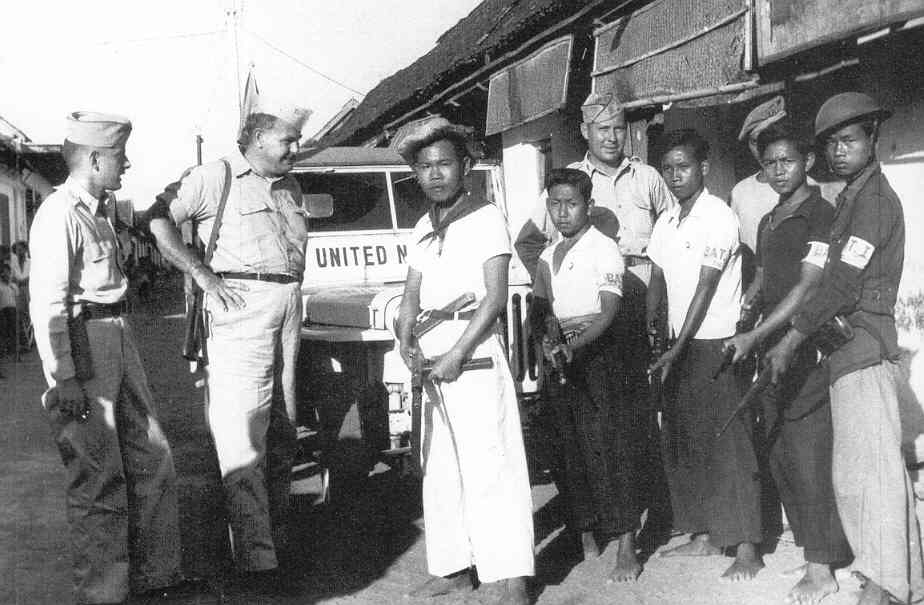
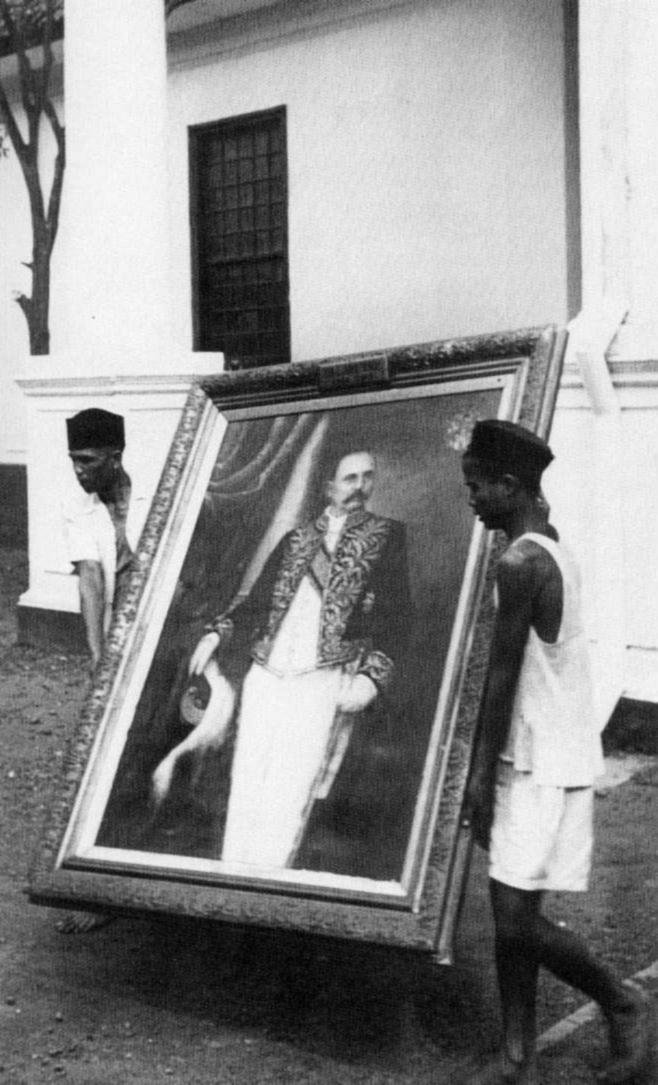
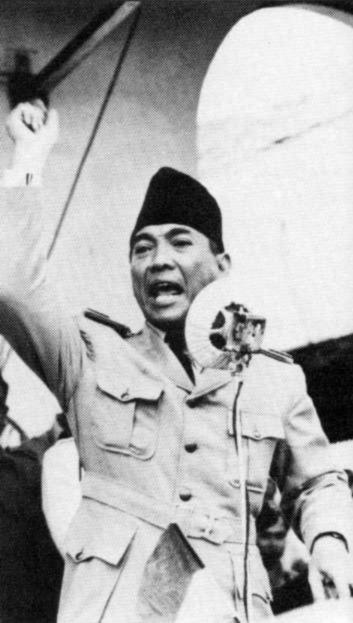
They should have learned that lesson at the end of World War Two when they took such a strong stance opposing their Dutch allies – who were determined to regain their 300-year old colony in Indonesia.  Instead, America supported a local independence movement there (and thus the old Wilsonian principle of "the rights of self-determination of peoples everywhere" ... one that supposedly, when implemented, leads automatically to democracy) conducted by a regime set up by the Japanese at the time of their surrender to the Americans in August of 1945.  But after the Dutch were chased off (or just slaughtered), this led not to Indonesian democracy but rather to the ruthless 22-year dictatorship of Sukarno!

Americans have great difficulty understanding the dynamics of power – power which most of the time is subtle, not very glorious in its effect, and always tiresome to maintain.  Crusades are much more exciting and seemingly so much more noble.  But when back in 1794 Washington marched his army into Western Pennsylvania to put down a whiskey rebellion – doing so only to preserve the little sense of political unity that the new Republic was able to muster – there was nothing very noble about the enterprise.  Yet it was quite necessary to make that show of power, or the fragile union holding their new Republic together would have simply dissolved away.

Likewise, there was nothing noble that Lincoln was feeling when he sent Union troops into the rebellious Confederacy in order to force the ongoing unity of the United States.  It was simply a job that had to be done.  And even in World War Two and Korea the actual task was simply to bring down those whose actions threatened the social world entrusted to the Americans.  Nothing about it was very glamorous.  But it was all quite necessary.

The same kind of fundamental Realism driving America's actions abroad however cannot be said to have been present in America's entry into World War One.  Wilsonian Idealism was the sole motive, and it proved disastrous in the end.  And tragically many of the "save the world for democracy" crusades that America as the West's superpower would undertake from the 1960s onward would be just as bad:  Cuba, the Congo, Vietnam, Iran, Afghanistan, Iraq, Libya, Syria.  Idealistic crusades, though emotionally thrilling (for a little while anyway) are dangerous enterprises, which a great power like America should carefully avoid.


DR. MARTIN LUTHER KING, Jr ... AND THE CALL FOR BLACK CIVIL RIGHTS

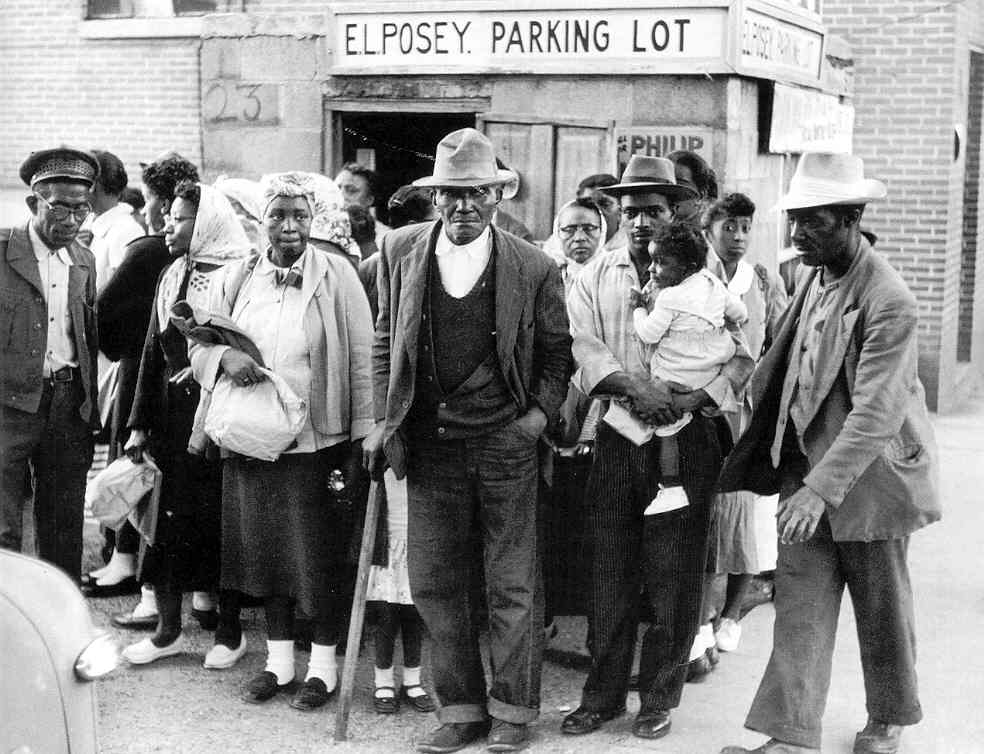
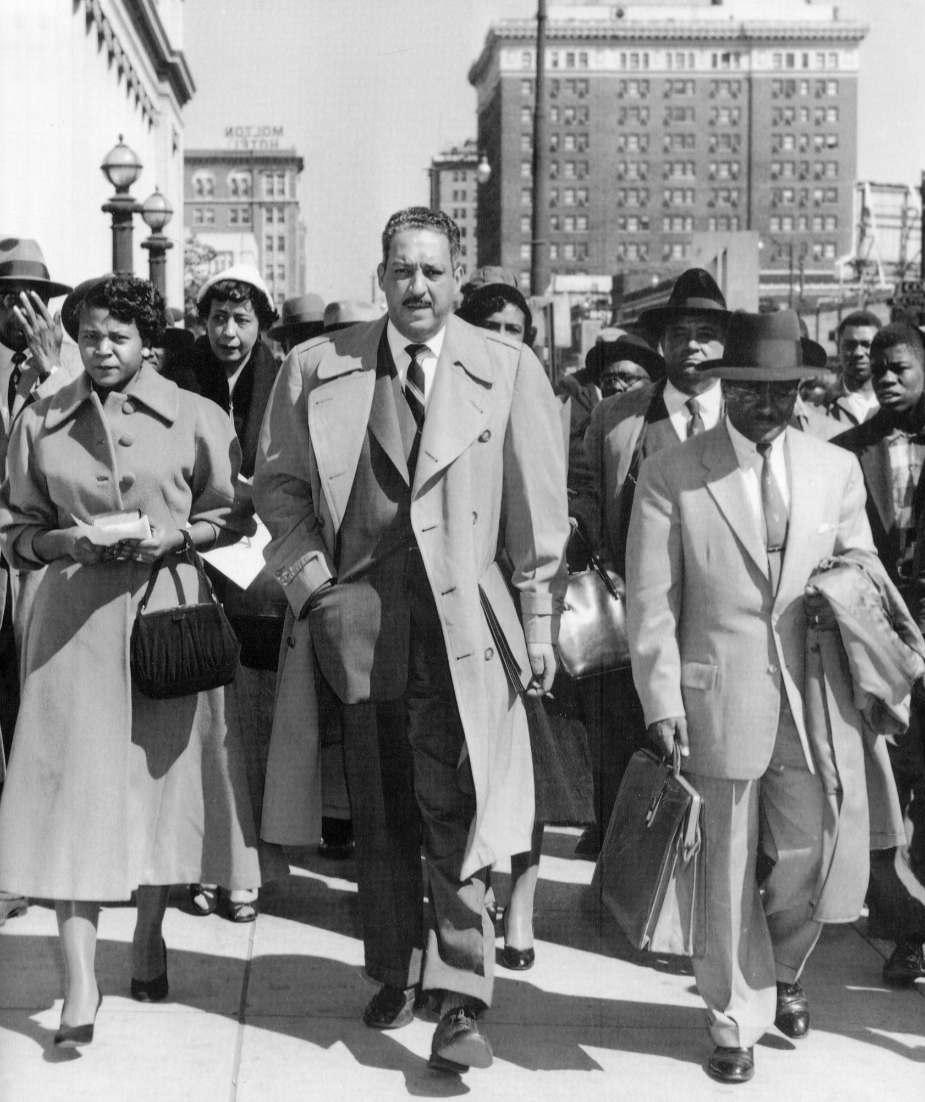
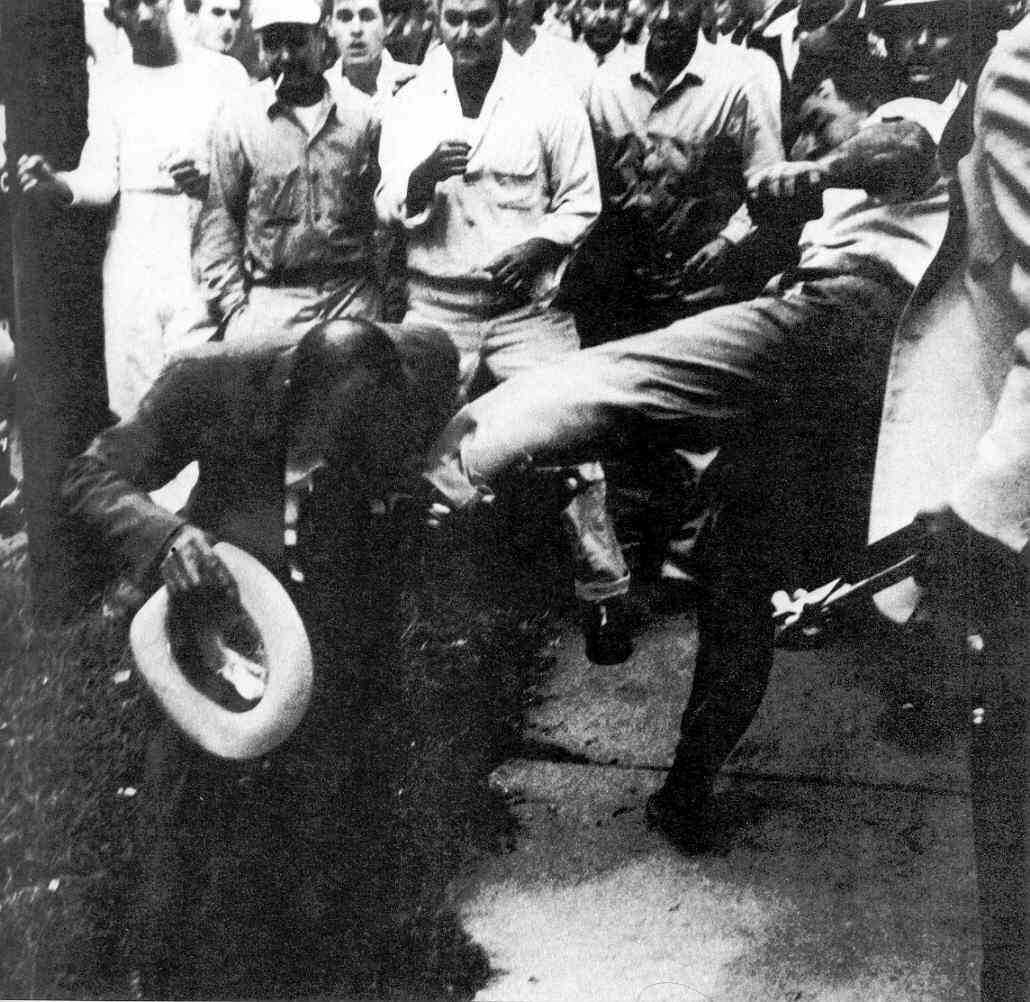
Black and White America.  Although about one in ten Americans were classed as Colored (Black) in the 1950s, actually they occupied a rather invisible part of Middle America's world, living either in Black sections of America's major cities or else scattered around the South.  And that invisibleness gave them very little voice in American society.   True, some had distinguished themselves, such as the Tuskegee Airmen who were sought after as excellent fighter pilots protecting American bombers in their run over Italy during World War Two.  And there was the excellent baseball player Jackie Robinson, who broke the color bar when he was brought onto the Brooklyn Dodgers.  But these were by far the exception.

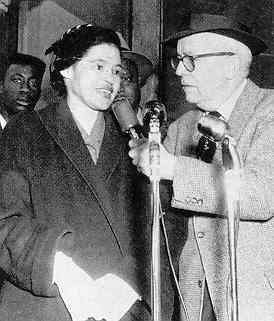
But that began to change in the mid-1950s, when an exhausted Black seamstress, 
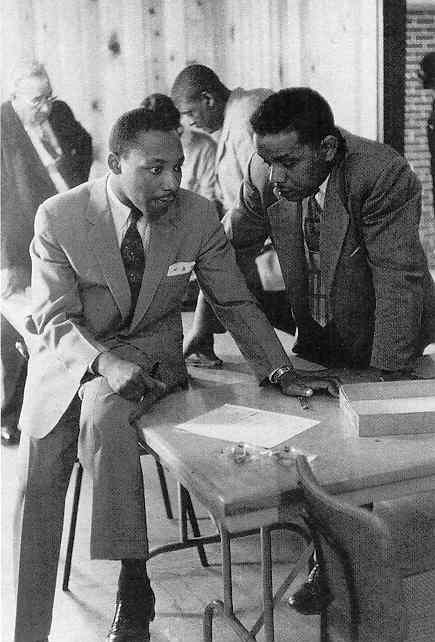
Rosa Parks, refused to give up her seat to a White male on a crowded Montgomery (Alabama) bus, and was arrested and fined.  But the Montgomery chapter of the National Association for the Advancement of Colored People (NAACP) decided to fight the case.  Parks was secretary of the Montgomery chapter of the NAACP, which included also within its local leadership a young pastor who had recently taken a Montgomery pulpit, the Rev. Dr. Martin Luther King, Jr. – who would come to head up a boycott of the town's buses.[3]  Not only would they encourage Blacks to avoid the use of the town's buses, they would fight the $14 fine – as far up the judicial appeals ladder as the case would go – in opposition to the segregation laws designed to keep Blacks in their place.
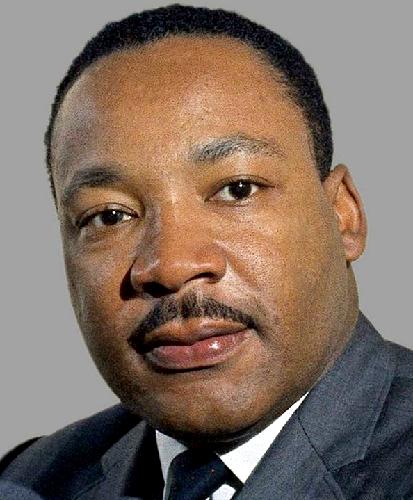
The Rev. Dr. Martin Luther King, Jr.
 King was born in Atlanta, Georgia, in 1929, named "Michael" at the time.  His father, also Michael, was the pastor of the Ebenezer Baptist Church in Atlanta and his mother, Alberta, was the daughter of the previous pastor of the same church.  While on a trip to Germany in 1934, Michael, Sr. was deeply inspired by Luther's reforms, and decided to identify himself with Luther's work by taking Luther's name, and changing the name of his son Michael, Jr. as well – thus both now becoming Martin Luther King.  But the family was not only deeply involved in the Baptist ministry, it was also equally involved in the civil rights movement, with the father head of the NAACP chapter in Atlanta, and a radio broadcaster as well, with a widening influence in the region.

Despite his father's social influence, King Jr. had to face the discrimination typical of "Coloreds" in his day and time, for instance, having to go to a school for Blacks while his best friend went to a school for Whites – and having the White boy's parents inform their son that he would have to stop playing with his Colored friend.  But King, Sr. taught his son to respond to these hurts not through hate, but through the struggle to love even those who persecuted you, even though they were still to resist strongly the racism behind such cruelty.

Typical of a teenager, King, Jr. distanced himself from his father's deep faith, no longer able to identify with the emotional spirit so strong in the Black community – and in his father's church.  Instead he devoted himself to scholarly study in history, English and public speaking, and debate – excelling in these areas.  At the same time, he still had to face insults from Whites, which infuriated him greatly.  Then, even before finishing high school, he went off to attend All-Black Morehouse College,
[4] where his father and his maternal grandfather before him had attended.

It was during these years that he first traveled outside the South, and was surprised to find that the racial discrimination so strong in the South appeared to be relatively absent in the North. The contrast would help him form a strong idea of what he wanted to see happen in his Atlanta homeland.  And it was also in these years, in great part due to his deep admiration for his father – and his equally deep appreciation of the role that the Church played in the lives of those struggling against the pain that the world hurled at them – that King, Jr. decided to prepare for the ministry.

Off to Pennsylvania the 19-year-old 
King, Jr. went … to study at Crozer Seminary – and to become involved as youth pastor in the Calvary Baptist Church nearby, which a family friend, J. Pius Barbour, pastored.  During those years (1948-1951), Barbour would become something like a second father to King, Jr. Also during those years he would fall in love with an immigrant German woman and wanted to marry her, except his friends warned him that this would cause problems in both the Black and the White communities, certainly preventing him from finding a church to lead in the South.  So he broke off the relationship, leaving another deep hurt in his life.

After graduation from Crozer, King headed off to Boston University to undertake doctoral studies in systematic theology, serving as assistant pastor in the Twelfth Baptist Church in Boston.  It was also during his Boston years that he met Coretta Scott, who was attending the New England Conservatory of Music.  They dated for about a year and then in early 1953 announced their intentions to marry, which took place in Alabama that June. Then in 1954 they moved to 
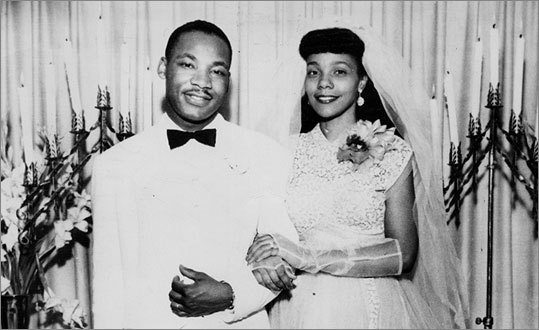
Montgomery, Alabama, for King to pastor the Dexter Avenue Baptist Church.  And this is what brought King into the Montgomery bus boycott, and his life (similar to his father's) not merely as a pastor, but as a civil rights activist as well.

A growing call for Black civil rights.
  The bus boycott dragged on for days, then weeks, then months, gaining national attention in the process.  Meanwhile another Montgomery racial segregation case had made its way all the way to the U.S. Supreme Court, which concluded that Montgomery's laws were in violation of the Fourteenth  Amendment.[5]  Now the Southern segregation rules had the full attention of Middle America.

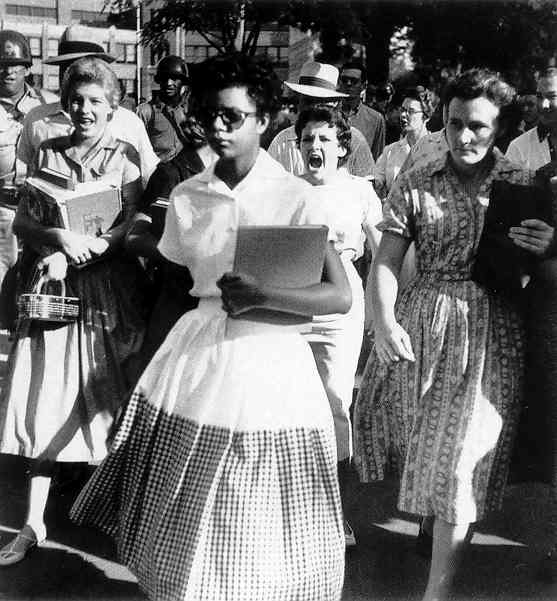
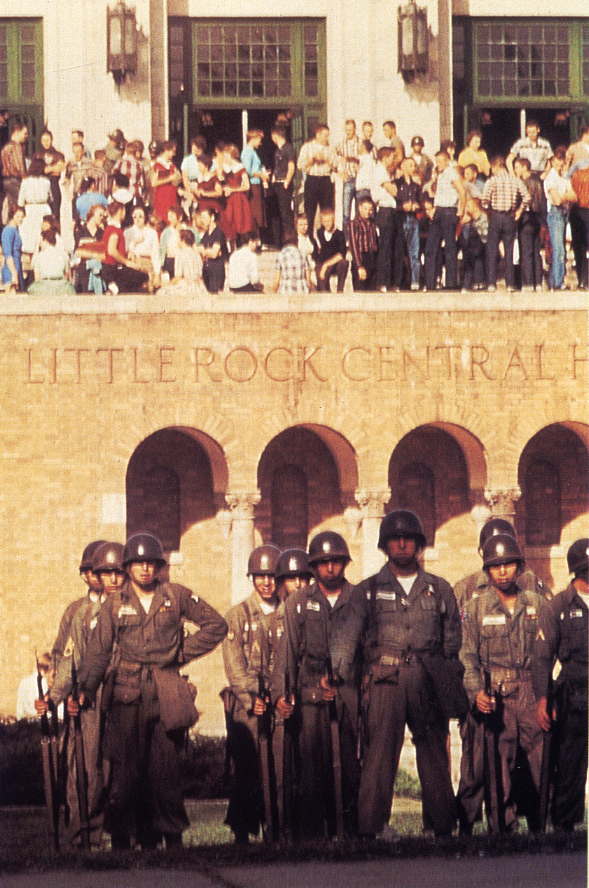
Then the following year (1957) focus turned to Arkansas and its Governor Orville Faubus, who decided to court White votes by calling out the Arkansas National Guard to block the entrance into Little Rock's Central High School of a small number of Blacks (opened to them by the local school board).  President Eisenhower then responded by placing Arkansas's National Guardsmen under his command (plus sending members of the 101st Airborne Division to Little Rock) to open the school.  But Faubus fought back, closing all public schools the next year and reopening them as "private" schools, excluding the Blacks of course.  But the Federal courts then shut that project down, and Faubus left them closed for the rest of the 1958-1959 school year.  But bit by bit, multitudes of Americans were growing very tired of such racist behavior on the part of their public officials.


[3]The boycott lasted over a year, until the struggling bus company finally put aside the seating restriction.

[4]Many young Blacks had been sent to fight in World War Two and thus the College allowed high school juniors to apply and then enter in what would have been their senior year, in order to maintain a sufficiently large student body.

[5]"No State shall make or enforce any law which shall abridge the privileges or immunities of citizens of the United States; nor shall any State deprive any person of life, liberty, or property, without due process of law; nor deny to any person within its jurisdiction the equal protection of the laws."



Go on to the next section:  The Cold War Takes on a New Quality


  Miles H. Hodges