<


9. MIDDLE-CLASS AMERICA TRIUMPHANT

THE BRIEF KENNEDY ERA


CONTENTS

John F. Kennedy

The Bay of Pigs disaster  (April 1961)

The Berlin Wall  (August 1961)

The Peace Corps

The Cuban Missile Crisis  (October 1962)

King's appeal to the conscience of the nation

Mounting problems in Vietnam

Kennedy is assassinated  (November 1963)


The textual material on this webpage is drawn directly from my work
        America's Story – A Spiritual Journey © 2021, pages 293-301.

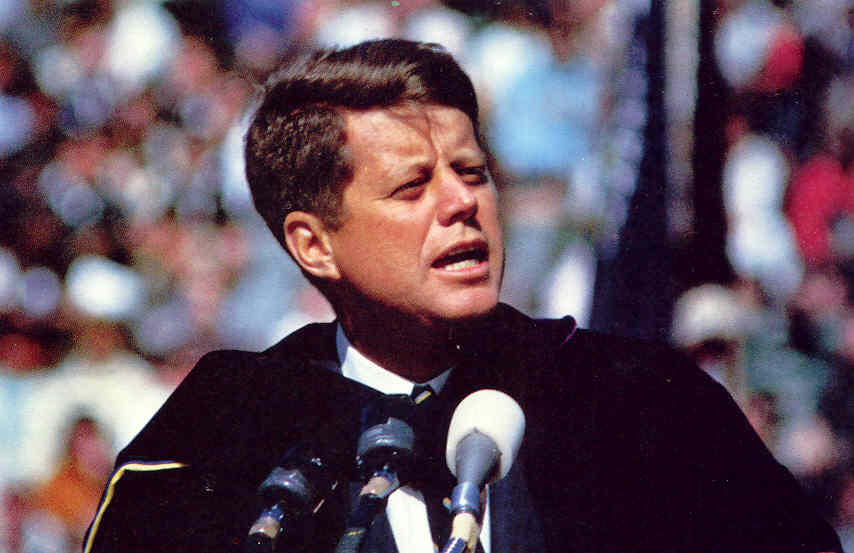
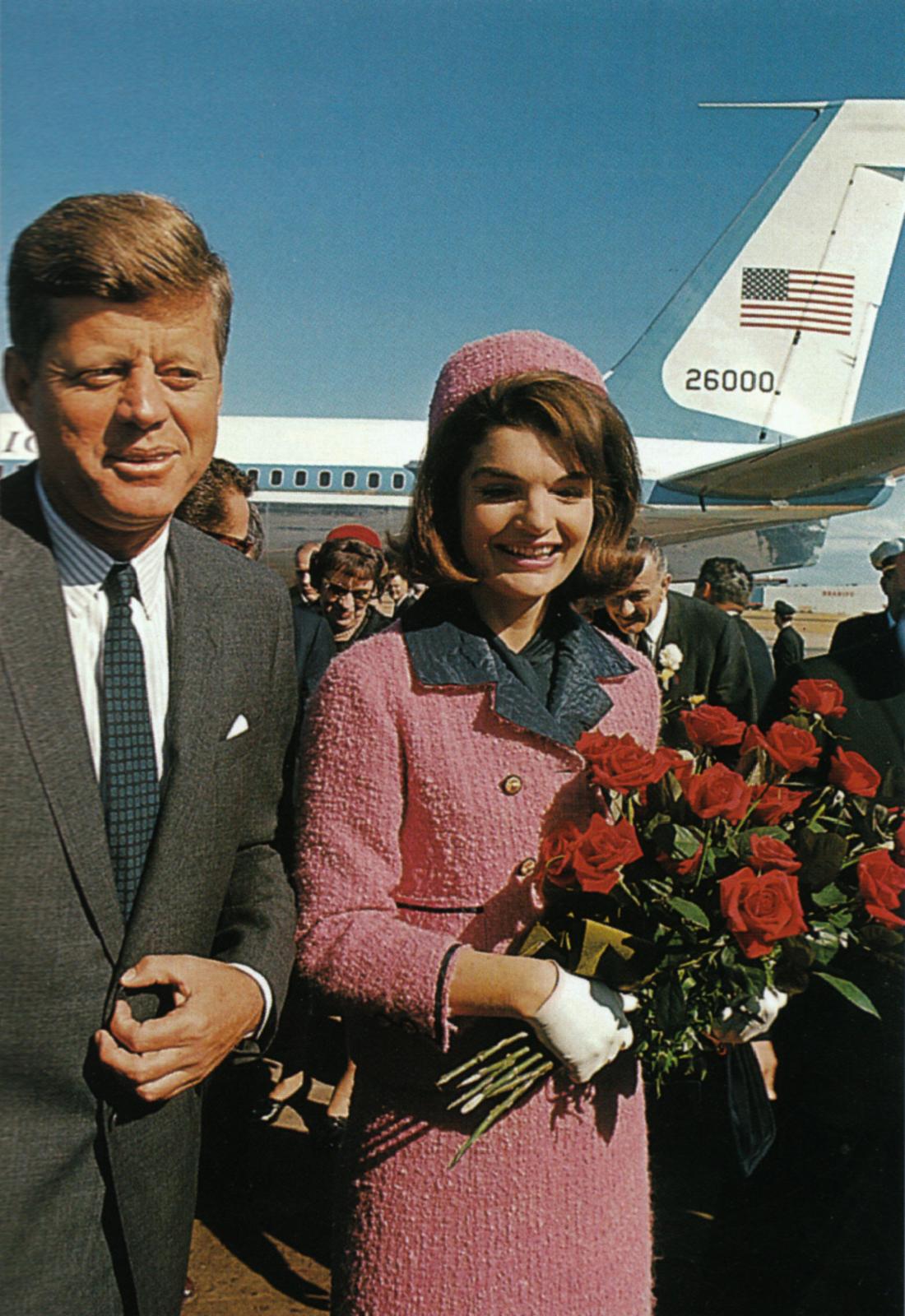
JOHN F. KENNEDY

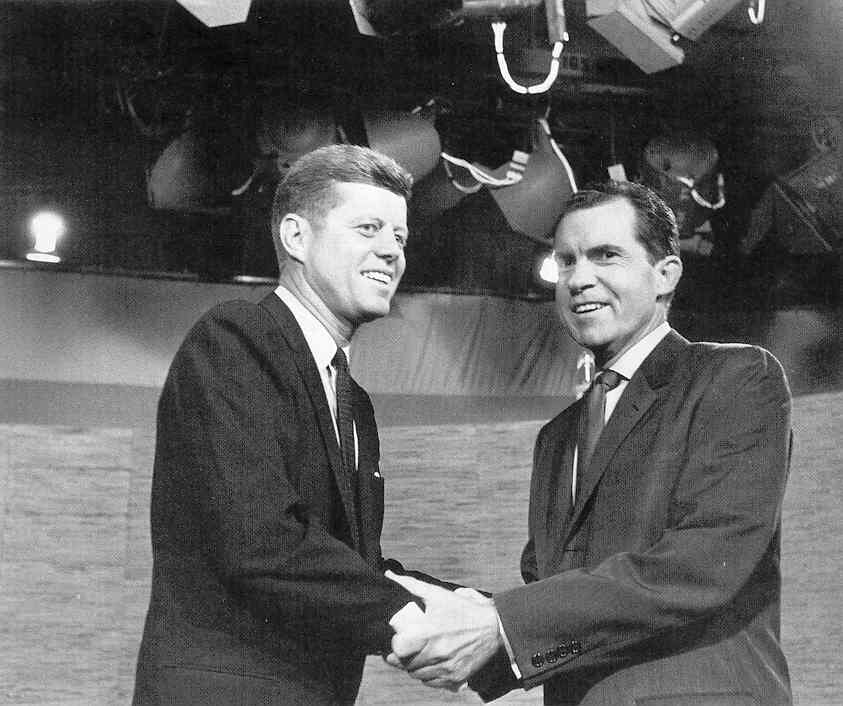
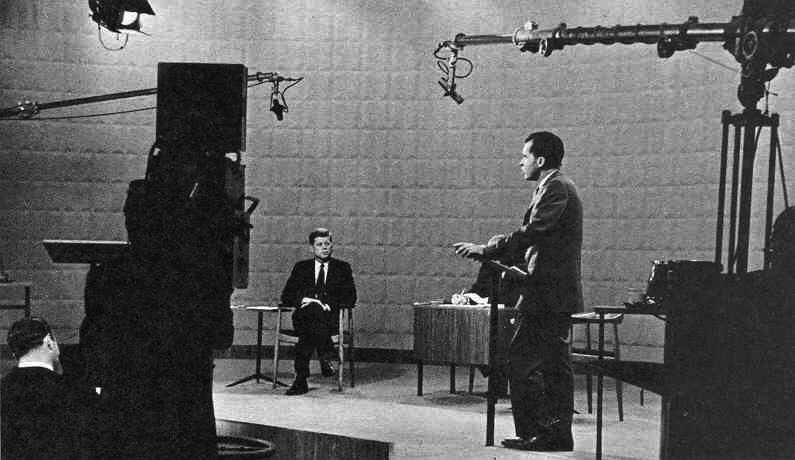
Kennedy's New Frontier.  The year 1960 produced America's first televised debate – between Vice President Richard Nixon running as the Republican presidential candidate and John F. Kennedy as the Democratic candidate.  At the debate, Nixon looked tired and washed out (he had just come in from a meeting elsewhere and had not taken the time to put on makeup necessary to give a normal appearance in front of the very bright TV lights) – which set him back considerably in popular estimation.  The smaller radio audience thought that Nixon had sounded more impressive than Kennedy – indicative of the way physical appearance before the cameras was going to play a much larger role in American politics from this point on.  In the end the election was fairly close – and went to Kennedy.

John F. Kennedy.
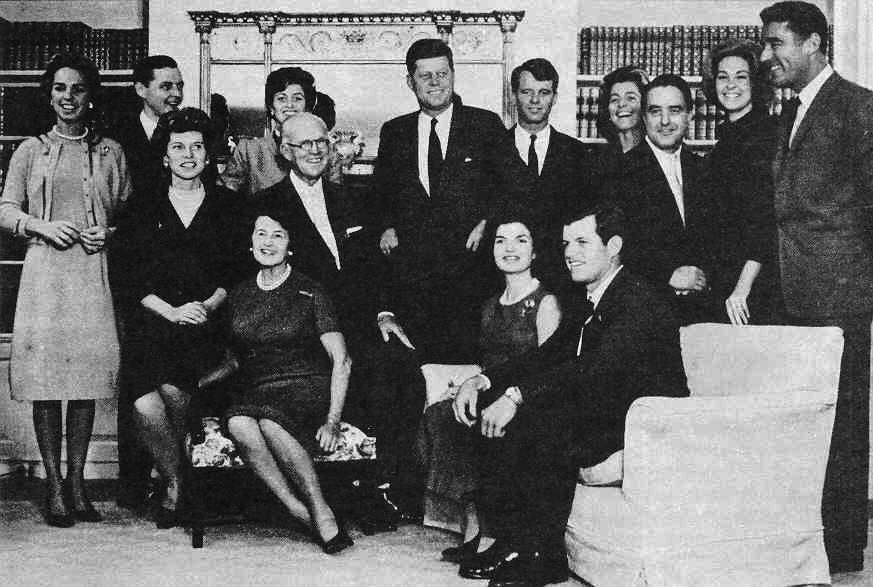
 Kennedy was second of nine children born to the very prosperous and politically active Irish-Catholic family of Kennedys of Boston.  His grandfathers on both sides of the family had been very active in Massachusetts politics. And his father, Joseph, Sr. was quite wealthy as a businessman in real estate, the stock market (wisely getting out just before the crash), Hollywood movie production, and – with the end of Prohibition – the whiskey business.   But his father was also very active in Roosevelt's Administration, heading up Roosevelt's new Security and Exchange Commission and then being sent to London as America's ambassador to Great Britain.

In addition to the learning acquired in being a member of this dynamic family, Kennedy attended the prestigious Choate boarding school and then headed off to Harvard, traveling widely at the same time (West Europe, Soviet Russia and the Middle East).  And in 1940 he proved himself very well in writing (and publishing) his Harvard senior thesis, Why England Slept ... full of insight into English diplomacy in dealing (or not) with Hitler.

Unfortunately, he suffered from serious back problems and was able to enter the Naval Reserve only with some intervention by his father, but advanced in the world of naval intelligence in D.C. nonetheless.  Then when America finally found itself at war, he entered the action as a patrol torpedo (PT) boat commander.  In one particular action, his boat was sunk by a Japanese destroyer, but he was able to swim the three miles to shore – towing a shipmate with him in the process.  But this left his back so crippled that after another period of active service he had to have extensive hospital treatment, and ultimately was dismissed from active service. It was also at this time that he learned that his older brother, Joseph, Jr. had been killed in active duty in Europe.

Kennedy's considerable talent as a political analyst and writer opened the door for him to cover the Potsdam Conference in 1945.  But he was also getting enormous pressure from his father to take over the expected role of a Kennedy to go big in the world of national politics.
  Thus it was, with considerable family support, he was elected to Congress in 1946, to begin that much-expected political career.  And by 1952, it was time to take on the challenge of being a U.S. Senator, which he achieved in defeating Massachusetts veteran politician Henry Cabot Lodge, Jr., rather substantially due to the strong support he received from Massachusetts's large Catholic community.

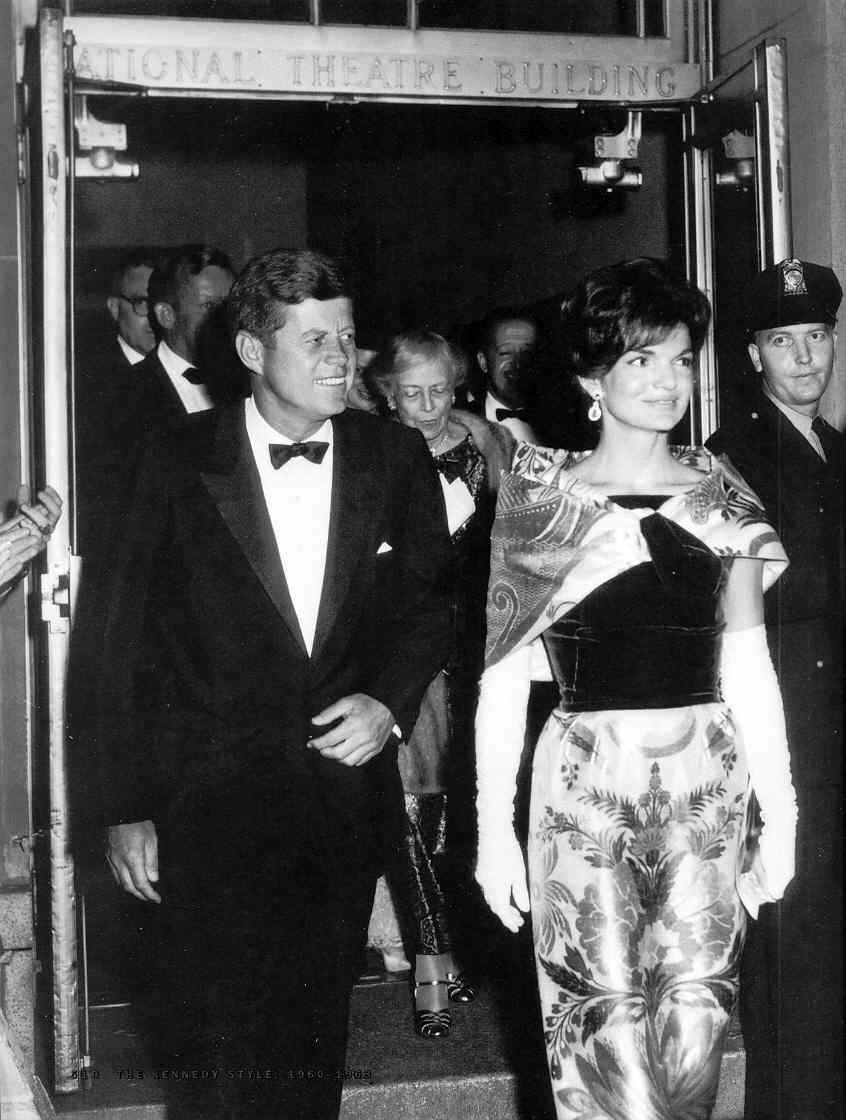
It was during his Senatorial campaign that he met the very attractive and highly sophisticated Jacqueline Bouvier, who held off his marriage proposal – in order as a journalist to cover Elizabeth's coronation as British Queen.  But they married soon thereafter, a major up-East social event!
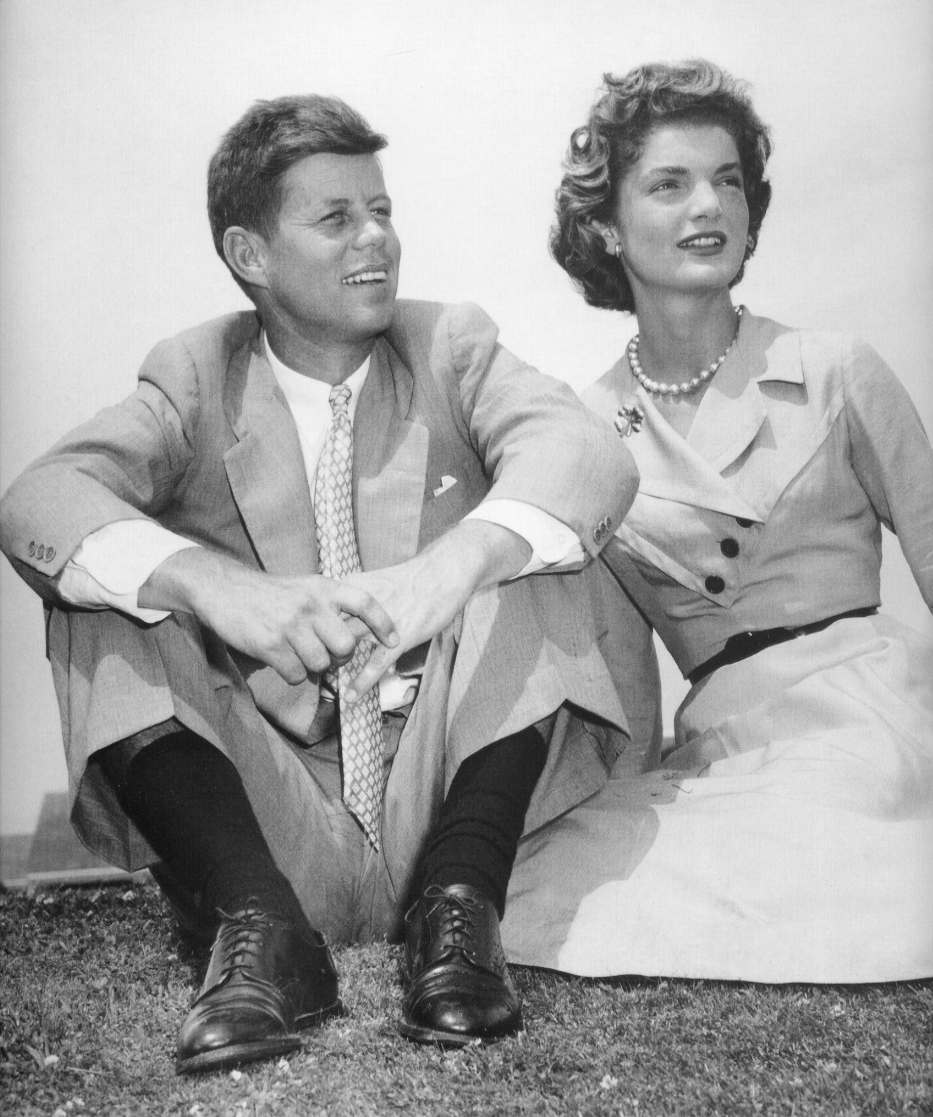
But family troubles almost ended the upward move:  back surgery that almost cost Kennedy his life, and a miscarriage (1955) and stillbirth (1956) that Jacqueline suffered, before she was finally able to give birth (1957) to a healthy child, Caroline.  But Kennedy was reelected Senator in 1958, taking him closer to the goal of the U.S. presidency.

Finally, in 1960, he was ready to have a go at the presidency.  His only serious opponent was the Senate Majority Leader, Lyndon Johnson.  Kennedy went into the nominating convention with the largest number of committed delegates, but knew that he would have to win the nomination itself on the first ballot, or Johnson would most likely maneuver the convention over into his own camp.  But it turned out that Kennedy did succeed on that first ballot.

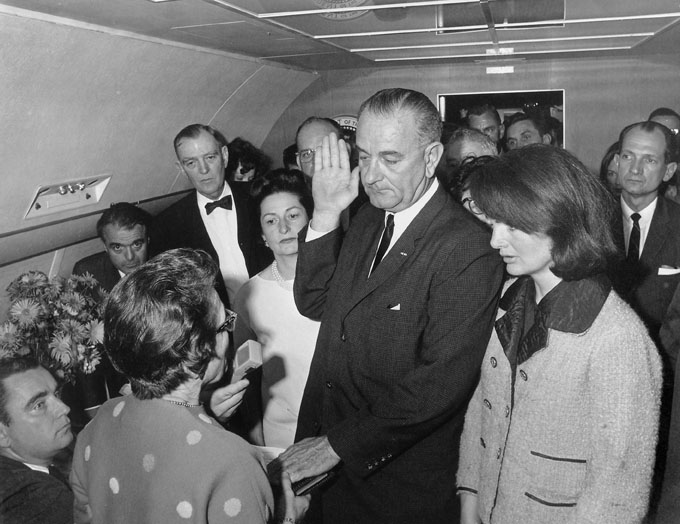
Then (to the great irritation of his brother Bobby, John's campaign manager), Kennedy asked Johnson to become his running mate.  It would be a very close race against Republican Vice President Nixon and Kennedy would need the swing vote of the South where Johnson was from, and where Johnson commanded a lot of support.  And, in the end, it would become a very fateful decision for the country.

Undoubtedly the biggest issue Kennedy had to face in running against Vice President Nixon was his Catholicism ... alarming somewhat quite Protestant America.  But he was quick to point out that he was not campaigning on behalf of the Church, and that his Catholicism had not been an issue to anyone back when he served his country in the South Pacific!   Actually his religious faith outside of normal Catholic expectations was itself unknown, and would remain unknown.  His close associates, including for instance his personal advisor Ted Sorenson, remained unaware of Kennedy's exact position on such matters as heaven and hell and life after death.  Certainly Kennedy lived a life of prayer, personal pain as well as political pain being a big part of his life.  But that seemed to have no impact on his extensive womanizing (which at the time was considered by the Washington press and Congressional membership to be nobody's business other than the president himself).

The Kennedy presidential victory.
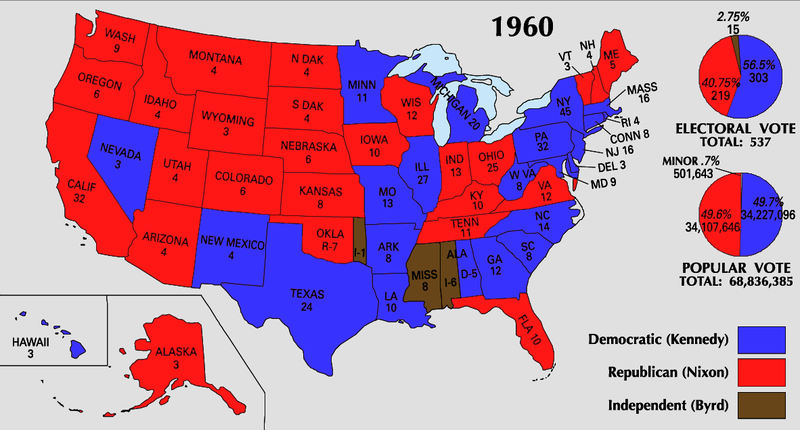
  In any case, the November (1960) presidential vote was close[1] – very   close indeed, with Kennedy gaining 49.7 percent of the vote and Nixon 49.5 percent.  The crucial electoral college majority, however, would register as a bigger difference, with Kennedy's 303 votes to Nixon's 219.  Kennedy was thus elected as the country's thirty-fifth president.
In Kennedy's inaugural address to the nation in January of 1961, he challenged America to step up to the call that had long been on America – to be something of a light to the nations, especially in this 
Cold War Era.  He challenged Americans to "ask not what your country can do for you – ask what you can do for your country."

In this matter, however, he had something in mind more along the lines of a cultural challenge rather than a military challenge – and one directed toward the Third World of Asia, Africa and Latin America – the region of the world to which the Cold War had shifted its playing field.  He wanted to show a loftier approach that America took toward the world, implying the idea that Soviet Russia proceeded only through bullying others into submission.


[1]There were serious questions about how Chicago Mayor Daley brought in the Illinois vote for Kennedy.  But Illinois going to Nixon instead of Kennedy would not have changed the ultimate outcome.


THE BAY OF PIGS DISASTER  (APRIL 1961)

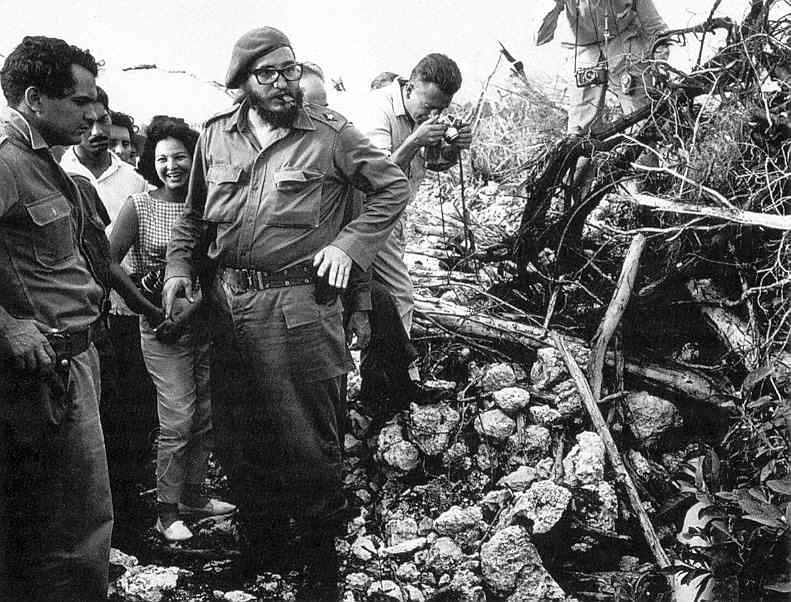
But almost immediately in taking office Kennedy had his loftier approach challenged – from within the American foreign policy establishment itself – in the form of the well-advanced plans to launch the CIA-trained army of Cuban liberationists onto the beaches of Cuba at the Bay of Pigs in order to overthrow the troublesome Castro.  Kennedy was now facing a major dilemma.  The invasion would succeed only if it received heavy American military support.  But such support would make America appear to be the neighborhood bully that Kennedy assured the world America would no longer be.

As a result, 
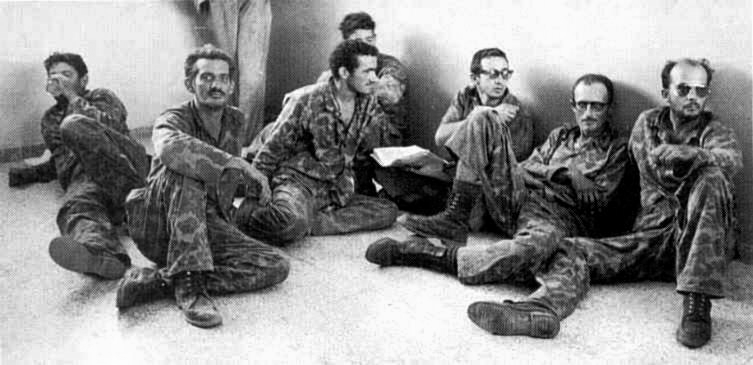
Kennedy pulled back considerably the promised military support for the 1400-man Cuban invasion – which ultimately failed – failed miserably.  And despite Kennedy's pull-back, the hand of America was still very clearly evident in this grand catastrophe.  And thus the event played beautifully into Soviet Russia's anti-American propaganda campaign.

Kennedy was highly embarrassed – and America looked as if it were under the leadership of a very weak president.  Certainly that is how things looked to Soviet Premier Khrushchev.


THE BERLIN WALL  (AUGUST 1961)

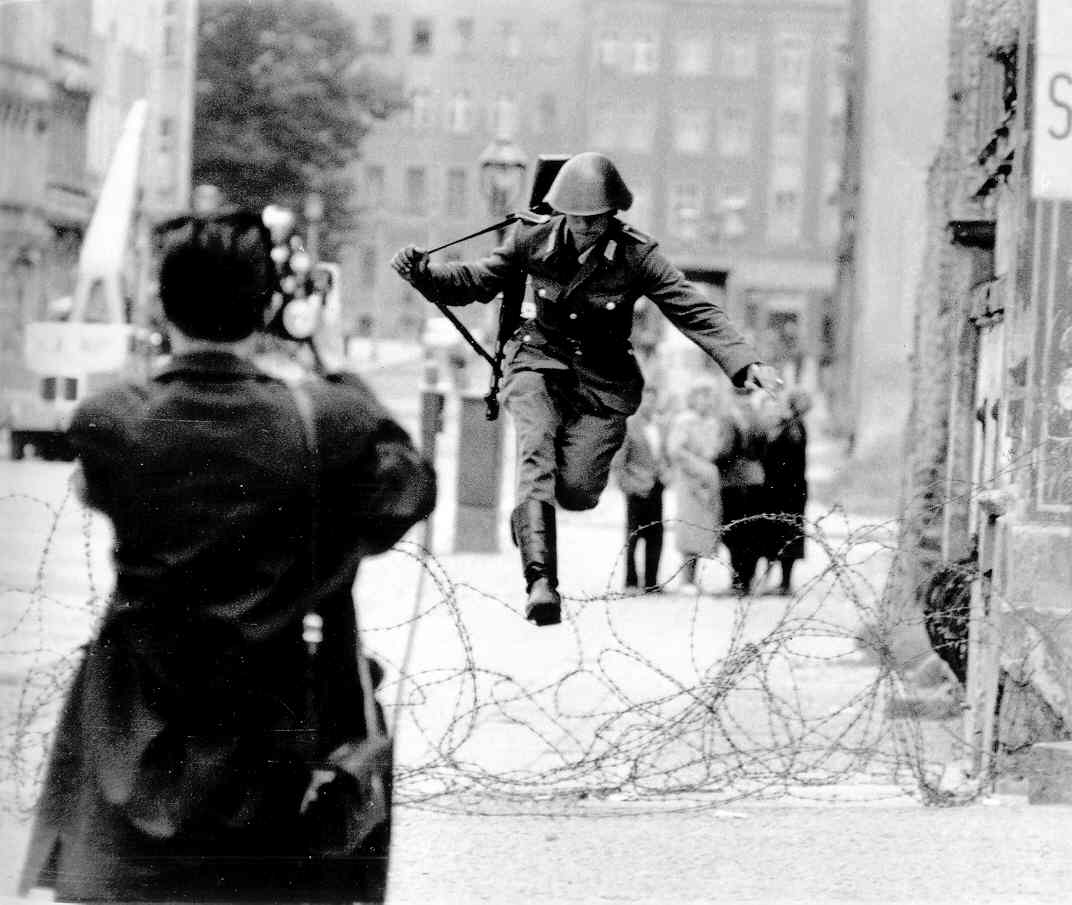
The NATO-supported Western half of the city of Berlin, located entirely within Soviet-dominated East Germany, was a huge Communist sinkhole into which all sorts of Germans wishing to escape Communist East Germany could make their way to the West simply by reaching West Berlin and flying from there to West Germany.  The West Berlin opportunity was draining Communist East Germany of vast portions of its more ambitious and better-educated talent, causing something of a cultural crisis in East Germany.  And it was also a huge embarrassment in this Cold War cultural contest to see so many citizens of the Communist World desperate to escape to the West.

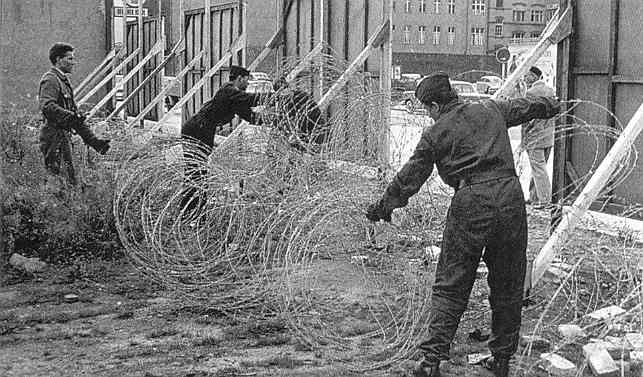
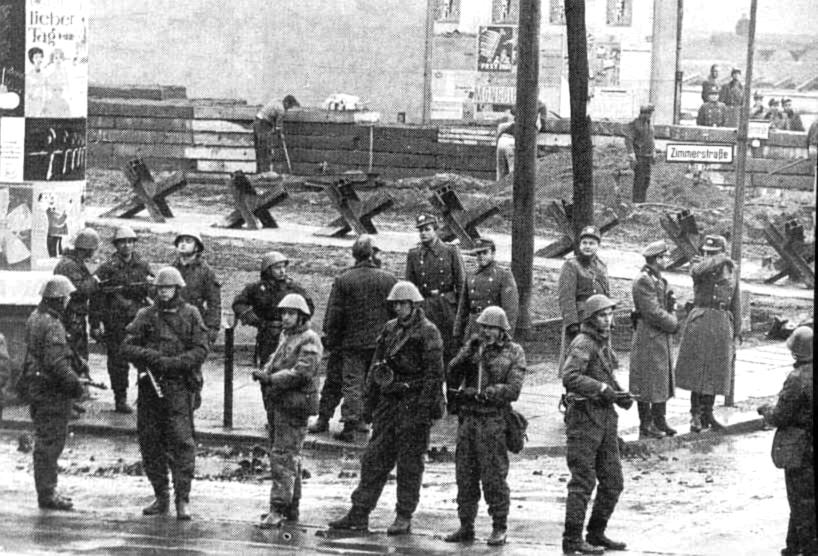
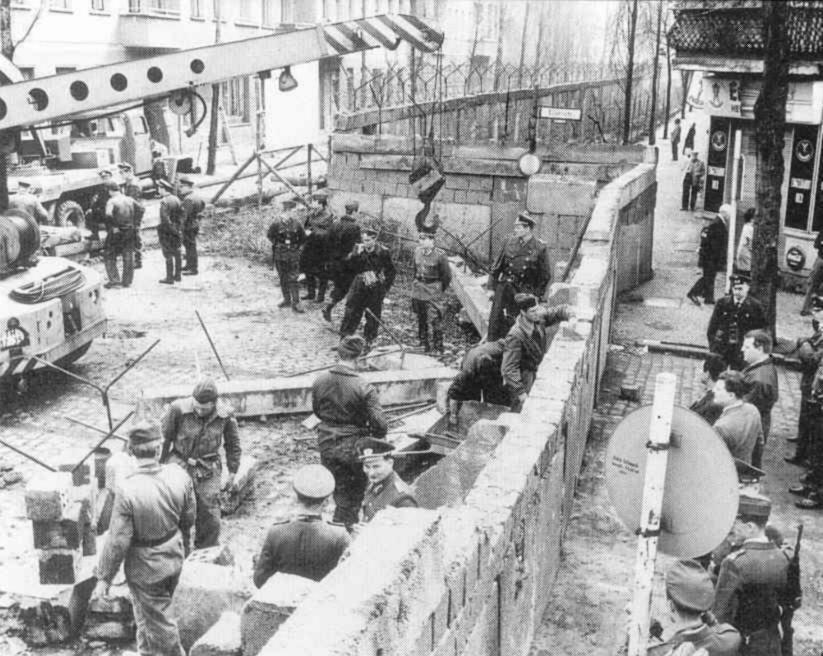
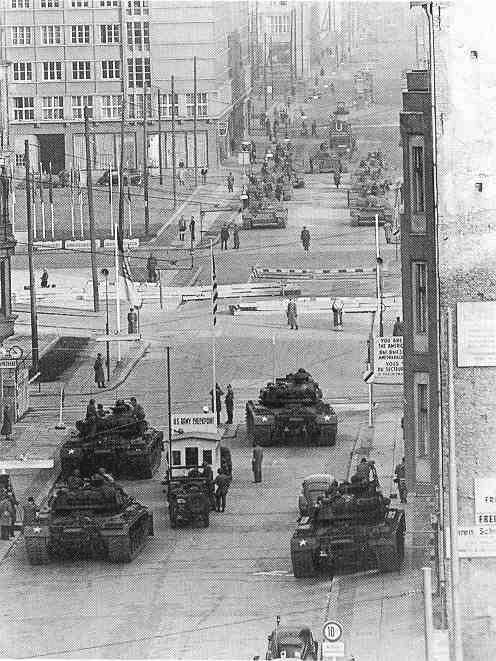
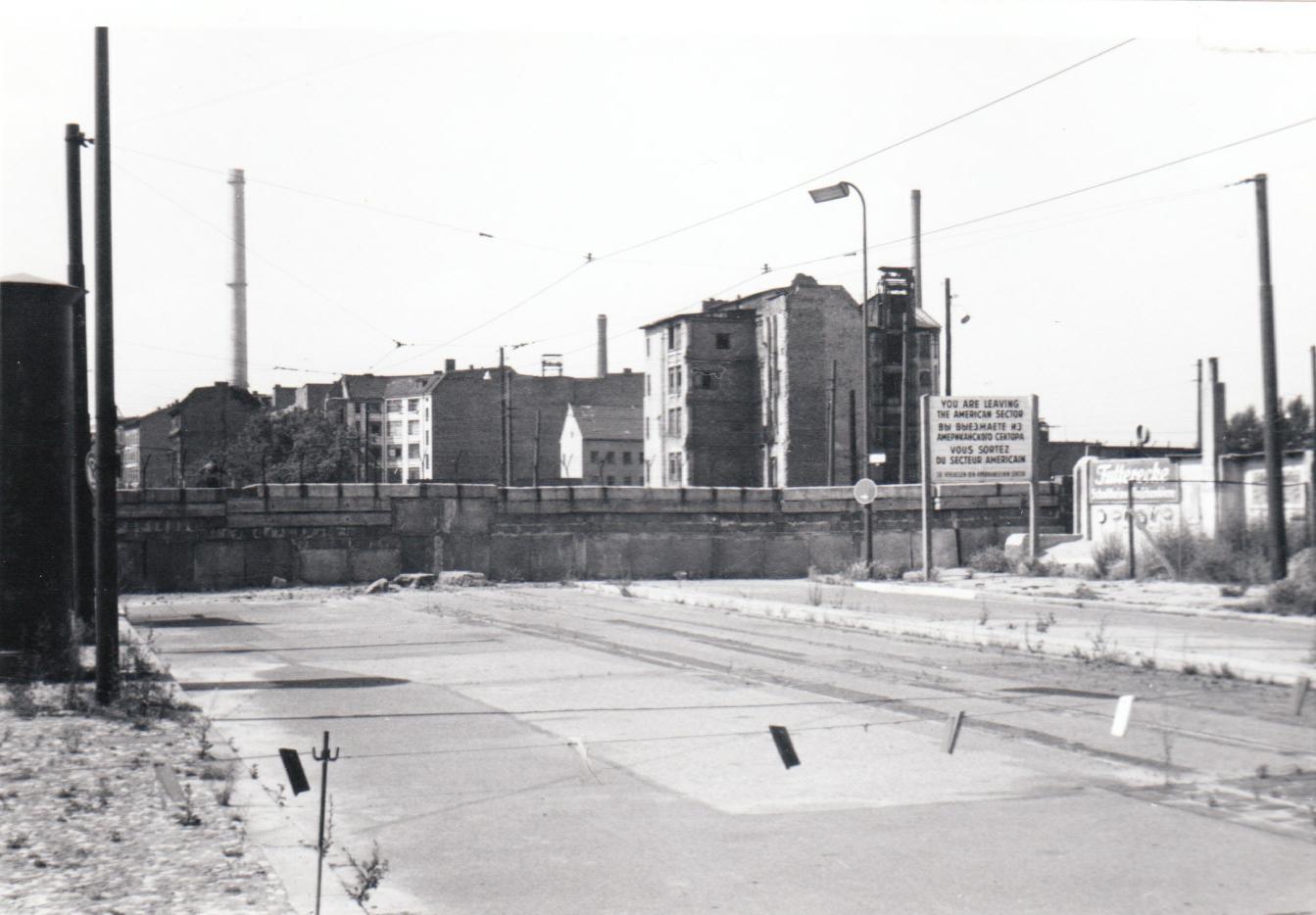
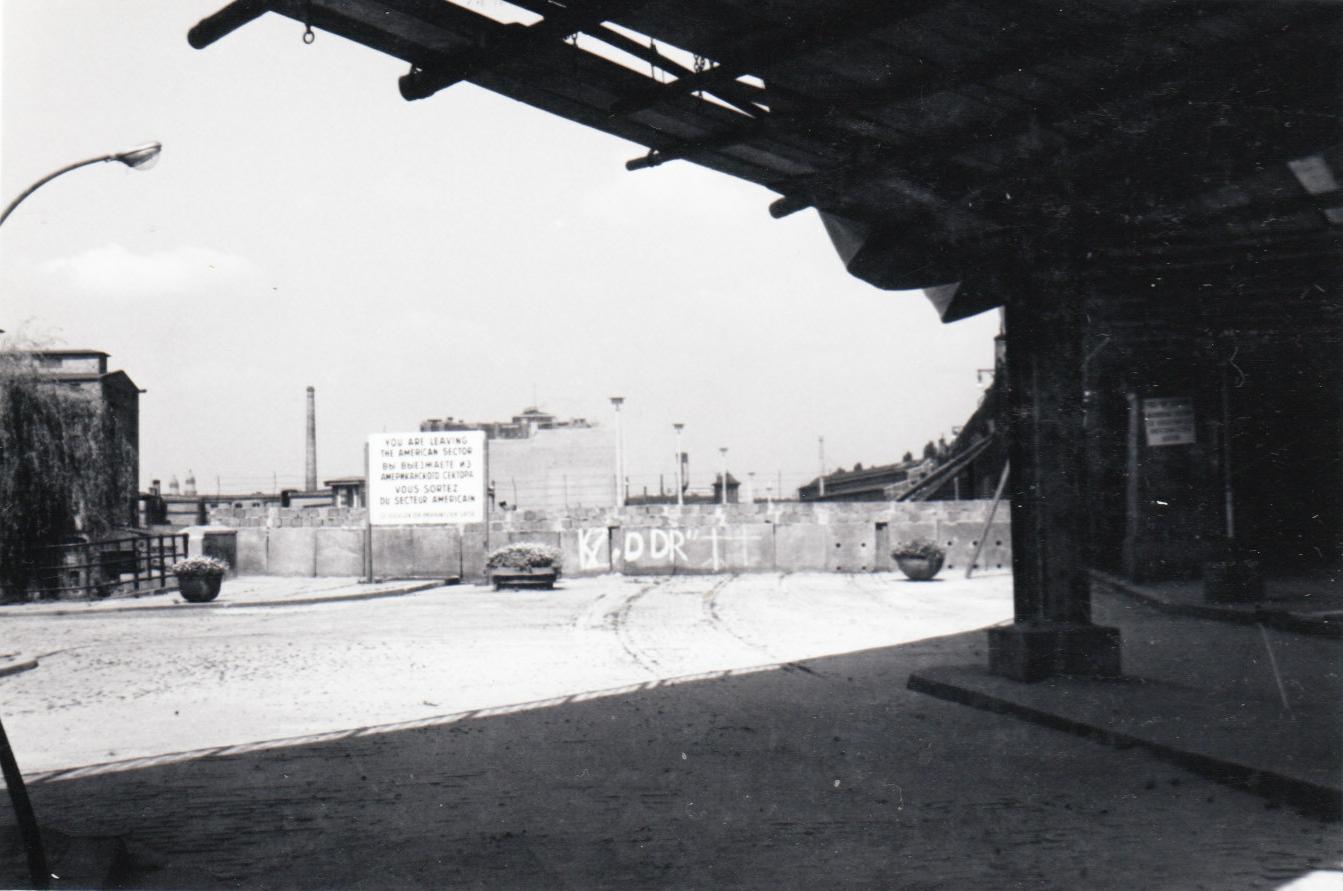
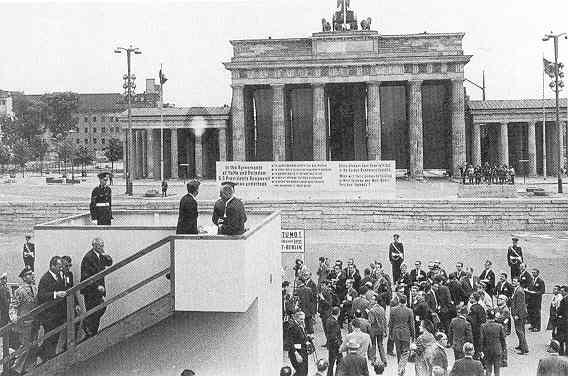
Consequently, in August of 1961, the Communist East German authorities suddenly threw around West Berlin at first a wall of barbed wire, then concrete block, then a perimeter mined with explosives and supervised by machine-guns – shutting down this escape route to the West.

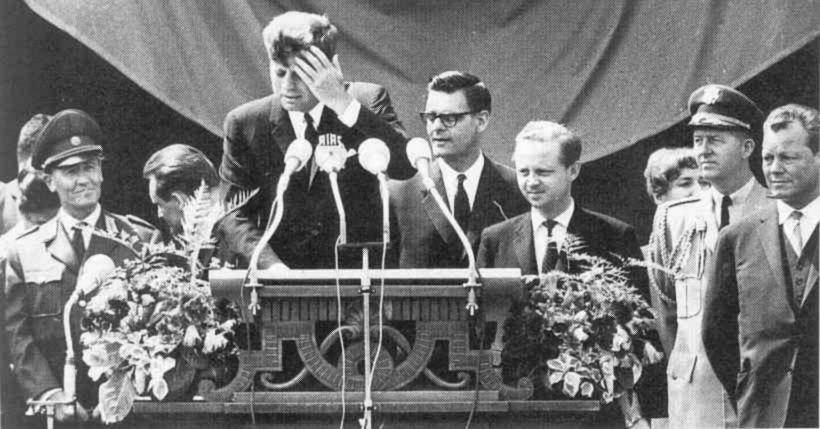
The world watched to see what the leader of the Free World would do in response.  Would Kennedy's American tanks and bulldozers smash down the wall in defiance of this outrage?  In the end Kennedy did nothing – except eventually (June 1963) fly to Berlin and stand in front of the wall to announce to Germany that he was one of them, he was a "Berliner."[2]   The Germans were politely appreciative – although their appreciation would have been greater if he had actually made a move to knock the wall down.  In any case, East Germany (and for that matter all of Eastern Europe) was now fully imprisoned behind the Soviet Russian Iron Curtain.

[2]Ich bin ein Berliner – not realizing that his choice of words was such that he was telling the Germans that he was a popular sweet bun (a “Berliner”)!  What he meant to say was “Ich bin Berliner.


THE PEACE CORPS

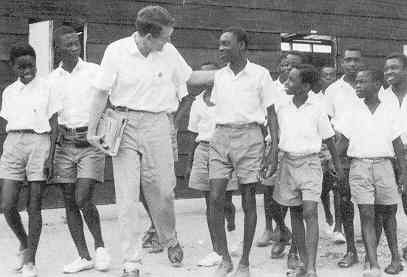
Not forgetting his promise to advance the American cause in the Cold War through new cultural rather than military means, Kennedy set up a volunteer program that would operate as an alternative to military service widely required of America's young men – except this program would also include America's young women as well.  These young Americans (drawn from the "Silent Generation" of youth slightly older than the Boomers – culturally closer to the Vets than the Boomers with their strongly patriotic mindset) would sign up as a Peace Corps Volunteer for a two-year term of overseas service in one or another Third World country.  They would receive a quick training in the local language and then be sent off to a village to undertake English teaching – or even something as creative as poultry farming (briefly trained in that as well before being sent off!) – to demonstrate the blessings of the American approach to life.[3]

Thus hundreds of thousands of young American college graduates signed up for this opportunity to show the world the better "American way."  And indeed, it was obviously a well-received program abroad – although exactly how deeply it pulled the Third World toward the American way was easily questioned.  In fact, these idealistic American youth probably learned as much about the blessings of village life of a Third World country as they were able to show the locals the blessings of the American way!  Ironically, many Peace Corps volunteers returned to America hungry to continue to live the communal way they discovered abroad.  And thus a trend toward the founding of&hippie communes got underway in America.


[3]For their service they would receive the equivalent of a soldier’s very low military pay, indicative of the fact that Peace Corps service was an act of patriotic duty rather than a professional government job!


THE CUBAN MISSILE CRISIS  (OCTOBER 1962)

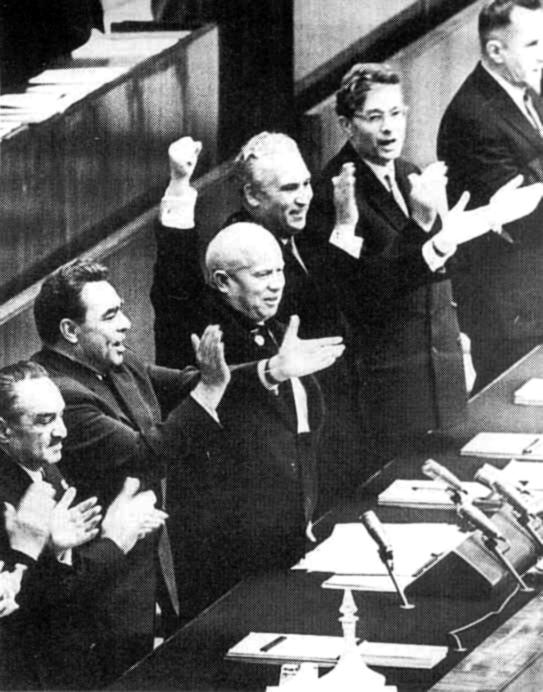
Castro continued to believe (correctly) that it remained a goal of America to remove him from power in Cuba – drawing him even closer to Khrushchev as an anti-American ally.  Seeing Kennedy back down from a direct confrontation with Russia in the building of the Berlin Wall, Khrushchev came to the conclusion that a much more forward strategy would result in the same lack of strong response from the weak Kennedy.  Thus it was that he was so bold as to propose to Castro to base nuclear-tipped missiles in Cuba – easily able to reach any of the American cities of America's East and Midwest.  Siting such first-strike missiles in Cuba would not only protect Cuba – it would slow even further any American responses to further Soviet moves around the globe – as the risk of a nuclear retaliation would cause the Americans to have to back down in such events.  Castro agreed to the idea in the mid-summer of 1962, and work on the Cuban missile sites began soon after.

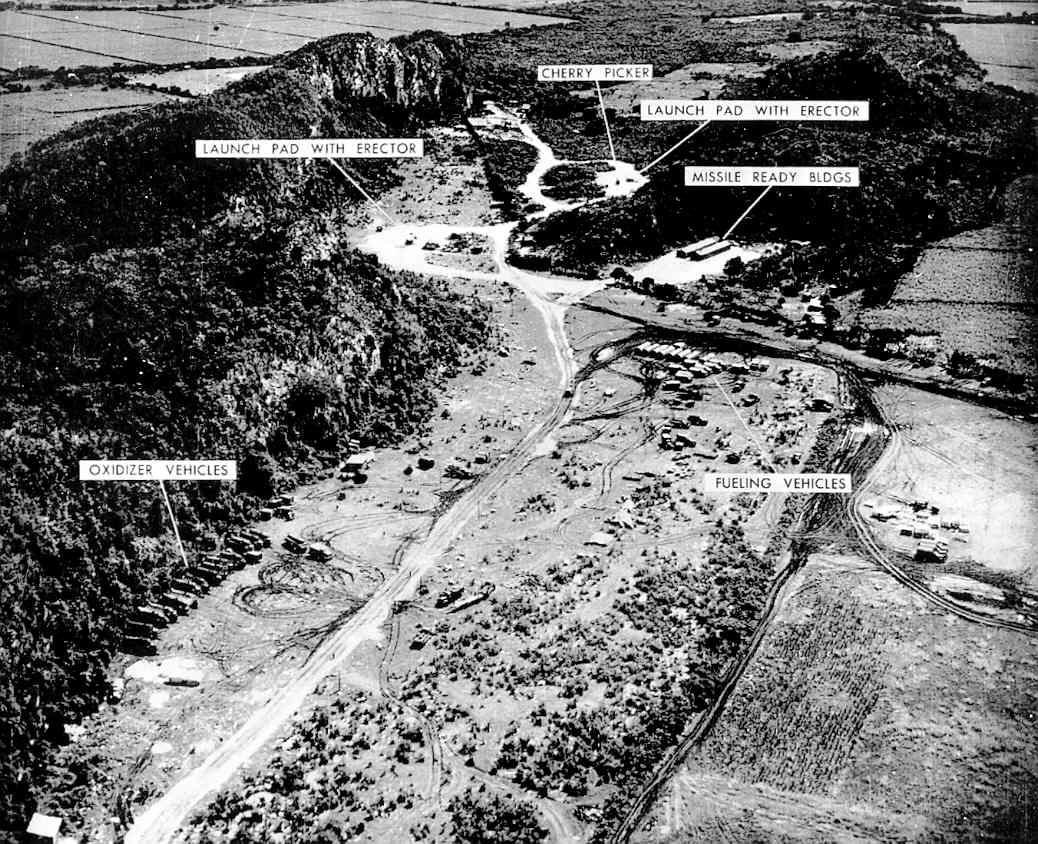
American U-2 spy planes picked up the activity – and when questioned, the Soviets answered that these sites were designed only for local defense.  But the character of the nine bases (of the 40-total planned) distinctly had the same structure as the major missile launch sites located within Russia itself – and American concern began to develop.  A cloud cover prevented further observation – until mid-October when spy planes detected the delivery to the launch sites of a number of R-12 medium-range missiles – able to carry 
nuclear warheads 1200 miles into America.  They were not yet operational.  American action was required immediately.

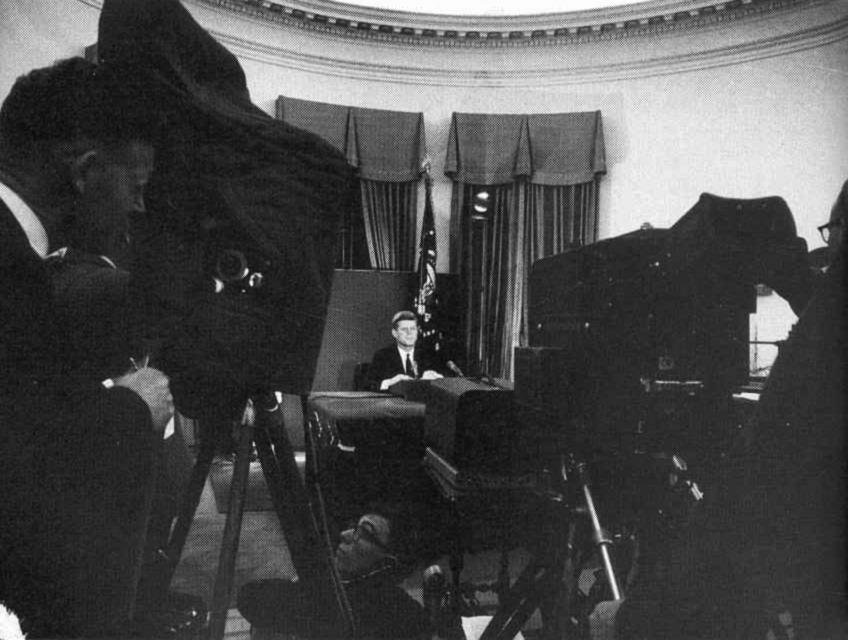
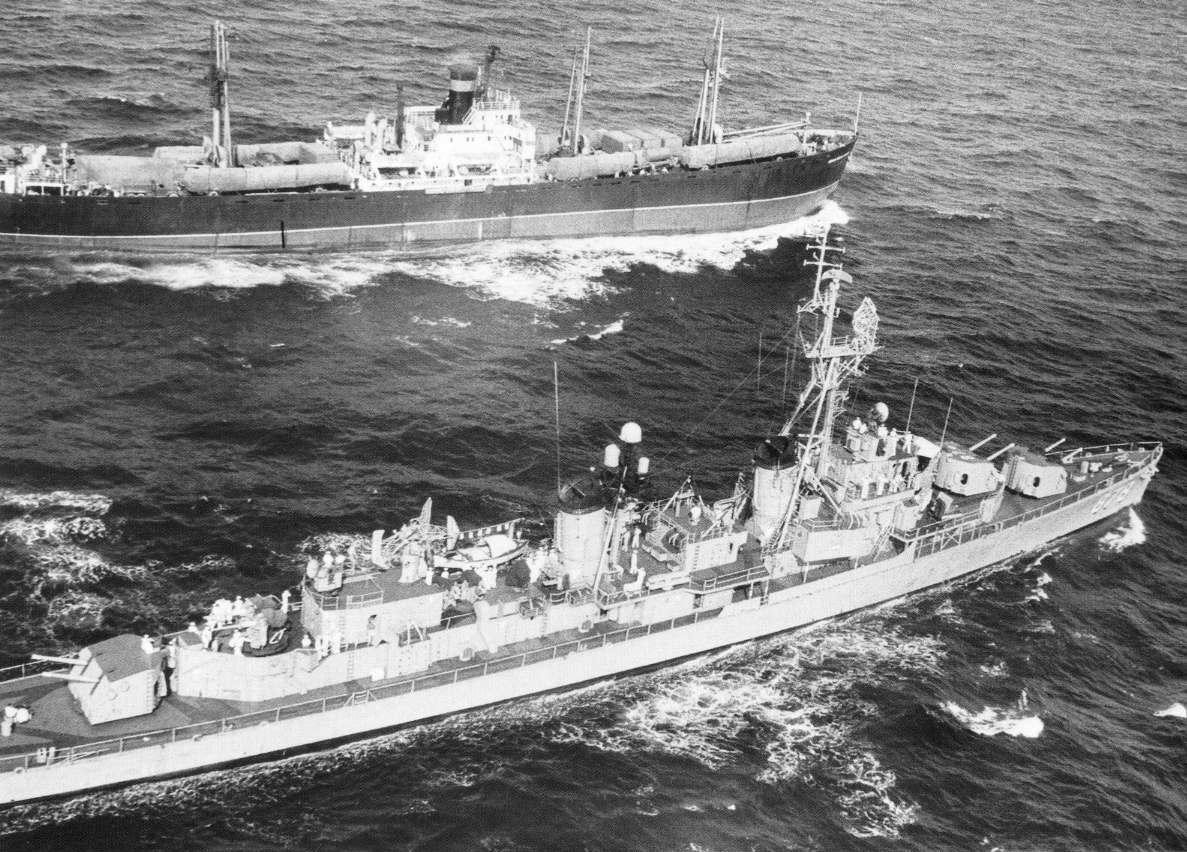
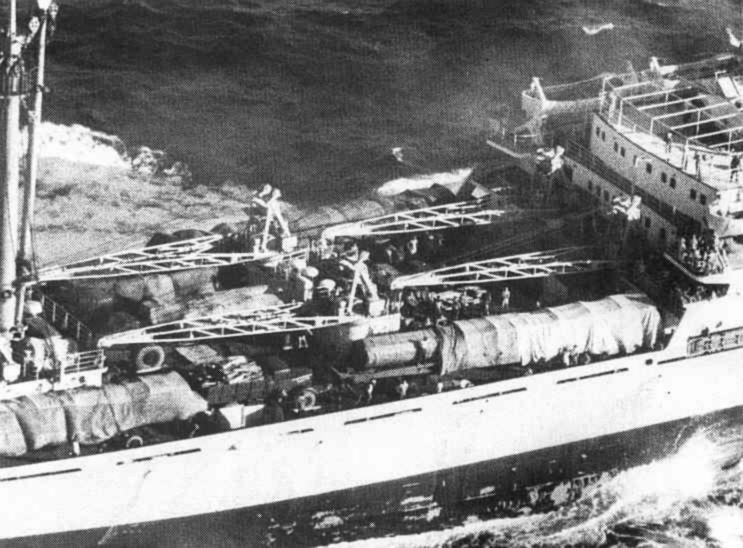
The White House staff thus gathered to consider a number of strategies to answer this serious threat coming from Russia and Cuba.  Finally, after several days of consideration, Kennedy was ready to move.  First he got the Latin American members of the Organization of American States to approve a quarantine of Cuba – not only isolating Cuba but also drastically undercutting Khrushchev's Cold War initiatives in the Western Hemisphere.  Then he made a televised announcement as to the nature of the crisis – and sent his ambassador to the United Nations to show the pictures of the Soviet activity in Cuba – making Russia's earlier denials of such activity appear to be the huge lie that it indeed was.  But Kennedy gave Khrushchev a way out of the corner he found himself in by offering an exchange: America would remove its missiles in Turkey[4] if Russia would do the same in Cuba.  While Kennedy was awaiting Khrushchev's response, an American naval blockade was placed around Cuba – and the world watched tensely as Russian ships carrying more missiles headed toward that blockade.  Finally it was Khrushchev who blinked first and turned his ships around to head them back to Russia.  He then accepted Kennedy's compromise offer of an exchange in missile dismantling – much to Castro's fury.  And thus it was that the world breathed again.  Had the world just come to the brink of a nuclear disaster?  Possibly.
[5]


[4]Actually, Kennedy had much earlier brought under consideration the removal of those missiles based in Turkey, fearing that they were more a trip-wire to nuclear war than they were an effective deterrent to just such a war.

[5]During the intense days of the crisis, an American ship had dropped depth charges in Cuban waters, nearly taking out a Soviet submarine possessing nuclear missiles of its own, a submarine also possessing orders to use them if attacked, but provided that all three levels of command aboard the submarine agreed.  Thankfully one of the three refused to agree to the counter strike, and thus the world was spared the horror of a full nuclear exchange, one that once started might have spun itself into a global nuclear holocaust!


KING'S APPEAL TO THE CONSCIENCE OF THE NATION

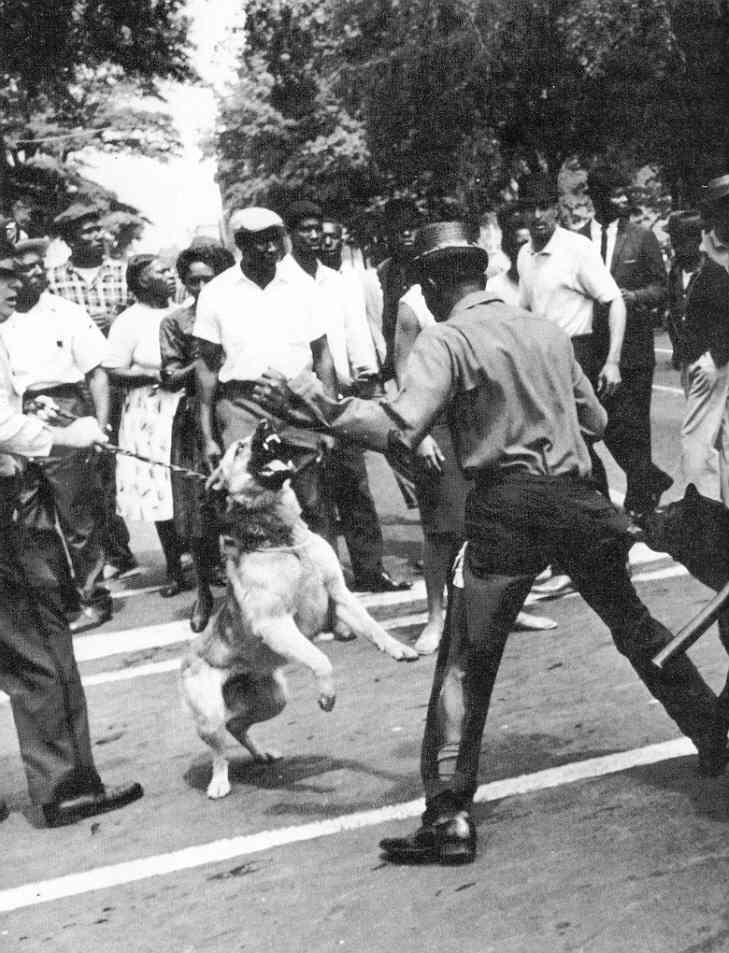
Considering the fact that America was attempting to put itself forward to a rising Third World of Africa, Asia and Latin America as the social model they should be following as the societies of these regions were one by one coming to independence, America's well-known problems in the area of race relations did not present a very nice picture to the outside world.  Khrushchev knew this – and the Soviet Russian propaganda machine was quick to pick up on every front-page American news report concerning one after another racial incident in America.

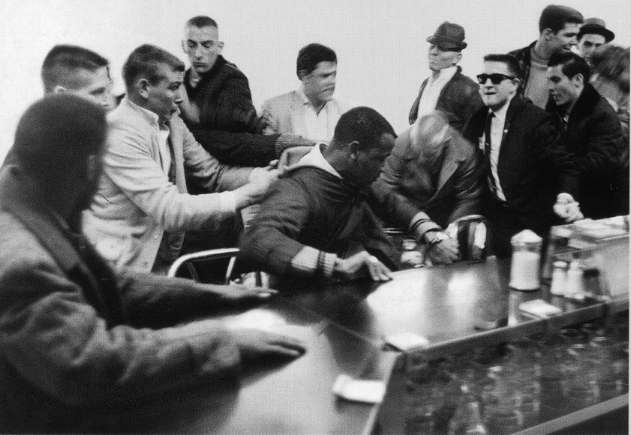
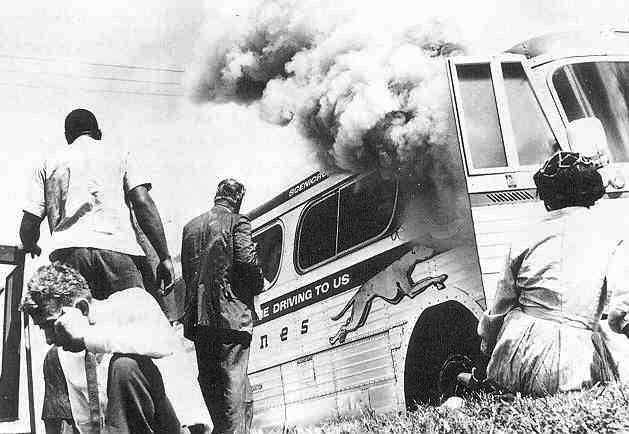
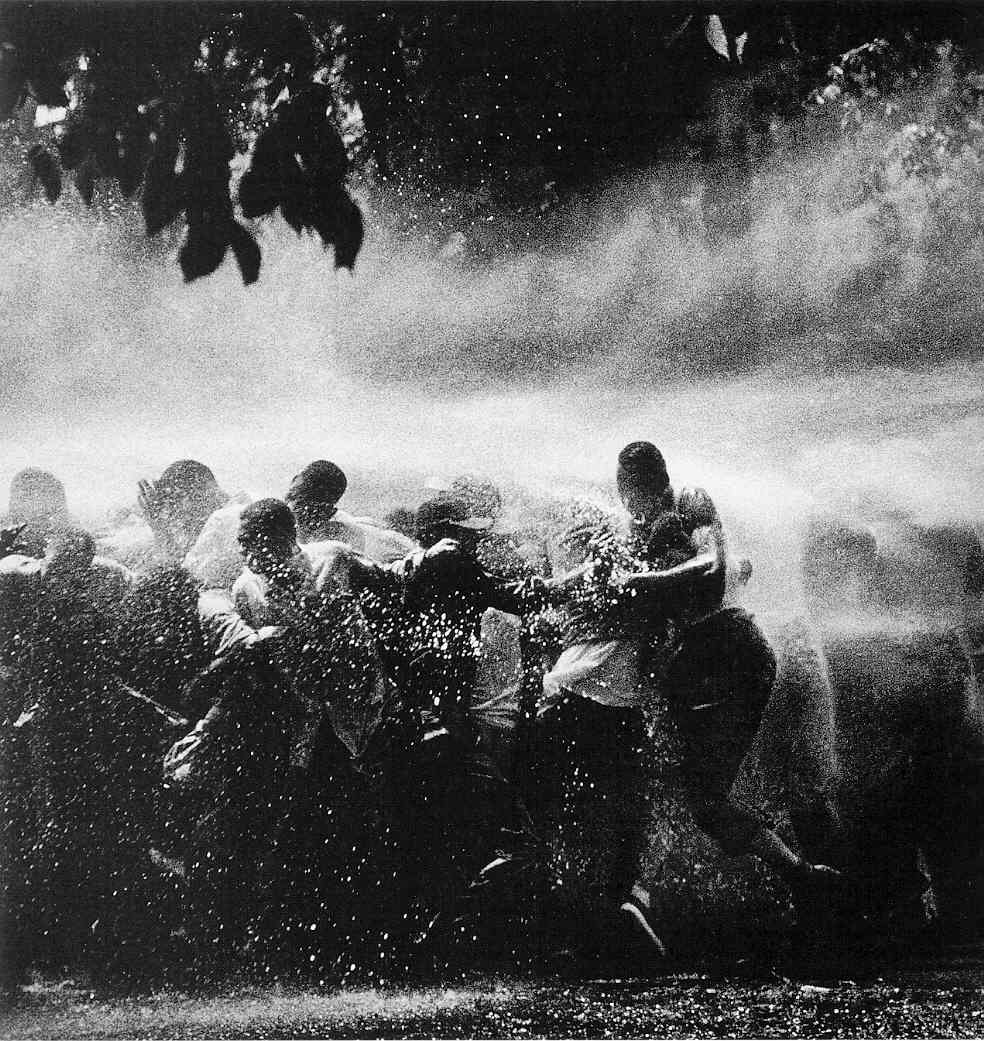
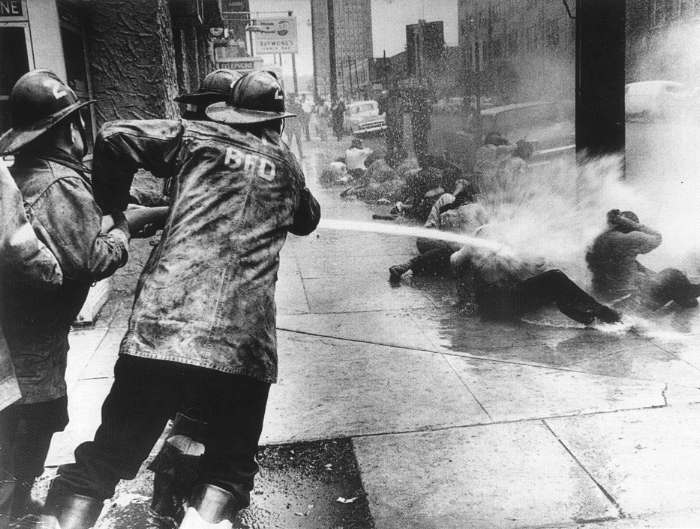
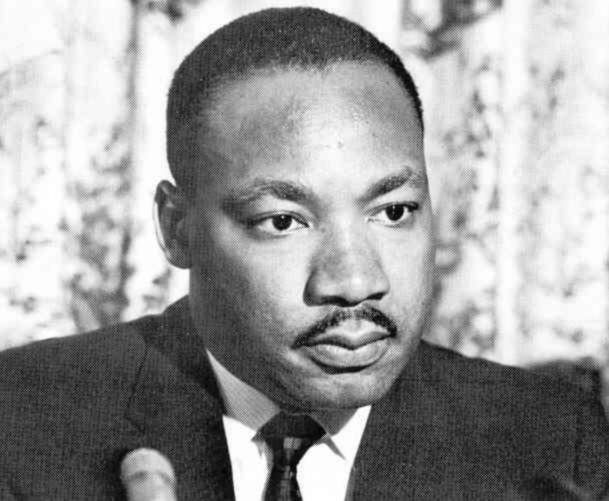
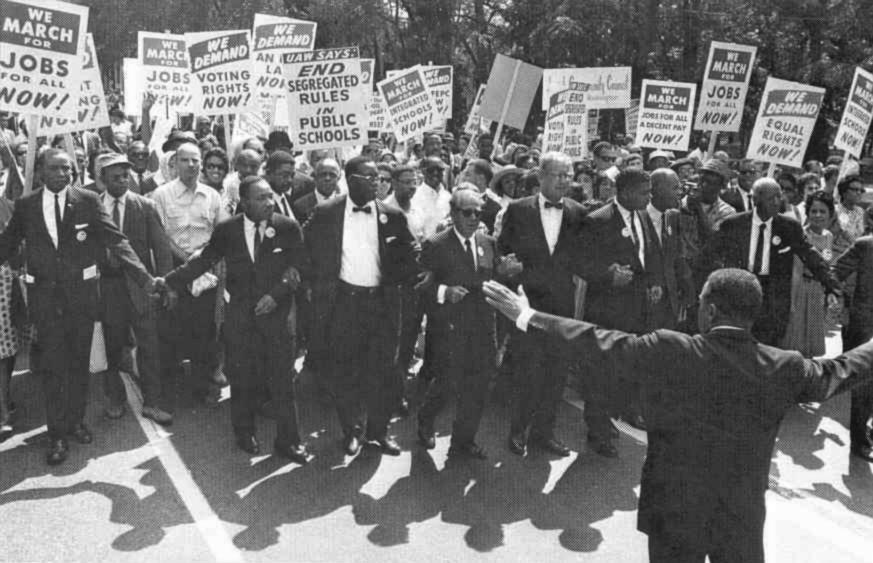
As America headed into the 1960s it was clear that Blacks were becoming much more aware of their rights, and demanding that segregation be brought to an end.  And American Northerners, Whites as well as Blacks, were joining the chorus demanding an end to this dark mark on America's national character.  Thus sit-ins and protest marches (often joined by Northern Whites) began to break out across the American South.  When the ever-active Rev. Dr. 
King was arrested in Birmingham (Alabama) for conducting a peaceful protest, Northerners were outraged.

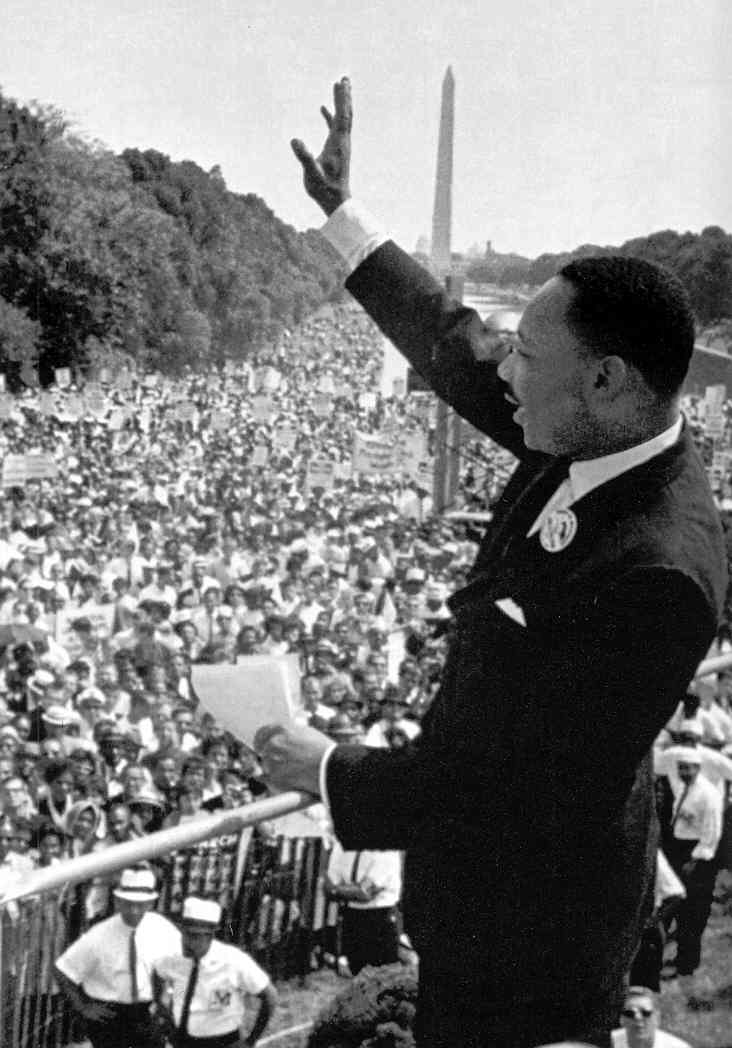
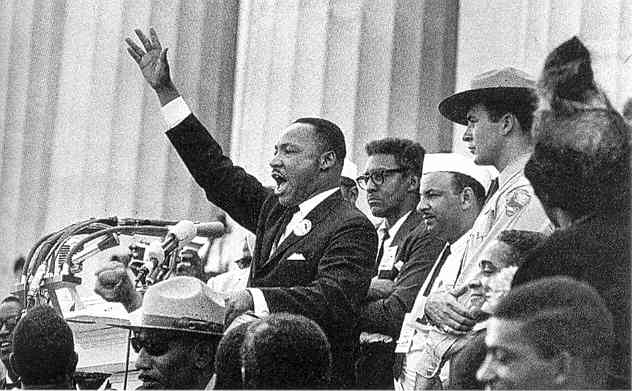
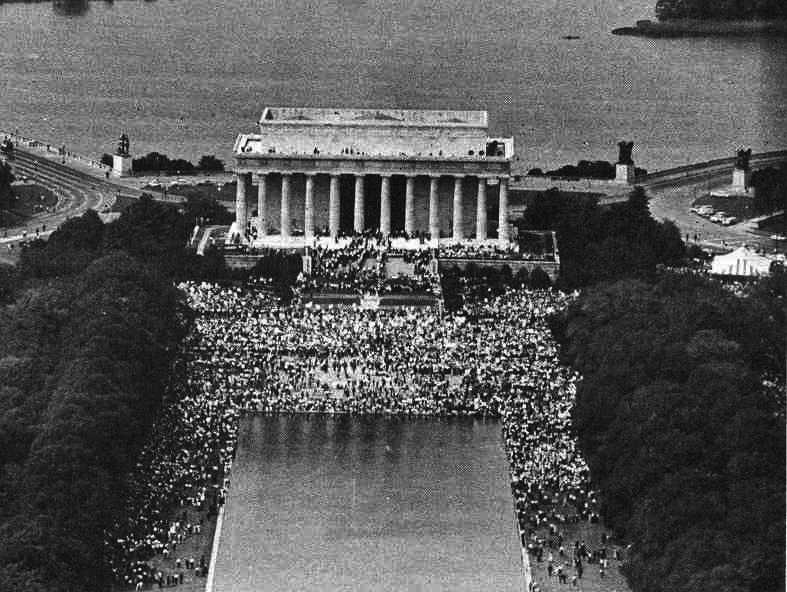
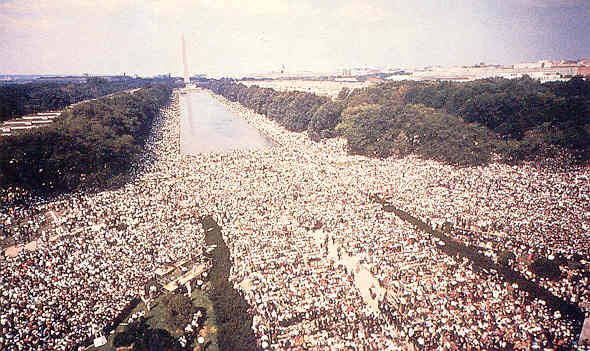
Thus King took the issue all the way to the nation's capital on August 28, 1963, where he stood on the steps of the 
Lincoln memorial in front of hundreds of thousands who had gathered before him (not to mention the millions watching on TV) to appeal to the Americans' better instincts.  It was time to change things, to bring the country together across racial lines.

>Kennedy, King was not asking for the Washington government to make these changes.  He was asking the Americans themselves to do so, after all, this was the American Way.  Certainly he wanted developments in the realm of law to occur ... particularly those allowing Blacks to enjoy every American's right to vote. But ultimately, he was looking to shape American social dynamics through a change in American hearts, not through the takeover of those dynamics by masses of government officials.

And indeed, his strong appeal to American consciences had its huge impact, shifting the country, including the South, towards the understanding that it was time to bring Blacks into Middle America as equals.


MOUNTING PROBLEMS IN VIETNAM

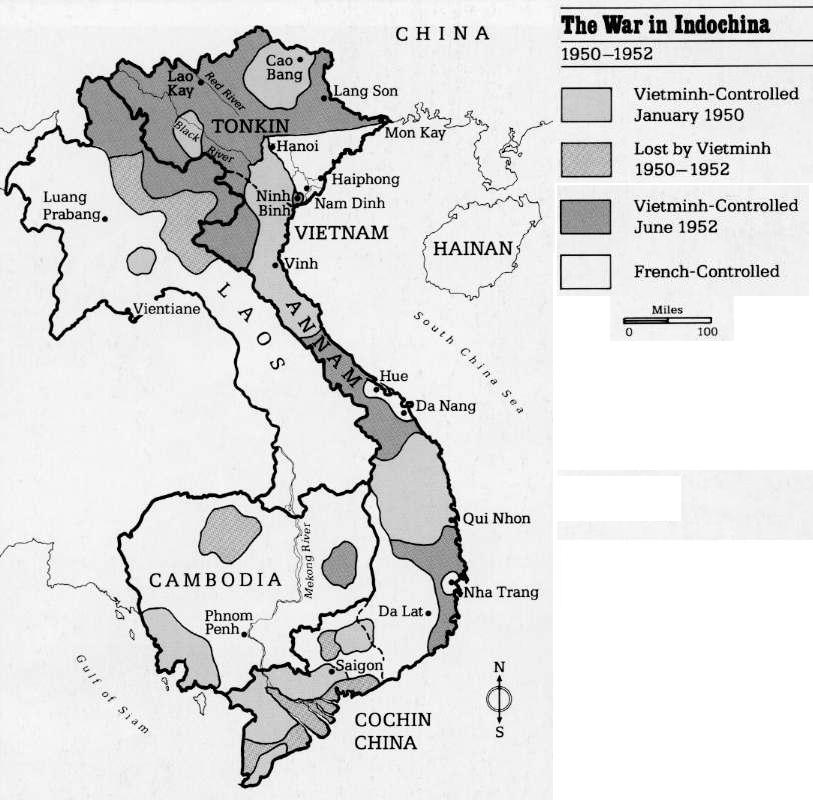
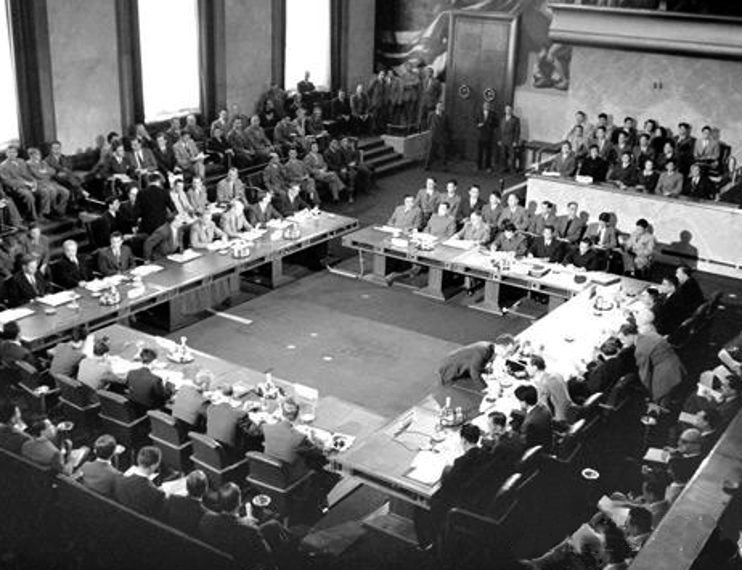
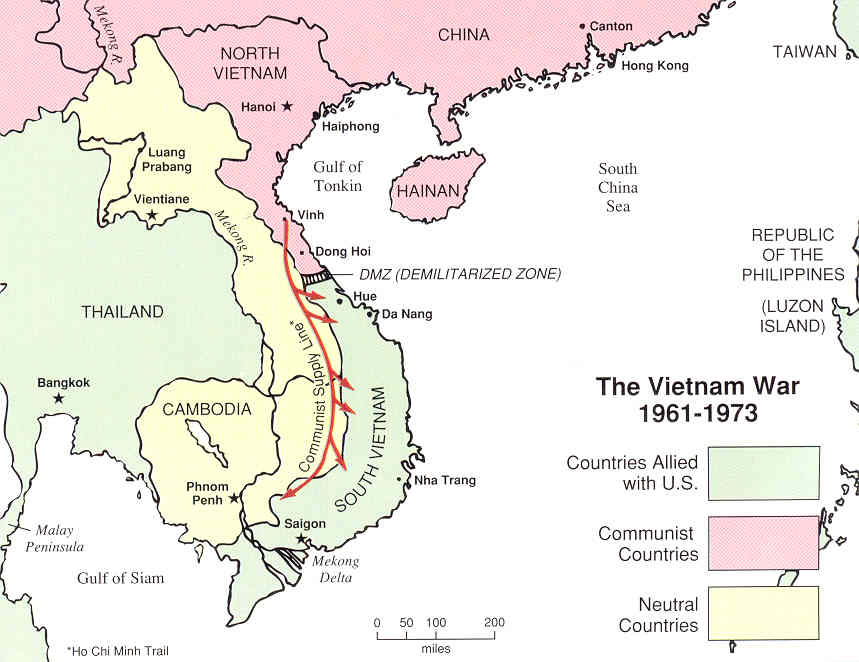
From the American point of view, things were not going well in the region of the old French Indo-China (Cambodia, Laos and Vietnam).  The French finally had given up their colony by way of an agreement worked out in 1954 at Geneva between major parties (including the Soviets and Chinese as well as the French and British).  But with the French gone the question immediately developed as to how these newly independent countries would rule themselves.  Cambodia came to independence under its old monarchy, Laos was taken over by a 3-way coalition of Leftists, Rightist and Centrists – and Vietnam was divided (supposedly temporarily, like Korea) in half, north and south, pending national elections designed to unite the country under a single regime.

But in 
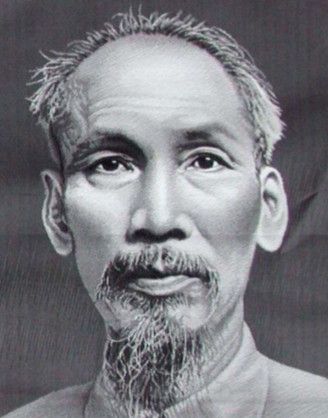
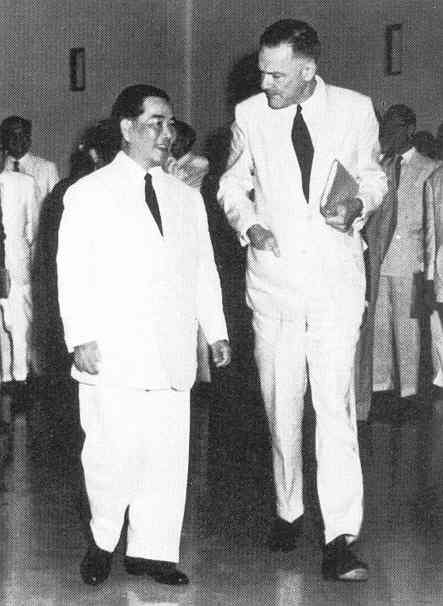
Vietnam, only the nationalist but also quite Communist leader Ho Chi Minh seemed to have enough of a following to unite the country.  But America was in no hurry to see yet another Asian country come under Communist leadership – and so did what it could to stall the scheduled national elections – and instead turned to support the rule (at least in the South) of the pro-Western Ngo Dinh Diem.  Soon America began to take the attitude that the division of North and South was a permanent one.  So in Vietnam, America was taking up the role that it accused Russia of playing in Korea:  blocking national elections destined not to go its way politically!

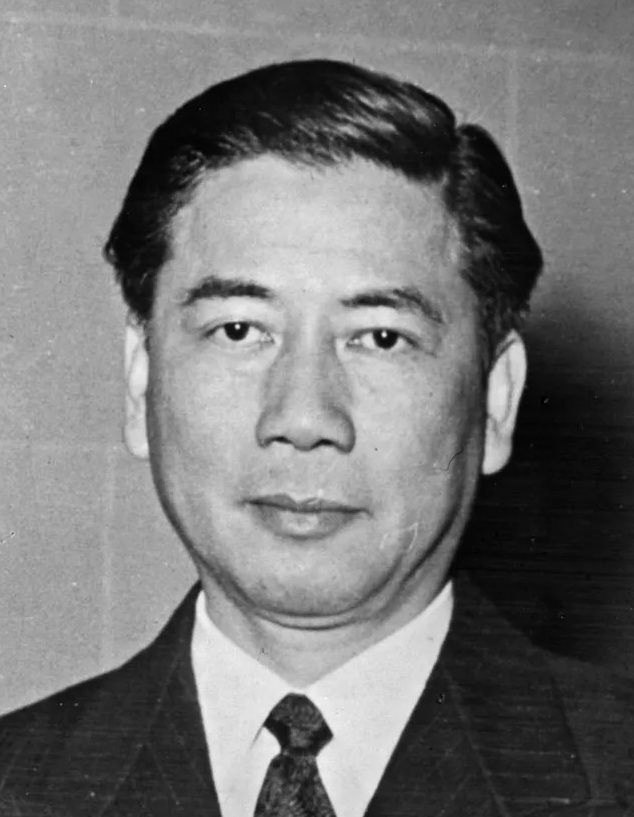
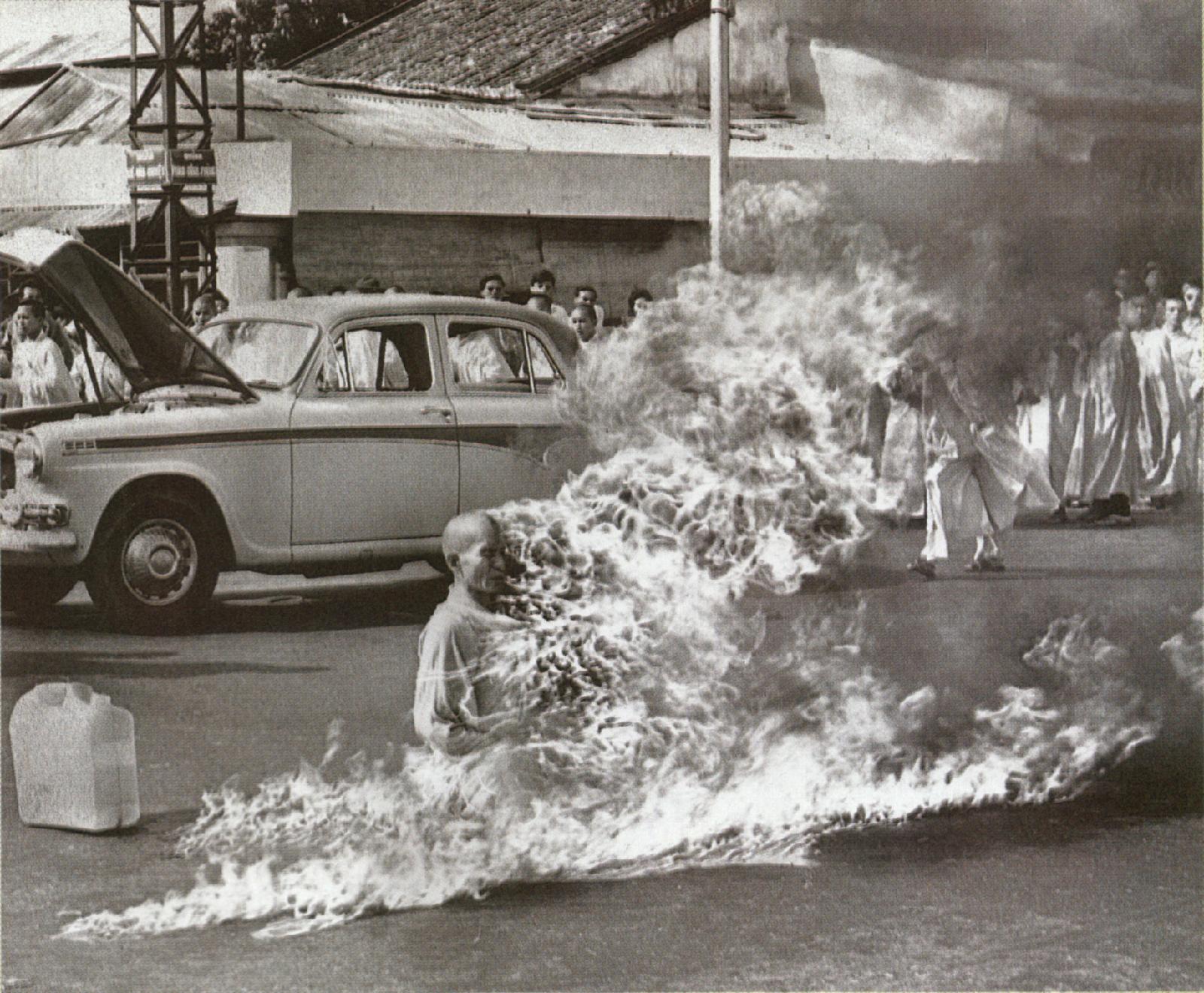
But Diem's style was drawing very negative responses from some of the South Vietnamese.  Was it because he was so authoritarian in style – or just because he was so pro-Western?  Some of the strongest of his opposition was indeed coming from 
Buddhist monks – who obviously had no interest in promoting Communism – but who were very much opposed to his introduction of Western cultural norms into their formerly Buddhist Vietnam.  America and the world, in fact, were shocked when in June of 1963 a Buddhist monk publicly doused himself in gasoline and lit himself on fire in protest against the Diem regime.

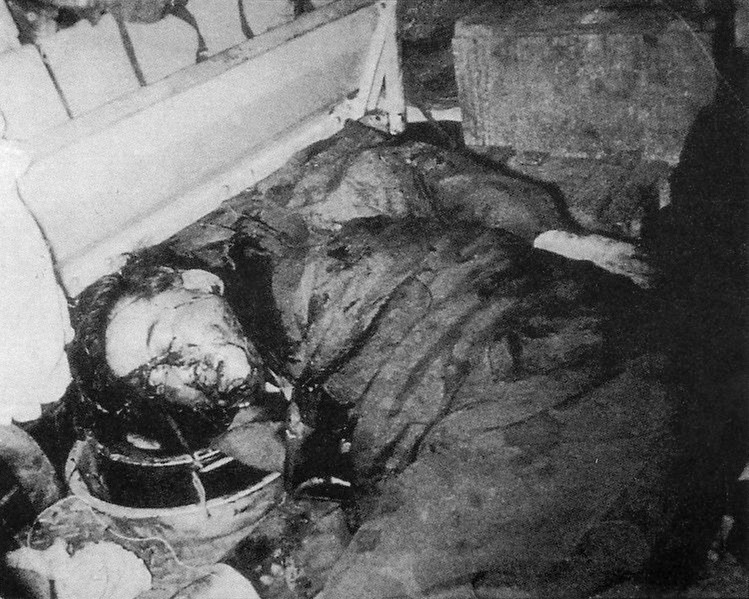
This then led to the decision that Diem had to go.  A plot developed by the Americans, involving the Vietnamese military's removal of Diem, took place in early November of that year.  But Diem – and his powerful brother – were not merely ousted from power, they were both assassinated.  And tragically, no strongly respected national authority was in a position to then step forward and take command of the situation (Americans seemingly unable to understand the problems that inevitably explode when you take down a country's leader!).  At this point Vietnam began its slide into anarchy.

KENNEDY IS ASSASSINATED  (NOVEMBER 1963)
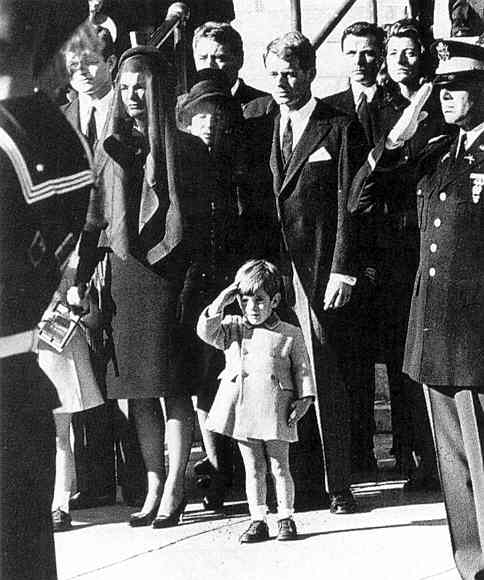
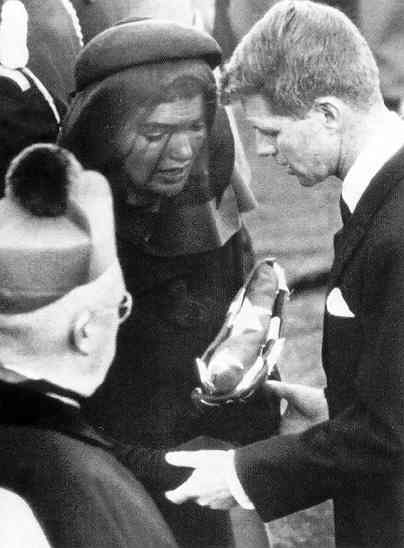
What Kennedy planned to do at that point about the deteriorating situation in Vietnam will never be known – because three weeks later he too was assassinated.

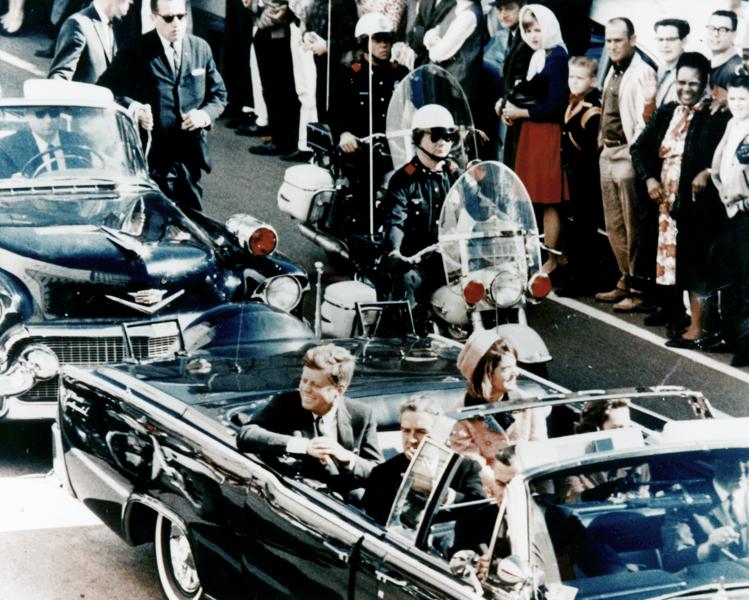
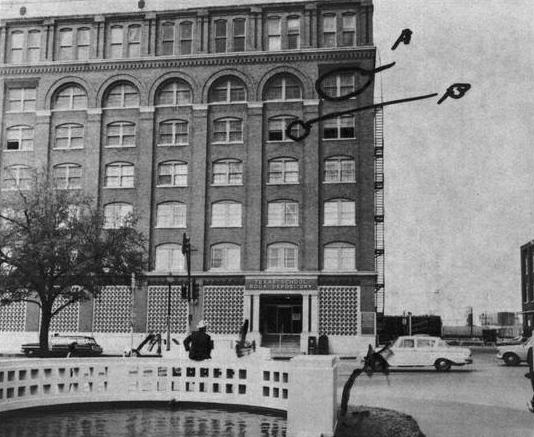
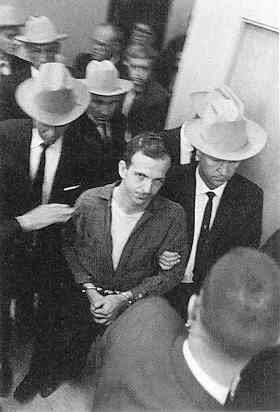
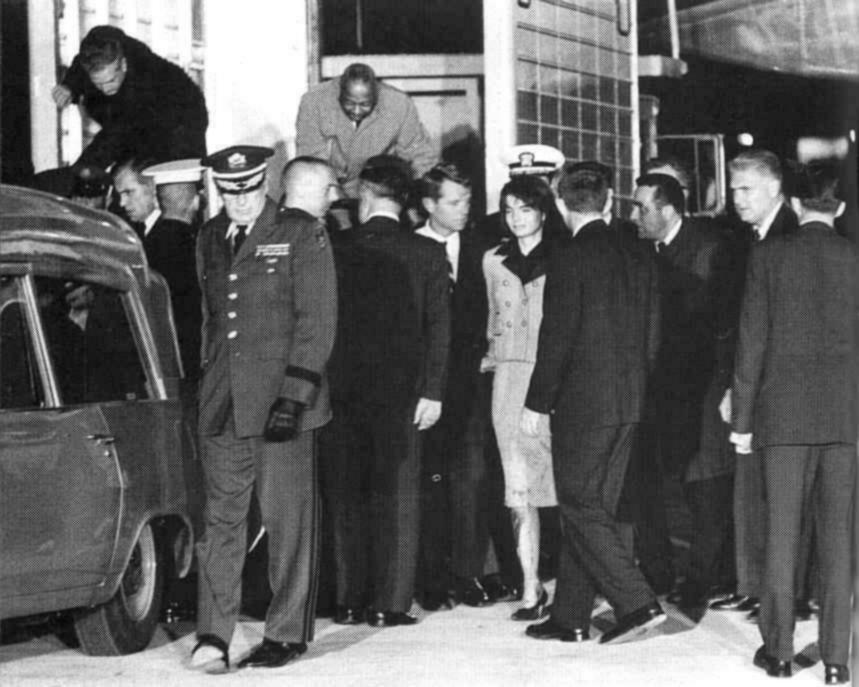
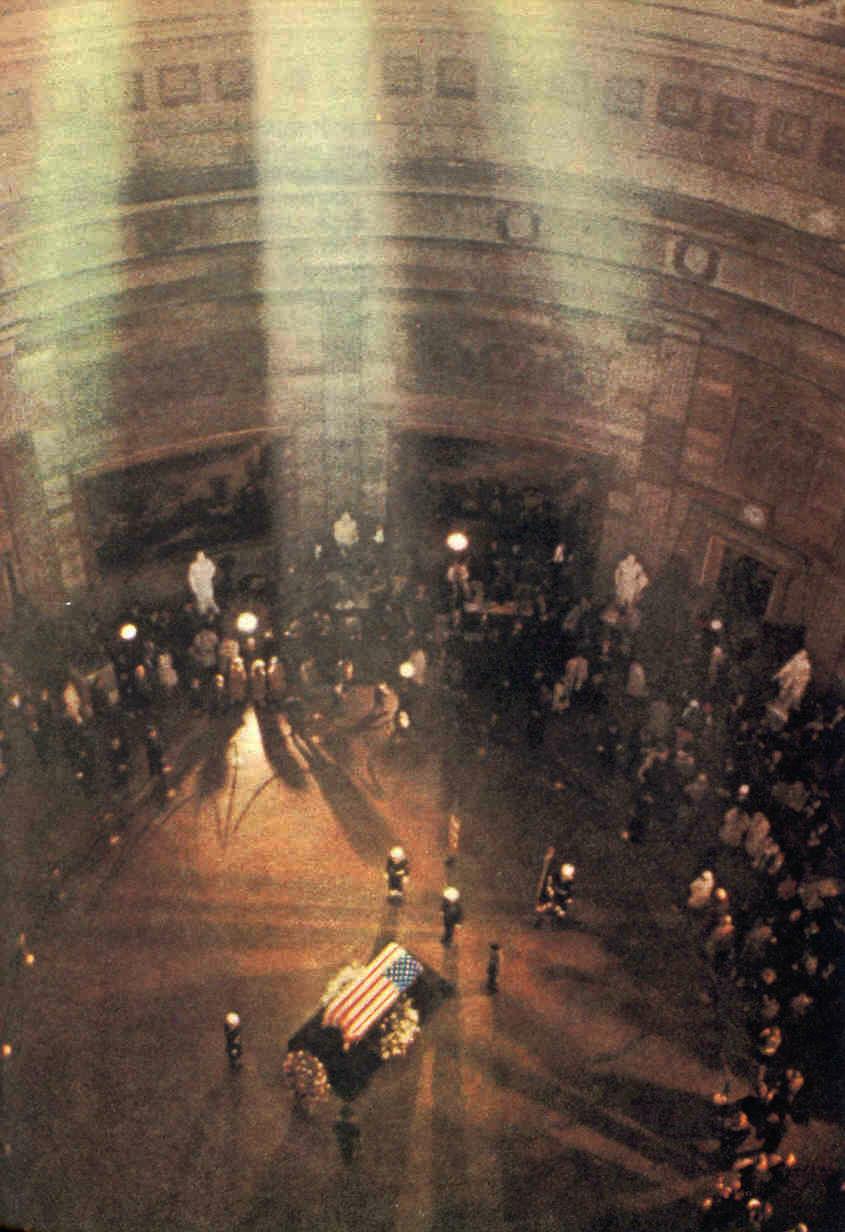
The assassination occurred in Dallas, Texas, on November 22nd during a visit of Kennedy and his wife with the Texas governor, John Connally – in order to repair strained political relations between the two.  Riding in an open convertible, both men were shot, Kennedy fatally.  The trail led immediately to 
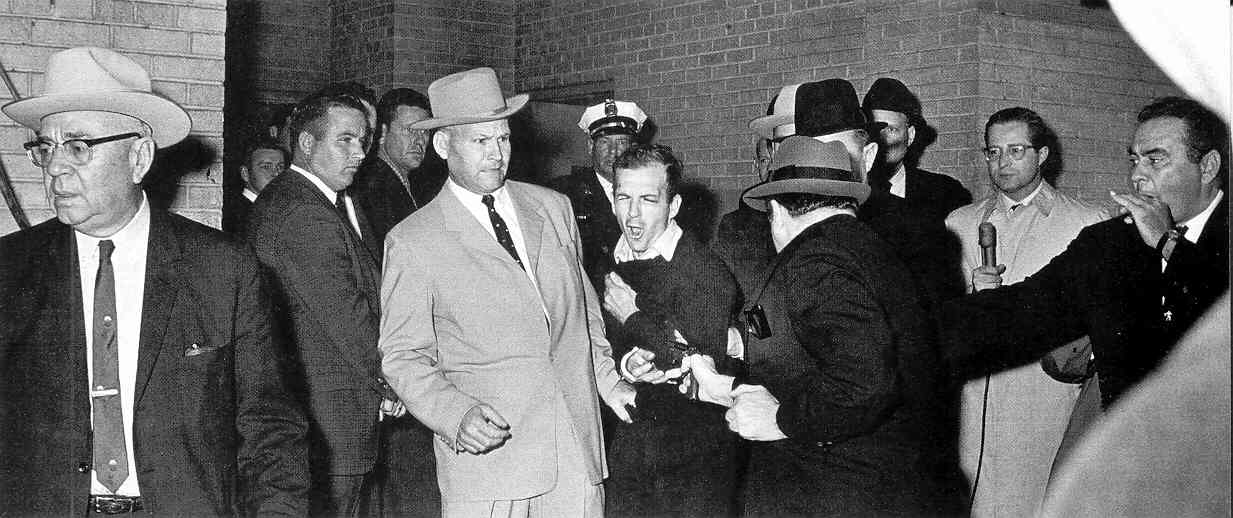
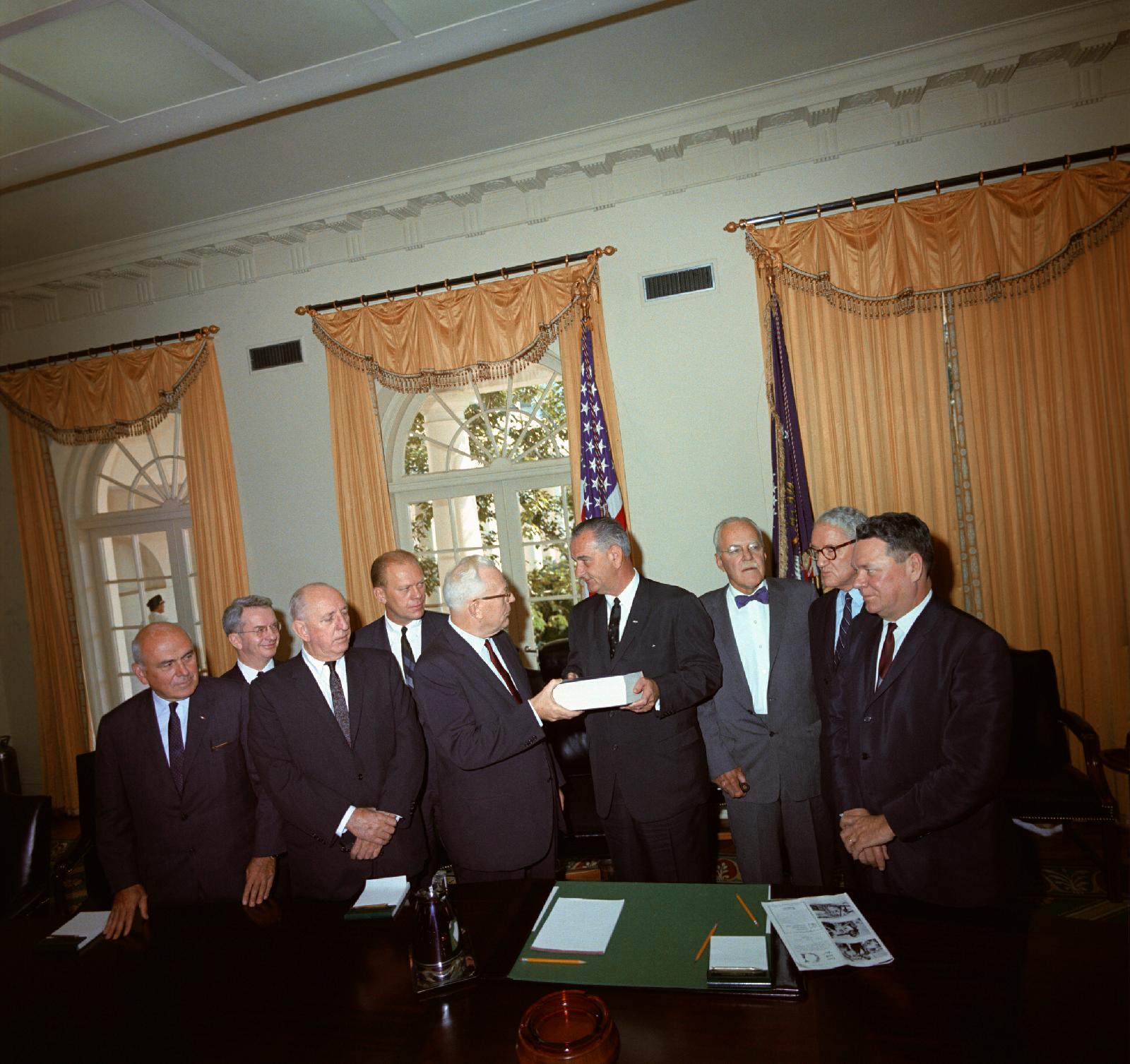
Lee Harvey Oswald who was arrested – and then he too was assassinated by Jack Ruby a few days later when Oswald was being transferred from the Dallas police to the county sheriff.

America was horrified.  How had this happened?  Was it all just a private act of a deranged Oswald?  He had Communist connections.  Were they involved?  But Ruby had mob connections.  Was the mob involved?  Was this all just a huge plot?

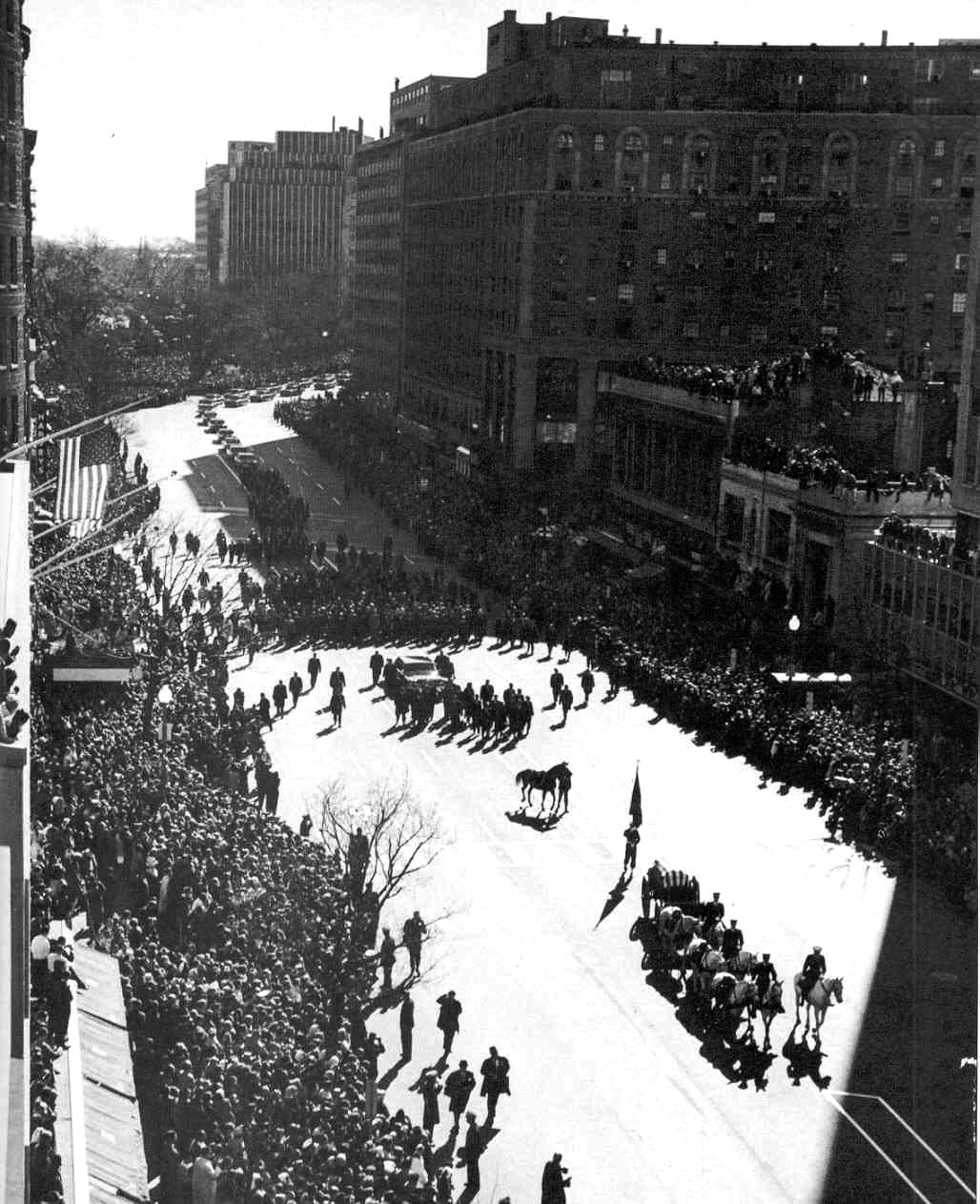
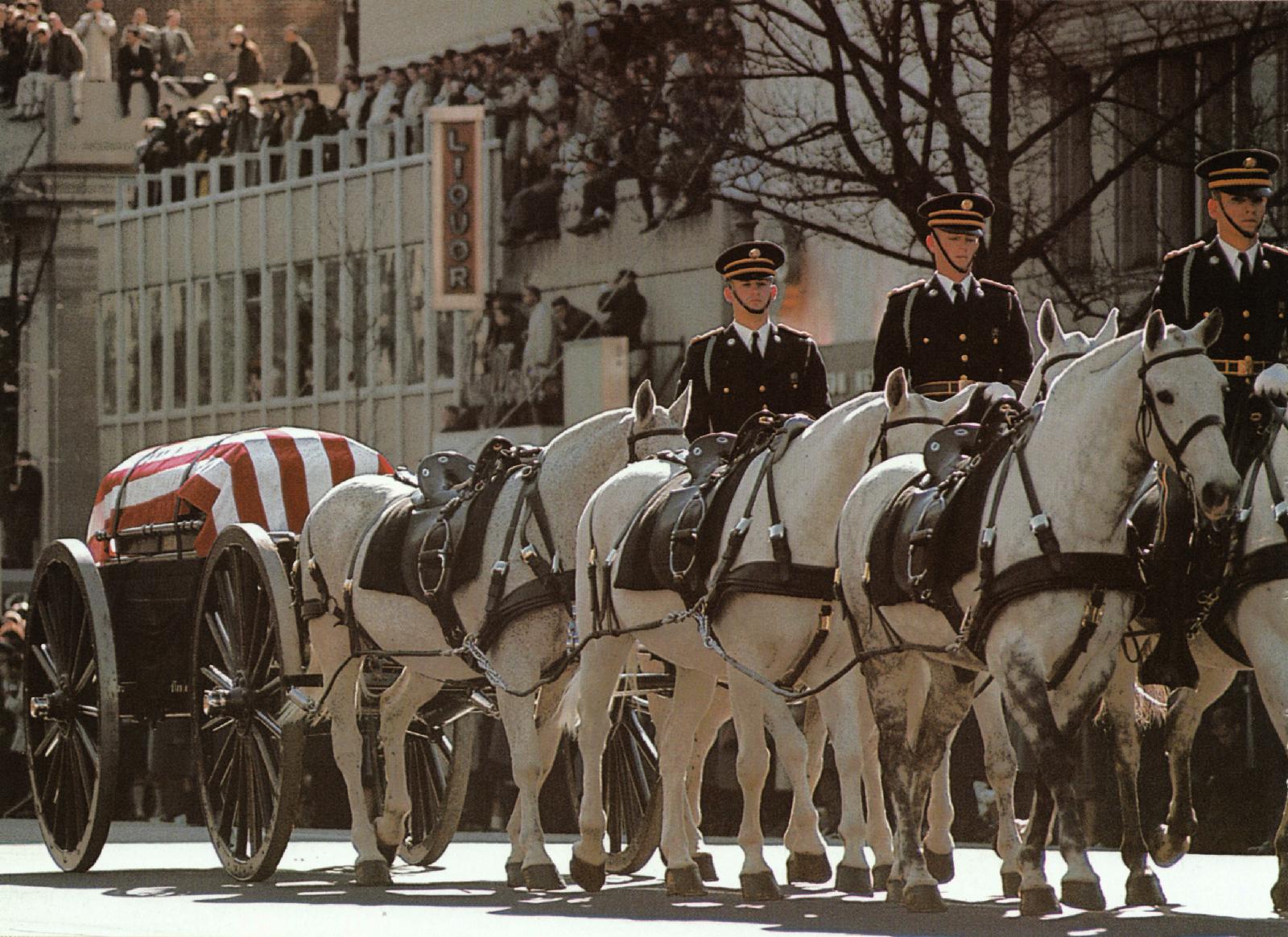
In any case, Americans were not used to having their Presidents shot riding innocently through the streets of America.  Such innocence would itself be a victim of the assassination.  America was about to enter into a whole new world – right there at home in America.

Kennedy's assassination was the announcement that things were about to change in America – dramatically.  And there would be no going back.  A certain period or age in America had just come to a close.


Go on to the next section:  America Shifts to the Humanist Left


  Miles H. Hodges