<


10. AMERICA SHIFTS TO THE HUMANIST LEFT

THE SECULARIZING OF AMERICAN CULTURE


CONTENTS

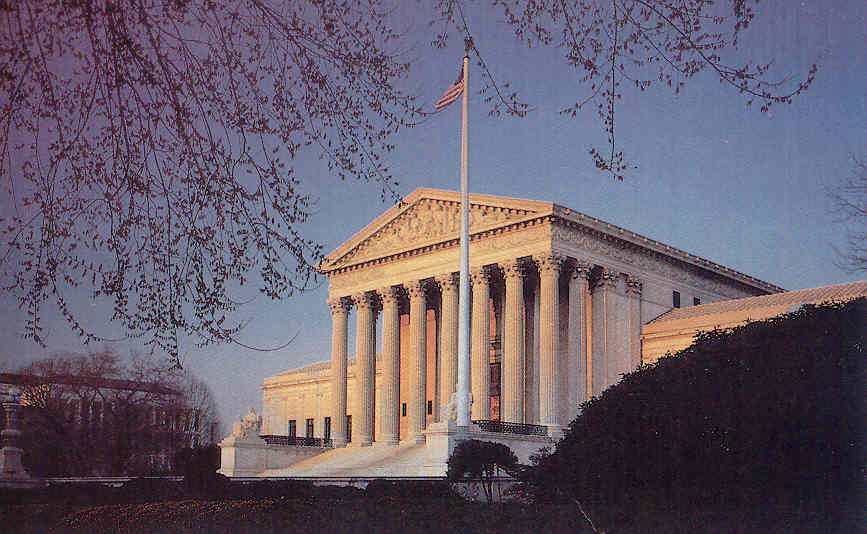
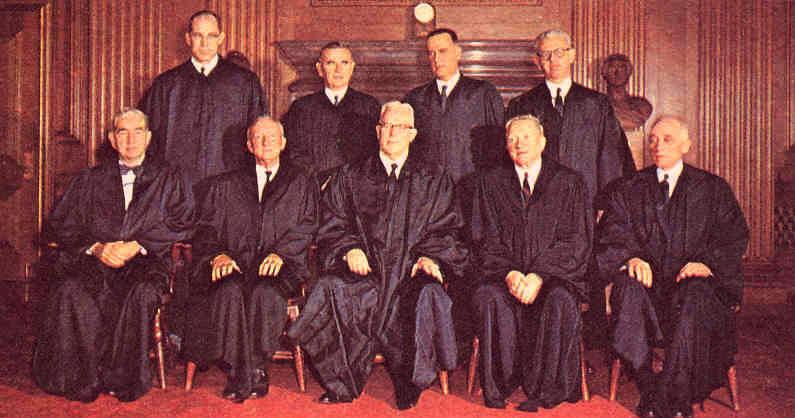
The judicial activism of the Warren Court (1953-1969)

The new science of society

The secularizing of American Protestantism

Failed efforts at countering this trend

The "Revolution of Rising Expectations"

The "Entitlement Mentality" develops

"Burn, baby, burn"


The textual material on this webpage is drawn directly from my work
        America's Story – A Spiritual Journey © 2021, pages 302-312.

THE JUDICIAL ACTIVISM OF THE WARREN COURT (1953-1969)

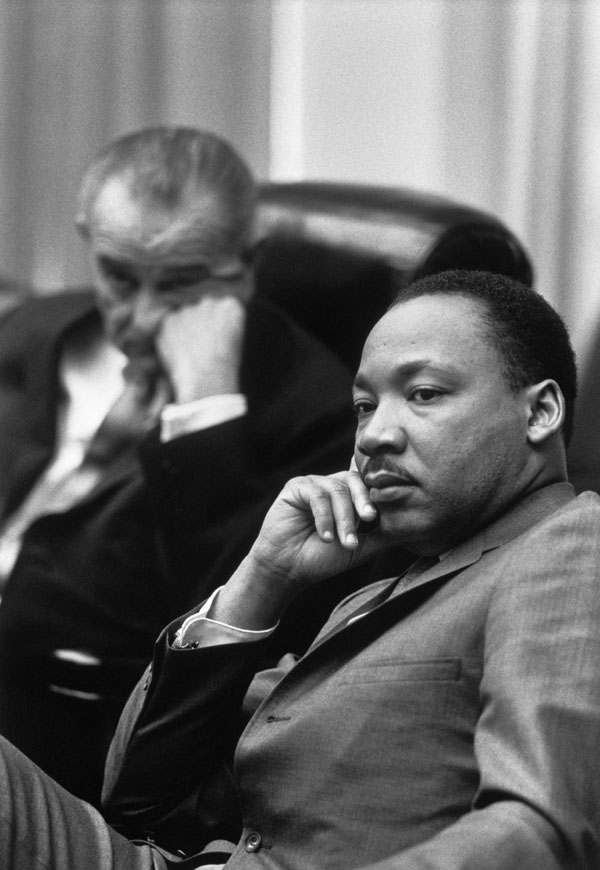
Whereas the Dream that the Rev. Dr. King put before America fit very closely the long-standing tendency of Americans to see themselves as serving as some kind of God-appointed people placed on this earth to be a positive beacon light to the world – Johnson's Great Society made no use whatsoever of the idea that there was anything divine or Godly behind his program.  The Great Society did not need to call upon that religious enthusiasm in support of its progressive reforms of American society – because those reforms would be based simply on the logic of social science.  In other words, Johnson was intending to take America into yet another period of Human Enlightenment.

The Judicial activism of the Warren Court (1953-1969).  The natural tendency of Enlightened Man is to want to put away all thoughts of a Higher Hand in life – or rather, to put themselves in that position instead of looking to a God above to play that role.  This is an instinct that reaches way back in the development of human thought and behavior – clearly narrated in the story of Adam and Eve in God's Garden of Eden.  This tendency of man to want to gather as much power as possible into his own hands – to play God himself – was the main reason that those who wrote the American Constitution were so very careful to put checks and balances into their Constitution.  It was also the reason they added the Bill of Rights – to block the expected ambitions of American politicians wanting to take control of the governmental process guiding America.  The writers of the Constitution wanted the powers of government to remain in the hands of the States and the people.  Congress, that is, the national government, would be called on to take political action only on those restricted areas carefully outlined by the Constitution.

Needless to say, the Constitution's authors were very concerned as to whether or not such Constitutional boundaries would hold.  That's why Ben 
Franklin issued his famous statement describing the new frame of government: "A Republic – if you can keep it."

We have already seen how John 
Marshall early on assumed for the Supreme Court extra-Constitutional powers (powers not awarded by the Constitution itself) in making the "obviously more enlightened" justices of the Supreme Court the ultimate and final voice in what would be considered legal (and thus politically moral) in the doings of American government.

We have seen how those who wrote the Humanist Manifesto in 1933 were calling for a new religious culture based not on "sentimental and unreal hopes and wishful thinking" (meaning a belief in a supernatural God and His presiding hand in the affairs of this world) but instead on "reasonable and manly attitudes."   The Humanists made it very clear in the Thirteenth Affirmation as to how this was to work:

Religious humanism maintains that all associations and institutions exist for the fulfillment of human life. The intelligent evaluation, transformation, control, and direction of such associations and institutions with a view to the enhancement of human life is the purpose and program of humanism. Certainly religious institutions, their ritualistic forms, ecclesiastical methods, and communal activities must be reconstituted as rapidly as experience allows, in order to function effectively in the modern world.   

But Humanism would have to wait until the 1960s to find a way to put in place this great project of "reconstituting" America's religious foundations.  And they would do so not by going the democratic route of putting the matter before the American people to decide – that is, put their program to a vote in Congress – but would have their program installed at the heart of American culture by going to the one American institution able to dictate to the rest of the country its particular views on matters: the Supreme Court.  Here they would need, at the most, only five people to see things their way – and force those views on the rest of the nation as now being Constitutional law.  Jefferson must have been cheering from his grave!

Engle v. Vitale (1962).  In fact the voice of 
Jefferson would play a huge role in the judicial roll-back of Christianity as the moral-ethical foundation of the American Republic.  That is because a letter he wrote back in 1802 mentioned the phrase, "wall of separation" – a wall that he claimed was what the First Amendment was all about when it included the anti-establishment clause in that Amendment.  Those very words of Jefferson's (thus by one who had no role whatsoever in drafting either the Constitution or the Bill of Rights) – "wall of separation" – now became themselves Constitutional ... according to the ever-vigilant ACLU and now also the 6-1 (with two abstentions) Supreme Court decision.  Prayers in public schools (going on at this point for the past 3½ centuries) were henceforth unconstitutional because they violated the wall of separation provision ... not mentioning however the "non-prohibiting of the free exercise of religion" clause of the First Amendment – that should have stopped abruptly all further Supreme Court action on this matter.

So ... the prayer of a public school in New York supposedly violated the wall of separation prescribed by the First Amendment – despite the fact that the prayer was quite generic in its appeal to God – and no children were required to join in.  In short, thanks to Jefferson, the ACLU, and the Warren Court, any such appeal to God was now deemed unconstitutional.[1]
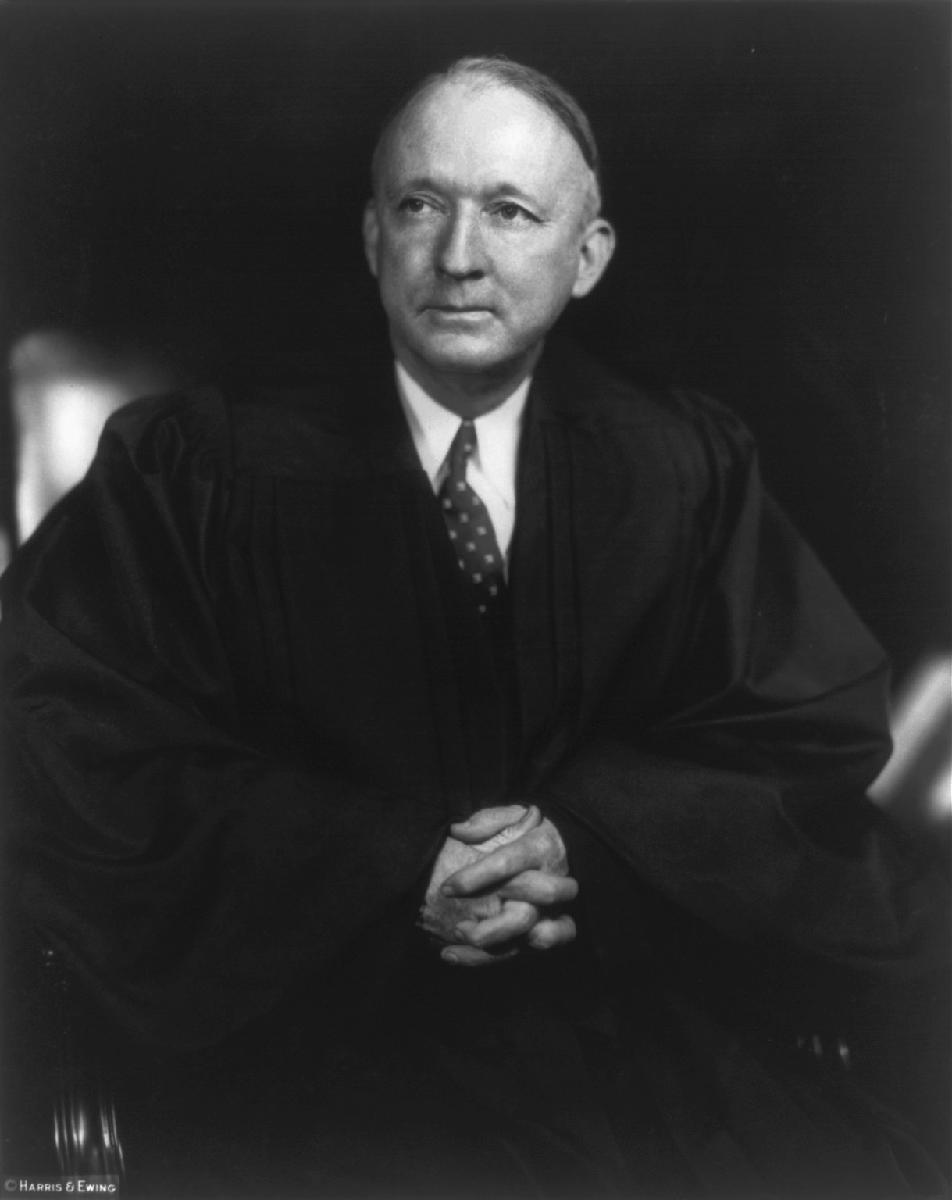
The follow-up.  That point would be driven home in two more cases heard before the Supreme Court the following year, Abington Township School District v. Schempp (1963) and Murray v. Curlett (1963), in which also the reading of the Bible in public school was deemed by the Court to violate the First Amendment's wall of separation. Actually, the First Amendment makes no mention of a wall of separation:

Congress shall make no law respecting an establishment of religion, or prohibiting the free exercise thereof; or abridging the freedom of speech, or of the press; or the right of the people peaceably to assemble, and to petition the Government for a redress of grievances.

A "wall of separation" is certainly implied here – but it is a wall designed to protect religion from the effort of Congress or any other government agency to take control of the people's religion – certainly not to authorize any public officials (such as the Supreme Court Justices) to get in the business of deciding how America is supposed to relate as a matter of religious faith and belief to the challenges of life.  The First Amendment clearly states that not only will the State not establish a religion (such as "Religious Humanism") but also quite clearly take no action "prohibiting the free-exercise" of the people's religion.  But prohibiting the free-exercise of the people's religious activity it clearly did in these early 1960s decisions shutting down local prayers and Bible reading – violating the very Constitution that the Supreme Court was supposed to be protecting.

Instead the Court was moving ahead to promote the establishment of Secular Humanism of the variety called for in the 1933 Humanist Manifesto.  Step by step the Court would over the years continue to move ahead in the direction of removing America's Christian moral-spiritual foundations – in order to replace them with the "non-religion" of Secularism, which is a religion like any other, one promoting a more "enlightened" Humanist (when not also Darwinist) worldview – as the Humanists themselves affirmed in their Manifesto.


[1]What is ironic – even tragic – is that the organization that claims that it is dedicated to protecting the liberties of the people should be the very organization that in bringing these pieces of anti-Christian litigation to court would be employing very authoritarian methods to get the religious liberties of multitudes, even the majority of the Americans, shut down.  And it did so simply because those liberties were at odds with the ACLU’s own Secular-Humanist worldview or religion.  In this the ACLU was acting the part of a Fascist hit squad rather than the protectors of American liberties.


THE NEW SCIENCE OF SOCIETY

Accompanying this effort to remove Christian moral and spiritual norms from American society was the move to replace all social theory with the Secular wisdom that pure science supposedly afforded.  This was not a new thing.  America had been through this craze before, in the late 1600s and early 1700s, in the early 1800s, and again in the 1920s.  The results disappointed Americans greatly – which brought Americans back to their original Christian faith – usually in preparation for a major challenge which was about to rise and threaten the very existence of their society (the War of Independence, the Civil War, the Great Depression and World War Two).  But as America entered the 1960s, times were good (and had been so for a quite long time), a younger generation (the Boomers) that had experienced no particular hardship (in fact amazing plenty instead) was just now beginning to enter adult society – and thus once again the natural human tendency to want to be all the God this new America would need was again on the rise.

There definitely was a strong belief arising that America was about to be able to bring the country to perfection – under the guidance of a rising group of intellectuals (lawyers, economists, sociologists, journalists, dramatists) – who during the 1950s had been placed under suspicion by the 
Vets, but who were now – with considerable backing by Johnson's Great Society programs – finally able to take their "proper" place at the head of American society.

Playing a major role in this development were the new breed of Behaviorists – psychological and social scientists who were convinced that the scientific method could be properly assigned to human and social research so as to bring forth new insights, new scientific laws, that could better serve as guides on the path to individual and social perfection.  The old paths, such as historical analysis long used to find those social patterns that seemed mostly to determine life, needed to be put aside.  History had nothing to show a new Behaviorist culture, a new culture that supposed it could find life's answers simply by applying statistical study to personal and social behavior (like studying the behavior of laboratory mice).  Of course it would take some time to build up a body of such precise knowledge.  But the expectations were that America was about to enter a huge new age of social science – and leave traditional religious faith and old intellectual habits behind.


THE SECULARIZING OF AMERICAN PROTESTANTISM

And once again a number of leading voices in the American churches came to the conclusion that Christianity would be best served by making major theological and operational adjustments that would put the Christian faith in a better, more scientific light ... that is, more "realistic," more mechanistic in approach to the dynamics of life and society.

Had the Church not learned from past efforts to "enlighten" Christianity – that this was not only foolish in the extreme, but left the country lost in confusion about its basic worldviews?  But here again, certain pastoral voices were calling for the "de-mythologizing" of Scriptural faith – that is (like 
Jefferson) getting rid of all the miracle stories about God's intervention in the confused affairs of man.  This stripping the Bible of its "superstitions" would supposedly then bring out the essential and most important core of the religion: the moral-ethical teachings of the Judeo-Christian faith.

Of course this left Christianity with nothing to offer the world that Secularism would not also claim to offer:  peace and social justice, for example.  Younger Americans just did not see the point of signing up with the dwindling Christian community.  It seemingly had nothing to offer them that the secular world unfolding before them in the 1960s would not also offer.

Needless to say, by the mid-1960s, once again church attendance – then even church membership – began a decline.  This would prove to be a decline that the once-dominant mainline churches would be unable to turn around – despite (or – better yet – because of) major efforts to make themselves more relevant to the evolving culture walking away from them.


FAILED EFFORTS AT COUNTERING THIS TREND

Americans in the pew were shocked by the move of the Supreme Court against Christian practices in play since the founding of the nation itself.  A protest naturally went up, picked up by Congressman Frank Becker, who in August of 1963 proposed a constitutional amendment designed to make it very clear that the Constitution in no way outlaws either prayer or Bible reading in America's schools.  The "Becker Amendment" seemed to enjoy widespread support, except it could not seem to get past the careful opposition of the House Judiciary Committee whose chairman, Emanuel Celler, had no intention of releasing the bill for vote before Congress.  Finally Celler, when much of the momentum had died down, opened hearings, bringing in not only ACLU lawyers to testify against the bill, but also (interestingly enough) Christian denominational leaders – ones who had made it clear that they did not believe that the Court's decisions had indeed blocked prayer and Bible study, and thus they believed strongly that this amendment was not needed (how unprophetic!).  In the end, Celler made sure that his committee took no action, and let the bill die in committee before its members headed home to get ready for the upcoming 1964 national elections.

Thus thanks to Celler, the ACLU, and the Christian "leaders," prayer and consideration of the ancient teachings of the Bible which had guided countless previous generations in bringing their nation to greatness could now be included in the education of America's rising generations only in violation of the Supreme Court's new ruling. This was now the law of the land.

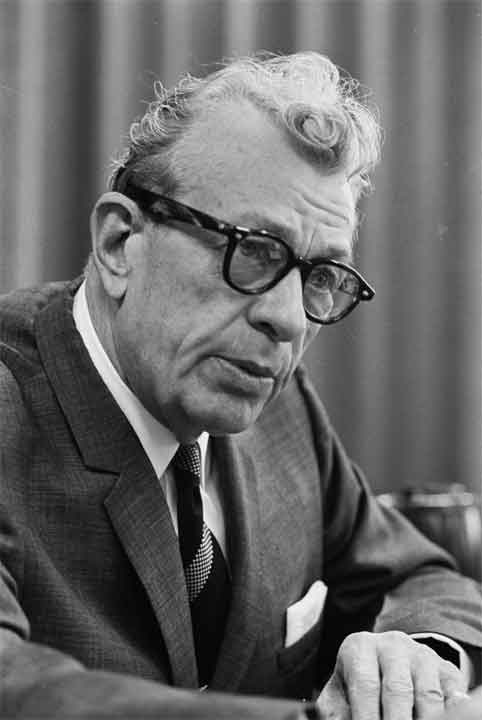
A second attempt to free up prayer and Bible-reading with a constitutional amendment would be made two years later by the Senate's Republican Party Leader Everett Dirksen.  But again, he got no assistance from the denominational leaders, including the National Council of Churches – although he was deluged by letters from the laity in strong support of his amendment.  But ultimately party lines determined the outcome of the September 1966 vote when only 49 voted in favor (nearly all Republicans and most of the Southern Democrats) and 37 were opposed (all but 3 of them Democrats).  Thus failing to get the necessary 2/3rds vote for an amendment proposal, Dirksen's effort came to nothing.

But the vote made the deep ideological split developing within America itself very obvious.  Clearly Johnson's Democratic Party was pulling away from Middle America, to head down the Secular (non-Christian, and at times even anti-Christian) road.[2]


[2]Still to this day it is not clear why Democrats are so readily opposed to the active role of Judeo-Christianity in the life of the nation.


THE "REVOLUTION OF RISING EXPECTATIONS"

Given the new drive to social perfection unleashed by Johnson's Great Society and by the Behavioral Revolution, it was deemed time to do some compensatory work to reverse the impact of past racial discrimination.  The blemish of racism needed to be removed immediately – and thus "affirmative action" was required.  Actually, Kennedy had initiated the idea in March of 1961 with Executive Order 10925 requiring government contractors to take affirmative action to make sure that their employment was done without regard to "race, creed, color or national origin."  But in September of 1965, Johnson issued a more expansive and more muscular Executive Order 11246 – requiring contractors to take "compensatory action" in promoting the full equality of women and racial minorities in their companies – in other words clearly demonstrating a special favoring of them over White males in their hiring and professional advancement – if they wanted to continue to do business with the U.S. government.


THE "ENTITLEMENT MENTALITY" DEVELOPS

Non-WASP (White-Anglo-Saxon-Protestant) minorities – such as the Irish, Poles, Italians, Greeks, Jews, etc. – had consistently faced the challenge of making their way forward in America's dominant WASPish culture, against subtle or not-so-subtle discrimination.  But they worked hard to succeed – not giving up despite the slow process involved in becoming accepted.  And eventually they were able to take their place properly in American culture – even as Middle Class Americans.

But Blacks had been in America since its very founding – and the feeling was that they had waited long enough.  They deserved immediate integration.  They were entitled to it.

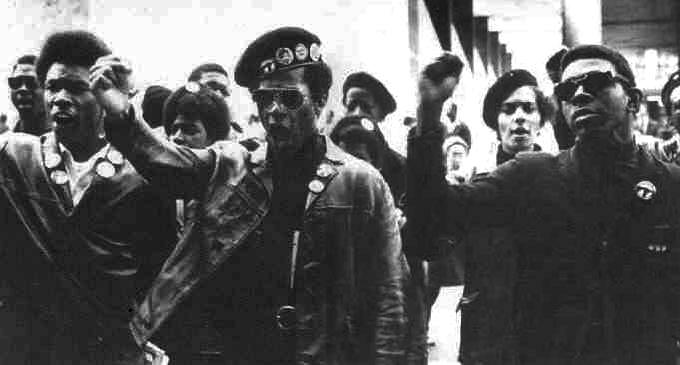
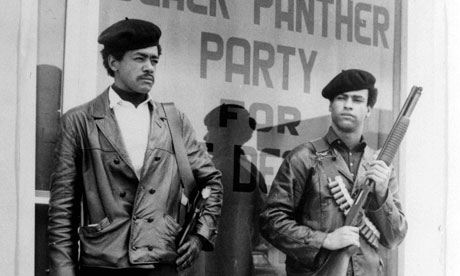
And thus expectations ran high – much, much higher than the culture was going to be able to accommodate such a major cultural shift.  Frustration set in almost immediately among the Blacks – actually anger, as the litany of Blacks' long suffering under racism became a theme heard everywhere.  And that anger soon enough turned violent.  For some Blacks (notably the group of young Black Panthers), the days of King's non-violent protest were thus over.


"BURN, BABY BURN"

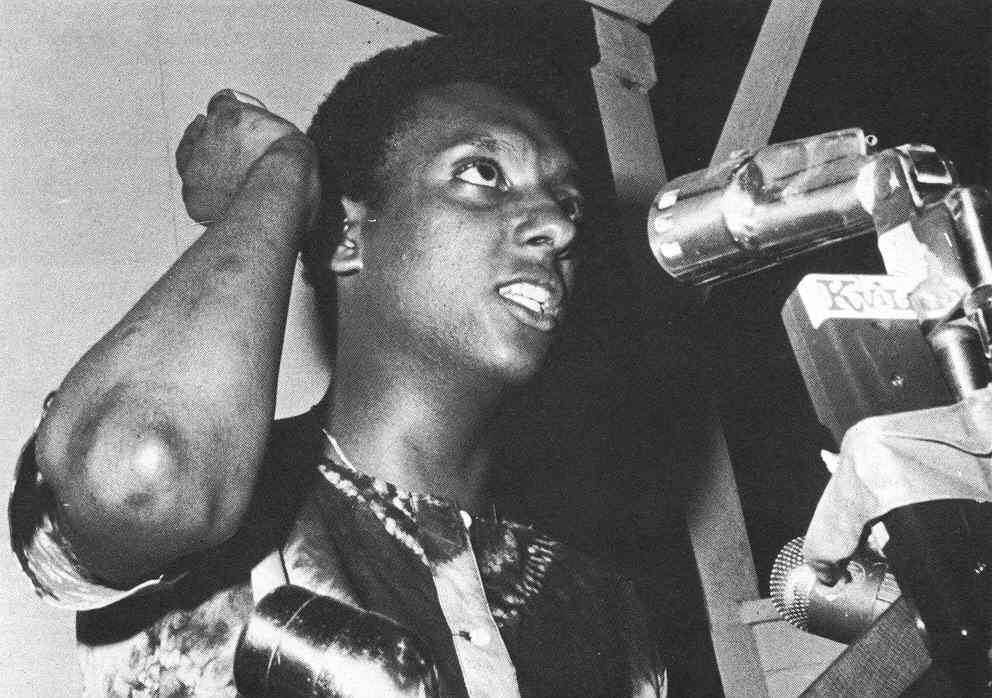
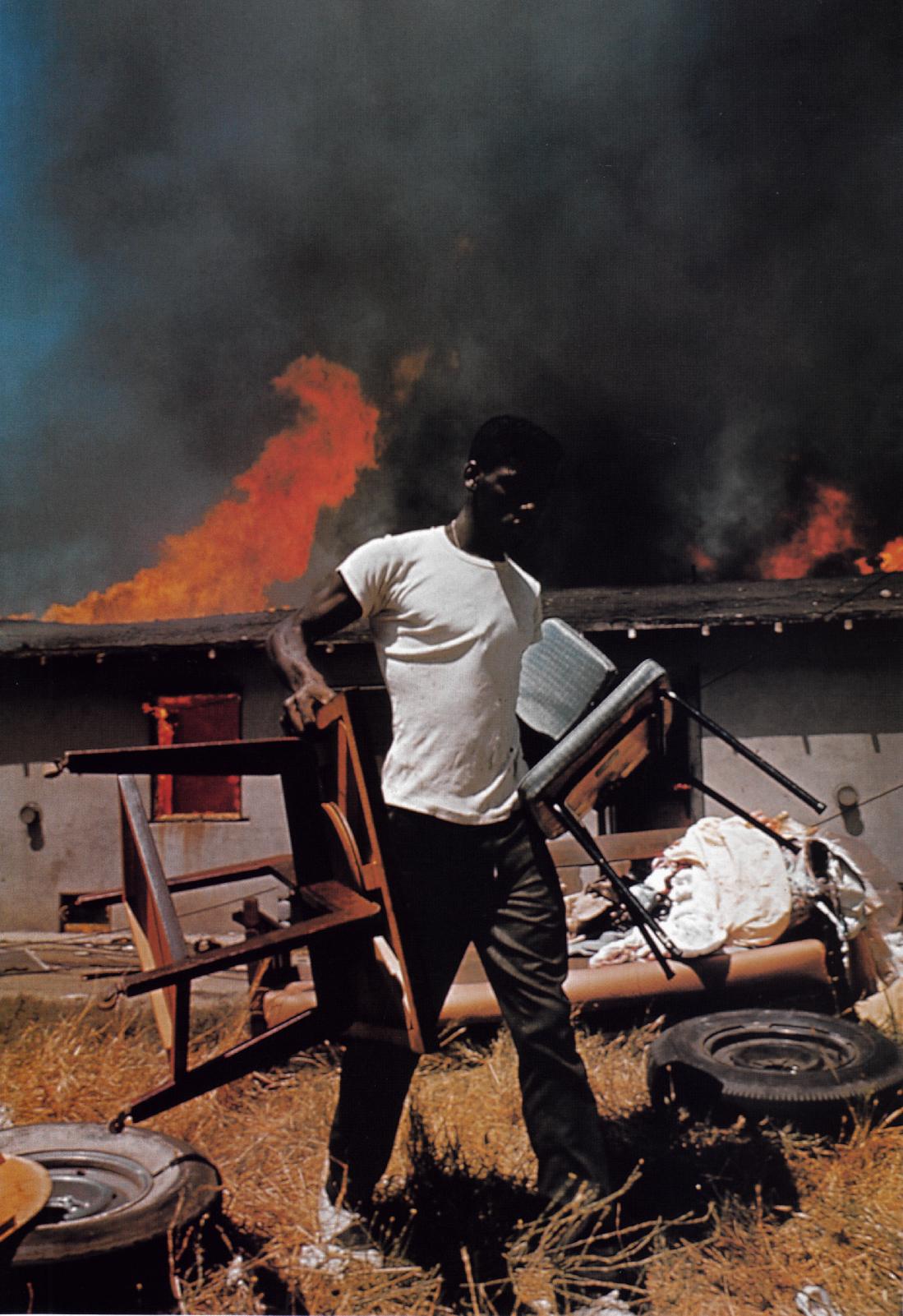
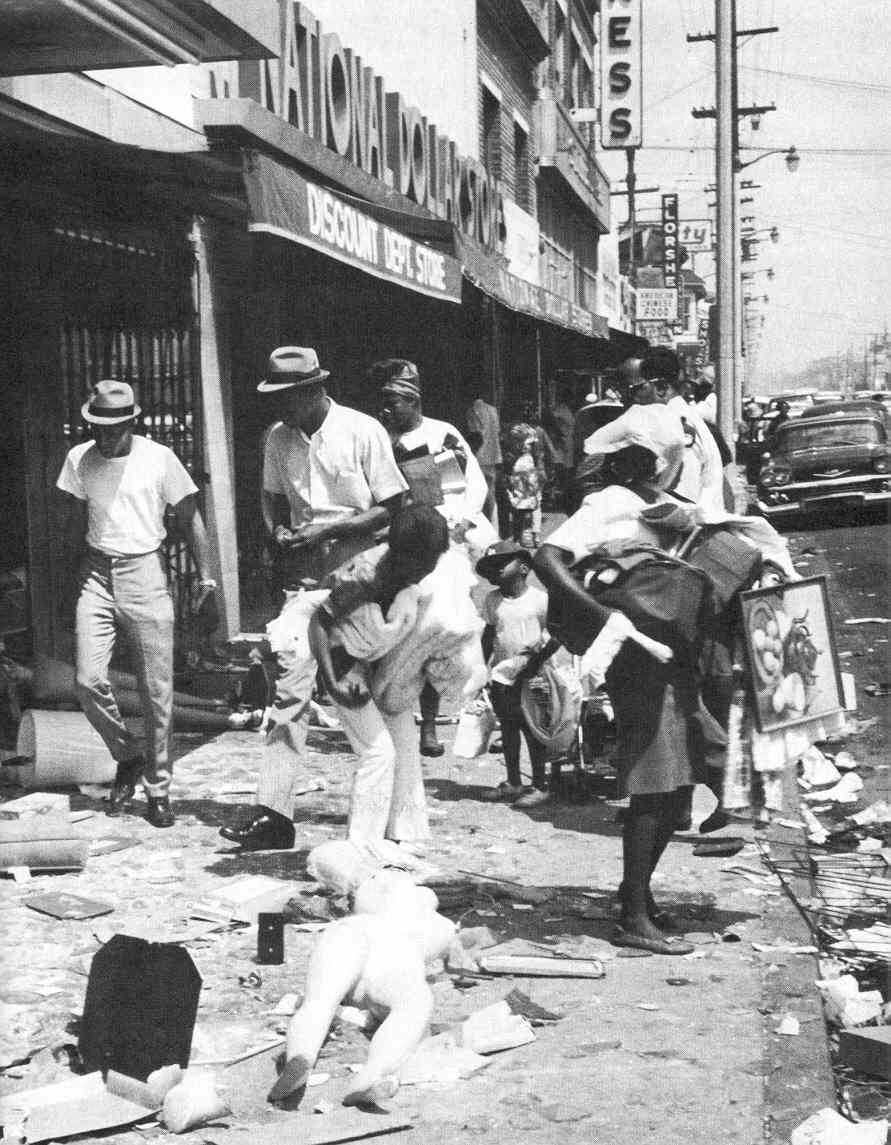
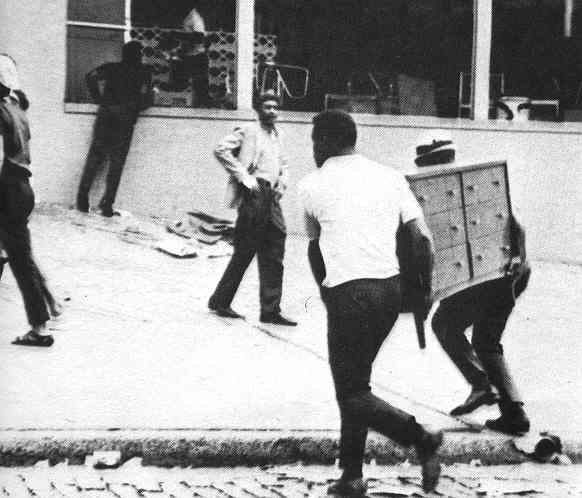
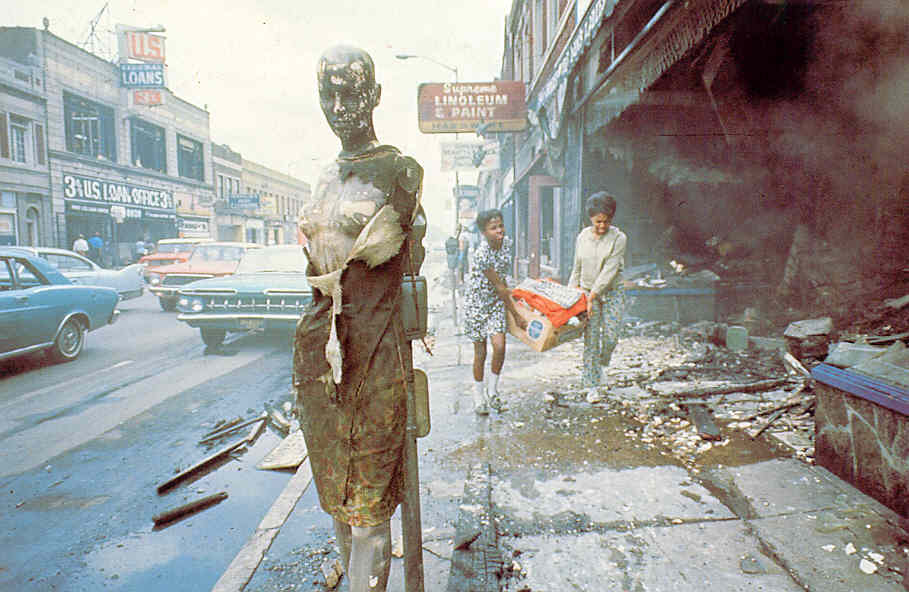
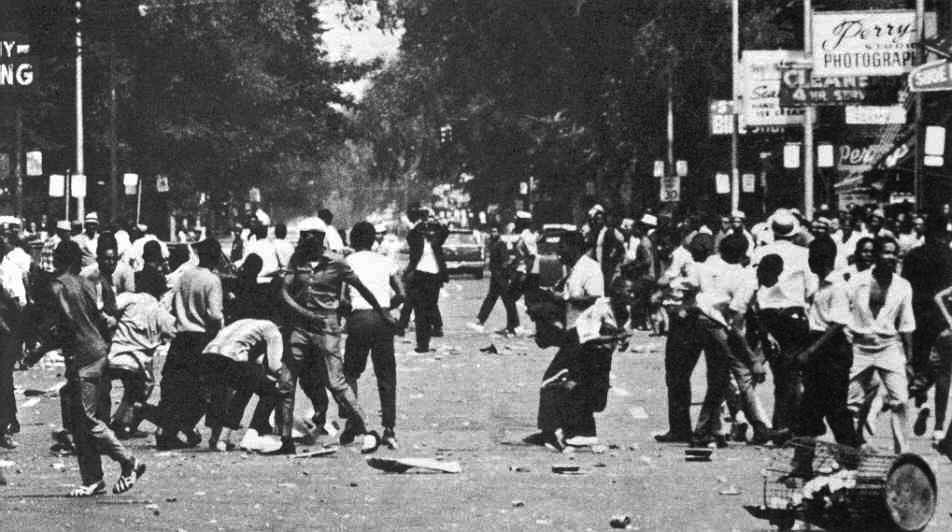
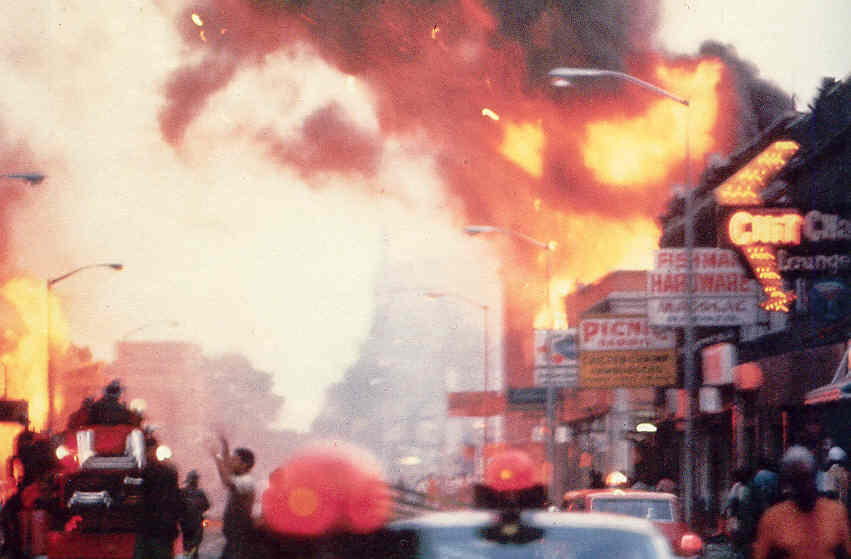
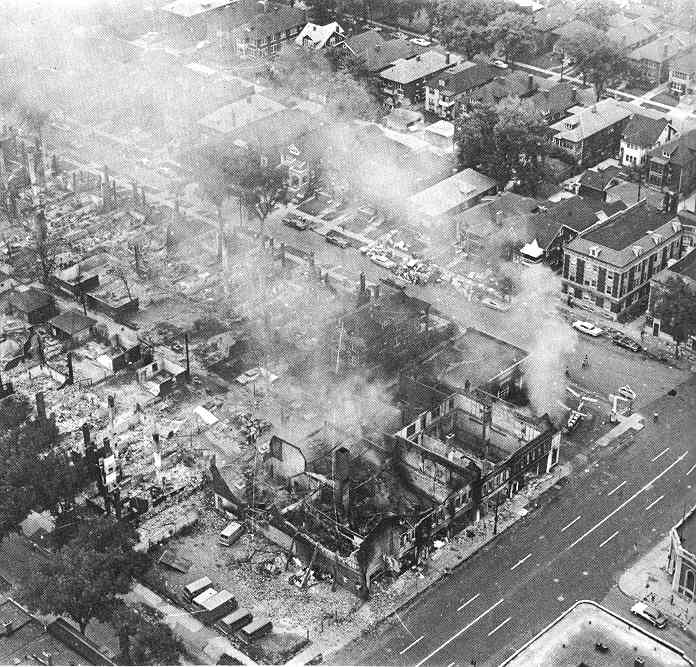
Blacks now turned on the system in anger, looting and burning the world immediately around them.  In 1965, the Watts section of Los Angeles was looted and burned – with 34 people killed in the accompanying violence.  All of this was accompanied by the refrain of "Burn, Baby, Burn" – but also police sirens answering back in refrain as Black Power advocates were carted off to jail, either as self-sacrificing heroes – or dangerous criminals – depending on which side of the ideological divide you found yourself on.

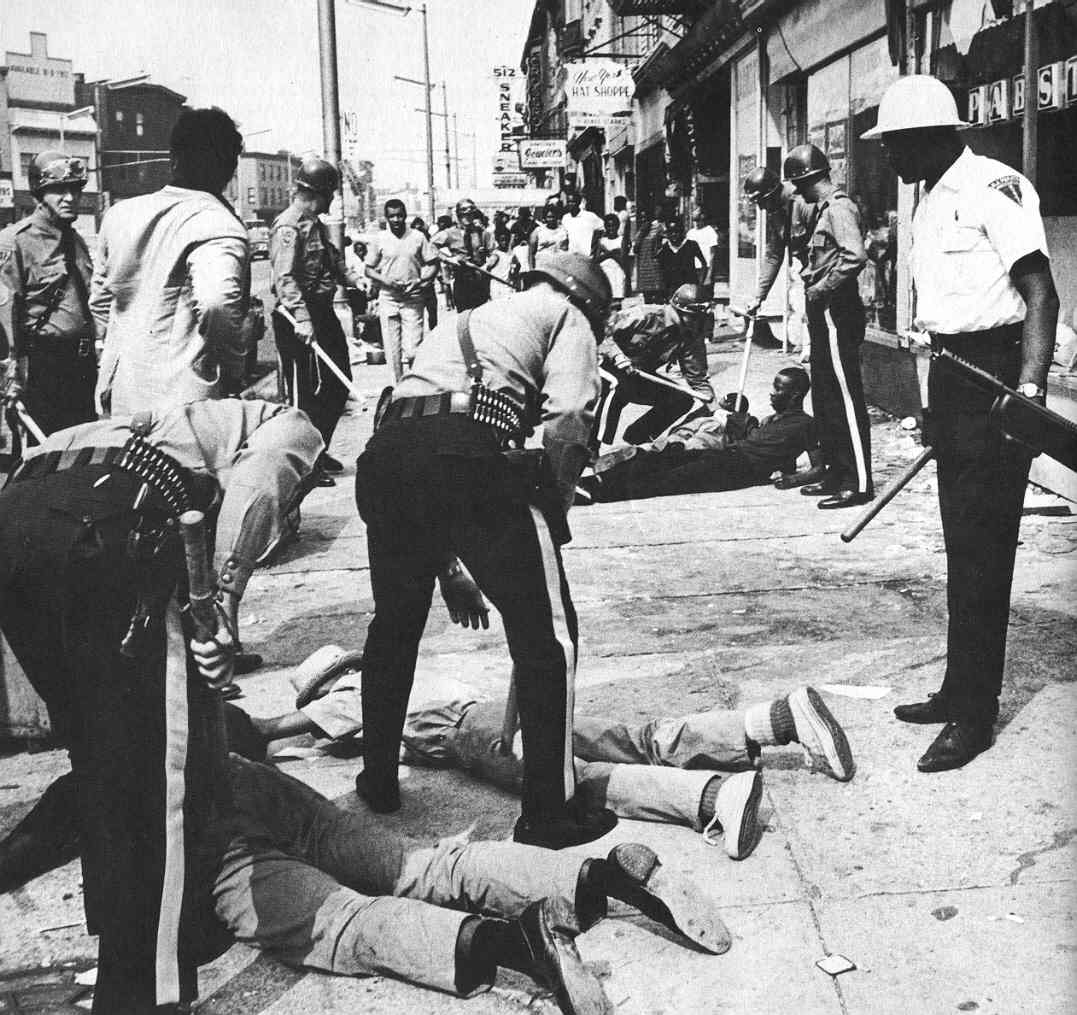
But this was just the beginning.  By 1967 Black rage had spread widely across America: In early July, in Newark (New Jersey) the arrest of a Black cab driver turned out young Blacks who looted, firebombed and even engaged in sniper fire at police and firemen trying to bring the city back to order.  Eleven people were killed, 600 wounded and whole sections of the city were gutted by fire.

When several days later a pre-scheduled National Unity Conference was held in Newark, the language was one not of unity but of declared war.  Black power advocate 
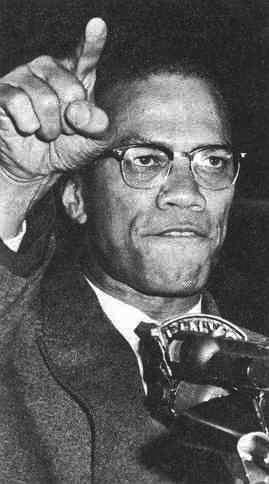
H. Rap Brown urged the gathering to "wage guerrilla war on the white man."  Los Angeles Black Nationalist leader Ron Karenga stated "Everybody knows Whitey's a devil.  The question is what to do about it."  Moderate Black leaders such as King, Roy Wilkins, and Whitney Young, Jr. avoided the conference.

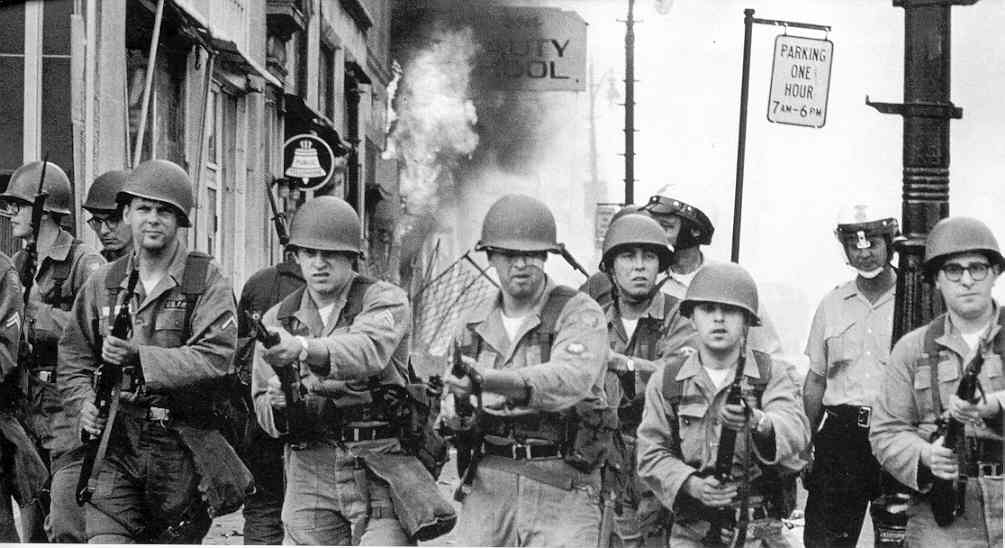
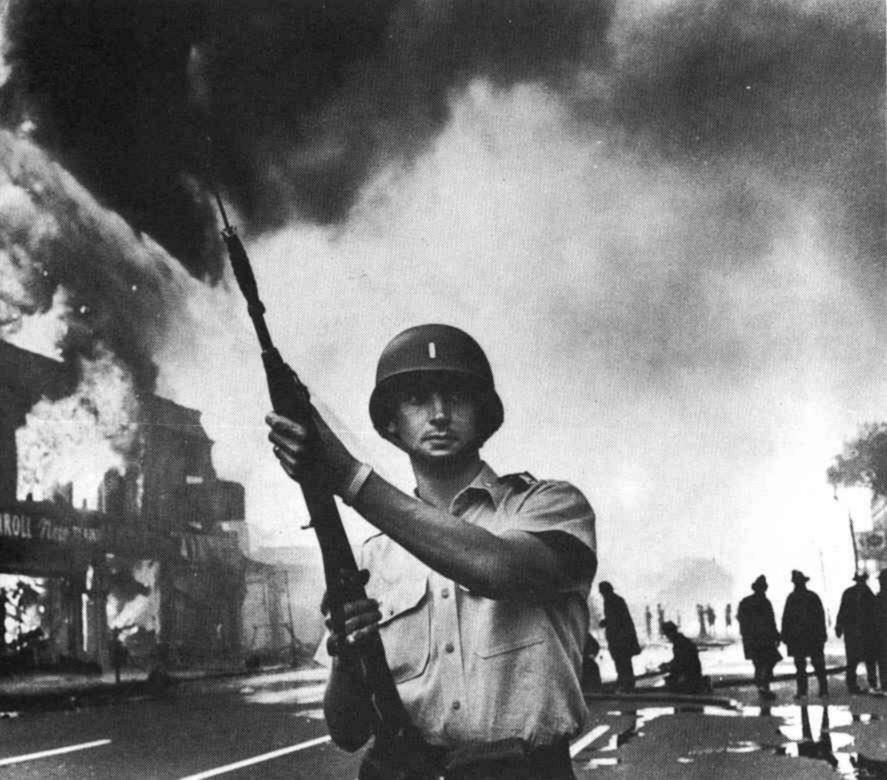
In late July, violence broke out in Detroit.  Learning from Newark, Detroit mayor Cavanagh immediately called in the National Guardsmen.  But seven thousand Guardsmen, complete with tanks and armored cars, could not restore order.  Michigan Governor George 
Romney (who was understood to be a potential Republican candidate for the Presidential election in 1968) contacted President Johnson for assistance.  Johnson held back until Romney confessed before the public that he had lost control of the situation.  Then Johnson sent in US paratroopers to retake the city house by house, block by block – similar to a Vietnam military action.  When a week later the troops had brought Detroit back to order, 43 people had been killed and over a thousand injured.

Meanwhile the violence spread to New York City where a 28,000-man police force with experience in riot control restored order to East Harlem after three nights of violence.  Two people were killed.

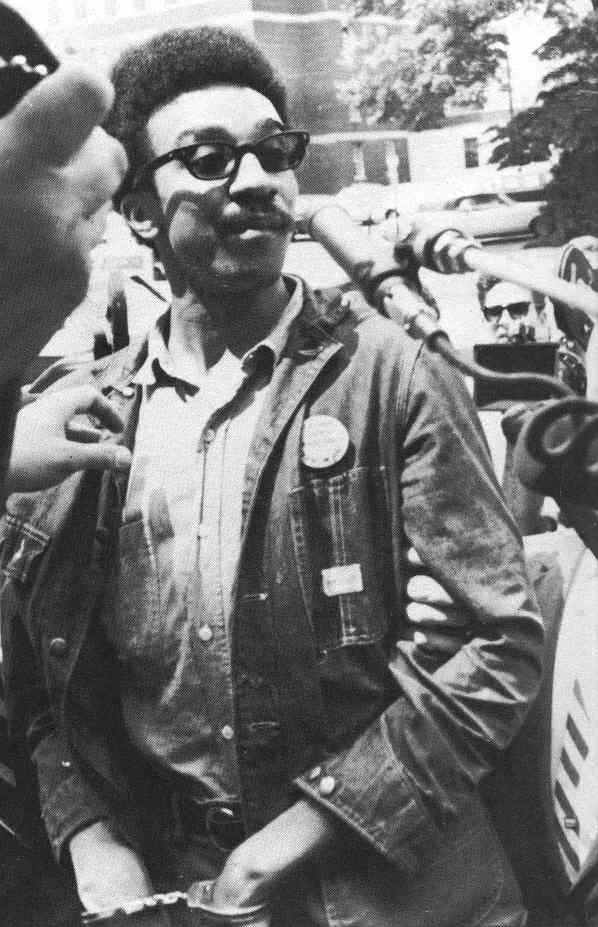
H. Rap Brown had in the meantime moved on to Cambridge, Maryland, and following a Black Power rally there, the town was subjected to looting and arson.  Brown was arrested for inciting a riot.  As he was led away by FBI agents, Brown challenged:  "We'll burn the country down."


Go on to the next section:  The President's Worsening War in Vietnam


  Miles H. Hodges