Another event that took place in these years, one that America
actually might have been able to direct to fairer results – but basically
looked the other way as events unfolded – was a disastrous war conducted
between the new state of Israel and its Arab neighbors. Israel had been created in 1948 by masses of
Jews, the ones fortunate enough to have escaped death in Hitler's concentration camps,
flooding to Palestine, in order to set up a state where they would no longer be
bothered by a hostile non-Jewish world.
Unfortunately, Palestine was not uninhabited, but instead was fully
inhabited – the portion that was not desert anyway – by Arabs, both Christian
and Muslim in religion, as well as Jews who also had been part of Palestinian
society since time immemorial. And other
than the desert, there was nowhere else for these Palestinians to go if the
Jews were absolutely determined to take over fully the part of Palestine that
could support human life.
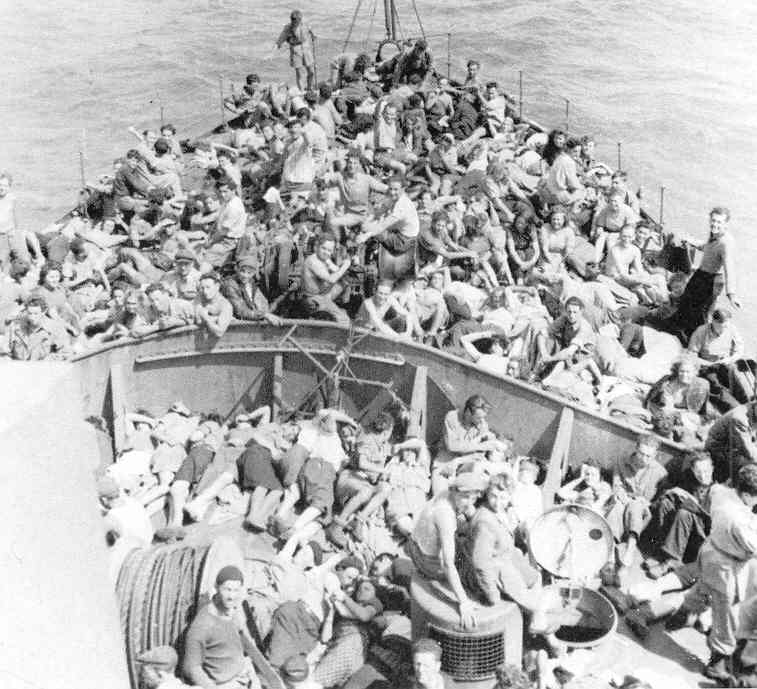
A party of rather young and
very determined Jews sailing to
British-held Palestine to start a new life
there – 1946
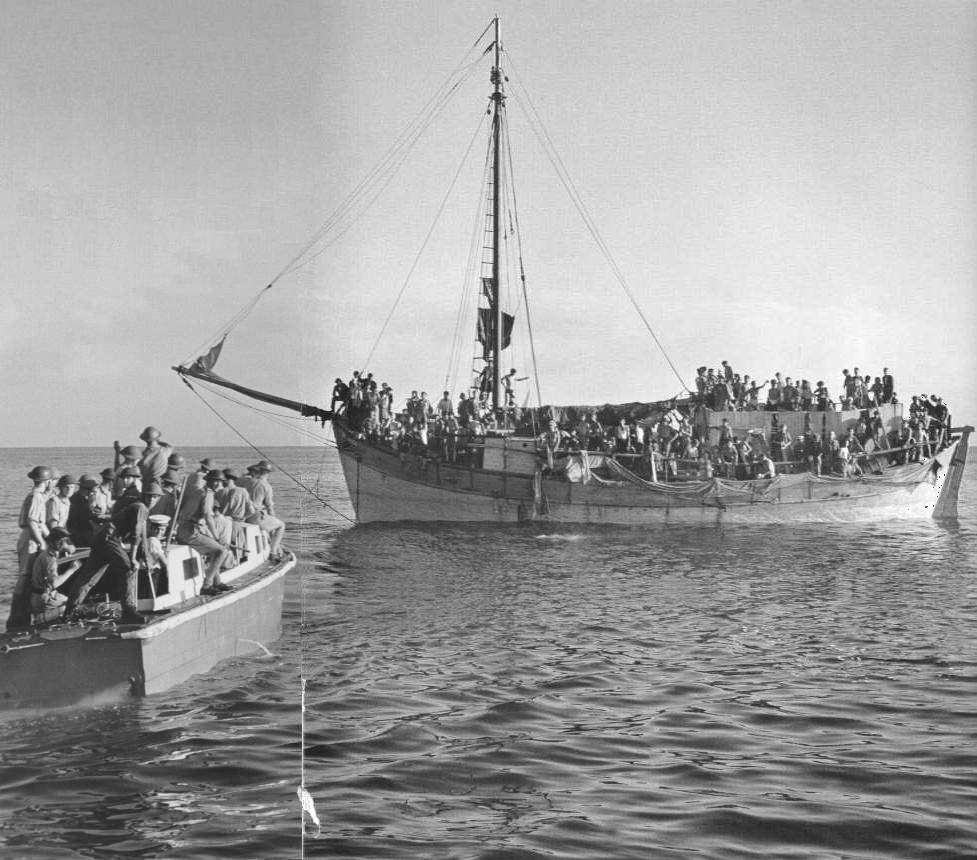
A ragtag Szold being
blocked by British troops from
disembarking its passengers into Palestine
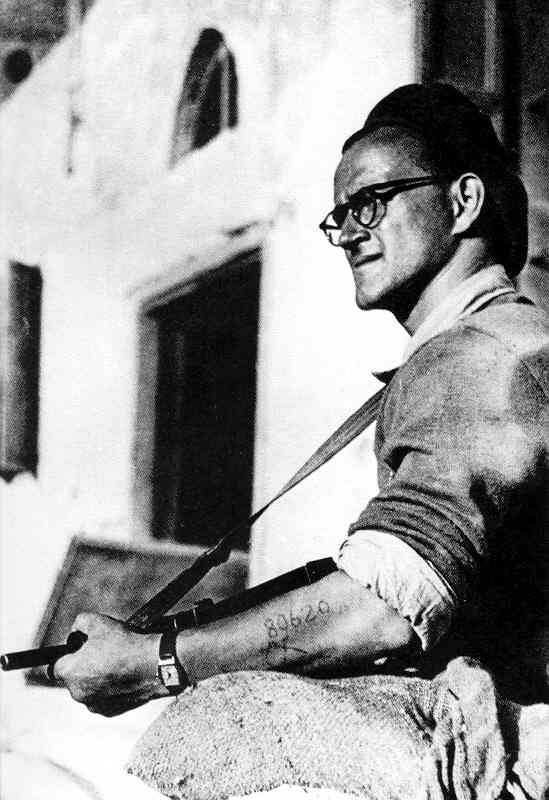
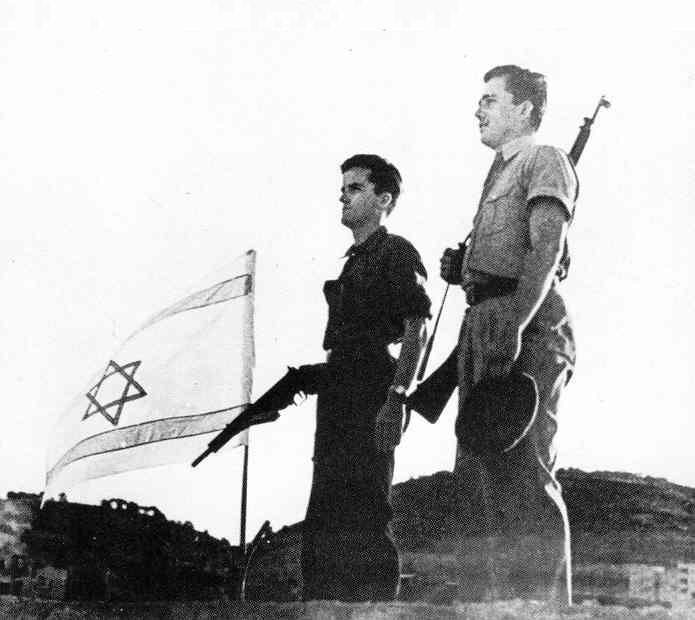
A Haganah soldier with Auschwitz tattoo
doing sentry duty in Jaffa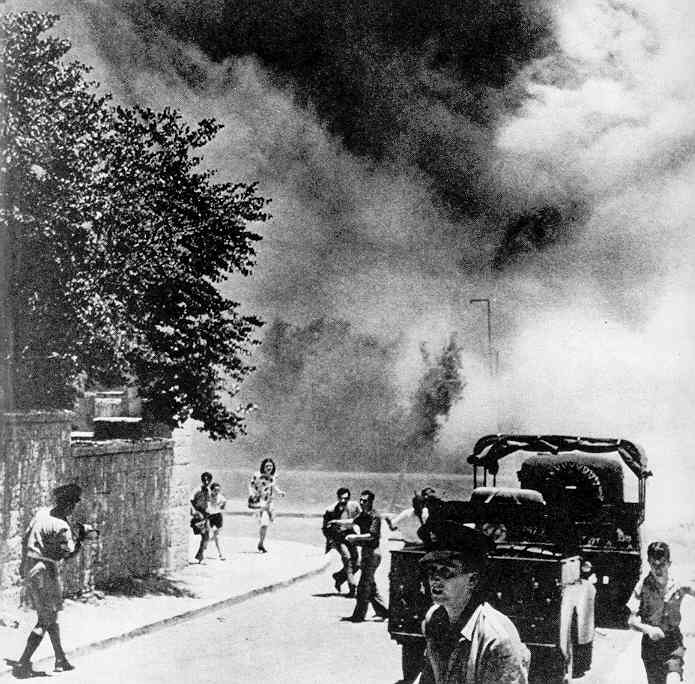
A wing of the King David
Hotel being blown up by the Irgun
terrorist organization (founded and headed by Israel's future
Prime Minister, Menachem Begin!) – July
22, 1946.
91 Britons, Arabs and Jews died in the
explosion
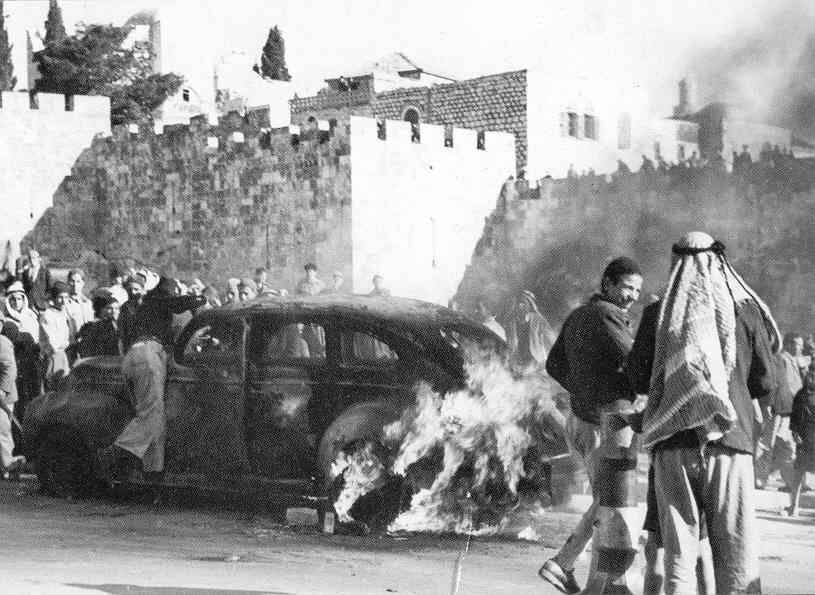
A Jewish-owned taxi burns
outside the Damascus Gate in
Jerusalem in retaliation for a drive-by shooting conducted
by Jewish terrorists which killed 15 people in the Arab
market.
During the month after
the announcement
of the pending
partition, 489 people died in the violence.
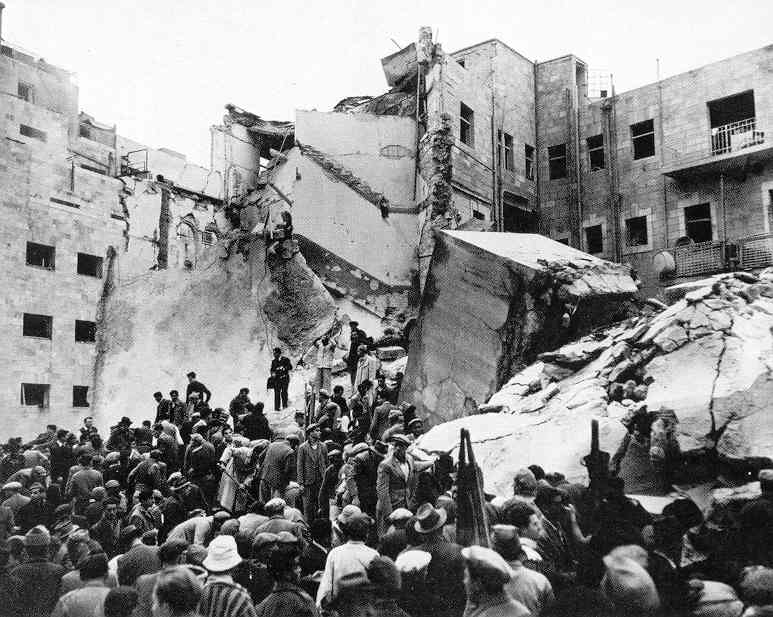
Jews surveying some of the
damage caused by the Ben Yehuda
bombing. The bombing
was undertaken
by Arab terrorists
dressed up in British uniforms. 57 people died. Angry
Jews, taken in by the deception, killed 9 Britons in retaliation.
On May 14th, 1948 Britain's
mandate over Palestine ended.
That afternoon the Jews
announced the creation of Israel.
On the following day the Arab-Israeli
war began.
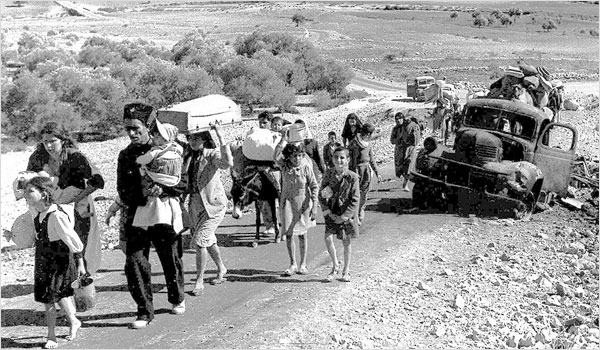
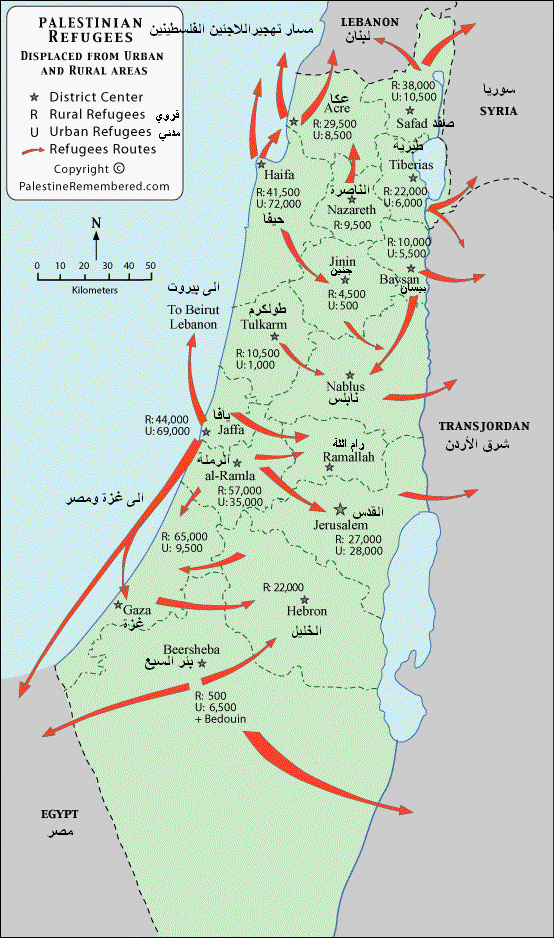
Palestinian refugees "Making
their way from Galilee
in October-November 1948".
Front cover of The Birth
of the Palestinian Refugee Problem by Benny Morris
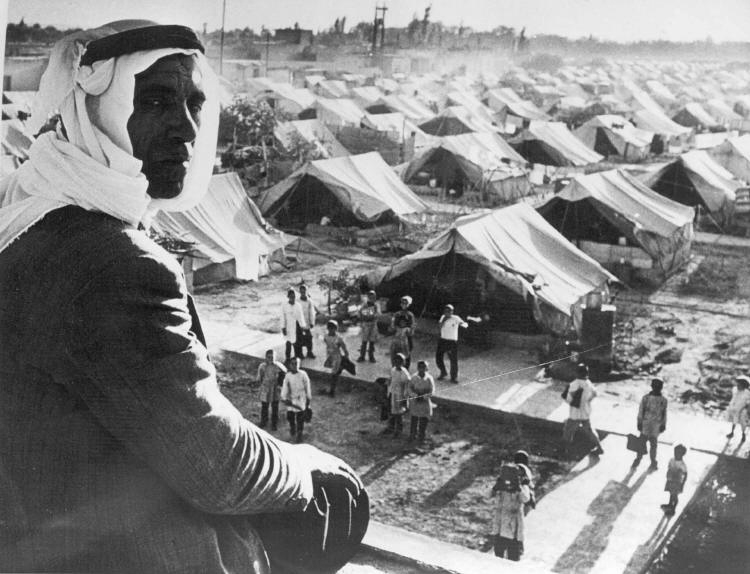
Jaramana Refugee Camp for
Palestinian refugees, Damascus, Syria – 1948
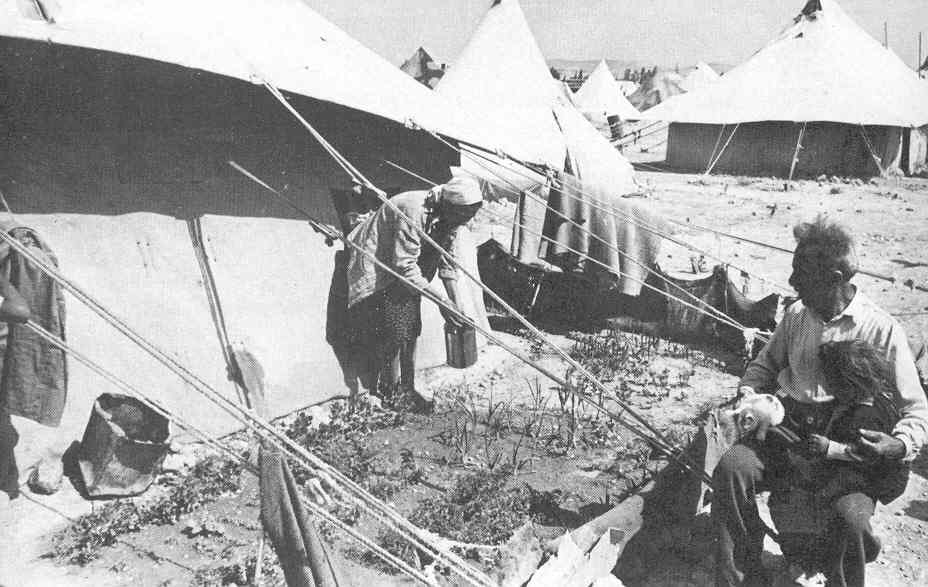
Palestinian refugees in Zerka
refugee camp – 1949
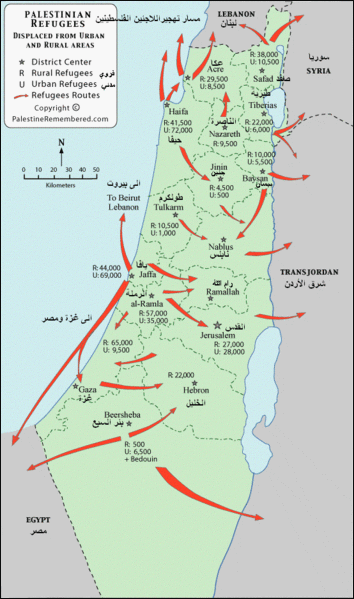
Refugee routes of
Palestinians
Wikipedia – "Palestinian
refugees"
Consequently
a very ugly battle for the land resulted, one that would be ongoing, not only
as long as there were still Palestinians left to contest the Jewish invasion of their homeland but even as long as
there were other Arabs in that part of the world outraged in seeing their
fellow Arabs in Palestine driven from their homes, farms and businesses.
And
that fellow-Arab world included Egypt, right next door to the new Israel, where
Egyptian President Nasser was posing himself as the
leader not only of Egypt but of all the Arab world, through his newly-created
United Arab Republic. And he had as his
rallying cry to promote his Arab candidacy the call to do something about the "Jewish problem" in Palestine. Thus not only was he developing a military
well beyond any immediate need for Egyptian national defense, he was talking
loudly (part of his political campaign) about his intentions to lead the Arab
world in delivering Palestine from its occupiers.
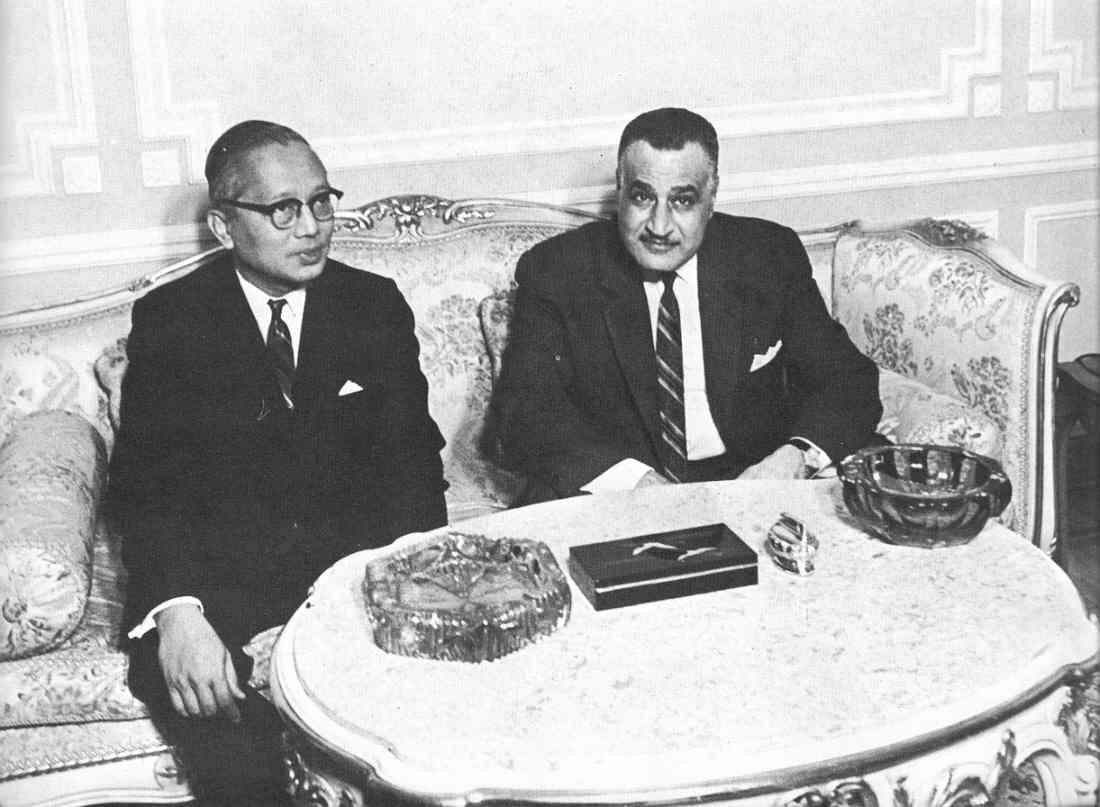
United Nations Secretary
General U Thant meeting with
Egyptian President Gamel Abdul Nasser in
late May 1967
to try to
back the Egyptians down from a growing
confrontation with the
Israelis
But
Israel was in not in the mood to wait around to see exactly how he was planning
to advance his candidacy, and, without any warning, struck hard at Egypt, fully
destroying the Egyptian air force with its planes still on the ground, and thus
making it impossible for the Egyptians to offer air cover to their ground
troops now facing an advancing Israeli army and its covering air force. It was a slaughter for the Egyptians ... as
the Israelis rolled quickly all the way up to the Suez Canal – which now found
itself shut down as a result of the war.
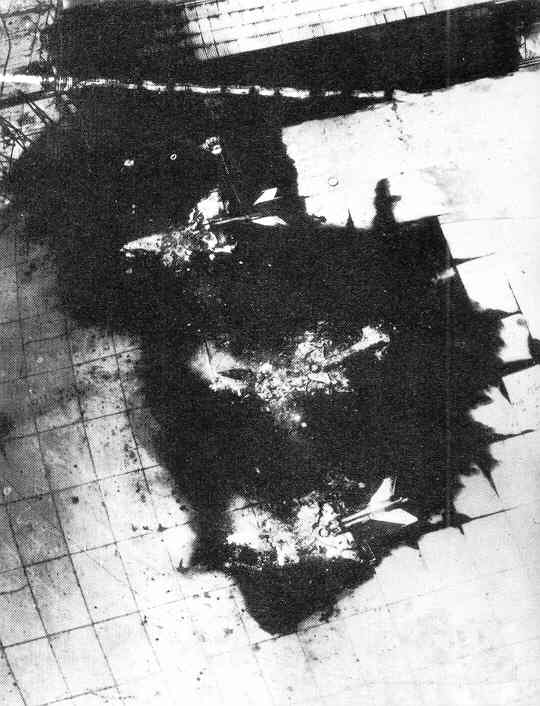
Part of the Egyptian air
force caught unprepared
for an Israeli surprise attack – June 1967
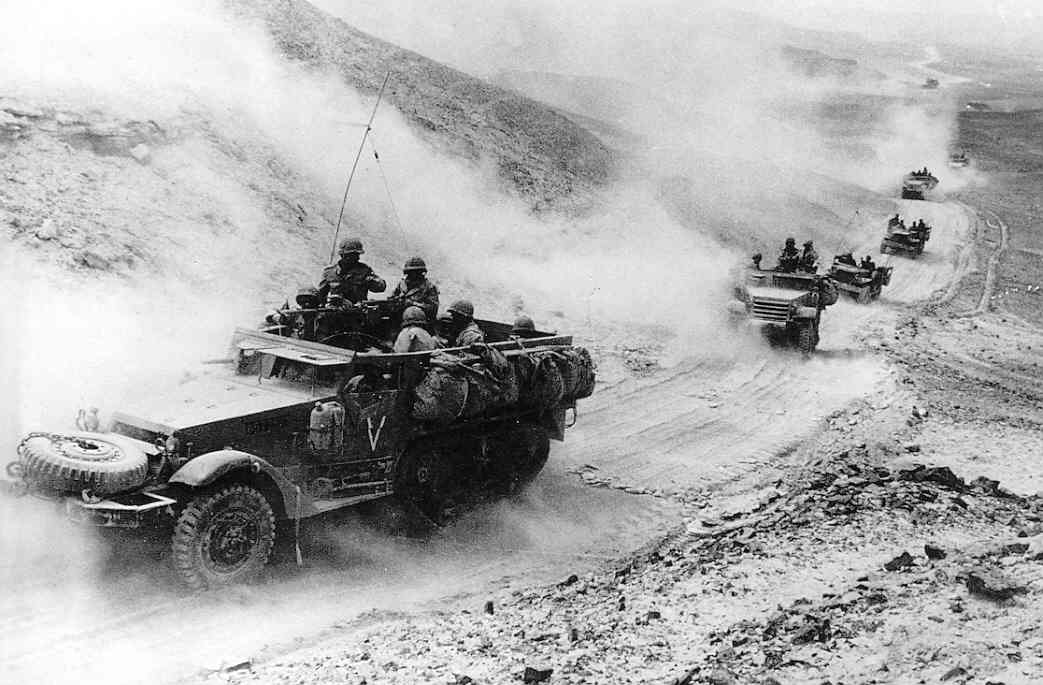
Israeli armored vehicles
advancing through the Sinai desert
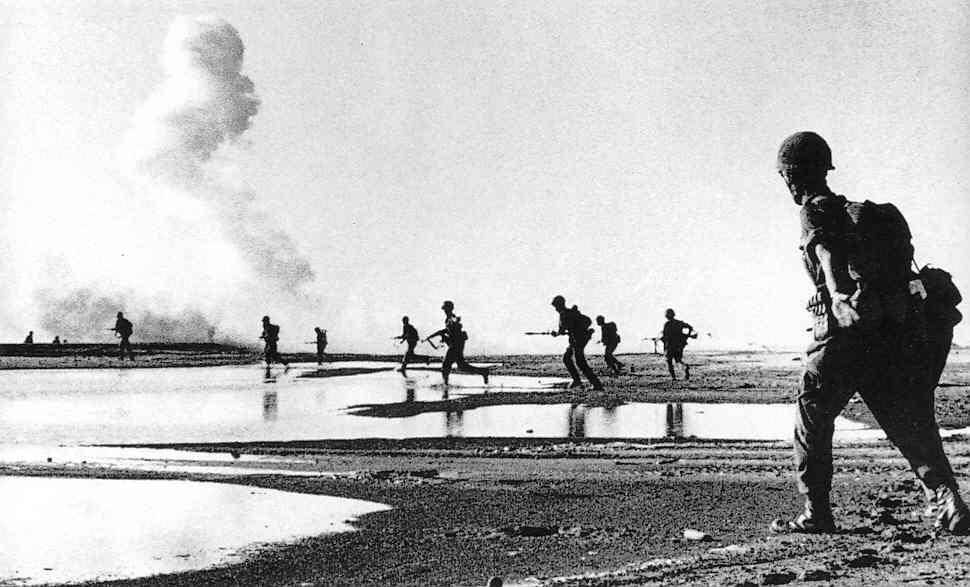
Israeli soldiers advancing
on Egyptian lines in the Sinai
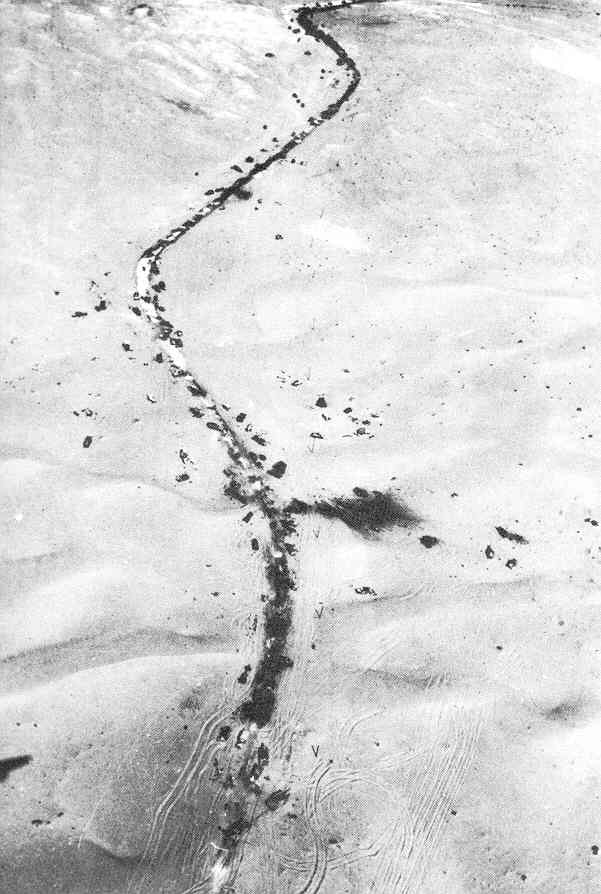
The burned-out remains of
Egyptian armored vehicles
and tanks at the Mitla Pass
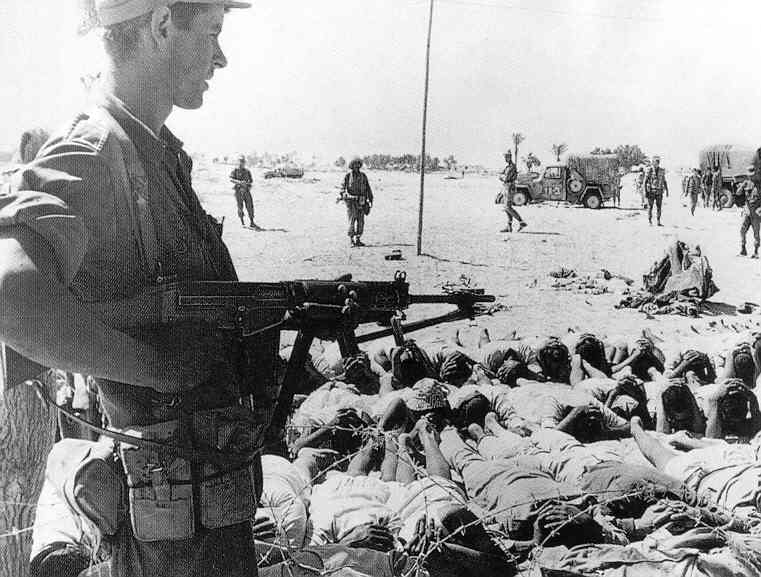
Israeli soldier guarding
Egyptian captives taken in the Gaza strip
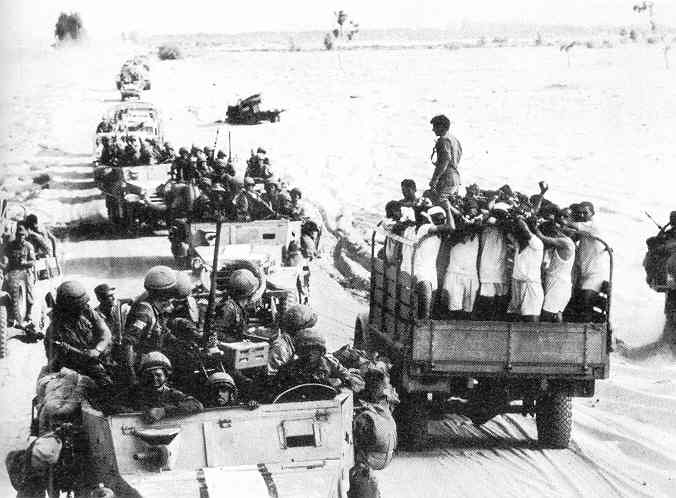
Israeli soldiers advancing
toward the front;
Egyptian prisoners being brought to the rear
Then
foolishly Jordan and Syria decided to come to the aid of Egypt, and Israel
crushed their forces as well, all of this in a mere six days (thus the term "Six-Days War").
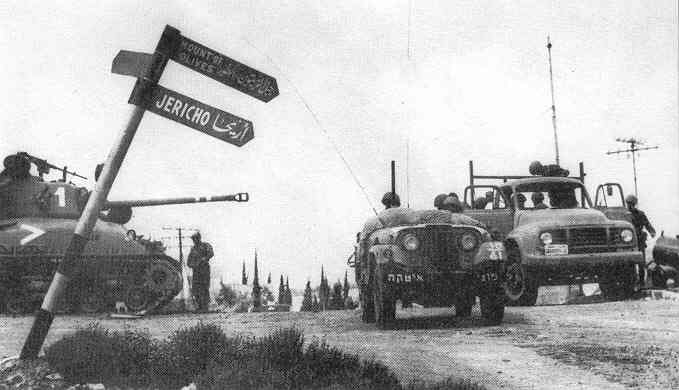
The Israelis sweep quickly
through the West Bank region
against the Jordanians – June 1967
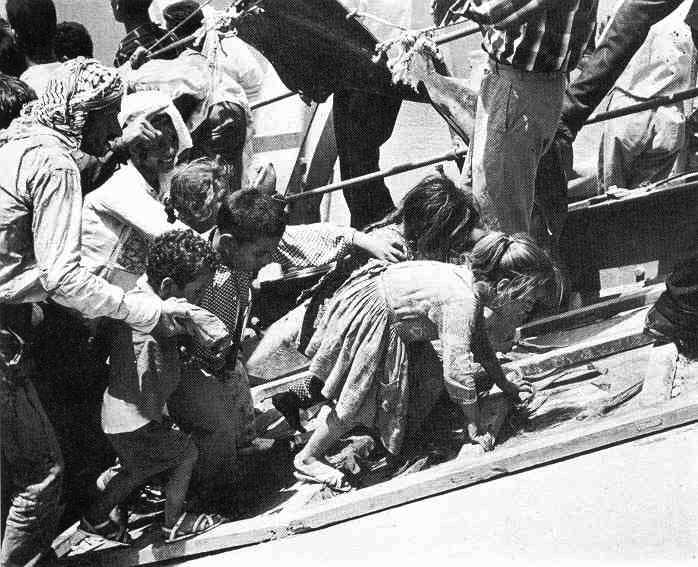
Palestinian refugees (some
of nearly 200,000) fleeing across
a demolished Allenby bridge into Jordan to escape the Israeli
occupation
of the West Bank region
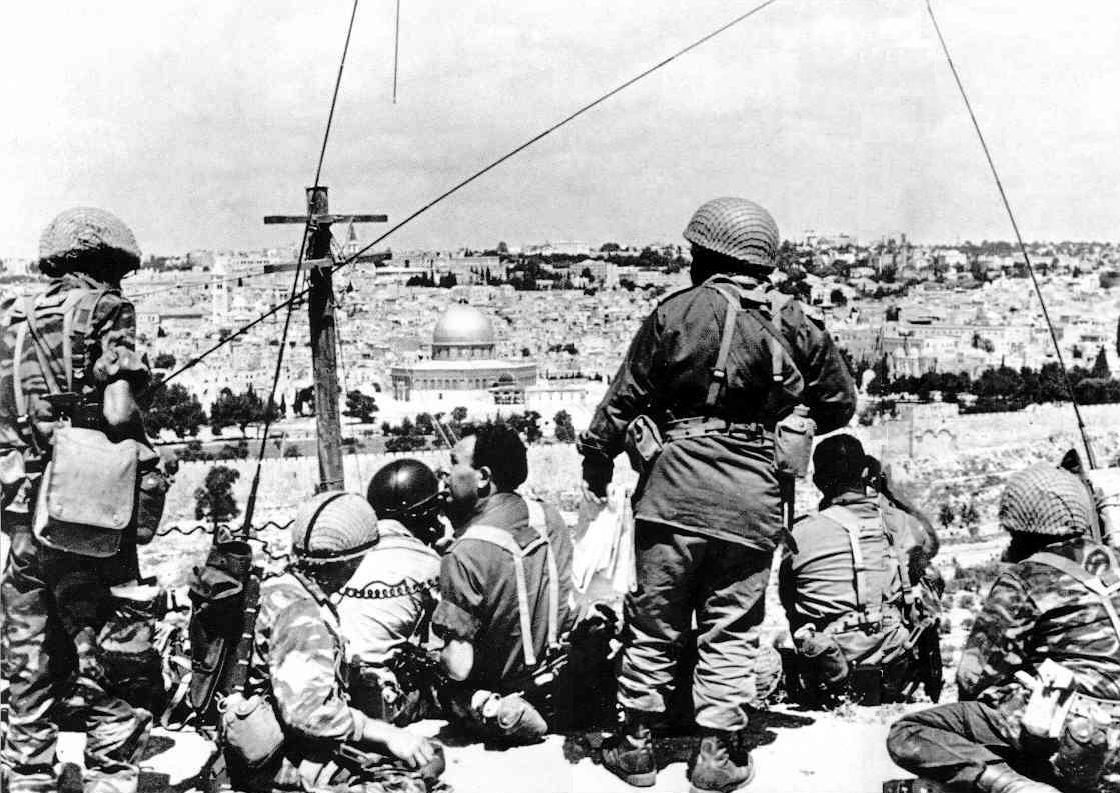
Israeli soldiers planning
their moves into East Jerusalem
June 1967
This
was the event – not that America had any part in it – that brought Americans
finally to want to offer full support to Israel in its contest with its Arab
neighbors (America had been fairly neutral about this complex matter prior to
this). The very one-sidedness of the
news coverage of the 1967 Jew-versus-Arab conflict made this rather inevitable
(there were not many Arabs running America's news organizations!).
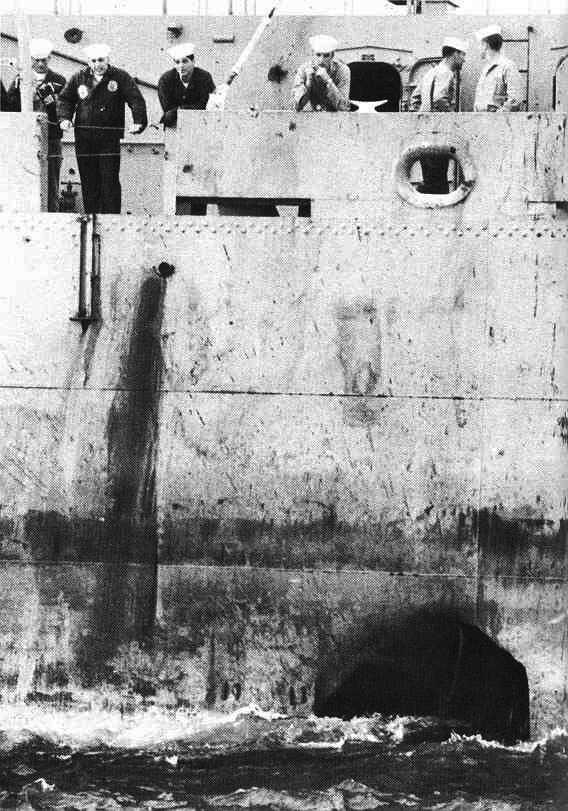
The American monitoring ship
USS Liberty holed off the
Egyptian coast by an Israeli torpedo – an unexplained Israeli
action
that caused 100 US casualties (the Israelis never
offered a convincing explanation for this attack on a
well-marked American naval
vessel)
But
what was not inevitable – actually quite strange – was the way that Evangelical Christians came out so
strongly in favor of Israel against Palestine's Arab population, not realizing
what a high percentage of the Palestinian population was Christian. Evangelicals seemed not to understand that
chasing Palestinian Christians from the land would not advance the gospel in
that part of the world (Israel was not a big supporter of the Christian
gospel!). But unlimited Evangelical support for Israel was
indeed the case. And indeed it would
come to be that way for all the nation, America now dedicated to supporting
Israel at all costs (it would have the opportunity to be more proactive in this
regard within another five years, with the outbreak of the Yom Kippur or
October War of 1973).
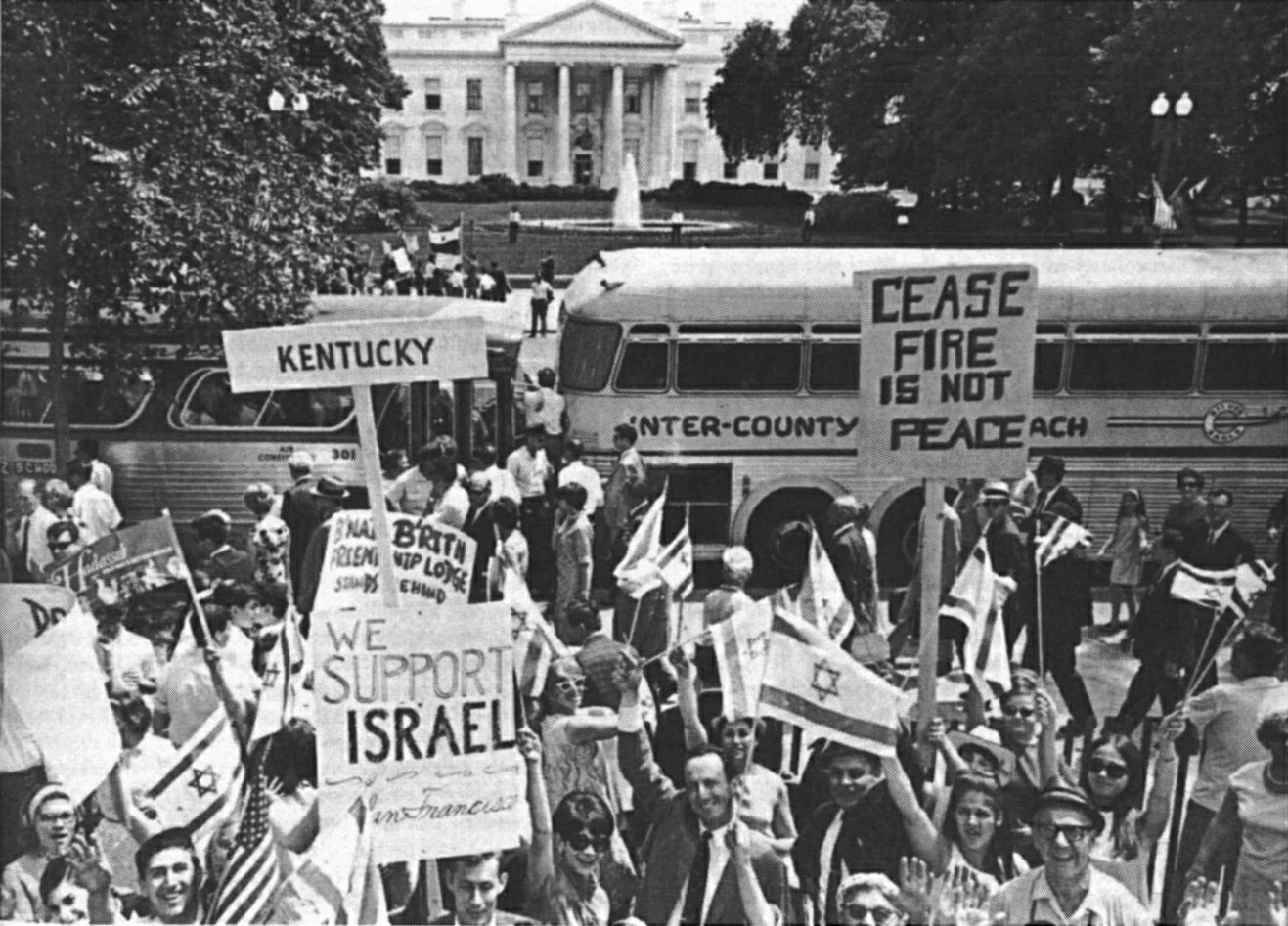
Pro-Israeli protesters gather
in front of the White House – June 1967
Behind them is a much smaller
group of pro-Arab protesters
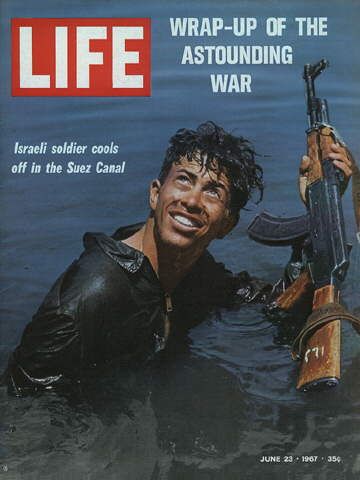
The American media followed
the war almost exclusively from
the Israeli perspective ...
drawing America broadly
into an
on-going pro-Israeli position in the Arab-Israeli dispute.
The Israeli occupation of
the Palestinian West Bank region
will now be viewed in Israel as the completion
of Israel’s full
unification. The world (including the
U.S. government)
however will not recognize these new boundaries … and the
Palestinians will continue to struggle against this
expanded
Israel in an rather futile effort to secure their own
national
homeland
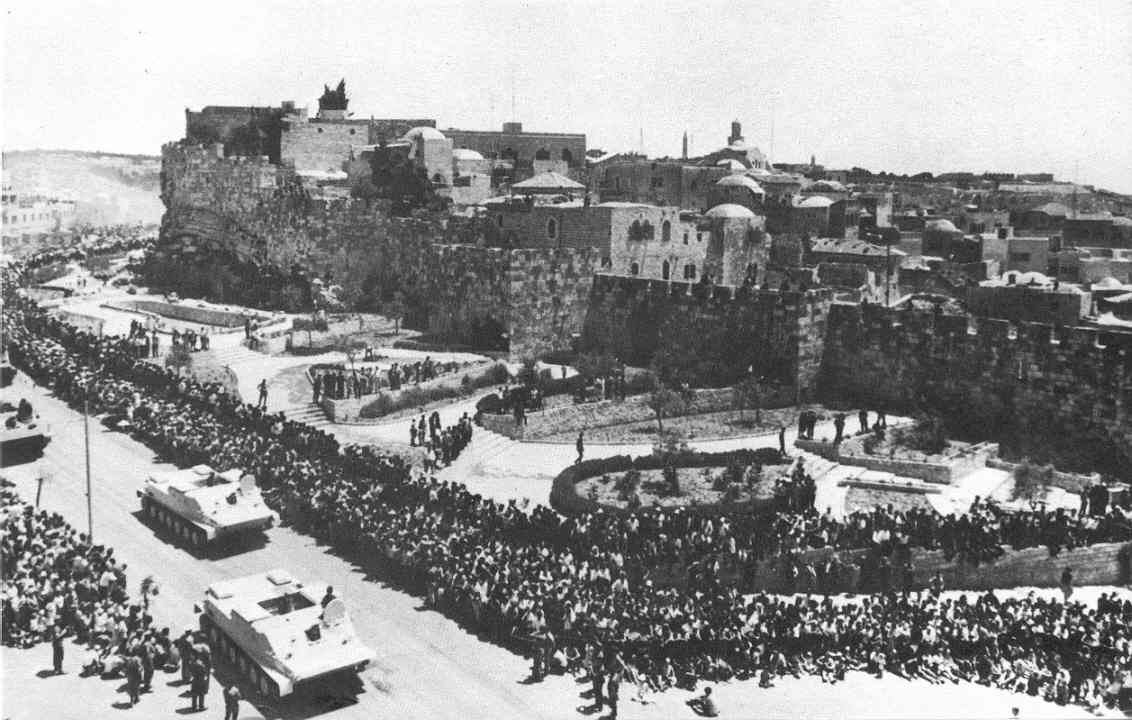
Captured Russian-built Egyptian
tanks being paraded through
a "unified" Jerusalem on Israel's 20th Anniversary – May 2, 1968
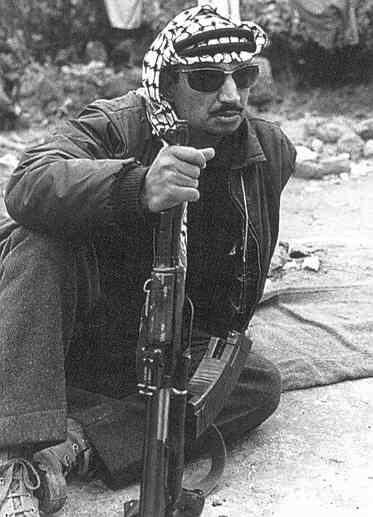
Palestine Liberation Organization (PLO) chairman Yasir
Arafat – 1968. He and his organization
will be portrayed in
the American media and popular culture as a war criminal
for his actions in promoting
and defending militarily the
Palestinian cause
| THE "PRAGUE SPRING" AND CZECHOSLOVAKIAN CRISIS OF 1968 |
Another major international event that Superpower America did not
participate in – or even influence in the smallest way – was a spontaneous
uprising of the Czechs in 1968 against the Soviet domination of their
country. The Czechs had formerly been
very productive members of Europe's industrial world, that was until the
country fell into the hands of Soviet-backed Communists in 1948. The Czech economy had done very poorly since
then, even in comparison to other subject nations within the Soviet bloc or Empire.
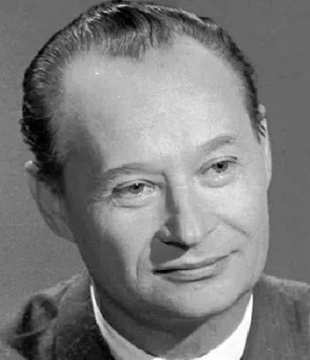 Surprisingly, it was the Czech Communist leader himself, Alexander Dubček, that decided that
the country must open itself up to greater personal initiative, that is
capitalism itself, in order to get the Czech economy up and running again. But such independent-mindedness, especially
from a Communist who was supposed to be getting governing instructions from the
Kremlin (Communist headquarters in Moscow) – and from there alone – could be a
real danger to the Soviet Empire.
Surprisingly, it was the Czech Communist leader himself, Alexander Dubček, that decided that
the country must open itself up to greater personal initiative, that is
capitalism itself, in order to get the Czech economy up and running again. But such independent-mindedness, especially
from a Communist who was supposed to be getting governing instructions from the
Kremlin (Communist headquarters in Moscow) – and from there alone – could be a
real danger to the Soviet Empire.
Thus
after some efforts to talk the Czechs back from this program – with no results
(the Czechs themselves were very enthusiastic about this new "Prague
Spring") – in mid-August (1968) Soviet leader Leonid Brezhnev ordered hundreds of
thousands (some say as many as half a million) troops and 1200 tanks to roll
into Czechoslovakia and put an end to the
program.
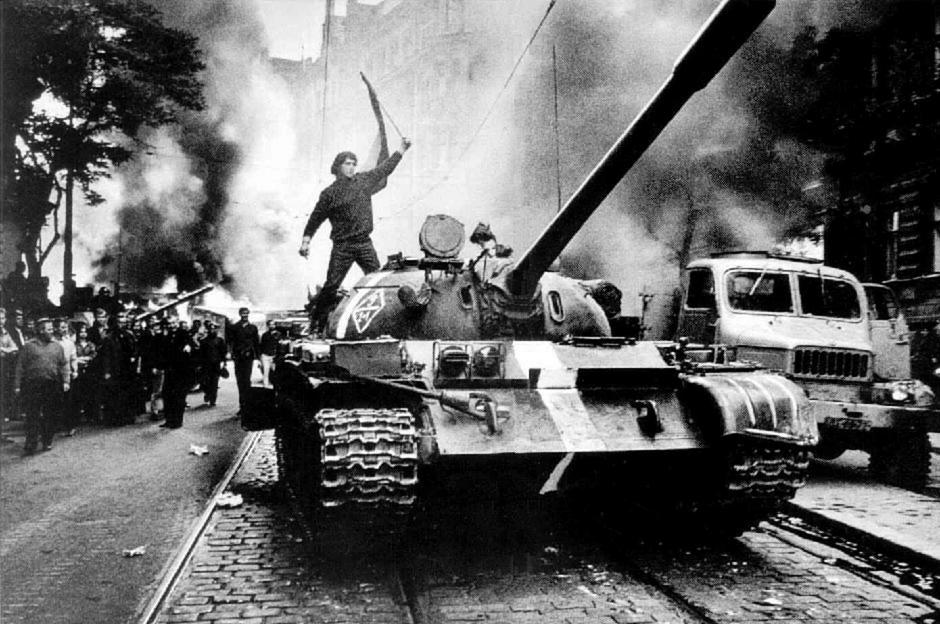
The end of the "Prague Spring" – August 20-21, 1968
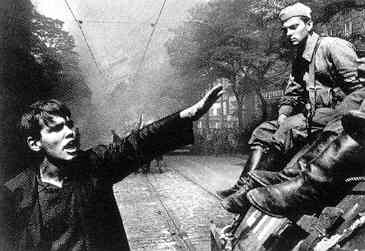
A Czech youth challenging
an invading Soviet tank crew
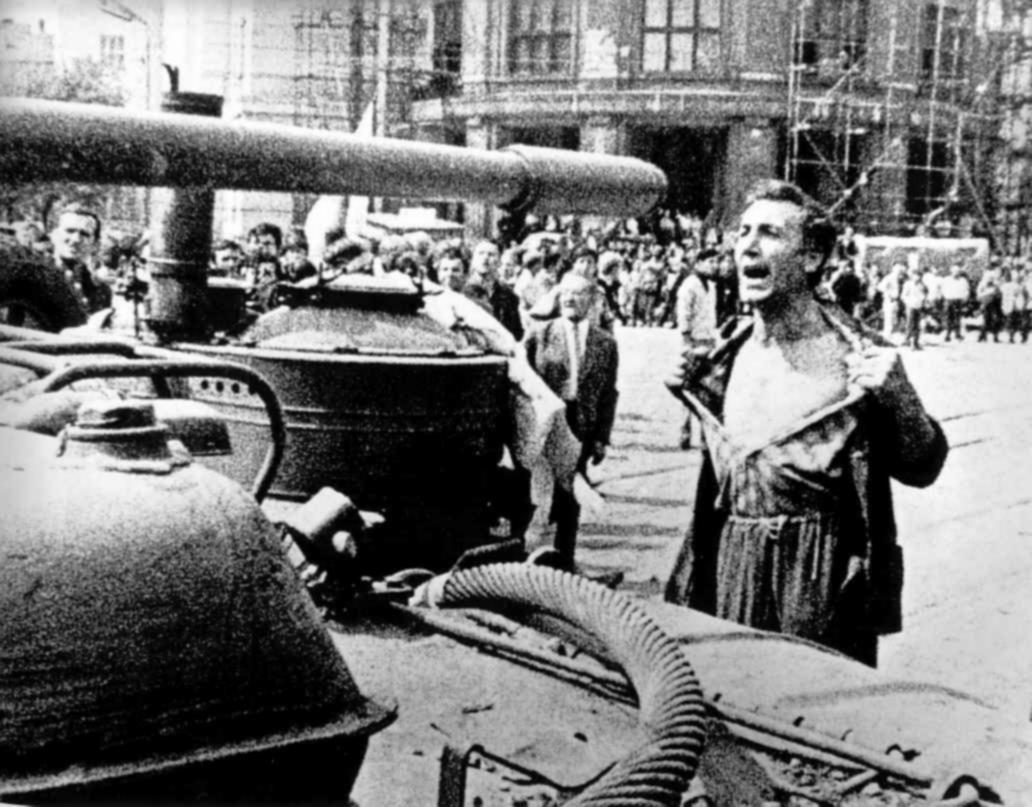
The forceful end of the "Prague
Spring" – August 21, 1968
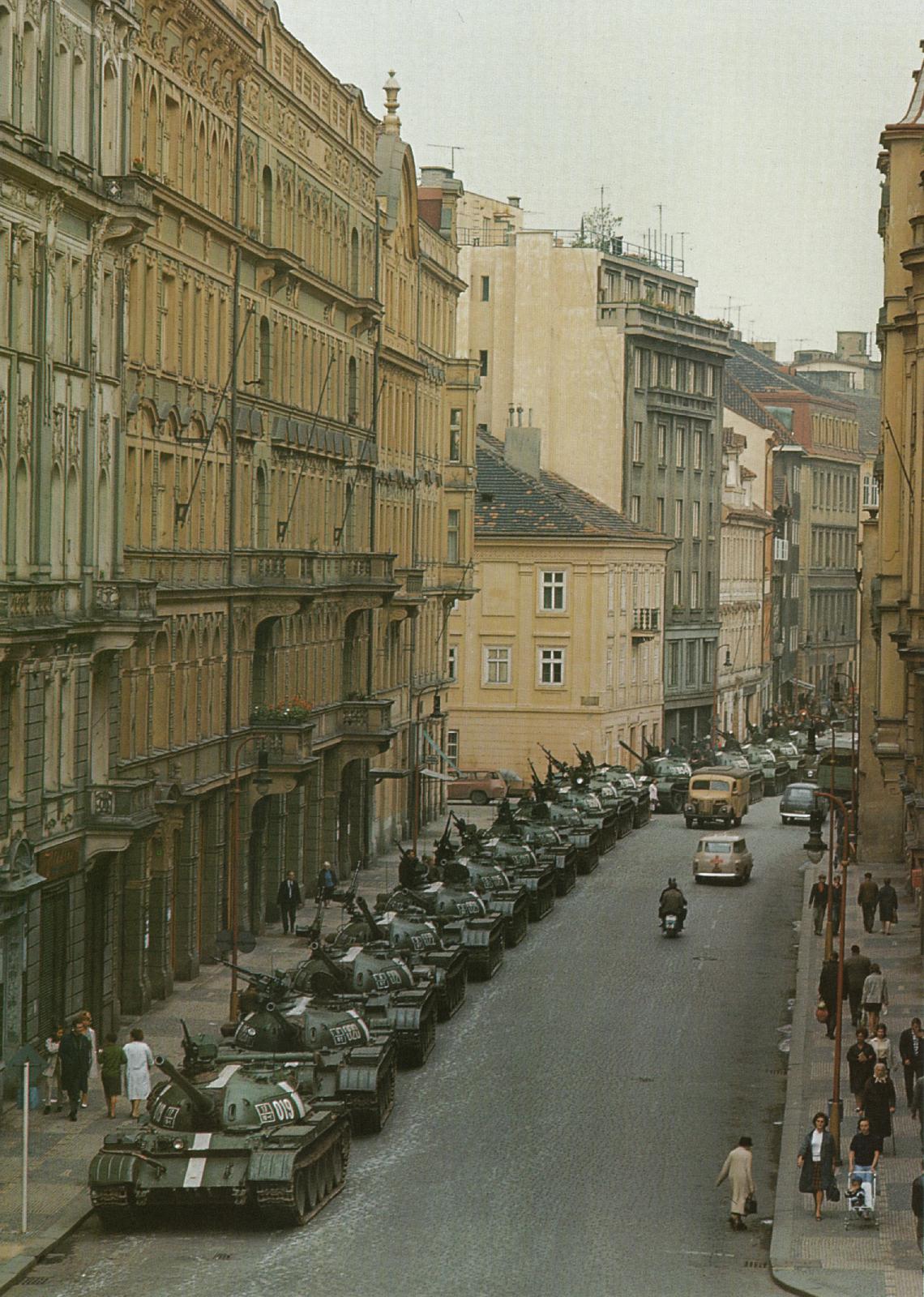
Soviet tanks parked in the
streets of Prague – 1968
The
world was loud in its denunciations. But
ultimately it (along with America) did nothing, and moved on to other matters.

Go on to the next section:
 Miles
H. Hodges
Miles
H. Hodges

 De Gaulle attempts to undercut American leadership in Europe
 Mao's China
  The Arab-Israeli "Six-Day War" of June 1967
  The "Prague Spring" and Czechoslovakian Crisis of 1968