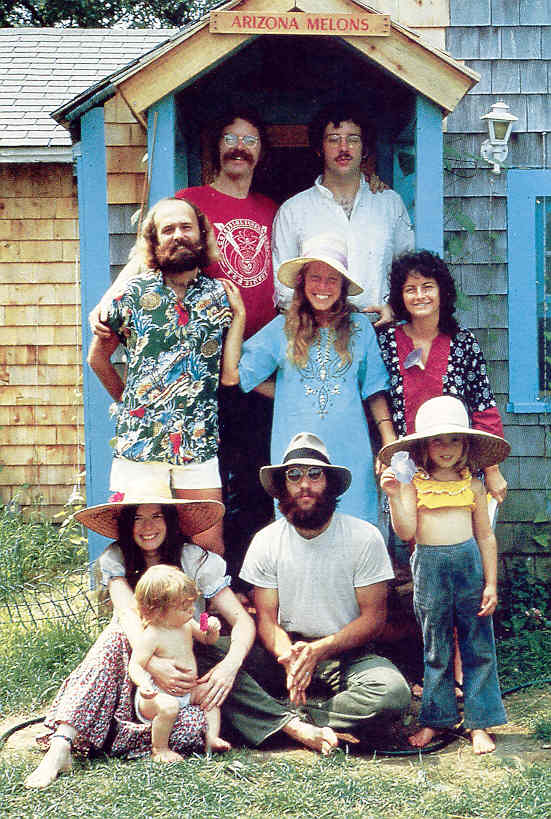
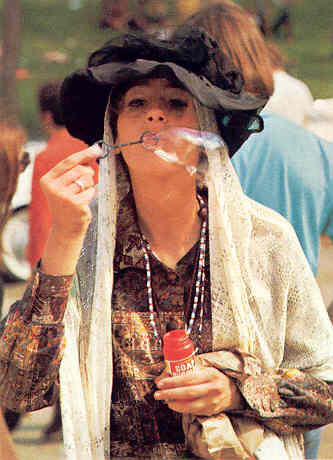
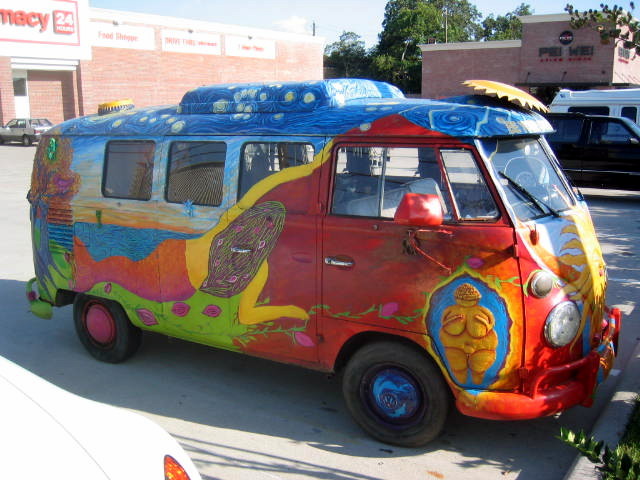
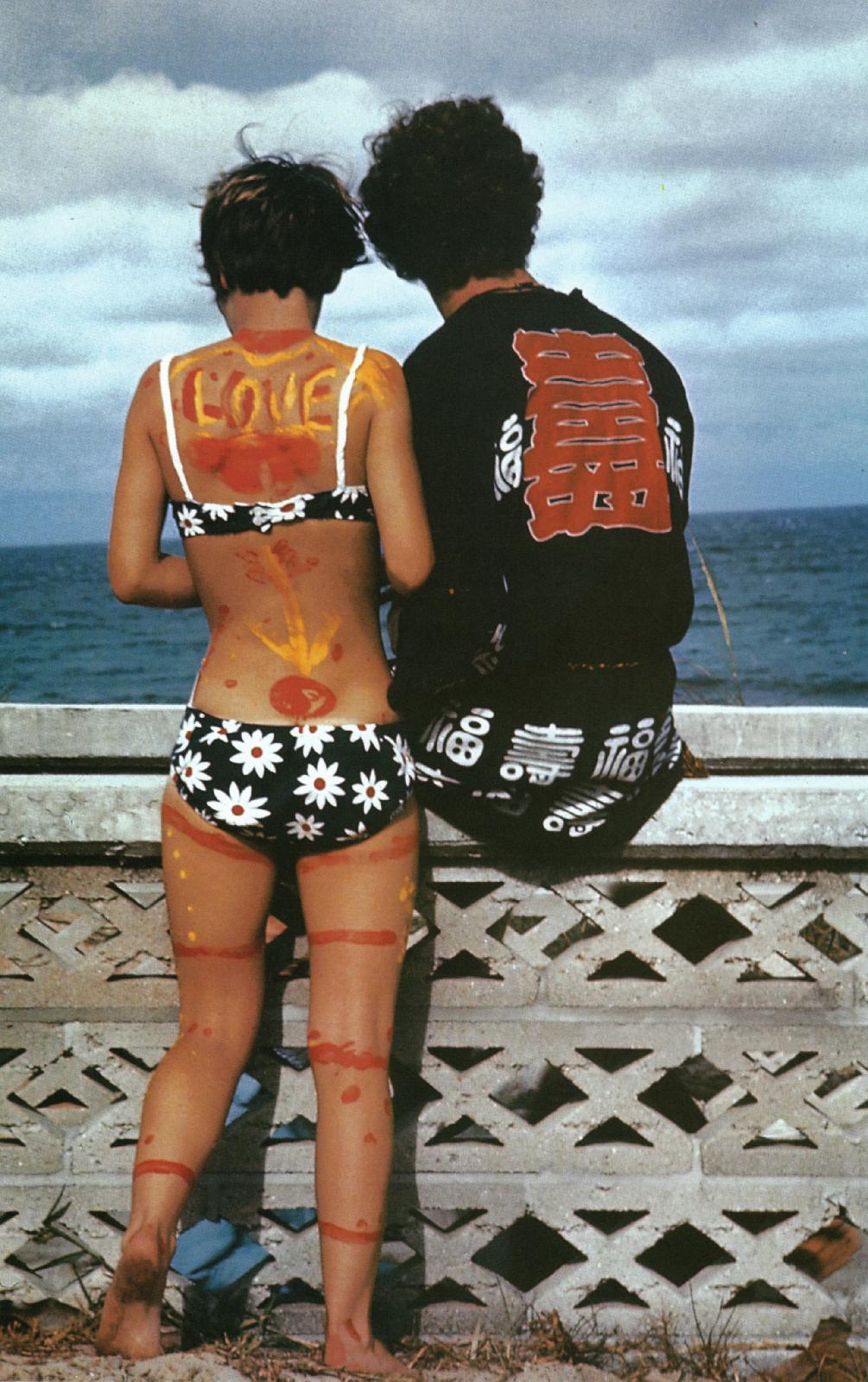
Drugs. Boomers enjoyed indulging in social drugs,
ranging from marijuana, to LSD, to heroin.
It certainly helped them get in the social mood in their communes. And they enjoyed seeing the shock on the
faces of the Vet generation watching this drugged up social development rising
among their Boomer children. Drugs were cool. After all, this social trend started out at
Harvard, the citadel of American intellectualism, with the LSD experiments of
Professor Timothy Leary. And American
troops had found marijuana to be very comforting in facing a war that seemed
unwinnable – and without any military honors coming their way for their wartime
service and sacrifice. So they brought
their marijuana habits home to America with them after completing that service.
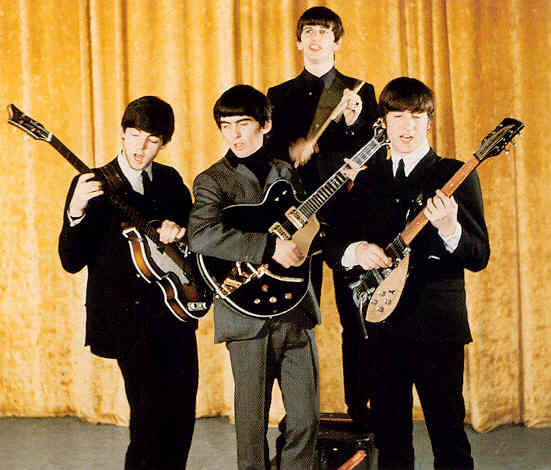
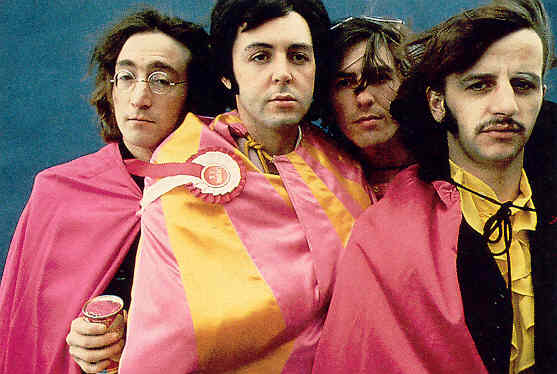
Drug usage itself became a key element of the Boomer identity. Helping to clarify the pattern was the Beatles
music group – making the transition from the innocent "Love, Love Me Do" and "I
Want to Hold Your Hand" (1962) – to the nonsensical "We All
Live in a Yellow Submarine" (1966) – to the LSD-inspired "Lucy
in the Sky with Diamonds" (1967).
Recreational drugs were also
supposed to be part of
the age of youthful bliss.
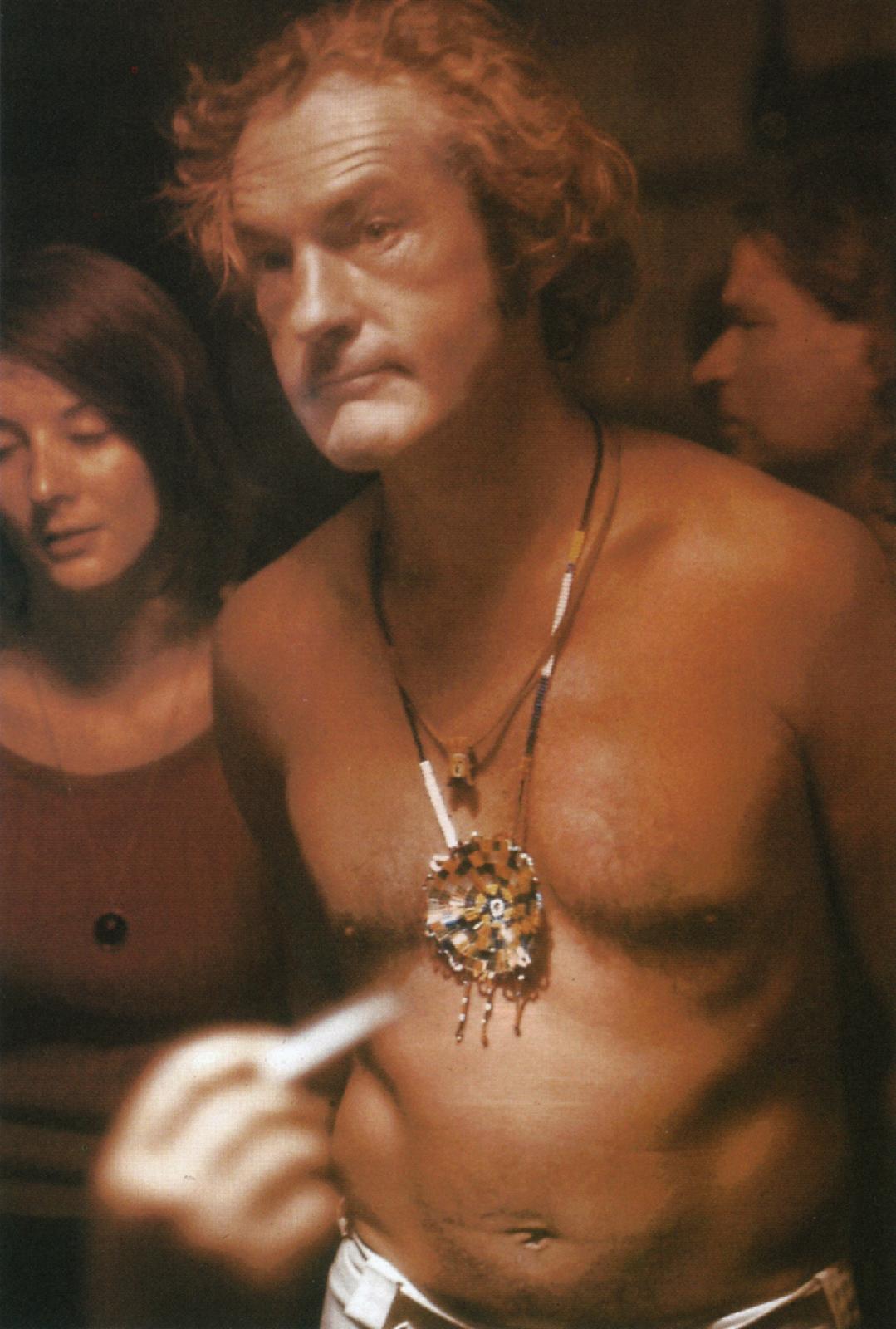
Timothy Leary – lost his
Harvard professorship advocating
drug-use for "religious" purposes
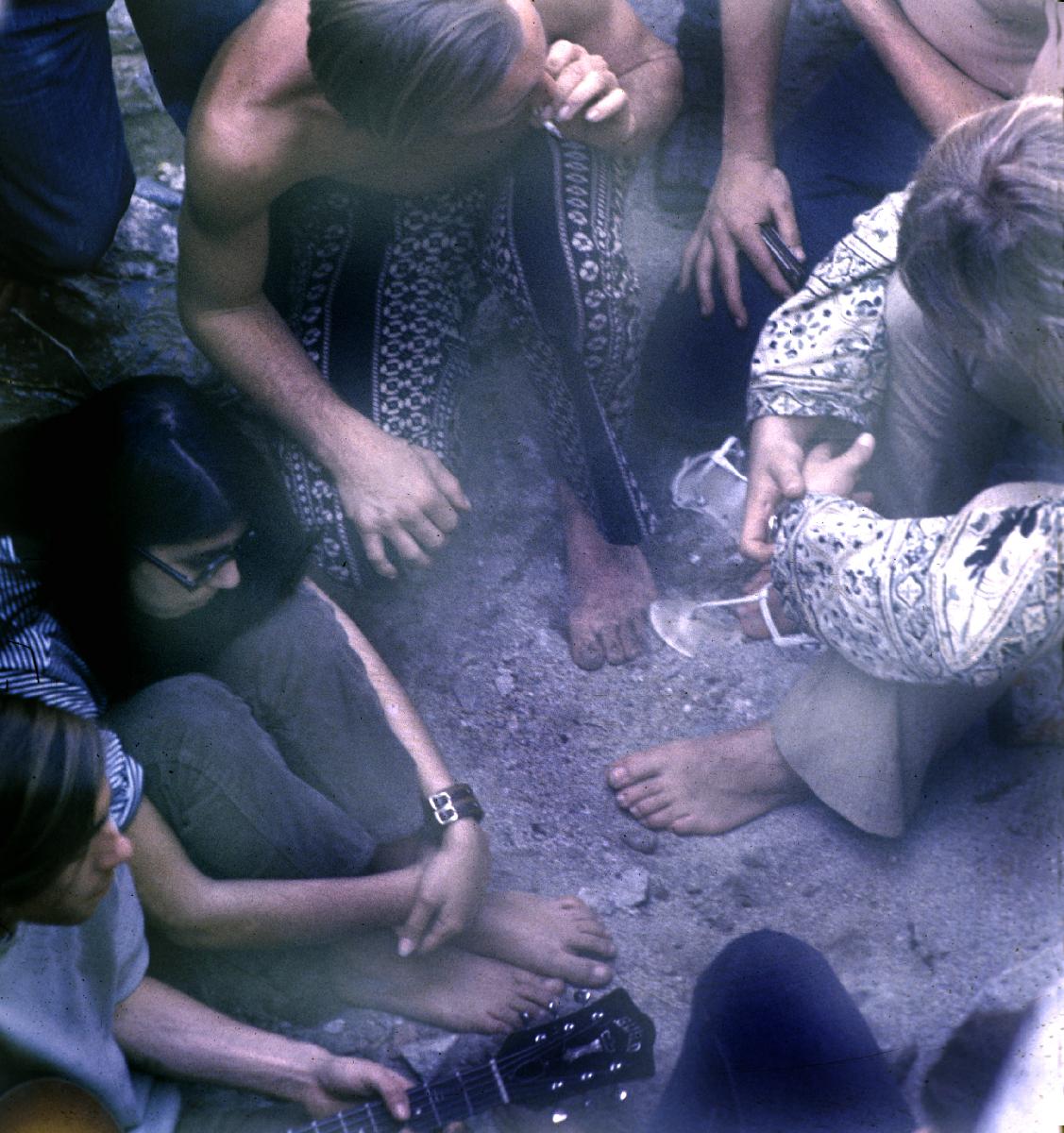
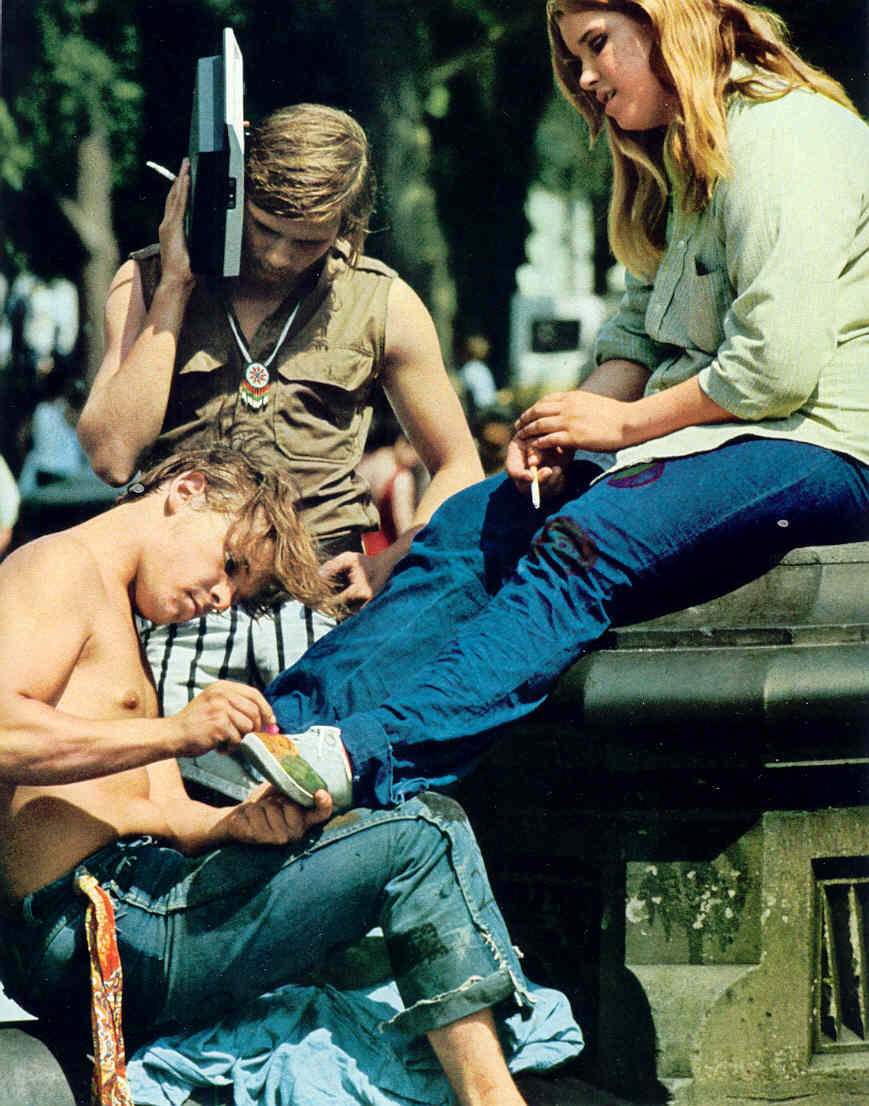
Sharing a joint in Tahquitz
Canyon, Palm Springs, California
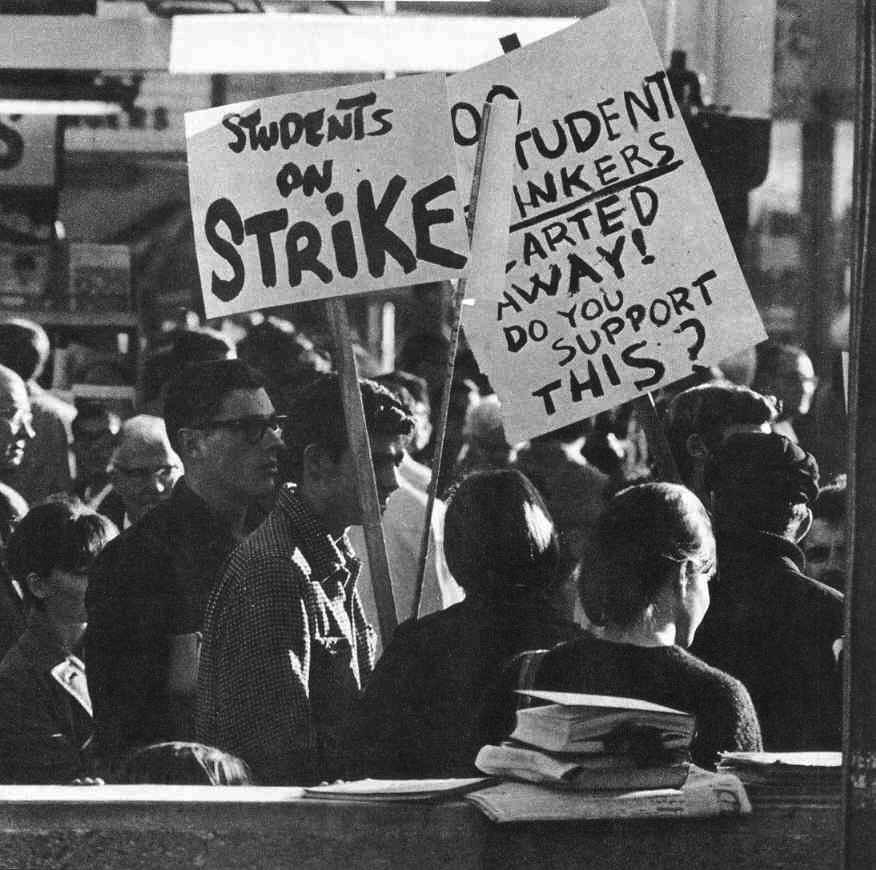
Protest. Besides drugs, relief from social boredom was
offered in what the Boomers had best been prepared for: protest against social
injustice – injustice usually in the form of some aspect of Vet society.
The Free Speech Movement (FSM) on the Berkeley campus
late 1964 – early 1965
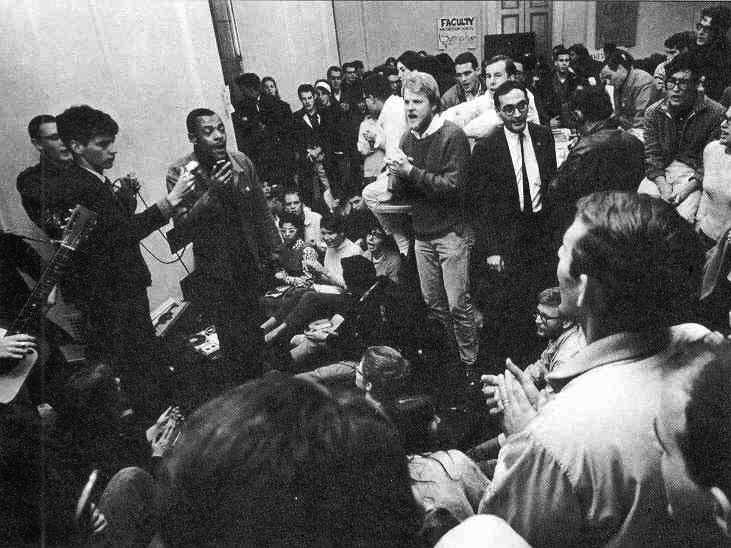
A faculty member showing
support for the FSM
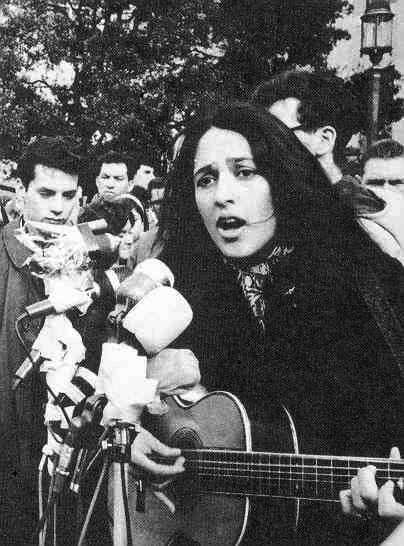
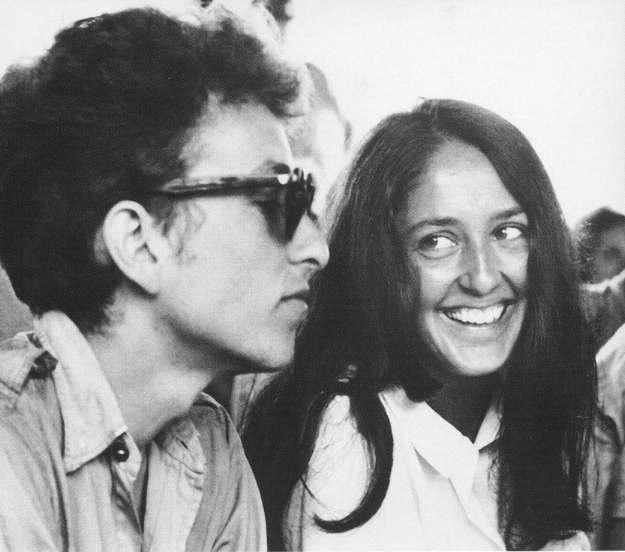
Joan
Baez demonstrating her support for the FSMChristianity. The Vet generation's close attachment to
Christianity as its fundamental civic religion was not protested. It simply was not taken up as the Boomer religion – through the simple
strategy of Boomers just not bothering to attend church.
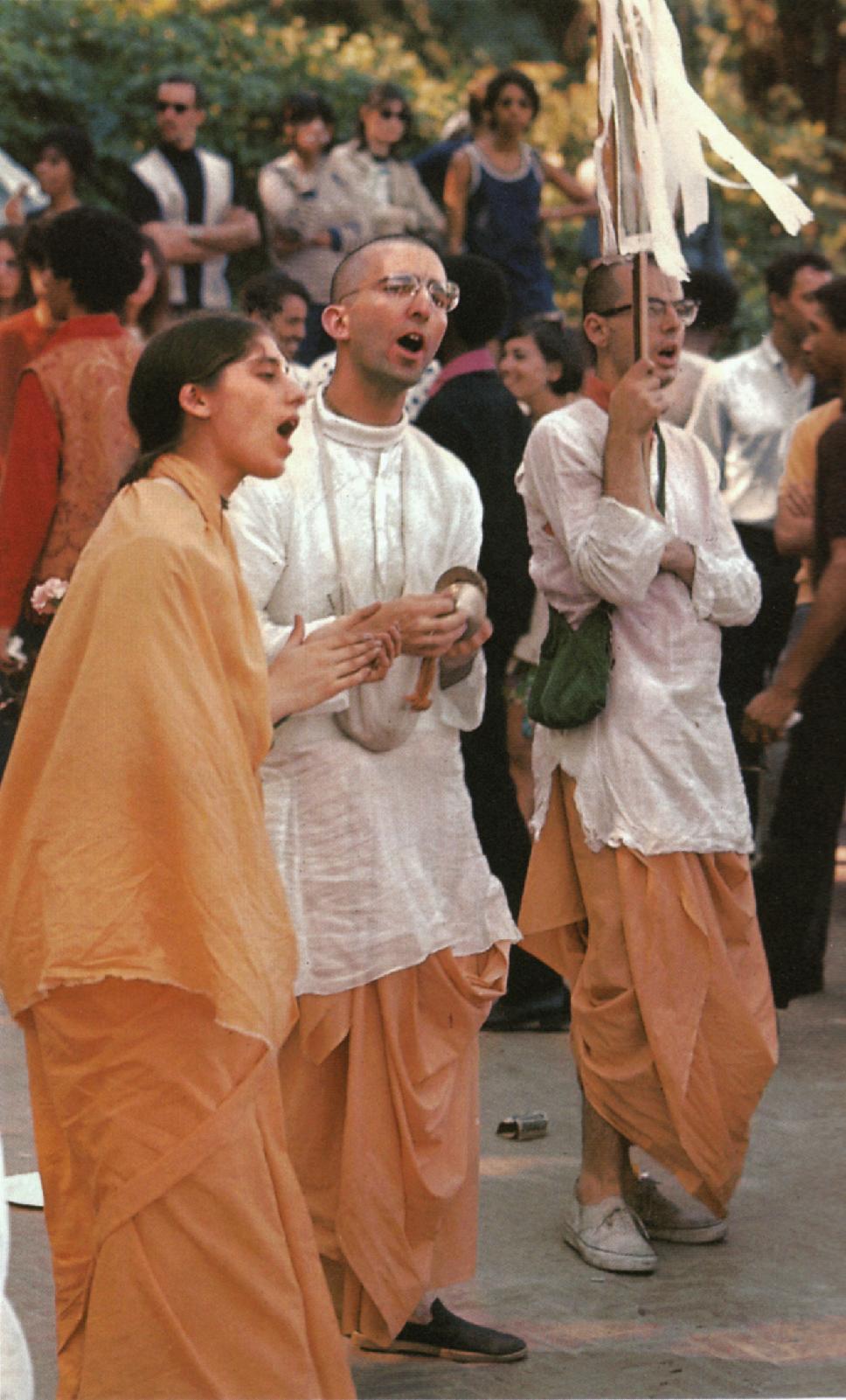
Hare Krishna devotees -
1967
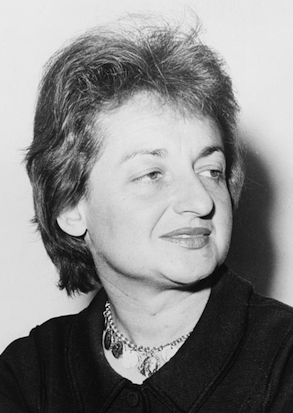 Feminism. Then there was the cause of feminism. In 1963 Betty Friedan published a book, The
Feminine Mystique, one that would not only announce the startup of a new
round of militant feminism, but serve as the basic Bible of young
college-educated women, instructing them as to how to combat the male
domination of the professional world.
Feminism. Then there was the cause of feminism. In 1963 Betty Friedan published a book, The
Feminine Mystique, one that would not only announce the startup of a new
round of militant feminism, but serve as the basic Bible of young
college-educated women, instructing them as to how to combat the male
domination of the professional world.
Marriage
and the family (that is, the fundamental institution of Middle-Class America)
took a huge hit with Friedan's call to arms.
In her book she depicted family life not only as the underpinning of
male tyranny but also as terribly stifling of a woman's intellectual abilities.
Women needed to find escape from the marriage trap – and discover their real
purpose in life in the professional world.
Of course they could expect to find sexual discrimination awaiting them
there. But this was the point of the book: it was time for women to rise up
(like the Blacks) against this world of (male) domination and secure for
themselves the right to take as much control of American society as had long
been held by men. And thus the battle of
the sexes got underway.
Black civil rights. Marching in protest
against Southern racism certainly stirred the hearts of young Americans. But it was mostly the older Silents who joined the pastors,
professors and journalists who headed to the South to support the social and
political rights of Southern Blacks.
Boomers would eventually join the ongoing civil rights movement – sort
of – at least from a distance. Anyway,
by the time the Boomers had emerged on the political stage, the Black militants
such as the Black Panthers had taken over the
Black civil rights movement – and Whites were not invited to become part of
their campaign.
Against President Johnson's war in Vietnam. Boomers did, however, have one great crusade
to undertake, one that would put heroic touches to their lives: the need to end
the Vietnam War – and the accompanying
military draft that was carrying young American males off to a conflict that
was deadly – and apparently pointless.
Thus
the Boomers were beginning to voice loudly their opposition to "Johnson's war." Why should America's youth be drafted to
serve in a distant war whose morality was questionable? Boomers were beginning to identify the
motivation behind the entire Vietnam venture war as being simply
raw imperialism – American imperialism. This was pure evil: the strong
dictating their social-cultural organization to the weak – the very thing the
Boomers had been carefully programmed to resist – as heroically as possible.
One of the big issues of
the day was the military draft –
the ticket to the war in Vietnam
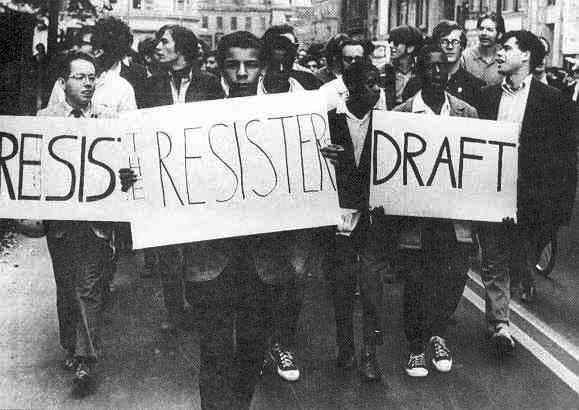
A march in Boston in protest
against
the stepping up of the draft – 1965
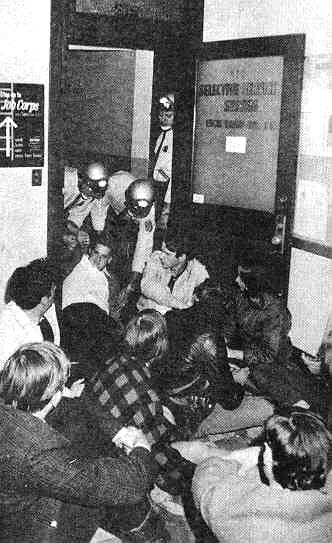
Police clearing out students
at an anti-draft sit-in
at the Selective Service office
in Ann Arbor, Michigan
October 15, 1965
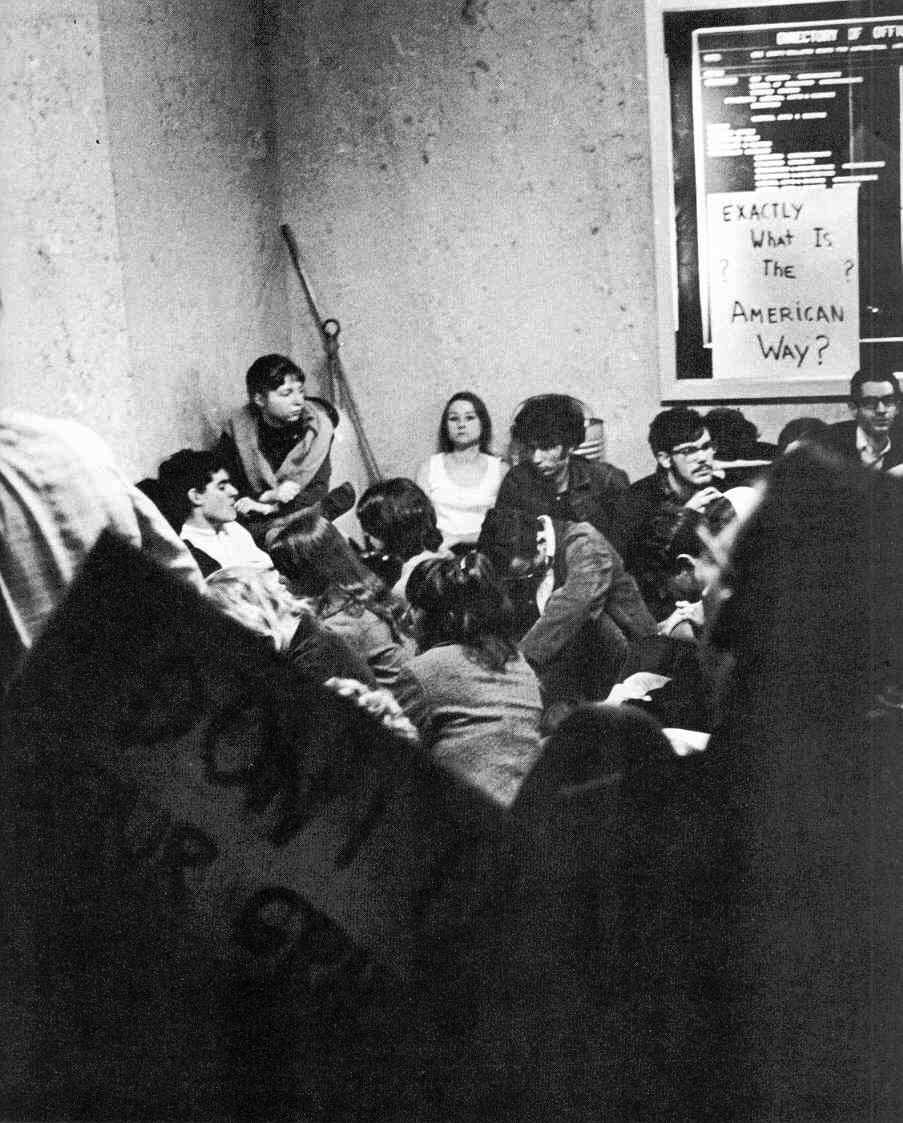
A sit-in demonstration at
the City College of New York –
June 1966 – in protest against the releasing
of student
class standings to draft boards
Thus the Boomers began to do what they had long been
trained to do: protest political
authority whose actions to them seemed entirely wrong. In 1967 they gathered in mass in front of the
Pentagon to call for an end to the war.
In October of 1967 thousands
of American youth converged
peacefully on the Pentagon to demonstrate the proposition
that what
the world needed was more "flower power"
and less military power.
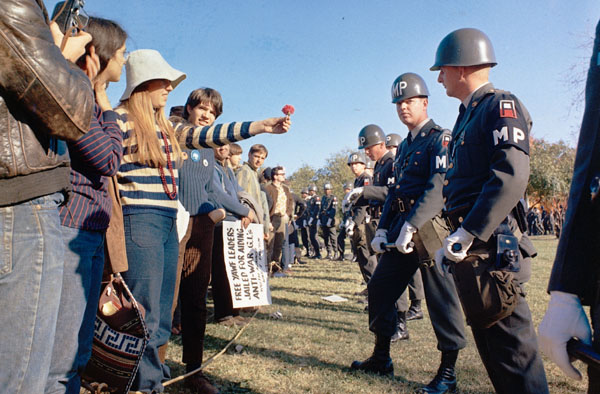
"A female demonstrator offers
a flower to military police on guard
at the Pentagon
during an anti-Vietnam
demonstration"
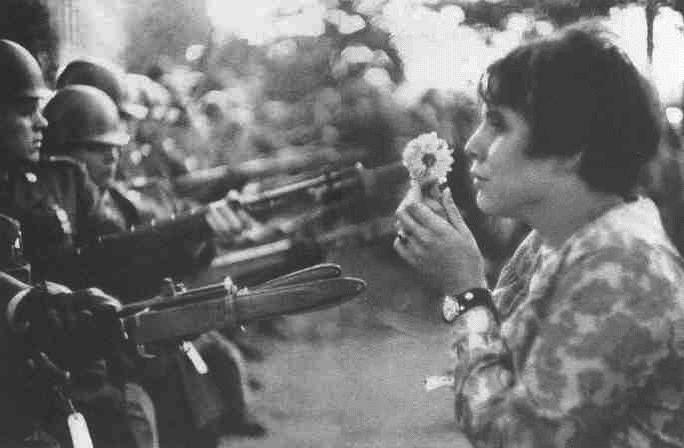
A "Peacenik" at the March on
the Pentagon – 1967
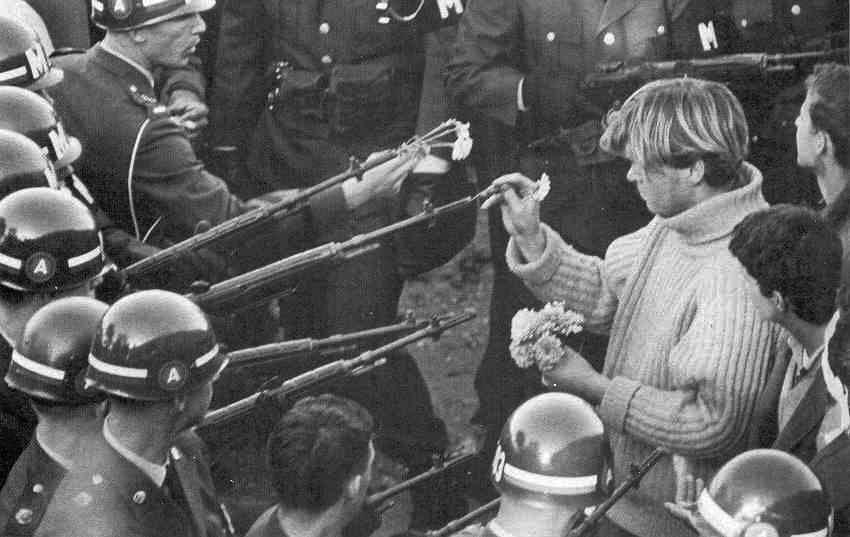
March on the Pentagon protesting
the Vietnam War – 1967
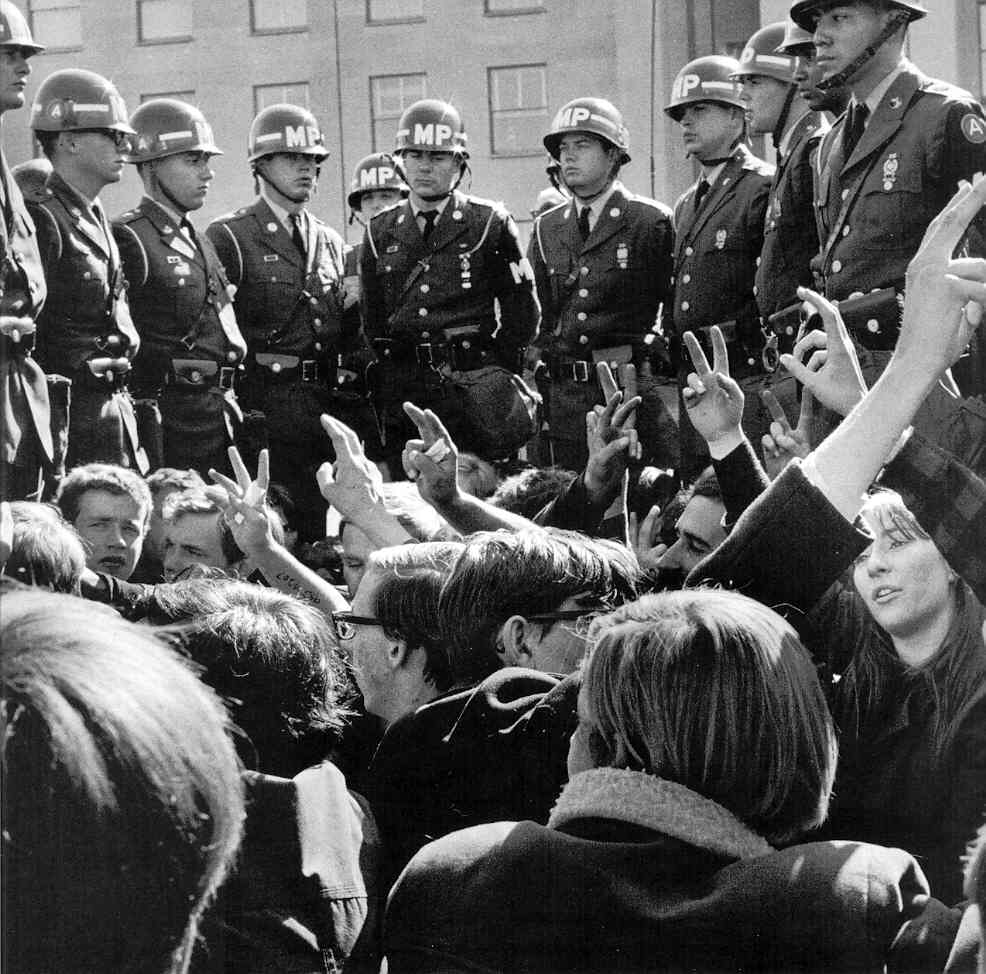
March on the Pentagon –
October
1967
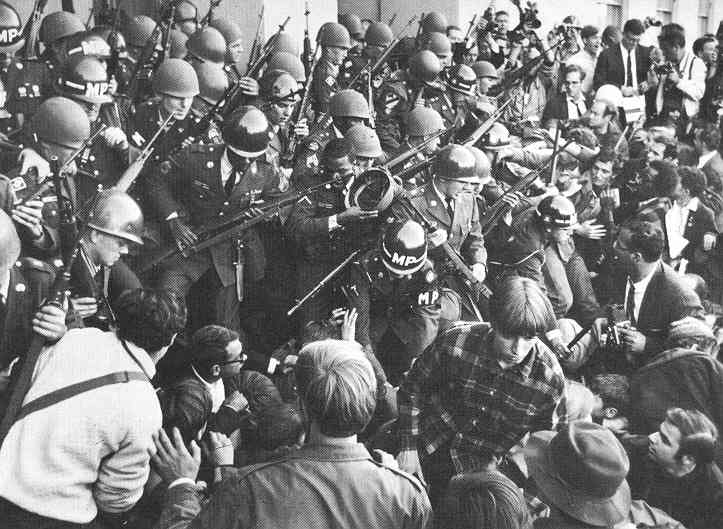
The anti-war protest at the
Pentagon – October 1967
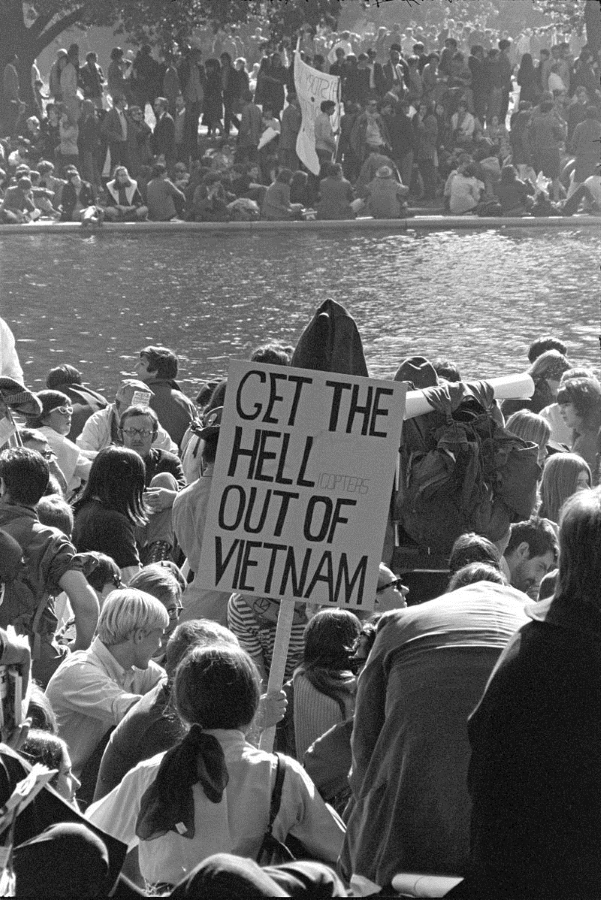
The anti-war protest at the
Pentagon – October 1967
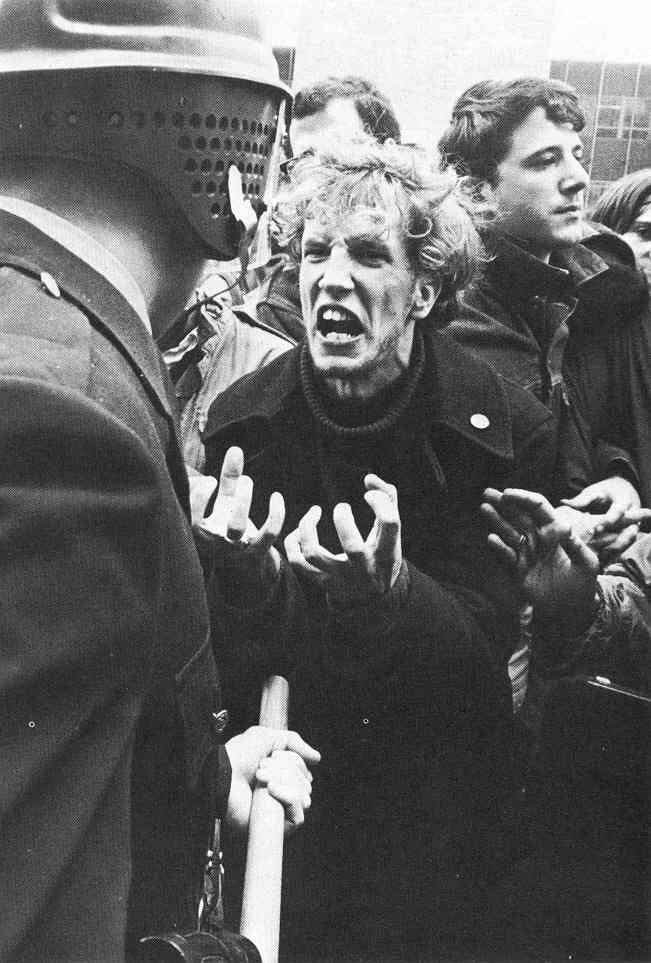
"Dirty Fascist" screams an
angry University of Wisconsin
protester at police – October 1967
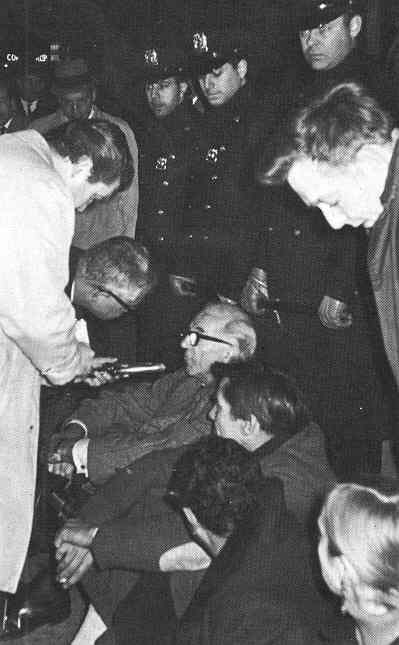
The arrest of Dr. Benjamin
Spock and anti-war protesters
at a New York Induction Center – December
1967
| THE DEEP SPLIT BETWEEN THE VET AND THE BOOMER GENERATIONS |
The Vet parents were perplexed – even irate. The Vets were an unshakably patriotic
group, standing with the government no matter what ("my country right or
wrong"). Anyway – wasn't America
trying to bring democracy to Vietnam? Did the Boomer youth not see the importance
of setting up a viable democracy in South Vietnam – one that would act not only
as a barrier against Communist expansion coming from the North – but like
America itself, serve as a beacon of light, lighting the way to other countries
in the region to find democracy for themselves as well? How in the world could the Boomers be missing
the point?
And
thus it was that a vicious war of words broke out between the two generations –
words mostly of just an emotional rather than truly rational character to
them. Indeed, complex concepts such as
democracy, imperialism, Fascism, and Communism became mere slogans rallying
intense support or opposition rather than actual argument or reasoned debate
that the two generations hurled at each other.
Tragically for America, this Boomer-versus-Vet battle produced a generational
division that would never find healing – a lack of healing in part due to the
involvement in this Boomer crusade by numerous American intellectuals,
individuals who understood the Boomers as valuable allies in their own quest
for vengeance for the mistreatment they – or at least their older colleagues –
had suffered at the hands of the Vets in the 1950s.
Thus it was that the causes for this generational split were broad and
vague in nature – but at times violent nonetheless.
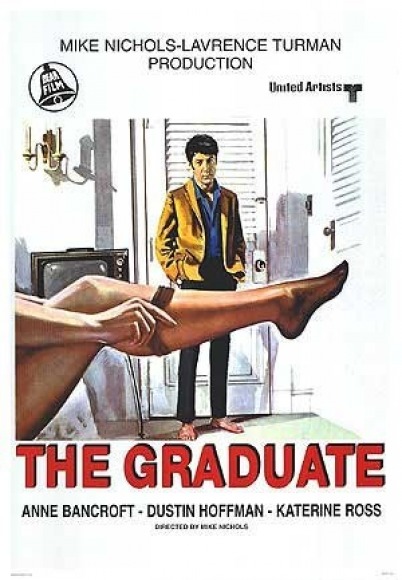
Dustin Hoffman starring in
the hit movie "The Graduate" – 1967
He portrayed a listless
youth who was unwilling to be
drawn into the plastic world of his parents, who was
seduced by a close friend of his parents
(the hypocritical
and
scheming Mrs. Robinson), and finally found freedom
by breaking himself
and his girlfriend (Mrs. Robinson's
daughter) free from the clutches of
the shallow adult world.

Go on to the next section:
 Miles
H. Hodges
Miles
H. Hodges

 Boomer "Progressivism"
 Relating to social issues of the day
  The deep split between the Vet and the Boomer generations