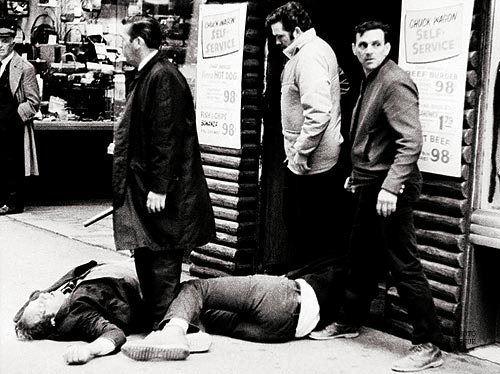
The November 1968 elections: Nixon to the White House. The selection of Richard Nixon as the Republican Party's
candidate at their National Convention was a huge contrast – by way of the quiet
order in which it was conducted. And
that atmosphere helped immensely to bring out Vet voters, tired of all the
political commotion consuming their country.
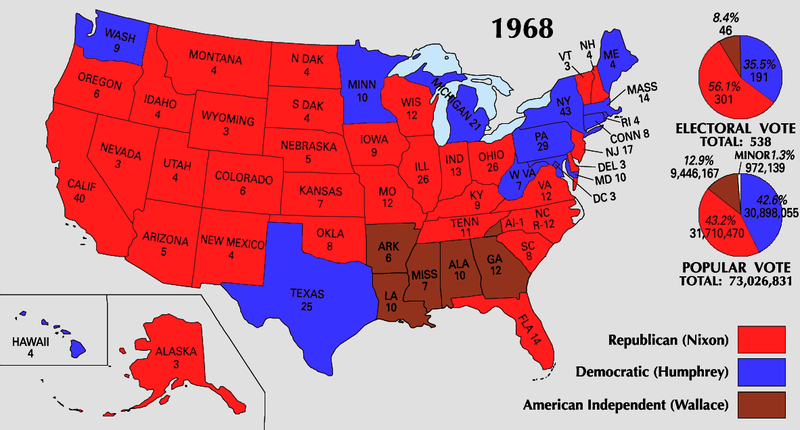
Thus it was that Nixon won the election, drawing 43.4
percent of the popular vote to the Democratic Party's candidate Senator Hubert
Humphrey's 42.7 percent (Third-Party Southern Democrat George Wallace with 13.5
percent), although the electoral college vote was strongly in Nixon's favor 302 to 191 (Wallace
with 46).
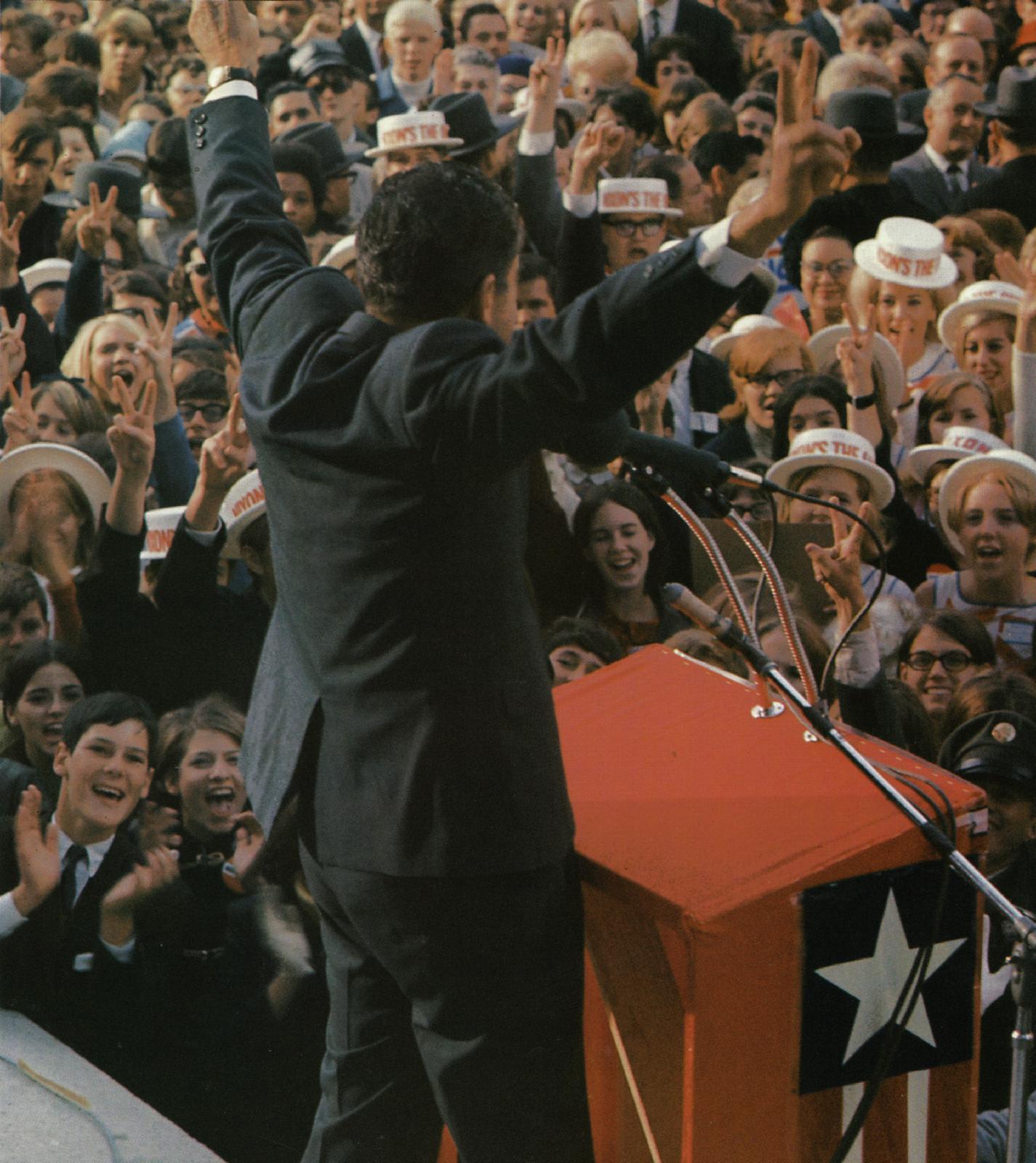
Nixon flashes "V' for victory
sign at a Republican campaign
rally in Ohio – October 1968
(the anti-Nixon press loved
to
lampoon this Nixon gesture)
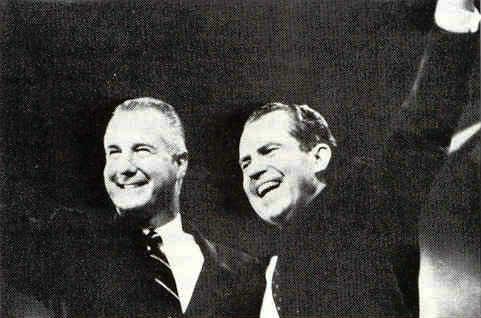
Agnew and Nixon
This
was hardly what the Boomer activists and their
intellectual mentors wanted. These two
social sectors were so ideologically opposed to Middle America at this point that
they seemed totally unable to accept the verdict of the vote. How in the world could "Public Enemy
Number One" have managed to get himself into the White House? They would do everything possible to nullify
his presidency.
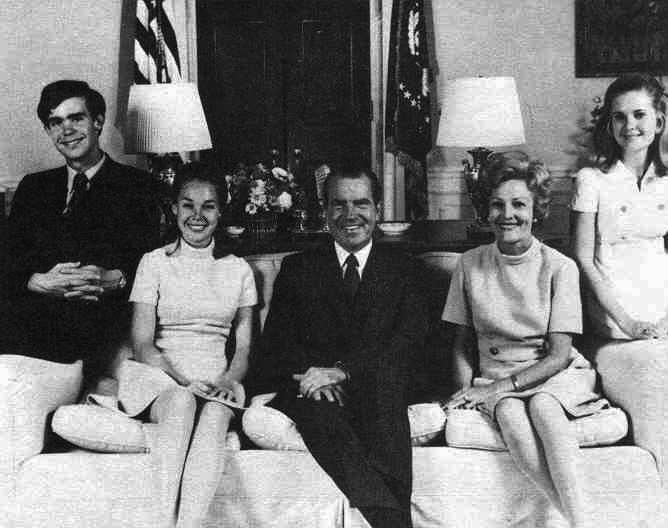
The Nixon family – Christmas
1969
(from left: David
and Julie Eisenhower, the President,
Mrs. Nixon, Tricia Nixon)
The making of Richard Nixon. Nixon was born in 1913 in Whittier, California, a very Quaker
community, to a family which was also Quaker. Family tragedy made life hard for
young Nixon, a younger brother having died in 1925 and an older brother also
badly ill with tuberculosis. In fact, a
Harvard Club prize he was awarded because of his excellent grades he was not
able to use, because the family could not afford the rest of the Harvard
education costs, due to the expense of the older brothers' medical
treatments. Thus Nixon attended the
local Whittier College, and then, with a substantial scholarship, Duke Law
School, graduating summa cum laude ("with highest honors") from the
latter in 1937.
However, despite these accomplishments, with his
older brother having died in his senior year in college, and with the
Depression in full force and law jobs hard to find upon law school graduation,
Nixon's Quaker faith was tested in the extreme.
From this point on, that faith would remain a very private matter.
In returning home to California to practice law
there, he met and two years later (1940) married a local school teacher, Pat
Ryan.
Then with America's entry into World War Two, the
Nixons moved to Washington, for him to take a job in the growing D.C.
bureaucracy, with him then being able to leave this unloved work to become a
lieutenant in the Navy. He would see
service in the South Pacific as an administrative officer, serving in that role
until 1946, although he would remain in the Naval Reserves, rising in rank over
the years, until his retirement as commander in 1966.
In
that year 1946, he was urged by the local Republican Party to run for Congress,
defeating the Democratic incumbent Jerry Voorhis, and thus beginning his
Washington political career. We have
already noted his work in Congress with the House Un-American Activities
Committee (HUAC), investigating the Communist presence within Washington's own
officialdom, automatically making him an enemy of self-identified intellectuals
who felt he was unfairly attacking those of their particular social
profile. They would never forgive him
for what he did in those post-war years.
But his work did bring him to the attention of the Republicans who
brought him alongside Eisenhower in the 1952 presidential campaign, which the
two won, making Nixon now U.S. Vice President.
And Eisenhower put him to work doing some travel and diplomacy for him, especially
in the effort to cultivate a "thaw" in America's Cold War with
Russia.
This
put him in position to run as Republican presidential candidate in 1960 when
Eisenhower completed his second term as president. And he came very close to
defeating the more charismatic Kennedy, but ultimately failed in the
effort. He then ran for California
governor two years later. But found that
California press coverage was very negative, making him furious about the
treatment he received by the press.
Then
he went into some kind of wilderness years.
But he used the time fruitfully to visit the larger world, meet with a
grand variety of leaders of other countries, and learn first-hand the more
subtle ways of the world – and the politics and cultures that made for such
variations.
Nixon's
political "Realism." In this, he would become very much a
supporter of the idea of Realpolitik, the German term applied to the varied use of diplomacy,
bluff – and, when absolutely necessary, very carefully calculated economic and
military assault (war) – in reference to the strategies of Prussian Chancellor,
Otto von Bismarck, who skillfully used all
these techniques to assemble a new German nation in 1870. Thus Nixon found himself replacing his older
approach, mostly ideological (which America largely follows in its own domestic
and foreign politics), with the subtleties of a chess player, who sees
diplomacy as a game of power, and careful power moves in support of a very
carefully measured "national interest," rather than all-out crusades
for this or that grand political ideal.
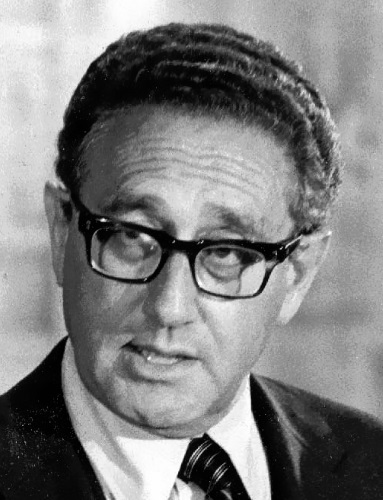 And now as president, he would strengthen this
approach to his duties in appointing the Harvard professor and political
Realist, Dr. Henry Kissinger, as his National Security Advisor, then also as
his Secretary of State. And the two of
them would go at the international problems facing the country in quite new
ways, opening the doors to better relations with both Russia and China, and
also re-strategizing America's involvement in Vietnam, something unfortunately
that most Americans, including most importantly his dedicated "Liberal"
opponents in Congress, in the press, and in the world of academics, would never
quite understand. And America (and
Southeast Asia) would suffer horribly because of this lack of understanding.
And now as president, he would strengthen this
approach to his duties in appointing the Harvard professor and political
Realist, Dr. Henry Kissinger, as his National Security Advisor, then also as
his Secretary of State. And the two of
them would go at the international problems facing the country in quite new
ways, opening the doors to better relations with both Russia and China, and
also re-strategizing America's involvement in Vietnam, something unfortunately
that most Americans, including most importantly his dedicated "Liberal"
opponents in Congress, in the press, and in the world of academics, would never
quite understand. And America (and
Southeast Asia) would suffer horribly because of this lack of understanding.
Nixon,
the Christian. Nixon's
tendency to keep his religious faith private meant that although he definitely
knew the Bible well, was a man of prayer, and spent a lot of time before God
seeking divine counsel, little of that appeared in public. He even held Sunday worship at the White
House itself, calling on pastors of a wide range of faith to lead these
services[1] –
though clearly his favorite was Norman Vincent Peal of New York City's Marble
Collegiate Church. And he was especially
close, on a very broad basis, with the evangelist Billy Graham, with whom he
met often for prayer and discussion.
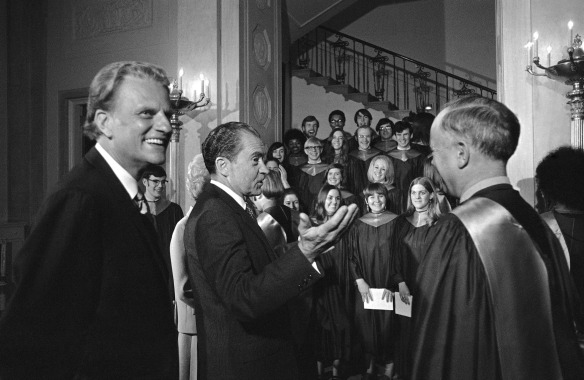 Nixon, following a worship service at the White House
conducted by Billy Graham – March 15, 1970
But he also understood deeply the role that
Christianity has long played in American life.
For instance, in
his 1972 Thanksgiving Address he emphasized the fact that Puritan founder John
Winthrop was most correct in identifying America as God's "city set upon a
hill," that it was important to follow the Puritan heritage in being "the
light of the world," and that it had always been America's call by God,
and source of the country's greatness, to provide spiritual leadership to that
world. He also stated that every American president had found cause to
turn to God, ultimately leaving office with a very deep religious faith.
Sadly, though Nixon personally was a man of
very high moral self-discipline (thanks to his Quaker upbringing), his moral
credentials would come to be measured in history solely on the basis of the
Watergate scandal, where his paranoia about the public treatment he got from
the Leftist Congress and press led him to get involved in an illegal coverup of
what some of his subordinates had done quite unnecessarily during his 1972
reelection campaign.
Thus Nixon's personal tragedies continued to follow him, all the
way through even his White House years.
Thus Nixon is still today not
really remembered for all the ways he served his country extremely well as
president. It seems instead that he will
always be remembered by generations to come as Nixon, the evil president.
[1]In 1973 the atheist Madalyn Murray O’Hair tried to get a federal court
to shut down these White House services.
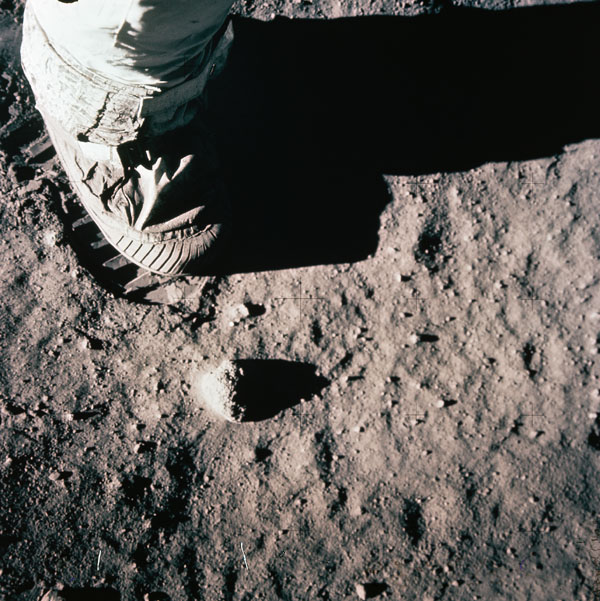
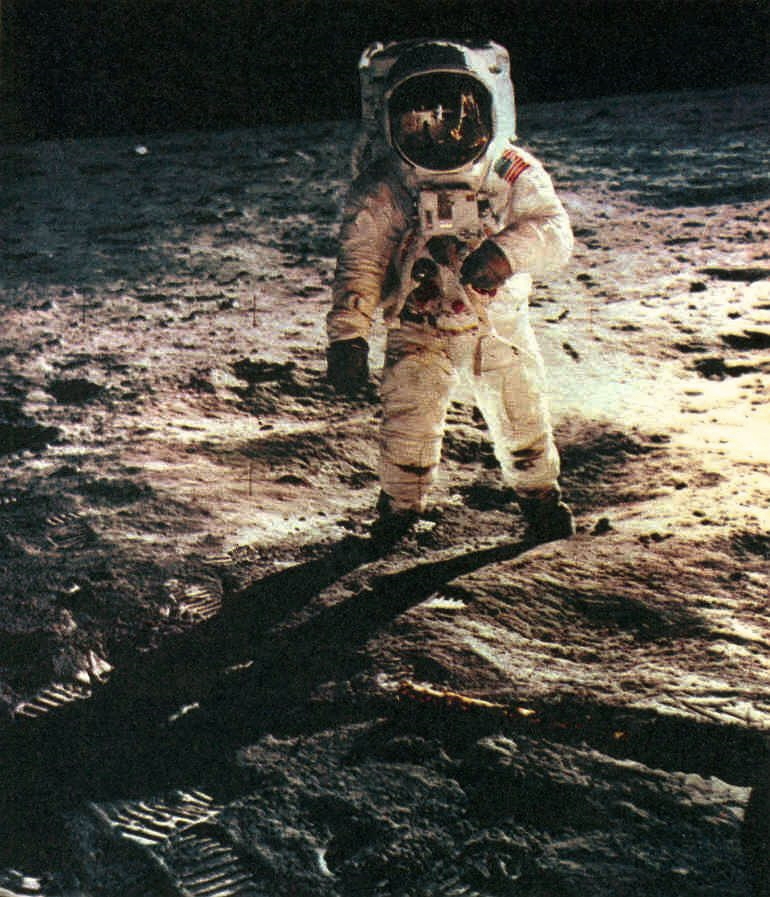
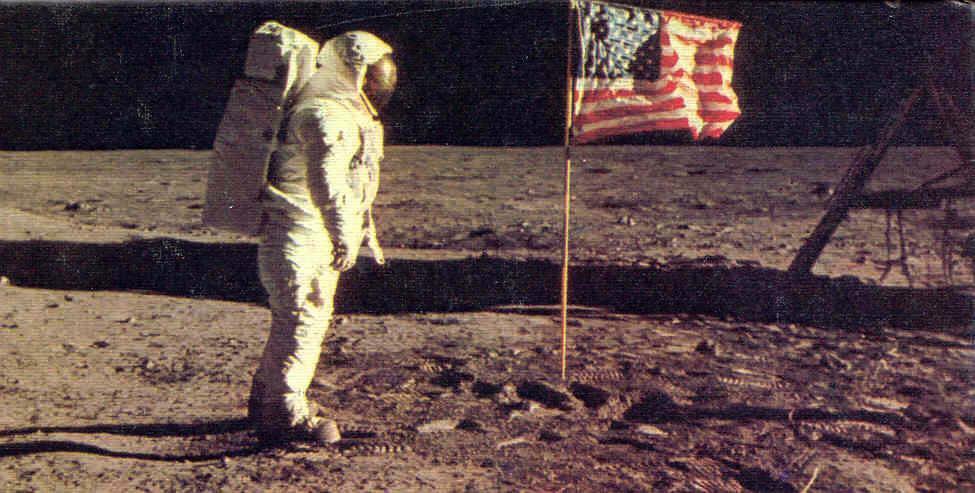
| THE APOLLO 11 MOON LANDING (JULY 20, 1069) |

 Richard Nixon
 The Apollo 11 Moon Landing (July 20, 1969)
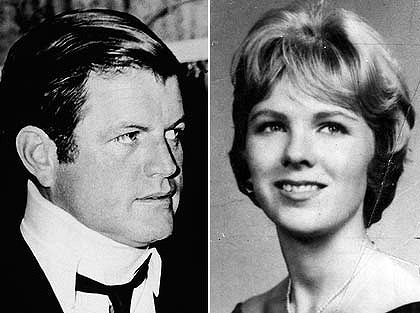
  Ted Kennedy and Chappaquiddick (July 1969)
  The Manson murders (August 1969)
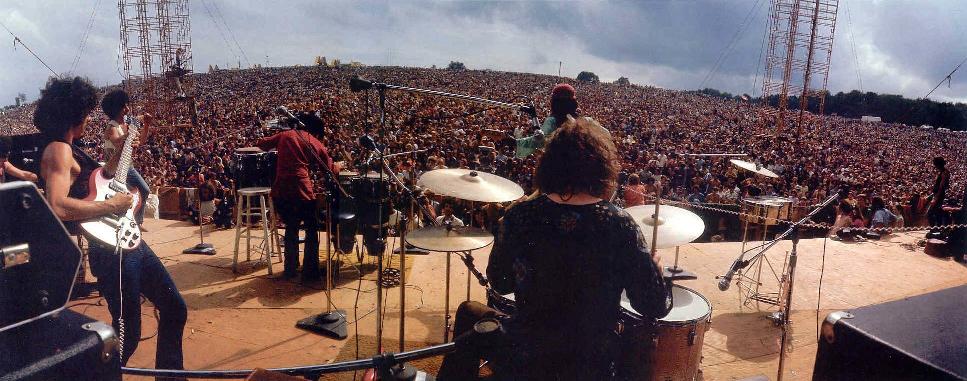
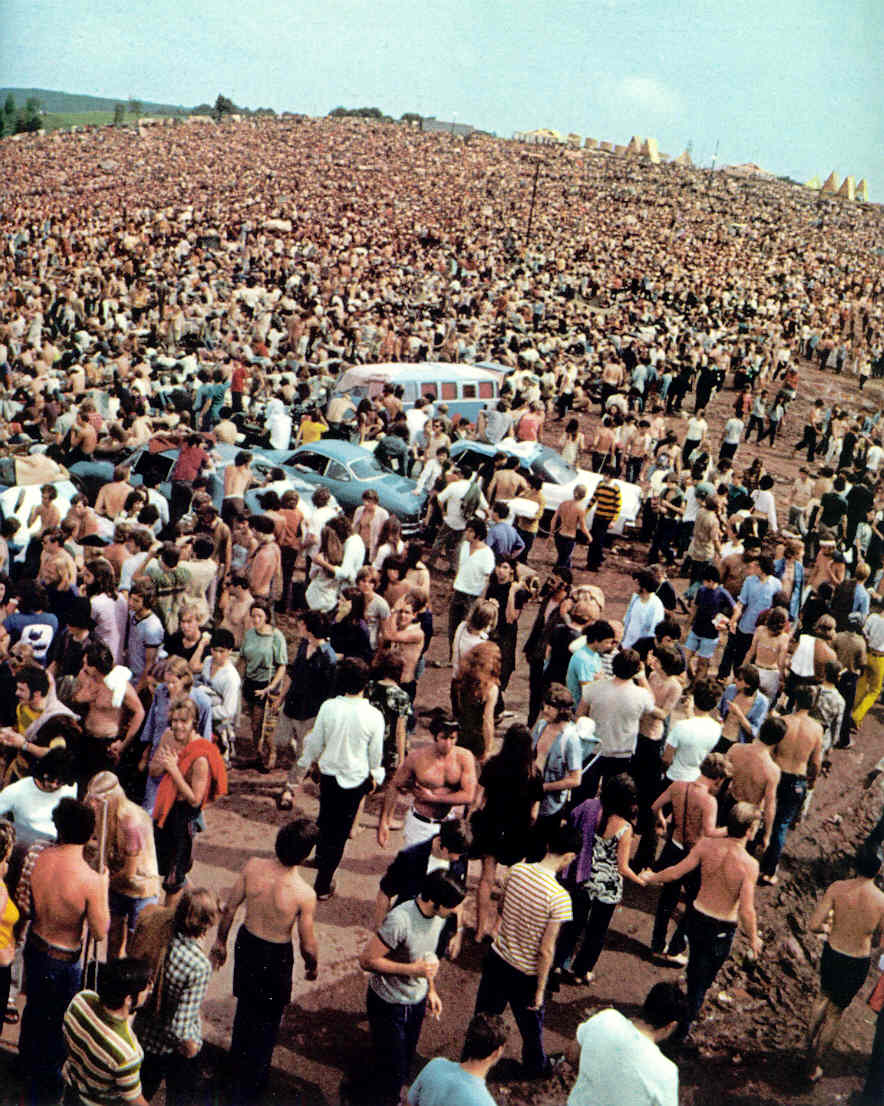
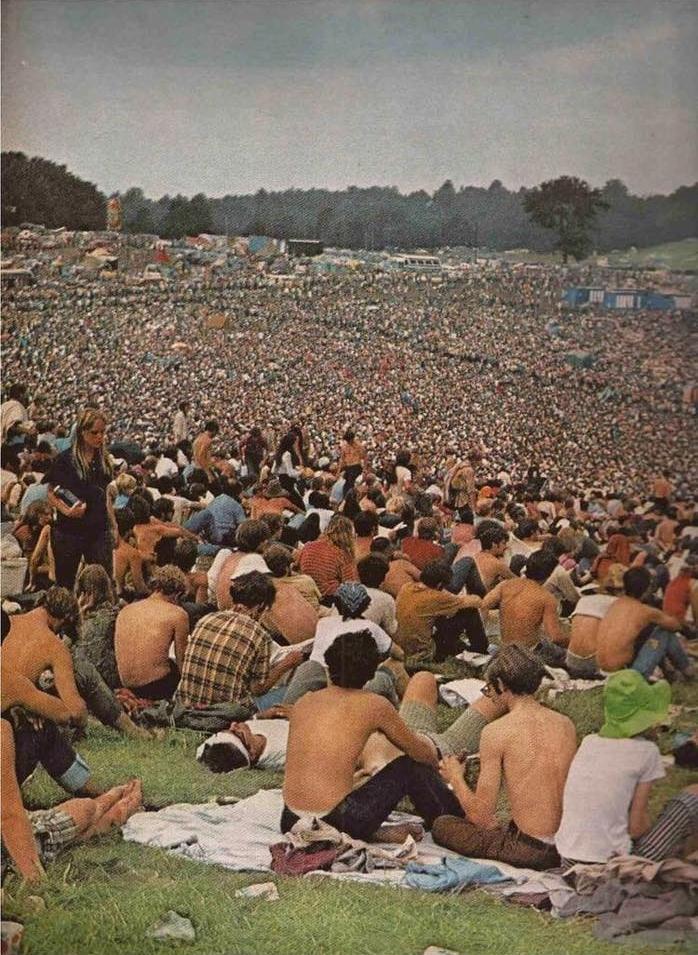
  The Woodstock Music Festival (August 15-17, 1969)
  The "Days of Rage" (October 8-11, 1969)
  America's new political logic